 Probiotic Characterization of Lactic Acid Bacteria Isolated from Traditional Pickles: A Functional and Safety Assessment
Abstract
Pickles, fermented vegetable products, are a source of functionally important microorganisms. In the present study, 360 lactic acid bacteria originating from traditional pickles in Türkiye were evaluated to ascertain their probiotic, safety, and technological properties. Of these, nine were identified as Lactiplantibacillus plantarum, three as Levilactobacillus brevis, and one as Lactiplantibacillus paraplantarum. The 13 isolates demonstrated a survival rate of between 65.12% and 99.91% at 2 hours, and between 62.56% and 99.91% at 3 hours in simulated gastric juice. The isolates also exhibited tolerance to 3% bile salts, with survival rates ranging from 98.15% to 132.17%. The isolates inhibited S. aureus ATCC 29213 and S. Typhimurium RSHMB 95091. In addition, their auto-aggregation levels increased during the incubation period. In addition, two L. plantarum strains exhibited strong bile salt hydrolysis activity, while the majority of the strains demonstrated moderate bile salt hydrolysis activity. The isolates demonstrated resistance to vancomycin, gentamicin, kanamycin and streptomycin, and susceptibility to erythromycin and chloramphenicol. It was observed that none of the isolates possessed virulence genes or genes related to biogenic amine production. In addition, L. plantarum strains were found to possess the gad gene, which is responsible for the production of gamma amino butyric acid. The study concluded that probiotic properties are strain-specific and that these strains are potential probiotic candidates.
Keywords:
Lactiplantibacillus plantarum; Levilactobacillus brevis; pickle; probiotic
HIGHLIGHTS
The pickle strains exhibited high survival rates in gastric juice and bile salts.
The isolates had antimicrobial activity against S. aureus and S. Typhimurium.
No virulence genes or biogenic amine production were detected in any isolate.
Several strains possessed the gad gene, indicating a capacity for GABA production.
INTRODUCTION
Probiotics are live microorganisms that are beneficial to the host when they are consumed or administered at appropriate doses. Among the microorganisms most commonly used as probiotics are Lactobacillus and Bifidobacterium species, as well as Streptococcus, Enterococcus and Saccharomyces species [1]. Two important properties of probiotics are tolerance to stomach acid and bile salts to survive while passing through the digestive tract. Other characteristics that must be considered for a microorganism to be considered a probiotic are the ability to adhere to the host's intestinal epithelial cells, colonize and proliferate in the gut, not exhibiting pathogenic properties, balancing the intestinal flora, producing lactic acid and being stable in the food matrix [2, 3]. Probiotics can exert antimicrobial effects by producing compounds that act on pathogenic bacteria [4]. On the other hand, it has also been reported that probiotics are involved in regulating the immune, respiratory and gastrointestinal functions of organisms [5]. They also provide benefits such as reducing antibiotic side effects, lowering cholesterol, and alleviating anxiety symptoms [6-8]. The increasing known benefits of probiotics have led researchers to investigate potential sources of probiotics.
Traditional fermented products are considered as potential natural sources of probiotics. Lactobacillus species are generally isolated from these products [9]. Microorganisms produce bioactive peptides during fermentation, facilitate the digestion of the products and synthesize vitamins. In this way, it can benefit the consumer by exhibiting antimicrobial, antioxidant, cholesterol-lowering, antidiarrhea, antidepression, antihypertensive, antidiabetic, antiatherosclerotic and immunomodulatory/anti-inflammatory effects [10-14]. The fermentation process prevents food spoilage and allows it to be stored for a long time. Even perishable vegetables can be preserved as nutritious food for a year or more because of this process [15]. Kimchi, sauerkraut, tsukemono, achar and safur are examples of known fermented vegetable products. In Türkiye, plant-based fermented products are called “turşu” [16]. Pickles are produced by treating vegetables and fruits with traditional processes such as anaerobic fermentation or acidification with vinegar [17]. The fact that fermented vegetable products do not have a standardized content and vary according to climate and geographical conditions may lead to increased microbial diversity in these products [16]. Therefore, such products are attractive for the isolation of probiotic bacteria. In the present study, strains isolated from traditionally produced pickles (turşu) in Türkiye were evaluated in terms of their probiotic and technological properties.
MATERIAL AND METHODS
Strains, growth conditions and Isolation
The 53 pickle samples obtained from 23 different cities of Türkiye (between 2016 and 2017) were aseptically transferred to the laboratory at 4 °C and analyzed immediately. The composition, origin, and fermentation status of the pickle samples are given in supplementary Table S2 and Figure S1. To isolate lactic acid bacteria (LAB), pickles were subjected to a serial decimal dilution procedure, and 0.1 mL of each dilution was inoculated onto de Man, Rogosa and Sharpe agar (MRS, Merck) plates. Following 48 h of anaerobic incubation at 37 °C, colonies with varying morphologies (size, shape, color, etc.) were tested for catalase and Gram staining. For additional testing, 360 colonies that were determined to be both catalase-negative and Gram-positive were chosen. A total of 13 isolates were selected for further testing based on tolerance to simulated gastric juice and bile salts. In addition, the pathogens used for the antimicrobial activity experiments, such as Escherichia coli (E. coli) O157:H7, Staphylococcus aureus (S. aureus) ATCC 29213, Salmonella Typhimurium (S. Typhimurium) RSHMB 95091, Bacillus cereus (B. cereus) ATCC 33019, and Listeria monocytogenes (L. monocytogenes) ATCC 7644, were grown on brain heart infusion agar (BHIA, Merck) at 37 °C for 24 h.
Genotypic identification
Genotypic identification of the pickle isolates was carried out by 16S-rRNA PCR using 8F and 1541R primers (supplementary Table S1). Genomic DNA was extracted according to the instructions of the commercial kit (EcoTech Biotechnology, Türkiye). The strains were genotypically identified by using sequences of 16S-rRNA via the BLAST program in the National Center for Biotechnology Information (NCBI), and ≥98% similarity rates were taken into consideration. On the other hand, two different primers specific to Lactiplantibacillus plantarum (L. plantarum) and Levilactobacillus brevis (L. brevis) were used to check 16S-rRNA PCR identification (supplementary Table S1). A phylogenetic tree was constructed based on the 16S rRNA gene sequences of the lactic acid bacteria isolates. Sequences were aligned using the ClustalW algorithm implemented in MEGA version 12 [18]. The neighbor-joining method was used to infer evolutionary relationships, employing the Tamura-Nei model with a gamma distribution.
In vitro probiotic properties
Tolerance to simulated gastric juice and bile salts
A simulated gastric juice solution was prepared with 0.5% NaCl (w/v, Merck) and 0.3% pepsin (w/v, Merck), and its pH was adjusted to 3 with 1 N HCl (Merck) to determine the tolerance of the pickle isolates to gastric juice. The overnight cultures in MRS broth (Merck) were centrifuged at 8000 × g for 10 min, and the pellet was suspended in phosphate-buffered saline (PBS, pH 7.2) at a final concentration of 108 CFU mL-1 by a McFarland densitometer (DEN-1, Biosan). The suspension was subsequently mixed with the simulated gastric juice (1:9) and incubated at 37 °C. The viability of the pickle isolates was determined by serial dilution method after 2 and 3 h and calculated according to the following formula [19, 20]: percent survival (%)=(log NT/log N0)×100, where NT represents viable cell counts in the simulated gastric juice/MRS broth containing bile salts and N0 represents viable cell counts added to the simulated gastric juice/MRS broth containing bile salts.
In this study, the tolerance of the pickle isolates to bile salts was also determined according to the methods of Kumari and coauthors [21], with slight modifications. The overnight cultures suspended in PBS were added to MRS broth (Merck) containing bile salts (0.3%, w/v) (Merck) and incubated at 37 °C for 24 h. At the end of the incubation, the viability of the pickle isolates was determined by serial dilution method and calculated using the formula described above.
Antimicrobial activity against foodborne pathogens
This study aimed to screen the antimicrobial spectrum of pickle isolates against several pathogens, including E. coli O157:H7, S. aureus ATCC 29213, S. Typhimurium RSHMB 95091, B. cereus ATCC 33019, and L. monocytogenes ATCC 7644. For this purpose, fresh cultures on MRS agar (Merck) were inoculated into MRS broth (Merck) and incubated at 37 °C for 18-24 h. At the end of the incubation, the broth was centrifuged at 8000 × g at 4 °C for 10 min, and a cell-free supernatant (CFS) was obtained. Since many components produced by microorganisms can cause antimicrobial effects, the CFS was subjected to different treatments, such as neutralization (pH 6.5-7.0 with 5 N NaOH) (for elimination of acidity), heating (at 80 °C for 10 min) (for elimination of microbial hydrogen peroxide), and enzyme addition, including proteinase K, pepsin and trypsin (1 mg mL-1) (for elimination of protein-like substances), to determine the source of antimicrobial activity. The CFS was then filled into wells with a zone diameter of 6 mm in BHIA covered with the pathogens, and after incubation at 37 °C for 24 h, the antimicrobial effect was determined by the diameter of the clear zone around the well [22].
Auto-aggregation and cell surface hydrophobicity
Fresh isolates grown in MRS broth (Merck) were centrifuged at 8000 × g at 4 °C for 10 min, and the supernatant was removed. The pellet was then reconstituted with PBS, and the bacterial density was adjusted to approximately 108 CFU mL-1 with a McFarland densitometer (DEN-1, Biosan). The suspensions were incubated at 37 °C for auto-aggregation, and the optical density at 600 nm (OD600) of the upper liquid phase was measured by using a plate reader (Epoch, BioTek) at 2, 4, and 24 h. Auto-aggregation ability was determined with the following formula: Auto-aggregation ability (%)=1-(At/A0)×100, where At represents the OD600 at 2, 4 or 24 h, A0 represents the initial OD600 [23].
On the other hand, the cell surface hydrophobicity of the pickle isolates was determined using the hydrocarbon method. One millilitre of the bacterial suspension obtained by suspending the pellet with PBS was added separately to 3 mL of xylene, toluene, or n-hexane. After vortexing for 60 s, the mixtures were held at 25 °C for approximately 5 min. The OD600 of the bottom liquid phase was measured with a plate reader (Epoch, BioTek), and the cell surface hydrophobicity for xylene, toluene, and n-hexane was calculated separately using the following formula: cell surface hydrophobicity (%)=1-(A1/A0)×100, where A1 represents the OD600 of the bottom liquid phase and A0 represents the initial OD600 [23].
Bile salt hydrolysis activity
To detect the bile salt hydrolysis (BSH) activity of the pickle isolates, 10 μL of the fresh bacterial suspension in PBS was dropped on bile esculine agar (Condalab) and incubated at 37 °C for 24 h. BSH activity was classified according to the dark brown zone diameters around the isolates: weak: ≤10 mm, intermediate: 10-15 mm, strong: ≥15 mm [24].
Safety characteristics
Antibiotic resistance patterns
The antibiotic resistance and/or sensitivity patterns of the pickle isolates were determined via the disc diffusion method using ampicillin (10 μg disc-1), vancomycin (30 μg disc-1), gentamicin (10 μg disc-1), kanamycin (30 μg disc-1), streptomycin (10 μg disc-1), erythromycin (15 μg disc-1), clindamycin (10 μg disc-1), tetracycline (30 μg disc-1), and chloramphenicol (30 μg disc-1). The fresh bacterial suspension in PBS was spread on MRS agar (Merck) with sterile cotton swabs, and antibiotic discs were placed on them. After incubation at 37 °C for 48-72 h, the antibiotic resistance and/or sensitivity patterns were classified according to the diameter of the clear zone around the disc: resistant: ≤15 mm, intermediate: 15-20 mm, sensitive: ≥20 mm [25]. In addition, according to the number of antibiotics to which the isolates were resistant, the multiple antibiotic resistance (MAR) index was also calculated using the following formula: MAR=a/b, where a represents the number of antibiotics to which the isolate was resistant and b represents the total number of antibiotics [26].
Presence of virulence genes
The virulence genes in the genomes of the pickle isolates were screened by PCR, which included gelE (gelatinase), esp (enterococcal surface protein), efaAfs (Enterococcus faecalis specific endocarditis antigen), cylA (cytolysin), hyl (hyaluronidase), asa (aggregation substance), ace (adhesion to collagen), and agg (aggregation protein) (supplementary Table S1). The PCR mixture consisted of 12.5 μL of master mix (Ampliqon), 1 μL of genomic DNA, 1 μL of each primer, and 10.5 μL of PCR-grade H2O. The PCR products were subsequently run on an agarose gel (1.5%, w/v) containing ethidium bromide (0.005%, v/v) and visualized under ultraviolet light.
Presence of biogenic amine genes
Some genes responsible for biogenic amine production, including hdc (histidine decarboxylase), tdc (tyrosine decarboxylase), ldc (lysine decarboxylase), and odc (ornithine decarboxylase) (supplementary Table S1), were screened via PCR. Genomic DNA extraction, PCR mixing and PCR conditions were as described above.
Hemolytic and DNase activity
Hemolytic activity of the pickle isolates was detected on blood agar containing 5% (v/v) defibrinated sheep blood and classified as β-, α-, or γ-hemolytic according to the zone type around the colonies [27]. In addition, the DNase activity of the pickle isolates was monitored on DNase agar (Merck) [28]. An overnight culture on MRS agar (Merck) was inoculated into blood agar and DNase agar (Merck). After incubation at 37 °C for 24 h for hemolytic activity and at 37 °C for 48 h for DNase activity, the properties of the isolates were evaluated according to the zone type around the colonies.
Some technological properties
Presence of gdh, gad and exopolysaccharide-encoding genes
In this study, the gdh and gad genes, which are responsible for glutamate production and the conversion of glutamate to gamma-aminobutyric acid (GABA), respectively, were investigated by PCR with suitable primers (supplementary Table S1). In addition, the presence of exopolysaccharide-encoding genes, including epsA, epsB, gtf, and p-gtf, was also detected in the pickle isolates. Genomic DNA extraction, PCR mixing and PCR conditions were as described above.
Proteolytic activity
The proteolytic activity of the pickle isolates was investigated using modified MRS agar (Merck) containing skim milk (10%, v/v). Ten microliters of the overnight cultures suspended in PBS were added to the modified medium and incubated at 37 °C for 48-72 h. At the end of the incubation, colonies representing a clear zone were considered positive [29].
Statistical analysis
Each experiment was conducted in two biological replicates, and two technical replications were carried out for each biological replicate. The obtained data are presented as means±standard deviations. Analysis of variance (ANOVA) was used to determine significant differences between the isolates, and the differences were classified by the Duncan test at p<0.05.
RESULTS AND DISCUSSION
Genotypic identification
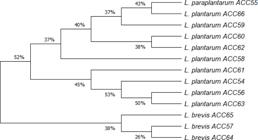
In this study, thirteen pickle isolates were identified as potential probiotic candidates, and the results are presented in Table 1. Nine isolates, including ACC 54, ACC 56, ACC 58, ACC 59, ACC 60, ACC 61, ACC 62, ACC 63, and ACC 66, were identified as L. plantarum with 98.69%-100% similarity, whereas three of them, including ACC 57, ACC 64, and ACC 65, were identified as L. brevis with 99.05%-99.89% similarity. On the other hand, one isolate (ACC 55) was identified as L. paraplantarum with 99.60% similarity. To support the identification, species-specific PCR assays were also performed using primers specific to L. plantarum and L. brevis. All isolates previously identified as L. plantarum or L. brevis produced the expected amplicons with their respective primers (supplementary Figure S2). These primers are highly specific and do not bind to non-target species. As expected, L. paraplantarum ACC55 did not yield a band with either primer set, providing further evidence for its identity as L. paraplantarum.
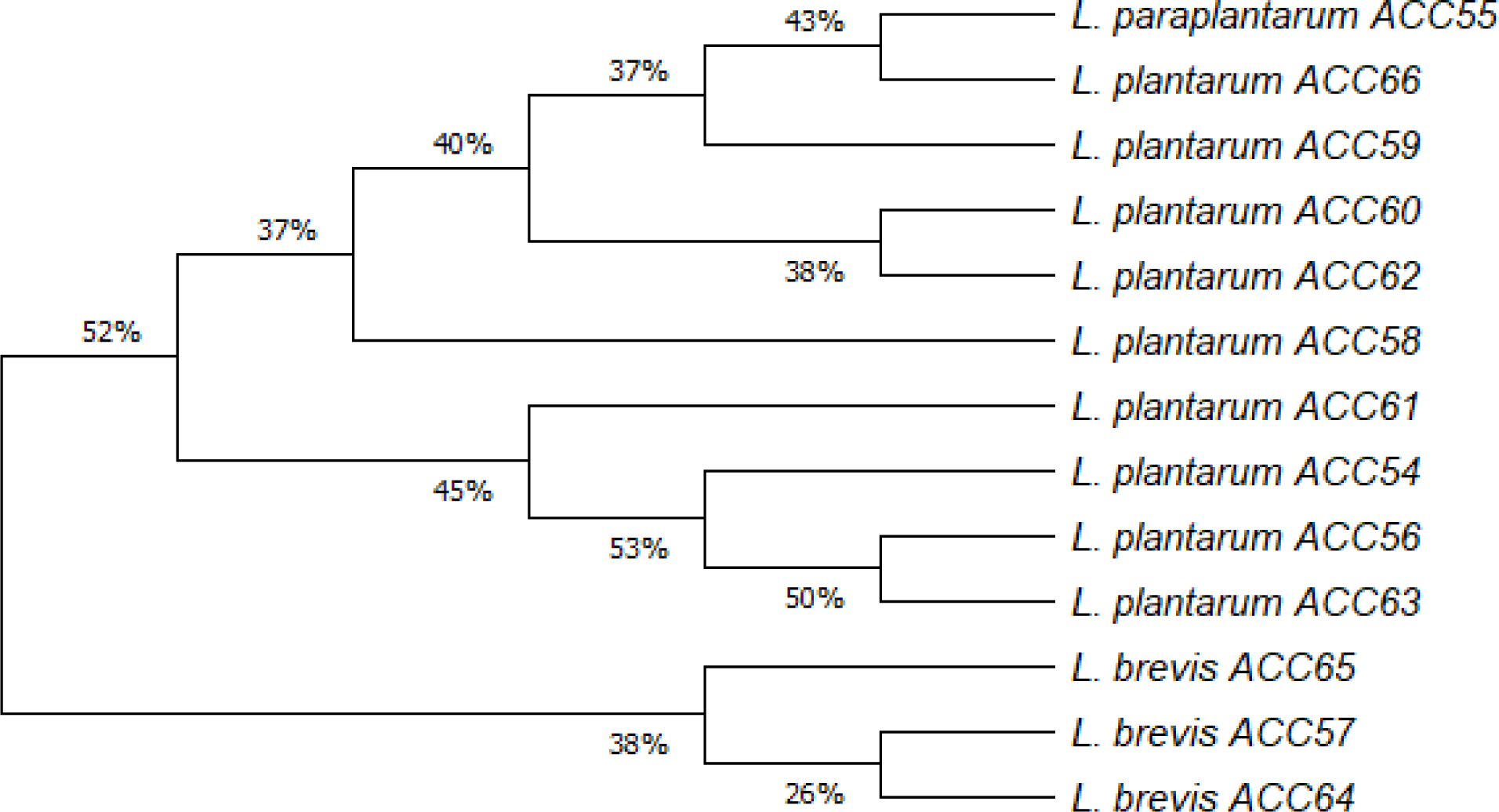
The phylogenetic analysis based on 16S rRNA sequences (Figure 1) showed that strain ACC55 clustered within the L. plantarum clade. This result is consistent with the close evolutionary relationship between L. plantarum and L. paraplantarum, which often leads to limited species-level resolution when using 16S rRNA gene sequencing alone. The absence of PCR amplification with L. plantarum-specific primers, in combination with the phylogenetic proximity, supports the identification of ACC55 as L. paraplantarum. Therefore, we recommend whole genome sequencing (WGS) as a future approach to enable high resolution taxonomic classification and to explore genomic traits relevant to safety, functionality, and probiotic potential.
Although some studies reported the isolation of Enterococcus spp. [30-32], Leuconostoc spp. [31-33] and even S. aureus, E. coli, Klebsiella spp., Salmonella spp., and Pseudomonas aeruginosa [32], the predominant LAB in pickles are Lactobacillus spp. [31]. Moreover, Yu and coauthors [30] reported that Lactobacillus spp. constituted 95.68% of the pickle microbiota, whereas L. plantarum and L. brevis constituted 43.78 and 12.97% of the microbiota, respectively. Similarly, genotypic identification of the thirteen isolates used as potential probiotic candidates in the present study confirmed information about the predominant microbiota in pickles.
In vitro probiotic properties
Tolerance to simulated gastric juice and bile salts
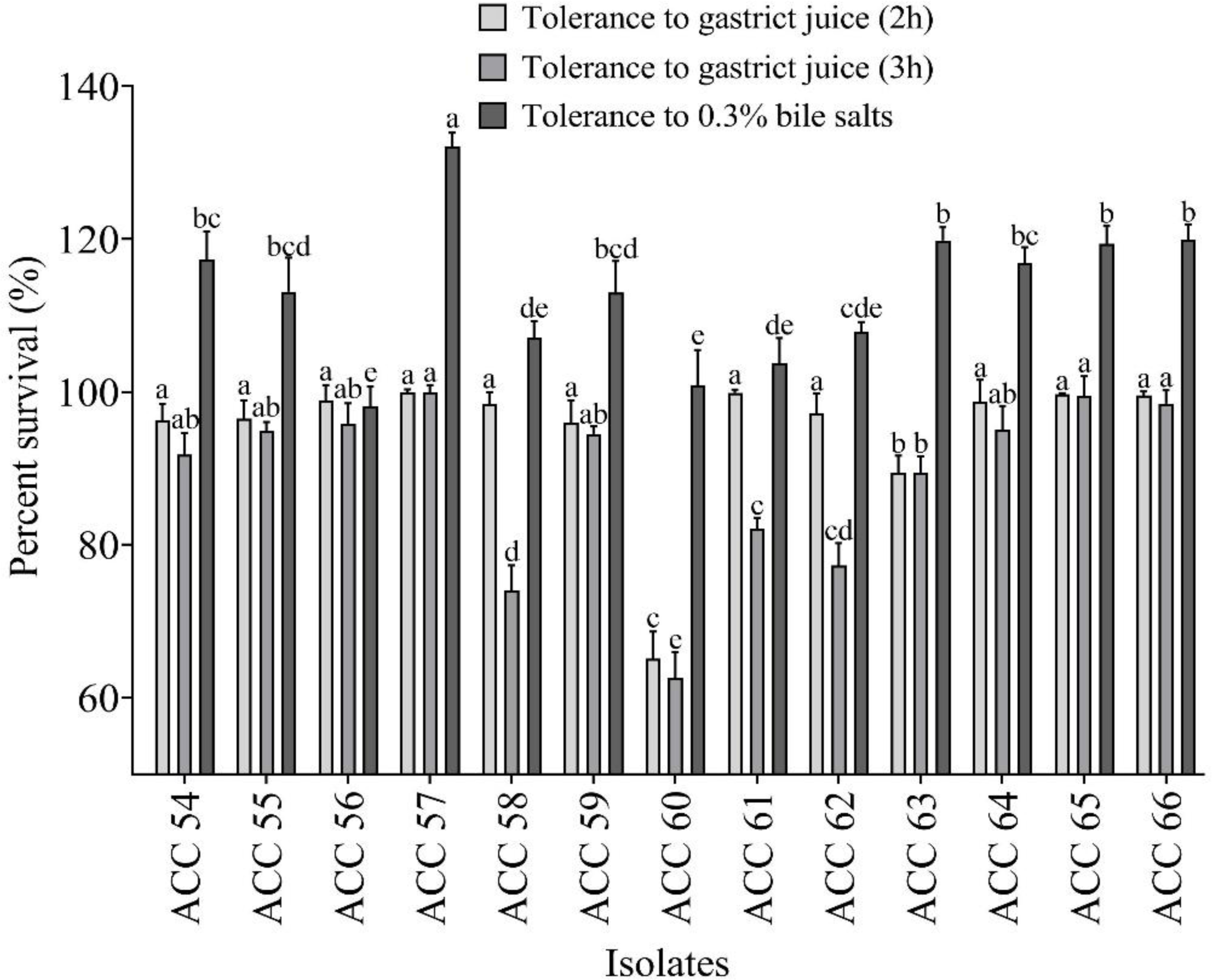
The FAO/WHO underlines in the "Guidelines for the evaluation of probiotics in food" that probiotics should have many properties, such as resistance to gastric acidity, bile acid resistance, adherence to human epithelial cells, and antimicrobial activity against pathogens. Moreover, according to the report, tolerance to the gastric environment and bile salts are the two most important qualifying criteria [34]. In this study, the survival of the pickle isolates in simulated gastric juice and bile salts was investigated, and the results are shown in Figure 2. All the isolates survived 65.12%-99.91% at 2 h and 62.56%-99.91% at 3 h in the simulated gastric juice. Almost all the strains, except L. plantarum ACC 60 and ACC 63, had high survival rates after 2 h in simulated gastric juice (p<0.05). The tolerance of L. brevis ACC 57 (99.91%), ACC 65 (99.46%), and L. plantarum ACC 66 (98.48%) to the gastric environment was greater than that of the other strains at 3 h (p<0.05). Güler and coauthors [35] conducted a study in which the same simulated gastric conditions were applied as in our study. Using Lacticaseibacillus casei ATCC 393, a well-known probiotic, this study found that the resistance rate of this strain to the simulated gastric environment was 40.69%, which is notably lower than that of our strains. On the other hand, the pickle isolates tolerated bile salts in the range of 98.15%-132.17%, and L. brevis ACC 57 had the highest survival percentage (p<0.05). Similarly, Çetin [16], Dallal and coauthors [36], Akmal and coauthors [37], and Zhao and coauthors [38] reported that L. plantarum and/or L. brevis isolated from pickle samples had probiotic potential. The fact that many studies reported similar results clearly indicates that the pickles are fermented products that is an important probiotic carrier.
To better contextualize the probiotic potential of the isolates, it was compared their characteristics with those of well-established commercial probiotic strains. Lacticaseibacillus rhamnosus GG has been shown to survive in highly acidic gastric environments for prolonged periods under in vitro conditions [39]. In one study, free cells retained about 88% viability after simulated gastric treatment, and encapsulated cells survived even better [40]. Similarly, Lactobacillus casei Shirota is known for its bile salt tolerance; in microencapsulation studies, exposure to 3% bile salts still caused a drop in viability but demonstrated significant stress resilience [41]. This study examined the survival of several isolates derived from pickles under simulated gastric conditions, as well as their tolerance of bile salts. The results were comparable to, or even better than, published values for commercial strains. This enables the potential probiotic capabilities of the strains to be assessed more meaningfully. In future, this could be rigorously tested by conducting parallel experiments with commercial strains.
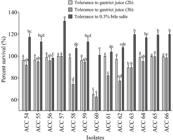
Survival percentage of the pickle isolates in the simulated gastric juice and MRS broth containing bile salts (0.3%, w/v). All survival results are presented as the means ± standard deviations. a-e show the significant differences between the tolerances of the isolates to simulated gastric juice and bile salts.
Antimicrobial activity against foodborne pathogens
Antimicrobial activity against potentially pathogenic bacteria is an important criterion for probiotics according to a report by the FAO/WHO [34]. In the present study, the antimicrobial spectra of the pickle isolates against several pathogens, including E. coli O157:H7, S. aureus ATCC 29213, S. Typhimurium RSHMB 95091, B. cereus ATCC 33019, and L. monocytogenes ATCC 7644, were determined and are presented in Table 2. All the isolates inhibited S. aureus ATCC 29213 and S. Typhimurium RSHMB 95091, similar to the studies by Monika and coauthors [42] and Zhao and coauthors [38]. In addition, L. paraplantarum ACC 55, L. plantarum ACC 56, ACC 58, ACC 59, ACC 62, ACC 63, and ACC 66 had antimicrobial activity against E. coli O157:H7, whereas L. plantarum ACC 60, ACC 61, ACC 62, ACC 63, and ACC 66 had antimicrobial activity against B. cereus ATCC 33019, similar to the results of a study by Monika and coauthors [42]. Moreover, Çon and Karasu [43] reported that most L. plantarum strains isolated from pickle samples inhibited E. coli. On the other hand, in another study, Lacticaseibacillus rhamnosus LGG strain, a well-known probiotic strain with neutralized supernatant pH, also showed no antimicrobial effect against E. coli ATCC 25922 [44]. In the present study, no isolates inhibited the growth of L. monocytogenes ATCC 7644. The CFS was subjected to different treatments to determine the source of antimicrobial activity, and the results clearly revealed that these antimicrobial activities were not due to hydrogen peroxide or protein-like substances but rather to a decrease in pH resulting from microbial growth of the pickle isolates. These results may explain why Lactobacillus spp. constitute the predominant lactic acid bacteria in pickles [31].
Auto-aggregation and cell surface hydrophobicity
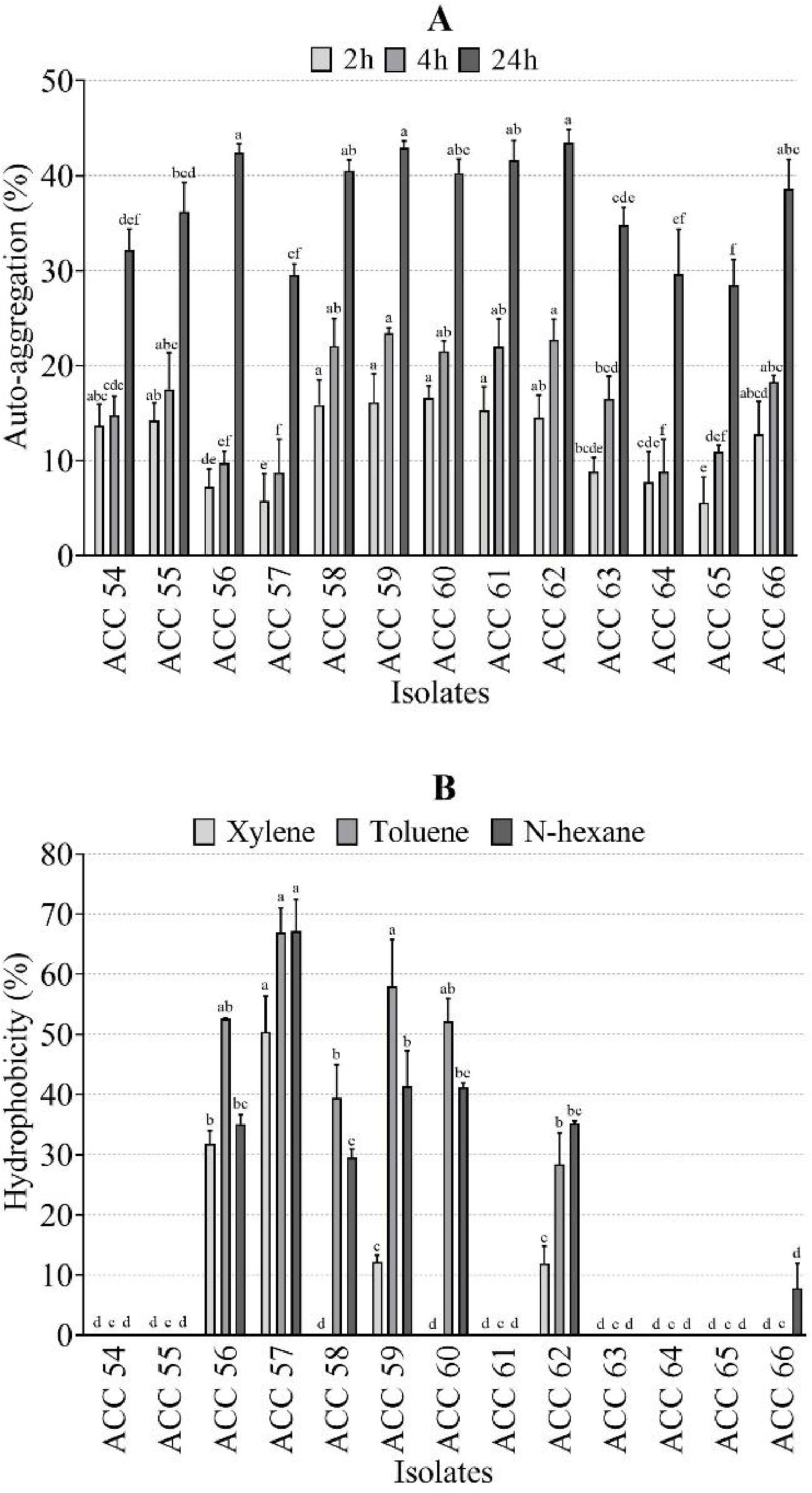
The FAO/WHO reported that the ability of bacteria to aggregate with each other and to adhere to the intestinal mucosa is important for their probiotic properties [34]. Therefore, in this study, the auto-aggregation and cell surface hydrophobicity ability of the pickle isolates were determined, and the results are shown in Figure 3. The auto-aggregation percentage of all the isolates increased during the incubation time. In addition, L. plantarum ACC 58 (15.88%), ACC 59 (16.12%), ACC 60 (16.60%), and ACC 61 (15.28%) had higher auto-aggregation percentages than the other combinations did at 2 h; L. plantarum ACC 59 (23.39%), ACC 62 (22.67%) at 4 h; and L. plantarum ACC 56 (42.41%), ACC 59 (42.89%), and ACC 62 (43.44%) at 24 h (p<0.05). The auto-aggregation ability of L. plantarum AR113 isolated from traditional pickle samples was 6.63, 18.21, and 30.10% at 1, 3, and 5 h, respectively, as reported by Lin and coauthors [45], which is consistent with the present findings. Our results showed that L. plantarum isolates had a greater aggregation capacity than L. paraplantarum and L. brevis. This was supported by statistical analysis. The auto-aggregation capacity of L. plantarum strains after 24 hours ranged from 32.15% to 43.44%. Mokhtari and coauthors [46] found that L. plantarum strains from camel milk exhibited auto-aggregation rates between 18.86% and 76.94% after 24 hours of incubation. This suggests that the isolates evaluated in this study possess moderate auto-aggregation ability. Hydrophobicity was detected in most of the pickle isolates analyzed with xylene, toluene or n-hexane. Also, as demonstrated by PCA analysis, L. brevis ACC 57 exhibited the highest cell surface hydrophobicity in xylene, toluene and n-hexane, with values of 50.41%, 67.00% and 67.13%, respectively (p<0.05). On the other hand, L. plantarum ACC 54, ACC 61, ACC 63, L. paraplantarum ACC 55, and L. brevis ACC 64 and ACC 65 did not exhibit cell surface hydrophobicity for any hydrocarbon. Similarly, Niu and coauthors [47] reported that L. plantarum SK1305 strains isolated from Korean green chili pickled pepper had 56.3% hydrophobicity to xylene and 23.6% auto-aggregation ability. In addition, in the study by Akmal and coauthors [37], auto-aggregation and hydrophobicity of Lactobacillus spp. isolated from traditional pickles were investigated, and it was determined that the nine isolates had 33.33-46.11% auto-aggregation ability at 18 h and 31.33-36.65% hydrophobicity to xylene. Since auto-aggregation clusters similar species and hydrophobicity adheres to surfaces, these experiments are recognized as important indicators of adhesion to the human intestine and aggregation [48]. In light of the aforementioned evidence, the pickle isolates exhibit probiotic potential.
Bile salt hydrolysis activity
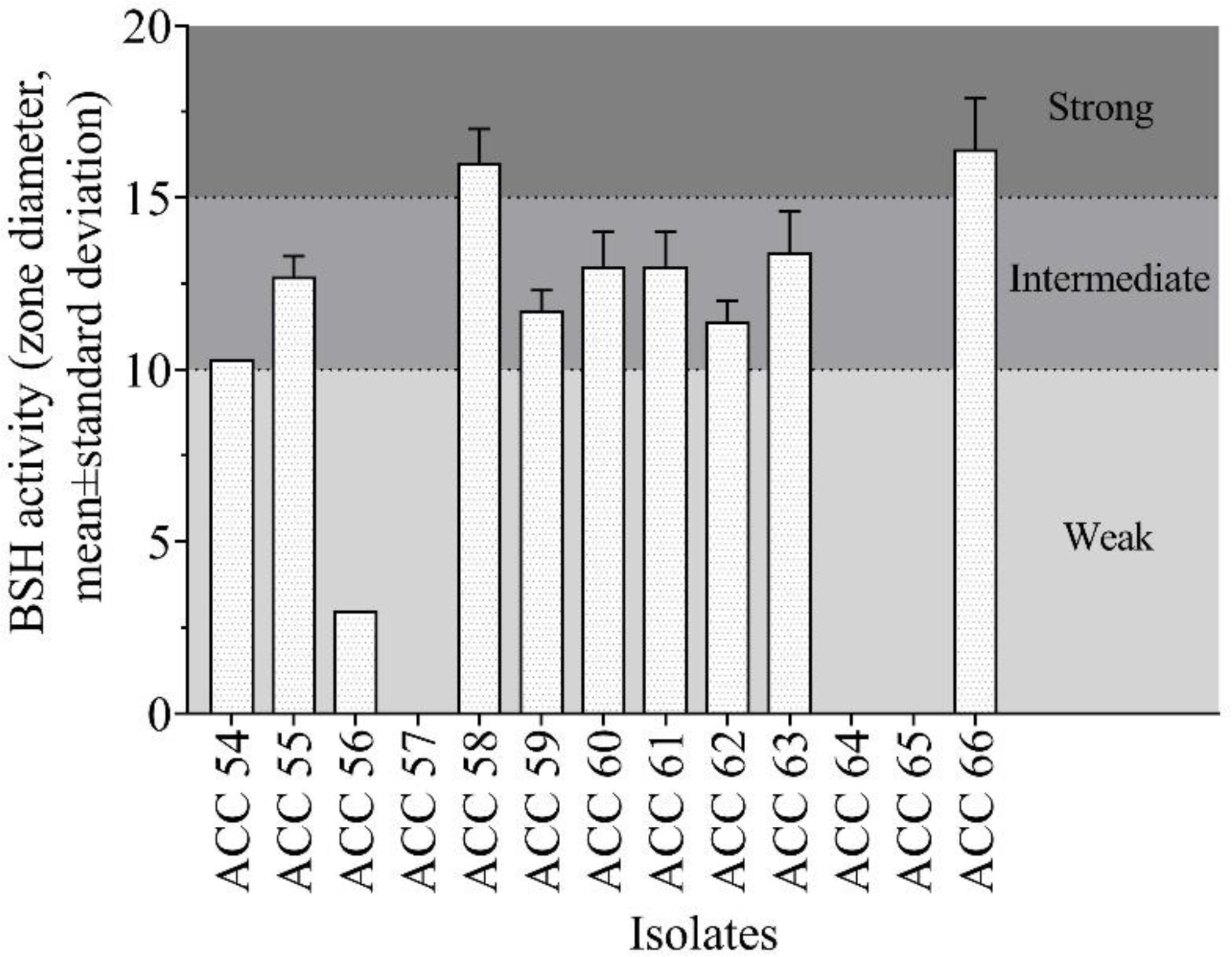
According to a report by the FAO/WHO, BSH activity is one of the important properties of probiotics [34]. Therefore, in this study, the BSH activity of the pickle isolates was determined. As shown in Figure 4, most of the strains, including L. plantarum ACC 54, ACC 59, ACC 60, ACC 61, ACC 62, and ACC 63 and L. paraplantarum ACC 55, presented intermediate BSH activity. On the other hand, L. plantarum ACC 58 and ACC 66 had strong BSH activity, whereas L. plantarum ACC 56, L. brevis ACC 57, ACC 64, and ACC 65 had weak/no BSH activity. The results clearly showed that BSH activity, an important probiotic criterion, could be more common in pickle-derived L. plantarum strains than in L. brevis strains. Abudoleh and coauthors [49] reported that L. plantarum strains had increased tolerance to intestinal conditions due to their BSH activity. Moreover, in the study by Zeng and coauthors [50], all of the L. plantarum strains isolated from traditional pickle samples exhibited BSH activity. Similarly, Paongphan and coauthors [51] reported that L. paraplantarum MN and L. plantarum MN2 isolated from Tai fermented foods showed strong BSH activity. The results of the above studies are consistent with those of the present study. In human metabolism, bile salts are produced in the liver through the use of cholesterol. They play a vital role in the breakdown and digestion of food. The deconjugation of bile salts by probiotics with BSH activity may be a significant factor in the reduction in cholesterol levels, as this mechanism also functions in the inverse manner following digestion [52]. Given the anticipated positive impact of probiotics on human health, the encouraging results of in vitro studies on the beneficial effects of these isolates on health suggest that they could be considered potential probiotic candidates.
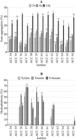
Auto-aggregation (A) and cell surface hydrophobicity (B) of the pickle isolates. All the results are presented as the means ± standard deviations. a-e show the significant differences between the isolates at p<0.05.
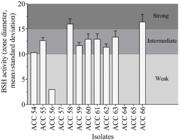
Bile salt hydrolysis (BSH) activity of the pickle isolates. All the results are presented as the means ± standard deviations. The light gray region represents weak BSH activity, the gray region represents intermediate BSH activity, and the dark gray region represents strong BSH activity.
Safety characteristics
Antibiotic resistance patterns
The FAO/WHO reported that even probiotic microorganisms generally recognized as safe (GRAS), such as Lactobacillus spp. and Bifidobacterium spp., should exhibit antibiotic resistance patterns [34]. Therefore, in this study, the antibiotic resistance patterns of the pickle isolates were determined (Figure 5). All the isolates were resistant to vancomycin, gentamycin, kanamycin and streptomycin, except L. brevis ACC 64 (intermediate to gentamycin). Since many Lactobacillus spp. are intrinsically resistant to vancomycin [53], the obtained results were expected. On the other hand, in this study, all the pickle strains were sensitive to erythromycin and chloramphenicol. Similarly, Zeng and coauthors [50] reported that L. plantarum isolates from traditional pickles were sensitive to ampicillin, erythromycin, and chloramphenicol but resistant to vancomycin. In addition, all L. brevis isolates used in this study were intermediate to ampicillin, as in the study by Barzegar and coauthors [54], while the other strains were sensitive. The MAR index of L. brevis ACC 64 was 0.33, whereas those of L. plantarum ACC 54, ACC 56, ACC 58, ACC 59, ACC 60, ACC 61, ACC 62, ACC 63, L. paraplantarum ACC 55, and L. brevis ACC 57 were 0.44. In addition, L. brevis ACC 65 and L. plantarum ACC 66 had a MAR index of 0.56. Finally, the results revealed that the pickle isolates used in this study were sensitive to most of the antibiotics except vancomycin, gentamycin, kanamycin, and streptomycin.
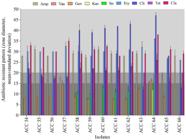
Antibiotic resistance patterns of the pickle isolates. All the results are presented as the means ± standard deviations. The dark gray region represents resistance to antibiotics, the gray region represents intermediate resistance to antibiotics, and the light gray region represents sensitivity to antibiotics. Amp; ampicillin (10 μg), Van; vancomycin (30 μg), Gen; gentamycin (10 μg), Kan; kanamycin (30 μg), Str; streptomycin (10 μg), Ery; erythromycin (15 μg), Cli; clindamycin (10 μg), Tet; tetracycline (30 μg), Cla; chloramphenicol (30 μg).
Presence of virulence genes
Since virulence genes are recognized as indicators of pathogenicity [55], the FAO/WHO has focused on the importance of the absence of virulence genes in probiotics [34]. In this study, the presence of virulence genes, including gelE, esp, efaAfs, cylA, hyl, asa, ace, and agg, in the genomes of the pickle isolates was investigated (supplementary Table S1). The results revealed that the isolates did not possess any of these virulence genes, as in the studies by Lu and coauthors [56] and Zeng and coauthors [50]. These results indicated that the pickle isolates did not have harmful effects on human health and are safe.
Presence of biogenic amine genes
Biogenic amines are undesirable in foods because they can cause adverse effects on human health, such as foodborne intoxication, when they are consumed in high amounts. In addition, some LAB are known to be capable of producing biogenic amines such as histamine, tyramine, phenylethylamine and putrescine [57]. Therefore, the presence of genes responsible for the production of biogenic amines, such as hdc, tdc, ldc, and odc, in the pickle isolates was investigated. The results revealed that the genomic DNA from the isolates did not contain these genes. Similarly, Anekella and Pérez‐Díaz [58] reported that strains isolated from pickle samples were not capable of producing biogenic amines. On the other hand, in the study by Alan and coauthors [59], L. plantarum isolates from pickles produced three biogenic amines, including cadaverine, putrescine, and histamine. These results suggest that there may be differences in the ability to produce biogenic amines even within the same species.
Hemolytic and DNase activity
In their report, the FAO/WHO indicated that there is a need to consider hemolytic activity when determining probiotic properties [34]. It is thought that both hemolytic and DNase activities could be regarded as virulence factors, which would make it particularly important to ascertain these activities [60]. In this study, the hemolytic and DNase activities of the pickle isolates were investigated, and it was concluded that none of the isolates had these activities, similar to the findings of Monika and coauthors [42] and Sharma and coauthors [61].
Some technological properties
Presence of gdh, gad and exopolysaccharide-encoding genes
GABA, which is converted from glutamate, is a bioactive compound that can be produced by microorganisms and has highly promising bioactivity for human health as the main inhibitory neurotransmitter [62]. Therefore, in this study, the presence of the gdh gene, which is responsible for glutamate production, and the gad gene, which is responsible for the production of GABA from glutamate, was investigated in the pickle isolates, and the results are presented in Table 3. None of the isolates had the gdh gene. On the other hand, L. plantarum ACC 56, ACC 58, ACC 59, ACC 60, ACC 61, ACC 62, ACC 63, and ACC 66 had the gad gene (supplementary Figure S2). All the isolates with the gad gene were L. plantarum. The results showed that L. plantarum strains could have the potential to convert glutamate, naturally present in food or added externally, into GABA. Similarly, some studies indicated that L. plantarum could be a suitable producer of GABA [43, 63, 64]. Additionally, exopolysaccharides are important components for human health because of their prebiotic properties and textural structure in fermented foods [65]. Unfortunately, the pickle isolates in this study did not possess any exopolysaccharide production genes. These results suggested that the L. plantarum isolates could have positive effects on health via the production of GABA, which is an important neurotransmitter, although not by exopolysaccharide production. Although none of the isolates possessed exopolysaccharides-encoding genes, this finding still provides important technological insight. Exopolysaccharides produced by LAB are known to play a key role in improving rheological properties such as viscosity, firmness, water-holding capacity, and syneresis control in fermented foods. In pickled vegetables, exopolysaccharides-producing strains can enhance brine viscosity, contribute to a more stable texture during storage, and improve mouthfeel and overall sensory perception [12]. Absence of the genes in the isolates indicated that these strains may not contribute directly to such textural improvements during fermentation. However, future studies involving different genes or whole genome sequencing may fully reveal the exopolysaccharide production capabilities of these strains.
Presence of gdh, gad and exopolysaccharide-encoding genes in genomic DNA of the pickle isolates
Proteolytic activity
In fermented foods, LAB, especially those with proteolytic activity, breakdown proteins and increase the functional properties of the products, which have antioxidant, antimicrobial, anti-inflammatory, and anticancer effects [66]. In this study, the proteolytic activity of the pickle isolates was investigated. None of the isolates exhibited proteolytic activity under the conditions tested; however, this result should be interpreted in the context of LAB proteolysis characteristics. Proteolytic activity in LAB is highly substrate-dependent and generally weak when evaluated on plate-based assays [67]. In food systems, especially dairy and vegetable fermentations, proteolysis contributes to the generation of peptides and amino acids that improve flavor complexity, aroma development, nutritional value, and functional properties such as antioxidant or antihypertensive activity [66]. The lack of proteolytic activity in vitro does not necessarily exclude potential activity in complex food matrices, where native proteins, minerals, and environmental factors may stimulate enzyme expression. Additionally, more sensitive analytical methods (e.g., OPA assay, peptide profiling, or proteomics-based approaches) may be required to detect low-level enzymatic activity. Thus, although proteolytic capability was not detected in this study, the technological potential of the isolates should be evaluated in real fermentation systems in future work.
Principal Component Analysis
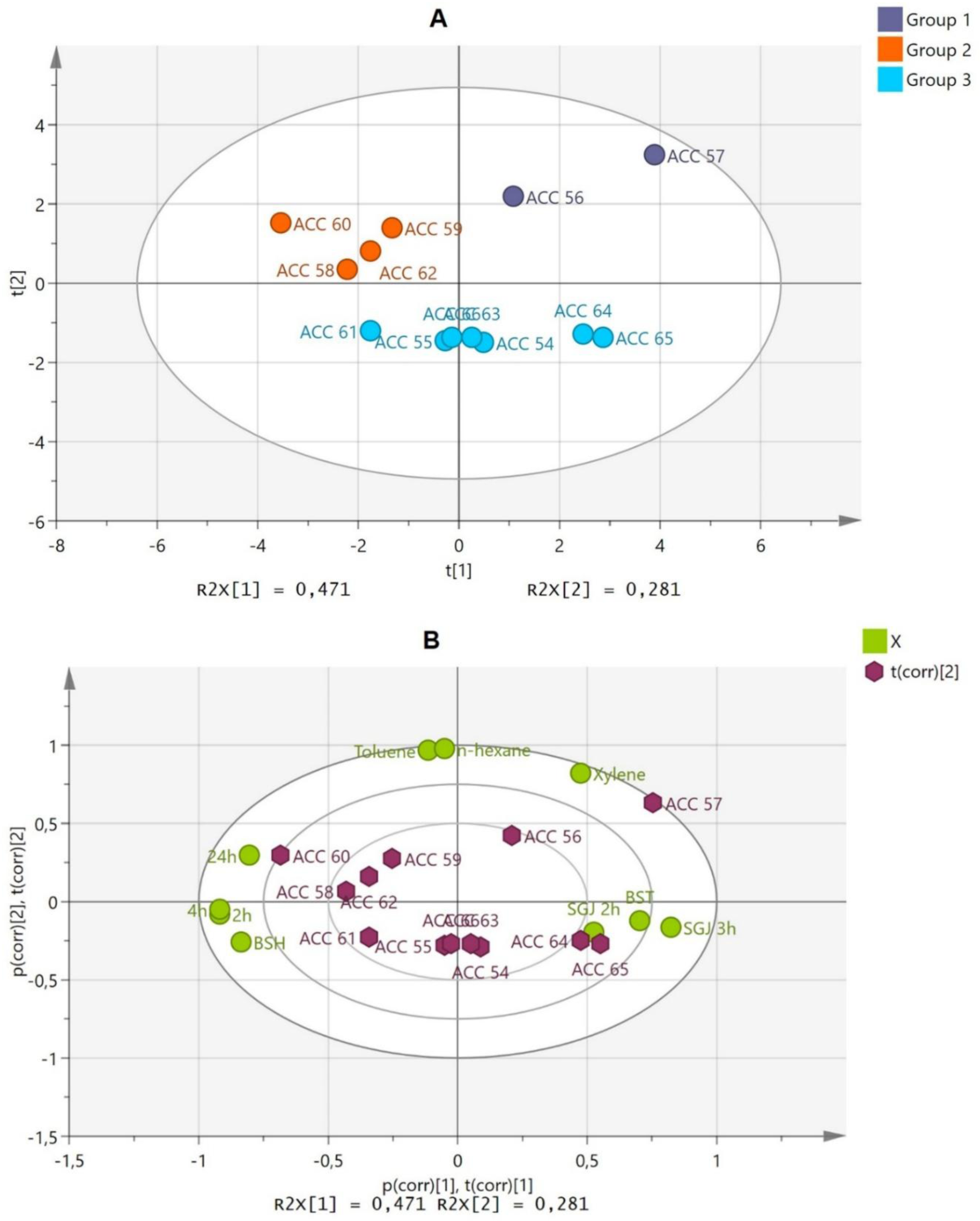
Simulated gastric juice (2h, 3h) and bile salt tolerance, hydrophobicity, auto-aggregation, and BSH activity of LAB were taken into consideration and analysed by PCA. R2X[1] and R2X[2] explained 75.2% the total variance. The three groups were successfully distinguished by score scatter plot analysis (Figure 6A). There was a clear separation between Group 2 (orange) and Group 3 (blue), suggesting they had distinct characteristics along PC1.
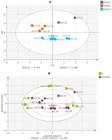
Principal component analysis of the pickle isolates. A) Score scatter plot B) Biplot. Abbreviations: SGJ 2h: Simulated gastric juice tolerance at 2h, SGJ 3h: Simulated gastric juice tolerance at 3h, BST: Bile salt tolerance, BSH: Bile salt hydrolase, 2h: Auto-aggregation at 2nd h, 4h: Auto-aggregation at 4th h, 24h: Auto-aggregation at 24th h.
In addition, Group 1 (purple) is more dispersed, particularly L. plantarum ACC 56 and L. brevis ACC 57, which could indicate greater variability. The PCA biplot (Figure 6B) showed that L. plantarum ACC 56 and L. brevis ACC 57 clustered near toluene and xylene. This indicated that these strains had superior hydrophobicity. L. plantarum ACC 58, ACC 59, ACC 60, ACC 61, and ACC 62 exhibited higher auto-aggregation capacity at 24 h, 4 h and 2 h, suggesting a higher auto-aggregation potential compared to other strains.
CONCLUSION
The continuous consumption of fermented products containing microorganisms with probiotic potential and the discovery of their beneficial effects have increased interest in the study of microorganisms in fermented products. In the present study, the isolates obtained from traditional pickles (turşu) were found to belong mostly to L. plantarum species, along with L. brevis and L. paraplantarum species. The results showed that the isolates had good potential for use as probiotics in terms of in vitro probiotics, safety and some technological properties. In conclusion, traditional pickles should be included in the human diet as a natural, healthy, probiotic source in this age of increasing tendency toward processed foods. In the future, the beneficial effects of probiotics can be further confirmed by the use of available isolates in vivo studies.
Funding:
Institutional Review Board Statement:
Informed Consent Statement:
Data Availability Statement:
Data are available on reasonable request for corresponding author.
Acknowledgments:
The authors have no acknowledgments to declare.
Use of Generative Artificial Intelligence:
Supplementary Material:
The manuscript includes the supplementary material for publication and the supporting information can be downloaded at: https://doi.org/10.5281/zenodo.18258313
Supplementary PDF
REFERENCES
- 1 Mack DR. Probiotics-Mixed messages. Can Fam Physician. 2008;51:1455-7.
- 2 Khani SM, Hosseini H, Taheri MR, Nourani M, Imani Fooladi A. Probiotics as an alternative strategy for prevention and treatment of human diseases: A review. Inflamm Allergy Drug Targets. 2012;11:79-89.
- 3 Williams NT. Probiotics. Am J Health Syst Pharm. 2010;67:449-58.
- 4 Bron PA, Kleerebezem M, Brummer RJ, Cani PD, Mercenier A, MacDonald TT, et al. Can probiotics modulate human disease by impacting intestinal barrier function? Br J Nutr. 2017;117:93-107.
- 5 Behnsen J, Deriu E, Sassone-Corsi M, Raffatellu M. Probiotics: Properties, examples, and specific applications. Cold Spring Harb Perspect Med. 2013;3:a010074.
- 6 Goodman C, Keating G, Georgousopoulou E, Hespe C, Levett K. Probiotics for the prevention of antibiotic-associated diarrhoea: A systematic review and meta-analysis. BMJ Open. 2021;11:e043054.
- 7 Ma T, Jin H, Kwok LY, Sun Z, Liong MT, Zhang H. Probiotic consumption relieved human stress and anxiety symptoms possibly via modulating the neuroactive potential of the gut microbiota. Neurobiol Stress. 2021;14:100294.
- 8 Momin ES, Khan AA, Kashyap T, Pervaiz MA, Akram A, Mannan V, et al. The effects of probiotics on cholesterol levels in patients with metabolic syndrome: A systematic review. Cureus. 2023;15:e37567.
- 9 Fontana L, Bermudez-Brito M, Plaza-Diaz J, Muñoz-Quezada S, Gil A. Sources, isolation, characterisation, and evaluation of probiotics. Br J Nutr. 2013;109:S35-S50.
- 10 Marco ML, Heeney D, Binda S, Cifelli CJ, Cotter PD, Foligné B, et al. Health benefits of fermented foods: Microbiota and beyond. Curr Opin Biotechnol. 2017;44:94-102.
- 11 Şanlier N, Gökcen BB, Sezgin AC. Health benefits of fermented foods. Crit Rev Food Sci Nutr. 2019;59:506-27.
- 12 Diez-Ozaeta I, Astiazaran OJ. Fermented foods: An update on evidence-based health benefits and future perspectives. Food Res Int. 2022;156:111133.
- 13 Deveci G, Çelik E, Ağagündüz D, Bartkiene E, Rocha JMF, Özogul F. Certain fermented foods and their possible health effects with a focus on bioactive compounds and microorganisms. Fermentation. 2023;9:923.
- 14 Paul AK, Lim CL, Apu AI, Dolma KG, Gupta M, de Lourdes Pereira M, et al. Are fermented foods effective against inflammatory diseases? Int J Environ Res Public Health. 2023;20:2481.
- 15 Breidt F, McFeeters RF, Perez-Diaz I, Lee CH. Fermented vegetables. In: Doyle MP, Buchanan RL, editors. Food microbiology. Washington:ASM Press; 2014. P. 841-55
- 16 Çetin B. Production of probiotic mixed pickles (Tursu) and microbiological properties. Afr J Biotechnol. 2011;10:14926-31.
- 17 Aljahani AH. Microbiological and physicochemical quality of vegetable pickles. J Saudi Soc Agric Sci. 2020;19:415-21.
- 18 Kumar S, Stecher G, Suleski M, Sanderford M, Sharma S, Tamura K. MEGA12: Molecular Evolutionary Genetic Analysis version 12 for adaptive and green computing. Mol Biol Evol. 2024;41:12:msae263.
- 19 Fang SH, Lai YJ, Chou CC. The susceptibility of Streptococcus thermophilus 14085 to organic acid, simulated gastric juice, bile salt, and disinfectant as influenced by cold shock treatment. Food Microbiol. 2013;33:55-60.
- 20 Talebi S, Makhdoumi A, Bahreini M, Matin MM, Moradi HS. Three novel Bacillus strains from a traditional lacto-fermented pickle as potential probiotics. J Appl Microbiol. 2018;125:888-96.
- 21 Kumari M, Kumar R, Singh D, Bhatt S, Gupta M. Physiological and genomic characterization of an exopolysaccharide-producing Weissella cibaria CH2 from cheese of the western Himalayas. Food Biosci. 2020;35:100570.
- 22 Gutiérrez-Cortés C, Suarez H, Buitrago G, Nero LA, Todorov SD. Characterization of bacteriocins produced by strains of Pediococcus pentosaceus isolated from Minas cheese. Ann Microbiol. 2018;68:383-98.
- 23 Seddik HA, Bendali F, Cudennec B, Drider D. Anti-pathogenic and probiotic attributes of Lactobacillus salivarius and Lactobacillus plantarum strains isolated from feces of Algerian infants and adults. Res Microbiol. 2017;168:244-54.
- 24 Byakika S, Mukisa IM, Byaruhanga YB, Muyanja C. Probiotic potential of lactic acid starter cultures isolated from a traditional fermented sorghum-millet beverage. Int J Microbiol. 2020;2020:7825943.
- 25 Sarkar SL, Hossain MI, Monika SA, Sanyal SK, Roy PC, Hossain MA, et al. Probiotic potential of Pediococcus acidilactici and Enterococcus faecium isolated from indigenous yogurt and raw goat milk. Microbiol Biotechnol Lett. 2020;48:276-86.
- 26 Byakika S, Mukisa IM, Mugabi R, Muyanja C. Antimicrobial activity of lactic acid bacteria starters against acid-tolerant, antibiotic-resistant, and potentially virulent E. coli isolated from a fermented sorghum-millet beverage. Int J Microbiol. 2019;2019:2013539.
- 27 Thirabunyanon M, Boonprasom P, Niamsup P. Probiotic potential of lactic acid bacteria isolated from fermented dairy milks on antiproliferation of colon cancer cells. Biotechnol Lett. 2009;31:571-6.
- 28 Domingos-Lopes MFP, Stanton C, Ross PR, Dapkevicius MLE, Silva CCG. Genetic diversity, safety, and technological characterization of lactic acid bacteria isolated from artisanal Pico cheese. Food Microbiol. 2017;63:178-90.
- 29 Musikasang H, Tani A, H-kittikun A, Maneerat S. Probiotic potential of lactic acid bacteria isolated from chicken gastrointestinal digestive tract. World J Microbiol Biotechnol. 2009;25:1337-45.
- 30 Yu J, Gao W, Qing M, Sun Z, Wang W, Liu W, et al. Identification and characterization of lactic acid bacteria isolated from traditional pickles in Sichuan, China. J Gen Appl Microbiol. 2012;58:163-72.
- 31 An F, Sun H, Wu J, Zhao C, Li T, Huang H, et al. Investigating the core microbiota and its influencing factors in traditional Chinese pickles. Food Res Int. 2021;147:110543.
- 32 Banik A, Anjum H, Habib H, Abony M, Begum A, Ahmed Z. Characterization of lactic acid bacteria isolated from street pickles of Dhaka, Bangladesh. Heliyon. 2023;9:e17508.
- 33 Chen YS, Wu HC, Pan SF, Lin BG, Lin YH, Tung WC, et al. Isolation and characterization of lactic acid bacteria from yan-taozih (pickled peaches) in Taiwan. Ann Microbiol. 2013;63:607-14.
- 34 FAO/WHO. Guidelines for the Evaluation of Probiotics in Food. Report of a Joint FAO/WHO Working Group on Drafting Guidelines for the Evaluation of Probiotics in Food. 2002.
- 35 Güler MA, Çetin B, Albayrak B, Meral‐Aktaş H, Tekgündüz KŞ, Kara M, et al. Isolation, identification, and in vitro probiotic characterization of forty novel Bifidobacterium strains from neonatal feces in Erzurum province, Türkiye. J Sci Food Agric. 2024;104:4165-75.
- 36 Dallal MS, Zamaniahari S, Davoodabadi A, Hosseini M, Rajabi Z. Identification and characterization of probiotic lactic acid bacteria isolated from traditional Persian pickled vegetables. GMS Hyg Infect Control. 2017;12:Doc15.
- 37 Akmal U, Ghori I, Elasbali AM, Alharbi B, Farid A, Alamri AS, et al. Probiotic and antioxidant potential of the Lactobacillus spp. isolated from artisanal fermented pickles. Ferment. 2022;8:328.
- 38 Zhao X, Hu R, He Y, Li S, Yang J, Zhang J, et al. Screening of isolated potential probiotic lactic acid bacteria from Sichuan pickle for cholesterol-lowering property and triglycerides-lowering activity. Food Sci Technol. 2022;42:e09122.
- 39 Corcoran BM, Stanton C, Fitzgerald GF, Ross R. Survival of probiotic lactobacilli in acidic environments is enhanced in the presence of metabolizable sugars. Appl Environ Microbiol. 2005;71:3060-3067.
- 40 Romero-Chapol OO, Varela-Pérez A, Castillo-Olmos AG, García HS, Singh J, García-Ramírez PJ, et al. Encapsulation of Lacticaseibacillus rhamnosus GG: Probiotic survival, in vitro digestion and viability in apple juice and yogurt. Appl Sci. 2022;12:2141.
- 41 Gul O, Atalar I. Different stress tolerance of spray and freeze dried Lactobacillus casei Shirota microcapsules with different encapsulating agents. Food Sci Biotechnol. 2019;28:807-16.
- 42 Monika S, Kumar V, Kumari A, Angmo K, Bhalla TC. Isolation and characterization of lactic acid bacteria from traditional pickles of Himachal Pradesh, India. J Food Sci Technol. 2017;54:1945-52.
- 43 Çon AH, Karasu N. Determination of antagonistic starter cultures for pickle and olive fermentation processes. Czech J Food Sci. 2009;27:185-93.
- 44 Stivala A, Carota G, Fuochi V, Furneri PM. Lactobacillus rhamnosus AD3 as a promising alternative for probiotic products. Biomolecules. 2021;11:94.
- 45 Lin X, Xia Y, Yang Y, Wang G, Zhou W, Ai L. Probiotic characteristics of Lactobacillus plantarum AR113 and its molecular mechanism of antioxidant. LWT-Food Sci Technol. 2020;126:109278.
- 46 Mokhtari HAER, Hassaine O, Çetin B, Meral-Aktaş H. Probiotic Potential, Safety Assessment, and Functional Properties of Lactic Acid Bacteria from Camel Milk. Enzyme Microb Technol. 2025;110676.
- 47 Niu KM, Kothari D, Cho SB, Han SG, Song IG, Kim SC, et al. Exploring the probiotic and compound feed fermentative applications of Lactobacillus plantarum SK1305 isolated from Korean green chili pickled pepper. Probiotics Antimicrob Proteins. 2019;11:801-12.
- 48 Dlamini ZC, Langa RLS, Aiyegoro OA, Okoh AI. Safety evaluation and colonisation abilities of four lactic acid bacteria as future probiotics. Probiotics Antimicrob Proteins. 2019;11:397-402.
- 49 Abudoleh SM, Hamdan SO, Mahasneh AM, Al-Khani ZM, Talhouni AA. Isolation and characterization of potential probiotic bacteria from Jordanian traditional pickled and fermented foods. Acta Pol Pharm. 2021;78:515-20.
- 50 Zeng Y, Li Y, Wu QP, Zhang JM, Xie XQ, Ding Y, et al. Evaluation of the antibacterial activity and probiotic potential of Lactobacillus plantarum isolated from Chinese homemade pickles. Can J Infect Dis Med Microbiol. 2020;2020:8818989.
- 51 Paongphan P, Ditudompo S, Vitheejongjaroen P, Pachekrepapol U, Taweechotipatr M. Selected lactobacilli isolated from Thai foods for production of fermented dairy products with cholesterol lowering potential. NFS J. 2023;33:100151.
- 52 Urdaneta V, Casadesús J. Interactions between bacteria and bile salts in the gastrointestinal and hepatobiliary tracts. Front Med. 2017;4:163.
- 53 Clinical and Laboratory Standards Institute (CLSI). Methods for antimicrobial dilution and disk susceptibility testing of infrequently isolated or fastidious bacteria (3rd ed.). CLSI guideline M45. Clinical and Laboratory Standards Institute. 2016.
- 54 Barzegar H, Behbahani BA, Mirzaei A, Sheikhjan MG. Assessing the protection mechanisms against Enterobacter aerogenes by analyzing aggregation, adherence, antagonistic activity, and safety properties of potentially probiotic strain Lactobacillus brevis G145. Microb Pathog. 2023;181:106175.
- 55 Chen L, Yang J, Yu J, Yao Z, Sun L, Shen Y, et al. VFDB: A reference database for bacterial virulence factors. Nucleic Acids Res. 2005;33:D325–8.
- 56 Lu YH, Liang WS, Wang R, Liang QC, Zeng XA, Huang YY. Assessment of the safety and probiotic properties of Lactiplantibacillus plantarum HYY-DB9 based on comprehensive genomic and phenotypic analysis. LWT-Food Sci Technol. 2024;203:116386.
- 57 Landete JM, Ferrer S, Pardo I. Biogenic amine production by lactic acid bacteria, acetic bacteria, and yeast isolated from wine. Food Control. 2007;18:1569-74.
- 58 Anekella K, Pérez‐Díaz IM. Characterization of robust Lactobacillus plantarum and Lactobacillus pentosus starter cultures for environmentally friendly low‐salt cucumber fermentations. J Food Sci. 2020;85:3487-97.
- 59 Alan Y, Topalcengiz Z, Dığrak M. Biogenic amine and fermentation metabolite production assessments of Lactobacillus plantarum isolates for naturally fermented pickles. LWT-Food Sci Technol. 2018;98:322-8.
- 60 Moraes PM, Perin LM, Todorov SD, Silva A, Franco BDGM, Nero LA Bacteriocinogenic and virulence potential of Enterococcus isolates obtained from raw milk and cheese. J Appl Microbiol. 2012;113:318-28.
- 61 Sharma N, Chandel M, Sharma N. Studies on traditional Indian (turmeric) pickle as probiotic pickle for therapeutic uses in view of COVID-19 pandemic. Indian J Tradit Knowl. 2021;19:143-52.
- 62 Hou D, Tang J, Feng Q, Niu Z, Shen Q, Wang L, et al. Gamma-aminobutyric acid (GABA): A comprehensive review of dietary sources, enrichment technologies, processing effects, health benefits, and its applications. Crit Rev Food Sci Nutr. 2024;64:8852-74.
- 63 Nakatani Y, Fukaya T, Kishino S, Ogawa J. Production of GABA-enriched tomato juice by Lactiplantibacillus plantarum KB1253. J Biosci Bioeng. 2022;134:424-31.
- 64 Işık S, Dağdemir E, Tekin A, Hayaloğlu AA. Metabolite profiling of fermented milks as affected by adjunct cultures during long-term storage. Food Biosci. 2023;56:103344.
- 65 Tiwari S, Kavitake D, Devi PB, Halady P, Shetty P. Bacterial exopolysaccharides for improvement of technological, functional, and rheological properties of yoghurt. Int J Biol Macromol. 2021;183:1585-95.
- 66 Ter ZY, Chang LS, Babji AS, Zaini NAM, Fazry S, Sarbini SR, et al. A review on proteolytic fermentation of dietary protein using lactic acid bacteria for the development of novel proteolytically fermented foods. Int J Food Sci Technol. 2024;59:1213-36.
- 67 Vinderola G, Ouwehand A, Salminen S, von Wright A. Lactic Acid Bacteria: Microbiological and Functional Aspects. Boca Raton: CRC Press; 2004.