 Association of Morpho-Physiological Traits to Identify Salinity Tolerance in Newly Developed Sugarcane Genotypes
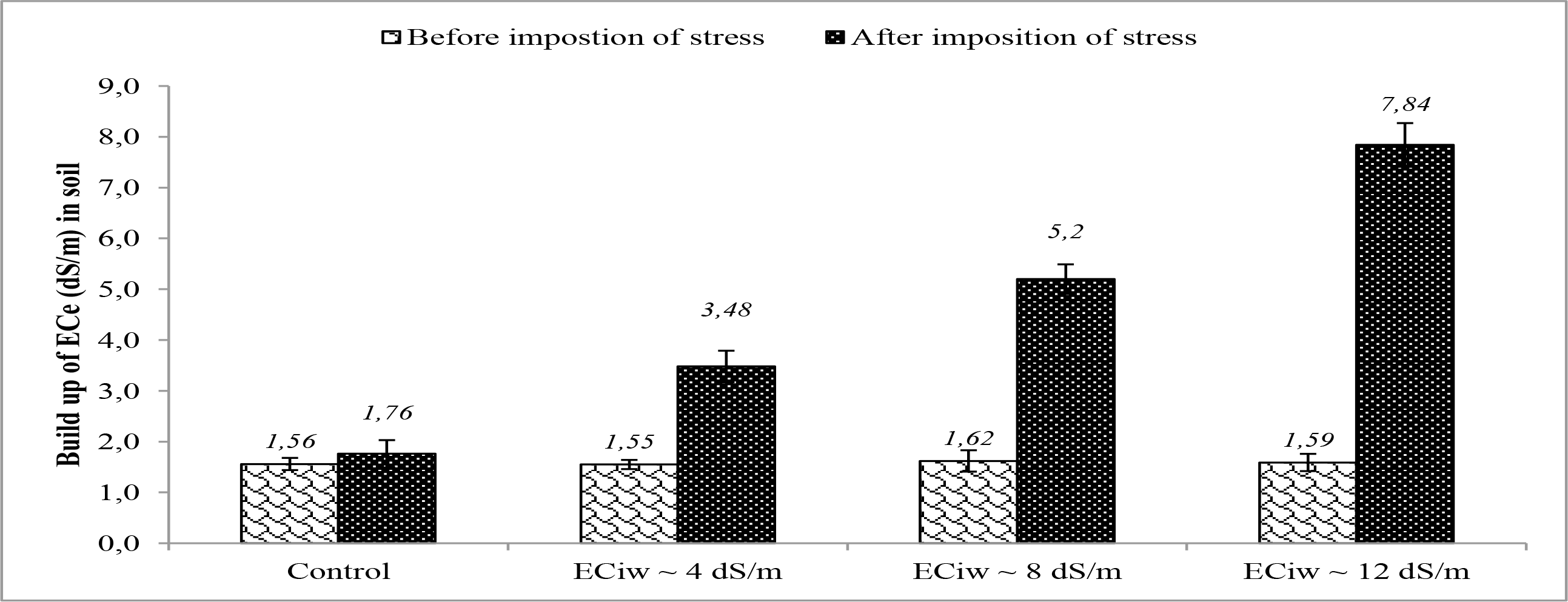
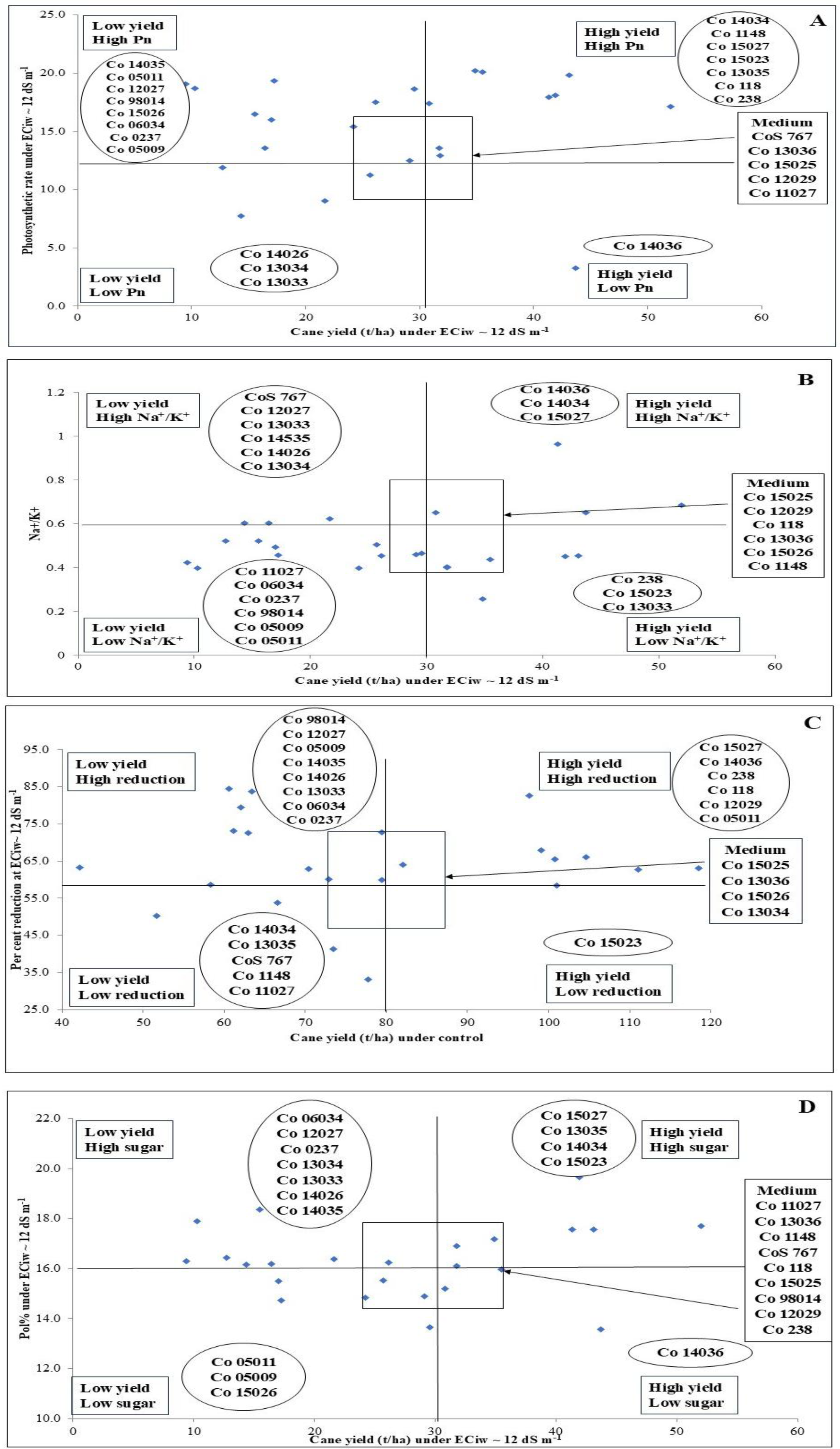
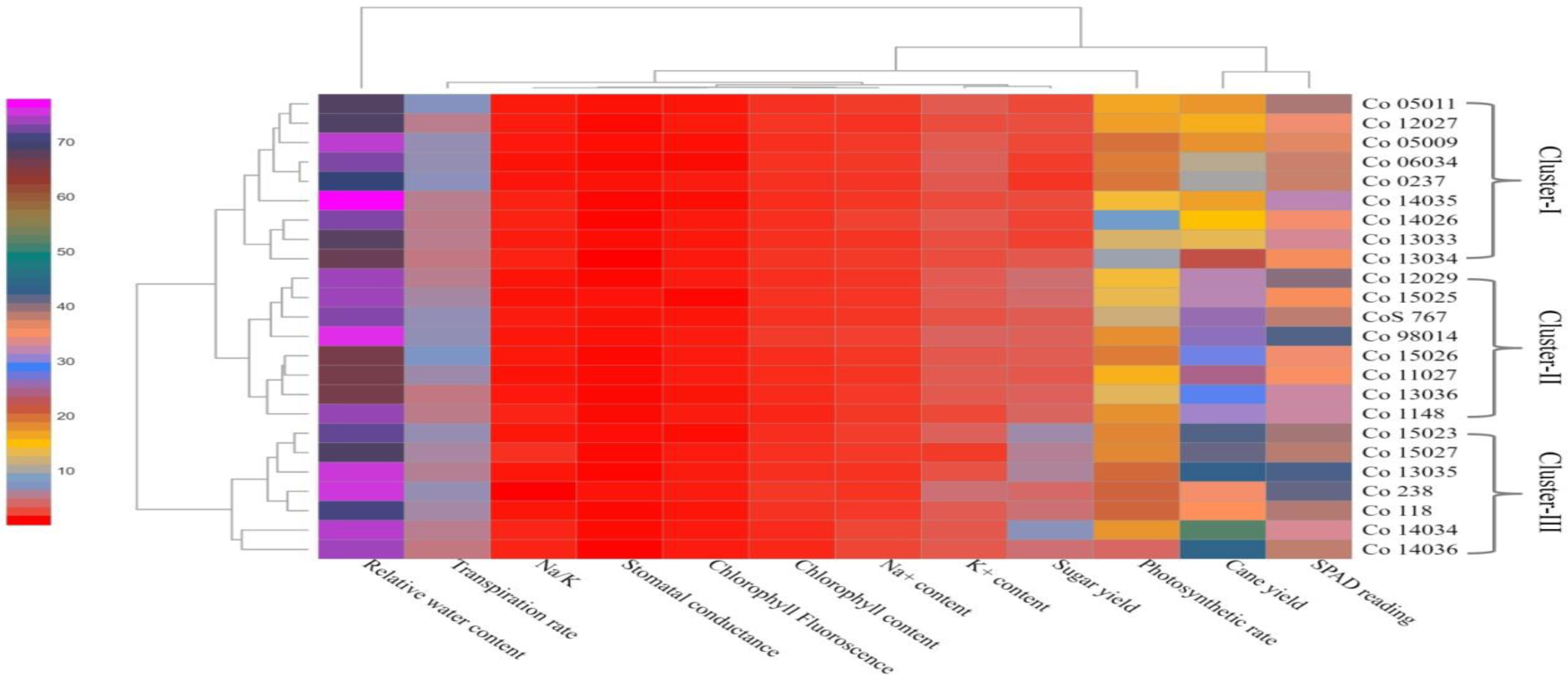
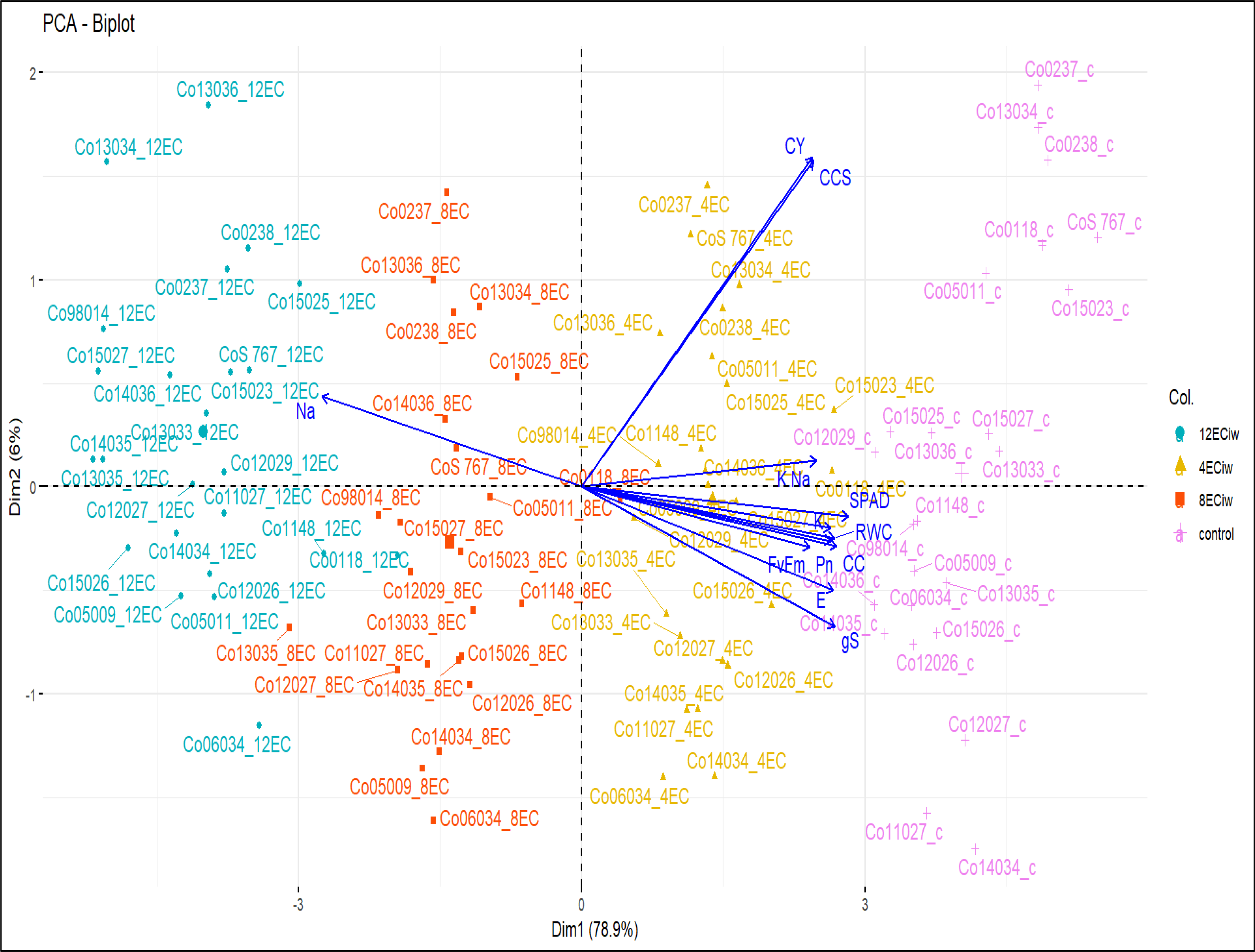
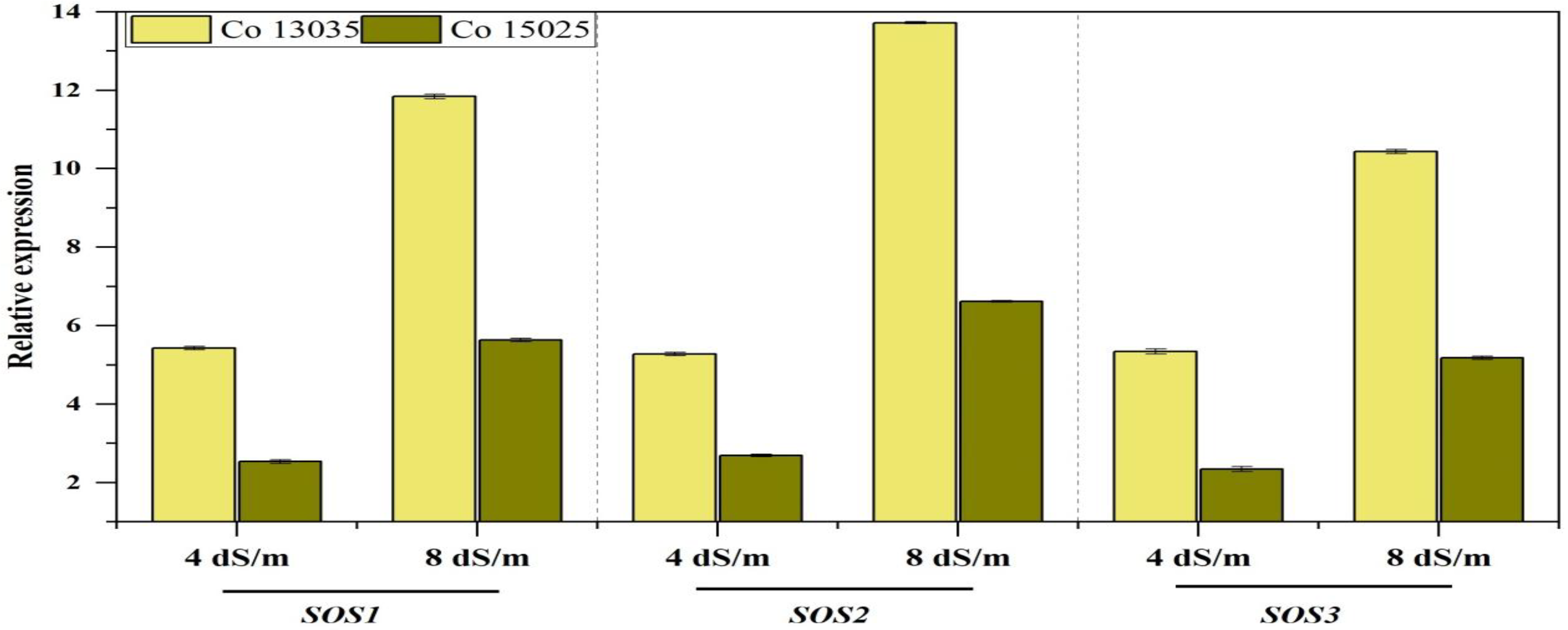
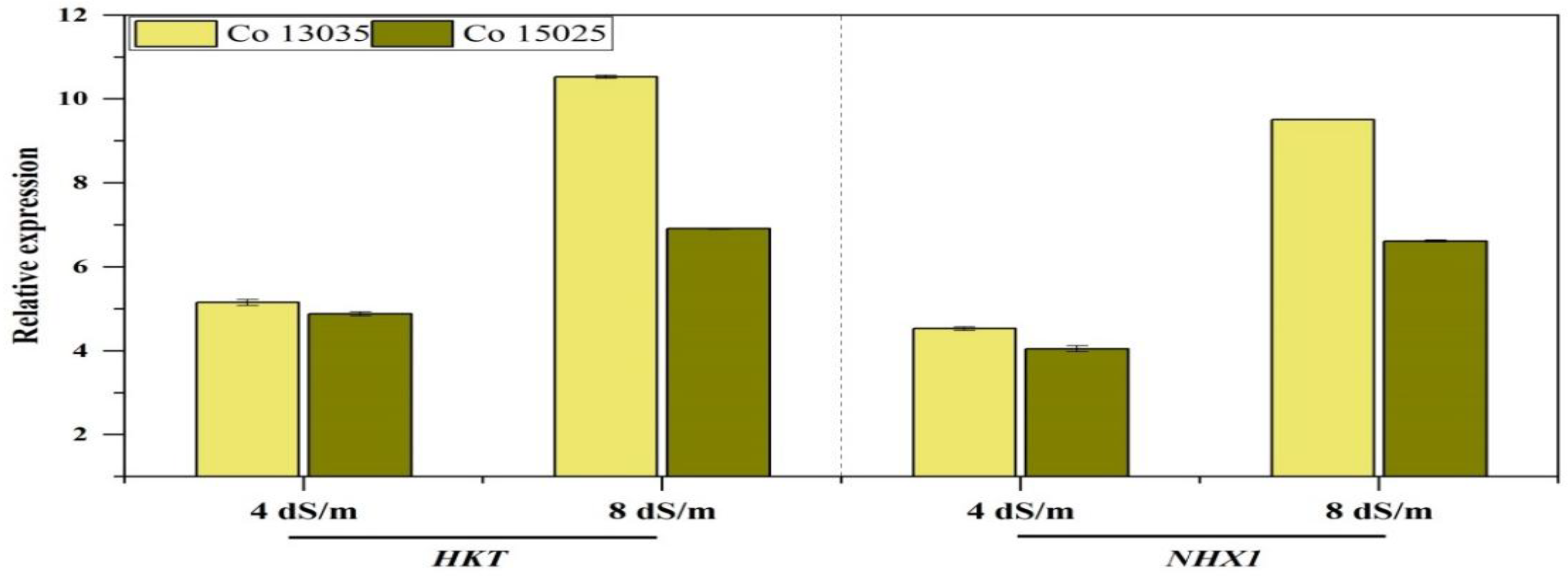
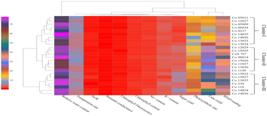
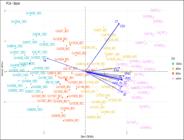
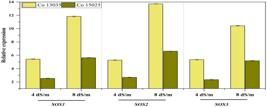
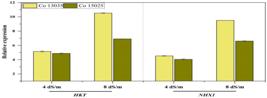
Sugarcane is severely impacted by abiotic stresses and is cultivated across various agro-climatic environments. Hence, to evaluate the potential of twenty-four co-canes, we conducted an experiment under three levels of saline water irrigation viz., 4, 8 and 12 dS m-1 ECiw along with control (ECiw ~ 0.4). Leaf chlorophyll content and SPAD index constantly decreased with increase in irrigation water salinity along with RWC which reduced by 3.88%, 12.51 % and 20.23% under 4, 8 and 12 dS m-1 ECiw, respectively. Similarly, gas exchange attributes (Pn, gS, E) decreased in the range of 8 - 10%; 20 - 30% and 35 - 47% respectively. On an average, Na+ ions accumulated in range of 0.478 - 1.194% and K+ content reduced by 25.09 - 56.27% under 4, 8, 12 dS m-1 ECiw, respectively. Sugar yield (CCS %) declined to 21.71, 53.08 and 67.38% and cane yield (t ha-1) reduced by 19.34, 50.43 and 64.8 % with irrigation salinity of 4, 8 and 12 dS m-1 ECiw. Based on growth and yield parameters, these co-canes were categorized as tolerant (Co 15023, Co 0238, Co 13035 and Co 0118) and sensitive (Co 14036, Co 12027, Co 14026 and Co 13034). PCA biplot analysis and Association/Cluster analysis using heatmap also categorized these advanced lines into sensitive, moderately tolerant and tolerant category. Additionally, differential expression of salinity-responsive genes (SOS1, SOS2, SOS3, HKT, and NHX1) further distinguished tolerant genotypes like Co 13035 by their enhanced ionic homeostasis under salt stress. Briefly, we can say that physiological and ionic traits are important indictors in governing yield and identified tolerant advanced lines can be leveraged in hybridization programs aimed at developing new high-yielding, salt-tolerant breeding lines.
Keywords:
Sugarcane; Salinity; Physiology; Na+/K+; Yield; Cluster analysis; Correlations.
• Twenty four co-canes were evaluated with four levels of saline irrigation water viz., Control, ECiw ~ 4, 8 and 12 dS m-1.
• Co-canes Co 15023, Co 0238, Co 13035 and Co 0118 showed higher salt tolerance potential than other lines and maintain higher physiological traits along with yield.
• Co-canes Co 14036, Co 12027, Co 14026 and Co 13034 were highly sensitive towards water salinity.
• These co-canes accumulated Na+ ions in range of 0.478 - 1.194 %, while K+ content reduced by 25.09 - 56.27 % under ECiw ~ 4 dS m-1, ECiw ~ 8 dS m-1 and ECiw ~ 12 dS m-1, respectively.
• The identified sugarcane lines can be promoted further for detailed farmer field trails and can be included in breeding advancement for propagation.
 Thumbnail
 Thumbnail
 Thumbnail
 Thumbnail
 Thumbnail
 Thumbnail