 Determination of Changes in Insecticide Residues in Hot Water Treated Cold Stored Apple Using TQ LC-MS/MS
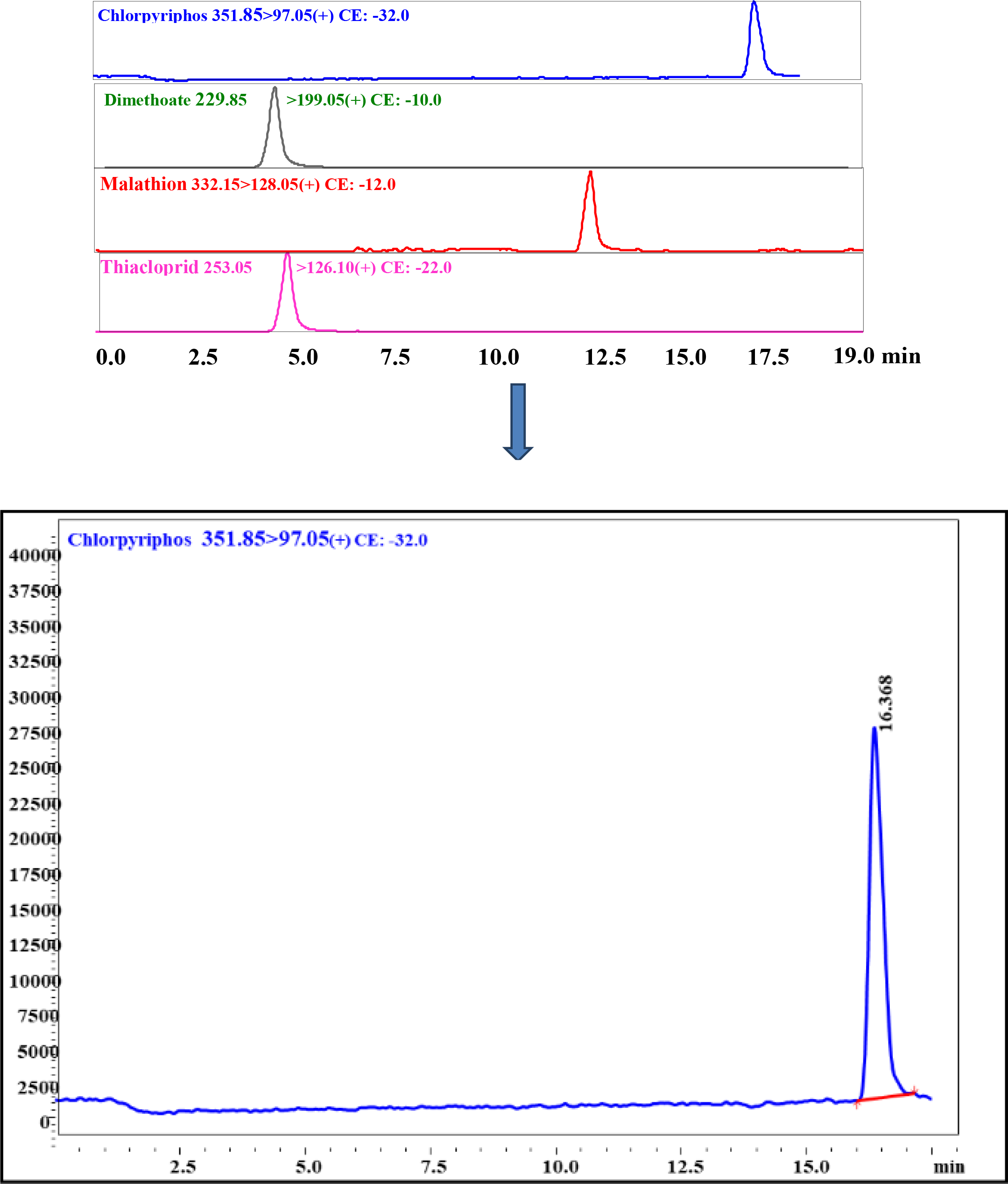
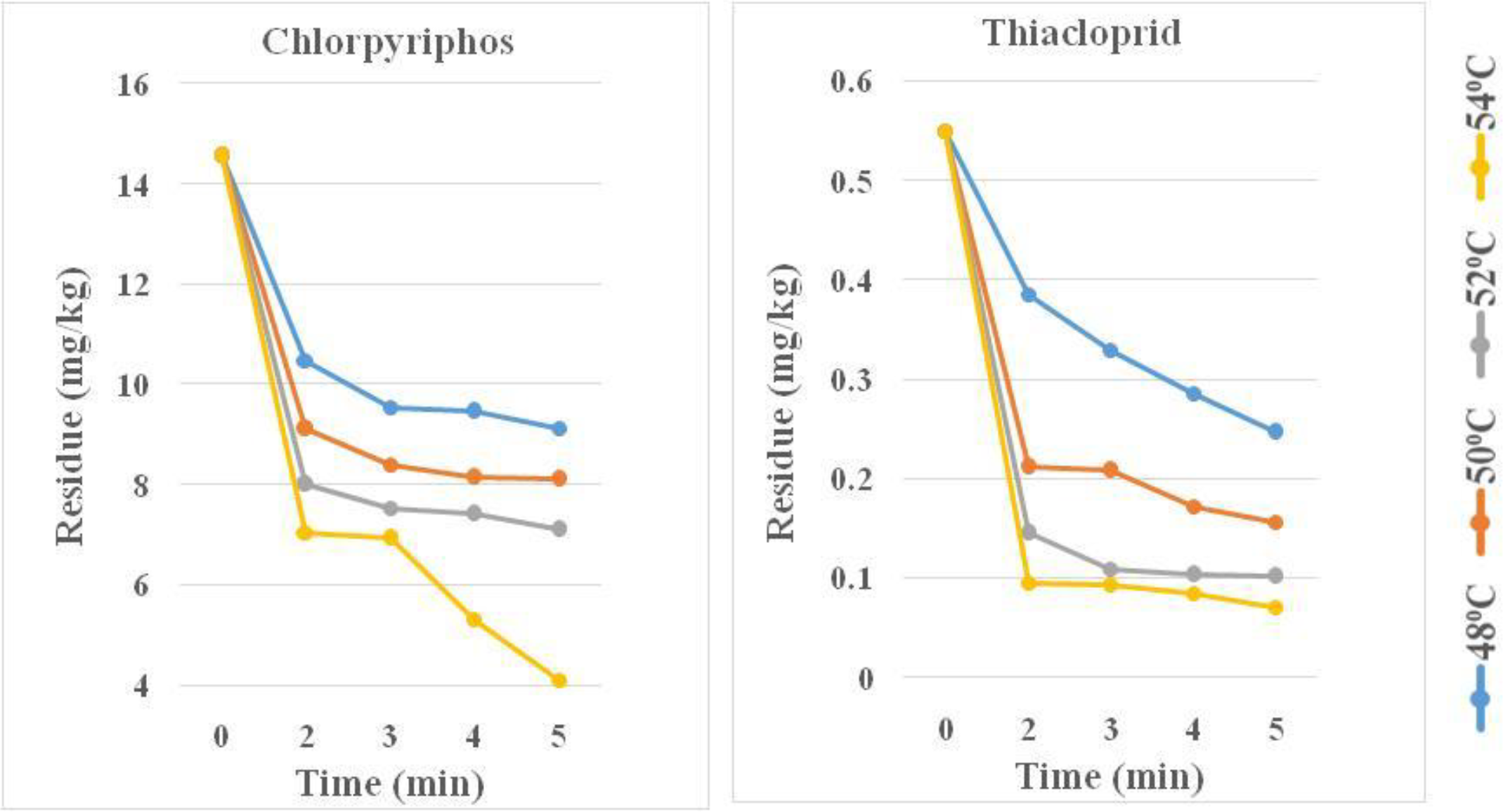
The present study elucidates the effect of hot water treatment (HWT) on insecticide residue degradation in apple fruit while maintaining their optimum quality. Insecticide (chlorpyriphos, dimethoate, malathion and thiacloprid) residues were measured in apples by liquid chromatography coupled with tandem-mass spectrometry (TQ LC-MS/MS) after hot water treatment (48 °C, 50 °C, 52 °C and 54 °C each for 2, 3, 4 and 5 min) and during subsequent cold storage (2±1 °C at 90-95% RH) for 90 days. The method was validated for linearity, specificity, accuracy and precision using SANTE guidelines. Recovery of the insecticides was within the acceptable range (87.72 to 117.21%) with 4.00 to 8.52% relative standard deviation. Increasing HWT temperature and duration significantly reduced insecticide residues (ranging from 28% to 100%), with the lowest processing factors (PF values of 0.51 and 0.19 for 4 and 5 minutes) observed at 52 °C and 54 °C. The degradation of insecticides followed first-order kinetics, leading to complete dissipation of malathion and dimethoate during HWT, while chlorpyriphos and thiacloprid exhibited slower dissipation rates. In a nutshell HWT effectively reduced insecticide residues in apples while maintaining quality.
Keywords:
Hot water treatment; Apple; Residue; Dissipation; QuEChERS; TQ LC-MS/MS.
Hot water treatment (HWT) impacts insecticide residues in stored apples.
Insecticide residues are extracted using modified QuEChERS and analyzed by TQ LC-MS/MS.
After HWT, t1/2 decreases due to rapid insecticide dissipation.
Complete dissipation of malathion and dimethoate during HWT.
HWT at 48°C for 5 min and 50°C for 2 min maintains best fruit quality.
 Thumbnail
 Thumbnail