 Ethical aspects of preimplantation genetic diagnoses and Brazilian law
Abstract
Advances in genetics have enabled research into preimplantation genetic diagnosis, leading to worldwide debates on ethical issues. In Brazil, the topic is only covered by resolutions of the Federal Council of Medicine, with no specific legislation, which unites medical genetics and biolaw. The objective of this study is to survey the ethical implications of this technique around the world and how Brazilian legislation deals with these issues. An integrative literature review was conducted on SciELO and Virtual Health Library databases, considering works published between January 2012 and December 2022. The following descriptors were used, in the English and Portuguese languages: “preimplantation diagnosis”/“diagnóstico pré-implantação” and “ethics”/“ética.” Despite the ethical debates, it was observed that the legal gaps on the subject are yet to be integrated to guide the use of the technique along paths that are not tied to the parents’ individualistic reasons.
Reproduction; Selective breeding; Morals; Genetics, medical; Jurisprudence
Resumo
Os avanços em genética permitiram investigações mediante o diagnóstico genético pré-implantacional, que levaram a debates mundiais em torno de questões éticas. No Brasil o tema é amparado apenas por resoluções do Conselho Federal de Medicina, não havendo legislação específica, o que une a genética médica e o biodireito. O objetivo deste estudo é fazer um levantamento sobre as implicações éticas dessa técnica no mundo e sobre como a legislação brasileira lida com essas questões. Realizou-se revisão integrativa da literatura nas bases de dados SciELO e Biblioteca Virtual em Saúde, considerando trabalhos publicados entre janeiro de 2012 e dezembro de 2022. Utilizaram-se os descritores a seguir, em inglês e português: “preimplantation diagnosis”/“diagnóstico pré-implantação” e “ethics”/“ética”. Observou-se que, apesar dos debates éticos, ainda existe necessidade de integrar as lacunas legais sobre o tema, de modo a guiar o uso da técnica por caminhos que não se prendam a razões individualistas dos genitores.
Reprodução; Seleção artificial; Princípios morais; Genética médica; Jurisprudência
Resumen
Los avances en genética han permitido investigar el diagnóstico genético preimplantacional, lo que ha suscitado debates mundiales sobre sus aspectos éticos. En Brasil, el tema está respaldado únicamente por resoluciones del Consejo Federal de Medicina, no existiendo legislación específica, lo que une la genética médica y el bioderecho. El objetivo de este estudio es analizar las implicaciones éticas de esta técnica en todo el mundo y cómo la legislación brasileña aborda estas cuestiones. Se realizó una revisión bibliográfica integrativa utilizando las bases de datos SciELO y Biblioteca Virtual em Saúde, considerando los artículos publicados entre enero de 2012 y diciembre de 2022. Se utilizaron los siguientes descriptores, en inglés y portugués: “preimplantation diagnosis”/“diagnóstico pré-implantação” y “ethics”/“ética”. Se observó que, a pesar de los debates éticos, aún existe la necesidad de integrar las lagunas legales sobre el tema, de modo que se guíe el uso de la técnica por caminos que no se limiten a razones individualistas de los progenitores.
Reproducción; Selección artificial; Principios morales; Genética médica; Jurisprudencia
The complete sequencing of the human genome, that is, the decoding of all the nitrogenous bases that make up DNA, has made it possible to access information contained in the genetic code and has stimulated increased research in the area of genetics 1,2. As a result, health professionals have begun to work on predicting certain genetic conditions, and also on investigating the genetic content of embryos through preimplantation genetic diagnosis (PGD) 3,4.
PGD aims to identify genetic conditions in embryos created through in vitro fertilization (IVF)—a technique used in assisted human reproduction (AHR). In other words, it became possible for individuals undergoing IVF to select embryos with a relatively low risk of developing genetic alterations, highlighting the involvement of ethical and personal issues in the use of PGD 5.
As a result, medical genetics and biolaw began to walk hand in hand, considering that possible alterations in the genetic code raise ethical and legal issues 6. As a field with recent advances, biotechnology has been ahead of legal efforts, resulting in a lack of regulation that guarantees the inseparable relationship between the concept of human dignity and the human embryo 7.
However, as Méndez López and Villamediana Monreal 7 point out, it is difficult not only to establish the moment in which the individual is considered a person, but also to define the embryo in the medical, legal, and bioethical fields. These impasses are reflected in the scarcity of legislation in the national territory, with AHR, and consequently PGD, being supported only by Resolution 2,320/2022 of the Federal Council of Medicine (CFM), which states that:
HR techniques can be applied to the selection of embryos subjected to the diagnosis of genetic alterations that cause diseases, and in those cases they can be donated for research or discarded, according to the decision of the patient(s), duly documented with specific free and informed consent. Assisted human reproduction techniques cannot be applied with the intention of selecting the sex (presence or absence of the Y chromosome) or any other biological characteristic of the child, except to prevent diseases in the possible descendant 8.
Therefore, there is a lack of specific legislation that addresses ethical dilemmas and technical issues in depth 9, since there is no change in relation to the previous resolution (CFM Resolution 2,294/2021) 10. Thus, scientific advances such as PGD are viewed with fear by some scientists due to their effects and complex social implications, which, in some situations, can result in harm to the patient, leading them to seek reparations through the courts. Nevertheless, others consider the technique to be an advance, although recognizing the need for regulation 1,11.
Therefore, ethical issues related to the PGD technique, as well as the response of Brazilian legislation to these issues, need to be debated. For this reason, this integrative literature review aims to identify ethical questions debated worldwide in relation to the use of this technique, as well as its legal implications in the Brazilian context of protecting human dignity.
Method
This is an integrative literature review with a qualitative approach, conducted through bibliographic research on SciELO and Virtual Health Library (VHL) databases. The following Health Sciences Descriptors (DeCS) were used, in the English and Portuguese languages: “preimplantation diagnosis”/“diagnóstico pré-implantação” and “ethics”/“ética.” Regarding VHL, the combination of the two descriptors was used to refine the search, considering that using only the first term generated a very broad result, and using only the second descriptor would produce a tangential result to the topic.
The Boolean operator “and” was used to refine the search, and articles relevant to the topic were selected. The same search strategy was used in SciELO, except that only the results of the first descriptor alone were considered, since the two descriptors combined resulted in a very limited number of articles.
For the sample composition, inclusion criteria were: being articles, theses, or books made available free of charge and in full, in the English, Spanish or Portuguese languages; being a research with human beings published between January 2012 and December 2022, and dealing with the theme “ethical and legal issues of the PGD,” with the latter focused on the Brazilian context.
Papers with titles not directly related to the research topic were disregarded, as well as those that did not contain, in their abstracts, relevant data related to the research and that did not fit the proposed topic. Finally, the selection of documents was made independently based on the analysis of the titles, abstracts, and full texts of the publications, as shown in Figure 1.
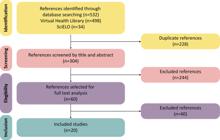
Flowchart of evidence selection based on the evaluation of titles, abstracts, and full text, following the predetermined inclusion and exclusion criteria
Results
After screening 304 documents, 60 were read in full and, based on the application of the inclusion and exclusion criteria, 20 were selected to compose the study (Figure 1). Of these, the majority were selected from the VHL database (n=16). During the period analyzed, irregularity was observed in the number of studies from each year, and 2012 was the year with the highest number of publications (n=8), followed by 2015, with five articles.
The analysis of the included studies focused on the ethical approaches to PGD in the global context and its legal implications in the Brazilian context. When evaluating the documents, it was noted that 10 studies referred only to the ethical part, while another seven simultaneously addressed ethical and legal implications in a broad context.
One article addressed the intersection of the two themes, and the legal approach focused on the Brazilian context. Two studies presented the regulations concerning only PGD, with one focused exclusively on Brazil. The evaluated texts that had a broad legal approach were used to support the study and discussion about PGD regulations in Brazil (Chart 1).
Discussion
Bioethical aspects of preimplantation genetic diagnosis
Despite the many benefits that PGD provides due to its rapid evolution, this technique raises plausible ethical and legal questions, which result from the manipulation of human gametes and embryos 24,30. For Emaldi Cirión 20, these questions are based on the Universal Declaration on Bioethics and Human Rights, of the United Nations Educational, Scientific and Cultural Organization (UNESCO), which states that it is important to consider the impact of life sciences on future generations and, in particular, on genetic composition.
This topic raises doubts regarding respect for the value of human life, given that it puts on the agenda the issue of whether a child with a genetic alteration would have the dignity to live and to what extent parents have the right to decide their children’s characteristics 25,30. Furthermore, this doubt also relates to the criteria considered to choose a certain embryo and not others 30.
According to Hodge and Santos 25, the fate of embryos with alterations is a limitation of PGD, which raises the question of whether the removal of the embryo is legitimate, since they are generally frozen and later discarded simply for having genetic alterations. In Brazil, surplus viable embryos must be cryopreserved and, according to the CFM 8, the parents must demonstrate, in writing, their wishes regarding the fate of these embryos and whether they wish to donate them.
There are debatable aspects regarding the existence of a moral obligation to perform PGD or not. Jacobs 23 questions, for example, how far the obligation goes to choose a healthy child over another who, despite developing a condition that reduces their quality of life, would still have a life “worth living.” Frati and collaborators 26 question whether there is, then, any so serious disability that it would make non-existence better than life.
Another point is the transposition of the therapeutic purpose with the elimination of embryos with characteristics viable for life, which may constitute discrimination against people with disabilities 26,31,32. In this context, Whetstine 21 raises the question of whether embryos carrying trisomy 21—Down syndrome—are in a condition serious enough to legitimize the prevention of their existence.
Soniewicka 22 addresses this issue based on the expressivist argument, which states that the choice of an embryo in order to avoid a disability is not, in itself, discrimination against someone who was not born. However, this action sends a negative message to people with disabilities, since it would express that a disabling characteristic outweighs any other characteristic of the individual. In this sense, a paradox can be observed in Brazilian society, which undertakes legal efforts to include people with disabilities while promoting an idea in favor of selective reproduction.
Nonetheless, based on the principle of procreative autonomy, these choices refer to the sphere of individual rights. The principle of procreative beneficence, defended by Julian Savulesco, applies in the context of genetic diseases. This principle guarantees the right to choose the embryo that will provide the best quality of life for the child and the couple. Therefore, it is a maximizing principle, since it states that it is mandatory to have a child with the greatest well-being among all possible children 19,26,29,31.
In this context, Malek and Daar 12 state that PGD is an obligation of the parents, and they should have moral and legal support when the genetic condition to which the parents may subject their future child increases inequalities in relation to healthy children, in addition to reducing their self-determination and well-being. In this same perspective, Martin and Baertschi 13 agree that, when they perform IVF—a necessary step for PGD—and there is a high risk of transmitting a serious genetic disease, the parents have a moral duty to undergo these diagnoses.
The decision to use the technique with the argument of reducing inequalities is a fundamental principle of justice and, therefore, is a commonly accepted ethical good 12, but some authors defend the existence of two perceptions of equality 12,23. The first concerns the way in which society treats disabilities, that is, individuals with different developmental conditions face specific obstacles and the notion of justice is related to the structure of the society in which they are inserted. In the second perception, these difficulties may be intrinsic to the condition and beyond the individual’s control.
The latter clearly shows a perspective in favor of PGD, since the use of this technology would prevent the inequalities of the “natural lottery” 12. Nonetheless, Jacobs 23 states that it is coherent to defend the obligation to ensure that society does not impose certain obstacles on potential people, just as it is important to value people who live with these obstacles.
Malek and Daar 12 and Martin and Baertschi 13 state that parents should avoid significant barriers for their children, to eliminate the limitations inherent to individuals with a certain genetic condition, that is, they should expand the future children’s self-determination. They emphasize, however, that parents do not have a moral obligation to ensure that all opportunities are available to their descendants. But, considering that genetic technologies offer users better lives and expand their opportunities, parents should use them 14.
In this context, there is the complex issue of parents who have a certain disease or disability, such as deafness, and claim that, for better family interaction, they want their children to have the same characteristic 20,26. In view of this, some deaf parents request PGD in order to track and implant deaf embryos, arguing that this condition is a cultural issue, not a disability 21. However, like the UNESCO International Bioethics Committee, some authors consider such an action unethical, since it would cause suffering and affect the child’s entire life by narrowing the range of choices available to them 12,20,26.
Furthermore, for Malek and Daar 12, using PGD to prevent a disease can improve the child’s well-being, since their condition would be better than that of a child with the condition. In other words, a child born from an unaffected embryo would have a better quality of life when compared to one born from an embryo affected by some genetic condition, since the former would suffer less 13. For this reason, the authors consider that it is reasonably better to live a life without debilitating genetic characteristics, and it is therefore necessary to defend quality of life, not a life at any cost 12,26.
Nevertheless, the argument faces a potential objection from the “nonidentity problem” (NIP) 13, which arises because a small change in the conception process will possibly result in the birth of a different person, that is, it will affect the identity of the child to come 23,29. Jacobs 23 then defends the solution based on the concept of harm, corroborating Martin and Baertschi 13, for whom the welfare argument should, in fact, relate to causing harm or not.
Thus, future parents would have a moral duty to avoid any harm that could be avoided, which would consist of unnecessary harm 19,13; otherwise, they would be making a mistake 13. Appel 14 questions what would be the acceptable standard for measuring the suffering to be reduced by the use of the technique. The author believes that a reasonable criterion would be physical pain and psychological suffering, aspects that would be inherently bad, so that PGD would be suitable for minimizing them.
In this context, we include those embryos diagnosed with late-onset diseases for which there is no treatment, such as Huntington’s disease (a neurodegenerative condition) or muscular dystrophies—such as Duchenne muscular dystrophy—whose progression can cause physical and psychological weakness 14,33. Whetstine 21 highlights the complexity of the issue, asking whether a good life is determined solely by longevity.
By analyzing cases of people with genetic conditions that are currently susceptible to elimination by PGD, Mejía Rivera 34 questions which life expectancy with a genetic anomaly is considered minimally acceptable. As an example, the author highlights Henri Marie Raymond de Toulouse-Lautrec, a great French painter who, despite having a rare genetic skeletal disease called pycnodysostosis, which led to his death at the age of 37, stood out in Western painting, learned Greek and Latin, and was recognized as a great example.
Besides, the notion of “late onset” is relative, since the different life expectancies of different people must be taken into account, and it is not possible to determine the exact age at which a given genetic condition appears. Thus, when considering procreative beneficence in the context of genetic diseases, PGD is reasonable when choosing an option that results in a child with a better quality of life, or at least one that does not generate the worst life compared to other options, aiming to prevent suffering from genetic disease throughout the person’s existence 14,19,26,29,33.
Furthermore, PGD allows the selection of embryos for non-medical reasons 33, although this is not authorized in Brazil 8. From this perspective, De Melo-Martin 15 highlights, for example, that the criteria established by Malek and Daar 12 for the use of PGD—promoting well-being and self-determination and preventing inequalities—are also met by situations that do not necessarily involve genetic diseases. This would apply, for example, to the choice of a boy over a girl in a sexist society, since the girl would have limitations in well-being and self-determination, in addition to fewer opportunities.
Thus, sex selection is a controversial point in the technique 33. For Telles 3, choosing the embryo’s sex is a right of the couple and represents an expansion of their right to reproductive choice. Proponents of this practice argue that, in addition to promoting greater autonomy for couples, it reduces the occurrence of elective abortion in parents who want a descendant of a specific sex, a situation not permitted in Brazil 16. However, opponents of the practice believe that it would create sexual imbalances on a social scale, in addition to increasing discrimination against women, for example, in places where there is a cultural preference for male children 7,16,20.
The use of the technique would also represent a potential risk of setting a precedent for controlling other characteristics that are not essential to life 3,19, which could lead to a homogenization of society 7. For Méndez López and Villamediana Monreal 7, this goes against the natural evolution of the species, since it would be possible to select “exclusively perfectionist characters.”
Whetstine mentions that, according to the American Medical Association’s code of ethics, it is unethical to engage in selection based on characteristics or traits unrelated to diseases 21. Consequently, the technique should not be used to select characteristics such as sex, eye color, or hair color. These issues reflect a process of “designing babies” that raises concerns about the need to impose rigid rules 4.
By selecting embryos without defined medical criteria, it is possible to exceed the limit of preventive and therapeutic measures for which PGD is indicated. Society then becomes unable to return to the original indications of the technique and reaches the dangerous zone of eugenics, abuse and social discrimination, following what could be defined as the “path of no return” or “slippery slope” 17,19,34,35.
Another controversial point is the selection of a savior sibling, that is, using PGD to select embryos with compatible embryonic hematopoietic stem cells from the umbilical cord or bone marrow that can cure or alleviate lethal diseases that affect the blood or immune system of a child through human leukocyte antigen (HLA) classification. Some authors argue that the choice is legitimate, in view of the fact that it is not only aimed at the parents’ well-being, but especially allows someone’s life to be saved 36.
This argument is similar to that of Malek and Daar 12, who defend the use of the PGD technique with the aim of increasing a child’s well-being. Nevertheless, some scholars consider this choice to be immoral and claim that it would cause physical and psychological suffering to the donor child, in addition to treating them as “a mere means,” and then the use of the technique for this purpose would lead to unacceptable procedures. In this sense, in line with the well-being argument, for critics of this type of selection, there would be an instrumentalization of the child who received the donation 36.
Preimplantation genetic diagnosis and Brazilian legislation
Legal approaches to the technique regulations vary around the world, as regulatory harmonization of PGD is hindered by different political perspectives, the diversity of health systems, and the lack of cultural equality between countries 9,24. Therefore, there is wide variation in the PGD regulations, ranging from more restrictive legislation to the absence of regulations 16. In the various legal systems, legal precedents have acted as precursors to changes in legislation.
An analysis of the Latin American reality reveals the need to promote a public debate that results in legal instruments regulating PGD 27. In South America, three jurisprudential guidelines predominate on IVF, the context in which PGD is inserted: prohibition, total permission via deregulation and, finally, permission restricted to regulated cases, an understanding adopted by Brazil 2.
Nevertheless, although the topic has been the subject of deliberation in Brazilian bills since the late 1990s, legislative debates are inconclusive and information on how PGD is regulated is limited 9,37. Therefore, despite advances in reproductive rights in recent years, the Brazilian AHR regulations are still modest. This is mainly seen with regard to the selection of embryos with hereditary genetic diseases in the PGD context, and the CFM resolution is the only document that specifically addresses this technique 9,24.
This reality leads the agents involved to follow what is provided by the CFM 8 regarding embryos considered inadequate, that is, with a diagnosis of genetic alterations that cause diseases: “they can be donated for research or discarded.” In this context, the judgment made by the Federal Supreme Court (STF) of the Direct Action of Unconstitutionality (ADI) 3,510, proposed by the Attorney General’s Office, consecrated the constitutionality of Law 11,105/2005 (Biosafety Law) 32,38. Thus, it validated the use of genetic techniques in embryos, which began to be used for research with therapeutic purposes, which includes PGD 6,32.
However, based solely on the Biosafety Law, the indiscriminate use of embryos implies provisions that are contrary to the law, such as genetic discrimination 31. Therefore, during ADI 3,510 38, there was a discussion as to whether IVF would give rise to the obligation to implant all cultivated embryos in the mother’s uterus, since all embryos would have the right to life, avoiding their disposal/freezing and discrimination 32,35.
The STF plenary, however, understood differently, arguing that obliging parents to implant all embryos cultivated in vitro would go against the principle of family autonomy, family planning, and responsible parenthood 35. It is also understood that reproductive autonomy is related to the prerogative of making informed decisions. In this way, it would be possible for parents to choose, for example, not to perform PGD 18,19, which contradicts Malek and Daar 12, who state that it is the parents’ duty to use the technique when performing IVF.
However, despite this defense of autonomy, a “reasonable limit” must be established in order to avoid scientific exploration in ethically intolerable areas, since absolute autonomy would lead to a paradox in which there would be abuse and social and commercial pressure to use the technique 9,34. This reality would lead society to perfectionist tendencies, accentuating the exclusion of those who do not adhere to predetermined parameters, which violates the principle of human dignity 7,9,34. The selection of the sex of an embryo for non-medical reasons is a path to eugenic practices, and is considered an unacceptable procedure and not permitted in Brazil 6.
Due to the detection and characterization of genetic components of diseases and advances in gene editing, which have the potential to modify individuals’ specific characteristics 39, it is important to consider the risks of new eugenic practices. This is especially because, as Guerra and Cardin 35 point out, there is no limitation or oversight by the State in the use of PGD, so that this technique depends on the involved professionals’ ethics.
Furthermore, it is worth highlighting that the precedent set regarding the selection of characteristics for non-medical reasons may contradict the 1988 Constitution, considering that, even though it guarantees equality among human beings, without distinction of color, race, and sex, this action generates an unbridled search for eugenics 32, that is, a society that may demonstrate sexism and racism.
When assessing whether this choice is a reproductive right or not, art. 14 of the Convention on Human Rights and Biomedicine 40 states that the use of techniques of medically assisted procreation shall not be allowed for the purpose of choosing a future child’s sex, except where serious hereditary sex-related disease is to be avoided 3. CFM Resolution 2,320/2022 adopted this provision and restricted the use of the AHR technique to medical purposes, and the selection of sex or other biological characteristics for social reasons is not permitted.
As for the selection of a savior sibling, CFM Resolution 2,320/2022 8 authorizes the technique, stating that assisted reproduction techniques can also be used to type the HLA of the embryo, in order to select embryos HLA matched with a sibling already affected by the disease and whose effective treatment is stem cell transplantation, in accordance with current legislation 8.
However, even if ARH is regulated by CFM Resolution 2,320/2022 8, the techniques applied, together with their particularities, such as PGD, require their own legislation, given the fact that CFM resolutions do not have legislative force in the strict sense, and civil law does not specify which provisions these technologies fit into 6.
Furthermore, there is a risk of decisions about PGD being made unilaterally by the medical class, given that, even in the National Congress, the debate about PGD is restricted to parliamentary physicians. In other words, where there is no specific legislation, it is the professionals who determine the risk or severity conditions for performing PGD, which makes this issue more restricted to what they consider acceptable or not for the use of the technique 6,9,27,28.
Soto-Lafontaine and collaborators 28, for example, show that many professionals tend to accept the technique better when the family in question already has a history of some disease/reduced quality of life. However, there are professionals who do not feel comfortable determining when the technique should or should not be used. For them, the best thing to do is to provide all possible information so that the couple can make a decision, except in cases where the child’s well-being will be significantly reduced 28.
In addition, there is no Brazilian database that provides access to PGD statistics, as no government organization is responsible for collecting and compiling information about the technique, limiting the possibilities of drawing up a true picture 9,37. At the same time, despite being in a relatively early stage 32, biotechnological advances have been occurring at an accelerated rate, making regulation by the competent authorities even more difficult 11,24.
The lack of laws and the understanding that the involved professionals have joint moral responsibility for the procedure outcome and the future child’s well-being cause concern among these professionals, who feel that their actions have no support 19,24. In this sense, legislation that fills the current gaps is essential, so that health professionals have greater security in their work 24, in addition to the creation of multidisciplinary ethics committees that deliberate on specific cases that generate ethical and legal differences, with the aim of issuing a second opinion 11.
Moreover, Méndez López and Villamediana Monreal 7 argue that the State’s participation in the ethical delimitation of the PGD advances is essential to guarantee the non-discrimination of individuals under pre-established legal and bioethical arguments. Thus, it is clear the importance of legal limitations on the use of the technique that respect the human person’s dignity and are not tied to the parents’ individualistic reasons 6,30,32.
Final considerations
Despite advances in the area of AHR and in the application of PGD, which have enabled several advantages, such as avoiding therapeutic abortions where the practice is permitted, these procedures can become complex and raise questions such as: why use it?; is the use of the technique mandatory?; what are the recommendations?; what are the limits?. Thus, in light of the above, ethical issues that are discussed worldwide regarding the use of the technique are identified, as well as reflections that bring to the table the perception of procreative autonomy and quality of life versus eugenics and social discrimination.
The question is therefore whether these technologies are in fact intended to serve humanity with respect, honor, and dignity, and what can be done to ensure that this advancement is in favor of human well-being without violating society’s moral precepts.
Furthermore, considering how Brazilian legislation deals with this scenario, it was found that the regulations made by the CFM show the country’s tendency to try to ensure that the technique is used only for medical purposes, avoiding the selection of specific characteristics that constitute a process of “designing babies” and give rise to discrimination and loss of genetic diversity. Despite this, Brazil’s legal system is moving slowly to encompass all of these debates in the legislative sphere, so that the discussion remains limited to parliamentary physicians, without guaranteeing full support to professionals working in the area.
Bearing in mind the importance of the subject, it is necessary to develop strategies that allow discussions to be efficient and in line with Brazil’s reality, such as the creation of a database with statistics on the use of PGD. Furthermore, debates on the topic should involve not only physicians, but also psychologists, biomedical scientists, social workers, and other professionals who ensure that they cover the different contexts which users of the technique are inserted in.
This will make it possible to ensure, in a more equitable manner, legislation that can safeguard reproductive rights and family well-being. The guarantee of laws focused on this topic provides greater security for the involved professionals, besides avoiding actions considered discriminatory.
References
-
1 Sanches MA, Silva DPS, Oliveira HID. Relação entre a dignidade da pessoa com deficiência e o valor de embriões humanos. Rev Direito Sanit [Internet]. 2019 [acesso 14 maio 2024];20(2):134-4. DOI: 10.11606/issn.2316-9044.v20i2p134-154
» https://doi.org/10.11606/issn.2316-9044.v20i2p134-154 -
2 Ross TC. The legal status of personhood in the wake of genetic editing [monografia] [Internet]. Chattanooga: University of Tennessee at Chattanooga; 2019 [acesso 14 maio 2024]. Disponível: https://bit.ly/48NUBEs
» https://bit.ly/48NUBEs -
3 Teles NO. Considerações éticas sobre a selecção de sexo através do diagnóstico genético pré-implantação. Nascer e Crescer [Internet]. 2005 [acesso 14 maio 2024];14(4):307-10. Disponível: https://bit.ly/3Z1LLPY
» https://bit.ly/3Z1LLPY -
4 Putra NE. Preimplantation genetics diagnosis: ethical and legal aspects. Advances in Economics, Business and Management Research [Internet]. 2023 [acesso 14 maio 2024];140:525-8. DOI: 10.2991/aebmr.k.200513.102
» https://doi.org/10.2991/aebmr.k.200513.102 -
5 Zhang J, Pastore LM, Sarwana M, Klein S, Lobel M, Rubin LR. Ethical and moral perspectives of individuals who considered/used preimplantation (embryo) genetic testing. J Genet Couns [Internet]. 2022 [acesso 14 maio 2024];31(1):176-87. DOI: 10.1002/jgc4.1471
» https://doi.org/10.1002/jgc4.1471 -
6 Almeida MA. Direito à filiação e reprodução humana assistida no Brasil: o diagnóstico genético pré-implantacional de embriões e as wrongful actions [TCC] [Internet]. Santa Rita: Universidade Federal da Paraíba; 2018 [acesso 14 maio 2024]. Disponível: https://repositorio.ufpb.br/jspui/handle/123456789/11530
» https://repositorio.ufpb.br/jspui/handle/123456789/11530 -
7 López YM, Monreal PV. Consideraciones bioéticas, biojurídicas y sociales sobre la aplicación del diagnóstico genético preimplantacional. Rev Obstet Ginecol Venez [Internet]. 2012 [acesso 14 maio 2024];72(2):115-22. Disponível: https://bit.ly/3UMvcVU
» https://bit.ly/3UMvcVU -
8 Conselho Federal de Medicina. Resolução CFM nº 2.320/2022. Adota normas éticas para a utilização das técnicas de reprodução assistida - sempre em defesa do aperfeiçoamento das práticas e da observância aos princípios éticos e bioéticos que ajudam a trazer maior segurança e eficácia a tratamentos e procedimentos médicos, tornando-se o dispositivo deontológico a ser seguido pelos médicos brasileiros e revogando a Resolução CFM nº 2.294, publicada no DOU de 15 de junho de 2021, Seção 1, pág. 60. Diário Oficial da União [Internet]. Brasília, 1º set 2022 [acesso 14 maio 2024]. Disponível: https://bit.ly/3Zchhep
» https://bit.ly/3Zchhep -
9 Damian BB, Bonetti TCS, Horovitz DDG. Practices and ethical concerns regarding preimplantation diagnosis: who regulates preimplantation genetic diagnosis in Brazil? Braz J Med Biol Res [Internet]. 2015 [acesso 14 maio 2024];48(1):25-33. DOI: 10.1590/1414-431X20144083
» https://doi.org/10.1590/1414-431X20144083 -
10 Conselho Federal de Medicina. Resolução CFM nº 2.294/2021. Adota as normas éticas para a utilização das técnicas de reprodução assistida - sempre em defesa do aperfeiçoamento das práticas e da observância aos princípios éticos e bioéticos que ajudam a trazer maior segurança e eficácia a tratamentos e procedimentos médicos, tornando-se o dispositivo deontológico a ser seguido pelos médicos brasileiros e revogando a Resolução CFM nº 2.168, publicada no D.O.U. de 10 de novembro de 2017, Seção I, p. 73. Diário Oficial da União [Internet]. Brasília, 15 jun 2021 [acesso 14 maio 2024]. Disponível: https://bit.ly/40J98yV
» https://bit.ly/40J98yV - 11 Steinberg A. The foundations and application of medical ethics. In: Schenker JG, editor. Ethical dilemmas in assisted reproductive technologies. Berlin: De Gruyter; 2011. p. 1-14.
-
12 Malek J, Daar J. The case for a parental duty to use preimplantation genetic diagnosis for medical benefit. The Am J Bioeth [Internet]. 2012 [acesso 14 maio 2024];12(4):3-11. DOI: 10.1080/15265161.2012.656798
» https://doi.org/10.1080/15265161.2012.656798 -
13 Martin AK, Baertschi B. In favor of PGD: the moral duty to avoid harm argument. Am J Bioeth [Internet]. 2012 [acesso 14 maio 2024];12(4):12-3. DOI: 10.1080/15265161.2012.656808
» https://doi.org/10.1080/15265161.2012.656808 -
14 Appel JM. Toward an ethical eugenics: the case for mandatory preimplantation genetic selection. JONAS Healthc Law Ethics Regul [Internet]. 2012 [acesso 14 maio 2024];14(1):7-13. DOI: 10.1097/NHL.0b013e318244c69b
» https://doi.org/10.1097/NHL.0b013e318244c69b -
15 Melo-Martín I. A parental duty to use PGD: more than we bargained for? Am J Bioeth [Internet]. 2012 [acesso 14 maio 2024];12(4):14-5. DOI: 10.1080/15265161.2012.659370
» https://doi.org/10.1080/15265161.2012.659370 -
16 Brezina PR, Brezina DS, Kearns WG. Preimplantation genetic testing. BMJ [Internet]. 2012 [acesso 14 maio 2024];345:e5908. DOI: 10.1136/bmj.e5908
» https://doi.org/10.1136/bmj.e5908 -
17 Hens K, Dondorp W, Geraedts J, Wert G. Comprehensive pre-implantation genetic screening: ethical reflection urgently needed. Nat Ver Genet [Internet]. 2012 [acesso 14 maio 2024];13(10):677-7. DOI: 10.1038/nrg3334
» https://doi.org/10.1038/nrg3334 -
18 Goldsammler M, Jotkowitz A. The ethics of PGD: what about the physician? Am J Bioeth [Internet]. 2012 [acesso 14 maio 2024];12(4):28-9. DOI: 10.1080/15265161.2012.656806
» https://doi.org/10.1080/15265161.2012.656806 -
19 Hens K, Dondorp W, Handyside AH, Harper J, Newson AJ, Pennings G et al .. Dynamics and ethics of comprehensive preimplantation genetic testing: a review of the challenges. Hum Reprod Update [Internet]. 2013 [acesso 14 maio 2024];19(4):366-75. DOI: 10.1093/humupd/dmt009
» https://doi.org/10.1093/humupd/dmt009 -
20 Emaldi Cirión A. Consideraciones bioéticas y jurídicas sobre la biotecnología con fines eugenésicos. Acta Bioeth [Internet]. 2015 [acesso 14 maio 2024];21(2):247-57. DOI: 10.4067/S1726-569X2015000200011
» https://doi.org/10.4067/S1726-569X2015000200011 -
21 Whetstine LM. Ethical challenges in assisted reproduction: the place of preimplantation genetic diagnosis in a just society. J Child Neurol [Internet]. 2015 [acesso 14 maio 2024];30(5):547-50. DOI: 10.1177/0883073813511151
» https://doi.org/10.1177/0883073813511151 -
22 Soniewicka M. Failures of imagination: disability and the ethics of selective reproduction. Bioethics [Internet]. 2015 [acesso 14 maio 2024];29(8):557-63. DOI: 10.1111/bioe.12153
» https://doi.org/10.1111/bioe.12153 -
23 Jacobs BM. Is there a moral obligation to select healthy children? J Med Ethics [Internet]. 2015 [acesso 14 maio 2024];41(8):696-700. DOI: 10.1136/medethics-2014-102400
» https://doi.org/10.1136/medethics-2014-102400 -
24 Pizzato BR, Pacheco CMR, Ferreira LS, Verzeletti FB. Revisão das técnicas de biologia molecular aplicadas no diagnóstico genético pré-implantacional e uma reflexão ética. Reprod Clim [Internet]. 2017 [acesso 14 maio 2024];32(1):7-14. DOI: 10.1016/j.recli.2016.10.001
» https://doi.org/10.1016/j.recli.2016.10.001 -
25 Hodge C, Santos MJ. Diagnóstico genético preimplantatorio de embriones humanos: técnica, ética y teología. Teol Vida [Internet]. 2017 [acesso 14 maio 2024];58(3):275-300. DOI: 10.4067/s0049-34492017000300275
» https://doi.org/10.4067/s0049-34492017000300275 -
26 Frati P, Fineschi V, Di Sanzo M, La Russa R, Scopetti M, Severi FM, Turillazzi E. Preimplantation and prenatal diagnosis, wrongful birth and wrongful life: a global view of bioethical and legal controversies. Hum Reprod Update [Internet]. 2017 [acesso 14 maio 2024];23(3):338-57. DOI: 10.1093/humupd/dmx002
» https://doi.org/10.1093/humupd/dmx002 -
27 Ramos-Vergara P, Porte-Barreaux IR, Santos-Alcántara MJ. Aportes éticos y jurídicos para la discusión sobre el diagnóstico genético preimplantacional. Pers Bioét [Internet]. 2018 [acesso 14 maio 2024];22(1):103-20. DOI: 10.5294/pebi.2018.22.1.8
» https://doi.org/10.5294/pebi.2018.22.1.8 -
28 Soto-Lafontaine M, Dondorp W, Provoost V, Wert G. Dealing with treatment and transfer requests: how PGD-professionals discuss ethical challenges arising in everyday practice. Med Health Care Philos [Internet]. 2018 [acesso 14 maio 2024];21(3):375-86. DOI: 10.1007/s11019-017-9811-0
» https://doi.org/10.1007/s11019-017-9811-0 -
29 Magni SF. In defence of person-affecting procreative beneficence. Bioethics [Internet]. 2021 [acesso 14 maio 2024];35(5):473-9. DOI: 10.1111/bioe.12872
» https://doi.org/10.1111/bioe.12872 -
30 Alves SMAL, Oliveira CC. Reprodução medicamente assistida: questões bioéticas. Rev. bioét. (Impr.) [Internet]. 2014 [acesso 14 maio 2024];22(1):66-75. Disponível: https://bit.ly/4eIn0x3
» https://bit.ly/4eIn0x3 -
31 Pavonne R. The legal implications of preimplantation genetic diagnosis. In: Bin R, Lorenzon S, Lucchi N, editores. Biotech innovations and fundamental rights [Internet]. Milan: Springer;2006 [acesso 14 maio 2024]. p. 153-78. DOI: 10.1007/978-88-470-2032-0_12
» https://doi.org/10.1007/978-88-470-2032-0_12 -
32 Lopes DFG, Rodrigues MT. Diagnóstico genético de pré-implantação: reflexão à luz da discriminação genética. Revista Brasileira de Direitos Fundamentais & Justiça [Internet]. 2016 [acesso 14 maio 2024];10(35):127-47. DOI: 10.30899/dfj.v10i35.97
» https://doi.org/10.30899/dfj.v10i35.97 - 33 Zuckerman S, Altarescu G. Too much information? The paradox of enlarging genetic datasets for human embryo assessment during in vitro fertilization (IVF). In: Sills ES, Palermo GD, editores. Human embryos and preimplantation genetic technologies: ethical, social, and public policy aspects. Cambridge: Academic Press; 2019. p. 11-22
-
34 Mejía Rivera O. El diagnóstico de preimplantación genética: perspectivas científicas y dilemas bioéticos. Acta Méd Colomb [Internet]. 2005 [acesso 14 maio 2024];30(4):302-7. Disponível: https://bit.ly/4fkS9HR
» https://bit.ly/4fkS9HR -
35 Guerra MGRM, Cardin VSG. Do diagnóstico genético pré-implantacional para a seleção de embriões com fins terapêuticos: uma análise do bebê-medicamento. Revista da Faculdade de Direito da Uerj [Internet]. 2019 [acesso 14 maio 2024];(35):60-78. DOI: 10.12957/rfd.2019.22458
» https://doi.org/10.12957/rfd.2019.22458 - 36 Frias L. A ética do uso e da seleção de embriões. Florianópolis: EdUFSC; 2012.
-
37 Mendes MC, Costa APP. Diagnóstico genético pré-implantacional: prevenção, tratamento de doenças genéticas e aspectos ético-legais. Rev Ciênc Méd Biol [Internet]. 2013 [acesso 14 maio 2024];12(3):374-9. DOI: 10.9771/cmbio.v12i3.8269
» https://doi.org/10.9771/cmbio.v12i3.8269 -
38 Rocha CAM. Constitucionalidade da Lei de Biossegurança: o julgamento de mérito da ADI n° 3.510 pelo STF analisado sob o prisma da teoria liberal dos direitos fundamentais. Jusbrasil [Internet]. 5 maio 2014 [acesso 12 nov 2023]. Disponível: https://bit.ly/48P7fCP
» https://bit.ly/48P7fCP -
39 Friedmann T. Genetic therapies, human genetic enhancement, and… eugenics? Gene Ther [Internet]. 2019 [acesso 14 maio 2024];26(9):351-3. DOI: 10.1038/s41434-019-0088-1
» https://doi.org/10.1038/s41434-019-0088-1 -
40 Convenção para a protecção dos direitos do homem e da dignidade do ser humano face às aplicações da biologia e da medicina: convenção sobre os direitos do homem e a biomedicina [Internet]. Lisboa: Ministério Público de Portugal; 1997 [acesso 12 nov 2023]. Disponível: https://bit.ly/3Z6ykhW
» https://bit.ly/3Z6ykhW