 Legal impacts of CFM Resolution 2,336/2023 on plastic surgery
Abstract
This study analyzes the legal and bioethical impacts of Resolution 2,336/2023 of the Federal Council of Medicine on plastic surgery, with a focus on medical advertising and its effects on patients’ perceptions regarding the duty of means and the duty of result. The bioethical analysis addresses patient decision-making autonomy, informational vulnerability, and the role of informed consent in the context of the dissemination of images and narratives of outcomes on social media. An integrative literature review was conducted using the PubMed, SciELO, and CAPES Journals Portal databases, including articles published between 2011 and 2024 on medical advertising, civil liability, and ethics in plastic surgery. Of the 789 studies identified, 25 were included in the analysis. The results indicate that the dissemination of aesthetic outcomes influences decision-making and may generate unrealistic expectations and increase the risk of litigation. It is concluded that Resolution 2,336/2023 does not alter the legal framework of medical liability but rather functions as an ethical-regulatory instrument for advertising.
Keywords:
Surgery; plastic. Advertising. Damage liability
Resumo
Este estudo analisa os impactos jurídicos e bioéticos da Resolução do Conselho Federal de Medicina 2.336/2023 sobre cirurgia plástica, com foco na publicidade médica e seus efeitos na percepção dos pacientes quanto à obrigação de meio e à obrigação de resultado. A análise bioética aborda a autonomia decisória do paciente, a vulnerabilidade informacional e o papel do consentimento informado diante da divulgação de imagens e narrativas de resultados em redes sociais. Realizou-se revisão integrativa da literatura nas bases PubMed, SciELO e Portal de Periódicos da Capes, a qual incluiu artigos publicados entre 2011 e 2024 sobre publicidade médica, responsabilidade civil e ética em cirurgia plástica. Dos 789 estudos identificados, 25 foram incluídos na análise. Os resultados indicam que a divulgação de resultados estéticos influencia a tomada de decisão e pode gerar expectativas irreais e ampliar o risco de judicialização. Conclui-se que a Resolução 2.336/2023 não altera o regime jurídico da responsabilidade médica, mas atua como instrumento ético-regulatório da publicidade.
Palavras-chave:
Cirurgia plástica; Publicidade; Responsabilidade civil
Resumen
Este estudio analiza los impactos jurídicos y bioéticos de la Resolución del Consejo Federal de Medicina 2.336/2023 sobre la cirugía plástica, con énfasis en la publicidad médica y sus efectos en la percepción de los pacientes respecto a la obligación de medios y la obligación de resultado. El análisis bioético aborda la autonomía decisoria del paciente, la vulnerabilidad informativa y el papel del consentimiento informado frente a la difusión de imágenes y narrativas de resultados en redes sociales. Se realizó revisión integradora de la literatura en las bases PubMed, SciELO y Portal de Periódicos de Capes, que incluyó artículos publicados entre 2011 y 2024 sobre publicidad médica, responsabilidad civil y ética en cirugía plástica. De los 789 estudios identificados, 25 fueron incluidos en el análisis. Los resultados indican que la divulgación de resultados estéticos influye en la toma de decisiones y puede generar expectativas irreales y aumentar el riesgo de judicialización. Se concluye que la Resolución 2.336/2023 no modifica el régimen jurídico de la responsabilidad médica, sino que actúa como un instrumento ético-regulatorio de la publicidad.
Palabras clave:
Cirugía plástica; Publicidad; Responsabilidad civil
Aesthetic plastic surgery occupies a prominent position in contemporary medicine, especially in Brazil, where cultural, media, and technological factors contribute to the continuous expansion of these procedures1. The increased use of social media by healthcare professionals has transformed physician-patient communication by expanding access to information. However, it has also introduced ethical and legal risks related to the formation of unrealistic expectations and the perception of medical practice as a consumer service2.
From a legal standpoint, medical activity is traditionally characterized as an obligation of means, in which the professional undertakes to employ diligence, technique, and prudence, without guaranteeing a specific result3. This understanding stems from the recognition that medicine involves biological variables and individual responses that escape the professional’s absolute control. However, in the field of aesthetic plastic surgery, the centrality of the visual result and intensive media exposure can lead to distorted interpretations of the nature of medical service provision, especially when combined with advertising that emphasizes aesthetic results.
Studies indicate that a significant portion of patients interested in cosmetic procedures base their decisions predominantly on the surgeon’s digital presence, prioritizing images and results reports published on social media, to the detriment of technical criteria such as academic training and professional experience2. This system contributes to the formation of expectations of predictability and reproducibility in surgical results that do not align with clinical reality, increasing the risk of frustration and litigation in the physician-patient relationship.
In this context, medical advertising assumes an ethically sensitive role. The repeated dissemination of comparative “before and after” images and success stories can lead the patient to view the surgical procedure as a standardized product and to minimize the risks, complications, and limitations inherent to the medical act2. Such a practice potentiates the patient’s informational vulnerability and amplifies the power asymmetry in the physician-patient relationship, with direct repercussions on decisional autonomy and informed consent.
Resolution 2,336/2023 of the Federal Council of Medicine (CFM) (4 regulates medical advertising by establishing ethical parameters for professional communication. It is important to highlight that the rule does not alter the legal regime of medical civil liability, nor does it automatically promote the transition from an obligation of means to an obligation of result3),(5. It is an ethical-regulatory instrument aimed at standardizing advertising and protecting the dignity of medical practice, with its impact primarily felt in the communicative and interpretative aspects of the physician-patient relationship.
Given this scenario, the present study aims to analyze the legal and bioethical impacts of CFM Resolution 2,336/2023 on the practice of aesthetic plastic surgery, with an emphasis on medical advertising and its effects on the formation of patient expectations and the interpretation of medical obligation, in light of previously consolidated legal and ethical literature.
Method
This is a qualitative integrative literature review, whose objective was to investigate the legal implications of CFM Resolution 2,336/20234 on the obligation to achieve results in aesthetic plastic surgery. The guiding question was: “To what extent does the medical advertising of plastic surgeons influence the transformation of the obligation of means into an obligation of result, in light of CFM Resolution 2,336/2023?”
Data collection was carried out in the PubMed, SciELO, and CAPES Journals Portal databases, using the descriptors “plastic surgery,” “marketing,” and “responsibility,” combined with the Boolean operator “and”. Articles available in full, free of charge, in English or Portuguese, published between 2011 and 2024, that addressed the proposed theme were included. Duplicates, studies outside the time frame, without thematic relevance, or that were not original articles were excluded.
The review was conducted following the six methodological steps described by Botelho, Cunha, and Macedo6: 1) development of the guiding question; 2) definition of inclusion and exclusion criteria; 3) standardized extraction of information; 4) categorization of selected studies; 5) critical analysis and interpretation of findings; and 6) presentation of results in an organized and reflective manner. After screening the articles by title, abstract, and methodology, the included texts were read in full. The data were organized into a synoptic table according to the criteria of Souza, Silva, and Carvalho7, which include origin, authorship, journal, and central themes to support the analysis and critical discussion.
Considering that most of the included studies predate the enactment of CFM Resolution 2,336/20234, the results were analyzed as theoretical and interpretative elements of the legal and bioethical risks associated with medical advertising, rather than as a direct empirical evaluation of the regulation’s effects.
Results and discussion
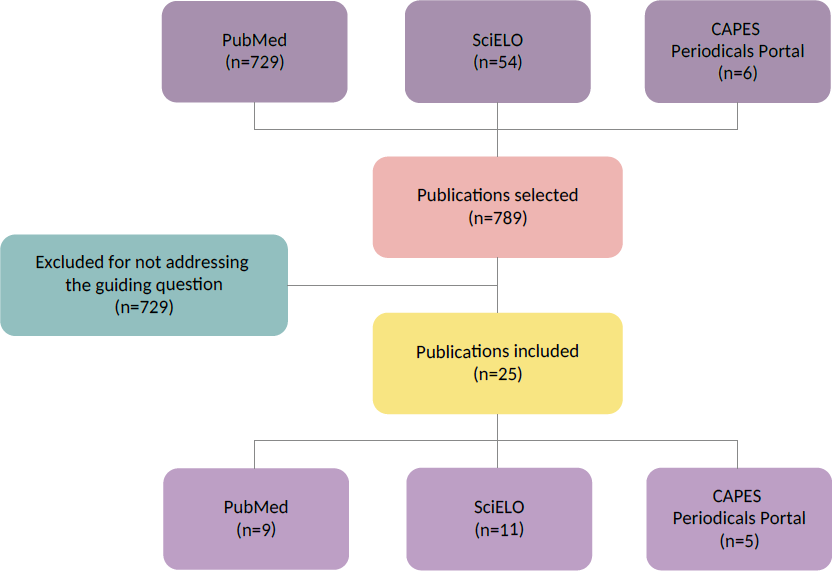
In the data search carried out, following the strategy mentioned above, 789 articles were found, of which 729 came from PubMed, 54 from SciELO, and 6 from the CAPES Journals Portal. However, after reading the abstracts, only 25 articles were selected for full reading (Figure 1), comprising international and national publications (Table 1).

In recent years, social media has become an indispensable tool for plastic surgeons, allowing for greater professional visibility and closer relationships with patients. However, this phenomenon has posed significant challenges, particularly in medical advertising, the ethics of disclosure of procedures, and the civil liability of professionals.
Table 1 summarizes the main findings from several studies on the subject and provides a clear overview of the impact of digital communication on plastic surgery practice. One of the most evident points is that although social media facilitates patient acquisition, it can also create unrealistic expectations about procedures, which, in turn, lead to frustration and even lawsuits. In addition, the excessive exposure of surgical images and videos raises delicate ethical issues, mainly related to patient consent and privacy.
It is important to highlight that the findings presented are derived from literature that predates the enactment of CFM Resolution 2,336/20234 and, therefore, should be understood as interpretative trends and risks related to medical advertising, rather than as a direct empirical demonstration of the rule’s legal effects.
Table 2 provides organized, accessible material for researchers, healthcare professionals, and legal experts to better understand the consequences of using social media in plastic surgery and to reflect on solutions that balance professional disclosure, ethics, and legal security.
The exponential growth of social media over the last decade, especially platforms like Instagram and TikTok, has driven a significant transformation in how healthcare professionals market their services. These digital tools offer agile and accessible means of communication, enabling content to reach a wide audience in seconds. In this context, CFM Resolution 2,336/20234, in its Article 8, Paragraph 2, establishes that, on their own networks, advertising/promotion may aim to build, maintain, or expand clientele, as well as to provide information to society.
This practice requires extra care regarding the specialty of plastic surgery. Studies indicate that the indiscriminate use of social media by plastic surgeons has contributed to the construction of unrealistic narratives about the results of surgical procedures, often glamorizing invasive and complex interventions as if they were routine and risk-free8. Cases in which patients are filmed while still under sedation, immediately after procedures, demonstrate a worrying trivialization of surgical practice and raise ethical questions regarding the autonomy and dignity of patients29.
In addition to its ethical implications, this form of exposure can reinforce unattainable aesthetic ideals and foster unrealistic expectations among viewers. By promising, even implicitly, standardized results, the biological individuality of each patient is disregarded, contributing to the devaluation of bodily diversity and the strengthening of homogeneous, exclusionary aesthetic standards.
The rise of social media has significantly transformed the criteria patients use to choose plastic surgeons. Instead of considering traditionally valued elements, such as academic background, the educational institution attended, specialization titles, or length of clinical experience, many patients prioritize the visibility and engagement of these professionals on social media. The number of followers, likes, and digital interactions has become a new marker of perceived reliability and competence13.
Studies indicate that a plastic surgeon’s digital presence can directly influence a patient’s decision. A recent review found that approximately 70% of young women and 60% of young men report dissatisfaction with their body image, with social media an important factor in this dissatisfaction, which drives increased search for aesthetic procedures30. In addition, patients frequently exposed to content related to plastic surgery on social media show a greater propensity to consider undergoing the procedure, influenced by the perception of normality and ease that this content promotes31.
This phenomenon reflects a socio-technical transition in plastic surgery, in which the symbolic capital built on digital platforms often overshadows the scientific and technical capital accumulated over the course of a medical career. Professionals at the beginning of their careers, especially those with greater mastery of digital tools, have stood out not necessarily for their surgical expertise, but for their ability to build an attractive image on social media. Many surgeons adopt marketing strategies that include promotional offers and free initial consultations to expand their patient base and consolidate their personal brand.
This market logic can promote a shift from valuing technical and ethical quality to emphasizing the quantity of views and customer acquisition. Public judgment is often based on aesthetic and performative criteria rather than on scientific or regulatory grounds. In this context, the choice of a surgeon is more determined by media appeal than by evidence on clinical outcomes, safety indicators, or adherence to bioethical guidelines. This system raises important concerns about the impact of the spectacularization of medicine on the physician-patient relationship, as well as the risks of commodification of surgical practices without due technical rigor.
Choosing a physician based solely on images available online, without prior consultation, physical examination, or individualized assessment of the procedure’s feasibility, can represent a significant risk to the physician-patient relationship and the clinical outcome of the intervention. This behavior can be intensified and strongly induced after the permission of “before and after” photos in CFM Resolution 2,336/2023, in its Article 14, Subparagraph b4.
Even though the normative criteria established by professional resolutions are rigorously followed, most social media users tend not to value this technical information when choosing a plastic surgeon. The decision is often based solely on comparative “before and after” images available on digital platforms, in a logic of aesthetic consumption that resembles the selection of products on a menu, where visual appearance prevails over clinical and technical criteria.
This superficiality in the selection process can result in significant negative outcomes. When the outcome of the surgery does not meet expectations-whether due to intraoperative complications or postoperative complications-there is a breakdown in the trust initially placed in the professional. This scenario is aggravated by the subjective perception that the physician “failed” to fulfill what was imagined as an implicit promise, even if the procedure was conducted within the established technical and ethical parameters2.
From the moment the surgical results do not meet the patient’s idealized expectations, feelings of frustration, disillusionment, and even a sense of betrayal arise. Many patients tend to leave the office convinced that there was a medical error or a breach of promise, even in the absence of objective evidence of technical failure or negligence. Although it is possible that, in specific cases, the professional did not fully employ their expertise, considering that no human being is infallible, in most situations, the mismatch between expectation and reality lies in the patient’s subjective perception.
When addressing ethics in plastic surgery publications, it is essential to recognize two poles: the plastic surgeon and the patient. On the one hand, professionals use exposure of surgical results on social networks as a marketing strategy to expand their clientele and consolidate their professional image. On the other hand, patients, even if momentarily converted into protagonists on the physician’s digital platforms, do not always benefit from this exposure in the same way.
While the practice may seem advantageous for both parties at first glance, the actual benefit tends to be concentrated on the professional. Many patients consent to the disclosure of their images driven by the desire for belonging and social validation. However, others do so in a not entirely autonomous way, feeling pressured, even unconsciously, to accept such exposure as a way of meeting the expectation of being a “good patient.” This dynamic reveals a latent power asymmetry in the physician-patient relationship, in which the surgeon’s figure is perceived as holding authority and control over the procedure’s success. This perception can unduly influence informed consent12),(32.
While CFM Resolution 2,336/2023 allows, in its Article 9, XVI, revealing verifiable results of treatments and procedures as long as the patient is not identified4, to what extent would it be ethical to reveal a possible result and induce a guarantee of that outcome? Thinking about the dissemination of an advertising message requires care, starting from the principle that an advertisement delivered in an abusive or distorted way can generate unattainable expectations among potential patients17.
In recent decades, there has been a progressive, structured increase in the presence of plastic surgeons on digital platforms. As early as 2012, estimates indicated that approximately 50% of professionals in the field used the internet as a strategic marketing tool to expand their clientele10.
With the entry of a new generation of surgeons into the market, this digital movement has consolidated itself as common practice, promoting a reformulation of how surgical results are publicized and establishing links with the target audience. The COVID-19 pandemic and social isolation measures have further intensified this trend. During this period, the population began to consume digital content at a massive scale, including content related to aesthetic procedures, thereby increasing exposure to idealized body images and fostering an environment conducive to comparison and body dissatisfaction14.
The impact was significant: over the last four years, there has been a 33.3% increase31 in the demand for plastic surgery, driven, among other factors, by the rise of video conferencing, which intensified aesthetic self-awareness, and by the popularization of social media as spaces for professional promotion. In the first months of the pandemic, some surgeons reported a 90% increase in the number of appointments14.
This scenario highlights not only the role of technology in transforming medical practice but also the often intuitive use of digital communication strategies by healthcare professionals, who began to interact more directly, visually, and emotionally with the public.
Often, the contract between a professional and a patient involves a consumer relationship, in which case the Civil Code establishes two forms of obligation, both based on contractual civil liability, namely the obligation of means and the obligation of result, and, consequently, the way in which these obligations will be exempted will depend on the type of activity performed by the professional. In the case of more common surgical procedures, such as heart surgery, transplants, etc., it is a settled understanding, both in doctrine and jurisprudence, that it is an obligation of means, i.e., that the surgeon will employ all techniques and knowledge, but without being bound to the success of the result27.
However, when dealing with plastic surgery, the discussion requires a deeper level of knowledge, since, as a rule, the purpose is merely aesthetic and not pathological, motivated by mere aesthetic desire. Furthermore, the subdivision of plastic surgeries into reconstructive, which in their essence have a therapeutic purpose, so that they are equivalent to other surgeries performed by physicians in general, due to the need for their performance, and aesthetic, which are performed on people who do not have any physical problems, is understood as correct3.
The doctrine has been interpreted in divergent ways over the years, with the majority viewing aesthetic plastic surgery as an obligation to deliver results. The achievement of the intended end characterizes this obligation. Therefore, if it is not achieved, the obligation has not been fulfilled, without room for uncertainty, since the result is the essence of the contract27. However, when reconstructive plastic surgery was mentioned, it was described as an obligation of means, not tied to a specific result. While most authors understand this, it is wrong to draw this distinction, since both surgeries will improve the aesthetic outcome.
With the institutionalization of regulations authorizing the widespread dissemination of aesthetic results on social media, it is undeniable that this may directly affect the nature of the obligation assumed by healthcare professionals, especially in plastic surgery. By promoting images that highlight specific results, these professionals implicitly create an expectation of outcome in the patient, limiting the possibility of invoking unpredictable events or those beyond their control. Thus, the obligation originally characterized as one of means tends, in practice, to become an obligation of result, and it is even possible that a single published image will consolidate this transition.
In this context, the informed consent form (ICF) emerges as an innovative tool in the Brazilian scenario, even though it is already widely disseminated in other countries20. Its adoption aims not only to safeguard their professional legal position but also to protect their reputation by clearly establishing the limits of the proposed intervention and the risks inherent in the procedure, thereby promoting a more transparent and ethical relationship with the patient.
In any consumer relationship, it is essential that both parties clearly and unequivocally understand the parameters governing the established relationship. In the context of the physician-patient relationship, this premise requires a mutual understanding of the expected outcome of the service provided, its limitations, and the inherent risks. Such clarity contributes to the legal and ethical security of both parties: the healthcare professional fulfills their obligation to provide adequate information. At the same time, the patient declares that they have understood all aspects involved and freely consents to the proposed procedure21.
From a legal perspective, this dynamic is supported by the Consumer Protection Code (CDC), particularly regarding the ICF, which ensures the patient’s right to decide autonomously and consciously whether they wish to undergo the intervention. This instrument embodies the principle of information, which guarantees the consumer the right to make informed decisions based on clear, precise, and accessible information provided by the service provider17. Furthermore, case law has clearly established the need to use the ICF, linking its absence to the professional’s civil liability and the consequent obligation to indemnify33.
Thus, the indispensability of providing the patient with all information regarding the possibilities, limitations, and potential consequences of the proposed procedure is evident. This measure aims to avoid subsequent allegations of ignorance, as the omission of the duty to inform is recognized as a legitimate basis for a claim for damages. Insufficient clarification creates uncertainty that, if unresolved, leads the patient to believe he or she was a victim of medical error, which frequently results in the judicialization of the contractual relationship.
However, for medical malpractice to be considered strictly speaking, the professional’s conduct must fall under one of the hypotheses foreseen in the Civil Code: incompetence, when the professional performs an act for which they do not have adequate technical qualifications; recklessness, when they assume unnecessary risks or risks lacking scientific support; or negligence, when they fail to adopt the care required by the circumstances of the case23. In this scenario, the ICF assumes an increasingly relevant role, with its absence being cited as one of the main causes of lawsuits filed by patients dissatisfied with the results obtained34.
It is legally inadequate and ethically questionable to file lawsuits based solely on a patient’s subjective dissatisfaction with the aesthetic result, as it disregards the fact that organisms respond differently to interventions. The professional’s liability in these cases must be based on objective criteria, not on idealized expectations devoid of a technical or legal basis, under penalty of compromising not only the surgeon’s reputation but also the stability of the physician-patient relationship.
While the Federal Supreme Court establishes the understanding that aesthetic plastic surgeries have an obligation of result, it is possible to transform them into an obligation of means, provided that it is proven, based on objective criteria, that the result achieved is satisfactory in common sense35.
Performing a plastic surgery involves not only physical aspects, but also emotional and subjective factors that transcend the reparative or aesthetic nature of the procedure. Many patients tend to resort to plastic surgery as a way to alleviate anxieties related to body image, regardless of the existence of objective deformities. In these circumstances, surgical intervention can be a means of restoring psychic well-being, even if the result does not meet ideal aesthetic standards.
Thus, the categorical distinction between reparative and aesthetic plastic surgeries becomes increasingly irrelevant from the perspectives of emotional impact and the therapeutic purpose perceived by the patient. Both share the goal of promoting improved appearance and self-esteem, with results conditioned by individual organic variables, such as skin quality, healing process, and physiological response to the procedure19.
Given the accelerated expansion of social network use, it is imperative to develop more effective regulatory guidelines for medical marketing that preserve physicians’ professional integrity without compromising the physician-patient relationship. While CFM Resolution 2,336/20234 represents progress in standardizing advertising in the health field, its side effects could spark controversy, particularly regarding professionals’ reputations and an increase in legal disputes.
One of the most significant consequences of this scenario is the so-called consumer harassment, a phenomenon characterized by social pressure to conform to a standardized aesthetic ideal, reinforced by intensified advertising practices on digital media. This dynamic promotes a generalized feeling of inadequacy, leading individuals to seek aesthetic procedures to feel a sense of belonging and social acceptance36.
In this context, tools such as boosting posts-widely used on platforms like Instagram-exponentially expand the reach of medical marketing, exceeding users’ critical perception. This practice can act subliminally by persistently and systematically inducing the belief that cosmetic intervention is not only desirable but necessary. As a result, a trend toward a consumption cycle based on artificial beauty standards is consolidated, disregarding body diversity and increasing dissatisfaction with one’s own image.
Final considerations
In conclusion, based on the analyses conducted, medical advertising, especially on social media, can contribute to the formation of high expectations and to the interpretation of medical activity as results-oriented in the practice of aesthetic plastic surgery. The recurring exposure to idealized images and promotional content can, in the collective imagination, create the expectation that the results shown are fully reproducible, disregarding biological variables, anatomical limitations, and essential postoperative care. This expectation, often fueled by marketing strategies aimed at attracting patients, can, on an interpretative level, link the medical professional to the outcomes presented in digital media.
CFM Resolution 2,336/20234 allows the dissemination of “before and after” images, which do not redefine the legal nature of the medical obligation. However, it may influence the communicational and interpretative context of the physician-patient relationship and, therefore, contribute to the consolidation of a market logic in medicine, which, in turn, may compromise the legal security of the professional and increase the risk of judicialization of medical practice, thus creating a risk scenario that deserves critical monitoring and future empirical evaluation.
Data availability:
All data used or generated in this study are described and presented in full in the body of the article.
References
-
1 Bueno JGR. Da responsabilidade civil e criminal do cirurgião plástico estético. Rev Dir Mackenzie [Internet]. 2012 [acesso 16 ago 2024];6(2):140-70. DOI: 10.5935/2317-2622/direitomackenzie.v6n26645
» https://doi.org/10.5935/2317-2622/direitomackenzie.v6n26645 -
2 Smith CP, George D. When is advertising a plastic surgeon’s individual “brand” unethical? AMA J Ethics [Internet]. 2018 [acesso 17 ago 2024];20(4):372-8. DOI: 10.1001/journalofethics.2018.20.4.msoc2-1804
» https://doi.org/10.1001/journalofethics.2018.20.4.msoc2-1804 -
3 Cucci GP, Rodrigues LR. A responsabilidade civil do cirurgião plástico: a cirurgia plástica como obrigação de resultado. Rev Cient Cienc Juríd Empres [Internet]. 2012 [acesso 17 ago 2024];13(1):49-58. DOI: 10.17921/2448-2129.2012v13n1p%25p
» https://doi.org/10.17921/2448-2129.2012v13n1p%25p -
4 Conselho Federal de Medicina. Resolução CFM nº 2.336, de 2023. Dispõe sobre publicidade e propaganda médica. Diário Oficial da União [Internet]. Brasília, p. 312, 13 set 2023 [acesso 17 ago 2024]. Seção 1. Disponível: Disponível: https://bit.ly/4dcDz6y
» https://bit.ly/4dcDz6y -
5 Economides JM, Fan KL, Pittman TA. An analysis of plastic surgeons’ social media use and perceptions. Aesthet Surg J [Internet]. 2018 [acesso 17 ago 2024];39(7):794-802. DOI: 10.1093/asj/sjy209
» https://doi.org/10.1093/asj/sjy209 -
6 Botelho LLR, Cunha CCA, Macedo M. O método da revisão integrativa nos estudos organizacionais. Gest Soc [Internet]. 2011 [acesso 17 ago 2024];5(11):121-36. DOI: 10.21171/ges.v5i11.1220
» https://doi.org/10.21171/ges.v5i11.1220 -
7 Souza MT, Silva MD, Carvalho R. Revisão integrativa: o que é e como fazer. Einstein (São Paulo) [Internet]. 2010 [acesso 17 ago 2024];8(1):102-6. DOI: 10.1590/S1679-45082010RW1134
» https://doi.org/10.1590/S1679-45082010RW1134 -
8 Reissis D, Shiatis A, Nikkhah D. Advertising on social media: the plastic surgeon’s prerogative. Aesthet Surg J [Internet]. 2016 [acesso 14 abr 2025];37(1):1-2. DOI: 10.1093/asj/sjw174
» https://doi.org/10.1093/asj/sjw174 -
9 Mess SA, Bharti G, Newcott B, Chaffin AE, Van Natta BW, Momeni R, Swanson S. To post or not to post: plastic surgery practice marketing, websites, and social media? Plast Reconstr Surg Glob Open [Internet]. 2019 [acesso 12 mai. 2025];7(7):1-3. DOI: 10.1097/GOX.0000000000002331
» https://doi.org/10.1097/GOX.0000000000002331 -
10 Godard A. Social media’s use and impact on oral surgeons and oral surgery residents. Cureus [Internet]. 2022 [acesso 23 abr 2025];14(11):1-8. DOI: 10.7759/cureus.31865
» https://doi.org/10.7759/cureus.31865 -
11 Vardanian AJ, Kusnezov N, Im DD, Lee JC, Jarrahy R. Social media use and impact on plastic surgery practice. Plast Reconstr Surg [Internet]. 2013 [acesso 12 maio 2025];131(5):1184-93. DOI: 10.1097/PRS.0b013e318287a072
» https://doi.org/10.1097/PRS.0b013e318287a072 -
12 Dorfman RG, Vaca EE, Fine NA, Schierle CF. The ethics of sharing plastic surgery videos on social media: systematic literature review, ethical analysis, and proposed guidelines. Plast Reconstr Surg [Internet]. 2017 [acesso 22 abr 2025];140(4):825-36. DOI: 10.1097/PRS.0000000000003695
» https://doi.org/10.1097/PRS.0000000000003695 -
13 Nayak LM, Linkov G. Social media marketing in facial plastic surgery: what has worked? Facial Plast Surg Clin North Am [Internet]. 2019 [acesso 15 abr 2025];27(3):373-7. DOI: 10.1016/j.fsc.2019.04.002
» https://doi.org/10.1016/j.fsc.2019.04.002 -
14 Landeen KC, Smetak MR, Keah NM, Davis SJ, Shastri K, Patel P et al. Professional social media in facial plastic and reconstructive surgery: usage, resources, and barriers. Ann Otol Rhinol Laryngol [Internet]. 2022 [acesso 23 abr 2025];132(9):1085-9. DOI: 10.1177/00034894221133746
» https://doi.org/10.1177/00034894221133746 -
15 Cordeiro F, Mendonça S, Oliveira JPB, Nogueira VFP. Responsabilidade civil do médico e a inversão do pensamento jurídico sobre o tipo da atividade. Rev Bras Coloproct [Internet]. 2011 [acesso 10 maio 2025];31(1):58-63. DOI: 10.1590/S0101-98802011000100008
» https://doi.org/10.1590/S0101-98802011000100008 -
16 Monteschio H, Reis C, Martins GA. Responsabilidade civil subjetiva do cirurgião plástico em face do direito da personalidade do paciente. Percurso [Internet]. 2019 [acesso 15 mar 2024];2(29):483-9. DOI: 10.6084/m9.figshare.9459092
» https://doi.org/10.6084/m9.figshare.9459092 -
17 Romeiro DA, Mascarenhas IL, Godinho AM. Descumprimento da ética médica em publicidade: impactos na responsabilidade civil. Rev Bioét (Impr.) [Internet]. 2022 [acesso 22 abr 2025];30(1):27-35. DOI: 10.1590/1983-80422022301503PT
» https://doi.org/10.1590/1983-80422022301503PT -
18 Andrade T, Ribas MSF, Robles MFS, Botelho MM. A responsabilidade civil médica decorrente da cirurgia plástica reparadora pelo inadimplemento do dever de informar. Rev Fac Santa Cruz [Internet]. 2022 [acesso 15 maio 2025];12(1):1-24. Disponível: Disponível: https://bit.ly/4mVXHNu
» https://bit.ly/4mVXHNu -
19 Neme EF, Cione LB. Responsabilidade civil do cirurgião plástico. Rev Bras Dir Civ [Internet]. 2022 [acesso 13 maio 2025];31(3):63-82. DOI: 10.33242/rbdc.2022.03.004
» https://doi.org/10.33242/rbdc.2022.03.004 -
20 Acácio KSS, Canhedo N. Responsabilidade civil em caso de erro médico na cirurgia plástica: uma análise à luz do Código de Defesa do Consumidor e da jurisprudência do Tribunal de Justiça do Tocantins. Rev Capes [Internet]. 2024 [acesso 30 abr. 2025];7(14):1-15. DOI: 10.55892/jrg.v7i14.996
» https://doi.org/10.55892/jrg.v7i14.996 -
21 Doncatto LF. Uso do termo de consentimento informado em cirurgia plástica estética. Rev Bras Cir Plást [Internet]. 2012 [acesso 1º maio 2025];27(3):353-8. DOI: 10.1590/S1983-51752012000300003
» https://doi.org/10.1590/S1983-51752012000300003 -
22 Silva DBVN, Nahas FX, Bussolaro RA, Ferreira LM. A cirurgia plástica brasileira e o Código de Ética Médica. Rev Bras Cir Plást [Internet]. 2012 [acesso 15 maio 2025];27(2):321-4. DOI: 10.1590/S1983-51752012000200025
» https://doi.org/10.1590/S1983-51752012000200025 -
23 Pavão DM, Werneck FC, Faria JLR, Titonelli VE, Albuquerque RSP, Sousa EB. Insatisfação e complicações pós-cirúrgicas caracterizam erro médico? Saúde Ética Justiça [Internet]. 2021 [acesso 5 maio 2025];26(2):48-50. DOI: 10.11606/issn.2317-2770.v26i2p48-50
» https://doi.org/10.11606/issn.2317-2770.v26i2p48-50 -
24 Oshiro FHJ. Avaliação de sentenças e jurisprudências relacionadas a ações judiciais envolvendo cirurgias plásticas estéticas. Rev Bras Cir Plást [Internet]. 2019 [acesso 15 maio 2025];34(4):485-96. DOI: 10.5935/2177-1235.2019RBCP0228
» https://doi.org/10.5935/2177-1235.2019RBCP0228 -
25 Vasconcelos F. Proteção do consumidor na área da saúde: responsabilidade civil de médicos, hospitais e planos de saúde. Direito Desenvolv [Internet]. 2017 [acesso 15 maio 2025];2(4):266-81. DOI: 10.26843/direitoedesenvolvimento.v2i4.188
» https://doi.org/10.26843/direitoedesenvolvimento.v2i4.188 -
26 Gonçalves CJM. Breves notas sobre a responsabilidade civil nas cirurgias plásticas reparadora, estética e de transgenitalização e nos tratamentos dermatológicos. Análise da jurisprudência. R Fac Dir Univ São Paulo [Internet]. 2014 [acesso 15 maio 2025];109:187-213. Disponível: Disponível: https://bit.ly/4cH9sEe
» https://bit.ly/4cH9sEe -
27 Silveira DP, Oliveira WV. Responsabilidade civil do médico-cirurgião plástico e seus reflexos processuais. Rev Interdiscip PUC Minas Barreiro [Internet]. 2016 [acesso 25 abr 2025];6(11):155-85. DOI: 10.5752/P.2236-0603.2016v6n11p155
» https://doi.org/10.5752/P.2236-0603.2016v6n11p155 -
28 Schmidt ACFDA, Manfredini GB, Brito LC, Penido MS, Buch PH, Purim KSM. Publicidade médica em tempos de medicina em rede. Rev Bioét (Impr.) [Internet]. 2021 [acesso 15 maio 2025];29(1):115-27. DOI: 10.1590/1983-80422021291452
» https://doi.org/10.1590/1983-80422021291452 -
29 Oliveira RSV, Iankoski JS, Niemeyer CAL, Andrade MP, Dal Sasso GTM, Lanzoni GMM, Nora CRD. Ética na divulgação de cirurgia nas mídias sociais: revisão de escopo. Rev Bioét (Impr.) [Internet]. 2025 [acesso 15 maio 2025];33:1-12. DOI: 10.1590/1983-803420253788pt
» https://doi.org/10.1590/1983-803420253788pt -
30 Walker CE, Krumhuber EG, Dayan S, Furnham A. Effects of social media use on desire for cosmetic surgery among young women. Curr Psychol [Internet]. 2021 [acesso 28 abr 2025];40:3355-64. DOI: 10.1007/s12144-019-00282-1
» https://doi.org/10.1007/s12144-019-00282-1 -
31 Marsidi N, van den Bergh MWHM, Luijendijk RW. The best marketing strategy in aesthetic plastic surgery: evaluating patients’ preferences by conjoint analysis. Plast Reconstr Surg [Internet]. 2014 [acesso 1º maio 2025];133(1):52-7. DOI: 10.1097/01.prs.0000436528.78331.da
» https://doi.org/10.1097/01.prs.0000436528.78331.da -
32 Nagappan A, Kalokairinou L, Wexler A. Ethical issues in direct-to-consumer healthcare: a scoping review. PLOS Digit Health [Internet]. 2024 [acesso 28 abr 2025];3(2). DOI: 10.1371/journal.pdig.0000452
» https://doi.org/10.1371/journal.pdig.0000452 - 33 Rio Grande do Sul (Estado). Tribunal de Justiça do Estado do Rio Grande do Sul. Apelação Cível nº 70056355365 RS. Ação de indenização por danos morais. Falha na prestação de serviço médico não configurada. Dever de informação caracterizado. Relator: Villarinho ALP. TJRS; 2014.
-
34 Cavali BY, Silva RC, Oliveira FM, Pinto LH. Análise dos principais motivos que levam ao litígio na cirurgia plástica. Braz Med Stud J [Internet]. 2023 [acesso 9 maio 2025];8(12):1-5. DOI: 10.53843/bms.v8i12.436
» https://doi.org/10.53843/bms.v8i12.436 -
35 Brasil. Superior Tribunal de Justiça. Recurso Especial nº 2173636 MT. Ação de indenização por erro médico. Cirurgia plástica estética não reparadora. Relatora: Ministra Maria Isabel Gallotti. STJ [Internet]. Julgado em: 13 dez 2024 [acesso 24 maio 2025]. Disponível em: Disponível em: https://bit.ly/4tGdlz7
» https://bit.ly/4tGdlz7 -
36 Neto HL, Soares DV, Silva LTP. A relação entre assédio de consumo e violência em seus aspectos estrutural e delinquencial. Rev Videre [Internet]. 2022 [acesso 12 mai 2025];14(31):147-70. DOI: 10.30612/videre.v14i31.16410
» https://doi.org/10.30612/videre.v14i31.16410