 Preliminary results of colostrum quality and passive immunity transfer in calves under tropical conditions
Abstract
Inadequate management of livestock practices causes low colostrum quality and failure in passive transfer of immunity in calves, which increases mortality and production costs for farmers. Therefore, a study has been conducted in order to determine the effectiveness of passive transfer of immunity in the province of Orellana, Amazonian Ecuador. Subsequently, 50 mL of colostrum was collected aseptically from a total of 32 cows before 4 hours postpartum, while blood was extracted from the jugular vein of the calves at 24 h, followed at 7, 15 and 21 days in order to determine total serum proteins. The data were analyzed using a linear mixed model in SAS for repeated measures. According to the results, no differences were observed in the chemical composition of colostrum by breed effect (P = 0.23), age cow and at birth (P = 0.30 to 0.98). Some 67% of the analyzed colostrums contained above 24 degrees Brix%, being classified as high quality. On the contrary, the total serum proteins varied by breed effect (P = 0.03) and by the age and number of births of the cow (P = 0.04 to 0.001), although the sex effect only indicated a statistical tendency (P = 0.07). Consequently, we realized that 60% of the total calves sampled at 24 hours received an effective passive transfer of immunity. Conclusively, the total serum proteins marked differences that could be conditioned by the feed, animal biotype and age of the animal. Therefore, in this pioneer study in Ecuador, an effective transfer of immunity of over 60%, with ≥ 5.5 g/dL has been obtained, which should be studied in more depth in order to determine risk factors under tropical conditions, being most likely of some decisive influence.
Keywords:
brix refractometry; colostrum quality; ecuadorian livestock; passive immunity transfer; serum total protein; tropical conditions
Resumo
O manejo inadequado das práticas pecuárias causa baixa qualidade do colostro e falha na transferência passiva de imunidade em bezerros, o que aumenta a mortalidade e os custos de produção para os agricultores. Portanto, um estudo foi conduzido para determinar a eficácia da transferência passiva de imunidade na província de Orellana, Equador Amazônico. Posteriormente, 50 mL de colostro foram coletados assepticamente de um total de 32 vacas antes de 4 h pós-parto, enquanto o sangue foi extraído da veia jugular dos bezerros em 24 h, seguido de extrações aos 7, 15 e 21 dias, para determinar proteínas séricas totais. Os dados foram analisados usando um modelo linear misto em SAS para medidas repetidas. De acordo com os resultados, não foram observadas diferenças na composição química do colostro por efeito de raça (p = 0,23), idade da vaca e no nascimento (p = 0,30 a 0,98). Cerca de 67% dos colostros analisados continham acima de 24 °Brix%, sendo classificados como de alta qualidade. Ao contrário, as proteínas séricas totais variaram pelo efeito da raça (p = 0,03) e pela idade e número de partos da vaca (p = 0,04 a 0,001), embora o efeito do sexo apenas indicasse uma tendência estatística (p = 0,07). Consequentemente, percebemos que 60% do total de bezerros amostrados em 24 h receberam uma transferência passiva efetiva de imunidade. Conclusivamente, as proteínas séricas totais marcaram diferenças que poderiam ser condicionadas pela alimentação, pelo biótipo animal e pela idade do animal. Portanto, neste estudo pioneiro no Equador, verificou-se que foi obtida uma transferência efetiva de imunidade de mais de 60%, com valor maior ou igual a 5,5 g/dL, que deve ser estudada mais profundamente para determinar os fatores de risco em condições tropicais, sendo muito provável que exista alguma influência decisiva.
Palavras-chave:
refratometria brix; qualidade do colostro; gado equatoriano; transferência passiva de imunidade; proteína total sérica; condições tropicais
1. Introduction
Passive immunity transfer through colostrum is essential for the health and development of newborn calves (Trotz-Williams et al., 2008; Hue et al., 2021; Mason et al., 2022). Colostrum, the first postpartum mammary secretion, is rich in immunoglobulins (Igs), nutrients and bioactive factors that provide immunological protection and nutritional support to bovine neonates (Turini et al., 2020; Souza et al., 2021). Proper colostrum quality and management are critical determinants to ensure effective passive immunity transfer, especially in tropical conditions such as those in Ecuador (Guamán-Rivera et al., 2024a). Calves are born agammaglobulinemic due to the structure of the bovine placenta, which prevents the passage of immunoglobulins during gestation. Therefore, they are entirely dependent on the ingestion of high-quality colostrum soon after birth to acquire passive immunity (Quigley et al., 2013). Immunoglobulin absorption is most efficient within the first 24 hours of life, declining rapidly after this critical period. Failure to transfer passive immunity (FTP) is associated with increased calf morbidity and mortality, as well as reduced productive performance in later life stages (Costa et al., 2023; Hue et al., 2021).
Colostrum quality is commonly measured by its immunoglobulin concentration, with 50 g/L being the threshold for high-quality colostrum. Factors such as cow parity, time between calving and colostrum collection, and environmental conditions significantly influence colostrum quality (Medina-Córdova et al., 2018; Turini et al., 2020; Mason et al., 2022). For example, multiparous cows have been encountered to produce colostrum with higher immunoglobulin concentrations compared to primiparous cows (Turini et al., 2020). Furthermore, delaying colostrum collection beyond 6 hours postpartum is able to reduce colostrum quality due to dilution and potential bacterial contamination. Environmental conditions, such as temperature and humidity, may also affect colostrum quality, although evidence on this aspect is limited and variable (Hue et al., 2021; Souza et al., 2021).
In tropical regions such as those existing in Ecuador, high temperatures and humidity may influence colostrum production and quality (Guamán-Rivera et al., 2024a). Studies have indicated that heat stress in dairy cows can negatively affect colostrum production and its immunoglobulin content (Pezzopane et al., 2019; Santos Neto et al., 2022; Machado et al., 2024; Silva et al., 2023). Furthermore, management practices in these regions, such as hygiene during colostrum collection and storage, are crucial to prevent bacterial contamination, which may compromise immunoglobulin absorption in calves (Van Hese et al., 2019; Guamán-Rivera et al., 2024a).
Proper colostrum management involves not only ensuring its quality, but also the quantity and timing of administration (Ingvartsen, 1994; Bernués et al., 2005, 2011; Rudel et al., 2015). It is recommended that calves receive at least 10% of their body weight in high-quality colostrum within the first 4 to 6 hours of life (Hue et al., 2021). The use of tools such as the Brix refractometer allows producers to rapidly assess colostrum quality in the field, facilitating informed decisions about its application (Quigley et al., 2013; Vogels et al., 2013; Morrill et al., 2015). Furthermore, pasteurization of colostrum at 60°C for 60 minutes can reduce the bacterial load without significantly affecting the immunoglobulin concentration, thus improving the safety and efficacy of passive immunity transfer (Rainard & Riollet, 2006; Fröhdeová et al., 2014).
FTP is a significant problem in calf rearing, associated with an increased risk of diseases such as diarrhea, pneumonia, and omphalitis (Hue et al., 2021; Souza et al., 2021). Identifying risk factors for FTP, such as poor colostrum quality, delayed administration, and insufficient intake, is fundamental to implement effective management strategies. In this context, training producers in optimal colostrum management practices is essential to improve calf health and performance in production systems under tropical conditions. Based on this context, this pioneer study developed in Ecuadorian tropical conditions explored colostrum quality, as well as the amount of total serum proteins, which will allow inferring the effectiveness of passive immunity transfer. Therefore, this study tries to show that refractometers can be used as indirect methods for determining the effectivity of passive immunity in calves.
2. Materials and Methods
2.1. Study area and animals
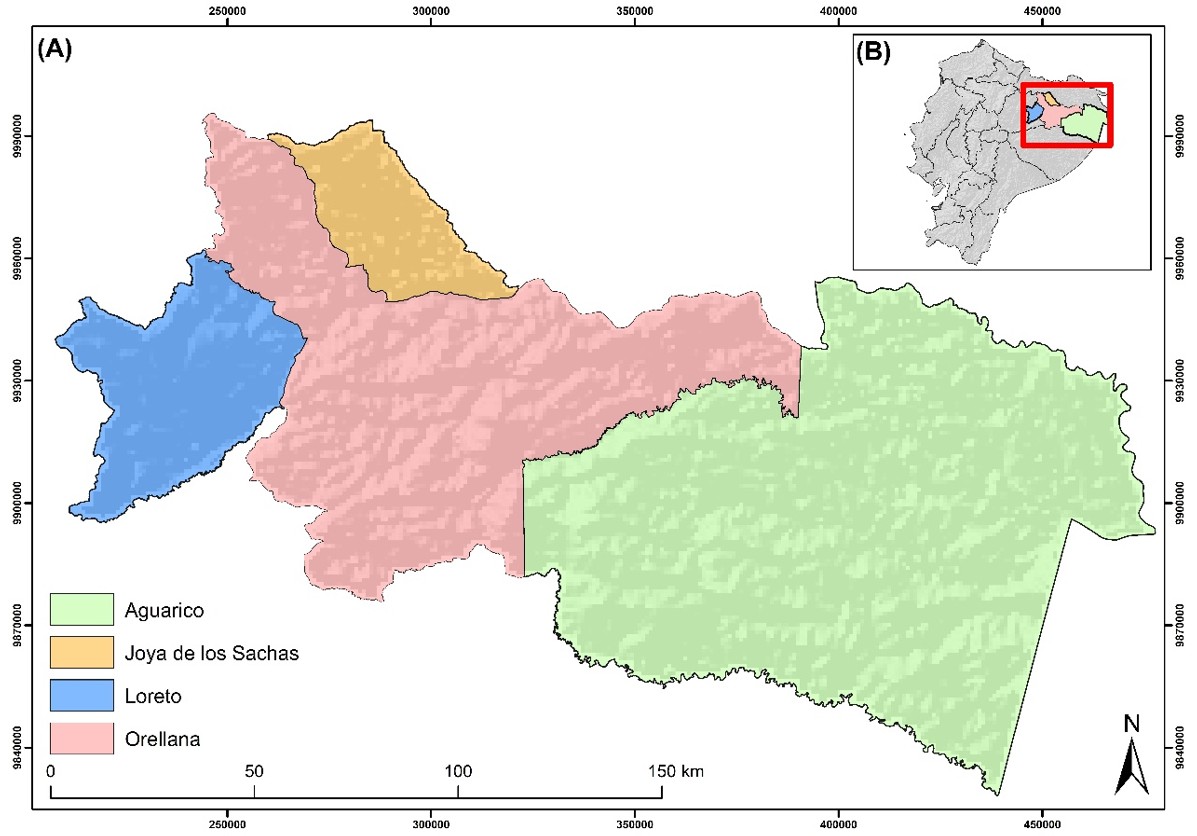
All experimental procedures involving animals were conducted with the approval of the Animal Ethics Committee of the Escuela Superior Politécnica de Chimborazo in central Ecuador. The current research took place in the province of Orellana, located in the Amazon region of Ecuador, which is divided into four cantons (Aguarico, Francisco de Orellana, Loreto and Joya de los Sachas; Figure 1). The climate in the region corresponds to a tropical rainforest, where the average rainfall reaches 2942 mm and the average annual temperature is 29.7 C° (Lozano et al., 2020; Toulkeridis et al., 2020). The farms where the research was performed are located in the cantons of Francisco de Orellana, Loreto and Joya de los Sachas. The calculation of the power of the study with α of 80% and β of 0.05 (PROC POWER procedure of SAS) estimated that 32 calves would be needed to detect a 5% variation in total serum proteins.
2.2. Colostrum samples
A colostrum sample was collected from the first milking, meaning first 4 hours after calving. For this purpose, after discarding the first stream of each quarter, 50 mL of colostrum was collected aseptically in a sterile bottle and stored at − 4 °C for transport to the laboratory and subsequent analysis (McGrath et al., 2016).
2.3. Calf blood samples
Blood samples from calves were collected at 24 h postpartum (d 0) and on day 7, 15, and 21 postpartum. Blood was drawn from the jugular vein into 6 mL BD Vacutainers without anticoagulant. Blood samples were allowed to clot for 45–60 min at 4 °C and centrifuged (2,000 × g for 15 min at room temperature) while also serum was collected (McGrath et al., 2016). Serum samples were stored at −20 °C and then transported to the Polytechnic School of Chimborazo for storage at −80 °C until analysis.
2.4. Colostrum and serum refractometer measurements
Brix degrees were measured in colostrum immediately after milking using an optical (DBR-1, Starr Instruments) and a digital (DBR-1, Starr Instruments) refractometer within a Brix value range of 0 to 50%. Another digital refractometer (Atago) with a protein measurement range of 0 to 12 g/100 mL was used to determine the total soluble protein concentration by refractometer (TP-R) in calf serum at 24 h, 7, 15 and 21 days immediately after serum separation by centrifugation. Both refractometers were calibrated using ultrapure water (Milli-Q).
2.5. Colostrum fourier-transform midrange infrared analyser measurements
The percentages of total protein, lactose, fat, non-fat solids and density in colostrum were determined using a milkotester (Milk analyzer Master Eco +Bluetooth +pH probe, portable Farm).
3. Statistical Analysis
Data were entered and coded in Excel and then analyzed using descriptive statistics using the PROC MEANS procedure (Average, Media, Maximum, Minimum, Coefficient of Variation) in SAS v. 9.4. All samples were analyzed on a single day to avoid statistical noise related to the time of analysis that potentially could affect the results. Using a mixed linear model, after checking normality of both colostrum and total serum protein data, the breed, age of the cow, and number of births were included in the model as fixed effects. In addition, the data were adjusted using PROC REG regressions in order to identify associations between Brix degrees and total serum protein content in blood. Means are presented as separated least squares using the PDIFF option in SAS, and are also compared using a Tukey test. Statistical differences are declared at P < 0.05, while trends are declared at P < 0.10
4. Results and Discussion
Table 1 lists the descriptive statistics of the main variables analyzed in this study. Regarding the live weight of the calves, on average, regardless of the breed type, the mean was 39 kg ± 4.31, with maximums reaching up to 45 kg, while the minimum did not fall below 32 kg. Regarding the measurements of the Brix degrees of the colostrum, as an indirect method, both the optical and digital refractometers yielded similar numerical values as well as their coefficient of variation (ranges of 21 – 23 °Bx).
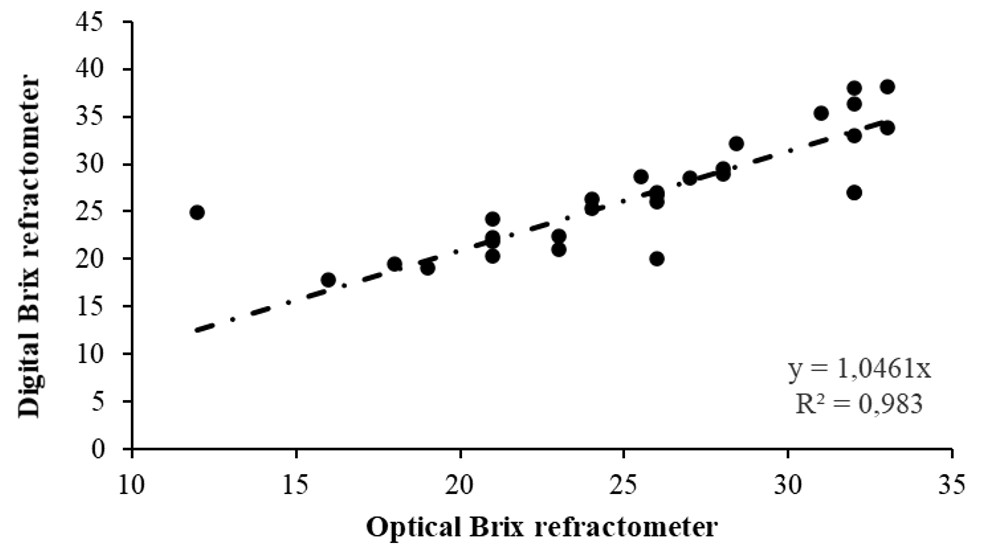
It has been stated that from 22% Brix it can be classified as a good quality colostrum, with an average immunoglobulin content greater than 50 g/L (Buczinski and Vandeweerd, 2016; Bielmann et al., 2010; Quigley et al., 2013; Bartier et al., 2015; Morrill et al. 2015; Buczinski and Vandeweerd, 2016). However, some other studies state that Brix % values can range from 18 - 23% equivalent to approximately 50 g/L of IgG. On the other hand, a further study with 73 calves observed that the general average of colostrum quality was 24.8 ± 0.03% Brix %, with maximum values of 31 Brix % and minimum of 18 ° Brix % (Turini et al., 2020). In addition to that, in this study, the Brix % values of colostrum from both the optical and digital refractometers showed similar values, which in the correlation analysis had a strong association (r = 0.98; P < 0.001) while, adjusting the data using a linear regression, these have demonstrated a positive association (r = 0.64; Figure 2). Recent studies obtained (r2 = 0.97; P < 0.001) which means that optical and digital refractometers have great potential as valuable management tools to be included in a colostrum monitoring program, in order to improve the health of newborn calves in dairy farms (Turini et al., 2020). Brix degrees and the colostrometer are highly correlated (r2 = 0.706) which means that they are efficient methods in determining immunoglobulins (Nava-Cruz et al., 2024). According to our results, 67% of the colostrums yielded an average > 24 Brix %, of intermediate quality 23% and only 10% were categorized as low quality (< 18 Brix %).
Table 2 indicates the milk production, chemical composition and Brix % degrees of colostrum as a function of several study factors. Despite the great dissimilarity between animals of Bos taurus vs. Bos indicus origin, the average daily production did not vary between breeds (10.9 ± 4.3 kg/day, on average; P = 0.23), nor by age factor of the cow (10.7 ± 4.3 kg/day, on average; P = 0.85) or much less by the number of births (10.4 ± 4.3 kg/day, on average; P = 0.38). Likewise, analyzing the chemical composition of colostrum, as observed in Table 2, no significant differences were observed by breed effect (P = 0.18 to 0.98). Consequently, the general averages were fat (5.38 ± 3.7%), protein (7.9 ± 0.05%), non-fat solids (20 ± 4%), density (1072 ± 17 g/L) and lactose (12 ± 0.86%). Similar results were observed due to the age of the mothers in the contents of fat (4.97 ± 3.7%), protein (8.1 ± 0.05%), non-fat solids (22 ± 4%), density (1075 ± 17 g/L) and lactose (12.2 ± 0.86%). Regarding the Brix degrees % of the colostrums analyzed as an indirect measure to assess their quality (Table 2). We conjectured to observe marked differences due to the racial effects, age and number of deliveries. However, although we have values that are ≤ 22 degrees Brix %, statistically, there were no differences (P = 0.15 to 0.98). In the present study, significant results were obtained between the lactose and fat values in colostrum, marking considerable differences compared to previous research. It is observed that the analyzed colostrums presented a high content of lactose (12.21 ± 0.86%) and fat (5.1 ± 0.05%), contrasting some recent obtained results which reported on average 1.9% lactose and 4.6% fat in maternal colostrum (Hue et al., 2021). Previous studies realized in the northern Amazon of Ecuador have already revealed that both the quality and quantity of colostrum are conditioned by the low quality of pastures (González Marcillo et al., 2021; Guamán-Rivera et al., 2023, 2024a, b; Guamán-Rivera, et al., 2024a). This could partly explain the results of this pioneer study in tropical conditions in Ecuador.
Table 3 lists the results for total serum proteins quantified using the optical refractometer. In this sense, significant differences were detected due to the racial effect (P = 0.03). In fact, in the current study, calves from Bos taurus mothers (Brown Swiss, 5.53 ± 0.10 g/dL; Holstein 5.93 ± 0.10 g/dL) as well as crossbred animals (5.32 ± 0.10 g/dL) demonstrated higher values than those observed for indica breeds such as Gyrolando (5.16 ± 0.10 g/dL) and Gyr (4.71 ± 0.10 g/dL). Hereby, in a recent study considered the breed of the calf, which was observed to have an influence (P < 0.05) on the serum protein content in the animals analyzed (Vargas et al., 2014). It was observed that the calves of Holstein cows had a lower total serum protein content than those of other breeds (5.3 g/dL), while the calves of the Jersey breed had a protein content of 6.1 g/dL. On the other hand, it was determined that calves born to Jersey cows had a protein concentration of 6.3 g/dL, while the Holstein x Jersey cross had a higher total serum protein content of 6.5 g/dL, compared to the calves of the Holstein breed (6.0 g/dL) and other breeds (Sánchez-Salas et al., 2012). In addition, it was found that Holstein × Jersey crossbred animals had a total serum protein concentration of 6.8 g/dL, compared to other breeds, which had a lower content of 5.4 g/dL (Benavides-Varela et al., 2013). In addition, it was observed that the age of the cow conditioned the total serum protein content (P < 0.001). It was also observed that the older the cows (<60 to 72 months), the higher the total serum protein values (5.64 ± 0.10 g/dL) than those observed for younger cows (<36 months, 5.01 ± 0.10 g/dL). Most recent studies observed that younger cows (primiparous) produce a lower amount of colostrum, with a lower concentration of immunoglobulins than multiparous cows (5.07 vs. 6.79 ± 0.10 g/dL) (Guamán-Rivera et al., 2024a). This could be explained in part because they have had more exposure to pathogens during their life. This is supported by the fact that calves of cows older than 72 months of age had a higher concentration of proteins in blood serum (5.95 ± 0.10 g/dL). Likewise, we report that, with a greater number of births, the calves indicated a higher concentration of total serum proteins (1 vs. 5 births; 5.07 vs. 6.79 g/dL; P < 0.002). Nonetheless, Arroyo and Elizondo (2014) lacked to obtain significant differences in the total serum protein content of the calves based on the number of births of the cow. However, calves from cows at calving 4 had the lowest proportion of total serum proteins (5.5 g/dL). These results are similar to those reported previouslywere it was observed that calves from cows from 2nd to 5th calving had a lower concentration of serum proteins compared to calves from 1st calving (Vargas et al., 2014)). On the contrary, in the sex of the calf, we reported a statistical tendency (P = 0.07), where females had a higher concentration of total serum proteins than males (5.01 vs. 5.77 ± 0.10 g/dL). Statistically significant differences (P < 0.05) were reported between females and males (6.2 vs. 5.9 g/dL), respectively (Sánchez-Salas et al., 2012). Other studies observed that serum protein concentration in animals sampled between 1 and 7 days of age ranged between 2.4 and 11.0 g/dL (Sánchez-Salas et al., 2012; Arroyo and Elizondo, 2014). Therefore, of all the animals evaluated, 31.8% presented inadequate levels of immunity. In contrast, 44.9% presented inadequate levels of immunity (Arroyo and Elizondo, 2014). This differs from the results obtained in the present study, where it was observed that at 24 hours a higher concentration of serum proteins was obtained. Despite all these observed responses, regression analyses demonstrated that only the age of the cow had a significant linear trend (r = 0.88; P < 0.002).
Regarding the passive transfer of immunity, of the 32 animals, 60% (19 calves) achieved an effective transfer of immunity, while the remaining presented a deficiency in the transfer of passive immunity. Previously, the average serum proteins that were absorbed by the neonates was 7 ± 0.03 g/dL, with a range between 5 and 8.6 g/dL (Turini et al., 2020). Consequently, it was found that 1.4% of the sampled neonates presented low protein levels (<5.5 g/dL), which indicates a failure in the passive transfer of immunoglobulins. On the other hand, it was reported that 43.7% of the 718 animals analyzed presented low levels of immunity (Benavides-Varela et al., 2013). Likewise, in a study with 1018 calves reported that 38% had a failure in the transfer of passive immunity (Vogels et al., 2013). In this case, as stated recently the low intake of colostrum at birth causes a failure in passive transfer (FPT) due to the inadequate intake of immunoglobulins (Ig) from the colostrum (Raboisson et al., 2016). This statement would be supported by the high correlation between the degrees Brix % and IgG (r = 0.75) (Quigley et al., 2013). Consequently, FPT is associated with a higher risk of mortality and a decrease in health and longevity.
5. Conclusion
This pioneer study conducted in the tropical conditions of Ecuador, highlights that while colostrum quality meets acceptable standards in most cases, the efficacy of FTP varies significantly due to factors such as calf breed, maternal age, and parity. These findings emphasize the need for specific management practices to optimize FTP and improve neonatal calf health in tropical environments worldwide.
References
- ARROYO, J. and ELIZONDO, J., 2014. Prevalencia de falla en la transferencia de inmunidad pasiva en terneras de lechería. Agronomía Mesoamericana, vol. 25, no. 2, pp. 279-285.
-
BARTIER, A., WINDEYER, M. and DOEPEL, L., 2015. Evaluation of on-farm tools for colostrum quality measurement. Journal of Dairy Science, vol. 98, no. 3, pp. 1878-1884. http://doi.org/10.3168/jds.2014-8415 PMid:25582586.
» http://doi.org/10.3168/jds.2014-8415 -
BENAVIDES-VARELA, D., ELIZONDO-SALAZAR, J.A. and GONZÁLEZ-ARIAS, E., 2013. Estado inmunológico de terneras y terneros de lechería en la región huetar norte de Costa Rica. Agronomía Mesoamericana, vol. 24, no. 2, pp. 285-291. http://doi.org/10.15517/am.v24i2.12527
» http://doi.org/10.15517/am.v24i2.12527 -
BERNUÉS, A., RIEDEL, J.L., ASENSIO, M.A., BLANCO, M., SANZ, A., REVILLA, R. and CASASÚS, I., 2005. An integrated approach to studying the role of grazing livestock systems in the conservation of rangelands in a protected natural park (Sierra de Guara, Spain). Livestock Production Science, vol. 96, no. 1, pp. 75-85. http://doi.org/10.1016/j.livprodsci.2005.05.023
» http://doi.org/10.1016/j.livprodsci.2005.05.023 -
BERNUÉS, A., RUIZ, R., OLAIZOLA, A., VILLALBA, D. and CASASÚS, I., 2011. Sustainability of pasture-based livestock farming systems in the European Mediterranean context: synergies and trade-offs. Livestock Science, vol. 139, no. 1-2, pp. 44-57. http://doi.org/10.1016/j.livsci.2011.03.018
» http://doi.org/10.1016/j.livsci.2011.03.018 -
BIELMANN, V., GILLAN, J., PERKINS, N.R., SKIDMORE, A.L., GODDEN, S. and LESLIE, K.E., 2010. An evaluation of Brix refractometry instruments for measurement of colostrum quality in dairy cattle. Journal of Dairy Science, vol. 93, no. 8, pp. 3713-3721. http://doi.org/10.3168/jds.2009-2943 PMid:20655440.
» http://doi.org/10.3168/jds.2009-2943 -
BUCZINSKI, S. and VANDEWEERD, J., 2016. Diagnostic accuracy of refractometry for assessing bovine colostrum quality: A systematic review and meta-analysis. Journal of Dairy Science, vol. 99, no. 9, pp. 7381-7394. http://doi.org/10.3168/jds.2016-10955 PMid:27423958.
» http://doi.org/10.3168/jds.2016-10955 -
COSTA, A., SNEDDON, N., GOI, A., VISENTIN, G., MAMMI, L.M., SAVARINO, E., ZINGONE, F., FORMIGONI, A., PENASA, M. and DE MARCHI, M., 2023. Invited review: bovine colostrum, a promising ingredient for humans and animals: Properties, processing technologies, and uses. Journal of Dairy Science, vol. 106, no. 8, pp. 5197-5217. http://doi.org/10.3168/jds.2022-23013 PMid:37268582.
» http://doi.org/10.3168/jds.2022-23013 -
FRÖHDEOVÁ, M., MLEJNKOVÁ, V., LUKEŠOVÁ, K. and DOLEŽAL, P., 2014. Effect of prepartum supplementation of yeast culture (saccharomyces cerevisiae) on biochemical parameters of dairy cows and their newborn calves. Acta Universitatis Agriculturae et Silviculturae Mendelianae Brunensis, vol. 62, no. 5, pp. 897-904. http://doi.org/10.11118/actaun201462050897
» http://doi.org/10.11118/actaun201462050897 -
GONZÁLEZ MARCILLO, R.L., CASTRO GUAMÀN, W.E., GUERRERO PINCAY, A.E., VERA ZAMBRANO, P.A., ORTIZ NAVEDA, N.R. and GUAMÀN RIVERA, S.A., 2021. Assessment of guinea grass panicum maximum under silvopastoral systems in combination with two management systems in Orellana Province, Ecuador. Agriculture, vol. 11, no. 2, pp. 117. http://doi.org/10.3390/agriculture11020117
» http://doi.org/10.3390/agriculture11020117 -
GUAMÁN-RIVERA, S.A., GUERRERO-PINCAY, A.E., ORTIZ-NAVEDA, N.R. and GONZÁLEZ-MARCILLO, R.L., 2023. Prediction of the nutritional values by INRA (2018) feed evaluation system of Megathyrsus maximus subjected to different grazing strategies. Journal of Agriculture and Environment for International Development, vol. 117, no. 1, pp. 117-140. http://doi.org/10.36253/jaeid-14203
» http://doi.org/10.36253/jaeid-14203 - GUAMÁN-RIVERA, S. AL, SALGADO-RUIZ, M., ORTIZ-NAVEDA, N., HERRERA-FEIJOO, R., BAQUERO-TAPIA, M., and SOLDADO, G., 2024a. Somatic cell count evaluation in early lactation betweenprimiparous and multiparous bos indicus cows (Sdg’S). Journal of Lifestyle and SDG’S Review, vol. 4, no. 1, e01722. https://doi.org/10.47172/2965-730X.SDGsReview.v4.n00.pe01722.
-
GUAMÁN-RIVERA, S.A., HERRERA-FEIJOO, R., VELEPUCHA-CAIMINAGUA, H.J., AVALOS-PEÑAFIEL, V., AGUILAR-MIRANDA, G., MELENDRES-MEDINA, E., BAQUERO-TAPIA, M., CAJAMARCA CARRAZCO, D., FERNÁNDEZ-VINUEZA, D., MONTERO-ARTEAGA, A. and ZAMBRANO CEDEÑO, J., 2024b. Silvopastoral systems as a tool for recovering degraded pastures and improving animal thermal comfort indexes in Northern Ecuador. Brazilian Journal of Biology = Revista Brasileira de Biologia, vol. 84, e286137. http://doi.org/10.1590/1519-6984.286137 PMid:39166697.
» http://doi.org/10.1590/1519-6984.286137 -
HUE, D.T., SKIRVING, R., CHEN, T., WILLIAMS, J., BOTTEMA, C.D. and PETROVSKI, K., 2021. Colostrum source and passive immunity transfer in dairy bull calves. Journal of Dairy Science, vol. 104, no. 7, pp. 8164-8176. http://doi.org/10.3168/jds.2020-19318 PMid:33865574.
» http://doi.org/10.3168/jds.2020-19318 -
INGVARTSEN, K.L., 1994. Models of voluntary food intake in cattle. Livestock Production Science, vol. 39, pp. 19-38. http://doi.org/10.1016/0301-6226(94)90149-X
» http://doi.org/10.1016/0301-6226(94)90149-X -
LOZANO, P., CABRERA, O., PEYRE, G., CLEEF, A. and TOULKERIDIS, T., 2020. Plant diversity and composition changes along an altitudinal gradient in the isolated volcano sumaco in the ecuadorian amazon. Diversity, vol. 12, no. 6, pp. 229. http://doi.org/10.3390/d12060229
» http://doi.org/10.3390/d12060229 - MACHADO, T.M.P., SCHMITT-FILHO, A.L., DAROS, R., FARLEY, J., SINISGALLI, P.A. and SILVA-KAZAMA, D.C., 2024. Microclimate and the thermal comfort during the implementation of silvopastoral systems: the windbreak countereffect. International Journal of Biometeorology, vol. 68, no. 8, pp. 1519-1531.
-
MASON, W.A., CUTTANCE, E. and LAVEN, L., 2022. The transfer of passive immunity in calves born at pasture. Journal of Dairy Science, vol. 105, no. 7, pp. 6271-6289. http://doi.org/10.3168/jds.2021-21460 PMid:35636995.
» http://doi.org/10.3168/jds.2021-21460 -
MEDINA-CÓRDOVA, N., REYES-BECERRIL, M., ASCENCIO, F., CASTELLANOS, T., CAMPA-CÓRDOVA, A.I. and ANGULO, C., 2018. Immunostimulant effects and potential application of β-glucans derived from marine yeast Debaryomyces hansenii in goat peripheral blood leucocytes. International Journal of Biological Macromolecules, vol. 116, pp. 599-606. http://doi.org/10.1016/j.ijbiomac.2018.05.061 PMid:29763702.
» http://doi.org/10.1016/j.ijbiomac.2018.05.061 -
MORRILL, K.M., ROBERTSON, K., SPRING, M., ROBINSON, A. and TYLER, H., 2015. Validating a refractometer to evaluate immunoglobulin G concentration in Jersey colostrum and the effect of multiple freeze-thaw cycles on evaluating colostrum quality. Journal of Dairy Science, vol. 98, no. 1, pp. 595-601. http://doi.org/10.3168/jds.2014-8730 PMid:25465569.
» http://doi.org/10.3168/jds.2014-8730 -
MCGRATH, B.A., FOX, P.F., MCSWEENEY, P.L.H. and KELLY, A.L., 2016. Composition and properties of bovine colostrum: a review. Dairy Science & Technology, vol. 96, no. 2, pp. 133-158. http://doi.org/10.1007/s13594-015-0258-x
» http://doi.org/10.1007/s13594-015-0258-x -
NAVA-CRUZ, A., FLORES-SALAS, J., TORRES-RODRÍGUEZ, E., ARELLANO-RODRÍGUEZ, F., ROBLES-TRILLO, P., ALVARADO-ESPINO, A. and DELGADO-GONZÁLEZ, R., 2024. Comparison of the use a refractometer Brix and colostrometry to estimate the quality of colostrum in dairy cows. Abanico Veterinario, vol. 15, e2021-82. https://doi.org/10.21929/abavet2024.5
» https://doi.org/10.21929/abavet2024.5 -
PEZZOPANE, J.R.M, NICODEMO, M.L.F., BOSI, C., GARCIA, A.R. and LULU, J., 2019. Animal thermal comfort indexes in silvopastoral systems with different tree arrangements. Journal of Thermal Biology, vol. 79, pp. 103-111. http://doi.org/10.1016/j.jtherbio.2018.12.015 PMid:30612670.
» http://doi.org/10.1016/j.jtherbio.2018.12.015 -
QUIGLEY, J.D., LAGO, A., CHAPMAN, C., ERICKSON, P. and POLO, J., 2013. Evaluation of the Brix refractometer to estimate immunoglobulin G concentration in bovine colostrum. Journal of Dairy Science, vol. 96, no. 2, pp. 1148-1155. http://doi.org/10.3168/jds.2012-5823 PMid:23200468.
» http://doi.org/10.3168/jds.2012-5823 -
RABOISSON, D., TRILLAT, P. and CAHUZAC, C., 2016. Failure of passive immune transfer in calves: A meta-analysis on the consequences and assessment of the economic impact. PLoS One, vol. 11, no. 3, e0150452. http://doi.org/10.1371/journal.pone.0150452 PMid:26986832.
» http://doi.org/10.1371/journal.pone.0150452 -
RAINARD, P. and RIOLLET, C., 2006. Innate immunity of the bovine mammary gland. Veterinary Research, vol. 37, no. 3, pp. 369-400. http://doi.org/10.1051/vetres:2006007 PMid:16611554.
» http://doi.org/10.1051/vetres:2006007 -
RUDEL, T.K., PAUL, B., WHITE, D., RAO, I.M., VAN DER HOEK, R., CASTRO, A., BOVAL, M., LERNER, A., SCHNEIDER, L. and PETERS, M., 2015. LivestockPlus: Forages, sustainable intensification, and food security in the tropics. Ambio, vol. 44, no. 7, pp. 685-693. http://doi.org/10.1007/s13280-015-0676-2 PMid:26121947.
» http://doi.org/10.1007/s13280-015-0676-2 -
SÁNCHEZ-SALAS, J., ELIZONDO-SALAZAR, J.A. and ARROYO-QUESADA, G., 2012. Estado inmunológico de terneras y terneros de lechería en la región Huetar Norte de Costa Rica. Agronomía Mesoamericana, vol. 23, no. 2, pp. 321-327. http://doi.org/10.15517/am.v23i2.6532
» http://doi.org/10.15517/am.v23i2.6532 -
SANTOS NETO, C.F., SILVA, R.G., MARANHÃO, S.R., TORRES, A.F.F., BARBOSA FILHO, J.A.D., MACEDO, V.H.M. and CÂNDIDO, M.J.D., 2022. Microclimate and animal thermal comfort indexes in different silvopastoral system arrangements in Caatinga. International Journal of Biometeorology, vol. 66, no. 3, pp. 449-456. http://doi.org/10.1007/s00484-021-02182-1 PMid:35064319.
» http://doi.org/10.1007/s00484-021-02182-1 -
SILVA, W.C.D., SILVA, J.A.R.D., SILVA, É.B.R.D., BARBOSA, A.V.C., SOUSA, C.E.L., CARVALHO, K.C., SANTOS, M.R.P.D., NEVES, K.A.L., MARTORANO, L.G., CAMARGO JÚNIOR, R.N.C. and LOURENÇO-JÚNIOR, J.B., 2023. Characterization of thermal patterns using infrared thermography and thermolytic responses of cattle reared in three different systems during the transition period in the eastern amazon, Brazil. Animals, vol. 13, no. 17, pp. 2735. http://doi.org/10.3390/ani13172735 PMid:37685000.
» http://doi.org/10.3390/ani13172735 -
SOUZA, R., SANTOS, L.B., MELO, I., CERQUEIRA, D., DUMAS, J., LEME, F.O., MOREIRA, T., MENESES, R.M., CARVALHO, A. and FACURY-FILHO, E., 2021. Current diagnostic methods for assessing transfer of passive immunity in calves and possible improvements: A literature review. Animals, vol. 11, no. 10, pp. 2963. http://doi.org/10.3390/ani11102963 PMid:34679982.
» http://doi.org/10.3390/ani11102963 - TOULKERIDIS, T., TAMAYO, E., SIMÓN-BAILE, D., MERIZALDE-MORA, M.J., REYES–YUNGA, D.F., VIERA-TORRES, M. and HEREDIA, M., 2020. Climate Change according to Ecuadorian academics–Perceptions versus facts. LA GRANJA. Revista de Ciências da Vida, vol. 31, no. 1, pp. 21-46.
-
TROTZ-WILLIAMS, L.A., LESLIE, K.E. and PEREGRINE, A.S., 2008. Passive immunity in Ontario dairy calves and investigation of its association with calf management practices. Journal of Dairy Science, vol. 91, no. 10, pp. 3840-3849. http://doi.org/10.3168/jds.2007-0898 PMid:18832206.
» http://doi.org/10.3168/jds.2007-0898 - TURINI, L., CONTE, G., BONELLI, F., SGORBINI, M., MADRIGALI, A. and MELE, M., 2020. The relationship between colostrum quality, passive transfer of immunity and birth and weaning weight in neonatal calves. Livestock Science, vol. 238, pp. 104033. http://doi.org/10.1016/j.livsci.2020.104033.
- VAN HESE, I., GOOSSENS, K., VANDAELE, L. and OPSOMER, G., 2019. Invited review: MicroRNAs in bovine colostrum—Focus on their origin and potential health benefits for the calf. Journal of Dairy Science, vol. 103, no. 1, pp. 1-15. http://doi.org/10.3168/jds.2019-16959. PMid:31677833.
- VARGAS, O., SALAZAR, J. and NOGUERA, L., 2014. Factores relacionados con la falla en transferencia de inmunidad pasiva en terneras y terneros de lechería en la región central norte de Costa Rica. Nutrición Animal Tropical, vol. 8, no. 1, pp. 68-79.
- VOGELS, Z., CHUCK, G. and MORTON, J., 2013. Failure of transfer of passive immunity and agammaglobulinaemia in calves in south-west Victorian dairy herds: prevalence and risk factors. Australian Veterinary Journal, vol. 91, no. 4, pp. 150-158. http://doi.org/10.1111/avj.12025. PMid:23521100.