 Bioactive compounds and functional applications of Morinda citrifolia L. (noni): a systematic review on food and biotechnological potential
Abstract
Morinda citrifolia L., commonly known as noni, has attracted increasing scientific and industrial attention due to its complex phytochemical composition and the wide range of biological activities associated with its bioactive constituents. This systematic review was conducted in accordance with the PRISMA 2020 (Preferred Reporting Items for Systematic Reviews and Meta-Analyses) guidelines with the aim of compiling and critically analyzing current scientific evidence regarding the chemical composition, biological activities, technological applications, and safety aspects of Morinda citrifolia. The literature search included studies published between 2014 and 2024 and was performed using the PubMed, Scopus, Web of Science, ScienceDirect, and SciELO databases. After the stages of identification, screening, eligibility, and inclusion, twenty-nine original studies involving different experimental models were selected for analysis. The reviewed publications demonstrate that M. citrifolia contains a diverse array of secondary metabolites, particularly flavonoids, iridoids, phenolic acids, and related phytochemicals, which are frequently associated with antioxidant, anti-inflammatory, antimicrobial, and antitumor activities. In the food sector, extracts obtained from different parts of the plant have been incorporated into functional formulations, fermented beverages, and nutraceutical supplements. These applications demonstrate promising technological potential, including improved oxidative stability, enhanced microbiological preservation, and increased shelf life of food products. In addition, recent experimental evidence suggests that compounds present in M. citrifolia may influence molecular pathways related to gene expression and cellular protection mechanisms, including DNA repair and oxidative stress modulation, highlighting its relevance in food biotechnology and nutraceutical research. Despite the numerous beneficial effects reported in the literature, toxicological findings indicate that high concentrations of extracts may induce adverse physiological responses in certain experimental models. These observations reinforce the importance of establishing standardized extraction methods, safe dosage parameters, and comprehensive toxicological evaluations to ensure the safe application of this species in food and pharmaceutical systems. Overall, the available scientific evidence supports the recognition of Morinda citrifolia L. as a sustainable and multifunctional source of bioactive compounds with promising potential for the development of innovative functional foods and biotechnological applications. Nevertheless, further investigations focusing on extract standardization, clinical validation, and industrial scalability remain essential for consolidating its safe and effective use.
Keywords:
secondary metabolites; iridoid glycosides; phenolic compounds; antioxidant capacity; nutraceutical ingredients
Resumo
Morinda citrifolia L., conhecida popularmente como noni, tem despertado crescente interesse científico e industrial devido à sua complexa composição fitoquímica e à ampla variedade de atividades biológicas associadas aos seus compostos bioativos. Esta revisão sistemática foi conduzida de acordo com as diretrizes PRISMA 2020 (Preferred Reporting Items for Systematic Reviews and Meta-Analyses) com o objetivo de compilar e analisar criticamente evidências científicas relacionadas à composição química, propriedades funcionais, aplicações tecnológicas e aspectos de segurança dessa espécie. A busca bibliográfica contemplou estudos publicados entre 2014 e 2024 e foi realizada nas bases de dados PubMed, Scopus, Web of Science, ScienceDirect e SciELO. Após as etapas de identificação, triagem, elegibilidade e inclusão, vinte e nove estudos originais envolvendo diferentes modelos experimentais foram selecionados para análise. Os resultados demonstram que M. citrifolia apresenta grande diversidade de metabólitos secundários, principalmente flavonoides, iridóides e ácidos fenólicos, associados a atividades antioxidantes, anti-inflamatórias, antimicrobianas e antitumorais. No setor alimentício, extratos obtidos de diferentes partes da planta têm sido incorporados em formulações de alimentos funcionais, bebidas fermentadas e suplementos nutracêuticos, demonstrando propriedades tecnológicas promissoras, como aumento da estabilidade oxidativa, melhoria da preservação microbiológica e prolongamento da vida útil de produtos alimentícios. Além disso, estudos experimentais recentes sugerem que compostos presentes em M. citrifolia podem exercer efeitos moduladores em vias moleculares relacionadas à expressão gênica e à proteção do DNA, indicando potencial aplicação em biotecnologia alimentar e terapias nutricionais. Entretanto, evidências toxicológicas indicam que concentrações elevadas de extratos podem provocar efeitos fisiológicos adversos em determinados modelos experimentais, ressaltando a importância da padronização de métodos de extração, definição de doses seguras e realização de avaliações toxicológicas abrangentes. De forma geral, Morinda citrifolia L. representa uma fonte sustentável e multifuncional de compostos bioativos com grande potencial para aplicações em alimentos funcionais, nutracêuticos e biotecnologia, embora novos estudos voltados à padronização de extratos, validação clínica e viabilidade industrial ainda sejam necessários para consolidar seu uso.
Palavras-chave:
metabólitos secundários; glicosídeos iridoides; compostos fenólicos; capacidade antioxidante; ingredientes nutracêuticos
1. Introduction
The increasing demand for natural ingredients with scientifically validated functional properties has stimulated extensive research on tropical fruits and their agro-industrial coproducts as promising sources of bioactive compounds. Among these species, Morinda citrifolia L., commonly known as noni, has attracted considerable scientific attention due to its complex phytochemical profile and its broad range of biological activities. Native to Southeast Asia and widely distributed throughout tropical regions, noni has been traditionally used in folk medicine for the treatment of several conditions, including inflammation, infections, and metabolic disorders. In recent decades, scientific investigations have confirmed that this species contains a diverse set of secondary metabolites, including flavonoids, iridoids, phenolic acids, and other phytochemicals associated with antioxidant, anti-inflammatory, antimicrobial, and anticancer activities (Almeida et al., 2019; Lohani et al., 2019; Liu et al., 2024).
More recently, the growing interest in sustainable food systems has intensified research on the valorization of agro-industrial residues derived from tropical fruits. These coproducts represent an important and often underexplored source of bioactive compounds that can be applied in food preservation, nutraceutical formulations, and functional food development. According to recent global estimates, food loss and waste generation in agro-industrial systems continues to represent a major environmental and economic challenge, with millions of tons of organic residues produced annually worldwide. These residues, when properly processed and characterized, can be transformed into valuable raw materials for the development of innovative products, contributing to the circular bioeconomy and sustainable food production strategies (FAO, 2023).
Within this context, tropical fruits such as Morinda citrifolia and red mombin (Spondias purpurea L.) have demonstrated substantial potential for biotechnological and nutritional applications. Studies investigating the physicochemical properties of tropical fruit residues have shown that processing techniques can significantly influence the concentration and bioavailability of phenolic compounds and other antioxidants. For example, Abreu et al. (2021) demonstrated that thermal processing of red mombin seeds significantly increased the concentration of phenolic compounds, vitamin C, and carotenoids, resulting in enhanced antioxidant capacity and a reduction in antinutritional factors. Such findings reinforce the relevance of optimizing processing conditions to maximize the functional and nutritional value of fruit coproducts.
When analyzed comparatively, Morinda citrifolia and Spondias purpurea exhibit important similarities regarding their phytochemical complexity and the presence of polyphenolic matrices capable of maintaining or even enhancing antioxidant activity under controlled extraction and processing conditions. These characteristics support the potential use of tropical fruit residues as natural sources of bioactive ingredients for the development of preservatives, nutraceutical products, and functional food formulations. Furthermore, the exploration of these plant matrices aligns with current strategies aimed at promoting sustainability, reducing agro-industrial waste, and expanding the availability of natural bioactive compounds for industrial applications (Liu et al., 2024).
Despite the growing number of studies investigating the pharmacological and nutritional properties of Morinda citrifolia, the available literature remains fragmented with respect to the integration of phytochemical composition, biological activities, and technological applications. In addition, significant variability exists among studies regarding plant parts used, extraction techniques, and experimental models, which may influence the reported biological effects and technological properties of noni-derived products.
Therefore, this systematic review aims to compile and critically analyze current scientific evidence on the phytochemical composition, biological activities, industrial applications, and safety aspects of Morinda citrifolia L. In addition, this review contextualizes the relevance of this species within the broader framework of tropical fruit coproduct utilization, highlighting its potential contributions to sustainable food systems, functional food development, and emerging applications in food biotechnology.
2. Methodology
2.1. Search strategy and eligibility criteria
This systematic review was conducted in accordance with the PRISMA 2020 guidelines (Preferred Reporting Items for Systematic Reviews and Meta-Analyses) (Page et al., 2021), which provide a standardized framework for identifying, selecting, and synthesizing scientific evidence in systematic reviews. The adoption of this methodology aims to ensure transparency, reproducibility, and methodological rigor during all stages of the literature review process.
The literature search was performed between April and May 2024 using the following electronic databases: PubMed, Scopus, Web of Science, ScienceDirect, and SciELO. These databases were selected due to their extensive coverage of peer-reviewed scientific publications in the fields of biological sciences, biotechnology, food science, and pharmacology.
The search strategy employed the descriptors “Morinda citrifolia”, “noni”, “biological activity”, “phytochemical”, “toxicity”, “pharmacology”, “biotechnology”, “antioxidant”, “animal health”, “food industry”, and “applications”. These terms were combined using the Boolean operators “AND” and “OR” to expand the scope of the search and capture relevant publications addressing the chemical composition, biological properties, and technological applications of Morinda citrifolia L.
Only peer-reviewed scientific articles published between 2014 and 2024 were considered in order to prioritize recent and relevant evidence. Additionally, only studies written in English and with full-text availability were included to ensure accurate data extraction and comprehensive evaluation of the selected publications.
2.2. Inclusion criteria
The inclusion criteria adopted in this review were defined to ensure the selection of studies directly related to the objectives of this research. The following criteria were applied:
-
Original peer-reviewed scientific articles with experimental or observational design;
-
Studies presenting data on phytochemical composition, biological activities, safety aspects, or industrial and biotechnological applications of Morinda citrifolia L.;
-
Articles with full-text availability allowing complete evaluation of the methodology and results.
2.3. Exclusion criteria
The following exclusion criteria were applied during the selection process:
-
Narrative reviews, editorials, letters to the editor, conference abstracts, and other non-original publications;
-
Duplicate articles retrieved from multiple databases;
-
Studies presenting insufficient methodological information or results not aligned with the objectives of this review.
2.4. Study selection
The study selection process followed the stages recommended by the PRISMA 2020 statement, which include identification, screening, eligibility assessment, and final inclusion of studies. Initially, all records retrieved from the selected databases were imported into a spreadsheet to organize the search results and identify duplicate publications.
After the removal of duplicates, two independent reviewers performed the screening of titles and abstracts in order to identify potentially relevant studies. Publications considered eligible at this stage were subsequently evaluated through full-text reading to determine whether they met the predefined inclusion criteria.
In cases of disagreement between reviewers regarding study eligibility, consensus was reached through discussion and, when necessary, consultation with a third reviewer to ensure methodological consistency in the selection process.
The detailed flow of study identification, screening, eligibility assessment, and final inclusion is illustrated in the PRISMA flow diagram presented in Figure 1.

Flowchart of the application of the PRISMA 2020 methodology (Preferred Reporting Items for Systematic Reviews and Meta-Analyses) illustrating the stages of identification, screening, eligibility, and inclusion of studies considered in this systematic review. Source: Adapted by the authors from the analyzed data, 2026.
2.5. Data extraction and analysis
For each study included in the systematic review, relevant information was extracted and organized in a standardized spreadsheet to facilitate comparative analysis. The following data were collected from each publication:
-
authors and year of publication;
-
country where the study was conducted;
-
type of experimental design;
-
plant part used in the analysis (fruit, leaves, seeds, or extracts);
-
extraction method employed;
-
identified bioactive compounds;
-
experimental model (in vitro, in vivo, or other biological systems);
-
main reported results;
-
potential areas of application, including pharmaceutical, food, agricultural, or biotechnological sectors.
The extracted data were analyzed qualitatively in order to identify patterns related to the phytochemical composition, biological activities, and technological applications of Morinda citrifolia L., enabling a comprehensive synthesis of the scientific evidence available in the selected literature.
3. Findings
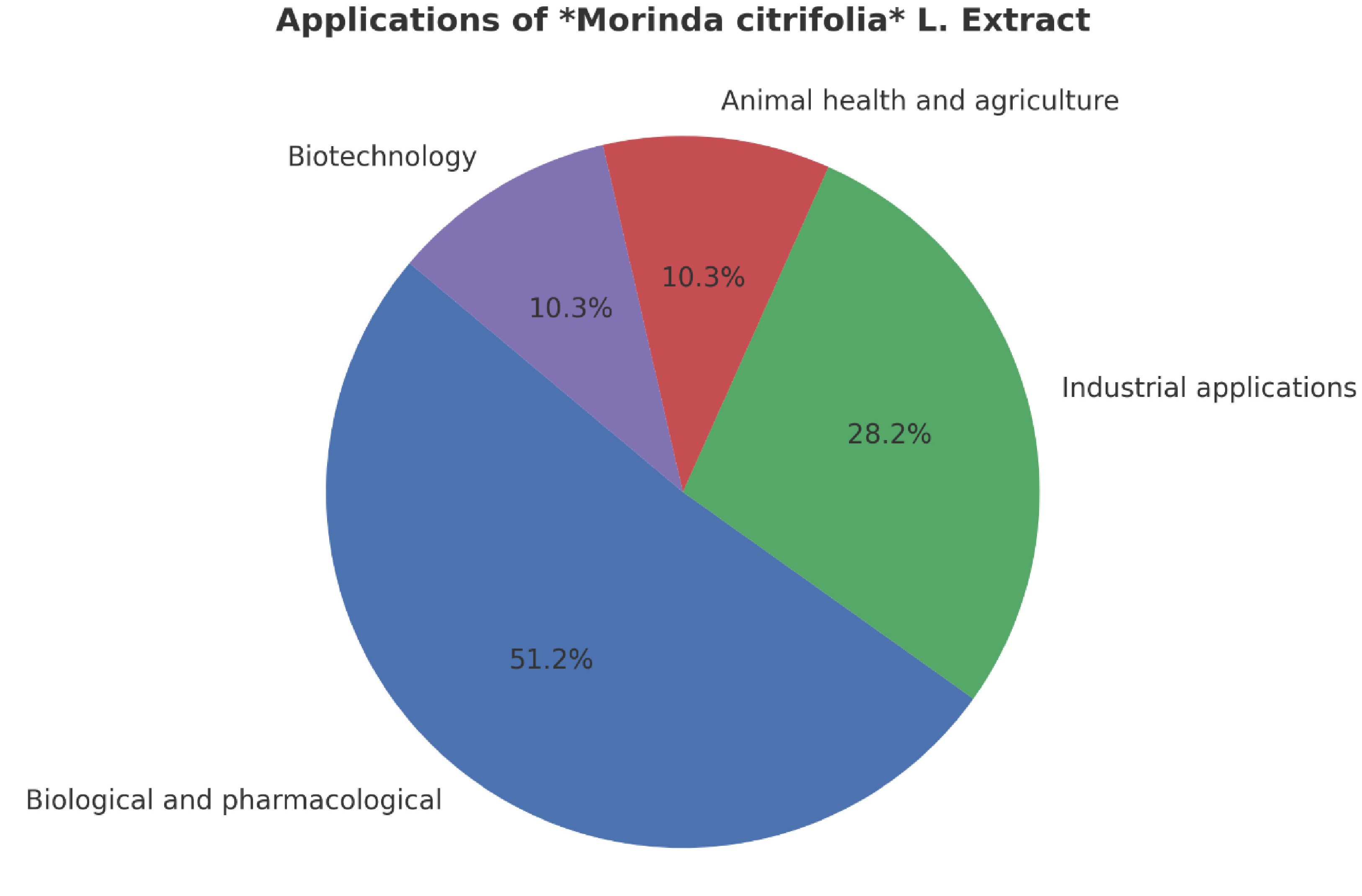
The studies included in this systematic review highlight the wide range of industrial, pharmacological, and technological applications associated with Morinda citrifolia L. extracts. The distribution of the analyzed publications demonstrates that most investigations are concentrated in biological and pharmacological research, followed by industrial applications, animal health, agriculture, and biotechnology.
As illustrated in Figure 2, the predominant research areas identified in the selected studies include biological and pharmacological applications (51.3%), industrial and technological applications (28.2%), animal health and agricultural uses (10.3%), and biotechnology-related investigations (10.3%). This distribution reflects the growing interest in exploring the bioactive potential of M. citrifolia in different scientific and industrial sectors.

Percentage distribution of the main application sectors of Morinda citrifolia L. extracts based on the studies included in the systematic review (2014-2024). Source: Prepared by the authors based on the analyzed data. Phytochemical Composition of Morinda citrifolia L.
Figure 2 presents the distribution of studies according to the predominant thematic areas addressed in the selected articles from 2014 - 2024.
3.1. Phytochemical composition of Morinda citrifolia L
The phytochemical profile of Morinda citrifolia L. is characterized by remarkable diversity, with more than 200 chemical compounds identified in different plant structures, including fruits, leaves, seeds, and roots. These compounds belong primarily to the classes of iridoids, flavonoids, phenolic acids, triterpenes, lignans, sterols, fatty acids, and alkaloids (Almeida et al., 2019; Liu et al., 2024).
The concentration and distribution of these bioactive compounds may vary according to several factors, including cultivar, geographic origin, maturity stage, environmental conditions, and extraction methods used during chemical analysis (Fontes et al., 2023).
Among these metabolites, iridoids are considered the most abundant and characteristic compounds in M. citrifolia, particularly in the fruit. Compounds such as asperulosic acid, deacetylasperulosidic acid, and damnacanthal have been widely reported as chemical markers associated with the biological activity of noni extracts (Lohani et al., 2019; Liu et al., 2024).
These compounds are frequently associated with antioxidant, anti-inflammatory, and antitumor properties (Kim et al., 2017; Kumar et al., 2022). In addition, flavonoids such as rutin, quercetin, and kaempferol have been identified in both leaves and fruit pulp, contributing significantly to the antioxidant capacity of the plant (Samarasinghe et al., 2021).
Phenolic compounds also play a relevant role in the pharmacological activity of M. citrifolia. Among them, scopoletin and ferulic acid have demonstrated anti-inflammatory and antimicrobial properties. Scopoletin, in particular, has been detected in both fresh juice and fermented extracts and has been associated with nitric oxide modulation and potential neuroprotective effects (Almeida et al., 2023a).
Additionally, triterpenes such as ursolic acid and betulinic acid, as well as fatty acids including linoleic, capric, and caprylic acids, have been identified in different plant tissues, highlighting the potential relevance of M. citrifolia for applications in human health and food biotechnology (Lohani et al., 2019).
The chemical characterization of these compounds is commonly performed using analytical techniques such as high-performance liquid chromatography (HPLC), gas chromatography coupled with mass spectrometry (GC–MS), and nuclear magnetic resonance (NMR). These techniques allow accurate identification and quantification of phytochemical compounds and are essential for ensuring the reproducibility and validation of extracts intended for industrial and pharmaceutical applications (Fontes et al., 2023; Liu et al., 2024).
The relative distribution of the main phytochemical groups identified in the literature is illustrated in Figure 3, which summarizes the most frequently reported compound classes in the studies included in this review.
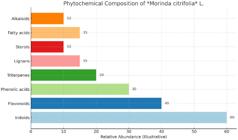
Relative abundance of the main phytochemical groups identified in Morinda citrifolia L. according to studies published between 2014 and 2024. Source: Prepared by the authors based on the systematic review.
3.2. Pharmacological and biological applications
The biological and pharmacological activities attributed to Morinda citrifolia are largely related to its rich composition of secondary metabolites. Several experimental studies have demonstrated that extracts of this species exhibit a broad spectrum of biological effects, including antioxidant, anti-inflammatory, antimicrobial, analgesic, anticancer, immunomodulatory, and neuroprotective activities (Almeida et al., 2019; Lohani et al., 2019; Liu et al., 2024).
The main pharmacological activities identified in the literature, together with their associated compounds and mechanisms of action, are summarized in Chart 1.
Main pharmacological activities of Morinda citrifolia L., associated bioactive compounds and mechanisms of action (2014-2024).
The antioxidant activity of M. citrifolia is mainly associated with its high concentration of phenolic compounds, flavonoids, and iridoids, which act as free radical scavengers and modulators of oxidative stress markers (Ghosh et al., 2020; Samarasinghe et al., 2021).
Experimental studies have demonstrated that noni juice and leaf extracts significantly reduce lipid peroxidation and increase the activity of endogenous antioxidant enzymes, such as superoxide dismutase and catalase (Ghosh et al., 2020).
The anti-inflammatory properties of M. citrifolia are associated with bioactive compounds such as scopoletin, damnacanthal, and flavonoids, which are capable of inhibiting key pro-inflammatory mediators including nitric oxide (NO), tumor necrosis factor-alpha (TNF-α), and inflammatory cytokines such as IL-1β and IL-6 (Kim et al., 2017).
Antimicrobial activity has also been reported against several pathogenic microorganisms, including Escherichia coli, Staphylococcus aureus, Salmonella spp., and Candida albicans. Ethanolic and methanolic extracts obtained from leaves and fruits have demonstrated bacteriostatic and fungistatic effects in vitro (Dussault et al., 2016).
In addition, anticancer activity has been reported in several experimental models. Bioactive compounds such as iridoids and anthraquinones, particularly damnacanthal, have demonstrated cytotoxic effects against colon, breast, and liver cancer cell lines. These effects are mainly associated with apoptosis induction, cell cycle arrest, and inhibition of angiogenesis-related pathways (Chou et al., 2020; Kumar et al., 2022).
Analgesic effects have also been observed in experimental pain models, where aqueous extracts reduced nociceptive responses through both central and peripheral mechanisms (Lohani et al., 2019).
Furthermore, several studies have highlighted neuroprotective effects related to the reduction of oxidative damage and inflammatory responses in neural tissues, supporting the potential application of M. citrifolia in strategies aimed at the prevention or management of neurodegenerative disorders (Almeida et al., 2023b).
3.3. Animal health and agriculture
The potential application of Morinda citrifolia in animal health and agricultural systems has also been investigated in recent studies. The plant has been explored as a functional feed additive due to its antioxidant and immunomodulatory properties.
Studies indicate that noni extracts present a valuable nutritional profile rich in phenolic compounds and natural antioxidants capable of reducing oxidative stress and improving immune responses in production animals (Lohani et al., 2019; Liu et al., 2024).
These properties position M. citrifolia as a promising alternative in animal nutrition strategies aimed at reducing the use of synthetic antibiotics and promoting more sustainable livestock production systems.
In addition to its applications in animal nutrition, dehydrated noni powder has also been studied as a natural antioxidant ingredient in food systems. Experimental studies have demonstrated that its incorporation into meat products, such as ground beef, can significantly inhibit lipid oxidation during refrigerated storage, improving product stability and shelf life (Mireles-Arriaga et al., 2019).
Furthermore, noni powder has been incorporated into herbal tea formulations, increasing the antioxidant capacity of the resulting infusions and reinforcing the potential use of this plant as an ingredient in functional foods.
The main industrial and functional applications derived from different parts of M. citrifolia are summarized in Figure 4.

Flowchart illustrating the industrial and functional applications of Morinda citrifolia L. derived from different plant parts. Source: Elaborated by the authors based on the systematic review (2026).
3.4. Biotechnology
In addition to its pharmacological potential, Morinda citrifolia has also attracted considerable attention in the field of biotechnology. Recent studies suggest that bioactive compounds present in noni extracts may influence molecular pathways related to gene expression modulation and cellular repair mechanisms.
Chou et al. (2020) demonstrated that extracts obtained from noni fruits were capable of modulating the expression of genes involved in apoptosis and DNA repair pathways in human cancer cell lines, resulting in reduced cellular proliferation and increased sensitivity to chemotherapeutic agents.
Similarly, experimental evidence reported by Mohd Zin et al. (2019) indicated that noni juice may activate antioxidant defense mechanisms and reduce oxidative DNA damage in animal models exposed to genotoxic stress.
These findings suggest that M. citrifolia extracts may represent promising candidates for the development of biotechnological strategies aimed at cellular protection, genomic stability, and complementary anticancer therapies.
3.5. Toxic effects and safety considerations
Despite the numerous beneficial effects attributed to Morinda citrifolia, the evaluation of its toxicological profile remains essential, particularly when extracts are administered at high concentrations.
Experimental studies have reported that excessive exposure to M. citrifolia extracts may induce histological alterations and physiological changes in biological systems, highlighting the need for careful evaluation of dosage and exposure conditions.
For example, Kamarudin et al. (2019) reported that exposure of Oreochromis niloticus to high concentrations of noni extract (18% and 20%) resulted in significant damage to gill tissues, including necrosis, epithelial hyperplasia, and vascular congestion.
These findings emphasize the importance of establishing standardized dosage protocols and conducting further toxicological investigations considering different species, exposure times, and administration routes.
Such studies are essential to ensure the safe and effective application of M. citrifolia extracts in pharmaceutical, nutraceutical, and food industry contexts.
4. Critical Analysis
The findings of this systematic review reinforce the multifunctional potential of Morinda citrifolia L. as a bioactive resource with cross-sector applications in the pharmaceutical, food, agricultural, and biotechnological industries. The wide diversity of identified phytochemicals, including flavonoids, iridoids, and phenolic compounds, is directly associated with the range of biological effects reported in the literature, particularly antioxidant, anti-inflammatory, antimicrobial, and antitumor activities (Almeida et al., 2019; Ghosh et al., 2020; Kim et al., 2017; Chou et al., 2020; Kumar et al., 2022).
The high concentration of iridoids, especially asperulosic acid and damnacanthal, has been correlated with selective cytotoxic effects on tumor cells and immunomodulatory properties relevant to antineoplastic therapies (Lohani et al., 2019; Kumar et al., 2022). As summarized in Chart 2, these compounds are among the main phytochemical markers associated with the pharmacological activity of M. citrifolia extracts.
Applications of Morinda citrifolia L., associated compounds, and main observed effects reported in the literature (2014-2024).
Experimental studies have demonstrated that noni extracts may induce apoptosis and interfere with cell cycle progression in several human tumor cell lines, including HepG2 and MCF-7 (Chou et al., 2020). These findings suggest that the presence of iridoids and anthraquinones may contribute significantly to the antitumor potential of this species.
Regarding antioxidant activity, hydroalcoholic extracts obtained from fruits and leaves have shown high efficacy in inhibiting lipid peroxidation and enhancing the activity of endogenous antioxidant enzymes such as superoxide dismutase and catalase (Ghosh et al., 2020; Samarasinghe et al., 2021). This antioxidant capacity is closely related to the high content of phenolic compounds and flavonoids present in the plant matrix.
These characteristics are particularly relevant for the functional food industry, as they indicate that M. citrifolia extracts may act both as natural preservatives and as nutraceutical ingredients capable of improving oxidative stability in food systems. Similar outcomes were reported by Abreu et al. (2021) for Spondias purpurea L. (red mombin) seeds, in which thermal processing significantly increased phenolic compound levels and vitamin C concentration, resulting in enhanced antioxidant capacity.
These parallels highlight the importance of controlled processing strategies in preserving or amplifying the functional properties of tropical fruit derivatives. Furthermore, they reinforce the relevance of agro-industrial coproducts as sustainable sources of bioactive compounds for food innovation.
In the agricultural and animal health sectors, supplementation with M. citrifolia extracts has been associated with reduced oxidative stress and improved immune responses in livestock animals (Lohani et al., 2019; Liu et al., 2024). These findings support the potential use of noni as a natural alternative to synthetic additives in animal nutrition systems.
Additionally, powdered noni has demonstrated effectiveness in stabilizing lipid-rich food matrices, particularly meat products that are highly susceptible to oxidative degradation. Studies have shown that the incorporation of noni powder can reduce lipid oxidation and improve product stability during storage (Mireles-Arriaga et al., 2019).
Another relevant aspect highlighted in recent studies concerns the biotechnological potential of M. citrifolia. The presence of bioactive compounds capable of modulating gene expression and protecting DNA suggests possible applications in molecular therapies and cellular protection strategies. Experimental evidence indicates that noni extracts may induce the expression of genes involved in DNA repair and apoptosis pathways, which are key mechanisms underlying their potential use as adjuvants in antitumor treatments (Chou et al., 2020; Mohd Zin et al., 2019).
Despite the promising biological and technological applications described in the literature, the reported benefits must be carefully balanced against available toxicity data. Toxicological studies using animal models indicate that exposure to high concentrations (≥18%) of M. citrifolia extracts may lead to histopathological alterations in sensitive tissues.
For example, Kamarudin et al. (2019) reported significant damage to the gill tissues of Oreochromis niloticus exposed to elevated extract concentrations, including necrosis, epithelial hyperplasia, and vascular congestion. These findings highlight the importance of establishing safe dosage limits and standardized extraction procedures.]
Therefore, the safe application of M. citrifolia extracts requires additional toxicological investigations considering different exposure durations, administration routes, and biological models. Such studies are essential to support regulatory frameworks and ensure safe industrial and therapeutic use.
Overall, the evidence compiled in this review indicates that Morinda citrifolia L. represents a promising multifunctional natural resource for the development of functional foods, nutraceuticals, pharmaceutical products, and biotechnological applications. At the same time, the comparison with other tropical species such as Spondias purpurea highlights the broader potential of tropical fruit coproducts as sustainable sources of bioactive compounds.
The main application areas, associated compounds, and observed biological effects are summarized in Chart 2, which synthesizes the principal findings identified in the analyzed studies.
5. Final Considerations
This systematic review highlights the significant potential of Morinda citrifolia L. as a multifunctional natural resource with applications in the pharmaceutical, food, agricultural, and biotechnological sectors. The compiled evidence demonstrates that the plant contains a diverse phytochemical profile rich in iridoids, flavonoids, and phenolic compounds, which are strongly associated with antioxidant, anti-inflammatory, antimicrobial, and antitumor activities reported in recent scientific studies.
The results also indicate that M. citrifolia extracts present promising technological applications, particularly as natural preservatives and nutraceutical ingredients in functional foods, as well as immunomodulatory supplements in animal nutrition systems. These findings reinforce the growing interest in tropical plant resources as sustainable sources of bioactive compounds capable of supporting innovation in food biotechnology and health-related industries.
Another relevant aspect highlighted in this review is the potential of M. citrifolia extracts to modulate gene expression pathways and cellular protection mechanisms, suggesting possible applications in emerging biotechnological and therapeutic strategies.
Despite these promising results, toxicological evidence reported in some experimental models indicates that high concentrations of M. citrifolia extracts may induce adverse physiological effects. Therefore, further investigations focusing on dosage standardization, safety assessment, and extract characterization remain essential for ensuring safe industrial and therapeutic applications.
Overall, the evidence synthesized in this review supports the relevance of Morinda citrifolia L. as a sustainable source of bioactive compounds with considerable potential for the development of innovative products in food systems, nutraceuticals, and biotechnology. Future research should prioritize clinical validation, technological optimization, and regulatory standardization to consolidate its safe and effective use.
Acknowledgements
The authors would like to thank the Programa de Pós-graduação em Ciências do Ambiente (PPGCIAMB) at the Universidade Federal do Tocantins (UFT) and the Coordenação de Aperfeiçoamento de Pessoal de Nível Superior (CAPES) for the financial support provided for this research.
Data Availability Statement
The datasets analyzed in this systematic review are available from the corresponding author upon reasonable request.
References
- ABREU, D.J.M., CARVALHO, E.E.N., VILAS BOAS, E.V.B., ASQUIERI, E.R. and DAMIANI, C., 2021. Antioxidant capacity of bioactive compounds from undervalued red mombin seed (Spondias purpurea L.) affected by different drying stages. ACS Food Science & Technology, vol. 1, no. 3, pp. 1-15.
-
ALMEIDA, É.S., OLIVEIRA, D. and HOTZA, D., 2019. Properties and applications of Morinda citrifolia (noni): a review. Comprehensive Reviews in Food Science and Food Safety, vol. 18, no. 4, pp. 883-909. https://doi.org/10.1111/1541-4337.12456 PMid:33336991.
» https://doi.org/10.1111/1541-4337.12456 -
ALMEIDA, É.S., AREND, G.D., DA ROSA, C.G., RECH, R. and BARRETO, P.L.M., 2023a. Effect of the multi-stage block freeze concentration on the physicochemical and biological properties of noni tea. Journal of Food Measurement and Characterization, vol. 17, pp. 2519-2536. https://doi.org/10.1007/s11694-022-01719-1
» https://doi.org/10.1007/s11694-022-01719-1 - ALMEIDA, É.S., AREND, G.D., DA ROSA, C.G., RECH, R., BERTOLDI, F.C. and BARRETO, P.L.M., 2023b. Neuroprotective properties of noni extracts in oxidative stress models. Journal of Food Measurement and Characterization, vol. 17, pp. 1432-1440.
- CHOU, S.-T., PENG, H.-Y., HSU, J.-C., SHIH, Y. and HUANG, G.-J., 2020. Protective effects of Morinda citrifolia fruit extract on DNA damage and apoptosis in human cancer cell lines. BMC Complementary Medicine and Therapies, vol. 20, pp. 287.
- DUSSAULT, D., VU, K.D. and LACROIX, M., 2016. In vitro antimicrobial activity of noni fruit (Morinda citrifolia) extracts against foodborne pathogens. Food Control, vol. 66, pp. 1-5.
- FONTES, A., ANDRADE, J.K.S., RAJAN, M. and NARAIN, N., 2023. Chemical characterization of different parts of noni (Morinda citrifolia) fruit and its freeze-dried pulp powder. Food Science and Technology, vol. 43, e109823.
- FOOD AND AGRICULTURE ORGANIZATION OF THE UNITED NATIONS – FAO, 2023. The state of food security and nutrition in the world 2023. Rome: FAO.
- GHOSH, D., CHAKRABORTY, P., KAR, S. and SAHA, S., 2020. Morinda citrifolia juice supplementation enhances antioxidant status and reduces lipid peroxidation in rats. Journal of Dietary Supplements, vol. 17, pp. 471-482.
- KAMARUDIN, M.N.A., HIDAYAT, T., JALAL, K.C.A., 2019. Evaluation of toxic effects of Morinda citrifolia extract on gill tissues of Oreochromis niloticus. Veterinary World, vol. 12, no. 4, pp. 518-524.
- KIM, Y.H., KIM, H.M., LEE, Y.M. and JEONG, H.J., 2017. Inhibitory effects of Morinda citrifolia on the production of inflammatory cytokines in murine macrophage cells. Journal of Medicinal Food, vol. 20, pp. 1119-1125.
- KUMAR, H.C., LIM, X.Y., MOHKIAR, F.H., SUHAIMI, S.N., MOHAMMAD SHAFIE, N., CHIN TAN, T.Y., 2022. Efficacy and safety of Morinda citrifolia L. as a potential anticancer agent. Integrative Cancer Therapies, vol. 21, pp. 15347354221132848. PMid:36448674.
- LIU, X., LIN, X., HU, X., LI, C., FEI, T. and WANG, L., 2024. Noni (Morinda citrifolia) fruit and by-products: a comprehensive review. Trends in Food Science & Technology, vol. 141, pp. 216-229.
-
LOHANI, M., MAJRASHI, M., GOVINDARAJULU, M., PATEL, M., RAMESH, S., BHATTACHARYA, D., JOSHI, S., FADAN, M., NADAR, R., DARIEN, B., MAURICE, D.V., KEMPPAINEN, B. and DHANASEKARAN, M., 2019. Immunomodulatory actions of a Polynesian herb noni (Morinda citrifolia) and its clinical applications. Complementary Therapies in Medicine, vol. 47, pp. 102206. https://doi.org/10.1016/j.ctim.2019.102206 PMid:31780035.
» https://doi.org/10.1016/j.ctim.2019.102206 - MIRELES-ARRIAGA, A.I., GONZÁLEZ-AGUILAR, G.A., MARTÍNEZ-TÉLLEZ, M.A. and AYALA-ZAVALA, J.F., 2019. Effect of noni (Morinda citrifolia L.) powder on lipid oxidation and antioxidant capacity of ground beef and tea blends. CYTA: Journal of Food, vol. 17, pp. 407-414.
- MOHD ZIN, Z., RAJAB, N.F., RAZALI, N. and AHMAD, Z., 2019. Effect of Morinda citrifolia juice on DNA damage and oxidative stress in rats exposed to ionizing radiation. Journal of Radiation Research and Applied Sciences, vol. 12, no. 1, pp. 75-81.
-
PAGE, M.J., MCKENZIE, J.E., BOSSUYT, P.M., BOUTRON, I., HOFFMANN, T.C., MULROW, C.D., SHAMSEER, L., TETZLAFF, J.M., AKL, E.A., BRENNAN, S.E., CHOU, R., GLANVILLE, J., GRIMSHAW, J.M., HRÓBJARTSSON, A., LALU, M.M., LI, T., LODER, E.W., MAYO-WILSON, E., MCDONALD, S. and MOHER, D., 2021. The PRISMA 2020 statement: an updated guideline for reporting systematic reviews. BMJ, vol. 372, pp. n71. https://doi.org/10.1136/bmj.n71
» https://doi.org/10.1136/bmj.n71 -
SAMARASINGHE, K., VISVANATHAN, C. and KUMAR, S.P., 2021. Evaluation of circular economy potential of plastic waste in Sri Lanka. Environmental Quality Management, vol. 31, no. 1, pp. 65-77. https://doi.org/10.1002/tqem.21732
» https://doi.org/10.1002/tqem.21732
Edited by
-
Editor:
Takako Matsumura Tundisi