 Lipidic composition and thermal stability of oils from Dipteryx alata, Acrocomia totai, Mauritia flexuosa and Caryocar brasiliense
Abstract
Vegetable oils have various types of applications, one of which is food. Dipteryx alata (“baru” or tonka bean) and Acrocomia totai (“bocaiuva”, or macaw palm) nuts, Mauritia flexuosa (“buriti”, or buriti palm), and Caryocar brasiliense (“pequi”, or pequi fruit) pulps are sources of unsaturated lipids. By performing quality, identity, and stability analyses, it is possible to check whether these oils are proper for human nutrition. Oils of tonka bean and pequi fruit had acceptable acidity values, while macaw palm oils had values above those allowed by the Codex Alimentarius. The peroxide index was within the recommended value in all samples. In addition, the refractive index and relative density were similar for all oils. The coloring indicated the possible presence of chlorophyll in tonka bean and macaw palm oils, and carotenoids in buriti palm and pequi fruit oils. The fatty acid profile revealed that macaw palm, buriti palm, and pequi fruit oils are mostly monounsaturated, while A. totai oil exhibited a predominantly saturated profile. The nutritional quality indices demonstrated that the oil with the most similar quality to olive oil was that of buriti palm. UV-vis and fluorescence analysis indicated that pequi fruit and buriti palm oils contain beta-carotene, while tonka bean and macaw palm oils have alpha-tocopherol. Finally, thermal analyses showed that tonka bean and buriti palm oils have the highest stability at high temperatures, indicating the best potential for culinary use.
Keywords:
Brazilian Cerrado; crude vegetable oil; fatty acid profile; oxidative stability; thermal analysis
Resumo
Os óleos vegetais possuem diversos tipos de aplicações, sendo a alimentação uma delas. As castanhas do baru e da bocaiuva e as polpas do buriti e do pequi, são fonte de lipídios insaturados. Realizando análises de qualidade, identidade e estabilidade, é possível verificar se existe a possibilidade desses óleos integrarem a alimentação humana. O presente estudo demonstrou que os óleos de baru e pequi tiveram valores aceitáveis de acidez, enquanto os óleos de bocaiuva e buriti obtiveram valores acima do permitido pelo Codex Alimentarius. O índice de peróxido ficou dentro do valor preconizado em todas as amostras, ademais, o índice de refração e a densidade relativa foi similar para todos os óleos. A coloração indicou que pode existir a presença de clorofila no óleo de baru e óleo de bocaiuva e carotenoides no óleo de buriti e óleo de pequi. O perfil de ácidos graxos revelou que o óleo de baru, óleo de buriti e óleo de pequi são majoritariamente monoinsaturados, enquanto o óleo de bocaiuva tem um perfil predominantemente saturado. Os índices de qualidade nutricional demonstraram que o óleo com qualidade mais parecida com o azeite de oliva foi o óleo de buriti. As análises de UV-vis e fluorescência indicaram que o óleo de pequi e óleo de buriti possuem beta-caroteno, enquanto o óleo de baru e o óleo de bocaiuva possuem alfa-tocoferol. Por fim, as análises térmicas mostram que o óleo de baru e o óleo de buriti possuem maior estabilidade em altas temperaturas, indicando um potencial uso culinário.
Palavras-chave:
Cerrado brasileiro; óleo vegetal bruto; perfil de ácidos graxos; estabilidade oxidativa; análise térmica
1. Introduction
Brazil leads the global oilseed production, with over 158 million metric tons in 2023 and 2024, followed by the U.S.A. and China, with approximately 122 and 69 million metric tons, respectively (USDA, 2025).
In the Cerrado and Pantanal biomes, there are various nut-bearing trees with lipid potential, such as Dipteryx alata Vogel (tonka bean or “baru”), Acrocomia totai (macaw palm, ”bocaiuva” or “macaúba”), Mauritia flexuosa L.f. (buriti palm or “buriti”), and Caryocar brasiliense Cambess. (pequi fruit or “pequi”). Pressed, they can provide crude vegetable oils with a high nutritional value, since these fruits are rich in unsaturated fatty acids (Vale et al., 2019; Queiroz et al., 2025; Silva et al., 2025; Sobral et al., 2025; Sorita et al., 2025).
The indices of identity and quality, such as acidity, peroxide value, and refraction, are tools that help identify if an oil has undergone alteration, such as oxidation and deterioration. The profile of fatty acids indicates whether it is interesting from the nutritional viewpoint for the human diet. The analysis of thermal stability indicates the safe maximum temperature at which an oil can be heated without any alteration. The oxidative stability verifies the resistance of an oil to oxidation when exposed to a sudden increase in temperature (Khoddami et al., 2014; Santos et al., 2016; Aremu et al., 2017; Lužaić et al., 2022). Thus, our research had the objective to characterize the physical-chemical features of the crude oils from native Cerrado fruits, analyze their fatty acid profile, and to verify their optical and thermal analyses, aiming at their potential as edible oils.
2. Material and Methods
2.1. Raw matter
The nuts of macaw palm and tonka bean were acquired at the Centro de Produção Pesquisa e Capacitação do Cerrado (CEPPEC) (Nioaque-MS), and the oils were extracted in a domestic hydraulic press (Yoda Nut & Seed Cold Press Oil, Extractor-Gourmet Extractor, Homeup, Yoda Europe, Cluj-Napoca, Romania), with a mean yield of 15%.
2.2. Quality and identity indices of crude oils
2.2.1. Acidity index
The oil acidity index was determined by adding a neutralized ether–alcohol (1:1) solution and phenolphthalein to indicate color change. We utilized potassium hydroxide (KOH) 0.1 M as a titrant until the color changed to pink. The results are expressed as mgKOH/g and g of oleic acid/100 g oil (IAL, 2008).
2.2.2. Peroxide index
To verify the peroxide index, we added c. 1.0 g to each oil sample. Then, we added a solution of glacial acetic acid and chloroform (3:2) and, next, 0.1 mL of a saturated solution of potassium iodine. Later, we added distilled water and soluble starch at 1% as an indicator. After, it was titrated with sodium thiosulfate at 0.01M until the mixture became translucent (IAL, 2008).
2.2.3. Refraction index
The refraction index of the oils was obtained with an Abbé refractometer (RL3, Tecnal, Brazil) calibrated with distilled water, with a refraction index of 13.330, at 27 °C, temperature-corrected to 40 °C (IAL, 2008).
2.2.4. Saponification index
We determined the saponification index by adding a solution of alcohol and potassium hydroxide (KOH) at 4% (m/v) to the samples and refluxing for 1 h. Next, we used phenolphthalein to indicate color change and titration with chloric acid (HCl) 0.5 M. The results were expressed as mgKOH/g (IAL, 2008).
2.2.5. Iodine index
The iodine index was obtained by adding carbon tetrachloride and Wijs solution to the oils, and standard sodium thiosulfate was used as a titrant until the color changed from black to pink. The results were expressed as g I2/100 g (IAL, 2008).
2.2.6. Relative density
We determined the relative density by using the pycnometer method, with prior taring in an oven at 105 °C. Then, we added a mixture of alcohol and water at 20–23 °C and placed it in a bath at a constant temperature (25 ± 0.1 °C). We repeated the same procedures with the oils. The results were expressed as mg/mL (IAL, 2008).
2.3. Coloration
For the analysis, a colorimeter (CM-2300d, Konica Minolta®, USA) was used, expressing the results in the scale CIE L*a*b* (Konica Minolta, 2025).
2.4. Fatty acid profile
We the fatty acids according to a method adapted from Hartman and Lago (1973). The methyl esters were analyzed by gas chromatography (GC 2010, Shimadzu®, Japan), and their individual peaks of FAMEs were identified by comparing their relative retention times with the standard of 37 FAMEs (Supelco® C22, 99% pure).
2.5. Nutritional quality index
The oil nutritional quality was determined according to the atherogenicity index (IA), thrombogenicity index (IT), and hypercholesterolemic/hypocholesterolemic relation (HH) (Ulbricht and Southgate, 1991).
2.6. Optic analyses: UV-vis and fluorescence
Oil samples were diluted in Hexane Sigma-Aldrich® grade HPLC 99.9% in two concentrations, 0.5 and 16.6% (v/v), to perform optical measures. A spectrophotometer of band Lambda 265 UV/Vis, Perkin Elmer®, Waltham, MA, USA was used for measurements of UV-Vis absorption.
2.7. Thermal analysis: TG/DTG and DSC
The TG/DTG curves of oils were obtained using a thermal analysis system (TGA Q50 of TA Instruments®), and platinum crucibles for samples. The DSC curves were obtained by DSC Q20 of TA Instruments® coupled to a RCS 90 refrigeration system (Refrigerated Cooling System).
2.8. Statistical analyses
The results were expressed as mean ± standard deviation of the mean. The one-way analysis of variance (one-way ANOVA) was used for multiple comparisons, followed by the Tukey post-test or Dunn post-test. The significance level adopted was p<0.05. For statistical analyses, the software Jandel SigmaStat, version 3.5 for Windows (Systat software®, Inc., USA) was used. The statistical analyses were performed on acidity, peroxide, refraction, saponification, relative density, and fatty acid profile.
3. Results and Discussion
3.1. Quality and identity indices of Cerrado oils
In Table 1, we show the values obtained for oils of tonka bean, macaw palm, buriti palm, and pequi fruit. The quality and identity indices applied to oils are used to evaluate whether a food is appropriate for consumption, fitting the parameters according to the legislation and without signs of deterioration (Meireles et al., 2022; Dudi et al., 2021).
Quality and identity indices of oils of tonka bean, macaw palm nut, buriti palm, and pequi fruit.
The comparison of acidity index values in crude oils of tonka bean and macaw palm revealed a significant difference, and only the oils of buriti palm and pequi fruit did not differ. The peroxide index showed a significant difference among oils of buriti palm and pequi fruit, whereas the oils of tonka bean and macaw palm did not form peroxides. Regarding the refraction index, we did not find significant differences among any oils, nor in density. However, in the saponification index, we detected differences between the oils of tonka bean and pequi fruit, macaw palm and pequi fruit, and buriti palm and tonka bean.
The acidity indices of tonka bean and pequi fruit oils are within the values advised by the Codex Alimentarius, up to 4.0 mg KOH/g for crude oils. The buriti palm oil exhibited the highest acidity index among oils; therefore, it is considered non-edible without refining, but it can be used in its crude form in non-food products, such as cosmetics (Silva et al., 2024; FAO, 2024). The peroxide index stayed within the range of recommended values for crude oils (up to 15 mEq O2/kg) in all oils. The refraction index was very similar for all oils. The oils we analysed do not have established parameters, but it is possible to compare them to extra-virgin olive oil, whose refraction index is 1.4677-1.4705, and to palm oil, with an index of 1.454-1.456 at 50 °C.
The tonka bean oil had the lowest saponification index, in contrast with the highest value of pequi fruit oil. Since the saponification index is inversely proportional to the molecular weight of the fatty acids present in oils, we can conclude that those with high saponification values are composed mainly of short and medium-chain fatty acids.
The results of the iodine index in oils of tonka bean and buriti palm indicate that they possess a high number of double bonds; thus, they are unsaturated oils. The pequi fruit oil obtained an intermediate value, demonstrating that it contains more saturated fatty acids than the first two. Furthermore, macaw palm oil presented the lowest iodine index, which indicates a high content of saturated fatty acids (FAO, 2024; Silva et al., 2025).
The relative density of all sampled oils was similar. They comply with crude oil standards, compared to olive oil (0.910-0.916) and palm oil (0.891-0.899). This parameter is associated with the composition of fatty acids of oils and can alter depending on temperature or lipid oxidation (Prates‐Valério et al., 2019).
The analysis of color using the method CIE L*a*b* demonstrated that the tonka bean and macaw palm oils showed a clearer coloration, since they presented a higher L* value. Besides, for a negative value of a*, parameter that indicates a spectrum of red (+a*) to green (-a*), we can infer that they have a more greenish coloration, which can indicate the presence of chlorophyll. The buriti palm and pequi fruit oils exhibited a darker coloration, with lower values of L* (Pérez-Galvéz et al., 2020; Srivastava, 2021; Konica Minolta, 2025).
3.2. Profile of fatty acids and indices of nutritional quality of oils from the Cerrado
The oils of tonka bean, macaw palm, buriti palm, and pequi fruit had distinct compositions of fatty acids (Table 2). The tonka bean oil was composed of 17.80% saturated fatty acids, the principal being palmitic acid, 54.70% monounsaturated, its highest fraction, with prominence for the oleic acid and 24.56% polyunsaturated, 24.46% being linoleic acid. Santos et al. (2024) report in their review the average values of 50% monounsaturated, 30% polyunsaturated, and 20% saturated. Mendonça et al. (2024) found similar values in tonka bean oil with c. 53% of monounsaturated, 30% of polyunsaturated, and 15% of saturated.
The macaw palm nut oil contained the highest quantity of saturated lipids of all samples, nearly half its composition. Next, appear the monounsaturated fatty acids, mainly oleic, with more than 27%, and in lower proportion, the polyunsaturated fatty acids, with 2.43%. Silva et al. (2023) found slightly distinct values for macaw palm oil, with approximately 72% of saturated, 24% of monounsaturated, and 2% of polyunsaturated fatty acids. The predominantly saturated profile of macaw nut oil makes it suitable for use in biodiesel production, since higher levels of saturated fatty acids are associated with increased oxidative stability and higher cetane numbers (Duque et al., 2025; Pradana et al., 2024).
The buriti palm oil presented 18.06% de saturated fatty acids, with the palmitic standing out. The buriti palm oil had the highest monounsaturated fatty acid content among the four studied oils, with a total of 78.01%, being 77.48% oleic acid. The summation of total polyunsaturated fatty acids is only 1.95%. Besides, similar to our results, another study reported a composition of crude oil of buriti palm very close to ours, with 76.69% monounsaturated, 19.34% saturated, and 1.35% polyunsaturated fatty acids (Marcelino et al., 2022).
The pequi fruit oil had a similar quantity of saturated and monounsaturated fatty acids, of 42.19% and 54.20%, respectively. The fatty acid with the highest content was oleic, followed by palmitic. Carneiro et al. (2023) analysed the oil of pequi fruit cultivated in the state of Mato Grosso, and the profile of obtained fatty acids was approximately 43% saturated, 52% monounsaturated, and 1% polyunsaturated.
The AI indicates fatty acids with the potential to induce atherosclerosis, whereas TI indicates fatty acids that tend to form plaques in blood vessels, which increase the risk of cardiovascular diseases. The lower these indices, the better the oil composition and the lower the inflammatory potential (Ulbricht and Southgate, 1991; Menotti et al., 2024).
The HH is the relation between hypocholesterolemic and hypercholesterolemic fatty acids, and, like other indices, the lower, the better the oil lipidic composition (Kmiecik et al., 2023; Tilami and Kouřimská, 2022). The oil with the highest AI was the macaw palm, in contrast with the lowest, which was the tonka bean (Table 3).
3.3. Optical analyses: UV-vis and fluorescence
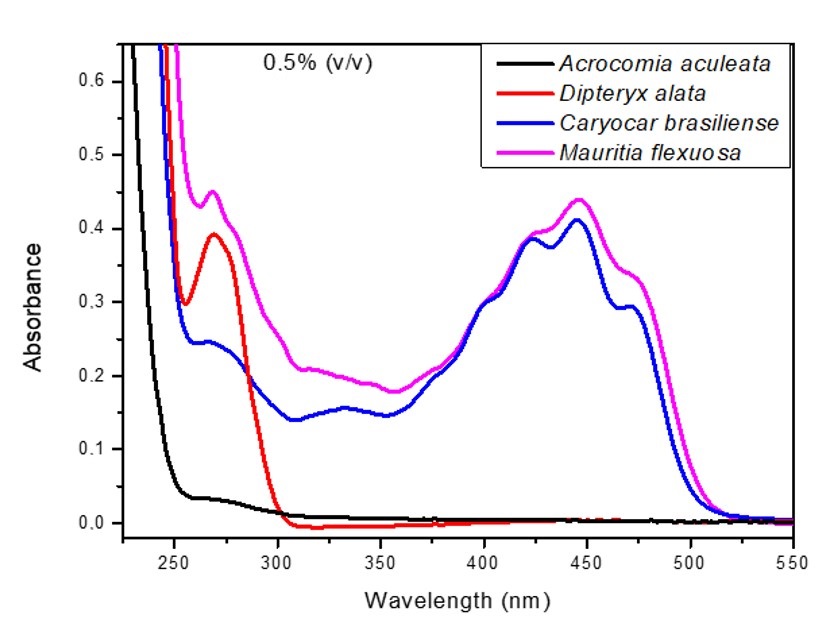
Pequi fruit and buriti palm oils presented UV-Vis between 400 and 500 nm, characteristic of antioxidant substances of the carotenoid group (Figure 1), which can be attributed to the presence of beta-carotene due to the band shape, with the highest intensity of the central peak at approximately 450 nm (Silva et al., 2015; Faidi et al., 2016; Oliveira et al., 2017). The tonka bean oil presented an absorption band centered at 270 nm, with a region and characteristic shape of the natural alpha-tocopherol antioxidant (Silva et al., 2015; Oliveira et al., 2017).
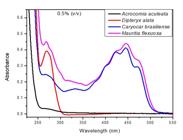
UV-vis absorption spectra of the crude oils of tonka bean macaw palm nut, buriti palm and pequi fruit diluted in hexane 0.5%.
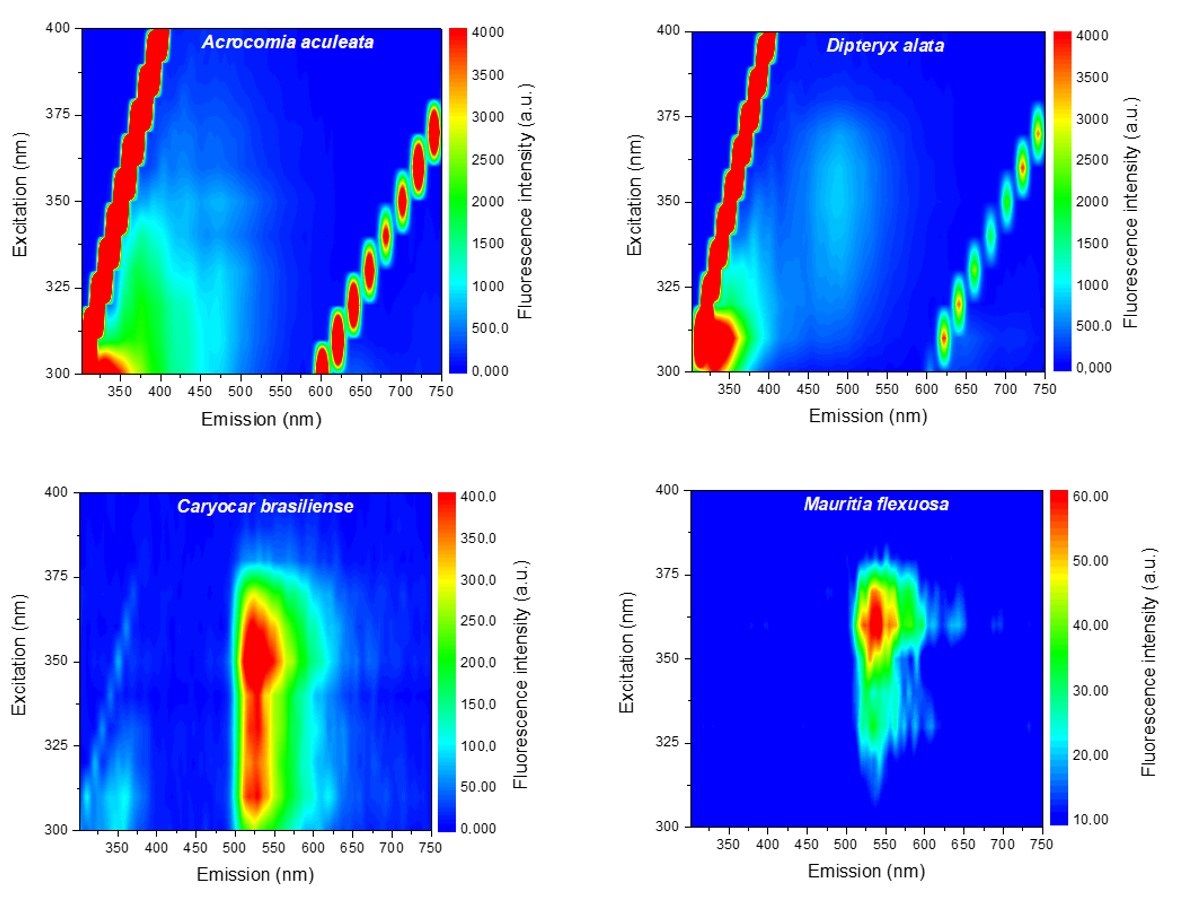
Aligned with results of absorption, the pequi fruit and buriti palm oils presented emission bands characteristics of betacarotene, with higher emission intensity between 500 and 550 nm (Figure 2), indicating its presence in these vegetable oils, confirming the result seen before in the coloration analysis (Oliveira et al., 2017; Magalhães et al., 2014; Figueiredo et al., 2022). The carotenoids present in the crude oil of buriti palm can justify their use in dermocosmetics, since they offer photoprotection (Flieger et al., 2024). Similarly, pequi oil, characterized by a predominantly monounsaturated profile and high carotenoid content, has significant antioxidant and photoprotective potential, making it a promising alternative for the pharmaceutical and cosmetic industries, and can even be used in its raw form (Flieger et al., 2024). The crude oils of macaw palm nuts and tonka bean presented emissions in the region between 300 and 350 nm. These references attribute the emission to the tocopherol family of antioxidants, a known content of these vegetable oils (Oliveira et al., 2017; Figueiredo et al., 2022).
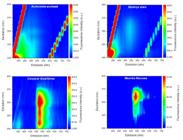
Emission-excitation map of the crude oils of tonka bean, macaw palm, buriti palm and pequi fruit.
3.4. Thermal analysis: TG and DSC
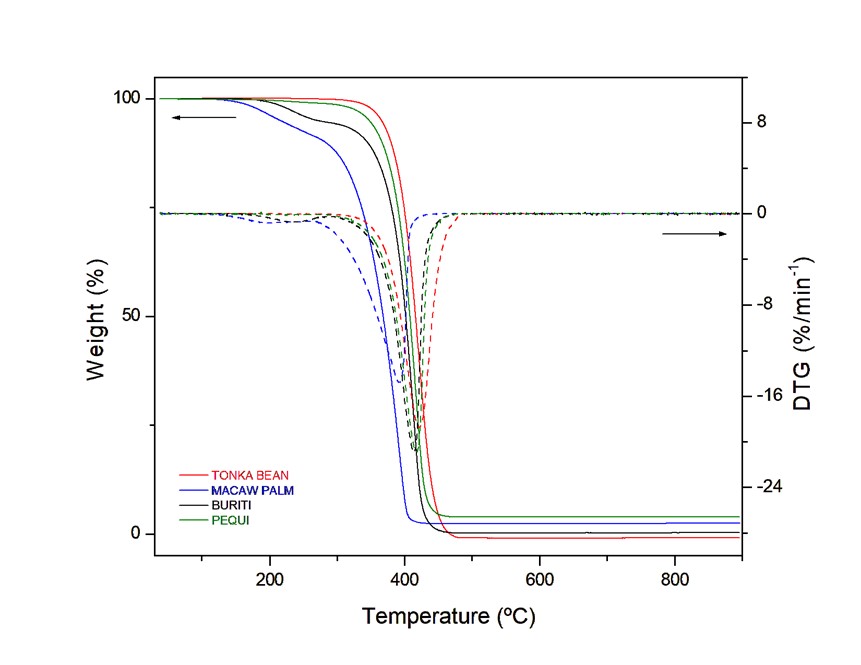
The curves of thermogravimetry and derived thermogravimetry (TG/DTG) show the thermal stability and thermodecomposition behavior of the oils, related to the mass losses that occur as a function of controlled temperature variation (Santos et al., 2016; Carvalho et al., 2020). The thermal decomposition events of tonka bean, macaw palm, buriti palm, and pequi fruit oils are shown in Figure 3 and Table 4.
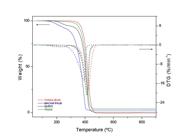
TG/DTG thermal decomposition curves of crude oils of tonka bean, macaw palm nut, buriti palm, and pequi fruit.
All oils, except tonka bean oil, had two steps of thermodecomposition. The first event of mass loss is attributed to the loss of water and minor mass volatile components. The second event, with a higher mass loss, shows degradation of the oil itself by decomposition of its fatty acids (Meireles et al., 2022; Marcelino et al., 2022).
Analysing Figure 3 and Table 4, the tonka bean oil had a single loss, that can be justified by the absence of short-chain fatty acids, such as acetic, propionic, buthyric and valeric acids, C2:0, C3:0, C4:0, and C5:0, respectively, with begin at 322 °C and end at 480 °C, without any residue, having the highest thermal stability. The macaw palm nut crude oil began its degradation at 105 °C, with a small mass loss, a higher decomposition at 262 °C, and ash residue of 2.35%; thus, it is the least stable under high temperatures. The buriti palm oil showed its first mass loss between 168 and 320 °C, and a second one between 320 and 471 °C, with little mass residue, a stability comparable to tonka bean. The pequi fruit oil started to degrade at 184 °C and ended its degradation at 484 °C, being stable up to 298 °C, with a mass residue of 3.88%.
The high stability of crude oils of tonka bean and buriti palm is justifiable by high contents of long-chain fatty acids (Table 2), which are the last to become degraded due to their higher molecular weight and longer chain, with more covalent bonds, making them more stable.
The thermal stability of baru oil, combined with its low acidity, high oleic acid content, and the presence of antioxidant compounds, gives it potential for culinary applications in frying processes, which reach temperatures around 180 °C and require oils highly resistant to oxidation (Abrante-Pascual et al., 2024; Zhou et al., 2024).
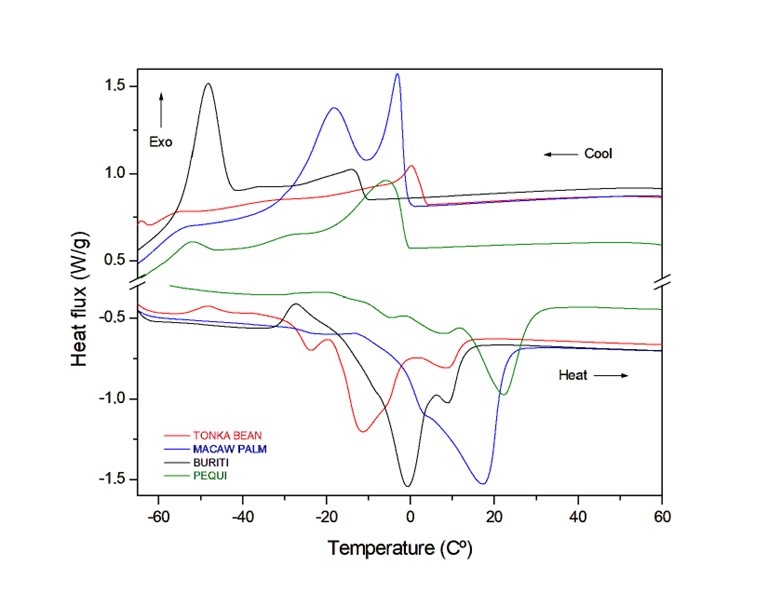
The DSC curves of cooling followed by heating show the temperatures and quantity of liberated or absorbed energy in the physical processes of crystallization and fusion of oil samples, when they change from liquid to solid state or vice versa (Giri and Pal, 2014). Figure 4 and Table 5 give the crystallization (cooling) and fusion (heating) events.
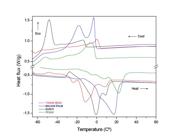
In Figure 4, one can verify that the tonka bean oil crystallized at temperatures around 3.0 °C. At heating, we can visualize three events; the first at -28.10 °C, associated with the fusion of polyunsaturated fatty acids, with higher number of double bonds, had lower fusion points. The second event at -17.25 °C shows the fusion of monounsaturated fatty acids, with a medium fusion point. The third event at 3.14 °C, higher temperature than before, refers to the fusion of saturated fatty acids, which lack a double bond, and have a more stable and higher fusion point. The crude macaw palm nut oil had two crystallization events, the first referring to the saturated fatty acids and the second to the monounsaturated acids. At fusion, only one event was present, which suggests that the fusion points of saturated and monounsaturated fatty acids are close and consecutive. The buriti palm crude oil presented two crystallization events, the first signals the solidification of saturated fatty acids, and, due to its high content of monounsaturated acids (Table 2), a second peak occurred. At heating, we observed three fusion events, similar to the performance of the tonka bean oil, probably due to their similar type proportion of fatty acids. The pequi fruit crude oil had two crystallizations and two fusion events, as well as macaw palm and buriti palm. The first, with little energy liberation (Table 5), is interpretable as polyunsaturated, that even in lower quantity, has a much lower fusion temperature than the other fatty acids; the second peak, is interpreted as monounsaturated and saturated acids, that can have closer fusion points, for being more stable (Meireles et al., 2022; Miyagawa et al., 2019).
4. Conclusion
The oils of tonka bean, macaw palm, buriti palm, and pequi fruit comply with the ideal values recommended for quality indices, and compare to olive oil and palm oil. The red color of the oils of buriti palm and pequi fruit indicates the presence of carotenoids, as confirmed by UV-vis and fluorescence analyses. The oils of tonka bean, buriti palm, and pequi fruit present a lipid profile that is majorly monounsaturated, whereas the macaw palm oil has a predominance of saturated fatty acids. Regarding thermal stability, the tonka bean nut oil stands out for withstanding the highest temperature of the four tested oils, indicating a potential culinary use for cooking and frying. The fatty acid profile of the macaw palm nut oil is ideal for biofuel, which would benefit the bioeconomy of the Cerrado and Pantanal.
Acknowledgements
We thank the Graduate Program in Health and Development in the Central-West Region, Medical School, Federal University of Mato Grosso do Sul, Campo Grande, and the Federal University of Mato Grosso do Sul-UFMS for the support. The authors also thank the Coordination for the Improvement of Higher Education Personnel (Coordenação de Aperfeiçoamento de Pessoal de Nível Superior-CAPES). This research was partially supported by the Brazilian Research Council (CNPq) (CNPq: process nº 304312/2025-8 and CNPq: process nº 313985/2023-5). This research was financially supported by the Brazilian Research Council (CNPq) (CNPq: process nº 314551/2023-9) and Coordenação de Aperfeiçoamento de Pessoal de Nível Superior-Brasil (CAPES)-Finance Code 001.
Data Availability Statement
The data that support the findings of this study are available from the corresponding author, [R.C.A.G.], upon reasonable request.
References
-
ABRANTE-PASCUAL, S., NIEVA-ECHEVARRÍA, B. and GOICOECHEA-OSES, E., 2024. Vegetable oils and their use for frying: a review of their compositional differences and degradation. Foods, vol. 13, no. 24, pp. 4186. https://doi.org/10.3390/foods13244186 PMid:39767128.
» https://doi.org/10.3390/foods13244186 -
AREMU, M.O., IBRAHIM, H. and ANDREW, C., 2017. Comparative studies on the lipid composition of blood Plum (Haematostaphis barteri) pulp and seed oils. The Open Biochemistry Journal, vol. 11, pp. 94-104. https://doi.org/10.2174/1874091X01711010094 PMid:29299072.
» https://doi.org/10.2174/1874091X01711010094 -
CARNEIRO, C.R., ALHAJI, A.M., DA SILVA, C.A.S., DE SOUSA, R.D.C.S., MONTEIRO, S. and COIMBRA, J.S.D.R., 2023. Potential challenges of the extraction of carotenoids and fatty acids from Pequi (Caryocar brasiliense) oil. Foods, vol. 12, no. 9, pp. 1907. https://doi.org/10.3390/foods12091907 PMid:37174442.
» https://doi.org/10.3390/foods12091907 -
CARVALHO, G.C., MOURA, M.D.F.V., CASTRO, H.G.C., SILVA JÚNIOR, J.H., SILVA, H.E.B., SANTOS, K.M. and ROCHA, Z.M.S., 2020. Influence of the atmosphere on the decomposition of vegetable oils: study of the profiles of FTIR spectra and evolution of gaseous products. Journal of Thermal Analysis and Calorimetry, vol. 140, no. 5, pp. 2247-2258. https://doi.org/10.1007/s10973-019-08960-9
» https://doi.org/10.1007/s10973-019-08960-9 -
DUDI, L., JILLELLAMUDI, N.V., CHANDA, C. and KANURI, G., 2021. Assessment of quality parameters in edible vegetable oils. International Journal of Pharmaceutical Investigation, vol. 11, no. 3, pp. 296-299. https://doi.org/10.5530/ijpi.2021.3.52
» https://doi.org/10.5530/ijpi.2021.3.52 -
DUQUE, T.S., BARROSO, G.M., BORGES, C.E., MENDES, D.S., DA SILVA, R.S., EVARISTO, A.B. and SANTOS, J.B., 2025. Current and future development of Acrocomia aculeata focused on biofuel potential and climate-change challenges. Scientific Reports, vol. 15, no. 1, pp. 8120. https://doi.org/10.1038/s41598-025-92681-7 PMid:40057557.
» https://doi.org/10.1038/s41598-025-92681-7 -
FAIDI, K., BAAKA, N., HAMMAMI, S., MOKNI, R.E., MIGHRI, Z. and MHENNI, M.F., 2016. Extraction of carotenoids from Lycium ferocissimum fruits for cotton dyeing: optimization survey based on a central composite design method. Fibers and Polymers, vol. 17, no. 1, pp. 36-43. https://doi.org/10.1007/s12221-016-5424-0
» https://doi.org/10.1007/s12221-016-5424-0 -
FIGUEIREDO, P.S., MARTINS, T.N., RAVAGLIA, L.M., ALCANTARA, G.B., GUIMARÃES, R.D.C.A., FREITAS, K.D.C., NUNES, A.A., OLIVEIRA, L.C.S., CORTÊS, M.R., MICHELS, F.S., KADRI, M.C.T., BONFÁ, I.S. and FILIÚ, W.F.O., 2022. Linseed, baru, and coconut oils: NMR-based metabolomics, leukocyte infiltration potential in vivo, and their oil characterization. Are there still controversies? Nutrients, vol. 14, no. 6, pp. 1161. https://doi.org/10.3390/nu14061161 PMid:35334818.
» https://doi.org/10.3390/nu14061161 -
FLIEGER, J., RASZEWSKA-FAMIELEC, M., RADZIKOWSKA-BÜCHNER, E. and FLIEGER, W., 2024. Skin protection by carotenoid pigments. International Journal of Molecular Sciences, vol. 25, no. 3, pp. 1431. https://doi.org/10.3390/ijms25031431 PMid:38338710.
» https://doi.org/10.3390/ijms25031431 -
FOOD AND AGRICULTURE ORGANIZATION OF THE UNITED NATIONS – FAO, 2024 [viewed 12 August 2025]. Standard for Named Vegetable Oils (CXS 210-1999) [online]. Rome: FAO. Available from: https://www.fao.org/fao-who-codexalimentarius/sh-proxy/tr/?lnk=1&url=https%253A%252F%252Fworkspace.fao.org%252Fsites%252Fcodex%252FStandards%252FCXS%2B210-1999%252FCXS_210e.pdf
» https://www.fao.org/fao-who-codexalimentarius/sh-proxy/tr/?lnk=1&url=https%253A%252F%252Fworkspace.fao.org%252Fsites%252Fcodex%252FStandards%252FCXS%2B210-1999%252FCXS_210e.pdf -
GIRI, P. and PAL, C., 2014. An overview on the thermodynamic techniques used in food chemistry. Modern Chemistry and Applications, vol. 2, no. 4, pp. 1-5. https://doi.org/10.4172/2329-6798.1000142
» https://doi.org/10.4172/2329-6798.1000142 - HARTMAN, L. and LAGO, R.C., 1973. Rapid preparation of fatty acid methyl esters from lipids. Laboratory Practice, vol. 22, no. 6, pp. 475-476, passim. PMid:4727126.
-
INSTITUTO ADOLFO LUTZ – IAL, 2008 [viewed 16 August 2025]. Métodos físico-químicos para análise de alimentos [online]. 4. ed. São Paulo: IAL, 1020 p. Available from: https://www.ial.sp.gov.br/resources/editorinplace/ial/2016_3_19/analisedealimentosial_2008.pdf
» https://www.ial.sp.gov.br/resources/editorinplace/ial/2016_3_19/analisedealimentosial_2008.pdf -
KHODDAMI, A., MAN, Y.B.C. and ROBERTS, T.H., 2014. Physico‐chemical properties and fatty acid profile of seed oils from pomegranate (Punica granatum L.) extracted by cold pressing. European Journal of Lipid Science and Technology, vol. 116, no. 5, pp. 553-562. https://doi.org/10.1002/ejlt.201300416
» https://doi.org/10.1002/ejlt.201300416 -
KMIECIK, D., FEDKO, M., MAŁECKA, J., SIGER, A. and KOWALCZEWSKI, P.Ł., 2023. Effect of heating temperature of high‑quality Arbequina, Picual, Manzanilla and Cornicabra olive oils on changes in nutritional indices of lipid, tocopherol content and triacylglycerol polymerization process. Molecules, vol. 28, no. 10, pp. 4247. https://doi.org/10.3390/molecules28104247 PMid:37241988.
» https://doi.org/10.3390/molecules28104247 -
KONICA MINOLTA, 2025 [viewed 12 August 2025]. Entendendo o espaço de cor L*a*b* [online]. Available from: https://sensing.konicaminolta.us/br/blog/entendendo-o-espaco-de-cor-lab/
» https://sensing.konicaminolta.us/br/blog/entendendo-o-espaco-de-cor-lab/ -
LUŽAIĆ, T.Z., GRAHOVAC, N.L., HLADNI, N.T. and ROMANIĆ, R.S., 2022. Evaluation of oxidative stability of new cold-pressed sunflower oils during accelerated thermal stability tests. Food Science and Technology, vol. 42, e67320. https://doi.org/10.1590/fst.67320
» https://doi.org/10.1590/fst.67320 -
MAGALHÃES, K.F., CAIRES, A.R.L., SILVA, M.S., ALCANTARA, G.B. and OLIVEIRA, S.L., 2014. Endogenous fluorescence of biodiesel and products thereof: investigation of the molecules responsible for this effect. Fuel, vol. 119, pp. 120-128. https://doi.org/10.1016/j.fuel.2013.11.024
» https://doi.org/10.1016/j.fuel.2013.11.024 -
MARCELINO, G., HIANE, P.A., POTT, A., FILIÚ, W.F.O., CAIRES, A.R.L., MICHELS, F.S., MARÓSTICA JÚNIOR, M.R., SANTOS, N.M.S., NUNES, A.A., OLIVEIRA, L.C.S., CORTES, M.R., MALDONADE, I.R., CAVALHEIRO, L.F., NAZÁRIO, C.E.D., SANTANA, L.F., FERNADES, C.D.P., NEGRÃO, F.J., TATARA, M.B., FARIA, B.B., ASATO, M.A., FREITAS, K.C., BOGO, D., NASCIMENTO, V.A. and GUIMARAES, R.C.A., 2022. Characterization of buriti (Mauritia flexuosa) pulp oil and the effect of its supplementation in an in vivo experimental model. Nutrients, vol. 14, no. 12, pp. 2547. https://doi.org/10.3390/nu14122547 PMid:35745276.
» https://doi.org/10.3390/nu14122547 -
MEIRELES, B.R.L.D.A., ALCANTARA, M.A., POLARI, I.D.L.B., SOUZA, A.G.D., SANTOS, N.A.D., GRISI, C.V.B. and CORDEIRO, A.M.T.D.M., 2022. Catole coconut (Syagrus cearensis) oil: physicochemical characterization and thermo-oxidative stability by TG/DTG/DTA and Rancimat. Journal of Thermal Analysis and Calorimetry, vol. 147, no. 5, pp. 3591-3598. https://doi.org/10.1007/s10973-021-10789-0
» https://doi.org/10.1007/s10973-021-10789-0 -
MENDONÇA, J.S., GUIMARÃES, R.D.C.A., SANTANA, L.F., POTT, A., CAVALHEIRO, L.F., NAZÁRIO, C.E.D., HIANE, P.A., NASCIMENTO, V.A.N., BOGO, D. and DONADON, J.R., 2024. Phenolic content and lipid quality of nuts of baru fruits submitted to pest management and stored at different temperatures. Food Science and Technology, vol. 44, e86922. https://doi.org/10.5327/fst.0086922
» https://doi.org/10.5327/fst.0086922 -
MENOTTI, A., PUDDU, P.E., GELEIJNSE, J.M., KAFATOS, A. and TOLONEN, H., 2024. Dietary atherogenicity and thrombogenicity indexes predicting cardiovascular mortality: 50-year follow-up of the Seven Countries Study. Nutrition, Metabolism, and Cardiovascular Diseases, vol. 34, no. 9, pp. 2107-2114. https://doi.org/10.1016/j.numecd.2024.05.010 PMid:38906772.
» https://doi.org/10.1016/j.numecd.2024.05.010 -
MIYAGAWA, Y., YOSHIDA, M., CHIZAWA, Y. and ADACHI, S., 2019. Induction periods for lipid crystallization of various vegetable oils. Journal of Oleo Science, vol. 68, no. 1, pp. 45-52. https://doi.org/10.5650/jos.ess18184 PMid:30606955.
» https://doi.org/10.5650/jos.ess18184 -
OLIVEIRA, I.P., CORREA, W.A., NEVES, P.V., SILVA, P.V., LESCANO, C.H., MICHELS, F.S., PASSOS, W.E., MUZZI, R.M., OLIVEIRA, S.L. and CAIRES, A.R., 2017. Optical analysis of the oils obtained from Acrocomia aculeata (Jacq.) Lodd: mapping absorption-emission profiles in an induced oxidation process. Photonics, vol. 4, no. 1, pp. 3. https://doi.org/10.3390/photonics4010003
» https://doi.org/10.3390/photonics4010003 -
PÉREZ-GÁLVEZ, A., VIERA, I. and ROCA, M., 2020. Carotenoids and chlorophylls as antioxidants. Antioxidants, vol. 9, no. 6, pp. 505. https://doi.org/10.3390/antiox9060505 PMid:32526968.
» https://doi.org/10.3390/antiox9060505 -
PRADANA, Y.S., MAKERTIHARTHA, I.G.B., INDARTO, A., PRAKOSO, T. and SOERAWIDJAJA, T.H., 2024. A review of biodiesel cold-flow properties and improvement methods: towards sustainable biodiesel application. Energies, vol. 17, no. 18, pp. 4543. https://doi.org/10.3390/en17184543
» https://doi.org/10.3390/en17184543 -
PRATES‐VALÉRIO, P., CELAYETA, J.M. and CREN, E.C., 2019. Quality parameters of mechanically extracted edible macauba oils (Acrocomia aculeata) for potential food and alternative industrial feedstock application. European Journal of Lipid Science and Technology, vol. 121, no. 5, pp. 1800329. https://doi.org/10.1002/ejlt.201800329
» https://doi.org/10.1002/ejlt.201800329 -
QUEIROZ, J., FIGUEIREDO, A., SILVA SÁ, B., MOREIRA, D.C., NUNES, J.B., EATON, P., ALMEIDA LEITE, J.R.S. and VASCONCELOS, A.G., 2025. Antioxidant activity and cytotoxicity of baru nut oil (Dipteryx alata Vogel) nanoemulsion in human cells. Applied Nanoscience, vol. 6, no. 1, pp. 3. https://doi.org/10.3390/applnano6010003
» https://doi.org/10.3390/applnano6010003 -
SANTOS, A.G., CALDEIRA, V.P., SOUZA, L.D., OLIVEIRA, D.S., ARAUJO, A.S. and LUZ JUNIOR, G.E., 2016. Study of the thermal stability by thermogravimetry for oil, biodiesel and blend (B10) of different oilseeds. Journal of Thermal Analysis and Calorimetry, vol. 123, no. 3, pp. 2021-2028. https://doi.org/10.1007/s10973-015-4943-z
» https://doi.org/10.1007/s10973-015-4943-z -
SANTOS, J.D., BORGES, J.A.T., SANTOS, S.D., SILVA, R.M.M.F., TRICHEZ, V.D.K. and FORMAGIO, A.S.N., 2024. Baru (Dipteryx alata): a comprehensive review of its nutritional value, functional foods, chemical composition, ethnopharmacology, pharmacological activities and benefits for human health. Brazilian Journal of Biology = Revista Brasileira de Biologia, vol. 84, e278932. https://doi.org/10.1590/1519-6984.278932 PMid:39109711.
» https://doi.org/10.1590/1519-6984.278932 -
SILVA, B.S.F.D., BATISTA, B.W.M., COSTA, K.L.S., ALVES, C.N., PEREIRA, S.D.F.P. and FERREIRA, N.R., 2024. Acidity index of different buriti oil samples analysed by infrared spectroscopy and chemometrics. Pesquisa Agropecuária Brasileira, vol. 59, e03452. https://doi.org/10.1590/s1678-3921.pab2024.v59.03452
» https://doi.org/10.1590/s1678-3921.pab2024.v59.03452 -
SILVA, B.S.F., FERREIRA, N.R., GIL, F.D.S., PEREIRA, S.F.P., MACIEL, A.C. and ALVES, C.N., 2025. Chemometric tools associated with quality parameters for evaluation of Mauritia flexuosa L.f. oil in the state of Pará (Brazil). Foods, vol. 14, no. 9, pp. 1585. https://doi.org/10.3390/foods14091585 PMid:40361667.
» https://doi.org/10.3390/foods14091585 -
SILVA, L.P.R.D., RODRIGUES, E.L., HIANE, P.A., NUNES, Â.A., FILIÚ, W.F., CAVALHEIRO, L.F., NAZÁRIO, C.E.D., ASATO, M.A., FREITAS, K.C., BOGO, D., NASCIMENTO, V.A. and GUIMARÃES, R.C.A., 2023. Bocaiuva (Acrocomia aculeata) nut oil: composition and metabolic impact in an experimental study. Food Science and Technology, vol. 43, e43522. https://doi.org/10.1590/fst.43522
» https://doi.org/10.1590/fst.43522 -
SILVA, V.D., CONCEIÇÃO, J.N., OLIVEIRA, I.P., LESCANO, C.H., MUZZI, R.M., FILHO, O.P.S., CONCEIÇÃO, E.C., CASAGRANDE, G.A. and CAIRES, A.R., 2015. Oxidative stability of baru (Dipteryx alata Vogel) oil monitored by fluorescence and absorption spectroscopy. Journal of Spectroscopy, vol. 2015, no. 1, pp. 803705. https://doi.org/10.1155/2015/748673
» https://doi.org/10.1155/2015/748673 -
SOBRAL, D.O., SAMPAIO, K.A., MEIRELLES, A.J.A., BATISTA, E.A.C. and MAXIMO, G.J., 2025. Fractionation of pequi pulp oil and modeling by thermodynamic phase equilibrium theory. Food Research International, vol. 200, pp. 115522. https://doi.org/10.1016/j.foodres.2024.115522 PMid:39779153.
» https://doi.org/10.1016/j.foodres.2024.115522 -
SORITA, G.D., FAVARO, S.P., GAMBETTA, R., AMBROSI, A. and DI LUCCIO, M., 2025. Macauba (Acrocomia ssp.) fruits: a comprehensive review of nutritional and phytochemical profiles, health benefits, and sustainable oil production. Comprehensive Reviews in Food Science and Food Safety, vol. 24, no. 1, e70097. https://doi.org/10.1111/1541-4337.70097 PMid:39776255.
» https://doi.org/10.1111/1541-4337.70097 -
SRIVASTAVA, R., 2021. Physicochemical, antioxidant properties of carotenoids and its optoelectronic and interaction studies with chlorophyll pigments. Scientific Reports, vol. 11, no. 1, pp. 18365. https://doi.org/10.1038/s41598-021-97747-w PMid:34526535.
» https://doi.org/10.1038/s41598-021-97747-w -
TILAMI, S.K. and KOUŘIMSKÁ, L., 2022. Assessment of the nutritional quality of plant lipids using atherogenicity and thrombogenicity indices. Nutrients, vol. 14, no. 18, pp. 3795. https://doi.org/10.3390/nu14183795 PMid:36145171.
» https://doi.org/10.3390/nu14183795 -
ULBRICHT, T.L.V. and SOUTHGATE, D.A.T., 1991. Coronary heart disease: seven dietary factors. Lancet, vol. 338, no. 8773, pp. 985-992. https://doi.org/10.1016/0140-6736(91)91846-M PMid:1681350.
» https://doi.org/10.1016/0140-6736(91)91846-M -
UNITED STATES DEPARTMENT OF AGRICULTURE – USDA, 2025 [viewed 16 August 2025]. Oilseeds: world markets and trade [online]. Available from: https://apps.fas.usda.gov/psdonline/circulars/oilseeds.pdf
» https://apps.fas.usda.gov/psdonline/circulars/oilseeds.pdf -
VALE, A.F., FERREIRA, H.H., BENETTI, E.J., REBELO, A.C.S., FIGUEIREDO, A.C.R., BARBOSA, E.C. and SIMÕES, K., 2019. Antioxidant effect of the pequi oil (Caryocar brasiliense) on the hepatic tissue of rats trained by exhaustive swimming exercises. Brazilian Journal of Biology = Revista Brasileira de Biologia, vol. 79, no. 2, pp. 257-262. https://doi.org/10.1590/1519-6984.180015 PMid:30088525.
» https://doi.org/10.1590/1519-6984.180015 -
ZHOU, Z., GAO, P., ZHOU, Y., WANG, X., YIN, J., ZHONG, W. and REANEY, M.J., 2024. Comparative analysis of frying performance: assessing stability, nutritional value, and safety of high-oleic rapeseed oils. Foods, vol. 13, no. 17, pp. 2788. https://doi.org/10.3390/foods13172788 PMid:39272553.
» https://doi.org/10.3390/foods13172788
Edited by
-
Editor:
Takako Matsumura Tundisi