 Piper anisum (Spreng.) Angely: phytochemical constituents and biological activities
Abstract
Piper anisum (Spreng.) Angely is an aromatic species native to Brazil, traditionally used for ritualistic purposes and in folk medicine for its anesthetic and anti-inflammatory properties. This study aimed to compile and integrate available scientific evidence regarding the phytochemical constituents and pharmacological activities of P. anisum. An narrative review was conducted across electronic databases (Embase, SciELO, LILACS, CAPES, and MedLine) with no language or time restrictions, resulting in the selection of 10 relevant studies. Phytochemical investigations identified a high yield of essential oil in leaves (2.0%), predominantly composed of 1-butyl-3,4-methylenedioxybenzene (up to 99% depending on the season). Roots are characterized by alcamide-type metabolites, including piperine and various aristolactams. Preclinical pharmacological studies provided supporting evidence for its traditional use, demonstrating significant local anesthetic, analgesic, and anti-inflammatory effects in vitro and in animal models. Additionally, extracts showed selective antifungal activity against Candida albicans and cytotoxic potential against several human tumour cell lines (MCF-7, HCT116, HepG2, and HL-60). Piper anisum possesses a diverse chemical profile and broad biological potential, confirming its ethnopharmacological relevance and highlighting it as a promising source for the development of new bioactive compounds.
Keywords:
essential oil; narrative review; Piper anisum; pharmacological activities; phytochemistry
Resumo
Piper anisum (Spreng.) Angely é uma espécie aromática nativa do Brasil, utilizada tradicionalmente em rituais e na medicina popular por suas propriedades anestésicas e anti-inflamatórias. Este estudo buscou compilar e integrar as evidências científicas disponíveis sobre os constituintes fitoquímicos e as atividades farmacológicas de P. anisum. Metodologia: Foi realizada uma revisão integrativa em bases de dados eletrônicas (Embase, SciELO, LILACS, CAPES e MedLine) sem restrições de idioma ou período, resultando na seleção de 10 estudos relevantes. Investigações fitoquímicas identificaram um alto rendimento de óleo essencial nas folhas (2,0%), composto predominantemente por 1-butil-3,4-metilenodioxibenzeno (até 99% dependendo da estação). As raízes são caracterizadas por metabólitos do tipo alcamida, incluindo piperina e diversas aristolactamas. Estudos farmacológicos pré-clínicos forneceram evidências de apoio ao uso popular, demonstrando efeitos anestésicos locais, analgésicos e anti-inflamatórios significativos em modelos in vitro e animais. Além disso, os extratos apresentaram atividade antifúngica seletiva contra Candida albicans e potencial citotóxico contra linhagens tumorais humanas (MCF-7, HCT116, HepG2 e HL-60). Piper anisum possui um perfil químico diverso e amplo potencial biológico, confirmando sua relevância etnofarmacológica e destacando-a como uma fonte promissora para o desenvolvimento de novos compostos bioativos.
Palavras-chave:
óleo essencial; revisão narrativa; Piper anisum; atividades farmacológicas; fitoquímica
1. Introduction
Medicinal plants constitute a fundamental component of biological and cultural diversity, playing a central role in traditional medical systems and contributing significantly to the discovery and development of bioactive compounds (Mussoi et al., 2025; Rodrigues, 2024). In tropical regions, particularly in Latin America, the close interaction between plant biodiversity and traditional knowledge has resulted in a vast repertoire of medicinal species whose uses are deeply embedded in local health practices (Conceição et al., 2025; Mata et al., 2024; Magalhães et al., 2019).
This ethnobotanical heritage represents an important source of hypotheses for pharmaceutical investigations. Despite their widespread use, many medicinal plants remain insufficiently characterized from a scientific perspective, especially regarding the relationship between traditional indications, chemical composition, and experimentally validated biological activities (Pedroso et al., 2021). The lack of approaches that systematize ethnopharmacological data alongside phytochemical and pharmacological evidence limits the understanding of the therapeutic potential and safety of these medicinal plants, as well as their rational incorporation into health-related practices. (Diniz et al., 2022).
Piper anisum (Spreng.) Angely is an aromatic species traditionally used in different regions of Brazil, particularly by quilombola communities from the Northeast and Southeast, for ritualistic purposes and also in popular medicine (Batista et al., 2019). The stems, roots, and leaves of this species are the main plant parts employed in folk medicine, being commonly used through direct chewing or in ethanolic preparations, a practice traditionally associated with the relief of toothache and oral pain (López et al., 2016; Liu et al., 2023). Formerly classified as Ottonia anisum Spreng., this species is popularly known as "jaborandi" or "joão-borandi" and is also used in religious rituals, being commercialized in open-air markets in southeastern Brazil (López et al., 2016). Its well-documented history of ethnobotanical use suggests the presence of bioactive constituents associated with local anesthetic, anti-inflammatory, and analgesic effects (Liu et al., 2023).
The conservation of P. anisum gains particular relevance in light of the ongoing genetic erosion affecting Brazil’s native flora and medicinal plant resources (Lira, 2024). As a species closely linked to traditional knowledge and ritualistic-therapeutic practices, habitat loss may compromise both its biological diversity and the cultural heritage associated with its popular uses (Lima-Moreira & Pereira, 2021). Similar to other historically used species of the genus, such as Piper umbellatum used in colonial-era medicinal preparations (Braga, 2021), P. anisum stands as an important connection between Brazil’s biodiversity and its ethnopharmacological knowledge.
Therefore, this review aims to compile and critically integrate the available data on the phytochemistry and pharmacological activities of P. anisum (Spreng.) Angely in relation to its traditional uses. In doing so, this study seeks to contribute to the scientific understanding of the species and to highlight its relevance within the broader context of medicinal plant research and biodiversity studies.
2. Methodology
This study consists of a narrative review aimed at gathering and synthesizing scientific evidence regarding P. anisum. Data collection followed a sequential process to organize and structure current knowledge about this medicinal species. The guiding question established for this review was: “What phytochemical constituents have been identified in P. anisum and what pharmacological activities have been investigated?”. The search procedures were performed between November and December 2025 in electronic databases, including Embase, SciELO, LILACS, CAPES Journal Portal, and MedLine.
To maximize the recovery of studies, the search strategy employed the scientific names of the species as descriptors: “Piper anisum” OR “Ottonia anisum”. There were no restrictions related to language or time of publication, ensuring a comprehensive screening of available literature. The exclusion criteria adopted were review articles, duplicate records and manuscripts without access to full text. The selection of studies was carried out in three phases in accordance with the PRISMA (Preferred Reporting Items for Systematic Reviews and Meta-Analyses) recommendations, including screening by title and abstract, evaluation of the full article and assessment of the relevance to the guiding question (Page et al., 2021).
The information extracted from the selected articles was organized in spreadsheets on Google Sheets®, allowing independent verification by the researchers. Each article received an identification code, and relevant data such as authorship, year, country, objective, type of study and conclusions.
3. Results and Discussion
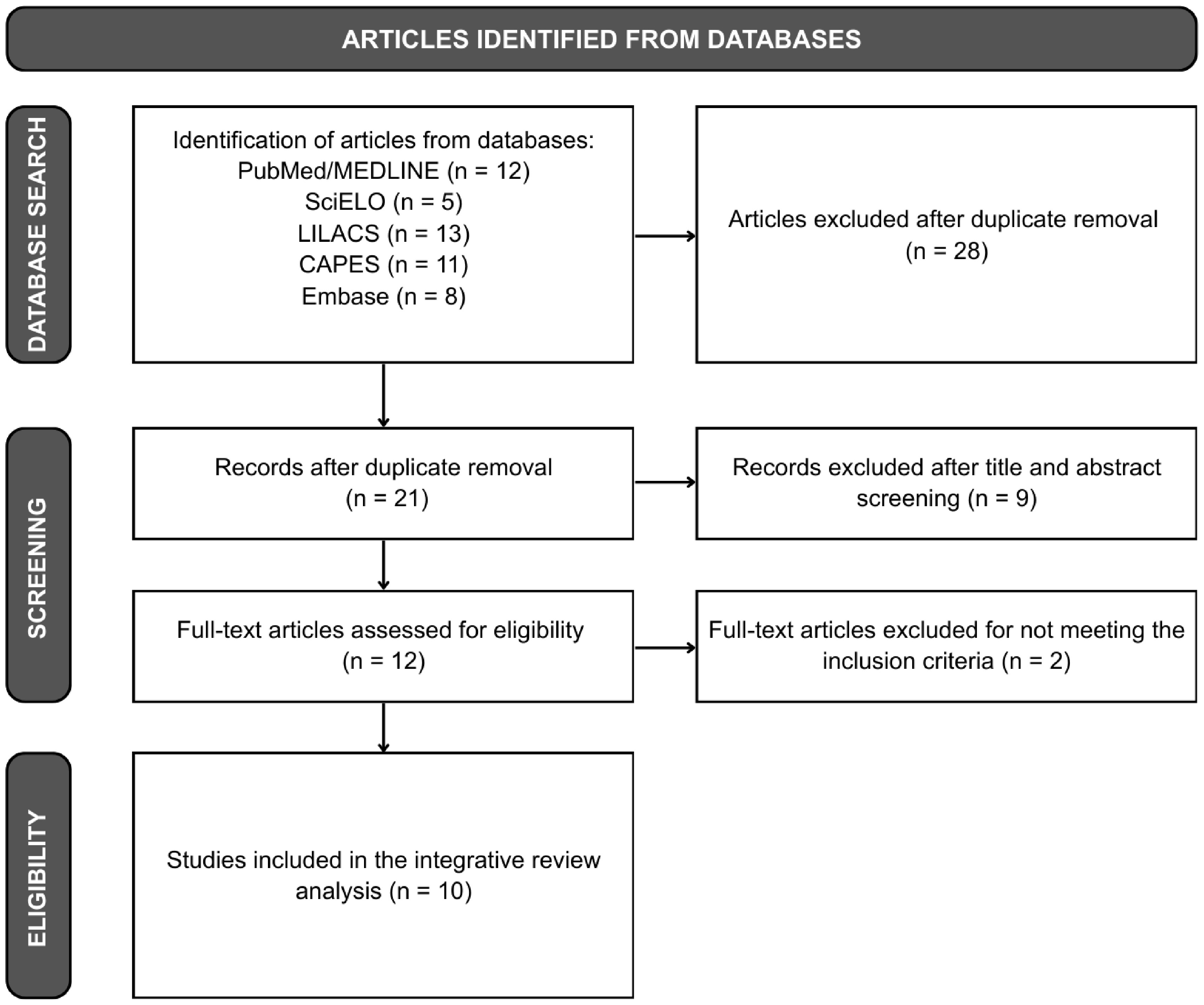
The study selection process was conducted according to the PRISMA guidelines. A total of 49 records were identified through database searches, including PubMed/MEDLINE (n = 12), SciELO (n = 5), LILACS (n = 13), CAPES (n = 11), and Embase (n = 8). After removing 28 duplicate records, 21 studies remained for screening. Following the screening of titles and abstracts, 9 records were excluded. Subsequently, 12 full-text articles were assessed for eligibility, of which 2 were excluded for not meeting the inclusion criteria. Finally, 10 studies were included in the narrative review analysis. Figure 1 summarizes the study selection process.

Flowchart of the study selection process based on PRISMA recommendations. Source: Adapted from Page et al. (2021).
After defining the final sample, the data were organized to allow for a comparative analysis of the scientific evidence regarding P. anisum in Table 1. Additional variables considered relevant for data extraction included the type of study, its main conclusions, and the level of scientific evidence, classified following the criteria established by the Oxford Centre for Evidence-Based Medicine (CEBM, 2009) (Table 2).
Overview of literature studies on Piper anisum (Spreng.) Angely: objectives, methodological approaches, and geographical distribution.
Classification of study designs and main pharmacological and phytochemical findings of Piper anisum (Spreng.) Angely.
3.1. Chemical constituents
The phytochemical knowledge of P. anisum has evolved over the past decades, encompassing both volatile and non-volatile metabolites. To provide an integrated overview of this chemical diversity and to facilitate the interpretation of the compounds discussed throughout this section, the main chemical structures identified in P. anisum are presented in Figure 2.

The first phytochemical investigation of P. anisum led to the isolation and characterization of a new amide, (2E,4E)-N-isobutyl-9-piperonyl-nona-2,4-dienamide (a), along with 1-butyl-3,4-methylenedioxybenzene (b) and piperovatine (c) from root and stem extracts of the species (Giesbrecht et al., 1981).
The first study on the essential oil of P. anisum from the leaves was conducted in 1997, revealing a high yield (2.0%) and a marked predominance of 1-butyl-3,4-methylenedioxybenzene (b) (approximately 95%), with terpenes occurring in lower proportions such as α-pinene (d), β-pinene (e), germacrene D (f), δ-cadinene (g) and γ-muurolene (h) (Moreira et al., 1997).
Addressing the ecological dynamics of the species, recent chemical investigations have comprehensively demonstrated that seasonal factors significantly influence the volatile composition of the leaves (Castilho et al., 2024). While 1-butyl-3,4-methylenedioxybenzene consistently remains the major compound across all seasons, its relative abundance experiences dramatic fluctuations. During the spring, the relative proportion of this marker drops to 51.34%, coinciding with the highest chemical diversity observed in the essential oil, with up to 16 identified compounds (Castilho et al., 2024). This diversification is intrinsically linked to the plant's phenology; spring marks the beginning of the reproductive period, characterized by the presence of flowers and fruits. To ensure the successful completion of this cycle, the plant redirects its biosynthetic machinery to produce compounds such as 1,8-cineole (17.64%), which acts as a powerful herbivore repellent, alongside other monoterpenes like α-pinene (4.75%) and β-pinene (3.22%) that may function as pollinator attractants (Castilho et al., 2024).
Conversely, during the non-reproductive stages, the chemical profile becomes highly specialized. In the summer and winter, the concentration of 1-butyl-3,4-methylenedioxybenzene peaks at over 99% and 96.86%, respectively (Castilho et al., 2024). Autumn samples also reveal a metabolic shift, with the primary compound reducing to 78.41% due to the concurrent accumulation of 1-propyl-3,4-methylenedioxybenzene (18.49%). Because these two constituents share the same biosynthetic origin, their fluctuation illustrates a "drain effect" driven by the plant's energy economy and ecological demands (Castilho et al., 2024). This competition between metabolic pathways, such as mevalonic and shikimic acid pathways, highlights how P. anisum continuously adapts its chemical defenses and interactions in response to microclimatic factors throughout the year.
1-Butyl-3,4-methylenedioxybenzene (b) is consistently detected in extracts from leaves and roots, suggesting its stability and relevance as a chemical marker of the species. In contrast, the identification of amides and aristolactams such as aristolactam BII (j), piperolactam C (k), stigmalactam (l), goniothalactam (m), aristolactam AII (n) and aristolactam BIII (o) is confined to root extracts (Marques et al., 2011), indicating that organ-specificity should be taken into account in phytochemical and biological studies.
Additionally, several piperamides were previously isolated from P. anisum roots, including valeramide (p), 4,5-dihydropiperlonguminine (q), N-isobutyl-6-piperonyl-2-hexenamide (r), pipercallosidine (s), dihydropipercallosidine (t) and piperine (u). These findings reinforce that alcamide-type metabolites are major constituents of the underground organs of the species (López et al., 2016).
In more recent chemical studies on P. anisum, phytochemical approaches have become more sophisticated. Whereas early investigations focused mainly on the isolation of amides through classical solvent extraction and column chromatography, contemporary research has significantly broadened the chemical profile of the species.
By integrating instrumental analyses such as GC–MS, LC–MS and NMR, Batista et al. (2019) reported additional classes of nitrogen-containing metabolites, including aristolactam-type alkaloids (e.g., Piperolactam D; v), indole-derived bisalkaloids (Voacamine; w), quinazolinic alkaloids (Leonurine; x), and polyamine-derived compounds such as Benzoylagmatine (y) and Hordatine A (z). P. anisum also contains carbohydrates, lipids, and phenolic compounds, with the highest phenolic content found in the roots (Batista et al., 2019).
Comparative analysis with other species of the genus Piper reveals conserved chemical patterns, such as aristolactams, supporting established chemosystematic trends (Lertnitikul et al., 2023; Liu et al., 2025; Tabopda et al., 2008). The recurrent presence of these metabolites suggests a shared biosynthetic heritage and underscores the value of phytochemistry in studying evolutionary relationships and taxonomic delimitation (Amin and Park, 2025).
Although the studies have applied classic extraction and chromatographic methods, advanced techniques such as solid-phase extraction, countercurrent distribution, and gradient or continuous liquid–liquid extractions have rarely been employed. Their use could improve the isolation of trace and polar metabolites, offering a more comprehensive understanding of the species’ chemical diversity (Sharma et al., 2024).
The choice of extraction method strongly influences the chemical profile obtained. Non-volatile compounds and amides were primarily isolated through organic solvent extraction and chromatographic fractionation, whereas steam distillation favored the recovery of volatile constituents, such as; 1-butyl-3,4-methylenedioxybenzene and monoterpenes. This demonstrates that studies relying on a single extraction approach may underestimate the phytochemical diversity of the species.
Moreira et al. (1997) employed steam distillation to obtain the essential oil, while Marques et al. (2017) used organic solvent extraction and Castilho et al. (2024) applied hydrodistillation. It is worth underlining the relevance of exploring other extraction approaches for both fresh and dried plant material, as different methods can influence yield, composition, and preservation of thermolabile constituents (Caputo et al., 2022; Hazrati et al., 2021).
Alternative techniques that could be investigated include microwave-assisted hydrodistillation, ultrasound-assisted extraction, supercritical CO2 extraction, and solid-phase microextraction (SPME), particularly for analytical purposes (Dhotre, 2025; Kumar et al., 2021; Moreira et al., 2023; Zhao et al., 2023). Employing these modern and more selective methods may provide further data into the chemical profile of the species and uncover additional bioactive constituents not detected with conventional procedures.
Despite the increasing number of phytochemical studies, there remains a need for standardization of analytical approaches and comparative investigations across different plant organs. Moreover, few studies have directly linked chemical structures to biological mechanisms of action, limiting a comprehensive understanding of the species’ true therapeutic potential.
3.2. Biological activities
Ethnobotanical data indicate that P. anisum is popularly referred to as "jaborandi" due to its sialagogue effects, which resemble those of Pilocarpus species, known sources of pilocarpine (Nascimento et al., 2022). This traditional association suggests that certain metabolites present in P. anisum may contribute to the stimulation of salivary secretion, reflecting a correspondence between empirical use and potential biochemical and pharmacological mechanisms. Moreover, several plants traditionally used as saliva stimulants contain amide-type compounds linked to such properties (Aktar et al., 2024; Nascimento et al., 2022). Therefore, targeted investigations are warranted to clarify the molecular basis and therapeutic relevance of this traditional use. The following sections examine to what extent the available pharmacological evidence supports this and other traditional uses of the species, and where experimental validation remains absent.
The biological activities of P. anisum encompass molluscicidal, larvicidal, analgesic, anesthetic, antioxidant, cytotoxic, and anti-inflammatory effects. As summarized in Figure 3, these activities illustrate the species' broad pharmacological potential.
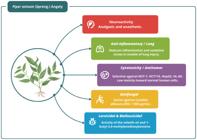
Studies on P. anisum indicate that distinct classes of metabolites are associated with different biological activities. Volatile constituents, such as 1-butyl-3,4-methylenedioxybenzene and other monoterpenes, have demonstrated molluscicidal and larvicidal potential, suggesting that the volatility and lipophilicity of these compounds may enhance interactions with cell membranes (Castilho et al., 2024; Marques et al., 2017). In contrast, polar extracts, enriched in sugars, phenolic compounds, and aristolactams, appear to mediate anesthetic, analgesic, and antioxidant effects, indicating that the plant's diverse phytochemical profile contributes in a complementary manner to its pharmacological potential (Marques et al., 2011; Batista et al., 2019; López et al., 2016).
Studies with P. anisum also have shown significant analgesic and local anesthetic effects, the pharmacological findings most directly aligned with its traditional use against toothache and oral pain. The methanolic root extract induced dose-dependent local anesthesia in frogs (10–mg/mL) and guinea pigs (10–80 mg/mL), with onset times variably decreasing from 35 min to 6.5 min as concentration increased, and recovery occurring within 30 minutes for all doses (Liu et al., 2023). In rats, oral administration of 50–200 mg/kg resulted in dose-dependent analgesia, reaching up to 72% of maximal effect at 200 mg/kg in the hot plate test. Anti-inflammatory activity, evaluated through carrageenan-induced paw edema, also increased with dose, with the 200 mg/kg treatment showing effects comparable to diclofenac. Additionally, the extract modulated oxidative stress markers in acute lung injury (ALI) induced by HCl (hydrochloric acid), reducing reactive oxygen species (ROS) and malondialdehyde (MDA) levels and restoring glutathione (GSH) and catalase activity, while downregulating pro-inflammatory genes including IL-1β, TNF-α, ICAM-1, and NF-κB (Liu et al., 2023). A comparable structure–activity rationale has been proposed for piperine, the most extensively studied Piper amide, whose derivatives inhibit monoamine oxidase and have been investigated for neuroprotective applications (Al-Baghdadi et al., 2012), reinforcing the plausibility that nitrogen-containing metabolites in P. anisum roots contribute to its neuroactive and analgesic effects.
Complementing these results, green-synthesized ZnO nanoparticles (ZnO NPs) using P. anisum leaf extract displayed enhanced analgesic and pulmonary protective effects (Fan et al., 2024). The nanoparticles, with an average diameter of 40 nm, showed dose-dependent analgesia in mice at 5–20 mg/kg in hot plate and acetic acid-induced writhing tests, and in formalin tests at 2.5–10 mg/kg, reducing both neurogenic and inflammatory pain phases. In HCl-induced ALI, oral administration of 50–200 mg/kg decreased neutrophil infiltration and pulmonary edema, reduced ROS and MDA levels, and increased GSH and catalase activity, with the most pronounced effects at 200 mg/kg (Fan et al., 2024). These findings indicate that nanoparticle formulations may improve the bioavailability and efficacy of P. anisum metabolites, supporting potential applications in pain management and pulmonary injury treatment.
The cytotoxic profile of P. anisum extracts revealed promising activity against different human tumour cell lines. Ethanolic extracts obtained from leaves, stems, and roots were evaluated at a single screening concentration of 50 µg mL−1, which is a standard dose employed in preliminary cytotoxicity assessments of crude plant extracts (Batista et al., 2019). The root extract showed the greatest cytotoxic activity, with cell growth inhibition percentages of 59.5% against human breast carcinoma (MCF-7), 61.0% against human hepatocellular carcinoma (HepG2), and 49.2% against human colorectal carcinoma (HCT116). In contrast, leaf and stem extracts showed considerably lower inhibition against these same cell lines, ranging from 5.2% to 40.0%. For the human promyelocytic leukaemia line (HL-60), all three extracts exhibited comparable inhibition, ranging from 33.5% to 35.9%.
Cytotoxicity was also assessed against the non-tumour human lung fibroblast line MRC-5, where the root extract showed reduced selectivity at this concentration (38.6%), whereas leaf and stem extracts displayed markedly lower toxicity toward non-tumour cells (4.0–7.9%). These findings suggest the presence of constituents with differential action on cancer cell metabolism; however, further studies using isolated fractions and pure compounds are warranted to establish IC50 values and confirm selective antitumour activity (Batista et al., 2019). This cytotoxic potential is consistent with reports for other amide- and aristolactam-bearing Piperspecies, such as P. wallichii, whose stem extracts have shown comparable cytotoxic, antioxidant, and antimicrobial activities attributed to the same structural class of metabolites (Lertnitikul et al., 2023), supporting a shared chemosystematic basis for bioactivity within the genus. It is worth noting, however, that this cytotoxic activity has no documented counterpart in the ethnobotanical record of P. anisum, which is not traditionally associated with antitumour use.
Antimicrobial screening of P. anisum extracts revealed inhibitory activity restricted to Candida albicans (minimum inhibitory concentration – MIC: 500 μg mL−1), with no effective MIC values observed against the Gram-positive (Bacillus subtilis, B. cereus, Staphylococcus aureus) or Gram-negative bacteria tested (Escherichia coli, Pseudomonas aeruginosa, Salmonella typhimurium), nor against Candida glabrata within the evaluated concentration range (Batista et al., 2019). The original study does not specify which plant extract (leaf, stem, or root) was responsible for this activity, which limits a more precise interpretation. Considering that 1-butyl-3,4-methylenedioxybenzene is consistently the major volatile constituent across plant organs (Moreira et al., 1997; Castilho et al., 2024), its lipophilic character may plausibly contribute to disruption of the fungal cell membrane, in line with the membrane-interaction mechanism proposed for its molluscicidal and larvicidal effects (Castilho et al., 2024; Marques et al., 2017); however, this remains a hypothesis, as no mechanistic data were generated in the original assay.
It is also worth noting that a MIC of 500 μg mL−1 for a crude extract is a relatively high concentration, generally regarded as indicative of weak antimicrobial potency rather than potent activity, and the term "selective" should therefore be applied with caution: rather than reflecting a targeted mechanism against C. albicans, this restricted activity profile more likely indicates that the extract's antimicrobial potential, overall, is modest and confined to a narrow spectrum. A related antifungal pattern has been reported for amide alkaloids isolated from P. polysyphorum, reinforcing the recurrence of this activity within amide-rich Piper extracts even when potency remains moderate (Liu et al., 2025). Further studies using isolated fractions and lower-concentration screening would be needed to determine whether this antifungal effect can be attributed to a specific, more potent compound. Given the persistence of this activity even in a crude extract, additional investigation into its efficacy against dermatophytes, responsible for common superficial fungal infections, remains warranted (Zuzarte et al., 2021).
Taken together, the pharmacological findings discussed above derive from a markedly heterogeneous body of evidence, a limitation that warrants explicit caution when interpreting the species' overall therapeutic potential. The studies reviewed employed essential oils obtained by hydrodistillation (Moreira et al., 1997; Castilho et al., 2024), crude ethanolic extracts (Batista et al., 2019), methanolic root extracts (Liu et al., 2023; López et al., 2016), and green-synthesized ZnO nanoparticles incorporating leaf extract (Fan et al., 2024), preparations that differ substantially in chemical composition, even when derived from the same plant organ, given that extraction solvent and method strongly influence which metabolite classes are recovered, as discussed in section 3.1.
Geographic origin adds a further layer of variability: samples used by Batista et al. (2019) were collected in the Sapiranga Reserve (Bahia), while seasonal composition data from Castilho et al. (2024) indicate that even within a single population, the relative abundance of the major volatile marker can range from approximately 51% to over 99% depending on the time of year, variation that, if unaccounted for, could itself explain part of the inconsistency in potency observed across studies. Dosing further complicates direct comparison: reported concentrations span several orders of magnitude and units that are not interchangeable without pharmacokinetic data, from low microgram-per-millilitre ranges in vitro (50–500 µg mL−1) to milligram-per-millilitre concentrations in local/ex vivo assays (10–80 mg mL−1) and milligram-per-kilogram doses in systemic in vivo administration (2.5–200 mg/kg) (Table 1).
Whether an effective concentration in an isolated tissue assay corresponds, in any meaningful way, to an effective systemic dose remains unestablished for P. anisum. Likewise, the enhanced bioavailability reported for ZnO nanoparticle formulations (Fan et al., 2024) cannot be assumed to reflect the pharmacological behaviour of the crude extract from which they were derived. Altogether, this heterogeneity in plant material, extraction method, and dosing across studies underscores the need for chemically standardized extracts and harmonized dosing protocols in future pharmacological investigations of the species, without which cross-study comparisons of potency should be interpreted with caution.
In addition to the activities already investigated, the phenolic compounds present in P. anisum may be related to cardiovascular and metabolic protective effects, an application not yet directly investigated for the species. In other plant sources, phenolics have been shown to modulate oxidative stress, inflammatory processes, and metabolic pathways related to dyslipidemia, insulin resistance, and atherogenesis (Aguayo-Morales et al., 2024; Rahman et al., 2021; Toma et al., 2020). Considering the phenolic content reported in P. anisum roots, it is plausible, though entirely untested, that comparable protective mechanisms could be involved, warranting future studies targeting these pathways specifically in this species.
The presence of aristolactams and other nitrogen-containing alkaloids in P. anisum may be related to central nervous system modulation, based on evidence from structurally related compounds in other species rather than from direct data on P. anisum. In other Piper species, compounds from these structural classes have been reported to inhibit monoamine oxidase and interact with GABAergic signaling, mechanisms associated with neuronal survival and homeostasis (Felipe et al., 2007; Krum et al., 2022; Jayan et al., 2023). For instance, piplartine, an amide alkaloid from P. tuberculatum structurally related to the alcamide-type metabolites described for P. anisum roots, has demonstrated anxiolytic and antidepressant effects in animal models (Felipe et al., 2007). This precedent supports the plausibility of similar activity in P. anisum, though it has not been experimentally confirmed for the species.
Similarly, the antioxidant properties demonstrated for P. anisum metabolites may be related to neuroprotective potential, given that structurally comparable compounds in other species are able to cross the blood–brain barrier and mitigate oxidative stress and neuroinflammatory pathways implicated in disorders such as Alzheimer's and Parkinson's disease (Al-Baghdadi et al., 2012; Kim et al., 2018; Wang et al., 2022). As with the cardiovascular hypothesis above, this association is an extrapolation from chemotaxonomically related species and has not been directly tested in P. anisum, it should be regarded as a rationale for future investigation rather than an established property of the species.
It is important to emphasize that all pharmacological evidence discussed in this review derives exclusively from preclinical investigations, comprising in vitro assays and animal models. No clinical studies involving P. anisum extracts or isolated compounds were identified among the included literature. While these preclinical findings are consistent with several aspects of the species' traditional use, they should be interpreted as supporting evidence rather than clinical validation. Differences in metabolism, bioavailability, and dose–response relationships between animal models and humans mean that the translational relevance of these findings remains to be established. Future studies incorporating pharmacokinetic data and, eventually, controlled clinical investigations are necessary before any therapeutic claim regarding P. anisum can be considered clinically substantiated.
Despite the promising biological properties reported so far, toxicological and safety data for P. anisum remain scarce. In this regard, studies employing cell culture models are needed to explore cytotoxicity, oxidative stress and possible genotoxic mechanisms, contributing to the elucidation of dose–response relationships and safety margins (Gavanji et al., 2023; Bardoloi and Soren, 2022). In line with the ethical principles of the 3Rs (replacement, reduction and refinement), this could be complemented by New Approach Methodologies (NAMs), such as high-throughput in vitro assays, and by in silico approaches, including QSAR modeling and molecular docking, which allow early prediction of toxicological endpoints and binding interactions without animal use (Deepika et al., 2025). Alternative in vivo models, such as Danio rerio (zebrafish) and Caenorhabditis elegans, may further offer valuable information into toxicity, neurobehavioral effects and developmental outcomes when reduced or refined animal use remains necessary (Ha et al., 2022; Lin et al., 2022).
4. Conclusions
This review underscores P. anisum as a significant reservoir of bioactive metabolites with a complex chemical profile and diverse pharmacological potential. The synthesis of available literature reveals that the species is characterized by a distinct organ-specific distribution of compounds: while leaves are dominated by the phenylpropanoid 1-butyl-3,4-methylenedioxybenzene, the roots serve as a primary source of amides and aristolactam-type alkaloids. This chemical diversity directly correlates with the broad spectrum of biological activities identified, ranging from larvicidal and molluscicidal effects to promising analgesic, local anesthetic, and anti-inflammatory properties.
Furthermore, the available preclinical pharmacological evidence is consistent with specific aspects of the species' traditional use, although this should not be interpreted as clinical validation. The local anesthetic and analgesic activity demonstrated for root extracts in vitro and in animal models aligns with the popular practice of chewing the stems and roots for the relief of toothache and oral pain, while the species' popular designation as "jaborandi" finds partial support in its hypothesized sialagogue effect, a property that nonetheless still requires direct experimental confirmation. These convergences reinforce the value of ethnopharmacological knowledge as a starting point for bioprospecting, while also highlighting that several traditional uses, particularly those linked to ritualistic practices, remain to be experimentally investigated, and that, even where alignment exists, translation into clinical evidence is still lacking.
The development of nanotechnology using P. anisum extracts represents a significant advancement. However, despite the promising data, this review identifies critical gaps that must be addressed in future research. There is a notable lack of standardized toxicological studies and long-term safety assessments, which are essential for the rational incorporation of this species into clinical or pharmaceutical practices.
Data Availability Statement
The entire dataset supporting the results of this study was published in the article itself.
References
-
AGUAYO-MORALES, H., POBLANO, J., BERLANGA, L., CASTILLO-TOBÍAS, I., SILVA-BELMARES, S.Y. and COBOS-PUC, L.E., 2024. Plant antioxidants: therapeutic potential in cardiovascular diseases. Compounds, vol. 4, no. 3, pp. 479-502. https://doi.org/10.3390/compounds4030029
» https://doi.org/10.3390/compounds4030029 -
AKTAR, M.A., BHUIA, M.S., MOLLA, S., CHOWDHURY, R., SARKAR, C., AL SHAHARIAR, M., ROY, P., REINER, Ž., SHARIFI-RAD, J., CALINA, D., SHAKIL, M.A.K. and ISLAM, M.T., 2024. Pharmacological and phytochemical review of Acmella oleracea: a comprehensive analysis of its therapeutic potential. Discover Applied Sciences, vol. 6, no. 8, pp. 412. https://doi.org/10.1007/s42452-024-06108-5
» https://doi.org/10.1007/s42452-024-06108-5 -
AL-BAGHDADI, O.B., PRATER, N.I., VAN DER SCHYF, C.J. and GELDENHUYS, W.J., 2012. Inhibition of monoamine oxidase by derivatives of piperine, an alkaloid from the pepper plant Piper nigrum, for possible use in Parkinson’s disease. Bioorganic & Medicinal Chemistry Letters, vol. 22, no. 23, pp. 7183-7188. https://doi.org/10.1016/j.bmcl.2012.09.056 PMid:23102654.
» https://doi.org/10.1016/j.bmcl.2012.09.056 -
AMIN, A. and PARK, S., 2025. Chemotaxonomy, an Efficient tool for medicinal plant identification: current trends and limitations. Plants, vol. 14, no. 14, pp. 2234. https://doi.org/10.3390/plants14142234 PMid:40733470.
» https://doi.org/10.3390/plants14142234 -
BARDOLOI, A. and SOREN, A.D., 2022. Genotoxicity induced by medicinal plants. Bulletin of the National Research Center, vol. 46, no. 1, pp. 119. https://doi.org/10.1186/s42269-022-00803-2
» https://doi.org/10.1186/s42269-022-00803-2 -
BATISTA, D., CAMPOS, P., SILVA, V.R., SANTOS, L.S., BEZERRA, D.P., SOARES, M.B.P., COLEPICOLO, P., ZAMBOTTI-VILLELA, L., PINTO, E. and ARAÚJO, F.M., 2019. Piper anisum as a promising new source of bioactive metabolites. Chemical Papers, vol. 74, no. 5, pp. 1505-1515. https://doi.org/10.1007/s11696-019-01004-4
» https://doi.org/10.1007/s11696-019-01004-4 -
BRAGA, F.C., 2021. Brazilian traditional medicine: historical basis, features and potentialities for pharmaceutical development. Journal of Traditional Chinese Medical Sciences, vol. 8, pp. S44-S50. https://doi.org/10.1016/j.jtcms.2020.06.005
» https://doi.org/10.1016/j.jtcms.2020.06.005 -
CAPUTO, L., AMATO, G., DE BARTOLOMEIS, P., DE MARTINO, L., MANNA, F., NAZZARO, F. and BARBA, A.A., 2022. Impact of drying methods on the yield and chemistry of Origanum vulgare L. essential oil. Scientific Reports, vol. 12, no. 1, pp. 3845. https://doi.org/10.1038/s41598-022-07841-w PMid:35264638.
» https://doi.org/10.1038/s41598-022-07841-w -
CASTILHO, R.D.C., CARVALHO, R.R., MARQUES, A.M., RAMOS, Y.J. and LIMA MOREIRA, D., 2024. Molluscicidal activity of Piper anisum volatile oil and of its major chemical marker, 1-butyl-3,4-methylenedioxybenzene. Revista Brasileira de Farmacognosia, vol. 34, no. 3, pp. 618-624. https://doi.org/10.1007/s43450-023-00511-6
» https://doi.org/10.1007/s43450-023-00511-6 -
CEBM, 2009 [viewed 15 March 2026]. Oxford Centre for Evidence-Based Medicine: Levels of Evidence (March 2009) Available from: https://www.cebm.ox.ac.uk/resources/levels-of-evidence/oxford-centre-for-evidence-based-medicine-levels-of-evidence-march-2009
» https://www.cebm.ox.ac.uk/resources/levels-of-evidence/oxford-centre-for-evidence-based-medicine-levels-of-evidence-march-2009 -
CONCEIÇÃO, R.P.D., BOSCOLO, O.H., JULIANI, M.S.P., HOFFMANN, A., GALVÃO, M.N. and PORTO, A.J.S., 2025. Food and medicinal plants: contributions of Brazilian flora to global health. Rodriguésia, vol. 76, pp. e00252025. https://doi.org/10.1590/2175-7860202576034
» https://doi.org/10.1590/2175-7860202576034 -
DEEPIKA, D., BHARTI, K., SHARMA, S., KUMAR, S., PATHAK, R.K., BIOSCA BRULL, J., SABUZ, O., GARCÍA VILANA, S. and KUMAR, V., 2025. Advancing human health risk assessment: the role of new approach methodologies. Frontiers in Toxicology, vol. 7, pp. 1632941. https://doi.org/10.3389/ftox.2025.1632941 PMid:41127258.
» https://doi.org/10.3389/ftox.2025.1632941 -
DHOTRE, I., 2025. A comprehensive review on progression and innovations in microwave assisted extraction technology for essential oils. Journal of Chemical Technology and Biotechnology, vol. 100, no. 5, pp. 894-907. https://doi.org/10.1002/jctb.7823
» https://doi.org/10.1002/jctb.7823 -
DINIZ, A.F., QUEIROZ, A.C.P., PEREIRA, E.L., ALVES, M.S. and OLIVEIRA-FILHO, A.A., 2022. Fitoterapia como prática integrativa na saúde única do Brasil: uma breve revisão. Revista Colombiana de Ciencias Químico-Farmacéuticas, vol. 51, no. 2, pp. 1029-1042. https://doi.org/10.15446/rcciquifa.v51n2.99366
» https://doi.org/10.15446/rcciquifa.v51n2.99366 -
FAN, G., YU, J., TAO, Z., QIAN, X., QIAN, Q., SHU, J., SHI, D., SHEN, L., LU, B. and LV, H., 2024. Synthesis of Ottonia anisum extract mediated ZnO NPs and their local anesthetic, analgesic and HCl-induced acute lung injury activities. Journal of Oleo Science, vol. 73, no. 5, pp. 683-693. https://doi.org/10.5650/jos.ess23208 PMid:38522941.
» https://doi.org/10.5650/jos.ess23208 -
FELIPE, F.C.B., SOUSA FILHO, J.T., DE OLIVEIRA SOUZA, L.E., SILVEIRA, J.A., DE ANDRADE UCHOA, D.E., SILVEIRA, E.R., PESSOA, O.D.L. and BARROS VIANA, G.S., 2007. Piplartine, an amide alkaloid from Piper tuberculatum, presents anxiolytic and antidepressant effects in mice. Phytomedicine : International Journal of Phytotherapy and Phytopharmacology, vol. 14, no. 9, pp. 605-612. https://doi.org/10.1016/j.phymed.2006.12.015 PMid:17399971.
» https://doi.org/10.1016/j.phymed.2006.12.015 -
GAVANJI, S., BAKHTARI, A., FAMUREWA, A.C. and OTHMAN, E.M., 2023. Cytotoxic activity of herbal medicines as assessed in vitro: a review. Chemistry & Biodiversity, vol. 20, no. 2, pp. e202201098. https://doi.org/10.1002/cbdv.202201098 PMid:36595710.
» https://doi.org/10.1002/cbdv.202201098 -
GIESBRECHT, A.M., DE ALVARENGA, M.A., GOTTLIEB, O.R. and GOTTLIEB, H.R., 1981. (2E,4E)-N-Isobutyl-9-piperonyl-nona-2,4-dienoic amide from Ottonia anisum. Planta Medica, vol. 43, no. 12, pp. 375-377. https://doi.org/10.1055/s-2007-971526 PMid:17402062.
» https://doi.org/10.1055/s-2007-971526 -
HA, N.M., TRAN, S.H., SHIM, Y.H. and KANG, K., 2022. Caenorhabditis elegans as a powerful tool in natural product bioactivity research. Applied Biological Chemistry, vol. 65, no. 1, pp. 18. https://doi.org/10.1186/s13765-022-00685-y
» https://doi.org/10.1186/s13765-022-00685-y -
HAZRATI, S., LOTFI, K., GOVAHI, M. and EBADI, M.T., 2021. A comparative study: influence of various drying methods on essential oil components and biological properties of Stachys lavandulifolia. Food Science & Nutrition, vol. 9, no. 5, pp. 2612-2619. https://doi.org/10.1002/fsn3.2218 PMid:34026076.
» https://doi.org/10.1002/fsn3.2218 -
JAYAN, J., CHANDRAN, N., THEKKANTAVIDA, A.C., ABDELGAWAD, M.A., GHONEIM, M.M., SHAKER, M.E. and MATHEW, B., 2023. Piperidine: a versatile heterocyclic ring for developing monoamine oxidase inhibitors. ACS Omega, vol. 8, no. 41, pp. 37731-37751. https://doi.org/10.1021/acsomega.3c05883 PMid:37867639.
» https://doi.org/10.1021/acsomega.3c05883 -
KIM, N., DO, J., BAE, J.S., JIN, H.K., KIM, J.H., INN, K.S. and LEE, J.K., 2018. Piperlongumine inhibits neuroinflammation via regulating NF-κB signaling pathways in lipopolysaccharide-stimulated BV2 microglia cells. Journal of Pharmacological Sciences, vol. 137, no. 2, pp. 195-201. https://doi.org/10.1016/j.jphs.2018.06.004 PMid:29970291.
» https://doi.org/10.1016/j.jphs.2018.06.004 -
KRUM, B.N., FREITAS, C.M., BUSANELLO, A., SCHAFFER, L.F. and FACHINETTO, R., 2022. Ex vivo and in vitro inhibitory potential of Kava extract on monoamine oxidase B activity in mice. Journal of Traditional and Complementary Medicine, vol. 12, no. 2, pp. 115-122. https://doi.org/10.1016/j.jtcme.2021.07.002 PMid:35528470.
» https://doi.org/10.1016/j.jtcme.2021.07.002 -
KUMAR, K., SRIVASTAV, S. and SHARANAGAT, V.S., 2021. Ultrasound assisted extraction (UAE) of bioactive compounds from fruit and vegetable processing by-products: A review. Ultrasonics Sonochemistry, vol. 70, pp. 105325. https://doi.org/10.1016/j.ultsonch.2020.105325 PMid:32920300.
» https://doi.org/10.1016/j.ultsonch.2020.105325 -
LERTNITIKUL, N., SUTTISRI, R., SITTHIGOOL, S., PATTAMADILOK, C., PIEWPONG, K., KHANBOON, A. and BOONYONG, C., 2023. Antioxidant, antimicrobial and cytotoxic activities of amides and aristolactams from Piper wallichii (Miq.) Hand.-Mazz. Stems. Journal of Biologically Active Products From Nature, vol. 13, no. 2, pp. 94-104. https://doi.org/10.1080/22311866.2023.2211043
» https://doi.org/10.1080/22311866.2023.2211043 -
LIMA-MOREIRA, D. and PEREIRA, R.A., 2021. Chemodiversity of essential oils in Piper L. (Piperaceae) species from the Restinga of Marambaia Island, Rio de Janeiro-RJ, Brazil. Revista Virtual de Química, vol. 13, no. 5, pp. 1203-1215. https://doi.org/10.21577/1984-6835.20210067
» https://doi.org/10.21577/1984-6835.20210067 -
LIN, F.J., LI, H., WU, D.T., ZHUANG, Q.G., LI, H.B., GENG, F. and GAN, R.Y., 2022. Recent development in zebrafish model for bioactivity and safety evaluation of natural products. Critical Reviews in Food Science and Nutrition, vol. 62, no. 31, pp. 8646-8674. https://doi.org/10.1080/10408398.2021.1931023 PMid:34058920.
» https://doi.org/10.1080/10408398.2021.1931023 -
LIRA, C.F., 2024. Neutral genetic diversity of Brazilian native flora: current approaches and gaps. Environmental and Earth Sciences Proceedings, vol. 31, no. 1, pp. 7. https://doi.org/10.3390/eesp2024031007
» https://doi.org/10.3390/eesp2024031007 -
LIU, L.Y., YUE, F., ZHANG, R.H., LIU, L., XU, S.P., LI, C. and PEI, Y.H., 2025. Amide alkaloids from Piper polysyphorum and their antifungal activities. Fitoterapia, vol. 188, pp. 106981. https://doi.org/10.1016/j.fitote.2025.106981 PMid:41213363.
» https://doi.org/10.1016/j.fitote.2025.106981 -
LIU, M., WANG, H., YUE, Q. and LIU, J., 2023. Effects of Ottonia anisum plant extract on local anesthetic, analgesic, anti-inflammatory and HCl-induced acute lung injury activities: A study in animal models. Bioresources and Bioprocessing, vol. 10, no. 1, pp. 86. https://doi.org/10.1186/s40643-023-00706-8 PMid:38647807.
» https://doi.org/10.1186/s40643-023-00706-8 -
LOPEZ, K.S., MARQUES, A.M., MOREIRA, D.L., VELOZO, L.S., SUDO, R.T., GUIMARÃES, E.F., KAPLAN, M.A.C. and KAPLAN, M.A.C., 2016. Local anesthetic activity from extracts, fractions and pure compounds from the roots of Ottonia anisum Spreng.(Piperaceae). Anais da Academia Brasileira de Ciências, vol. 88, no. 4, pp. 2229-2237. https://doi.org/10.1590/0001-3765201620150821 PMid:27991959.
» https://doi.org/10.1590/0001-3765201620150821 -
MAGALHÃES, K.N., GUARNIZ, W.A.S., SA, K.M., FREIRE, A.B., MONTEIRO, M.P., NOJOSA, R.T. and BANDEIRA, M.A.M., 2019. Medicinal plants of the Caatinga, northeastern Brazil: Ethnopharmacopeia (1980–1990) of the late professor Francisco José de Abreu Matos. Journal of Ethnopharmacology, vol. 237, pp. 314-353. https://doi.org/10.1016/j.jep.2019.03.032 PMid:30885881.
» https://doi.org/10.1016/j.jep.2019.03.032 -
MARQUES, A.M., VELOZO, L.S., CARVALHO, M.A., SERDEIRO, M.T., HONÓRIO, N.A., KAPLAN, M.A.C. and MALECK, M., 2017. Larvicidal activity of Ottonia anisum metabolites against Aedes aegypti: a potential natural alternative source for mosquito vector control in Brazil. Journal of Vector Borne Diseases, vol. 54, no. 1, pp. 61-68. https://doi.org/10.4103/0972-9062.203185 PMid:28352047.
» https://doi.org/10.4103/0972-9062.203185 -
MARQUES, A.M., VELOZO, L.S.M., GUIMARÃES, E.F. and KAPLAN, M.A.C., 2008. Caracterização de derivado arilbutanoídico em folhas e raízes de Ottonia anisum Sprengel. Revista Brasileira de Farmacognosia, vol. 18, (suppl.), pp. 709-712. https://doi.org/10.1590/S0102-695X2008000500013
» https://doi.org/10.1590/S0102-695X2008000500013 -
MARQUES, A.M., VELOZO, L.S., DE MOREIRA, D.L., GUIMARÃES, E.F. and KAPLAN, M.A., 2011. Aristolactams from roots of Ottonia anisum (Piperaceae). Natural Product Communications, vol. 6, no. 7, pp. 939-942. https://doi.org/10.1177/1934578X1100600704 PMid:21834228.
» https://doi.org/10.1177/1934578X1100600704 -
MATA, P.T., CANTALICE, A.S., ALBUQUERQUE, U.P., DA SILVA, R.H. and DA SILVA, T.C., 2024. Can family structure and contact with natural resources influence young people’s knowledge about medicinal plants? An approach in the Northeast of Brazil. Journal of Ethnobiology and Ethnomedicine, vol. 20, no. 1, pp. 90. https://doi.org/10.1186/s13002-024-00728-2 PMid:39300489.
» https://doi.org/10.1186/s13002-024-00728-2 -
MOREIRA, D.L., KAPLAN, M.A.C. and GUIMARÃES, E.F., 1997. 1-Butyl-3,4-methylenedioxybenzene as the major constituent of essential oil from Ottonia anisum Sprengel (Piperaceae). The Journal of Essential Oil Research, vol. 9, no. 5, pp. 565-568. https://doi.org/10.1080/10412905.1997.9700778
» https://doi.org/10.1080/10412905.1997.9700778 -
MOREIRA, R.C., MELO, R.P.F., MARTÍNEZ, J., MAROSTICA-JUNIOR, M.R., PASTORE, G.M., ZORN, H. and BICAS, J.L., 2023. Supercritical CO2 as a valuable tool for aroma technology. Journal of Agricultural and Food Chemistry, vol. 71, no. 24, pp. 9201-9212. https://doi.org/10.1021/acs.jafc.3c01023 PMid:37289784.
» https://doi.org/10.1021/acs.jafc.3c01023 -
MUSSOI, M.R., GIORDANI, R.C.F., HOFFMANN-HOROCHOVSKI, M. and SILVA, C.R., 2025. Women and traditional knowledge in health care: understanding traditional healing practices in Brazil. Ciência & Saúde Coletiva, vol. 30, no. 1, pp. e13012023. https://doi.org/10.1590/1413-81232025301.13012023 PMid:39879464.
» https://doi.org/10.1590/1413-81232025301.13012023 -
NASCIMENTO, E.V., BONILLA, O.H., LUCENA, E.M.P., NASCIMENTO, Y.A.P., VIEIRA, M.I.C., FARIAS, I.B.M., NASCIMENTO, S.F. and LIMA, F.R.A., 2022. Ocorrências e usos da Família Piperaceae, em especial no Estado do Ceará: revisão e nova identificação geográfica. Brazilian Journal of Development, vol. 8, no. 1, pp. 183-205. https://doi.org/10.34117/bjdv8n1-013
» https://doi.org/10.34117/bjdv8n1-013 -
PAGE, M.J., MCKENZIE, J.E., BOSSUYT, P.M., BOUTRON, I., HOFFMANN, T.C., MULROW, C.D., SHAMSEER, L., TETZLAFF, J.M., AKL, E.A., BRENNAN, S.E., CHOU, R., GLANVILLE, J., GRIMSHAW, J.M., HRÓBJARTSSON, A., LALU, M.M., LI, T., LODER, E.W., MAYO-WILSON, E., MCDONALD, S., MCGUINNESS, L.A., STEWART, L.A., THOMAS, J., TRICCO, A.C., WELCH, V.A., WHITING, P. and MOHER, D., 2021. The PRISMA 2020 statement: an updated guideline for reporting systematic reviews. BMJ (Clinical Research Ed.), vol. 372, no. 71, pp. 1-9. https://doi.org/10.1136/bmj.n71 PMid:33782057.
» https://doi.org/10.1136/bmj.n71 -
PEDROSO, R.S., ANDRADE, G. and PIRES, R.H., 2021. Plantas medicinais: uma abordagem sobre o uso seguro e racional. Physis (Rio de Janeiro, Brazil), vol. 31, no. 2, pp. 1-19. https://doi.org/10.1590/s0103-73312021310218
» https://doi.org/10.1590/s0103-73312021310218 -
RAHMAN, M.M., RAHAMAN, M.S., ISLAM, M.R., RAHMAN, F., MITHI, F.M., ALQAHTANI, T. and UDDIN, M.S., 2021. Role of phenolic compounds in human disease: current knowledge and future prospects. Molecules (Basel, Switzerland), vol. 27, no. 1, pp. 233. https://doi.org/10.3390/molecules27010233 PMid:35011465.
» https://doi.org/10.3390/molecules27010233 -
RODRIGUES, M.J., 2024. Bioprospecting of Natural Products from Medicinal Plants. Plants, vol. 13, no. 24, pp. 3556. https://doi.org/10.3390/plants13243556 PMid:39771254.
» https://doi.org/10.3390/plants13243556 -
SHARMA, H., PATHAK, D. and KUMAR, S., 2024. Recent progress in isolating and purifying amide alkaloids from their natural habitats: a review. Current Bioactive Compounds, vol. 20, no. 10, pp. E210224227226. https://doi.org/10.2174/0115734072284841240207104403
» https://doi.org/10.2174/0115734072284841240207104403 -
TABOPDA, T.K., NGOUPAYO, J., LIU, J., MITAINE-OFFER, A.C., TANOLI, S.A.K., KHAN, S.N. and LUU, B., 2008. Bioactive aristolactams from Piper umbellatum. Phytochemistry, vol. 69, no. 8, pp. 1726-1731. https://doi.org/10.1016/j.phytochem.2008.02.018 PMid:18400239.
» https://doi.org/10.1016/j.phytochem.2008.02.018 -
TOMA, L., SANDA, G.M., NICULESCU, L.S., DELEANU, M., SIMA, A.V. and STANCU, C.S., 2020. Phenolic compounds exerting lipid-regulatory, anti-inflammatory and epigenetic effects as complementary treatments in cardiovascular diseases. Biomolecules, vol. 10, no. 4, pp. 641. https://doi.org/10.3390/biom10040641 PMid:32326376.
» https://doi.org/10.3390/biom10040641 -
WANG, Y.X., XU, Z.Y., QIN, S.Y., DU, N.N., YAO, G.D., LIN, B., HUANG, X.X. and SONG, S.J., 2022. Novel bisamide alkaloids enantiomers from pepper roots (Piper nigrum L.) with acetylcholinesterase inhibitory and anti-neuroinflammatory effects. Journal of Agricultural and Food Chemistry, vol. 70, no. 49, pp. 15487-15498. https://doi.org/10.1021/acs.jafc.2c06733 PMid:36450093.
» https://doi.org/10.1021/acs.jafc.2c06733 -
ZHAO, J., QUINTO, M., ZAKIA, F. and LI, D., 2023. Microextraction of essential oils: a review. Journal of Chromatography. A, vol. 1708, pp. 464357. https://doi.org/10.1016/j.chroma.2023.464357 PMid:37696126.
» https://doi.org/10.1016/j.chroma.2023.464357 -
ZUZARTE, M., LOPES, G., PINTO, E. and SALGUEIRO, L., 2021. Are natural products an alternative therapy for dermatophytosis? In: J.P. Bouchara, P. Nenoff, A.K. Gupta and V. Chaturvedi, eds. Dermatophytes and dermatophytoses. Cham: Springer, pp. 473-519. https://doi.org/10.1007/978-3-030-67421-2_22
» https://doi.org/10.1007/978-3-030-67421-2_22
*
e-mail: igorlima.ti@gmail.comEditor: