 Assessment of cytotoxic and antimicrobial activity of Hymenaea courbaril L. stem barks extract
Abstract
Cerrado is Brazil's second largest biome, and its fauna and flora are rich in biodiversity. As a result, many plants are being studied to find new viable drugs. Among the species of interest is Hymenaea courbaril, commonly known as "jatobá". In this scenario, the extract's standardization and the execution of in vitro studies are crucial steps before investigating its applicability in human beings. This study aimed to obtain a standardized liquid extract of Hymenaea courbaril stem bark and analyze its phytochemical, antimicrobial, and cytotoxic profiles. The extract proved viable in RAW 264.7 cells and inhibited the bacterial growth of a methicillin-resistant Staphylococcus aureus (MRSA) clinical isolate. After High-Performance Liquid Chromatography (HPLC) screening, peaks suggestive of catechin and epicatechin were found. In silico analysis of these flavonoids indicated an LD50 of 10000 mg/kg, fulfillment of Lipinski's criteria, and both were classified as druglike, with a safety level of 6. In conclusion, the standardized liquid extract of Hymenaea courbaril stem bark is non-toxic and rich in catechin and epicatechin. It has antimicrobial action against Staphylococcus aureus, opening up prospects for in vivo studies.
Keywords:
medicinal plants; cerrado; cytotoxic analysis; in silico; anti-infective agents
Resumo
O Cerrado é o segundo maior bioma do Brasil em extensão, cuja fauna e flora são ricas em biodiversidade. Isto posto, múltiplas plantas são estudadas à procura de novos fármacos viáveis. Entre as espécies de interesse, encontra-se a Hymenaea courbaril, comumente conhecida por "jatobá". Nesse cenário, a padronização do extrato e a execução de estudos in vitro são etapas primordiais para a investigação da aplicabilidade em seres humanos. O objetivo deste estudo foi obter o extrato líquido padronizado das cascas do caule da espécie Hymenaea courbaril e analisar seus perfis fitoquímico, antimicrobiano e citotóxico. O extrato mostrou-se viável em células RAW 264.7 e inibiu o crescimento bacteriano de um isolado clínico de Staphylococcus aureus resistente à meticilina (MRSA). Após o screening por Cromatografia Líquida de Alta Eficiência (CLAE), encontrou-se picos sugestivos para catequina e epicatequina. A análise in silico desses flavonoides indicou DL50/mg/kg de 10000, ambos atenderam os critérios de Lipinski e foram classificados como druglike, com nível de segurança 6. Conclui-se que o extrato líquido padronizado das cascas do caule de Hymenaea courbaril é atóxico, rico em catequina e epicatequina e possui ação antimicrobiana contra Staphylococcus aureus, o que abre perspectivas para a execução de estudos in vivo.
Palavras-chave:
plantas medicinais; cerrado; análise citotóxica; in silico; ação antimicrobiana
1. Introduction
Cerrado is the second largest biome in Brazil, occupying 21% of the national territory. It has excellent biodiversity and contains many plants with medicinal properties corroborated by popular empirical practices and recent scientific evidence (Dourado et al., 2005). Medicinal plants are known to possess chemical compounds capable of promoting biological activities in the organisms of living beings, such as anti-inflammatory, antioxidant, anticancer, antimicrobial, and analgesic actions (Cruz et al., 2022; Nascimento et al., 2000). Consequently, numerous species have been the research subjects in pursuing new drugs.
In this scenario, there is Hymenaea courbaril L. or "jatobá", a Fabaceae (Leguminosae) family member and the Caesalpiniodeae subfamily. This species is popularly known for its curative effects on respiratory disorders such as asthma, bronchitis, colds, and flu, and its diuretic, healing, and antimicrobial effects. Apart from having its fruit used in cooking, the stem bark, unripe fruit, resin, flowers, and leaves of the jatobá are used to prepare infusions, decoctions, alcoholic macerates, homemade cough syrups, and poultices (Magalhães et al., 2019). Matos et al. (2024) suggested that H. courbaril possesses potential for antioxidant activity and for use in the pharmacological and food industries.
In this sense, applying plant species in formal medicine requires verifying the safety and efficacy of their biological effects to rule out possible intoxications. Therefore, phytochemical analysis and preliminary pharmacological and toxicological tests are necessary (Colet et al., 2015; Ma et al., 2025). Analytical studies of the phytochemical profile of H. courbaril L. stem bark extracts have indicated the presence of flavonoids, saponins, tannins, anthocyanins, and terpenoids (Bezerra et al., 2013; Vencato et al., 2016). Moreover, Fernandes et al. (2005) and Gonçalves et al. (2005) observed in vitro antimicrobial activity of the jatobá stem bark extract against strains of Staphylococcus aureus, Proteus mirabilis, and Escherichia coli. There are some studies regarding the technological studies of this species regarding the leaf extracts. However, stem bark extracts have been little explored regarding the biological and technological features (Silva-Silva et al., 2023).
Given the medicinal potential of the species, this study aims to obtain a standardized liquid extract of Hymenaea courbaril L. stem bark and analyze its phytochemical, antimicrobial, and cytotoxic profiles.
2. Materials and Methods
2.1. Plant material
The stem barks of H. courbaril were collected in the municipality of Morrinhos, Goiás, Brazil (17º35´18.58´´S, 49º 2´18.15´´W, 694 m), in August 2021. At the State University of Goiás, Anápolis Campus, the collected stem barks were dehydrated in ovens with air circulation at 40 ºC until reaching constant weight.
2.2. Preparation of extract
After dehydration, the dried material was weighed and powdered in a knife mill. The extract was obtained by macerating 40 g of plant material powder with a 96% ethanol solution in a ratio of 1:5 for seven days. The solution was concentrated in a rotary evaporator (Buchi Vacuum Pump and Fisatom Glassware) at 37 °C, 625 mmHg, and 40 to 60 rpm. Subsequently, the solvent was eliminated with aeration, and the resulting extract was stored at -20 ºC until further analysis.
2.3. Physicochemical characterization
The stem bark extract of H. courbaril L. was subjected to physicochemical characterization studies to determine the moisture content, total ash content, acid-insoluble ash content, particle size distribution, and swelling index, according to the methodology of Costa (2001) and Matos (2009).
2.4. Qualitative analysis of secondary metabolites
A phytochemical screening was performed to identify the presence of saponins, tannins, flavonoids, alkaloids, coumarin, anthraquinone heterosides, and digitalis heterosides using standard methods for qualitative testing by Costa (2001) and Matos (2009).
2.5. Cell viability assay
The cytotoxic activity of the extract was evaluated using the MTT assay (Mosmann, 1983). In 96-well microplates, 5x10⁴ RAW 264.7 cells were added per well containing 200 μL of supplemented RPMI-1640 medium (Sigma Chemical Co., St Louis, MO, USA). After incubation of 24 hours in a CO2 oven, the cells were treated with five solutions of different concentrations of H. courbaril L. stem bark extract (100%, 33.2%, 25%, 16.6%, and 12.5%). The samples received 100 μL of solution and were incubated for 48 h. The experiment was reproduced in triplicate, and in addition to the treatments, control wells were prepared to contain only cells and a supplemented medium. Cells containing only medium were considered blank.
After treatment, 100 μL of 10% MTT solution (0,5 mg/mL) in PBS was added, followed by a new incubation period of 2 h. Next, 100μL of dimethyl sulfoxide was added to the samples, including control and blank wells. Absorbance was measured on a plate spectrophotometer (Biolisa Reader, Bioclin, Belo Horizonte, MG) with a 550 nm filter. The cell viability was calculated according to Equation 1, where OD corresponds to the average optical density.
2.6. Antimicrobial activity
The disk diffusion method was used to investigate the antimicrobial activity, which was performed in duplicate. The gram-negative clinical isolates Escherichia coli, Klebsiella pneumoniae, and Proteus mirabilis were isolated from uroculture, and the gram-positive species Staphylococcus aureus was obtained from the oropharyngeal secretion culture.
In Petri dishes containing MacConkey agar (NewProv) and Mannitol-salt agar (Biocen do Brasil), gram-negative and gram-positive microorganisms were inoculated, respectively, with subsequent incubation in a bacteriological oven at 36ºC ± 1ºC. After 24 h, the bacteria’s suspensions were prepared in sterile 0.85% NaCl saline solution until a turbidity equivalent to the 0,5 standard on the MacFarland scale was obtained (108 CFU/mL).
In 1 mL of sterile 0.85% NaCl solution, 0.0224 µg of the crystallized stem bark extract was diluted. Using sterile swabs, Petri dishes containing Mueller-Hinton agar were inoculated. Next, three 9 mm diameter holes were created in each plate and filled with 100 µL, 200 µL, and 400 µL of H. courbaril L. extract. As positive controls, multidisc systems with commercial antibiotics were used. The plates were incubated at 36ºC ± 1ºC for 24 h. Afterward, the inhibition halos' diameters were read.
2.7. High-performance liquid chromatography (HPLC)
Phenolic compounds were screened by high-performance liquid chromatography using a UHPLC 1290 Infinity II LC system (Agilent Technologies, USA). The column used was a 2.7 µm Agilent Infinity Lab Poroshell 120 EC-C18 (4.6x100 mm) with a flow rate of 1 ml/min at 30°C, injection volume of 5 µL, and wavelength scans of 280 nm, 306 nm, and 340 nm in 35 min. A solution of acetonitrile and 0.2% acetic acid was used as a solvent.
Furthermore, the presence of catechin was investigated at wavelengths of 200 nm, 210 nm, and 280 nm at 35°C, using acetonitrile and 0.05% orto-phosphoric acid with a solvent gradient ranging from 5:95 to 95:5 in 20 min. For comparison purposes with sample results, a mixture of phenolic compound standards (gallic acid, catechin, caffeic acid, epicatechin, rutin, ellagic acid, resveratrol, quercetin, apigenin, and kaempferol) was used in both procedures.
2.8. In silico analysis
The investigated molecules from H. courbaril L. species were selected through PubMed and ScienceDirect databases. Their molecular structures were obtained from PubChem (Kim et al., 2023). Pass Online (Filimonov et al., 2014) and Swiss ADME (Daina et al., 2017) were used to assess biological activity and pharmacokinetic characteristics. The toxicity screening was conducted using the Protox Prediction 3.0 web server (Banerjee et al., 2018, 2024) to identify the toxic profile in the selected molecules.
3. Results and Discussion
3.1. Physicochemical characterization
The stem bark analysis identified total and acid-insoluble ash contents of 4.7% and 4.2%. Most of the powder particles (75.85%) were retained between 2 mm and 850 µm. Around 12.10% were retained at 600 µm and 11.99% at 425 µm. Consequently, based on the Brazilian Pharmacopoeia classification, the plant material is coarse powder. Furthermore, the sample collected had a moisture content of 8.35% ± 0.11 and a swelling index of 0.43 mL ± 0.2.
Ash content measures the non-combustible components of a material after oxidation at high temperatures. The value indicates the total amount of minerals present in a sample. While investigating the ash content of Hymenaea courbaril L. fruit pulp and seeds, Dias et al. (2013) found values of 4.53% and 1.95%, respectively. Therefore, the total amount of minerals obtained in H. courbaril stem bark is similar to the pulp amount indicated in the literature.
3.2. Preliminary phytochemical screening and analysis by HPLC
Qualitative analysis of the sample revealed the presence of tannins, flavonoids, saponins, and anthraquinone heterosides (Table 1). The foam index observed in the saponin testing was 333,3. The data obtained are from previous phytochemical screenings of H. courbaril L. stem bark extracts performed by Bezerra et al. (2013) and Vencato et al. (2016).
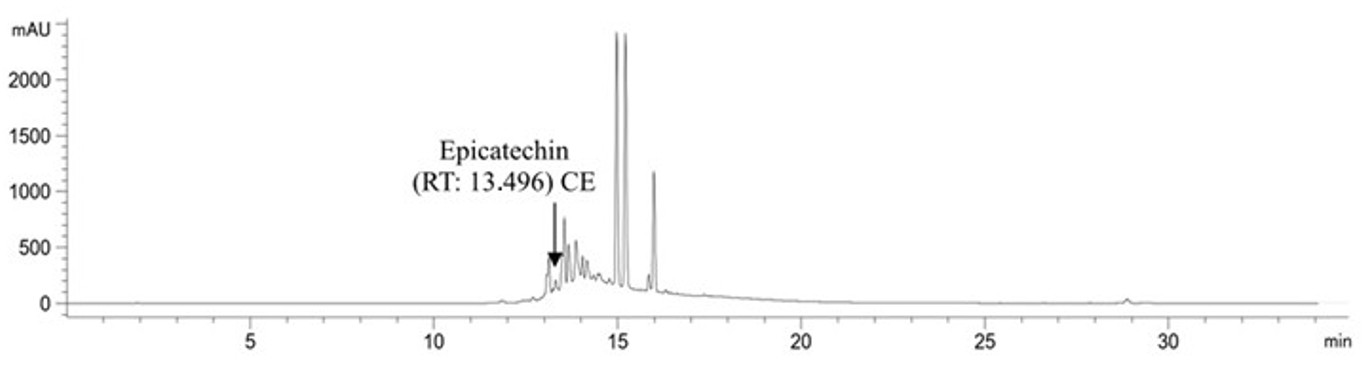
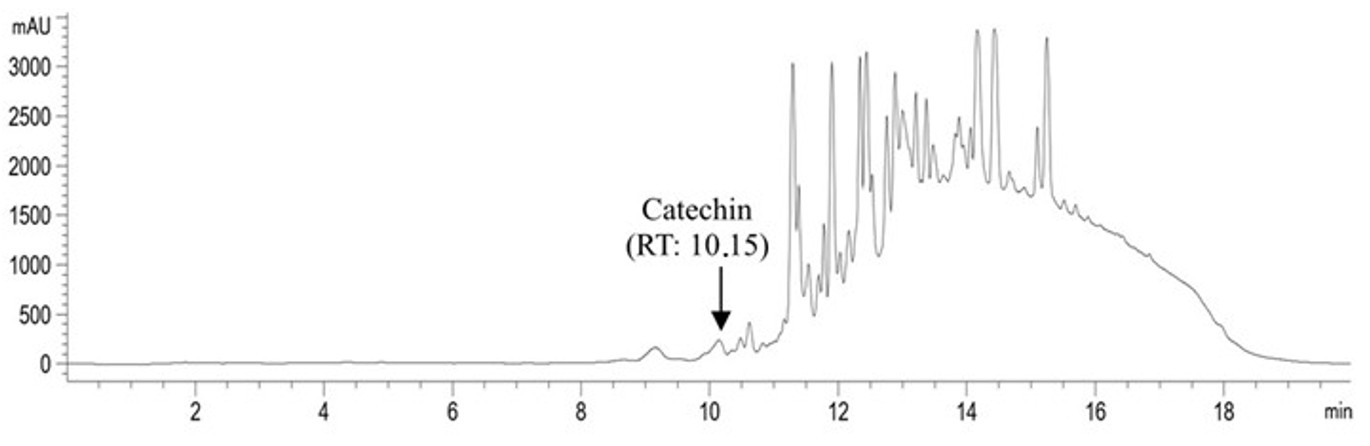
Studies carried out by Pettit et al. (2003) to analyze the chemical and biological properties of Hymenaea species found high concentrations of flavonoids in the bark of H. parvifolia and the leaves of H. palustris. Likewise, the chromatogram of the liquid extract evidenced the presence of flavonoids (Figure 1). It was observed that there were suggestive peaks for epicatechin at a retention time of 13.496 min at 280 nm (Figure 2) and for catechin at a retention time of 10.15 min at 200 nm (Figure 3). The presence of catechin was also detected in the H. courbaril sap extract by Costa et al. (2021).
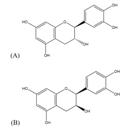
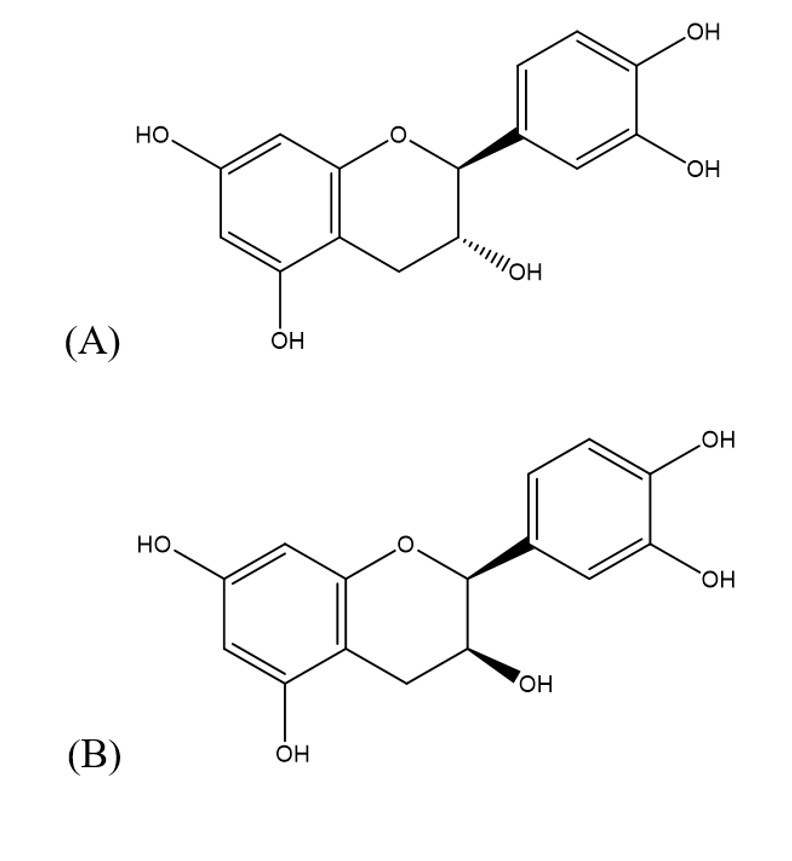
Molecular structures of the chemical markers (A) catechin and (B) epicatechin found in the concentrated liquid extract of H. courbaril L. stem bark.
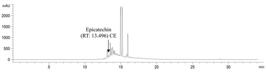
Chromatogram of H. courbaril L. stem bark concentrated liquid extract at 280 nm. Peak height (mAU), minutes (min), retention time (RT), coelution (CE).
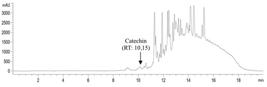
Chromatogram of H. courbaril L. stem bark concentrated liquid extract at 200 nm. Peak height (mAU), minutes (min), retention time (RT).
Secondary metabolites are natural compounds that plants synthesize to protect against abiotic and biotic stresses. Among these, tannins and flavonoids are polyphenols known for their antidiarrheal, antimicrobial, antifungal, antioxidant, anti-inflammatory, and anticancer effects (Jesus et al., 2012; Shamsudin et al., 2022). Consequently, the ability to produce defensive substances against microorganisms makes plants potential alternative sources of antibacterial and antifungal agents for human pathogens.
Studies of the phytochemical profile of extracts and essential oils from the exocarp, stem bark, and leaves of H. courbaril L. have mainly detected the presence of tannins, flavonoids, and terpenes, known in the literature for their antioxidant nature. In this study, no suggestive peaks were identified for rutin and ellagic acid, phenolic compounds found in the aqueous stem bark extract by Vencato et al. (2016). This contrast can be explained by interfering variables in phytochemical composition, such as climate, soil, altitude, water availability, stage of plant development, and the extract methodology (Martins et al., 2010).
3.3. Antimicrobial activity
The sensitivity evaluation criteria for the agar diffusion test were the formation of an inhibition halo. Among the clinical isolates evaluated, only methicillin-resistant Staphylococcus aureus proved sensitive to all extract volumes, with a maximum inhibition halo of 20 mm. No inhibition halos were observed in Escherichia coli, Klebsiella pneumoniae, and Proteus mirabilis cultures (Table 2). Although S. aureus presented the highest resistance profile among the clinical isolates in the antibiogram (Table 3), it was the bacterial species with the greatest sensitivity to the plant extract, which supports the investigation of the antimicrobial potential of H. courbaril stem bark extract.
Susceptibility of clinical bacterial isolates to the liquid extract of H. courbaril stem bark and inhibition halos (mm).
Given the wide use of H. courbaril as a medicinal alternative, several studies on its biochemical, pharmacological, and biological characterization have revealed antifungal, antimicrobial, antioxidant, larvicidal, and molluscicidal activities (Suzuki et al., 2008). The antimicrobial activity observed may be associated with the abundant presence of tannins and flavonoids, capable of inhibiting certain microorganisms (Fernandes et al., 2005).
In this perspective, Gonçalves et al. (2005) verified the antibacterial activity of H. courbaril stem bark hydroethanolic extract on a clinical isolate of S. aureus using the agar diffusion method. The authors observed the development of a 23 mm inhibition zone in a culture of gram-positive bacteria and the extract's inhibitory action against the P. mirabilis species, a finding contrary to that observed in this experiment.
Likewise, Cruz et al. (2023) also reported the antimicrobial potential of jatobá stem bark and possible variations caused by different extraction techniques. The extracts prepared by ultrasound-assisted extraction, dynamic maceration, and static maceration at a concentration of 500 mg/mL produced inhibition halos of 16 ± 3.6, 13 ± 0.6, and 16 ± 0.6 mm in cultures of S. aureus ATCC 25923. Therefore, the inhibition halo values for Staphylococcus aureus found in this study coincide with data reported in scientific literature.
3.4. Cell viability assay
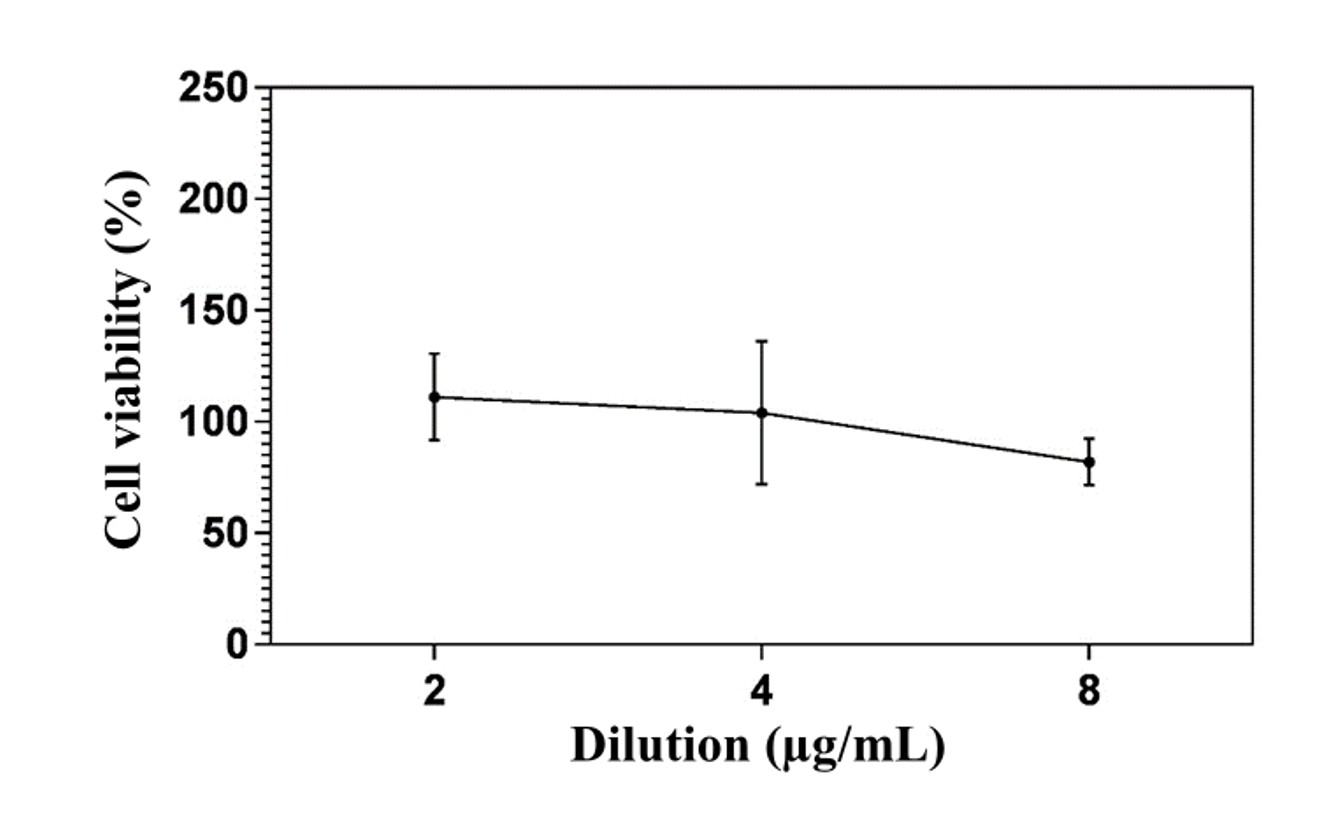
It investigated the percentage of cell viability in RAW 264.7 cell cultures when exposed to different Hymenaea courbaril L. stem bark liquid extract dilutions. After 48 hours of incubation, similar cell viability percentages were observed for different dilutions. In proportions of 1:2, 1:4, and 1:8 of water solvent, respectively, RAW 264.7 cell cultures showed 111%, 104%, and 82% of viable cells post-treatment. The experiment found 100% cell viability in vitro and, therefore, no cytotoxic effect in the analyzed dilutions of the extract (Figure 4).
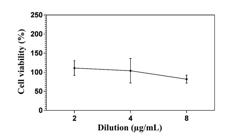
Cell viability (%) of RAW 264.7 cells after treatment of 48 h with H. courbaril L. stem bark concentrated liquid extract diluted 2, 4 and 8 times in water.
Costa et al. (2014) tested the cytotoxic effect of fisetin-rich precipitate, a flavonoid compound, and the crude sap of H. courbaril L. The IC50 of fisetin and crude sap were 158 μg/mL and 109 μg/mL, respectively. Therefore, the fisetin-rich residue proved to be less cytotoxic against 3T3-A31 fibroblasts. Cecílio et al. (2012) identified cytotoxic activity of the hydroethanolic leaf extract in MA-104 cells after 48 hours of incubation at a concentration of 5000 μg/mL, which was not observed at concentrations of 500 and 50 μg/mL.
In contrast, Spera et al. (2019) reported cytotoxicity of the H. courbaril L. seeds hydroethanolic extract in mouse epithelial cells with B16F10 melanoma, indicating antitumoral potential. An opposite effect was observed in healthy bone marrow cells from Swiss mice, in which the extract exhibited antigenotoxic and chemoprotective capacity against cell damage induced by cyclophosphamide.
3.5. In silico analysis
Based on the data obtained in the chromatographic study, the pharmacokinetic profiles and degree of toxicity of catechin and epicatechin were analyzed. The molecular structures of the identified flavonoids were selected from PubChem (2023).
Using the Protox Prediction software, a median lethal dose (LD50) of 10,000 mg/kg of ingestion was obtained for both compounds (Table 4). Consequently, epicatechin and catechin are classified as class 6 compounds (LD50 > 5,000) or non-toxic, which supports the results of the MTT assay (Banerjee et al., 2018). Regarding the prediction of biological activities, it was possible to detect 43 possible pharmacological activities, including antioxidant, anti-carcinogenic, and anti-seborrheic actions, and inhibition of histamine, kinase, and peroxidase release. In addition, the investigated flavonoids favor Lipinski's rule and, therefore, have good theoretical oral bioavailability, classified as druglike.
In silico analysis of the pharmacokinetic and toxicological potential of catechin and epicatechin.
Lipinski et al. (2001) studied the physicochemical characteristics of drugs and observed that oral availability depended on good water solubility and intestinal permeability. Thus, parameters were established for the drug-likeness classification, namely: calculated log P > 5, molecular weight > 500 Da, more than 5 hydrogen donor bonds, more than 10 hydrogen bond acceptors, and points of interactions with the primary pharmacological targets (Daina et al., 2019).
Similarly, Souza et al. (2021) conducted an in silico study of the toxicity and physicochemical properties of the primary secondary metabolites present in H. courbaril L. Most analyzed compounds were in class 4 and fulfilled Lipinski’s rules, with fisetinidol being the only non-toxic metabolite. Understanding the level of toxicity of a drug is necessary to ensure therapeutic safety, as lower toxicities allow for larger therapeutic windows. Therefore, in silico analyses produce preliminary results that are fundamental to screening candidate molecules for future drugs.
4. Conclusion
The phytochemical profile of H. courbaril L. stem bark liquid extract comprises tannins, flavonoids, saponins, and anthraquinone heterosides. The HPLC analysis identified the presence of epicatechin and catechin, flavonoids with broad medicinal potential under investigation. The extract exhibited cell viability in RAW 264.7 macrophages and in vitro antibacterial activity against a methicillin-resistant Staphylococcus aureus clinical isolate. In silico, the study of epicatechin and catechin proved the absence of toxicity and good theoretical oral bioavailability. Therefore, the results of this study open up prospects for future in vivo investigations of H. courbaril stem bark extract biological potential.
Data Availability Statement
The dataset analyzed or produced in this study can be requested from the corresponding author.
References
-
BANERJEE, P., ECKERT, A.O., SCHREY, A.K. and PREISSNER, R., 2018. ProTox-II: a webserver for the prediction of toxicity of chemicals. Nucleic Acids Research, vol. 46, no. W1, pp. W257-W263. http://doi.org/10.1093/nar/gky318 PMid:29718510.
» http://doi.org/10.1093/nar/gky318 - BANERJEE, P., KEMMLER, E., DUNKEL, M. and PREISSNER, R., 2024 [viewed October 2021]. ProTox 3.0: a webserver for the prediction of toxicity of chemicals. Nucleic Acids Research, (Web server issue 2024); NAR
-
BEZERRA, G.P., GÓIS, R.W.S., BRITO, T.S., LIMA, F.J.B., BANDEIRA, M.A.M., ROMERO, N.R., MAGALHÃES, P.J. and SANTIAGO, G.M.P., 2013. Phytochemical study guided by the myorelaxant activity of the crude extract, fractions and constituent from stem bark of Hymenaea courbaril L. Journal of Ethnopharmacology, vol. 149, no. 1, pp. 62-69. http://doi.org/10.1016/j.jep.2013.05.052 PMid:23764737.
» http://doi.org/10.1016/j.jep.2013.05.052 -
CECÍLIO, A.B., FARIA, D.B., OLIVEIRA, P.C., CALDAS, S., OLIVEIRA, D.A., SOBRAL, M.E.G., DUARTE, M.G.R., MOREIRA, C.P.S., SILVA, C.G. and ALMEIDA, V.L., 2012. Screening of Brazilian medicinal plants for antiviral activity against rotavirus. Journal of Ethnopharmacology, vol. 141, no. 3, pp. 975-981. http://doi.org/10.1016/j.jep.2012.03.031 PMid:22469769.
» http://doi.org/10.1016/j.jep.2012.03.031 -
COLET, C.F., DAL MOLIN, G.T., CAVINATTO, A.W., BAIOTTO, C.S. and OLIVEIRA, K.R., 2015. Análises das embalagens de plantas medicinais comercializadas em farmácias e drogarias do município de Ijuí/RS. Revista Brasileira de Plantas Medicinais, vol. 17, no. 2, pp. 331-339. http://doi.org/10.1590/1983-084X/13_027
» http://doi.org/10.1590/1983-084X/13_027 - COSTA, A.F., 2001. Farmacognosia 3rd ed. Lisboa: Fundação Calouste Gulbenkian. 992 p.
-
COSTA, M.P., BOZINIS, M.C.V., ANDRADE, W.M., COSTA, C.R., SILVA, A.L., OLIVEIRA, C.M.A., KATO, L., FERNANDES, O.F.L., SOUZA, L.K.H. and SILVA, M.R.R., 2014. Antifungal and cytotoxicity activities of the fresh xylem sap of Hymenaea courbaril L. and its major constituent fisetin. BMC Complementary and Alternative Medicine, vol. 14, no. 1, pp. 245. http://doi.org/10.1186/1472-6882-14-245 PMid:25027026.
» http://doi.org/10.1186/1472-6882-14-245 -
COSTA, R.S.L., MARTINS, D.S., PEIXOTO, L.D.C., SILVA, B.J.P., BORGES, L.B., LIMA, E.S., KOOLEN, H.H.F., MENEGUETTI, D.U.O., PESSOA, A.F.M. and SILVA, R.P.M., 2021. Antioxidant effect of Hymenaea courbaril L. (Jatobá) sap on the healing of wounds on mice. Journal of Medicinal Plants Research, vol. 15, no. 4, pp. 160-171. http://doi.org/10.5897/JMPR2021.7091
» http://doi.org/10.5897/JMPR2021.7091 -
CRUZ, J.E.R., SALDANHA, H.C., FREITAS, G.R.O. and MORAIS, E.R., 2022. A review of medicinal plants used in the Brazilian Cerrado for the treatment of fungal and bacterial infections. Journal of Herbal Medicine, vol. 31, pp. 100523. http://doi.org/10.1016/j.hermed.2021.100523
» http://doi.org/10.1016/j.hermed.2021.100523 -
CRUZ, J.E.R., SALDANHA, H.C., NASCIMENTO, A.M., BORGES, R.B., GOMES, M.S., FREITAS, G.R.O., LEAL, C.M., FERREIRA, E.A., FILHO, A.A.S. and MORAIS, E.R., 2023. Evaluation of the antioxidant, antimicrobial, and anti-biofilm effects of the stem bark, leaf, and seed extracts from Hymenaea courbaril and characterization by UPLC-ESI-QTOF-MS/MS analysis. Antibiotics (Basel, Switzerland), vol. 12, no. 11, pp. 1601. http://doi.org/10.3390/antibiotics12111601 PMid:37998803.
» http://doi.org/10.3390/antibiotics12111601 -
DAINA, A., MICHIELI, O., and ZOETE, V., 2017 [viewed October 2021]. SwissADME: a free web tool to evaluate pharmacokinetics, drug-likeness and medicinal chemistry friendliness of small molecules. Scientific reports, vol. 7, pp. 42717. Available from: http://www.swissadme.ch/
» http://www.swissadme.ch/ -
DAINA, A., MICHIELIN, O. and ZOETE, V., 2019. SwissTargetPrediction: updated data and new features for efficient prediction of protein targets of small molecules. Nucleic Acids Research, vol. 47, no. W1, pp. W357-W364. http://doi.org/10.1093/nar/gkz382 PMid:31106366.
» http://doi.org/10.1093/nar/gkz382 -
DIAS, L.S., LUZIA, M.M.L. and JORGE, N., 2013. Physicochemical and bioactive properties of Hymenaea courbaril L. pulp and seed lipid fraction. Industrial Crops and Products, vol. 49, pp. 610-618. http://doi.org/10.1016/j.indcrop.2013.06.005
» http://doi.org/10.1016/j.indcrop.2013.06.005 - DOURADO, E.R., DOCA, K.N.P. and ARAUJO, T.C.C., 2005. Comercialização de plantas medicinais por “raizeiros” na cidade de Anápolis-GO. Revista Eletrônica de Farmácia Suplemento, vol. 22, no. 2, pp. 67-69.
-
FERNANDES, T.T., SANTOS, A.T.F. and PIMENTA, F.C., 2005. Atividade antimicrobiana das plantas: Plathymenia reticulata, Hymenaea courbaril e Guazuma ulmifolia. Revista de Patologia Tropical, vol. 34, no. 2, pp. 113-122. http://doi.org/10.5216/rpt.v34i2.1916
» http://doi.org/10.5216/rpt.v34i2.1916 -
FILIMONOV, D.A., LAGUNIN, A.A., GLORIOZOVA, T.A., RUDIK, A.V., DRUZHILOVSKII, D.S., POGODIN, P.V. and POROIKOV, V.V., 2014 [viewed October 2021]. Prediction of the biological activity spectra of organic compounds using the PASS online web resource. Chemistry of Heterocyclic Compounds, vol. 50, no. 3, pp. 444-457. [Available from: http://.pharmaexpert.ru/passonline/]
» http://.pharmaexpert.ru/passonline/ -
GONÇALVES, A.L., FILHO, A.A. and MENEZES, H., 2005. Estudo comparativo da atividade antimicrobiana de extratos de algumas árvores nativas. Arquivos do Instituto Biológico, vol. 72, no. 3, pp. 353-358. http://doi.org/10.1590/1808-1657v72p3532005
» http://doi.org/10.1590/1808-1657v72p3532005 -
JESUS, N.Z.T., FALCÃO, H.S., GOMES, I.F., LEITE, T.J.A., LIMA, G.R.M., BARBOSA-FILHO, J.M., TAVARES, J.F., SILVA, M.S., ATHAYDE-FILHO, P.F. and BATISTA, L.M., 2012. Tannins, Peptic Ulcers and Related Mechanisms. International Journal of Molecular Sciences, vol. 13, no. 3, pp. 3203-3228. http://doi.org/10.3390/ijms13033203 PMid:22489149.
» http://doi.org/10.3390/ijms13033203 -
KIM, S., CHEN, J., CHENG, T., GINDULYTE, A., HE, J., HE, S., LI, Q., SHOEMAKER, B.A., THIESSEN, P.A., YU, B., ZASLAVSKY, L., ZHANG, J. and BOLTON, E.E., 2023. PubChem 2023 update. Nucleic Acids Research, vol. 51, no. D1, pp. D1373-D1380. https://doi.org/10.1093/nar/gkac956 Available from: https://pubchem.ncbi.nlm.nih.gov
» https://doi.org/10.1093/nar/gkac956» https://pubchem.ncbi.nlm.nih.gov -
LIPINSKI, C.A., LOMBARDO, F., DOMINY, B.W. and FEENEY, P.J., 2001. Experimental and computational approaches to estimate solubility and permeability in drug discovery and development settings. Advanced Drug Delivery Reviews, vol. 46, no. 1-3, pp. 3-26. http://doi.org/10.1016/S0169-409X(00)00129-0 PMid:11259830.
» http://doi.org/10.1016/S0169-409X(00)00129-0 -
MA, L., YABG, L., TANG, L., WANG, Y., LUO, H., ZHONG, Z., ZHANG, W., CHEN, D., WEI, J., LI, P. and WANG, Y., 2025. Sample preparation techniques for quality evaluation and safety control of medicinal and edible plants: Overview, advances, applications, and future perspectives. Journal of Pharmaceutical Analysis, vol. 1, pp. 1-62. http://doi.org/10.1016/j.jpha.2025.101296
» http://doi.org/10.1016/j.jpha.2025.101296 -
MAGALHÃES, K.N., GUARNIZ, W.A.S., SÁ, K.M., FREIRE, A.B., MONTEIRO, M.P., NOJOSA, R.T., BIESKI, I.G.C., CUSTÓDIO, J.B., BALOGUN, S.O. and BANDEIRA, M.A.M.B., 2019. Medicinal plants of the Caatinga, northeastern Brazil: Ethnopharmacopeia (1980-1990) of the late professor Francisco José de Abreu Matos. Journal of Ethnopharmacology, vol. 237, pp. 314-353. http://doi.org/10.1016/j.jep.2019.03.032 PMid:30885881.
» http://doi.org/10.1016/j.jep.2019.03.032 - MARTINS, C.H.G., SOUZA, F.R., FONSECA, C., CASEMIRO, L.A., FURTADO, N.A.J.C., AMBROSIO, S.R. and CUNHA, W.R., 2010. Determinação in vitro da Atividade Antibacteriana dos Extratos Brutos da Casca e Polpa Farinácea de Hymenaea courbaril L. Investigação, vol. 10, pp. 37-43.
- MATOS, F.D.A., 2009. Introdução à fitoquímica experimental 3rd ed. Fortaleza: UFC. 150 p.
-
MATOS, J.M., COSTA, A.R.C., JUSTINO, M.N., CAMARA, M.B.P., VASCONCELOS, O.L.S., MARQUES, J.C., BRANDÃO, C.M. and MARQUES, G.E.C., 2024. Chemical prospection and antioxidant activity of Humiria balsamifera (Aubl.) A. St. Hil. and Hymenaea courbaril L. Natural Product Research, vol. 38, no. 4, pp. 1-7. http://doi.org/10.1080/14786419.2023.2189708 PMid:36924455.
» http://doi.org/10.1080/14786419.2023.2189708 -
MOSMANN, T., 1983. Rapid colorimetric assay for cellular growth and survival: application to proliferation and cytotoxicity assays. Journal of Immunological Methods, vol. 65, pp. 55-63. https://doi.org/10.1016/0022-1759(83)90303-4
» https://doi.org/10.1016/0022-1759(83)90303-4 -
NASCIMENTO, G.G.F., LOCATELLI, J., FREITAS, P.C.D. and SILVA, G.L., 2000. Antibacterial activity of plant extract and phytochemicals on antibiotic-resistant bacteria. Brazilian Journal of Microbiology, vol. 31, no. 4, pp. 247-256. http://doi.org/10.1590/S1517-83822000000400003
» http://doi.org/10.1590/S1517-83822000000400003 -
PETTIT, G.R., MENG, Y., STEVENSON, C.A., DOUBEK, D.L., KNIGHT, J.C., CICHACZ, Z., PETTIT, R.K., CHAPUIS, J.C. and SCHMIDT, J.M., 2003. Isolation and structure of Palstatin from the Amazon tree Hymenaea palustris. Journal of Natural Products, vol. 66, no. 2, pp. 259-262. http://doi.org/10.1021/np020231e PMid:12608861.
» http://doi.org/10.1021/np020231e -
SHAMSUDIN, N.F., AHMED, Q.U., MAHMOOD, S., SHAH, S.A.A., SARIAN, M.N., KHATTAK, M.M.A.K., KHATIB, A., SABERE, A.S.M., YUSOFF, Y.M. and LATIP, J., 2022. Flavonoids as antidiabetic and anti-inflammatory agents: a review on structural activity relationship-based studies and meta-analysis. International Journal of Molecular Sciences, vol. 23, no. 20, pp. 12605. http://doi.org/10.3390/ijms232012605 PMid:36293459.
» http://doi.org/10.3390/ijms232012605 -
SILVA-SILVA, T.P., SILVA, A.A., OLIVEIRA, M.C.D., SOUZA, P.R., SILVA-FILHO, E.C., GARCIA, H.A., COSTA, J.C.S. and SANTOS, F.E.P., 2023. Biosynthesis of Ag@Au bimetallic nanoparticles from Hymenaea courbaril extract (Jatobá) and nonlinear optics properties. Journal of Molecular Liquids, vol. 389, pp. 1-7. http://doi.org/10.1016/j.molliq.2023.122641
» http://doi.org/10.1016/j.molliq.2023.122641 - SOUZA, L.F., ESPINDOLA, A.C.O. and SANTOS, C.B.R., 2021. Estudo in silico dos compostos majoritários presentes no Jatobá (Hymenaea sp.). In: Anais do 18ª Semana Nacional de Ciência e Tecnologia do Amapá, 4-8 Outubro 2021, Macapá, Brazil. Macapá: UNIFAP.
-
SPERA, K.D., FIGUEIREDO, P.A., SANTOS, P.C.E., BARBOSA, F.C., ALVES, C.P., DOKKEDAL, A.L., SALDANHA, L.L., SILVA, L.P., FIGUEIREDO, C.R., FERREIRA, P.C. and SILVA, R.M.G., 2019. Genotoxicity, anti-melanoma and antioxidant activities of Hymenaea courbaril L. seed extract. Anais da Academia Brasileira de Ciências, vol. 91, no. 4, pp. e20180446. http://doi.org/10.1590/0001-3765201920180446 PMid:31800695.
» http://doi.org/10.1590/0001-3765201920180446 -
SUZUKI, R., MATSUSHITA, Y., IMAI, T., SAKURAI, M., JESUS, J.M.H., OZAKI, S.K., FINGER, Z. and FUKUSHIMA, K., 2008. Characterization and antioxidant activity of Amazonian woods. Journal of Wood Science, vol. 54, no. 2, pp. 174-178. http://doi.org/10.1007/s10086-007-0913-9
» http://doi.org/10.1007/s10086-007-0913-9 - VENCATO, S.B., LEMES, M.L.B., CAMPELO, D.S., CÔRREA, D.S. and FERRAZ, A.B.F., 2016. Avaliação do perfil fitoquímico e potencial antioxidante do extrato aquoso de Hymenaea courbaril. Revista de Iniciação Científica da ULBRA, no. 14, pp. 55-66.
Edited by
-
Editor:
Marcelo A.M. Esquisatto