 Biotechnological strategies for improving corn silage: evaluating AMs-Based biol as a fermentation enhancer
Abstract
Corn silage is a fundamental component in ruminant nutrition, but its preservation depends on optimizing fermentation to maintain nutritional quality and aerobic stability. This study evaluated the effects of Effective Microorganisms Activated Solution (AMS)-based biol as a natural fermentation enhancer in silage under tropical conditions. Treatments included AMS-based biol at different doses (1, 1.5, and 2 L per ton-1) and untreated control (UN). Silage pH, chemical composition, aerobic stability, and dry matter recovery were analysed. Results showed that AMS-based biol enhanced fermentation efficiency, reducing pH values compared to the control (3.98 vs. 3.78, P < 0.001). Aerobic stability improved significantly, particularly at 1.5 L/t, where temperature increases after exposure to air were minimized (0.01 vs. 1.68°C in UN, P < 0.001). Dry matter recovery was higher in treated silages (4.6–4.8 vs. 4.5 kg in UN, P = 0.005). Crude protein content showed a slight decline at higher AMS doses (6.3–5.8% vs. 7.0% in UN, P = 0.002), while fibre composition varied significantly among treatments. These findings indicate that AMS-based biol is a viable alternative to synthetic additives, improving silage quality and preservation. Future research should focus on optimizing application rates and assessing long-term effects on animal performance.
Keywords:
aerobic stability; organic additive; forage preservation; maize; tropical condition
Resumo
A silagem de milho é um componente fundamental na nutrição de ruminantes, mas sua preservação depende da otimização da fermentação para manter a qualidade nutricional e a estabilidade aeróbica. Este estudo avaliou os efeitos do biol à base de Solução Ativada por Microrganismos Eficazes (AMS) como um intensificador natural de fermentação em silagem sob condições tropicais. Os tratamentos incluíram biol à base de AMS em diferentes doses (1, 1,5 e 2 L por tonelada-1) e controle não tratado (UN). O pH, a composição química, a estabilidade aeróbica e a recuperação de matéria seca da silagem foram analisados. Os resultados mostraram que o biol à base de AMS aumentou a eficiência da fermentação, reduzindo os valores de pH em comparação ao controle (3,98 vs. 3,78, P < 0,001). A estabilidade aeróbica melhorou significativamente, particularmente a 1,5 L/t, onde os aumentos de temperatura após a exposição ao ar foram minimizados (0,01 vs. 1,68 °C em UN, P < 0,001). A recuperação de matéria seca foi maior nas silagens tratadas (4,6-4,8 vs. 4,5 kg em UN, P = 0,005). O teor de proteína bruta apresentou um ligeiro declínio em doses mais altas de AMS (6,3-5,8% vs. 7,0% em UN, P = 0,002), enquanto a composição de fibras variou significativamente entre os tratamentos. Esses resultados indicam que o biol à base de AMS é uma alternativa viável aos aditivos sintéticos, melhorando a qualidade e a preservação da silagem. Pesquisas futuras devem se concentrar na otimização das taxas de aplicação e na avaliação dos efeitos a longo prazo no desempenho animal.
Palavras-chave:
estabilidade aeróbica; aditivo orgânico; conservação de forragem; milho; condições tropicais
1. Introduction
Maize silage is an important component of cattle diets in Western Europe, and its energy value is widely estimated from chemical composition and in vitro organic matter digestibility (OMd) (Kallscheuer, 2018). Corn (Zea mays) is one of the most important cereal crops globally, serving as a staple food for human populations and a primary feed source for livestock (Cooke et al., 2007; Eskandari et al., 2009; Griffey et al., 2010). Its high yield potential, adaptability to different agroecological conditions, and rich carbohydrate content make it a fundamental component in animal nutrition, particularly in ruminant diets (Broderick, 1995; Galyean and Defoor, 2003; Van Knegsel et al., 2007). Corn silage, a product of the ensiling process, is widely used in dairy and beef production systems due to its high energy density, digestibility, and long-term storage capability (Charmley, 2001; Cooke et al., 2007; Helm and Salmon, 2002; Huhtanen et al., 2013; Driehuis et al., 2018). However, the success of silage preservation depends largely on the efficiency of the fermentation process, which must ensure proper acidification, inhibit spoilage microorganisms, and maintain the nutritional integrity of the feed (Charmley, 2001; Huhtanen et al., 2013; Borreani et al., 2017; Driehuis et al., 2018).
To optimize silage quality, various additives have been developed, including chemical preservatives such as propionic acid, formic acid, and synthetic inoculants (Ahvenjärvi et al., 2006; Driehuis et al., 2018; Kung Junior et al., 2018a; Kung Junior et al., 1993; Muck et al., 2018). These additives are commonly used to accelerate fermentation, prevent mold growth, and enhance aerobic stability (Yitbarek and Tamir, 2014). While effective, the prolonged and indiscriminate use of synthetic additives has raised concerns regarding their environmental impact (Cardoso et al., 2020; Dijkstra et al., 2024; Durmic et al., 2024), safety for animal consumption (Harrison et al., 1994; Del Prado et al., 2024), and economic viability (Souza et al., 2014; Coblentz and Akins, 2018). Residues from chemical additives can accumulate in soil and water sources, altering microbial communities and potentially affecting ecological balance (Driehuis and Elferink, 2000). Additionally, consumers are increasingly demanding natural and sustainable livestock production practices, pressuring the industry to seek alternatives that align with environmental and food safety standards (Akash et al., 2022; Liu et al., 2023; Varma et al., 2024).
In response to these challenges, the use of biological additives has gained significant attention as a sustainable alternative for silage production (Kung Junior and Ranjit, 2001; Del Prado et al., 2024; Hristov et al., 2024). Among these, Effective Microorganisms Activated Solution (AMS)-based biol has emerged as a promising biotechnological tool to enhance silage fermentation (Siddiqui et al., 2023). AMS is a consortium of beneficial microorganisms, including lactic acid bacteria, yeasts, and phototrophic bacteria, which work synergistically to promote desirable fermentation pathways, reduce the growth of spoilage organisms, and improve the nutritional profile of silage (Balogun et al., 2016; Kallscheuer, 2018; Hidalgo et al., 2022). The use of activated solutions with microorganisms (AMs)—often referred to as effective microorganisms (EMs) or microbial inoculants—is a biotechnological approach widely applied in forage conservation (ensiling), soil fertility, and animal nutrition. These AMs typically consist of consortia of beneficial microorganisms such as lactic acid bacteria (LAB), yeasts, and phototrophic bacteria, which play complementary roles in fermentation, microbial ecology, and stabilization processes (Balogun et al., 2016; Kallscheuer, 2018). By fostering a more balanced microbial environment, AMS-based biol can enhance lactic acid production, accelerate pH reduction, and contribute to the preservation of essential nutrients. Additionally, the use of bio-inoculants derived from natural sources aligns with circular economy principles by reducing dependency on synthetic inputs and minimizing environmental pollution (Sande et al., 2024; Sani et al., 2024). Therefore, the use of AMs Biosol is justified as a key biotechnological strategy within the framework of circular economy and regenerative agriculture, as it harnesses naturally occurring microorganisms to transform organic waste into valuable resources, improving soil fertility, plant health, and forage preservation. Its low cost, simple preparation, and absence of synthetic chemicals make it an accessible and sustainable alternative that supports more resilient, efficient, and environmentally friendly agricultural systems.
Despite the potential benefits of AMs-based biol, limited research has been conducted on its optimal application rates and its overall effectiveness in silage production. Understanding the appropriate dosage of AMS-based biol is critical to maximizing its impact on fermentation efficiency, nutrient retention, and feed quality (Balogun et al., 2016). Therefore, this study aims to evaluate the effects of different doses of AMS-based biol on the fermentation dynamics, chemical composition, and preservation efficiency of corn silage. The findings of this research will contribute to the development of more sustainable silage management practices, offering an alternative that not only improves feed quality but also aligns with environmentally responsible agricultural systems. Besides this, this study aligns with the United Nations Sustainable Development Goals, particularly SDG 2 (Zero Hunger) by promoting improved feed quality and food security through sustainable forage preservation; SDG 12 (Responsible Consumption and Production) by encouraging the recycling of organic resources and reducing dependence on synthetic inputs (ONU, 2020); and SDG 13 (Climate Action) by supporting low-emission, climate-resilient practices. Small and medium livestock producers in tropical regions stand to benefit the most, as AMs Biosol offers a low-cost, environmentally friendly tool to enhance productivity while strengthening sustainability and resilience in vulnerable rural communities.
2. Materials and Methods
2.1. Study area
This study was carried out in Orellana Province, located in the North of the Ecuadorian Amazon. It is divided into four Districts (Cantons): this Province has an area of 21,730 kilometers (km2) (18.6%). The climate in the Region is characterized by humid tropical rainforests (Bilsborrow et al., 2004; Orellana, 2015; González Marcillo et al., 2021). The average rainfall is 2,942 millimeters (mm) annually, with an annual average temperature of 29.7°C (Walz et al., 2010). The Region had an estimated population of 157,520 people in 2018.
2.2. AMS preparation
Decomposed leaves found on the ground were collected, preferably those with white spots, as they come from native forests that have not been disturbed by man. This ensures the presence of a wide range of micro-organisms, which can promote healthy and sustainable growth in harmony with the environment. To prepare it, start by placing the mulch, rice bran and molasses on a suitable surface. Then, with the hands, it is kneaded until a bread-like consistency is obtained, as show In Table 1. Once the mixture is formed, it is placed in a tank and compacted by tamping to eliminate possible air pockets. Finally, the tank was hermetically sealed and left to ferment for 30 days to complete the process. After this process, the biol of AMs were applied to forage.
2.3. Cereal crop and ensiled procedures
Maize (Zea mays L.,) was sown in 6 July 2024 on 2.5 ha under rainfed conditions at 120 kg/ha of seed and fertilization of 82-46-00 and 80-60-40 NPK. Harvesting for silage was done 75 days after sowing with a chopper harvester. Biol of AMs were dissolved in demineralized water on the day of ensiling established the following treatments; 1) (UN), maize silage untreated, 2) (LB) applied at a rate of 1 l t-1 silage, 3) (MB) applied at a rate of 1 l.5 t-1 silage and 3) (HB), applied at a rate of 2 t-1 silage. The silages fermented for 25 days after harvest. Therefore, 3.7 ± 0.3 kg of the maize silage was packed into 16-L macro silos (~27 cm, diameter × 36 cm, height) in triplicate and sealed immediately. Weights of these silos were recorded. The filled macro silos were then stored at ambient temperature (20 to 27°C) in an enclosed barn. Weights of these silos were recorded
3. Analytical Methods
The silage juice was extracted manually with a Motorq 20 (SP Tools, UK) silage press. Then, the silage pH was measured directly from the silage juice using a pH meter (Jenway 3010 pH meter; Kernick and Son, Cardiff, UK). The chemical analysis was conducted in duplicate according to AOAC (2000) and expressed on a dry matter basis. In fact, dry matter (DM) was determined at 60ºC for 24 h and ashes burnt at 550ºC for 5 h. Crude protein was calculated as a percentage of N × 6.25 by the Kjeldahl method (Bradstreet, 1954). Crude fiber (CF) was analysed according to Weende method by acid hydrolysis with 1.25% H2SO4, followed by alkaline hydrolysis with 1.25% NaOH. In contrast, neutral detergent fibre (NDF) and acid detergent fiber (ADF) were sequentially determined on an ash-free basis according to Van Soest et al. (1991) adding sodium sulphite and thermostable α- amylase (Ankom Technology, Fairport, NY, USA) (Van Soest, 1994).
3.1. Aerobic stability measurement
Aerobic stability, defined as the time required for the temperature to increase by 1°C above ambient temperature (Puntillo et al., 2020), was assessed by placing approximately 800 g of silage in insulated PVC containers measuring 15 × 16 cm2, with one end open such as described (Kung Junior, 2010; Yuan et al., 2015). To ensure insulation, these containers were placed within specially designed cavities in a polystyrene sheet (Combat Polystyrene Group, Bristol, UK). Temperature changes within each container were recorded hourly over a period of 6 days using a temperature probe connected to a universal data logging module (Technolog, Derbyshire, UK).
4. Statistical Analysis
The data, previously entered in Excel spreadsheets (Microsoft, USA), were coded for subsequent analysis. Therefore, using SAS v. 9.4 statistical software (SAS, Institute Inc., Cary, NC, USA) and after checking for normality (PROC UNIVARIATE) and/or logarithmic transformations, if necessary, they were analysed as parametric data. For this purpose, under a general linear model (PROC GLM), our statistical model considered treatments, time and their interaction as fixed effects. Similarly, dose-dependent regression (PROC REG) and correlation (PROC CORR) analyses were performed. Means separated by the PDIDFF option of SAS are presented as least squares (LSD) and compared with a Dunnet's test. Statistical differences were considered at a P ≤ 0.05, while statistical trends at a P ≤ 0.10.
5. Results and Discussion
The Table 2 shows the biol analysis. The result reveals a solution with an acidic pH (3.6), which may limit phosphorus availability. The electrical conductivity (16.7 mS/cm) indicates moderate salinity. Although the total nitrogen content is adequate, a low proportion of nitrates and a superiority of ammonium are observed. To optimise fertilisation, it is recommended to increase the total nitrogen content to around 1000 ppm by adding organic matter or ammonium salts such as ammonium phosphate. The latter option. In addition to providing nitrogen, will raise phosphorus levels and help to regulate the pH. Potassium levels are high, which could be affecting electrical conductivity. Calcium is within optimal ranges for most crops. Micronutrients, especially copper and zinc, may require adjustment by foliar application of a concentrated micronutrient solution.
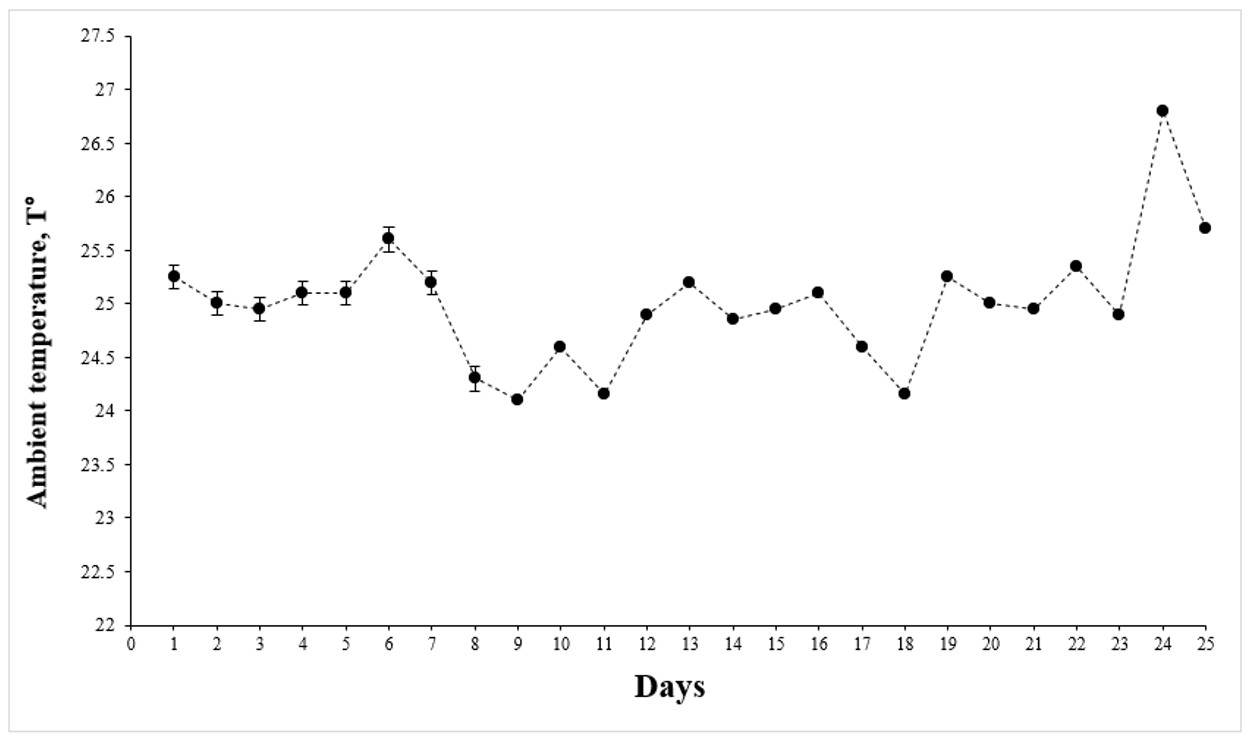
Figure 1 shows the descriptive statistics of the ambient temperatures recorded throughout the study. In general, during the whole experimental period a mean ambient temperature of 25°C was recorded, with a standard deviation of 0.56°C, but with maxima exceeding 27°C and minima recorded below the mean of 24°C. The variations in ambient temperature observed during the whole experimental period (Figure 1) indicate constant fluctuations that should be considered when making a forage conservation plan (Borreani and Tabacco, 2010). For this reason, climates with high humidity and rainfall, such as the one in the province of Orellana (Guamán-Rivera et al., 2024), have to be highly considered in the case of silage. Enough scientific evidence has already shown that chopped plant material follows an enzymatic process that is highly conditioned by temperatures, which, in our case, we conjecture have had a certain degree of influence according to each treatment (r = 0.99; P < 0.001) In fact, Contreras-Govea et al. (2009) stated that bacteria are more abundant in warmer than in cooler temperatures, with higher levels at certain maturity stages.
Table 3 shows pH data, pre- and post-macro silos weight of plant material. Statistical differences were evidenced for pH values among treatments (P < 0.001). The UN had less than −6% than those observed when AMs were applied in doses of 1 to 2 t-1 silage (3.78 vs. 3.93). Nevertheless, the pH values have shown similar referential values to other studies (Basso et al., 2012; Borreani and Tabacco, 2010; Nishino et al., 2003; 3.64 vs. 3.84). Corn silages have a lower final pH (3.7–4.0) than legume silages (4.3–5.0; Table 3; McDonald et al., 2010) because they have lower buffering capacities (buffering capacity of 200–250 mE/kg of DM for corn and 500–550 mE/kg of DM for legumes) (Kung Junior et al., 2018b). According to Yuan et al. (2015) low pH values help to regulate the growth of other bacteria (sucha as Clostridium) and minimize avoidable losses such as plant true proteins. Therefore, biol based on AMs could have helped silage fermentation by increasing lactate accumulation and reducing pH and growth of deleterious epiphytic microbes such as clostridia and moulds (Oliveira et al., 2017). Referential studies using Lactobacillus buchneri in maize silage reported pH values ranged from (4.40 to 3,45), so, it has been used to improve the aerobic stability of corn silages (Burns et al., 2018; Kang et al., 2009; Kung Junior and Ranjit, 2001; Muck et al., 2018). In the same way, the final weight of macro silos is shown in Table 3. This first study showed that the application of biol-based AMs on maize silage allows to recovery more dry matter than UN (0.1 vs. 0.4 kg difference weight; P = 0.010; Table 3). A study by Cleale IV et al. (1990) and Arriola et al. (2021) reported a DM recovery greater than 90% in plant corn silage using microbial inoculants such as Lactobacillus spp. Despite this study, the volatile fatty acids (VFA) were not determined, Driehuis et al. (2001) evidenced that Heterofermentative inoculants (e.g. L. buchneri) applied in grass silages allow CO2 formation during the conversion of lactic acid to acetic acid and 1,2-propane-diol, leading to extra DM loss. Therefore, we hypothesized that biol-based AMs limited DM loss than UN silage. However, this should be confirmed with more studies.
The aerobic stability and macro silo temperature are shown in Table 4. Differences highly significant in macro silo temperatures were observed among treatments (P = 0.002). Our results showed that using MB (1.5 litters of biol based-AMs) provides an optimal temperature compared to UN (26.5 vs. 28.2 T°C). Scientific evidence states that if silage is well packed and sealed immediately, the average temperature of the forage mass should not increase to more than about 5 to 8°C above the ambient temperature at filling (Kung Junior et al., 2018a). In addition, Basso et al. (2012) mentioned that high temperatures result in large losses on the surfaces of the silos and low doses of L. buchneri may be insufficient to control aerobic deterioration of silages (Ohyama et al., 1975). Based on these results, this pioneer study evidence that using biol of AMs could be a potential alternative instead of chemical additives which should be confirmed with more studies (Contreras-Govea et al., 2009).
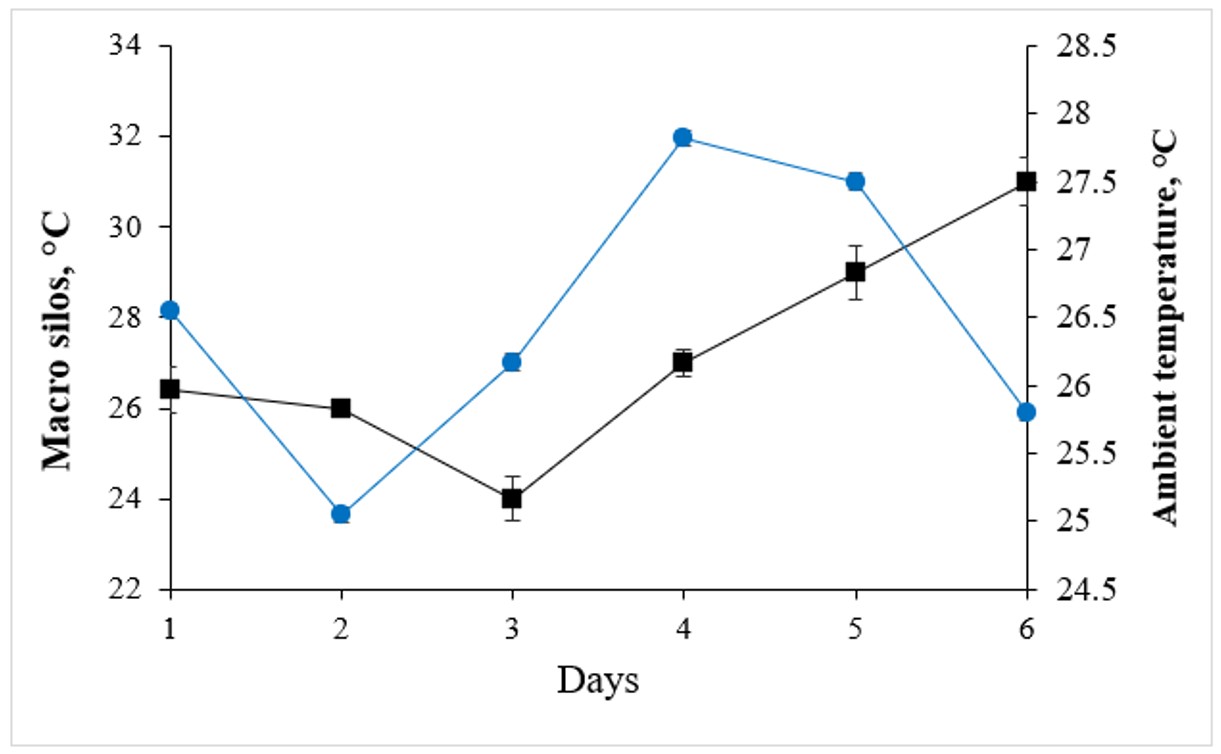
Regarding to aerobic stability, the results are shown in Table 4. The UN group showed a greater increase in temperature compared to when using AMs at doses of 1.5 litres (1.68 vs. 0.01 T°C; P < 0.001). Also, the experimental period (Figure 2) conditioned the silage temperature (P < 0.001) with a high variation which could be explained by ambient temperature (r = 0.95; P = 0.002). In this sense, the aerobic stability of silages varies significantly depending on silage composition and management (Nishino et al., 2003). The rate of deterioration after silage opening, as well as the magnitude of DM and nutrient losses, depend to a large extent on the initial stability of the silage (Borreani and Tabacco, 2010; Taylor and Kung Junior, 2002). Kung Junior and Ranjit (2001) have reported that improvements in aerobic stability during prolonged storage and feeding may be beneficial. Homofermentative and facultative heterofermentative lactic acid bacteria (LAB) inoculation has been commonly used to improve lactic acid fermentation, inhibit deleterious epiphytic microbes, and preserve the nutritional quality of ensiled forages (Oliveira et al., 2017), although this same author, mentioned that microbial inoculants do not improve the aerobic stability of corn. By contrast, Arriola et al. (2021) reported that Lactobacillus buchneri may produce antimicrobial substances, such as buchnericin, a bacteriocin that may contribute to increased aerobic stability. However, our study reported a modest improvement (Table 4) which would have to be more studied. Anyway, our research team conjectures that this biol of AMs could have a huge microbial population (e.g., homofermentative and facultative heterofermentative).
In addition to this, the time factor (days) considered in our study showed that all micro silos, regardless of the treatment, for an estimated time of 36 hours the ambient temperature was around (25.96 °C), and then rose drastically above the ambient temperature (0.6 to 7.2 °C, difference T°C stability). On all treatments, the temperature rose at 120 h and peaked at 144 h after exposure to air (Figure 2). Nishino et al. (2003) reported that aerobic deterioration was sooner than our study (36 vs. 120 h). Therefore, this may support the hypothesis that the enhanced aerobic stability is due primarily to the antifungal action of acetic acid (Puntillo et al., 2020). In addition, similar to our results, Puntillo et al. (2020) had lost aerobic stability after 5 days of being exposed to air in Control silages.
The chemical composition of the silages is shown in Table 5. Despite the numerical differences observed in the DM between the different treatments, these were not significant (25 ± 1.3%: = 0.86). Referential values by Nishino et al. (2003) reported similar DM (27%, on a dry matter basis) and CP contents (6.5%; on average; Kung Junior et al., 1993). In the same way, Ferraretto et al. (2018), informed DM contents ranged from 25 to 33%. However, it is important to mark that maturity at harvest alters yield, nutrient composition (e.g., decline CP and FND contents) digestibility, and ensiling potential of crops, in fact, Borreani et al. (2017) have estimated DM loss of – 4 to 19%. According to Ferraretto et al. (2018) targeting 35% DM at harvest is recommended for optimising nutritive value of lactation performance by dairy cows. Regarding crude protein contents (Table 5), we expected that the efficiency of the AMs could have been reflected in a lower crude protein degradation of the ensiled material. However, the UN silages were the ones with the highest crude protein content (7 ± 0.3%), observing, in addition, a reduction of CP contents for the MB treatment that should be further studied. Similar results were observed for the rest of the proximal components analysed, i.e., ethereal extract and crude fibre (P = 0.003 to 0.004). Although the overall fermentation quality improved, a reduction in CP may affect the balance of nutrients required for optimal animal performance (Obispo et al., 2013; Torrent, 2015; Lima et al., 2001), particularly in high-producing livestock. Therefore, it is necessary to make nutritional formulation adjustments or complementary protein sources when using higher AMs doses.
As for cell wall contents (Table 5), NDF showed values well below those usually observed in other studies (25 vs. 57.3%; Ferraretto et al., 2018), a result that could partly be due to the age of the culture, but it should be noted that these values were not significant (P = 0.66). Contrary to this, the FAD contents between the different treatments showed highly significant differences (P < 0.002). Basso et al. (2012) reported greater NDF (60%, on average) and lower ADF (14%, on average) using different doses of L. buchneri than our study. In contrast, Silva et al. (2017) informed NDF values slightly superior than those observed in this study (33 vs. 25%).
6. Conclusions
The application of AMS-based biol improved aerobic stability, reducing temperature increases after exposure to air. All treated silages exhibited low pH suggesting enhanced fermentation efficiency. Crude protein content decreased slightly with higher doses, while fibre composition showed significant variations, with lower neutral detergent fiber (NDF) and acid detergent fiber (ADF) in some treatments. These findings highlight AMS-based biol as a promising natural additive for improving silage preservation and quality, warranting further research on optimal application rates.
-
Data Availability Statement
Data is available upon request.
References
-
AHVENJÄRVI, S., JOKI-TOKOLA, E., VANHATALO, A., JAAKKOLA, S. and HUHTANEN, P., 2006. Effects of replacing grass silage with barley silage in dairy cow diets. Journal of Dairy Science, vol. 89, no. 5, pp. 1678-1687. http://doi.org/10.3168/jds.S0022-0302(06)72235-4 PMid:16606738.
» http://doi.org/10.3168/jds.S0022-0302(06)72235-4 - AKASH, H.M., MONDAL, S. and ADUSUMILLI, S., 2022. Sustainable livestock production and food security. In: S. MONDAL and R.L. SINGH, eds. Emerging issues in climate smart livestock production: biological tools and techniques London: Academic Press, pp. 71-90.
- ASSOCIATION OF ANALYTICAL CHEMISTS – AOAC, 2000. Official methods of analysis Arlington: AOAC.
-
ARRIOLA, K.G., OLIVEIRA, A.S., JIANG, Y., KIM, D., SILVA, H.M., KIM, S.C., AMARO, F.X., OGUNADE, I.M., SULTANA, H., PECH CERVANTES, A.A., FERRARETTO, L.F., VYAS, D. and ADESOGAN, A.T., 2021. Meta-analysis of effects of inoculation with Lactobacillus buchneri, with or without other bacteria, on silage fermentation, aerobic stability, and performance of dairy cows. Journal of Dairy Science, vol. 104, no. 7, pp. 7653-7670. http://doi.org/10.3168/jds.2020-19647 PMid:33814134.
» http://doi.org/10.3168/jds.2020-19647 -
BALOGUN, R.B., OGBU, J.U., UMEOKECHUKWU, E.C. and KALEJAIYE-MATTI, R.B., 2016. Effective Micro-organisms (EM) as sustainable components in organic farming: principles, applications and validity. In D. NANDWANI, ed. Organic farming for sustainable agriculture Cham: Springer International Publishing, pp. 259-291. http://doi.org/10.1007/978-3-319-26803-3_12
» http://doi.org/10.1007/978-3-319-26803-3_12 -
BASSO, F.C., BERNARDES, T.F., ROTH, A.P.T.P., RABELO, C.H.S., RUGGIERI, A.C. and REIS, R.A., 2012. Fermentation and aerobic stability of high-moisture corn silages inoculated with different levels of Lactobacillus buchneri. Revista Brasileira de Zootecnia, vol. 41, no. 11, pp. 2369-2373. http://doi.org/10.1590/S1516-35982012001100011
» http://doi.org/10.1590/S1516-35982012001100011 -
BILSBORROW, R.E., BARBIERI, A. and PAN, W.K.Y., 2004. Changes in population and land use over time in the Ecuadorian Amazon. Acta Amazonica, vol. 34, no. 4, pp. 635-647. http://doi.org/10.1590/S0044-59672004000400015
» http://doi.org/10.1590/S0044-59672004000400015 -
BORREANI, G. and TABACCO, E., 2010. The relationship of silage temperature with the microbiological status of the face of corn silage bunkers. Journal of Dairy Science, vol. 93, no. 6, pp. 2620-2629. http://doi.org/10.3168/jds.2009-2919 PMid:20494171.
» http://doi.org/10.3168/jds.2009-2919 -
BORREANI, G., TABACCO, E., SCHMIDT, R.J., HOLMES, B.J. and MUCK, R.E., 2017. Silage review: factors affecting dry matter and quality losses in silages. Journal of Dairy Science, vol. 101, no. 5, pp. 3952-3979. http://doi.org/10.3168/jds.2017-13837 PMid:29685272.
» http://doi.org/10.3168/jds.2017-13837 - BRADSTREET, R.B., 1954. Kjeldahl method for organic nitrogen. Analytical Chemistry, vol. 2, pp. 2-4.
-
BRODERICK, G.A., 1995. Desirable characteristics of forage legumes for improving protein utilization in ruminants. Journal of Animal Science, vol. 73, no. 9, pp. 2760-2773. http://doi.org/10.2527/1995.7392760x PMid:8582869.
» http://doi.org/10.2527/1995.7392760x -
BURNS, P., BORGO, M.F., BINETTI, A., PUNTILLO, M., BERGAMINI, C., PÁEZ, R., MAZZONI, R., REINHEIMER, J. and VINDEROLA, G., 2018. Isolation, characterization and performance of autochthonous spray dried lactic acid bacteria in maize micro and bucket-silos. Frontiers in Microbiology, vol. 9, pp. 2861. http://doi.org/10.3389/fmicb.2018.02861 PMid:30555432.
» http://doi.org/10.3389/fmicb.2018.02861 -
CARDOSO, S., BARBERO, R.P., ROMANZINI, E.P., TEOBALDO, R.W., ONGARATTO, F., FERNANDES, M.H.M.R., RUGGIERI, A.C. and REIS, R.A., 2020. Intensification: a key strategy to achieve great animal and environmental beef cattle production sustainability in brachiaria grasslands. Sustainability, vol. 12, no. 16, pp. 6656. http://doi.org/10.3390/su12166656
» http://doi.org/10.3390/su12166656 -
CHARMLEY, E., 2001. Towards improved silage quality: a review. Canadian Journal of Animal Science, vol. 81, no. 2, pp. 157-168. http://doi.org/10.4141/A00-066
» http://doi.org/10.4141/A00-066 -
CLEALE IV, R.M., FIRKINS, J.L., VAN DER BEEK, F., CLARK, J.H., JASTER, E.H., MCCOY, G.C. and KLUSMEYER, T.H., 1990. Effect of inoculation of whole plant corn forage with pediococcus acidilactici and lactobacillus xylosus on preservation of silage and heifer growth. Journal of Dairy Science, vol. 73, no. 3, pp. 711-718. http://doi.org/10.3168/jds.S0022-0302(90)78724-3
» http://doi.org/10.3168/jds.S0022-0302(90)78724-3 -
COBLENTZ, W.K. and AKINS, M.S., 2018. Silage review: recent advances and future technologies for baled silages. Journal of Dairy Science, vol. 101, no. 5, pp. 4075-4092. http://doi.org/10.3168/jds.2017-13708 PMid:29685278.
» http://doi.org/10.3168/jds.2017-13708 - CONTRERAS-GOVEA, F., MARSALIS, M. and LAURIAULT, L., 2009. Silage microbial inoculants: use in hot weather conditions Las Cruces: New Mexico State University. Circular, no. 642.
-
COOKE, K.M., BERNARD, J.K. and WEST, J.W., 2007. Performance of lactating dairy cows fed whole cottonseed coated with gelatinized starch plus urea or yeast culture. Journal of Dairy Science, vol. 90, no. 1, pp. 360-364. http://doi.org/10.3168/jds.S0022-0302(07)72637-1 PMid:17183104.
» http://doi.org/10.3168/jds.S0022-0302(07)72637-1 -
SILVA, J., WINCKLER, J.P.P., PASETTI, M.H.O., SALVO, P.A.R., KRISTENSEN, N.B., DANIEL, J.L.P. and NUSSIO, L.G., 2017. Effects of Lactobacillus buchneri inoculation or 1-propanol supplementation to corn silage on the performance of lactating Holstein cows. Revista Brasileira de Zootecnia, vol. 46, no. 7, pp. 591-598. http://doi.org/10.1590/s1806-92902017000700006
» http://doi.org/10.1590/s1806-92902017000700006 -
DEL PRADO, A., VIBART, R., BILOTTO, F., FAVERIN, C., GARCIA, F., HENRIQUE, F., LEITE, F.F.G., MAZZETTO, A., RIDOUTT, B., YÁÑEZ-RUIZ, D. and BANNINK, A., 2024. Feed additives for methane mitigation: assessment of feed additives as a strategy to mitigate enteric methane from ruminants: accounting; How to quantify the mitigating potential of using antimethanogenic feed additives. Journal of Dairy Science, vol. 108, no. 1, pp. 411-429. http://doi.org/10.3168/jds.2024-25044 PMid:39725505.
» http://doi.org/10.3168/jds.2024-25044 -
DIJKSTRA, J., BANNINK, A., CONGIO, G.F.S., ELLIS, J.L., EUGÈNE, M., GARCIA, F., NIU, M., VIBART, R.E., YÁÑEZ-RUIZ, D.R. and KEBREAB, E., 2024. Feed additives for methane mitigation: modeling the impact of feed additives on enteric methane emission of ruminants: approaches and recommendations. Journal of Dairy Science, vol. 108, no. 1, pp. 356-374. http://doi.org/10.3168/jds.2024-25049 PMid:39725502.
» http://doi.org/10.3168/jds.2024-25049 -
DRIEHUIS, F. and ELFERINK, S.J.W.H.O., 2000. The impact of the quality of silage on animal health and food safety: A review. The Veterinary Quarterly, vol. 22, no. 4, pp. 212-216. http://doi.org/10.1080/01652176.2000.9695061 PMid:11087133.
» http://doi.org/10.1080/01652176.2000.9695061 -
DRIEHUIS, F., OUDE ELFERINK, S.J.W.H. and VAN WIKSELAAR, P.G., 2001. Fermentation characteristics and aerobic stability of grass silage inoculated with Lactobacillus buchneri, with or without homofermentative lactic acid bacteria. Grass and Forage Science, vol. 56, no. 4, pp. 330-343. http://doi.org/10.1046/j.1365-2494.2001.00282.x
» http://doi.org/10.1046/j.1365-2494.2001.00282.x -
DRIEHUIS, F., WILKINSON, J.M., JIANG, Y., OGUNADE, I. and ADESOGAN, A.T., 2018. Silage review: animal and human health risks from silage. Journal of Dairy Science, vol. 101, no. 5, pp. 4093-4110. http://doi.org/10.3168/jds.2017-13836 PMid:29685279.
» http://doi.org/10.3168/jds.2017-13836 -
DURMIC, Z., DUIN, E.C., BANNINK, A., BELANCHE, A., CARBONE, V., CARRO, M.D., CRÜSEMANN, M., FIEVEZ, V., GARCIA, F., HRISTOV, A., JOCH, M., MARTINEZ-FERNANDEZ, G., MUETZEL, S., UNGERFELD, E.M., WANG, M. and YÁÑEZ-RUIZ, D.R., 2024. Feed additives for methane mitigation: recommendations for identification and selection of bioactive compounds to develop antimethanogenic feed additives. Journal of Dairy Science, vol. 108, no. 1, pp. 302-321. http://doi.org/10.3168/jds.2024-25045 PMid:39725500.
» http://doi.org/10.3168/jds.2024-25045 -
ESKANDARI, H., GHANBARI, A. and JAVANMARD, A., 2009. Intercropping of cereals and legumes for forage production. Notulae Scientia Biologicae, vol. 1, no. 1, pp. 7-13. http://doi.org/10.15835/nsb113479
» http://doi.org/10.15835/nsb113479 -
FERRARETTO, L.F., SHAVER, R.D. and LUCK, B.D., 2018. Silage review: recent advances and future technologies for whole-plant and fractionated corn silage harvesting. Journal of Dairy Science, vol. 101, no. 5, pp. 3937-3951. http://doi.org/10.3168/jds.2017-13728 PMid:29685271.
» http://doi.org/10.3168/jds.2017-13728 - ORELLANA. Gobierno Autónomo Descentralizado de la Provincia de Orellana – GADPO, 2015. Development and Land Management Plan of the Province of Orellana Orellana: GADPO.
- GALYEAN, M. and DEFOOR, P., 2003. Effects of roughage source and level on intake by feedlot cattle. Journal of Animal Science, vol. 81, pp. E8-E16. http://doi.org/10.2527/2003.8114_suppl_2E8x.
-
GONZÁLEZ MARCILLO, R.L., CASTRO GUAMÀN, W.E., GUERRERO PINCAY, A.E., VERA ZAMBRANO, P.A., ORTIZ NAVEDA, N.R. and GUAMÀN RIVERA, S.A., 2021. Assessment of guinea grass panicum maximum under silvopastoral systems in combination with two management systems in Orellana Province, Ecuador. Agriculture, vol. 11, no. 2, pp. 117. http://doi.org/10.3390/agriculture11020117
» http://doi.org/10.3390/agriculture11020117 -
GRIFFEY, C., BROOKS, W., KURANTZ, M., THOMASON, W., TAYLOR, F., OBERT, D., MOREAU, R., FLORES, R., SOHN, M. and HICKS, K., 2010. Grain composition of Virginia winter barley and implications for use in feed, food, and biofuels production. Journal of Cereal Science, vol. 51, no. 1, pp. 41-49. http://doi.org/10.1016/j.jcs.2009.09.004
» http://doi.org/10.1016/j.jcs.2009.09.004 -
GUAMÁN-RIVERA, S.A., HERRERA-FEIJOO, R., VELEPUCHA-CAIMINAGUA, H.J., AVALOS-PEÑAFIEL, V., AGUILAR-MIRANDA, G., MELENDRES-MEDINA, E., BAQUERO-TAPIA, M., CAJAMARCA CARRAZCO, D., FERNÁNDEZ-VINUEZA, D., MONTERO-ARTEAGA, A. and ZAMBRANO CEDEÑO, J., 2024. Silvopastoral systems as a tool for recovering degraded pastures and improving animal thermal comfort indexes in Northern Ecuador. Brazilian Journal of Biology = Revista Brasileira de Biologia, vol. 84, pp. e286137. http://doi.org/10.1590/1519-6984.286137 PMid:39166697.
» http://doi.org/10.1590/1519-6984.286137 -
HARRISON, J.H., BLAUWIEKEL, R. and STOKES, M.R., 1994. Fermentation and utilization of grass silage. Journal of Dairy Science, vol. 77, no. 10, pp. 3209-3235. http://doi.org/10.3168/jds.S0022-0302(94)77264-7 PMid:7836609.
» http://doi.org/10.3168/jds.S0022-0302(94)77264-7 - HELM, J.H. and SALMON, D.F., 2002. Cereal silage options for western Canada. Advances in Dairy Technology, vol. 14, pp. 229-239.
-
HIDALGO, D., CORONA, F. and MARTÍN-MARROQUÍN, J.M., 2022. Manure biostabilization by effective microorganisms as a way to improve its agronomic value. Biomass Conversion and Biorefinery, vol. 12, no. 10, pp. 4649-4664. http://doi.org/10.1007/s13399-022-02428-x
» http://doi.org/10.1007/s13399-022-02428-x -
HRISTOV, A.N., BANNINK, A., BATTELLI, M., BELANCHE, A., CAJARVILLE SANZ, M.C., FERNANDEZ-TURREN, G., GARCIA, F., JONKER, A., KENNY, D.A., LIND, V., MEALE, S.J., MEO ZILIO, D., MUÑOZ, C., PACHECO, D., PEIREN, N., RAMIN, M., RAPETTI, L., SCHWARM, A., STERGIADIS, S., THEODORIDOU, K., UNGERFELD, E.M., VAN GASTELEN, S., YÁÑEZ-RUIZ, D.R., WATERS, S.M. and LUND, P., 2024. Feed additives for methane mitigation: recommendations for testing enteric methane-mitigating feed additives in ruminant studies. Journal of Dairy Science, vol. 108, no. 1, pp. 322-355. http://doi.org/10.3168/jds.2024-25050 PMid:39725501.
» http://doi.org/10.3168/jds.2024-25050 -
HUHTANEN, P., JAAKKOLA, S. and NOUSIAINEN, J., 2013. An overview of silage research in Finland: from ensiling innovation to advances in dairy cow feeding. Agricultural and Food Science, vol. 22, no. 1, pp. 35-56. http://doi.org/10.23986/afsci.6632
» http://doi.org/10.23986/afsci.6632 -
KALLSCHEUER, N., 2018. Engineered microorganisms for the production of food additives approved by the European Union-A systematic analysis. Frontiers in Microbiology, vol. 9, pp. 1746. http://doi.org/10.3389/fmicb.2018.01746 PMid:30123195.
» http://doi.org/10.3389/fmicb.2018.01746 -
KUNG JUNIOR, L. and RANJIT, N.K., 2001. The effect of Lactobacillus buchneri and other additives on the fermentation and aerobic stability of barley silage. Journal of Dairy Science, vol. 84, no. 5, pp. 1149-1155. http://doi.org/10.3168/jds.S0022-0302(01)74575-4 PMid:11384041.
» http://doi.org/10.3168/jds.S0022-0302(01)74575-4 -
KANG, T.W., ADESOGAN, A.T., KIM, S.C. and LEE, S.S., 2009. Effects of an esterase-producing inoculant on fermentation, aerobic stability, and neutral detergent fiber digestibility of corn silage. Journal of Dairy Science, vol. 92, no. 2, pp. 732-738. http://doi.org/10.3168/jds.2007-0780 PMid:19164685.
» http://doi.org/10.3168/jds.2007-0780 - KUNG JUNIOR, L., 2010. Aerobic stability of silage Davis, CA: UC Davis.
-
KUNG JUNIOR, L., CHEN, J.H., KRECK, E.M. and KNUTSEN, K., 1993. Effect of microbial inoculants on the nutritive value of corn silage for lactating dairy cows. Journal of Dairy Science, vol. 76, no. 12, pp. 3763-3770. http://doi.org/10.3168/jds.S0022-0302(93)77719-X PMid:8132883.
» http://doi.org/10.3168/jds.S0022-0302(93)77719-X -
KUNG JUNIOR, L., SHAVER, R.D., GRANT, R.J. and SCHMIDT, R.J., 2018a. Silage review: interpretation of chemical, microbial, and organoleptic components of silages. Journal of Dairy Science, vol. 101, no. 5, pp. 4020-4033. http://doi.org/10.3168/jds.2017-13909 PMid:29685275.
» http://doi.org/10.3168/jds.2017-13909 -
KUNG JUNIOR, L., SHAVER, R.D., GRANT, R.J. and SCHMIDT, R.J., 2018b. Silage review: interpretation of chemical, microbial, and organoleptic components of silages. Journal of Dairy Science, vol. 101, no. 5, pp. 4020-4033. http://doi.org/10.3168/jds.2017-13909 PMid:29685275.
» http://doi.org/10.3168/jds.2017-13909 -
LIMA, L.M.S., ALQUINI, Y., BRITO, C.J.F.A. and DESCHAMPS, F.C., 2001. Degradação ruminal dos tecidos vegetais e composição bromatológica de cultivares de Axonopus scoparius (Flüegge) Kuhlm. e Axonopus fissifolius (Raddi) Kuhlm. Ciência Rural, vol. 31, no. 3, pp. 509-515. http://doi.org/10.1590/S0103-84782001000300025
» http://doi.org/10.1590/S0103-84782001000300025 -
LIU, J., CHRIKI, S., KOMBOLO, M., SANTINELLO, M., PFLANZER, S.B., HOCQUETTE, É., ELLIES-OURY, M.-P. and HOCQUETTE, J.-F., 2023. Consumer perception of the challenges facing livestock production and meat consumption. Meat Science, vol. 200, pp. 109144. http://doi.org/10.1016/j.meatsci.2023.109144 PMid:36863253.
» http://doi.org/10.1016/j.meatsci.2023.109144 - MCDONALD, P., EDWARDS, R.A., GREENHALGH, J.F.D., MORGAN, C.A., SINCLAIR, L.A. and WILKINSON, R.G., 2010. The animal and its food 7th ed. London, UK: Prentice Hall.
-
MUCK, R.E., NADEAU, E.M.G., MCALLISTER, T.A., CONTRERAS-GOVEA, F.E., SANTOS, M.C. and KUNG JUNIOR, L., 2018. Silage review: recent advances and future uses of silage additives. Journal of Dairy Science, vol. 101, no. 5, pp. 3980-4000. http://doi.org/10.3168/jds.2017-13839 PMid:29685273.
» http://doi.org/10.3168/jds.2017-13839 -
NISHINO, N., YOSHIDA, M., SHIOTA, H. and SAKAGUCHI, E., 2003. Accumulation of 1,2-propanediol and enhancement of aerobic stability in whole crop maize silage inoculated with Lactobacillus buchneri. Journal of Applied Microbiology, vol. 94, no. 5, pp. 800-807. http://doi.org/10.1046/j.1365-2672.2003.01810.x PMid:12694444.
» http://doi.org/10.1046/j.1365-2672.2003.01810.x - OBISPO, N.E., ESPINOZA, Y., LUIS GIL, J., OVALLES, F., CABRERA, E. and PÉREZ, M.J., 2013. Relationship of shade proportion in the pasture with yield, quality of forage and daily weight gain in steers. Revista Científica, vol. 23, no. 6, pp. 531-536.
-
OHYAMA, Y., MASAKI, S. and HARA, S.-I., 1975. Factors influencing aerobic deterioration of silages and changes in chemical composition after opening silos. Journal of the Science of Food and Agriculture, vol. 26, no. 8, pp. 1137-1147. http://doi.org/10.1002/jsfa.2740260811
» http://doi.org/10.1002/jsfa.2740260811 -
OLIVEIRA, A.S., WEINBERG, Z.G., OGUNADE, I.M., CERVANTES, A.A.P., ARRIOLA, K.G., JIANG, Y., KIM, D., LI, X., GONÇALVES, M.C.M., VYAS, D. and ADESOGAN, A.T., 2017. Meta-analysis of effects of inoculation with homofermentative and facultative heterofermentative lactic acid bacteria on silage fermentation, aerobic stability, and the performance of dairy cows. Journal of Dairy Science, vol. 100, no. 6, pp. 4587-4603. http://doi.org/10.3168/jds.2016-11815 PMid:28342607.
» http://doi.org/10.3168/jds.2016-11815 -
ORGANIZAÇÃO DAS NAÇÕES UNIDAS – ONU, 2020 [viewed 03 January 2023]. Objetivos de desarrollo sostenible [online]. Available from: http://www.un.org/sustai- nabledevelopment/es/objetivos-de-desarrollo- sostenible/
» http://www.un.org/sustai- -
PUNTILLO, M., GAGGIOTTI, M., OTEIZA, J.M., BINETTI, A., MASSERA, A. and VINDEROLA, G., 2020. Potential of lactic acid bacteria isolated from different forages as silage inoculants for improving fermentation quality and aerobic stability. Frontiers in Microbiology, vol. 11, pp. 586716. http://doi.org/10.3389/fmicb.2020.586716 PMid:33363520.
» http://doi.org/10.3389/fmicb.2020.586716 -
SANDE, T.J., TINDWA, H.J., ALOVISI, A.M.T., SHITINDI, M.J. and SEMOKA, J.M., 2024. Enhancing sustainable crop production through integrated nutrient management: a focus on vermicompost, bio-enriched rock phosphate, and inorganic fertilisers: a systematic review. Frontiers in Agronomy, vol. 6, pp. 1422876. http://doi.org/10.3389/fagro.2024.1422876
» http://doi.org/10.3389/fagro.2024.1422876 -
SANI, M.N.H., AMIN, M., BERGSTRAND, K.J., CASPERSEN, S., PRADE, T. and YONG, J.W.H., 2024. Harnessing biostimulants from biogas digestates for high-value resource recovery: a review. Environmental Chemistry Letters, vol. 23, no. 1, pp. 139-164. http://doi.org/10.1007/s10311-024-01801-8
» http://doi.org/10.1007/s10311-024-01801-8 -
SIDDIQUI, S.A., EROL, Z., RUGJI, J., TAŞÇI, F., KAHRAMAN, H.A., TOPPI, V., MUSA, L., DI GIACINTO, G., BAHMID, N.A., MEHDIZADEH, M. and CASTRO-MUÑOZ, R., 2023. An overview of fermentation in the food industry: looking back from a new perspective. Bioresources and Bioprocessing, vol. 10, no. 1, pp. 85. http://doi.org/10.1186/s40643-023-00702-y PMid:38647968.
» http://doi.org/10.1186/s40643-023-00702-y -
SOUZA, M.C., OLIVEIRA, A.S., ARAÚJO, C.V., BRITO, A.F., TEIXEIRA, R.M.A., MOARES, E.H.B.K. and MOURA, D.C., 2014. Short communication: prediction of intake in dairy cows under tropical conditions. Journal of Dairy Science, vol. 97, no. 6, pp. 3845-3854. http://doi.org/10.3168/jds.2013-7652 PMid:24731647.
» http://doi.org/10.3168/jds.2013-7652 -
TAYLOR, C.C. and KUNG JUNIOR, L., 2002. The effect of Lactobacillus buchneri 40788 on the fermentation and aerobic stability of high moisture corn in laboratory silos. Journal of Dairy Science, vol. 85, no. 6, pp. 1526-1532. http://doi.org/10.3168/jds.S0022-0302(02)74222-7 PMid:12146485.
» http://doi.org/10.3168/jds.S0022-0302(02)74222-7 - TORRENT, A. N., 2015. Lactational, digestive and metabolic effects of supplementing dairy ewes with barley β-glucans Zaragoza: Mediterranean Agronomic Institute of Zaragoza. Masters Degree.
-
VAN KNEGSEL, A.T.M., VAN DEN BRAND, H., DIJKSTRA, J., VAN STRAALEN, W.M., HEETKAMP, M.J.W., TAMMINGA, S. and KEMP, B., 2007. Dietary energy source in dairy cows in early lactation: energy partitioning and milk composition. Journal of Dairy Science, vol. 90, no. 3, pp. 1467-1476. http://doi.org/10.3168/jds.S0022-0302(07)71632-6 PMid:17297120.
» http://doi.org/10.3168/jds.S0022-0302(07)71632-6 -
VAN SOEST, P.J., 1994. Nutritional ecology of the ruminant Ithaca, NY: Cornell University Press. http://doi.org/10.7591/9781501732355
» http://doi.org/10.7591/9781501732355 -
VAN SOEST, P.J., ROBERTSON, J.B. and LEWIS, B.A., 1991. Methods for dietary fiber, neutral detergent fiber, and nonstarch polysaccharides in relation to animal nutrition. Journal of Dairy Science, vol. 74, no. 10, pp. 3583-3597. http://doi.org/10.3168/jds.S0022-0302(91)78551-2 PMid:1660498.
» http://doi.org/10.3168/jds.S0022-0302(91)78551-2 -
VARMA, N., WADATKAR, H., SALVE, R. and KUMAR, T.V., 2024. Advancing sustainable agriculture: a comprehensive review of organic farming practices and environmental impact. Journal of Experimental Agriculture International, vol. 46, no. 7, pp. 695-703. http://doi.org/10.9734/jeai/2024/v46i72623
» http://doi.org/10.9734/jeai/2024/v46i72623 -
WALZ, P.H., GROOMS, D.L., PASSLER, T., RIDPATH, J.F., TREMBLAY, R., STEP, D.L., CALLAN, R.J. and GIVENS, M.D., 2010. Control of bovine viral diarrhea virus in ruminants. Journal of Veterinary Internal Medicine, vol. 24, no. 3, pp. 476-486. http://doi.org/10.1111/j.1939-1676.2010.0502.x PMid:20384958.
» http://doi.org/10.1111/j.1939-1676.2010.0502.x - YITBAREK, M.B. and TAMIR, B., 2014. Silage additives: review. International Journal of Research in Agricultural Sciences, vol. 04, no. 5, pp. 258-274. http://doi.org/10.4236/ojapps.2014.45026.
-
YUAN, X.J., GUO, G., WEN, A.Y., DESTA, S.T., WANG, J., WANG, Y. and SHAO, T., 2015. The effect of different additives on the fermentation quality, in vitro digestibility and aerobic stability of a total mixed ration silage. Animal Feed Science and Technology, vol. 207, pp. 41-50. http://doi.org/10.1016/j.anifeedsci.2015.06.001
» http://doi.org/10.1016/j.anifeedsci.2015.06.001
Edited by
-
Editor:
Takako Matsumura Tundisi
Data is available upon request.