 Full Spectrum Cannabis Oil for the treatment of chronic pain and sleep dysfunction in myofascial temporomandibular disorder: a case report
Abstract
Medicinal cannabis has been the subject of extensive research, with recent studies demonstrating its potential in managing chronic pain and enhancing quality of life. This case report examines the use of medicinal cannabis in a patient treated at the School of Dentistry of Araçatuba (FOA-UNESP). The patient, a 28-year-old female with no comorbidities, presented with chronic muscular TMD and reported poor sleep quality. Full-spectrum cannabis oil (1:1 ratio of THC to CBD), was prescribed for a period of 60 days, with a maximum dosage of 10 drops per day. Pain intensity was measured using the Visual Analog Scale (VAS), while sleep quality was assessed using the Pittsburgh Sleep Quality Index (PSQI). Evaluations were conducted at three intervals: baseline, day 30, and day 60. To ensure patient safety, pre- and post-treatment blood tests were performed, and dosage adjustments were made every three days under the supervision of the study’s medical team. The results revealed significant improvements in pain management, with the patient’s orofacial pain score decreasing from 7 to 3 on the NRS. Additionally, sleep quality improved, as reflected by a lower PSQI score (global sleep quality at level 6 at the end), indicating more restorative sleep. Throughout the treatment period, the patient experienced mild side effects, including drowsiness and gastrointestinal discomfort, which were effectively managed through dosage modifications. In conclusion, full-spectrum cannabis oil shows promise as a therapeutic strategy for managing orofacial pain and improving sleep quality, providing significant relief in conditions where other interventions are ineffective or poorly tolerated. Further research is warranted to better understand the therapeutic mechanisms and potential side effects of medicinal cannabis in the management of chronic pain and related conditions.
Keywords:
chronic pain; temporomandibular joint dysfunction syndrome; cannabis sativa; sleep quality; facial pain
Resumo
A Cannabis medicinal tem sido amplamente estudada, e estudos recentes demonstram resultados promissores para o tratamento da dor crônica e melhora da qualidade de vida. Este trabalho apresenta um relato de caso de uma paciente da Faculdade de Odontologia de Araçatuba (FOA-UNESP). Paciente do sexo feminino, 28 anos, sem comorbidades, com queixa de DTM crônica muscular e baixa qualidade de sono. O óleo de Cannabis Full Spectrum (proporção de 1:1 de THC para CBD), foi prescrito de maneira individualizada para a paciente por 60 dias, com dose máxima de prescrição de 10 gotas/dia. A avaliação dos níveis álgicos foi feita utilizando a Escala Visual Analógica (EVA) e a avaliação do sono por meio do Pittsburgh Sleep Quality Index (PSQI), aplicados em 3 períodos: baseline; 30º dia e 60º dia. A segurança do óleo foi analisada por meio de exames de sangue prévios e finais ao estudo e o ajuste de dose foi realizado a cada 3 dias, pela equipe médica do estudo. Os resultados mostraram uma eficácia no controle álgico, com redução da dor orofacial relatada pela paciente (score 7 - inicial, score 3 - final). A qualidade de sono da paciente também foi melhorada, com diminuição da classificação no PSQI (qualidade global do sono no nível 6 ao final do estudo), indicando um sono mais reparador. Efeitos secundários foram observados durante todo o tratamento, incluindo sonolência e desconforto gastrointestinal, sendo gerenciados por meio de ajustes na dosagem. Em conclusão, o óleo de cannabis Full Spectrum se mostra promissor como estratégia terapêutica para controlar a dor orofacial e melhorar a qualidade do sono, proporcionando alívio significativo em condições em que outras intervenções são ineficazes ou pouco toleradas. A continuidade de pesquisas nessa área é fundamental para aprofundar a compreensão da ação terapêutica e dos efeitos colaterais da cannabis medicinal em condições similares.
Palavras-chaves:
dor crônica; síndrome da disfunção da articulação temporomandibular; cannabis sativa; qualidade do sono; dor facial
1. Introduction
Chronic painful temporomandibular dysfunction (TMD) is a prevalent condition affecting the temporomandibular joint and masticatory muscles, often leading to significant pain and functional impairment that adversely impacts patients' quality of life (Kleykamp et al., 2022; Maini and Dua, 2023). Patients with chronic TMD frequently experience sleep disturbances, which may exacerbate pain perception and hinder treatment outcomes. This is particularly concerning, as sleep deprivation is associated with heightened pain sensitivity and an amplified inflammatory response (Kleykamp et al., 2022; Maini and Dua, 2023). Consequently, therapeutic interventions for TMD increasingly aim to address both pain relief and sleep improvement, given the bidirectional relationship between sleep disturbances and pain modulation (Finan et al., 2013).
Sleep is a vital physiological process essential for maintaining homeostasis and overall well-being (Tononi and Cirelli, 2006). Sleep deprivation can lead to significant impairments in physical, cognitive, occupational, and social functioning, further diminishing quality of life (Jensen et al., 1986). Recent research has highlighted the potential benefits of medicinal Cannabis sativa oil and its primary phytocannabinoids, tetrahydrocannabinol (THC) and cannabidiol (CBD), in managing chronic pain and sleep disorders (Degenhardt et al., 2015; Poli et al., 2018; Bellnier et al., 2018; Safakish et al., 2020). Full-spectrum cannabis oil, which retains a broad range of plant components, is thought to produce synergistic therapeutic effects through the “entourage effect,” enhancing the efficacy of individual cannabinoids (Russo, 2011). This synergy may be particularly advantageous for individuals with chronic TMD and comorbid sleep disorders, as cannabinoids interact with endocannabinoid system receptors (CB1 and CB2) to modulate pain and promote sleep (Pertwee, 2006).
The effects of cannabinoids on sleep are dose-dependent and vary between THC and CBD. THC is known to reduce sleep latency and increase total sleep time, while CBD exhibits anxiolytic properties and may reduce sleep fragmentation, thereby improving overall sleep quality (Babson et al., 2017). These combined effects make full-spectrum cannabis oil a promising therapeutic option for managing chronic TMD-related pain and improving sleep quality in affected patients (Tambeli et al., 2023).
Pharmacologically, cannabinoids act primarily through modulation of the endocannabinoid system (Pertwee, 2006; Zou and Kumar, 2018). THC is a partial agonist of CB1 receptors, predominantly found in the central nervous system, where it reduces nociceptive transmission and decreases sleep latency (Pertwee, 2006). CBD, in contrast, has low direct affinity for CB1 and CB2 receptors but indirectly enhances endocannabinoid tone by inhibiting the reuptake and degradation of anandamide (Ibeas Bih et al., 2015). Additionally, CBD interacts with non-cannabinoid targets such as TRPV1 receptors (involved in pain modulation), 5-HT1A receptors (linked to anxiolytic and antidepressant effects), and adenosine signaling pathways (which influence inflammation and neuroprotection) (Ibeas Bih et al., 2015; Zou and Kumar, 2018).
Despite promising preliminary findings, there remains a significant gap in the literature regarding the safety and efficacy of full-spectrum cannabis oil for specific conditions such as chronic painful TMD. This study presents a clinical case report on the therapeutic use of full-spectrum cannabis oil.
2. Case Report
This study was approved by the Research Ethics Committee on Human Research (CAAE: 70869723.4.0000.5420). The patient, a 28-year-old female with no comorbidities, sought treatment at the Temporomandibular Disorders Diagnosis and Treatment Center of the São Paulo State University (UNESP), School of Dentistry, Araçatuba, Brazil. Her primary complaint was intense bilateral pain in the masseter and temporal muscles, which had persisted for approximately 10 years. The pain initially emerged during her preparation for college entrance exams and had not responded satisfactorily to various treatments over the years. The intensity of the pain worsened during periods of stress.
The patient reported previous consultations with neurologists and psychiatrists for pain and anxiety management. She had been prescribed 50 mg of Sertraline Hydrochloride for six months, which was discontinued due to lack of efficacy. Additionally, she was taking daily doses of Melatonin (0.21 mg), Sodium Dipyrone (1 g), and Cyclobenzaprine Hydrochloride (10 mg) to alleviate pain and improve sleep quality, though these provided minimal relief.
A clinical examination, including anamnesis and physical assessment, was conducted following the Diagnostic Criteria for Temporomandibular Disorders (DC/TMD). The evaluation revealed pain exacerbated by functional activity and palpation, with proportional intensification relative to applied pressure. The patient also reported referred pain and a sensation of tightness or pressure in the head. Based on these findings, she was diagnosed with myofascial pain with referral in the right masseter muscle, temporomandibular joint hypermobility, and migraine (previously diagnosed by neurologists).
The patient reported sleeping an average of seven hours per night but experienced frequent interruptions and recurrent episodes of insomnia. Sleep quality was assessed using the Brazilian version of the Pittsburgh Sleep Quality Index (PSQI), administered at baseline, one month, and the end of the treatment period. This version consists of 10 self-reported items grouped into seven components (subjective sleep quality, sleep latency, sleep duration, habitual sleep efficiency, sleep disturbances, use of sleeping medication, and daytime dysfunction), generating a global score ranging from 0 to 21. Higher scores reflect worse sleep quality, and scores above 5 indicate poor sleep quality (Bertolazi et al., 2011). Pain intensity was evaluated using the Visual Analog Scale (VAS), ranging from 0 (“no pain”) to 10 (“extreme pain”).
The prescribed treatment involved Full Spectrum Cannabis Oil with a 1:1 THC:CBD concentration, provided by the Flor da Vida Medicinal Therapeutic Association (Franca, SP, Brazil; Batch: 120324). The treatment protocol included progressive dose escalation over 60 days, starting with one drop sublingually twice daily (after lunch and dinner) and adjusted every three days based on clinical response.
The patient was closely monitored by a specialized medical team. Laboratory tests—including complete blood count, AST, ALT, urea, creatinine, and fasting glucose—were performed at two timepoints: prior to the initiation of treatment (baseline) and after the completion of the treatment period (day 60), with the aim of assessing systemic safety. No intermediate tests were conducted between individual doses, as dose adjustments were guided exclusively by clinical response and tolerability. All laboratory parameters remained within normal reference ranges throughout the treatment, with no clinically significant alterations observed. These findings support the safety of the cannabis extract at the dosage and duration administered in this case.
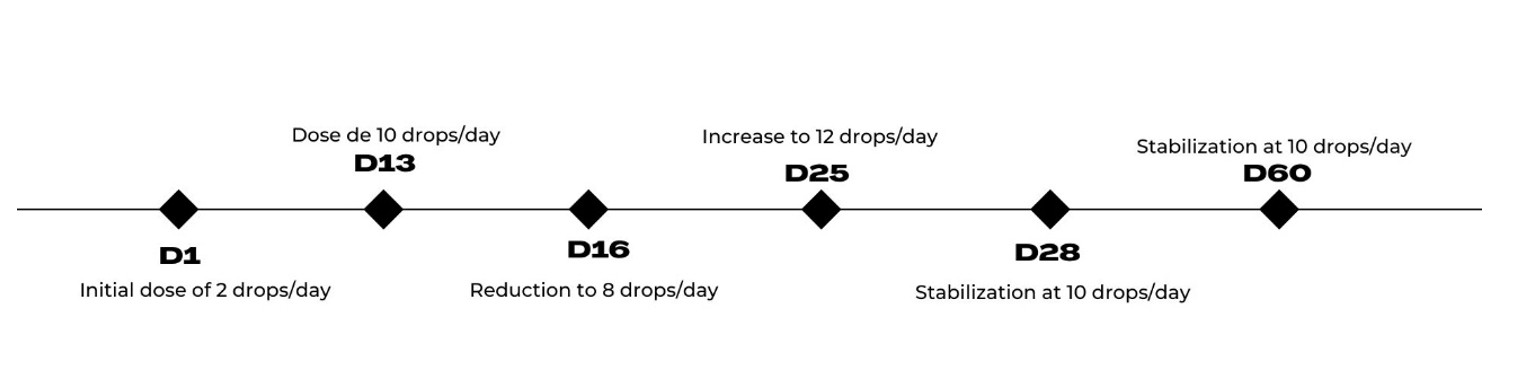
Dosage adjustments were made based on the patient’s response and side effects. By day 13, the dosage was increased to five drops twice daily. On day 16, the patient reported dizziness and drowsiness, prompting a reduction to four drops twice daily. The dosage was later increased to five drops on day 22 and six drops on day 25 due to recurrent pain episodes. However, by day 28, the patient experienced dizziness, gastrointestinal discomfort, and reduced bowel movement frequency. Dietary adjustments were recommended, and the dosage was reduced to five drops twice daily, which improved symptoms by day 31.
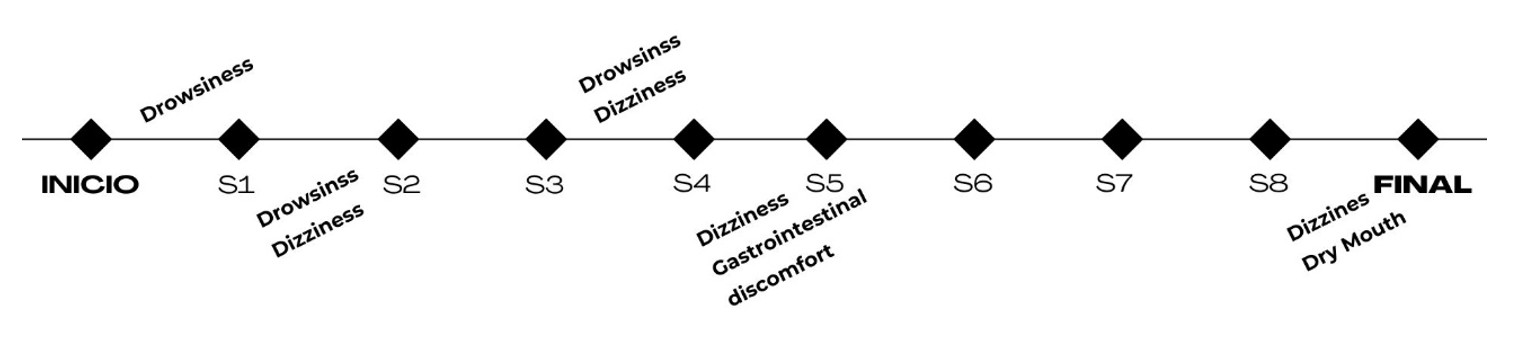
The patient maintained this dosage until the end of treatment, reporting significant pain relief, improved sleep quality, and overall well-being. The timeline of medication dosage adjustments is shown in Figure 1. Residual side effects, such as dry mouth and occasional dizziness, were documented but did not outweigh the therapeutic benefits, with the weekly reports of adverse effects presented in Figure 2.
During the initial weeks of the study, the patient used analgesic medications to aid in pain control. However, the use of these medications was progressively reduced, and by the final week of the study, their use was limited to specific instances of pain, as shown in Table 1.
The results of the Pittsburgh Sleep Quality Index (PSQI) questionnaire are presented in Table 2, demonstrating an improvement in the scores and overall sleep quality. Regarding the Visual Analog Scale (VAS), a reduction in pain scores was observed over the course of the study, as shown in Table 3.
Results of the Pittsburgh Sleep Quality Index (PSQI) questionnaire at the three evaluated time points: baseline, 30 days (30D), and the final follow-up (end).
Results of the Visual Analog Scale (VAS) at the three evaluated time points: baseline, 30 days (30D), and the final follow-up (end).
3. Discussion
The utilization of cannabis-derived products in pain management has garnered increasing attention within the scientific community, particularly in the context of chronic conditions where conventional therapies often demonstrate limited efficacy or significant adverse effects (Bellnier et al., 2018). Chronic pain associated with Temporomandibular Disorder (TMD) of muscular origin represents a multifactorial and complex condition, often necessitating adjunctive pharmacological interventions during treatment. Factors such as hormonal fluctuations, emotional variability, and stress levels can significantly influence pain perception, further complicating management strategies (Marquez, 2011).
Emerging scientific evidence suggests that phytocannabinoids, particularly in full-spectrum formulations, offer therapeutic benefits due to the synergistic interaction between their active components, such as tetrahydrocannabinol (THC) and cannabidiol (CBD) (Häuser et al., 2018). According to Murillo-Rodriguez et al. (2008), these compounds interact with cannabinoid receptors within the central nervous system, with THC demonstrating the ability to reduce sleep latency and increase total sleep duration, while CBD is associated with anxiolytic effects and reduced sleep fragmentation. Collectively, these mechanisms contribute to analgesia by modulating pain perception in patients with refractory conditions.
In the present study, a significant reduction in Visual Analog Scale (VAS) scores was observed, indicating a marked decrease in reported pain levels and reflecting a positive treatment response over a two-month period. Additionally, a notable decline in the consumption of analgesic medications was documented from the initiation to the conclusion of the study, suggesting that the use of full-spectrum cannabis oil effectively alleviated orofacial pain. These findings are consistent with existing literature, such as the results reported by Renslo et al. (2022), which demonstrated improvements in pain parameters and a reduction in opioid use among patients with chronic osteoarthritis pain treated with medicinal cannabis in various formulations.
A significant enhancement in sleep quality was also observed, as evidenced by improvements in Pittsburgh Sleep Quality Index (PSQI) scores (Buysse et al., 1989). At the outset of treatment, the patient exhibited sleep disturbances characterized by deficiencies in parameters such as sleep latency, duration, and efficiency. Over the course of the study, PSQI scores decreased, indicating an overall improvement in sleep quality. This enhancement can be attributed to the anxiolytic effects of CBD and the sedative properties of THC, which collectively mitigate pain-related discomfort and promote deeper, more restorative sleep (Chaves et al., 2020). By the conclusion of the treatment period, the patient’s sleep quality classification improved from “sleep disturbances” to “poor sleep,” a finding of particular relevance given the well-established relationship between sleep, pain perception, and overall well-being (Costa et al., 2023).
Despite these promising outcomes, certain limitations must be acknowledged. The study is based on a single case, which restricts the generalizability of the findings. Future investigations employing larger sample sizes and controlled experimental designs are necessary to confirm the efficacy and safety of full-spectrum cannabis oil across diverse populations and clinical conditions.
Furthermore, the side effects observed during treatment warrant careful consideration. The patient reported episodes of dizziness, drowsiness, gastrointestinal discomfort, increased flatulence, and reduced bowel movement frequency, particularly during the initial weeks of treatment. These adverse effects are consistent with those commonly associated with cannabinoid use, especially at higher doses (Iffland and Grotenhermen, 2017). For instance, drowsiness and dizziness are attributed to the sedative properties of THC. While such effects may be anticipated in certain cases, they underscore the necessity for individualized dosage adjustments to minimize adverse reactions and achieve an optimal therapeutic dose for each patient (Henderson-Redmond et al., 2021)
In the management of chronic pain, non-opioid analgesics are frequently employed to reduce inflammation and pain perception. However, these medications are associated with adverse effects such as gastric, renal, and hepatic damage, as well as nausea and dizziness, particularly with prolonged use. According to Ayub et al. (2024), no sustained long-term benefits were observed with non-opioid medications in chronic pain management. In contrast, medicinal cannabis, containing compounds such as THC and CBD, modulates the endocannabinoid system, thereby influencing the body's response to pain and providing analgesic, anti-inflammatory, and neuroprotective effects. While THC may induce side effects such as dizziness and nausea, CBD exhibits a milder profile and may even counteract these adverse effects. Compared to non-opioid analgesics, cannabis presents a viable alternative or complementary treatment option with a reduced risk of gastric and renal side effects.
Interestingly, drowsiness, often considered an adverse effect, may be beneficial in the context of chronic pain management, particularly in TMD, where sleep disturbances are known to perpetuate the condition. Adequate sleep is critical for effective pain management, as it facilitates tissue repair, reduces inflammatory processes, and restores neurological balance.
Gastrointestinal discomfort and increased flatulence can be attributed to the interaction of cannabinoids with the endocannabinoid system, which plays a regulatory role in gastrointestinal function (Camilleri and Zheng, 2023). While CBD has demonstrated potential protective effects on the gastrointestinal tract, adverse reactions may occur depending on individual sensitivity. Reduced bowel movement frequency may result from the influence of cannabinoids on intestinal motility, a phenomenon documented in prior studies (Iffland and Grotenhermen, 2017; Gotfried et al., 2020).
Given the significance of these side effects, a personalized therapeutic approach is indispensable. Continuous monitoring, dosage adjustments, and open communication between the patient and healthcare providers are essential to minimize risks and maximize therapeutic benefits. Strategies such as gradual dose titration and dietary interventions, including the use of probiotics and fiber, may help mitigate adverse effects such as gastrointestinal discomfort and altered bowel transit.
In conclusion, ongoing evaluation and treatment adaptation are necessary to ensure that the benefits of full-spectrum cannabis oil outweigh its risks, thereby promoting more effective and safer management of chronic pain conditions.
4. Patient Perspective
Both the patient and the healthcare professionals involved unanimously reported that the improvement in symptoms described in this case led to significant advances in the patient's overall well-being and quality of life. The reduction in pain, coupled with improved sleep quality, directly contributed to greater functionality and comfort in daily activities. These results underscore the importance of a multidisciplinary approach in managing temporomandibular dysfunctions and associated conditions, prioritizing not only symptom control but also the restoration of the patient's quality of life.
5. Conclusion
In conclusion, the use of Full Spectrum Cannabis Oil in this case was associated with a clinically meaningful reduction in chronic orofacial pain and improvement in sleep quality, with no adverse effects or laboratory abnormalities observed during the treatment period. These outcomes suggest that individualized cannabinoid-based therapy may be a safe and effective approach for selected patients with temporomandibular disorders and comorbid sleep disturbances.
Acknowledgements
The authors would like to thank the patient who allowed the use of their data for the writing of this article, the Associação Terapêutica Medicinal Flor da Vida, for providing the product for this study, and the Associação Brasileira de Estudos da Cannabis Sativa (SBEC) for their clinical and scientific support.
This study was financed in part by the Coordenação de Aperfeiçoamento de Pessoal de Nível Superior - Brasil (CAPES) - Finance Code 001.
Data Availability Statement
The entire data set that supports the results of this study was published in the article itself.
References
-
AYUB, S., BACHU, A.K., JAIN, L., PARNIA, S., BHIVANDKAR, S., AHMED, R., KAUR, J., KARLAPATI, S., PRASAD, S., KOCHHAR, H., AYISIRE, O.E., MITRA, S., GHOSH, B., SRINIVAS, S., ASHRAF, S., PAPUDESI, B.N., MALO, P.K., SHEIKH, S., HSU, M., BERARDIS, D. and AHMED, S., 2024. Non-opioid psychiatric medications for chronic pain: systematic review and meta-analysis. Frontiers in Pain Research, vol. 5, no. Oct, pp. 1398442. http://doi.org/10.3389/fpain.2024.1398442 PMid:39449766.
» http://doi.org/10.3389/fpain.2024.1398442 -
BABSON, K.A., SOTTILE, J. and MORABITO, D., 2017. Cannabis, cannabinoids, and sleep: a review of the literature. Current Psychiatry Reports, vol. 19, no. 4, pp. 23. http://doi.org/10.1007/s11920-017-0775-9 PMid:28349316.
» http://doi.org/10.1007/s11920-017-0775-9 -
BELLNIER, T., BROWN, G.W. and ORTEGA, T.R., 2018. Preliminary evaluation of the efficacy, safety, and costs associated with the treatment of chronic pain with medical cannabis. The Mental Health Clinician, vol. 8, no. 3, pp. 110-115. http://doi.org/10.9740/mhc.2018.05.110 PMid:29955555.
» http://doi.org/10.9740/mhc.2018.05.110 -
BERTOLAZI, A.N., FAGONDES, S.C., HOFF, L.S., DARTORA, E.G., MIOZZO, I.C., BARBA, M.E. and BARRETO, S.S., 2011. Validation of the Brazilian portuguese version of the Pittsburgh sleep quality index. Sleep Medicine, vol. 12, no. 1, pp. 70-75. http://doi.org/10.1016/j.sleep.2010.04.020 PMid:21145786.
» http://doi.org/10.1016/j.sleep.2010.04.020 -
BUYSSE, D.J., REYNOLDS, C.F. 3rd., MONK, T.H., BERMAN, S.R. and KUPFER, D.J., 1989. The Pittsburgh Sleep Quality Index: a new instrument for psychiatric practice and research. Psychiatry Research, vol. 28, no. 2, pp. 193-213. http://doi.org/10.1016/0165-1781(89)90047-4 PMid:2748771.
» http://doi.org/10.1016/0165-1781(89)90047-4 -
CAMILLERI, M. and ZHENG, T., 2023. Cannabinoids and the gastrointestinal tract. Clinical Gastroenterology and Hepatology, vol. 21, no. 13, pp. 3217-3229. http://doi.org/10.1016/j.cgh.2023.07.031 PMid:37678488.
» http://doi.org/10.1016/j.cgh.2023.07.031 -
CHAVES, C., BITTENCOURT, P.C.T. and PELEGRINI, A., 2020. Ingestion of a THC-Rich cannabis oil in people with fibromyalgia: a randomized, double-blind, placebo-controlled clinical trial. Pain Medicine, vol. 21, no. 10, pp. 2212-2218. http://doi.org/10.1093/pm/pnaa303 PMid:33118602.
» http://doi.org/10.1093/pm/pnaa303 -
COSTA, M.S.S., MAGESTE, C.C., SIMÃO, D.S. and GOMEZ, R.S., 2023. Sleep disorders in patients with chronic pain: cross-sectional study. BrJP, vol. 6, no. 4, pp. 390-397. http://doi.org/10.5935/2595-0118.20230077-en
» http://doi.org/10.5935/2595-0118.20230077-en -
DEGENHARDT, L., LINTZERIS, N., CAMPBELL, G., BRUNO, R., COHEN, M., FARRELL, M. and HALL, W.D., 2015. Experience of adjunctive cannabis use for chronic non-cancer pain: findings from the Pain and Opioids IN Treatment (POINT) study. Drug and Alcohol Dependence, vol. 147, pp. 144-150. http://doi.org/10.1016/j.drugalcdep.2014.11.031 PMid:25533893.
» http://doi.org/10.1016/j.drugalcdep.2014.11.031 -
FINAN, P.H., GOODIN, B.R. and SMITH, M.T., 2013. The association of sleep and pain: an update and a path forward. The Journal of Pain, vol. 14, no. 12, pp. 1539-1552. http://doi.org/10.1016/j.jpain.2013.08.007 PMid:24290442.
» http://doi.org/10.1016/j.jpain.2013.08.007 -
GOTFRIED, J., NAFTALI, T. and SCHEY, R., 2020. Role of cannabis and its derivatives in gastrointestinal and hepatic disease. Gastroenterology, vol. 159, no. 1, pp. 62-80. http://doi.org/10.1053/j.gastro.2020.03.087 PMid:32333910.
» http://doi.org/10.1053/j.gastro.2020.03.087 -
HÄUSER, W., PETZKE, F. and FITZCHARLES, M.A., 2018. Efficacy, tolerability and safety of cannabis-based medicines for chronic pain management - An overview of systematic reviews. European Journal of Pain, vol. 22, no. 3, pp. 455-470. http://doi.org/10.1002/ejp.1118 PMid:29034533.
» http://doi.org/10.1002/ejp.1118 -
HENDERSON-REDMOND, A.N., CRAWFORD, L.C., SEPULVEDA, D.E., HALE, D.E., LESPERANCE, J.J. and MORGAN, D.J., 2021. Sex differences in tolerance to Delta-9-Tetrahydrocannabinol in mice with cisplatin-evoked chronic neuropathic pain. Frontiers in Molecular Biosciences, vol. 8, pp. 684115. http://doi.org/10.3389/fmolb.2021.684115 PMid:34250019.
» http://doi.org/10.3389/fmolb.2021.684115 -
IBEAS BIH, C., CHEN, T., NUNN, A.V., BAZELOT, M., DALLAS, M. and WHALLEY, B.J., 2015. Molecular targets of Cannabidiol in neurological disorders. Neurotherapeutics, vol. 12, no. 4, pp. 699-730. http://doi.org/10.1007/s13311-015-0377-3 PMid:26264914.
» http://doi.org/10.1007/s13311-015-0377-3 -
IFFLAND, K. and GROTENHERMEN, F., 2017. An update on safety and side effects of cannabidiol: a review of clinical data and relevant animal studies. Cannabis and Cannabinoid Research, vol. 2, no. 1, pp. 139-154. http://doi.org/10.1089/can.2016.0034 PMid:28861514.
» http://doi.org/10.1089/can.2016.0034 -
JENSEN, K., ANDERSEN, H.Ø., OLESEN, J. and LINDBLOM, U., 1986. Pressure-pain threshold in human temporal region: evaluation of a new pressure algometer. Pain, vol. 25, no. 3, pp. 313-323. http://doi.org/10.1016/0304-3959(86)90235-6 PMid:3748589.
» http://doi.org/10.1016/0304-3959(86)90235-6 -
KLEYKAMP, B.A., FERGUSON, M.C., MCNICOL, E., BIXHO, I., ARNOLD, L.M., EDWARDS, R.R., FILLINGIM, R., GROL-PROKOPCZYK, H., OHRBACH, R., TURK, D.C. and DWORKIN, R.H., 2022. The prevalence of comorbid chronic pain conditions among patients with temporomandibular disorders: a systematic review. The Journal of the American Dental Association, vol. 153, no. 3, pp. 241-250.e10. http://doi.org/10.1016/j.adaj.2021.08.008 PMid:34952681.
» http://doi.org/10.1016/j.adaj.2021.08.008 -
MAINI, K. and DUA, A., 2023 [viewed 20 November 2024]. Temporomandibular Syndrome [online]. Treasure Island: StatPearls Publishing. Available from: https://www.ncbi.nlm.nih.gov/books/NBK538479/
» https://www.ncbi.nlm.nih.gov/books/NBK538479/ -
MARQUEZ, J.O., 2011. A dor e os seus aspectos multidimensionais. Ciência e Cultura, vol. 63, no. 2, pp. 28-32. http://doi.org/10.21800/S0009-67252011000200010
» http://doi.org/10.21800/S0009-67252011000200010 -
MURILLO-RODRÍGUEZ, E., MILLÁN-ALDACO, D., PALOMERO-RIVERO, M., MECHOULAM, R. and DRUCKER-COLÍN, R., 2008. The nonpsychoactive cannabis constituent cannabidiol is a wake-inducing agent. Behavioral Neuroscience, vol. 122, no. 6, pp. 1378-1382. http://doi.org/10.1037/a0013278 PMid:19045957.
» http://doi.org/10.1037/a0013278 -
PERTWEE, R.G., 2006. The pharmacology of cannabinoid receptors and their ligands: an overview. International Journal of Obesity, vol. 30, no. S1, suppl. 1, pp. S13-S18. http://doi.org/10.1038/sj.ijo.0803272 PMid:16570099.
» http://doi.org/10.1038/sj.ijo.0803272 -
POLI, P., CRESTANI, F., SALVADORI, C., VALENTI, I. and SANNINO, C., 2018. Medical cannabis in patients with chronic pain: effect on pain relief, pain disability, and psychological aspects. A prospective non randomized single arm clinical trial. La Clinica Terapeutica, vol. 169, no. 3, pp. e102-e107. http://doi.org/10.7417/T.2018.2062 PMid:29938740.
» http://doi.org/10.7417/T.2018.2062 -
RENSLO, B., GREIS, A., LIU, C.S., RADAKRISHNAN, A. and ILYAS, A.M., 2022. Medical cannabis use reduces opioid prescriptions in patients with osteoarthritis. Cureus, vol. 14, no. 1, pp. e21564. http://doi.org/10.7759/cureus.21564 PMid:35228923.
» http://doi.org/10.7759/cureus.21564 -
RUSSO, E.B., 2011. Taming THC: potential cannabis synergy and phytocannabinoid-terpenoid entourage effects. British Journal of Pharmacology, vol. 163, no. 7, pp. 1344-1364. http://doi.org/10.1111/j.1476-5381.2011.01238.x PMid:21749363.
» http://doi.org/10.1111/j.1476-5381.2011.01238.x -
SAFAKISH, R., KO, G., SALIMPOUR, V., HENDIN, B., SOHANPAL, I., LOHESWARAN, G. and YOON, S.Y.R., 2020. Medical cannabis for the management of pain and quality of life in chronic pain patients: a prospective observational study. Pain Medicine, vol. 21, no. 11, pp. 3073-3086. http://doi.org/10.1093/pm/pnaa163 PMid:32556203.
» http://doi.org/10.1093/pm/pnaa163 - TAMBELI, C.H., MARTINS, G.A., BARBOSA, S.L. and MACHADO, T.T., 2023. Integrative approach to the therapeutic use of cannabis for orofacial pain. BrJP, v. 6, Suppl 1, pp. S49-S53. https://doi.org/10.5935/2595-0118.20230013-en.
-
TONONI, G. and CIRELLI, C., 2006. Sleep function and synaptic homeostasis. Sleep Medicine Reviews, vol. 10, no. 1, pp. 49-62. http://doi.org/10.1016/j.smrv.2005.05.002 PMid:16376591.
» http://doi.org/10.1016/j.smrv.2005.05.002 -
ZOU, S. and KUMAR, U., 2018. Cannabinoid Receptors and the Endocannabinoid System: Signaling and Function in the Central Nervous System. Int J Mol Sci., vol. 19, no. 3, pp. 833. http://doi.org/10.3390/ijms19030833 PMid: 29533978.
» http://doi.org/10.3390/ijms19030833
Edited by
-
Editor:
Marcelo A.M. Esquisatto