 Biocontrol potential of Lacticaseibacillus paracasei 22 against major postharvest pathogens of apple fruit
Abstract
This study investigated the antagonistic potential of the lactic acid bacterium Lacticaseibacillus paracasei 22 against major pathogens causing postharvest diseases of apple fruit. The main biologically active components of the strain culture broth were identified as 2,3-butanediol. Acetoin, and organic acids, particularly lactic and acetic acids, all of which exhibited toxic activity against the tested phytopathogens. The biological efficacy of an experimental biopreparation based on L. paracasei 22 was evaluated both in vivo and in vitro conditions. Pre-treatment of healthy apple fruit by immersion in the culture broth of L. paracasei 22 supplemented with Tween 20 prior to artificial inoculation with fungal pathogens resulted in a statistically significant reduction in disease development compared with the untreated control. Evaluation of different application methods and fruit-storage conditions under commercial roduction conditions showed that spraying apple trees with the biopreparation at commercial maturity, before he fruit was placed in long-term storage, substantially reduced disease incidence and provided prolonged protection during storage. These findings demonstrate the potential of the biopreparation applied at a concentration 109 CFU mL−1 as an effective biological control agent against various types of apple fruit rot. Its application may contribute to reducing crop losses both before harvest and during long-term storage.
Keywords:
apple fruit; storage; rot pathogens; antagonistic activity; Lacticaseibacillus paracasei 22; biopreparation
Resumo
Este estudo investigou o potencial antagonista da bactéria ácido-láctica Lacticaseibacillus paracasei 22 contra os principais patógenos responsáveis por doenças pós-colheita em maçãs. Os principais componentes biologicamente ativos do caldo de cultura da estirpe foram identificados como 2,3-butanodiol, acetoína e ácidos orgânicos, particularmente os ácidos lático e acético, todos os quais apresentaram atividade tóxica contra os fitopatógenos testados. A eficácia biológica de uma biopreparação experimental à base de L. paracasei 22 foi avaliada tanto in vivo quanto in vitro. O pré-tratamento de maçãs sadias, por imersão no caldo de cultivo de L. paracasei 22 suplementado com Tween 20, antes da inoculação artificial com patógenos fúngicos, resultou em uma redução estatisticamente significativa do desenvolvimento das doenças em comparação com o controle não tratado. A avaliação de diferentes métodos de aplicação e condições de armazenamento dos frutos em escala comercial mostrou que a pulverização das macieiras com a biopreparação no ponto de maturação comercial, antes de os frutos serem destinados ao armazenamento prolongado, reduziu consideravelmente a incidência de doenças e proporcionou proteção duradoura durante o período de armazenamento. Esses resultados demonstram o potencial da biopreparação, aplicada na concentração de 109 UFC mL−1, como agente eficaz de controle biológico contra diferentes tipos de podridão em maçãs. Sua aplicação pode contribuir para a redução das perdas de produção tanto antes da colheita quanto durante o armazenamento prolongado.
Palavras-chave:
maçã; armazenamento; patógenos causadores de podridão; atividade antagonista; Lacticaseibacillus paracasei 22; biopreparação
1. Introduction
Apple fruit rot is one of the most significant causes of reduced yield, quality, and storage life in many countries with well-developed horticultural industries, including the Republic of Kazakhstan. Postharvest diseases not only impair the marketability and consumer appeal of fruit but also cause substantial economic losses at every stage of the supply chain, from storage to retail. The most common causal agents of postharvest apple rots include species of the genera Penicillium Alternaria, Fusarium, and Monilinia, which cause blue mold, Alternaria rot, Fusarium rot, and Monilinia fruit rot, respectively.
Monilinia fruit rot, caused by the fungus Monilinia fructigena, is of particularly high economic importance. The disease spreads rapidly both in orchards and during storage, significantly reducing fruit storability and potentially causing yield losses of up to 70% in the absence of effective control measures. As the infection progresses, profound structural changes occur in the fruit tissues. As decay progresses, infected fruits lose quality and marketability and may ultimately become unsuitable for consumption or processing (Sharma et al., 2009). Consequently, postharvest rots substantially shorten the storage life of apples and reduce the economic efficiency of fruit production and marketing.
For many decades, synthetic fungicides have remained the primary means of controlling postharvest diseases. Despite their high effectiveness, the prolonged and intensive use of chemical plant protection products is associated with several serious environmental and technological limitations. These include the development of pathogen resistance to active ingredients, disease resurgence, and the accumulation of pesticide residues in fruit. Together, these concerns are commonly referred to as the “3R problem”: resistance, resurgence, and residues (Li et al., 2013). Furthermore, chemical fungicides can adversely affect the native microbiota of fruit and the surrounding environment, disrupt the ecological balance of agroecosystems, and promote the selection of resistant phytopathogen populations.
At the same time, increasingly strict international food-safety requirements and growing consumer demand for environmentally friendly, pesticide-residue-free fruit are driving the development of alternative plant-protection strategies. In recent years, particular attention has been given to biological methods for controlling postharvest diseases. These approaches use antagonistic microorganisms capable of suppressing phytopathogenic fungi through competition for nutrients and ecological niches, the production of antimicrobial metabolites, the synthesis of hydrolytic enzymes, and the induction of defense responses in the host plant (Sharma et al., 2009; Wisniewski and Wilson, 1992; Droby et al., 2025).
An analysis of national and international scientific literature indicates that biological control methods for postharvest fruit diseases represent a promising alternative to conventional chemical treatments. Some of the earliest successful applications of biological agents against fruit rot caused by Monilinia fructicola were reported in the early 1990s and involved the soil bacterium Bacillus subtilis strain B3. This microorganism was found to exhibit strong antagonistic activity against a broad range of phytopathogenic fungi responsible for fruit spoilage (Pusey and Wilson, 1984; Pusey et al.,1988; Yánez-Mendizábal et al., 2012; Gao et al., 2018; Kim et al., 2016; Ongena and Jacques, 2008).
The effectiveness of Pseudomonas syringae as a biological control agent against phytopathogenic fungi during fruit storage has also been confirmed in several studies (Altindag et al., 2006). Other antagonistic microorganisms used for the biological control of postharvest fruit pathogens include the yeast-like fungus Aureobasidium pullulans (Castoria et al., 2001; Zhang et al., 2010; Mari et al., 2012), the bacterium Pantoea agglomerans (Cañamás et al., 2008), and Bacillus amyloliquefaciens (Arrebola et al., 2010; Cawoy et al., 2015; Gotor-Vila et al., 2017).
Trichoderma spp. have also been investigated as biological control agents against fungal plant pathogens. Tronsmo and Dennis (1977) demonstrated the potential of Trichoderma spp. for controlling strawberry fruit rots, while Grondona et al. (1997) characterized T. harzianum isolates with biocontrol activity against soilborne fungal plant pathogens. Under commercial orchard conditions, high effectiveness was also demonstrated by biological products based on the antagonistic fungi Epicoccum nigrum (Madrigal et al., 1994), P. purpurogenum, and P. frequentans (Guijarro et al., 2007). These agents effectively suppressed fruit rot in peaches and plums caused by M. laxa and also showed potential activity against M. fructigena.
Field applications of Epicoccum nigrum have been investigated for the biological control of brown rot in stone fruits (Larena et al., 2005; De Cal et al., 2009). More broadly, microbial antagonists have been investigated as safer alternatives to synthetic fungicides for the control of postharvest diseases of fresh fruits and vegetables (Droby, 2006).
In recent years, the antifungal properties of lactic acid bacteria have attracted considerable research interest. Kharazian et al. (2017), López-Seijas et al. (2020), Manjarres Melo et al. (2021), and Gwiazdowski et al., (2024) demonstrated the antagonistic activity of selected strains of L. fermentum, L. plantarum, L. paralimentaris, L. pentosus, L. buchneri and Sporolactobacillus against the phytopathogenic fungi Penicillium spp. Fusarium lycopersici, Fusarium verticillioides, Verticillium dahliae, and Pythium aphanidermatum.
The use of yeast microorganisms with strong antagonistic activity has also been proposed as a means of reducing apple losses during postharvest storage (Liu et al., 2013; Spadaro and Droby, 2016). According to Grebenisan et al. (2006), postharvest treatment of apricot and peach fruits with the yeast Metschnikowia pulcherrima reduced the incidence of fruit rot during storage at 4°C by up to 100%.
Among commercial yeast-based biocontrol products developed for the control of postharvest fruit diseases, Aspire® was formulated with Candida oleophila as the active biocontrol agent. In addition, several biological products based on bacteria of the genus Bacillus have been registered in the United States and European countries. These include Serenade (B. subtilis QST713), Kodiak (B. subtilis GB03), RhizoPlus (B. subtilis FZB24), and Yield Shield (B. pumilus GB34) (Fravel, 2005; Berg, 2009). These products have demonstrated strong antagonistic activity in vitro against several phytopathogenic fungi, including A. alternata and M. fructigena.
Overall, the findings of numerous studies demonstrate substantial progress in the development of biological agents for protecting fruit crops against the pathogens responsible for postharvest rots. However, most of the biological agents investigated to date were developed outside the Republic of Kazakhstan and do not account for the specific characteristics of local agroecological conditions.
A distinctive feature of the present study, compared with previous research, is the development of a biological preparation based on a new indigenous strain of the lactic acid bacterium L. paracasei 22. The preparation is intended to protect apples against decay both during the growing season and throughout storage. The principal biologically active component of the culture fluid responsible for suppressing phytopathogen growth was identified as 2,3-butanediol. In addition, the effectiveness of different application methods and storage conditions for the biological preparation was evaluated against the major causal agents of apple decay.
The scientific novelty of this study lies in the development, for the first time in the Republic of Kazakhstan, of a biological preparation based on the lactic acid bacterium L. paracasei 22 for protecting apples against the principal pathogens responsible for postharvest rots. The study is also novel in proposing an application method in which the preparation is applied directly in the orchard before the fruit is placed into long-term storage. This approach offers an alternative to the conventional method of immersing harvested fruit in the culture fluid of an antagonistic microorganism.
2. Materials and Methods
2.1. Antagonist
The strain of lactic acid bacterium L. paracasei 22 was selected from the collection of the Research and Production Centre for Microbiology and Virology (LLP), Republic of Kazakhstan, Almaty. The strain had previously been isolated from healthy apple fruits collected in an infected orchard.
2.2. Causal agents of apple fruit decay
The pathogenic microflora was represented by the fungi M. fructigena, A. alternata, P. chrysogenum, and F. sporotrichioides, which were isolated from decayed apples and identified using molecular genetic methods of analysis.
2.3. Fruits
Apples fruits (Malus domestica L.), cultivar “Starkrimson”, were collected from “Unifruit” LLP (43º45'69.6 latitude, 77º45'33.7 longitude) and from the “Zhemis” farm enterprise (43º45'88.5 latitude, 77º69'64.2 longitude), Enbekshikazakh district, Almaty region, Kazakhstan.
2.4. Molecular identification
Genomic DNA was extracted using a silica column-based protocol with preliminary lysozyme treatment. Bacterial cells were resuspended in 80 µL lysozyme digestion buffer, vortexed, and incubated at 37°C for 30 min with intermittent mixing. Subsequently, 20 µL of proteinase K and 200 µL of lysis buffer were added, followed by incubation at 55°C for 40 min with periodic mixing. After lysis, 200 µL of 96% ethanol was added, and the mixture was homogenized by vortexing. The lysate (~640 µL) was transferred to a purification column and centrifuged at 10.000 rpm for 1 min and at maximum speed for 3 min, respectively. DNA was eluted with 25 µL elution buffer after a 2 min incubation at room temperature, followed by centrifugation at maximum speed. The purified DNA was collected and stored at –20°C until further analysis. DNA concentration was determined using a Qubit 4 Fluorometer with the dsDNA High Sensitivity assay, according to the manufacturer’s instructions.
For molecular identification, the 16S rRNA gene fragment was amplified using universal primers:
8F: 5’-AGAGTTTGATCCTGGCTCAG-3’
806R: 5’-GGACTACCAGGGTATCTAAT-3’
2.5. Determination of the component composition of the strain
The component composition of the culture liquid of L. paracasei 22, possessing antagonistic activity against the casual agents of apple fruit rot, was studied using microextraction (solid-phase microextraction, SPME) followed by analysis on a gas chromatograph coupled with a mass spectrometer (GC-MS). The studies were conducted in the Laboratory of Chemical and Molecular Genetic Methods of Analysis at the Scientific Production Center of Microbiology and Virology LLP.
2.6. In vitro antifungal activity
The toxic activity of the isolated active substances of the selected strain L. paracasei 22 against phytopathogenic microorganisms in vitro was determined by the agar diffusion method on potato agar medium. A volume of 0.1 mL pathogen culture liquid was spread evenly over the surface of the medium using a sterile spreader. A well was formed in the centre of the Petri dish into which different concentrations (1%, 5%, 10%, 25%, 50%) of the isolated active substances were introduced, ensuring that the antagonist culture did not come into contact with the edge of the well. Petri dished inoculated only with the pathogen were used as controls. Incubation was performed at 30°C for 7 days. The antagonistic effect was evaluated by measuring inhibition zone diameters (mm). Experiments were conducted in duplicate, and the data were presented as the mean of three measurements.
2.7. Efficiency of L. paracasei 22 against the main causal agents of apple fruit rot under laboratory conditions
2.7.1. Assessment of the inhibitory activity of L. paracasei 22.
The antagonistic properties of microbial cultures were determined by the presence of a growth inhibition zone during co-cultivation of the antagonist with test cultures of Monilinia fructigena, A. alternata, P. chrysogenum, and F. sporotrichioides (Balouiri et al., 2016). The strain Lacticaseibacillus paracasei 22 was cultivated in a liquid modified MRS-T medium in a thermostat for 1-2 days at 37°C. Pathogenic fungal microflora were incubated by submerged cultivation in a shaker-incubator (Biosan) at a platform rotation speed of 180 rpm and a temperature of 24-28°C for 2-7 days depending on the microorganism species. The antagonistic activity was evaluated on a solid nutrient medium (PDA) previously inoculated with aqueous suspensions of pathogens (105–106 CFU/mL). Wells (D=8 mm) were made in the agar using a sterile cork borer. Each well was filled with 0.1 mL of the culture broth of L. paracasei 22.
Petri dishes were incubated in a thermostat for 24 h at 28°C. Subsequently, microbial growth was monitored daily for 12 days and inhibition zones around the walls were measured.
Sterile distilled water was used as a negative control. After two days of co-cultivation the diameter of the growth inhibition zones (without subtracting the well diameter) was measured and expressed in millimeters.
2.7.2. Efficiency of the biopreparation under artificial inoculation
For laboratory experiments, “Starkrimson” apples without rot or mechanical damage and of uniform size were selected from the “Zhemis” farm orchard. Fruits were surface-sterilized with 2% sodium hypochlorite (NaOCl) rinsed with sterile water and left to dry for 1 h at room temperature. Three treatment variants were tested:
-
L. paracasei 22
-
L. paracasei 22 + Tween 20
-
Controls (apples soaked in sterile distilled water prior to fungal pathogen exposure)
Fruits were inoculated using filter paper discs impregnated with spore suspensions of fungal pathogens (M. fructigena. A. alternata. P. chrysogenum. F. sporotrichioides) which were placed on the surface of apples previously soaked in the culture liquid of L. paracasei 22. Treated apples were placed in plastic trays at room temperature. The number of fruits affected by rot was recorded at 5-days intervals and disease incidence was calculated. Fruit rot severity was assessed by measuring lesion size (mm) over a 12-day period. Ten fruits were used per replicate. Results were expressed as the arithmetic mean of the three replicates for each treatment. The experiment was performed in triplicate, and the results were expressed as the mean of three independent replicates.
2.8. Evaluation of different methods of biopreparation application and fruit storage under commercial conditions
Experiments assessing the efficacy of the biopreparation based on strain L. paracasei 22 against various types of fruit rot were conducted using two methods of apple treatment. The first method involved spraying trees in the orchard with the biopreparation during commercial fruit maturity before storage (Zhemis farm, Enbekshikazakh district, Almaty region, cultivar “Starkrimson”). The second method involved soaking apple fruits in the culture liquid of the antagonist (LLP “Unifruit”, Enbekshikazakh District, Almaty Region, cultivar ‘Starkrimson’). Two storage methods were evaluated:
-
Storage in containers in fruit storage facilities equipped with a ventilation system at 0-2°C and relative humidity 85±5% until use.
-
Storage in controlled atmosphere chambers at 0 +2°C with CO2 content of 3–5%, O2 content of 3–4% and relative humidity of 90–95% (Figure 1).

Apples fruits were harvested at commercial maturity. The control consisted of untreated apples stored in the same facility. Two treatment variants were tested: fruits soaked for 30 min in bacterial suspension of L. paracasei 22 (109 CFU/mL) and fruits soaked in the mixture L. paracasei 22 + Tween 20 at the same concentration followed by storage. The number of fruits affected by rot was recorded every 30 days during cold storage. Under controlled atmosphere conditions assessment was performed in March (spring period).
2.9. Statistical analysis
Experiments were conducted according to a randomized block design with three replicates. Data were analyzed using the general linear model (GLM) in Excel Stat software. Mean values were compared using the least significant difference (LSD) test at 5% probability level. Homogeneous groups were formed using the Newman-Keuls test. Data were checked for normality and homogeneity of variance prior to analysis.
3. Results
3.1 Morphological and cultural characteristics
During the screening of collection strains of microorganisms and isolated strains from the epiphytic microflora of orchard cenoses a strain of lactic acid bacteria was selected and identified as Lacticaseibacillus paracasei 22. This strain exhibited complex inhibitory activity against the main causal agents of apple fruit rot.
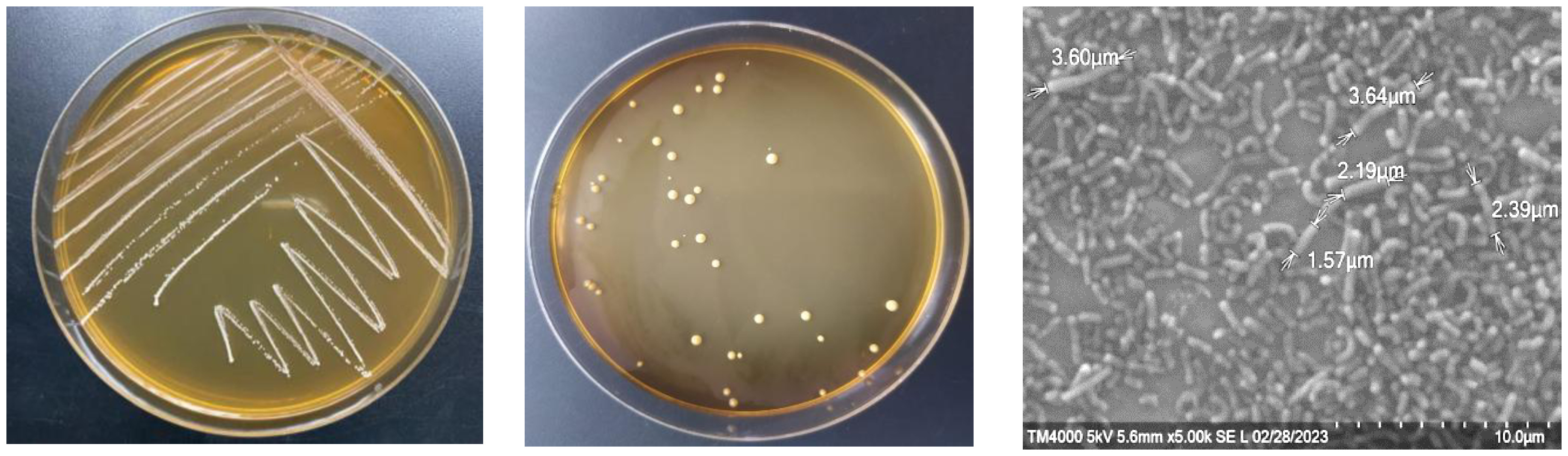
L. paracasei 22 is represented by rod-shaped cells measuring 0.5-0.7 µm × 1.08–3.65 µm with rounded ends occurring mostly singly but also in pairs or short chains. The cells are Gram-positive, asporogenous, non-motile and facultatively anaerobic.
On solid MRS medium colonies are smooth, opaque, flat round with even edges, light cream in color; on the reverse side of the plate the colonies are white and no pigments are produced (Figure 2). Reproduction occurs by binary fission. The strain is a facultative anaerobic and microaerophilic.

Cultural and morphological characteristics of the strain Lacticaseibacillus paracasei 22. Colonies of Lacticaseibacillus paracasei 22 on modified MRS-T medium. Micrograph obtained using benchtop scanning electron microscope (Hitachi TM4000 Plus).
In our previous studies it was established that the optimal conditions for the cultivation of the strain Lacticaseibacillus paracasei 22 include incubation in a thermostat at temperatures of 30-35°C for 2 days on a modified MRS-T medium. Maximum inhibitory activity was observed at a cell concentration of 109 CFU/mL in the culture liquid (Sadanov et al., 2023, 2024).
Phytopathogenic fungi selected during earlier studies were used as test cultures. They were identified by sequencing as Monilinia fructigena, Alternaria alternata, Penicillium chrysogenum, and Fusarium sporotrichioides. The sequences of each showed ≥ 99% identity to those of validated reference strains. Lysozyme was used during the DNA extraction procedure.
3.2. Molecular identification of isolates
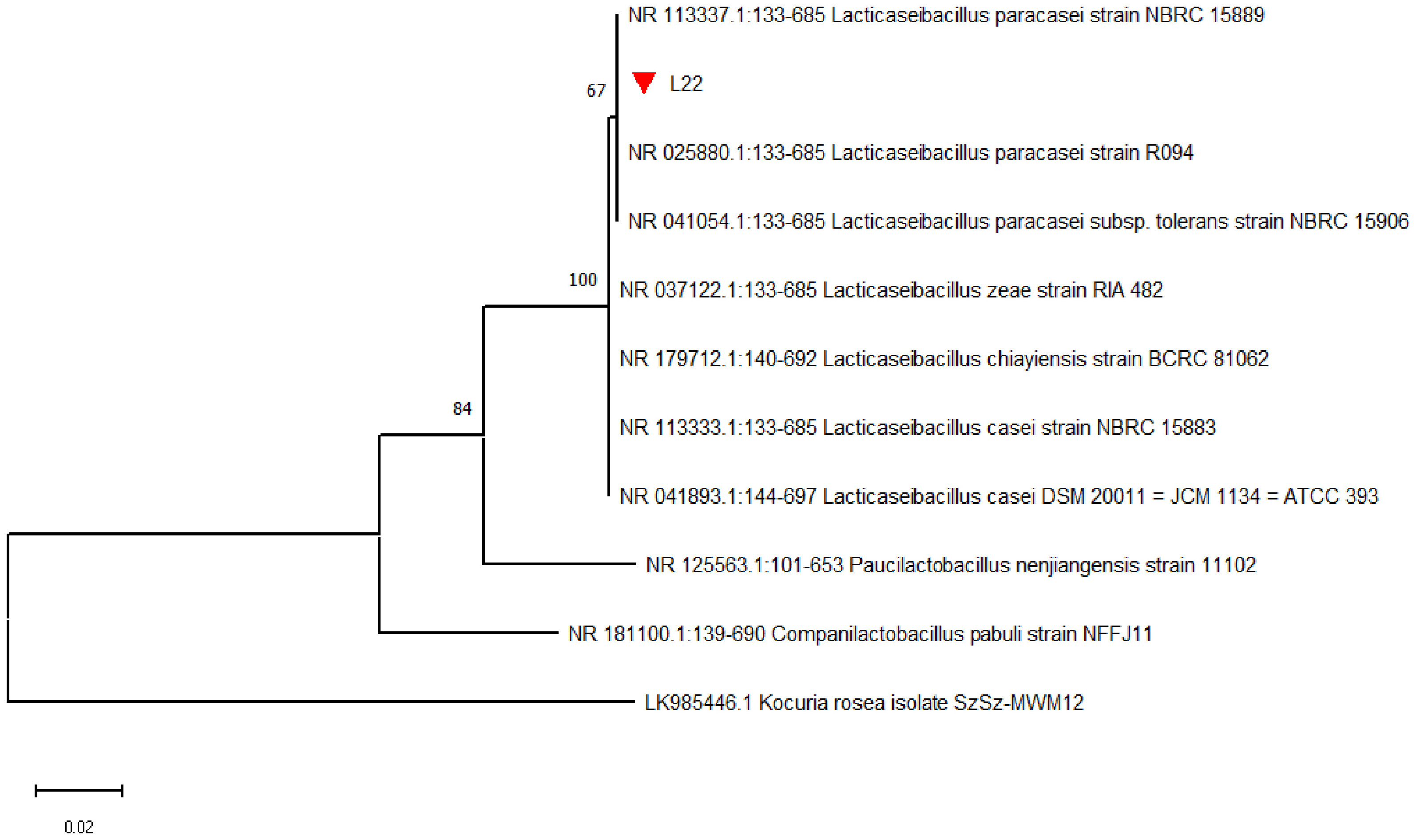
GenBank database (Table 1; Figure 3) demonstrated that the studied strain shows the highest level of similarity with representatives of the species Lacticaseibacillus paracasei. The obtained sequence exhibited 99.82% identity with several reference strains including L. paracasei subsp. tolerans NBRC 15906, strain R094, and strain NBRC 15889.
Phylogenetic tree constructed based on the nucleotide sequence analysis of the strain L22 and the 16S rRNA gene sequences of related strains.
Slightly lower similarity values were observed with closely related species within the Lacticaseibacillus genus such as L. zeae and L. chiayiensis (99.46%), and L. casei (99.28%). Despite the high degree of genetic relatedness within this group the consistently higher percentage identity with L. paracasei strain indicates a closer phylogenetic affiliation of the studied isolate with this species.
3.3. Determination of the component composition of the strain
The component composition of the culture broth of L. paracasei 22 was investigated using solid-phase microextraction (SPME) followed by analysis by gas chromatography-mass spectrometry (GC-MS). Analysis of the supernatant obtained after 48 hours using SPME-GC-MS revealed a complex metabolic profile comprising 22 detectable compounds. Organic acids constituted the dominant fraction (72.7% of the total peak area) which is constituent with the typical fermentation pathways of lactic acid bacteria.
The major identified metabolites were lactic acid (15.7 ±1.4), acetic acid (46.0 ± 3.3), octanoic acid (3.0±1.8), butanediol (2.7±1.1), and acetoin (1.3±0.5). Minor components included low concentrations of alcohols and esters which may contribute to the synergistic enhancement of antimicrobial activity. The relatively high proportion of volatile compounds suggests that antifungal activity may be mediated not only by acidification but also by other inhibitory mechanisms (Table 2).
Component composition of the culture broth of the strain determined by chromatographic analysis.
All tested metabolites exhibited concentration-dependent antifungal activity.
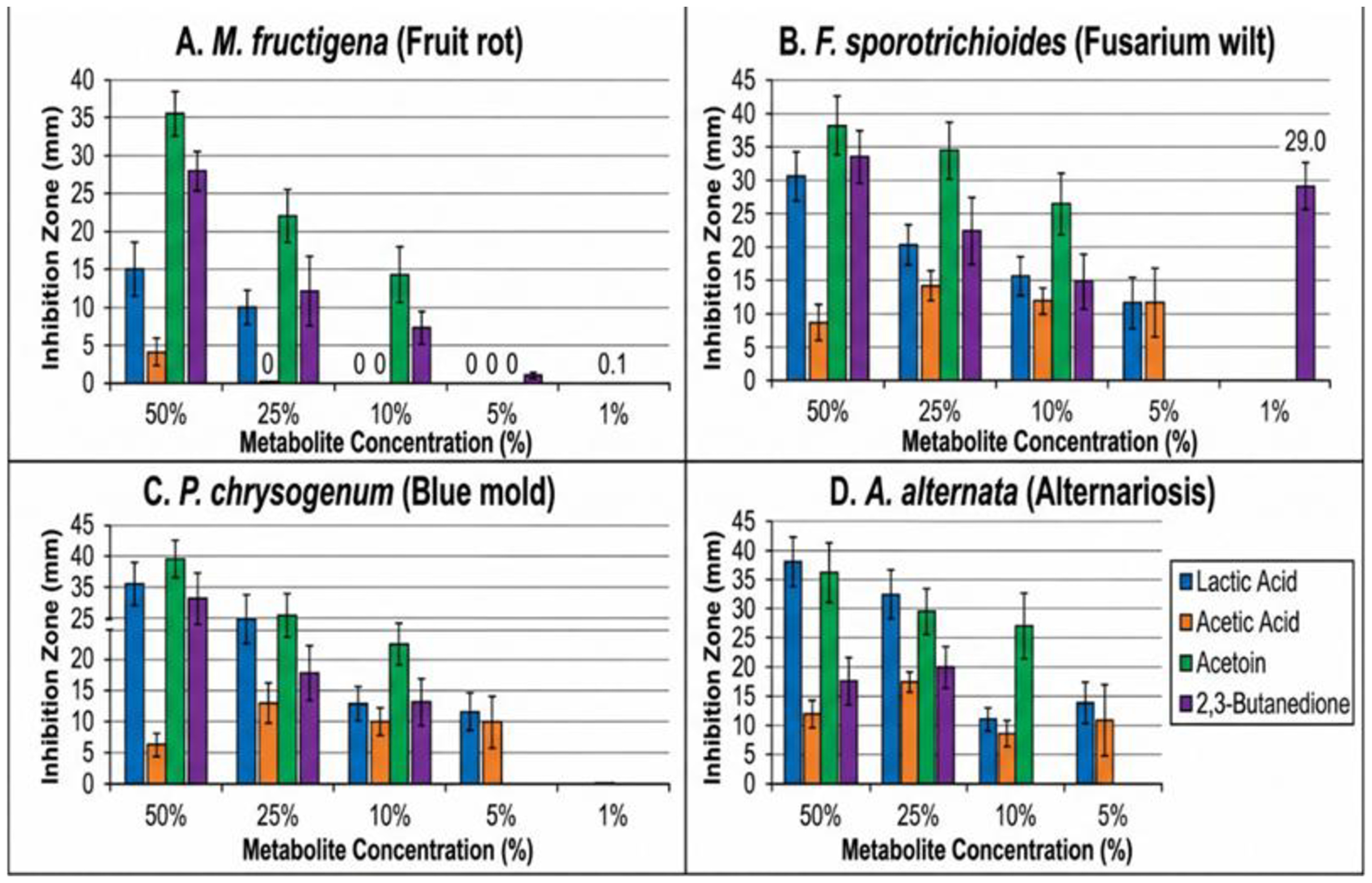
The concentration-dependent antifungal activity of the major metabolites identified in the culture broth of L. paracasei 22 is presented in Table 3. The results showed that lactic acid at concentration of 25% and 50% caused only slight growth inhibition in all four pathogens. Acetic acid exhibited inhibitory activity against all the pathogens tested only at a concentration of 50%. The fungal growth inhibition zones ranged from 4.9 ± 4.0 mm to 16.0± 1.26 mm. When the concentration of acetic acid was reduced to 1%, no inhibition zones were observed.
Toxic activity of different concentrations of the major metabolites produced by Lacticaseibacillus paracasei 22 against apple fruit rot pathogens.
Acetoin inhibited the growth of all the pathogens tested. For M. fructigena and F. sporotrichioides, inhibition zones ranging from 9.0 ± 3.0 mm to 35.6 ± 5.6 mm were recorded at acetoin concentrations of 10-50%. Against P. chrysogenum, acetoin was effective at concentrations of 25% and 50%, producing inhibition zones of 20.3 ± 6.37 mm and 26.0 ± 1.41 mm, respectively.
In the treatments containing 2,3-butanediol at concentrations ranging from 10% to 50%, the growth of all four pathogens was completely inhibited. Even at a concentration of 1%, 2.3-butanediol remained active against F. sporotrichioides, producing an inhibition zone of 29.0 ± 1.73 mm.
Overall, these findings indicate that 2,3-butanediol and acetoin were the main compounds in the culture fluid of the lactic acid bacterium L. paracasei 22 responsible for the strongest inhibitory activity against pathogens causing apple fruit rot. Lactic and acetic acids showed only limited antifungal activity. However, the combined action of all metabolites produced by L. paracasei 22 resulted in substantial antagonistic activity against the major pathogens responsible for apple fruit rot during storage.
3.3.1. Organic acids
Lactic acid showed moderate inhibition at concentrations of 25-50% producing pathogen growth inhibition zones ranging from 7.8 to 17.0 mm depending on the rot-causing species. At concentrations ≤ 10% no noticeable inhibition was observed. Acetic acid demonstrated measureable activity only at 50% with inhibition zones ranging from 4.0 to 16.0 mm while lower concentrations were ineffective. These results indicate that organic acids contribute to antifungal activity primarily at high concentrations and likely act synergistically within the complete metabolite complex.
3.3.2. Volatile compounds
Among the tested metabolites, 2.3-butanediol showed the strongest antifungal activity. It completely inhibited the growth of F. sporotrichioides at concentrations of 10-50% and produced measurable inhibition zones against the other tested pathogens depending on concentration. Even at a concentration of 1%, significant growth suppression was recorded particularly against F. sporotrichioides (29.0 ± 1.73 mm). Acetoin also demonstrated strong inhibitory effects with inhibition zones ranging from 9.0 to 35.6 mm at concentrations of 10-50%. Its activity was especially pronounced against M. fructigena and P. chrysogenum.
Overall, the obtained data indicate that volatile metabolites particularly 2,3-butanediol play a key role in the antagonistic activity of L. paracasei 22. The inhibitory activity of the main metabolites against the pathogens is presented in Figure 4.

Results of the evaluation of the toxic activity of different concentrations of the main metabolites of the strain Lacticaseibacillus paracasei 22 against pathogens causing fruit rot.
3.4. Efficacy of L. paracasei 22 against the main causative agents of apple fruit rot in laboratory experiments
3.4.1. Assessment of the inhibitory activity of the L. paracasei 22 strain
To evaluate the antagonistic activity of the selected L. paracasei 22 strain phytopathogenic fungi obtained from previous studies were used as test cultures. These were identified by sequencing as Monilinia fructigena, Alternaria alternata, Penicillium chrysogenum, and Fusarium sporotrichioides. The sequence of each showed ≥ 99% identity with those of validated reference strain.
As shown in Figure 5 the strain L. paracasei 22 exhibits antagonistic activity against the major causative agents of fruit rot. The diameter of growth inhibition zones produced by L. paracasei 22 (В-RКМ 1213) against different fungi ranged from 25 mm to 51 mm depending on the pathogen species. The maximum inhibition zone (51 mm) was observed against the pathogen M. fructigena.

Inhibitory activity of the strain Lacticaseibacillus paracasei 22 against the main causative agents of apple fruit rot.
3.4.2. Efficacy of the biopreparation under artificial inoculation
To evaluate the potential biological activity of the strain L. paracasei 22 in vitro apples were treated with a bacterial suspension prior to exposure to pathogenic fungal microflora. The results of assessing different application variants of the experimental biopreparation are presented in Table 4 and Figure 6 below.
Efficacy of different application variants of L. paracasei 22 against the main causative agents of rot under laboratory conditions.

Efficacy of apple fruit treatment with a biopreparation based on L. paracasei 22 against major pathogens under artificial inoculation (day 12); (а) against M. fructigena; (b) P. сhrysogenum; (с) F. sporotrichioides; (d) A. alternata.
Based on the data presented in Table 4 and Figure 6 visible symptoms of rot in untreated control fruits appeared on the 5th day after inoculation. In the untreated controls, lesion development progressed throughout the observation period. By day 12, fruits inoculated with M. fructigena, A. alternata, and P. chrysogenum were completely rotted, whereas F. sporotrichioides produced mean lesion diameters of approximately 69–70 mm. In contrast, no visible lesions were observed up to day 12 in most fruits pretreated with L. paracasei 22 at 109 CFU mL−1. Statistical analysis confirmed significant differences between the treated and control groups (Р ≤ 0.05).
The addition of Tween 20 did not result in a significant increase in protective efficacy suggesting that the bacterial suspension provided sufficient surface colonization without the need for an additional surfactant.
3.5. Evaluation of different application methods of the biopreparation and storage conditions under production settings
Considering that under production conditions the application of the biopreparation by soaking fruits prior to storage is a labour-intensive process; experiments were conducted to evaluate the effectiveness of two application methods: spraying trees directly in the orchard at the stage of commercial fruit maturity and soaking fruits in the preparation immediately before long-term storage. These fruits were also stored under two types of storage conditions. The results of these experiments are presented in Table 5.
Effectiveness of different storage methods and application approaches of a biopreparation based on L. paracasei 22 against apple fruit rot during storage.
As shown in Table 5, the incidence of fruit rot varied depending on the treatment and storage conditions. Under standard cold-storage conditions (0–2°C; RH 85 ± 5%), fruit rot affected 35–40% of the untreated control fruits, compared with only 9–10% of the treated fruits. Under controlled-atmosphere storage, the incidence of fruit rot was substantially lower overall, ranging from 0.2–0.3% in the treated fruits and from 0.8–1.0% in the untreated controls.
Therefore, from a practical standpoint it is more advisable to apply the biopreparation by spraying directly in the orchard at the stage of commercial maturity of apple fruits as this method provides a comparable protective effect while offering greater technological convenience.
4. Discussion
Biological control based on plant-associated antagonistic microorganisms is increasingly recognized as a promising and environmentally responsible strategy for protecting fruit from phytopathogens. Interest in this approach is driven by the need to reduce reliance on chemical fungicides, limit the development of fungicide-resistant pathogen populations, improve food safety and lower the environmental burden associated with pesticide use.
Recent research on postharvest disease management has therefore focused increasingly on epiphytic and endophytic bacteria, particularly lactic acid bacteria (LAB), which can suppress pathogens through several complementary mechanisms (Gerez et al., 2013; Marin et al., 2019).
In the present study, the LAB strain Lacticaseibacillus paracasei 22, formerly classified as Lactobacillus paracasei was isolated and identified using molecular methods. The strain displayed broad antagonistic activity against major fungal pathogens associated with apple fruit decay, including Monilinia fructigena, Alternaria alternata, Penicillium chrysogenum, and Fusarium sporotrichioides.
These findings are consistent with previous studies showing that members of Lacticaseibacillus and related LAB genera can inhibit a wide range of fungal pathogens responsible for postharvest diseases of pome and stone fruits. Their effectiveness is unlikely to depend on a single antifungal factor. Instead, it appears to result from several interacting processes, including the production of antimicrobial metabolites, competition for nutrients and colonization sites, biofilm formation, acidification of the fruit surface, and, potentially, the stimulation of host defense responses (Dubourg et al., 2015; Gerez et al., 2013; Marin et al., 2019).
Importantly, the combined activity of several antimicrobial compounds may provide stronger and more stable pathogen suppression than any individual metabolite acting alone. A similarly multifactorial mechanism is likely to operate in L. paracasei 22. This could explain why the strain inhibited fungal species belonging to several taxonomically distinct groups.
The broad spectrum of activity displayed by L. paracasei 22 is particularly noteworthy. Many previous studies of LAB-based biocontrol have concentrated on one pathogen or a small group of pathogens, especially species belonging to Penicillium, Botrytis, and Monilinia (Crowley et al., 2013; Gerez et al., 2013; Marin et al., 2019). In contrast, L. paracasei 22 simultaneously inhibited several economically important agents of postharvest apple decay. This broader activity may increase its value as a practical biocontrol agent.
Taken together, these properties support the potential use of L. paracasei 22 for the biological protection of apple fruit. The strain may offer an environmentally safer means of reducing postharvest losses and decreasing reliance on conventional fungicides. This approach is also consistent with the broader principles of integrated disease management, in which chemical treatments are complemented or partially replaced by effective biological products.
For practical production, the strain was cultivated in modified MRS-T medium. The medium was developed from the conventional MRS formulation. Cultivation was conducted in a temperature-controlled incubator at 30°C for one to two days.
The resulting L. paracasei 22-based preparation was effective both in laboratory experiments involving artificial inoculation with major fruit-decay pathogens and during apple storage under controlled conditions. This consistency is important because strong antagonistic activity in vitro does not always translate into effective protection on fruit. Successful postharvest biocontrol also depends on the microorganism’s ability to survive on the fruit surface, compete with the resident microbiota, colonize available ecological niches, and maintain an effective population throughout storage (Larena et al., 2005; Trias et al., 2008).
Two application methods were evaluated under production conditions: spraying fruit in the orchard at commercial maturity and dipping harvested fruit before storage. No substantial difference in protective effectiveness was observed between the two treatments. From a technological and economic perspective, however, preharvest spraying in the orchard appeared to be the more practical approach.
This result agrees with the findings of Larena et al. (2005), who reported that preharvest treatment of trees with a biological preparation based on Epicoccum nigrum significantly reduced brown rot incidence during storage. The authors attributed this effect to early colonization of the fruit surface by the antagonist, which gave the biological control agent a competitive advantage over the pathogen.
Comparable persistence has also been reported for LAB. Trias et al. (2008), for example, found that the population of Lactiplantibacillus plantarum ATCC 14917 remained almost stable in apple wounds for 142 days of storage at 0.5-1°C. Roselló et al. (2013) likewise demonstrated that several L. plantarum strains were effective in the biological preservation of apples and pears against Erwinia amylovora.
Together, these studies indicate that early and stable colonization of the fruit surface is a major determinant of successful biological control. Establishment before pathogen infection allows antagonistic microorganisms to occupy available sites, use local nutrients, and form persistent populations that restrict subsequent pathogen establishment and development.
The present study not only supports earlier reports describing LAB as promising biological control agents but also expands current knowledge of the potential application of L. paracasei 22 during long-term apple storage. Unlike studies limited to individual laboratory models, this work demonstrated protective activity under both laboratory and production conditions. This substantially strengthens the practical relevance of the findings.
Nevertheless, additional work is needed before large-scale commercial implementation. Future studies should evaluate formulation stability, shelf life, compatibility with existing storage technologies, consistency across apple cultivars and growing seasons, sensory effects on treated fruit, and biosafety under commercial conditions. Direct comparisons with standard fungicide programs would also help determine the extent to which L. paracasei 22 could reduce conventional chemical treatments.
5. Conclusion
This study investigated the antagonistic potential of the lactic acid bacterium Lacticaseibacillus paracasei 22 against major postharvest pathogens of apple fruits. The quantitative composition of its metabolites was determined, and their antifungal activity predominantly associated with volatile compounds was demonstrated. The biological efficacy of the developed biopreparations was evaluated under laboratory conditions using artificial inoculation as well as under commercial storage conditions with comparison of preharvest and postharvest application strategies. The results obtained confirm the high potential of L. paracasei 22 as an innovative and environmentally safe biocontrol agent capable of replacing or significantly reducing the use of chemical fungicides while enhancing the preservation and quality of apple yield under practical production conditions.
Acknowledgements
This work was carried out within the framework of contract No. 199/GF24-26 dated 09.09.2024. project AP 23488249 “Development of a microbial preparation against fruit rot diseases” funded under the competitive grant system supported by the Government of the Republic of Kazakhstan.
Data Availability Statement
All data generated or analyzed during this study are included in this manuscript.
References
-
ALTINDAG, M., SAHIN, M., ESITKEN, A., ERCISLI, S., GULERYUZ, M., DONMEZ, M.F. and SAHIN, F., 2006. Biological control of brown rot (Moniliana laxa Ehr.) on apricot (Prunus armeniaca L. cv. Hacıhaliloğlu) by Bacillus. Burkholdria, and Pseudomonas application under in vitro and in vivo conditions. Biological Control, vol. 38, no. 3, pp. 369-372. https://doi.org/10.1016/j.biocontrol.2006.04.015
» https://doi.org/10.1016/j.biocontrol.2006.04.015 -
ARREBOLA, E., JACOBS, R. and KORSTEN, L., 2010. Iturin A is the principal inhibitor in the biocontrol activity of Bacillus amyloliquefaciens PPCB004 against postharvest fungal pathogens. Journal of Applied Microbiology, vol. 108, no. 2, pp. 386-395. https://doi.org/10.1111/j.1365-2672.2009.04438.x PMid:19674188.
» https://doi.org/10.1111/j.1365-2672.2009.04438.x -
BALOUIRI, M., SADIKI, M. and IBNSOUDA, S.K., 2016. Methods for in vitro evaluating antimicrobial activity: a review. Journal of Pharmaceutical Analysis, vol. 6, no. 2, pp. 71-79. https://doi.org/10.1016/j.jpha.2015.11.005 PMid:29403965.
» https://doi.org/10.1016/j.jpha.2015.11.005 -
BERG, G., 2009. Plant–microbe interactions promoting plant growth and health: perspectives for controlled use of microorganisms in agriculture. Applied Microbiology and Biotechnology, vol. 84, no. 1, pp. 11-18. https://doi.org/10.1007/s00253-009-2092-7 PMid:19568745.
» https://doi.org/10.1007/s00253-009-2092-7 -
CAÑAMÁS, T.P., VIÑAS, I., USALL, J., TORRES, R., ANGUERA, M. and TEIXIDÓ, N., 2008. Control of postharvest diseases on citrus fruit by preharvest applications of biocontrol agent Pantoea agglomerans CPA-2: part II. Effectiveness of different cell formulations. Postharvest Biology and Technology, vol. 49, no. 1, pp. 96-106. https://doi.org/10.1016/j.postharvbio.2007.12.005
» https://doi.org/10.1016/j.postharvbio.2007.12.005 -
CASTORIA, R., DE CURTIS, F., LIMA, G., CAPUTO, L., PACIFICO, S. and DE CICCO, V., 2001. Aureobasidium pullulans (LS-30) an antagonist of postharvest pathogens of fruits: study on its modes of action. Postharvest Biology and Technology, vol. 22, no. 1, pp. 7-17. https://doi.org/10.1016/S0925-5214(00)00186-1
» https://doi.org/10.1016/S0925-5214(00)00186-1 -
CAWOY, H., DEBOIS, D., FRANZIL, L., DE PAUW, E., THONART, P. and ONGENA, M., 2015. Lipopeptides as main ingredients for inhibition of fungal phytopathogens by Bacillus subtilis/amyloliquefaciens. Microbial Biotechnology, vol. 8, no. 2, pp. 281-295. https://doi.org/10.1111/1751-7915.12238 PMid:25529983.
» https://doi.org/10.1111/1751-7915.12238 -
CROWLEY, S., MAHONY, J. and VAN SINDEREN, D., 2013. Current perspectives on antifungal lactic acid bacteria as natural bio-preservatives. Trends in Food Science & Technology, vol. 33, no. 2, pp. 93-109. https://doi.org/10.1016/j.tifs.2013.07.004
» https://doi.org/10.1016/j.tifs.2013.07.004 -
DE CAL, A., LARENA, I., LIÑÁN, M., TORRES, R., LAMARCA, N., USALL, J., DOMENICHINI, P., BELLINI, A., DE ERIBE, X.O. and MELGAREJO, P., 2009. Population dynamics of Epicoccum nigrum, a biocontrol agent against brown rot in stone fruit. Journal of Applied Microbiology, vol. 106, no. 2, pp. 592-605. https://doi.org/10.1111/j.1365-2672.2008.04030.x PMid:19200324.
» https://doi.org/10.1111/j.1365-2672.2008.04030.x -
DROBY, S., 2006. Improving quality and safety of fresh fruits and vegetables after harvest by the use of biocontrol agents and natural materials. Acta Horticulturae, no. 709, pp. 45-51. https://doi.org/10.17660/ActaHortic.2006.709.5
» https://doi.org/10.17660/ActaHortic.2006.709.5 -
DROBY, S., WISNIEWSKI, M., ZHIMO, V.Y., KUMAR-SHARMA, V. and FREILICH, S., 2025. Biological control of postharvest diseases: the evolution of new concepts and perspectives. Annual Review of Phytopathology, vol. 63, no. 1, pp. 501-528. https://doi.org/10.1146/annurev-phyto-121823-025820 PMid:40903424.
» https://doi.org/10.1146/annurev-phyto-121823-025820 -
DUBOURG, G., ELSAWI, Z. and RAOULT, D., 2015. Assessment of the in vitro antimicrobial activity of Lactobacillus species for identifying new potential antibiotics. International Journal of Antimicrobial Agents, vol. 46, no. 5, pp. 590-593. https://doi.org/10.1016/j.ijantimicag.2015.05.011 PMid:26163158.
» https://doi.org/10.1016/j.ijantimicag.2015.05.011 -
FRAVEL, D.R., 2005. Commercialization and implementation of biocontrol. Annual Review of Phytopathology, vol. 43, no. 1, pp. 337-359. https://doi.org/10.1146/annurev.phyto.43.032904.092924 PMid:16078888.
» https://doi.org/10.1146/annurev.phyto.43.032904.092924 -
GAO, H., LI, P., XU, X., ZENG, Q. and GUAN, W., 2018. Research on volatile organic compounds from Bacillus subtilis CF-3: biocontrol effects on fruit fungal pathogens and dynamic changes during fermentation. Frontiers in Microbiology, vol. 9, pp. 456. https://doi.org/10.3389/fmicb.2018.00456 PMid:29593695.
» https://doi.org/10.3389/fmicb.2018.00456 -
GEREZ, C.L., TORRES, M.J., DE VALDEZ, G.F. and ROLLÁN, G., 2013. Control of spoilage fungi by lactic acid bacteria. Biological Control, vol. 64, no. 3, pp. 231-237. https://doi.org/10.1016/j.biocontrol.2012.10.009
» https://doi.org/10.1016/j.biocontrol.2012.10.009 -
GOTOR-VILA, A., USALL, J., TORRES, R., SOLSONA, C. and TEIXIDÓ, N., 2017. Biocontrol products based on Bacillus amyloliquefaciens CPA-8 using fluid-bed spray-drying process to control postharvest brown rot in stone fruit. Lebensmittel-Wissenschaft + Technologie, vol. 82, pp. 274-282. https://doi.org/10.1016/j.lwt.2017.04.034
» https://doi.org/10.1016/j.lwt.2017.04.034 - GREBENISAN, I., CORNEA, C.P., MATEESCU, R., OLTEANU, V. and VOAIDES, C., 2006. Control of postharvest fruit rot in apricot and peach by Metschnikowia pulcherrima. Buletin USAMV-CN, vol. 62, pp. 74-79.
-
GRONDONA, I., HERMOSA, R., TEJADA, M., GOMIS, M.D., MATEOS, P.F., BRIDGE, P.D., MONTE, E. and GARCIA-ACHA, I., 1997. Physiological and biochemical characterization of Trichoderma harzianum, a biological control agent against soilborne fungal plant pathogens. Applied and Environmental Microbiology, vol. 63, no. 8, pp. 3189-3198. https://doi.org/10.1128/aem.63.8.3189-3198.1997 PMid:9251205.
» https://doi.org/10.1128/aem.63.8.3189-3198.1997 -
GUIJARRO, B., MELGAREJO, P., TORRES, R., LAMARCA, N., USALL, J. and DE CAL, A., 2007. Effects of different biological formulations of Penicillium frequentans on brown rot of peaches. Biological Control, vol. 42, no. 1, pp. 86-96. https://doi.org/10.1016/j.biocontrol.2007.03.014
» https://doi.org/10.1016/j.biocontrol.2007.03.014 -
GWIAZDOWSKI, R., KUBIAK, K., JUŚ, K., MARCHWIŃSKA, K. and GWIAZDOWSKA, D., 2024. The biocontrol of plant pathogenic fungi by selected lactic acid bacteria: from laboratory to field study. Agriculture, vol. 14, no. 1, pp. 61. https://doi.org/10.3390/agriculture14010061
» https://doi.org/10.3390/agriculture14010061 -
KHARAZIAN, Z.A., JOUZANI, G.S., AGHDASI, M., KHORVASH, M., ZAMANI, M. and MOHAMMADZADEH, H., 2017. Biocontrol potential of Lactobacillus strains isolated from corn silages against some plant pathogenic fungi. Biological Control, vol. 110, pp. 33-43. https://doi.org/10.1016/j.biocontrol.2017.04.004
» https://doi.org/10.1016/j.biocontrol.2017.04.004 -
KIM, Y.S., BALARAJU, K. and JEON, Y., 2016. Effects of rhizobacteria Paenibacillus polymyxa APEC136 and Bacillus subtilis APEC170 on biocontrol of postharvest pathogens of apple fruits. Journal of Zhejiang University. Science. B, vol. 17, no. 12, pp. 931-940. https://doi.org/10.1631/jzus.B1600117 PMid:27921398.
» https://doi.org/10.1631/jzus.B1600117 -
LARENA, I., TORRES, R., DE CAL, A., LIÑÁN, M., MELGAREJO, P., DOMENICHINI, P., BELLINI, A., MANDRIN, J.F., LICHOU, J., DE ERIBE, X.O. and USALL, J., 2005. Biological control of postharvest brown rot (Monilinia spp.) of peaches by field applications of Epicoccum nigrum. Biological Control, vol. 32, no. 2, pp. 305-310. https://doi.org/10.1016/j.biocontrol.2004.10.010
» https://doi.org/10.1016/j.biocontrol.2004.10.010 -
LI, Y., HAN, L.R., ZHANG, Y., FU, X., CHEN, X., ZHANG, L. and WANG, Q., 2013. Biological control of apple ring rot on fruit by Bacillus amyloliquefaciens 9001.The Plant Pathology Journal, vol. 29, no. 2, pp. 168-173. https://doi.org/10.5423/PPJ.SI.08.2012.0125
» https://doi.org/10.5423/PPJ.SI.08.2012.0125 -
LIU, J., SUI, Y., WISNIEWSKI, M., DROBY, S. and LIU, Y., 2013. Utilization of antagonistic yeasts to manage postharvest fungal diseases of fruit. International Journal of Food Microbiology, vol. 167, no. 2, pp. 153-160. https://doi.org/10.1016/j.ijfoodmicro.2013.09.004 PMid:24135671.
» https://doi.org/10.1016/j.ijfoodmicro.2013.09.004 -
LÓPEZ-SEIJAS, J., GARCÍA-FRAGA, B., DA SILVA, A.F. and SIEIRO, C., 2020. Wine lactic acid bacteria with antimicrobial activity as potential biocontrol agents against Fusarium oxysporum f. sp. lycopersici. Agronomy (Basel), vol. 10, no. 1, pp. 31. https://doi.org/10.3390/agronomy10010031
» https://doi.org/10.3390/agronomy10010031 -
MADRIGAL, C., PASCUAL, S. and MELGAREJO, P., 1994. Biological control of peach twig blight (Monilinia laxa) with Epicoccum nigrum. Plant Pathology, vol. 43, no. 3, pp. 554-561. https://doi.org/10.1111/j.1365-3059.1994.tb01590.x
» https://doi.org/10.1111/j.1365-3059.1994.tb01590.x -
MANJARRES MELO, J.J., ÁLVAREZ, A., RAMIREZ, C. and BOLIVAR, G., 2021. Antagonistic activity of lactic acid bacteria against phytopathogenic fungi isolated from cherry tomato (Solanum lycopersicum var. cerasiforme). Current Microbiology, vol. 78, no. 4, pp. 1399-1408. https://doi.org/10.1007/s00284-021-02416-w PMid:33646382.
» https://doi.org/10.1007/s00284-021-02416-w -
MARI, M., MARTINI, C., GUIDARELLI, M. and NERI, F., 2012. Postharvest biocontrol of Monilinia laxa, Monilinia fructicola and Monilinia fructigena on stone fruit by two Aureobasidium pullulans strains. Biological Control, vol. 60, no. 2, pp. 13-140. https://doi.org/10.1016/j.biocontrol.2011.10.013
» https://doi.org/10.1016/j.biocontrol.2011.10.013 -
MARIN, A., PLOTTO, A., ATARES, L. and CHIRALT, A., 2019. Lactic acid bacteria incorporated into edible coatings to control fungal growth and maintain postharvest quality of grapes. HortScience, vol. 54, no. 2, pp. 337-343. https://doi.org/10.21273/HORTSCI13661-18
» https://doi.org/10.21273/HORTSCI13661-18 -
ONGENA, M. and JACQUES, P., 2008. Bacillus lipopeptides: versatile weapons for plant disease biocontrol. Trends in Microbiology, vol. 16, no. 3, pp. 115-125. https://doi.org/10.1016/j.tim.2007.12.009 PMid:18289856.
» https://doi.org/10.1016/j.tim.2007.12.009 -
PUSEY, P.L. and WILSON, C.L., 1984. Postharvest biological control of stone fruit brown rot by Bacillus subtilis. Plant Disease, vol. 68, no. 9, pp. 753-756. https://doi.org/10.1094/PD-69-753
» https://doi.org/10.1094/PD-69-753 -
PUSEY, P.L., HOTCHKISS, M.W., DULMAGE, H.T., BAUMGARDNER, R.A., ZEHR, E.I., REILLY, C.C. and WILSON, C.L., 1988. Pilot tests for commercial production and application of Bacillus subtilis (B-3) for postharvest control of peach brown rot. Plant Disease, vol. 72, no. 7, pp. 622-626. https://doi.org/10.1094/PD-72-0622
» https://doi.org/10.1094/PD-72-0622 -
ROSELLÓ, G., BONATERRA, A., FRANCÉS, J., MONTESINOS, L., BADOSA, E. and MONTESINOS, E., 2013. Biological control of fire blight of apple and pear with antagonistic Lactobacillus plantarum. European Journal of Plant Pathology, vol. 137, no. 3, pp. 6-633. https://doi.org/10.1007/s10658-013-0275-7
» https://doi.org/10.1007/s10658-013-0275-7 -
SADANOV, A., ALIMZHANOVA, M., ISMAILOVA, E., SHEMSHURA, O., ASHIMULY, K., MOLZHIGITOVA, A. and DAUGALIYEVA, S., 2023. Antagonistic and protective activity of Lactobacillus plantarum strain 17 M against E. amylovora. World Journal of Microbiology & Biotechnology, vol. 39, no. 11, pp. 314. https://doi.org/10.1007/s11274-023-03765-3 PMid:37733156.
» https://doi.org/10.1007/s11274-023-03765-3 -
SADANOV, A., ISMAILOVA, E., SHEMSHURA, O., ALIMZHANOVA, M., MOLZHIGITOVA, A., KULDYBAYEV, N., TLEUBEKOVA, D., DAUGALIEVA, S., BAIMAKHANOVA, G., TURLYBAEVA, Z. and YELUBAYEVA, A., 2024. A new strain Lacticaseibacillus paracasei M12 and perspectives of its use against Erwinia amylovora. Journal of Plant Pathology, vol. 106, no. 3, pp. 925-936. https://doi.org/10.1007/s42161-024-01688-y
» https://doi.org/10.1007/s42161-024-01688-y -
SHARMA, R.R., SINGH, D. and SINGH, R., 2009. Biological control of postharvest diseases of fruits and vegetables by microbial antagonists: a review. Biological Control, vol. 50, no. 3, pp. 205-221. https://doi.org/10.1016/j.biocontrol.2009.05.001
» https://doi.org/10.1016/j.biocontrol.2009.05.001 -
SPADARO, D. and DROBY, S., 2016. Development of biocontrol products for postharvest diseases of fruit: the importance of elucidating the mechanisms of action of yeast antagonists. Trends in Food Science & Technology, vol. 47, pp. 39-49. https://doi.org/10.1016/j.tifs.2015.11.003
» https://doi.org/10.1016/j.tifs.2015.11.003 -
TRIAS, R., BAÑERAS, L., MONTESINOS, E. and BADOSA, E., 2008. Lactic acid bacteria from fresh fruit and vegetables as biocontrol agents of phytopathogenic bacteria and fungi. International Microbiology, vol. 11, no. 4, pp. 231-236. https://doi.org/10.2436/20.1501.01.66 PMid:19204894.
» https://doi.org/10.2436/20.1501.01.66 -
TRONSMO, A. and DENNIS, C., 1977. The use of Trichoderma species to control strawberry fruit rots. Netherlands Journal of Plant Pathology, vol. 83, no. S1, pp. 449-455. https://doi.org/10.1007/BF03041462
» https://doi.org/10.1007/BF03041462 -
WISNIEWSKI, M.E. and WILSON, C.L., 1992. Biological control of postharvest diseases of fruits and vegetables: recent advances. HortScience, vol. 27, no. 2, pp. 94-98. https://doi.org/10.21273/HORTSCI.27.2.94
» https://doi.org/10.21273/HORTSCI.27.2.94 -
YÁNEZ-MENDIZÁBAL, V., ZERIOUH, H., VIÑAS, I., TORRES, R., USALL, J., DE VICENTE, A., PÉREZ-GARCÍA, A. and TEIXIDÓ, N., 2012. Biological control of peach brown rot (Moniliniaspp.) byBacillus subtilisCPA-8 is based on production of fengycin- like lipopeptides. European Journal of Plant Pathology, vol. 132, no. 4, pp. 609-619. https://doi.org/10.1007/s10658-011-9905-0
» https://doi.org/10.1007/s10658-011-9905-0 -
ZHANG, D., SPADARO, D., GARIBALDI, A. and GULLINO, M.L., 2010. Efficacy of the antagonist Aureobasidium pullulans PL5 against postharvest pathogens of peach, apple and plum and its modes of action. Biological Control, vol. 54, no. 3, pp. 172-180. https://doi.org/10.1016/j.biocontrol.2010.05.003
» https://doi.org/10.1016/j.biocontrol.2010.05.003
*
e-mail: jalilmels@mail.ruEditor: