 Umbelliferone presents orofacial antinociceptive and anti-inflammatory activity via reduction of TNF-α in mice
Abstract
Pain is a normal response of the central nervous system to trauma, infections, neoplasms, neuropathies, and inflammation. It can arise from physical, emotional, or cognitive conditions, and is classified as orofacial pain when it affects the mouth and face. Umbelliferone, a coumarin from the umbelliferous plant family, is an important component of essential oils, and possesses antioxidant, curative, anti-inflammatory, and anti-tumor activity. The aim of this study was to investigate the orofacial antinociceptive and anti-inflammatory effects of umbelliferone in Swiss male mice Mus musculus, at 3 months of age. Test groups received different doses of umbelliferone (25, 50, or 75 mg/kg, i.p.). The negative control received 0.9% sodium chloride and Tween 80, with the positive control receiving morphine (5 mg/kg, i.p.) or dexamethasone (2 mg/kg, s.c.). We observed a significant reduction in acetic acid-induced abdominal writhing (p<0.001), and a decrease in paw licking in the orofacial nociception test with formalin (p < 0.01). The 50 and 75 mg/kg doses of umbelliferone presented significant reductions in the glutamate (p<0.01) and capsaicin (p<0.01) tests, suggesting activity on glutamatergic receptors and TRPV1. In the carrageenan-induced paw edema test (1%), there was a decrease in limb volume over 240 minutes (p<0.01), suggesting inhibition of the inflammatory process. There was also a reduction in leukocyte count (p<0.001) and TNF-α levels (p<0.001) when compared to the control group, being similar to the animals treated with dexamethasone (p<0.001). It was concluded that umbelliferone exhibits orofacial antinociceptive activity and anti-inflammatory activity via TNF-α. However, further preclinical studies are needed for a better characterization.
Keywords:
orofacial pain; nociception; anti-inflammatory; umbelliferone
Resumo
A dor é uma resposta do sistema nervoso central contra traumas, infecções, neoplasias, neuropatias e inflamação. Ela decorre de condições físicas, emocionais e cognitivas, sendo classificada como orofacial quando afeta boca e face. A umbeliferona, cumarina encontrada em plantas da família das umbelíferas, é componente importante de óleos essenciais, possuindo atividade antioxidante, cicatrizante, anti-inflamatória e anti-tumoral. O objetivo deste estudo foi investigar o efeito antinociceptivo e anti-inflamatório orofacial da umbeliferona em camundongos Mus musculus machos, linhagem Swiss, com 3 meses de idade. Os grupos-teste receberam diferentes doses de umbeliferona (25, 50 ou 75 mg/kg, i.p.), o controle negativo recebeu cloreto de sódio 0,9% e Tween 80, e o controle positivo recebeu morfina (5 mg/kg, i.p.) ou dexametasona (2 mg/kg, s.c.). Observou-se redução significativa nas contorções abdominais induzidas pelo ácido acético (p<0,001) e diminuição na fricção das patas no teste de nocicepção orofacial com formalina (p < 0,01). Ademais, doses de 50 e 75 mg/kg de umbeliferona mostraram redução significativa nos testes com glutamato (p<0,01) e capsaicina (p<0,01), sugerindo ação nos receptores glutamatérgicos e TRPV1. No teste de edema de pata induzido por carragenina 1%, houve diminuição no volume do membro ao longo de 240 minutos (p<0,01), sugerindo inibição do processo inflamatório. Também observou-se redução na contagem de leucócitos (p<0,001) e na dosagem de TNF-α (p<0,001) em relação ao grupo controle, semelhante aos animais tratados com dexametasona (p<0,001). Conclui-se que a umbeliferona apresenta atividade antinociceptiva orofacial e atividade anti-inflamatória via TNF-α, mas são necessários mais estudos pré-clínicos para melhor caracterização da substância.
Palavras-chave:
dor orofacial; nocicepção; anti-inflamatório; umbeliferona
1. Introduction
Orofacial pain arises from nociceptors found in the soft and mineralized tissues of the oral cavity, head, and/or neck. Conditions that generate orofacial pain include odontogenic problems, headaches, neurogenic disorders, musculoskeletal problems, psychogenic pain, cancer, infections, autoimmune phenomena, and tissue trauma. The prevalence of orofacial pain in developing countries is approximately 30%, and at least 33% of the world's population manifest clinically related problems. Affected individuals experience significant functional limitation and decreased quality of life (Brito Júnior and Barreto, 2021; Costa et al., 2020).
The presence of inflammatory processes in the orofacial region which generate and/or chronify this pain is very common. Tissue trauma, or for example infection in these structures by microorganisms leads to the release of chemokines that attract defense cells to restore homeostasis (Souza et al., 2020). In orofacial pain, non-steroidal anti-inflammatory drugs are used as the first choice drug treatment for acute and chronic conditions. However, analgesics, muscle relaxants, and tricyclic antidepressants are also indicated (Cavalcante et al., 2020). Yet it is worth noting that prolonged use of these drugs has limitations due to their adverse effects, being potentially harmful to health in certain instances.
Many natural substances of plant origin present therapeutic potential for the treatment of these inflammatory and painful conditions, and are often used in traditional medicine in various countries at the primary health care level (Cavalcante et al., 2022). Exploration of natural compounds by the pharmaceutical industry has increased, since the use of these plants in folk medicine is based on therapeutic information accumulated over centuries by the population, and allows studies which characterize the properties each plant and which dosages are necessary to achieve the desired therapeutic effects (Sá-Filho et al., 2021).
Coumarins of the benzofenone category are abundantly found in vegetables such as fruits, seeds, roots, and leaves, and present a variety of pharmacological applications. They demonstrate antimicrobial, antimutagenic, and anti-inflammatory activities, and few adverse effects have been observed. Further, the cost-benefit ratio of coumarins is positive since carrots, certain citrus fruits, and spices like cinnamon and fennel are known sources of this phytochemical compound (Hassanein et al., 2020).
In this context, umbelliferone (UMB) is a pharmacologically active coumarin currently used in sunscreen products that has sparked the interest of researchers for other biological activities (Shahane et al., 2023). Belonging to the umbelliferous family, UMB is widely found in the aerial parts of plants and is an important constituent of essential oils. 7-hydroxycoumarin, as UMB is also called, is a precursor to 6,7-di-hydroxylated and 6,7,8-trihydroxylated coumarins (Mazimba, 2017), and has a broad pharmacological profile described with vasorelaxant activity (Jesus et al., 2022), anticancer (Aslantürk and Çelik, 2023), hepatoprotective (Park et al., 2023), and nephroprotective effects (Yang et al., 2023).
Aiming to contribute to the discovery of new drugs for the treatment of orofacial pain, this study reports the orofacial antinociceptive and anti-inflammatory effect of UMB in mice, as well as its possible mechanisms of action.
2. Materials and Methods
2.1. Animals
Male Swiss mice (Mus musculus), weighing 25 to 35g, 3 months old, originating from the Central Animal Facility of the Federal University of Vale do São Francisco (UNIVASF), Pernambuco, Northeast Brazil were used. Throughout the research, the animals were kept in a 12-hour light/dark cycle under controlled temperature conditions (21 ± 1 °C), with access to distilled water and pellet food ad libitum. All experimental procedures were analyzed and previously approved by the Animal Research Ethics Committee (CEPA) of UNIVASF, under certificate No. 0003/010622.
2.2. Drugs
Umbelliferone, dexamethasone, capsaicin, and k-carrageenan were purchased from Sigma (St. Louis, MO, USA). 37% formaldehyde (Vetec, Rio de Janeiro, RJ, Brazil) and morphine hydrochloride (Vetec) were also used in this study. All drugs were diluted in distilled water, except umbelliferone, which required a mixture of Tween-80 and distilled water. TNF-α was obtained from eBioscience (San Diego, CA, USA). The drugs were administered at a volume of 0.1 mL/10 g of body weight.
2.3. Acetic acid-induced abdominal writhing test
The acetic acid-induced abdominal writhing test is a nonspecific model used to evaluate the analgesic activity of many substances with central and peripheral activity. For this test, intraperitoneal (i.p.) injection of 1% acetic acid diluted in saline was performed 30 minutes after the animals has received administration of the substances characteristic of each group (n=7/group): UMB (25, 50, or 75 mg/kg, i.p), the negative control (Tween 80 solution at 10 mL/kg, i.p.), and positive control (morphine 5 mg/kg, i.p.). Antinociceptive activity was evaluated over 10 minutes using the number of abdominal writhes. Contraction of the abdominal musculature followed by trunk torsion and extension of the paws, and subsequent production of inflammatory agents is a response to injury.
2.4. Formalin-induced orofacial nociception test
Administration of 20µL of a 2% formalin solution in the orofacial region of the mouse induces stimulation of nociceptors (Luccarini et al., 2006). Orofacial nociception was evaluated in two phases. The first phase occurs in the first 5 minutes after formalin injection, which leads to a neurogenic response. The second phase (15-30 minutes) is mainly known for inflammatory response. For the test, the mice were divided into five groups (n=7/group) and treated with a vehicle solution of Tween 80 (10 mL/kg, i.p.), three different doses of UMB (25, 50, or 75 mg/kg, i.p), or morphine (5 mg/kg, i.p.).
2.5. Glutamate-induced orofacial nociception test
In this test, animals were divided into five groups (n=7/group) receiving vehicle Tween 80 solution (10 mL/kg, i.p.) as negative control, three different doses of UMB (25, 50, or 75 mg/kg, i.p) in test groups, or morphine (5 mg/kg, i.p.) as positive control. The test consists of subcutaneous administration of 40 µL of a 25 µM glutamate solution (Sigma Aldrich, Missouri, USA) on the upper right lip of the mice. Thirty minutes after the initial injections, glutamate is administered to the face, and the animals are immediately placed in an observation box for 15 minutes to time orofacial nociceptive behavior.
2.6. Capsaicin-induced orofacial nociception test
Chemical nociception induced by orofacial injection of capsaicin in mice followed the model proposed by Pelissier et al. (2002), with some modifications. Animals were divided into five groups (n=7/group): two UMB groups (50 or 75 mg/kg, i.p,), the positive control morphine, 5 mg/kg, i.p.), and negative control (Tween 80 solution, i.p.). After 30 minutes, the mice received 20 µL of capsaicin (1.6 µg or 5.2 nmol) on the upper lip near the vibrissae region. Immediately after injection, the mice were observed for 5 minutes, during which the animal spent rubbing the orofacial region with the forepaws, being timed and considered indicative of nociception.
2.7. Carrageenan-induced paw edema test
The anti-inflammatory response was evaluated according to a previously described model. The experiment involved the three test groups (n=7/group) subjected to different doses of UMB (50 or 75 mg/kg, i.p.), a positive control group receiving dexamethasone (2 mg/kg, s.c.), and a negative control group (Tween 80 solution, i.p.). One hour after preparation, the animals were subjected to edema induction with 1% carrageenan by intraplantar injection in the hind paw. Using plethysmometry, the results compared the paw volume before inflammatory stimulus and four measurements taken at intervals of 60, 120, 180, and 240 minutes after carrageenan injection. The paw edema calculation was performed using the variation values between paw volume (∆, in mL) before inflammatory stimuli and its volume after 60, 120, 180, and 240 minutes of carrageenan injection.
2.8. Leukocyte count and TNF-α cytokine assaY
For this experiment, the test groups (n=7/group) were subjected to UMB (75 mg/kg, i.p.), dexamethasone (2 mg/kg, s.c.), and vehicle (Tween 80 solution), and one group received only 0.9% sodium chloride and was not induced to peritonitis.
Thirty minutes after pretreatment with vehicle, UMB (75 mg/kg), or dexamethasone (2 mg/kg, s.c.), the animals were subjected to peritonitis induction with 1% carrageenan in the peritoneal cavity. After four hours, the animals were euthanized, and peritoneal fluid was collected for total leukocyte count and TNF-α cytokine assay (Rodrigues et al., 2015).
3. Results
3.1. Acetic acid-induced abdominal writhing test
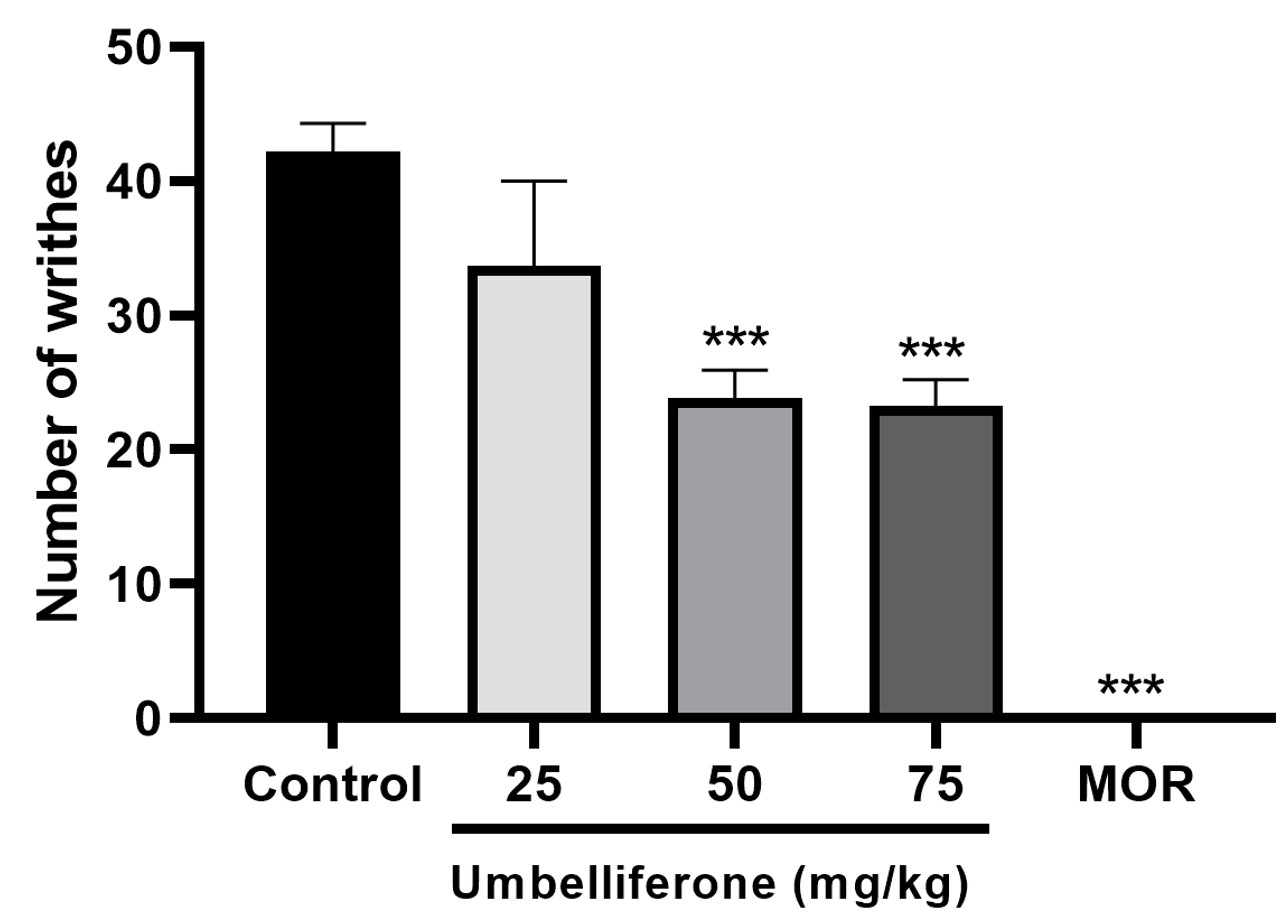
Animals in the UMB groups presented a reduction in the number of abdominal writhes at doses of 50 and 75 mg/kg (respectively 23.8 ± 2.1 and 23.2 ± 2.0), and no significant reduction for the dose of 25 mg/kg (33.7 ± 6.4) compared to the control group (42.2 ± 2.1), as demonstrated in Figure 1. All animals tested in the morphine group did not present abdominal writhes.
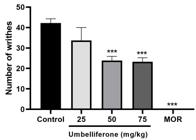
Effect of umbelliferone (25, 50, and 75 mg/kg, i.p.) and morphine (MOR: 5 mg/kg, i.p.) on the number of abdominal contortions induced by 1% acetic acid. Animals tested (n=7) (Dunnet's Test). ***p < 0.001, versus control group.
3.2. Formalin-induced orofacial nociception test
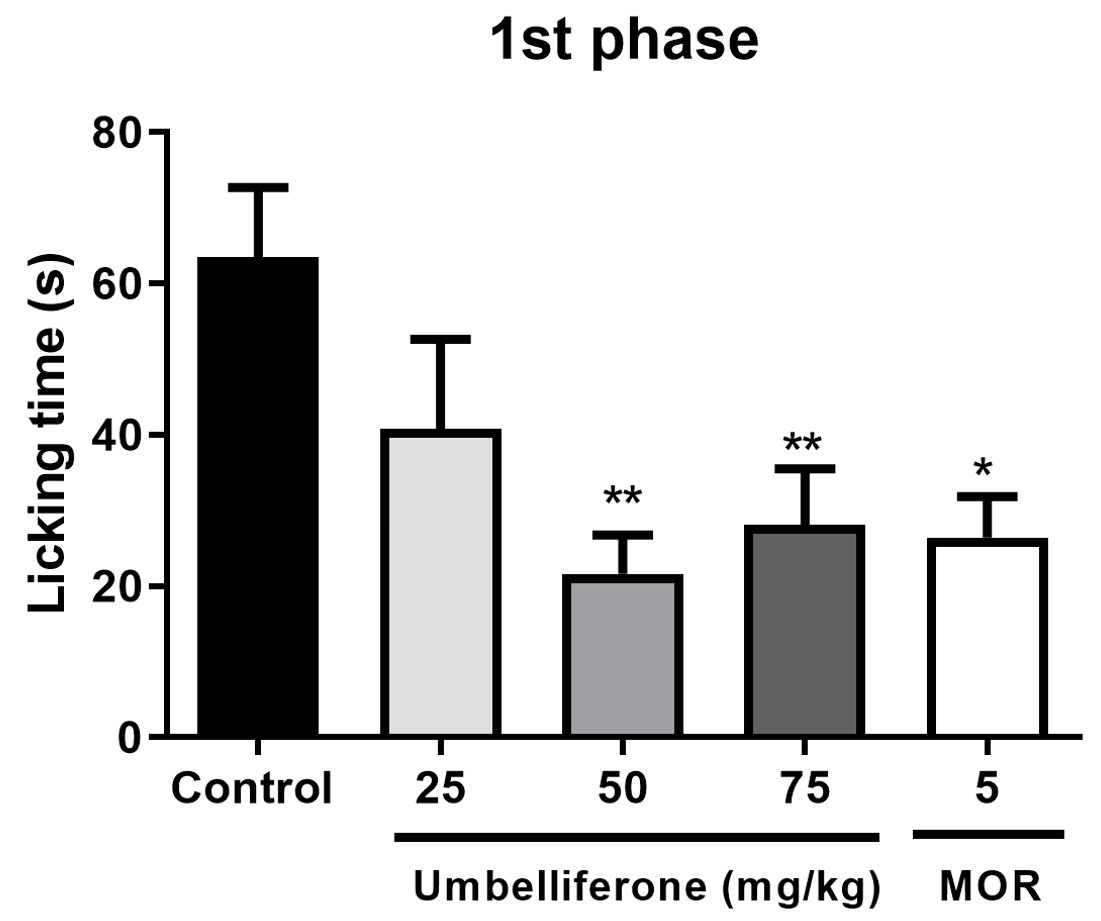
In the first phase of the formalin test, which occurs within the first 5 minutes after substance injection (Figure 2), there was a reduction in paw-friction time in the orofacial region of application by 21.6 sec ± 5.1 s and 28.1 sec ± 7.4 s for the respective doses of 50 and 75 mg/kg of UMB, with p < 0.01. UMB at the dose of 25 mg/kg was not significant (40.8 sec ± 11.8) compared to the control group (63.5 sec ± 9.2). A shorter paw-friction time was also observed compared to the morphine group (26.4 sec ± 5.4).
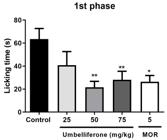
Effect of umbelliferone (25, 50, and 75 mg/kg, i.p.) and morphine (MOR: 5 mg/kg, i.p.) in the first phase of the formalin test. Each column represents mean ± s.e.m (n=7). *p < 0.05, **p < 0.01, versus control group.
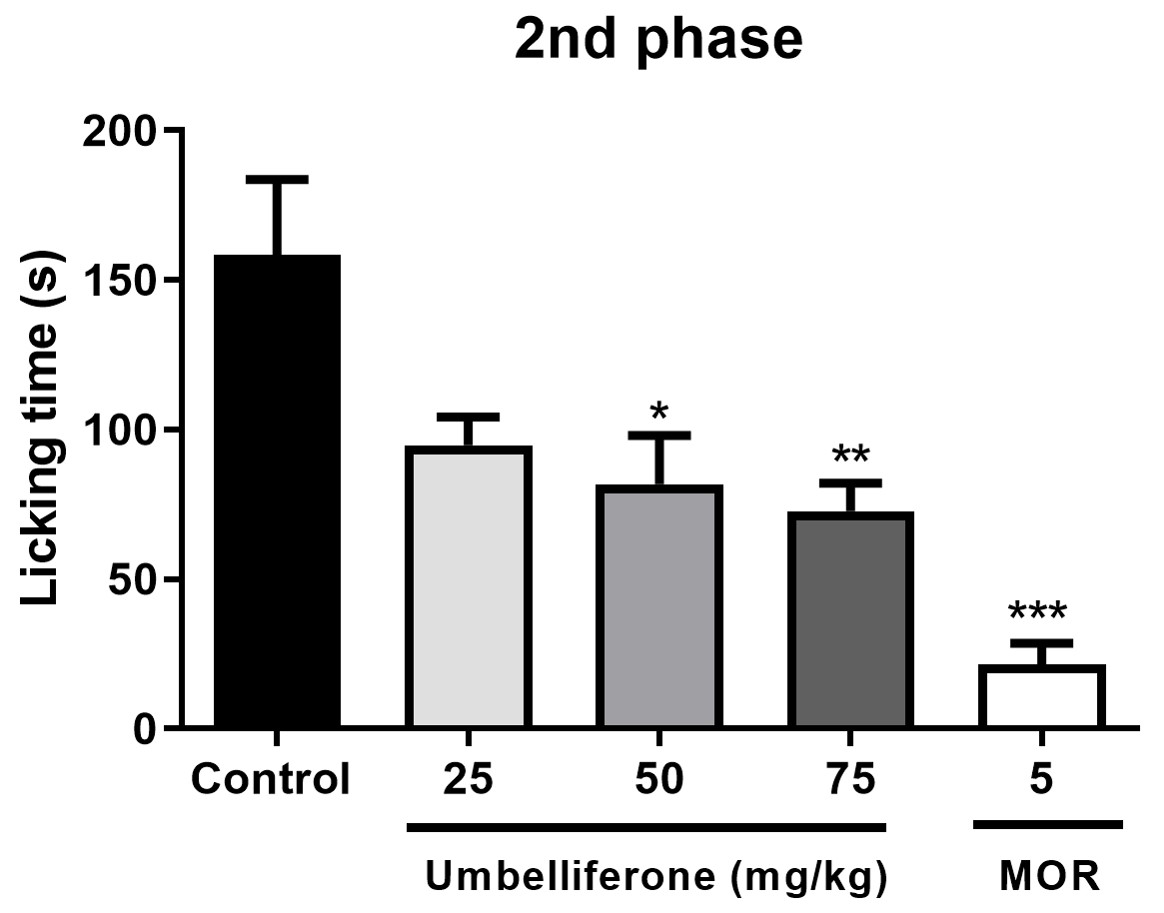
In the second phase, between fifteen and thirty minutes after formalin administration, there was no significance at the dose of 25 mg/kg; however, a significant reduction was observed at doses of 50 (81.7 sec ± 16.4) and 75 (72.7 sec ± 9.4 s) mg/kg, respectively, compared to the control group (158.3 sec ± 25.2 s). Regarding the morphine group (21.4 sec ± 7.2), there was a reduction in paw-friction time, as presented in Figure 3.
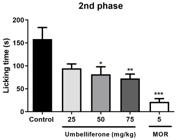
Effect of umbelliferone (25, 50, and 75 mg/kg, i.p.) and morphine (MOR: 5 mg/kg, i.p.) in the second phase of the formalin test. Each column represents mean ± s.e.m (n=7). *p < 0.05, **p < 0.01, ***p < 0.001, versus control group.
3.3. Glutamate-induced orofacial nociception test
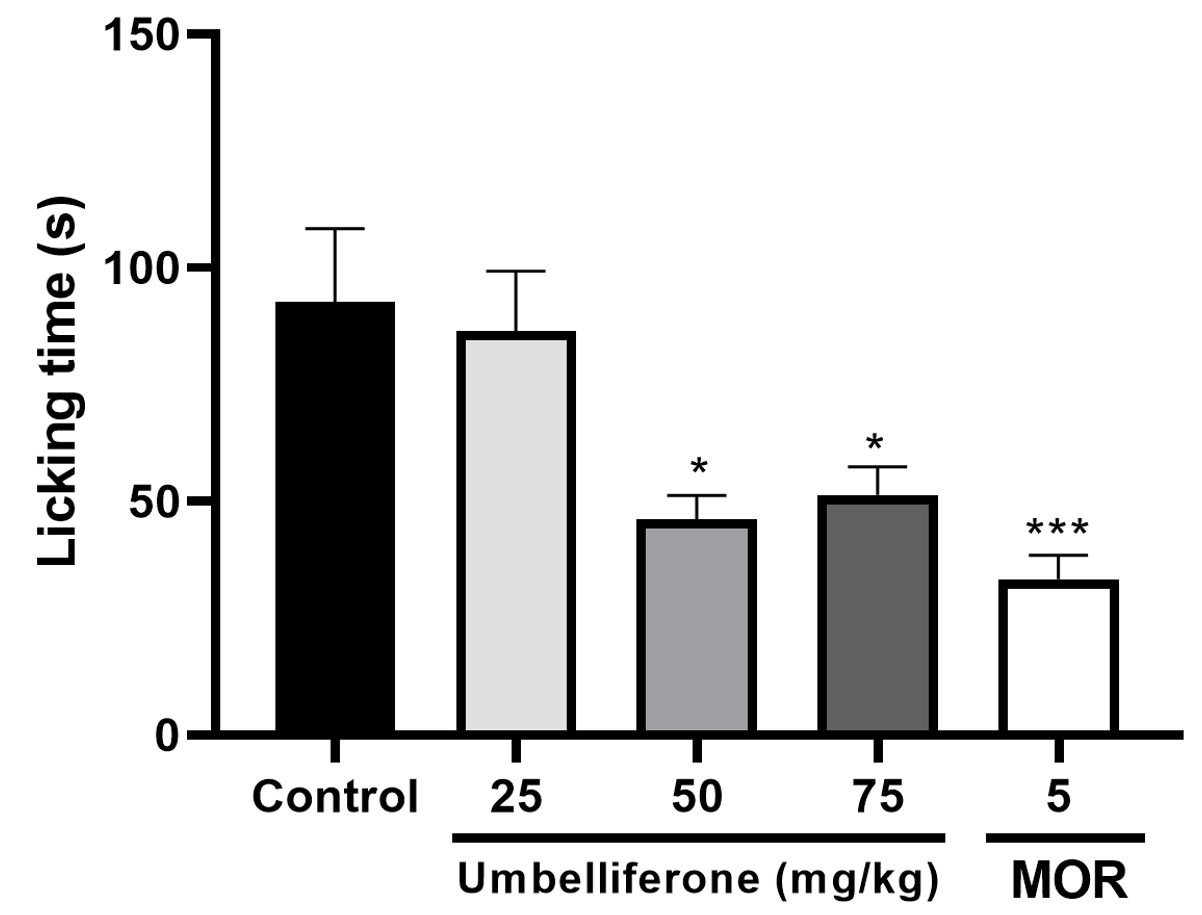
In the glutamate-induced orofacial nociception test, UMB doses of 50 (46.1 sec ± 5.1) and 75 (51.4 sec ± 6.0) mg/kg, as well as morphine at 5 (33.4 sec ± 5.1) mg/kg, significantly reduced paw-friction time in the injected area compared to the control (92.6 sec ± 15.8), with p < 0.05. The dose of 25 mg/kg (86.5 sec ± 12.7) was not effective in the test (Figure 4).
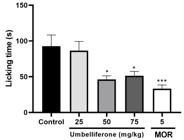
Effect of umbelliferone (25, 50, and 75 mg/kg, i.p.) and morphine (MOR: 5 mg/kg, i.p.) in the glutamate orofacial test. Each column represents mean ± s.e.m (n=7). *p < 0.05, ***p < 0.001, versus control group.
3.4. Capsaicin-induced orofacial nociception test
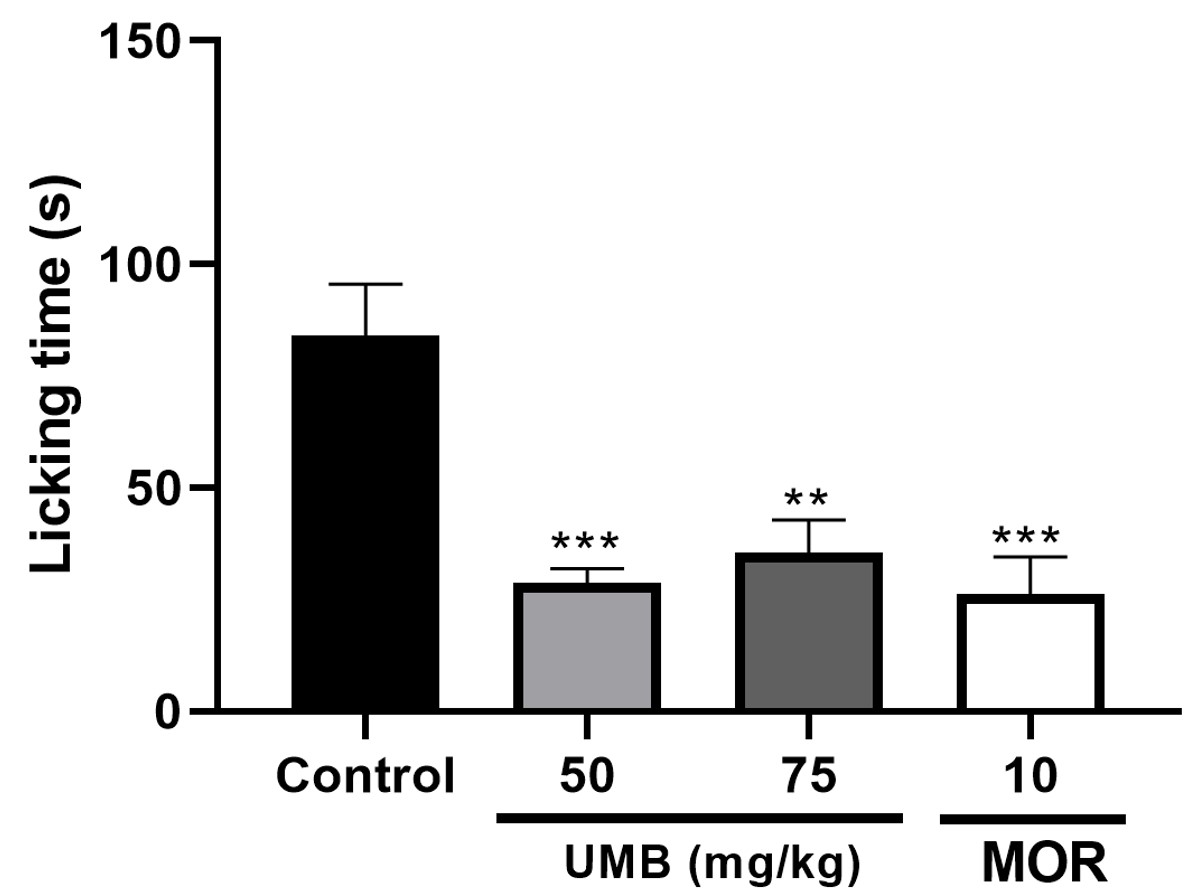
In the capsaicin test, the doses of 50 (28.7 sec ± 3.3) and 75 (35.6 sec ± 7.2) mg/kg of UMB and morphine at 5 (26.3 sec ± 8.2) mg/kg reduced the time the animal spent rubbing the injection area of the substance (the orofacial region) with the front paws, when compared to the time presented by the control group (84.0 sec ± 11.5), see Figure 5.
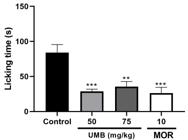
Effect of umbelliferone (UMB: 50 and 75 mg/kg, i.p.) and morphine (MOR: 5 mg/kg, i.p.) in the capsaicin test. Each column represents mean ± s.e.m (n=7). **p < 0.01, ***p < 0.001, versus control group.
3.5. Carrageenan-induced paw edema test
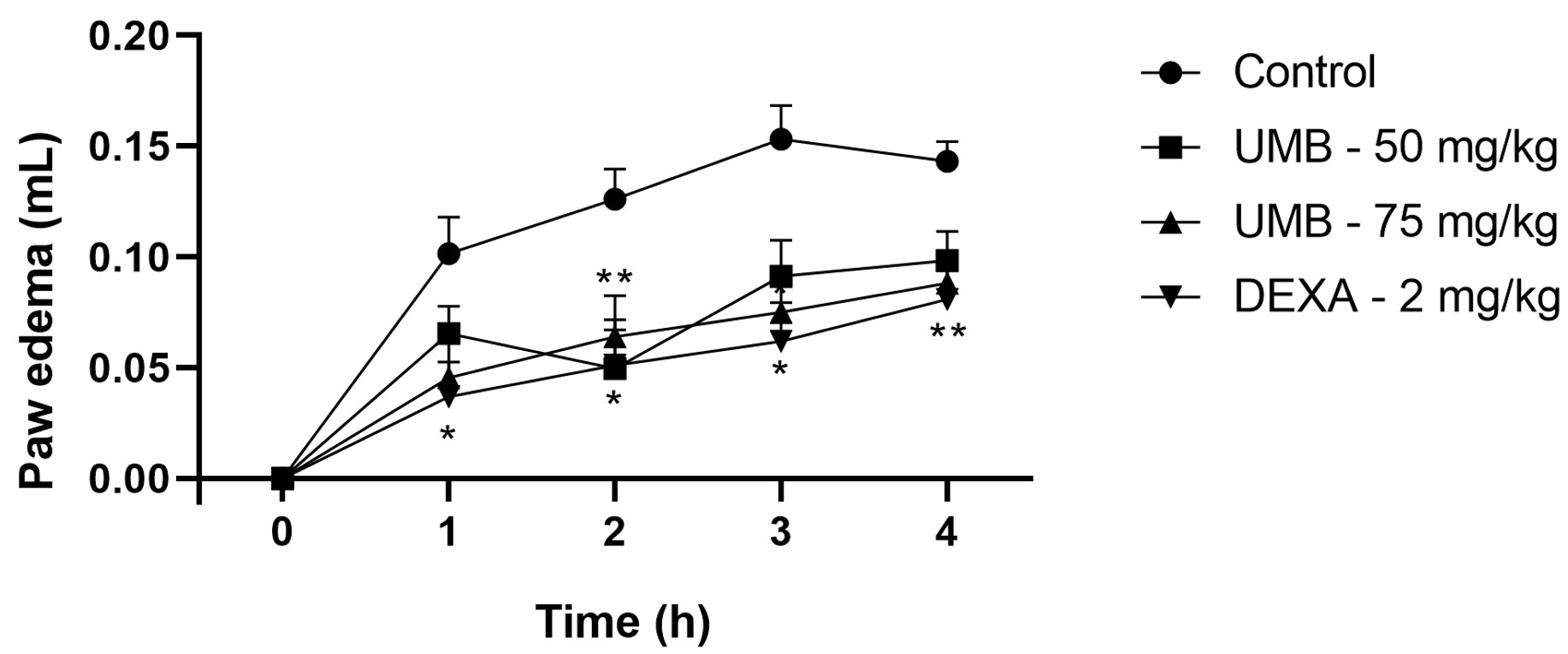
In Figure 6, it was observed that UMB at the dose of 50 mg/kg significantly inhibited edema only at the two-hour time point (0.05 ± 0.06) after carrageenan injection (p < 0.01). On the other hand, the dose of 75 mg/kg at two (0.06 ± 0.06), significantly inhibited edema at three (0.08 ± 0.03), and four (0.09 ± 0.05) hours after administration of the inflammatory stimulus (p < 0.01). Reduction in inflammation was reduced by dexamethasone at 1, 2, 3, and 4-hour time points.
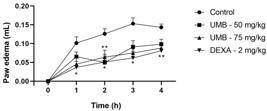
Effect of umbelliferone (50 and 75 mg/kg) and dexamethasone (2 mg/kg) in the carrageenan-induced paw edema test. Each column represents mean ± s.e.m (n=7). *p < 0.05, **p < 0.01 versus control group.
3.6. Leukocyte count and pro-inflammatory cytokine TNF-α assay
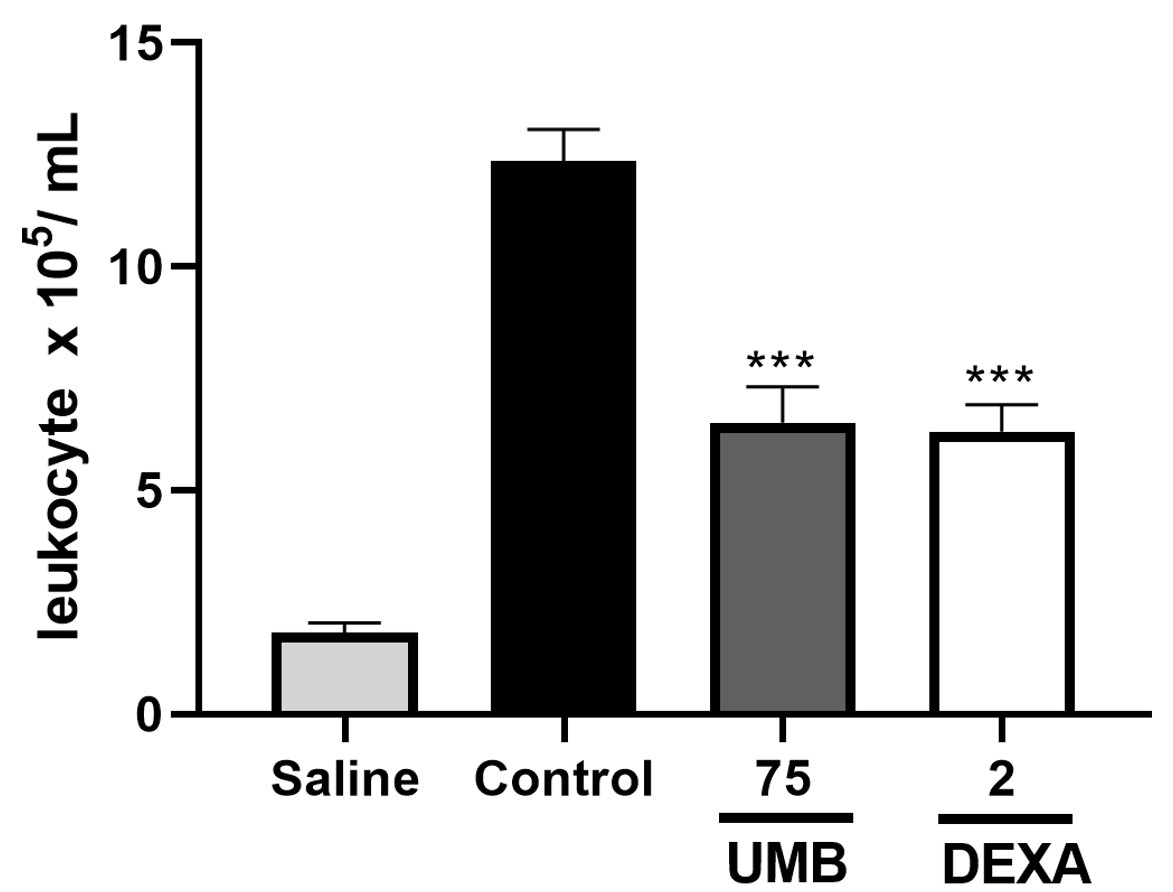
Animals treated with carrageenan via i.p. underwent leukocyte counts to analyze the anti-inflammatory action of UMB. As observed in Figure 7, animals treated with UMB 75 (6.5 ± 0.8 x 10⁵/mL) mg/kg presented a significant decrease in leukocyte migration compared to the control group (12.4 ± 0.7 x 10⁵/mL) (p < 0.001). Animals receiving dexamethasone 2 mg/kg presented a mean leukocyte count of 6.3 ± 0.6 x 10⁵/mL (p < 0.001).
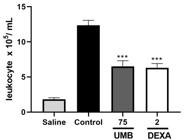
Effect of umbelliferone (UMB: 75 mg/kg) and dexamethasone (DEX: 2 mg/kg) on leukocyte count x 105/mL. Each column represents mean ± s.e.m (n=7). ***p < 0.001, versus the control group.
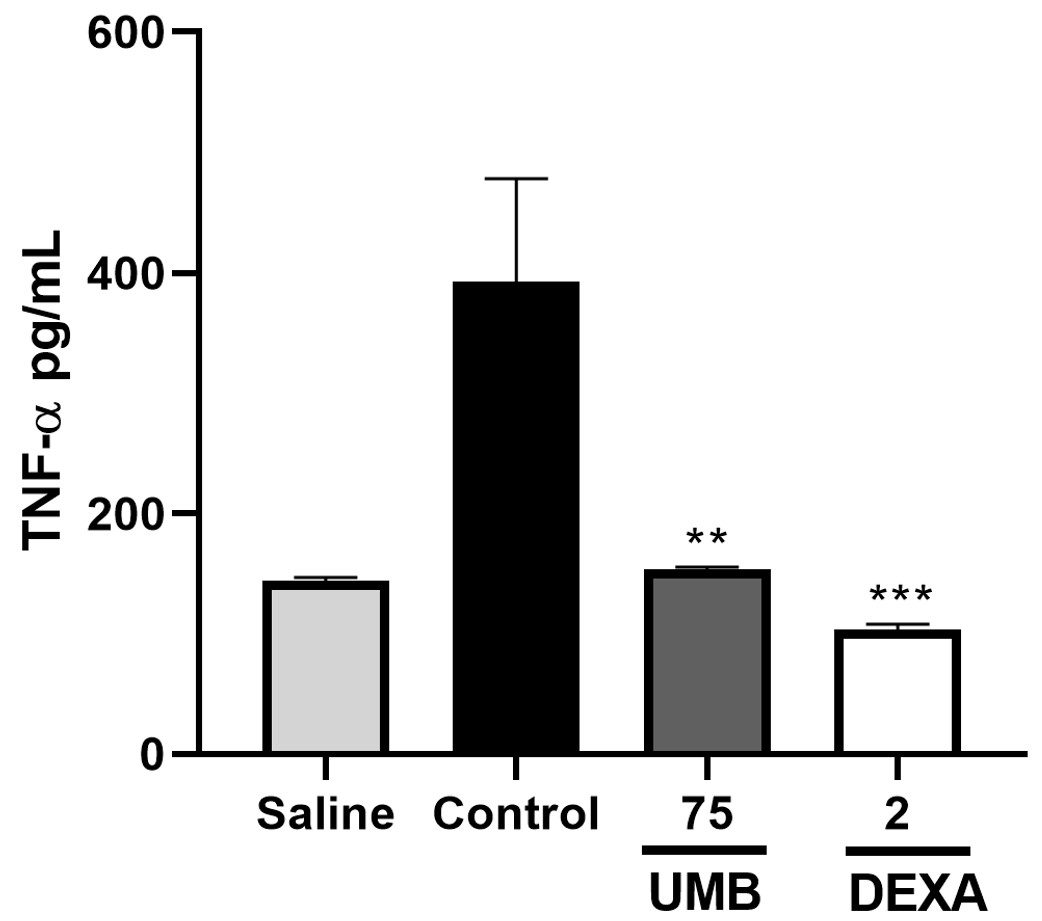
The assay for the pro-inflammatory cytokine TNF-α in peritoneal fluid was then performed, and presented a significant reduction of 60.8%, in the group receiving UMB 75 mg/kg (153.8 ± 1.7 pg/ml) compared to the control group (392.3 ± 86.0 pg/ml), with a value of p < 0.01. The group receiving dexamethasone 2 mg/kg presented a concentration of 103.4 ± 4.3, as presented in Figure 8.
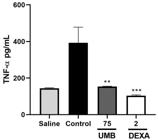
Effect of umbelliferone (UMB: 75 mg/kg) and dexamethasone (DEX: 2 mg/kg) on TNF-α pg/mL dosage. Each column represents mean ± s.e.m (n=7). **p < 0.01, ***p < 0.001, versus control group.
4. Discussion
UMB exhibited both antinociceptive and anti-inflammatory orofacial effects at different doses in the models conducted through inhibition of pain signal transmission via the afferent pathway, as well as the inflammatory cascade. Although some studies have already demonstrated the antinociceptive effect of UMB (Lima et al., 2011; Rauf et al., 2014), its impact on the orofacial region has never been reported.
The acetic acid-induced abdominal writhing test is a sensitive and non-selective experimental model used in research of potentially anti-inflammatory substances. Due to the activation of visceral somatic receptors and the activation of the local inflammatory process mediated by histamine, serotonin, cytokines, and eicosanoids, the test has also been used to evaluate analgesic activity (Olonode et al., 2015).
Evidenced by our results, UMB reduced the amount of abdominal writhing in two of the three tested doses, suggesting potential antinociceptive effect. Similarly, studies conducted with 7-methoxy coumarin isolated from the ethyl acetate fraction of Eupatorium triplinerve Vahl alcoholic extract, have also observed positive effects during abdominal writhing modeling, being able to counteract acute nociception induced by acetic acid (Cheriyan et al., 2017).
To evaluate antinociceptive effect in the orofacial context, three different inductions were applied; formalin, glutamate, and capsaicin, each chosen based on their known nociceptive mechanisms. In terms of experimental and clinical applicability, the formalin test is exceptional for acute pain.
In both test phases, UMB reduced orofacial nociceptive behavior in mice after formalin injection, demonstrating central antinociceptive effects as well as anti-inflammatory activity. The biphasic effect demonstrates that UMB decreases chemical stimulation of free nerve endings (first phase), and/or the release of excitatory amino acids, nitric oxide, and peptides (second phase) (Quintans-Júnior et al., 2010). Similar results were obtained by Singh et al. (2020) with the coumarin imperatorin when formalin was administered to the animal's paw. For a more detailed evaluation of the mechanism of action of UMB, orofacial nociceptive tests induced by glutamate and capsaicin were also performed.
Glutamate is an important excitatory neurotransmitter in the transduction of nociceptive information in the orofacial region through the activation of NMDA receptors (Honda et al., 2011). Comparing our results with the outcomes of previous tests suggests that to exert orofacial antinociceptive activity, UMB interacts with the glutamatergic pathway.
Antinociceptive response was also performed with the capsaicin test, in which shorter friction times in the orofacial area were obtained for the UMB groups compared to the control group. Capsaicin is widely used in preclinical studies of central mechanisms involved in nociception. It acts on the activation of the transient receptor potential vanilloid type 1 (TRPV1) channel, present in the trigeminal ganglion of sensory neurons, as well as increasing the excitability of spinal nociceptive neurons (Pelissier et al., 2002). The furanocoumarin imperatorin acts as a partial TRPV1 agonist, suggesting that UMB (due to chemical similarity between the compounds) may present a similar mechanism of action (Chen et al., 2014).
The anti-inflammatory action of UMB was evaluated for its potential to reduce carrageenan-induced edema, which was responsible for increasing local blood flow and capillary permeability, as well as stimulating the release of inflammatory mediators such as histamine and serotonin (Mehrzadi et al., 2021). In this study, edema volume was lessened in the test groups that received 50 mg/kg and 75 mg/kg of UMB, and also in animals receiving dexamethasone 2 mg/kg. The anti-inflammatory potential of UMB (mediated by NRF2 signaling and inhibition of oxidative stress) in the cisplatin-induced acute kidney injury model was confirmed (Yang et al., 2023).
The inflammatory process involves immune system physiological mechanisms that elevate total leukocyte concentration in peripheral blood. Effective anti-inflammatory treatment involves reducing leukocyte migration (Rodrigues et al., 2015). In the leukocyte count test, animals treated with UMB 75 mg/kg presented a reduction in leukocyte count. However, UMB did not reduce the inflammatory exudate volume or leukocyte migration in the experimental carrageenan-induced pleurisy model, this is perhaps due to the difficulty of this coumarin in crossing pleural membranes (Leal et al., 2024).
A significant reduction caused by UMB was also obtained in the pro-inflammatory cytokine Tumor Necrosis Factor alpha (TNF-α) measurements. Similarly, in methotrexate-induced intestinal inflammation in rats, UMB inhibited TNF-α and IL-6 cytokine levels, as well as STAT3/NF-κB signaling and activation of Nrf2/ARE, and Wnt/β-catenin (Hassanein et al., 2023). Leal et al. (2024) used in silico molecular docking analysis to investigate the affinity of UMB to the enzyme cyclooxygenase-2, and associate it with its anti-inflammatory activity, obtaining a satisfactory result, indicative of good affinity and a promising effect in preventive and/or therapeutic application against inflammation.
Considering its broad spectrum of pharmacological activity, and its relatively simple chemical structure, UMB is an attractive molecule for the synthesis of analogs and development of new pharmaceutical compounds. However, it is important to emphasize that clinical trials are necessary to evaluate the safety and efficacy of such compounds in humans before they can be used as drugs.
5. Conclusion
In summary, UMB has demonstrated to exhibit orofacial antinociceptive effects, as observed in the results of tests with formalin, capsaicin, and glutamate. Furthermore, its anti-inflammatory capacity has also been confirmed by the reduction in the formation of paw edema induced by inflammatory stimulus, as well as by the decrease in leukocyte migration and TNF-α cytokine. Therefore, UMB is a substance with pharmacological potential to be explored in the treatment of orofacial pain, necessitating further preclinical studies to better characterize these substance properties.
Acknowledgements
The authors thank the National Council for Scientific and Technological Development (CNPQ) for financial support (Process 434548/2018-9 of Call MCTIC/CNPq No. 28/2018).
References
-
ASLANTÜRK, Ö.S. and ÇELIK, T.A., 2023. Anticancer effect of umbelliferone on MKN-45 and MIA PaCa-2 cell lines. Toxicology In Vitro, vol. 93, pp. 105694. http://doi.org/10.1016/j.tiv.2023.105694 PMid:37704181.
» http://doi.org/10.1016/j.tiv.2023.105694 - BRITO JÚNIOR, A.A.B. and BARRETO, J.A.A., 2021. Disfunções temporomandibulares: diagnóstico, manejo clínico e perspectivas terapêuticas. Revista da Academia Brasileira de Odontologia, vol. 10, no. 2, pp. 104-109.
-
CAVALCANTE, S.K.S., LINHARES, N.P., COUTO, M.P.F.A., SANTIAGO, T.F., LIMA, K.K.C., PINTO, A.C.M., BEZERRA, Y.V., MENDES, T.A.D. and DINELLY, E.M.P., 2020. Multidisciplinary therapeutic approach for the treatment of orofacial pain: a literature review. Brazilian Journal of Development, vol. 6, no. 7, pp. 44293-44310. http://doi.org/10.34117/bjdv6n7-155
» http://doi.org/10.34117/bjdv6n7-155 -
CAVALCANTE, S.R.P., FERNANDES, H.B. and SANTOS, J.S., 2022. An analysis of the potential of cumarin and its use as a natural pharmaceutical. Research. Social Development, vol. 11, no. 16, e269111637850. http://doi.org/10.33448/rsd-v11i16.37850
» http://doi.org/10.33448/rsd-v11i16.37850 -
CHEN, X., SUN, W., GIANARIS, N.G., RILEY, A.M., CUMMINS, T.R., FEHRENBACHER, J.C. and OBUKHOV, A.G., 2014. Furanocoumarins are a novel class of modulators for the transient receptor potential vanilloid type 1 (TRPV1) channel. The Journal of Biological Chemistry, vol. 289, no. 14, pp. 9600-9610. http://doi.org/10.1074/jbc.M113.536862 PMid:24569998.
» http://doi.org/10.1074/jbc.M113.536862 - CHERIYAN, B.V.S.., KADHIRVELU, P.S., NADIPELLY, J.J., SHANMUGASUNDARAM, J., SAYELI, V.S. and SUBRAMANIAN, V.S., 2017. Anti-nociceptive effect of 7-methoxy coumarin from Eupatorium Triplinerve vahl (Asteraceae). Pharmacognosy Magazine, vol. 13, no. 49, pp. 81-84. PMid:28216887.
-
COSTA, T.K.V.L.D., BARROS, M.S., BRAGA, R.M., VIANA, J.D.O., SOUSA, F.B.D., SCOTTI, L., SCOTTI, M.T., BATISTA, A.U.D., ALMEIDA, R.N. and CASTRO, R.D., 2020. Orofacial antinociceptive activity and anchorage molecular mechanism in silico of geraniol. Brazilian Oral Research, vol. 34, e094. http://doi.org/10.1590/1807-3107bor-2020.vol34.0094 PMid:32785475.
» http://doi.org/10.1590/1807-3107bor-2020.vol34.0094 -
HASSANEIN, E.H.M., ALI, F.E.M., SAYED, M.M., MAHMOUD, A.R., JABER, F.A., KOTOB, M.H. and ABD-ELHAMID, T.H., 2023. Umbelliferone potentiates intestinal protective effect of Lactobacillus Acidophilus against methotrexate-induced intestinal injury: biochemical and histological study. Tissue & Cell, vol. 82, pp. 102103. http://doi.org/10.1016/j.tice.2023.102103 PMid:37178526.
» http://doi.org/10.1016/j.tice.2023.102103 -
HASSANEIN, E.H.M., SAYED, A.M., HUSSEIN, O.E. and MAHMOUD, A.M., 2020. Coumarins as modulators of the Keap1/Nrf2/ARE signaling pathway. Oxidative Medicine and Cellular Longevity, vol. 2020, pp. 1675957. http://doi.org/10.1155/2020/1675957 PMid:32377290.
» http://doi.org/10.1155/2020/1675957 -
HONDA, K., NOMA, N., SHINODA, M., MIYAMOTO, M., KATAGIRI, A., KITA, D., LIU, M.G., SESSLE, B.J., YASUDA, M. and IWATA, K., 2011. Involvement of peripheral ionotropic glutamate receptors in orofacial thermal hyperalgesia in rats. Molecular Pain, vol. 7, pp. 75. http://doi.org/10.1186/1744-8069-7-75 PMid:21952000.
» http://doi.org/10.1186/1744-8069-7-75 -
JESUS, R.L.C., SILVA, I.L.P., ARAÚJO, F.A., MORAES, R.A., SILVA, L.B., BRITO, D.S., LIMA, G.B.C., ALVES, Q.L. and SILVA, D.F., 2022. 7-Hydroxycoumarin induces vasorelaxation in animals with essential hypertension: focus on potassium channels and intracellular Ca2+ mobilization. Molecules, vol. 27, no. 21, pp. 7324. http://doi.org/10.3390/molecules27217324 PMid:36364149.
» http://doi.org/10.3390/molecules27217324 -
LEAL, L.E., MOREIRA, E.S., CORREIA, B.L., BUENO, P.S.A., COMAR, J.F., DE SÁ-NAKANISHI, A.B., CUMAN, R.K.N., BRACHT, A., BERSANI-AMADO, C.A. and BRACHT, L., 2024. Comparative study of the antioxidant and anti-inflammatory effects of the natural coumarins 1,2-benzopyrone, umbelliferone and esculetin: in silico, in vitro and in vivo analyses. Naunyn-Schmiedeberg’s Archives of Pharmacology, vol. 397, no. 1, pp. 173-187. http://doi.org/10.1007/s00210-023-02606-2 PMid:37395795.
» http://doi.org/10.1007/s00210-023-02606-2 -
LIMA, F.O., NONATO, F.R., COUTO, R.D., BARBOSA FILHO, J.M., NUNES, X.P., SANTOS, R.R., SOARES, M.B. and VILLARREAL, C.F., 2011. Mechanisms involved in the antinociceptive effects of 7-hydroxycoumarin. Journal of Natural Products, vol. 74, no. 4, pp. 596-602. http://doi.org/10.1021/np100621c PMid:21417376.
» http://doi.org/10.1021/np100621c -
LUCCARINI, P., CHILDERIC, A., GAYDIER, A., VOISIN, D. and DALLEL, R., 2006. The orofacial formalin test in the mouse: a behavioral model for studying physiology and modulation of trigeminal nociception. The Journal of Pain, vol. 7, no. 12, pp. 908-914. http://doi.org/10.1016/j.jpain.2006.04.010 PMid:17157777.
» http://doi.org/10.1016/j.jpain.2006.04.010 -
MAZIMBA, O., 2017. Umbelliferone: sources, chemistry and bioactivities review. Bulletin of Faculty of Pharmacy, Cairo University, vol. 55, no. 2, pp. 223-232. http://doi.org/10.1016/j.bfopcu.2017.05.001
» http://doi.org/10.1016/j.bfopcu.2017.05.001 -
MEHRZADI, S., KHALILI, H., FATEMI, I., MALAYERI, A., SIAHPOOSH, A. and GOUDARZI, M., 2021. Zingerone mitigates carrageenan-induced inflammation through antioxidant and anti-inflammatory activities. Inflammation, vol. 44, no. 1, pp. 186-193. http://doi.org/10.1007/s10753-020-01320-y PMid:32803664.
» http://doi.org/10.1007/s10753-020-01320-y -
OLONODE, E.T., ADERIBIGBE, A.O. and BAKRE, A.G., 2015. Anti-nociceptive activity of the crude extract of Myrianthus arboreus P. Beauv (Cecropiaceae) in mice. Journal of Ethnopharmacology, vol. 171, no. 2, pp. 94-98. http://doi.org/10.1016/j.jep.2015.05.005 PMid:26002765.
» http://doi.org/10.1016/j.jep.2015.05.005 -
PARK, N.W., LEE, E.S., HA, K.B., JO, S.H., KIM, H.M., KWON, M.H. and CHUNG, C.H., 2023. Umbelliferone ameliorates hepatic steatosis and lipid-induced ER stress in high-fat diet-induced obese mice. Yonsei Medical Journal, vol. 64, no. 4, pp. 243-250. http://doi.org/10.3349/ymj.2022.0354 PMid:36996895.
» http://doi.org/10.3349/ymj.2022.0354 -
PELISSIER, T., PAJOT, J. and DALLEL, R., 2002. The orofacial capsaicin test in rats: effects of different capsaicin concentrations and morphine. Pain, vol. 96, no. 1-2, pp. 81-87. http://doi.org/10.1016/S0304-3959(01)00432-8 PMid:11932064.
» http://doi.org/10.1016/S0304-3959(01)00432-8 - QUINTANS-JÚNIOR, L.J., MELO, M.S., DE SOUSA, D.P., ARAÚJO, A.A., ONOFRE, A.C., GELAIN, D.P., GONÇALVES, J.C., ARAÚJO, D.A., ALMEIDA, J.R. and BONJARDIM, L.R., 2010. Antinociceptive effects of citronellal in formalin-, capsaicin-, and glutamate-induced orofacial nociception in rodents and its action on nerve excitability. Journal of Oral & Facial Pain and Headache, vol. 24, no. 3, pp. 305-312. PMid:20664833.
-
RAUF, A., KHAN, R., KHAN, H., PERVEZ, S. and PIRZADA, A.S., 2014. In vivo antinociceptive and anti-inflammatory activities of umbelliferone isolated from Potentilla evestita. Natural Product Research, vol. 28, no. 17, pp. 1371-1374. http://doi.org/10.1080/14786419.2014.901317 PMid:24673335.
» http://doi.org/10.1080/14786419.2014.901317 -
RODRIGUES, L.C.C., MEYER, T.N., PEREIRA, J.B.B. and SILVA, G.R., 2015. Avaliação da atividade anti-inflamatória do extrato hidroalcoólico do caroço de abacate sobre a peritonite induzida pela carragenina em ratos. Revista da Universidade Vale do Rio Verde, vol. 13, no. 2, pp. 367-376. http://doi.org/10.5892/ruvrd.v13i1.2305
» http://doi.org/10.5892/ruvrd.v13i1.2305 - SÁ-FILHO, G.D., SILVA, A.I.B., COSTA, E.M., NUNES, L.E., RIBEIRO, L.H.F., CAVALCANTI, J.R.L.P. and CAVALCANTE, J.S., 2021. Medicinal plants used in the Brazilian caatinga and the therapeutic potential of secondary metabolites: a review. Research. Social Development, vol. 10, no. 13, e140101321096.
-
SHAHANE, K., KSHIRSAGAR, M., TAMBE, S., JAIN, D., ROUT, S., FERREIRA, M.K.M., MALI, S., AMIN, P., SRIVASTAV, P.P., CRUZ, J. and LIMA, R.R., 2023. An updated review on the multifaceted therapeutic potential of calendula officinalis L. Pharmaceuticals, vol. 16, no. 4, pp. 611. http://doi.org/10.3390/ph16040611 PMid:37111369.
» http://doi.org/10.3390/ph16040611 -
SINGH, G., KAUR, J., KAUR, M., SINGH, P. and BHATTI, R., 2020. Anti-nociceptive and anti-inflammatory effect of imperatorin: evidences for involvement of COX-2, iNOS, NFκB and inflammatory cytokines. The International Journal of Neuroscience, vol. 130, no. 2, pp. 176-185. http://doi.org/10.1080/00207454.2019.1667789 PMid:31524564.
» http://doi.org/10.1080/00207454.2019.1667789 -
SOUZA, K.B.R., CASAIS-E-SILVA, L.L. and AGUIAR, M.C., 2020. O modelo de dor inflamatória induzida pela carragenina como estratégia para avaliar a ação de drogas sobre a dor miofascial. Revista de Ciências Médicas e Biológicas, vol. 19, no. 3, pp. 507-513. http://doi.org/10.9771/cmbio.v19i3.42460
» http://doi.org/10.9771/cmbio.v19i3.42460 -
YANG, Z., NING, R., LIU, Q., ZANG, R., LIU, S. and SUN, S., 2023. Umbelliferone attenuates cisplatin-induced acute kidney injury by inhibiting oxidative stress and inflammation via NRF2. Physiological Reports, vol. 11, no. 23, e15879. http://doi.org/10.14814/phy2.15879 PMid:38030388.
» http://doi.org/10.14814/phy2.15879