 Identification of growth-promoting microorganisms and their impact on chickpea growth in tropical regions
Abstract
The study of plant growth-promoting microorganisms is crucial for developing new agricultural strategies aimed at increasing productivity and resilience in semi-arid environments, where water scarcity and soil degradation pose critical challenges. Therefore, this study aimed to identify and relate the effects of inoculation of growth-promoting or nodulating microorganisms in isolates from chickpea roots grown in a semiarid region. The nodules were washed with distilled water, 95% ethanol and 3% NaClO. They were then crushed, and the resulting suspension was diluted six times in saline solution. The microorganisms were inoculated in YMA culture medium and observed for colony counting. Microbiological analyses and biochemical identification were conducted to identify the isolates. Eight bacterial species were identified: Bacillus cereus, Bacillus mycoides, Enterobacter asburiae, Klebsiella variicola, Kosakonia radicincitans, Mesorhizobium sp. 1, Pseudomonas monteilii, and Rhizobium radiobacter. Two chickpea cultivars, Aleppo and Cristalino, were planted in a greenhouse to assess the effects of the identified microorganisms. The plants were inoculated and grown for 72 days. The Cristalino cultivar showed improvement in root length, shoot dry weight, number of nodules, and total nitrogen content when inoculated with Klebsiella variicola and Mesorhizobium sp. 1. The Aleppo cultivar showed greater root dry weight, total dry weight, and root-to-shoot ratio when inoculated with Mesorhizobium sp. 1 and Bacillus cereus. All the microorganisms found in this study have significant potential to promote chickpea plant growth.
Keywords:
associative bacteria; Mesorhizobium sp.; native bacteria; root nodules; sustainable production
Resumo
O estudo de microrganismos promotores do crescimento de plantas é crucial para o desenvolvimento de novas estratégias agrícolas que visem aumentar a produtividade e a resiliência em ambientes semiáridos, onde a escassez de água e a degradação do solo representam desafios críticos. Portanto, este estudo teve como objetivo identificar e relacionar os efeitos da inoculação de microrganismos promotores de crescimento ou noduladores em isolados de raízes de grão-de-bico cultivados em região semiárida. Os nódulos foram lavados com água destilada, etanol 95% e NaClO 3%, em seguida foram triturados e a suspensão resultante foi diluída seis vezes em solução salina, microrganismos foram inoculados em meio de cultura YMA, foram observados para contagem de colônias. Análises microbiológicas e a identificação bioquímica foram conduzidas para identificar os isolados. Duas cultivares de grão-de-bico, Aleppo e Cristalino, foram plantadas em estufa para avaliar os efeitos dos microrganismos identificados. As plantas foram inoculadas e cultivadas por 72 dias para avaliação de características fisiológicas. Oito espécies bacterianas foram identificadas: Bacillus cereus, Bacillus mycoides, Enterobacter asburiae, Klebsiella variicola, Kosakonia radicincitans, Mesorhizobium sp. 1, Pseudomonas monteilii e Rhizobium radiobacter. A cultivar Cristalino teve aumento no comprimento de raízes, peso seco da parte aérea, número de nódulos e teor total de nitrogênio quando inoculada com Klebsiella variicola e Mesorhizobium sp. 1. A cultivar Aleppo teve maior peso seco da raiz, peso seco total e relação raiz-parte aérea quando inoculada com Mesorhizobium sp. 1 e Bacillus cereus. Todos os microrganismos encontrados neste estudo têm potencial significativo para promover o crescimento das plantas de grão-de-bico.
Palavras-chave:
bactérias associativas; Mesorhizobium sp.; bactérias nativas; nódulos de raiz; produção sustentável
1. Introduction
Chickpeas are a legume of great global importance, and their seeds are a source of proteins and vitamins (Gunnabo et al., 2020; Hussain et al., 2021. It is a legume traditionally cultivated in India, the country with the highest production and consumption of this legume (FAOSTAT, 2022; Nagpal et al., 2020; Gul and Ullah, 2022). Chickpeas, like other legumes, have a strong association with nitrogen-fixing bacteria (Almeida Neta et al., 2021) and form associations with growth-promoting organisms (Laranjo et al., 2014). Chickpeas have the ability for biological nitrogen fixation (BNF) through symbiosis with rhizobia, which contributes to their cultivation in nutrient-poor soils and reduces the costs associated with fertilization (Romanyà and Casals, 2019; Bosse et al., 2021).
The symbiosis of chickpeas is described as restrictive to the species Mesorhizobium ciceri and Mesorhizobium mediterraneum (Laranjo et al., 2014; Armas-Capote et al., 2014). However, other species of bacteria from the genus Mesorhizobium sp. have been described in symbiosis with the chickpea host. This is due to the horizontal transfer of symbiotic genes nifH and nodC among strains (Gunnabo et al., 2020; Tena et al., 2017; Elias and Herridge, 2014; Padilha et al., 2025).
Other genera of bacteria are known in agriculture as growth promoters because they enhance soil fertility, plant growth, and provide protection against pathogens or abiotic stresses (Cao et al., 2023; Racioppo et al., 2023). Among them are Bacillus sp., Pseudomonas sp., and Erwinia sp., which have already been isolated from chickpea roots (Verma et al., 2020; Khan et al., 2021; Benjelloun et al., 2021). They are considered growth-promoting bacteria and biofertilizers (Gunnabo et al., 2020; Rana et al., 2020), as they promote biomass growth, phosphorus solubilization, production of phytohormones, and grain yield (Kumar et al., 2023; Nagpal et al., 2021).
The use of biofertilizers has gained prominence as a viable alternative for sustainable agricultural production due to their low cost and environmental toxicity (Riaz et al., 2021). These products consist of plant growth-promoting microrganisms that contribute to the improved development of plants and disease control, thereby enhancing crop productivity in an environmentally friendly manner (Dal Cortivo et al., 2020; Pardo-Diaz et al., 2021).
In Brazil, the identification of rhizobia in symbiosis or associated with chickpeas is still little studied. In Myanmar, native Mesorhizobium sp. strains were observed in symbiosis with chickpeas (Zhang et al., 2023; Padilha et al., 2025), described as nodulating bacteria in chickpeas with significance for the production of inoculants for the crop and economic yield. Similarly, in Australia, a study described the identification of native strains in symbiosis with chickpeas (Elias and Herridge, 2014).
Numerous techniques are used to identify these plant growth-promoting microorganisms, among which MALDI-TOF, which has a systemic approach of Mass Spectrometry (MS) as promising tools for the characterization of bacteria (Dieckmann et al., 2008), fungi (Valentine et al., 2002), viruses (Colquhoun et al., 2006) and even nematodes (Perera et al., 2005). This system employs different proteomic strategies for the direct analysis of intact proteins, thereby identifying microorganisms using MS to determine a unique spectrum for each protein (Torres-Sangiao et al., 2021).
Microbial identification through MALDI-TOF MS offers multiple advantages, such as being based on intact proteins, avoiding time-consuming digestions, desalting, and other pretreatments such as solid-phase extraction, while maintaining good sensitivity; it also has excellent processing efficiency (Altun et al., 2015; Abiân et al., 2008). This method is rapid and low-cost, thus becoming widely used for identifying bacterial profiles at taxonomic levels of genus and species (Torres-Sangiao et al., 2021). However, it also has some disadvantages such as proper sample-to-matrix ratio, bacterial age, culture medium, number of laser shots applied, and average spectrum per measurement, which can interfere with the quality of results (Cuenod et al., 2021). Additionally, the identification of new species heavily depends on thorough analyses of databases (Altun et al., 2015).
Other methods are commonly used for the identification and classification of these microorganisms, such as 16S rRNA sequencing and gel electrophoresis (Sandrin et al., 2013; Mojumdar et al., 2022). However, they are expensive, time-consuming, and labor-intensive. The MALDI-TOF technique is an excellent tool for the identification and characterization of microorganisms and has been more widely used than 16S and 18S rRNA gene sequencing (Havlicek et al., 2013; Dingle and Butler-Wu, 2013).
Considering the above, it is clear the importance of identifying and characterizing native soil bacteria interacting with chickpeas cultivated in tropical regions. This is crucial for obtaining information to develop inoculants or understand the bacteria's action in plants. Therefore, this study aimed to identify and relate the effects of inoculation of growth-promoting or nodulating microorganisms in isolates from chickpea roots grown in a semiarid region.
2. Materials and Methods
Two experiments were carried out. In the first experiment, chickpea root nodules were collected and analyzed to identify native plant-growth-promoting microorganisms from the experimental area. In the second experiment, an inoculant was formulated using the identified microorganisms that showed potential for promoting plant growth and development, and it was applied to two Kabuli chickpea cultivars.
2.1. Study area and experimental conditions
The study was conducted in the experimental area of the Federal University of Minas Gerais, at the Institute of Agricultural Sciences, Montes Claros campus – MG, from June to September 2022. The collection area had a history of annual chickpea cultivation for six years, where nodules on the roots had already been observed. The plots were marked with dimensions of 2 x 1 m, containing four rows of cultivation with spacing of 0.50 m between rows and 0.10 m between plants. For the evaluations, ten plants located in the central area (1.0 m2) were selected in 32 plots.
The soil in the area was classified as Haplic Cambisol with a medium texture (Wolde-Meskel et al., 2018). Twenty days before the implementation of the crop, soil samples were collected from the 0-20 cm depth layer for chemical characterization: 3.60 dag kg-1; N-NO3- 93 mg kg-1; N-NH4+ 79 mg kg-1; N total 2.58 g kg-1; pH (H2O) 5,8; P (Mehlich-1) 2,09 mg dm-3; K (Mehlich-1) 81 mg dm-3; Ca 8,60 cmolc dm-3; Mg 1,80 cmolc dm-3; H+Al 3.10 cmolc dm-3; Sum of bases (Ca+Mg+K): 10.61 cmolc dm-3; CEC: 13,70 cmolc dm-3.
The chickpea cultivar BRS Cristalino was used, with kabuli-type grains, semi-erect growth, and adaptability to the semi-arid region of Minas Gerais. The sowing was done manually in the planting furrow. The seeding fertilization was carried out in the furrow below the seeds with 20 kg ha-1 of N and K2O in the form of urea and potassium chloride, respectively (Pegoraro et al., 2018; Almeida Neta et al., 2020).
The micro-sprinkler irrigation system was adopted with a watering schedule every four days. Weed and pest control were carried out manually, using a hoe for weeds and handpicking for pest control.
2.2. Separation of root nodules
The plants were harvested 70 days after planting, during full flowering, as this period corresponds to the peak activity of the nodules. For the collection, a marking was made around the plants, with a radius of approximately 20 cm, corresponding to the area of the root system. A depth of approximately 50 cm was excavated, and the plant was removed with the aid of a shovel in a manner that minimized root and nodule loss. The aboveground portion was separated from the roots.
The excess soil was removed from the roots by dipping them in containers filled with water, followed by washing the roots using a water jet from a faucet over a sieve with a mesh size of 2.0 mm until completely clean. After, the root nodules were removed for microbiological analysis. The aboveground portion was separated, labeled, and dried in an oven at 65 °C to determine dry weight and nitrogen content. The roots were placed in an oven at 65 °C to obtain dry mass.
2.3. Obtaining bacterial isolates
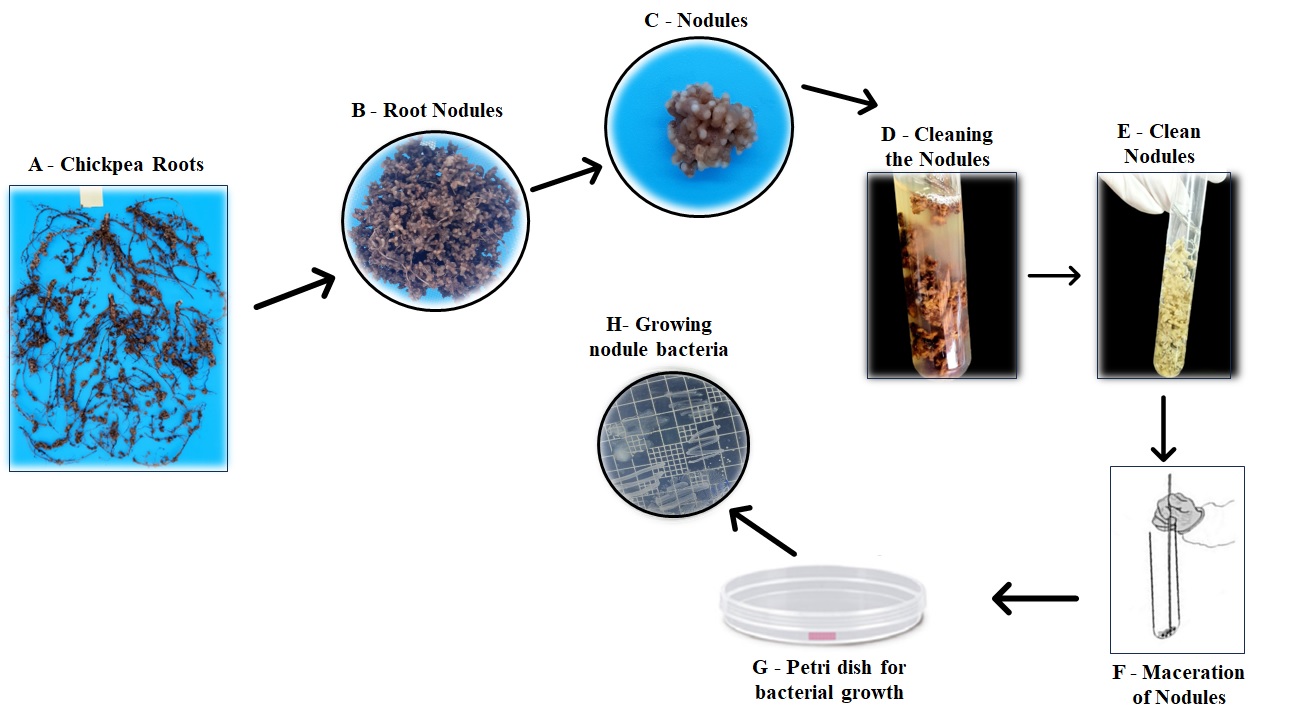
The nodules were detached, washed with autoclaved distilled water, and immersed for 25 s in 95% ethanol and for 1 min in NaClO 3%. Subsequently, they were washed five times with distilled water. After cleaning, the nodules were crushed, and the resulting suspension was diluted six times (10-6) in saline solution containing 0.85 g NaCl in 100 mL of distilled water (Dionísio et al., 2016).
The microorganisms were inoculated into YMA culture medium (manitol: 10.0 (g L-1); K2HPO4: 0.5 (g L-1); MgSO4.7H2O: 0.2 (g L-1); NaCl: 0.1 (g L-1); yeast extract: 0.5 (g L-1); agar: 15.0 (g L-1); distilled water q.s.p: 1 (L); bromothymol blue culture medium: 5 mL L-1; pH:6.8) a 28 °C (Yano et al., 1993). After incubation, they were observed daily for up to 7 days or until microbial growth for colony counting (Figure 1).
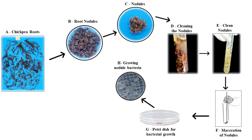
Root nodule cleaning process for microbiological analysis: (A) chickpea roots (B) root nodules, (C) separate nodules, (D) cleaning of nodules, (E) clean nodules, (F) maceration of nodules, (G, H) microbiological analysis.
The colonies formed were visually analyzed by colony growth time, diameter, appearance, shape, and coloration on culture medium. After 24 h of incubation, the colony-forming units (CFUs) were counted, and each selected and identified colony was stained by the Gram method (Figure 1). After bacterial colonies were pure (isolated), the Gram test was performed on the colonies grown on Petri dishes in a culture medium with a maximum of 24 h. The test was carried out on clean glass slides with ethyl alcohol and previously identified according to the organism, following a protocol (Yano et al., 1993).
2.4. Matrix-assisted laser desorption time course mass spectrometry (MALDI-TOF MS) analysis
The bacterial isolates were isolated until they were completely pure and were analyzed after 24 hours of growth in a petri dish with YMA culture medium with bromothymol blue by the MALDI-ToF test, using the MALDI-Biotyper v2.0 software (Farfour et al., 2012), at the Aquatic Animal Disease Diagnosis Laboratory, at the Federal University of Minas Gerais – UFMG – Belo Horizonte/MG campus.
2.5. Preparation of the inoculant and greenhouse planting
After identifying and isolating the bacteria, an experiment was conducted using a randomized block design with a 2x10 factorial scheme. The first factor consisted of two Kabuli chickpea cultivars (BRS Aleppo and BRS Cristalino). The second factor included ten seed inoculants with the following microorganisms: (1) Bacillus cereus, (2) Bacillus mycoides, (3) Enterobacter asburiae, (4) Klebsiella variicola, (5) Kosakonia radicincitans, (6) Mesorhizobium sp. 1, (7) Pseudomonas monteilii, (8) Rhizobium radiobacter, (9) Bacterial Mix 1 (Bacillus cereus, Klebsiella variicola, Rhizobium radiobacter, Mesorhizobium sp. 1), and (10) Bacterial Mix 2 (Bacillus cereus, Klebsiella variicola, Rhizobium radiobacter).
To produce the inoculants, the microorganisms were cultured in 50 mL of sterile Brain Heart Infusion (BHI) broth (37 g of medium per 1 L of distilled water) and incubated for 48 h. The cultures were then diluted to achieve a uniform microorganism concentration of 107 UFC mL-1. Each chickpea seed was inoculated with 10 µL of the inoculant solution. Five seeds were planted in pots containing 0.5 L of autoclaved commercial substrate, and two plants per pot were maintained after germination.
The chickpeas were grown for 70 days in a greenhouse, applying 100 mL of Hoagland solution (without added nitrogen) four times a week. The plants were also irrigated with distilled water as needed. After 70 days, the plants were harvested.
2.6. Characterization of production components and nitrogen content determination
The collected plants were taken to the laboratory for the separation of the aboveground and root parts for the analysis of the following traits: SDW (shoot dry weight); TDW (total dry weight); NR (nitrogen in the root); NS (nitrogen in the shoots); NN (nitrogen in the nodule); NunN (number of nodules). After separating the components, the parts were dried in a forced-air circulation oven at 65 °C until reaching a constant weight to obtain dry mass. Plant samples were ground using a Wiley mill with a 2 mm mesh sieve and nitrogen content was determined using the Kjeldahl method (Bremner, 1965). The nitrogen content in shoots, roots, and nodules were calculated by multiplying the dry mass of the component by the nitrogen content. Root lengths were summed up using a tape measure.
2.7. Statistical analyses
As the data did not present normality, it was decided to perform a descriptive analysis of the data. The data were studied using Pearson correlation analysis using the statistical software R (R Development Core Team, 2020) together with the ExpDes.pt and Multivariate Analysis packages. Additionally, cluster analysis (dendrograms) was performed using the Unweighted Pair-Group Method with Arithmetic Mean (UPGMA) and Euclidean distance metric (non-standardized). PCA analysis and cluster analysis were performed using the plant growth variables and the microorganisms found in this study.
3. Results
3.1. Bacterial isolates
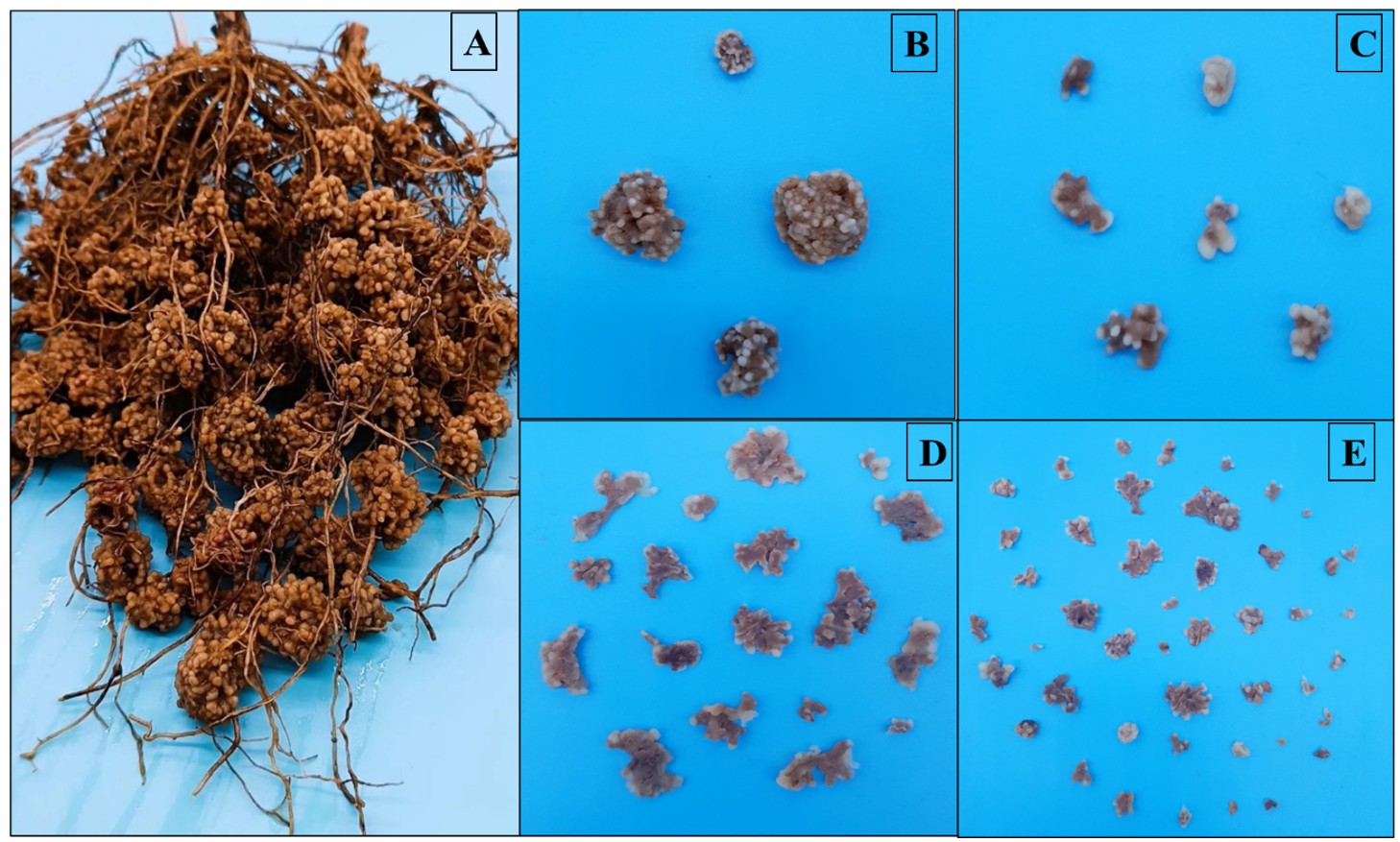
Root nodules were found in plants throughout the cultivated area. A visual characterization of the nodules revealed a wide variety in terms of size and shape (Figure 2). The microbiological analyses allowed for the characterization of bacteria based on their morphology, distinguishing them by size, shape, and arrangement (Table 1). These analyses facilitated the isolation and identification of Colony Forming Units (CFUs), with the morphology of the bacteria described in Table 1.
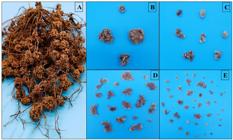
Chickpea roots with root nodules (A). Root nodules separated from the root, indicating variety in size and shape (B, C). Sectioned root nodules (D, E).
Through Gram staining under microscopy (100x magnification), differentiation between gram-positive and gram-negative bacteria was performed, along with observation of the shape. The final determination of the species was based on the MALD-TOF test. Among the identified bacteria, only two are described as nodule-forming in legumes: Rhizobium radiobacter and Mesorhizobium sp. 1 The remaining bacteria may be related in some way to plant growth.
3.2. Relationship between bacterial isolates and chickpea production components
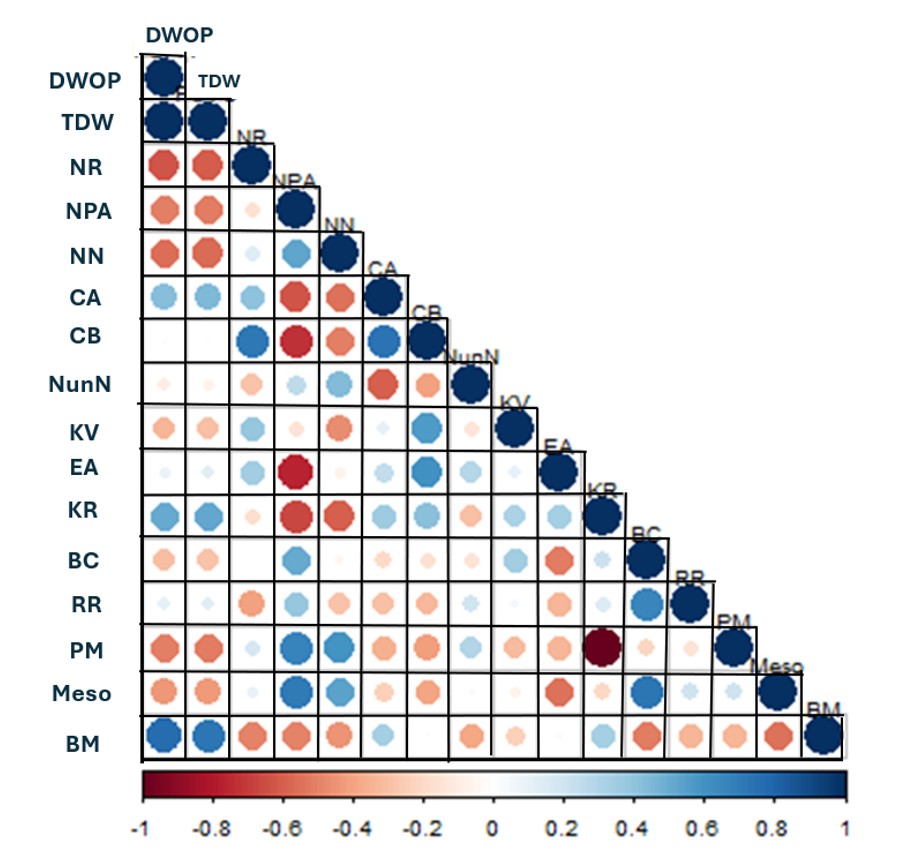
The association between microorganisms and the plant consists of an intimate interaction, in which the plant provides nutrients and habitat, while the bacteria will promote the growth and health of the plant. A bacterium Mesorhizobium sp. positively correlated with nitrogen accumulation characteristics in the shoot and nodules (Figure 3). A positive correlation was also observed between Mesorhizobium sp. and the presence of Bacillus cereus (r=0.73), indicating a possible association between these two bacteria in chickpea cultivation. The bacterium Rhizobium radiobacter also positively correlated with Bacillus cereus (Figure 3), but both did not show strong correlations with biomass or nitrogen accumulation characteristics (Figure 3).
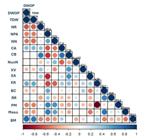
Correlation analysis (p≤0.10) between plant and microorganism variables, and among microorganism variables: DWOP (dry weight of aboveground parts); TDW (total dry weight); NR (nitrogen in roots); NPA (nitrogen in shoot); NN (nitrogen in nodules); CA (chlorophyll A); CB (chlorophyll B); NunN (number of nodules); KV (Klebsiella variicola); EA (Enterobacter asburiae); KR (Kosakonia radicincitans); BC (Bacillus cereus); RR (Rhizobium radiobacter); PM (Pseudomonas monteilii); Meso (Mesorhizobium sp); BM (Bacillus mycoides) in the BRS Cristalino cultivar of chickpeas. Negative interactions are represented by red colors ranging from 0 to -1, while positive interactions are represented by blue colors ranging from 0 to 1. Stronger correlations are indicated by darker shades with larger diameter, whereas weaker correlations are represented by lighter shades.
For the bacterium Enterobacter asburiae, a negative correlation with shoot nitrogen (r=-0.77) was observed, suggesting that in this study, the bacterium may not be associated with shoot nitrogen accumulation or may have lower absorption of atmospheric nitrogen (Figure 3). On the other hand, the bacterium Kosakonia radicincitans showed a negative correlation with the accumulation of nitrogen in both the shoot and the nodule (Figure 3).
The bacterium Pseudomonas monteilii showed a positive correlation with the accumulation of nitrogen in both the shoot and nodules, indicating that it may be an associative nitrogen-fixing bacterium without necessarily engaging in symbiosis in the formation of chickpea nodules. However, there was a negative correlation with the dry biomass of both the shoot and the total.
Two bacteria of the genus Bacillus spp. were also identified (B. cereus and B. mycoides). The bacterium B. cereus showed a positive correlation with nitrogen accumulation in the shoot but a negative correlation with the bacterium Enterobacter asburiae (Figure 3). The bacterium B. mycoides correlated positively with the biomass of both the shoot and the total and had a weak correlation with nitrogen accumulation in the shoot and roots (Figure 3).
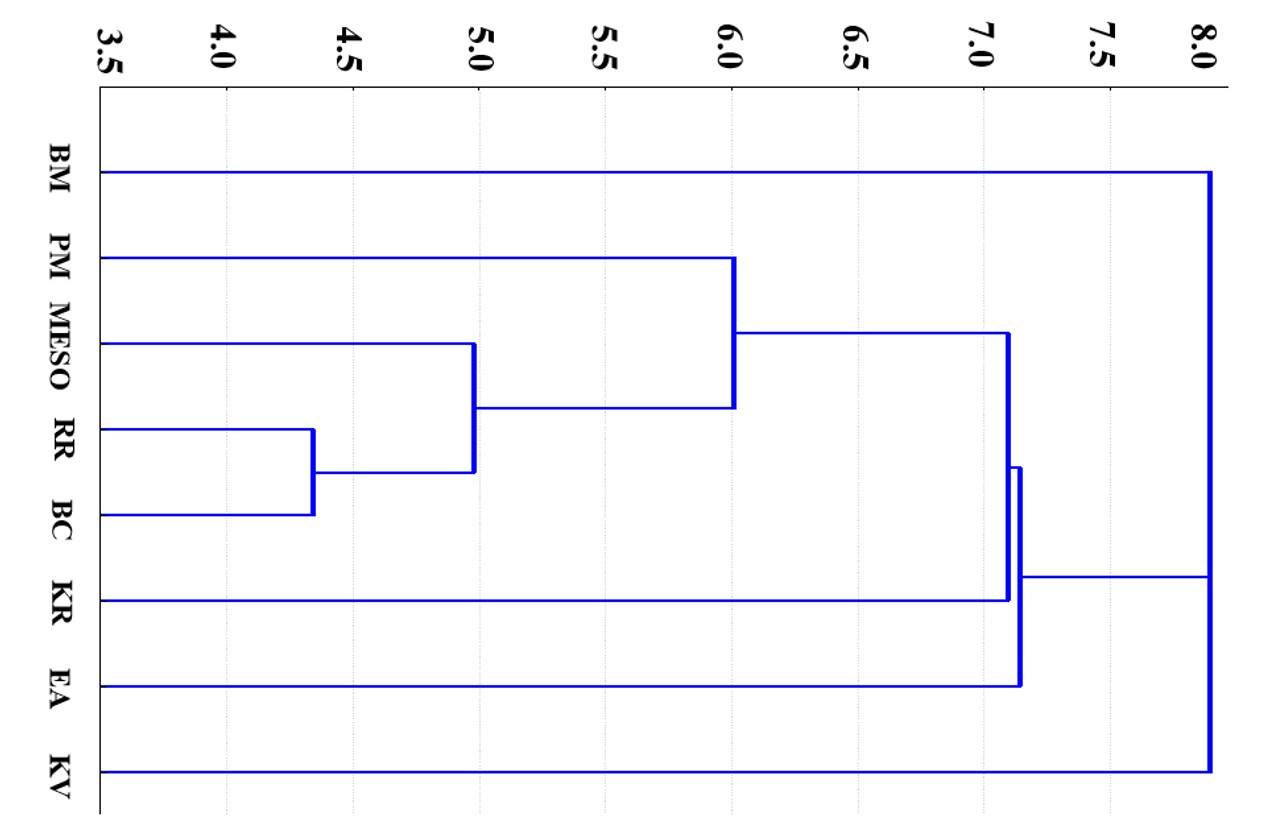
The clustering test estimated the distance between the microorganisms studied. It was possible to observe less dissimilarity between the bacteria B. cereus and R. radiobacter (Figure 4). The identification revealed five response classes. The first class with Klebsiella variicola, the second class with Enterobacter asburiae, the third with Bacillus mycoides, and the fourth with Kosakonia radicincitans. And a fifth class with greater similarity between the bacteria Pseudomonas monteilii, Mesorhizobium sp. 1, Rhizobium radiobacter, and Bacillus cereus (Figure 4).
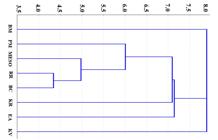
Dendrograms with multivariate clustering analysis using the Euclidean distance method for the bacteria identified in chickpea roots, namely: KV (Klebsiella variicola); EA (Enterobacter asburiae); KR (Kosakonia radicincitans), BC (Bacillus cereus); RR (Rhizobium radiobacter); PM (Pseudomonas monteilii); Meso (Mesorhizobium sp. 1); BM (Bacillus mycoides). cluster analysis (dendrograms) was performed using the Unweighted Pair-Group Method with Arithmetic Mean (UPGMA) and Euclidean distance metric (non-standardized).
3.3. The inoculant and greenhouse planting
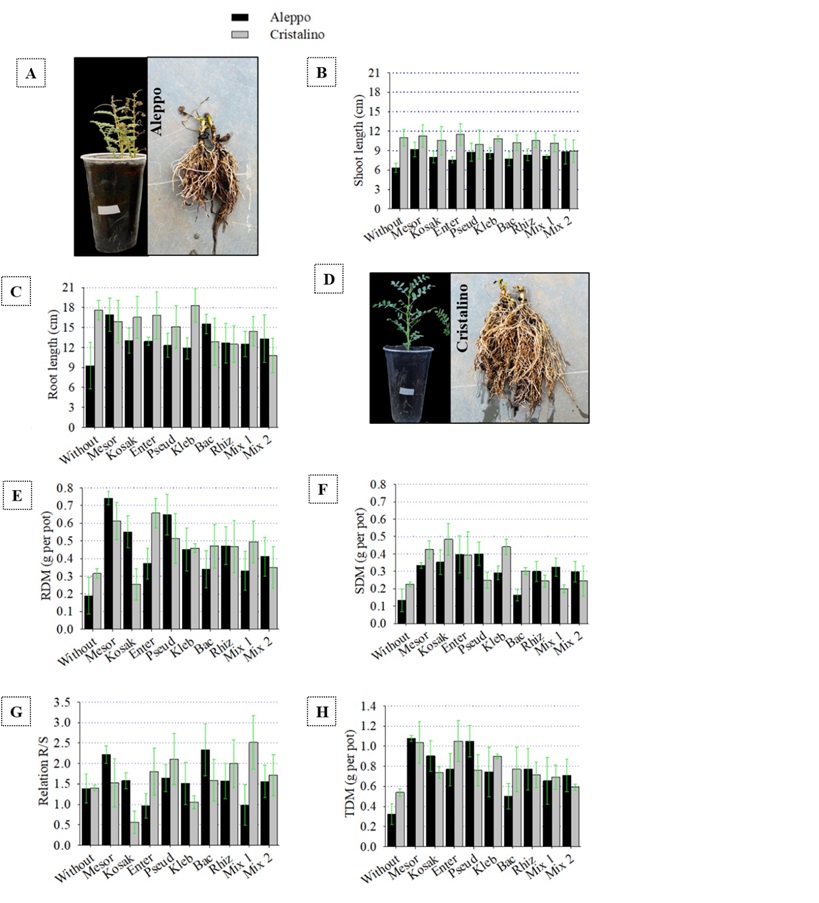
No statistical difference was observed between the treatments used; therefore, it was decided to perform a descriptive analysis. For the BRS Cristalino and BRS Aleppo cultivars inoculated and grown in the greenhouse, it can be observed that the non-inoculated control showed a lower shoot length compared to all other inoculation treatments for both cultivars (Figure 5B). However, for the Cristalino cultivar, the non-inoculated plants had greater root length compared to those inoculated with Rhizobium radiobacter and Mix 2 (Figure 5B). For the Aleppo cultivar, the non-inoculated control exhibited shorter root lengths compared to the inoculation with Mesorhizobium sp. 1 (Figure 5C).
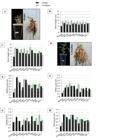
Shoot Length (B), Root Length (C), Root Dry Matter-RDM (E), Shoot Dry Matter –SDM (F), Root-to-Shoot Ratio - R/S (G) and, Total Dry Matter –TDM (H) of BRS Aleppo and BRS Cristalino chickpea plants inoculated with Mesorhizobium sp. 1 (Mesor), Kosakonia radicincitans (Kosak), Enterobacter asburiae (Enter), Pseudomonas monteilii (Pseud), Klebsiella varicola (Kleb), Bacillus cereus (Bac), Rhizobium radiobacter (Rhiz), Mix 1 of Bacteria (Klebsiella varicola, Bacillus cereus, Rhizobium radiobacter, Mesorhizobium sp. 1), and Mix 2 of Bacteria (Klebsiella varicola, Bacillus cereus, Rhizobium radiobacter) at 70 Days. Vertical lines above the bars in the graphs indicate a 95% confidence interval (n=4). A: Plant in Pot and roots BRS Aleppo. D: Plant in Pot and roots BRS Cristalino.
The non-inoculated plants of cultivar BRS Aleppo exhibited lower shoot dry biomass compared to all other treatments, except for the Bacillus inoculation (Figure 5C). For the BRS Cristalino cultivar, there were no significant differences in shoot dry biomass between the non-inoculated control and the inoculations with Pseudomonas monteilii, Mix1, and Mix2, though these treatments had lower shoot dry biomass compared to the other inoculated treatments (Figure 5C).
Dry root biomass for uninoculated BRS Aleppo Cultivar was similar of the Bacillus and Mix 1 and 2 inoculations (Figure 5E). In contrast, for the BRS Cristalino cultivar, higher root dry biomass was observed for the Mesorhizobium sp. 1 and Pseudomonas monteilii inoculations (Figure 5E). The inoculations with Kosakonia radicincitans and Mix 2 showed lower and similar root dry biomass compared to the non-inoculated control (Figure 5E).
The non-inoculated plants had lower total dry matter compared to the other inoculation treatments, for two cultivars. The Aleppo cultivar had a lower root-to-shoot ratio when not inoculated compared to the inoculations with Mesorhizobium sp. 1 and Bacillus (Figure 4F). For the Cristalino cultivar, the inoculation with Kosakonia radicincitans was less effective compared to the other treatments (Figure 4F).
It was observed that the Cristalino cultivar showed better adaptation compared to the Aleppo cultivar (Figure 6). The Cristalino cultivar demonstrated greater shoot and root lengths compared to the non-inoculated Aleppo cultivar (Figures 6A and 6D). Furthermore, Cristalino had higher shoot and total dry matter when inoculated with Mesorhizobium sp. 1 (Figures 6G and 4H).
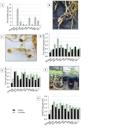
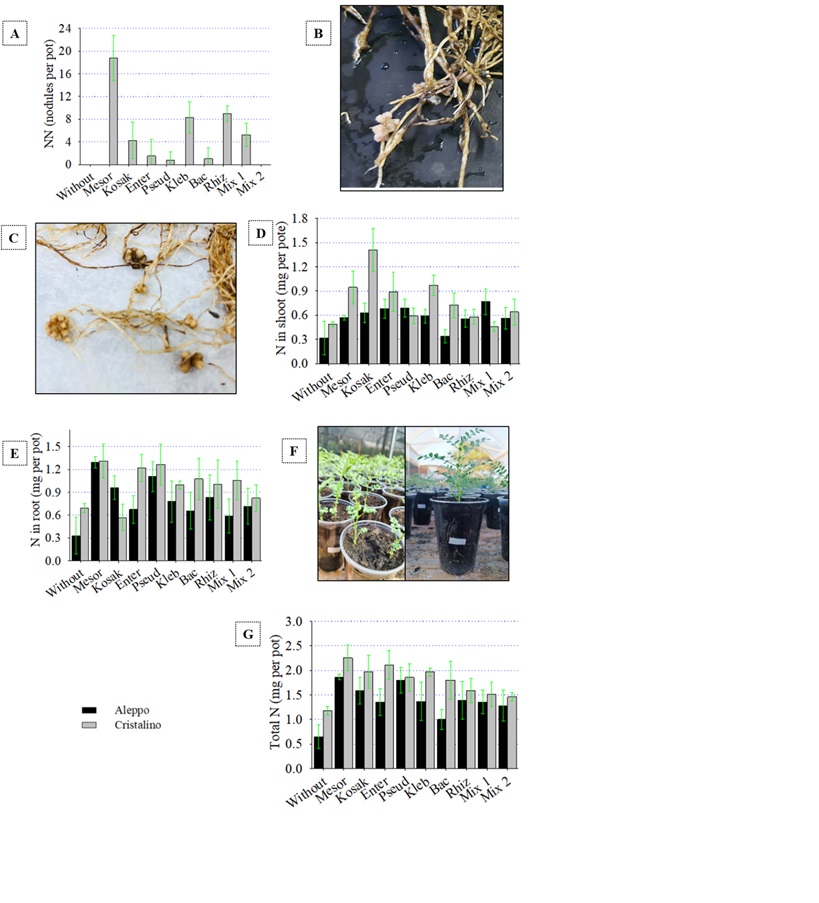
Number of nodules – NN (A), nitrogen content in the shoot (D), roots (E), and total nitrogen content (G) in BRS Aleppo and BRS Cristalino chickpea plants inoculated with Mesorhizobium sp. 1 (Mesor), Kosakonia radicincitans (Kosak), Enterobacter asburiae (Enter), Pseudomonas monteilii (Pseud), Klebsiella variicola (Kleb), Bacillus cereus (Bac), Rhizobium radiobacter (Rhiz), Mix 1 of Bacteria (Klebsiella variicola, Bacillus cereus, Rhizobium radiobacter, Mesorhizobium sp. 1) and Mix 2 of Bacteria (Klebsiella variicola, Bacillus cereus, Rhizobium radiobacter). Vertical lines above the bars in the graphs indicate a 95% confidence interval (n=4). B, C: Chickpea root nodules inoculated with Mesorhizobium sp. 1 and Rhizobium radiobacter. F: Plants inoculated with growth-promoting bacteria without the addition of nitrogen.
Nodules were present only in the Cristalino cultivar, with a higher number of nodules observed in plants inoculated with Mesorhizobium sp. 1 and Rhizobium radiobacter (Figure 6A). In the Aleppo cultivar, no nodulation was observed for any of the inoculated bacteria (Figure 6A). In the Aleppo cultivar, there was no significant difference in shoot nitrogen content between the inoculated treatments and the non-inoculated control, with the lowest N content observed in the presence of Bacillus (Figure 6D).
Non-inoculated plants of the BRS cultivar had lower N content compared to inoculation with Mix 1, but there was no significant difference between these two treatments (Figure 6D). Regarding the N content in the roots, there was no difference between the cultivars when inoculated with Mesorhizobium sp. 1, but the Cristalino cultivar showed higher N content in the shoot compared to the Aleppo cultivar (Figure 6E).
The Aleppo cultivar exhibited lower nitrogen content in the roots when non-inoculated, and with Mix 1 and Mix 2 inoculations (Figure 6E). For the Cristalino cultivar, the inoculation with Kosakonia radicincitans was less effective compared to the other treatments (Figure 6E).
The non-inoculated plants had the lowest total nitrogen content, which did not differ from the inoculation with Bacillus (Figure 6G) for the Aleppo cultivar. In the Cristalino cultivar, the inoculations with Rhizobium and Mix 1 and Mix 2 did not differ from the non-inoculated control, with lower N contents compared to the other treatments (Figure 6G). Root nodules were found in treatments such as Mesorhizobium sp. 1 (Mesor), Kosakonia radicincitans (Kosak), Enterobacter asburiae (Enter), Pseudomonas monteilii (Pseud), Klebsiella variicola (Kleb), Bacillus cereus (Bac), Rhizobium radiobacter (Rhiz), Mixture 1, for cultivar BRS Cristalino (Figures 6A-C). Vigorous plants inoculated with Mesorhizobium sp. 1 (Mesor) in pot (Figure 6F).
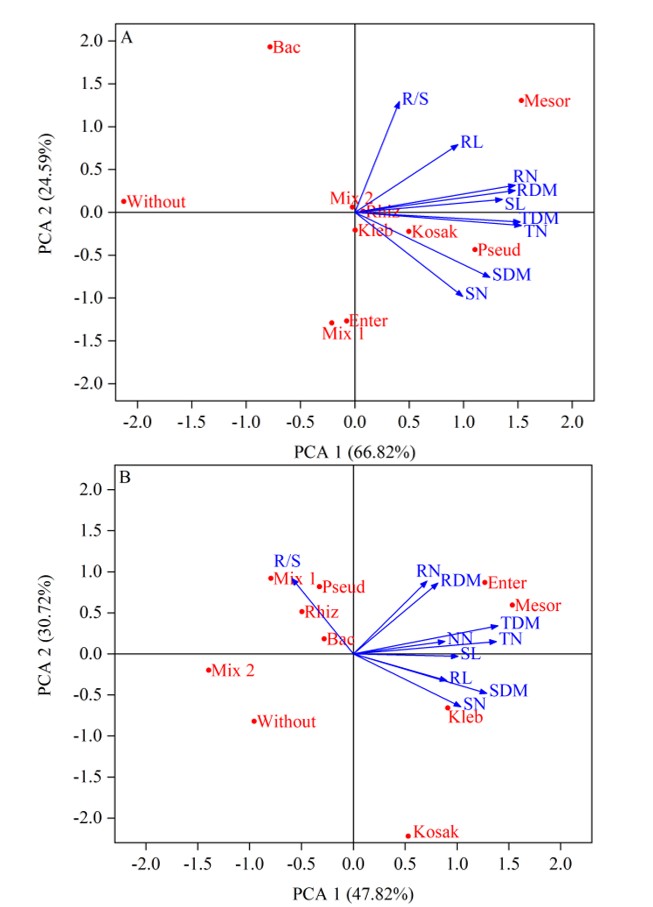
Principal Component Analysis (PCA) for the Aleppo cultivar revealed insightful relationships between different treatments and plant growth traits. PCA 1 explained 66.82% of the total variation. It was observed that inoculation with Mesorhizobium sp. 1 (Mesor), Kosakonia radicincitans (Kosak), Pseudomonas monteilii (Pseud), Klebsiella variicola (Kleb), Rhizobium radiobacter (Rhiz) showed a positive correlation with all physiological parameters analyzed (Figure 7A). This indicates that, for the Aleppo cultivar, the presence of these microorganisms is associated with increased shoot biomass and higher total nitrogen content in plants, suggesting a beneficial effect on plant growth and nitrogen nutrition. PCA 2 explained 24.59% of the total variation. In this component, there was no correlation between the inoculated microorganisms and the analyzed parameters, including the control without inoculation that did not present significant results in relation to the others (Figure 7A).
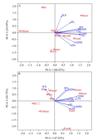
Principal Component Analysis (PCA): Aleppo (A) and Cristalino (B): PCA Biplot for Shoot Length (SL), Root Length (RL), Shoot Dry Matter (SDM), Root Dry Matter (RDM), Total Dry Matter (TDM), Root-to-Shoot Dry Matter Ratio (R/S), Number of Nodules (NN), Nitrogen Content in Shoot (SN), Root Nitrogen Content (RN), and Total Nitrogen Content (TN) in Chickpea Plants Inoculated with Mesorhizobium sp. 1 (Mesor), Kosakonia radicincitans (Kosak), Enterobacter asburiae (Enter), Pseudomonas monteilii (Pseud), Klebsiella variicola (Kleb), Bacillus cereus (Bac), Rhizobium radiobacter (Rhiz), Bacterial Mix 1 (Klebsiella variicola, Bacillus cereus, Rhizobium radiobacter, Mesorhizobium sp. 1), and Bacterial Mix 2 (Klebsiella variicola, Bacillus cereus, Rhizobium radiobacter).
For the cultivar Cristino, PCA 1 explained 47.82% of the total variation, showing a positive correlation between inoculation with Mesorhizobium sp. 1 (Mesor), Klebsiella variicola (Kleb), Enterobacter asburiae (Enter), for all characteristics analyzed except for the root/shoot ratio. PCA 2 explained 30.72% of the total variation, showing a positive correlation when inoculated with Mix1, Pseudomonas monteilii, Bacillus cereus and Rhizobium radiobacter for the root/shoot ratio. For the control, there was no positive correction for the parameters analyzed (Figure 7B).
4. Discussion
Eight species of bacteria were identified in the root nodules of chickpea through morphological analyzes and MALDI-TOF tests, with six exhibiting an endophytic lifestyle: Klebsiella variicola, Enterobacter asburiae, Kosakonia radicincitans, Bacillus cereus, Bacillus mycoides and Pseudomonas monteilii. Furthermore, two species presented a symbiotic or rhizospheric lifestyle: Rhizobium radiobacter and Mesorhizobium sp. 1 (Table 1).
In this study, a great variety of root nodules originating from symbiosis with Rhizobium radiobacter and Mesorhizobium sp. 1 bacteria were found (Figures 2, 4B and 4C), indicating the presence of at least two symbiotic N2-fixing bacteria. Literature describes that some legumes form many root nodules, infected by a single founder rhizobium or more; therefore, in most cases, the population of rhizobia within a single nodule is isogenic (Mendoza-Suárez et al., 2020). Consequently, only a small proportion of rhizobia in a plant's rhizosphere will successfully compete for nodule occupation (Burghardt and Dicenzo, 2023). Recent studies reveal that competition outcomes are unaffected by the presence of additional isolates of the same rhizobia species, resulting in a competitive hierarchy where the success of one isolate can be predicted from the results of another (Burghardt et al., 2022).
The application of bacteria Mesorhizobium sp. 1, Kosakonia radicincitans, Enterobacter asburiae, Pseudomonas monteilii, Klebsiella varicola, Bacillus cereus, Rhizobium radiobacter increases N absorption and dry matter production in the roots and shoots of Aleppo and Cristalino cultivars (Figures 4 and 5). According to previous studies, growth-promoting bacteria are known as biofertilizers that stimulate growth, facilitate nutrient availability and provide protection against pathogens, hence the importance of their identification using reliable techniques. Such microorganisms produce phytohormones such as aminocyclopropane-1-carboxylate deaminase (ACC-deaminase), hydrolytic enzymes, soluble phosphate, volatile organic compounds, hydrogen cyanide, atmospheric nitrogen fixation, siderophores and exopolysaccharides for biofilm formation (Almeida Neta et al., 2021; Verma et al., 2020; Khan et al., 2021).
It is well known the importance of identifying potential growth-promoting bacteria in semi-arid or tropical regions for chickpeas, as biofertilizers bring significant benefits to legumes. Moreover, their use can contribute to cost reduction and ensure greater sustainability in agricultural practices (Gunnabo et al., 2020). It is more effective to inoculate plants with microorganisms isolated from the rhizosphere of the host plant than to use exogenous microorganisms from the microbiome (Racioppo et al., 2023).
Observations in previous studies have shown that the inoculation of chickpea seeds with a mix of Azotobacter and Rhizobium promoted greater absorption of macronutrients such as N, P, and K. However, the authors concluded that greater plant growth responses were observed in soils with low fertility and lower organic matter content, or in the presence of native bacterial populations (Soe et al., 2020). The application of symbiotic bacteria (Mesorhizobium sp. 1) and non-symbiotic bacteria (Kosakonia radicincitans, Enterobacter asburiae, Pseudomonas monteilii, Klebsiella variicola and Bacillus cereus) promoted the absorption of N and the growth of chickpea plants (Figures 5 and 7). Other studies have observed that in areas with high organic matter content and alkaline pH, the action of Bacillus spp. in the chickpea rhizosphere was favored (Almeida Neta et al., 2021), as well as the data found in this study, where inoculation with Bacillus favored plant growth (Figure 5).
The detection of the genus Bacillus spp. suggests the presence of bacteria capable of solubilizing phosphate and promoting plant growth. The positive effect of inoculation with a mixture of Bacillus spp. on chickpeas resulted in increased productivity in tropical soil areas (Almeida Neta et al., 2021), such as the soil used in this study. The presence of B. mycoides and B. cereus isolated from the roots was associated with dry matter production and the number of nodules in chickpea plants. These relationships between the identified bacteria and the plant yield characteristics are important indicators of how the bacteria can influence the soil-plant-microorganism relationship.
The identification of the bacterium P. monteilii in chickpea roots is indicative of the promoting effect of this bacterium. This is because it was associated with nitrogen accumulation and nodulation. The combination of growth-promoting or symbiotic bacteria is a subject of study. Studies have reported that the combination of Mesorhizobium sp. and Pseudomonas sp. in chickpea cultivars showed a synergistic effect between the bacteria in protection against phytopathogens (Fusarium oxysporum sp. ciceris hyphae). This could be used as a useful approach in chickpea cultivation for nutrient availability and protection against phytopathogens (Nagpal et al., 2020). In this study, the combination of the bacteria Klebsiella varicola, Bacillus cereus, Rhizobium radiobacter, Mesorhizobium sp. 1, proved to be an interesting alternative, with a positive effect on nodulation, root-to-shoot ratio (R/S), and N accumulation in chickpea (Figure 7B).
In studies with Mesorhizobium ciceri and Mesorhizobium muleiense (Zhang et al., 2023), observed a higher abundance of the Pseudomonas bacterium in the chickpea rhizosphere when in the presence of M. muleiense. This suggests Pseudomonas as a key microorganism in chickpea nodulation in China (Zhang et al., 2023). The observation of the bacterium Kosakonia radicincitans may indicate that its activity contributes to an increase in plant dry mass, possibly through other means of growth promotion (Figure 3). This could involve an enhanced solubilization of other macronutrients or the production of phytohormones. This bacterium possesses growth-promoting properties, as well as genomic mechanisms potentially involved in its beneficial interaction with a host plant, exerting its influence across a broad range of hosts (Abdiev et al., 2019; Quintas-Nunes et al., 2022).
The identification of the genus Mesorhizobium sp. in the roots indicated that, despite not being an endemic bacterium of tropical soils, it was observed in the chickpea roots forming nodules (Figure 2). Probably, in the cultivation area, there were strains of this genus that can colonize the roots and fix atmospheric nitrogen, as it is a bacterium described as a symbiont of chickpeas (Laranjo et al., 2014). These strains likely carry symbiotic genes (nifH and nodC) like the strains M. ciceri and M. mediterraneum, which were previously considered the only symbionts of chickpeas (Gunnabo et al., 2020; Laranjo et al., 2014; Soe et al., 2020). In this study, this strain of bacteria was associated with nitrogen accumulation in the aerial part and nodulation of chickpeas, characteristics that reinforce the symbiotic action of the bacteria with increased nitrogen absorption (Figure 6).
The bacterium Rhizobium radiobacter was observed with a positive effect associated with the Mesorhizobium sp. 1 strain. Both are nodulating bacteria that induce the plant to form nodules on its roots; however, in the case of R. radiobacter, there was no relationship with plant biomass or nitrogen accumulation. In this case, more characteristics need to be analyzed to elucidate how this bacterium interacts with the plant, whether it has a beneficial effect or not.
Cultivars of chickpeas originating from semiarid regions may face difficulties in associating with bacteria in their roots, either due to endophytic interactions or nodule formation (Kumar et al., 2023). Native strains, which initiate nodulation and nitrogen fixation in the roots, consequently leading to increased biomass growth, nutrient absorption, and chickpea grain yield, are described in various countries (Soe et al., 2020; Becker et al., 2018). We observed that the groupings based on bacterial dissimilarity (Figure 4) separated into five classes: Class I (Klebsiella variicola), Class II (Enterobacter asburiae), Class III (Bacillus mycoides), Class IV (Kosakonia radicincitans), and Class V (Pseudomonas monteilii, Mesorhizobium sp., Rhizobium radiobacter, and Bacillus cereus).
The class with the lowest dissimilarity (V), containing nodulating and atmospheric nitrogen-fixing bacteria (Mesorhizobium sp. 1, R. radiobacter), along with endophytic growth-promoting bacteria (P. monteilli and B. cereus), showed stronger relationships both for the number of nodules and for the nitrogen content in the aerial biomass (Figures 3 and 4). This indicates that this is a promising mix of bacteria in chickpea cultivation, as it encompasses both nodulating diazotrophic and phosphorus-solubilizing. The class containing B. mycoides had lower dissimilarity to the total dry biomass of the plant. In this case, it is also an indication that this bacterium should be studied in future research, as it could be used as a component of biofertilizers for chickpea cultivation in tropical regions.
This research, involving initial identifications of diazotrophic bacteria, holds significant value within the microbiological realm concerning this leguminous plant in semiarid regions. For upcoming studies/cultivations, inoculations with each bacterium and their combinations will be tested, both in pots with sterile soil and in field conditions. The objective is to assess the survival capacity of these bacteria in the environment, both in the absence of competition and in the presence of competition from other microorganisms. The hypothesis posits that non-native modulating or growth-promoting bacteria from the region or cultivar may encounter challenges in associating with the plant or efficiently fixing nitrogen.
In this context, it is recognized that over time, native soil bacteria can colonize the rhizosphere of chickpeas, promoting a significant increase in root growth and aboveground biomass. This initial identification of bacteria inhabiting chickpea roots reveals that the majority display some positive association with the plant, while others do not demonstrate such a relationship. Therefore, further studies with each of these bacteria are still needed to characterize their mechanism of action and effects during the chickpea growth cycle.
The precise and systematic identification of plant growth-promoting bacteria is of paramount importance for modern agriculture. They play essential roles in promoting the growth and development of host plants through multifaceted mechanisms, including atmospheric nitrogen fixation, phosphate solubilization, phytohormone production, and protection against pathogens. Understanding the diversity of these bacteria and their interaction with plants can lead to the development of sustainable crop management strategies, reducing dependence on chemical inputs and increasing agricultural productivity in an environmentally responsible manner.
5. Conclusions
In the present investigation, it was possible to identify eight bacteria from the roots of the chickpea cultivar Cristalino, in the Brazilian tropical region. Six of these were identified as endophytic growth-promoting bacteria (Klebsiella variicola, Enterobacter asburiae, Kosakonia radicincitans, Bacillus cereus, Bacillus mycoides, Pseudomonas monteilii). Additionally, two bacteria capable of nodule formation and nitrogen fixation were Rhizobium radiobacter and Mesorhizobium sp. 1.
The inoculation of bacterial isolates in Aleppo and Cristalino chickpea cultivars promoted plant growth. In this context, the application of Mesorhizobium sp. 1, Kosakonia radicincitans, Enterobacter asburiae, Pseudomonas monteilii, Klebsiella variicola, Bacillus cereus, and Rhizobium radiobacter increased nodulation, N absorption, and dry matter production in the roots and shoots of chickpea.
This result is important as the identification of potential bacteria that promote greater aboveground and belowground biomass growth, as well as the absorption of macronutrients by the plant, is crucial for defining chickpea cultivation management in tropical to semi-arid regions. These results are significant for understanding and developing strains that can be used as inoculants for chickpea cultivation in semiarid to tropical regions. This advance opens doors for the development of biofertilizer products and more sustainable agricultural practices, which can increase grain production in arid and semi-arid regions while preserving natural resources.
Acknowledgements
This work was carried out with the support of the Coordination for the Improvement of Higher Education Personnel, Brazil (CAPES) - Financing Code 001, the National Council for Scientific Development (CNPQ), and the Research Support Foundation of Minas Gerais (FAPEMIG).
Data Availability Statement
The datasets used and analyzed during the present study are available on the corresponding website author upon reasonable request.
References
-
ABDIEV, A., KHAITOV, B., TODERICH, K. and PARK, K.W., 2019. Growth, nutrient uptake, and yield parameters of chickpea (Cicer arietinum L.) enhance by Rhizobium and Azotobacter inoculations in saline soil. Journal of Plant Nutrition, vol. 42, no. 20, pp. 2703-2714. http://doi.org/10.1080/01904167.2019.1655038
» http://doi.org/10.1080/01904167.2019.1655038 -
ABIÁN, J., CARRASCAL, M. and GAY, M., 2008 [viewed 23 May 2023]. Introducción a la espectrometría de masas para la caracterización de péptidos y proteínas en proteómica. Proteómica: revista de la Sociedad Española de Proteómica [online], vol. 2, pp. 16-35. Available from: https://api.core.ac.uk/oai/oai:helvia.uco.es:10396/9144
» https://api.core.ac.uk/oai/oai:helvia.uco.es:10396/9144 -
ALMEIDA NETA, M.N., PEGORARO, R.F., SAMPAIO, R.A., COSTA, C.A.D.A., FERNANDES, L.A. and FERREIRA, J., 2020. Does inoculation with Rhizobium tropici and nitrogen fertilization increase chickpea production? Ciência e Agrotecnologia, vol. 44, pp. 016520. http://doi.org/10.1590/1413-7054202044016520
» http://doi.org/10.1590/1413-7054202044016520 -
ALMEIDA NETA, M.N., ALMEIDA, E.S.D., COSTA, C.A.D., NUNES, J.A.D.R., FERNANDES, L.A. and PEGORARO, R.F., 2021. Inoculation of Bacillus spp. and nitrogen levels increase chickpea production. Ciência e Agrotecnologia, vol. 45, pp. 015421. http://doi.org/10.1590/1413-7054202145015421
» http://doi.org/10.1590/1413-7054202145015421 -
ALTUN, O., BOTERO-KLEIVEN, S., CARLSSON, S., ULLBERG, M. and OZENCI, V., 2015. Rapid identification of bacteria from positive blood culture bottles by MALDI-TOF MS following short-term incubation on solid media. Journal of Medical Microbiology, vol. 64, no. 11, pp. 1346-1352. http://doi.org/10.1099/jmm.0.000168 PMid:26361761.
» http://doi.org/10.1099/jmm.0.000168 -
ARMAS-CAPOTE, N., PÉREZ-YÉPEZ, J., MARTÍNEZ-HIDALGO, P., GARZÓN-MACHADO, V., DEL ARCO-AGUILAR, M., VELÁZQUEZ, E. and LEÓN-BARRIOS, M., 2014. Core and symbiotic genes reveal nine Mesorhizobium genospecies and three symbiotic lineages among the rhizobia nodulating Cicer canariense in its natural habitat (La Palma, Canary Islands). Systematic and Applied Microbiology, vol. 37, no. 2, pp. 140-148. http://doi.org/10.1016/j.syapm.2013.08.004 PMid:24183896.
» http://doi.org/10.1016/j.syapm.2013.08.004 -
BECKER, M., PATZ, S., BECKER, Y., BERGER, B., DRUNGOWSKI, M., BUNK, B., OVERMANN, J., SPRÖER, C., REETZ, J., TCHUISSEU TCHAKOUNTE, G.V. and RUPPEL, S., 2018. Comparative genomics reveal a flagellar system, a type vi secretion system and plant growth-promoting gene clusters unique to the endophytic bacterium kosakonia radicincitans. Frontiers in Microbiology, vol. 9, pp. 1997. http://doi.org/10.3389/fmicb.2018.01997 PMid:30214433.
» http://doi.org/10.3389/fmicb.2018.01997 -
BENJELLOUN, I., THAMI ALAMI, I., EL KHADIR, M., DOUIRA, A. and UDUPA, S.M., 2021. Co-Inoculation of Mesorhizobium ciceri with Either Bacillus sp. or Enterobacter aerogenes on Chickpea improves growth and productivity in phosphate-deficient soils in dry areas of a mediterranean region. Plants, vol. 10, no. 3, pp. 571. http://doi.org/10.3390/plants10030571 PMid:33802918.
» http://doi.org/10.3390/plants10030571 -
BOSSE, M.A., SILVA, M.B., OLIVEIRA, N.G.R.M., ARAUJO, M.A., RODRIGUES, C., AZEVEDO, J.P. and REIS, A.R.D., 2021. Physiological impact of flavonoids on nodulation and ureide metabolism in legume plants. Plant Physiology and Biochemistry, vol. 166, pp. 512-521. http://doi.org/10.1016/j.plaphy.2021.06.007 PMid:34171572.
» http://doi.org/10.1016/j.plaphy.2021.06.007 -
BREMNER, J.M., 1965. Total nitrogen. In: A.G. NORMAN, ed. Methods of soil analysis, part 2: chemical and microbiological properties. Madison: American Society of Agronomy, p. 1149-1178. http://doi.org/10.2134/agronmonogr9.2.c32
» http://doi.org/10.2134/agronmonogr9.2.c32 -
BURGHARDT, L.T. and DICENZO, G.C., 2023. The evolutionary ecology of rhizobia: multiple facets of competition before, during, and after symbiosis with legumes. Current Opinion in Microbiology, vol. 72, pp. 102281. http://doi.org/10.1016/j.mib.2023.102281 PMid:36848712.
» http://doi.org/10.1016/j.mib.2023.102281 -
BURGHARDT, L.T., EPSTEIN, B., HOGE, M., TRUJILLO, D.I. and TIFFIN, P., 2022. Hostassociated rhizobial fitness: dependence on nitrogen, density, community complexity, and legume genotype. Applied and Environmental Microbiology, vol. 88, no. 15, e0052622. http://doi.org/10.1128/aem.00526-22 PMid:35852362.
» http://doi.org/10.1128/aem.00526-22 -
CAO, M., NARAYANAN, M., SHI, X., CHEN, X., LI, Z. and MA, Y., 2023. Optimistic contributions of plant growth-promoting bacteria for sustainable agriculture and climate stress alleviation. Environmental Research, vol. 217, pp. 114924. http://doi.org/10.1016/j.envres.2022.114924 PMid:36471556.
» http://doi.org/10.1016/j.envres.2022.114924 -
COLQUHOUN, D.R., SCHWAB, K.J., COLE, R.N. and HALDEN, R.U., 2006. Detection of norovirus capsid protein in authentic standards and in stool extracts by matrix-assisted laser desorption ionization and nanospray mass spectrometry. Applied and Environmental Microbiology, vol. 72, no. 4, pp. 2749-2755. http://doi.org/10.1128/AEM.72.4.2749-2755.2006 PMid:16597979.
» http://doi.org/10.1128/AEM.72.4.2749-2755.2006 -
CUENOD, A., FOUCAULT, F., PFLUGER, V. and EGLI, A., 2021. Factors associated with MALDI-TOF mass spectral quality of species identification in clinical routine diagnostics. Frontiers in Cellular and Infection Microbiology, vol. 11, pp. 646648. http://doi.org/10.3389/fcimb.2021.646648 PMid:33796488.
» http://doi.org/10.3389/fcimb.2021.646648 -
DAL CORTIVO, C., FERRARI, M., VISIOLI, G., LAURO, M., FORNASIER, F., BARION, G., PANOZZO, A. and VAMERALI, T., 2020. Effects of seed-applied biofertilizers on rhizosphere biodiversity and growth of common wheat (Triticum aestivum L.) in the field. Frontiers in Plant Science, vol. 11, pp. 72. http://doi.org/10.3389/fpls.2020.00072 PMid:32174929.
» http://doi.org/10.3389/fpls.2020.00072 -
DIECKMANN, R., HELMUTH, R., ERHARD, M. and MALORNY, B., 2008. Rapid classification and identification of salmonellae at the species and subspecies levels by whole-cell matrix-assisted laser desorption ionization-time of flight mass spectrometry. Applied and Environmental Microbiology, vol. 74, no. 24, pp. 7767-7778. http://doi.org/10.1128/AEM.01402-08 PMid:18952875.
» http://doi.org/10.1128/AEM.01402-08 -
DINGLE, T.C. and BUTLER-WU, S.M., 2013. Accidental exposure to Burkholderia pseudomallei in the laboratory in the era of matrix-assisted laser desorption ionization-time of flight mass spectrometry. Clinics in Laboratory Medicine, vol. 33, pp. 589. http://doi.org/10.1128/JCM.01238-14 PMid:23931840.
» http://doi.org/10.1128/JCM.01238-14 -
DIONISIO, J. A., PIMENTEL, I. C., SIGNOR, D., 2016 [viewed 23 May 2023]. Isolamento de rizóbios de raízes de leguminosas. In: J.A. DIONISIO, I.C. PIMENTEL, D. SIGNOR, A.M. PAULA, A. MACEDA and A.L. MATANNA, eds. Guia prático de biologia do solo. Curitiba: SBCS/NEPAR. pp. 60-66. Available from: http://www.infoteca.cnptia.embrapa.br/infoteca/handle/doc/1043646
» http://www.infoteca.cnptia.embrapa.br/infoteca/handle/doc/1043646 -
ELIAS, N.V. and HERRIDGE, D.F., 2014. Naturalised populations of mesorhizobia in chickpea (Cicer arietinum L.) cropping soils: effects on nodule occupancy and productivity of commercial chickpea. Plant and Soil, vol. 387, no. 1-2, pp. 233-249. http://doi.org/10.1007/s11104-014-2298-z
» http://doi.org/10.1007/s11104-014-2298-z -
FOOD AND AGRICULTURE ORGANIZATION STATISTICS – FAOSTAT, 2022 [viewed 23 May 2023]. Crops and livestock products [online]. Rome: FAO. Available from: https://www.fao.org/faostat/en/#data/QCL
» https://www.fao.org/faostat/en/#data/QCL -
FARFOUR, E., LETO, J., BARRITAULT, M., BARBERIS, C., MEYER, J., DAUPHIN, B., LE GUERN, A.-S., LEFLÈCHE, A., BADELL, E., GUISO, N., LECLERCQ, A., LE MONNIER, A., LECUIT, M., RODRIGUEZ-NAVA, V., BERGERON, E., RAYMOND, J., VIMONT, S., BILLE, E., CARBONNELLE, E., GUET-REVILLET, H., LÉCUYER, H., BERETTI, J.-L., VAY, C., BERCHE, P., FERRONI, A., NASSIF, X. and JOIN-LAMBERT, O., 2012. Evaluation of the andromas matrix-assisted laser desorption ionization-time of flight mass spectrometry system for identification of aerobically growing gram-positive bacilli. Journal of Clinical Microbiology, vol. 50, no. 8, pp. 2702-2707. http://doi.org/10.1128/JCM.00368-12 PMid:22692743.
» http://doi.org/10.1128/JCM.00368-12 -
GUL, J. and ULLAH, M., 2022. Biochemical, physiological, and growth evaluation of different chickpea genotypes under varying salinity regimes. Brazilian Journal of Biology = Revista Brasileira de Biologia, vol. 82, e268350. http://doi.org/10.1590/1519-6984.268350 PMid:36350941.
» http://doi.org/10.1590/1519-6984.268350 -
GUNNABO, A.H., VAN HEERWAARDEN, J., GEURTS, R., WOLDE-MESKEL, E., DEGEFU, T. and GILLER, K.E., 2020. Symbiotic interactions between chickpea (Cicer arietinum L.) genotypes and Mesorhizobium strains. Symbiosis, vol. 82, no. 3, pp. 235-248. http://doi.org/10.1007/s13199-020-00724-6
» http://doi.org/10.1007/s13199-020-00724-6 -
HAVLICEK, V., LEMR, K. and SCHUG, K.A., 2013. Current trends in microbial diagnostics based on mass spectrometry. Analytical Chemistry, vol. 85, no. 2, pp. 790-797. http://doi.org/10.1021/ac3031866 PMid:23134334.
» http://doi.org/10.1021/ac3031866 -
HUSSAIN, N., YASMEEN, A. and YOUSAF, M.M., 2021. Antioxidant status and their enhancements strategies for water stress tolerance in chickpea. Brazilian Journal of Biology = Revista Brasileira de Biologia, vol. 82, e237809. http://doi.org/10.1590/1519-6984.237809 PMid:33978079.
» http://doi.org/10.1590/1519-6984.237809 -
KHAN, M.A., SAHILE, R., JAN, S., ASAF, M., HAMAYUN, M., IMRAN, A., ADHIKARI, S.-M., KANG, K.-M. and KIM, I.-J.L., 2021. Halotolerant bacteria mitigate the effects of salinity stress on soybean growth by regulating secondary metabolites and molecular responses. BMC Plant Biology, vol. 21, no. 1, pp. 176. http://doi.org/10.1186/s12870-021-02937-3 PMid:33845762.
» http://doi.org/10.1186/s12870-021-02937-3 -
KUMAR, H., ISHTIYAQ, S., FAVAS, P.J., VARUN, M. and PAUL, M.S., 2023. Effect of metal-resistant PGPB on the metal uptake, antioxidative defense, physiology, and growth of Atriplex lentiformis (Torr.) S. Wats. in soil contaminated with cadmium and nickel. Journal of Plant Growth Regulation, vol. 42, no. 6, pp. 3868-3887. http://doi.org/10.1007/s00344-022-10853-5
» http://doi.org/10.1007/s00344-022-10853-5 -
LARANJO, M., ALEXANDRE, A. and OLIVEIRA, S., 2014. Legume growth-promoting rhizobia: an overview on the Mesorhizobium genus. Microbiological Research, vol. 169, no. 1, pp. 2-17. http://doi.org/10.1016/j.micres.2013.09.012 PMid:24157054.
» http://doi.org/10.1016/j.micres.2013.09.012 -
MENDOZA-SUÁREZ, M.A., GEDDES, B.A., SÁNCHEZ-CAÑIZARES, C., RAMÍREZ GONZÁLEZ, R.H., KIRCHHELLE, C., JORRIN, B. and POOLE, P.S., 2020. Optimizing Rhizobium- legume symbioses by simultaneous measurement of rhizobial competitiveness and N2 fixation in nodules. Proceedings of the National Academy of Sciences of the United States of America, vol. 117, no. 18, pp. 9822-9831. http://doi.org/10.1073/pnas.1921225117 PMid:32317381.
» http://doi.org/10.1073/pnas.1921225117 - MOJUMDAR, A., HEE-JIN, Y., DUCK-HYUN, K. and CHO, K., 2022. High-throughput screening technique for microbiome using MALDI-TOF mass spectrometry: a review. Mass Spectrometry Letters, vol. 13, no. 4, pp. 106.
-
NAGPAL, S., SHARMA, P., SIRARI, A. and GUPTA, R.K., 2020. Coordination of Mesorhizobium sp. and endophytic bacteria as elicitor of biocontrol against Fusarium wilt in chickpea. European Journal of Plant Pathology, vol. 158, no. 1, pp. 143-161. http://doi.org/10.1007/s10658-020-02062-1
» http://doi.org/10.1007/s10658-020-02062-1 -
NAGPAL, S., SHARMA, P., SIRARI, A., KUMAWAT, K.C., WATI, L., GUPTA, S.C. and MANDAHAL, K.S., 2021. Chickpea (Cicer arietinum L.) as model legume for decoding the co-existence of Pseudomonas fluorescens and Mesorhizobium sp. as bio-fertilizer under diverse agro-climatic zones. Microbiological Research, vol. 247, pp. 126720. http://doi.org/10.1016/j.micres.2021.126720 PMid:33592359.
» http://doi.org/10.1016/j.micres.2021.126720 - PADILHA, K.S.M.A., PEGORARO, R.F., ALMEIDA NETA, M.N., DUARTE, E.R., SANGLARD, D.A., FERNANDES, L.A., LEMES, P.G. and SOUZA, C.N., 2025. Growth-promoting bacteria and symbionts in chickpea: a review. In: N.G. RIBASKI, ed. Practices and challenges in the agricultural sciences. Curitiba: Editora Reflexão acadêmica, p. 23-53. http://doi.org/10.51497/reflex.978-65-84610-58-3_2.
-
PARDO-DIAZ, S., ROMERO-PERDOMO, F., MENDOZA-LABRADOR, J., DELGADILLO-DURAN, D., CASTRO-RINCON, E., SILVA, A.M.M., ROJAS-TAPIAS, D.F., CARDOSO, E.J.B.N. and ESTRADA-BONILLA, G.A., 2021. Endophytic PGPB improves Plant Growth and Quality and modulates the Bacterial Community of an Intercropping System. Frontiers in Sustainable Food Systems, vol. 5, pp. 715270. http://doi.org/10.3389/fsufs.2021.715270
» http://doi.org/10.3389/fsufs.2021.715270 -
PEGORARO, R.F., ALMEIDA NETA, M.N., COSTA, C.A., SAMPAIO, R.A., FERNANDES, L.A. and RODRIGUES, M.N., 2018. Chickpea production and soil chemical atributes after phosphorus and molybdenum fertilization. Ciência e Agrotecnologia, vol. 42, no. 5, pp. 474-483. http://doi.org/10.1590/1413-70542018425011618
» http://doi.org/10.1590/1413-70542018425011618 -
PERERA, M.R., VANSTONE, V.A. and JONES, M.G., 2005. A novel approach to identify plant parasitic nematodes using matrix-assisted laser desorption/ionization time-of-flight mass spectrometry. Rapid Communications in Mass Spectrometry, vol. 19, no. 11, pp. 1454-1460. http://doi.org/10.1002/rcm.1943 PMid:15880621.
» http://doi.org/10.1002/rcm.1943 -
QUINTAS-NUNES, F., ROSSI, M.J. and NASCIMENTO, F.X., 2022. Genomic insights into the plant-associated lifestyle of Kosakonia radicincitans MUSA4, a diazotrophic plant-growth-promoting bacterium. Systematic and Applied Microbiology, vol. 45, no. 2, pp. 126303. http://doi.org/10.1016/j.syapm.2022.126303 PMid:35149280.
» http://doi.org/10.1016/j.syapm.2022.126303 - R DEVELOPMENT CORE TEAM, 2020. R: a language and environment for statistical computing. [software]. Vienna: R Foundation for Statistical Computing.
-
RACIOPPO, A., D’AMELIO, A., DE SANTIS, A., BEVILACQUA, A., CORBO, M.R. and SINIGAGLIA, M., 2023. Potential use of plant growth-promoting bacteria to enhance growth and soil fertility in marginal areas: focus on the Apulia region, Italy. Agronomy, vol. 13, no. 12, pp. 2983. http://doi.org/10.3390/agronomy13122983
» http://doi.org/10.3390/agronomy13122983 -
RANA, K.L., KOUR, D., KAUR, T., DEVI, R., YADAV, A.N., YADAV, N., DHALIWAL, H.S. and SAXENA, A.K., 2020. Endophytic microbes: biodiversity, plant growth-promoting mechanisms and potential applications for agricultural sustainability. Antonie van Leeuwenhoek, vol. 113, no. 8, pp. 1075-1107. http://doi.org/10.1007/s10482-020-01429-y PMid:32488494.
» http://doi.org/10.1007/s10482-020-01429-y - RIAZ, U., MURTAZA, G., QADIR, A.A., RAFI, F., QAZI, M.A., JAVID, S., TUSEEF, M. and SHAKIR, M., 2021. Biofertilizers: A Viable Tool for Future Organic Agriculture. In: G.H. DAR, R.A. BHAT, M.A. MEHMOOD and K.R. HAKEEM, eds. Microbiota and biofertilizers, vol. 2. Cham: Springer, pp. 329-340. http://doi.org/10.1007/978-3-030-61010-4_16.
-
ROMANYÀ, J. and CASALS, S.P., 2019. Biological nitrogen fixation response to soil fertility is species-dependent in annual legumes. Journal of Soil Science and Plant Nutrition, vol. 20, no. 2, pp. 546-556. http://doi.org/10.1007/s42729-019-00144-6
» http://doi.org/10.1007/s42729-019-00144-6 -
SANDRIN, T.R., GOLDSTEIN, J.E. and SCHUMAKER, S., 2013. MALDI TOF MS profiling of bacteria at the strain level: a review. Mass Spectrometry Reviews, vol. 32, no. 3, pp. 188-217. http://doi.org/10.1002/mas.21359 PMid:22996584.
» http://doi.org/10.1002/mas.21359 -
SOE, K.M., HTWE, A.Z., MOE, K., TOMOMI, A. and YAMAKAWA, T., 2020. Diversity and effectivity of indigenous Mesorhizobium strains for chickpea (Cicer arietinum L.) in Myanmar. Agronomy, vol. 10, no. 2, pp. 287. http://doi.org/10.3390/agronomy10020287
» http://doi.org/10.3390/agronomy10020287 -
TENA, W., WOLDE-MESKEL, E., DEGEFU, T. and WALLEY, F., 2017. Genetic and phenotypic diversity of rhizobia nodulating chickpea (Cicer arietinum L.) in soils from southern and Central Ethiopia. Canadian Journal of Microbiology, vol. 63, no. 8, pp. 690-707. http://doi.org/10.1139/cjm-2016-0776 PMid:28499096.
» http://doi.org/10.1139/cjm-2016-0776 -
TORRES-SANGIAO, E., LEAL RODRIGUEZ, C. and GARCÍA-RIESTRA, C., 2021. Application and perspectives of MALDI–TOF mass spectrometry in clinical microbiology laboratories. Microorganisms, vol. 9, no. 7, pp. 1539. http://doi.org/10.3390/microorganisms9071539 PMid:34361974.
» http://doi.org/10.3390/microorganisms9071539 -
VALENTINE, N.B., WAHL, J.H., KINGSLEY, M.T. and WAHL, K.L., 2002. Direct surface analysis of fungal species by matrix-assisted laser desorption/ionization mass spectrometry. Rapid Communications in Mass Spectrometry, vol. 16, no. 14, pp. 1352-1357. http://doi.org/10.1002/rcm.721 PMid:12112615.
» http://doi.org/10.1002/rcm.721 -
VERMA, G., YADAV, D.D., KUMAR, A., SINGH, R., BABU, S., AVASTHE, R.K., GUDADE, B.A. and SHARMA, V.K., 2020. Impact of fertility levels and biofertilizers on root architecture, yield and nutrient uptake of chickpea (Cicer arietinum L.) Crop. International Journal of Current Microbiology and Applied Sciences, vol. 9, no. 2, pp. 2018-2024. http://doi.org/10.20546/ijcmas.2020.902.230
» http://doi.org/10.20546/ijcmas.2020.902.230 -
WOLDE-MESKEL, E., HEERWAARDEN, J.V., ABDULKADIR, B., KASSA, S., ALIYI, I., DEGEFU, T., WAKWEYA, K., KANAMPIU, F. and GILLER, K.E., 2018. Additive yield response of chickpea (Cicer arietinum L.) to Rhizobium inoculation and phosphorus fertilizer across mall holder farms in Ethiopia. Agriculture, Ecosystems & Environment, vol. 261, pp. 144-152. http://doi.org/10.1016/j.agee.2018.01.035 PMid:29970943.
» http://doi.org/10.1016/j.agee.2018.01.035 - YANO, D.M.Y., FARRIS, M.G., UMINO, C.Y., COUTINHO, H.L.C. and CANHOS, V.P., 1993. Técnicas para cultivo, identificação e preservação de bactérias. Campinas: Fundação Tropical de Pesquisas e Tecnologia “André Tosello”, 64 p.
-
ZHANG, J., WANG, N., LI, S., WANG, J., FENG, Y., WANG, E., LI, Y., YANG, T. and CHEN, W., 2023. The effect of different rhizobial symbionts on the composition and diversity of rhizosphere microorganisms of chickpea in different soils. Plants, vol. 12, no. 19, pp. 3421. http://doi.org/10.3390/plants12193421 PMid:37836161.
» http://doi.org/10.3390/plants12193421
Edited by
-
Editor:
Takako Matsumura Tundisi