 Efficacy of Trichoderma harzianum in the control of Phytophthora infestans and its growth-promoting effect on two potato varieties
Abstract
Phytophthora infestans significantly affects potato crops, reason why farmers apply chemical fungicides as a quick and economical solution. However, the continuous, massive, and indiscriminate use of these products in the long term will have a negative impact on the environment and human health. Therefore, the use of dual-action bioagents has the potential to control the phytopathogen and increase sustainable potato yields. The objective of this study was to find a sustainable solution to minimize the use of chemical fungicides by combining improved potato varieties and different doses of Trichoderma harzianum. The field experiment was conducted using a complete randomized block design with a factorial arrangement, the factors of which were: varieties (commercial variety Yungay and improved variety CIP 302295.32), fungicides (Trichoderma harzianum and chemical fungicides such as metalaxyl+mancozeb) and doses (low, medium and high) in two production seasons. The results showed that high doses of chemical fungicides showed greater efficacy in controlling late blight in the improved variety CIP 302295.32. In contrast, the application of T. harzianum in vitro inhibits the mycelial growth of Phytophthora infestans, while in field conditions at medium and high doses of the bioagent in the improved variety CIP 302295.32, it does not outperform chemical control in both production seasons. This difference in control is due to field climatic conditions, which favour the development of the oomycete, making it more aggressive and virulent. However, the application of medium and high doses of T. harzianum in the improved variety significantly exceeded the chemical control in terms of height, number and weight of commercial tubers per plant and commercial yield of potatoes in both seasons. Therefore, the selection of the improved variety CIP302295.32 with the application of 1 kg ha-1 (concentration of 5 x 10¹² of viable spores) of T. harzianum will be a sustainable solution for the control of late blight and good yield of potato.
Keywords:
control efficiency; in vitro; oomycete; late blight; virulent
Resumo
A Phytophthora infestans afeta significativamente o cultivo da batata, razão pela qual os agricultores aplicam fungicidas químicos como uma solução rápida e econômica. No entanto, o uso contínuo, massivo e indiscriminado desses produtos em longo prazo causa um impacto negativo no meio ambiente e na saúde humana. Portanto, o uso de bioagentes de dupla ação tem a capacidade de controlar o fitopatógeno e aumentar o rendimento sustentável da batata. O objetivo deste estudo foi encontrar uma solução sustentável para minimizar o uso de fungicidas químicos, combinando variedades melhoradas de batata e diferentes doses de Trichoderma harzianum. O experimento de campo foi conduzido utilizando um delineamento em blocos casualizados com arranjo fatorial, cujos fatores foram: variedades (variedade comercial Yungay e variedade melhorada CIP 302295.32), fungicidas (Trichoderma harzianum e fungicidas químicos, como metalaxil + mancozeb) e doses (baixa, média e alta), em duas safras de produção. Os resultados mostraram que altas doses de fungicidas químicos apresentaram maior eficácia no controle da requeima na variedade melhorada CIP 302295.32. Em contraste, a aplicação de T. harzianum in vitro inibe o crescimento micelial de Phytophthora infestans; no entnto, em condições de campo, com doses médias e altas do bioagente na variedade melhorada CIP 302295.32, o tratamento não supera o controle químico em ambas as safras. Essa diferença no controle se deve às condições climáticas de campo, que favorecem o desenvolvimento do oomiceto, tornando-o mais agressivo e virulento. No entanto, a aplicação de doses médias e altas de T. harzianum na variedade melhorada excedeu significativamente o controle químico em termos de altura, número e peso de tubérculos comerciais por planta e rendimento comercial de batatas em ambas as safras. Portanto, a seleção da variedade melhorada CIP 302295.32 com a aplicação de 1 kg ha-1 (concentração de 5 × 10¹² esporos viáveis) de T. harzianum constitui uma solução sustentável para o controle da requeima e para a obtenção de bom rendimento de batata.
Palavras-chave:
eficiência de controle; in vitro; oomiceto; requeima; virulento
1. Introduction
Potatoes (Solanum tuberosum L.) are one of the most widely consumed and produced crops in the world (Zao et al., 2025), because the tuber contains minerals, essential amino acids, vitamins, dietary fibre (Mauro and Ierna, 2025), starch and proteins that contribute significantly to human nutrition and food (Davis et al., 2024), as well as having bioactive compounds that are beneficial to health (Vescovo et al., 2025). Potato consumption depends on the quality characteristics of the variety produced, i.e. the tuber with pigmented flesh, rich in soluble sugars and dry matter, is mainly intended for fresh consumption (Fathiya et al., 2024), tuber with white flesh, low in reducing sugars and specific gravity, is intended for the processing industry (Hu et al., 2025; Tirado-Malaver and Tirado-Lara, 2025).
However, with population growth, the world's demand for food will increase and by 2050, this demand will increase by 55% compared to 2010 (van Dijk et al., 2021). In view of this, potato producers, in order to increase yields, continue with intensive management, where the use of agrochemicals is indiscriminate and excessive, causing negative impacts on the environment, biodiversity and human health (Tirado-Malaver et al., 2024). While it is true, reports indicate that each government directly intervenes with policies and regulations that the potato producer must comply with to minimize the excessive use of agrochemicals (FAO, 2019).
However, in an intensive system, the use of agrochemicals is common and switching to an organic or sustainable system is very complicated, as potato is a crop highly affected by various biotic and abiotic problems (Djaman et al., 2021). In Peru, potatoes are grown in the coastal area of the Lima region and in the high Andean zone, because the climatic conditions (e.g. temperature and relative humidity) in those areas are appropriate for the tuberisation of the plant (Zevallos et al., 2023; Perez et al., 2024). These conditions are also conducive to the proliferation of fungal diseases (Romero et al., 2022). In addition, potatoes are vulnerable to climate change, so the intensity of the above-mentioned climatic factors will negatively affect yields and lead to further weakening of the potato production system (Ntuli et al., 2025).
It should be noted that the main potato problem in the high Andean areas of Peru is late blight, a disease caused by the oomycete Phytophthora infestans (Mont.) de Bary (Santiago, 2024). Phytophthora infestans is the main cause of economic losses in potato cultivation worldwide (Rhouma et al., 2024). Furthermore, the findings related to the impact of P. infestans, involve that the oomycete attacks the plant through two modes of action, according to its reproduction system, the first infection occurs at ground level, through the oospora sexual organ that is characterized by presenting a compacted hyphal envelope, which allows it to survive for a long time under adverse soil conditions, until once the seed tuber sprouts and produces the root system, the oospore begins its infection (Sanju et al., 2013). Likewise, the second mode of infection occurs through the formation of the zoosporangium (asexual organ) in the canopy or foliage of the plant, which when mature produces zoospores, which through the wind infects the plants or when falling on the surface of the soil, uses its flagella which gives it the ability to swim and infect nearby plants (Judelson et al., 1991). It should be noted that Phytophthora infestans is a polycyclic agent and adversely affects the entire phenological stage of potato and is difficult to control (Chepsergon et al., 2023).
Currently, synthetic chemical fungicides (e.g. mancozeb, metalaxyl, carbendazim, thiabendazole and others) are used as a preventive and control measure for potato late blight (Ben Naim and Cohen, 2023). However, these chemical fungicides have a temporary effect, so more than two applications are used and in certain climatic conditions they are inefficient, costly and not part of a long-term solution (Mitrović et al., 2025), as this oomycete has the ability to extend its genetic variability through survival mechanisms, leading to fungicide resistance (Xue et al., 2023). In effect, this will lead to increased doses and frequencies of chemical fungicide applications for control, which consequently has a negative impact on the environment (Singh et al., 2023). Also, chemical control causes stress on the plant, which at first glance the product alerts and to recover your plant increases the dose of chemical fertilization (Tirado-Malaver and Tirado-Lara, 2025).
Considering the growing interest in nutritional quality and safe food, environmentally friendly practices are needed to reduce the use of agrochemicals, with sustainable agricultural practices being responsible for optimising crop yields and quality in an efficient and long-term manner (Srećkov et al., 2025). Therefore, to minimize and even eliminate chemical fungicides or reduce the use of chemical fertilizers, the use of beneficial microorganisms is part of these sustainable agricultural practices (Islam et al., 2022).
Trichoderma harzianum is a beneficial biocontrol microorganism with dual function (Mitrović et al., 2025), in the soil, Trichoderma starts to colonise the rhizosphere of the plant and as it grows, it colonises the roots completely, from which it produces antifungal substances, hydrolytic enzymes (Zin and Badaluddin, 2020) and ion-solubilising organic compounds, siderophores among other metabolites (Zhou et al., 2025). In addition, it stimulates the production of hormones in the plant that increase root growth, which causes an increase in the absorption of nutrients by plant (Martínez-Medina et al., 2019).
Previous studies have shown that Trichoderma harzianum as a biofungicide acts through the synthesis of antibiotic-acting compounds that inhibit mycelial growth, germination and viability of pathogen sporangia (Yao et al., 2023), it also produces hydrolytic enzymes such as hemicellulose, chitinase, β-glucanases and cellulase, which degrade the cell wall of the pathogenic fungus and cause its death (Singh et al., 2024). In addition, this microorganism has the ability to communicate with the plant, causing induced systematic resistance, reducing the pathogenicity of Phytophthora infestans in potatoes (Napolitano et al., 2024). However, there are studies where Trichoderma harzianum does not produce high efficiency in the control of late blight, because the oomycete becomes more aggressive and virulent when climatic conditions favour it (Alfiky et al., 2023).
Therefore, mitigating the risks of potato late blight in the Peruvian Andes can be achieved by using Trichoderma harzianum. In addition, the selection of potato varieties with resistance to late blight is part of integrated potato management (Rivadeneira, 2021). Previous research has indicated that potato varieties respond differently to late blight infection due to their genetic makeup, which produces phytoalexins or other antifungal compounds that reduce the incidence and severity of potato late blight (Berindean et al., 2024).
In this study, two potato varieties were used, one commercial that over the years has lost its resistance to late blight, but its sensory attributes remain acceptable to consumers, in addition to its good performance in the northern mountains of Peru. The other variety is an improved genotype already tested in different environments and has demonstrated good agronomic performance and acceptable sensory characteristics. However, its effectiveness in controlling P. infestans under conditions in the northern Peruvian highlands needs to be tested.
Therefore, the study aims to (i) compare chemical fungicides with Trichoderma harzianum on the severity of late blight in two potato varieties (improved and commercial), (ii) determine the control efficacy of P. infestans on two potato varieties in vitro and in the field, (iii) evaluate the potential of Trichoderma harzianum on potato yield.
2. Materials and Methods
The experiment was carried out in the experimental plots of ACOMEBIO (Asociación para la conservación del medio ambiente y la biodiversidad), located in the locality of El Pargo in the province of Cutervo, Cajamarca, geographically located at 6°22’53” N & 78°49’06” W, and at an altitude of 2617 m above sea level.
2.1. Methodology
The research was conducted in two stages. The first stage was carried out at the Biotechnology Laboratory of ACOMEBIO (Association for the Conservation of the Environment and Biodiversity) to evaluate the antagonistic activity of Trichoderma harzianum on Phytophthora infestans through its dual in vitro effect. In the second stage, the control efficiency of chemical fungicides and Trichoderma harzianum on late blight and yield-related traits of two potato varieties under field conditions were evaluated, located in the locality El Pargo in the province of Cutervo, Cajamarca, geographically located at 6°22’53” N y 78°49’06” W, an altitude of 2617 m above sea level.
2.2. Edaphoclimatic characteristics of the study area
The edaphic characteristics of the study area, according to the soil analysis carried out before sowing, show a sandy loam texture, with a pH of 6.28 (slightly acidic), the organic matter content was 2. 58%, the electrical conductivity was 0.79 dS m-1 and the ionic content was: P (98 mg kg-1), K (117 mg kg-1), Ca2+ (21.7 meq 100 g-1), Mg2+ (11.09 meq 100 g-1), Na+ (0.06 meq 100 g-1) and cation exchange capacity (11.18). The climatic characteristics of the experimental field are shown in Table 1.
2.3. Preparation of biological agents
Phytophthora infestans was provided by the ACOMEBIO Biotechnology Laboratory. Trichoderma harzianum commercial strain Tricho-sin® (5 × 10⁹ cfu g-1 of viable spores) was provided by the ACOMEBIO Biotechnology Laboratory37. Cultures of biological agents were maintained on potato dextrose agar (PDA) medium.
2.4. In vitro antagonism test
The dual culture test was performed in the laboratory, using colonies of Trichoderma harzianum strains subculture for seven days at 28 °C on PDA, then inoculated into conical plates, followed by inoculating a 5mm disc of P. infestans nine days later in the center of the conical plate. The control plate, on the other hand, was inoculated with only a 5 mm disc of nine-day-old P. infestans in the center of the conical plate. The plates were incubated for seven days in the dark at 21 °C. This methodology was carried out as described in the following steps Islam et al. (2022) and Ruiz and Rojas (2021). The evaluation of the P. infestans inhibition rate was carried out after incubation, measuring the radius of pathogen colonies that are oriented towards Trichoderma harzianum and with this the mycelial growth inhibition rate was calculated through the Formula 1 proposed by Li et al. (2016).
where, MGI is the mycelial growth inhibition rate (%), R1 is the radial growth of P. infestans on the control plate and R2 is the radial growth of P. infestans on the dual culture plates (Islam et al., 2022; Li et al., 2016).
2.5. Field experiment setup
The field trial was conducted in El Pargo, Cutervo province, Cajamarca. Two potato varieties were used: the commercial Yungay variety, selected for being one of the most widely consumed varieties in Peru, and the improved CIP 302295.32 variety, selected for its agronomic attributes according to Tirado-Malaver and Tirado-Lara (2025), both varieties are intended for direct consumption. Likewise, the chemical fungicide compound Metalaxyl + Mancozeb was tested, which are the most commonly used active ingredients in the control of late blight in potatoes in the Andes of Peru. Metalaxyl is a systemic fungicide and Mancozeb is a contact fungicide. The withdrawal period for these fungicides is seven days, and they are classified as toxicological category II, considered moderately hazardous. This fungicide was applied 12 times to control late blight. On the other hand, different dosages of the biological fungicide Trichoderma harzianum commercial strain Tricho-sin® were used, which has a concentration of 5 × 10⁹ cfu g-1 of viable spores and is classified as toxicological category IV, meaning it poses no danger to mammals. This experiment was carried out during two production campaigns.
2.6. Description of treatments
The field experiment was conducted using a completely randomized block design with a factorial arrangement, the factors of which were: varieties (commercial variety Yungay and improved variety CIP 302295.32), fungicides (Trichoderma harzianum and chemical fungicides such as metalaxyl+mancozeb) and doses (low, medium and high), with three replications, resulting in a total of treatments was 12, with treatment 1 serving as the control (Yungay + Metalaxil-Mancozeb + dose of 0 kg ha-1) which is described in Table 2.
2.7. Conduct experiment
The field experiment was carried out using an experimental design with 12 treatments and 3 replications, obtaining a total of 36 experimental units. Each experimental unit consisted of four rows, with 10 plants sown in each row. The distance between plants was 0.3 m, and 1 m between rows. The seeds were sown by placing a seed tuber of the commercial variety Yungay and the improved variety CIP302295.32. Likewise, during plant growth, the commercial strain Trichoderma harzianum commercial strain Tricho-sin® (5 × 10⁹ cfu g-1 of viable spores) was applied in three doses (low, medium and high).
The technical criteria used to select the Trichoderma harzianum application doses were based on the concentration of the commercial product and the manufacturer’s recommendation, taking into account the standard application dose of 1 kg per hectare (5 × 10⁹ cfu g-1 of viable spores). For the first dose, 0.5 kg ha-1 of commercial strain (concentration of 2.5 x 10¹² of viable spores) was dissolved in 400 litres of water, applying 12 ml via drench (directly to the soil) to each plant according to planting density. The second dose was applied at 1 kg ha-1 of commercial strain (concentration of 5.0 x 10¹² of viable spores) dissolved in 400 litres of water, applying a solution of 12 ml via drench to each plant, and the third dose was 1.5 kg ha-1 of commercial strain (concentration of 7.5 x 10¹² of viable spores) dissolved in 400 litres of water and, depending on the planting density, 12 ml was applied via drench to each plant. In addition, the commercial strain was applied every 7 days, from the start of planting to potato delivery, according to Bader et al. (2020).
In the experimental plots treated with chemicals, the combined chemical fungicide Metalaxyl-Mancozeb was used in two doses. The first dose consisted of 1.5 kg-1 of the chemical fungicide dissolved in 400 litres of water, and the second dose consisted of 2.5 kg-1 of the chemical fungicide dissolved in 400 litres of water. The application was foliar, and the frequency of application was 12 times as a curative measure, while the control plants were only treated with water. However, the inoculation of Phytophthora infestans was carried out using the pathogen from PDA plates, then extracting 5 mm diameter mycelium from the colonies and placing it in a 250 mL flask with PDA and shaking at 180 rpm for three days according to Zhang et al. (2023). followed by foliar application with a suspension of 2.3 x 10⁵ sporangia mL−1 of Phytophthora infestans to the plants. The application frequency was every seven days from sprouting to potato hilling. In addition, Phytophthora infestans attack is constant in the potato-growing area where the study was conducted due to favourable climatic conditions for the pathogen (relative humidity greater than 80% and temperature below 17 °C).
With regard to irrigation, a gravity irrigation system was used. Fertilizers were applied in the form of urea, diammonium phosphate and potassium sulphate at doses of 150-120-180, applied at two stages: at sowing and at earthing up. Harvesting took place 145 days after sowing.
2.8. Variables studied in the field
The variables related to control efficiency were: degree of severity of late blight, which was analyzed by taking readings every seven days from day 35 after planting (DAS), using the scale according to the percentage of leaf area infected by late blight: 1 = < 10%, 2 = 1 - 10%, 3 = 11 - 25%, 4 = 26 - 40%, 5 = 41 - 60%, 6 = 61 - 70%, 7 = 71 - 80%, 8 = 81 - 90% and 9 = > 90%, proposed by the International Potato Center according to Henfling (1987). Likewise, the area under the disease progress curve (AUDPC) was evaluated, for which the severity data was used and it will be calculated according to Equation 2, according to Fry (1978).
where xi+1 and xi determines the size of the lesion from ti+1 and ti, n is the total number of observations over time, using the degree of severity of the Yungay variety which is the control variety, the number of days from the last reading evaluated by subtracting the value of the first reading, multiplying by 100, being a standardized value according to Fry (1978).
The efficiency of late blight control was evaluated on the basis of the degree of severity shown in the control and the severity shown in the treatment analyzed, this result was expressed as a percentage according to the proposal by Forbes et al. (2014). With the data, control efficacy was determined with levels of antagonism classified as: low (≤ 50%), medium (50<MGI≤60%), high (60< MGI ≤ 75%) and very high (MGI > 75%), those that obtained high and very high ratings are considered to have high control efficacy on Phytophthora infestans according to Ruiz and Rojas (2021).
Finally, variables related to yield were evaluated: plant height, number of commercial tubers per plant, weight of commercial tubers per plant (g plant-1) and commercial yield (t ha-1).
2.9. Statistical analysis
The data obtained from the variables related to the disease and the biometric parameters of the potato were processed using the statistical package SAS (Statistical Analysis System). To detect differences between treatment means, analysis of variance and comparison of means using Tukey's test at 5% significance was used. Data were expressed as mean (µ) ± standard deviation (σ).
3. Results and Discussion
3.1. vitro antagonistic test of Trichoderma harzianum with Phytophthora infestans
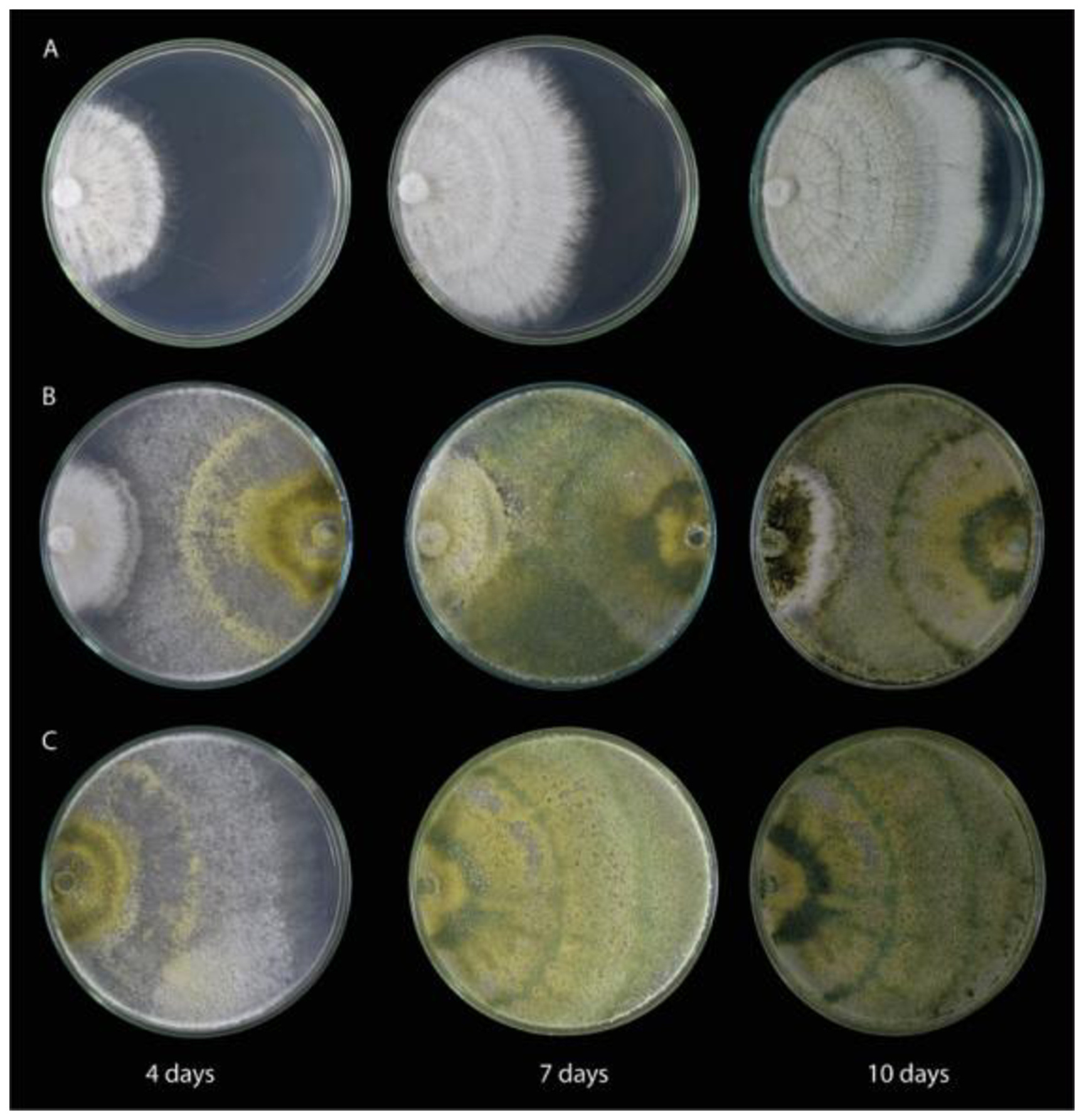
After four days of incubation, T. harzianum reached the edge of the plate (90.0 ± 1.2 mm; 100%), with compact mycelium and incipient sporulation of a greenish-yellow hue, whereas P. infestans showed limited growth of 37.5 ± 2.1 mm (41.7%), with cottony white mycelium. At seven days, T. harzianum remained at 90.0 ± 1.2 mm (100%), exhibiting greater mycelial density and a more evident green pigmentation, while P. infestans reached 60.0 ± 3.5 mm (66.7%), maintaining a regular margin and aerial texture. At ten days, the control of P. infestans grew to 78.0 ± 4.8 mm (86.7%), whereas in confrontation it was restricted to 75.0 ± 5.2 mm (83.3%). During this period, the mycelium of T. harzianum overgrew the margin of P. infestans and turned a darker, denser green, accompanied by a reduction in the pathogen’s diameter, which is consistent with active competition for space and a possible mycoparasitic capacity (Figures 1 and 2).

Dual cultures: (A) Mycelial growth of Phytophthora infestans; (B) Dual culture confrontation; and (C) Growth of Trichoderma harzianum.

Colony diameter of P. infestans in control and dual culture with T. harzianum at 4, 7, and 10 days (mean ± SD, n = 5).
3.2. Antagonistic field test of Trichoderma harzianum with Phytophthora infestans
The analysis of variance for the variables associated with the control of P. infestans is observed in Table 3, revealing that for the main factors variety, fungicides and doses, they show highly significant differences (p<0.01) in all variables in both seasons, except for the fungicide factor in the first season where there was no significance. Regarding the VxF interaction, the variable AUDPC did not present statistical significance in both seasons, however for the variables, severity and control efficiency there was statistical significance in both seasons indicating that the application of fungicides (T. harzianum and chemical fungicides) significantly influenced the potato varieties. In the VxD interaction it was revealed that the variables AUDPC, severity and control efficiency show significant differences (p<0.05) in both seasons, except for the first season in severity and control efficiency, indicating that as time goes by the application dose of fungicides has a significant effect on the behavior of potato varieties and in the FxD interaction, significant differences are observed in all variables (p<0.01) in both seasons, indicating that the application doses significantly influence the fungicides. Regarding the interaction of the three factors, it shows significant differences for all variables in both seasons, indicating that, over time, the application of different doses of T. harzianum and chemical fungicides, in the commercial and improved variety, produce a significant effect on the progress of the disease, severity and effectiveness of control of late blight of potato.
Analysis of variance for the area under the disease progress curve (AUDPC), severity scale and the percentage of efficiency control (EC).
The results of the comparison of means (Table 4) revealed that Treatment 9 (CIP302295.32 + Metalaxyl-Mancozeb + dose of 2.5 kg ha-1) and 3 (Yungay + Metalaxyl-Mancozeb + dose of 2.5 kg ha-1) presented a lower area under the disease progress curve in both seasons, indicating that the application of chemical fungicides at a high dose in potato varieties significantly stops the progress of the disease by less than 64.35 and 60.86% compared to the control treatment T1 (Yungay + Metalaxyl-Mancozeb + dose of 0 kg ha-1) in the first season, respectively, while for the second season, treatments T12 (CIP302295.32 + T. harzianum + dose of 1.5 kg ha-1) and T11 (CIP302295.32 + T. harzianum + dose of 1 kg ha-1) statistically reached T9, T3, showing 59.59 and 58.47% less than the witness, respectively. Regarding the severity of late blight, T9 and T3 reached the lowest scales with 3.21 and 3.53 in the first season and 3.03 and 3.31 in the second season respectively. This indicates that applications of chemical fungicides at high doses in the two potato varieties reduce the severity of the disease by 64.33 and 60.78% compared to the control treatment in the first season and for the following season, by 66.33 and 63.22% compared to the control treatment, respectively.
Multiple comparison of means according to Tukey's test for comparison of treatment means for area under the disease progress curve (AUDPC), relative area under the disease progress curve, severity scale (Sev) and percentage efficiency control (EC).
Regarding control efficiency, treatments T9 and T3 reached the highest values, with 64.37 and 61.82% control efficiency in the first season, respectively, and in the second season they obtained 65.31 and 63.26% control efficiency of late blight, followed by T12 (59.56%) and T11 (58.52%) who obtained more than 50% control efficiency of late blight. It can be observed that the application of high doses of chemical fungicides produces a significant effect on the control efficiency of late blight, but there is no significant increase from one season to another, however with the application of T. harzianum at medium and high doses in the improved variety CIP302295.32 increases its control efficiency by 6.93 and 8.7% in relation to the first season.
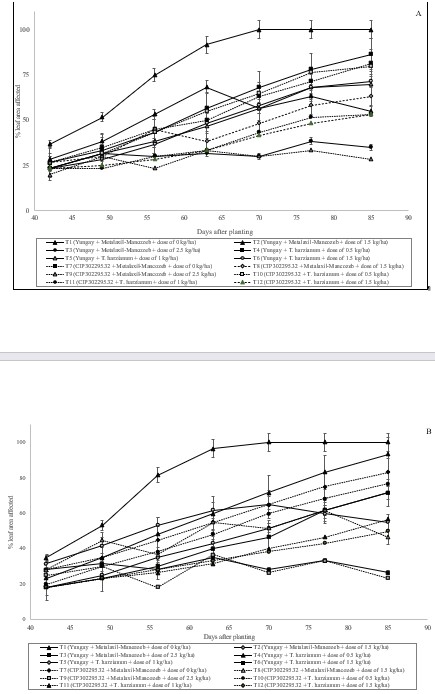
In Figures 3A and 3B, it can be observed that as time passes, without the application of chemical fungicides and T. harzianum, the progress of late blight disease is accelerated, reaching 100% of the leaf area affected by P. infestans at 70 days after sowing (DAS) in the commercial variety Yungay in both seasons. When applying chemical fungicides in high doses in both potato varieties, the progress of the disease is low, producing 20 to 38% of the leaf area affected by P. infestans, until reaching 35 and 28% of the affected area at the end of the season. While the application of medium doses of chemical fungicides shows that the Yungay variety showed greater progress, reaching more than 50% of the leaf area affected by P. infestans at 56 DAS, the improved variety showed less progress, reaching 58% of the area affected at 77 DAS in both seasons. With respect to the application of low doses of T. harzianum, it was observed that in the Yungay variety, from 63 DAS onwards, plants showed more than 50% of the area affected by blight, while in the improved variety, more than 50% of symptoms appeared from 77 DAS onwards in both seasons. While with applications of T. harzianum at medium and high doses in the Yungay variety, more than 50% of the area is affected at 70 DAS and in the improved variety, a slow progress is observed and more than 50% of the leaf area is affected by P. infestans at the end of both seasons.

Percentage of leaf area affected by Phytophthora infestans on potato in the campaign 2020-2021 (A) and campaign 2021-2022 (B).
3.3. Biometric characteristics associated with potato yield
Table 5 shows the analysis of variance for the variables associated with potato yield, revealing that the principal components showed highly significant differences for the treatments in all variables. The VxF interaction did not show significance in all variables. Meanwhile, the VxD interaction showed significant differences in all variables, indicating that the varieties responded to the application of different doses in both seasons. The FxD interaction showed significance in all variables, indicating that the fungicides responded differently to different doses. Regarding the three factor interaction, no significant differences were found between the treatments in any of the yield related variables in the two seasons.
Analysis of variance for plant height (PH), number commercial of tubers per plant (NCTP), commercial tubers weigh per plant (CTWP) of potatoes and commercial yield (CY [[Q7: Q7]]).
Since no interaction was found between the three factors in all variables, the main factors analysis was carried out. When analyzing the plant height (Figure 4A), it is observed that the improved variety is significantly taller than the Yungay variety in both seasons, while the application of T. harzianum showed greater growth than the application of chemical fungicides, in both seasons, showing an increase of 6.32% compared to the first season, also, the highest dose reported greater plant height with 33.18 and 36.03% higher compared to the low doses in both seasons. Regarding the number of commercial tubers per plant (Figure 4B), it is observed that the improved variety is significantly higher than the Yungay variety by more than 30.74 and 38% in the two seasons, as for the application of T. harzianum it was higher by 25.2 and 29.83% than the application of chemical fungicides in the two seasons, it is also shown that when applying the biofungicide there was an increase of 6.69% in relation to the first season and the highest dose level exceeded the low dose by 36.12 and 42.73% in both seasons.

Main effect for plant height (A), number of commercial tubers per plant (B), commercial weight per plant (C) and commercial yield (D) from two seasons.
When analyzing the weight of commercial tubers per plant (Figure 4C), it is observed that the improved variety obtained significantly more weight than the Yungay variety in both seasons, as for the application of T. harzianum it was significantly superior to chemical fungicides by 25.19 and 29.81% in both seasons, also, the highest dose reported higher tuber weight with 36.02 and 40.13% higher compared to the low doses in both seasons.
Regarding commercial performance (Figure 4D), it is observed that the improved variety obtained a higher yield than the Yungay variety by more than 38.1 and 38.07% in the two seasons, as for the application of T. harzianum it was higher by 25.19 and 29.80% than the application of chemical fungicides in the two seasons, it is also shown that when applying the biofungicide there was an increase of 6.74% in relation to the first season and the high dose exceeded the low dose by 36.04 and 39.46% in the two seasons, respectively.
Table 6 shows that T12 (CIP302295.32 + T. harzianum + dose of 1.5 kg ha-1) and T11 (CIP302295.32 + T. harzianum + dose of 1 kg ha-1) reached statistically greater plant height with 61.17 and 60.42 cm, exceeding the control treatment by 68.69 and 68.31% in the first season and 77.35 and 76.48% higher than the control treatment in the second season. Regarding the NCTP and PTP variables, treatments T12, T11 and T9 for the first season statistically reached the highest values, with 6.26, 6.21 and 5.46 commercial tubers per plant and 745.32 and 723.89 g plant-1, surpassing the control treatment by more than 83.55, 83.41 and 82.39% for NTP and 83.49, 83 and 81.07% for CTWP and in the second season they produced increases of 5.72, 4.9 and 6.67% for NCTP and 5.67, 6.89 and 6.72% for CTWP compared to the previous season. Regarding commercial performance, in the first season it is observed that treatments T12, T11 and T9 reached the highest yields with 24.84, 24.13 and 21.67 t ha-1, surpassing the control treatment by 83.49, 83.01 and 81.08%, while in the second season these same treatments recorded increases of 5.69, 6.91 and 6.72% compared to the previous season, which means that the application of T. harzianum at medium and high doses in the improved variety showed good agronomic behavior of the plant reflecting a good performance similar to the treatment with application of chemical fungicides in the improved variety.
Multiple comparison of means according to Tukey's test for plant height (PH), number commercial of tubers per plant (NCTP), commercial tubers weigh per plant (CTWP) of potatoes and commercial yield (CY).
3.4. Regressions
Figures 5A-D show the relationship between control efficiency and the application of different doses of fungicides in the two potato varieties, which fit a linear function, revealing that, when applying a medium dose of T. harzianum, control efficiency increases, being more noticeable in the improved variety, however, when increasing the dose, no significant increase is observed in either variety during the two seasons, while, as the application dose of chemical fungicides increases, control efficiency increases in both varieties, surpassing the application of T. harzianum in both seasons
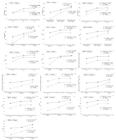
Regression for control efficiency in the 2020-2021 season (A, B) and 2021-2022 season (C, D), plant height in the 2020-2021 season (E, F) and 2021-2022 season (G, H), number of commercial tubers per plant in the 2020-2021 season (I, J) and 2021-2022 season (K, L) and commercial yield in the 2020-2021 season (M, N) and 2021-2022 season (O, P).
Regarding Figure 5E-H, the relationship between potato height and the application of fungicides in the two potato varieties is observed, indicating that as T. harzianum is applied at medium and high doses, an increase in plant height is recorded, reflecting a greater response in the improved variety. However, with an increase in the doses of chemical fungicides, the plant shows an upward linear trend, with the improved variety reaching the greatest height; however, it does not exceed the application of T. harzianum in both seasons. Similarly, the NTP (Figures 5I-L) increases as the medium dose of T. harzianum is applied, being more noticeable in the improved variety, however, with the application of chemical fungicides, high doses are required for the plant to produce more commercial tubers in both varieties. Likewise, the CY (Figures 5M-P) fits a linear function, where the highest yield was achieved by the improved variety when applying medium and high doses of T. harzianum, while as the dose of chemical fungicides increases, the yield is higher, however, its yield does not reach the application of medium doses of T. harzianum.
4. Discussion
The results indicate that Phytophthora infestans significantly affects potato crops in the Andes of Peru and when no control is carried out, the severity of the pathogen increases until it occupies the entire leaf area of the plant, because the oomycete, when infecting the plant tissue, produces toxins and begins to feed on the cell juice (Kamoun et al., 2015), causing necrosis in the infected area (Ivanov et al., 2021) and as time passes the severity increases (Giraldo et al., 2010), significantly reducing photosynthetic activity (González-Jiménez et al., 2023), until causing the death of the plant (Bagchi et al., 2024). In our study, it was observed that under in vitro conditions T. harzianum inhibited the mycelial growth of P. infestans and turned a darker, denser green, accompanied by a reduction in the pathogen’s diameter, which is consistent with active competition for space and a possible mycoparasitic capacity. However, our research showed that under field conditions the application of T. harzianum at medium and high doses significantly reduced the progress of the disease, being more notable in the improved variety with a control efficiency of 52 and 54% in both seasons, according to Ruiz and Rojas (2021), this is classified as medium control efficacy of late blight, being significantly lower compared to the study in vitro conditions where high control efficacy was found on P. infestans.
This difference is due to the climatic conditions of the field, which favor the development of the oomycete, making it more aggressive and virulent (Wilches et al., 2022). Meanwhile, the application of chemical fungicides was more effective in controlling the disease than the biological agent in both seasons. The use of T. harzianum at medium and high doses can minimize the use of chemical fungicides, thereby reducing the risk of environmental contamination and human health (Ramírez-González et al., 2025; Forbes et al., 2014).
Specifically, our results confirm that, under field conditions, the commercial variety Yungay without any control, presents an accelerated advance of the late blight disease, reaching 100% of affected leaf area from 43 DAS in both seasons, however, the improved variety the progress of the disease is significantly slower. These results are consistent with Vásquez-Castillo et al. (2022) who indicate that an improved variety presents genetic resistance and through its genetic composition, synthesizes secondary metabolites such as phytoalexins, which stops the mycelial growth of the oomycete. However, the low temperature and high relative humidity of the field generate greater virulence and aggressiveness of P. infestans (Chinheya et al., 2023), which results in greater leaf damage from 70 DAS. Thus, when applying fungicides, control over late blight is more effective, corroborating the studies of Najdabbasi et al. (2022) in potato.
Our study also demonstrated that applying medium and high doses of T. harzianum to the improved variety resulted in slower disease progression, 58% and 59% lower than the control treatment in both seasons. It was also observed that over time, the plant's leaf area increased, and at the same time, the severity of late blight increased, covering approximately 50% of the leaf surface at the end of the season in both seasons. However, the antagonistic activity of T. harzianum was greater under in vitro conditions. Our results were consistent with the data of Alfiky et al. (2023) who found that when applying T. harzianum under in vitro conditions the mycelial inhibition of late blight was 95%, however, under field conditions, the control efficiency was lower with 53%, given that the oomycete becomes more aggressive and virulent due to the climatic conditions that favor it.
It was also found that under in vitro conditions T. harzianum produces antifungal substances that inhibit the mycelial growth of P. infestans and as the days go by, this mycoparasitic action causes the biological agent to cover the entire surface of the plate. These observations are very similar to the data from Elsherbiny et al. (2020) who found that under in vitro conditions Trichoderma parasitizes P. infestans by forming hyphae that adhere to and surround the host hyphae until they cover it completely and through its hyphae it secretes lytic enzymes (chitinase and β-glucanases) that degrade the cell wall of the pathogen that are composed of quintin cross-linked with the β-1,3-glucan network.
Compared to field conditions, when applying medium and high doses of T. harzianum, it presented 55.43 and 59.56% efficiency of control of P. infestans in the improved variety and 54.38 and 58.52% efficiency in the commercial variety Yungay, in the two seasons respectively. This useful finding may be due to the fact that T. harzianum applied to the soil begins to colonize the root system of the plant and during its proliferation produces lytic enzymes that break the cell wall of the oospore (Lang and Chen, 2023) synthesize substances with antibiotic activity and stimulate systematic acquired resistance in the plant58, this reduces the severity of P. infestans. However, as the day’s pass, the plant’s foliage expands, and the pathogen’s zoospores infect the newly formed foliage through the wind. Likewise, high relative humidity (>80%) and low temperature (<17 °C) make P. infestans more aggressive and virulent (Olanya et al., 2016), As a consequence, it attacks during the phenological cycle of the potato, resulting in a low antagonistic activity of T. harzianum, making it more difficult to control late blight (Leesutthiphonchai et al., 2018).
In our study, it is observed that high-dose applications of chemical fungicides reduced the severity of late blight, surpassing T. harzianum applied at medium and high doses by 13.87 and 8.8% of late blight control efficiency in the improved variety and 12.03 and 10.4% in the commercial Yungay variety, in the two seasons respectively. This finding indicates that, compared to chemical fungicides, which generate resistance and cause negative impacts on the environment and human health, the application of medium doses of T. harzianum offers a sustainable alternative for the control of late blight. In the study of Palmieri et al. (2022) the use of biological agents significantly minimizes the massive use of chemical fungicides.
Regarding yield-related variables, our study showed that P. infestans significantly reduces plant growth and the number and weight of marketable tubers per plant. This is corroborated by Fry (1978) who indicate that the increase in leaf area affected by late blight significantly reduces photosynthetic activity, producing such high stress that the plant stops its growth in the early phenological stages and begins to flower and tuberize, as a result of the scarce leaf area, the plant produces few or no tubers (Singh et al., 2023), until at the end of the season the disease covers the entire leaf area causing the death of the plant (Chepsergon et al., 2023). However, in our study, the application of medium and high doses of T. harzianum in both varieties during both seasons showed a significant effect on the parameters associated with potato yield. Although chemical fungicide applications showed greater control efficiency against late blight, they failed to achieve the values obtained with medium and high doses of T. harzianum applications in both seasons.
This useful finding demonstrates that the application of T. harzianum produces a biofertilizer effect on the plant, resulting in increased growth, which is more noticeable in the improved variety. These results are close to those obtained by Tyśkiewicz et al. (2022) who indicate that the application of Trichoderma as a biofertilizer increases plant growth, because the microorganism, when colonizing the root system, stimulates the synthesis of gibberellins and auxins, increasing rooting so that the proliferation of the microorganism continues. This effect allows greater absorption of nutrients and water in the plant (Rodríguez-García and Vargas-Rojas, 2022; Sood et al., 2020). Likewise, the growth of the root system allowed the plant to present a greater number of commercial tubers per plant, when applying medium and high doses of T. harzianum, the effect being more pronounced when the biological agent was applied to the improved variety, in both seasons.
Furthermore, the results of our study show significant effects on the number and weight of marketable tubers per plant. This effect is due to the fact that Trichoderma synthesizes organic compounds that solubilize ions such as phosphorus and potassium (Chinheya et al., 2023) in addition, they produce harzian acid that phytochelates iron, resulting in greater availability and absorption of nutrients in the plant (Vinale et al., 2013). In addition, the synthesis of hormones allows a greater flow of carbohydrates from the leaf to the tuber (Chinheya et al., 2023), increasing the number and filling of the tubers (Purwantisari et al., 2021).
Regarding commercial performance, this research showed that the application of T. harzianum at medium and high doses in the improved variety, obtained the highest yield, a result that is close to those obtained by Chinheya et al. (2023) with commercial yields of 30 to 40 t ha-1. In addition, medium and high doses of T. harzianum exceeded the treatment with chemical fungicides by 12.76 and 10.19% in the first season and by 11.81 and 10.38% in the second season. Meanwhile, the application of T. harzianum at medium and high doses in the commercial variety Yungay exceeded the commercial yield by 8.14 and 5.45% compared to the treatment with chemical fungicides in the second season. These results revealed that the improved variety favors the biofertilizer action of T. harzianum. Although the application of chemical fungicides obtained greater control efficiency against late blight, in terms of yield it was surpassed by the application of T. harzianum at medium and high doses in both varieties in both seasons. This is also confirmed Awad-Allah et al. (2022) and Woo et al. (2023) who demonstrated that Trichoderma has a dual action (biofungicides and biofertilizers), as a result it reduces the severity of late blight and increases potato yield, being a sustainable alternative to reduce chemical fungicides (Cortés et al., 2023). Therefore, the selection of the improved variety CIP302295.32 with the application of 1 kg ha-1 of T. harzianum (concentration of 5 x 10¹² of viable spores) will be a sustainable solution for the control of late blight and good yield of potato, lo cual es corroborado por Srećkov et al. (2025) and Islam et al. (2022) who argue that the use of a biological agent that significantly controls the infestation of a key crop pest and increases crop yield is a sustainable alternative. This approach significantly reduces reliance on agrochemicals, prevents the accumulation of toxic chemical residues and minimizes environmental damage.
5. Conclusions
The analysis highlights that Phytophthora infestans significantly affects potato crops in Peru. However, this study has shown that increasing the dose of chemical fungicides produces control efficiency of late blight in the improved variety in both seasons in conditions northern highlands of Peru. In contrast, Trichoderma harzianum under in vitro conditions inhibits the mycelial growth of Phytophthora infestans, which is consistent with active competition for space and a possible mycoparasitic capacity and under field conditions the application of T. harzianum at medium and high doses significantly reduced the progress of the disease, being more notable in the improved variety with a control efficiency medium in both seasons but it did not outperform the chemical control. This difference in control is due to field climatic conditions, which favour the development of the oomycete, making it more aggressive and virulent. However, the application of medium and high doses of T. harzianum (concentration of 5 x 10¹² and 7.5 x 10¹² of viable spores) in the improved variety significantly exceeded the chemical control in terms of height, number and weight of commercial tubers per plant and commercial yield of potatoes in both seasons in conditions northern highlands of Peru.
Data Availability Statement
Data is available upon request.
References
-
ALFIKY, A., ABOU-MANSOUR, E., DE VRIEZE, M., L’HARIDON, F. and WEISSKOPF, L., 2023. Newly isolated Trichoderma spp show multifaceted biocontrol strategies to inhibit potato late blight causal agent phytophthora infestans both in vitro and in planta. Phytobiomes Journal, vol. 8, no. 5, pp. 70-84. https://doi.org/10.1094/PBIOMES-01-23-0002-R
» https://doi.org/10.1094/PBIOMES-01-23-0002-R -
AWAD-ALLAH, E.F.A., SHAMS, A.H.M., HELALY, A. and RAGHEB, E.I., 2022. Effective applications oftrichodermaspp. as biofertilizers and biocontrol agents mitigate tomatoFusariumwilt disease. Agriculture, vol. 12, no. 11, pp. 1950. https://doi.org/10.3390/agriculture12111950
» https://doi.org/10.3390/agriculture12111950 -
BADER, A., SALERNO, G., COVACEVICH, F. and CONSOLO, V., 2020. Bioformulación de Trichoderma harzianum en sustrato sólido y efectos de su aplicación sobre plantas de pimiento. Revista de la Facultad de Agronomía (La Plata), vol. 119, no. 1, pp. 1-9. https://doi.org/10.24215/16699513e037
» https://doi.org/10.24215/16699513e037 -
BAGCHI, P., SAWICKA, B., STAMENKOVIC, Z., MARKOVIĆ, D. and BHATTACHARJEE, D., 2024. Potato late blight outbreak: a study on advanced classification models based on meteorological Data. Sensors, vol. 24, no. 23, pp. 7864. https://doi.org/10.3390/s24237864 PMid:39686401.
» https://doi.org/10.3390/s24237864 -
BEN NAIM, Y. and COHEN, Y., 2023. Replacing mancozeb with alternative fungicides for the control of late blight in potato. Journal of Fungi, vol. 9, no. 11, pp. 1046. https://doi.org/10.3390/jof9111046 PMid:37998852.
» https://doi.org/10.3390/jof9111046 -
BERINDEAN, I.V., TAOUTAOU, A., RIDA, S., ONA, A.D., STEFAN, M.F., COSTIN, A., RACZ, I. and MUNTEAN, L., 2024. Modern breeding strategies and tools for durable late blight resistance in potato. Plants, vol. 13, no. 12, pp. 1711. https://doi.org/10.3390/plants13121711 PMid:38931143.
» https://doi.org/10.3390/plants13121711 -
CHEPSERGON, J., MOTAUNG, T.E., BELLIENY-RABELO, D. and MOLELEKI, L., 2023. Organize, don’t agonize: strategic success ofPhytophthoraspecies. Microorganisms, vol. 8, no. 6, pp. 917. https://doi.org/10.3390/microorganisms8060917 PMid:32560346.
» https://doi.org/10.3390/microorganisms8060917 -
CHINHEYA, C.C., MLAMBO, L.C., SHAMUDZARIRA, G., JERE, J., KARAVINA, C., MAHERE, T. and DIMBI, S., 2023. Evaluation of the potentials of Bacillus and Trichoderma isolates as biocontrol agents against Meloidogyne javanica and Phytophthora infestans and plant growth promoters in potatoes (Solanum tuberosum). European Journal of Plant Pathology, vol. 167, no. 4, pp. 699-714. https://doi.org/10.1007/s10658-023-02756-2
» https://doi.org/10.1007/s10658-023-02756-2 -
CORTÉS, F., ALVARADO, G. and SÁNCHEZ, G., 2023. Trichoderma spp, una alternativa para la agricultura sostenible: una revisión. Revista Colombiana de Biotecnología, vol. XXV, no. 2, pp. 73-87. https://doi.org/10.15446/rev.colomb.biote.v25n2.111384
» https://doi.org/10.15446/rev.colomb.biote.v25n2.111384 -
DAVIS, T.W., YILMAZ, E. and NEWSON, W.R., 2024. Potato protein concentrate: improving quality using a more effective and sustainable method. Biology and Life Sciences Forum, vol. 40, pp. 46. https://doi.org/10.3390/blsf2024040046
» https://doi.org/10.3390/blsf2024040046 -
DJAMAN, K., SANOGO, S., KOUDAHE, K., ALLEN, S., SAIBOU, A. and ESSAH, S., 2021. Characteristics of organically grown compared to conventionally grown potato and the processed products: a review. Sustainability, vol. 13, no. 11, pp. 6289. https://doi.org/10.3390/su13116289
» https://doi.org/10.3390/su13116289 -
ELSHERBINY, E.A., AMIN, B.H., ALEEM, B., KINGSLEY, K.L. and BENNETT, J.W., 2020. Trichodermavolatile organic compounds as a biofumigation tool against late blight pathogenPhytophthora infestansin [ostharvest potato tubers. Journal of Agricultural and Food Chemistry, vol. 68, no. 31, pp. 8163-8171. https://doi.org/10.1021/acs.jafc.0c03150 PMid:32790355.
» https://doi.org/10.1021/acs.jafc.0c03150 -
FATHIYA, K., PRASTIWI, W. and EKOWATI, T., 2024. Consumption and consumer preferences of fresh and frozen potatoes in Semarang City. Journal of Consumer Sciences, vol. 9, no. 2, pp. 266-285. https://doi.org/10.29244/jcs.9.2.266-285
» https://doi.org/10.29244/jcs.9.2.266-285 - FOOD AND AGRICULTURE ORGANIZATION – FAO, 2019. The state of food and agriculture. Rome: FAO.
-
FORBES, G. A., PÉREZ, W. and PIEDRA, J.A., 2014.Evaluación de la resistencia en genotipos de papa a Phytophthora infestans bajo condiciones de campo: guía para colaboradores internacionales. La Molina: Centro Internacional de la Papa. https://doi.org/10.4160/9789290604501
» https://doi.org/10.4160/9789290604501 -
FRY, W.E., 1978. Quantification of general resistance of potato cultivars and fungicide effects for integrated control of potato late blight. Phytopathology, vol. 68, no. 11, pp. 1650-1655. https://doi.org/10.1094/Phyto-68-1650
» https://doi.org/10.1094/Phyto-68-1650 -
GIRALDO, D., JUAREZ, H., PÉREZ, W., TREBEJO, I., YZARRA, W. and FORBES, G., 2010 [viewed 2 October 2025]. Severidad del tizón tardío de la papa (Phytophthora infestans) en zonas agrícolas del Perú asociado con el cambio climático. Revista Peruana Geo-Atmosférica RPGA [online], vol. 2, pp. 56-67. Available from: https://web2.senamhi.gob.pe/rpga/pdf/2010_vol02/art5.pdf
» https://web2.senamhi.gob.pe/rpga/pdf/2010_vol02/art5.pdf -
GONZÁLEZ-JIMÉNEZ, J., ANDERSSON, B., WIIK, L. and ZHAN, J., 2023. Modelling potato yield losses caused byPhytophthora infestans: aspects of disease growth rate, infection time and temperature under climate change. Field Crops Research, vol. 299, no. 1, pp. 108977. https://doi.org/10.1016/j.fcr.2023.108977
» https://doi.org/10.1016/j.fcr.2023.108977 - HENFLING, J.W., 1987. Late blight of potato: Phytophthora infestans Lima: International Potato Center. Technical Information Bulletin, no. 4.
-
HU, X., JIANG, H., LIU, Z., GAO, M., LIU, G., TIAN, S. and ZENG, F., 2025. The global potato-processing industry: a review of production, products, quality and sustainability. Foods, vol. 14, no. 10, pp. 1758. https://doi.org/10.3390/foods14101758 PMid:40428538.
» https://doi.org/10.3390/foods14101758 -
ISLAM, M.H., MASUD, M.M., JANNAT, M., HOSSAIN, M.I., ISLAM, S., ALAM, M.Z., SERNEELS, F. and ISLAM, R., 2022. Potentiality of formulated bioagents from lab to field: a sustainable alternative for minimizing the use of chemical fungicide in controlling potato late blight. Sustainability, vol. 14, no. 8, pp. 4383. https://doi.org/10.3390/su14084383
» https://doi.org/10.3390/su14084383 -
IVANOV, A.A., UKLADOV, E.O. and GOLUBEVA, T.S., 2021. Phytophthora infestans: an overview of methods and attempts to combat late blight. Journal of Fungi, vol. 7, no. 12, pp. 1071. https://doi.org/10.3390/jof7121071 PMid:34947053.
» https://doi.org/10.3390/jof7121071 -
JUDELSON, H.S., TYLER, B.M. and MICHELMORE, R.W., 1991. Transformation of the oomycete pathogen, Phytophthora infestans. Molecular Plant-Microbe Interactions : MPMI, vol. 4, no. 6, pp. 602-607. https://doi.org/10.1094/MPMI-4-602 PMid:1804404.
» https://doi.org/10.1094/MPMI-4-602 -
KAMOUN, S., FURZER, O., JONES, J.D.G., JUDELSON, H.S., ALI, G.S., DALIO, R.J.D., ROY, S.G., SCHENA, L., ZAMBOUNIS, A., PANABIÈRES, F., CAHILL, D., RUOCCO, M., FIGUEIREDO, A., CHEN, X.R., HULVEY, J., STAM, R., LAMOUR, K., GIJZEN, M., TYLER, B.M., GRÜNWALD, N.J., MUKHTAR, M.S., TOMÉ, D.F., TÖR, M., VAN DEN ACKERVEKEN, G., MCDOWELL, J., DAAYF, F., FRY, W.E., LINDQVIST-KREUZE, H., MEIJER, H.J., PETRE, B., RISTAINO, J., YOSHIDA, K., BIRCH, P.R. and GOVERS, F., 2015. The top 10 oomycete pathogens in molecular plant pathology. Molecular Plant Pathology, vol. 16, no. 4, pp. 413-434. https://doi.org/10.1111/mpp.12190 PMid:25178392.
» https://doi.org/10.1111/mpp.12190 -
LANG, B. and CHEN, J., 2023. Trichoderma harzianumcellulase genethph2affects trichoderma root colonization and induces resistance to southern leaf Blight in Maize. Journal of Fungi, vol. 9, no. 12, pp. 1168. https://doi.org/10.3390/jof9121168 PMid:38132769.
» https://doi.org/10.3390/jof9121168 -
LEESUTTHIPHONCHAI, W., VU, L., AH-FONG, A.V. and JUDELSON, H.S., 2018. How does phytophthora infestans evade control efforts? Modern insight into the late blight disease. Phytopathology, vol. 108, no. 8, pp. 916-924. https://doi.org/10.1094/PHYTO-04-18-0130-IA PMid:29979126.
» https://doi.org/10.1094/PHYTO-04-18-0130-IA -
LI, Y., SUN, R., YU, J., SARAVANAKUMAR, K. and CHEN, J., 2016. Antagonistic and biocontrol potential ofTrichoderma asperellumZJSX5003 against the maize stalk rot pathogenFusarium graminearum. Indian Journal of Microbiology, vol. 56, no. 3, pp. 318-327. https://doi.org/10.1007/s12088-016-0581-9 PMid:27407296.
» https://doi.org/10.1007/s12088-016-0581-9 -
MARTÍNEZ-MEDINA, A., FERNÁNDEZ, I., PESCADOR, L., ROMERO-PUERTAS, M.C. and POZO, M.J., 2019. Trichoderma harzianum triggers an early and transient burst of nitric oxide and the upregulation of PHYTOGB1 in tomato roots. Plant Signaling & Behavior, vol. 14, no. 9, pp. 9. https://doi.org/10.1080/15592324.2019.1640564 PMid:31314666.
» https://doi.org/10.1080/15592324.2019.1640564 -
MAURO, R.P. and IERNA, A., 2025. Tuber growth and nutritional traits in deficit irrigated potatoes. Agronomy, vol. 15, no. 5, pp. 1019. https://doi.org/10.3390/agronomy15051019
» https://doi.org/10.3390/agronomy15051019 -
MITROVIĆ, I., ČANAK, P., TANČIĆ, S., FARKAŠ, H., VASILJEVIĆ, M., ĆUJIĆ, S., ZORIĆ, M. and MITROVIĆ, B., 2025. Trichoderma harzianumin biocontrol of maize fungal diseases and relevant mycotoxins: from the laboratory to the field. Journal of Fungi, vol. 11, no. 6, pp. 416. https://doi.org/10.3390/jof11060416 PMid:40558928.
» https://doi.org/10.3390/jof11060416 -
NAJDABBASI, N., MIRMAJLESSI, S.M., DEWITTE, K., MÄND, M., LANDSCHOOT, S. and HAESAERT, G., 2022. Combination of potassium phosphite and reduced doses of fungicides encourages protection againstPhytophthora infestansin potatoes. Agriculture, vol. 12, no. 2, pp. 189. https://doi.org/10.3390/agriculture12020189
» https://doi.org/10.3390/agriculture12020189 -
NAPOLITANO, A., SENATORE, M., COLUCCIA, S., PALOMBA, F., CASTALDO, M., SPASIANO, T., AVINO, A.G., VITALE, A., BONFANTE, A., SACCO, A. and RUOCCO, M., 2024. Development and evaluation of a Trichoderma-based bioformulation for enhancing sustainable potato cultivation. Horticulturae, vol. 10, no. 7, pp. 664. https://doi.org/10.3390/horticulturae10070664
» https://doi.org/10.3390/horticulturae10070664 -
NTULI, J., NGOBESE, N.Z., SITHOLE, L. and HADEBE, S., 2025. Disentangling and closing the nutrient-based potato yield gap using integrated nutrient management under temperate environments of Sub-Saharan Africa. Horticulturae, vol. 11, no. 7, pp. 835. https://doi.org/10.3390/horticulturae11070835
» https://doi.org/10.3390/horticulturae11070835 -
OLANYA, M., ANWAR, M., HE, Z., LARKIN, R. and HONEYCUTT, C., 2016. Survival potential ofPhytophthora infestanssporangia in relation to environmental factors and late blight occurrence. Journal of Plant Protection Research, vol. 56, no. 1, pp. 73-81. https://doi.org/10.1515/jppr-2016-0011
» https://doi.org/10.1515/jppr-2016-0011 -
PALMIERI, D., IANIRI, G., DEL GROSSO, C., BARONE, G., DE CURTIS, F., CASTORIA, R. and LIMA, G., 2022. Advances and perspectives in the use of biocontrol agents against fungal plant diseases. Horticulturae, vol. 8, no. 7, pp. 577. https://doi.org/10.3390/horticulturae8070577
» https://doi.org/10.3390/horticulturae8070577 -
PEREZ, E., RAFAEL RUTTE, R.R. and OSORIO, G., 2024. Estrés hídrico en el crecimiento y rendimiento de cultivares comerciales de papa (Solanum tuberosum L.) en la región centro del Perú. Journal of High Andean Research, vol. 26, no. 1, pp. 46-55. https://doi.org/10.18271/ria.2024.587
» https://doi.org/10.18271/ria.2024.587 -
PURWANTISARI, S., SITEPU, H., RUKMI, I., LUNGGANI, T. and BUDIHARDJO, K., 2021. Indigenous Trichoderma harzianum as biocontrol toward blight late disease and biomodulator in potato plant productivity. Biosaintifika, vol. 13, no. 1, pp. 26-33. https://doi.org/10.15294/biosaintifika.v13i1.26706
» https://doi.org/10.15294/biosaintifika.v13i1.26706 -
RAMÍREZ-GONZÁLEZ, I., PINO-MELÉNDEZ, V., BELEZACA-PINARGOTE, C., SÁNCHEZ-JAIME, L., COBOS-MORA, F. and TROYA-GUERRERO, G., 2025. Eficacia comparativa de fungicidas biológicos y químicos en el control Rhizoctonia solani en tres variedades de arroz en Ecuador. Journal Selva Andina Biosph., vol. 13, no. 1, pp. 5-20. https://doi.org/10.36610/j.jsab.2025.130100005
» https://doi.org/10.36610/j.jsab.2025.130100005 -
RHOUMA, A., HAJJI-HEDFI, L. and ATALLAOUI, K., 2024. Potato late blight: the pathogen, the menace, the sustainable control.DYSONA -. Life Sciences, vol. 5, no. 1, pp. 37-51. https://doi.org/10.30493/dls.2024.445326
» https://doi.org/10.30493/dls.2024.445326 -
RIVADENEIRA, J.E., 2021. Generación y selección de mutantes de papa (Solanum tuberosum) con resistencia al tizón tardío (Phytophthora infestans). ACI Avances en Ciencias e Ingenierías, vol. 12, no. 3, pp. 8. https://doi.org/10.18272/aci.v12i3.2012
» https://doi.org/10.18272/aci.v12i3.2012 - RODRÍGUEZ-GARCÍA, D. and VARGAS-ROJAS, J., 2022. Efecto de la inoculación con trichoderma sobre el crecimiento vegetativo del tomate (Solanum lycopersicum). Agronomia Costarricense, vol. 46, no. 2, pp. 47-60.
-
ROMERO, F., CAZZATO, S.F., WALDER, S., VOGELGSANG, S., BENDER, F. and VAN DER HEIJDEN, M., 2022. Humidity and high temperature are important for predicting fungal disease outbreaks Worldwide. The New Phytologist, vol. 234, no. 5, pp. 1553-1556. https://doi.org/10.1111/nph.17340
» https://doi.org/10.1111/nph.17340 -
RUIZ, F.J. and ROJAS, C., 2021. Antagonistic potential of nativeTrichoderma spp againstPhytophthora cinnamomiin the control of holm oak decline in dehesas ecosystems. Forests, vol. 12, no. 7, pp. 945. https://doi.org/10.3390/f12070945
» https://doi.org/10.3390/f12070945 -
SANJU, S., THAKUR, A., SIDDAPPA, S., SREEVATHSA, R., SRIVASTAVA, N., SHUKLA, P. and SINGH, B., 2013. Pathogen virulence of Phytophthora infestans: from gene to functional genomics. Physiology and Molecular Biology of Plants : an International Journal of Functional Plant Biology, vol. 19, no. 2, pp. 165-177. https://doi.org/10.1007/s12298-012-0157-z PMid:24431484.
» https://doi.org/10.1007/s12298-012-0157-z -
SANTIAGO, O., 2024. Búsqueda de resistencia en ecotipos silvestres de papa a tizón tardío (Phytophthora infestans Mont. De Bary). Revista de Investigación Proyección Científica, vol. 6, no. 1, pp. 31-49. https://doi.org/10.56785/ripc.v6i1.203
» https://doi.org/10.56785/ripc.v6i1.203 -
SINGH, S., RAKESH, M. and RENU, R., 2023. Field evaluation of combination fungicides against late blight disease in potato (Solanum tuberosum). Indian Journal of Agricultural Sciences, vol. 93, no. 2, pp. 217-220. https://doi.org/10.56093/ijas.v93i2.128888
» https://doi.org/10.56093/ijas.v93i2.128888 -
SINGH, S., SINGH, A.K., PRADHAN, B. and MUHAMMAD, K., 2024. Harnessing Trichoderma mycoparasitism as a tool in the management of soil dwelling plant pathogens. Microbial Ecology, vol. 87, no. 1, pp. 158. https://doi.org/10.1007/s00248-024-02472-2 PMid:39708106.
» https://doi.org/10.1007/s00248-024-02472-2 -
SOOD, M., KAPOOR, D., KUMAR, V., SHETEIWY, M.S., RAMAKRISHNAN, M., LANDI, M., ARANITI, F. and SHARMA, A., 2020. Trichoderma: the “secrets” of a multitalented biocontrol agent. Plants, vol. 9, no. 6, pp. 762. https://doi.org/10.3390/plants9060762 PMid:32570799.
» https://doi.org/10.3390/plants9060762 -
SREĆKOV, Z., VASIĆ, V., MIŠKOVIĆ, A., VUJASINOVIĆ, V., RADIŠIĆ, M., RADIŠIĆ, M. and RACIĆ, G., 2025. Impact of sustainable agricultural practices on early potato yield components. Sustainability, vol. 17, no. 9, pp. 4070. https://doi.org/10.3390/su17094070
» https://doi.org/10.3390/su17094070 - TIRADO-MALAVER, R., TIRADO, R., MEDOZA-SÁENZ, J., FABIAN, N., TIRADO, R. and CAMPOS, A., 2024. Sustainability index of the potato (Solanum tuberosum L.) production agroecosystem in Cutervo, Peru. Tropical and Subtropical Agroecosystems, vol. 27, no. 1, pp. 1-14.
-
TIRADO-MALAVER, R.H. and TIRADO-LARA, R., 2025. Biofertilization with beneficial microorganisms and low rates of chemical fertilization in potatoes (Solanum tuberosum L.) management for sustainable agriculture. Brazilian Journal of Biology, vol. 85, e286059. https://doi.org/10.1590/1519-6984.286059
» https://doi.org/10.1590/1519-6984.286059 -
TYŚKIEWICZ, R., NOWAK, A., OZIMEK, E. and JAROSZUK-ŚCISEŁ, J., 2022. Trichoderma: the current status of its application in agriculture for the biocontrol of fungal phytopathogens and stimulation of plant growth. International Journal of Molecular Sciences, vol. 23, no. 4, pp. 2329. https://doi.org/10.3390/ijms23042329 PMid:35216444.
» https://doi.org/10.3390/ijms23042329 -
VAN DIJK, M., MORLEY, T., RAU, M.L. and SAGHAI, Y., 2021. A meta-analysis of projected global food demand and population at risk of hunger for the period 2010-2050. Nature Food, vol. 2, no. 7, pp. 494-501. https://doi.org/10.1038/s43016-021-00322-9 PMid:37117684.
» https://doi.org/10.1038/s43016-021-00322-9 -
VÁSQUEZ-CASTILLO, W., SEVILLA-RIVADENEIRA, A., RIVADENEIRA-RUALES, J. and CUESTA-SUBÍA, X., 2022. Resistencia genética como estrategia para el control de Phytophthora infestans en papa (Solanum tuberosum). Ciencia y Tecnología Agropecuaria, vol. 23, no. 2, e2292. https://doi.org/10.21930/rcta.vol23_num2_art:2292
» https://doi.org/10.21930/rcta.vol23_num2_art:2292 -
VESCOVO, D., MANETTI, C., RUGGIERI, R., SPIZZIRRI, U.G., AIELLO, F., MARTUSCELLI, M. and RESTUCCIA, D., 2025. The valorization of potato peels as a functional ingredient in the food industry: a comprehensive review. Foods, vol. 14, no. 8, pp. 1333. https://doi.org/10.3390/foods14081333 PMid:40282735.
» https://doi.org/10.3390/foods14081333 -
VINALE, F., NIGRO, M., SIVASITHAMPARAM, K., FLEMATTI, G., GHISALBERTI, E.L., RUOCCO, M., VARLESE, R., MARRA, R., LANZUISE, S., EID, A., WOO, S.L. and LORITO, M., 2013. Harzianic acid: a novel siderophore fromTrichoderma harzianum. FEMS Microbiology Letters, vol. 347, no. 2, pp. 123-129. https://doi.org/10.1111/1574-6968.12231 PMid:23909277.
» https://doi.org/10.1111/1574-6968.12231 -
WILCHES, W., VARGAS, R. and ESPITIA, E., 2022. Efectos del clima y su relación con el tizón tardío (Phytophthora infestans(Mont.) de Bary) en cultivo de papa (Solanum tuberosumL.). Siembra, vol. 9, no. 2, e4008. https://doi.org/10.29166/siembra.v9i2.4008
» https://doi.org/10.29166/siembra.v9i2.4008 -
WOO, S.L., HERMOSA, R., LORITO, M. and MONTE, E., 2023. Trichoderma: a multipurpose, plant-beneficial microorganism for eco-sustainable agriculture. Nature Reviews. Microbiology, vol. 21, no. 5, pp. 312-326. https://doi.org/10.1038/s41579-022-00819-5 PMid:36414835.
» https://doi.org/10.1038/s41579-022-00819-5 -
XUE, H., LIU, Q. and YANG, Z., 2023. Pathogenicity, mycotoxin production, and control of potato dry rot caused byFusarium spp: a review. Journal of Fungi, vol. 9, no. 8, pp. 843. https://doi.org/10.3390/jof9080843 PMid:37623614.
» https://doi.org/10.3390/jof9080843 -
YAO, X., GUO, H., ZHANG, K., ZHAO, M., RUAN, J. and CHEN, J., 2023. Trichoderma and its role in biological control of plant fungal and nematode disease. Frontiers in Microbiology, vol. 14, pp. 1160551. https://doi.org/10.3389/fmicb.2023.1160551 PMid:37206337.
» https://doi.org/10.3389/fmicb.2023.1160551 -
ZAO, X., LI, W., CHENG, L., YU, B. and SA, G., 2025. Physiological and molecular mechanisms of light-induced greening in potatoes: a path to food safety. Foods, vol. 14, no. 10, pp. 1798. https://doi.org/10.3390/foods14101798 PMid:40428577.
» https://doi.org/10.3390/foods14101798 -
ZEVALLOS, E., MARMOLEJO, K., ALVAREZ, F., PAITAN, R., VIZA, I., BECERRA, D., RIXI, G., SILVA-DIAZ, C. and INGA, J., 2023. Screening potato landraces to cope with climate change in the central Andes of Peru. International Journal of Plant Biology, vol. 14, no. 4, pp. 1167-1179. https://doi.org/10.3390/ijpb14040085
» https://doi.org/10.3390/ijpb14040085 -
ZHANG, J., HUANG, X., YANG, S., HUANG, A., REN, J., LUO, X., FENG, S., LI, P., LI, Z. and DONG, P., 2023. Endophytic Bacillus subtilis H17-16 effectively inhibits Phytophthora infestans, the pathogen of potato late blight, and its potential application. Pest Management Science, vol. 79, no. 12, pp. 5073-5086. https://doi.org/10.1002/ps.7717 PMid:37572366.
» https://doi.org/10.1002/ps.7717 -
ZHOU, J., LIANG, J., ZHANG, X., WANG, F., QU, Z., GAO, T., YAO, Y. and LUO, Y., 2025. Trichoderma brevicompactum6311: prevention and control ofPhytophthora capsiciand its growth-promoting effect. Journal of Fungi, vol. 11, no. 2, pp. 105. https://doi.org/10.3390/jof11020105 PMid:39997399.
» https://doi.org/10.3390/jof11020105 -
ZIN, N.A. and BADALUDDIN, N.A., 2020. Biological functions ofTrichoderma spp for agriculture applications. Annals of Agricultural Science, vol. 65, no. 2, pp. 168-178. https://doi.org/10.1016/j.aoas.2020.09.003
» https://doi.org/10.1016/j.aoas.2020.09.003
*
e-mail: hugotiradomalaver@gmail.comEditor: