 Featuring the ovarian morphological of Cichla kelberi Kullander & Ferreira, 2006 introduced in a Basin adjacent to the Lençóis Maranhenses National Park, Northeastern Brazil
Abstract
Peacock bass (Ciclha kelberi) has been introduced in reservoirs in Brazil; however, information about its reproductive aspects and gonadal maturation remains scarce. Studies on this field carried out in Maranhão State, Brazil mainly address information from lakes and specific regions. The aims of the present study are to feature the gonads and female germ cells of C. kelberi captured in a basin by Lençóis Maranhenses National Park. Thirty specimens were collected, euthanized and weighed. Their gonads were subsequently removed and taken to histological processing. Females were classified as synchronous in multiple batches. Germ cells were featured as Primordial Follicles, Primary Development, Cortical Alveoli, Lipid Vitellogenesis, Lipid-Protein Vitellogenesis and Complete Vitellogenesis. Post-ovulatory and Atretic Follicles were also observed. The smallest cell (in diameter) was observed in primordial follicle cells (16.7 µm) and the largest one was recorded for atretic follicle cells (453.5 µm). The smallest cell area was 580.9 µm2 and the largest one was 300,240.7 µm2. The collected data differed from those recorded other reservoirs in Maranhão State and for other locations in Brazil. This finding points out that this species remains under adaption to the lotic environment in Preguiças River, at Lençóis Maranhenses National Park. Additional research is necessary to help better understanding the long-term reproductive and ecological aspects of the assessed species in order to support the sustainable management of this basin.
Keywords:
Cichlidae; cell; non-native species; reproduction
Resumo
Ciclha kelberi tem sido introduzido em reservatórios no Brasil e as informações acerca dos aspectos reprodutivos, maturação gonadal da espécie ainda são escassas, No Maranhão, tais estudos se encontram pontuais e restritos às regiões lacustres. O presentetrabalho objetiva caracterizar as gônadas e células germinativas femininas de C. kelberi bacia adjacente ao Parque Nacional dos Lençóis Maranhenses, Brasil. Foram coletados 30 exemplares, estes foram eutanasiados, pesados e posteriormente as gônadas foram retiradas e encaminhadas ao processamento histológico. As fêmeas foram classificadas como sincrônicas em lotes múltiplos. As células germinativas foram caracterizadas como Folículo primordial, Desenvolvimento primário, Alvéolo cortical, Vitelogênese lipídica, Vitelogênese lipídica-proteica e Vitelogênese completa. Também foram observados Folículos Pós-ovulátorios e Atrésicos. O menor diâmetro celular foi em células de folículo primordial 16.7 µm e o maior em folículo atrésico 453.5 µm. A menor área celular foi de 580.9 µm2 e a maior 300.240,7 µm2. Os dados observados no presente trabalho diferem de outros observados em demais reservatórios observados no Maranhão e em outros estados do Brasil, demonstrando que a espécie está em processo de adaptação ao ambiente lótico do Rio Preguiças, no Parque Nacional dos Lençóis Maranhenses. Pesquisas adicionais são necessárias para compreender a longo prazo os aspectos reprodutivos e ecológicos da espécie a fim auxiliar no manejo sustentável da bacia.
Palavras-chave:
Cichlidae; célula; espécie não nativa; reprodução
1. Introduction
Fish belonging to genus Cichla Bloch & Schneider, 1801 (Cichliformes: Cichlidae), which are popularly known as Peacock bass, are native to the Amazon, Tocantins and Orinoco basins, as well as to Atlantic slope rivers in the Guianas and Suriname (Kullander and Ferreira, 2006). These species are carnivorous and non-migratory. They show parental behavior, which is highlighted by nest building and offspring protection (Castro et al., 2020; Gomiero et al., 2009).
Fish belonging to genus Cichla are among the species most often introduced in river basins in Brazil (Gomiero and Braga, 2004). This same process is also observed in North and South America, Africa and Asia (Golani et al., 2019; Sastraprawira et al., 2020) for sport fishing in reservoirs, lakes and rivers (Castro et al., 2020).
These fish are known as predators belonging to family Cichlidae. They are distributed in Neotropical river basins (Kullander & Ferreira, 2006; Willis et al., 2007). Their remarkable ability to adapt to the new environments they are introduced in leads to significant impact on native communities, including changes in food chain, reduced potential prey populations and, consequently, risk of endangering other native species (Menezes et al., 2012; Pelicice and Agostinho, 2009). The Cichla spp. population in rivers and lakes in Paraná State is an example of it, since it recorded severe reduction in native fish communities (Zaret and Paine, 1973). Many of these communities had not recovered, even after 45 years (Sharpe et al., 2017). This phenomenon has been associated with the extinction of native species living in river basins in the Brazilian Atlantic Forest (Pelicice and Agostinho, 2009; Fragoso-Moura et al., 2016; Catelani et al., 2021; Franco et al., 2022).
Cichla representatives mainly feed on small fish and invertebrates (Fugi et al., 2008), and it turns them, mainly those living in reservoirs, into individuals with high potential to disturb invaded communities (Zaret and Paine, 1973; Latini and Petrere Junior, 2004; Sabaj et al., 2020)
Peacock bass Cichla kelberi Kullander & Ferreira, 2006 is endemic to the Araguaia and lower Tocantins River basins (Kullander and Ferreira, 2006). Nevertheless, this species has faced its extensive introduction in different regions worldwide, including Central America (Sharpe et al., 2017), North America (Shafland, 1999), Asia (Chong et al., 2010), Africa (Welcomme, 1988), Oceania (Maciolek, 1984) and the Middle East (Golani et al., 2019), due to its attractiveness for sport fishing, ability to regulate other species and to the quality of its meat. Therefore, it is essential understanding this species’ features, mainly how its reproductive aspects influence the settlement of sustainable populations outside their native habitat (Pelicice and Agostinho, 2009; Sharpe et al., 2017).
According to studies on the reproduction of C. kelberi, this species reproduces in the warmest periods of the year, from spring to summer. This reproductive strategy was observed in studies carried out in Brazilian lakes and rivers (Gomiero et al., 2009; Andrade and Pelicice, 2022; Mattos et al., 2024). There are only few studies on this species’ impact on native assembly in Brazil. The research by Leal et al. (2021) stood out among studies in this topic because it showed significant decline in the richness of native species in Rosana Lake reservoir, Paraná State, Brazil observed fish biodiversity loss in the Atlantic Forest conservation unit where C. kelberi was introduced in. These findings reinforce the need for efforts to gather further knowledge to help developing management measures applicable to this species.
Studies with peacock bass carried out in Pindaré River basin, Maranhão State, Northeastern Brazil, identified C. kelberi (Limeira-Filho et al., 2023) in this basin. Cichla monoculus Spix & Agassiz, 1831 and C. kelberi were found in Preguiças River basin adjacent to the Lençóis Maranhenses National Park (Brito et al., 2020; Mendes et al., 2022; Monroe et al., 2023).
Despite some specific registers, there are gaps in knowledge about C. kelberi distribution in the assessed region, mainly when it comes to the ecological and reproductive aspects of its exotic nature. Therefore, the aims of the present study were to feature the reproductive development and describe the gonadal morphology of this species’ representatives in Preguiças River in order to provide information focused on supporting management measures applicable to them in this river and other basins close to Lençóis Maranhenses National Park, Brazil.
2. Materials and Methods
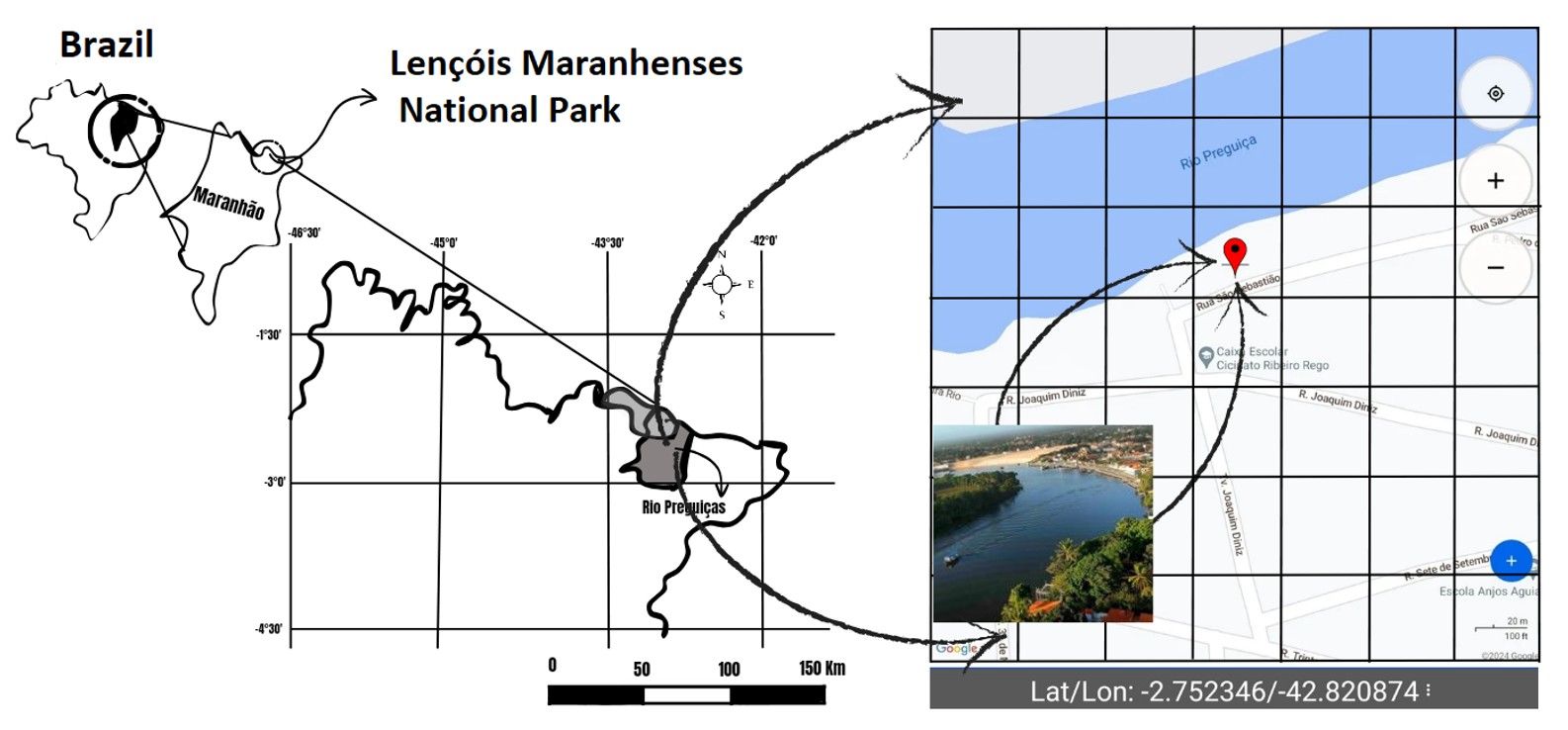
Thirty female C. kelberi specimens were collected from Preguiças River, Barreirinhas municipality, Lençóis Maranhenses National Park (PNLM) region, Maranhão State - Brazil. The collection points were located at latitude 02°44’49” South and longitude 42°49’35” West (Figure 1). Fish capture was authorized by the Ethics Committee on the Use of Animals from Federal University of Maranhão (UFMA) (CEUA - UFMA), Process n. 23115.031745/2020-32, and granted with license by IBAMA - ICMBio/SISBIO License n. 74279-1.
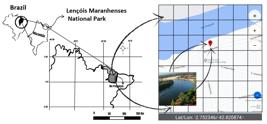
Preguiças River location in Lençóis Maranhenses National Park, Maranhão State, Northeastern Brazil.
Captures were made aboard a small aluminum boat (16 to 19 feet in length) equipped with 25HP outboard engine and 54 lb electric motor due to the species' predatory feeding habits. The boat crew comprised 4 fishermen. They used 5.6-feet carbon fiber rods, low-profile reels loaded with 12 to 30 lb multifilament lines and artificial baits measuring from 6 cm to 11 cm (adapted from Moro, 2008).
Specimens were anesthetized right after capture through submersion in water added with 3% Benzocaine for 10 minutes, based on the methodology by Santos et al. (2009). Fish were dissected and their gonads were removed, weighed and examined to identify fish sex. Eviscerated fish weight was recorded and gonads’ developmental stages were macroscopically assessed in both sexes. The following variables were taken into consideration for female fish: turgidity degree, color, vascularization, gonads’ weight and length in comparison to the space occupied by the coelomic cavity (Vazzoler, 1996).
The gonads were dehydrated in increasing alcohol series, diaphanized in xylene, impregnated with and soaked in paraffin blocks, sectioned into 5-µm sections in a microtome and stained with Hematoxylin-Eosin (HE) on the slides (Yoshida, 1964). These procedures were conducted at the Animal Morphophysiology Laboratory of State University of Maranhão (UEMA).
The microscopic feature of female gonads’ maturation stages was performed based on the nomenclature established by Lowerre-Barbieri et al. (2011). This procedure was performed under Zeiss AXIO LAB A1 binocular microscope, on Zeen Blue software. Photographic records were also made.
2.1. Statistical analysis
Non-normal distribution diameter and oocyte area variables were analyzed on Statistica application through Student's T-test. The significance level of 5% was adopted to reject H0 (null hypothesis); i.e., classificatory variables effects and their interactions were taken into consideration when significance level was lower than 0.05 (P<0.05).
3. Results
Captured specimens recorded mean length 32.9 ± 3.2 cm (variations ranged from 24.7 to 41.9 cm).
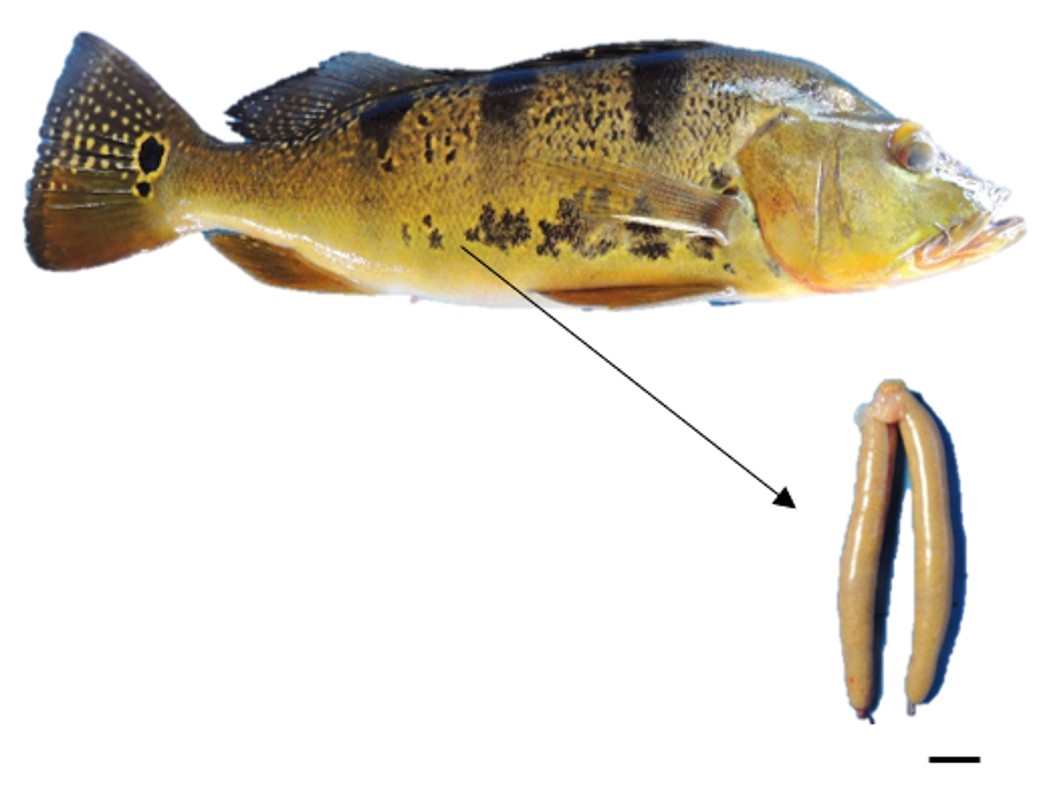
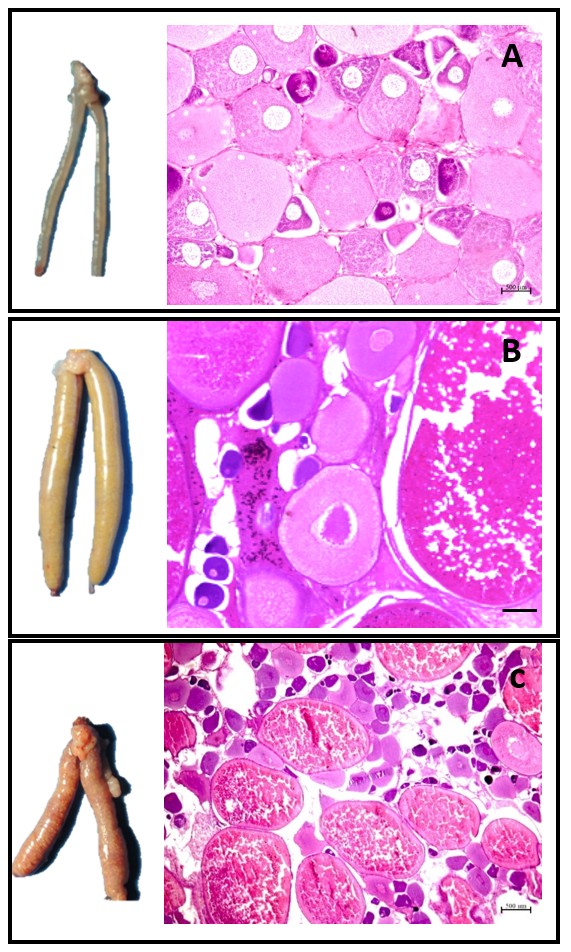
The gonads of female C. kelberi were classified as paired organ that was often whitish in individuals at early maturation stage and yellowish or reddish-yellow in mature individuals (Figure 2). Oocytes could be seen at naked eye at these stages. They present white to yellow structures, and spherical appearance. Blood vessels in this organ are barely visible in females at early maturation stage. Highly branched neovascularization was observed at the mature stage; however, it became disorganized and hemorrhagic at the emptied stage (Figure 3).
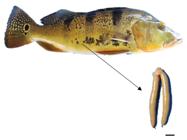
Cichla kelberi specimen collected in Barreirinhas, Maranhão State, Northeastern Brazil. Scale bar = 1 cm.
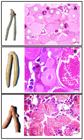
Macroscopic and Histological Comparison of Female C. kelberi Gonads. Maturing gonad (A), mature gonad (B) and emptied gonad (C). HE Staining. Scale bar = 500 micrometer.
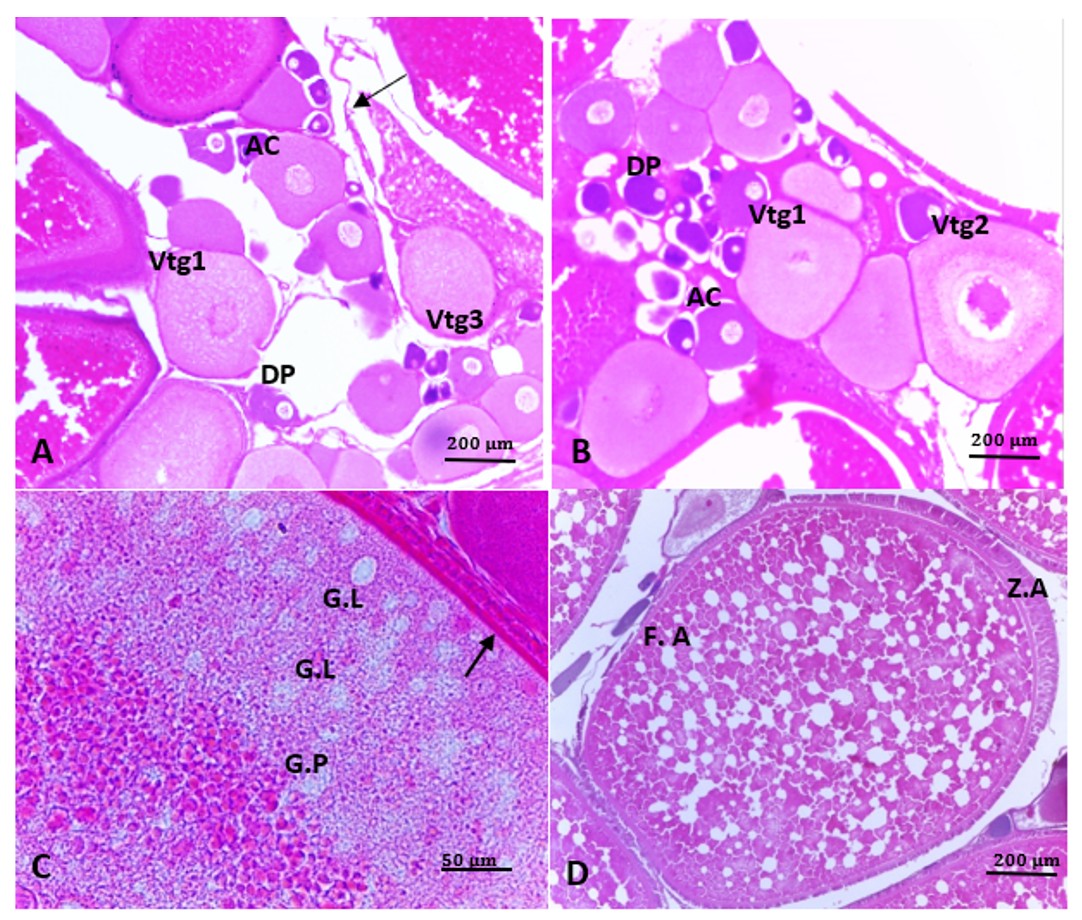
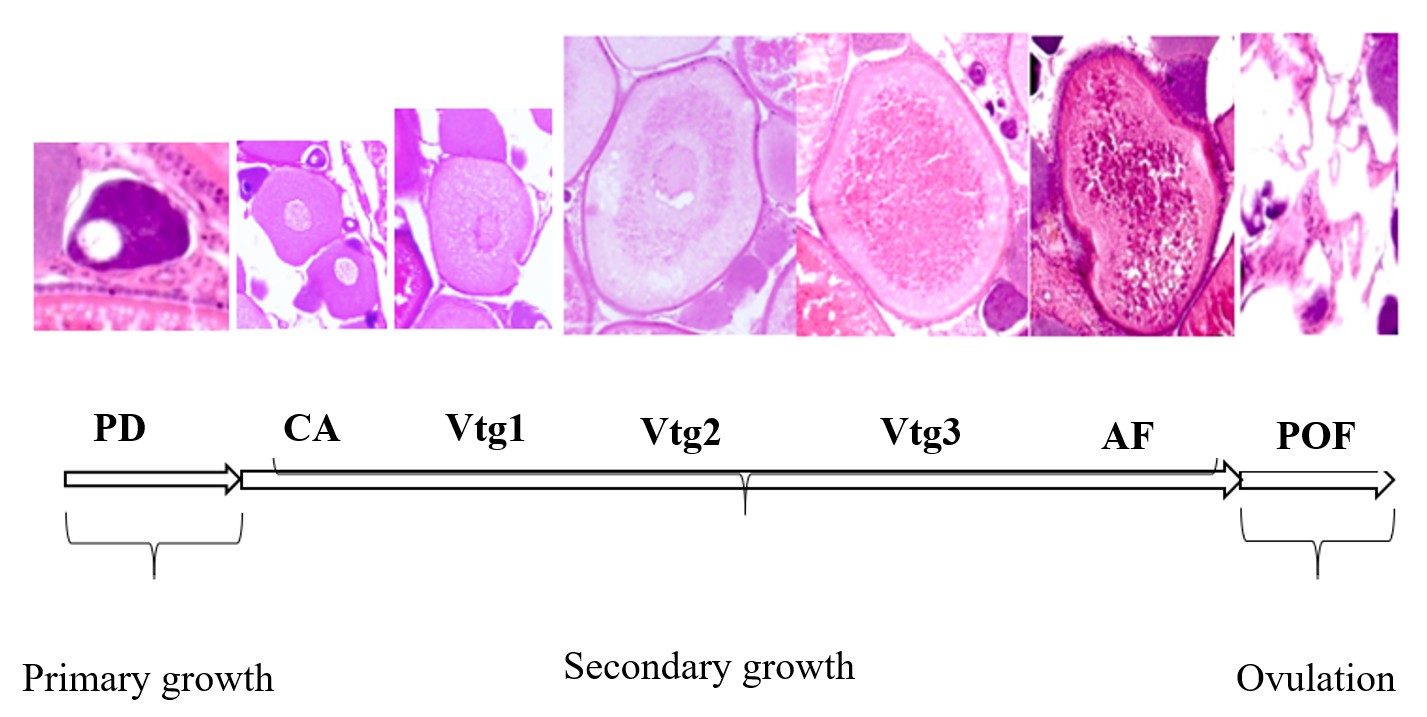
Germ cells were featured as Primordial Follicle (PF), Primary Development (PD), Cortical Alveoli (CA), Lipid Vitellogenesis (Vtg1), Lipid-Protein Vitellogenesis (Vtg2) and Complete Vitellogenesis (Vtg3). Post-Ovulatory Follicles (POF) and Atretic Follicles (AF) were also observed (Figure 2). It was possible classifying the species’ spawning as synchronous in multiple batches and it ranged from Primary Development to Atretic Follicles due to germ cells’ organization pattern (Figure 4).
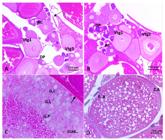
C. kelberi oocytes. (A) Oocytes at lipid vitellogenesis (Vtg1) stage, primary development (DP), cortical alveolus (AC), post-ovulatory follicle (POF arrow); (B) primary development oocytes (DP), cortical alveolus (AC), Vtg1 and Vtg2; (C) Lipid granules (G.L), protein granules (G.P); (D): Highlighted atretic follicle (F.A), cell adhesion zones (Z.A).
3.1. Oocyte developmental stages and morphological description
The detailed description of different oocytes and follicular morphological findings observed in C. kelberi ovaries were based on a histological study that followed the Haematoxylin-eosin staining technique (Figures 4 and 5).
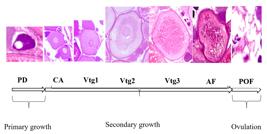
Cichla kelberi oocyte’s developmental stages. DP: Primary development; AC: Cortical aoveolus; Vtg1: Lipid vitellogenesis; Vtg2: Lipid and protein vitellogenesis; Vtg3: Complete vitellogenesis; FA: Atretic follicle; POF: Post-ovulatory follicle. Hematoxylin-Eosin HE staining, 200 micrometer and 50 micrometer.
Primordial follicles (PF) in C. kelberi presented basophilic cytoplasm; and large, poorly stained, rounded and centralized nucleus with a single central nucleolus attached to the inner face of the nuclear envelope. The nucleus occupied the largest part of the oocyte in comparison to the cytoplasm at this stage. The total areas recorded for the cell and the nucleus at this stage were 580.9 µm2 and 166.5 µm2, respectively.
Primary Development (PD) cells had basophilic, granular and scarce cytoplasm, and their nucleus occupied more than half of the cell. The nucleus was large, spherical and centralized, with numerous nucleoli attached to the inner face of the nucleolar envelope. The cells were slightly larger than the primordial follicles in the total cell and the nucleus areas were 2,273.6 µm2 and 322.9 µm2, respectively.
The nucleus had irregular central contour or was slightly eccentric, with flattened or rounded nucleoli in the cells at the cortical alveolar stage (C.A.). These cells were at secondary growth and their cytoplasm often occupied more than 50% of their volume. The nucleus presented cortical alveoli and vesicles with glycoprotein content, which were not crowned and organized in the cytoplasm bordering the plasma membrane. Zona radiata could be visualized; it was thin and strongly eosinophilic in color. The areas of the cell and nucleus at this phase were 8,385.7 µm2 and 1,265.6 µm2, respectively.
The nucleus of cells at the lipid vitellogenesis (Vtg1) stage was centralized or slightly eccentric, with slightly irregular contour and flattened or rounded nucleoli, which could be visualized, or not. Lipid deposition in the cytoplasm showed increasingly abundant unstained oil droplets. The vitelline membrane became thicker, and follicular cells grew and became more elongated and clearer in the surrounding areas. The cell and nuclei areas were 45,507.9 µm2 and 2,761.8 µm2, respectively.
Cells at the lipid and protein vitellogenesis (Vtg2) stage had central or slightly eccentric nuclei with irregular contour, poorly clear nucleoli. Globules starting from cytoplasm periphery towards the nucleus presented acidophilic proteins. Cells with migrating-protein globules could also be observed. The vitelline membrane was thicker and visible. The cell and nucleus areas were 76,821.1 µm2 and 4,248.5 µm2, respectively.
The nucleus was barely visible or had irregular and dispersed shape in the follicle at the complete vitellogenesis (Vtg3) stage due to yolk granules’ increase and position in this species; therefore, it could not be measured. The vitelline membrane observed under 100x magnification in binocular microscope presented radially arranged striations and higher thickness. The oocyte showed mean cell area equals 57,619.7 µm2 at this stage.
Post-Ovulatory Follicles (POF) were observed. They often originated from emptied follicular structures that evaginate to shape a body formed by contiguous cells cords that, in their turn, highlight the species’ spawning.
Atretic follicles (AF) derived from oocytes that were subjected to degenerative processes. They were disintegrated and diffused through the interstitium featuring cell residues. The cells presented turgidity loss and, consequently, zona pellucida or vitelline membrane fragmentation. A cord of prismatic cells at varying sizes was observed close to the cell membrane. Cell nuclei were stained with hematoxylin and featured as adhesion zone in oocytes. They were most commonly found in ovaries at the mature and emptied stages, besides often being the largest cells at the developmental stage in female gonads recording mean total area of 300,240.7 µm2.
Eight (8) stages (table 3) were categorized based on the morphological developmental pattern observed in oocyte cells of individuals belonging to the C. kelberi lineage (Figure 5).
The metrics of areas and diameters recorded for cells and nuclei are described in Tables 1 and 2. There was significant difference between them at different oocyte stages: p=0.1 and p=0.05, respectively.
4. Discussion
The non-native species C. kelberi found in the Preguiças River, Lençóis Maranhenses region, Northeastern Brazil, was classified as synchronous with oocytes at all developmental stages in multiple batches. Spawning batches were also reported for C. kelberi distributed in freshwater reservoirs throughout Brazil, as described in the study by Guedes et al. (2021), which was carried out in Lajes reservoir, Rio de Janeiro, Southeastern Brazil, and by Souza et al. (2008), who conducted a research in Lobo reservoir, São Paulo, Southeastern Brazil, and observed that this species tend to repeat the aforementioned spawning pattern. This same spawning pattern has been observed in some other species in Brazil, such as Cichla monoculus, which was introduced in a dam in Campo Grande City, Northeastern Brazil (Chellappa et al., 2003), and Cichla ocellaris Bloch & Schneider, 1801 and C. monoculus, which were introduced in Volta Grande reservoir, Southeastern Brazil (Gomiero and Braga, 2004).
Long-term spawning in sequential batches over the year helps reducing competition between larvae and, later on, between juveniles. It also allows increased fertility and reduces the risk of losing offspring due to predation or to the unfavorable environmental conditions faced by some species introduced in new environments (Barros et al., 2017; Delariva and Neves, 2020). Although most cichlids are capable of multiple spawning over the year, this mechanism depends on variations in food resources and on the availability of spawning sites (Gomiero et al., 2009).
The diameter of Cichla kelberi oocytes varies in studies carried out in several river basins in Brazil. Germ cells ranging from 306 µm to 2,815 µm were observed in Cichla ocellaris and C. monoculus. Diameters ranged from 90 µm in primary development cells to 770 µm in vitellogenic cells in C. kelberi. The same species were introduced in an artificial lake in São Paulo State and recorded diameter variation from 61.2 µm to 2,203.2 µm. This finding is different from that in the present study, according to which, germ cells ranged from 27.6 µm in diameter at initial stages to 453.5 µm at final vitellogenesis stage (Gomiero and Braga, 2004; Guedes et al., 2021; Gomiero et al., 2009).
Specimens found in other studies showed little variation in length in comparison to records in the current research. Therefore, reduced oocytes can point out this species’ adaptation to the lotic environment, which imposes higher energy costs on habitats that, in their turn, present constant water flow and tidal influence, such as Preguiças River (Guedes et al., 2021). Another likely influence would be native food stocks and bioavailable energy exhaustion. It is so, because C. kelberi increased its population after its introduction in the new environment (Moreira and Silva, 2023).
Fish reproductive adaptation is a life history trait necessary for species’ colonization and stability in different habitats, since colonizers can vary depending on new environmental conditions (Moyle and Marchetti, 2006). They can create self-sustaining populations after initial colonization if the introduced species heavily invest in reproductive attributes (Blackburn et al., 2011). However, the exact time of this species’ introduction in Preguiças River Basin is unknown, although this information could help better understanding aspects of both introduced specimens’ reproductive changes and adaptation to current populations.
The species assessed in Preguiças River basin showed divergences in gonadal morphological features in comparison to other species belonging to this genus that are also distributed in Brazilian river basins. The species in Preguiças River is classified as native predator and it has impact on its populations (Latini and Petrere-Junior, 2004).
Oligosarcus solitarius Menezes, 1990 (Characiformes: Acestrorhamphidae) disappearance is an example of C. kelberi impact on native biodiversity. This species is endemic to lakes in Preguiças River Basin (Vieira, 1994). However, the consequences of C. kelberi introduction in this basin remain unknown. Studies on this species’ biology and behavior, such as feeding, shelter and nesting sites, as well as dispersal forms, remain necessary to develop conservation measures applicable to native fish species and to help managing the introduced species in the long term.
Acknowledgements
Thanks to PhD Débora Santos for laboratory assistance, to the Research Foundation of Maranhão, to Good Deal Language Consultancy for translating the manuscript, to Natália Jovita Pereira and Alline Vieira Coelho for supporting data collection.
Data Availability Statement
The research data are only available upon request to the corresponding author.
References
-
ANDRADE, G.S. and PELICICE, F.M., 2022. Coexistence of endemic peacock basses (Cichla) in a Neotropical reservoir (Cichlidae: Cichliformes). Neotropical Ichthyology, vol. 20, no. 3, e220039. http://doi.org/10.1590/1982-0224-2022-0039
» http://doi.org/10.1590/1982-0224-2022-0039 -
BARROS, G., ZUANON, J. and DEUS, C., 2017. Effects of species co-occurrence on the trophic-niche breadth of characids in Amazon forest streams. Journal of Fish Biology, vol. 90, no. 1, pp. 326-340. http://doi.org/10.1111/jfb.13183 PMid:27778359.
» http://doi.org/10.1111/jfb.13183 -
BLACKBURN, T.M., PYSEK, P., BACHER, S., CARLTON, J.T., DUNCAN, R.P., JAROSÍK, V., WILSON, J.R.U. and RICHARDSON, D.M., 2011. A proposed unified framework for biological invasions. Trends in Ecology & Evolution, vol. 26, no. 7, pp. 333-339. http://doi.org/10.1016/j.tree.2011.03.023 PMid:21601306.
» http://doi.org/10.1016/j.tree.2011.03.023 - BRITO, P.S., GUIMARÃES, E.C., FERREIRA, B.R.A., SANTOS, J.P., AMARAL, Y.T. and OTTONI, F.P., 2020. Updated and supplementary data on Brito et al. (2019): freshwater fishes of the PN dos Lençóis Maranhenses and adjacent areas. Ichthyological Contributions of PecesCriollos, vol. 73, pp. 1-17.
-
CASTRO, P.D.S., LADISLAU, D.S., RIBEIRO, M.W.S., PAIVA, A.J.V., LIEBL, A.R.S., PANTOJA-LIMA, J., ARIDE, P.H.R. and OLIVEIRA, A.T., 2020. Ecophysiological interactions in species of peacock bass Cichla spp. from the Amazon. Revista Ibero-americana de Ciências Ambientais, vol. 11, no. 5, pp. 594-599. http://doi.org/10.6008/CBPC2179-6858.2020.005.0053
» http://doi.org/10.6008/CBPC2179-6858.2020.005.0053 -
CATELANI, P.A., PETRY, A.C., PELICICE, F.M. and GARCÍA-BERTHOU, E., 2021. When a freshwater invader meets the estuary: the peacock bass and fish assemblages in the São João River, Brazil. Biological Invasions, vol. 23, no. 1, pp. 167-179. http://doi.org/10.1007/s10530-020-02363-w
» http://doi.org/10.1007/s10530-020-02363-w -
CHELLAPPA, S., CÂMARA, M.R., CHELLAPPA, N.T., BEVERIDGE, M.C.M. and HUNTINGFORD, F.A., 2003. Reproductive ecology of a neotropical cichlid fish, Cichla monoculus (Osteichthyes: cichlidae). Brazilian Journal of Biology = Revista Brasileira de Biologia, vol. 63, no. 1, pp. 17-26. http://doi.org/10.1590/S1519-69842003000100004 PMid:12914411.
» http://doi.org/10.1590/S1519-69842003000100004 -
CHONG, V.C., LEE, P.K.Y. and LAU, C.M., 2010. Diversity, extinction risk and conservation of Malaysian fishes. Journal of Fish Biology, vol. 76, no. 9, pp. 2009-2066. http://doi.org/10.1111/j.1095-8649.2010.02685.x PMid:20557654.
» http://doi.org/10.1111/j.1095-8649.2010.02685.x -
DELARIVA, R.L. and NEVES, M.P., 2020. Morphological traits correlated with resource partitioning among small characin fish species coexisting in a Neotropical river. Ecology Freshwater Fish, vol. 29, no. 4, pp. 640-653. http://doi.org/10.1111/eff.12540
» http://doi.org/10.1111/eff.12540 -
FRAGOSO-MOURA, E.N., OPORTO, L.T., MAIA-BARBOSA, P.M. and BARBOSA, F.A.R., 2016. Loss of biodiversity in a conservation unit of the Brazilian Atlantic Forest: the effect of introducing non-native fish species. Brazilian Journal of Biology = Revista Brasileira de Biologia, vol. 76, no. 1, pp. 18-27. http://doi.org/10.1590/1519-6984.07914 PMid:26909619.
» http://doi.org/10.1590/1519-6984.07914 -
FRANCO, A.C.S., PETRY, A.C., TAVARES, M.R., GUIMARÃES, T.F.R. and SANTOS, L.N., 2022. Global distribution of the South American peacock basses Cichla spp follows human interference. Fish and Fisheries, vol. 23, no. 2, pp. 407-421. http://doi.org/10.1111/faf.12624
» http://doi.org/10.1111/faf.12624 -
FUGI, R., LUZ-AGOSTINHO, K.D. and AGOSTINHO, A.A., 2008. Interação trófica entre um peixe piscívoro introduzido (tucunaré) e um nativo (cação) em um rio represado neotropical. Hydrobiologia, vol. 607, pp. 143. http://doi.org/10.1007/s10750-008-9384-2
» http://doi.org/10.1007/s10750-008-9384-2 -
GOLANI, D., SONIN, O., SNOVSKY, G., DAVID, L. and TADMOR-LEVI, R., 2019. The occurrence of the peacock bass (Cichla kelberi Kullander and Ferreira 2006) in Lake Kinneret (Sea of Galilee), Israel. BioInvasions Records, vol. 8, no. 3, pp. 706-711. http://doi.org/10.3391/bir.2019.8.3.28
» http://doi.org/10.3391/bir.2019.8.3.28 -
GOMIERO, L.M. and BRAGA, F.M.S., 2004. Reproduction of species of the genus Cichla in a reservoir in Southeastern Brazil. Brazilian Journal of Biology = Revista Brasileira de Biologia, vol. 64, no. 3B, pp. 613-624. http://doi.org/10.1590/S1519-69842004000400008 PMid:15619999.
» http://doi.org/10.1590/S1519-69842004000400008 -
GOMIERO, L.M., VILLARES JUNIOR, G.A. and NAOUS, F., 2009. Reproduction of Cichla kelberi (Kullander and Ferreira, 2006) introduced into an artificial lake in south-eastern Brazil. Brazilian Journal of Biology = Revista Brasileira de Biologia, vol. 69, no. 1, pp. 175-183. http://doi.org/10.1590/S1519-69842009000100023 PMid:19347162.
» http://doi.org/10.1590/S1519-69842009000100023 -
GUEDES, G.H.S., GOMES, I.D., NASCIMENTO, A.A., AGUIAR, F.S., ARAÚJO, F.G., 2021. Equilibrium reproductive strategy of the peacock bass Cichla kelberi facilitates invasion into a Neotropical reservoir. Journal of Fish Biology, vol. 98, no. 3, pp. 743-755. http://doi.org/10.1111/jfb.14618 PMid:33206375.
» http://doi.org/10.1111/jfb.14618 - KULLANDER, S.O. and FERREIRA, E.J.G., 2006. A review of the South American cichlid genus Cichla, with descriptions of nine new species (Teleostei: cichlidae). Ichthyological Exploration of Freshwaters, vol. 17, no. 4, pp. 289-398.
- LATINI, A.O. and PETRERE JUNIOR, M., 2004. Reduction of a native fish fauna by alien species: an example from Brazilian freshwater tropical lakes. Fisheries Management and Ecology, vol. 11, no. 2, pp. 71-79. http://doi.org/10.1046/j.1365-2400.2003.00372.x.
-
LEAL, L.B., HOEINGHAUS, D.J., COMPSON, Z.G., AGOSTINHO, A.A., FERNANDES, R. and PELICICE, F.M., 2021. Changes in ecosystem functions generated by fish populations after the introduction of a non-native predator (Cichla kelberi) (Perciformes: Cichlidae). Neotropical Ichthyology, vol. 19, no. 3, e210041. http://doi.org/10.1590/1982-0224-2021-0041
» http://doi.org/10.1590/1982-0224-2021-0041 -
LIMEIRA-FILHO, D., MORAES, P.S.S., ALMEIDA, M.S., SILVA, A.C.C., SILVA, J.L.N., FARIAS-RODRIGUES, L., TEIXEIRA, B.R.S., ANJOS, J.V.X., BIRINDELLI, J.L.O., BARROS, M.C. and FRAGA, E.C., 2023. Fish diversity in the rivers that drain the Baixada Maranhense and the Mearim basin in northeastern Brazil. Brazilian Journal of Biology = Revista Brasileira de Biologia, vol. 83, e273525. http://doi.org/10.1590/1519-6984.273525 PMid:37909556.
» http://doi.org/10.1590/1519-6984.273525 -
LOWERRE-BARBIERI, S.K., GANIAS, K., SABORIDO-REY, F., MURUA, H. and HUNTER, J.R., 2011. Reproductive timing in marine fishes: variability, temporal scales, and methods. Marine and Coastal Fisheries, vol. 3, no. 1, pp. 71-91. http://doi.org/10.1080/19425120.2011.556932
» http://doi.org/10.1080/19425120.2011.556932 -
MACIOLEK, J.A., 1984 [viewed 19 October 2024]. Exotic fishes in Hawaii and other islands of Oceania. In: W.R. COURTENAY and J.R. STAUFFER, eds. Distribution, biology and management of exotic fishes [online]. Baltimore: John Hopkins University Press, pp. 131-161. Available from: https://pubs.er.usgs.gov/publication/70162156
» https://pubs.er.usgs.gov/publication/70162156 -
MATTOS, D.D.C., CARDOSO, L.D., OLIVEIRA, A.T., SCRENCI-RIBEIRO, R., MATTOS, B.O., ARIDE, P.H.R., RADAEL, M.C., MOTTA, J.H.S. and VIDAL, M.V., 2024. Effect of temperature on the embryonic and larvae development of discus fish Symphysodon aequifasciatus and time of first feeding. Zygote (Cambridge, England), vol. 32, no. 4, pp. 279-284. http://doi.org/10.1017/S0967199424000236 PMid:39291700.
» http://doi.org/10.1017/S0967199424000236 -
MENDES, D.C.S., NOLETO, K.S., CARVALHO, I. F.S., ANDRADE, J.M.S., DAMOUS, G.H.P., SANTOS, E.C.B., CARVALHO NETA, A.V. and TORRES-JÚNIOR, J.R.S., 2022. Biomonitoramento reprodutivo de peixe exótico em bacia hidrográfica adjacente ao Parque Nacional Lençóis Maranhense. In: D.B.P. SOUSA, J.S. CASTRO, W.B. JESUS, eds. Monitoramento ambiental: metodologias e estudos de caso São Luís: Editora i-EDUCAM, pp: 173-183. http://doi.org/10.29327/576562.1-10
» http://doi.org/10.29327/576562.1-10 -
MENEZES, R.F., ATTAYDE, J.L., LACEROT, G., KOSTEN, S., COIMBRA E SOUZA, L., COSTA, L.S., VAN NES, E.H. and JEPPSEN, E., 2012. Lower biodiversity of native fish but only marginally altered plankton biomass in tropical lakes hosting introduced piscivorous Cichla cf. ocellaris. Biological Invasions, vol. 14, no. 7, pp. 1353-1363. http://doi.org/10.1007/s10530-011-0159-8
» http://doi.org/10.1007/s10530-011-0159-8 -
MONROE, T.G.R., CANTANHÊDE, S.P.D., SOUSA, N.S.M., MONROE, N.B., PIORSKI, N.M. and TCHAICKA, L., 2023. Inventory reveals non-native species and variation in spatial-temporal dynamics of fish community in a Brazilian protected area. Brazilian Journal of Biology = Revista Brasileira de Biologia, vol. 83, e274232. http://doi.org/10.1590/1519-6984.274232 PMid:37970901.
» http://doi.org/10.1590/1519-6984.274232 -
MOREIRA, E.A. and SILVA, D.P., 2023. Uma dúzia de peixes: algumas espécies exóticas invasoras encontradas em águas brasileiras e seus impactos. Ciência Animal Brasileira, vol. 24, no. 1, e-74647E. http://doi.org/10.1590/1809-6891v24e-74647e
» http://doi.org/10.1590/1809-6891v24e-74647e - MORO, P.S., 2008. Prospecção do estoque do Robalo-peva (Centropomus parallelus) no litoral do Paraná, através da pesca esportiva. Fortaleza: Departamento de Engenharia de Pesca, Centro de Ciências Agrarias, Universidade Federal do Ceará, 132 p. Dissertação de Mestrado em Engenharia de Pesca.
-
MOYLE, P.B. and MARCHETTI, M.P., 2006. Predicting invasion success: freshwater fishes in California as a model. Bioscience, vol. 56, no. 6, pp. 515-524. http://doi.org/10.1641/0006-3568(2006)56[515:PISFFI]2.0.CO;2
» http://doi.org/10.1641/0006-3568(2006)56[515:PISFFI]2.0.CO;2 -
PELICICE, F.M. and AGOSTINHO, A.A., 2009. Fish fauna destruction after the introduction of a non-native predator (Cichla kelberi) in a Neotropical reservoir. Biological Invasions, vol. 11, no. 8, pp. 1789-1801. http://doi.org/10.1007/s10530-008-9358-3
» http://doi.org/10.1007/s10530-008-9358-3 -
SABAJ, M.H., LÓPEZ-FERNÁNDEZ, H., WILLIS, S.C., HEMRAJ, D.D., TAPHORN, D.C. and WINEMILLER, K.O., 2020. Cichla cataractae (Cichliformes: Cichlidae), new species of peacock bass from the Essequibo Basin, Guyana and Venezuela. Proceedings. Academy of Natural Sciences of Philadelphia, vol. 167, no. 1, pp. 69-86. http://doi.org/10.1635/053.167.0106
» http://doi.org/10.1635/053.167.0106 -
SASTRAPRAWIRA, S.M., ABD RAZAK, I.H., SHAHIMI, S., PATI, S., EDINUR, H.A., JOHN, A.B., AHMAD, A., KUMARAN, J.V., MARTIN, M.B., CHONG, J.L., CHOWDHURY, A.J.K. and NELSON, B.R., 2020. Uma revisão sobre Cichla spp. introduzidas e preocupações emergentes. Heliyon, vol. 6, e05370. http://doi.org/10.1016/j.heliyon.2020.e05370 PMid:33204875.
» http://doi.org/10.1016/j.heliyon.2020.e05370 -
SANTOS, A.A., EGAMI, M.I., RANZANI-PAIVA, M.J.T. and JULIANO, Y., 2009. Hematological parameters and phagocytic activity in fat snook (Centropomus parallelus): seasonal variation, sex and gonadal maturation. Aquaculture, vol. 296, no. 3-4, pp. 359-366. http://doi.org/10.1016/j.aquaculture.2009.08.023
» http://doi.org/10.1016/j.aquaculture.2009.08.023 -
SHAFLAND, P.L., 1999. The introduced butterfly peacock (Cichla ocellaris) in Florida. II. Food and reproductive biology. Reviews in Fisheries Science, vol. 7, no. 2, pp. 95-113. http://doi.org/10.1080/10641269991319207
» http://doi.org/10.1080/10641269991319207 -
SHARPE, D.M.T., DE LEÓN, L.F., GONZÁLEZ, R. and TORCHIN, M.E., 2017. Tropical fish community does not recover 45 years after predator introduction. Ecology, vol. 98, no. 2, pp. 412-424. http://doi.org/10.1002/ecy.1648 PMid:27861787.
» http://doi.org/10.1002/ecy.1648 -
SOUZA, J.E., FRAGOSO-MOURA, E.M., FENERICH-VERANI, N., ROCHA, O. and VERANI, J.R., 2008. Population structure and reproductive biology of Cichla kelberi (Perciformes, Cichlidae) in Lobo Reservoir, Brazil. Neotropical Ichthyology, vol. 6, no. 2, pp. 201-210. http://doi.org/10.1590/S1679-62252008000200007
» http://doi.org/10.1590/S1679-62252008000200007 - VAZZOLER, A.E.A.M., 1996. Biologia da reprodução de peixes teleósteos: teoria e prática Maringá: EDUEM, 169 p.
- VIEIRA, F. 1994. Estrutura de comunidade e aspectos da alimentação e reprodução dos peixes em dois lagos do médio Rio Doce Belo Horizonte: Universidade Federal de Minas Gerais, 87 p. Dissertação de Mestrado em Ecologia, Conservação e Desenvolvimento da Vida selvagem.
-
WELCOMME, R.L., 1988 [viewed 19 October 2024]. International introductions of inland aquatic species [online]. Rome: Food and Agriculture Organization of the United Nations. FAO Fisheries Technical Paper, no. 294. Available from: http://www.fao.org/3/X5628E/X5628E00.htm
» http://www.fao.org/3/X5628E/X5628E00.htm -
WILLIS, S.C., NUNES, M.S., MONTAÑA, C.G., FARIAS, I.P. and LOVEJOY, N.R., 2007. Systematics, biogeography and evolution of the Neotropical peacock basses Cichla (Perciformes, Cichlidae). Molecular Phylogenetics and Evolution, vol. 44, no. 1, pp. 291-307. http://doi.org/10.1016/j.ympev.2006.12.014 PMid:17275345.
» http://doi.org/10.1016/j.ympev.2006.12.014 - YOSHIDA, H.O., 1964. Skipjack tuna spawning in the Marquesas Islands and Tuamoto Archipelago. Fish Bulletin, vol. 65, pp. 479-488.
-
ZARET, T.M. and PAINE, R.T., 1973. Species Introduction in a Tropical Lake: a newly introduced piscivore can produce population changes in a wide range of trophic levels. Science, vol. 182, no. 4111, pp. 449-455. http://doi.org/10.1126/science.182.4111.449 PMid:17832455.
» http://doi.org/10.1126/science.182.4111.449
Edited by
-
Editor:
Felipe Polivanov Ottoni