 Influence of anthocyanins in relation to nutrition, stomata and yield of purple cabbage (Brassica oleracea var. capitata f. rubra) nourished with market waste-based compost
Abstract
The high price of synthetic fertilizers, the continuous use of pesticides, and other related problems threaten Peru’s food security. The reason for the investigation was to study the influence of anthocyanins on the nutrition, stomata, and yield of purple cabbage fertilized with compost based on market waste (CBRM). The main objective was to determine the influence of anthocyanins in relation to nutrition, stomata, and the yield of purple cabbage fertilized with CBRM. It is based on applied methodology with an experimental approach; therefore, the Completely Randomized Block Design statistical model was employed, consisting of 3 blocks and 5 treatments: T1 with 0, T2 with 10, T3 with 12, T4 with 14, and T5 with 16 t ha-1 of CBRM. 15 days after transplanting, we applied the treatments and evaluated physical characteristics such as plant height, purple cabbage head weight, commercial yield, and diameter. In leaves (nitrogen, potassium, phosphorus, calcium, magnesium, sulfur, molybdenum, iron, manganese, copper, zinc, boron, chlorides, and sodium), anthocyanins, and stomatal density. Total nitrogen and phosphorus input and profitability. The results determined that T5 stood out in plant height with 39.21 cm, weight of a purple cabbage head with 814.3 g, commercial yield with 94.85 t ha−1, and equatorial diameter with 15.51 cm. Total nitrogen input of 365.94 kg ha-1 of nitrogen. Total phosphorus input of 796.27 kg ha-1 of P2O5. Stomatal density of 691 stomata/mm2. Profitability at 252.78%. T4 stood out in nutrients with total nitrogen, potassium, phosphorus, iron, manganese, zinc, chlorides, sodium, and anthocyanin concentration with 122.65 mg/100 g in leaves. We concluded that T5 excelled in calcium, magnesium, sulfur, boron, and stomatal density in leaves, which optimized transpiration, photosynthesis, carbohydrate formation and translocation, and other biochemical processes, generating a considerable concentration of anthocyanin that acted as a defense mechanism against nutritional and environmental stress and pests, resulting in higher yield.
Keywords:
compost; market waste; dosage; nutrients; anthocyanin; yield
Resumo
O alto preço dos fertilizantes sintéticos, o uso contínuo de pesticidas e outros problemas relacionados ameaçam a segurança alimentar do Peru. O objetivo da investigação foi estudar a influência das antocianinas na nutrição, estômatos e produtividade do repolho-roxo adubado com composto à base de resíduos comerciais (CBRM). O objetivo principal foi determinar a influência das antocianinas na nutrição, estômatos e produtividade do repolho-roxo fertilizado com CBRM. Baseia-se em metodologia aplicada com abordagem experimental; portanto, foi empregado o modelo estatístico de Delineamento em Blocos Completamente Casualizados, composto por 3 blocos e 5 tratamentos: T1 com 0, T2 com 10, T3 com 12, T4 com 14 e T5 com 16 t ha-1 de CBRM. Quinze dias após o transplantio, foram aplicados os tratamentos e avaliadas características físicas como altura da planta, peso da cabeça de repolho-roxo, produtividade comercial e diâmetro. Nas folhas (nitrogênio, potássio, fósforo, cálcio, magnésio, enxofre, molibdênio, ferro, manganês, cobre, zinco, boro, cloretos e sódio), antocianinas e densidade estomática. Foram também quantificados o aporte total de nitrogênio e fósforo e rentabilidade. Os resultados determinaram que o T5 se destacou em altura da planta com 39,21 cm, peso de uma cabeça de repolho-roxo com 814,3 g, produtividade comercial com 94,85 t ha−1 e diâmetro equatorial com 15,51 cm. Aporte total de nitrogênio de 365,94 kg ha-1. Aporte total de fósforo de 796,27 kg ha-1 de P2O5. Densidade estomática de 691 estômatos/mm2. Rentabilidade de 252,78%. O T4 destacou-se em nutrientes, com concentração total de nitrogênio, potássio, fósforo, ferro, manganês, zinco, cloretos, sódio e antocianina, com 122,65 mg/100 g nas folhas. Concluímos que o T5 se destacou em cálcio, magnésio, enxofre, boro e densidade estomática nas folhas, o que otimizou a transpiração, a fotossíntese, a formação e translocação de carboidratos e outros processos bioquímicos, gerando uma concentração considerável de antocianina que atuou como mecanismo de defesa contra estresses nutricionais, ambientais e pragas, resultando em maior produtividade.
Palavras-chave:
Composto; resíduos comerciais; dosagem; nutrientes; antocianina; produtividade
1. Introduction
Currently, food security in Peru faces urgent challenges such as the increase in the prices of synthetic fertilizers, inadequate agricultural management, the continued use of chemical inputs in conventional agricultural activities, and other difficulties. All these factors have had a direct impact on the country's agricultural production, resulting in a significant increase in production costs over the last five years, which has led to a food and social crisis. In this regard, Pillaca-Medina (2018) mentions that food is one of the basic needs of every human being and that poverty and hunger are inextricably linked to food insecurity. For their part, Legua Cárdenas et al. (2023) state that Peru has faced adverse effects due to the increase in fertilizer prices, which have risen by more than 25% compared to previous years.
It is worth mentioning that within the country, the dependence on synthetic fertilizers has had negative effects on the economy and the health of communities. The lack of access to affordable chemical inputs has caused food crises and debt, as this shortage has hampered production. This crisis has also related to the nutritional deficiency of available food, which affects the health of the population and worsens food quality in Peru. Nacimento (2024) mentions that Peru is experiencing an agricultural crisis generated by several factors, including the conflict between Russia and Ukraine, which has led to a global shortage of fertilizers, thus affecting food production in Peru and jeopardizing food security. Chávez-Miguel et al. (2024) state that in Peru, the effects of the crisis led to disinvestment and low incomes, decreased production, increased food insecurity, and abandonment of agricultural land.
Due to this situation, it is necessary to innovate in alternatives such as the use of waste generated in the markets of the province of Barranca, which generate an excessive average of 6 tons per month and often do not have adequate final disposal. Ramírez (2018) supports this statement by noting that Barranca generates approximately 6.29 tons of waste each month, which amounts to a total of 188.02 tons per year. Given this situation, CBRM production presents itself as a sustainable and feasible option, since it incorporates beneficial microorganisms that improve the availability mechanisms for greater absorption of nutrients such as nitrogen, phosphorus, potassium, and other elements, which optimizes biochemical reactions, as in the case of purple cabbage. In this regard, Ipanaqué (2023) states that the CBRM has a moisture content of 10.82%, 12.93% organic matter, 1.06% nitrogen, 2.17% P2O5, 0.65% K2O, 1.81% CaO, 1.30% MgO, and a C/N ratio of 7.07. Furthermore, Aguilar-Paredes et al. (2023) mention the importance of the microorganisms present in compost, which maintain and multiply beneficial microbial consortia and their functions in the soil ecosystem, promoting sustainable and resilient agriculture.
It is important to mention that fertilization with CBRM increases nutrient availability, which improves their absorption by purple cabbage and contributes to optimizing biochemical reactions, such as photosynthesis, carbohydrate biosynthesis, and translocation to the vegetable's reserves. These nutrients also influence the increase in anthocyanin concentration, which strengthens resistance to nutritional, environmental, and pest stress, and reduces reactive oxygen species (ROS), thus improving plant physiology. According to Yassen et al. (2018), the application of vermicompost increased the growth and yield of Roselle plant sepals, as well as their chemical composition (nitrogen, phosphorus, potassium, zinc, anthocyanin percentage, and total carbohydrates), compared to the control. For its part. Likewise, Savy et al. (2022) state that plants treated with compost showed a higher content of metabolites involved in modulating the response to saline stress, such as molecules related to energy transfer and precursors of ROS scavenging compounds.
On the other hand, the use of CBRM in purple cabbage not only reduces production costs and pollution. It also improves the development characteristics, yield, and anthocyanin concentration, resulting in an organic vegetable. Furthermore, the application of this fertilizer benefits health and nutrition and strengthens disease prevention for the consumer. In this regard, El-Mogy et al. (2024) point out that the combined application of biochar, vermicompost, and compost constitutes a promising technique for improving the growth, nutrition, yield, and quality of pepper fruits while reducing nitrate concentration. Alam et al. (2021) state that anthocyanins, which are water-soluble natural pigments from the flavonoid family, are found in the red, blue, and purple colors of leaves, flowers, and fruits, and that their health benefits have been demonstrated, such as antioxidant, antidiabetic, anti-inflammatory, anti-obesity, antihypertensive, and anticancer properties.
For this reason, the influence of anthocyanins on the nutrition, stomata, and yield of purple cabbage (Brassica oleracea var. capitata f. rubra) fertilized with CBRM was investigated. The main objective was to determine the influence of anthocyanins on the nutrition, stomata, and yield of purple cabbage grown with CBRM. For this purpose, the statistical model of completely randomized block design employed consisted of three blocks and five treatments, including the standard dose and the control.
2. Methodology
2.1. Type of research
The study employs applied research with an experimental approach. After continuously evaluating the experiment samples and processing the data through statistical analysis, the appropriate dose was determined to optimize both yield and anthocyanin concentration in the red cabbage crop. This result will serve as a technical recommendation for local farmers.
2.2. Population
It refers to purple cabbage plants that are cultivated at an altitude of between 50 and 150 meters above sea level. Therefore, the data obtained in this experiment are valid.
2.3. Sample
The sample consisted of 50% of the plants from each plot. We took these from the central twin furrows. They were marked to avoid the edge effect. Subsequently, the physical characteristics of the plants we evaluated, such as height, the weight of a purple cabbage head, the commercial yield, and the diameter of this vegetable.
2.4. Study factor
The CBRM dose was established based on soil analysis, the amount of fertilizer applied by farmers in the area (12–16 t ha-1 for purple cabbage cultivation), and recommendations from other research. According to Hirzel and Salazar (2016), cabbage cultivation requires between 10 and 16 t ha-1 of compost made from plant residues or a mixture of animal and plant by-products. Consequently, we set a standard dose of 14 t ha-1 and applied it once. Table 1 details the CBRM doses used in each treatment.
2.5. Determination of the standard CBRM dose
2.5.1. Calculation of arable soil layer Weight
The weight of the arable soil layer of the experimental area was determined by applying the soil weight per hectare Formula 1 presented by Muguruza (2024).
Formula for arable layer weight.
Where:
W. ha : Weight of the arable layer per hectare (3500 t ha-1 of soil)
Depth : Depth of the arable layer (0.25 m)
AD : Apparent density (1.4 g/cm3)
Ha : Hectare (10000 m2)
2.5.2. Calculation of organic carbon.
We calculated the organic carbon by applying the Van Bemmelen formula (Vela et al., 2012).
Organic carbon Formula 2.
Where:
OC: Organic carbon
OM: Organic matter (1.50%) (See Table 3) (INIA, 2025a)
2.5.3. Quantification of the Carbon-Nitrogen (C/N) Ratio
To determine the carbon-nitrogen ratio, we applied the following Formula 3.
C/N Ratio Formula.
Where:
OC: Organic carbon
OM: Organic matter (1.50%) (See Table 3) (INIA, 2025a)
N: 0.07% de N (nitrogen) (See Table 3) (INIA, 2025a)
C/N: Carbon/Nitrogen Ratio (12.43)
Based on the C/N ratio of 12.43, the nitrogen content in ppm of the soil was established. To do this, the indicator was set within the C/N ratio range corresponding to a value greater than 12, which is equivalent to 11.2 ppm (See Table 2).
After converting nitrogen to ppm, available nitrogen (ND) was calculated using the formula ND = 11.2 ppm of nitrogen multiplied by 0.07 of soil nitrogen (see Table 3) (INIA, 2025a), resulting in 0.784 ppm of ND. Subsequently, we projected this value using the weight of 3500 t ha-1 of the arable layer, which resulted in a total of 2,744 kg ha-1 of nitrogen available in the soil (NDS).
2.5.4. Calculation of the standard dose of CBRM in relation to nitrogen
We carried out this procedure as follows:
We took the recommended nitrogen dose for purple cabbage crop nutrition, equivalent to 240 kg ha−1 (see Table 4) (INIA, 2025b). Then, we subtracted 2.744 kg ha−1 of NDS from this value, which resulted in 237.256 kg ha−1 of applied available nitrogen (NDA).
Next, we took the nitrogen content of the CBRM, which is 2.27% (see Table 5) (INIA, 2025c). We then continuously projected this amount for CBRM doses of 10, 12, 14, and 16 t ha−1, resulting in 227, 272.4, 317.8, and 363.2 kg ha−1 of nitrogen, respectively.
Finally, we took the 237.256 kg ha−1 of NDA, which we obtained by subtracting the recommended nitrogen amount from the soil nitrogen amount. Then, we compared this value with the projected nitrogen from the CBRM doses, equivalent to 227, 272.4, 317.8, and 363.2 kg ha−1. Consequently, we set 12 t ha−1 of CBRM as the standard dose.
2.6. Determination of the amount of phosphorus in the soil
We carried out the procedures to determine the phosphorus in the soil as follows:
2.6.1. Calculation of arable soil layer Weight
To determine the amount of phosphorus in the soil, we used the arable layer weight formula presented by (Muguruza N, 2024).
Formula 4 for arable layer weight.
Where:
W. ha : Weight of the arable layer per hectare (3500 t ha-1 of soil)
Depth : Depth of the arable layer (0.25 m)
AD : Apparent density (1.4 g/cm3)
Ha : Hectare (10000 m2)
2.6.2. Calculation of soil phosphorus amount
We determined the soil's phosphorus content from the amount indicated in the soil analysis. Using this data, we projected it in relation to the arable layer's weight. This method was presented by Bello and Pino (2000).
Formula 5 for soil phosphorus projection as a function of arable layer weight.
Where:
WP: Phosphorus weight (58.45 kg ha−1 of P2)
W. ha: Weight of the arable layer per hectare (3500 t ha-1 of soil)
WPS: Phosphorus weight in soil (16.70 mg kg-1 of P2) (See Table 3) (INIA, 2025a).
2.6.3. Calculation of Soil P2O5 Weight.
Next, we determined the amount of P2O5 in kilograms in the soil from the number of moles of P2O5 and P2, and we projected it using the weight of P2 in kilograms. Carrasco and Aguirre (2023) established this procedure.
Formula 6 for determining the weight (kg) of P2O5 in the soil.
Where:
Weight of P2O5: Weight of P2O5 provided by the soil (133.87 kg ha−1)
N moles P2O5: Number of moles of P205 (142 moles)
N moles P2: Number of moles of P2 (62 moles)
WP : Phosphorus weight (58.45 kg ha−1 of P2)
2.7. Statistical analysis
2.7.1. Statistical analysis of purple cabbage physical characteristics
2.7.1.1. Analysis of variance
Once we obtained the data for physical characteristics like plant height, purple cabbage head weight, marketable yield, and cabbage diameter, we processed them using analysis of variance. This way, we determined whether there was statistical significance between treatments (F cal. > F tab. at 5% error) or not. In other words, we assessed if the CBRM application had an effect or not. We should note that we obtained the tabulated F values from Fisher's F distribution table, considering a 5% error level.
2.7.1.2. Duncan's test
After obtaining the data on the purple cabbage's physical characteristics, we processed them through Duncan's test with a 5% margin of error. This way, we were able to determine which treatment stood out compared to the others. In addition, the test classified and grouped the treatments by letters, which allowed us to determine if they were statistically homogeneous or if there were significant differences between them.
2.7.2. Statistical procedure to determine the total nitrogen input
We performed the procedure using the nitrogen content from the CBRM chemical analysis, which was 2.27% (see Table 5) (INIA, 2025c). We projected this amount of nitrogen at 0, 10, 12, 14, and 16 t ha-1 of CBRM, obtaining 0, 227, 272.4, 317.8, and 363.2 kg ha-1 of nitrogen, respectively. To each of these nitrogen amounts, we add the nitrogen from the soil to obtain the total contribution. Then, we correlated the obtained results with the anthocyanin concentration and the commercial yield. It is important to note that we ordered and arranged these results from highest to lowest in a table according to the treatment doses. Finally, these results allowed us to interpret and analyze how much of the total nitrogen input influenced the concentration of anthocyanins and the yield of purple cabbage (see Table 9).
2.7.3. Statistical procedure to determine the total P2O5 input
For the statistical analysis of the total P2O5 input in relation to anthocyanin concentration and commercial yield (see Table 10), we performed the following steps: We took the phosphorus content from the CBRM analysis, which was 4.14% (see Table 5) (INIA, 2025c). We projected this amount for doses of 0, 10, 12, 14, and 16 t ha-1 of CBRM, obtaining amounts of 414, 496.8, 579.6, and 662.4 kg ha-1 of P2O5. We ordered this data, along with its corresponding anthocyanin concentrations and commercial yields, from highest to lowest with respect to the treatments. In this way, we were able to determine and analyze the influence of different amounts of phosphorus in relation to the anthocyanin concentration and the commercial yield of purple cabbage.
2.7.4. Statistical processing to determine the number of stomata
In this evaluation, we took a sample of fresh, undamaged leaves from each treatment. We selected the sample randomly, without repetition, and from any block. Then, we placed the leaf sample in the Quanta scanning electron microscope, where we observed it at a scale of 200 µm (micrometers). Next, we printed the image on an A4 sheet and calculated the scale corresponding to an area of 0.3141 mm2 (see Table 12). In that area, we counted the stomata and then divided the resulting number by the projected area. We performed this procedure for all treatments, which allowed us to determine the number of stomata that influenced both the anthocyanin concentration and the commercial yield of the purple cabbage. Below, we detail the Formula 7 for stomatal density.
Formula for stomatal density.
Where:
SD: Stomata density
NS: Number of stomata
LA: Lens area (0.3141 mm2)
2.8. Data collection techniques and instruments
2.8.1. Data collection techniques and instruments for cabbage characteristics
In data collection, we used observation and measurement techniques. We also used precision instruments, such as a digital scale, a measuring tape, and a caliper, to measure physical characteristics: plant height, the weight of the purple cabbage heads, commercial yield, and cabbage diameter. For the chemical analysis of the soil and the CBRM, we used materials from the INIA-Huaral laboratory. Regarding the nutrient analysis in red cabbage leaves, we used materials from the accredited laboratory of AGQ Peru SAC. For the analysis of anthocyanin concentration, we used materials from the IIN, while for the observation and quantification of stomata; we used the Quanta scanning electron microscope.
2.8.2. Techniques for determining anthocyanin concentration
To measure the concentration of anthocyanins in purple cabbage. We present the differential pH method. As described by Giusti and Wrolstad (2001), cited by Paredes (2018), it is possible to determine the total concentration of anthocyanins in leaves, detect the presence of pigments and other compounds using a buffer system, a blocking agent, and precision equipment such as UV-visible spectroscopy. Below, we show the Formula 8 proposed by Paredes (2018) to determine the concentration of anthocyanins in vegetables.
Formula for determination of anthocyanin concentration.
Where:
A = Absorbance
MM = Molar Mass
FD = Dilution factor
ε = Molar absorptivity
2.8.3. Techniques for soil nutrient quantification
To determine the nutrient concentration of the soil in the experimental area, we used the following methods: for pH determination, we used method 9045D, and for waste, also. For organic matter, we applied the AS-07 techniques of Walkley and Black, which allowed us to quantify the nitrogen concentration in the soil. Regarding phosphorus concentration, we used the Olsen method. To determine the potassium concentration, we used calcium carbonate techniques (AS-29 acid neutralization method). Finally, for exchangeable cations (Ca, Mg, Na, and K), we performed the analyses using cation exchange capacity techniques, and for exchangeable bases, using ammonium acetate.
2.9. Experiment procedures
We made the compost from 25 kg of fruit, 25 kg of vegetables, 25 kg of seafood products, and 25 kg of dried grass, all of which were market waste. We put the materials in a plastic bag and covered them. Every two weeks, we turned the compost with a shovel and added water until the fourth month. The compost then presented the right conditions: no odor, a fluffy consistency, and a dark color.
We prepared the land in the conventional way, just as the farmers in the Supe Puerto district, in the province of Barranca, Lima, do. At that time, we used the zigzag method. This consisted of taking a soil sample from a depth of 0.25 meters using a shovel. Then, we piled it onto a blanket, where we mixed it until we obtained a representative 1 kg sample of soil. Finally, we took that sample to the INIA-Huaral laboratory for analysis.
To establish the seedbed, we consider certain aspects necessary, such as soil preparation and seed quality. We ensured that the seeds had a high germination rate, were intact, and were of varietal purity. We sowed the seeds evenly and broadcast. Then, on the fourth day, we performed a light watering. Fifteen days later, we performed the necessary cultural practices, including thinning and weed removal. Additionally, we constantly monitored key pests, which allowed us to control them immediately.
On November 30, 2024, 25 days after sowing in seedbeds, we carried out the transplant, taking into account the height of the purple cabbage plant, which was between 15 and 18 cm. Then, we disinfected using a solution of 4 g of Benomyl per liter of water. Next, we transplanted at a distance of 0.25 m between twin rows and 0.6 m on both sides of the rows. It is worth mentioning that the plot consisted of five treatments and three blocks: each treatment measured 2.5 m long by 1.2 m wide, and the space between rows was 0.5 m.
Afterwards, we water lightly once a week. Fifteen days after the transplant, we applied the CBRM doses indicated in Table 1. It is important to mention that we carried out the evaluations of the plant characteristics until harvest, which was on March 10, 2025, that is, 100 days after transplanting. Subsequently, we processed the collected data using statistical analysis.
Subsequently, we took representative 200 g samples of purple cabbage leaves from the five treatments, without repetition and from any block. We sent these samples to the AGQ Peru SAC and IIN laboratories to determine the concentration of nutrients and anthocyanins, respectively. Additionally, we also took samples of fresh, undamaged leaves to the Quanta scanning electron microscope, where we observed and quantified the stomata. The results of these analyses made it possible to understand the influence on yield.
Finally, we calculated profitability by projecting the costs and yield of each treatment per hectare. In this way, we obtained the production cost and the commercial yield. We multiplied this last quantity by the unit price of the purple cabbage, which resulted in the total revenue. Then, we subtract the total revenue minus the cost of production, and we divide the result by the cost of production; subsequently, we multiply it by 100 (see Table 13). Below, we show the profitability Formula 9.
Profitability formula.
Where:
P : Profitability
Pf : Profit
PC : Production cost
3. RESULTS
3.1. Soil analysis of the experimental area
After analyzing the soil sample at INIA-Huaral, Table 3 indicates that the pH is within normal values and that, the electrical conductivity (EC) indicates a low salt content. We observed that organic matter and nitrogen remain at low levels, while phosphorus shows a slight increase and potassium presents adequate levels, according to Prialé (2016). Regarding the cation exchange elements (calcium, magnesium, sodium, and potassium), they are within normal ranges, but the cation exchange capacity (CEC) shows that it is slightly low, according to the ranges of McKean (1993). Therefore, the soil is suitable for growing purple cabbage. However, we must apply organic matter in the form of compost to improve its properties.
Regarding nutritional recommendations, we observe that we require a greater amount of nitrogen relative to the other elements. We also mentioned that we took into account the amount of 240 kg ha-1 of nitrogen to determine the standard dose of the CBRM (see Table 4).
3.2. Chemical analysis of the CBRM
In the chemical analysis of the CBRM detailed in Table 5, we determined that the concentration of organic matter is low, which we relate to the low concentration of nitrogen. We also observed the low concentration of phosphorus and potassium. Regarding the carbon-nitrogen ratio, it indicates that it is within the appropriate values. We support this result with Román et al. (2013), who mention that the parameters of suitable compost are a pH of 6.5 to 8.5, humidity of 50 to 60%, organic matter of 50 to 70%, nitrogen of 1 to 2%, phosphorus of 0.1 to 1%, potassium of 0.3 to 1%, and a carbon ratio of 10 to 15:1. Therefore, the CBRM is within the appropriate ranges for the nutrition of purple cabbage.
Analyzing the CBRM indicated in Table 6, we determined that the concentration of all microelements is lower, although in the case of manganese the data are close. We compared this data with that of other fertilizers made from market waste. According to Romero (2024), the fertilizer produced from market waste showed concentrations of 456.32 ppm of iron, 511.92 ppm of zinc, 66.79 ppm of copper, and 3.27 ppm of manganese. Consequently, although the CBRM showed lower values of these micronutrients, we found that it is favorable for the development of purple cabbage cultivation.
3.3. Physical characteristics of purple cabbage
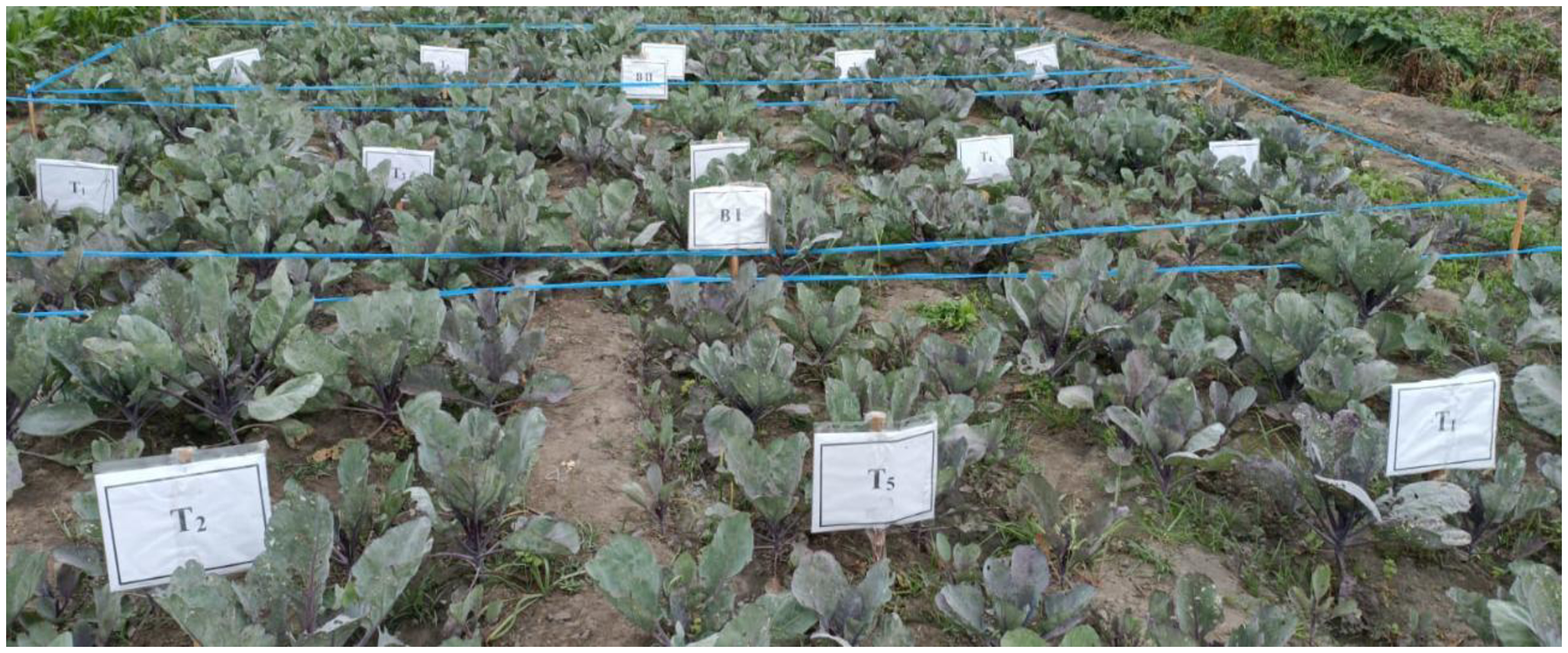
By processing the data on the physical characteristics of purple cabbage using analysis of variance and the Duncan test, with a 5% error level, we determined that there was no significant difference between the treatments. In addition, we classified and grouped the data using letters (a, b). We interpret these results as an indication that the application of CBRM did not have a dose effect on the assessments and that there were no statistical differences between treatments; however, T5 stood out compared to the others (see Table 7) and (Figure 1).
3.4. Nutrient concentration in leaves
Following the analysis of nutrients in purple cabbage leaves carried out by AGQ Perú SAC, we observed that T4 excelled in most elements, such as total nitrogen, potassium, phosphorus, iron, manganese, zinc, chlorides, and sodium. However, we determined that these amounts of nutrients did not influence higher yields. In contrast, the T5 showed that elements such as calcium, magnesium, sulfur, and boron contributed to a considerable concentration of anthocyanin, which we correlated with higher yield (see Table 8). Therefore, we interpret that a higher dose of CBRM favors a considerable concentration of anthocyanins, which we associate with the higher yield of the crop.
3.5. Total nitrogen contribution in relation to anthocyanin
Regarding the total nitrogen contribution related to anthocyanin concentration, T5 stands out with a contribution of 365.94 kg ha-1, representing a 99.25% difference compared to the nitrogen contribution of T1, which is 2.74 kg ha-1. This amount of nitrogen contributed to a higher yield of 34.85 t ha-1 of purple cabbage, which, in turn, slightly increased the anthocyanin concentration to 88.19 mg/100 g. Therefore, we interpret that a higher dose of CBRM added a nitrogen contribution of over 99% to the crop, which we associate with a higher yield and a considerable concentration of anthocyanin (see Table 9).
3.6. Total P2O5 input in relation to anthocyanin and yield
Regarding the total phosphorus contribution in relation to anthocyanin and yield, we detail it in Table 10. We observed that T5 stood out with 796.27 kg ha-1 of P2O5 contribution, representing a difference of 83.18% compared to treatment T1, which contributed 133.87 kg ha-1 of P2O5. This amount of nutrient influenced the higher yield of purple cabbage (34.85 t ha-1) and the increase in anthocyanin concentration. Therefore, we interpret that a higher dose of CBRM contributed to a greater supply of phosphorus, which we associate with a higher yield and a higher concentration of anthocyanin.
3.7. Anthocyanin concentration in purple cabbage leaves
Analyzing the anthocyanin concentration in purple cabbage leaves shown in Table 11, we determined that T4, with 122.65 mg of anthocyanin per 100 g of matter, differs by 25.12% from T1, with 91.83 mg of anthocyanin per 100 g of matter. However, we observed that this concentration did not influence yield, since T5, with 88.19 mg of anthocyanin per 100 g of matter, obtained a yield of 32.034 t ha-1. Therefore, we interpret that a higher dose of CBRM leads to a considerable concentration of anthocyanin, which strengthens the plant against stress factors and allows us to obtain a higher yield as a response.
3.8. Quantification of stomatal density in leaves
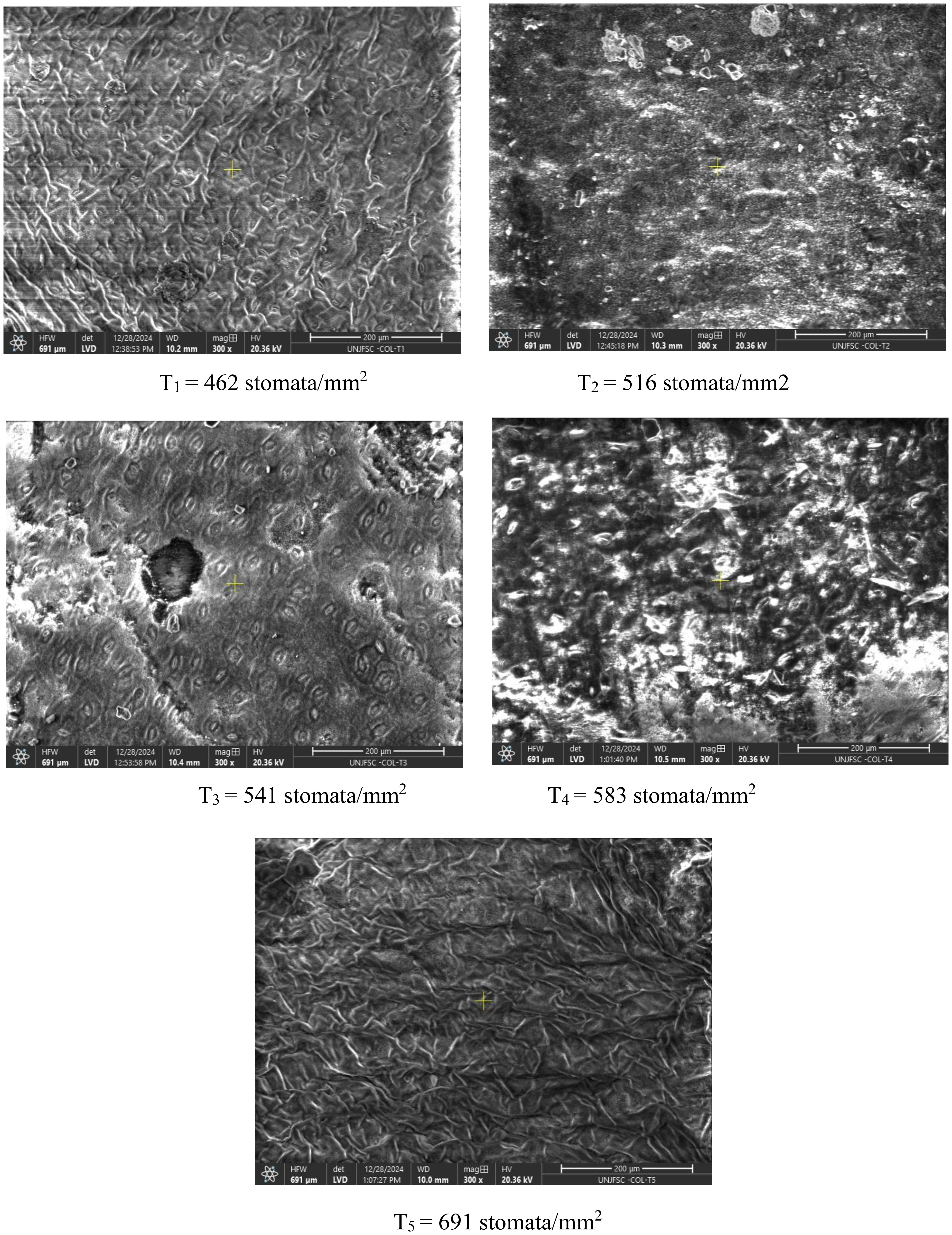
Regarding the quantification of stomata in leaves, detailed in Table 12, we observed that T5, with 691 stomata/mm2, shows a 33.18% difference compared to T1, with 462 stomata/mm2. This result shows that increasing the dose of CBRM leads to an increase in the number of stomata, which we relate to a considerable increase in anthocyanin and, consequently, to a higher yield of purple cabbage. Therefore, we interpret the greater number of stomata as an indicator, since we associate it with a considerable concentration of anthocyanin and, consequently, with a higher yield.
3.9. Profitability per treatment
Regarding the economic analysis, T5, with 252.78%, stood out from the others, showing a difference of 23.49% compared to T1, which reached 193.53% (see Table 13). We interpret this result as meaning that, with a higher dose of CBRM, the value increased by approximately almost a quarter compared to the control. Likewise, we obtain a profit exceeding 2.5 times the initial investment. This benefits the local farmer.
4. DISCUSSION
4.1. Physical characteristics of purple cabbage
After processing the data on the physical characteristics of the purple cabbage using an analysis of variance, we determined that there were no significant differences between the treatments; that is, the comparison between them showed no statistical differences in development and yield, although we should also note that T5 stood out compared to the others (see Table 11). We analyzed these results as follows: Increasing the dose of CBRM along with the addition of nutrients and microorganisms such as Bacillus subtilis and Oceanobacillus, among others, improved nutrient availability and absorption by the plant and optimized photosynthesis, carbohydrate formation and translocation, and other biochemical reactions. This strengthened the plant against environmental, nutritional, and pest stress factors, resulting in higher quality and yield. These results coincide with those of Liu et al. (2022), who mention that the use of biocompost enriches the soil with beneficial microorganisms (such as Sphingomonas, Acidibacter, Streptomyces, Oceanobacillus, etc.) and reduces harmful microorganisms (such as Stachybotrys and Aspergillus), thus improving conditions for the plant. Similarly, Supriyono et al. (2021) state that the use of organic fertilizer provided nutrients, improving biochemical reactions such as photosynthesis, which produced more carbohydrates and proteins; these carbohydrates were translocated to the tillers, leaves, and roots of the red ginger, increasing fresh weight. Finally, Imrán and Ortas (2025) state that the use of organic matter in the soil fosters a thriving microbial community, boosting agricultural productivity and soil fertility; this is vital for maintaining a healthy soil ecosystem, promoting nutrient cycling, and suppressing disease.
4.2. Nutrient concentration in leaves
Analysis of the nutrients in the purple cabbage leaves determined that T4 stood out in most elements, such as total nitrogen, potassium, phosphorus, iron, manganese, zinc, chlorides, and sodium. In contrast, T5, which excelled in calcium, magnesium, sulfur, and boron, contributed to a considerable concentration of anthocyanin, which we associate with higher yield (see Table 8). We analyze this result as follows: A higher dose of CBRM highlighted the calcium, magnesium, sulfur, and boron elements in the leaves. Calcium strengthens cell walls, magnesium is essential for photosynthesis, sulfur is fundamental in protein synthesis, and boron regulates key enzymes for anthocyanin production. This process optimized biochemical reactions and strengthened the plant's resistance to stress, resulting in a higher yield. According to El-Hadidi et al. (2017), calcium is essential for plants to absorb nutrients; it promotes the proper functioning of plant cells, strengthens the cell wall structure, forming calcium pectate compounds that provide stability, participates in hormonal enzymatic processes, and protects the plant. Furthermore, Cakmak and Yazici (2010) mention that magnesium's participation in metabolic processes depends on its activating function in numerous enzymes, such as ribulose-1,5-bisphosphate (RuBP) carboxylase, which is essential in photosynthesis. In addition, Za et al. (2017) found that anthocyanins in grapes showed a positive correlation only with the boron and potassium content in the petiole, while other nutrients in the soil and petiole did not have a significant relationship with total anthocyanin. Finally, Narayan et al. (2023) mentions that, in plants, sulfur and its compounds participate directly or indirectly in the management of biotic and abiotic stress, in metabolism and signaling, and are important for development.
4.3. Total nitrogen contribution in relation to anthocyanin
Table 9 highlights the total nitrogen contribution of T5, which registered 365.94 kg ha-1 and exceeded the control by 99.25%; this greater amount of nitrogen promoted a considerable concentration of anthocyanin, resulting in a higher yield of purple cabbage. We analyzed this result based on a higher dose of CBRM, which added nutrients such as nitrogen and beneficial microorganisms to the soil. This favored nitrogen availability for greater plant absorption and optimized essential biochemical reactions such as transpiration, photosynthesis, carbohydrate formation and translocation, nucleic acid synthesis, and nutrient fixation mechanisms. All these processes are essential for tissue development and other functions, strengthening the plant against nutritional, environmental, and pest stress. These findings coincide with Cruz Nieto et al. (2025), who determined that treatment T5, with 12 t ha-1 of bleaching earth compost, contributed 255.1 kg ha-1 of nitrogen, exceeding the control by 86.55%, which significantly increased the anthocyanin content to 62.86 mg/100 g. Furthermore, Numan et al. (2018) mention that plant growth-promoting bacteria produce regulators such as siderophores, which fix nitrogen and solubilize phosphate, which is important for compensating for salinity stress. Finally, Wang et al. (2025) point out that the addition of compost promotes the biosynthesis of foliar hormones such as indole-3-acetic acid (IAA) and abscisic acid (ABA), known to improve photosynthesis and reduce transpiration.
4.4. Total P2O5 input in relation to anthocyanin and yield
Regarding the total contribution of P2O5 in relation to anthocyanin and yield, Table 10 indicates that T5 stood out with 796.27 kg ha-1 of P2O5, which differs by 83.18% from T1, which contributed 133.87 kg ha-1; this amount of phosphorus influenced the considerable increase in anthocyanin, which, in turn, we associate with the higher yield of purple cabbage. We analyzed this result based on the higher dose of CBRM, since we added nutrients such as phosphorus and beneficial microorganisms, which contributed to improving the plant's nutritional availability. This element formed phosphate compounds that served as an energy source, optimizing photosynthesis reactions, carbohydrate formation and translocation, and improving nutrient absorption mechanisms. Although the environmental conditions caused a physiological response that considerably increased the concentration of anthocyanin, which acts as a defense mechanism. Therefore, this amount of phosphorus strengthens the plant against nutritional and environmental stress, resulting in a considerable level of anthocyanin associated with higher yield. In this sense, Bohórquez-Sandoval et al. (2024) mention that phosphorus-solubilizing microorganisms (bacteria and arbuscular mycorrhizal fungi) determine the availability of phosphorus in both soil and organic waste, being specifically responsible for solubilizing or mineralizing it. Also, Khan et al. (2023) state that phosphorus is essential as a regulator in the activation of physiological responses to abiotic stress, highlighting its influence on critical processes such as root system architecture, nutrient absorption, photosynthetic activity, and stomatal regulation. On the other hand, Henry et al. (2018) point out that phosphorus restriction can improve anthocyanin concentrations, resulting in darker red foliage; however, these concentrations can increase with reduced or restricted phosphorus, as evidenced in 'Salanova Red' lettuce.
4.5. Anthocyanin concentration in purple cabbage leaves
When analyzing the anthocyanin concentration in purple cabbage leaves, we determined that T4, with 122.65 mg/100 g, differs by 25.12% from T1, which registered 91.83 mg/100 g. However, this concentration did not influence yield, since T5, with 88.19 mg/100 g of anthocyanin, obtained a higher yield of 34.85 t ha-1 of purple cabbage (see Table 11). We analyzed this result as follows: a higher dose of CBRM improved nutrient availability in the soil, which optimized plant uptake and biochemical reactions, and produced a considerable increase in anthocyanin that influenced the higher yield. However, this considerable concentration of anthocyanin acted as a defense mechanism against stress from temperature variations, nutritional deficiencies, the presence of pests, and oxidative stress, which strengthened the plant for higher yields. In this regard, Papafotiou et al. (2007) mention that anthocyanin production seems to be related to the accumulation of excess carbohydrates, viral or fungal infection, treatment with growth regulators, wounds, temperature, and light. Meanwhile, Cruz Nieto et al. (2025) determined that treatment T5, with 12 t ha-1 of compost based on bleaching earth, highlighted elements in the leaves of purple lettuce such as phosphorus, sulfur, molybdenum, manganese, copper, zinc, and boron; although these did not influence a higher concentration of anthocyanin (62.86 mg/100 g), they did contribute to a higher crop yield.
4.6. Quantification of stomatal density
Regarding the quantification of stomata in leaves in relation to anthocyanin and the yield of purple cabbage, we highlight T5, with 691 stomata/mm2, differing by 33.18% compared to T1, which registered 462 stomata/mm2 (see Table 12 and Figure 2). We analyzed this result as follows: a higher dose of CBRM added nutrients to the soil, which improved their availability for absorption by the plant. These nutrients increased stomatal density, which optimized transpiration and favored gas exchange, photosynthesis, carbohydrate formation and translocation to the plant's reserves, and other biochemical reactions. Furthermore, these physiological processes generated a considerable increase in anthocyanin, which acted as a defense mechanism under the climatic conditions of the area. Therefore, we took this number of stomata as an indicator, since it contributed to the increase in anthocyanin, which strengthened the plant against stress, and this was associated with a higher yield. In this regard, Zahara et al. (2021) mention that the application of manure resulted in the largest stomatal area on both sides of the leaf surface, which produced a significant response in the net photosynthetic rate and stomatal conductance of some plants. Furthermore, Li et al. (2022) highlight that stomata play a vital role in the gaseous and water exchange of leaves, while Shahinnia et al. (2016) describe them as specialized foliar epidermal cells responsible for regulating the photosynthetic uptake of CO2 and water loss through transpiration. For their part, Álvarez-Holguín et al. (2018) mention that the characteristics of stomata and their concentration can be determining factors in the differences in biomass production. Finally, Iffah Hazirah et al. (2017) state that, despite having the lowest anthocyanin content among all species, H. camargoana has the highest number of stomata per unit area, while H. rigidofolia has the lowest.
Micrographs of purple cabbage stomata by treatment. Source: UNJFSC (2025) "Micrographs of stomata".
4.7. Economic profitability
Regarding economic profitability per treatment, Table 13 indicates that T5 stood out with 252.78%, differing by 23.49% from T1, which obtained 193.53%. We analyzed this result based on the highest dose of CBRM, since its difference from the control reached almost a quarter. It is worth noting that the application of this dose of CBRM generated a return of more than 2.5 times the investment, making the use of this fertilizer profitable. Therefore, we recommend that farmers in the area apply this dose of CBRM for growing purple cabbage.
5. Conclusion
We determined that T4, with 122.65 mg/100 g, showed the highest concentration of anthocyanin. However, T5, with 88.19 mg/100 g of anthocyanin, contributed to a higher yield of 34,850 t ha-1 of red cabbage. Therefore, the higher dose of CBRM added nutrients to the soil, improving their availability for greater nutrient absorption, which optimized photosynthesis, carbohydrate formation, and translocation to the plant's reserves. These biochemical reactions, along with the climatic conditions, favored a considerable increase in the concentration of anthocyanin associated with the higher yield.
We also determined that T4 excelled in most elements, such as total nitrogen, potassium, phosphorus, iron, manganese, zinc, chlorides, and sodium. On the other hand, T5, which contains calcium, magnesium, sulfur, and boron, contributed to a considerable concentration of anthocyanin, which we associate with higher yield. Therefore, the aforementioned elements of the highest dose influenced and promoted the reinforcement of the cell wall, photosynthesis, carbohydrate formation, and anthocyanin concentration, which strengthened the plant against nutritional, environmental, and pest stress, resulting in a higher yield.
Finally, we determined that T5 presented the highest stomatal density, with 691 stomata/mm2, which influenced a considerable concentration of anthocyanin associated with the yield of red cabbage. Therefore, we took the highest stomatal density as a key indicator, as it contributed to optimizing transpiration, photosynthesis, carbohydrate formation and translocation to reserves, and other biochemical reactions. These processes generated an increase in anthocyanins and, in the climatic conditions of the area, strengthened the plant against nutritional, environmental, and pest stress, which resulted in a higher yield.
-
Data Availability Statement
The entire data set supporting the results of this study was published in the article itself.
References
- AGQ PERÚ SAC, 2025. Informe de ensayo-material vegetal. Acreditado IAS, testing laboratory TL-502. Códigos V-25/014850, V-25/014851, V-25/014852, V-25/014853, V-25/014854 Lima, Perú: AGQ LABS.
-
AGUILAR-PAREDES, A., VALDÉS, G., ARANEDA, N., VALDEBENITO, E., HANSEN, F. and NUTI, M., 2023. Microbial community in the composting process and its positive impact on the soil biota in sustainable agriculture. Agronomy, vol. 13, no. 2, pp. 1-24. https://doi.org/10.3390/agronomy13020542
» https://doi.org/10.3390/agronomy13020542 -
ALAM, M.A., ISLAM, P., SUBHAN, N., RAHMAN, M.M., KHAN, F., BURROWS, G.E., NAHAR, L. and SARKER, S.D., 2021. Potential health benefits of anthocyanins in oxidative stress related disorders. Phytochemistry Reviews, vol. 20, no. 4, pp. 705-749. https://doi.org/10.1007/s11101-021-09757-1
» https://doi.org/10.1007/s11101-021-09757-1 -
ÁLVAREZ-HOLGUÍN, A., MORALES-NIETO, C., CORRALES-LERMA, R., AVENDAÑO-ARRAZATE, C., RUBIO-ARIAS, H. and VILLARREAL-GUERRERO, F., 2018. Stomatal characterization, chlorophyll concentration and their relation with biomass production of Bouteloua curtipendula. Agronomía Mesoamericana, vol. 29, no. 2, pp. 251-261. https://doi.org/10.15517/ma.v29i2.29900
» https://doi.org/10.15517/ma.v29i2.29900 -
BELLO, M.A. and PINO, M.T., 2000 [viewed 10 June 2025]. Cálculo básicos para fertirrigar [online]. Santiago: INIA/Ministerio de Agricultura. Boletín INIA, no. 26. Available from: https://biblioteca.inia.cl/server/api/core/bitstreams/0f253cee-c90d-464c-ab04-d60ce2cab9ab/content
» https://biblioteca.inia.cl/server/api/core/bitstreams/0f253cee-c90d-464c-ab04-d60ce2cab9ab/content -
BOHÓRQUEZ-SANDOVAL, L.J., GARCÍA-MOLANO, J.F., PASCUAL-VALERO, J.A. and ROS-MUÑOZ, M., 2024. A comprehensive review on organic waste compost as an effective phosphorus source for sustainable agriculture. International Journal of Recycling, vol. 13, no. 4, pp. 1-16. https://doi.org/10.57647/ijrowa-ybbx-kp03
» https://doi.org/10.57647/ijrowa-ybbx-kp03 -
CAKMAK, I. and YAZICI, A.M., 2010 [viewed 5 July 2025]. Magnesium: a forgotten element in crop production. Better Crops with Plant Food [online], vol. 94, no. 2, pp. 23-25. Available from: https://www.ks-minerals-and-agriculture.com/en/pdf-articles/article-201006-better-crops-magnesium.pdf
» https://www.ks-minerals-and-agriculture.com/en/pdf-articles/article-201006-better-crops-magnesium.pdf -
CARRASCO, J. and AGUIRRE, C., 2023 [viewed 10 June 2025]. Cálculo de fertilización con fósforo a partir del análisis de fertilidad de suelos [online]. Santiago: INIA/Ministerio de Agricultura. Informativo INIA Rayentué, no. 79. Available from: https://biblioteca.inia.cl/server/api/core/bitstreams/7935f241-774a-4cad-9279-279e82d55f0e/content
» https://biblioteca.inia.cl/server/api/core/bitstreams/7935f241-774a-4cad-9279-279e82d55f0e/content -
CHÁVEZ-MIGUEL, G., HÄMMERLE, J., GONZÁLEZ, A., CANETTI, C., GLEICH, P., LYNN HALFAST, R., FEUCHTER, M., BUSZYDLO, D., SCHWARZ, L., SCHEEPSTRA, I., DE HAAN, S., CCANTO, R., SIEBER, S. and BONATTI, M., 2024. Local food system resilience in the context of shocks and crises: vulnerabilities and responses of agroecology-based farmers in Peru, Germany, and the United States. Agroecology and Sustainable Food Systems, vol. 48, no. 6, pp. 876-897. https://doi.org/10.1080/21683565.2024.2341987
» https://doi.org/10.1080/21683565.2024.2341987 -
CRUZ NIETO, D., MUGURUZA, N., CHIRRE, E., ROMERO, J., MARTÍNEZ, M., ALVAREZ, C., CABANILLAS, J., ARRIZ, O., LUPERDI, F., QUISPE, P., BAUTISTA, M., REAÑO, J., PESANTES, G., CAIRA, C., MORALES, M. and CHICLLA, A., 2025. Anthocyanins in relation to nutrients, stomatal density, and yield of purple lettuce (Lactuca sativa L.) fertilized with compost based on bleaching earth. Brazilian Journal of Biology = Revista Brasileira de Biologia, vol. 85, pp. e291967. https://doi.org/10.1590/1519-6984.291967 PMid:40531724.
» https://doi.org/10.1590/1519-6984.291967 -
EL-HADIDI, E., EL-DISSOKY, R. and ABDELHAFEZ, A., 2017. Foliar calcium and magnesium application effect on potato crop grown in clay loam soils. Journal of Soil Sciences and Agricultural Engineering, vol. 8, no. 1, pp. 1-8. https://doi.org/10.21608/jssae.2017.37074
» https://doi.org/10.21608/jssae.2017.37074 -
EL-MOGY, M., ADLY, M., SHAHEIN, M., HASSAN, H., MAHMOUD, S. and ABDELDAYM, E., 2024. Integration of biochar with vermicompost and compost improves agro-physiological properties and nutritional quality of greenhouse sweet pepper. Agronomy, vol. 14, no. 11, pp. 2603. https://doi.org/10.3390/agronomy14112603
» https://doi.org/10.3390/agronomy14112603 -
GIUSTI, M. and WROLSTAD, R., 2001. Characterization and measurement of anthocyanins by UV-Visible spectroscopy. Current Protocols in Food Analytical Chemistry, no. 1, pp. F1-F2. https://doi.org/10.1002/0471142913.faf0102s00
» https://doi.org/10.1002/0471142913.faf0102s00 -
HENRY, J.B., PERKINS-VEAZIE, P., MCCALL, I. and WHIPKER, B.E., 2018 [viewed 15 July 2025]. Effects of phosphorus nutrition on the anthocyanin concentration and foliar coloration of Lactuca sativa [online]. Raleigh: North Carolina State University, 1 p. Available from: https://www.researchgate.net/profile/Josh-Henry/publication/326919298_Effects_of_Phosphorus_Nutrition_on_the_Anthocyanin_Concentration_and_Foliar_Coloration_of_Lactuca_sativa/links/5b6c3dcd92851ca65053b99c/Effects-of-Phosphorus-Nutrition-on-the-Anthocyanin-Concentration-and-Foliar-Coloration-of-Lactuca-sativa.pdf
» https://www.researchgate.net/profile/Josh-Henry/publication/326919298_Effects_of_Phosphorus_Nutrition_on_the_Anthocyanin_Concentration_and_Foliar_Coloration_of_Lactuca_sativa/links/5b6c3dcd92851ca65053b99c/Effects-of-Phosphorus-Nutrition-on-the-Anthocyanin-Concentration-and-Foliar-Coloration-of-Lactuca-sativa.pdf -
HIRZEL, J. and SALAZAR, F., 2016 [viewed 25 May 2025]. Guía de manejo y buenas prácticas de aplicación de enmiendas orgánicas en agricultura [online]. Santiago: INIA/Ministerio de Agricultura. Boletín INIA, no. 325. Available from: https://biblioteca.inia.cl/server/api/core/bitstreams/ca61659e-998f-489e-8bf6-e771298d6f09/content
» https://biblioteca.inia.cl/server/api/core/bitstreams/ca61659e-998f-489e-8bf6-e771298d6f09/content -
IFFAH HAZIRAH, M.N., SUHAIZAN, L., SHAMSUL BAHRI, A.R., NURUL FAZIHA, I. and ONG CHIN, W., 2017 [viewed 28 Jul. 2025]. Differences in leaf pigments content and stomata distribution across eight Hevea species. Malaysian Applied Biology [online], vol. 46, no. 3, pp. 213-219. Available from: https://www.researchgate.net/profile/Shamsul-Bahri-Abd-Razak/publication/320539686_Differences_in_leaf_pigments_content_and_stomata_distribution_across_eight_hevea_species/links/5a0c3ca2aca2721a23fbd1ef/Differences-in-leaf-pigments-content-and-stomata-distribution-across-eight-hevea-species.pdf?_sg%5B0%5D=started_experiment_milestone&origin=journalDetail&_rtd=e30%3D
» https://www.researchgate.net/profile/Shamsul-Bahri-Abd-Razak/publication/320539686_Differences_in_leaf_pigments_content_and_stomata_distribution_across_eight_hevea_species/links/5a0c3ca2aca2721a23fbd1ef/Differences-in-leaf-pigments-content-and-stomata-distribution-across-eight-hevea-species.pdf?_sg%5B0%5D=started_experiment_milestone&origin=journalDetail&_rtd=e30%3D -
IMRAN. and ORTAS, I., 2025. Mechanism in soil health improvement with soil microbial actions and its role in potential agriculture. Communications in Soil Science and Plant Analysis, vol. 56, no. 13, pp. 1-22. https://doi.org/10.1080/00103624.2025.2486597
» https://doi.org/10.1080/00103624.2025.2486597 - INSTITUTO DE INVESTIGACIÓN NUTRICIONAL – IIN. Laboratorio de Análisis de Alimentos – LAA. 2025. Resultados de Laboratorio de Fisicoquímica, no. 000017 – 2025. Lima: IIN.
- INSTITUTO NACIONAL DE INNOVACIÓN AGRARIA – INIA, 2025a. Análisis de suelo: resultados del análisis de suelo para el cultivo de col morada, no. 080292-24/SU/ LABSAF – DONOSO. Lima: INIA.
- INSTITUTO NACIONAL DE INNOVACIÓN AGRARIA – INIA, 2025b. Recomendación nutricional para el cultivo de col morada: resultados nutricional, no. SU788-DO-24. Lima: INIA.
- INSTITUTO NACIONAL DE INNOVACIÓN AGRARIA – INIA, 2025c. Análisis completo del Compost a Base de Residuos de Mercado: resultados del análisis de abono, no. 02018-24/AO/ LABSAF – DONOSO. Lima: INIA
- INSTITUTO NACIONAL DE INNOVACIÓN AGROPECUARIA – INIA, 2025d. Análisis de microelementos del Compost a Base de Residuos de Mercado: resultados del análisis de abono, no. 02018-24/AO/ LABSAF – DONOSO. Lima: INIA
- IPANAQUÉ, J., 2023. Fertilización con compost producido de residuos sólidos orgánicos del mercado para mayor rendimiento en cultivo de vainita (Phaseolus vulgaris L.), Huaura – 2022 Perú: Universidad Nacional José Faustino Sánchez Carrión, 69 p. Tesis para el Grado Académico de Doctor en Ciencias Ambientales.
-
KASS, C.L.D., 1998 [viewed 3 June 2025]. Fertilidad de suelos [online]. San José: EUNED. Available from: https://books.google.com.pe/books?id=sRua411JhvgC&pg=PP8&dq=KASS+FERTILIDAD+DE+SUELOS&hl=es&sa=X&ved=2ahUKEwiQ_p2Tx_r0AhU_qZUCHcNUAwQQ6AF6BAgHEAI#v=onepage&q=KASS%20FERTILIDAD%20DE%20SUELOS&f=false
» https://books.google.com.pe/books?id=sRua411JhvgC&pg=PP8&dq=KASS+FERTILIDAD+DE+SUELOS&hl=es&sa=X&ved=2ahUKEwiQ_p2Tx_r0AhU_qZUCHcNUAwQQ6AF6BAgHEAI#v=onepage&q=KASS%20FERTILIDAD%20DE%20SUELOS&f=false -
KHAN, F., SIDDIQUE, A.B., SHABALA, S., ZHOU, M. and ZHAO, C., 2023. Phosphorus plays key roles in regulating plants’ physiological responses to abiotic stresses. Plants, vol. 12, no. 15, pp. 2861. https://doi.org/10.3390/plants12152861 PMid:37571014.
» https://doi.org/10.3390/plants12152861 -
LEGUA CÁRDENAS, J.A., CAMPOS DIAZ, A.H., VÉLEZ CHANG, D.J. and VÉLEZ CHANG, Y.J., 2023. Efectos del biol industrial complementado con algas marinas sobre el rendimiento del cultivo rábano (Raphanus sativus L.). Revista Alfa, vol. 7, no. 20, pp. 442-452. https://doi.org/10.33996/revistaalfa.v7i20.227
» https://doi.org/10.33996/revistaalfa.v7i20.227 -
LI, S., LI, L., FAN, W., MA, S., ZHANG, C., KIM, J.C., WANG, K., RUSSINOVA, E., ZHU, Y. and ZHOU, Y., 2022. LeafNet: a tool for segmenting and quantifying stomata and pavement cells. The Plant Cell, vol. 34, no. 4, pp. 1171-1188. https://doi.org/10.1093/plcell/koac021 PMid:35080620.
» https://doi.org/10.1093/plcell/koac021 -
LIU, X., SHI, Y., KONG, L., TONG, L., CAO, H., ZHOU, H. and LV, Y., 2022. Long-term application of bio-compost increased soil microbial community diversity and altered its composition and network. Microorganisms, vol. 10, no. 2, pp. 462. https://doi.org/10.3390/microorganisms10020462 PMid:35208916.
» https://doi.org/10.3390/microorganisms10020462 -
MCKEAN, S., 1993 [viewed 19 June 2025]. Manual de análisis de suelos y tejido vegetal. Una guía teórica y práctica de metodologías [online]. Cali, Colombia: Laboratorio de Servicios Analíticos, Centro Internacional de Agricultura Tropical. Documento de trabajo, no. 129. Available from: http://ciat-library.ciat.cgiar.org/Articulos_Ciat/Digital/S593.M2_Manual_de_an%C3%A1lisis_de_suelos_y_tejido_vegetal_Una_gu%C3%ADa_te%C3%B3rica_y_pr%C3%A1ctica_de_metodologia.pdf
» http://ciat-library.ciat.cgiar.org/Articulos_Ciat/Digital/S593.M2_Manual_de_an%C3%A1lisis_de_suelos_y_tejido_vegetal_Una_gu%C3%ADa_te%C3%B3rica_y_pr%C3%A1ctica_de_metodologia.pdf - MUGURUZA, N.E., 2024. Fertilización ecológica base de residuos de pescado para mayor rendimiento y contenido de antocianina en lechuga (Lactuca sativa l.), Barranca, 2022 Huacho, Perú: Universidad Nacional José Faustino Sánchez Carrión, 60 p. Tesis para Optar el Grado Académico de Doctora en Ciencia y Tecnología de los Alimentos.
-
NACIMENTO, M., 2024. The Russia-Ukraine war and the Peruvian agrarian crisis. Bulletin of Latin American Research, vol. 43, no. 4, pp. 340-343. https://doi.org/10.1111/blar.13592
» https://doi.org/10.1111/blar.13592 -
NARAYAN, O.P., KUMAR, P., YADAV, B., DUA, M. and JOHRI, A.K., 2023. Sulfur nutrition and its role in plant growth and development. Plant Signaling & Behavior, vol. 18, no. 1, pp. e2030082. https://doi.org/10.1080/15592324.2022.2030082 PMid:35129079.
» https://doi.org/10.1080/15592324.2022.2030082 -
NUMAN, M., BASHIR, S., KHAN, Y., MUMTAZ, R., SHINWARI, Z.K., KHAN, A.L., KHAN, A. and AL-HARRASI, A., 2018. Plant growth promoting bacteria as an alternative strategy for salt tolerance in plants: A review. Microbiological Research, vol. 209, pp. 21-32. https://doi.org/10.1016/j.micres.2018.02.003 PMid:29580619.
» https://doi.org/10.1016/j.micres.2018.02.003 -
PAPAFOTIOU, M., AVAJIANNELI, B., MICHOS, C. and CHATZIPAVLIDIS, I., 2007. Coloration, anthocyanin concentration, and growth of croton (Codiaeum variegatum L.) as affected by cotton gin trash compost use in the potting medium. HortScience, vol. 42, no. 1, pp. 83-87. https://doi.org/10.21273/HORTSCI.42.1.83
» https://doi.org/10.21273/HORTSCI.42.1.83 - PAREDES, H.S., 2018. Cuantificación de antocianinas por el método de pH diferencial del fruto de la uva Isabella (Vitis labrusca) procedente del distrito de San Antonio de Cumbaza. Tarapoto, Perú: Universidad Nacional de San Martín, 56 p. Tesis para Optar el Título Profesional de Ingeniero Agroindustrial.
-
PILLACA-MEDINA, M.L., 2018. Food and nutritional security in the villages Nuevo Tambo de Mora and Alto El Molino, Ica, Peru. Food and Energy Security, vol. 7, no. 1, pp. e00128. https://doi.org/10.1002/fes3.128
» https://doi.org/10.1002/fes3.128 -
PRIALÉ, C.A., 2016 [viewed 18 June 2025]. Muestreo de suelos: referencias sobre el análisis e interpretación de resultados [online]. Lima: INIA. Available from: https://repositorio.inia.gob.pe/server/api/core/bitstreams/e45a30c0-d2f5-4a41-872e-79425b3d752a/content
» https://repositorio.inia.gob.pe/server/api/core/bitstreams/e45a30c0-d2f5-4a41-872e-79425b3d752a/content - RAMÍREZ, W., 2018. Gestión de residuos sólidos en la provincia de Barranca: una propuesta de mejoramiento al 2018. Perú: Universidad César Vallejo, 274 p. Tesis para Optar el Grado Académico de Doctor en Gestión Pública Y Gobernabilidad.
-
ROMÁN, P., MARTÍNEZ, M.M. and PANTOJA, A., 2013 [viewed 22 June 2025]. Manual de compostaje del agricultor experiencias en América Latina [online]. Santiago de Chile: FAO. Available from: https://www.fao.org/3/i3388s/I3388S.pdf
» https://www.fao.org/3/i3388s/I3388S.pdf - ROMERO, J., 2024. Nutrición orgánica a base de residuos de mercado para el mayor rendimiento ecológico de lechuga (Lactuca sativa L.), Barranca, 2023. Huacho, Perú: Universidad Nacional José Faustino Sánchez Carrión, 75 p. Tesis para el Grado Académico de Doctor en Ciencias Ambientales.
-
SAVY, D., COZZOLINO, V., VINCI, G., VERRILLO, M., ALIBERTI, A., MAGGIO, A., BARONE, A. and PICCOLO, A., 2022. Fertilisation with compost mitigates salt stress in tomato by affecting plant metabolomics and nutritional profiles. Chemical and Biological Technologies in Agriculture, vol. 9, no. 104, pp. 1-13. https://doi.org/10.1186/s40538-022-00373-5
» https://doi.org/10.1186/s40538-022-00373-5 -
SHAHINNIA, F., LE ROY, J., LABORDE, B., SZNAJDER, B., KALAMBETTU, P., MAHJOURIMAJD, S., TILBROOK, J. and FLEURY, D., 2016. Genetic association of stomatal traits and yield in wheat grown in low rainfall environments. BMC Plant Biology, vol. 16, pp. 150. https://doi.org/10.1186/s12870-016-0838-9 PMid:27378125.
» https://doi.org/10.1186/s12870-016-0838-9 -
SUPRIYONO., ZAKIYYAH, J.R., SULISTYO, T.D. and PUJIASMANTO, B., 2021. The impact of ZA substitution with organic fertilizer throughred ginger’s growth and yield in mixed cropping with maizeand cassava. IOP Conference Series. Earth and Environmental Science, vol. 905, no. 1, pp. 012038. https://doi.org/10.1088/1755-1315/905/1/012038
» https://doi.org/10.1088/1755-1315/905/1/012038 - UNIVERSIDAD NACIONAL JOSÉ FAUSTINO SÁNCHEZ CARRIÓN – UNJFSC, 2025. Micrografías de estomas de col morada: resultados de estomas, UNJFSC – col-T1, UNJFSC – col-T2, UNJFSC – col-T3, UNJFSC – col-T4, UNJFSC – col-T5. Huacho, Perú: UNJFSC.
-
VELA, G., LÓPEZ, J. and RODRÍGUEZ, M., 2012. Levels of total organic carbon in the Suelo de Conservación of the Distrito Federal, Central Mexico. Investigaciones Geográficas, no. 77, pp. 18-30. https://doi.org/10.14350/rig.31007
» https://doi.org/10.14350/rig.31007 -
WANG, X., SALE, P., HUNT, J., CLARK, G., WOOD, J., FRANKS, A., REDDY, P., JIN, J., JOSEPH, S. and TANG, C., 2025. Enhancing growth and transpiration efficiency of corn plants with compost addition and potential beneficial microbes under well-watered and water-stressed conditions. Plant and Soil, vol. 514, pp. 2475-2493. https://doi.org/10.1007/s11104-025-07527-y
» https://doi.org/10.1007/s11104-025-07527-y -
YASSEN, A.A., ABDALLAH, E.F., GABALLAH, M.S. and ZAGHLOUL, S.M., 2018 [viewed 5 May 2025]. Alleviation of salt stress on roselle plant using nanofertilizer and organic manure. Bioscience Research [online], vol. 15, no 3, pp. 1739-1748. Available from: https://nja.pastic.gov.pk/BR/index.php/BR/article/view/1248
» https://nja.pastic.gov.pk/BR/index.php/BR/article/view/1248 -
ZA, B., SA, P., AQ, G., RK, G., NA, D. and MY, W., 2017 [viewed 10 Jul. 2025]. Quality and yield of grape berries of Kashmir (India) and their relationship with available and petiole nutrient content. International Journal of Chemical Studies [online], vol. 5, no. 3, pp. 1-6. Available from: https://www.chemijournal.com/archives/2017/vol5issue3/PartA/5-2-62-766.pdf
» https://www.chemijournal.com/archives/2017/vol5issue3/PartA/5-2-62-766.pdf -
ZAHARA, M., SUWARNIATI, S., AINI, Q. and MUSLIM, M., 2021. The effect of organic fertilizers on the leaf morphology and stomatal density of Pogostemon cablin Benth. Jurnal Natural, vol. 21, no. 2, pp. 52-56. https://doi.org/10.24815/jn.v21i2.20989
» https://doi.org/10.24815/jn.v21i2.20989
Edited by
-
Editor:
Takako Matsumura Tundisi
The entire data set supporting the results of this study was published in the article itself.