 Probiotic effect of Lactococcus lactis genetically modified in the prevention and treatment of inflammatory bowel diseases in mice: a systematic review
Abstract
The aim of this study was to evaluate the probiotic effect of the lactic acid bacterium Lactococcus lactis (L. lactis) in the prevention and treatment of inflammatory bowel disease in mice through a systematic literature review. A literature search was conducted in the Cochrane Library and PubMed databases to evaluate the effect of the lactic acid bacterium L. lactis in the prevention and treatment of inflammatory bowel disease in mice using the descriptors: L. lactis, inflammatory bowel disease, prevention, treatment, Crohn's disease, ulcerative colitis and lactic acid bacteria. A total of 3,320 articles were found, of which only six were included in the review. The results suggest that lactic acid bacteria such as L. lactis may be helpful in the treatment and intestinal modulation of animals exhibiting characteristic signs and symptoms of diseases such as ulcerative colitis and Crohn's disease.
Keywords:
Crohn's disease; ulcerative colitis; inflammation; microbiota; lactic acid bacteria
Resumo
O objetivo deste estudo foi avaliar o efeito probiótico da bactéria ácido láctica Lactococcus lactis (L. lactis) na prevenção e tratamento da doença inflamatória intestinal em camundongos através de uma revisão sistemática da literatura. A literatura encontrada foi realizada através das bases de dados Cochrane Library e PubMed para avaliar o efeito da bactéria ácido láctica L. lactis na prevenção e tratamento da doença inflamatória intestinal em camundongos usando os descritores: L. lactis, doença inflamatória intestinal, prevenção, tratamento, doença de Crohn, colite ulcerativa e bactéria ácido láctica. Um total de 3.320 artigos foram encontrados, dos quais somente seis foram incluídos na revisão. Os resultados sugerem que bactéria ácido lácticas como L. lactis podem auxiliar no tratamento e na modulação intestinal de animais que apresentam sinais e sintomas característicos de doenças como colite ulcerativa e doença de Crohn.
Palavras-chave:
doença de Crohn; colite ulcerativa; inflamação; microbiota; bactérias ácido lácticas
1. Introduction
Crohn's disease and ulcerative colitis are the two main chronic inflammatory diseases that are recurrent and have different clinical and pathological features, which is why they are collectively referred to as inflammatory bowel diseases (IBD) (Halpin and Ford, 2012). The majority of IBD cases occur in young people; the disease peaks between the ages of 15 and 30 and the again between the ages of 50 and 70. Caucasian people living in urban and industrialized areas are more frequently affected (Vilela et al., 2020).These diseases are triggered by the interaction of immune regulation of the intestinal mucosa, microbiota and hereditary factors. While Crohn's disease can affect any region of the digestive tract, including the mouth and anus, ulcerative colitis only affects the colon and rectum. However, the main sites of attack are the ileus and the ileocecal area.
The use of probiotics has shown its potential in both the treatment and prevention of a number of intestinal diseases (Bai et al., 2006; Amer et al., 2018). Probiotics have been shown to improve the intestinal epithelial barrier, alter pH, have immunomodulatory effects by degrading toxin receptors, increase competition for nutrients, produce substances that inhibit pathogens, prevent pathogen adherence, and alter the gut microbiota (Bermudez-Brito et al., 2012; Bajaj et al., 2015; Amara and Shibl, 2015).
In this context, the beneficial effects of lactic acid bacteria (LAB) as probiotics in the gut environment, have been investigated, particularly in terms of reducing intestinal inflammation by neutralizing pro-inflammatory cytokines, reducing TNF-α, modulating the immune response, lowering inflammatory disease activity and reducing pathological features of the colon and small intestine (Kim and Liu, 2002; Hanson et al., 2014; Gomes-Santos et al., 2017; He et al., 2025).
Due to the increased suppressive tone of the intestinal microenvironment under basal conditions, active metabolites released by probiotic bacteria during intestinal transit can exert anti-inflammatory effects, stabilize the mucus layer, support epithelial healing and produce short-chain fatty acids that act as mucosal protectors (Kosler et al., 2017; Ménard et al., 2004; Vandenbroucke et al., 2004).
In particular, Lactococcus lactis (L. lactis) can create and maintain an anti-inflammatory environment in the gastrointestinal tract by effectively reducing the onset of inflammation in various mouse models by inhibiting the production of interferon-gamma (IFN-γ), interleukin (IL) 6 (IL-6) and TNF-α as well as the increased production of IL-10 in colonic tissue. Interestingly, studies have found different strategies for the use of L. lactis in IBD. The bacterium in question is sometimes used in research as a transport vector for a plasmid that targets human cells. In contrast, it is used in other studies as a delivery vector for anti-inflammatory cytokines (Saadatzadeh et al., 2012; Zurita-Turk et al., 2020).
The use of LAB in the treatment of Crohn's Disease and Ulcerative Colitis symptoms seems promising (Ballal et al., 2015; Spaiser et al., 2015; Qian et al., 2024). However, they are not yet to be found in the literature. Systematic review studies demonstrate the link between the positive effect of L. lactis in the treatment, prevention and remission of IBD. In addition, there is a need to conduct a more in-depth study using methods, specific criteria and a quantitative analysis of the results on this topic.
Therefore, the aim of this study was to conduct a systematic literature review to analyze the probiotic effect of genetically modified L. lactis in the prevention and treatment of IBD, especially Crohn's Disease and Ulcerative Colitis, in mice.
2. Material and Methods
2.1. Data sources and research strategy
The present study was conducted as part of a systematic literature review according to the PRISMA recommendation (Page et al., 2021), which consists of applying a checklist and creating a flowchart presenting the results obtained in the survey. It was also prospectively registered in the International Prospective Registry for Systematic Reviews (PROSPERO) (CRD42023409102).
This systematic review focuses on the probiotic effect of L. lactis in the prevention and treatment of IBD. A search was conducted in the following databases: PubMed, LILACS, Scopus, Web of Science, and Cochrane until December 2020.
The following descriptors were used: Lactococcus lactis AND Ulcerative Colitis, Inflammatory bowel disease AND lactic acid bacteria, Inflammatory bowel disease AND Lactococcus lactis, Probiotic AND Crohn's disease OR Ulcerative Colitis, Lactococcus lactis AND Ulcerative Colitis OR Crohn's disease, Inflammatory bowel disease AND prevention AND Lactococcus lactis, Inflammatory bowel disease AND treatment AND Lactococcus lactis, Inflammatory bowel disease AND treatment AND lactic acid bacteria, Inflammatory bowel disease AND treatment AND lactic acid bacteria, Inflammatory bowel disease AND prevention AND lactic acid, Crohn's disease AND prevention AND Lactococcus lactis e Ulcerative Colitis AND prevention AND Lactococcus lactis.
The database search included studies evaluating the probiotic effect of L. lactis in IBD and manuscripts with descriptors in the title and/or abstract.
2.2. Inclusion and exclusion criteria
In this review, we included original studies with an experimental design in which the effect of the use of probiotics from LAB L. lactis on the remission and treatment of IBD was investigated. We excluded observational studies, qualitative studies, studies in human populations, ongoing studies and studies that did not include the lactic acid bacterium L. lactis or IBD.
2.3. Selection of studies
The articles were combined into a single file; duplicate entries were manually checked and excluded using Endnote x7 software.
Two independent reviewers (TR and PQC) assessed titles, abstracts, and full texts. Discrepancies were resolved by consensus, and all references of included studies were checked for possible additional articles. The entire selection process was conducted via the Endnote platform.
2.4. Risk of bias assessment in included studies
The Cochrane tool was used to assess the risk of bias. Two independent reviewers assessed the risk of bias and disagreements were resolved by consensus. This scale includes information on sequence generation (selection bias), allocation concealment (selection bias), participant concealment (performance bias), outcome assessment concealment (detection bias), incomplete outcome data (bias), selective reporting (reporting bias), and other biases (other potential biases not included in the domains described above). The methodological components of the studies were assessed and rated as low, high or uncertain risk of bias.
3. Results
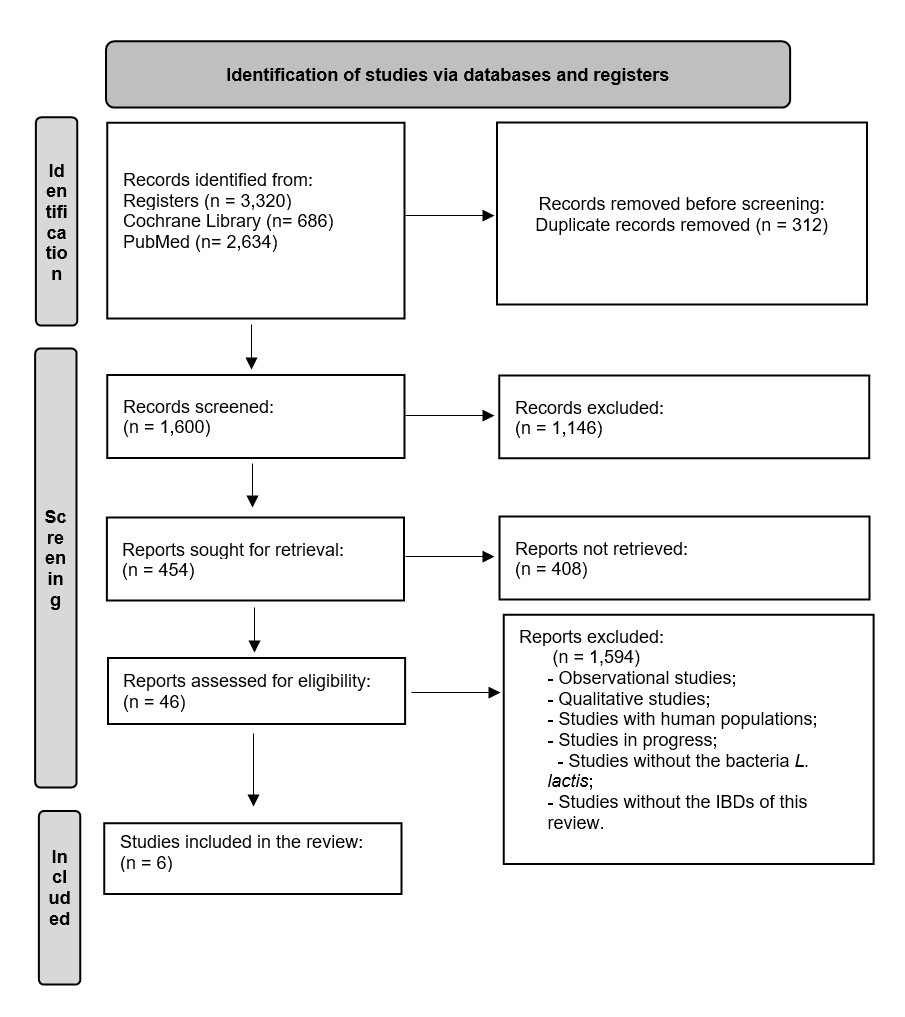
The bibliographic search using the descriptors containing L. lactis and Crohn's Disease and Ulcerative Colitis in the PubMed and Cochrane Library databases yielded a total of 3,320 scientific articles. The main exclusion criteria excluded articles that referred to LAB other than L. lactis and articles that dealt with diseases other than the IBD covered in this study. Articles that were not written on rodents (in vivo) were also used as exclusion criteria. Two people reviewed these articles, and, in case of disagreement between the two, a third person was responsible for the final decision.
The flowchart below (Figure 1) is a hypothetical example that includes all steps followed in the selection of articles included in the systematic review.
Graphical flowchart of the methodology for the selection of articles to be included in the systematic review.
After reading the titles, approximately 1,600 articles with scientific relevance to the topic under study were selected, of which only 454 articles were selected for reading the abstracts. The research therefore followed the reading of the complete articles, a total of 46 articles. In the end, six (n=6) articles were found (Table 1) that demonstrate the probiotic effect of L. lactis in the prevention and modulation of IBD.
The RoB 2.0 tool (Revised Cochrane risk-of-bias tool for randomized trials) was recommended by the Cochrane Collaboration to assess the risk of bias in this study (Table 2). All studies had a low risk of bias in relation to the randomization process, deviations from planned interventions, and selection of reported outcomes. However, some concerns were raised about missing outcome data and outcome measurement. Thus, all studies raised concerns about overall bias.
The results of the review by Chiabai et al. (2019) showed that the use of L. lactis as an anti-TNF-α transport vector resulted in amelioration of experimentally induced rectocolitis in female mice. Several cytokines are known to be involved in IBD (Song et al., 2019), therefore their serum concentrations were investigated. Chiabai et al. (2019) show that excessive secretion of pro-inflammatory cytokines is related to intestinal inflammation.
In another study conducted by Song et al. (2019) in China, it was also shown that ulcerative colitis induced by dextran sodium sulfate (DSS) and subsequent administration of a bovine lactoferricin-lactoferrampin-encoding L. lactis improved intestinal damage in female mice. This occurred because some of these lactic acid bacteria can exhibit significant anti-inflammatory properties, which significantly increases the therapeutic efficacy of such an approach (Foligne et al., 2007).
In another study conducted by Wong et al. (2017) in China with male mice, oral administration of cathelicidin through the L. lactis vector was able to improve clinical symptoms, maintain the integrity of the villi in the intestinal mucosa and preserve the mucus secretory layer of these animals suffering from Ulcerative Colitis.
In the same year, Saha et al. (2017) found that L. lactis expressing lipocalin-2 had a mucoprotective effect in mice suffering from Ulcerative Colitis with DSS and that the improvement in systemic and colonic markers correlated with the severity of inflammation.
Wong et al. (2017) reported that patients with ulcerative colitis are more susceptible to exposure to toxins and microorganisms in the intestinal lumen due to the loss of the mucus layer. The increase in apoptosis in Ulcerative Colitis may lead to a breakdown of epithelial barrier function and facilitate the penetration of intraluminal substances into the mucosa. The authors show that encoding the modified cathelicidin-related antimicrobial peptide (mCRAMP) L. lactis can effectively promote cell proliferation in the mucosal layer and reduce cell death, which promotes remodeling of the intestinal epithelium. Improved mucosal repair allows for faster recovery of tissue function, resulting in less exposure to various pathogens that contribute to rectocolitis.
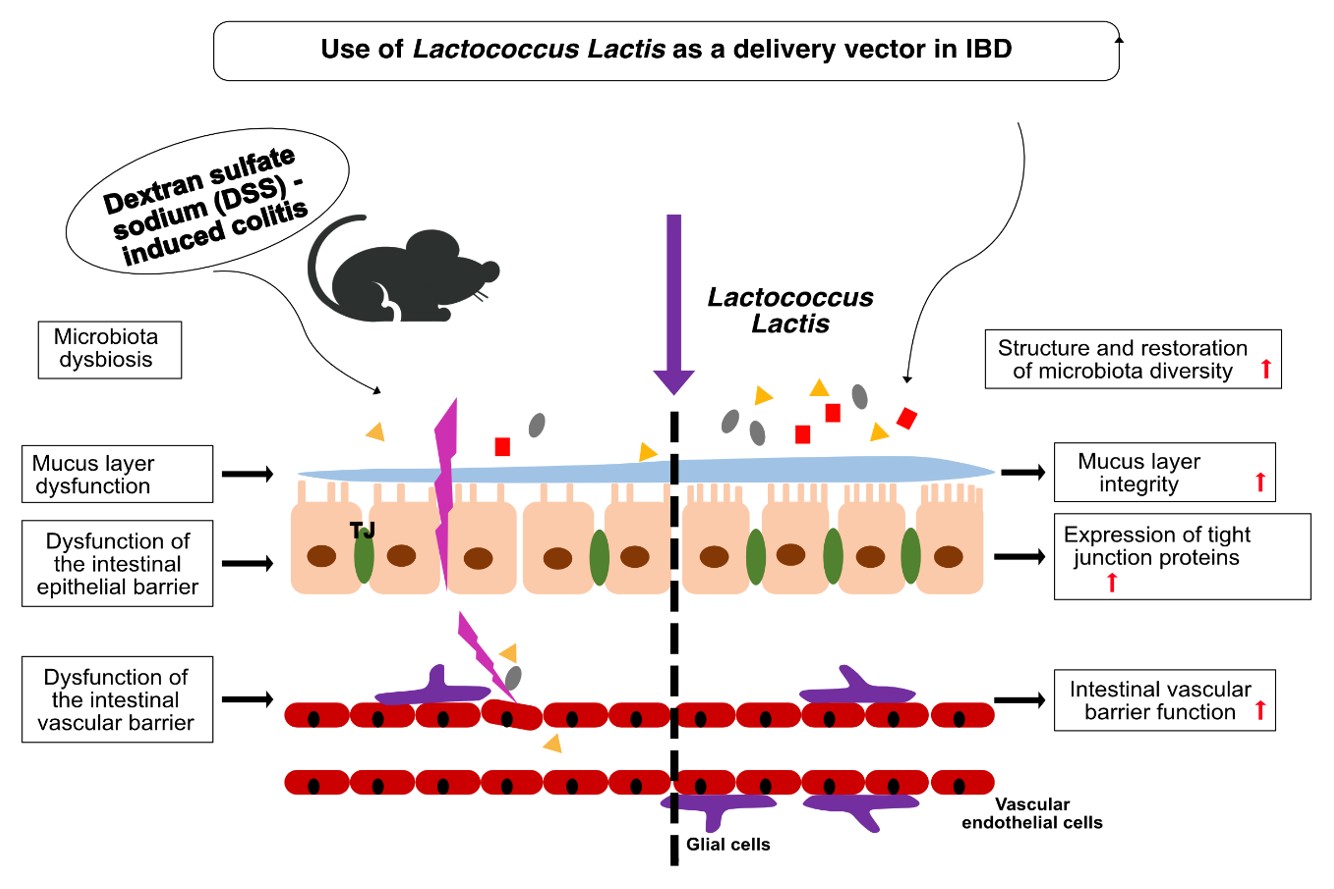
Figure 2 shows the use of L. lactis as a delivery vector of substances that aid in intestinal modulation of mice with IBD (such as DSS-induced rectocolitis). In addition to promoting the restructuring of microbiota diversity through the uptake of a LAB with probiotic potential, L. lactis acts as a transport vector that helps to maintain the integrity of the mucus layer and make it more functional. In this way, the mucus layer ensures the protection of the organs and acts as a physical barrier against pathogens.

Use of Lactococcus lactis as a delivery vector in inflammatory bowel disease. Source: Prepared by the authors themselves.
Another important aspect shown in Figure 2 is that L. lactis can restore the functionality of the intestinal epithelial barrier by increasing the expression of tight junction proteins that allow the selective permeability of the intestine to be maintained. The intestinal vascular barrier, which is compromised by the occurrence of IBD, could benefit from L. lactis as it can maintain the integrity of the transepithelial layer lining the intestine and is responsible for intestinal vascular permeability.
According to the results, the use of L. lactis as a transmission vector contributes to the remission of IBD. In the study by Chiabai et al. (2019), mice treated with DSS alone without administration of bacteria had a histologic score of 2.1 ± 0.13, and mice treated with the invasive strain L. lactis plus plasmid (LLF) had a score of 2.0 ± 0.22. In addition, mice receiving L. lactis with anti-TNF-α antibodies had a significantly lower disease activity index (1.1 ± 0.15) and a reduced inflammatory process compared to mice in the LL-F group.
The study by Song et al. (2019) also found that disease activity scores were significantly higher in the groups without the L. lactis bacteria than in the group in which L. lactis was the vector. The histological score decreased from 7 to 5. After treatment with L. lactis encoding bovine lactoferricin-lactoferrampin, most of the characteristic indices recovered or were similar to those in the control group.
In the study by Foligne et al. (2007), oral supplementation of mice with L. lactis producing IL-10 or low calcium-responsive protein V provided similar protection against 2,4,6-trinitrobenzenesulfonic acid (TNBS)-induced colitis, with an equivalent reduction in body weight loss, macroscopic disease activity scores and similar histologic improvements, as well as a reduction in tissue myeloperoxidase activity. In the same study, the mucosa and submucosa of the colon of mice treated with L. lactis in combination with low calcium-responsive protein V were almost normal after induction of colitis by DSS, with only a slight infiltration of some inflammatory cells.
As in previous studies, the histologic analysis by Saha et al. (2017) showed that colitis was less severe in mice treated with DSS + L. lactis + lipocalin-2 than in mice treated with DSS and mice treated with DSS + L. lactis alone, with a decrease in the histologic score from 8 to 7 being observed. The same was observed in the study by Wong et al. (2017), where the score decreased from 2 to 1, and this reduction was compared with the use of the drug sulfasalazine, which is commonly used in the treatment of IBD.
Cunha et al. (2020), analyzed histological samples from mice after induction of colitis and showed that the group that received the bacterium L. lactis had lesions that were described as mild. The fibrosis of the intestinal tissue of the treated mice increased from a score of 15 to a score of 10. This measure was associated with the intensity of acute inflammatory infiltrate, hyperemia, erosion, and necrosis.
Considering the potential benefit of using L. lactis in the chronic intestinal disease presented here, it can be hypothesized that this LAB species may be helpful in the treatment and intestinal modulation of animals with ulcerative colitis and Crohn's disease. The present study therefore suggests a possible alternative for the treatment and modulation of IBD in humans, so that the bacterium studied could contribute to the remission of symptoms and thus offer a better quality of life to patients affected by these diseases.
4. Discussion
Many probiotic bacteria have been described as promising agents for the treatment and prevention of IBD, including LAB L. lactis. According to Basarkar et al. (2022), administration of genetically modified bacteria only minimally alters the gut microbiota to deliver therapeutically effective drugs.
Steidler (2005) has shown that antigens can be readily expressed in a variety of cellular compartments, functional cytokines, epithelial repair peptides and single-chain antibodies, and the antigens can be secreted in the culture supernatant without the need for major, complex processing. On the other hand, according to the author, pathogenic and non-pathogenic multidrug resistant bacteria are rapidly emerging and pose a major threat in hospitals. The deliberate release of genetically modified bacteria carrying antibiotic resistance genes is therefore unacceptable. Therefore, these strains must be carefully manipulated to ensure the stable inheritance of the genetic modifications by other means.
In the present systematic review, we have established that L. lactis is a probiotic bacterium with potential efficacy in the treatment of IBD. We also clarify some of the mechanisms underlying its anti-inflammatory effect, as shown in Figure 2. Six articles have demonstrated the probiotic effect of L. lactis in the prevention and modulation of IBD.
As Shigemori and Shimosato (2017) have shown, the targeted a delivery of molecules with anti-inflammatory properties by genetically modified probiotics is a promising new strategy for the prevention and treatment of IBD. According to the authors, the advantages of probiotics lie in the possibility of using bacteria as a carrier medium, which enables safe and long-term use in humans, reduces the risk of side effects and reduces costs.
The reduction in disease activity index can be observed when the histologic score decreases in the histologic score in the intestinal environment of animals affected by IBD. Saha et al. (2017) observed a decrease in the histologic score, which decreased from a score of 8 to score 7. Our results confirm the study by Steidler (2001), who administered modified L. lactis, which secretes IL-10, in two mouse models after induction of DSS-induced Ulcerative Colitis. In the study, the modified L. lactis as IL-10 delivery vector showed a significant reduction in colitis (approximately 50%) and also prevented the onset of Ulcerative Colitis in these animals.
In the study by Simčič et al. (2019), strains of L. lactis were used to induce an anti-inflammatory cytokine profile in IBD-inflamed mucosa ex vivo. When IBD-affected mucosa was incubated with any strain of L. lactis at 1 × 10⁹ CFU/mL, the levels of TNF-α and IL-23 were significantly decreased compared to sterile culture. In the study by Foligne et al. (2007), the mucosa and submucosa of the colon of mice treated with L. lactis as a delivery vector also showed low infiltration of some inflammatory cells and exhibited similar characteristics to a healthy intestinal mucosa.
In the study by Wang et al. (2019), oral administration of L. lactis as a vector for anti-inflammatory cytokines led to an accumulation of IL-35 in the intestinal lumen of mice. After preventive administration, the mice showed less weight loss, less shortening of the colon and histopathological changes associated with colitis. This suggests that oral administration of L. lactis as an IL-35 delivery vector contributes to the suppression of DSS and induces and prevents the progression of colitis. In the study by Cunha et al. (2020), the progression of colitis was also prevented by a reduction in histopathological changes. Fibrosis of the intestinal tissue of the treated mice decreased from a value of 15 to a value of 10.
In the study by Zurita-Turk et al. (2020), oral administration of L. lactis to IL-10 deficient mice not only led to the production of IL-10, but also subsequently reduced the exacerbation of the disease by showing lower scores and histological damage, increased IL-10 levels and tended to show lower levels of proinflammatory cytokines. Berlec et al. (2017), administered L. lactis and alleviated the severity of colitis one week after colitis induction with DSS, most effectively when administered preemptively before, during and after DSS administration.
Souza et al. (2016) inserted IL-4 into L. lactis to investigate the therapeutic potential of the recombinant strain against TNBS-induced colitis in rats. Administration of L. lactis via the stomach was able to reduce the severity of colitis. In the mice, the levels of IL-12, IL-6, and myeloperoxidase enzyme activity decreased, while the levels of IL-4 and IL-10 increased. This study showed that L. lactis is a good choice for maintaining the balance between anti-inflammatory and pro-inflammatory factors in the gastrointestinal tract, increasing the secretion of IL-10 regulatory cells and demonstrating the efficacy of this new strategy of DNA delivery. Similar data to this study were observed in the study by Foligne et al. (2007), in which a reduction in macroscopic disease activity score and a reduction in tissue myeloperoxidase activity were observed.
Shigemori et al. (2015) developed a strain of L. lactis that secretes the recombinant anti-inflammatory molecule heme oxygenase-1 from mice. The effects of short-term continuous oral administration were investigated in mice with DSS-induced acute colitis as a model for IBD. An increase in disease activity index and histopathologic changes accompanied acute colitis in mice. The same was observed in the study by Song et al. (2019). Mice that received a substance with L. lactis as an administration vector had significantly lower disease activity and thus a lower inflammatory process than mice from the group that did not use L. lactis as a vector.
Daily oral administration of L. lactis, which secretes heme oxygenase-1, significantly improved the symptoms associated with colitis. In addition, it significantly increased the production of the anti-inflammatory cytokine IL-10 and decreased the expression of pro-inflammatory cytokines such as IL-1α and IL-6 in the colon compared to a vector control strain.
Systemic treatment of IBD patients with anti-TNF-α factor antibodies is a promising approach. However, there are several drawbacks, including the side effects associated with systemic administration and the high cost of treatment. In the study by Vandenbroucke et al. (2004), L. lactis was designed to secrete monovalent and bivalent murine TNF-α neutralizing nanobodies as therapeutic proteins, which are more stable than conventional antibodies. The nanobodies secreted by L. lactis neutralized TNF-α in vitro. Daily oral administration of the nanobodies secreted by L. lactis resulted in local delivery of anti-TNF-α nanobodies to the colon. This significantly reduced inflammation in mice with DSS-induced chronic colitis. In addition, this approach successfully improved established enterocolitis in IL-10-deficient mice.
According to Plavec and Berlec (2019), LAB such as Lactococcus and Lactobacillus have long been used in the food industry and are becoming increasingly attractive for therapeutic use due to their safety, health-promoting effects and considerable biotechnological potential. Established systems for engineering are being combined with new approaches to enable the use of lactic acid bacteria as vectors for the delivery of various therapeutic molecules that can be used to treat or prevent numerous diseases: IBD, infections and autoimmune diseases.
Considering the potential benefit of using L. lactis in IBD, our study suggests that this bacterium could help in the treatment and intestinal modulation of animals with Ulcerative Colitis and Crohn's Disease.Our study also suggests that further research can be conducted in this area to create an alternative treatment and modulation of inflammatory bowel disease in humans with L. lactis, as there is a possibility that this bacterium may help to remission symptoms and consequently provide a better quality of life for patients with these diseases.
Acknowledgements
The authors acknowledge the Brazilian agencies for their financial support: CNPq - Conselho Nacional de Desenvolvimento Científico e Tecnológico, and FAPERGS - Fundação de Amparo à Pesquisa do Estado do Rio Grande do Sul – Brasil.
Data Availability Statement
All data are presented in the manuscript.
References
-
AMARA, A.A. and SHIBL, A., 2015. Role of probiotics in health improvement, infection control and disease treatment and management. Saudi Pharmaceutical Journal, vol. 23, no. 2, pp. 107-114. http://doi.org/10.1016/j.jsps.2013.07.001 PMid:25972729.
» http://doi.org/10.1016/j.jsps.2013.07.001 - AMER, M., NADEEM, M., NAZIR, S.U.R., FAKHAR, M., ABID, F., AIN, Q.U. and ASIF, E., 2018. Probiotics and their use in inflammatory bowel disease. Alternative Therapies in Health and Medicine, vol. 24, no. 3, pp. 16-23. PMid:29135456.
-
BAI, A.P., OUYANG, Q., XIAO, X.R. and LI, S.F., 2006. Probiotics modulate inflammatory cytokine secretion from inflamed mucosa in active ulcerative colitis. International Journal of Clinical Practice, vol. 60, no. 3, pp. 284-288. http://doi.org/10.1111/j.1368-5031.2006.00833.x PMid:16494642.
» http://doi.org/10.1111/j.1368-5031.2006.00833.x -
BAJAJ, B., CLAES, I. and LEBEER, S., 2015. Functional mechanisms of probiotics. Journal of Microbiology, Biotechnology and Food Sciences, vol. 4, pp. 321-327. http://doi.org/10.15414/jmbfs.2015.4.4.321-327
» http://doi.org/10.15414/jmbfs.2015.4.4.321-327 -
BALLAL, S.A., VEIGA, P., FENN, K., MICHAUD, M., KIM, J.H., GALLINI, C.A., GLICKMAN, J.N., QUÉRÉ, G., GARAULT, P., BÉAL, C., DERRIEN, M., COURTIN, P., KULAKAUSKAS, S., CHAPOT-CHARTIER, M.-P., VAN HYLCKAMA VLIEG, J. and GARRETT, W.S., 2015. Host lysozyme-mediated lysis of Lactococcus lactis facilitates delivery of colitis-attenuating superoxide dismutase to inflamed colons. Proceedings of the National Academy of Sciences of the United States of America, vol. 112, no. 25, pp. 7803-7808. http://doi.org/10.1073/pnas.1501897112 PMid:26056274.
» http://doi.org/10.1073/pnas.1501897112 -
BASARKAR, V., GOVARDHANE, S. and SHENDE, P., 2022. Multifaceted applications of genetically modified micro-organisms: a biotechnological revolution. Current Pharmaceutical Design, vol. 28, no. 22, pp. 1833-1842. http://doi.org/10.2174/1381612828666220128102823 PMid:35088657.
» http://doi.org/10.2174/1381612828666220128102823 -
BERLEC, A., PERŠE, M., RAVNIKAR, M., LUNDER, M., ERMAN, A., CERAR, A. and ŠTRUKELJ, B., 2017. Dextran sulphate sodium colitis in C57BL/6J mice is alleviated by Lactococcus lactis and worsened by the neutralization of Tumor necrosis Factor α. International Immunopharmacology, vol. 43, pp. 219-226. http://doi.org/10.1016/j.intimp.2016.12.027 PMid:28039805.
» http://doi.org/10.1016/j.intimp.2016.12.027 -
BERMUDEZ-BRITO, M., PLAZA-DÍAZ, J., MUÑOZ-QUEZADA, S., GÓMEZ-LLORENTE, C. and GIL, A., 2012. Probiotic mechanisms of action. Annals of Nutrition & Metabolism, vol. 61, no. 2, pp. 160-174. http://doi.org/10.1159/000342079 PMid:23037511.
» http://doi.org/10.1159/000342079 -
CHIABAI, M.J., ALMEIDA, J.F., DE AZEVEDO, M.G.D., FERNANDES, S.S., PEREIRA, V.B., DE CASTRO, R.J.A., JERÔNIMO, M.S., SOUSA, I.G., DE SOUZA VIANNA, L.M., MIYOSHI, A., BOCCA, A.L., MARANHÃO, A.Q. and BRIGIDO, M.M., 2019. Mucosal delivery of Lactococcus lactis carrying an anti-TNF scFv expression vector ameliorates experimental colitis in mice. BMC Biotechnology, vol. 19, no. 1, pp. 38. http://doi.org/10.1186/s12896-019-0518-6 PMid:31238939.
» http://doi.org/10.1186/s12896-019-0518-6 -
CUNHA, V.P., PREISSER, T.M., SANTANA, M.P., MACHADO, D.C.C., PEREIRA, V.B. and MIYOSHI, A., 2020. Mycobacterial Hsp65 antigen delivered by invasive Lactococcus lactis reduces intestinal inflammation and fibrosis in TNBS-induced chronic colitis model. Scientific Reports, vol. 10, no. 1, pp. 20123. http://doi.org/10.1038/s41598-020-77276-8 PMid:33208841.
» http://doi.org/10.1038/s41598-020-77276-8 -
FOLIGNE, B., DESSEIN, R., MARCEAU, M., POIRET, S., CHAMAILLARD, M., POT, B., SIMONET, M. and DANIEL, C., 2007. Prevention and treatment of colitis with Lactococcus lactis secreting the immunomodulatory Yersinia LcrV protein. Gastroenterology, vol. 133, no. 3, pp. 862-874. http://doi.org/10.1053/j.gastro.2007.06.018 PMid:17678918.
» http://doi.org/10.1053/j.gastro.2007.06.018 -
GOMES-SANTOS, A.C., DE OLIVEIRA, R.P., MOREIRA, T.G., CASTRO-JUNIOR, A.B., HORTA, B.C., LEMOS, L., DE ALMEIDA, L.A., REZENDE, R.M., CARA, D.C., OLIVEIRA, S.C., AZEVEDO, V.A., MIYOSHI, A. and FARIA, A.M., 2017. Hsp65-producing Lactococcus lactis prevents inflammatory intestinal disease in mice by IL-10- and TLR2-dependent pathways. Frontiers in Immunology, vol. 8, pp. 30. http://doi.org/10.3389/fimmu.2017.00030 PMid:28194152.
» http://doi.org/10.3389/fimmu.2017.00030 -
HALPIN, S.J. and FORD, A.C., 2012. Prevalence of symptoms meeting criteria for irritable bowel syndrome in inflammatory bowel disease: systematic review and meta-analysis. The American Journal of Gastroenterology, vol. 107, no. 10, pp. 1474-1482. http://doi.org/10.1038/ajg.2012.260 PMid:22929759.
» http://doi.org/10.1038/ajg.2012.260 -
HANSON, M.L., HIXON, J.A., LI, W., FELBER, B.K., ANVER, M.R., STEWART, C.A., JANELSINS, B.M., DATTA, S.K., SHEN, W., MCLEAN, M.H. and DURUM, S.K., 2014. Oral delivery of IL-27 recombinant bacteria attenuates immune colitis in mice. Gastroenterology, vol. 146, no. 1, pp. 210-221.e13. http://doi.org/10.1053/j.gastro.2013.09.060 PMid:24120477.
» http://doi.org/10.1053/j.gastro.2013.09.060 -
HE, S., LV, Y., JIANG, Y., TAO, H., CHEN, X. and PENG, L., 2025. Recombination of miR-146b by Lactococcus lactis for remolding macrophages and the microbiome in the treatment of murine colitis. Journal of Agricultural and Food Chemistry, vol. 73, no. 22, pp. 13427-13438. http://doi.org/10.1021/acs.jafc.4c11183 PMid:40397547.
» http://doi.org/10.1021/acs.jafc.4c11183 -
KIM, Y.J. and LIU, R.H., 2002. Increase of conjugated linoleic acid content in milk by fermentation with lactic acid bacteria. Journal of Food Science, vol. 67, no. 5, pp. 1731-1737. http://doi.org/10.1111/j.1365-2621.2002.tb08714.x
» http://doi.org/10.1111/j.1365-2621.2002.tb08714.x -
KOSLER, S., STRUKELJ, B. and BERLEC, A., 2017. Lactic acid bacteria with concomitant IL-17, IL-23 and TNFα- binding ability for the treatment of inflammatory bowel disease. Current Pharmaceutical Biotechnology, vol. 18, no. 4, pp. 318-326. http://doi.org/10.2174/1389201018666170210152218 PMid:28190384.
» http://doi.org/10.2174/1389201018666170210152218 -
MÉNARD, S., CANDALH, C., BAMBOU, J.C., TERPEND, K., CERF-BENSUSSAN, N. and HEYMAN, M., 2004. Lactic acid bacteria secrete metabolites retaining anti-inflammatory properties after intestinal transport. Gut, vol. 53, no. 6, pp. 821-828. http://doi.org/10.1136/gut.2003.026252 PMid:15138208.
» http://doi.org/10.1136/gut.2003.026252 -
PAGE, M.J., MCKENZIE, J.E., BOSSUYT, P.M., BOUTRON, I., HOFFMANN, T.C., MULROW, C.D., SHAMSEER, L., TETZLAFF, J.M., AKL, E.A., BRENNAN, S.E., CHOU, R., GLANVILLE, J., GRIMSHAW, J.M., HRÓBJARTSSON, A., LALU, M.M., LI, T., LODER, E.W., MAYO-WILSON, E., MCDONALD, S., MCGUINNESS, L.A., STEWART, L.A., THOMAS, J., TRICCO, A.C., WELCH, V.A., WHITING, P. and MOHER, D., 2021. The PRISMA 2020 statement: an updated guideline for reporting systematic reviews. BMJ (Clinical Research Ed.), vol. 372, pp. n71. http://doi.org/10.1136/bmj.n71 PMid:33782057.
» http://doi.org/10.1136/bmj.n71 -
PLAVEC, T.V. and BERLEC, A., 2019. Engineering of lactic acid bacteria for delivery of therapeutic proteins and peptides. Applied Microbiology and Biotechnology, vol. 103, no. 5, pp. 2053-2066. http://doi.org/10.1007/s00253-019-09628-y PMid:30656391.
» http://doi.org/10.1007/s00253-019-09628-y -
QIAN, S., ZHANG, X., ZHENG, X., LI, R., HAO, X., TANG, Z., YANG, Z., SUN, A., GUO, S., SONG, Y., ZHANG, Z., SONG, X. and YU, L., 2024. Development of interleukin-27 recombinant Lactococcus lactis and its efficacy in treating psoriasis and colitis in mice. International Journal of Biological Macromolecules, vol. 282, no. Pt 4, pp. 137113. http://doi.org/10.1016/j.ijbiomac.2024.137113 PMid:39486722.
» http://doi.org/10.1016/j.ijbiomac.2024.137113 -
SAADATZADEH, A., ATYABI, F., FAZELI, M.R., DINARVAND, R., JAMALIFAR, H., ABDOLGHAFFARI, A.H., MAHDAVIANI, P., MAHBOD, M., BAEERI, M., BAGHAEI, A., MOHAMMADIRAD, A. and ABDOLLAHI, M., 2012. Biochemical and pathological evidences on the benefit of a new biodegradable nanoparticles of probiotic extract in murine colitis. Fundamental & Clinical Pharmacology, vol. 26, no. 5, pp. 589-598. http://doi.org/10.1111/j.1472-8206.2011.00966.x PMid:21771055.
» http://doi.org/10.1111/j.1472-8206.2011.00966.x -
SAHA, P., CHASSAING, B., YEOH, B.S., VIENNOIS, E., XIAO, X., KENNETT, M.J., SINGH, V. and VIJAY-KUMAR, M., 2017. Ectopic expression of innate immune protein, Lipocalin-2, in Lactococcus lactis protects against gut and environmental stressors. Inflammatory Bowel Diseases, vol. 23, no. 7, pp. 1120-1132. http://doi.org/10.1097/MIB.0000000000001134 PMid:28445245.
» http://doi.org/10.1097/MIB.0000000000001134 -
SHIGEMORI, S. and SHIMOSATO, T., 2017. Applications of genetically modified immunobiotics with high immunoregulatory capacity for treatment of inflammatory bowel diseases. Frontiers in Immunology, vol. 8, pp. 22. http://doi.org/10.3389/fimmu.2017.00022 PMid:28179904.
» http://doi.org/10.3389/fimmu.2017.00022 -
SHIGEMORI, S., WATANABE, T., KUDOH, K., IHARA, M., NIGAR, S., YAMAMOTO, Y., SUDA, Y., SATO, T., KITAZAWA, H. and SHIMOSATO, T., 2015. Oral delivery of Lactococcus lactis that secretes bioactive heme oxygenase-1 alleviates development of acute colitis in mice. Microbial Cell Factories, vol. 14, no. 1, pp. 189. http://doi.org/10.1186/s12934-015-0378-2 PMid:26608030.
» http://doi.org/10.1186/s12934-015-0378-2 -
SIMČIČ, S., BERLEC, A., STOPINŠEK, S., ŠTRUKELJ, B. and OREL, R., 2019. Engineered and wild-type L. lactis promote anti-inflammatory cytokine signalling in inflammatory bowel disease patient’s mucosa. World Journal of Microbiology & Biotechnology, vol. 35, no. 3, pp. 45. http://doi.org/10.1007/s11274-019-2615-z PMid:30810891.
» http://doi.org/10.1007/s11274-019-2615-z -
SONG, L., XIE, W., LIU, Z., GUO, D., ZHAO, D., QIAO, X., WANG, L., ZHOU, H., CUI, W., JIANG, Y., LI, Y., XU, Y. and TANG, L., 2019. Oral delivery of a Lactococcus lactis strain secreting bovine lactoferricin-lactoferrampin alleviates the development of acute colitis in mice. Applied Microbiology and Biotechnology, vol. 103, no. 15, pp. 6169-6186. http://doi.org/10.1007/s00253-019-09898-6 PMid:31165225.
» http://doi.org/10.1007/s00253-019-09898-6 -
SOUZA, B.M., PREISSER, T.M., PEREIRA, V.B., ZURITA-TURK, M., DE CASTRO, C.P., DA CUNHA, V.P., DE OLIVEIRA, R.P., GOMES-SANTOS, A.C., DE FARIA, A.M., MACHADO, D.C., CHATEL, J.M., AZEVEDO, V.A., LANGELLA, P. and MIYOSHI, A., 2016. Lactococcus lactis carrying the pValac eukaryotic expression vector coding for IL-4 reduces chemically-induced intestinal inflammation by increasing the levels of IL-10-producing regulatory cells. Microbial Cell Factories, vol. 15, no. 1, pp. 150. http://doi.org/10.1186/s12934-016-0548-x PMid:27576902.
» http://doi.org/10.1186/s12934-016-0548-x -
SPAISER, S.J., CULPEPPER, T., NIEVES JUNIOR, C., UKHANOVA, M., MAI, V., PERCIVAL, S.S., CHRISTMAN, M.C. and LANGKAMP-HENKEN, B., 2015. Lactobacillus gasseri KS-13, Bifidobacterium bifidum G9-1, and Bifidobacterium longum MM-2 ingestion induces a less inflammatory cytokine profile and a potentially beneficial shift in gut microbiota in older adults: a randomized, double-blind, placebo-controlled, crossover study. Journal of the American College of Nutrition, vol. 34, no. 6, pp. 459-469. http://doi.org/10.1080/07315724.2014.983249 PMid:25909149.
» http://doi.org/10.1080/07315724.2014.983249 -
STEIDLER, L., 2001. Lactococcus lactis, a tool for the delivery of therapeutic proteins treatment of IBD. TheScientificWorldJournal, vol. 1, pp. 216-217. http://doi.org/10.1100/tsw.2001.37 PMid:12805677.
» http://doi.org/10.1100/tsw.2001.37 -
STEIDLER, L., 2005. Delivery of therapeutic proteins to the mucosa using genetically modified microflora. Expert Opinion on Drug Delivery, vol. 2, no. 4, pp. 737-746. http://doi.org/10.1517/17425247.2.4.737 PMid:16296798.
» http://doi.org/10.1517/17425247.2.4.737 -
VANDENBROUCKE, K., HANS, W., VAN HUYSSE, J., NEIRYNCK, S., DEMETTER, P., REMAUT, E., ROTTIERS, P. and STEIDLER, L., 2004. Active delivery of trefoil factors by genetically modified Lactococcus lactis prevents and heals acute colitis in mice. Gastroenterology, vol. 127, no. 2, pp. 502-513. http://doi.org/10.1053/j.gastro.2004.05.020 PMid:15300583.
» http://doi.org/10.1053/j.gastro.2004.05.020 -
VILELA, E.G., ROCHA, H.C., MORAES, A.C., SANTANA, G.O., PARENTE, J.M., SASSAKI, L.Y., MISZPUTEN, S.J., QUARESMA, A.B., CLARA, A.P.H.S., JESUS, A.C.S., PINTO, A.D.S., SILVA, B.L.P.S., SILVA, B.C.D., FREIRE, C.C.F., SANTOS, C.H.M.D., BRITO, C., TEIXEIRA, E.F.L., MIRANDA, E.F., ZABOT, G.P., DUARTE, J.L., LUDVIG, J.C., CAMPOS-LOBATO, L.F., CASSOL, O.S., SOUZA, M.M., ALMEIDA, N.P., PARRA, R.S., LIMA JÚNIOR, S.F. and SAAD-HOSSNE, R., 2020. Inflammatory bowel disease care in Brazil: how it is performed, obstacles and demands from the physicians’ perspective. Arquivos de Gastroenterologia, vol. 57, no. 4, pp. 416-427. http://doi.org/10.1590/s0004-2803.202000000-77 PMid:33331475.
» http://doi.org/10.1590/s0004-2803.202000000-77 -
WANG, J., TIAN, M., LI, W. and HAO, F., 2019. Preventative delivery of IL-35 by Lactococcus lactis ameliorates DSS-induced colitis in mice. Applied Microbiology and Biotechnology, vol. 103, no. 19, pp. 7931-7941. http://doi.org/10.1007/s00253-019-10094-9 PMid:31456001.
» http://doi.org/10.1007/s00253-019-10094-9 -
WONG, C.C., ZHANG, L., WU, W.K., SHEN, J., CHAN, R.L., LU, L., HU, W., LI, M.X., LI, L.F., REN, S.X., LI, Y.F., LI, J. and CHO, C.H., 2017. Cathelicidin-encoding Lactococcus lactis promotes mucosal repair in murine experimental colitis. Journal of Gastroenterology and Hepatology, vol. 32, no. 3, pp. 609-619. http://doi.org/10.1111/jgh.13499 PMid:27470075.
» http://doi.org/10.1111/jgh.13499 -
ZURITA-TURK, M., MENDES SOUZA, B., PRÓSPERI DE CASTRO, C., BASTOS PEREIRA, V., PECINI DA CUNHA, V., MELO PREISSER, T., CAETANO DE FARIA, A.M., CARMONA CARA MACHADO, D. and MIYOSHI, A., 2020. Attenuation of intestinal inflammation in IL-10 deficient mice by a plasmid carrying Lactococcus lactis strain. BMC Biotechnology, vol. 20, no. 1, pp. 38. http://doi.org/10.1186/s12896-020-00631-0 PMid:32703192.
» http://doi.org/10.1186/s12896-020-00631-0
Edited by
-
Editor:
Marcelo A.M. Esquisatto