
 Antimicrobial and antioxidant activities of durian seed and carrot peel starch-based edible coating with the addition of liquid smoke
Abstract
The use of edible coating is one of the interesting approaches to prevent the physical, chemical and microbiological damage of food products. In terms of chemical and microbiological damage, the edible coating has very low antimicrobial and antioxidant components; therefore, additional ingredients with antimicrobial and antioxidant components are needed in making the edible coating. Solid food waste such as durian seed, carrot peel and coconut shell can be processed to produce starch, flour and liquid smoke, respectively. Three of these materials can potentially increase the chemical and microbiological properties of the edible coating. This work aims to evaluate the feasibility of edible coating based on durian seed starch (DSS), carrot peel starch (CPS), and liquid smoke (LS). Four formulations of the edible coating were prepared using DSS: CPS: LS with the compositions of 0:0:6 (EC0, control), 5:0:6 (EC1), 2.5:2.5:6 (EC2), and 0:5:6 (EC3). The total plate count (TPC) and IC50 were used to investigate the feasibility of edible coating based on the antimicrobial and antioxidant activities. EC0 (<1 x 10³ cfu/g) and P-EC0 (11.21 x 10³ cfu/g) showed the lowest TPC value, while EC2 (IC50 =122.34 ± 0.46 ppm) and P-EC2 (IC50 = 144.64 ± 0.56 ppm) showed the best antioxidant activity. The new formulation of edible coating using DSS, CPS and LS showed a good feasibility simultaneously to prevent microbial growth and to enhance antioxidant activity in food product.
Keywords:
Edible coating; Durian seed starch; Carrot peel starch; Liquid smoke; Antimicrobial; Antioxidant
Highlights
The use of edible coating is an interesting approach to food safety
Both durian seed starch and carrot peel flour can be used as edible coating
Durian seed starch with liquid smoke shows better antimicrobe activity
Carrot peel flour with liquid smoke shows better antioxidant activity
The microbial growth in Pempek could be inhibited by edible coating
1 Introduction
Edible coating or edible packaging is an interesting innovation to explore in the field of food safety considering that it can prevent physical, chemical and or microbiological food damage (Khalid et al., 2022; Leite et al., 2023). In addition, conventional edible coatings are believed to have the potential to be created as functional edible coatings. Edible coatings are commonly made from polysaccharide ingredients such as chitosan, alginate, Arabic gum, cellulose, aloe vera, and pectin (Priya et al., 2023). However, Nunes et al. (2023) stated that the edible coatings with these basic ingredients have low performance in maintaining food product safety, especially in terms of chemical and microbiological damage. Although materials such as aloe vera (Hęś et al., 2019), alginate, cellulose, chitosan, and starch (Bajer et al., 2020) can be used to make edible coatings, their antioxidant and antimicrobial activities are still low. For this reason, there is a need to improve the quality of edible coatings in terms of antimicrobial growth and antioxidant activity.
The potential of other materials such as starch derived from cassava, corn, coix, and potatoes for making edible coatings has been evaluated (Putri et al., 2023). Generally, the physical characteristics of edible coatings are quite good but they still have several shortcomings in terms of antimicrobial and antioxidant activities. The researchers have attempted to add additional ingredients such as essential oils (Prabowo & Mawarani, 2020), kesum leaf extract (Lestari et al., 2022), and roselle flower extract (Rahmawati et al., 2022) to enhance their chemical and microbiological characteristics. Rahmawati et al. (2022) stated that the performance of edible coating based on durian seed starch has shown good physical, chemical and microbiological characteristics for being not easily torn and having antimicrobial and antioxidant activities.
The type of raw materials is a critical factor in the quality of edible coatings. In this context, raw materials from food waste such as durian seeds, carrot peel and coconut shells are highly attractive to explore as this scenario can simultaneously reduce the volume of waste and provide added value from waste management. One type of fruit that has a lot of waste is durian, which consists of peel and seeds. One durian can have a waste around 30% to 40% of peel and 20-30% of seeds. Especially during the durian fruit season, the peel and seed waste are highly abundant and there is a need for a proper treatment. In this research, the use of seed waste was quite realistic as their starch content can be used as raw material for making edible coatings. According to (Baraheng & Karrila, 2019), there is approximately 37-90% starch (dw) in durian seeds. Apart from starch, durian seeds also contain some secondary metabolite compounds such as alkaloids, phenolics, flavonoids and triterpenoids, which can act as antioxidants and anti-inflammatory components (Charoenphun & Klangbud, 2022; Liu et al., 2013).
Apart from durian seeds, carrot peel is also a food waste with rich bioactive compounds such as cellulose, hemicellulose and carotenoids (especially β-carotene) around 204.5-396 µg/g (Bajer et al., 2020). Specifically, β-carotene has a good antioxidant activity (Jayesree et al., 2021). Unlike durian waste, the amount of carrot waste is relatively low, around 10-15%. However, it would be highly regrettable if it is not utilized as the potential of the bioactive compound is quite good. In addition, carrot peel contains pectin (Jayesree et al., 2021) that can be used as reinforcement material for making edible coating. So far, some products have been produced from carrot peel waste (CPW) such as carrot peel flour, cooking thickener, and dietary fiber enhancer. Nevertheless, there are no adequate research results regarding the use of both carrot peel flour (CPF) and carrot peel starch (CPS) for making edible coatings.
Meanwhile, some agricultural waste such as cocoa shells, corn cobs, straw, bagasse, and coconut shells are also categorized as food waste, which have the potential to be used as raw materials for antibacterial (Desvita et al., 2023). Of these wastes, coconut shells are more interesting to explore as they are richer in lignin, fiber and hemicellulose, making them potential to produce liquid smoke for food purposes. The ability of liquid smoke to prevent bacterial growth is quite good, reaching around 1.25-6.00% (Lingbeck et al., 2014).
The characteristics that need to be evaluated regarding the properties of edible coatings are their ability to prevent microbial growth and their functional activity as antioxidants in food products. This research will provide a good contribution in preparing a new formula to produce edible coating with the characteristics of being a food edible packaging and having antibacterial activity and antioxidant activity. One of the food products used as a test object is Pempek (traditional food made of fish and tapioca) as this food is very popular but is relatively easily damaged biologically and chemically.
2 Materials and methods
2.1 Materials
Durian seeds and carrots were collected from a traditional market in Yogyakarta, Indonesia and liquid smoke (LS) of coconut shells was purchased from an online shop. Meanwhile, deionized water (DW), glycerol, carboxymethyl cellulose (CMC), ethanol 96%, methanol pro-analysis, 2,2-diphenyl-1-picrylhydrazil (DPPH), aluminum foil, and nutrient agar (NA) media were supplied by Merck.
2.2 Durian Seed Starch (DSS) preparation
Durian seed starch (DSS) was produced by using a modification method as described by (Lestari et al., 2022). A total of 200 g of durian peel was cleaned, washed, peeled, and cut into smaller size (3.0 cm x 1.0 cm). These durian seed pieces were then added with 400 mL of DW and ground by using a blender for 5 minutes to produce a pulp. The durian seed pulp was filtered by using a filter cloth and placed at room temperature (27 °C) for 48 hours. Once a precipitate was formed (called starch), it was separated from the solution and dried using a cabinet dryer at 50 ºC for 24 hours. The dried durian seed starch (called DSS) was ground and sieved using 100 mesh sieves and the yield of DSS was obtained around 60 g (30% of rendemen) and was ready to be used for further experiment.
2.3 Carrot Peel Starch (CPS) preparation
Carrot peel starch (CPS) was produced by using a modification method as described by (Bufler, 2013; Wang et al., 2015). A total of 500 g of carrot peel was cleaned, washed, dried, added with 1000 mL of water, and ground by using a blender to produce a pulp of carrot peel. The carrot peel pulp subsequently was left at room temperature overnight until the precipitate was formed. The precipitate was then separated from the solution and dried by using a cabinet dryer at a temperature of 50 ºC for 24 h. Furthermore, the dried precipitate was sieved by using 100 mesh sieves called CPS in which it obtained around 23 g (4.6% of rendemen) of CPS that would be used for further experiments.
2.4 Edible coating production
The edible coating was produced by using a modification method as described by (Ju et al., 2019; Matloob et al., 2023). Table 1 presents the compositions of each edible coating (EC). The EC0 formulation (as a control) was prepared without DSS and CPS materials. The liquid smoke (LS), glycerol, CMC and DW were mixed and homogenized by using a homogenizer. The mixture subsequently was heated and sterilized by using a hot plate at 84 °C for 5 minutes.
Whereas, the EC1, EC2 and EC3 were accordingly prepared by diluting DSS, and/or CPS in DW, homogenized by using a homogenizer, and heated using a hot plate at 84 °C for 5 minutes. The mixture was then added with glycerol while stirring and heating for 30 minutes, added with LS and CMC, homogenized, and sterilized at 70 ºC for 15 minutes. The EC solutions were kept in a refrigerator and ready to be used for further experiments.
2.5 Antioxidant activity analysis of ECs
The antioxidant activities of each EC and P-EC were analyzed by using the DPPH method as described by (de Menezes et al., 2021). A 500 ppm of DPPH stock solution was prepared by dissolving 50 mg of DPPH crystal in 100 mL of methanol. Later, the DPPH stock solution was diluted in five concentration series of 100, 80, 60, 40 and 20 ppm. Meanwhile, each of the AscH2 standard, ECs, and P-ECs was prepared by dissolving in methanol to obtain their concentrations of 50 µM. 1 mL of each AscH2, ECs, and P-ECs solutions were then added to 1 mL of each DPPH solution (100, 80, 60, 40 and 20 µM). Furthermore, the mixtures were mixed, homogenized, and incubated in a dark room for 30 minutes. Their absorbance measurements were tested by using Ultraviolet-Visible (UV-Vis) spectrophotometer ((B-One 19861-121-1) at a wavelength of 517 nm. All collected absorbance measurements were converted to determine the radical scavenger absorbance (RSA) as described by Equation 1. Ab and As refer to the absorbance measurements of blank and standard (or sample), respectively.
Next, all RSA and concentration data were used to generate a linear regression function as shown by Equation 2. Thus, y is the percentage of RSA, x is the concentration of the sample (ppm), a is the slope, and b is the intercept.
The RSA values of AscH2, ECs, and P-ECs furthermore were converted to determine the half maximal inhibition concentration (IC50). Here, Equation 3 was used to calculate the IC50 of each sample.
2.6 Total plate count (TPC) analysis of ECs
The number of total microbes in the ECs samples was determined by using the total plate count (TPC) method as described by (Desvita et al., 2023). A media of nutrient agar (NA) and NaCl solution was prepared by diluting 1.75 g of NA and 0.85 g in 100 mL of deionized water (DW), respectively. Both NA media (1.75%) and NaCl (0.85%) solution here were sterilized in an autoclave at 121 °C for 15 minutes. Following this, a total of 1 mL of each EC0, EC1, EC2, and EC3 sample was diluted with a total of 9 mL of NaCl 0.85% (w/v) (concentration x 10-1), and homogenized by using a vortex for 5 minutes. The mixtures were then diluted in DW to obtain a concentration series of 10-2, 10-3, and 10-4. A total of 1 mL of each EC formulation was placed into a petri dish and added with a total of 15 mL of NA media. The petri dish was rotated like a number of eight to be homogeneous. Once the NA media was hardening, the NA media was incubated by using an incubator at 37 °C for 24 hours. The number of microbes could be calculated by using Equation 4. The total plate count (TPC) is the total number of bacteria counted (cfu/mL) and Df is the dilution factor (10-1, 10-2, 10-3, and 10-4).
2.7 The quality of P-ECs
The EC solutions were applied on Pempek by using the dipping method as described by (Satar & Hidayati, 2023). Firstly, Pempek was cut into smaller size (5 mm x 5 mm), and sterilized by dipping in hot water (100 °C) for 1 minute. Then, the small pieces of Pempek were coated with an edible coating of EC0, EC1, EC2, and EC3 (labelled as P-EC0, P-EC1, P-EC2, and P-EC3). All P-EC samples were kept at room temperature and left for 1, 2, and 3 days. To evaluate the performance of EC in preventing the quality degradation of Pempek, the antioxidant (IC50) and antimicrobial activities were analyzed in this work. Both the antioxidant and antimicrobial activities were determined by using a method as described in Section 2.5. and 2.6 above.
2.8. Water content of P-ECs
The water content of P-EC was determined by using the gravimetric method. A total of 2 g of P-EC sample was put into a crucible and heated in a vacuum oven at 105 °C for 2 hours. The water content can be calculated based on the difference between the initial and final weight as described by Equation 5. Wt and W0 are the initial weight and the final weight of samples (g), respectively.
3 Results and discussion
3.1 Physicochemical characteristics of EC
Figure 1 visualizes the appearance of each edible coating (EC). It was found that the color intensity of ECs tended to increase from white (EC0) to dark-orange (EC3). It is well known that the orange color of CPS is determined by the presence of β-carotene pigment. The increase in orange color intensity was associated with the increase in the use of CPS composition. As the CPS was orange, the higher CPS composition caused the higher orange intensity of EC. Also, this fact indicates that β-carotene pigment cannot be totally removed during starch production. However, the presence of orange color in EC has made it more attractive than that of EC white (colorless).

Table 2 presents some physicochemical properties such as aroma, density, viscosity, and pH. It was found that the smoky aroma of LS was more dominant compared to the aroma of DSS and CPS in each EC formulation. Literature reveals that the heavy smoky aroma is determined by the presence of carbonyl-containing compounds in LS (Montazeri et al., 2013). In other words, the use of LS gives a smoky aroma on the ECs. Although DSS and CPS were used in this work, it could be noted that the smoky aroma of LS could not be fully disguised. This fact described that both DSS and CPS had lighter aroma compared to LS.
In addition, there was a phenomenon of changes in pH and density values, but these changes were not significantly different for each formulation (p > 0.05). These facts might be due to the type of components that had no significant effect on the concentration of dissolved substances in the edible coating solution. On the other hand, the viscosity value of EC1 was found higher than that of other formulations. This might be caused by the DSS that could form a matrix with other components so that the viscosity of the DSS increased by increasing the level of durian starch used. Overall, the viscosity value of each EC formulation was significantly different for each treatment (p < 0.05).
3.2 Antioxidant and antimicrobial activities of ECs
Table 3 presents the antioxidant and antimicrobial activities of the ECs. The control (EC0) showed the lowest TPC value (not detected), while the EC3 showed the highest one. As formulated above, the EC0 was prepared by adding liquid smoke (LS) without DSS and CPS. Based on the antimicrobial activity, the performance of EC0 was found better compared to others. The total microbes in the EC sample tended to be affected using DSS and CPS. Overall, the use of CPS tended to show a lower total amount of microbes in EC compared to the use of DSS as shown in Figure 2a. This fact indicated that the use of CPS caused the low feasibility of EC to inhibit microbial growth. As expected, the use of DSS tended to show an ability to inhibit microbial growth. In addition, this fact described that the antimicrobial activity of LS (Milly, 2003; Soares et al., 2016) could be affected by the presence of DSS (Marie et al., 2020) and CPS (Fareed et al., 2023) in EC formulation. It has been figured out that DSS and CPS are composed by the carbohydrate compounds enabling the bacteria to be capable of easily growing on the edible coating solution.
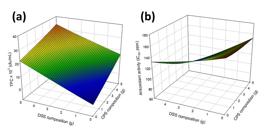
Furthermore, the antioxidant activity based on the IC50 value was obtained in the range of 122.34 – 161.71 ppm. As shown in Figure 2b, the IC50 value was associated with the compositions of DSS and CPS. In general, the antioxidant activity of EC increased with the increase in the use of DSS and CPS. The best antioxidant activity (the lowest of IC50) was shown by EC2 (around 122.34 ppm). As stated by Molyneux (2004), the antioxidant activity can be measured based on the IC5 value. In general, the IC50 values can be categorized into four criteria including weak (151to 200 ppm), medium (100-150 ppm), strong (50-100 ppm) and very strong (< 50 ppm). Based on these criteria, the antioxidant activity of EC2 could be categorized as medium strength. The use of EC2 could inhibit the free radicals around 50% to 70% in a product (Atmani et al., 2009).
3.3 Water contents of Pempek coated with edible coating
As presented in Table 4, the water content of Pempek samples tended to increase with the length of storage time. Based on the duration of storage time, the highest water content was shown by the control (PK) followed by P-EC0, P-EC1, P-EC2, and P-EC3. These results illustrate that the PK adsorbed water more easily than other samples. Consequently, this condition allowed PK to be easily contaminated and overgrown by microbes. Based on the formulation, the water contents in Pempek significantly decreased along with the decrease in the DSS composition in the edible coating. This might be because of the DSS that could prevent the water vapor absorption of Pempek (Lestari et al., 2022). It is in line with the nature of microbial growth in which a high-water content in food can promote microbial growth easily (Alp & Bulantekin, 2021).
Figure 3 presents the phenomenon of the number of microbes caused by water content. There was an anomaly in microbial growth, which tended to be slower in the P-EC0 even though the water content was relatively high compared to P-EC1, P-EC2 and P-EC3. This fact suggests that the antimicrobial characteristics of liquid smoke play a key role in preventing microbial growth. Therefore, liquid smoke can be used as a natural preservative in foods with high water content such as meat (Lingbeck et al., 2014), fish and derivative products (Swastawati et al., 2022).

Visually, it can be seen that the color of Pempek coated with edible coating and control were slightly different. The difference in color was caused by the different colors of the edible coating used. As shown in Figure 4a and 4e, the color of P-EC0 and PK were brighter compared to P-EC1 (Figure 4b), P-EC2 (Figures 4c) and P-EC3 (4(d)). So far, there is no detailed report regarding the chemical correlation of color to the quality of Pempek. However, the colored Pempek of P-EC1 (yellowish), P-EC2 and P-EC3 (dark-yellow) were more interesting than P-EC0 and PK (plain).
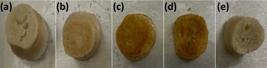
Visualization of Pempek; (a) Pempek with edible coating EC0 (P-EC0), (b) Pempek with edible coating EC1 (P-EC1), (c) Pempek with edible coating EC2 (P-EC2), (d) Pempek with edible coating EC3 (P-EC3), and (e) Pempek control (PK).
3.4 Antioxidant and antimicrobial activities of Pempek coated with edible coating
Microbial growth in the P-EC0 appeared to be lower than that of other samples. In line with the characteristics of the edible coating, microbial growth in the EC0 was lower compared to other formulations. This fact indicates that the use of edible coating can significantly prevent microbial growth (p < 0.05). Additionally, the use of liquid smoke in the edible coating solution was able to inhibit microbial growth in the Pempek sample. However, it should be noted that the addition of DSS and CPS also brought a positive effect on microbial growth. This might be due to the DSS and CPS that were not sterile during the process of making the edible coating. Therefore, there is a need for further research to include a sterilization process before the materials are used in making edible coatings. Figure 5a presents the pattern of microbial growth in Pempek samples based on the composition of DSS and CPS in the edible coating.

Effect of the compositions of CPS and DSS of edible coating on (a) TPC value, and (b) antioxidant activity of Pempek samples.
Similar with the phenomenon of antioxidant activity (IC50) values, P-EC2 showed quite good activity (medium activity), while other samples were categorized as weak activity. Changes in antioxidant activity values were also affected by the composition of DSS and CPS. As shown in Figure 4b, the best antioxidant activity was shown by the P-EC2 in which the edible coating with the composition of CPS and DSS was in the ratio of 1: 1. Furthermore, Table 5 presents the antimicrobial and antioxidant activities. The highest antimicrobial and antioxidant activities were observed around 120.20 x 10³ cfu/g and 144.64 ppm, respectively. This result informed that the feasibility of edible coating was quite good based on the antimicrobial and antioxidant activities. However, the effect of both DSS and CPS on antimicrobial and antioxidant was unclear. Thus, extended research should be conducted to explore and to ensure a suitable composition of DSS and CPS for making edible coating. The composition of LS must also be explored to make much better antimicrobial activity.
4 Conclusion
Antimicrobial and antioxidant activities of edible coatings made from durian seed starch (DSS) and carrot peel starch (CPS) with the addition of liquid smoke (LS) have been successfully evaluated. The TPC value of the edible coating of EC0 showed better capabilities compared to other formulations. Meanwhile, the EC2 showed better microbial activity compared to other formulations. The edible coating based on DSS and CPS with the addition of LS could retard the microbial growth and enrich antioxidant activity in Pempek. The P-EC0 showed the best antimicrobial activity while P-EC2 showed the best antioxidant activity,
Acknowledgements
The author would like to thank the Directorate General of Higher Education, Research and Technology for providing research funds through a research grant with the contract of 107/E5/PG.02.00.PL/2024. Also, thanks to Universitas Ahmad Dahlan and all parties who supported this research.
-
Cite as:
Satar, I., & Rohimati, R. R. (2024). Antimicrobial and antioxidant activities of durian seed and carrot peel starch-based edible coating with the addition of liquid smoke. Brazilian Journal of Food Technology, 27, e2024045. https://doi.org/10.1590/1981-6723.04524
-
Funding:
DRTPM (0557/E5.5/AL.04/2023) (107/E5/PG.02.00.PL/2024)
References
-
Alp, D., & Bulantekin, Ö. (2021). The microbiological quality of various foods dried by applying different drying methods: A review. European Food Research and Technology, 247(6), 1333-1343. http://doi.org/10.1007/s00217-021-03731-z
» http://doi.org/10.1007/s00217-021-03731-z -
Atmani, D., Chaher, N., Berboucha, M., Ayouni, K., Lounis, H., Boudaoud, H., Debbache, N., & Atmani, D. (2009). Antioxidant capacity and phenol content of selected Algerian medicinal plants. Food Chemistry, 112(2), 303-309. http://doi.org/10.1016/j.foodchem.2008.05.077
» http://doi.org/10.1016/j.foodchem.2008.05.077 -
Bajer, D., Janczak, K., & Bajer, K. (2020). Novel starch/chitosan/aloe vera composites as promising biopackaging materials. Journal of Polymers and the Environment, 28(3), 1021-1039. http://doi.org/10.1007/s10924-020-01661-7
» http://doi.org/10.1007/s10924-020-01661-7 -
Baraheng, S., & Karrila, T. (2019). Chemical and functional properties of durian (Durio zibethinus Murr.) seed flour and starch. Food Bioscience, 30, 100412. http://doi.org/10.1016/j.fbio.2019.100412
» http://doi.org/10.1016/j.fbio.2019.100412 -
Bufler, G. (2013). Accumulation and degradation of starch in carrot roots. Scientia Horticulturae, 150, 251-258. http://doi.org/10.1016/j.scienta.2012.11.022
» http://doi.org/10.1016/j.scienta.2012.11.022 -
Charoenphun, N., & Klangbud, W. K. (2022). Antioxidant and anti-inflammatory activities of durian (Durio zibethinus Murr.) pulp, seed and peel flour. PeerJ, 10, 1-15. http://doi.org/10.7717/peerj.12933
» http://doi.org/10.7717/peerj.12933 -
de Menezes, B. B., Frescura, L. M., Duarte, R., Villetti, M. A., & da Rosa, M. B. (2021). A critical examination of the DPPH method: Mistakes and inconsistencies in stoichiometry and IC50 determination by UV–Vis spectroscopy. Analytica Chimica Acta, 1157, 338398. http://doi.org/10.1016/j.aca.2021.338398
» http://doi.org/10.1016/j.aca.2021.338398 -
Desvita, H., Faisal, M., Mahidin, M., & Suhendrayatna, (2023). Natural antimicrobial properties of liquid smoke derived from cocoa pod shells in meatball preservation. South African Journal of Chemical Engineering, 46, 106-111. http://doi.org/10.1016/j.sajce.2023.08.003
» http://doi.org/10.1016/j.sajce.2023.08.003 -
Fareed, N., Nisa, S., Bibi, Y., Fareed, A., Ahmed, W., Sabir, M., Alam, S., Sajjad, A., Kumar, S., Hussain, M., Syed, A., Bahkali, A. H., Elgorban, A. M., & Qayyum, A. (2023). Green synthesized silver nanoparticles using carrot extract exhibited strong antibacterial activity against multidrug resistant bacteria. Journal of King Saud University. Science, 35(2), 102477. http://doi.org/10.1016/j.jksus.2022.102477
» http://doi.org/10.1016/j.jksus.2022.102477 -
Hęś, M., Dziedzic, K., Górecka, D., Jędrusek-Golińska, A., & Gujska, E. (2019). Aloe vera (L.) Webb.: natural sources of antioxidants – A review. Plant Foods for Human Nutrition (Dordrecht, Netherlands), 74(3), 255-265. http://doi.org/10.1007/s11130-019-00747-5
» http://doi.org/10.1007/s11130-019-00747-5 -
Jayesree, N., Hang, P. K., Priyangaa, A., Krishnamurthy, N. P., Ramanan, R. N., Turki, M. S. A., Charis, M. G., & Ooi, C. W. (2021). Valorisation of carrot peel waste by water-induced hydrocolloidal complexation for extraction of carote and pectin. Chemosphere, 272, 129919. http://doi.org/10.1016/j.chemosphere.2021.129919
» http://doi.org/10.1016/j.chemosphere.2021.129919 -
Ju, J., Xie, Y., Guo, Y., Cheng, Y., Qian, H., & Yao, W. (2019). Application of edible coating with essential oil in food preservation. Critical Reviews in Food Science and Nutrition, 59(15), 2467-2480. http://doi.org/10.1080/10408398.2018.1456402
» http://doi.org/10.1080/10408398.2018.1456402 -
Khalid, M. A., Niaz, B., Saeed, F., Afzaal, M., Islam, F., & Hussain, M. (2022). Edible coatings for enhancing safety and quality attributes of fresh produce: A comprehensive review. International Journal of Food Properties, 25(1), 1817-1847. http://doi.org/10.1080/10942912.2022.2107005
» http://doi.org/10.1080/10942912.2022.2107005 -
Leite, A. C. C. O., Cerqueira, M. A., Michelin, M., Fuciños, P., & Pastrana, L. (2023). Antiviral edible coatings and films: A strategy to ensure food safety. Trends in Food Science & Technology, 138, 551-563. http://doi.org/10.1016/j.tifs.2023.06.038
» http://doi.org/10.1016/j.tifs.2023.06.038 -
Lestari, R. B., Permadi, E., & Mulyadi, A. (2022). Application of edible coating of durian seed starch chitosan composites with kesum leaves extracts on microbiological quality and TVB-N of beef sausage. Jurnal Ilmu Dan Teknologi Hasil Ternak, 17(1), 56-63. http://doi.org/10.21776/ub.jitek.2022.017.01.7
» http://doi.org/10.21776/ub.jitek.2022.017.01.7 -
Lingbeck, J. M., Cordero, P., O’Bryan, C. A., Johnson, M. G., Ricke, S. C., & Crandall, P. G. (2014). Functionality of liquid smoke as an all-natural antimicrobial in food preservation. Meat Science, 97(2), 197-206. http://doi.org/10.1016/j.meatsci.2014.02.003
» http://doi.org/10.1016/j.meatsci.2014.02.003 -
Liu, Y., Feng, S., Song, L., He, G., Chen, M., & Huang, D. (2013). Secondary metabolites in durian seeds: oligomeric proanthocyanidins. Molecules (Basel, Switzerland), 18(11), 14172-14185. http://doi.org/10.3390/molecules181114172
» http://doi.org/10.3390/molecules181114172 - Marie, E., Velasco, Z., Grace, N., & Fundador, V. (2020). Development and use of antimicrobial durian starch-carrageenan/carvacrol films. Mindanao Journal of Science and Technology, 18(1), 118-128.
-
Matloob, A., Ayub, H., Mohsin, M., Ambreen, S., Khan, F. A., Oranab, S., Rahim, M. A., Khalid, W., Nayik, G. A., Ramniwas, S., & Ercisli, S. (2023). A review on edible coatings and films: Advances, composition, production methods, and safety concerns. ACS Omega, 8(32), 28932-28944. http://doi.org/10.1021/acsomega.3c03459
» http://doi.org/10.1021/acsomega.3c03459 - Milly, P. J. (2003). Antimicrobial properties of liquid smoke fractions (Thesis). The University of Georgia, Georgia.
- Molyneux, P. (2004). The use of the stable free radical diphenylpicryl-hydrazyl (DPPH) for estimating antioxidant activity. Songklanakarin Journal of Science and Technology, 26(2), 211-219.
-
Montazeri, N., Oliveira, A. C. M., Himelbloom, B. H., Leigh, M. B., & Crapo, C. A. (2013). Chemical characterization of commercial liquid smoke products. Food Science & Nutrition, 1(1), 102-115. http://doi.org/10.1002/fsn3.9
» http://doi.org/10.1002/fsn3.9 -
Nunes, C., Silva, M., Farinha, D., Sales, H., Pontes, R., & Nunes, J. (2023). Edible coatings and future trends in active food packaging–fruits’ and traditional sausages’ shelf life increasing. Foods, 12(17), 1-23. http://doi.org/10.3390/foods12173308
» http://doi.org/10.3390/foods12173308 -
Prabowo, A. S., & Mawarani, L. J. (2020). Edible coating development of durian seeds starch and glucomannan with the addition of essential oil as an antimicrobial to increase shelf life of tomato and cauliflower. IOP Conference Series: Materials Science and Engineering, 833(1), 1-7. https://doi.org/10.1088/1757-899X/833/1/012034
» https://doi.org/10.1088/1757-899X/833/1/012034 -
Priya, K., Thirunavookarasu, N., & Chidanand, D. V. (2023). Recent advances in edible coating of food products and its legislations: A review. Journal of Agriculture and Food Research, 12, 100623. http://doi.org/10.1016/j.jafr.2023.100623
» http://doi.org/10.1016/j.jafr.2023.100623 -
Putri, T. R., Adhitasari, A., Paramita, V., Yulianto, M. E., & Ariyanto, H. D. (2023). Effect of different starch on the characteristics of edible film as functional packaging in fresh meat or meat products: A review. Materials Today: Proceedings, 87, 192-199. http://doi.org/10.1016/j.matpr.2023.02.396
» http://doi.org/10.1016/j.matpr.2023.02.396 -
Rahmawati, S., Pathuddin, Nuryanti, S., Dia Afrianti Sangkota, V., Afadil, Anggraini, & Syawaliah, N. (2022). Characteristics and antioxidants of edible film from durian seeds (Durio zibethinus) with additions to rosella flower extract (Hibiscus sabdariffa L.). Materials Today: Proceedings, 65, 3109-3115. http://doi.org/10.1016/j.matpr.2022.07.162
» http://doi.org/10.1016/j.matpr.2022.07.162 -
Satar, I., & Hidayati, N. (2023). Feasibility of bay leaf (Syzygium polyanthum (Wight) Walp.) as a natural preservative for meatball. Brazilian Journal of Food Technology, 27, 1-11. http://doi.org/10.1590/1981-6723.14323
» http://doi.org/10.1590/1981-6723.14323 -
Soares, J. M., da Silva, P. F., Puton, B. M. S., Brustolin, A. P., Cansian, R. L., Dallago, R. M., & Valduga, E. (2016). Antimicrobial and antioxidant activity of liquid smoke and its potential application to bacon. Innovative Food Science & Emerging Technologies, 38, 189-197. http://doi.org/10.1016/j.ifset.2016.10.007
» http://doi.org/10.1016/j.ifset.2016.10.007 -
Swastawati, F., Agustini, T. W., Riyadi, P. H., Purnamayati, L., Prasetyo, D. Y. B., Setiaputri, A. A., & Sholehah, D. F. (2022). Characteristics of chikuwa with the addition of liquid smoke as an antibacterial agent. Food Research, 6(5), 76-83. http://doi.org/10.26656/fr.2017.6(5).544
» http://doi.org/10.26656/fr.2017.6(5).544 -
Wang, X., Kong, D., Ma, Z., & Zhao, R. (2015). Effect of carrot puree edible films on quality preservation of fresh-cut carrots. Irish Journal of Agricultural and Food Research, 54(1), 64-71. http://doi.org/10.1515/ijafr-2015-0007
» http://doi.org/10.1515/ijafr-2015-0007
Edited by
-
Associate Editor:
Juliano Lemos Bicas.


