 Mallampati score as a tool for obstructive sleep apnea: a cross-sectional study
Abstract
Aim Obstructive Sleep Apnea (OSA) is a common, yet underdiagnosed disorder linked to cardiovascular disease, hypertension, diabetes, and other systemic risks. The Mallampati score, a simple clinical tool for assessing airway anatomy, has been suggested as a cost-effective screening method. This study evaluates the association between Mallampati score and OSA severity in an Oral Medicine clinic setting.
Methods In this prospective observational study, 92 adults attending the Oral Medicine OPD were screened using the Epworth Sleepiness Questionnaire. Mallampati scores were recorded during oral examination and categorized into Classes I–IV. OSA severity was assessed by clinical evaluation and polysomnography. Associations between Mallampati score, OSA severity, BMI, age, systemic diseases, and gender were analyzed.
Results Higher Mallampati classes were associated with increased OSA severity. Each increase in class raised the odds of OSA diagnosis by 7.14% (p = 0.02). Mallampati Class III and IV showed strong correlation with severe OSA. Significant associations were noted with Type 2 diabetes (p = 0.03), hypertension (p = 0.01), asthma (p = 0.04), and heart disease (p = 0.03). Age and BMI positively correlated with Mallampati class, while no significant association was found with gender. Mild systemic conditions such as gastrointestinal or thyroid disorders showed no meaningful relationship (p = 0.90).
Conclusion Mallampati scoring is a reliable, non-invasive, and inexpensive tool to screen high-risk patients for OSA, particularly those with elevated BMI and diabetes. Its routine use in Oral Medicine clinics can aid early identification and referral for confirmatory sleep studies.
Keywords
Sleep apnea syndromes; Sleep apnea, obstructive; Polysomnography; Body Mass Index
Introduction
Sleep Apnea is a sleep disorder characterised by repeated interruptions or pauses in breathing during sleep1. These pauses in breathing can last for a few seconds to minutes and may occur multiple times throughout the night2. The disruptions in breathing result in decreased oxygen levels in the blood and fragmented sleep, leading to poor sleep quality and daytime drowsiness.
There are three primary types of sleep Apnea: Obstructive Sleep Apnea (OSA) – The most common form, where the airway becomes blocked or narrowed due to relaxation of the muscles in the throat during sleep. Central Sleep Apnea (CSA) – Occurs when the brain fails to send proper signals to the muscles that control breathing. Complex Sleep Apnea – A combination of both obstructive and central sleep Apnea. Sleep Apnea can lead to a variety of health issues, including cardiovascular problems, high blood pressure, stroke, diabetes, and impaired cognitive function if left untreated. It is often characterized by symptoms like loud snoring, choking or gasping during sleep, excessive daytime sleepiness, and difficulty concentrating.
OSA affects approximately 9-38% of adults worldwide and about 4-6% of adults in India1. It is seen in individuals with risk factors like Obesity, age (especially middle-aged adults), male gender, smoking, and anatomical factors (e.g., enlarged tonsils, narrow airway). These episodes lead to disrupted sleep, oxygen desaturation, and a variety of systemic complications, including hypertension, cardiovascular disease, stroke, diabetes, and cognitive impairment3. The disorder is often underdiagnosed, due to the absence of noticeable symptoms during the day. The gold standard for diagnosing OSA is polysomnography, a comprehensive and expensive sleep study, but it is impractical to use in dental settings. As a result, there is a growing need for consistent, cost-effective methods to identify individuals at risk for OSA in a dental setting.
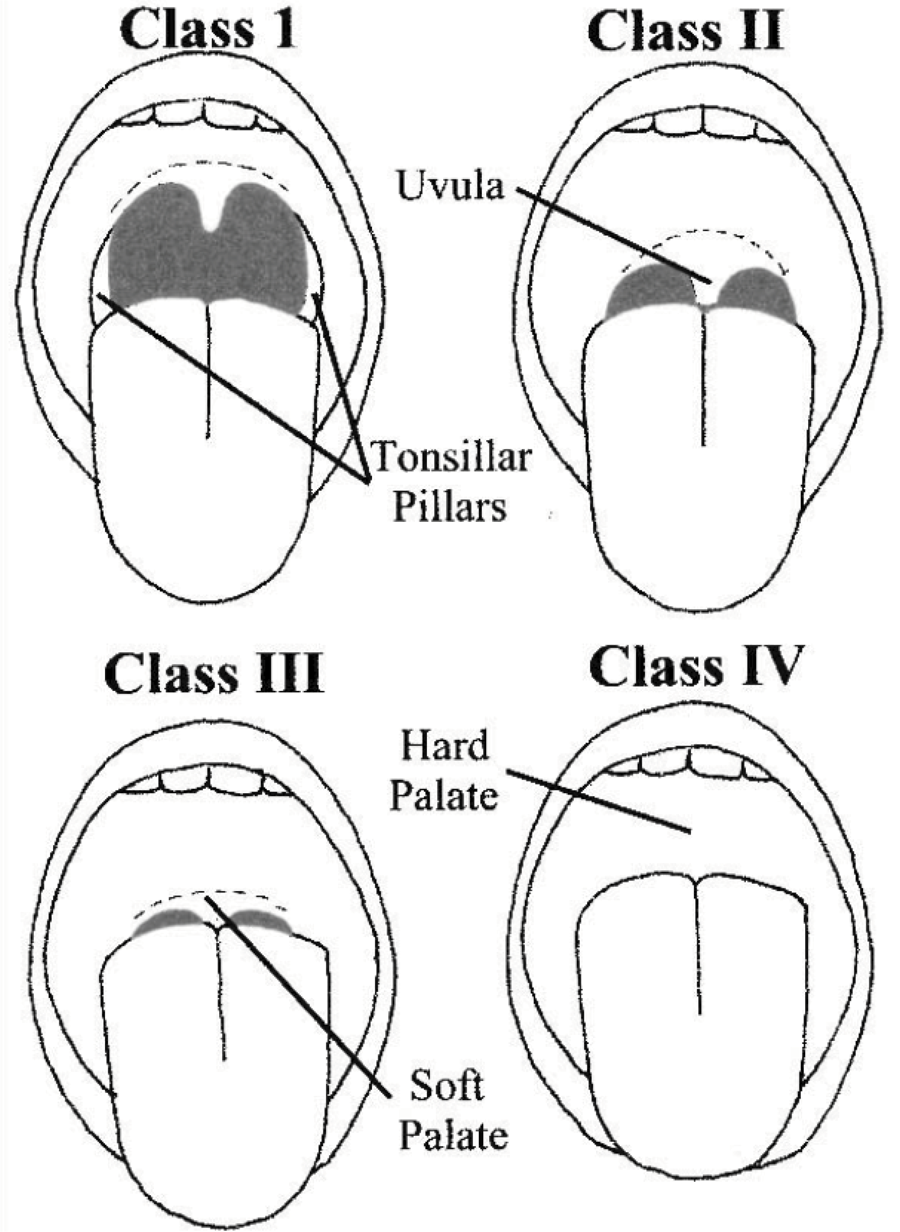
The Mallampati Score (Figure 1) is one of the simplest and most widely used tools for evaluating airway anatomy. The Mallampati classification is a visual assessment method that categorizes the visibility of oropharyngeal structures, including the soft palate, uvula, and tonsils, which are critical areas of airway obstruction in OSA4. The score ranges from Class I (complete visibility of the soft palate and uvula) to Class IV (Obstruction in the visibility of the soft palate). A higher Mallampati score, which indicates limited visibility due to larger or more obstructed airways, has been associated with an increased risk of difficult intubation in anesthesiology settings5-7.
More recently, the Mallampati score has been investigated as a potential screening tool for OSA, with studies suggesting that individuals with higher Mallampati scores may have a greater possibility of airway obstruction during sleep8.
Obstructive Sleep Apnea (OSA) is an extensive and serious condition that often goes undiagnosed, leading to long-term health complications such as cardiovascular disease, hypertension, and diabetes. While polysomnography is the standardized test for diagnosing OSA, it is time-consuming, costly, and not always accessible, especially in resource-limited settings. This creates a significant gap in early diagnosis and intervention, particularly in non-sleep medicine environments like oral medicine clinics.
As OSA continues to rise globally, including in India, an ability to identify and screen individuals efficiently within oral medicine settings could significantly improve patient outcomes. This study aims to explore the relationship between Mallampati score and OSA severity and its correlation with systemic diseases, providing evidence to support its use as a cost-effective, initial screening method for OSA.
Methods
All procedures were performed in compliance with relevant laws and institutional guidelines and have been approved by the appropriate institutional committee. Informed consent was obtained for experimentation with human subjects. The study has been independently reviewed and approved by an Ethical Board. Experiments were undertaken with the understanding and written consent of each participant and according to the World Medical Association Declaration of Helsinki principles. Ethical clearance was obtained from the Institutional Ethical Committee (IRB:246) on 19th November 2024. This manuscript was prepared with the STROBE (Strengthening the Reporting of Observational Studies in Epidemiology) checklist to ensure comprehensive and transparent reporting of observational research findings9 92 patients were included in the study reporting to the Department of Oral Medicine and Radiology. Patients were enrolled after obtaining informed consent. This cross-sectional observational study included adult patients (18 years and older) attending Oral Medicine or dental clinics, with or without suspected Obstructive Sleep Apnea (OSA). A detailed case history, including sleep behaviors such as snoring and sleep position, sleep quantity and quality, and daytime complaints like headaches or difficulty concentrating, as well as medical and family history, lifestyle factors like alcohol and caffeine intake, tobacco use, smoking habits, and medication use, was recorded. A clinical examination was also performed.
Criteria for inclusion were patients aged 18 years or older, patients with clinical signs and symptoms of OSA, had oropharyngeal anatomy that allowed for accurate Mallampati classification, irrespective of the class assigned (I to IV). Evaluators conducted assessments under standardized conditions to ensure methodological consistency and diagnostic reliability across all subjects, and patients willing to participate in the study. To avoid bias in assessing severity, we also included patients who were previously undiagnosed with OSA. We excluded patients who underwent treatment for OSA, were unwilling to participate, patients with history of central sleep apnea (CSA) or other non-obstructive sleep disorders, craniofacial abnormalities (e.g., severe malocclusion, maxillofacial deformities) that may interfere with accurate Mallampati scoring or airway assessment, neurological or psychological conditions that might affect their ability to participate in the study (e.g., severe dementia, cognitive impairments), pregnant or in the post-partum period (due to potential confounding factors and hormonal changes that may affect airway characteristics). Patients with severe systemic conditions, such as uncontrolled cardiovascular disease, that may complicate participation or pose safety risks, and patients who have undergone surgical procedures that alter the anatomy of the upper airway (e.g., tonsillectomy, adenoidectomy) were also excluded.
Patients were recruited from the Oral Medicine clinic based on inclusion criteria, ensuring patient data confidentiality by removing personal identifiers before analysis. The severity of OSA was classified by the Apnea-Hypopnea Index (AHI) into mild, moderate, and severe categories. Exposures that might affect this classification included the Mallampati score (Class I, II, III, and IV). In this study, several potential biases were anticipated, including selection bias, information bias, recall bias, and confounding bias. To address these, methods such as training and standardization of data collection procedures, the use of standardized questionnaires, and blinding of assessors to patient information were implemented. Data confidentiality was maintained by anonymizing patient data. The Mallampati score was assessed during routine oral examinations, and OSA (Obstructive Sleep Apnea) diagnosis involved clinical evaluations, the Epworth Sleepiness Scale, the STOP-Bang questionnaire, and polysomnography to measure the Apnea-Hypopnea Index (AHI). The study size was determined considering the prevalence of OSA, statistical power, and feasibility, aiming for an 80% power with a 0.05 significance level. The Mallampati score, ranging from Class I (full visibility of uvula and soft palate) to Class IV (no visibility), was obtained with the patient sitting upright, mouth open, and tongue protruding. OSA severity was categorized based on the AHI: mild (5-15 events/hour), moderate (15-30 events/hour), and severe (over 30 events/hour)
Results
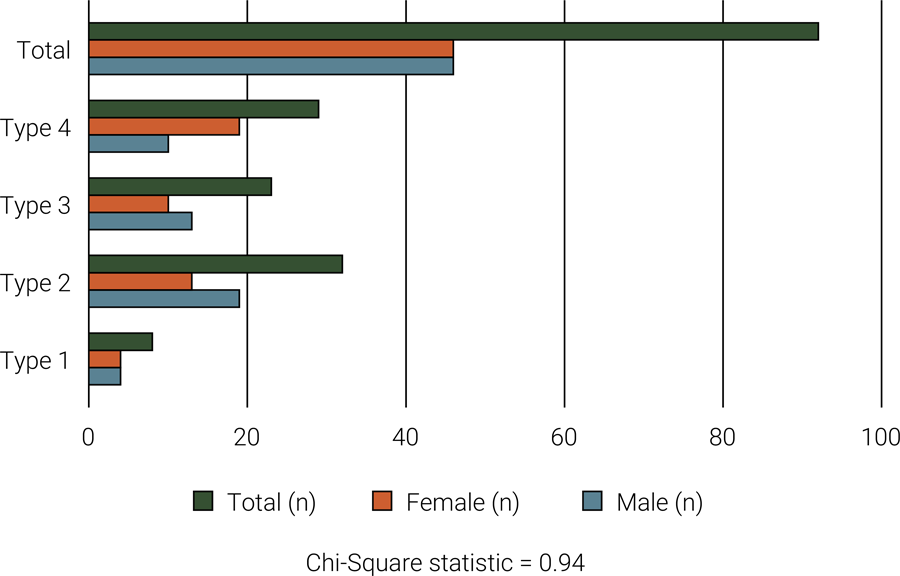
The study on the Mallampati classification and obstructive sleep Apnea (OSA) revealed several significant findings. Firstly, the gender distribution (Table 1) analysis showed no significant association between Mallampati class and gender (p > 0.05), indicating that the patient’s gender does not influence Mallampati classification.
However, the BMI distribution (table 1) presented a strong positive correlation between the Mallampati class and BMI (Spearman’s ρ = 0.75, p < 0.001), suggesting that higher Mallampati classes are associated with higher BMI. Further analysis of systemic diseases shows significant associations between Mallampati class and hypertension, Type 2 diabetes, heart disease, and asthma (p < 0.05) (Table 1). Specifically, higher Mallampati classes were linked to a higher prevalence of these conditions. The distribution of Mallampati classes among patients diagnosed with OSA showed that higher Mallampati classes had significantly higher rates of OSA diagnosis (Chi-square test, p = 0.04). For instance, Class IV had the highest rate of OSA diagnosis at 84%(Table 1) compared to 25% in Class I. The logistic regression analysis supported these findings, showing that each step increase in the Mallampati class increased the odds of OSA diagnosis by 7.14% (p = 0.02). A significant relationship was found between Mallampati score and systemic conditions such as hypertension (p = 0.01), Type 2 diabetes (p = 0.03), heart disease (p = 0.03), and asthma (p = 0.04). Detailed analysis showed that among the participants with a Class IV Mallampati score, 84% had OSA, 62% had hypertension, 48% had Type 2 diabetes, 30% had heart disease, and 25% had asthma. In contrast, among Class I participants, only 25% had OSA, 12% had hypertension, 8% had Type 2 diabetes, 5% had heart disease, and 3% had asthma. These findings highlight a gradient increase in systemic conditions with rising Mallampati classification (table 4)
However, the correlation with mild systemic diseases was not significant (p = 0.090) (table 2) indicating no meaningful relationship between the Mallampati class and mild systemic diseases (Gastrointestinal conditions or Thyroid dysfunctions). The overall statistical analysis underscored the importance of the Mallampati score as a significant predictor of OSA severity. Both Pearson’s correlation (r = 0.63, p < 0.001) and Spearman’s rank correlation (ρ = 0.71, p < 0.001) (table 3) indicated strong positive relationships between Mallampati class and the Apnea-hypopnea index (AHI), confirming that higher Mallampati classes are associated with more severe OSA (table 4).
Discussion
This study aimed to explore the relationship between Mallampati classification, systemic diseases, and key demographic and clinical variables (such as gender, age, BMI, and the presence of hypertension or type 2 diabetes) in a cohort of 92 patients. The Mallampati score has long been considered a valuable screening tool for OSA, as it is a simple, non-invasive method for assessing oropharyngeal anatomy. The Mallampati score is a well-established, simple, and non-invasive method for assessing oropharyngeal anatomy. Our objective was to validate its effectiveness in predicting OSA risk and its association with various health conditions. In line with the findings of previous studies of Nuckton9-12 our study showed a significant association between higher Mallampati scores (Class III and IV) and an increased likelihood of OSA symptoms. These results are consistent with the hypothesis that individuals with a more restricted airway may be more prone to experiencing airway collapse during sleep, a hallmark of OSA.
The higher prevalence of Type 2 diabetes in patients with elevated Mallampati scores may reflect the interrelationship between obesity and insulin resistance. Individuals with increased BMI and fat deposition in the neck and pharyngeal region are more likely to experience upper airway obstruction, which is a hallmark of OSA. There are no studies that have consistently supported the diagnostic value of the Mallampati score. Bins et al.9 (2011) found no clear evidence to suggest that the Mallampati score alone was an effective diagnostic tool for OSA, especially when compared to more direct methods like polysomnography. This aligns with the findings of individuals at risk; its sensitivity and specificity alone are insufficient for definitive diagnosis. Similarly, the Friedman tongue position, as discussed by Friedman et al.3 (2013), was a potential complementary tool in assessing OSA risk. Yu and Rosen’s study supports these findings, demonstrating that the tongue position correlated with OSA symptoms, thus severe tongue positions (Class III and IV) were associated with an increased risk of airway obstruction. Individuals with more restrictive oropharyngeal anatomy (as indicated by higher Mallampati and adverse tongue positions) are at a greater risk of airway collapse during sleep. These structural issues, coupled with factors like obesity and age, increase the likelihood of Apnea and hypopneas that define OSA. These findings were reflected in our cohort, where participants with higher Mallampati scores and adverse Friedman tongue positions exhibited more frequent OSA symptoms. The Mallampati score has been studied as a predictor for obstructive sleep Apnea (OSA) across various research. Nuckton et al.2 (2006) found that higher Mallampati scores (Class III and IV) correlated with an increased likelihood of moderate-to-severe OSA, suggesting its value as a screening tool.
However, the study’s observational and retrospective design limited its ability to establish causality and introduced potential observer bias. Friedman et al.3 (2013) demonstrated that combining the Mallampati score with the Friedman tongue position improved diagnostic accuracy13-16. The meta-analysis was limited by the heterogeneity of the studies included, with variability in scoring methods and diagnostic criteria3. Islam et al.6 (2015) noted that the Mallampati score could help predict surgical outcomes in OSA treatments like maxillomandibular advancement. However, their small sample size and lack of control for co-morbid factors may have confounded the results. Yu and Rosen8 (2020) supported the combined use of the Mallampati score and Friedman tongue position to enhance OSA prediction, but the study was limited by a small sample size and the lack of objective testing like polysomnography. Bins et al.9 (2011) found no significant evidence supporting the diagnostic value of the Mallampati score alone, questioning its sensitivity and specificity. The study’s cross-sectional nature and potentially biased sample were limitations of the study10,17,18. Despite these limitations, the Mallampati score remains a useful preliminary tool for identifying OSA risk, particularly in settings with limited access to advanced tests. However, due to its limitations, it should not be used as a definitive diagnostic tool for OSA. The Mallampati score has long been used as a screening tool for obstructive sleep Apnea (OSA), primarily due to its ease of use and non-invasive nature. Our review of the literature, including the findings from Nuckton et al.2 (2006), Friedman et al.3 (2013), and others, highlights the role of the Mallampati score in identifying patients at higher risk for OSA. Its utility, however, remains a subject of debate, with studies offering variable results regarding its diagnostic accuracy. Our study, which utilizes the Mallampati score as a diagnostic tool for OSA, underscores its value in the early identification of patients at risk for airway issues and OSA, helping to guide treatment planning and anesthesia protocols. Mallampati classification and obstructive sleep apnea (OSA) are essential in clinical dentistry, and oral surgery, with significant implications for both patient management and surgical outcomes. The Mallampati score serves as a predictive tool for airway difficulty during anesthesia, with higher scores indicating a greater likelihood of OSA8,9. In oral surgery, patients with undiagnosed OSA are at higher risk for complications such as airway obstruction during sedation, which can contribute to airway narrowing. Despite its utility, the Mallampati score has limitations, such as a lack of sensitivity and specificity when used as a standalone diagnostic tool. Factors like observer variability and the subjective nature of assessments can impact the results. Future research with larger sample sizes, standardized scoring methods, and objective diagnostic tests is necessary to enhance the predictive accuracy of these tools.
The Mallampati score, especially in higher classes (III and IV), is associated with an increased likelihood of moderate-to-severe OSA. It is most effective when combined with other clinical assessments3,10,11, such as the Friedman tongue position. This combination can significantly improve diagnostic accuracy.
While widely used, the Mallampati score has limitations, such as insufficient sensitivity and specificity for OSA diagnosis, as highlighted by previous studies8,9,12-14. Relying solely on the Mallampati score could lead to misdiagnoses, affecting timely treatment and intervention. Combining the Mallampati score with other diagnostic methods, like the Friedman tongue position or polysomnography, enhances its predictive accuracy. This integrated approach offers a more robust screening tool for identifying at-risk patients. The findings of this study emphasize the importance of Mallampati classification in pre-screening patients for Obstructive Sleep Apnea (OSA). As a simple and non-invasive tool, the Mallampati score can help identify individuals at higher risk for OSA, particularly in patients with higher BMI, obesity, and metabolic diseases like Type 2 diabetes. Given the strong correlation between the Mallampati score and BMI, clinicians should be vigilant in assessing patients with higher Mallampati classes, especially in the context of obesity and other OSA risk factors. The odds ratio of 7.14 from the logistic regression analysis indicates that individuals with higher Mallampati scores are significantly more likely to develop OSA. This highlights the potential of Mallampati classification as a predictive tool for OSA diagnosis, allowing for early intervention and personalized treatment plans. Addressing obesity and related metabolic disorders in these patients may help mitigate the risk of developing severe OSA.
Future studies should focus on the long-term outcomes of patients with higher Mallampati scores and OSA. Research into treatment modalities, such as CPAP therapy or weight loss interventions15-17 could help determine whether addressing the underlying risk factors of OSA, such as obesity and Type 2 diabetes, can improve OSA severity and related systemic conditions. The development of non-invasive, portable diagnostic methods and integration with advanced imaging techniques (e.g., MRI, ultrasound) could provide better insights into the anatomy contributing to OSA18. Our findings underscore the importance of the Mallampati score in identifying individuals at increased risk for OSA, particularly those with associated conditions such as obesity and metabolic disorders. Patients with higher Mallampati scores are more likely to present with obesity, systemic diseases, which are risk factors for OSA. It shows a statistically and clinically significant association with systemic conditions such as hypertension, Type 2 diabetes, heart disease, and asthma, with prevalence increasing by over 30–50% across ascending Mallampati classes. These patterns suggest that higher Mallampati scores are not only indicative of OSA risk but may also reflect broader systemic vulnerability. This strengthens the utility of the Mallampati score as an early, accessible screening tool in identifying patients at risk for both OSA and associated comorbidities in clinical settings. While the Mallampati score cannot diagnose OSA on its own, it can be helpful in a preliminary screening method to identify individuals who may benefit from more advanced diagnostic testing, such as polysomnography.
References
-
1 Kumar HV, Schroeder JW, Gang Z, Sheldon SH. Mallampati score and pediatric obstructive sleep apnea. J Clin Sleep Med. 2014 Sep;10(9):985-90. doi: 10.5664/jcsm.4032.
» https://doi.org/10.5664/jcsm.4032 -
2 Nuckton TJ, Glidden DV, Browner WS, Claman DM. Physical examination: Mallampati score as an independent predictor of obstructive sleep apnea. Sleep. 2006 Jul;29(7):903-8. doi: 10.1093/sleep/29.7.903.
» https://doi.org/10.1093/sleep/29.7.903 -
3 Friedman M, Hamilton C, Samuelson CG, Lundgren ME, Pott T. Diagnostic value of the Friedman tongue position and Mallampati classification for obstructive sleep apnea: a meta-analysis. Otolaryngol Head Neck Surg. 2013 Apr;148(4):540-7. doi: 10.1177/0194599812473413.
» https://doi.org/10.1177/0194599812473413 -
4 Cuschieri S. The STROBE guidelines. Saudi J Anaesth. 2019 Apr;13(Suppl 1):S31-S34. doi: 10.4103/sja.SJA_543_18.
» https://doi.org/10.4103/sja.SJA_543_18 -
5 Takigawa Y, Furuhashi A, Kato M, Yamanaka R, Onda M, Mano M, et al. The association between residual excessive sleepiness and polysomnography parameters in patients with obstructive sleep apnea using oral appliances. J Oral Maxillofac Surg Med Pathol 2024 Sep;36(5):729-34. doi: 10.1016/j.ajoms.2024.02.002.
» https://doi.org/10.1016/j.ajoms.2024.02.002 -
6 Islam S, Selbong U, Taylor CJ, Ormiston IW. Does a patient's Mallampati score predict outcome after maxillomandibular advancement for obstructive sleep apnoea? Br J Oral Maxillofac Surg. 2015 Jan;53(1):23-7. doi: 10.1016/j.bjoms.2014.09.003. Epub 2014.
» https://doi.org/10.1016/j.bjoms.2014.09.003 -
7 Sanders AE, Essick GK, Fillingim R, Knott C, Ohrbach R, Greenspan JD, et al. Sleep apnea symptoms and risk of temporomandibular disorder: OPPERA cohort. J Dent Res. 2013 Jul;92(7 Suppl):70S-7S. doi: 10.1177/0022034513488140.
» https://doi.org/10.1177/0022034513488140 -
8 Yu JL, Rosen I. Utility of the modified Mallampati grade and Friedman tongue position in the assessment of obstructive sleep apnea. J Clin Sleep Med. 2020 Feb;16(2):303-8. doi: 10.5664/jcsm.8188.
» https://doi.org/10.5664/jcsm.8188 -
9 Bins S, Koster TD, Heij AH, Vries AC, Pelt AB, Aarts MC, et al. No evidence for diagnostic value of Mallampati score in patients suspected of having obstructive sleep apnea syndrome. Otolaryngol Head Neck Surg. 2011 Aug;145(2):199-203. doi: 10.1177/0194599811409302.
» https://doi.org/10.1177/0194599811409302 -
10 Avincsal MO, Dinc ME, Ulusoy S, Dalgic A, Ozdemir C, Develioglu ON. Modified Mallampati score improves specificity of STOP-BANG questionnaire for obstructive sleep apnea. J Craniofac Surg. 2017 Jun;28(4):904-8. doi: 10.1097/SCS.0000000000003513.
» https://doi.org/10.1097/SCS.0000000000003513 -
11 Amra B, Pirpiran M, Soltaninejad F, Penzel T, Fietze I, Schoebel C. The prediction of obstructive sleep apnea severity based on anthropometric and Mallampati indices. J Res Med Sci. 2019 Jul;24:66. doi: 10.4103/jrms.JRMS_653_18.
» https://doi.org/10.4103/jrms.JRMS_653_18 - 12 Zreaqat M, Hassan R, Samsudin AR, Stas Y, Hanoun A. Tonsil size and Mallampati score as clinical predictive factors for obstructive sleep apnea severity in children. J Contemp Dent Pract. 2021 Jul 1;22(7):850-3.
-
13 Friedman M, Tanyeri H, La Rosa M, Landsberg R, Vaidyanathan K, Pieri S, et al. Clinical predictors of obstructive sleep apnea. Laryngoscope. 1999 Dec;109(12):1901-7. doi: 10.1097/00005537-199912000-00002.
» https://doi.org/10.1097/00005537-199912000-00002 - 14 Naqvi SU, Shahab A, Zia S, Adil SO, Tariq S. Association of Mallampatti score as a risk factor for obstructive sleep apnea. Rawal Med J. 2018 Jan-Mar;43(1):18-22.
-
15 Kolhe SA, Daokar SS. Clinical assessment of the correlation between tongue pressure, modified Mallampati score, BMI, and obstructive sleep apnea. J Indian Orthod Soc 2024 Apr;58(2):150-7. doi: 10.1177/03015742241221356.
» https://doi.org/10.1177/03015742241221356 -
16 Dalewski B, Kaminska A, Syrico A, Kaldunska A, Palka L, Sobolewska E. The usefulness of modified Mallampati score and CT upper airway volume measurements in diagnosing OSA among patients with breathing-related sleep disorders. Appl. Sci. 2021 Apr;11(9):3764. doi: 10.3390/app11093764.
» https://doi.org/10.3390/app11093764 -
17 Ezri T, Warters RD, Szmuk P, Saad-Eddin H, Geva D, Katz J, et al. The incidence of class "zero" airway and the impact of Mallampati score, age, sex, and body mass index on prediction of laryngoscopy grade. Anesth Analg. 2001 Oct;93(4):1073-5, table of contents. doi: 10.1097/00000539-200110000-00055.
» https://doi.org/10.1097/00000539-200110000-00055 -
18 Abraham JM, Varghese SM, Lukachan GA, Mathai AS. Modified Mallampati score-Does it predict more than a difficult airway? A community-based study assessing the association between modified Mallampati score and obstructive sleep apnea. Arch Med Health Sci. 2023 Jul-Dec;11(2):172-5. doi: 10.4103/amhs.amhs_152_23.
» https://doi.org/10.4103/amhs.amhs_152_23
-
Data availability:
Datasets related to this article will be available upon request to the corresponding author.
-
Funding:
This research did not receive any grant from funding agencies in the public, commercial, or not-for-profit sectors.
Edited by
-
Editor:
Dr. Altair A. Del Bel Cury
Datasets related to this article will be available upon request to the corresponding author.