 Effect of different endodontic sealer activation methods on bond strength and sealer filling quality in the root canal
Abstract
Aims To evaluate the influence of different endodontic sealer activation methods on the bond strength and sealer filling quality.
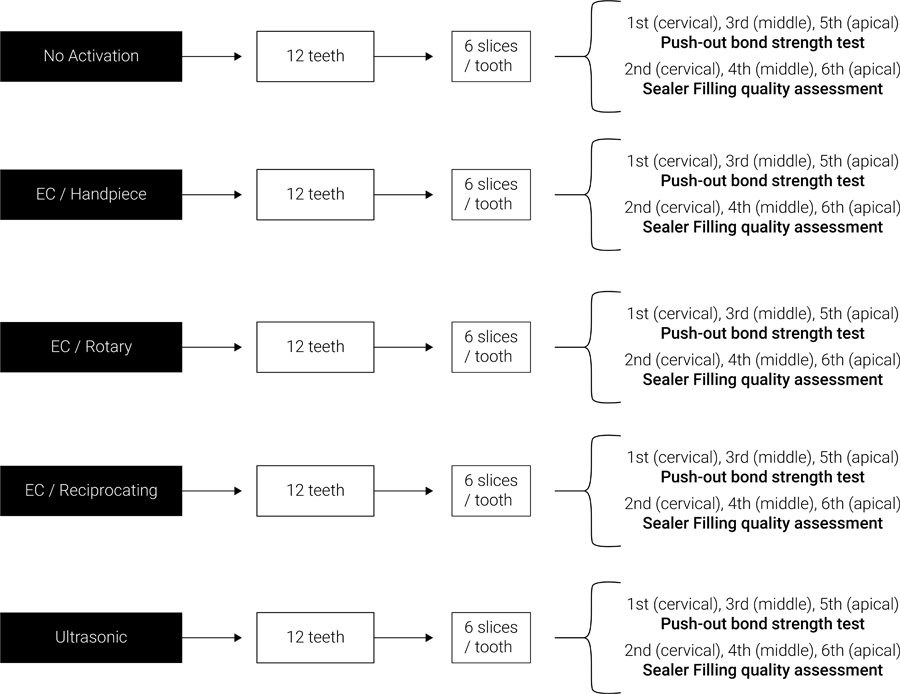
Methods Sixty bovine incisors with similar root anatomy were instrumented using a crown-down technique and randomly distributed into five groups (n = 12) according to the sealer activation protocol: No Activation; Activation using Easy Clean (EC) file attached to a handpiece – EC / Handpiece; EC in endodontic motor in rotary movement – EC / Rotatory; EC in endodontic motor in reciprocating movement – EC / Reciprocating; or Ultrasonic activation. The roots were filled using the lateral condensation technique with gutta-percha and AH Plus sealer, which was activated for 40 seconds, 2 mm short of the working length. Two slices were obtained from each root third: one for push-out and another to assess sealer filling quality using a stereomicroscope. Kruskal-Wallis with Dunn’s post hoc tests were used to compare the different sealer activation methods. Friedman tests were applied for repeated measurements within the same group, comparing root thirds (α = 0.05).
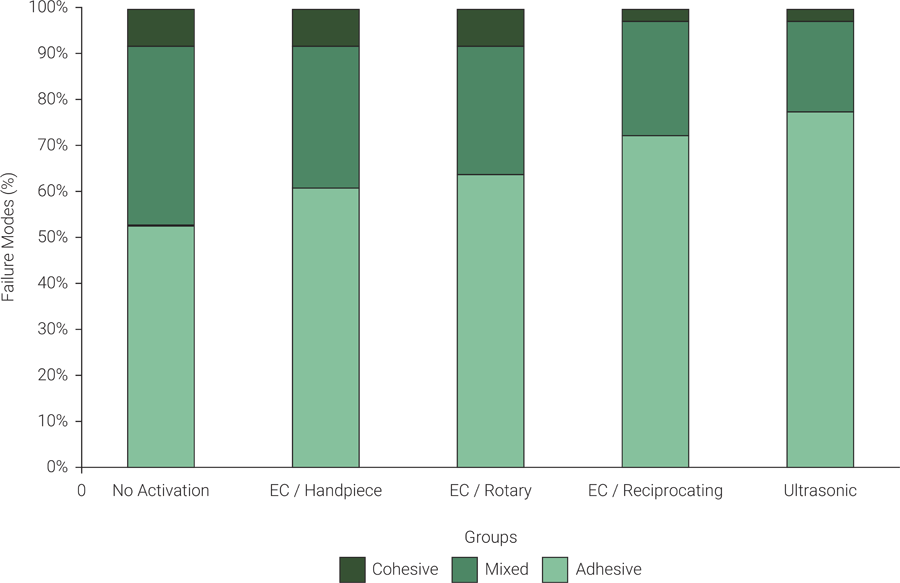
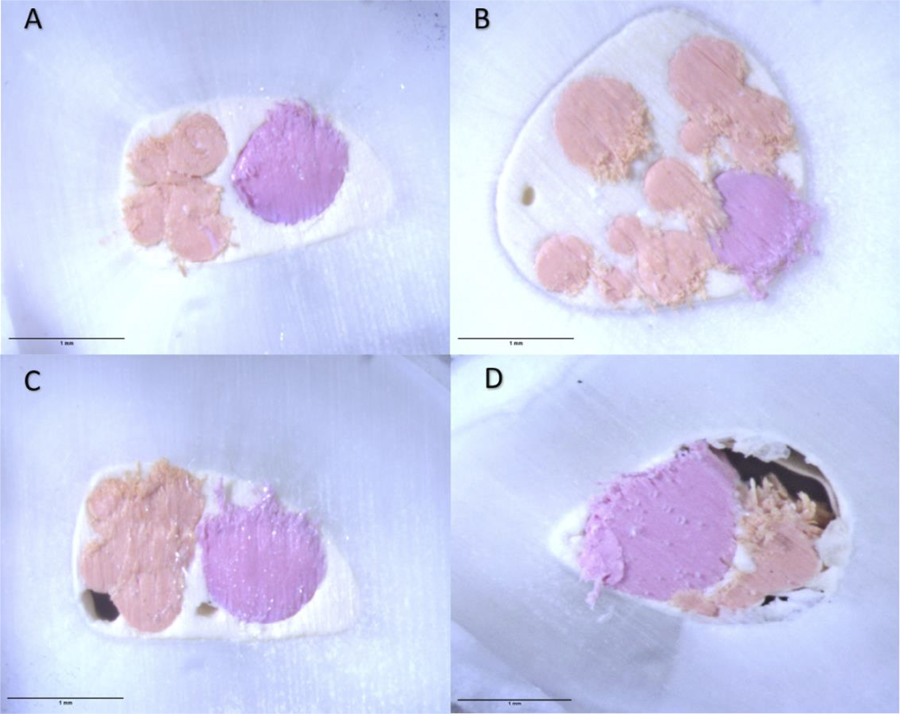
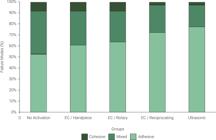
Results Significantly lower values of bond strength and a higher occurrence of voids in the middle and apical thirds were observed when the sealer was not activated (p < 0.05). No significant differences were observed among the activation methods (ultrasonic activation vs. EC activation in different kinematics) for bond strength and sealer filling quality (p > 0.05).
Conclusions Sealer activation, regardless of the method, improve the bond strength of the sealer for root dentin and a result in fewer voids on filling material.
Keywords
Root canal obturation; ultrasonics; endodontics
 Thumbnail
 Thumbnail
 Thumbnail