 Reproductive migration and probable spawning areas of Calophysus macropterus (Pisces: Pimelodidae) in the Amazon basin: a critical review with structured synthesis
Abstract:
We conducted a critical review and structured synthesis on the reproductive migration and probable spawning areas of Calophysus macropterus (Lichtenstein 1819) in the Amazon Basin, integrating multiple lines of evidence. Three hypotheses were compared: H1, spawning in the Andean foothills (600 – 200 masl.) with longitudinal migration; H2, mixed strategy with regional nuclei; H3, mainly local/lateral movements. Heuristic analysis showed convergent support for H1: (i) recurrent absence of mature females in the central Amazon lowlands, in contrast to several reports of females with ripe eggs in western Andes foothills tributaries; (ii) larval/juvenile peaks in rivers of the western Amazon such as the Marañón, Ucayali, and Beni/Madre de Dios at the end of the low water - beginning of the flood, compatible with upstream spawning and downstream drift; and (iii) eco-hydrological and geomorphological plausibility of the fluvial environments in the foothills, consistent with the flood pulse. Triangulation between independent lines and sensitivity analyses (alternative weightings and exclusion of low-quality studies) maintained the hierarchy H1>H2>H3. A four-phase migration model is proposed for C. macropterus. Information gaps remain, but all derived predictions are testable. In terms of management, the results reinforce the need to conserve Andes-Amazon connectivity and the functional integrity of the foothills, where reproductive bottlenecks can have downstream repercussions for C. macropterus and also for the large migratory catfish of the Pimelodidae family.
Keywords:
Andean piedmont; Potamodromous; Piracatinga; Heuristic; Reproductive migration.
Resumo:
Realizamos uma revisão crítica e síntese estruturada sobre a migração reprodutiva e as prováveis áreas de desova de Calophysus macropterus (Lichtenstein 1819) na Bacia Amazônica, integrando múltiplas linhas de evidência. Três hipóteses foram comparadas: H1, desova no sopé dos Andes (600 – 200 m acima do nível do mar) com migração longitudinal; H2, estratégia mista com núcleos regionais; H3, movimentos principalmente locais/laterais. A análise heurística mostrou suporte convergente para H1: (i) ausência recorrente de fêmeas maduras nas terras baixas da Amazônia central, em contraste com vários evidencias de fêmeas com ovos maduros em tributários do sopé dos Andes ocidentais; (ii) picos larvais/juvenis em rios da Amazônia ocidental, como o Marañón, o Ucayali e o Beni/Madre de Dios, no final da estação seca - início da cheia, compatíveis com desova rio acima e deriva rio abaixo; e (iii) plausibilidade eco-hidrológica e geomorfológica dos ambientes fluviais no sopé das montanhas, consistente com o pulso de inundação. A triangulação entre linhas independentes e as análises de sensibilidade (ponderações alternativas e exclusão de estudos de baixa qualidade) mantiveram a hierarquia H1>H2>H3. Um modelo de migração em quatro fases é proposto para C. macropterus. Lacunas de informação permanecem, mas todas as previsões derivadas são testáveis. Em termos de gestão, os resultados reforçam a necessidade de conservar a conectividade Andes-Amazônia e a integridade funcional do sopé das montanhas, onde gargalos reprodutivos podem ter repercussões a jusante para C. macropterus e também para os grandes bagres migratórios da família Pimelodidae.
Palavras-chave:
Sopé andino; Potamódromos; Piracatinga; Heurística; Migração reprodutiva.
Introduction
Identification of spawning areas in migratory fishes is central to determine demographic connectivity and for effective fisheries management in large rivers (Hegg, et al., 2015; Duponchelle et al., 2021; Hermann et al., 2021). In the Amazon, the flood pulse structures life cycles, synchronizes fish reproduction and regulates the drift of eggs/larvae along the river–floodplain gradient (Pavlov et al., 1995; Junk, 1997, 1999). The conservation of fish species such as the large pimelodid catfishes depends on Andes–Amazon connectivity, currently threatened by dams in headwaters and in the Andean foothills (Caldas et al., 2023; Forsberg et al., 2017; Arantes et al., 2019; Damme et al., 2019), with effects on migratory routes, substrates and hydrological regimes (Anderson et al., 2018).
Over the past two decades, the decline of large Amazonian migratory catfishes driven by overfishing, habitat degradation and disruptions to hydrological connectivity (Duponchelle et al., 2021), created a socioecological vacuum that rapidly elevated Calophysus macropterus (piracatinga), as a substitute resource for riverine fishers (Perez & Fabre, 2019; Franco et al., 2016). As stocks of high-value pimelodids collapsed, the piracatinga became an accessible alternative supporting regional and transboundary markets, providing crucial income for many rural communities. However, this expansion was accompanied by controversial practices, particularly the illegal use of caiman and river dolphin carcasses as bait, widely reported by field studies (Iriarte and Marmontel, 2013; Mintzer et al., 2013; Franco et al., 2016), and amplified by media and conservation NGOs. These externalities triggered strong regulatory responses in Brazil and Colombia, resulting in successive fishing moratoria that remain in place.
However, over the years a central controversy has persisted — “where does piracatinga spawn?” The migratory behavior of Calophysus macropterus remains one of the most persistent controversies in Amazonian fish ecology. While some researchers argue that the species performs, at most, short lateral displacements within the central Amazon floodplain (Villamil-Rodríguez et al. 2018), no mature females have ever been documented along the extensive stretch between Iquitos and Parintins, an absence difficult to reconcile with a locally confined reproductive cycle (Perez & Fabre 2003, 2009). The recurrent scarcity of mature females in the central plain (Solimões/Amazonas), contrasting with positive records in Andean tributaries and larval evidence (García-Dávila et al., 2015), maturation in the upper Putumayo and other foothill stretches (Del Aguila et al., 2016; Bonilla-Castillo et al., 2022), as well as species-specific larval pulses detected by barcoding/metabarcoding in the Marañón, Ucayali and Beni rivers at the end of low water/beginning of the flood, are consistent with downstream drift from upstream spawning (García-Dávila et al., 2015; Mariac et al., 2022). This pattern shows some similarity to the migrations of large pimelodid catfishes (Brachyplatystoma spp.), which spawn in the rivers far western basin and export larvae over long distances (Barthem et al., 2017; Mariac et al., 2022), suggesting that C. macropterus may perform potamodromous migration at a larger scale than traditionally assumed, albeit over shorter distances than the goliaths.
If piracatinga is indeed migratory, the question becomes: how far does it travel? Zapata & Usma (2013) classify it as a medium-range migrator, yet even larger pimelodids such as Pseudoplatystoma fasciatum typically migrate no more than ~500 km (Barthem et al., 2017), suggesting an upper bound for species of similar ecology. Conversely, the presence of immature but large individuals (>35 cm TL) in the Rio Branco—a tributary of the Rio Negro—challenges the notion of strictly localized movements. If goliath catfishes undertake continental-scale migration, there appears to be no functional barrier preventing C. macropterus from exhibiting analogous, albeit shorter, longitudinal movements. This unresolved tension underscores the need for a basin-scale reassessment of its migratory dynamics.
The objective of this study was to conduct a critical review with structured synthesis to systematize and organize fragmented biological evidence and to propose a hypothetical model of reproductive migration of Calophysus macropterus in the Amazon Basin. From this model, we derived alternative hypotheses with falsifiable, testable predictions, allowing us to synthesize critically the location of potential spawning areas in a way that is consistent across different lines of evidence.
Methods
We conducted a critical review with structured synthesis, employing principles of transparency in the bibliographic assessment and following the SWIM (Synthesis Without Meta-analysis) guidelines when quantitative estimators were not comparable among studies (Campbell et al., 2020; Page et al., 2021). The synthesis followed four criteria: (a) grouping by type of evidence and by hydro-geomorphological unit; (b) presence of females in advanced maturation stages and detection of eggs/larvae; (c) degree of support or refutation of each hypothesis; and (d) triangulation among independent lines of evidence.
The search process was divided into two stages. (A) The first relied on the author’s own bibliographic corpus on C. macropterus and on migratory catfishes, including methodological references. (B) The second consisted of a complementary search strategy using the following query: (“Calophysus macropterus” OR piracatinga) AND (spawning OR reproduction OR migration OR ichthyoplankton OR eDNA OR telemet* OR otolith* OR hydrogeomorph*), with filters for period/language/region. Searches were conducted between December 1989 and March 2025 using Web of Science, Scopus, PubMed, SciELO/RedALyC, and institutional repositories from Brazil (INPA), Colombia (SINCHI), Peru (IIAP) and Bolivia (IRD), supplemented with citation “snowballing” from key reviews.
Studies were included whenever they provided direct or inferential information on migration/spawning in the Amazon Basin. Methodological quality was evaluated per line of evidence: reproductive biology (gonadosomatic analysis), applying standardized histological terminology when available (Brown-Peterson et al., 2011); DNA/metabarcoding with taxonomic curation; hydro-geomorphology with analytical assessment of the Andean foothills; and otoliths/telemetry with analytical traceability.
1. Review of distributional areas
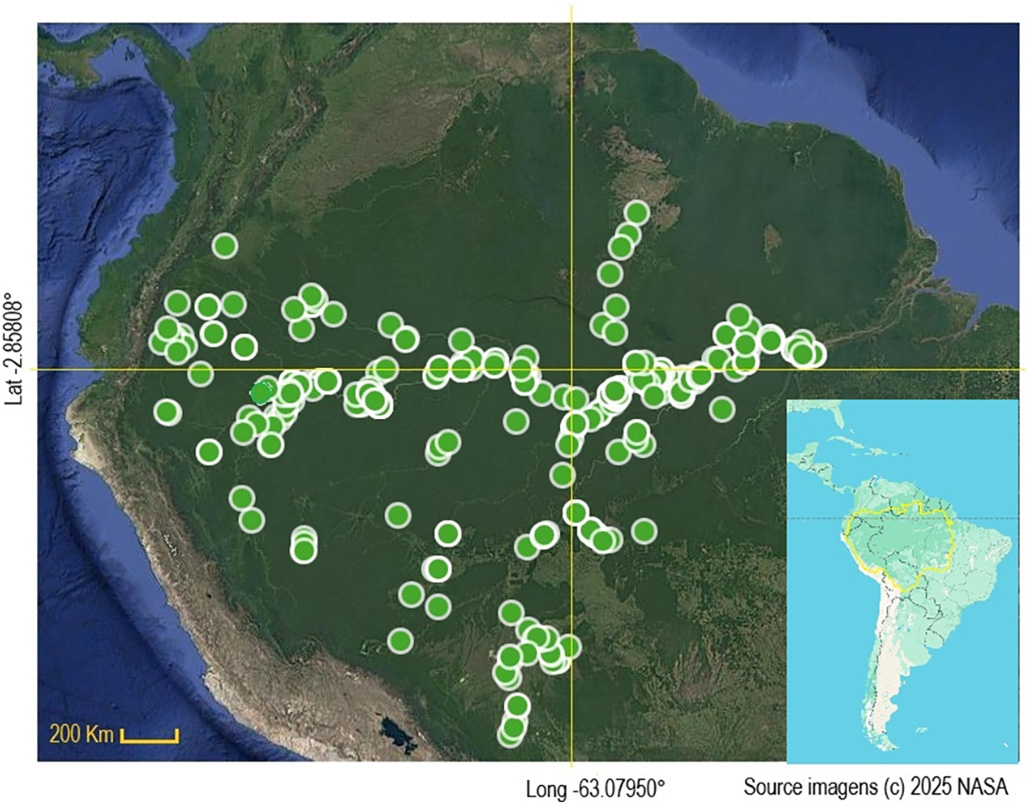
To obtain georeferenced information on the presence of the species, we compiled geographic occurrence data from primary biodiversity repositories such as the Global Biodiversity Information Facility (GBIF), downloading C. macropterus distribution records (GBIF.org, 2025) and complementing them with literature-based inventories. Occurrences were extracted in Darwin Core format and submitted to standardized taxonomic, spatial, and temporal curation. We then cleaned coordinates and metadata (removal of exact duplicates; verification of country/state centroids, municipality seats, institutions, and marine points), adopting rules from Coordinate Cleaner and the GBIF Georeferencing Best Practices (GBIF.org, 2019; Zizka et al., 2019). For records containing only locality names, we georeferenced textual localities using gazetteers (IBGE/GEO_names) and assigned spatial uncertainty (radius in meters) according to GBIF recommendations. Records from the Orinoco River basin, as well as from other areas outside the species’ natural distribution (foreign or captive), were removed. The final dataset yielded a validated distribution map (Figure 1).
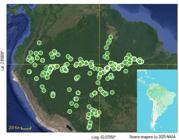
Map of the distribution areas of C. macropterus in the Amazon basin, based on records deposited in GBIF.
2. Application of abductive inference in hypothesis development
Abductive inference is a logical reasoning process that seeks the best possible explanation for incomplete observations or a surprising fact (Chibeni, 1996; Sardi, 2022). It enables the formulation of plausible hypotheses by eliminating less likely possibilities and is useful for innovation and generation of new ideas (Chibeni, 1996; Velázquez-Delgado, 2014). Although abduction does not guarantee absolute truth, it identifies the most plausible explanation based on available knowledge.
3. Establishment of working hypotheses
Using the analogy with migratory pimelodid catfishes as informative—but not deterministic—and considering that C. macropterus exhibits distinct life-history traits (opportunistic scavenger, smaller relative body size), we assumed that use of Andean–Amazon hydrological corridors for accessing spawning areas is not invalidated, especially since even very small species such as Trichomycterus can perform massive migrations (Miranda-Chumacero et al., 2015). Thus, we elaborated three hypotheses:
-
H1)
Spawning in the Andean foothills with longer-range longitudinal migration;
-
H2)
Mixed strategy with multiple regional spawning-ground nuclei (including foothills and other mountain stretches);
-
H3)
Predominantly local/lateral spawning migrations without a substantial Andean component.
4. Heuristic evaluation of hypotheses
To address the fragmented and heterogeneous nature of the evidence on migration and reproduction of C. macropterus, we incorporated a heuristic analysis as a formal step. A Heuristic Matrix (directional coding) was constructed. For every combination Study × Line of Evidence × Hypothesis, we recorded the direction of support: +1 (supports), 0 (neutral), –1 (contradicts), accompanied by a brief technical rationale (finding → rule → implication). This approach makes decision rules explicit and reduces interpretative arbitrariness.
We defined eight a priori heuristics (R1–R8), applicable to each hypothesis:
-
(R1)
Eco-hydrological parsimony;
-
(R2)
Consilience among lines of evidence;
-
(R3)
Hydro-geomorphological plausibility;
-
(R4)
Bioenergetic viability (swimming cost vs. reproductive benefit);
-
(R5)
Temporal coherence with the flood pulse;
-
(R6)
Operational falsifiability (testable predictions);
-
(R7)
Robustness to sampling biases;
-
(R8)
Prudently constrained analogy with Andean migrators (evidence of analogous taxa in comparable contexts).
Each heuristic was scored per hypothesis on a −1/0/+1 scale with textual justification.
To inspect the balance of signals across Hypothesis × Line of Evidence, we calculated weighted sums (direction × quality score) and decomposed them into Supports_w (>0), Neutral_w (=0), and Contradicts_w (<0, reported as positive magnitude) using the Harvest Plot method (Ogilvie et al., 2008). This method synthesizes matrix-coded information to summarize whether available evidence tends to support a given hypothesis across heterogeneous dimensions.
We then applied triangulation of evidence: for each Hypothesis × Line, we counted independent supporting groups (>0), total weight sums, and study lists, indicating strong consilience when ≥2 independent groups converged (see Supplementary Material S1).
To assess the robustness of our findings, we conducted a deterministic sensitivity analysis in which the weights assigned to each quality tier were systematically varied and alternative inclusion/exclusion criteria for low-quality studies were tested. This approach evaluates the stability of the conclusions across multiple weighting scenarios and serves a function analogous to uncertainty-propagation frameworks, though it does not rely on stochastic Monte Carlo simulations. The win frequency (proportion of iterations) was interpreted as comparative support among hypotheses (Saltelli, 2008). All operational details, weighting schemes, scenarios, parameters, and calculus are fully described in Supplementary Material S2.”
Heuristic Analyses
1. Synthesis of geographic distribution
C. macropterus, has a wide distribution in the Amazon basin, occurring in several hydrographic sub-basins, including white, black, and clear water rivers. Its presence is associated with lentic and lotic environments, varying according to the local hydrological regime (Figure 1). Apparently, its eastern limit in the Amazon basin is in the Santarém-Monte Alegre region, in the lower Amazon, due to the absence of records further east.
In white water rivers, such as the Solimões, Purus, Juruá/Iça, and Japurá, the species is more abundant (Zapata & Usma, 2013; García Dávila et al., 2018). On the other hand, the Madeira River, with its main tributaries located in Bolivia (Madre de Dios, Beni, and Mamoré), represents one of the main tributaries of the Amazon, which has significant populations of C. macropterus, also influenced by high biological productivity and connections with the floodplains. In the Negro River and specifically in its main tributary (Branco River), the species is present, but in lower densities, probably due to oligotrophic conditions and the low content of available organic matter (Winemiller & Jepsen, 1998). In clearwater rivers, such as the Tapajós (only in the lower part) and the Tocantins (data not confirmed), C. macropterus is less common, since these systems have lower biological production.
2. Synthesis of migration evidence
-
A)
Reproductive evidence. Sampling across the central plain (Solimões/Amazonas mainstem and adjacent floodplains) has repeatedly failed to record C. macropterus females in advanced maturation or active spawning, although early, immature, and regressing/recovering stages have been documented. This pattern suggests trophic use and/or non-reproductive passage through these environments, given the systematic absence of high values Gonadosomatic Index (GSI), mature oocytes, and post-ovulatory follicles (terminology following Brown-Peterson et al., 2011). In contrast, positive signals of maturation in western tributaries—particularly in the upper Putumayo/Içá and stretches near the Andean foothills—have been reported (Babilônia-Medina, 2021; Bonilla-Castillo et al., 2022). The harvest plot for this line indicated systematic contradiction of H3 in the central plain (multiple independent studies with Score < 0 for local spawning), moderate support for H1 in Andean segments with compatible reproductive stages, and punctual support for H2 where secondary regional nuclei have been suggested.
-
B)
Ichthyoplankton and (meta)barcoding evidence. Larvae and juvenile C. macropterus have been repeatedly detected in the Marañón and Ucayalí rivers, and also in the Beni/Madre de Dios, with peaks at the end of the low-water period and beginning of the flood. This timing is consistent with upstream spawning followed by downstream passive drift, as described for potamodromous migratory catfishes (García-Dávila et al., 2015; Mariac et al., 2021; Miranda-Chumacero et al., 2020). The spatial–temporal pattern aligns with the flood pulse concept (Junk et al., 1989), indicating reproductive synchrony with the rising waters. In the harvest plot, this line showed strong support for H1, residual support for H2 (where regional contributions are assumed), and weak evidence for H3 at basin scale. Acknowledged risks of local false-negatives (effort dependence and molecular reference gaps) underscore the importance of triangulation with other lines of evidence.
-
C)
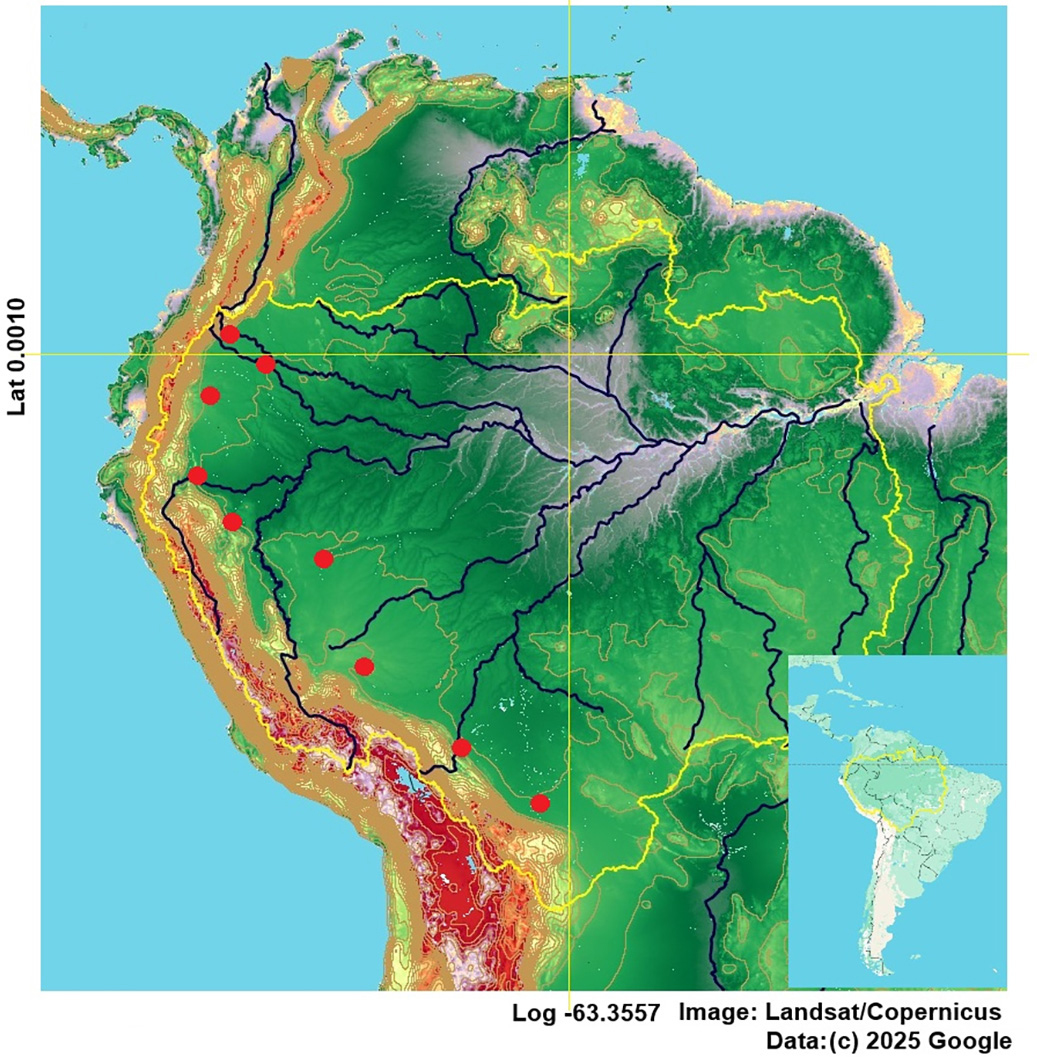
Hydro-geomorphology of the Andean foothills evidence. Mapping of high-energy river segments (slope, valley confinement, gravel/coarse-sand substrates, high oxygenation) identified several favorable stretches in western tributaries at approximately 600–200 masl (Figure 2; Table 1). These segments coincide with axes where larval evidence and gonadal maturation patterns were most consistent (Barthem et al., 2017; see also eco-hydrological principles in McClain and Naiman, 2008). These reaches provide physical plausibility for spawning with embryo–larval development under non-hypoxic conditions, as well as reduced visual predation relative to clearer downstream waters, depending on local turbidity regimes. In the harvest plot, this line contributed strong support for H1 (co-localization of plausible sites with biological signals) and weak-to-moderate support for H2.
-
D)
Otoliths/geochemistry (predictions) evidence. Although no primary otolith microchemistry analysis or ^87Sr/^86Sr datasets currently exist for C. macropterus, indirect evidence and analogy with larger Andean–Amazon migratory species suggest that geochemical signatures consistent with Andean gradients should emerge if H1 is true (McClain and Naiman, 2008; Tabouret et al., 2010; Barthem et al., 2017; Mereles et al., 2025).In our synthesis, studies using otolith microchemistry analysis and geochemical traces applied to other species (Duponchelle et al., 2016; Barthem et al., 2017; Hauser et al., 2019, 2020; Pereira 2019, 2023; Sousa et al., 2016) were fewer in number, yet the predictive rationale aligned with H1 received positive scoring (moderate support, sensitive to future validation). In the harvest plot, this line provided indicative support for H1 (and for H2 when partial mixing is assumed), while remaining neutral/undefined for H3.
-
E)
Genetics/telemetry. Available genetic evidence for C. macropterus does not contradict basin-scale longitudinal migrations; however, spatial resolution and sample coverage remain insufficient to clearly discriminate H1 from H2. Direct telemetry data for the species are absent; inference relies on consistency with patterns from other Andean–Amazon potamodromous fishes (García-Dávila et al., 2015; Zacardi and Queiroz, 2020). In the harvest plot, this line tended toward weak-to-moderate support for H1 (general coherence) and neutrality for H2/H3, reflecting gaps in primary datasets.
-
F)
Fisheries/documentary information. The expanding C. macropterus fishery—associated with opportunistic/scavenger feeding and moratoria/regulatory interventions in key areas—indicates feeding in the central Amazon plain. However, no robust evidence exists for sexual maturation in this region (Perez & Fabré, 2002; Iriarte and Marmontel, 2013; Mintzer et al., 2013; Franco et al., 2016; Vela, 2024). Accordingly, the harvest plot for this line reinforced support for H1 (absence of consolidated spawning signals in the central plain) and marginal support for H2 where regional spawning has been suggested.
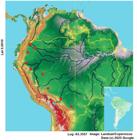
Topographic and hydrographic map of the Amazon Basin (yellow polygon), showing the location of records of adult females (red circles) of C. macropterus, in the Andean foothills.
Georeferenced points of the distribution of C. macropterus in the Andean arc, showing the lower limit of potential spawning areas.
By combining directional coding (supports/neutral/contradicts) and quality weights, the harvest plots indicated predominant support for H1 across four lines (reproductive, larvae/DNA, hydro-geomorphology, fisheries/documental), indicative support in otoliths/geochemistry, and weak-to-moderate support in genetics/telemetry. Independent-line triangulation revealed strong consilience (≥2 independent groups converging) for H1, especially when larval/DNA evidence (upstream peaks at the onset of the flood), foothill plausibility (substrate, oxygenation, discharge, adequate flow velocity), and systematic absence of mature females in the central plain (Perez & Fabré, 2002; Pérez & Fabré, 2009) were considered jointly. For H2, consilience was moderate (regional/localized evidence). For H3, consilience was weak and often dependent on localized series or non-reproductive inferences.
3. Synthesis of the hypothetical migration model
Integrated interpretation of the data supported a hypothetical migratory route for C. macropterus consisting of:
Origin/Feeding (downstream–central plain): intensive use of floodplains and lakes for opportunistic foraging during the dry season and maintenance during the flood;
Ascent (rising waters): entry into western tributaries and progression along the mainstem toward the Andean foothills;
Spawning sites (upstream): stretches of the upper Putumayo/Içá, Ucayalí/Marañón, and Beni/Madre de Dios rivers, with spawning at the end of low water/beginning of the flood and subsequent return to lowland rivers with floodplains;
Export/recruitment: downstream drift and juvenile settlement in river–floodplain ecotones, followed by longitudinal redistribution.
The timing and functional geography of this cycle are consistent with patterns recognized for large Andean–Amazon potamodromous catfishes. Although C. macropterus does not reach the size of goliaths (Brachyplatystoma spp.), the eco-hydrological logic (flood-pulse synchronization; upstream spawning; larval export), spatial signature (western tributaries; foothills), and larval signals support a functional analogy with the “Andean paradigm,” with the caveat that migratory distance is likely shorter (2,500–3,000 km).
This congruence reinforces H1 without imposing equivalence of magnitude. The predominance of H1 implies that C. macropterus is a basin-scale potamodromous species critically dependent on Andes–Amazon longitudinal connectivity and on the integrity of foothill segments for reproductive success. Consequently, pressures such as headwater/foothill dams, substrate and oxygenation degradation, and riparian deforestation tend to produce disproportionate effects on recruitment, with impacts transcending national borders.
Discussion
The available evidence indicates convergent support for the hypothesis that Calophysus macropterus undertakes potamodromous migration with preferential spawning in stretches of the Andean foothills (600–200 masl), synchronized with the rising limb of the flood pulse, followed by downstream larval export and recruitment in river–floodplain ecotones. This interpretation reconciles three robust lines of evidence: (i) the recurrent absence of advanced-maturation females in the central plain, in contrast with punctual positive records in western tributaries, which reduces the plausibility of local spawning nuclei (Bonilla-Castillo et al., 2022); (ii) larval/juvenile peaks detected through barcoding/metabarcoding in the Marañón, Ucayalí and Beni/Madre de Dios rivers at the end of the low-water period and onset of flooding (García-Dávila et al., 2015; Miranda-Chumacero et al., 2020; Mariac et al., 2022); and (iii) the hydro-geomorphological plausibility of foothill segments—flowing, oxygen-rich river stretches with coarse substrates suitable for embryo–larval development (Barthem et al., 2017; Miranda-Chumacero et al., 2020; Miranda-Chumacero and Venticinque, 2022). The analogy with the “Andean paradigm” of goliath catfishes (Brachyplatystoma spp.) is cautious but informative: although the latter may migrate up to 4,000 km, the process (pulse synchronization, upstream spawning, larval export) appears functionally similar. For C. macropterus, however, migratory distances are likely shorter, probably between 2,500 and 3,000 km.
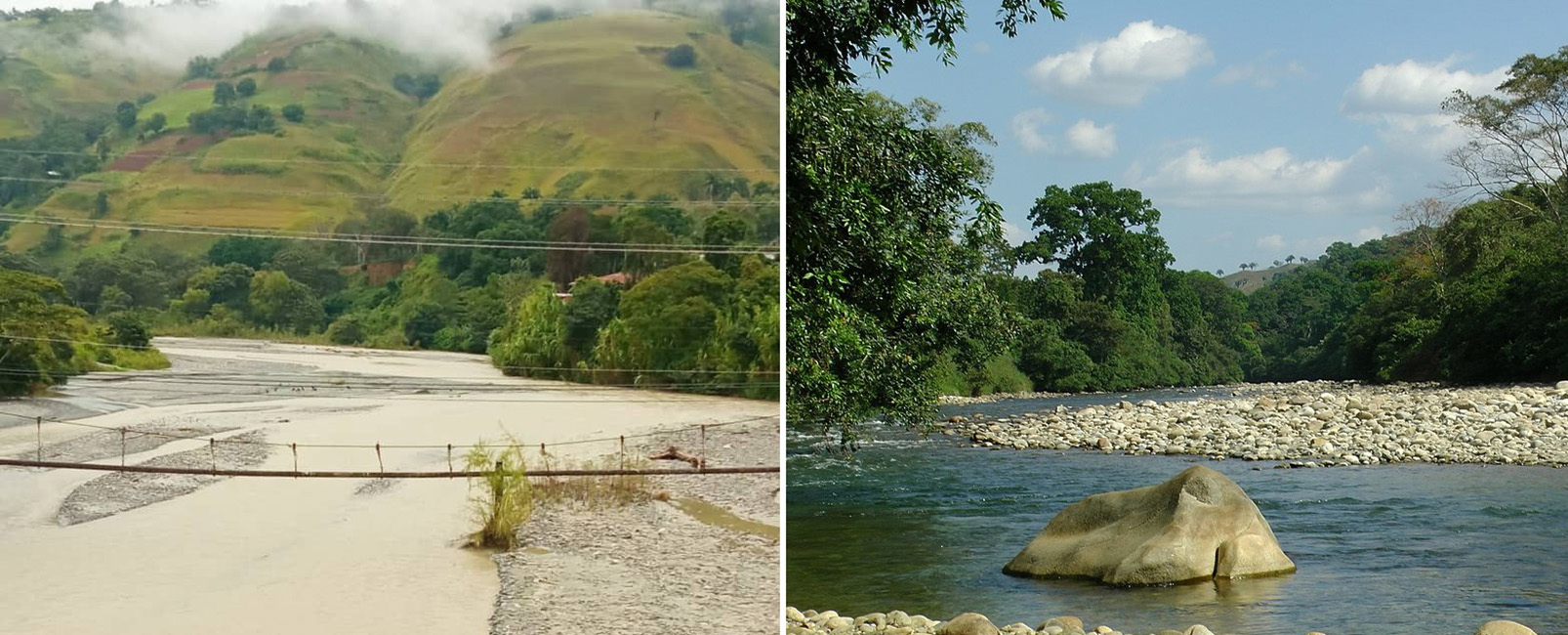
Considering the bio-ecological and hydrodynamic requirements described for large pimelodids (e.g., Brachyplatystoma spp.) and small pimelodids (e.g., Pimelodus spp.) by Miranda-Chumacero et al. (2020), relevant traits include: (a) an average embryonic development period of approximately 15 hours after spawning; (b) fifth-order rivers with relatively fast flows (~2–5 m/s), high oxygenation (>5 mg/L), and temperatures of 23–24°C. Based on sampling points around 200 masl, the spawning site for analogous species could be located 35–50 km upstream (Miranda-Chumacero et al., 2020; Miranda-Chumacero and Venticinque, 2022). Such hydrological dynamics would ensure efficient egg dispersal, reduce predation, and facilitate transport to suitable larval development zones (Figure 3).
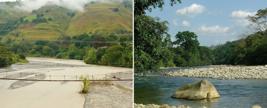
Typical fluvial environments of rivers in the Andean foothills, near the attitudinal floor of 200 to 600 meters above sea level (masl).
This ecotone—previously described for other migratory pimelodids—may therefore also be an important reproductive area for C. macropterus, providing the necessary environmental conditions for spawning. With these ecological and physiographic premises, it is possible to delineate a line of reasoning regarding the environmental conditions required for reproduction in this species. In other words, from a geomorphological standpoint, the hypothetical spawning area of C. macropterus, located in the transitional zone between the Andean foothills and the Amazonian floodplains, is characterized by an abrupt reduction in topographic gradient, which dissipates hydraulic energy and promotes the deposition of coarse sediments. This process forms extensive gravel and coarse-sand bars that subdivide the main channel into multiple branches and meandering sections (Navarro and Maldonado, 2002; Latrubesse et al., 2017).
These environments serve as hydrological migration corridors and as essential sites for spawning and egg incubation (Barthem and Goulding, 2007). They create a complex mosaic of fluvial biotopes, with shallow-water zones, transitional coarse-sand substrates, and deep marginal pools, establishing the physical basis for high aquatic habitat diversity (Goulding et al., 2003). Such habitats offer micro-sites of relatively low predation pressure and facilitate the reception of exported eggs and larvae, as has been documented for other pimelodid species in the Andean foothills (Cañas & Waylen, 2012; Barthem et al., 2017; Mariac et al., 2022). Within this scenario, a foothill–floodplain ecotone provides a functionally coherent setting for spawning and early development of C. macropterus, consistent with the inferred reproductive dynamics.
The functional timing and spatial structure of this cycle are coherent with recognized patterns for Andean–Amazon potamodromous catfishes. Although C. macropterus does not reach the size of goliath species (Brachyplatystoma spp.), the eco-hydrological logic (pulse synchronization, upstream spawning, larval export), spatial signatures (western tributaries, foothill segments), and larval genetic/metabarcoding signals support a functional analogy with the Andean paradigm, with the caveat that migratory distances are likely shorter (2,500–3,000 km). This congruence reinforces H1 without implying equivalence in magnitude. The predominance of H1 indicates that C. macropterus is a basin-scale potamodromous species critically dependent on Andes–Amazon longitudinal connectivity and on the integrity of foothill habitats for its reproductive success.
Consequently, anthropogenic pressures such as headwater and foothill dams, substrate and oxygenation degradation, and riparian deforestation are likely to produce disproportionate impacts on recruitment. These effects transcend national boundaries, given the multi-country nature of the migratory corridor and the downstream dependence of central Amazonian populations on upstream reproductive processes.
Acknowledgments
The author would like to extend their gratitude to Program de Pos-Graduação em Ciências e Tecnologia para Recursos Amazonicos (PPGCTRA), from the Instituto de Ciências Exatas e tecnologia of Universidade Federal do Amazonas (UFAM/ICET), Itacoatiara, Brazil, for all the logistical and infrastructure support received for the execution of this research. Thank the Piracatinga fishermen in Leticia, Colombia, and Tabatinga, Brazil. They also thanks to the ICMBIO/CETAM team in Brazil and the SINCHI Institute in Colombia for all the support received in carrying out this research. This work was carried with financial support from Coordenação de Aperfeiçoamento de Pessoal de nível Superior (CAPES) N° 51400979234, from Brazil, as a visiting professor.
Data Availability
All data used to support the results of this study are available in the supplementary material S1, S2 and S3, available in: https://doi.org/10.5281/zenodo.17840492.
References
-
1. ARANTES, C.C., FITZGERALD, D.B., HOEINGHAUS, D.J. & WINEMILLER, K.O. 2019. Impacts of hydroelectric dams on fishes and fisheries in tropical rivers through the lens of functional traits. Current Opinion in Environmental Sustainability 37:28–40. https://doi.org/10.1016/j.cosust.2019.04.009
» https://doi.org/10.1016/j.cosust.2019.04.009 - 2. BARTHEM, R.B. & GOULDING, M.J. 2007. An Unexpected Ecosystem: The Amazon as Revealed by Fisheries. Asociación para la Conservación de la Cuenca Amazónica (ACCA) & Amazon Conservation Association, Lima.
-
3. BARTHEM, R.B., GOULDING, M., LEITE, R.G., CAÑAS, C., FORSBERG, B., VENTICINQUE, E., PETRY, P., RIBEIRO, M.L.D.B., CHUCTAYA, J. & MERCADO, A. 2017. Goliath catfish spawning in the far western Amazon confirmed by the distribution of mature adults, drifting larvae and migrating juveniles. Scientific Reports 7(1). https://doi.org/10.1038/srep41784
» https://doi.org/10.1038/srep41784 -
4. BABILONIA-MEDINA, J., GUERRERO-GARCÍA, W., GONZALES-FLORES, A., ZUTA-PINEDO, L. & FERNANDEZ-MENDEZ, C. 2021. Reproducción Inducida de Mota Punteada Calophysus macropterus (Lichtenstein, 1819) Con Extracto Pituitario de Carpa en la región de Madre de Dios, Perú Folia Amazonica 30(2):235–242. https://doi.org/10.24841/fa.v30i2.589
» https://doi.org/10.24841/fa.v30i2.589 -
5. BONILLA-CASTILLO, C.A., VASQUEZ, A.G., CÓRDOBA, E.A., HURTADO, G.G., VARGAS, G. & DUPONCHELLE, F. 2022. Life history trait variations and population dynamics of Calophysus macropterus (Siluriformes: Pimelodidae) in two river systems of the Colombian and Peruvian Amazon. Neotropical Ichthyology 20(1):e-210082. https://doi.org/10.1590/1982-0224-2021-0082
» https://doi.org/10.1590/1982-0224-2021-0082 -
6. BROWN-PETERSON, N.J., WYANSKI, D.M., SABORIDO-REY, F., MACEWICZ, B.J. & LOWERRE-BARBIERI, S.K. 2011. A Standardized Terminology for Describing Reproductive Development in Fishes. Marine and Coastal Fisheries 3(1):52–70. https://doi.org/10.1080/19425120.2011.555724
» https://doi.org/10.1080/19425120.2011.555724 -
7. CALDAS, B., THIEME, M.L.,SHAHBOL, N., COELHO, M.E., GRILL, G.; VAN DAMME, P.A., ARANHA, R., CAÑAS, C., FAGUNDES, C.K., FRANCO-LEON, N., HERRERA-COLLAZOS, E.E., JÉZÉQUEL, C., MONTOYA, M., MOSQUERA-GUERRA, F., OLIVEIRA-DA-COSTA, M., PASCHOALINI, M., PETRY, P., OBERDORFF, T., TRUJILLO, F. & TEDESCO, P.A., LAMBERT DE BRITO RIBEIRO, M.C. 2023. Identifying the current and future status of freshwater connectivity corridors in the Amazon Basin. Conservation Science and Practice 5:e-12853. https://doi.org/10.1111/csp2.12853
» https://doi.org/10.1111/csp2.12853 -
8. CAMPBELL, M., MCKENZIE, J.E., SOWDEN, A., KATIKIREDDI, S.V., BRENNAN, S.E., ELLIS, S., HARTMANN-BOYCE, J., RYAN, R., SHEPPERD, S., THOMAS, J., WELCH, V. & THOMSON, H. 2020. Synthesis without meta-analysis (SWIM) in systematic reviews: Reporting guideline. https://doi.org/10.1136/bmj.l6890
» https://doi.org/10.1136/bmj.l6890 -
9. CAÑAS, C.M., & WAYLEN, P.R. 2012. Modelling production of migratory catfish larvae (Pimelodidae) on the basis of regional hydro‐ climatology features of the Madre de Dios Basin in southeastern Peru. Hydrological Processes 26(7):996–1007. https://doi.org/10.1002/hyp.8192
» https://doi.org/10.1002/hyp.8192 -
10. CHIBENI, S.S. 1996. A Inferência Abdutiva e o Realismo Científico. Caderno de Historia e Filosofia da Ciencia 6(1):45–73. https://unicamp.br/~chibeni/public/abdrea.pdf (last access on 23/02/2025)
» https://unicamp.br/~chibeni/public/abdrea.pdf - 11. CIPAMOCHA, C. 2006. Biologia Reproductiva de seis principales bagres (Telesotei: Siluriformes) de importancia comercial del area de imfluencia de Puerto Leguizamo- Rio Putumayo, Amazonas, Colombia (Proyecto Binacional de Cooperacion Internacional). Instituto Amazonico de Investigaciones Cientificas SINCHI.
-
12. DAMME, P.A.V., CÓRDOVA-CLAVIJO, L., BAIGÚN, C., HAUSER, M., DORIA, C.R.D. C. & DUPONCHELLE, F. 2019. Upstream dam impacts on gilded catfish Brachyplatystoma rousseauxii (Siluriformes: Pimelodidae) in the Bolivian Amazon. Neotropical Ichthyology, 17(4):E-190118. https://doi.org/10.1590/1982-0224-20190118
» https://doi.org/10.1590/1982-0224-20190118 - 13. DEL AGUILA, E.A., PINEDO, L.Z. & NAKAGAWA, N. 2016. Conociendo a la “Mota” Calophysus macropterus L.; aspectos básicos para su reproducción en cautiverio. Instituto de Investigaciones de la Amazonía Peruana. Iquitos.
-
14. DUPONCHELLE, F., ISAAC, V.J., RODRIGUES DA COSTA DORIA, C., VAN DAMME, P.A., HERRERA‐R, G.A., ANDERSON, E.P., CRUZ, R.E.A., HAUSER, M., HERMANN, T.W., AGUDELO, E., BONILLA‐CASTILLO, C., BARTHEM, R., FREITAS, C.E.C., GARCÍA‐DÁVILA, C., GARCÍA‐VASQUEZ, A., RENNO, J. & CASTELLO, L. 2021. Conservation of migratory fishes in the Amazon basin. Aquatic Conservation: Marine and Freshwater Ecosystems 31(5):1087–1105. https://doi.org/10.1002/aqc.3550
» https://doi.org/10.1002/aqc.3550 -
15. FONSECA GARCIA, C.H. 2018. Eficiencia de Inductores Hormonales en la Reproducción de Mota Calophysus macropterus (Lichtenstein, 1819), Pimelodidae, Bajo Condiciones Controladas, en la Región San Martin. Universidad Nacional de la Amazonia Peruana. http://repositorio.unapiquitos.edu.pe/handle/20.500.12737/6929 (last access on 13/03/2025)
» http://repositorio.unapiquitos.edu.pe/handle/20.500.12737/6929 -
16. FORSBERG, B.R., MELACK, J.M., DUNNE, T., BARTHEM, R.B., GOULDING, M., PAIVA, R.C.D., SORRIBAS, M.V., JR, U.L.S. & WEISSER, S. 2017. The potential impact of new Andean dams on Amazon fluvial ecosystems. PLOS ONE 12(8):e-0182254. https://doi.org/10.1371/journal.pone.0182254
» https://doi.org/10.1371/journal.pone.0182254 -
17. FRANCO, D., SOBRANE FILHO, S., MARTINS, A., MARMONTEL, M. & BOTERO‐ARIAS, R. 2016. The piracatinga, Calophysus macropterus, production chain in the Middle Solimões River, Amazonas, Brazil. Fisheries Management and Ecology 23(2):109–118. https://doi.org/10.1111/fme.12160
» https://doi.org/10.1111/fme.12160 -
18. GARCÍA DÁVILA, C., SÁNCHEZ RIVEIRO, H., FLORES SILVA, M.A., MEJÍA DE LOAYZA, E., ANGULO CHÁVEZ, C., CASTRO RUIZ, D., ESTIVALS, G., GARCÍA VÁSQUEZ, A., NOLORBE PAYAHUA, C., VARGAS DÁVILA, G., NÚÑEZ, J., MARIAC, C., DUPONCHELLE, F. & RENNO, J.-F. 2018. Peces de consumo de la Amazonía peruana. Instituto de Investigaciones de la Amazonía Peruana. https://repositorio.iiap.gob.pe/items/220ca09d-8b23-4374-a482-168b9236c9fe (last access on 25/03/ 2025).
» https://repositorio.iiap.gob.pe/items/220ca09d-8b23-4374-a482-168b9236c9fe -
19. GARCÍA-DÁVILA, C., CASTRO-RUIZ, D., RENNO, J.-F., CHOTA-MACUYAMA, W., CARVAJAL-VALLEJOS, F.M., SANCHEZ, H., ANGULO, C., NOLORBE, C., ALVARADO, J., ESTIVALS, G., NÚÑEZ-RODRÍGUEZ, J. & DUPONCHELLE, F. 2015. Using barcoding of larvae for investigating the breeding seasons of pimelodid catfishes from the Marañon, Napo and Ucayali rivers in the Peruvian Amazon. Journal of Applied Ichthyology 31:40–51. https://doi.org/10.1111/jai.12987
» https://doi.org/10.1111/jai.12987 -
20. GBIF.org. 2019. GBIF Occurrence Download. GBIF Secretariat. https://doi.org/10.15468/dl.5pmzev
» https://doi.org/10.15468/dl.5pmzev -
21. GBIF.org. 2025. Calophysus macropterus Ocorrence [Dataset]. https://doi.org/10.15468/dl.3aauu2
» https://doi.org/10.15468/dl.3aauu2 - 22. GOULDING, M., BARTHEM, R., BRUCE, F. & ORTEGA, H. 2003. Las fuentes del Amazonas. Ríos, vida salvaje y conservación en el sureste del Perú. Wust Ediciones. Lima.
-
23. HAUSER, M., DORIA, C.R., SANTOS, R.V., GARCÍA-VASQUEZ, A., POUILLY, M., PÉCHEYRAN, C., PONZEVERA, E., TORRENTE-VILARA, G., BÉRAIL, S., PANFILI, J., DARNAUDE, A., RENNO, J., GARCÍA-DÁVILA, C., NUÑEZ, J., FERRATON, F., VARGAS, G. & DUPONCHELLE, F. 2019. Shedding light on the migratory patterns of the Amazonian goliath catfish, Brachyplatystoma platynemum, using otolith 87Sr/86Sr analyses. Aquatic Conservation 29(3):397–408. https://doi.org/10.1002/aqc.3046
» https://doi.org/10.1002/aqc.3046 -
24. HAUSER, M., DUPONCHELLE, F., HERMANN, T.W., LIMBURG, K.E., CASTELLO, L., STEWART, D.J., TORRENTE‐VILARA, G., GARCÍA‐VÁSQUEZ, A., GARCÍA‐DAVILA, C., POUILLY, M., PECHEYRAN, C., PONZEVERA, E., RENNO, J., MORET, A.S. & DORIA, C.R.C. 2020. Unmasking continental natal homing in goliath catfish from the upper Amazon. Freshwater Biology 65(2):325–336. https://doi.org/10.1111/fwb.13427
» https://doi.org/10.1111/fwb.13427 -
25. HEGG, J.C., GIARRIZZO, T. & KENNEDY, B.P. 2015. Diverse Early Life-History Strategies in Migratory Amazonian Catfish: Implications for Conservation and Management. PLOS ONE 10(7):e-0129697. https://doi.org/10.1371/journal.pone.0129697
» https://doi.org/10.1371/journal.pone.0129697 -
26. HERMANN, T.W., STEWART, D.J., BARRIGA SALAZAR, R.E. & COGHLAN, S.M. 2021. Spatial and Temporal Patterns of Pelagic Catfish Larvae Drifting in Lowland Rivers of Eastern Ecuador (Pisces: Siluriformes). Ichthyology & Herpetology 109(4):978–990. https://doi.org/10.1643/i2020019
» https://doi.org/10.1643/i2020019 -
27. IRIARTE, V. & MARMONTEL, M. 2013. Insights on the use of dolphins (boto, Inia geoffrensis and tucuxi, Sotalia fluviatilis) for bait in the piracatinga (Calophysus macropterus) fishery in the western Brazilian Amazon. Journal Cetacean Research Management 13(2):163–173. https://doi.org/10.47536/jcrm.v13i2.546
» https://doi.org/10.47536/jcrm.v13i2.546 - 28. JUNK, W., BAYLEY, P.B. & SPARKS, R. 1989. The Flood Pulse Concept in River flood plain System. Canadian Journal of Fisheries and Aquatic Sciences, 106:110–127.
-
29. JUNK, W.J. (Org.). 1997. The Central Amazon Floodplain (Vol. 126). Springer Berlin Heidelberg. https://doi.org/10.1007/978-3-662-03416-3
» https://doi.org/10.1007/978-3-662-03416-3 -
30. JUNK, W.J. 1999. The flood pulse concept of large rivers: Learning from the tropics. River Systems 11(3):261–280. https://doi.org/10.1127/lr/11/1999/261
» https://doi.org/10.1127/lr/11/1999/261 -
31. LATRUBESSE, E.M., ARIMA, E.Y., DUNNE, T., PARK, E., BAKER, V.R., D’HORTA, F.M., WIGHT, C., WITTMANN, F., ZUANON, J., BAKER, P.A., RIBAS, C.C., NORGAARD, R.B., FILIZOLA, N., ANSAR, A., FLYVBJERG, B., & STEVAUX, J.C. 2017. Damming the rivers of the Amazon basin. Nature 546 (7658):363–369. https://doi.org/10.1038/nature22333
» https://doi.org/10.1038/nature22333 -
32. MARIAC, C., RENNO, J., CARMEN GARCIA‐DAVILA, VIGOUROUX, Y., MEJIA, E., ANGULO, C., CASTRO RUIZ, D., ESTIVALS, G., NOLORBE, C., GARCÍA VASQUEZ, A., NUÑEZ, J., COCHONNEAU, G., FLORES, M., ALVARADO, J., VERTIZ, J., CHOTA‐MACUYAMA, W., SÁNCHEZ, H., MIRANDA, G. & DUPONCHELLE, F. 2022. Species‐level ichthyoplankton dynamics for 97 fishes in two major river basins of the Amazon using quantitative metabarcoding. Molecular Ecology 31(6):1627–1648. https://doi.org/10.1111/mec.15944
» https://doi.org/10.1111/mec.15944 -
33. MCCLAIN, M.E. & NAIMAN, R.J. 2008. Andean Influences on the Biogeochemistry and Ecology of the Amazon River. BioScience, 58(4):325–338. https://doi.org/10.1641/B580408
» https://doi.org/10.1641/B580408 -
34. MERELES, M.D.A., SOUSA, R.G.C., POUILLY, M., PEREIRA, D.V., MC COMB, G.L., FILIZOLA, N., SANTOS, R.V. & FREITAS, C. E.D.C. 2025. Distribution of strontium isotopes (87Sr/86Sr) in surface waters of the Amazon basin: A basis for studies on provenance. Science of the Total Environment 965:e-178630. https://doi.org/10.1016/j.scitotenv.2025.178630
» https://doi.org/10.1016/j.scitotenv.2025.178630 -
35. MINTZER, V.J., MARTIN, A.R., DA SILVA, V.M.F., BARBOUR, A.B., LORENZEN, K. & FRAZER, T.K. 2013. Effect of illegal harvest on apparent survival of Amazon River dolphins (Inia geoffrensis). Biological Conservation 158:280–286. https://doi.org/10.1016/j.biocon.2012.10.006
» https://doi.org/10.1016/j.biocon.2012.10.006 -
36. MIRANDA-CHUMACERO, G., ÁLVAREZ, G., LUNA, V., WALLACE, R.B. & PAINTER, L. 2015. First observations on annual massive upstream migration of juvenile catfish Trichomycterus in an Amazonian River. Environmental Biology of Fishes 98(8):1913–1926. https://doi.org/10.1007/s10641-015-0407-3
» https://doi.org/10.1007/s10641-015-0407-3 -
37. MIRANDA-CHUMACERO, G., MARIAC, C., DUPONCHELLE, F., PAINTER, L., WALLACE, R., COCHONNEAU, G., MOLINA-RODRIGUEZ, J., GARCIA-DAVILA, C. & RENNO, J.-F. 2020. Threatened fish spawning area revealed by specific metabarcoding identification of eggs and larvae in the Beni River, upper Amazon. Global Ecology and Conservation 24:e-01309. https://doi.org/10.1016/j.gecco.2020.e01309
» https://doi.org/10.1016/j.gecco.2020.e01309 -
38. MIRANDA-CHUMACERO, G. & VENTICINQUE, E. 2022. Identificación de potenciales zonas de desove del dorado (Brachyplatystoma rousseauxii) en la cuenca Madeira. Neotropical Hydrobiology and Aquatic Conservation 3(1). https://doi.org/10.55565/tmti7029
» https://doi.org/10.55565/tmti7029 - 39. NAVARRO, G. & MALDONADO, M. 2002. Geografía ecológica de Bolivia: Vegetación y ambientes acuáticos. Centro de Ecología y Difusión Simón I. Patiño, Bolivia.
-
40. OGILVIE, D., FAYTER, D., PETTICREW, M., SOWDEN, A., THOMAS, S., WHITEHEAD, M. & WORTHY, G. 2008. The harvest plot: A method for synthesising evidence about the differential effects of interventions. BMC Medical Research Methodology 8(1):8. https://doi.org/10.1186/1471-2288-8-8
» https://doi.org/10.1186/1471-2288-8-8 -
41. PAGE, M.J., MCKENZIE, J.E., BOSSUYT, P.M., BOUTRON, I., HOFFMANN, T.C., MULROW, C.D., SHAMSEER, L., TETZLAFF, J.M., AKL, E.A., BRENNAN, S.E., CHOU, R., GLANVILLE, J., GRIMSHAW, J.M., HRÓBJARTSSON, A., LALU, M.M., LI, T., LODER, E.W., MAYO-WILSON, E., MCDONALD, S., … & MOHER, D. 2021. The PRISMA 2020 statement: An updated guideline for reporting systematic reviews. https://doi.org/10.1136/bmj.n71
» https://doi.org/10.1136/bmj.n71 - 42. PAVLOV, D.S., NEZDOLIY, V.K., URTEAGA, A.K. & SANCHES, O.R. 1995. Downstream migration of juvenile fishes in the rivers of Amazonian Peru. Journal of Ichthyology 35:227–248.
-
43. PEREIRA, L.A., CASTELLO, L., HALLERMAN, E., ORTH, D. & DUPONCHELLE, F. 2024. Migratory Ecology of Pseudoplatystoma fasciatum in the Amazon Basin Revealed by Otolith Microchemistry. Diversity 16:e-378. https://doi.org/10.3390/d16070378306
» https://doi.org/10.3390/d16070378306 -
44. PEREIRA, L.A., CASTELLO, L., ORTH, D.J., DUPONCHELLE, F. & HALLERMAN, E.M. 2023. A Synthesis of the Ecology and Conservation of Pseudoplatystoma Catfishes in the Neotropics. Fishes 8:e-306. https://doi.org/10.3390/fishes8060
» https://doi.org/10.3390/fishes8060 -
45. PEREIRA, L.A., SANTOS, R.V., HAUSER, M., DUPONCHELLE, F., CARVAJAL, F., PECHEYRAN, C., BÉRAIL, S. & POUILLY, M. 2019. Commercial traceability of Arapaima spp fisheries in the Amazon basin: can biogeochemical tags be useful? Biogeosciences 16(8):1781–1797. https://doi.org/10.5194/bg-16-1781-2019
» https://doi.org/10.5194/bg-16-1781-2019 - 46. PEREZ, A. & FABRÉ, N.N. 2002. Aspectos Reproductivos de la Piracatinga Calophysus macropterus Lichtenstein, 1819 (Pisces: Pimelodidae) en la Amazonia Central. Boletin del Centro de Investigaciones Biologicas, 36(3):266–288.
-
47. PÉREZ, A. & FABRÉ, N.N. 2009. Seasonal growth and life history of the catfish Calophysus macropterus (Lichtenstein, 1819) (Siluriformes: Pimelodidae) from the Amazon floodplain. Journal of Applied Ichthyology 25(3):343–349. https://doi.org/10.1111/j.1439-0426.2008.01104.x
» https://doi.org/10.1111/j.1439-0426.2008.01104.x -
48. PEREZ, A. 2025. Data for Heuristic Analysis for Calophysus macropterus [Data set]. Zenodo. https://doi.org/10.5281/zenodo.17840492
» https://doi.org/10.5281/zenodo.17840492 -
49. SALTELLI, A. (Org.). 2008. Global sensitivity analysis: The primer. John Wiley. https://doi.org/10.1002/9780470725184
» https://doi.org/10.1002/9780470725184 -
50. SARDI, G.C. 2022. Algumas distinções entre a abdução de Charles S. Peirce e a inferência da melhor explicação de Gilbert Harman. Problemata 13(2): 62–80. https://doi.org/10.7443/problemata.v13i2.60451
» https://doi.org/10.7443/problemata.v13i2.60451 -
51. SOUSA, R.G.C., HUMSTON, R. & FREITAS, C.E.C. 2016. Movement patterns of adult peacock bass Cichla temensis between tributaries of the middle Negro River basin (Amazonas–Brazil): an otolith geochemical analysis. Fisheries Management and Ecology 23(1):76–87. https://doi.org/https://doi.org/10.1111/fme.12166
» https://doi.org/10.1111/fme.12166 -
52. TABOURET, H., BAREILLE, G., CLAVERIE, F., PÉCHEYRAN, C., PROUZET, P. & DONARD, O.F.X. 2010. Simultaneous use of Strontium:Calcium and Barium:Calcium ratios in otoliths as markers of habitat: Application to the European eel (Anguilla anguilla) in the Adour basin, South West France. Marine Environmental Research 70(1):35–45. https://doi.org/10.1016/j.marenvres.2010.02.006
» https://doi.org/10.1016/j.marenvres.2010.02.006 -
53. VAN DAMME, P. 2023. Fisheries of the scavenger species Calophysus macropterus: A case study in the Bolivian Amazon. Hidrobiologia Neotropical y Conservacion Aquatica 4(1). https://doi.org/10.55565/nhac.khgu2735
» https://doi.org/10.55565/nhac.khgu2735 -
54. VELA, A.E. 2024. Aspectos Ecológicos y Pesqueros de la especie Calophysus macropterus “MOTA” para el Aprovechamiento Sostenible en la Región Ucayali. Universidad Nacional de Ucayali. https://hdl.handle.net/20.500.14621/7034 (last access on 18/08/2025)
» https://hdl.handle.net/20.500.14621/7034 -
55. VELÁZQUEZ DELGADO, G. 2014. El rol de la abducción peirceana en el proceso de la investigación científica. Revista Valenciana, de Estudios de Filosofía y Letras, 15, 189. https://doi.org/10.15174/rv.v0i15.68
» https://doi.org/10.15174/rv.v0i15.68 - 56. VILLAMIL-RODRÍGUEZ, J.F., CORTÉS-ÁVILA, L. & RODRÍGUEZ-PULIDO, J.A. 2018. General information about the migration of Amazonian catfish from the Pimelodidae family and its relationship with hydrological cycles. Orinoquia. 22(2):224–235.
-
57. WINEMILLER, K.O. & JEPSEN, D.B. 1998. Effects of seasonality and fish movement on tropical river food webs. Journal of Fish Biology 53:267–296. https://doi.org/10.1111/j.1095-8649.1998.tb01032.x
» https://doi.org/10.1111/j.1095-8649.1998.tb01032.x - 58. ZACARDI, D. M. & QUEIROZ, D. 2020. Spatial and seasonal variability of ichthyoplankton in the middle Solimões and lower Japurá rivers, Central Amazon, Brazil. Pan-American Journal of Aquatic Sciences 15(4):258–271.
- 59. ZAPATA, L.A. & USMA, J.S. 2013. Guía de las especies Migratorias de la Biodiversidad en Colombia. Peces. (Vol. 2). Bogotá.
-
60. ZIZKA, A., SILVESTRO, D., ANDERMANN, T., AZEVEDO, J., DUARTE RITTER, C., EDLER, D., FAROOQ, H., HERDEAN, A., ARIZA, M., SCHARN, R., SVANTESSON, S., WENGSTRÖM, N., ZIZKA, V. & ANTONELLI, A. 2019. COORDINATECLEANER: Standardized cleaning of occurrence records from biological collection databases. Methods in Ecology and Evolution 10(5):744–751. https://doi.org/10.1111/2041-210X.13152
» https://doi.org/10.1111/2041-210X.13152