 Upcycling food waste flour into dry wheat pasta production: Impact on color, textural and structural characteristics, and in vitro protein and starch digestibility
ABSTRACT
Food waste is a major problem from both socio-economic and moral standpoints. The management of food waste has been mainly oriented to the production of feedstock, products of pyrolysis, and biomaterials. An important fraction of food waste is still useful and safe, and efforts should be made to upcycle it into the chain of food production for human consumption. This work explored adding food waste flour (FWF) to wheat flour for obtaining 0 (control), 5, 10, and 15 g of FWF. 100 g-1 of flour. FWF was obtained from food left-overs of a university canteen made-up by mainly scraps of bread, tortilla, different types of meats, greens, fruit, beans and sauces. The addition of FWF to wheat flour affected the cooking quality, color, texture, structural features, starch and protein in vitro digestibility of the pasta. The relative crystallinity increased due to the formation of V-type crystalline structures. Firmness and elasticity decreased, caused by the weakening of the gluten network due to the presence of non-gluten waste protein. Protein digestibility increased from 75.87% for the control pasta to 87.96% for the pasta with 15% FWF, but the rapidly digestible starch fraction decreased from 32.24% for the control to 10.17% for the pasta with 15 g FWF.100 g-1. Overall, these results should be seen as a first approach towards the systematic use of food waste for the preparation of pasta.
Index terms:
Food waste; pasta processing; digestibility; wheat products
RESUMO
O desperdício de alimentos é um grande problema tanto do ponto de vista socioeconômico quanto moral. A gestão do desperdício de alimentos tem sido principalmente orientada para a produção de matéria-prima, produtos de pirólise e biomateriais. Uma fração importante do desperdício de alimentos ainda é útil e segura, e esforços devem ser feitos para reciclá-la na cadeia de produção de alimentos para consumo humano. Este trabalho explorou a adição de farinha de desperdício de alimentos (FWF) à farinha de trigo para obter 0 (controle), 5, 10 e 15 g de FWF. 100 g-1 de farinha. A FWF foi obtida de sobras de alimentos de uma cantina universitária composta principalmente por restos de pão, tortilha, diferentes tipos de carnes, verduras, frutas, feijões e molhos. A adição de FWF à farinha de trigo afetou a qualidade do cozimento, cor, textura, características estruturais, amido e proteína digestibilidade in vitro da massa. A cristalinidade relativa aumentou devido à formação de estruturas cristalinas do tipo V. A firmeza e a elasticidade diminuíram, causadas pelo enfraquecimento da rede de glúten devido à presença de resíduos proteicos não-glúten. A digestibilidade proteica aumentou de 75,87% na massa controle para 87.96% na massa com 15% de FWF, mas a fração de amido de rápida digestão diminuiu de 32,24% no controle para 10.17% na massa com 15 g de FWF.100 g-1. No geral, esses resultados devem ser vistos como uma primeira abordagem para o uso sistemático de resíduos alimentares no preparo de massas.
Termos para indexação:
Desperdício de alimentos; processamento de massas; digestibilidade; produtos de trigo.
Introduction
The United States Environmental and Protection Agency - EPA (2025) reported that about one-third of the food produced for human consumption is lost or wasted globally, amounting to over one billion tons and $940 billion USD in economic losses annually. This staggering food loss represents around 20% of all the food available for consumption. It is estimated 60% of the food loses occur in households, 28% in food services establishments, and 12% in the retail sector. Food waste is a complex problem, that requires integrating innovative technological solutions, consumer behavior, and public policies in a unified approach for reducing waste at all stages (Carvalho, Lucas, & Marta-Costa, 2025). Fruits and vegetables (Gonçalves, Anjos, & Guiné, 2025), cooked food (Rahman et al., 2024), and bread (Dymchenko, Geršl, & Gregor, 2023), are consistently listed as the most wasted foods globally. However, also dairy, meat, and marine foods have been reported as the highest generating food wastes in many countries (Rakesh & Mahendran, 2024). Various innovative approaches for transforming food waste into valuable products have been reported in recent years, including: Feedstock for insects, which are then processed into high-protein feed for livestock and fish (Hancz et al., 2024); Pyrolysis and gasification for producing bio-oil, biochar and syngas (Kaur, Singh, & Singh, 2023); Bioactive compounds for producing biomaterials (Liu et al., 2023), among many others.
However, the upcycling of food waste for the preparation of food for human consumption is an ongoing research topic of interest for the food science community. It is considered by ample society strata as a way of readdressing a complex web of ethical concerns, that at the core, stem from the injustice of some societies wasting resources while other societies suffer from scarcity (Sustainabilty Directory, 2025). Thus, in this way, food wastes have been recently redirected to the production of new food products for humans. Bhatt et al. (2020) reported that high protein flour was obtained from spent grain from beer brewing, powdered soup from carrot peels, and antioxidants, fiber, and other beneficial compounds from discarded coffee fruits, which were then used in infusions and beverages. Lytton (2024) reported that 40 million tons of spend grain discarded from beer production and 54 million tons of coffee grounds are being re-spun into flour, energy bars and gin. Fernández-Peláez et al. (2021) studied the physical properties of flours supplemented with stale bread. Guerra-Oliveira, Belorio and Gómez (2021) replaced wheat flour with 50% bread waste flour in cookie manufacture. Garcia-Hernandez et al. (2023) recycled stale bread waste as an ingredient for fresh oven‐baked white bread.
Kanwal et al. (2024) found that presently only 10-15% of food waste is repurposed, but has the potential to be increased to 30-40% within a short time framework by enhancing practices and technologies. Thus, approaches for incorporating of food waste into the preparation of fresh food products is a must that should be explored. Results in this line should contribute to utilize food waste within a circular economy framework, while imprinting our society with a conscious awareness regarding the moral problem of responsible food consumption. Nevertheless, there is a lack of information regarding the recycling of complex or mixed food wastes as those generated in households, restaurants and canteens, into new foods for human consumption.
Thus, in this work, food waste was collected from a student canteen, and a flour (FWF) was obtained and blended with commercial wheat flour (0, 5, 10 and 15 g FWF per 100 g wheat flour) for producing dried fettuccini type pasta. The pasta was cooked and evaluated for color, texture, structural features, in vitro protein and starch digestibility. In this way, it is hoped that this work helps to provide insights of how complex FWFs may influence pasta´s overall properties and quality parameters, and how these may be modulated.
Material and Methods
Materials
Durum wheat semolina (ash 0.6 %, lipid 1.4 %, protein 13 %, starch 73 %, amylose 32 % of starch, in dry basis (d.b.)) was obtained from San Blas Milling Co. (Puebla, Mexico). All the chemical reagents used were analytical grade, and distilled water was used.
Food waste obtention and flour preparation
Food waste was collected from the student canteen at the Tecnologico de Estudios Superiores de Ecatepec (Ecatepec, State of Mexico, Mexico). The canteen menu is made up by basic fare, such as cooked pasta, rice, potato, green beans and beans, shredded chicken, beef fried tacos, beef hamburgers, ham and cheese sandwiches, sliced tomato, and chili sauces. The food preparation waste trimmings and unconsumed food by the students was collected during 4 days (June 3 to 6, 2024), cut into manually into small pieces (about 2 cm per side), and frozen. At day 5 (June 7, 2024) the frozen wastes were thawed at room temperature, pooled together, and spread out (avoiding food overlap) on stainless steel drying trays (33.02 cm long ´ 30.48 cm wide, 2 mm perforations on a square pitch). The drying trays were put into an air circulation Magic Mill Dehydrator (model MFD-7070; Chestnut Ridge, NY, USA), operated at 75 °C (setting 4), until constant weight was achieved (~ 24 h). The dried waste was ground (Mortar Grinder RM200, Retsch GmbH, Haan, Germany), and the resulting food waste powder (FWF) was passed through a standard nylon sieve (400 mesh, 0.038 mm aperture, Javener, Shenzhen, China). The FWF was stored in sealed bags under refrigeration conditions (~ 5 °C) until required for use. The average proximal analysis of the FWF was as follows: 6.92 ± 0.53 g.100 g-1 moisture, 3.85 ± 0.33 g.100 g-1 ashes, 53.22 ± 6.04 .100 g-1 total carbohydrates, 20.81 ± 1.18 .100 g-1 total protein, 11.90 ± 0.78 .100 g-1 lipids and 3.3 ± 0.12 .100 g-1 raw fiber (American Association of Cereal Chemists - AACC, 2000). The proximal analysis for FWF was done in duplicate on 2 independent pooled food wastes from 10 individual trays with left-overs each during the mid-day meal. Non-significant (p < 0.05) differences were found, indicating that the variability between samples was low.
Pasta preparation
Different variations of flour blends were prepared by adding 0, 5, 10 and 15 g of FWF to the required quantity of commercial wheat flour for obtaining 100 g of total flour blend. The flour variations (100 g) were put into a mixing bowl of a Laboratory Spiral Mixer (SP-800-J Alpha Simet Group, Germany), added with 75 g of distilled water, and mixed at low speed for 5 min. The resulting doughs were let to stand for 10 min, laminated and cut into Fettuccini-type strips (thickness 1.0 mm) using a manual pasta making machine (stainless steel triple cutter, Whaleco, Inc., Tarrytown, NY, USA). The pasta strips were dried at 42°C for 3h, until constant weight was reached (approx. 11 g.100 g-1) and stored in airtight polyethylene bags (Ziploc®) at room temperature. The pasta variations were coded as Px where the “x” represents the amount of FWF contained in the flour blend (0, 5, 10 and 15 g.100 g-1).
Scanning electron microscopy (SEM)
Cooked pasta sections of 5 cm in length were dried overnight at 50 °C and directly laid on circular aluminum stubs with carbon tapes. Samples were analyzed in a Phenom XL (Thermo Fisher Scientific, USA) benchtop SEM at 1000× magnification with an accelerating voltage of 10 kV.
Cooking quality
The pasta cooking quality was evaluated by determining the optimal cooking time (OCT) and cooking loss (CL) according to 66-50 method, which specifies using boiled distilled water (aprox. 92 °C in Mexico City) in an open container (American Association of Cereal Chemist - AACC, 2000). OCT refers to the time taken for the pasta to achieve “al dente” point, i.e., when the white center of the ungelatinized starch had just disappeared. CL refers to the percentage of residue remaining of the original pasta sample after evaporation of the cooking water (Martinez et al., 2007). Water absorption capacity (WAC) was determined in 10 g of pasta samples (cut into 5 cm long stripes), and cooked in 300 mL of boiling distilled water for 8 min. The pasta was then drained and rinsed with 20 mL of distilled water at room temperature for 2 min. The samples were weighed after reaching room temperature. WAC was determined as the ratio between (weight of drained cooked pasta - weight of raw pasta) to weight of raw pasta.
Color
The color analysis of the pasta cooked under OCT was determined with an Accu-ProbeTM model HH06 colorimeter (Pittsford, NY, USA) obtaining the following color coordinates: lightness (L*), indicative of the whiteness of the sample (value of 0 for black and of 100 for white), parameter a* indicative of the chromatic variation between red (+a) and green (-a), and b* indicative of chromatic variation from yellow (+b) to blue (-b). The cooked pasta samples were levelled out in Petri dishes and the color coordinates L*, a*, b* were measured at three points on the surface of the pasta samples in a reflectance regime (Vargas Huamán et al., 2024).
Texture
Pasta variations cooked at OCT conditions were subjected to texture profile analysis (TPA) using the CT3-4500 texturometer (AMETEK Brookfield, Middleborough, MA, US) within 5 min of being cooked. Measurements were carried out with a cylindrical probe (TA 4/1000, DD 38.1 mm, L 20 mm) and a 10 kg load cell. The samples were compressed to 75% of their original height. Two compression cycles were made. Hardness, cohesiveness, elasticity and chewiness of the cooked pasta were determined. Texture Pro CT software was used to record data and estimate texture parameters.
Fourier transform infrared spectroscopy (FTIR)
The infrared spectra of the pasta cooked at OCT conditions and superficially dried with an absorbent paper were recorded using FTIR spectrophotometer (Spectrum GX, PerkinElmer FTIR Spectrometer, Waltham, MA, USA). The paste samples were subjected to attenuated total reflectance (ATR) spectroscopy in the range of 4000-400 cm-1, and then the analysis regions were selected.
X-ray diffraction (XRD)
Pasta cooked at OCT was dried at 35 oC for 24 h, ground and sieved to obtain an average particle size of 0.038 nm. A Siemens diffractometer-model D-500 (Karlsruhe, Germany) with copper sand (λ=1.54 Å) of coupled primary and secondary ace was used. Intensities were measured within a range of diffraction angles of 4-50° with a step size of 0.003° and a measurement time of 0.3 s per step (Lopez-Rubio et al., 2008). The crystallinity content was calculated using the Hermans-Weidinger method.
In vitro digestibility
Pasta was cooked at OCT and cooled with water. The in vitro starch digestibility was carried out as reported by (López-Vázquez et al., 2025). Fettuccini samples (500 mg) were dispersed in deionized water (25 mL) and heated to 37 °C in a water bath with agitation for 30 min. Then, 0.75 mL of pancreatic 𝛼-amylase solution (30 U mL−1) was added, continuing with the agitation at 37 °C. Aliquots were taken at 0, 20, and 120 min to determine the glucose content using the dinitrosalicylic acid (DNS) method. The total starch content (TS) was determined, and starches were classified based on the rate of hydrolysis as rapidly digestible starch (RDS) (digested within 20 min), slowly digestible starch (SDS) (digested between 20 and 120 min), and resistant starch (RS) (undigested after 120 min) (López-Vázquez et al., 2025).
In vitro protein digestibility (PD) was done as disclosed by Rosas-Rivas et al. (2025). Fettuccini samples (~25 mg) were added to distilled water (10 mL) and homogenized at 6000 rpm for 1.5 min (Ultra-Turrax® T50 basic IKA Works, Inc., 164 Wilmington, DE, USA) coupled to an ice bath for preventing temperature increase. The pH of the mixture was adjusted to 8.0 with 1 N NaOH. One mL of enzyme aqueous solution 1.58 mg of trypsin (Type IX, 15,310 units.mg-1 solid), 3.65 mg of chymotrypsin (Type II, 0.048 units.mg-1 solid), and 0.45 mg of peptidase (P-7500, 115 units.mg-1 solid) was added. Digestion was allowed to proceed for 10 min at 37 °C. After addition of 1 mL (1.48 mg) of bacterial protease (Type XIV, 4.4 units.mg-1 solid) solution, the digestion was continued for 9 min at 55 °C. The pH value was registered and used to estimate the PD according to the following expression: PD(%) = 234.84−22.56 pH, where the pH is that of the suspension.
Statistical analysis
All analyses were carried out in duplicate, unless otherwise stated. A randomized experimental design was used. Results were reported as the mean ± standard error (SD). Data were analyzed by one-way analysis variance (ANOVA) (p< 0.05) followed by LSD multiple comparison procedure to determine significant differences among samples. (SPSS v. 20, IBM, NY).
Results and Discussion
Morphology
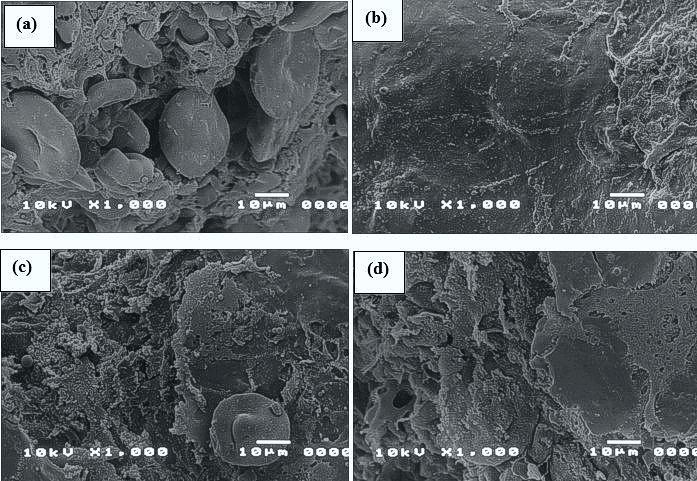
Figure 1a shows the surface morphology of the pasta made with only durum wheat flour (P0). The starch granules are partially covered by wheat proteins (e.g., gluten network and lipids) (Singh et al., 2021). Large holes are due to air bubbles formed during the laminating pasta process (Jia et al., 2023). The addition of FWF produced a more homogeneous covering of the starch granules by the non-gluten proteins contained in the FWF. Khatkar et al. (2021) pointed out that a higher concentration of proteins in the pasta interfered with the swelling of starch granules, as they compete for the water absorption with the starch granules during cooking. Figures 1b to 1d (P5, P10, and P15, respectively) show that non-gluten proteins formed a thick layer of protein which induced the formation of a firmer pasta.

Scanning electron microscopy (SEM) images of pasta (Px) cooked at the optimal cooking time (OCT). The “x” in Px represents the amount of FWF contained in the flour blend (0, 5, 10, and 15 g.100g-1).
Cooking quality
OCT of P0 was of 9.70 min and increased with the addition of FWF, achieving a value of 13.38 min for P15. FWF increased the total protein content in the pasta variations, which prolonged the pasta cooking time. Starch granules surfaces covering was more extended due to the availability of extra non-gluten proteins (Figure 1). Chandrashekar and Kirleis (1988) postulated that a more extensive coverage of the starch granules by protein hinders starch gelatinization after forming inclusion complexes with amylose, increasing the required cooking time of protein-rich pasta. Kaur et al. (2013) reported that the OCT of pasta supplemented with plant proteins showed a significant increase, which was attributed to the formation of a physical barrier that obstructed the gelatinization of starch granules. Surasani et al. (2019) formulated pasta enriched with protein isolate from pangas processing waste and found that the OCT increased with the addition of protein.
The addition of the FWF decreased the cooking loss from 4.91 g.100 g-1 for P0 to 4.13 g.100 g-1 for P15. This effect can also be attributed to the formation of a strong protein network around the starch granules, which caused a reduced the swelling of the granules. The water absorption capacity (WAC) exhibited a similar trend by decreasing from 22.18% for P0 to 18.23% for P15. This suggests that the protein and lipids added with the FWF induced the formation of a strong network that hindered the transport of water into the starch granules. Lu, Guo and Zhang (2009) found that lipids, in particular polar lipids, played an important role in the formation of pasta with strong structure. It was suggested that lipids form inclusion complexes with starch chains, which limited both the cooking loss and the water absorption capacity.
Color
The color characteristics of the pasta variations are presented in Table 1. All the color parameters tended to be significantly (p < 0.05) affected by the addition of FWF. Higher contents of FWF produced a decrease in L* from 49.29 for P0 to 39.75 for P15. With regards to parameter a*, P0 exhibited a value of -0.52 meaning it displayed a slight green color, which became slightly redder as FWF was increased, achieving value of 0.74 for P15. The values of parameter b* were positive, indicative that all the pasta variations were characterized by a yellow color, but yellowness tended to decrease with increasing FWF content, varying from 24.21 for P0 to 17.23 for P15. The drop in L* with increased FWF content could probably be ascribed to the higher protein content in these variations. Vijaykrishnaraj, Bharath Kumar and Prabhasankar (2015), Desai, Brennan and Brennan (2019), and Singh et al. (2021) reported that lightness values of pasta decreased when supplemented with green mussel protein, fish protein powder and pangas protein isolate, respectively. The shift in a* from a slight negative value to a slight positive value could be due to the contribution of the carotenoids contained in the tomato and chili wastes, and hemoglobin of meat wastes. Likewise, the decrease in parameter b* could be attributed to the contribution of the starchy wastes which tended to produce a flour with a less intense yellow color probably caused by the fried tortilla waste fraction, which tends to undergo Maillard reactions. Vargas Huamán et al. (2024) stated that the main elements that define the color in pasta are the carotenoids (contributing mainly to the red-yellow color) and the duration and temperature of cooking which can alter the Maillard reaction.
Texture
It is generally agreed that texture is the main criterion for assessing the overall quality of cooked pasta (Sozer & Kaya, 2008), and a desirable texture for cooked pasta is achieving a state known as “al dente”, which means it is firm to the bite, not sticky or mushy, and has a pleasant chewiness. Table 2 shows that the textural characteristics values of hardness, chewiness, cohesiveness and elasticity underwent significant (p < 0.05) decreases as the FWF content was higher. At this point, it must be stated that hardness and firmness are frequently used interchangeable in food texture, with hardness associated with greater resistance to deformation, than firmness which more suited for describing moderate resistant to deformation, so that literature backup is used indistinctly for the hardness discussion (Rosenthal, 2024). Hardness decreased from 0.92 N for P0 (control without FWF flour addition) to 0.31 N for P15. The decrease in the pasta hardness has been linked to the interaction between protein-starch components. FWF contains relatively high amounts of non-gluten protein (~ 20.81 g.100 g-1) which can interfere with the formation of a strong gluten network, which is crucial for pasta hardness (Nilusha et al., 2019). Pasta cohesiveness, or how well its pieces stick together, is mainly due to the protein network formed during the mixing and extrusion process and the subsequent gelatinization of starch during cooking. When the protein network is made in its majority by gluten as in P0, it acts as a binder, holding the starch granules in place. But the addition of increasing quantities of mostly non-gluten proteins of FWF, cover to a greater extent surface of the starch granules. This extra coverage tends to interfere with the starch granules water absorption, causing a reduced gelatinization upon cooking. Starch gelatinization releases compounds such as amylose that contribute to cohesiveness (Wang et al., 2024). Pasta made with a blend of wheat flour and non-gluten-containing flour will generally exhibit lower elasticity than pasta made solely from wheat flour. Gluten, a protein found in wheat, is responsible for the elasticity and extensibility of pasta dough. When non-gluten flours are added, they tend to lack this protein, leading to a less elastic and potentially more brittle final product (Hussein et al., 2023). A higher pasta elasticity generally leads to a more desirable “chewy” texture in pasta. This is because elasticity, allows the cooked pasta to stretch and rebound, resisting deformation when chewed, which is perceived as chewiness (Kulamasari et al., 2022).
XRD
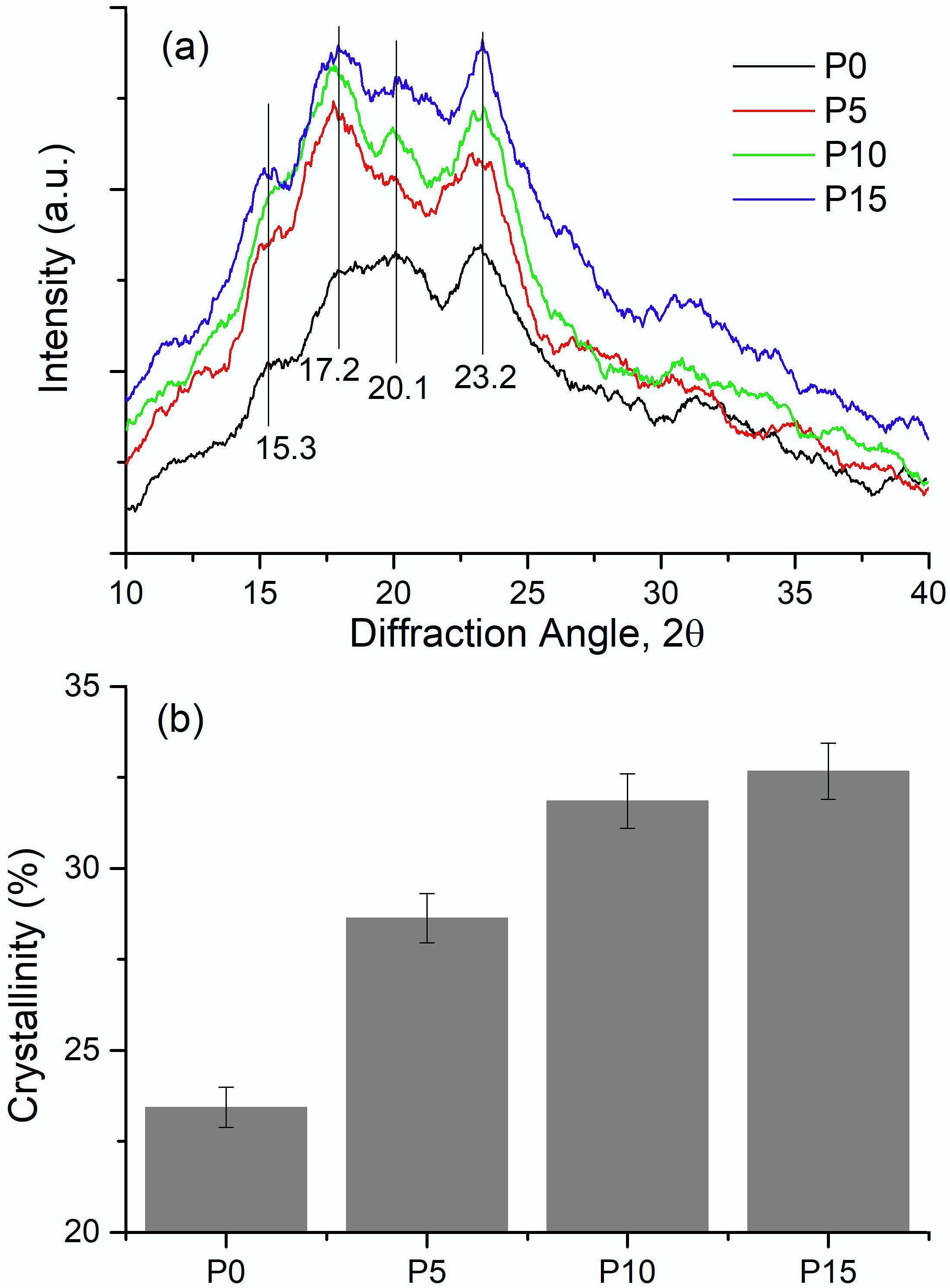
The XRD spectra of semolina and FWF pastas are shown in Figure 2a. The P0 spectrum exhibited a prominent peak at about 23.2o, and a wide band in the range 17-21o. This pattern suggests a weak crystalline structure, indicating the formation Type A crystallinity and V-type structures. Fatty acids and other lipids (e.g., phospholipids) contained in the wheat flour have the ability of forming inclusion complexes with amylose chains (Güler, Köksel, & Ng, 2002), which in turn leads to XRD patterns as the one shown in Figure 2a. The crystallinity values of pasta are given in Figure 2b. The crystallinity of P0 was of about 11.37%, with the peak at 23.2o (V-type crystals) being the higher contribution. The addition of FWF increased the crystallinity to values of 18.74, 17.68 and 23.42% for P5, P10 and P15, respectively. The peaks at 17.2 and 20.1 became more defined and the peak at 23.2 became more prominent with the FWF addition. This suggested that lipids contained in the FWF promoted the formation of inclusion complexes with amylose. These complexes can significantly alter the physical and chemical properties of starch, as are the paste properties, retrogradation, water absorption, solubility, and swelling capacity. Additionally, they can influence the digestibility of starch, tending to increase the amount of resistant starch (Cervantes-Ramírez et al., 2020). On the other hand, non-gluten proteins (e.g., zeins) can lead to the formation of lipid-starch-protein complexes (Chen et al., 2018). These complexes can lead to reduced swelling power and solubility of starch, slower gelatinization and retrogradation, and altered digestion rates. They can also influence the texture, sensory characteristics, and even the nutritional impact of the final food product (Duan et al., 2023).

(a) X-ray diffraction (XRD) spectra of pasta (Px) cooked at optimal cooking time (OCT). (b) Relative crystallinity estimated with the Hermans-Weidinger method, in arbitrary units (a.u.) - unit of intensity. The “x” in Px represents the amount of FWF contained in the flour blend (0, 5, 10, and 15 g 100g-1).
FTIR
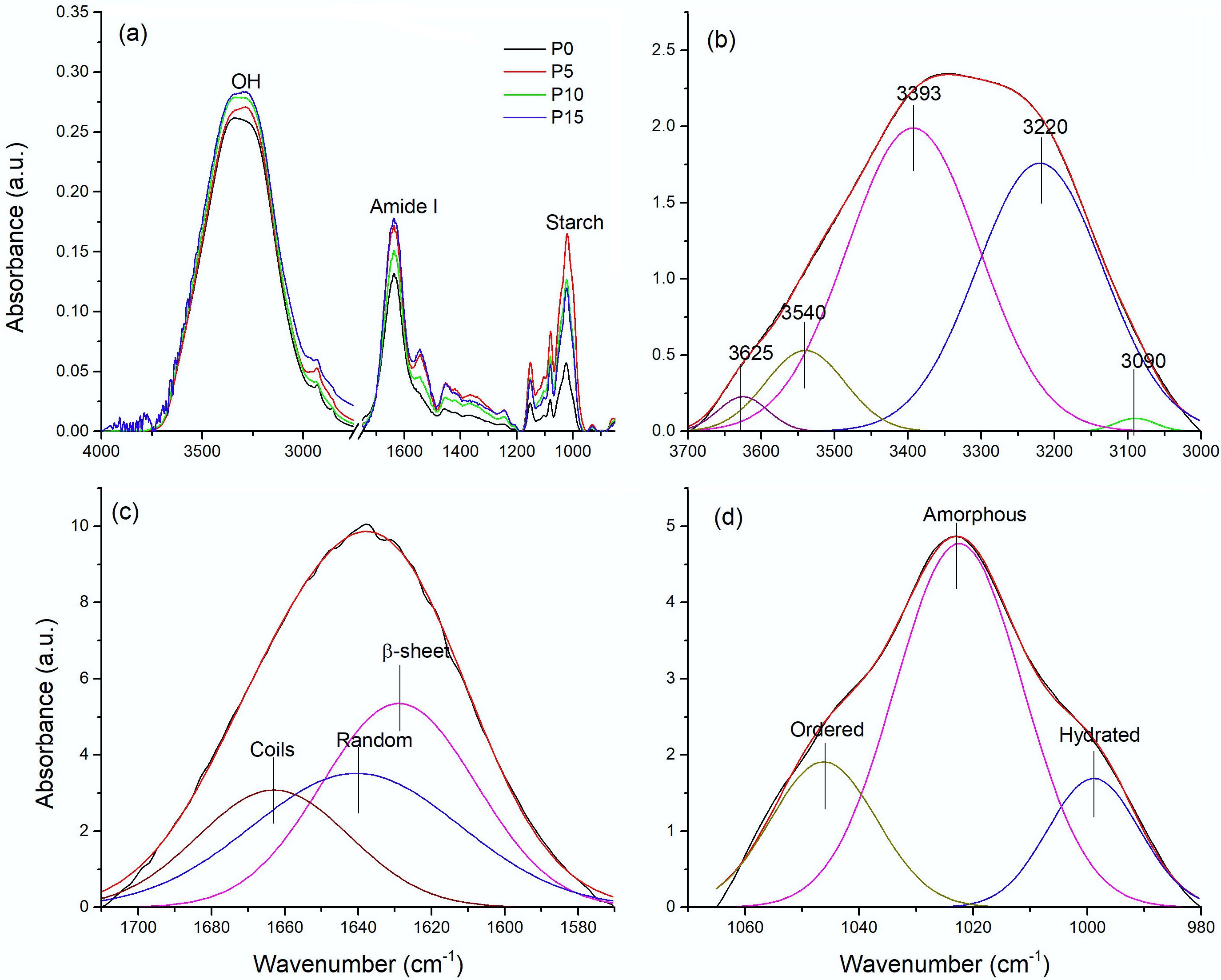
Figure 3a shows the FTIR spectra of the different pasta variations cooked at OCT, while Figures 3b, 3c and 3d illustrate the numerical deconvolution for the water, amide I and starch, respectively.
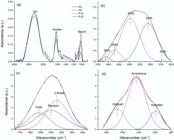
Distribution of the FTIR structural components of pasta (Px): (a) Water structure, (b) protein secondary structure, and (c) starch structural organization. The “x” in Px represents the amount of FWF contained in the flour blend (0, 5, 10, and 15 g 100g-1).
Water structure
The FTIR vibrations reflected in the wide band 3750-3000 cm-1 are linked to the interactions of water with the environment (Figure 3a). Lipids, starch and proteins interact with the water molecules, determining past texture and physicochemical characteristics. Water molecules are distributed in hydrogels in the form of free, freezing bound and non-freezing bound water (Garcia et al., 2004), bestowing some insights on the structure of water in the pasta variations. Walrafen, Hokmabadi and Yang (1986) proposed that the OH band provides some insights on the structure of water and is composed of five individual bands at about 3090, 3220, 3393, 3540 and 3625 cm-1. Figure 3b shows the results of the numerical deconvolution of the OH band for P0. The reduction of absorption on the wavenumber reflects the decomposition of bigger water structures into smaller ones. The low-intensity band at 3090 cm-1 is linked to the OH-vibration of strongly hydrogen-bonded structured water. The band at 3220 cm-1 is ascribed to fully bonded water of low density with coordination number close to four, like in ice. The band at 3400 cm-1 denotes clusters characterized by an average degree of connection greater than for dimers and trimers, but lower than for ice. The peak at 3540 cm-1 reflects water molecules that are poorly connected to their environment and can be seen as liquid-like structures. Finally, the small peak at 3625 cm-1 is linked to disorganized molecules having a vapor-like structure (Baumgartner et al., 2019). The bands at 320, 3400 and 3540 cm-1 dominate the intensity of the OH band, with the three together being about 98% of the curve. For a simpler visualization of the results, Figure 4a exhibits the variation of the three larger bands as function of the FWF addition. Clusters have the highest content, accounting by about 50% of the water structure.

Distribution of the FTIR structural components of pasta (Px): (a) Water structure, (b) protein secondary structure, and (c) starch structural organization. The “x” in Px represents the amount of FWF contained in the flour blend (0, 5, 10, and 15 g 100g-1).
Kulkarni, Gadre and Nagase (2008) found that clusters play an important role in the hydration of molecules and the dissolution of ionic species. The large fraction of clusters suggests that the cooked pasta was deeply hydrated by water molecules by hydrogen bonded water. Ice-like structure accounts for about 40% of the water in the cooked pasta. It has been reported that ice-like structures are formed in the first absorption layer on proteins (Smolin & Dagget, 2008). In this way, gluten and other proteins from the FWF might be the substrate for the formation of the ice-like water structures. Liquid-like water structures represent a small fraction with about 7% of contribution. Liquid-like water is basically free water that can be removed by drying at relatively low temperature. Figure 4a also shows that the addition of the FWF had a marginal impact in the water structure. Only clusters showed a statistically significant (p < 0.05) increase, indicating that some FWF components (lipids and proteins) improved the pasta structure stability. This observation is in line with the cooking loss results shown in Table 1, which showed that the CL decreased when the FWF was added.
Protein secondary structure
The band 1700-1600 cm-1 is the Amide I region, which reflects the stretching of the C=O group. The Amide I band is composed of several individual contributions, which corresponds with the secondary structure of the proteins. Figure 3c presents the numerical deconvolution of the Amide I band, which was carried out with three Gaussian functions representing coils, random and β-sheet structures. The β-sheets are the most abundant and accounts for about 40% of the distribution. In networks formed by gluten, β-sheets involve glutenin regions where hydrogen-mediated protein-protein interactions are predominant, whereas coils (β-turns) are indicative of protein-water interactions (Wellner et al., 2005). In this way, β-sheets play an important role in the formation of stable pasta structures. The distribution of the protein secondary structures and the impact of the FWF addition are shown in Figure 4b. The content of β-sheets decreased with the addition of the FWF, with values going from about 42% for P0 to about 35% for P15. Such a decrease is positively correlated with the texture parameters, including hardness (r = 0.87, p < 0.05), cohesiveness (r = 0.85, p < 0.05) and elasticity (r = 0.92, p < 0.05). The addition of non-gluten proteins affected the organization of the gluten network, leading to a pasta with decreased texture attributes. The fraction of random structures exhibited only a small decrease with the FWF addition. In contrast, coils showed a marked increase from about 22% for P0 to about 35% for P15. FWF contains zeins from maize tortilla, which contains a higher proportion of random structures than the gluten (Mejia, Mauer, & Hamaker, 2007). The addition of FWF to the pasta formulation likely weakened the gluten network, resulting in a cooked pasta with reduced texture characteristics.
Starch structure
The FTIR region having a large peak at about 1020 cm-1 is considered a fingerprint of the molecular organization of starch chains. This region was characterized by van Soest et al. (1995) with the aim of characterizing the short-range ordered structures. Figure 3d illustrates the numerical deconvolution of the starch band where three prominent bands were obtained. van Soest et al. (1995) related the band at with a peak at 995 cm-1 to hydrated amylose domains. Here, water is intrinsically bonded to the starch chains via hydrogen bonds to form ice-like and cluster structures. On the other hand, the large band at 1022 cm-1 reflects the presence of amorphous and disordered structures. Short-range (approx. 10-30 nm) ordered structures are reflected by the component at 1047 cm-1. These structures display the form of double- and triple-helix geometries and are commonly found in the retrogradation of amylose chains, which can remain stable in dispersed media (Karim, Norziah, & Seow, 2000). From the deconvolution results, the ratios 995/1022 (R Hyd ) and 1047/1022 (R Ord ) con be introduced for assessing the contents of hydrated and ordered structures relative to amorphous ones. Figure 4c exhibits the variation of the above ratios with the fraction of the added FWF. The hydrated structures increased while the short-range ordered structures decreased with the FWF fraction. The optimal cooking time (OCT) was positive correlated (r = 0.90, p < 0.05) with the ratio and negatively correlated (r = -0.89, p < 0.05) with the ratio.
In vitro digestibility
Proteins
The digestibility of the semolina pasta (P0) was about 75.87% and increased to 77.77, 83.65 and 87.96% for P5, P10 and P15, respectively. Proteins contained in the FWF originated mainly from maize tortilla (zeins) and meat residues. The digestibility of chicken meat is relatively high, with values of up to 90% for boiled meat (Qi et al., 2018). On the other hand, pork and beef meat proteins show higher digestibility than plant proteins (Xie et al., 2022). Similar results were obtained by Sousa et al. (2023) for proteins in vegan and meat burgers after grilling. The increased in vitro digestibility of proteins can be attributed to the addition of the meat proteins contained in the FWF.
Starch
Table 3 presents the results on the in vitro digestibility of starch. The addition of the FWF reduced the RDS content from 32.24% for the control pasta (P0) to values of 25.72, 18.19 and 10.17% for P5, P10 and P15 which included increasing contents of FWF. The SDS content was only slightly affected, whereas the RS content exhibited a marked increase from values of about 31.84% for P0 to values of about 50.45% for P15. The formation of lipid-amylose inclusion complexes induced by the lipids contained in the FWF (about 10%). Inclusion complexes are proven to resist the action of amylolytic enzymes, such that these complexes act as a resistant starch (RS-5) fraction (Li et al., 2021). On the other hand, proteins can interact with starch chains to form complex coacervates. Recent studies have reported insights on the impact of proteins in the digestibility of starch. López-Baron et al. (2017) reported that plant proteins mitigated the in vitro digestibility of wheat starch. Li et al. (2021) showed that proteins reduced the in vitro digestibility of starch in high-amylose wheat noodles. Sun et al. (2023) found that the interaction between protein and starch in oat products inhibited the enzymatic hydrolysis and increased the resistant starch content. Non-gluten proteins added with the FWF (about 12%) could have interacted with the starch, leading to the results shown in Table 3.
Microbial safety and composition of food waste
Although we did not assess the microbial safety of the food waste, as it was recollected immediately after the eating safety, in practice, potential harmful bacteria, viruses, and other pathogens can contaminate the food, leading to foodborne illnesses. Contamination can occur at various points in the food system, from harvesting and processing to storage and transport. To ensure safety, it is imperative to implement preventative measures, such as good hygiene practices, hazard analysis, and critical control point (HACCP) systems (Karanth et al., 2023).
Although in this work we found that the proximal analyses found for the recollected two pooled food left-overs showed non-significant variability, as they were sampled the same day, at the mid-day lunch which is held within a 1.5 h time span, offering a very limited selection of foods. Again, in practice, for the purpose of upcycling food waste, policies must be established that consider the critical factors that impact the fate of food waste processing and derived products (Jones, Gibson, & Ricke, 2021).
Principal component analysis (PCA)
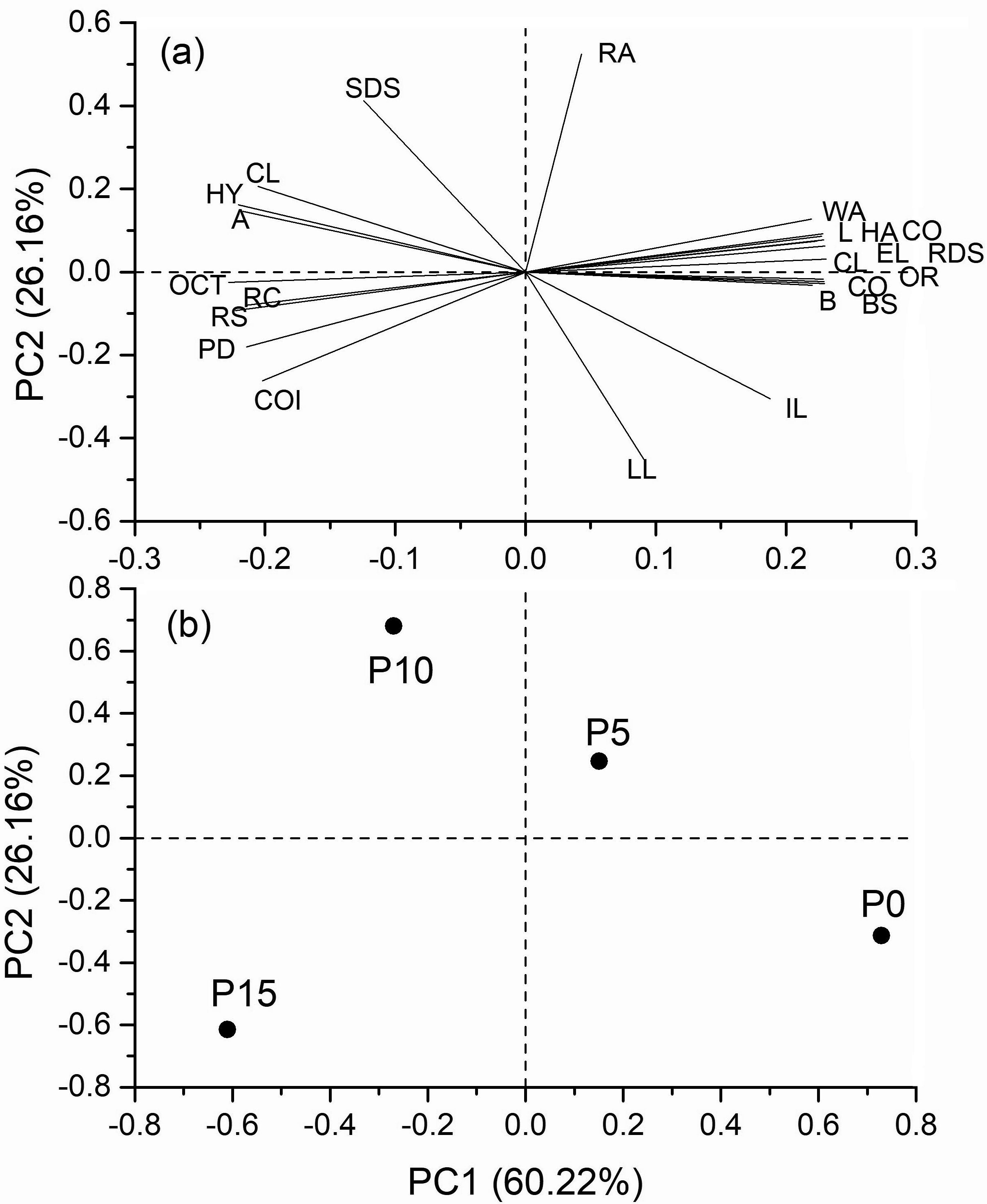
The results described above showed that the incorporation of FWF induced important changes in the texture and digestibility properties of semolina wheat pasta. A PCA was carried out to assess the multivariate impact of the FWF addition levels in the different characteristics of the pasta. To this end, four pasta formulations (P0, P5, P10 and P15) were considered. The following twenty three response variables were included in the multivariate analysis: optimal cooking time (OCT), cooking loss (CL), water absorption (WA) capacity, lightness (L), redness (A), yellowness (B), hardness (HA), cohesiveness (CO), chewiness (CH), elasticity (EL), relative crystallinity (RC), ice- (IL), clusters- (CL), liquid- (LL) like water structures, β-sheets (BS), random (RA), coils (COI), hydrated starch (HY) and ordered starch (OR) FTIR ratios, protein digestibility (PD), rapidly digestible (RDS), slowly digestible (SDS) and resistant (RS) starch contents. The first (PC1) and second (PC2) principal components accounted for 60.22 and 26.16% of the total variability, respectively. The two components accounted for 86.38% of the total variability. Figure 5a presents the distribution of the response variables in the plane formed by the first two principal components. Several interesting conclusions can be drawn from the results in Figure 5a. The RDS is aligned with water absorption capacity, water clusters and ordered starch structures. This means that a decrease of the starch ordered structures leads to a concomitant decrease of the RDS content. Also, the water structure plays an important role in the susceptibility of the starch to amylolytic enzymes. The PCA suggests that for the case of the wheat pasta supplemented with FWF the clustered water structures decreased the in vitro starch digestibility. On the other hand, the protein digestibility showed an alignment with the random coils and the relative crystallinity. This means that random coils are more susceptible to the action of proteases than other secondary structures (e.g., random and -sheets). The resistant starch content is strongly aligned with the relative crystallinity, which suggests that the increase of the RS content is caused by formation of amylose-lipid complexes. The liquid-like and ice-like water structures as well as the random protein secondary structures showed no alignment to the starch and protein digestibility. Figure 5b displays the distribution of the four pasta formulations in the two first principal components plane. The addition of 5 g FWF.100 g-1 impacted immediately the characteristics of the pasta. The further addition of 10 g.100 g-1 induced an additional distancing of pasta characteristics from that of the control pasta. However, the addition of 15 g.100 g-1 led to a pasta with markedly different pasta properties. This suggests that additions of up to 10 g.100 g-1 is acceptable to obtain wheat pasta with improved nutritional quality (i.e., increased protein content and digestibility and decreased starch digestibility), exhibiting an acceptable diminution in the textural characteristics.

Principal component analysis of the response variables for cooked pasta (Px) containing different FWF contents. (a) Score plot of the response variables. (b) Score plot of the bread formulations. The acronyms used for the response variables were the following: optimal cooking time (OCT), cooking loss (CL), water absorption (WA) capacity, lightness (L), redness (A), yellowness (B), hardness (HA), cohesiveness (CO), chewiness (CH), elasticity (EL), relative crystallinity (RC), ice- (IL), clusters- (CL), liquid- (LL) like water structures, β-sheets (BS), random (RA), coils (COI), hydrated starch (HY) and ordered starch (OR) FTIR ratios, protein digestibility (PD), rapidly digestible (RDS), slowly digestible (SDS) and resistant starch (RS) contents. The “x” in Px represents the amount of FWF contained in the flour blend (0, 5, 10, and 15 g 100g-1).
Conclusions
This study explored the impact of incorporating food waste from a student canteen in the formulation of wheat pasta. The results showed that addition of food waste flour of the order of 5-15 g.100 g-1 wheat flour, improved the nutritional quality (higher protein digestibility, lower starch digestibility), but caused a significant decrease in the values of all the textural characteristics measured compared to the control pasta made with only wheat semolina.
Acknowledgement
Author Alejandro Soria thanks the Secretaría de Ciencia, Humanidades, Tecnología e Innovación (Mexico) for his M. Sc. scholarship.
Data Availability Statement
Data available upon request to authors.
References
- American Association of Cereal Chemists - AACC. (2000). Approved methods of the american association of cereal chemists Methods: 44-40.01 moisture, ashes 08-01, total carbohydrates 76-13, total protein 46-11.02, 30-25.01 lipids, 32-07.01 raw fiber, 66-50 for pasta and noodle cooking quality. Association Cereal Chemistry (10th Ed.), St. Paul, MN. 1200p.
- Baumgartner, B. et al. (2019). Pore size-dependent structure of confined water in mesoporous silica films from water adsorption/desorption using ATR-FTIR spectroscopy.Langmuir, 35(37):11986-11994.
- Bhatt, S. et al. (2020). Consumers’ willingness to pay for upcycled foods. Food Quality and Preference, 86:104035.
- Carvalho, R., Lucas, M. R., & Marta-Costa, A. (2025). Food waste reduction: A systematic literature review on integrating policies, consumer behavior, and innovation. Sustainability, 17(7):3236.
- Cervantes-Ramírez, J. E. et al. (2020). Amylose-lipid complex formation from extruded maize starch mixed with fatty acids. Carbohydrate Polymers, 246:116555.
- Chandrashekar, A., & Kirleis, A. W. (1988). Influence of protein on starch gelatinization in sorghum.Cereal Chemistry,65(6):457-462.
- Chen, X. et al. (2018). Structure, physicochemical and in vitro digestion properties of ternary blends containing swollen maize starch, maize oil and zein protein.Food Hydrocolloids,76:88-95.
- Desai, A. S., Brennan, M. A., & Brennan, C. S. (2019). Influence of semolina replacement with salmon (Oncorhynchus tschawytscha) powder on the physicochemical attributes of fresh pasta.International Journal of Food Science & Technology,54(5):1497-1505.
- Duan, Y. et al. (2023). Effects of different sources of proteins on the formation of starch-lipid-protein complexes. International Journal of Biological Macromolecules, 253:126853.
- Dymchenko, A., Geršl, M., & Gregor, T. (2023). Trends in bread waste utilization. Trends in Food Science & Technology, 132:93-102.
- Fernández-Peláez, J. et al. (2021). Physical properties of flours obtained from wasted bread crusts and crumbs.Foods,10(2):282.
- Garcıa, D. M. et al. (2004). Synthesis and characterization of poly (methacrylic acid) hydrogels for metoclopramide delivery. European Polymer Journal, 40(8):1637-1643.
- García-Hernández, Á. et al. (2023). Stale bread waste recycling as ingredient for fresh oven-baked white bread: Effects on dough viscoelasticity, bread molecular organization, texture, and starch digestibility.Journal of the Science of Food and Agriculture,103(8):4174-4183.
- Gonçalves, J., Anjos, O., & Guiné, R. P. F. (2025). A revisit of plant food waste along food supply chains: Impacts and perspectives. Foods, 14(8):1364.
- Guerra-Oliveira, P., Belorio, M., & Gómez, M. (2021). Waste bread as main ingredient for cookie elaboration.Foods, 10(8)1759.
- Güler, S., Köksel, H., & Ng, P. K. W. (2002). Effects of industrial pasta drying temperatures on starch properties and pasta quality.Food Research International,35(5):421-427.
- Jia, B. et al. (2023). Degradation of starch in pasta induced by extrusion below gelatinization temperature.Food Chemistry, 426:136524.
- Jones, S. L., Gibson, K. E., & Ricke, S. C. (2021). Critical factors and emerging opportunities in food waste utilization and treatment technologies. Frontiers in Sustainable Food Systems, 5:781537.
- Hancz, C. et al. (2024). The role of insects in sustainable animal feed production for environmentally friendly agriculture: A review. Animals, 14(7):1009.
- Hussein, A. S. et al. (2023). Production and evaluation of gluten-free pasta and pan bread from Spirulina algae powder and quinoa flour. Processes, 11(10):2899.
- Kanwal, N. et al. (2024). From plate to palate: Sustainable solutions for upcycling food waste in restaurants and catering. Trends in Food Science & Technology, 152:104687.
- Karanth, S. et al. (2023). Linking microbial contamination to food spoilage and food waste: The role of smart packaging, spoilage risk assessments, and date labeling. Frontiers in Microbiology, 14:1198124.
- Karim, A., Norziah, M. H., & Seow, C. C. (2000). Methods for the study of starch retrogradation.Food Chemistry,71(1):9-36.
- Kaur, G. et al. (2013). Enrichment of pasta with different plant proteins.Journal of Food Science and Technology,50:1000-1005.
- Kaur, M., Singh, A. K., & Singh, A. (2023). Bioconversion of food industry waste to value added products: Current technological trends and prospects. Food Bioscience, 55:102935.
- Khatkar, A. B. et al. (2021). Valorization of ultrasound assisted restructured soy protein: Impact on the quality characteristics of instant noodles.LWT,147:111599.
- Kulkarni, A. D., Gadre, S. R., & Nagase, S. (2008). Quantum chemical and electrostatic studies of anionic water clusters, (H2O)nJournal of Molecular Structure: THEOCHEM,851(1-3):213-219.
- Kumalasari, R. et al. (2022). Evaluation of uniformity of physical and texture quality in manufacture of gluten-free noodles using single-screw extruders: a case study on local SMEs in Subang district-Indonesia. Food Science and Technology, 42:e82421.
- Li, H. T. et al. (2021). Protein-starch matrix plays a key role in enzymic digestion of high-amylose wheat noodle.Food Chemistry,336:127719.
- Liu, Z. et al. (2023). Valorization of food waste to produce value-added products based on its bioactive compounds. Processes, 11(3):840.
- López-Barón, N. et al. (2017). Plant proteins mitigate in vitro wheat starch digestibility.Food Hydrocolloids,69:19-27.
- Lopez-Rubio, A. et al. (2008). A novel approach for calculating starch crystallinity and its correlation with double helix content: A combined XRD and NMR study. Biopolymers, 89(9):761-768.
- López-Vázquez, D. E. et al. (2025). Physicochemical, structural, and functional properties of cacahuacintle maize starch. Starch-Stärke, 77(2):2400113.
- Lu, Q., Guo, S., & Zhang, S. (2009). Effects of flour free lipids on textural and cooking qualities of Chinese noodles.Food Research International,42(2):226-230.
-
Lytton, C. (2024). The waste food upcycled into new products Available in: <https://www.bbc.com/future/article/20240816-the-waste-food-upcycled-into-new-products>.
» https://www.bbc.com/future/article/20240816-the-waste-food-upcycled-into-new-products - Martinez, C. S. et al. (2007). Physical, sensory and chemical evaluation of cooked spaghetti. Journal of Texture Studies, 38(6):666-683.
- Mejia, C. D., Mauer, L. J., & Hamaker, B. R. (2007). Similarities and differences in secondary structure of viscoelastic polymers of maize α-zein and wheat gluten proteins.Journal of Cereal Science,45(3):353-359.
- Nilusha, R. A. T. et al. (2019). Development of pasta products with nonconventional ingredients and their effect on selected quality characteristics: A brief overview. International Journal of Food Science, 750726
- Qi, J. et al. (2018). Influence of stewing time on the texture, ultrastructure and in vitro digestibility of meat from the yellow-feathered chicken breed.Animal Science Journal,89(2):474-482.
- Rahman, T. et al. (2024). Navigating the contemporary landscape of food waste management in developing countries: A comprehensive overview and prospective analysis. Heliyon, 10(12):e33218.
- Rakesh, B., & Mahendran, R. (2024). Upcycling of food waste and food loss - A sustainable approach in the food sector. Trends in Food Science & Technology, 143:104274.
- Rosas-Rivas, J. I. et al. (2025). Wheat bread supplemented with egg albumin: Structural features, and in vitro starch and protein digestibility. Plant Foods for Human Nutrition, 80:41.
- Rosenthal, A. J. (2024). An exploration into the measurement and reporting of food firmness and hardness. Journal of Texture Studies, 55(6):e12873.
- Singh, A. et al. (2021). Influence of supplementation with pangas protein isolates on textural attributes and sensory acceptability of semolina pasta.Journal of Food Measurement and Characterization,15:1317-1326.
- Smolin, N., & Daggett, V. (2008). Formation of ice-like water structure on the surface of an antifreeze protein.The Journal of Physical Chemistry B,112:6193-6202.
- Sozer, N., & Kaya, A. (2008). The effect of cooking water composition on textural and cooking properties of spaghetti. International Journal of Food Properties, 11(2):351-362.
- Sousa, R. et al. (2023). Comparison of in vitro digestibility and DIAAR between vegan and meat burgers before and after grilling.Food Research International,166:112569.
- Sun, B. et al. (2023). Changes of gelation behavior, water distribution and digestibility of protein-starch mixtures in the oat dough/batter model affected by water.LWT,182:114860.
- Surasani, V. K. R. et al. (2019). Functionality and cooking characteristics of pasta supplemented with protein isolate from pangas processing waste.LWT,111:443-448.
-
Sustainability Directory (2025). What are the ethical concerns of food waste? Available in: <https://climate.sustainability-directory.com/question/what-are-the-ethical-concerns-of-food-waste/>.
» https://climate.sustainability-directory.com/question/what-are-the-ethical-concerns-of-food-waste/ -
United States Environmental Protection Agency - EPA (2025). International efforts on wasted food recovery Available in: <https://www.epa.gov/international-cooperation/international-efforts-wasted-food-recovery#:~:text=The%20UN%20Food%20and%20Agriculture,emissions%20in%20the%20United%20States>.
» https://www.epa.gov/international-cooperation/international-efforts-wasted-food-recovery#:~:text=The%20UN%20Food%20and%20Agriculture,emissions%20in%20the%20United%20States - van Soest, J. J. et al. (1995). Short-range structure in (partially) crystalline potato starch determined with attenuated total reflectance Fourier-transform IR spectroscopy.Carbohydrate Research,279:201-214.
- Vargas Huamán, E. et al. (2024). Cooking quality, color, and texture profile analysis of a quinoa and lentil pasta. Ciência e Agrotecnologia, 48:e015623.
- Vijaykrishnaraj, M., Bharath Kumar, S., & Prabhasankar, P. (2015). Green mussel (Perna canaliculus) as a marine ingredient to enrich gluten free pasta: product quality, microstructure and biofunctional evaluation.Journal of Food Measurement and Characterization, 9:76-85.
- Walrafen, G. E., Hokmabadi, M. S., & Yang, W. H. (1986). Raman isosbestic points from liquid water. Journal of Chemical Physics, 85(12):6964-6969.
- Wang, J. et al. (2024). A review of the impact of starch on the quality of wheat-based noodles and pasta: From the view of starch structural and functional properties and interaction with gluten. Foods, 13(10):1507.
- Wellner, N. et al. (2005). Changes in protein secondary structure during gluten deformation studied by dynamic Fourier transform infrared spectroscopy.Biomacromolecules, 6:255-261.
- Xie, Y. et al. (2022). Real meat and plant-based meat analogues have different in vitro protein digestibility properties.Food Chemistry,387:132917.
-
Editor de seção:
Renato Paiva