
 BioImplan: global growth in silicone implants
Abstract
This teaching case examines the international expansion challenges faced by BioImplan, the largest silicone implant manufacturer in Latin America. Victor, the company’s Director of International Affairs, must decide whether to continue expanding through independent distributors or establish wholly owned subsidiaries in culturally and institutionally distant markets, such as Turkey. Founded in 1981 in Campinas, São Paulo, BioImplan grew by leveraging innovation, regulatory adaptation, and a solid internationalization strategy. However, its global trajectory was disrupted by a severe flood in 2016, which compromised production and forced the company to restructure its operations. After resuming exports, the choice between maintaining a lower-risk, distributor-based model or investing in greater control through subsidiaries became a central strategic dilemma. This case is designed for undergraduate and graduate courses in international business and entrepreneurship, fostering discussions on internationalization strategies, foreign market entry modes, and decision-making in emerging-market multinationals. Using primary and secondary data, the study encourages students to analyze BioImplan’s expansion through theoretical lenses such as the Uppsala model, Internalization, and Effectuation. By stepping into Victor’s shoes, students are challenged to assess risks and opportunities, considering financial, operational, and strategic factors for the company’s expansion.
Keywords:
international business; Uppsala model; international entrepreneurship; internalization; Brazil
Resumo
Este caso de ensino examina os desafios da expansão internacional enfrentados pela BioImplan, a maior fabricante de implantes de silicone da América Latina. Victor, diretor de assuntos internacionais da empresa, precisa decidir se continuará expandindo por meio de distribuidores independentes ou se estabelecerá subsidiárias próprias em mercados cultural e institucionalmente distantes, como a Turquia. Fundada em 1981, em Campinas, São Paulo, a BioImplan cresceu apoiando-se na inovação, na adaptação regulatória e em uma estratégia sólida de internacionalização. No entanto, sua trajetória global foi interrompida por uma severa enchente em 2016, que comprometeu a produção e forçou a empresa a reestruturar suas operações. Após retomar as exportações, a decisão entre manter um modelo de menor risco baseado em distribuidores ou investir em maior controle por meio de subsidiárias tornou-se um dilema estratégico central. Este caso destina-se a cursos de graduação e pós-graduação em negócios internacionais e empreendedorismo, promovendo discussões sobre estratégias de internacionalização, modos de entrada em mercados externos e tomada de decisão em multinacionais de economias emergentes. Utilizando dados primários e secundários, o estudo estimula os alunos a analisar a expansão da BioImplan à luz de modelos teóricos, como Uppsala, Internalização e Effectuation. Ao assumir a posição de Victor, os alunos são desafiados a avaliar riscos e oportunidades, considerando fatores financeiros, operacionais e estratégicos para a expansão da empresa.
Palavras-chave:
negócios internacionais; modelo de Uppsala; empreendedorismo internacional; internacionalização; Brasil
Resumen
Este caso de enseñanza examina los desafíos de la expansión internacional enfrentados por BioImplan, el mayor fabricante de implantes de silicona de América Latina. Víctor, director de asuntos internacionales de la empresa, debe decidir si continuar expandiéndose a través de distribuidores independientes o establecer subsidiarias propias en mercados cultural e institucionalmente distantes como Turquía. Fundada en 1981 en Campinas, São Paulo, BioImplan creció apoyándose en la innovación, la adaptación regulatoria y una sólida estrategia de internacionalización. Sin embargo, su trayectoria global se vio interrumpida por una grave inundación en 2016, que comprometió la producción y obligó a la empresa a reestructurar sus operaciones. Tras reanudar las exportaciones, la decisión entre mantener un modelo de menor riesgo basado en distribuidores o invertir en un mayor control a través de subsidiarias se convirtió en un dilema estratégico central. Este caso está diseñado para cursos de grado y posgrado en negocios internacionales y emprendimiento, promoviendo debates sobre estrategias de internacionalización, modos de entrada en mercados externos y toma de decisiones en multinacionales de economías emergentes. A partir de datos primarios y secundarios, el estudio incentiva a los estudiantes a analizar la expansión de BioImplan bajo enfoques teóricos como el modelo de Uppsala, la teoría de la internalización y el effectuation. Al asumir el papel de Víctor, los estudiantes son desafiados a evaluar riesgos y oportunidades, considerando factores financieros, operativos y estratégicos para la expansión de la empresa.
Palabras clave:
negocios internacionales; modelo de Uppsala; emprendimiento internacional; internacionalización; Brasil
INTRODUCTION
Victor, Head of International Affairs at BioImplan, stands at a pivotal moment in 2024, facing a decision that could redefine the company’s global trajectory. BioImplan, the largest silicone implant manufacturer in Latin America, has successfully expanded its operations to more than 50 countries through a combination of exclusive distributors and 11 wholly owned subsidiaries. However, its internationalization strategy is at a crossroads: when entering a new market, should the company first rely on independent distributors, or should it deepen its global presence by directly establishing its own subsidiaries in culturally and institutionally distant contexts such as Turkey?
Victor leads BioImplan’s global expansion, guiding decisions on the financial feasibility and strategic direction of its international operations. He frequently travels between São Paulo, Berlin, and Mexico City, attending trade fairs and industry events to stay informed about trends and opportunities. While market studies and past experiences have guided BioImplan’s expansion so far, entering markets with complex regulatory environments and different cultural dynamics presents a new set of challenges.
Victor knows that expanding through subsidiaries could offer greater control and brand positioning, but it also demands significant investment and exposes the company to higher risks. His mind races: is BioImplan ready to take this bold step, or should it maintain a more conservative approach by continuing its distributor-based model? The decision he makes will have long-term implications for BioImplan’s global strategy.
BioImplan’s internationalization journey
From its inception, BioImplan was designed with an international vision, aiming to establish itself beyond the domestic market. Founded in 1981 in Campinas, São Paulo, by a group of young entrepreneurs, the company initially imported breast implants from the USA for resale across Brazil. However, rather than limiting itself to national distribution, BioImplan sought to develop proprietary technology that would allow it to compete on a global scale. By 1983, the company had begun manufacturing its own implants, refining its designs and production processes to meet international standards. This strategic direction quickly materialized in 1984, when BioImplan made its first export to Argentina, marking the beginning of its structured international expansion.
During the 1980s, BioImplan enhanced its presence in Latin America by exporting to Argentina, Colombia, Peru, and Mexico. As the company expanded across these markets, each new entry functioned as a source of experiential learning, exposing BioImplan to diverse regulatory requirements, distributor practices, and surgeon preferences, which gradually reduced uncertainty and informed subsequent expansion decisions.
The company’s key certifications, including the CE mark obtained in 1988, facilitated entry into European markets such as Germany, the United Kingdom, and France. These entries, however, revealed that success in more institutionally distant markets depended not only on product quality, but also on the firm’s ability to navigate stricter regulatory systems, build credibility with established clinical networks, and coordinate more closely with local partners, lessons that would shape BioImplan’s subsequent international expansion.
In 1989, BioImplan introduced a significant innovation: breast implants coated with vulcanized polyurethane foam, marking a milestone in the industry. The 1990s saw further advancements, including ISO 9001 certification in 1996, which improved product quality, and the continued expansion into other European nations like Spain and Italy.
In the early 2000s, BioImplan invested in technology and increased its production capacity, building a new factory in Campinas in 2003 to meet rising demand. The company re-launched the conical breast implant in 2005, achieving international success. By 2008, the BioCraft Implant was introduced to cater to diverse body types. BioImplan entered the Russian market in 2010, responding to growing demand for cosmetic surgery, and in 2012, it became the only non-U.S. manufacturer to receive Food and Drug Administration (FDA) approval, enabling exports to the U.S. and strengthening its presence in North America and Asia, including South Korea.
BioImplan faced significant challenges, notably a severe flood in 2016 that cut its production capacity by 40% and nearly halted international operations. Prior to the flood, BioImplan was the top seller of silicone breast implants in Brazil and Latin America, and the third largest globally. After the incident, the company operated at half capacity but retained approximately 70% of its pre-flood revenue through domestic sales. However, its global presence was severely affected, with most exports suspended except to South Korea and Russia due to ongoing contractual obligations.
Despite this setback, BioImplan persisted in its path of innovation and global expansion. The intersection of the company’s trajectory and Victor’s leadership would be crucial: in 2017, he was hired for the newly created position of head of international affairs, tasked with leading BioImplan’s international comeback. Upon taking the role, Victor spearheaded a realignment of BioImplan’s global strategy, which included rebranding, restructuring the manufacturing unit, and introducing a new approach to international expansion.
BioImplan’s international comeback
BioImplan’s comeback required a substantial effort to restore production and meet both domestic and international demand. In seeking to reestablish its presence abroad, management initially considered reactivating its network of authorized distributors, a move that would enable a rapid increase in sales without significant upfront investment. Victor, however, questioned the sufficiency of this approach, arguing that reliance on distributors constrained the firm’s ability to build brand loyalty and strengthen its international image. He was convinced that, as prior entries had shown, distributors were effective for initial market access, but deeper commitment became necessary as regulatory familiarity increased and relationships with surgeons and hospitals evolved.
Departing from a prior reliance on secondary market analyses, Victor advocated a strategic reorientation grounded in lessons accumulated during earlier international operations, where distributor-led entries facilitated initial access but limited brand development, knowledge transfer, and long-term positioning in more complex environments. Leveraging his influence within the management team and aligned with his mandate to bring new perspectives to the firm’s global expansion, Victor led the international comeback by advancing a strategy centered on the gradual replacement of independent distributors with company-owned subsidiaries. In practice, markets that had initially depended on distributors gave way to more direct forms of presence, as BioImplan’s teams became increasingly involved in surgeon training, regulatory follow-up, and day-to-day commercial decisions alongside local partners, as illustrated in Figure 1.
Starting in 2017, detailed market studies led Victor to prioritize direct investment in subsidiaries rather than relying exclusively on third-party distributors. In culturally similar Latin American markets such as Mexico and Colombia, the company moved relatively quickly to establish wholly owned subsidiaries, particularly where demand was strong and prior commercial experience reduced uncertainty. In Europe, especially in Germany, France, and the United Kingdom, BioImplan initially re-engaged authorized distributors to test market potential while strengthening relationships with plastic surgeons through sustained participation in medical congresses and professional events. In Germany, strict regulatory requirements and the need to gain credibility within established clinical networks slowed initial traction, reinforcing a more gradual commitment approach.
A similar calibrated strategy was adopted in South Korea, one of the few markets maintained during the post-flood period due to contractual obligations. Despite strong demand for aesthetic procedures, BioImplan faced intense competition from established global brands and had to comply with rigorous local product registration a Chamber and post-market surveillance requirements, which demanded additional adaptation efforts. Over time, this differentiated approach allowed the company to work directly with surgeons and distributors across multiple countries, expanding its local presence as demand consolidated, regulatory familiarity increased, and professional networks matured.
In 2020, BioImplan inaugurated a new manufacturing facility in Campinas, built beside the flood-damaged plant. The new factory marked both the company’s operational recovery and a renewed commitment to its international expansion. With a production capacity exceeding pre-flood levels by more than 50%, the new plant enhances the company’s ability to serve both domestic and international markets with greater efficiency. Additionally, its strategic location, adjacent to the former headquarters, ensures logistical continuity and operational stability, streamlining the transition from the previous facility. This investment was instrumental in reaffirming BioImplan’s presence in global markets and accelerating its internationalization efforts.
BioImplan’s position in the global silicone breast implants market
By 2022, the global silicone breast implant market was valued at roughly USD 2.31 billion and is projected to reach USD 4.1 billion by 2030, reflecting a CAGR of 7.5% (Grand View Research, 2023). Market leadership rests with Allergan and Mentor Worldwide, a subsidiary of Johnson & Johnson, which together account for roughly 70% of global sales (Pawar, 2021). Within this landscape, BioImplan built its position on a strong foothold in Latin America while gradually expanding into Europe. To support this expansion, the company increased investments in R&D, prioritizing anatomically designed implants that replicate the look and feel of natural breast tissue as demand increasingly shifts toward silicone products, which represented 83.6% of the market in 2023 (SkyQuest, 2025).
Victor frequently reminded his team that BioImplan’s differentiation rested on more than cost competitiveness. The company had built its reputation on strict safety standards and rigorous quality assurance protocols, ensuring that each silicone implant underwent extensive testing for strength, resilience, and elasticity in line with global regulatory requirements. This commitment strengthened physician confidence and reinforced BioImplan’s credibility in a highly regulated industry. The firm also invested in corporate social responsibility initiatives, particularly patient education and post-operative support programs that helped build trust among surgeons, healthcare providers, and patients. These initiatives gained importance as regulators, including the U.S. Food and Drug Administration, tightened safety requirements and emphasized transparent risk communication and informed patient decision-making (FDA, 2023).
During international product demonstrations, Victor often noticed that surgeons gravitated toward BioImplan’s polyurethane-coated silicone implants, frequently highlighting their stronger muscle adhesion and perceived safety advantages. Those products accounted for roughly 95% of the company’s international revenue and had become central to BioImplan’s presence in more than fifty export markets served through subsidiaries and sales representatives. Behind these demonstrations stood the company’s modern production facilities and years of accumulated international experience, which supported its growing global footprint. While breast implants dominated BioImplan’s overseas portfolio, visits to its Brazilian headquarters revealed a broader product range, including penile implants, gastric balloons, and wound-healing solutions, reflecting a diversified medical device platform that quietly sustained the firm’s ongoing innovation efforts.
Opportunities and Challenges in BioImplan’s Ongoing Global Expansion
BioImplan’s forward-looking strategy has helped the company sustain its competitive position in the global implant industry by actively pursuing growth opportunities while differentiating itself from larger competitors. The firm continuously evaluates the performance of its subsidiaries, explores new international markets, invests in advanced technologies, and strengthens distributor partnerships in regions where it lacks direct presence, reinforcing its global expansion capabilities. To support these decisions, Victor relied heavily on recurring market intelligence studies that tracked shifting demand patterns and identified emerging geographic opportunities, allowing BioImplan to anticipate market changes and prioritize investments more effectively. Figure 2 illustrates these key markets for silicone breast implants.
Victor knew that BioImplan’s growth depended on competing in the world’s largest implant markets. Demand remained concentrated in the United States, Brazil, Mexico, Germany, France, the United Kingdom, South Korea, and Japan (Pawar, 2021; ReportLinker, 2021). The United States dominated global consumption, fueled by a strong aesthetic culture, while Brazil’s reputation as a plastic surgery hub sustained both domestic demand and medical tourism. Mexico attracted U.S. patients seeking lower-cost procedures, and Germany and France represented stable, mature European markets with strong demand for both cosmetic and reconstructive surgeries. South Korea, meanwhile, stood out as Asia’s plastic surgery center, with consistently high implant adoption (Grand View Research, 2021; Pawar, 2021).
Yet Victor’s attention increasingly shifted toward emerging markets, where growth rates often outpaced established economies. China’s implant market was expanding at nearly 7.8% annually as cosmetic surgery gained broader social acceptance. Russia maintained steady growth of about 5% despite economic volatility, and India projected expansion near 9% through 2028, driven by middle-class growth and expanding medical tourism (GlobeNewswire, 2022; Market Data Forecast, 2021; Transparency Market Research, 2021). Turkey presented a particularly intriguing opportunity. Positioned between Europe and Asia, it had rapidly become a global medical tourism destination, generating approximately USD 3 billion in healthcare tourism revenue and signaling growing demand for advanced aesthetic technologies (Research and Markets, 2021).
Victor reviewed market intelligence reports comparing BioImplan’s potential expansion targets across emerging economies. China, India, and Russia all demonstrated strong growth in demand for breast implants, with projected annual expansion rates ranging from approximately five to nine percent. Yet Turkey increasingly captured his attention. The country’s strategic position bridging Europe and Asia, combined with its role as a global hub for medical tourism generating nearly USD 3 billion in annual healthcare revenue, created a concentrated demand for aesthetic procedures and related medical technologies (Research and Markets, 2021). Those flows were visible in procedure volumes. Turkey performed roughly 1.1 million cosmetic procedures in 2022, including about 84,000 breast augmentations and lifts, signaling a large, ready market for implants (International Society of Aesthetic Plastic Surgery, 2022).
Government policies reinforced this opportunity by promoting domestic medical device manufacturing through tax incentives, localization programs, and research and development subsidies designed to reduce import dependence and strengthen technological capacity (Presidency of the Republic of Türkiye Investment Office, 2024). As Victor examined these indicators, he realized that BioImplan’s entry into Turkey had evolved from a potential opportunity into a defined strategic objective, shifting the focus to selecting the most appropriate entry mode.
Drawing on BioImplan’s experience operating in more than fifty countries through subsidiaries and distributor partnerships, Victor recognized both the firm’s capabilities and the limits of replicating prior expansion strategies, recalling how, in earlier entries, distributors opened doors, but it was only after working closely with surgeons, navigating approvals, and adjusting to local routines that the company expanded its presence. Latin American markets had often benefited from cultural proximity and relationship-driven negotiations, while Western European operations developed within transparent and standardized regulatory environments. Turkey presented a more complex institutional context. Business negotiations typically emphasized hierarchical authority, punctuality, and direct yet respectful communication, contrasting with Brazil’s more relationship-oriented and consensus-driven style (Harvard Law School, 2024; Humpisch, 2019; Novatrade, 2024). At the same time, Turkey’s regulatory framework mirrored European Union medical device standards but incorporated additional compliance requirements, including clinical validation procedures, import restrictions, and price controls that frequently favored domestic manufacturers (Freyr Solutions, 2025).
The scale of Turkey’s clinical infrastructure added weight to these institutional features. The country has more than 1,500 hospitals and over 1,600 board-certified plastic surgeons, offering both capacity and fierce competition for surgeon attention (Republic of Turkey Ministry of Health, 2024). Industry evidence also suggested that Turkish surgeons relied heavily on internationally recognized brands, reinforcing the importance of establishing clinical credibility and local trust. These institutional and cultural differences, shown in Table 1, reinforced Victor’s view that Turkey would require a more carefully calibrated market entry approach.
Victor sat at his desk with a stack of country reports and a map of Anatolia spread before him, picturing two very different paths. He imagined a seasoned Turkish distributor handling the registration paperwork, calling on long-standing surgeon contacts, and slotting BioImplan into hospital procurement schedules with minimal up-front cost. That scenario felt pragmatic. It offered faster access to operating rooms, earlier sales, and on-the-ground learning about what doctors wanted, all while preserving cash for other priorities (Olcay, 2024).
At the same time, he could see another scene clearly. A BioImplan office on a bustling Istanbul street, company representatives sitting across from clinic chiefs, negotiating pricing and service agreements, shaping the brand conversation directly. That path promised control and closer ties to prescribers, but also a ledger of new commitments including staffing, facilities, and exposure to local political and economic shifts that would demand different managerial capabilities. Turkey’s medical tourism rebound, from roughly 670,000 foreign patient visits in 2021 to more than 1.8 million by 2023, only amplified these expectations and the commercial stakes for any company seeking to win market share (Republic of Turkey Ministry of Health, 2024).
As he closed his notebook, Victor sensed that the decision could no longer remain confined to spreadsheets and market reports. Entering Turkey would ultimately depend on building trust in operating rooms, training centers, and professional networks. Without those investments, BioImplan risked remaining a distant supplier rather than becoming a trusted clinical partner.
These thoughts lingered as Victor moved through the crowded exhibition halls at MEDICA, the world’s largest medical technology fair in Düsseldorf, Germany. He had always treated industry events as more than networking opportunities; they were windows into new markets and unexpected partnerships. During a brief coffee break, he noticed an animated conversation unfolding a few steps away. Among the attendees stood Kemal Yildiz, a seasoned Turkish investor whose reputation for identifying high-growth healthcare opportunities had quietly circulated among international exhibitors.
Sensing an opportunity, Victor introduced himself, and soon, the two were deep in conversation. Kemal spoke of Turkey’s escalating demand for cosmetic surgeries, especially breast implants, and his frustration with local suppliers unable to meet the rising standards for quality and innovation. Victor, intrigued by the potential, saw a perfect opening to introduce BioImplan’s unique polyurethane implants, renowned for their advanced design and safety.
Kemal listened intently, visibly impressed by the prospects. “A partnership could bring your technology into a market eager for exactly this level of quality,” he suggested. They discussed the potential to begin with distribution in Turkey and, if successful, to explore local manufacturing-a natural next step to establish a firm foothold.
Yet, just as the conversation gained momentum, Victor glanced at his watch. His return flight to Brazil was scheduled for that evening, leaving him with little time to delve further into the details. Sensing that this chance encounter could open a transformative frontier for BioImplan, he assured Kemal he would present the proposal to the company’s board. With luck, he thought, this brief yet promising exchange might set the stage for formal talks in the near future.
As he disembarked in São Paulo, Victor knew that this trip had been more than just attending a trade fair. The serendipitous meeting with Kemal Yildiz could mark the beginning of a new chapter for BioImplan, with the company finally breaking into the vast and promising Turkish market. However, this new phase would also come with challenges. On the eve of the board meeting, which bold course should Victor defend for Turkey: cautiously entering through a local distributor to learn and limit exposure, or committing upfront to a wholly owned subsidiary and deeper control, fully aware of the risks and rewards each decision may unleash?
REFERENCES
-
Food and Drug Administration. (2023). FDA Strengthens Safety Requirements https://www.fda.gov/medical-devices/implants-and-prosthetics/breast-implants
» https://www.fda.gov/medical-devices/implants-and-prosthetics/breast-implants -
Freyr Solutions. (2025). Turkey medical device registration https://www.freyrsolutions.com/medical-devices/turkey-medical-device-registration
» https://www.freyrsolutions.com/medical-devices/turkey-medical-device-registration -
GlobeNewswire. (2022, December 14). Global breast implants market to reach USD 4.9 billion by 2029 https://www.globenewswire.com
» https://www.globenewswire.com -
Grand View Research. (2021). Breast Implants Market (2025 - 2033) https://www.grandviewresearch.com/industry-analysis/breast-implants-market
» https://www.grandviewresearch.com/industry-analysis/breast-implants-market -
Grand View Research. (2023). Breast Implants Market Size To Reach $5.16 Billion By 2033 https://www.grandviewresearch.com/press-release/global-breast-implants-market
» https://www.grandviewresearch.com/press-release/global-breast-implants-market -
Harvard Law School. (2024). Unlocking cross-cultural differences in negotiation https://www.pon.harvard.edu/daily/international-negotiation-daily/unlocking-cross-cultural-differences-in-negotiation -nb/
» https://www.pon.harvard.edu/daily/international-negotiation-daily/unlocking-cross-cultural-differences-in-negotiation -nb/ -
Humpisch, S. (2019, June 6). Negotiation success in Turkey https://blog.eidam-und-partner.de/en/negotiation-success-in-turkey-cross -cultural-training/
» https://blog.eidam-und-partner.de/en/negotiation-success-in-turkey-cross -cultural-training/ -
International Society of Aesthetic Plastic Surgery. (2022). ISAPS international survey on aesthetic/cosmetic procedures performed in 2022 https://www.isaps.org/media/a0qfm4h3/isaps-global-survey_2022.pdf
» https://www.isaps.org/media/a0qfm4h3/isaps-global-survey_2022.pdf - Market Data Forecast. (2021). Breast implants market
-
Novatrade. (2024, June 12). Doing business in Brazil: Cultural considerations https://www.novatradebrasil.com/en/doing -business-in-brazil-cultural-considerations/
» https://www.novatradebrasil.com/en/doing -business-in-brazil-cultural-considerations/ -
Olcay, E. (2026, January 29). Turkey: Medical technologies and health IT. International Trade Administration, U.S. Department of Commerce. https://www.trade.gov/country-commercial-guides/turkey-medical-technologies-and-health-it
» https://www.trade.gov/country-commercial-guides/turkey-medical-technologies-and-health-it - Pawar, B. (2021, April 20). Medical Tourism Market Size, Share & Industry Analysis, By Healthcare Services (Medical Treatment {Cardiac Procedures, Oncology Procedures, Orthopedic & Spine Procedures, Dental Procedures, and Others}, Wellness Treatment {Cosmetic Procedures, Rejuvenation Procedures, and Others}, and Alternative Treatment), By Service Provider (Public and Private), and Regional Forecast, 2026-2034. Fortune Business Insights.
-
Presidency of the Republic of Türkiye Investment Office. (2024). Why Invest in Turkish Medical Technologies Industry?https://www.invest.gov.tr/en/library/publications/lists/investpublications/medical-technologies-industry.pdf
» https://www.invest.gov.tr/en/library/publications/lists/investpublications/medical-technologies-industry.pdf -
ReportLinker. (2021). Global breast implants market https://www.reportlinker.com
» https://www.reportlinker.com -
Republic of Turkey Ministry of Health. (2024). Health Statistics Yearbook 2022 https://ohsad.org/wp-content/uploads/2024/05/Saglik-Istatistikleri-Yilligi-2022Ingilizce.pdf
» https://ohsad.org/wp-content/uploads/2024/05/Saglik-Istatistikleri-Yilligi-2022Ingilizce.pdf -
Research and Markets. (2021). Breast implants market analysis and forecast https://www.researchandmarkets.com
» https://www.researchandmarkets.com - SkyQuest. (2025). Breast Implants Market Size, Share, Growth Analysis
-
Transparency Market Research. (2021). Breast implants market https://www.transparencymarketresearch.com
» https://www.transparencymarketresearch.com

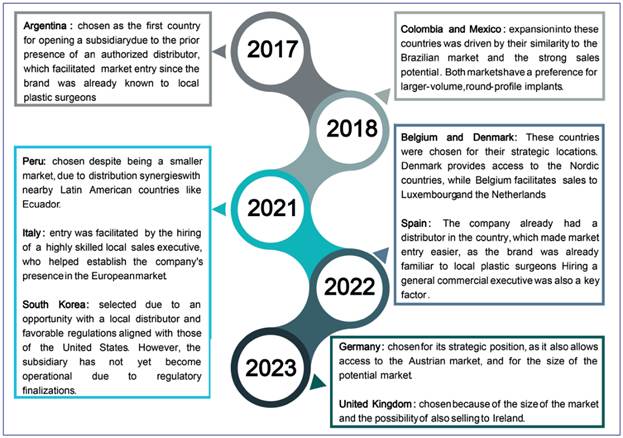 Source: Elaborated by the authors.
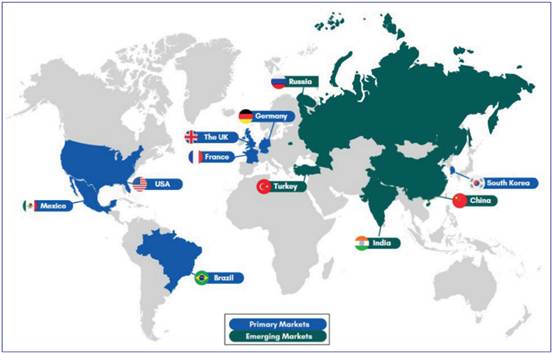 Source: Based on GlobeNewswire (