
 High diversity of arbuscular mycorrhizal fungi in two forestry ecosystems from central and northern Costa Rica
ABSTRACT
Background: Arbuscular mycorrhizal fungi (AMF) generate a symbiotic relationship with most terrestrial plants, influencing the dynamics and functioning of ecosystems. There are few studies on the diversity of these fungi associated with forest species and in different types of ecosystems. The objective of this study was to characterize the diversity and structure of AMF communities associated with Cordia alliodora and Swietenia macrophylla in two forestry ecosystems with different types of management in Costa Rica. For this purpose, rhizosphere and soil samples were collected from 10 trees at random, spores and sporocarps were isolated and characterized, AMF abundance, richness and diversity were determined, and a physicochemical analysis of the soil was carried out.
Results: Fifty-seven AMF morphospecies belonging to five orders, 10 families and 15 genera were identified, with a predominance of Diversisporales and Glomerales; we report 15 new geographic records of AMF increasing the richness to 76 species and by 24% the Glomeromycota’s richness in Costa Rica. There were no significant differences in total spore abundance between the two forest species, however, there were significant differences in the modes of formation and species composition.
Conclusions: The alpha diversity analysis showed that rare species largely explain the differences between the sites, and the AMF community structure was influenced by edaphic factors such as pH and available phosphorus content. These types of studies highlight the importance of considering the identity and diversity of AMF associated with forest species of commercial interest and ecological importance in different types of ecosystems.
Keywords:
Agroforestry system; Santa Rosa National Park; Glomeromycota; Laurel; Mahogany
HIGHLIGHTS
57 AMF species were identified in two forest ecosystems of Costa Rica. Fifteen new geographic records of AMF are reported for Costa Rica. AMF communities differ between S. macrophylla and C. alliodora. The pH and available phosphorus influence AMF community structure
INTRODUCTION
Arbuscular mycorrhizal fungi (AMF; Glomeromycota) inhabit the soil and form mutualistic symbiosis with about 80% of terrestrial vascular plants and an increasing number of aquatic plants (Li et al., 2024). This mutualistic association is ubiquitous (Enebe & Erasmus 2023), and it is considered one of the oldest existing interactions on Earth that is widely distributed in most continents (Antoine et al. 2021; Stürmer & Kemmelmeier 2021). Among many benefits this symbiosis provides, AMFs represent an important ecological role (Antoine et al. 2021; Li et al. 2024).
Some authors mention that AMF are key drivers of ecosystem processes by impacting plant-environment interaction, plant productivity, and ecosystem functions, as they establish a connection between plants’ aerial and subterranean components (Edy et al. 2022). Since AMF facilitate the translocation and absorption of multiple nutrients and water, they also play a key role in plant establishment, function, and diversity, as well as their multitrophic interactions (Guzman et al. 2025)
However, it is important to consider the specific ecosystem where the AMF-plant symbiosis is established. When talking about soils with agricultural practices, for example, in agroforestry systems, agriculture or forestry activities can influence the availability of resources for AMF, which in turn can affect the composition of AMF communities (Antoine et al. 2021; Li et al. 2024). Likewise, activities such as agrochemical use and tillage often cause hyphal breakdown and generate physiological stress to AMF that can negatively affect their ecological functions and symbiotic services to plants (Enebe & Erasmus 2023).
Despite these conditions, AMF show diverse responses to different environmental conditions, so they can adapt and generate symbiont relationships with most agricultural and forest crops, where in previous studies a great diversity of AMF has been observed (Oehl et al., 2017; Polo-Marcial et al., 2022). As for ecosystems without any type of disturbance such as natural forests within national parks, they would be expected to be richer in organic matter and therefore may harbor a lower amount of AMF (Enebe & Erasmus 2023). However, AMF diversity will be influenced by the different vegetation types in the different periods of ecological succession of the forest (Li et al. 2024).
The study of AMF communities in the Americas has historically been very heterogeneous, as most studies have focused on some regions of North and South America (Stürmer & Kemmelmeier 2021; Vega-Herrera et al. 2023), however, the central part has been little explored in mycorrhizal terminus (Polo-Marcial et al. 2023; De Jesús Alarcón et al. 2025). Currently, 61 species have been reported from Costa Rica, mainly in Premontane wet forest and Tropical dry forest, with a dominance of Diversisporaceae and Glomeraceae, however, extensive areas of vegetation remain unexplored (Mardones et al. 2024; De Jesús Alarcón et al. 2025).
Costa Rica has led the way in forest management and forest conservation considering that 30% of the country is covered by forests (SINAC 2013). Under this approach, a special interest has been generated in understanding mycorrhizal interactions in these vegetation types and in forest species of economic or conservation importance (Aldrich-Wolfe et al. 2020). The forest species Cordia alliodora, commonly known as laurel, and Swietenia macrophylla, with its common name mahogany, are species of great forest importance, as well as of great economic value in Costa Rica and worldwide (Andrade et al. 2023). Both species are native to the country and are present in different eco-regions (Chinchilla-Mora et al. 2021; Valverde et al. 2021). Particularly for this study, laurel was found near organic banana plantations, which is considered an agroforestry system, in Turrialba, Cartago. In contrast, mahogany was found within the Santa Rosa National Park in Guanacaste, a conserved forest in a seasonally dry region.
Evolutionarily, the family Boraginaceae and Meliaceae form arbuscular mycorrhizal associations (Wang & Qiu 2006). Specifically in C. alliodora and S. macrophylla studies have reported considerable colonization and richness of AMF dominated by Glomeraceae, Diversisporaceae and Scutellosporaceae. However, these results are restricted to the Neotropical bioregion of Mexico (dos Santos et al. 2021; Sánchez-Reyes et al. 2023).
In Brazil, a study was conducted on the presence of HMA in mahogany established in an agroforestry system with different crops on a site with acidic soil and without any fertilizer application. Samples were collected at three different times of the year: during the dry season, at the beginning of the rainy season, and in the middle of the rainy season of the harvest in agroforestry systems, reflecting a high percentage of HMA in the rainy season despite being acidic soil with other agricultural crops nearby (dos Santos et al. 2021).
Regarding C. alliodora, Cuervo and Rivas (2007) quantified mycorrhizal fungi in soil samples from different plantations of C. alliodora in Costa Rica, once they determined the percentage of mycorrhization and which AMF species were present, including Glomus spp. and Gigaspora spp., they used the soil as a source of inoculum to evaluate the effect of AMF in the nursery stage. So far, there have been no reported studies of AMF diversity associated with laurel under natural growth conditions within agroforestry systems, nor of mahogany in natural forests in Costa Rica. The objective of this work was to characterize the diversity and community structure of AMF in the rhizosphere of two forest species from two contrasting life zones and forestry ecosystems with different management.
MATERIALS AND METHODS
Study site and sampling
Ten trees of Cordia alliodora and Swietenia macrophylla under natural growing conditions were randomly selected from two sites with different management, an agroforestry system for laurel and a conserved forest for mahogany. A minimum diameter of 500 m between each sampled tree was considered (Figure 1). Samples were collected in September and October 2022, during the rainy season in Costa Rica. A soil sample was collected from each tree, approximately 30 cm deep and at 1 m from the base of the trunk in the four cardinal directions (Polo-Marcial et al., 2023). Sample processing was carried out at the Laboratory of Pathology of the Forestry School of the Technological Institute of Costa Rica.
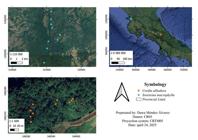
Location by GPS of sampling sites for Cordia alliodora and Swietenia macrophylla trees in Costa Rica.
Samples of S. macrophylla were collected within Santa Rosa National Park, in areas considered secondary forest without anthropic intervention since its declaration as a National Park in 1971, located in the province of Guanacaste (10º53’ N, 85º38’ W). With an average elevation of 300 meters above sea level, the park is located between the Dry Tropical Forest (BsT) and Premontane Humid Transition to Basal Forest (BhPB) life zones. These life zones have an average temperature of 24.0 to 27.8 °C, annual precipitation varies between 1100 and 1500 mm, the climate has a dry season of 3.5 to 6.5 months between November and April, and the soils are predominantly Inceptisols, Alfisols, Vertisols, and Entisols (IMN, 2025a).
Samples of C. alliodora were collected in the canton of Turrialba, province of Cartago, specifically in the town of Platanillo (9°49’ N, 83°42’ W) in an agroforestry system with organic bananas, approximately four years old, where only organic fertilizer has been applied to the bananas and not to the laurel. Prior to organic banana cultivation, other agricultural crops were grown on the site using conventional management practices, with agrochemicals applied as needed. Regardless of the type of crop established, the laurel trees, approximately 12 years old, have not received any silvicultural management since their establishment. This site has an average elevation of 1,120 m above sea level. The canton of Turrialba is in the tropical rainforest zone, with an average temperature of 22 °C (72.2-63.7 °F) and an average annual rainfall of 2619 mm. The region is characterized by young soils, such as Inceptisols and Andisols (IMN, 2025b).
Soil analysis
Four soil and rhizosphere samples were collected for each of the selected trees in the different sampling sites, according to the methodology used by Polo-Marcial et al., (2023). The exact sampling point was geolocated. A composite 500g sample, formed by mixing the four samples of each tree was taken, and a complete chemical analysis was performed through the external service of the Soil and Foliar Laboratory of the Agronomic Research Center of the University of Costa Rica. Each variable analyzed was determined as follows: electrical conductivity (EC) was extracted with ultrapure water at a soil-extractant volumetric ratio of 1:2.5 and determined potentiometrically.
The pH and exchangeable acidity were determined using a neutral salt, potassium chloride (KCl), with a displacement ion (K+) that causes the acid ions (aluminum (Al+) and hydrogen (H+)) to pass into the solution. This acidity is then titrated with a basic solution, so that the amount of acidity will be equal to the amount of base used between the neutralization points with phenolphthalein. To determine the amount of acidity corresponding to aluminum, a back titration is performed with an acid solution. In this case, 4% potassium fluoride (KF) was added to dissolve the previously formed aluminum hydroxides (Al(OH)3), which, after the reaction, release hydroxyl ions (OH-) into the medium that are titrated with hydrochloric acid (HCl).
To determine acidity (CEC) and exchangeable aluminum, the soil was extracted in a potassium chloride (KCl 1M) solution, in a soil-extractant volumetric ratio of 1:10, and subsequently in a 10:10 dilution of ultrapure water filtrate. Acidity was determined by titration with sodium hydroxide (NaOH 0.01 M) and aluminum was determined by re-titration with potassium fluoride (KF 4%) and hydrochloric acid (HCl 0.01 M). For the elements Ca, Mg, K, P, Zn, Cu, Fe, Mn, the soil was extracted with Mehlich 3 solution (pH 2.5, HOAc 0.2 N, NH₄NO₃ 0.25 N, NH₄F 0.015 N, HNO₃ 0.013 N, EDTA 0.001 M), in a soil-extractant volumetric ratio of 1:10. The elements were determined using Inductively Coupled Plasma Atomic Emission Spectrometry (ICP-OES). C and N were analyzed in an Elementar Vario Macro Cube autoanalyzer, whose determination is based on the Dumas dry combustion principle.
The acidity saturation percentage (SA%) is obtained by taking the exchangeable aluminum (Al) content and the sum of exchangeable bases (Ca, Mg, K, Na). To determine effective cation exchange capacity (ECEC), extraction was first performed in ammonium acetate (1.0 M; pH 7) and the bases present were determined by Inductively Coupled Plasma Atomic Emission Spectrometry (ICP-OES). The remaining soil was washed with 95% alcohol, the supernatant obtained was discarded, and 25 mL of 10% KCl with a pH of 2.5 was added to the remaining soil. shaken for 10 minutes, centrifuged at 1600 rpm for 10 min, and the filtered supernatant was analyzed for CIC value by colorimetry in the Flow Injection Analyzer (FIA).
Isolation and taxonomic identification of AMF
Glomerospores and glomerocarps were isolated from 100 g of dry soil through sieving and decanting with 60% sucrose (Gerdemann and Nicolson 1963, Błaszkowski et al. 2012). Spores were separated and grouped into morphotypes according to their color, shape, and size. Permanent preparations were made with spores mounted on PVLG (polyvinyl alcohol acid glycerol) and a mixture of PVLG+Melzer 1:1 (v/v). Of the viable glomerospores, the number of layers and walls were determined, as well as their phenotype and histochemical characteristics, reaction to Melzer, color, and thickness of the layers (Medeiros et al. 2021). The terms glomerospore and glomerocarp, proposed by Goto and Maia (2006) and Jobim et al. (2019), respectively, were adopted. Morphospecies were identified with specialized literature and original species descriptions (Schenck and Perez 1990; Błaszkowski et al. 2012), taxonomically classified according to Oehl et al. (2008), Oehl et al. (2011), Błaszkowski (2012), Wijayawardene et al. (2020), and Tedersoo et al. (2024). Permanent slide vouchers are stored in the Forest Pathology laboratory of the School of Forest Engineering of the Instituto Tecnológico de Costa Rica.
Ecological and statistical analysis
The relative abundance (number of individuals of a species/total number of individuals of all species) *100) of AMF present for forest species was calculated per species and site, and based on these data, a Kruskal-Wallis non-parametric test and a Tukey (p < 0.05) significant difference test were performed. We estimated AMF diversity as qD in terms of effective number of species, where q represents the order of diversity (Jost 2006). To assess and compare sample completeness and diversity between Cordia alliodoraandSwietenia macrophylla, we followed the protocol proposed by Chao et al. (2020), using the online tool iNext4steps (https://chao.shinyapps.io/iNEXT4steps/). Significant differences between plant species were evaluated by the overlap of the confidence intervals (Chao and Jost, 2012).
To analyze dissimilarities between the AMF communities of the two forest species, a non-metric multidimensional scaling (NMDS) was generated in conjunction with the Bray-Curtis similarity index, complemented by a one-way ANOSIM similarity test. Finally, an indicator species analysis was performed for order, family, genus, species, and mode of formation, and a taxon was considered as an indicator when its Indicator Value Index (IndVal) value was greater than or equal to 25% and p < 0.05 (Dufrêne and Legendre 1997). All analyses were performed in RStudio 4.4.1 software (R Core Team, 2019), with different packages: indicspecies (De Cáceres and Legendre, 2009), iNEXT.4steps (Chao et al., 2020), Rstaticx (Kassambara, 2023), Vegan (Oksanen et al., 2025).
RESULTS
Soil properties
Chemical analysis showed some differences between the sampled sites (Table 1). A more acid pH was obtained in the site sampled for C. alliodora (4.5) compared to the site sampled for S. macrophylla (5.9), this pattern was observed in the CEC values, where Platanillo (2.15 cmol(+)/L) had a higher value than Santa Rosa National Park (0.13 cmol(+)/L). According to Costa Rican reference ranges, the pH at Platanillo falls below the desirable threshold (5.5), with high saturation of acidity (22%), in contrast to Santa Rosa National Park, where soils are classified as basic with minimal acidity saturation (1%) (Table 1). As for the available phosphorus (P) content, a low value was obtained for both sites (2 mg/L); below the national sufficiency range (10mg/L).
Average values of soil chemical properties in the two sites sampled for Cordia alliodora and Swietenia macrophylla, in Costa Rica. CV coefficient of variation.
Likewise, as shown in Table 1, Santa Rosa National Park had higher values for effective cation exchange complex (CICE) (13.06 cmol(+)/L) compared to the Platanillo site (10.11 cmol(+)/L), suggesting greater retention capacity. On the other hand, the Platanillo site presented a higher value for organic carbon (C) with 4.84% content compared to the Santa Rosa National Park site (2.69%); despite these differences, the carbon-nitrogen (C/N) ratio, remained relatively stable between sites (9.2 in Platanillo and 10.9 in Santa Rosa National Partk). These results confirm the contrasting edaphic conditions of the two study sites.
Diversity, Richness, and abundance
A total of 382 glomerospores and glomerocarps were isolated, 252 from the rhizosphere of C. alliodora and 130 from S. macrophylla. No statistical differences in spore abundance were detected between the two forest species. However, according to the mode of formation, in C. alliodora, the acaulosporoid mode was significantly higher than in S. macrophylla (p < 0.05) (Figure 2a), but the glomoid and glomoid-radial modes were higher in S. macrophylla (p < 0.05) (Figure 2b and Figure 2c), and the gigasporoid mode showed no differences (Figure 2d).

Relative abundance of AMF according to the mode of formation of glomerospores associated with two forest species in Costa Rica. a) acaulosporoid, b) glomoid, c) glomoid-radial and d) gigasporoid.
Fifty-seven morphospecies belonging to five orders, 10 families, and 15 genera were identified. Diversisporales and Glomerales were dominant with 22 and 19 species, respectively (Table 2). Acaulospora was the dominant genus with 21 species. The highest AMF richness was found in C. alliodora (35 spp.), while 29 species were detected in S. macrophylla. As shown in Table 2, 15 new geographic records of AMF for Costa Rica were identified.
Relative abundance of rhizospheric arbuscular mycorrhizal fungi of two forest species in Costa Rica. *glomerocarpic species. **New records for Costa Rica.
Sample coverage for C. alliodora, S. macrophylla, and the total sample was 65%, 74%, and 78%, respectively. The standardized coverage value (Cmax) calculated for both species was 97.2%. Diversity estimates were as follows: for C. alliodora, q0 = 41.41, q1 (Shannon) = 11.99, and q2 (Simpson) = 4.98; for S. macrophylla, q0 = 35.66, q1 = 18.16, and q2 = 11.75 (Figure 3a). The estimated richness (q0) for the total sample was 61 species. There was no significant difference in species richness (q0) between the two tree species. The evenness profile further confirmed significantly higher evenness in the AMF community associated with S. macrophylla (Figure 3b).

Taxonomic diversity and evenness a) Non-asymptotic coverage-based diversity estimates of orders q = 0, 1, and 2 at the standardized coverage value of Cmax 97.2 % for arbuscular mycorrhizal fungi associated with the rhizosphere of Cordia alliodora and Swietenia macrophylla and the total samples. b) Evenness profile as a function of order q, for Pielou J, q = 1 and q = 2, based on the normalized slope of Hill numbers for arbuscular mycorrhizal fungi associated with the rhizosphere of Cordia alliodora and Swietenia macrophylla. Shadow areas represent 95 % confidence intervals with a bootstrap method with 250 replications.
InVal indicator species analysis (IV≥25%, p < 0.05) revealed that for C. alliodora, the acaulosporoid formation mode was significant (p = 0.0007), as well as the family Acaulosporaceae (p= 0.0001) and the genus Acaulospora (p=0.0004). Specifically, three species were identified as indicators (Figure 4): Acaulospora reducta (p=0.0032), A. foveate (p=0.0046), and A. rehmii (p=0.0131). In contrast, for S. macrophylla, the glomoid (p=0.0075) and radial-glomoid (p=0.0031) and the genera Sclerocystis (p=0.0035) and Glomus (p=0.0411). Five indicator species were detected (Figure 4): Halonatospora sp. 1 (p=0.0008), Glomus spinuliferum (p=0.0120), Sclerocystis sp. 1 (p=0.0337), Sclerocystis taiwanensis (p=0.0425), and Glomus glomerulatum (p=0.0364).

AMF richeness, 1) Acaulospora foveata, 2) A. rehmii, 3) Fuscutata heterogama, 4) Ambispora reticulata, 5) Sclerocystis clavispora, 6) Sclerocystis coremioides, 7) Sclerocystis taiwanense, 8) Sclerocystis sinuosa.
AMF community structure
Non-metric multidimensional scaling in conjunction with Permanova analysis evidenced that C. alliodora and S. macrophylla AMF communities are different (F= 5.088, p < 0.0001) (Figure 5). SIMPER analysis indicated that the AMF species contributing most to dissimilarity are Acaulospora foveata (20.9%), Halonatospora sp. 1 (8.8%), A. reducta (7.6%), Glomus spinuliferum (5.2%), G. glomerulatum (5.0%) and Sclerocystis taiwanensis (4.0%). Only seven species (Acaulospora laevis, Glomus trufemii, Rhizoglomus microaggregatum, Septoglomus aff. constrictum, Sclerocystis coremioides, S. taiwanensis, and Paraglomus occultum) are shared between the two forest species, 28 species are exclusive to C. alliodora and 22 species to S. macrophylla.

Non-metric multidimensional scaling analysis (NMDS) of AMF communities associated with two forest species in Costa Rica.
DISCUSSION
Despite the crucial role of arbuscular mycorrhizal fungi (AMF) in plant growth, and nutrient cycling, studies on AMF diversity in Costa Rica remain scarce (Mardones et al., 2024). Understanding species richness and distribution across different environments and vegetation types is essential for sustainable agroecosystems, forestry practices, and conservation programs (Liu et al., 2024). In this study, we detected contrasting AMF communities in terms of richness, dominance and formation modes in the two forest species (Figure 2, Table 2).
The richness of this study is the highest one recorded so far in Costa Rica with 57 species, representing 93.44 % of the total known in the country and only in two life zones. Additionally, we report 15 new geographical records of AMF increasing the richness to 76 species with respect to the 61 spp. currently reported (Mardones et al. 2024; Alarcón et al. 2025). This species richness represents approximately 20% of all AMF species currently described within the phylum Glomeromycota (Goto et al., 2024; Wijayawardene et al., 2024).
One of the properties that most influences the presence and diversity of AMF is pH (Zhang et al. 2021). A pH range between 5.7 and 6.6 is considered favorable for mycorrhizal symbiosis (Hernández-Acosta et al. 2021), values that are reflected in the site sampled for the rhizosphere of S. macrophylla and not so for the site with rhizosphere of C. alliodora (Table 1). However, according to da Silva et al., (2021) AMF can thrive in more acidic soils, as in the case of the Platanillo site (Table 1).
On the other hand, the influence of pH on the diversity of species found in this work was reflected, according to Laurindo et al. (2021) in a study of agroforestry systems in Brazil in which the authors reported that, Acaulosporaceae species are more common in soils with a pH below 4.0, while Glomeraceae are usually found more frequently in soils with a pH above 5.0. Similar results were obtained in both sampling sites, where in Platanillo Acaulosporaceae predominated (Figure 5) with a pH of 4.5 and in Santa Rosa National Park the second most predominant species was Glomeraceae (Figure 5) with a pH of 5.9.
Another important soil factor is the availability of nutrients, especially phosphorus, carbon, and nitrogen (Maitra et al. 2021). In this study, a low concentration of available P (Table 1) was obtained for both sites that is usually for soils in Costa Rica. Nonetheless, it is considered that there was a high richness of AMF, like that reported by da Silva et al. (2021) in no-till monoculture systems and agroforestry systems with low phosphorus availability. According to Hernández-Acosta et al. (2021), low phosphorus availability in the soil can stimulate the production of strigolactones by the plant, which are necessary to activate the metabolism and branching of AMF hyphae, favoring the establishment of symbiosis.
Regarding the richness and abundance (Figure. 2 and Figure 4) found at the Platanillo site, an agroforestry system with C. alliodora, these represent values like those reported by Laurindo et al. (2021) in agroforestry systems in different regions of Brazil and Polo-Marcial et al. (2023) in agroforestry systems with C. odorata in Costa Rica. For the Santa Rosa National Park site associated with S. macrophylla rhizosphere, slightly higher richness values were obtained than those reported for Amazonian forests (Zhang et al. 2021) and secondary forests associated with C. odorata in Costa Rica (Polo-Marcial et al. 2023).
The genera Glomus and Acaulospora are frequently reported as dominant or with high species richness in diverse ecosystems, including tropical forests, agroforestry systems, and grasslands (Olanipon et al. 2024), similar results were obtained in this study (Table 2). The results of the study showed differences in the composition and structure of AMF communities between C. alliodora and S. macrophylla (Figure 5), which seem to be strongly influenced by local environmental factors such as edaphic conditions and the type of ecosystem management. Similar results are reported by Laurindo et al. (2021) in their study of different ecosystems in Brazil, where the species identified are distributed in the orders Diversisporales and Glomerales.
According to the alpha diversity analysis, rare species are key to determining the differentiation between AMF communities for each sampled site, being a common pattern in AMF studies in tropical ecosystems (Polo-Marcial et al. 2023). Also, the high sample coverage (>0.9) at both sites validates the robustness of comparison and suggests adequate sampling (Figure 3). The ordination analysis (NMDS) and SIMPER supported this differentiation obtained with species such as A. foveata and Halonatospora sp. 1, this suggests that certain AMF species could fulfill specific functions according to the ecological context where they are found, as mentioned by Li et al. (2024) there are AMF communities sensitive to vegetation type, ecosystem management and successional state of the forest, reflecting the results obtained for the AMF communities present in the rhizosphere of two contrasting sites associated with C. alliodora y S. macrophylla in Costa Rica.
CONCLUSION
The AMF communities associated with Cordia alliodora in Platanillo, an agroforestry system, and Swietenia macrophylla in Santa Rosa National Park, a mature forest without intervention, present differences in their structure and composition, due to the physicochemical conditions of the soil and the type of management of each ecosystem. Despite not having detected differences in the total abundance of spores between sites, specific patterns were observed in the modes of formation and indicator species, highlighting Acaulospora in more acidic soils and Glomus in soils with higher fertility. The richness of morphospecies found (57) reflects a high potential diversity in the ecosystems sampled. This type of study highlights the importance of considering the identity and diversity of AMF associated with forest species of commercial interest and ecological importance, and in different types of ecosystems, to contribute to decision-making regarding the management of forest ecosystems.
DATA AVAILABILITY
The datasets supporting the conclusions are included in the article.
ACKNOWLEDGMENTS
The authors would like to thank the Vice rector’s office of Research of the Instituto Tecnológico de Costa Rica and the Instituto Tecnológico de la Zona Maya for financing the visit of Phd. Hassan Marcial Polo and Phd. Luis Lara Pérez to the facilities of the Instituto Tecnológico de Costa Rica. Fabricio Arias Sánchez and Santa Rosa National Park for allowing us to carry out the sampling at each site.
Funding: This work was financially supported by the Vice rector’s office of Research and Extension of the Instituto Tecnológico de Costa Rica, under the project 1401131 “Use of arbuscular mycorrhizal fungi naturally associated with three forest species”.
REFERENCES
- ALDRICH-WOLFE, L.; BLACK, K. L.; HARTMANN, E. D. et al. Taxonomic shifts in arbuscular mycorrhizal fungal communities with shade and soil nitrogen across conventionally managed and organic coffee agroecosystems. Mycorrhiza, v. 30, p. 513-527, 2020.
- ANDRADE, H. J.; SEGURA, M. A.; SUÁREZ, J. C. Growth and carbon sequestration in biomass of Cordia alliodora in Andean agroforestry systems with coffee. Agroforestry Systems, v. 97, n. 8, p. 1435-1446, 2023.
- ANTOINE, S.; HÉRICHÉ, M.; BOUSSAGEON, R. et al. A historical perspective on mycorrhizal mutualism emphasizing arbuscular mycorrhizas and their emerging challenges. Mycorrhiza , p. 1-17, 2021.
- BŁASZKOWSKI, J. ; Glomeromycota. Szafer, W . Institute of Botany. Polish Academy of Sciences, Kraków. p.303. 2012
- CHAO, A.; JOST, L. Coverage-based rarefaction and extrapolation: standardizing samples by completeness rather than size. Ecology, v. 93, p. 2533-2547, 2012.
- CHAO, A.; KUBOTA, Y.; ZELENÝ, D. et al. Quantifying sample completeness and comparing diversities among assemblages. Ecological Research, v. 35, p. 292-314, 2020.
- CHINCHILLA-MORA, O.; COREA-ARIAS, E.; MEZA-PICADO, V.; ÁVILA-ARIAS, C. Crecimiento, rendimiento y costos durante los primeros tres años de la caoba (Swietenia macrophylla King) establecida en sistemas agroforestales. Revista Forestal Mesoamericana Kurú, v. 18, n. 42, p. 62-73, 2021.
- CUERVO, J.; RIVAS, G. Cuantificación de hongos micorrícicos en muestras de suelo en plantaciones de Tabebuia rosea y Cordia alliodora Revista Nova, v. 5, n. 7, 2007.
- DA SILVA, S. I. A.; DE SOUZA, T. A. F.; DE LUCENA, E. O. et al. High phosphorus availability promotes the diversity of arbuscular mycorrhizal spores’ community in different tropical crop systems. Biologia, v. 76, n. 11, p. 3211-3220, 2021.
- DE CÁCERES, M.; LEGENDRE, P. Associations between species and groups of sites: indices and statistical inference. Ecology , v. 90, n. 12, p. 3566-3574, 2009.
- DE JESÚS-ALARCÓN, M. M.; SOLÍS-RAMOS, L. Y.; ANDRADE-TORRES, A. State of knowledge of the Glomeromycota of Costa Rica. Revista de Biología Tropical, v. 73, n. S2, e64710, 2025.
- DOS SANTOS HARA, F. A.; SILVA, A. C. S.; MOREIRA, F. W. et al. Ocorrência de fungos micorrízicos em pau-rosa (Aniba duckei Kosterm) e mogno (Swietenia macrophylla King) em diferentes épocas de coleta na região de Manaus. Research, Society and Development, v. 10, n. 4, e25010413666-e25010413666, 2021.
- DUFRÊNE, M.; LEGENDRE, P. Species assemblages and indicator species: the need for a flexible asymmetrical approach. Ecological Monographs, v. 67, n. 3, p. 345-366, 1997.
- EDY, N.; BARUS, H. N.; FINKELDEY, R.; POLLE, A. Host plant richness and environment in tropical forest transformation systems shape arbuscular mycorrhizal fungal richness. Frontiers in Plant Science, v. 13, 1004097, 2022.
- ENEBE, M. C.; ERASMUS, M. Symbiosis-A perspective on the effects of host traits and environmental parameters in arbuscular mycorrhizal fungal richness, colonization and ecological functions. Agriculture, v. 13, n. 10, p. 1899, 2023.
- GERDEMANN, J. W.; NICOLSON, T. H. Spores of mycorrhizal Endogone species extracted from soil by wet sieving and decanting. Transactions of the British Mycological Society, v. 46, p. 235-244, 1963.
- GOTO, B. T.; MAIA, L. C. Glomerospores: a new denomination for the spores of Glomeromycota, a group molecularly distinct from the Zygomycota. Mycotaxon, v. 96, p. 129-132, 2006.
- GOTO, B. T.; DE QUEIROZ, M. B.; MAGURNO, F. et al. How far have we progressed in Glomeromycota taxonomy and systematics?. IMS Newsletter, p. 18-24, 2024.
- GUZMÁN, A.; MONTES, M.; LAMIE, N. et al. Arbuscular mycorrhizal interactions and nutrient supply mediate floral trait variation and pollinator visitation. New Phytologist, v. 245, n. 1, p. 406-419, 2025.
- HERNÁNDEZ-ACOSTA, E.; BANUELOS, J.; TREJO-AGUILAR, D. Revisión: Distribución y efecto de los hongos micorrízicos en el agroecosistema de café. Revista de Biología Tropical , v. 69, n. 2, p. 445-461, 2021.
-
IMN - Instituto Meteorológico Nacional. Pacífico Norte. 2025a. Disponível em: Disponível em: https://www.imn.ac.cr/ Acesso em: abr. 2025.
» https://www.imn.ac.cr/ -
IMN- Instituto Meteorológico Nacional. Región Caribe. 2025b. Disponível em: Disponível em: https://www.imn.ac.cr/ Acesso em: abr. 2025.
» https://www.imn.ac.cr/ - JOBIM, K.; BŁASZKOWSKI, J.; NIEZGODA, P. et al. New sporocarpic taxa in the phylum Glomeromycota: Sclerocarpum amazonicum gen. et sp. nov. in the family Glomeraceae (Glomerales) and Diversispora sporocarpia sp. nov. in the Diversisporaceae (Diversisporales). Mycological Progress, v. 18, p. 369-384, 2019.
- JOST, L. Entropy and diversity. Oikos, v. 113, n. 2, p. 363-375, 2006.
- LAURINDO, L. K.; DE SOUZA, T. A. F.; DA SILVA, L. J. R. et al. Arbuscular mycorrhizal fungal community assembly in agroforestry systems from Southern Brazil. Biologia , v. 76, n. 4, p. 1099-1107, 2021.
- KASSAMBARA, A. rstatix: Pipe-friendly framework for basic statistical tests. R package version 0.7.2. Disponível em: https://rpkgs.datanovia.com/rstatix/. 2023.
- LI, Y.; ZHANG, Z.; TAN, S. et al. Overview of vegetation factors related to the diversity of arbuscular mycorrhizal fungi and their interactions in karst areas. Applied Soil Ecology , v. 198, 105387, 2024.
- LIU, R.; LI, M.; GUO, S.; CHEN, Y. The role of AMF community composition, diversity, and distribution in sustainable agroecosystems. In: Arbuscular mycorrhizal fungi in sustainable agriculture: inoculum production and application. Singapore: Springer Nature, p. 281-317, 2024.
- MAITRA, P.; ZHENG, Y.; WANG, Y. L. et al. Phosphorus fertilization rather than nitrogen fertilization, growing season and plant successional stage structures arbuscular mycorrhizal fungal community in a subtropical forest. Biology and Fertility of Soils, v. 57, p. 685-697, 2021.
- MARDONES, M.; TENORIO, L. U.; MONTERO, M. D. M. G. et al. The first annotated checklist of Costa Rican fungi. Funga Latina, v. 2, p. 1-39, 2024.
- MEDEIROS, A. S.; GOTO, B. T.; GANADE, G. Ecological restoration methods influence the structure of arbuscular mycorrhizal fungal communities in degraded drylands. Pedobiologia, v. 84, 150690, 2021.
- OEHL, F.; DE SOUZA, F. A.; SIEVERDING, E. Revision of Scutellospora and description of five new genera and three new families in the arbuscular mycorrhiza-forming Glomeromycetes. Mycotaxon , v. 106, p. 311-360, 2008.
- OEHL, F.; SILVA, G. A.; GOTO, B. T.; SIEVERDING, E. Glomeromycota: three new genera and glomoid species reorganized. Mycotaxon , v. 116, p. 75-120, 2011.
- OEHL, F.; LACZKO, E.; OBERHOLZER, H. R. et al. Diversity and biogeography of arbuscular mycorrhizal fungi in agricultural soils. Biology and Fertility of Soils , v. 53, p. 777-797, 2017.
-
OKSANEN, J.; SIMPSON, G.; BLANCHET, F. et al. vegan: Community Ecology Package R package. version 2.8-0, 2025. Disponível em: https://vegandevs.github.io/vegan/
» https://vegandevs.github.io/vegan - OLANIPON, D.; BOERAEVE, M.; JACQUEMYN, H. Arbuscular mycorrhizal fungal diversity and potential association networks among African tropical forest trees. Mycorrhiza , v. 34, n. 4, p. 271-282, 2024.
- POLO-MARCIAL, M. H.; LARA-PÉREZ, L. A.; GOTO, B. T. et al. Tropical deciduous species under different land use retain a high glomerospores diversity and arbuscular and septate endophyte colonization. Nova Hedwigia, 2022.
- POLO-MARCIAL, M. H.; SOLÍS-RAMOS, L. Y.; MURILLO-CRUZ, R. et al. Mycorrhiza l and endophytic richness and colonization in Cedrela odorata L. in agroforestry systems and secondary forest from southeastern Costa Rica. Agroforestry Systems , v. 97, n. 4, p. 647-658, 2023.
-
R CORE TEAM . R: a language and environment for statistical computing. R Foundation for Statistical Computing, Vienna, Austria. Disponível em: https://www.R-project.org/. 2019
» https://www.R-project.org/. 2019 - SÁNCHEZ-REYES, G.; LARA-PEREZ, L. A.; SAENZ-CARBONELL, L. A. et al. Fungal diversity and colonization in roots of seed trees of Swietenia macrophylla King in the tropical rainforest of Laguna Om, Quintana Roo, Mexico. Forest Systems, v. 32, n. 3, e018, 2023.
- SCHENCK, N. C.; PEREZ, Y. Manual for the identification of VA mycorrhizal fungi. 3. ed. Gainesville: Synergistic Publications, 1990.
- SINAC; SIREFOR; MINAE. Reporte estadístico forestal 2013. San José, Costa Rica: Cooperación Alemana Deutsche Zusammenarbeit (GIZ), 2013.
- STÜRMER, S. L.; KEMMELMEIER, K. The Glomeromycota in the neotropics. Frontiers in Microbiology, v. 11, 553679, 2021.
- TEDERSOO, L.; MAGURNO, F.; ALKAHTANI, S.; MIKRYUKOV, V. Phylogenetic classification of arbuscular mycorrhizal fungi: new species and higher-ranking taxa in Glomeromycota and Mucoromycota (class Endogonomycetes). MycoKeys, v. 107, p. 249-271, 2024.
- VALVERDE, J. C.; ARIAS, D.; CASTILLO, M.; TORRES, D. Relación de la variabilidad climática con el crecimiento diamétrico de ocho especies arbóreas de bosque seco en Costa Rica. Ecosistemas, v. 30, n. 1, p. 2092, 2021.
- VEGA-HERRERA, S. S.; STÜRMER, S. L.; DAMIANI, C. R. Glomeromycota in Peru: an overview and future approaches. Sydowia, v. 75, 2023.
- WANG, B.; QIU, Y. L. Phylogenetic distribution and evolution of mycorrhizas in land plants. Mycorrhiza , v. 16, p. 299-363, 2006.
- WIJAYAWARDENE, N. N.; HYDE, K. D.; DAI, D. Q. et al. Outline of fungi and fungus-like taxa. Mycosphere, v. 11, n. 1, 2020.
- WIJAYAWARDENE, N. N.; HYDE, K. D.; MIKHAILOV, K. V. et al. Classes and phyla of the kingdom Fungi. Fungal Diversity, p. 1-165, 2024.
- ZHANG, J.; QUAN, C.; MA, L. et al. Plant community and soil properties drive arbuscular mycorrhizal fungal diversity: a case study in tropical forests. Soil Ecology Letters, v. 3, p. 52-62, 2021.
-
Scientific Editor:
Camila Farrapo


