 Decentralising Global Health: the geopolitics of health knowledge from a Latin American perspective in the twentieth century
Abstract
In this article we explore the theoretical framework of the geopolitics of knowledge from the perspective of the (de)coloniality of knowledge and power, as outlined by Latin American authors. We mobilised two case studies on health in Latin America throughout the 20th century to visualise the argument. Starting from the premise that all knowledge is necessarily localised, we reflect conceptually and empirically on the regimes of authorisation and legitimation of health knowledge, as well as the epistemological disputes that operate in international relations. Methodologically, we call ‘decentralisation of global health’ the analysis guided by the referentials of Critical Global Health, which recognises the limits of the debates on health in the discipline of International Relations. We therefore argue that the epistemic encounters that take place in post-colonial spaces have an impact on the geopolitics of knowledge in health, generating a hybrid conception that we call social biomedicine.
Key words
geopolitics of knowledge; Critical Global Health; Latin America; decoloniality of knowledge; social biomedicine
Resumo
Neste artigo exploramos o arcabouço teórico da geopolítica do conhecimento sob a ótica da (de)colonialidade do saber e do poder, tal como desenhada por autores latino-americanos. Mobilizamos dois estudos de caso sobre saúde situados na América Latina ao longo do século XX para visualizar o argumento. Partindo da premissa de que todo conhecimento é necessariamente localizado, refletimos conceitual e empiricamente sobre os regimes de autorização e legitimação do conhecimento em saúde, bem como as disputas epistemológicas que operam nas relações internacionais. Metodologicamente, chamamos ‘descentralização da saúde global’ a análise orientada pelos referenciais da Saúde Global Crítica, que reconhece os limites dos debates sobre saúde na disciplina de RI. Argumentamos, portanto, que os encontros epistêmicos ocorridos nos espaços pós-coloniais impactam sobre a geopolítica do conhecimento em saúde, gerando uma concepção híbrida que chamamos de biomedicina social.
Palavras-chave
geopolítica do conhecimento; Saúde Global Crítica; América Latina; decolonialidade do saber; biomedicina social
Introduction
In the wake of the outbreak of the Covid-19 pandemic, we can observe that a common occurrence among most peoples and countries is their inclusion, albeit in different and asymmetric positions, in the flow of guidelines, recommendations, norms, and monitoring in global health. This flow can be identified, for example, under the concept of global health security which, according to the United States Centres for Disease Control and Prevention (CDC), means ‘the existence of strong and resilient public health systems that can prevent, detect, and respond to infectious disease threats, wherever they occur in the world’ (Center for Disease Control and Prevention 2022). This definition prompts questions such as: what does it mean to speak of strong and resilient health systems? What counts as infectious threats? Our interest, however, is not to explore the range of possible answers, but to add another question: how are authorisation and legitimacy - here, of the CDC - constituted to participate in formulating concepts, guidelines, mechanisms, and obligations that set the direction of global health?
Drawing on case studies located in Latin America, we investigate the geopolitics of knowledge from the perspective of coloniality (Castro-Gómez 2008; Escobar 2011; Ibarra-Colado 2006; Mignolo 2002, 2007, 2011; Mignolo and Tlostanova, 2006; Quijano 2007; Wanderley and Barros 2018). That is, what are the historically operative hierarchies of power in health, and how do the encounters that, so we argue, impact knowledge validation, scientific stratification, and the coloniality of knowledge unfold? Epistemologically, by examining the geopolitics of knowledge in health through the theoretical-conceptual framework of the (de)coloniality of knowledge and power, this article engages with the field of Global Health.
As we will outline, within this field we engage more specifically with the strand identified as Critical Global Health (Abimbola 2021; Adams 2016; Atkinson et al. 2015; Biehl and Petryna 2013; Birn, Pillay and Holtz 2017; Chinn 2011; Farmer 2004; Global Health Watch 2014; Holst 2020; MacLean, Brown and Fourie 2009; Nguyen and Peschard 2003; Nunes 2016; Sivaramakrishnan 2015), which, being interdisciplinary, offers important contributions to International Relations (IR).
Methodologically, the article offers an inductive qualitative analysis across two empirical sections. The first refers to a single case study set at the beginning of the 20th century, based on the book of the Canadian historian Steven Palmer (2015) and our research in digital archives (research and the first rounds of this article’s presentations and revisions took place during the Covid-19 pandemic). Although Palmer’s book presents a notable historiographical effort within the field of Global Health, its content is little or hardly accessed in IR articles, classes, and research projects. We understand that this is due, among other factors, to how novel a historical inquiry into health is for a discipline that has its genesis in the post-World War I period, concerned with politics among states, and that continued to structure itself over subsequent years until the mid-1950s, when we see its earliest interdisciplinary dialogues.
In the second empirical section, we work with four case studies on the same health event set in the second half of the 20th century, based on an extensive secondary bibliography produced mostly by Latin American researchers, in addition to official documents and primary sources from international organisations available online. With this methodology, our goal is to make the argument visible over time, demarcated by the selection of cases, thus deepening the empirical contribution to understanding Critical Global Health in IR through the epistemological lens of the (de)coloniality of knowledge and power.
Detailing the argument: health as an epistemologically contested signifier
From the perspective of coloniality, it is possible to evidence power relations and normative disputes at the global level that concretely impact the formulation and implementation of national and multilateral policies. Thirusha Naidu, a South African researcher and health professional, discusses how this coloniality is also visible in research and academic trajectories in global health (2024), and proposes what she calls ‘epistemic disobedience’ as a political stance for professionals in the Global South: ‘epistemic disobedience, in practice, is necessarily political. It challenges the colonial foundations of contemporary meritocracy in global health. It illuminates ideological tensions between fairness and equity (…) In practice, epistemic disobedience is not clean, comfortable, quick or quiet. Rather, it does the messy work of undoing colonially founded systems and structures to clear the path for equity-driven, transformative knowledge production’ (Naidu 2024: 3).
Thinking from the vantage point of health, we argue that it is in the epistemological field where disputes begin and develop into other domains, such as the political and the economic, since, as Naidu also argues, ‘epistemology is emerging as a key site of the critique of Euro-American bias in the geopolitics of knowledge’ (2021: 1). Epistemological disputes in health, as with other signifiers, are directly shaped by coloniality/modernity. The geopolitics of knowledge is, therefore, the key concept we will use to distinguish epistemological disputes and interactions, as well as the way in which this impact or modify the geopolitics of knowledge in health itself.
This concept was developed by Walter Mignolo (2000), who titled the part of his book that delves into it ‘I am where I think: the geopolitics of knowledge and colonial epistemic differences’. Mignolo is concerned with explaining postcolonial, postmodern, and subaltern theorisation by bringing together various authors who discuss the international division of scientific labour, or the epistemological distribution of labour. He suggests that postcolonial theorising relocates the boundaries between knowledge, the known, and the knowing subject so as to challenge the foundations of Western ideas of science and knowledge. It does so by establishing epistemic connections between geo-historical localities and theoretical production (Mignolo 2000: 115).
Therefore, by way of this notion of the geopolitics of knowledge, stemming from decolonial theorising located in Latin America, we seek to understand the case studies from the space of the local: how do geo-historically localised agents, languages, strategies, temporalities, priorities, approaches, instruments, and objectives interact and negotiate the meaning of health? The boundaries between knowledge, the known, and the knowing subject first unveil asymmetries between the local and the international. Furthermore, we argue, there is an impact on the geopolitics of knowledge in health when the local becomes the geo-historical and cultural space where knowledge production and the known object (health) occurs, and where knowing subjects re-signify health alongside others from localities with distinct epistemologies. This investigative effort contributes to the strand of Critical Global Health in IR through the theoretical lens of the (de)coloniality of knowledge and power, aligning with what Wanderley and Barros emphasize: ‘more than claims of purism, concepts of anthropophagy and sociological reduction may indicate that Latin America great virtue may be represented by its ability to adapt foreign knowledge to local reality, generating something new, without letting itself be catechized nor becoming a mimicry copy of the colonizer’ (2018: 15). We understand that the critique undertaken by authors in Critical Global Health, even if not all identify as postcolonial or decolonial, is based on the emphasis that all knowledge is localised, beginning with that produced from and within the very idea of modernity.
Empirically, these authors show that ‘an other logic (or border thinking from the perspective of subalternity) goes with a geopolitics of knowledge that regionalises the fundamental European legacy, locating thinking in the colonial difference and creating the conditions for diversality as a universal project’ (Mignolo 2002: 91). That is, we see countless cases in which knowledge arises from the epistemic encounter geopolitically located in postcolonial spaces, among knowing subjects from distinct epistemologies (Biehl and Petryna 2013). Observing these cases, Naidu (2021) also identifies the coloniality of voice, epistemic disobedience, and ‘Northern ventriloquism’, which she describes as a pattern in global knowledge production in which the voices, theories, and priorities of the Global North are expressed through researchers or institutions of the Global South, often silencing or replacing local epistemologies and experiences.
With Critical Global Health, we learn that Global Health as a field of study and practice has developed in the search for global solutions ‘with an eye to cost-effectiveness, to scaling up practical, technologically sophisticated interventions that are not only affordable but also profitable and that hold some accountability to the masses’ (Adams 2016: 187). This has occurred through funding strategies increasingly dependent on private-sector solutions, including philanthropic foundations, public–private partnerships (PPPs), and for-profit pharmaceutical/biotechnological corporations. Some recent research and publications support this assertion, as we will see below.
On PPPs, Arne Ruckert and Ronald Labonté argue that ‘the reshaping of the private and public realm inherent to PPPs represents a further deepening of the neoliberal management of individuals and populations, allowing private interests to become embedded within the public sphere and to influence global and national health policy making’ (2014: 1599). The authors offer a history of the emergence of these PPPs in global health governance, comparing and contrasting different understandings, and conclude that ‘the focus on private sector-driven PPPs in global health ultimately undermines the attempt to significantly improve global health results as the inequitable distribution of social determinants of health, especially poverty and social exclusion, remain the main barriers to achieving health for all in the world today’ (Ruckert and Labonté 2014: 1599).
Regarding health financing by philanthropic foundations, Emer Breen and Ramya Kumar analysed the Rockefeller Foundation, the Wellcome Trust, and the Bill and Melinda Gates Foundation in funding national organisations, non-governmental organisations, and the WHO, concluding that: (i) these foundations reproduce or expand the power imbalance in health governance by mostly favouring organisations from wealthy Northern countries; (ii) they pay little attention to health systems strengthening by adopting a disease-oriented approach; (iii) they fund the for-profit private sector and activities tied to biotechnological innovation to a greater extent (Breen and Kumar 2023: 26). The researchers state that among the main issues raised by the data (collected between 2018–2020) are ‘(...) the perpetuation of patterns of coloniality in their granting; their ability to shape the global health landscape, through their funding of international organisations like the WHO (...)’ (2023: 5), thus negatively affecting the formulation of public health policies in middle- and low-income countries.
For these authors working in the fields of Medical Anthropology, the History of Science and Health, and Critical Social Theory (all gathered in the strand of Critical Global Health), we, as citizens and patients, collectively and increasingly allow neoliberal health economists, rather than health professionals, to guide our reasoning when it comes to planning, implementing, and accounting for global health. Thus, the sense of ‘critical’ lies in questioning the evidence, effectiveness, and centrality of people and their myriad of knowledge in programmes conceived and implemented globally by these neoliberal health economists.
Through ethnographic research, for example, metrics and indicators used to measure effectiveness are questioned, as are the types of evidence considered in evaluations and monitoring, and the importance of other types of knowledge in health at the time of programme implementation in different contexts (Allegri et al. 2018; Biehl 2016; Byrne 2013; De Inhorn and Wentzell 2012). On the importance of ethnography in global health for questioning quantitative metrics and evaluation parameters, Canadian anthropologist Margaret MacDonald states that qualitative methods are better equipped to capture social relations that are, in turn, fundamental to the changes in knowledge and behaviour sought by most global health interventions (2017: 3). In an ethnography on the performance of global health interventions conducted in Senegal, for instance, researchers discuss the unstable boundaries that define performance, asserting that ‘‘empowering actors’ experiences and narratives as evidence in global health research is key to (re)defining what success is and how it gets measured (or not)’ (Duclos et al. 2019: 29).
With this Critical Global Health literature, we learn that there is an internal dispute within medical knowledge that, in this article, we separate between biomedical knowledge and integral medicine knowledge. Biomedical knowledge is represented largely by private actors who hold enormous funding capacity and allocate it to the development of replicable intervention techniques1; to the elaboration of scientific metrics that strengthen their objectives and their conceptions of science arising from a modern positivist rationalism; and to increasing profit and opportunities on a global scale.
Integral medicine knowledge, by contrast, is in most cases relegated in Global Health through parameters disseminated by private and international actors concerning what is accepted as science, as evidence, as metrics, and as outcomes. We also use the term ‘social biomedicine’ to denote the possibility of interaction within biomedicine, between the technical and the integral; between actors from geopolitically different contexts; between complementary understandings of a given object such as pandemics, zoonoses, or structural determinants of health. And, as we argue, this interaction can modify the geopolitics of knowledge in health itself. In this sense, Critical Global Health ‘follows people (and what they say) as well as the objects of knowledge and ontological framings that are produced, that circulate, and that generate human consequences by way of their own narratives’ (Adams 2016: 194).
‘I am where I think’ demarcates our analytical frame methodologically, in line with the strand of Critical Global Health. Looking at Latin America in the 20th century, where ‘diverse ideas are presented regarding how to organise society and its political regimes, as well as different approaches to public health within cultural and political diversity’ (Franco-Giraldo 2016: 129, author’s translation), we qualitatively analyse the encounters and negotiations occurring in the local, understood as a geo-cultural space of production, authorisation, and legitimation of knowledge in health. Specifically, we mobilise in the first empirical section the Rockefeller Foundation’s activity in Latin America and the Caribbean between 1914 and 1919 and, in the second section, the activity of the Rotary Club, the United Nations Children’s Fund (UNICEF), and the US Agency for International Development (USAID) in four Latin American countries - Peru, Argentina, Cuba, and Brazil - between 1960 and 1980.
The campaigns for the eradication of hookworm disease conducted by the Rockefeller Foundation’s International Health Commission (IHC-RF) in the early 20th century, through missions composed of North American physicians and scientists, were designed to demonstrate the effectiveness of technocentrism in health, i.e. the power of financing biomedical technologies to solve epidemics. The missions were first established in six countries with quite distinct sociopolitical realities - Guatemala, Costa Rica, Panama, Nicaragua, British Guiana, and Trinidad - serving as pilot projects for larger countries such as Brazil (Palmer 2015).
We are interested in understanding how encounters with Latin American subjects, community healers, local officials, patient populations, shaped the IHC-RF experience. The specific goal is to illuminate the everyday interactions between IHC-RF mission agents and Latin American subjects in order to revisit the production, authorisation, and legitimation of knowledge in health, i.e. the geopolitics of knowledge. We argue that the pre-existence of local knowledge of healing and care in Latin America imposed a renegotiation of the Rockefeller Foundation’s neocolonial objectives at the moment of encounter in the local. And that this renegotiation substantively impacted the geopolitics of knowledge in health at a time when biomedical knowledge was establishing itself internationally as the dominant epistemology (Huisman and Warner 2004; Packard 2016).
In the second section, we examine the outbreak of poliomyelitis in Peru, Argentina, Cuba, and Brazil during the 1960s. In this epidemic, the strategic focus of the Rotary Club Foundation, as well as UNICEF and USAID, was, much like that of the Rockefeller Foundation decades earlier, on eradication through the financing of mass vaccination, which, however, only began in the 1980s. In line with our argument, these cases allow us to observe, first, which agents, meanings, priorities, means, and objectives preceded the arrival of international actors in the local territories of these four countries, and subsequently how the epistemic encounter unfolded. That is, we empirically identify the elements that demonstrate the impacts on the geopolitics of knowledge arising from encounters between integral medicine - focused on the determinants of epidemic prevention, patient reintegration, and health promotion - and technocentric biomedicine, grounded in the strict application of health technologies such as vaccines and pharmaceuticals.
In this way, the two empirical sections mobilise historical primary sources available online to demonstrate the geopolitics of knowledge in health, which, we argue, is impacted and modified when observed from the locales where it actually takes place. In the case of Latin America, as we will show, health practices and knowledges derive from what Álvaro Franco-Giraldo, a Colombian physician and public health researcher, refers to as ‘a new analytical core: that of social inequalities, according to which it is a priority to establish a critical analysis of their structural causes’ (2016: 129, author’s translation). He terms this structural and more holistic perspective ‘Latin American Global Health’, which, as we will see in the cases mobilised here, has equity and health justice as its guiding analytical pillars. Methodologically, these pillars translate into practices and knowledge that defend ‘regional and local specificities, people’s interests, well-being, and human development. [It is a perspective] based on the development of public policies that intervene in the real needs of the population and in the social determinants of health [through] alliances with civil society, non-governmental actors, and social movements’ (2016: 130, Table 1, author’s translation).
It is important to note that, unlike part of the recent Global Health literature (Hommes et al. 2021; Kwete et al. 2022; McCoy et al. 2024; Sharma and Sam-Agudu 2023), this argument does not seek to demonstrate the decolonisation of health, which is a concept distinct from the one employed here. Rather, by arguing that there are impacts and modifications in the geopolitics of knowledge in health when examining cases located in Latin America throughout the 20th century, we aim to highlight the contribution of the epistemological approach of the (de)coloniality of knowledge and power to Critical Global Health within International Relations. We do so, as outlined above, by visualizing epistemic encounters in order to understand their effects on the outcomes of the selected cases and, consequently, on the geopolitics of knowledge in health.
Philanthropic power and local knowledge in the first Rockefeller Foundation missions in Latin America and the Caribbean
‘The war against disease is a world war’, declared the Rockefeller Foundation’s 1919 Annual Report. According to the document, if the gradual growth of trade among nations also carries, among goods and ideas, a plethora of dangerous infections, nations should come to perceive that their interdependence now encompassed industry, government, culture, and also health (The Rockefeller Foundation 1919: 50). Starting from the growing understanding that public health was a subject requiring international consideration, the newly formed Rockefeller Foundation created its International Health Commission (IHC) in 1914.
The IHC would become the instrument through which the RF would contribute to a broader movement of ‘world-wide teamwork for preventing disease and bringing about improved conditions of health’ (The Rockefeller Foundation 1921: 73). Although much has been written about RF’s early efforts in Latin America, traditional perspectives tend to reproduce the institution’s own narrative, emphasising the productive and positive influence of philanthropy (Fosdick 2017) or vehemently denounce the projects as nothing more than a projection of North American imperial power (Brown 1976; Stepan 2011). A third strand of studies on the RF (Stepan 2011: 472), in turn, seeks to emphasise the varied ways in which complex encounters between community healers and physicians, or local government officials and patient populations, fostered dynamics that differed across local and national contexts. We align with this strand, analysing epistemic encounters among knowing subjects and arguing that the structuring of distinct dynamics in each Latin American locale reflects a productive interaction for the outcomes of the IHC-RF missions.
We observe local contestation of the mere validation of imported knowledge, conducted through negotiations that substantively impacted the geopolitics of knowledge in health at that time. We show that the history of IHC missions against hookworm disease is neither one of imposition by RF’s power and knowledge nor one of total rejection by local knowers. It is a history of the everyday production of hybrid agencies (Palmer 2015: 130), both for identifying and diagnosing the parasite’s spread and for creating mechanisms and techniques to combat contamination.
Indeed, once formally deployed, the missions ‘ceased to be reducible to the ideological or institutional unity of the Rockefeller Foundation’ (Palmer 1998: 312). Instead, and as a condition of possibility for their work, philanthropic power became interwoven with local political dynamics, cultural practices, and individual interests. In these circumstances, the RF’s abundance of resources meant very little without the productive engagement of communities in the locales where it chose to establish IHC missions.
In these locales, directors were bound to deal with tensions stemming from the difficulty of dissociating their image from a broader project of US neocolonialism (Palmer 2015: 123), and often found themselves in positions of fragility due to a lack of cultural socialisation. Widely understood by local political and medical elites as envoys of an imperial superpower, directors were pressured to demonstrate their competence. In other cases, respect for directors stemmed solely from the RF’s abundance of resources.
Health professionals were not the only local agents who interacted with IHC-RF members. Patients proved crucial, as the IHC-RF’s clinical interventions relied heavily on communication and negotiation as consensual methods. The RF ended up reformulating its strategies, adopting propaganda techniques and using the jargon of popular culture during its campaigns (Palmer 2015: 201). Even while pejoratively condemning ‘healing arts’ as practices of ‘primitive peoples’, replete with ‘superstitions, fear of evil spirits, faith in the efficacy of amulets, charms, weird potions, and grotesque cures’ in its official reports (The Rockefeller Foundation 1922: 16), RF physicians in Latin America often crafted narratives based on local culture and cosmology, as gleaned from interactions with these subjects. At the same time, events were held in public squares together with local professionals to demonstrate the existence of the larvae and its eggs by employing modern microscopes that people could use while also making biomedical knowledge accessible.
These strategies of interaction and demonstration sought to distance the RF from coercive approaches characteristic of colonial medicine, but they also highlight the epistemic encounter that conditioned the missions’ success. In this sense, as decolonial theorists of the power/knowledge nexus explain, the location of the knowing subject alters the social economy of knowledge. That is, it was the interaction among actors immersed in the relation of power and knowledge around hookworm disease that made the outcomes of the IHC-RF missions possible. The geo-historical displacement of the North American philanthropy’s economic and political power and, simultaneously, the capacity for production, appropriation, and conciliation of Latin American knowers at the moment of the epistemic encounter generated impacts on the geopolitics of knowledge. Let us examine further evidence of these impacts.
For the RF, the simple nature of hookworm disease, its easy treatment, and visible symptoms made the campaign ‘a most successful means of convincing communities that health is a purchasable thing’ (The Rockefeller Foundation 1919: 26). On the one hand, the campaigns for the eradication of hookworm disease were thus designed to demonstrate the effectiveness of technocentrism in health (Illich 1975), i.e. the power of financing biomedical technologies such as vaccines and pills to solve epidemics. This view represents a certain epistemology, that of biomedical knowledge as we indicated in the introduction, which depends on patients’ trust and adherence to foreign scientific methods.
On the other hand, it is important to note that the main motivation for choosing the locales of the IHC-RF missions was the existence of prior knowledge production about the disease: the parasite’s life cycle, how individuals are contaminated, the larvae’s effects on human biology, diagnostic methods, and even the discovery and proof of the efficacy of Thymol to combat the disease by physicians and scientists who worked and conducted research in the same environment where the populations most susceptible to contracting it lived (Palmer 2015: 60-64). Therefore, the most relevant conceptual developments on hookworm disease did not occur in North American research institutions, but in locales until then seen as the margin within the geopolitics of medical knowledge, but unsurprisingly where ‘the full brunt of capitalist and ecological transformations was felt’ (Stepan 2011: 475).
On another front, recognising the importance of fostering ‘agencies for the promotion of public sanitation and the spread of the knowledge of scientific medicine’ (The Rockefeller Foundation 1915: 43), the RF allocated a considerable share of its funds to establishing the first public health research centres in the USA and in the countries where the IHC operated. Thus the Department of Pathology at the Oswaldo Cruz Institute was inaugurated in 1900, and later the Department of Hygiene at the University of São Paulo’s Faculty of Medicine in 1918 (Cueto 1995: 224; The Rockefeller Foundation 1918: 47).
In this manner, the RF began funding exchanges and scholarships for Latin American physicians to study in newly inaugurated North American university departments financed by the foundation. The circulation of Latin American professionals in nascent US institutions, rather than corroborating a certain epistemology in public health, demonstrated the emergence of ‘a community of international health experts who shared a common set of ideas’ (Packard 2016: 32). The exchange of ideas is especially relevant insofar as, in our analysis, true solutions to the hookworm epidemic proved impossible to purchase through financing of biomedical knowledge alone.
By the end of the 1920s, it had become clear that IHC-RF missions had not fully succeeded in eradicating hookworm. The RF had not imagined it would need to confront the socio-economic roots of the disease so deeply. The proliferation of hookworm in Latin America was caused by the precarious living conditions offered to the working masses - something that was already known to local professionals (Franco-Giraldo 2016). While the RF associated the possibility of eradication with easily identifiable symptoms and short-term treatments, it became evident that the kind of sanitary and social restructuring needed would demand heavy investments and public policies to address the conditions enabling the parasites’ spread.
In later missions against yellow fever and malaria, for example, the RF opted for strategies less ambitious than eradication. The indications analysed in this section point to a recognition by the RF of its own limitations in the field of international cooperation in health, such as: its dependence on local physicians and politicians to define broad disease-control programmes with objectives and methodologies less restricted to the technocentric biomedical knowledge; and its insufficiency in terms of nosology of tropical diseases, as it was often mistaken about the origin and circulation of viruses and parasites (The Rockefeller Foundation 1917: 88).
In the following section, we observe that efforts to combat poliomyelitis in Latin America mirrored this dynamic. While international organisations deployed their vast resources in measures centred on patient vaccination and medication - thus reproducing the logic of technocentrism in health - such measures depended above all on the efforts and integration of Latin American local knowers. It was from these epistemic encounters that the most sustainable, long-term responses emerged, which we categorise as social biomedicine, insofar as they represent a synthesis between biomedicine and integral medicine (geo-historically localised), thereby impacting the geopolitics of knowledge in health.
The power of international financing and local knowledge in addressing poliomyelitis in Latin America
Similar to the fight against other diseases such as malaria and hookworm, the struggle against poliomyelitis in Latin America was also significantly supported by funding from philanthropic foundations and international development agencies. For these actors, tackling polio is a success case because it demonstrates the effectiveness of a technocentric, biomedical approach based on mass vaccination. However, this was not the only approach implemented. Although important, the biomedical approach alone did not encompass all the concerns of local actors in different countries regarding polio. Other initiatives and knowledges were required to ensure a sustainable response and also the effectiveness of mass vaccination policies, given specific social, cultural, and economic contexts.
In this section, we analyse the main international organisations that funded programmes, campaigns, and/or policies related to polio, as well as the approaches and strategies adopted by Peruvian, Cuban, Argentine, and Brazilian actors. We aim to demonstrate how these interactions highlight epistemological disputes and negotiations in the health field, impacting the geopolitics of knowledge. We argue that the participation of local agents not only influences but re-signifies the geopolitics of knowledge in health by questioning the protagonism of international organisations’ power.
The first agent in the international financing network is the Rotary Club, an association formed in 1910 and headquartered in Chicago (USA), which defines itself on its website as ‘a global network of community leaders, friends, and neighbours who see a world where people unite and take action to create lasting change in themselves, in their communities, and across the globe’ (Rotary Club 2023). During the 1980s, Rotary provided U$240m dollars to implement mass vaccination campaigns in different countries around the world through the PolioPlus programme, which was implemented in Peru, Brazil, Argentina, El Salvador, Mexico, and Colombia. Rotary’s objectives through the dissemination of PolioPlus are essentially the donation of vaccines, the hiring of professionals for epidemiological surveillance, and direct participation in vaccination operations through private sector mobilisation (Verani and Laender 2020).
Similarly, the United Nations Children’s Fund (UNICEF) and USAID, the United States Agency for International Development, had as their main objective ‘mobilizing the necessary political, financial, and social commitment for the intense regional effort; and organizing the managerial oversight to carry out immunization in each country’ (Kinder 2004: 42). Through the formation of the Inter-Agency Coordinating Committee (ICC), in which Rotary Club also took part, it was possible to ensure a financial contribution of more than US$100m dollars for Latin America between 1987-1991, intended for combating polio.
According to Dr. Ciro de Quadros, a regional leader of an important collaboration mechanism with the Global Polio Eradication Initiative in Latin America, the Initiative emerged from a consensus among international actors with an exclusive focus on eradicating poliomyelitis through mass vaccination programmes in various countries. This consensus took shape in the context of significant tension in the 1980s in global health between Primary Health Care (PHC), the main strategy established in the Alma-Ata Declaration (1978), and Selective Primary Health Care, which emerged from the political and economic resistance of international donors and financial institutions such as the World Bank. These actors argued that PHC was expensive and unfeasible for poor countries, difficult to implement in the short term, and not easily measurable in terms of results. In contrast, they offered a technocratic version whose main focus was precisely low-cost interventions such as immunization (Cuento 2004; Walsh and Warren 1979). The images found in official UNICEF and USAID documents and websites synthesize the ICC donors’ consensus on immunization within the scope of Selective Primary Health Care.
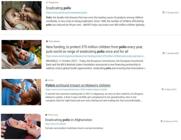
In 1982, UNICEF launched the Child Survival and Development Revolution (CSDR), essentially aimed at reducing child mortality rates. Within GOBI (growth monitoring, oral rehydration therapy, breastfeeding promotion, and immunisation), which was the campaign’s centrepiece, UNICEF focused on oral rehydration therapy and immunisation, known as the ‘twin engines’ of child survival. This strategy was also applied in cases of poliomyelitis response by USAID, which ‘focused its effort on selective primary health-care activities that promised the greatest possibility for morbidity and mortality reduction with the most cost-effective level of inputs’ (Cueto 2004; Shen and Trostle 2014: 2). This choice, therefore, shows how the ‘twin engine’ strategy was guided by profitability and cost-effectiveness maximisation, criteria that became central in defining actions to fight poliomyelitis.
It is already evident that international organisations played a relevant role in tackling polio in Latin America, influencing the implementation of immunisation policies in the countries. Yet such investments boost the use of technologies for disease eradication while remaining silent on underlying causes and the integral conditions that affect populations’ health. In the next subsection, we highlight precisely the insufficiency of technocentrism that underpins the strictly biomedical approach and the eradication strategy. We discuss this insufficiency mainly in epistemic terms, since beyond ensuring the material conditions of possibility for executing campaigns, local actors proposed other strategies for tackling polio, informed by recognition of the social factors that favoured the virus’s spread and hindered its effective and integral treatment.
The power of integral medicine adopted in Peru, Cuba, Argentina, and Brazil
In 1988, poliomyelitis, an infectious disease caused by poliovirus and popularly known as polio, left about 1 000 children paralysed daily in 125 countries worldwide. Transmitted from person to person through respiratory secretions or the faecal-oral route, the disease was dubbed infantile paralysis because children were the most affected group (PAHO 2021).
In Latin America, contagion levels mirrored the critical global panorama. And, as seen in the hookworm case earlier in the century, it was ‘boots-on-the-ground’ Latin American public health practitioners who undertook efforts to identify and map this spread. Such efforts were fundamental for global recognition of the crisis’s scale; without them, polio would not even have become eligible for funding on the agendas of international organisations. The work of Roger Zapata illustrates this claim. A paediatrician born and trained in Peru, a former member of the Pan American Health Organisation (PAHO) and active within Peru’s Ministry of Health, Zapata organized with volunteers from different disciplines and local health professionals amid the Shining Path (Sendero Luminoso, in Spanish) armed conflict.
Traveling through Peruvian cities in search of polio cases, the group tracked the central area of virus circulation to understand the drivers of spread and to think of strategies to address these drivers. It was through the mission led by Dr. Zapata that the relationship between the dissemination of poliomyelitis and the movement of Peruvian workers to coffee-growing areas in the North (where a high rate of viral contagion was identified) was consolidated and widely publicized (Martins 2020). Motivated by the urgency of containing the disease’s advance and by the lack of international recognition of the region’s crisis severity, Zapata and his team played an essential role in making polio fundable and the object of coordinated action with international organisations.
The vaccination campaign, in turn, was successful mainly thanks to physicians willing to travel and reach distant communities. Joaquín Delgado, a nurse in Pichanaki reiterates the adverse context due to the Shining Path conflict and patients’ dependence on meeting professionals in situ to control polio spread. From this we understand that interactions among international professionals, local physicians, and patients mediated the success of vaccination campaigns in remote areas of Peru.
In Cuba, one of the fundamental transformations after the 1959 Revolution occurred in the public health system, which was reoriented toward disease prevention and health promotion across the entire island, no longer restricted to urban centres and the environs of Havana. Consequently, local measures to address poliomyelitis adopted a preventive medicine and disease prophylaxis approach. In practice, the University of Havana’s Faculty of Medicine, the only centre where medical practice was taught at the time, reoriented health professionals’ mindsets toward this new prevention-focused strategy. It was applied nationally and sparked a qualitative shift in medical studies, which began to encompass monitoring people’s living conditions (Chaple 2005: 968).
From the 1960s onward, four key services and/or institutions were created, responsible not only for disseminating the preventive medicine and health promotion approach, but also for centralizing local actors in the fight against polio. The Rural Social Medical Service and the Rural Red Cross brought medical care for the first time to various locales across the Cuban territory. The Health Units configured the first network of basic primary health care units in different urban areas, aiming to disseminate and democratise the network as a public policy. Finally, the Ministry of Health’s Subsecretariat of Hygiene and Epidemiology established, for the first time, an extensive division dedicated to the substantial development of epidemiology, culminating in the inauguration of the National Department of Epidemiology, responsible for formulating the General Objectives for Implementing the Public Health Plan, which included policies to reduce infant mortality and mass vaccination.
In the context of polio, these four key institutions enabled the Cuban state to define tangible strategies for response, backed by scientific evidence collected in Rural Services and Basic Units. Such strategies constituted revolutionary medicine insofar as they stood in opposition to the one adopted in the USA, which focused on eradication and the combating of diseases through technologies and bodily interventions. In this way, the goal of ending polio became achievable. The vaccination campaign itself was a truly multidisciplinary effort, spanning different state and mass sectors, with the direct participation of the Cuban population (Osa 2011).
In Argentina, the main measures to address poliomyelitis also stemmed from local public health agents, for whom the idea of ‘integral treatment’ became central. The aim was to treat the patient’s physical problem based on considerations of the effects and interrelations between social space and individual biological reality (Rosato and Angelino 2009: 16). Under the integral treatment approach, tackling polio included policies of social inclusion and rehabilitation of individuals with poliomyelitis, aiming at the social and economic reintegration of persons with disabilities.
Juan Tesone, a physician specializing in orthopedic surgery and rehabilitation, was one of the promoters and prime figures responsible for popularising integral treatment. In addition to Tesone, kinesiologist Miguel Ángel Aguilera, who worked at the National Secretariat of Public Health and at Hospital Vélez Sarsfield, was among the voices demanding the creation of a law to guarantee the right to treatment and rehabilitation within public policy (Hughes and Paterson 2008). The internalisation of these policies by local physicians, forming a popular consciousness regarding the role of persons with disabilities in society, conditioned the broader effectiveness of Argentina’s response to polio (Álvarez 2015: 950). By wider effectiveness we mean that the spread of rehabilitation centres coupled with mass vaccination constituted the two fronts of action of local physicians to contain the propagation of polio in Argentina, integrating prevention and patients’ resocialisation as pillars of the public response.
As researcher Dilene Nascimento from Casa de Oswaldo Cruz explained at the IV Seminar on the History of Diseases dedicated to the history of poliomyelitis in 2010, the political process in the health sector to address polio in Brazil had six milestones: the introduction of the Sabin vaccine in 1961; laboratory diagnosis of poliovirus in 1961; the National Plan for the Control of Poliomyelitis in 1971; the implementation of the National Epidemiological Surveillance System in 1975; the National Vaccination Days in 1980; and the strategy for disease eradication starting in 1985. From these six milestones, we can visualise the multidisciplinarity of the actions applied and of the local actors and institutions involved (Casa de Oswaldo Cruz 2010).
Looking at the second milestone, for example, the Oswaldo Cruz Institute (IOC) - a Brazilian institution that generates knowledge, products, and services in biomedicine - was responsible for creating the first diagnostic laboratory for enteroviruses, with functions that included: poliomyelitis diagnosis, isolation of poliovirus in stool samples, and the dilution, bottling, and distribution of the first oral poliomyelitis vaccines that arrived in Brazil (Campos, Nascimento and Maranhão 2003: 589). The IOC-Fiocruz was fundamental in employing increasingly sensitive and rapid techniques for diagnosing poliovirus in the country. Looking at the milestones of the 1970s, the National Plan for the Control of Poliomyelitis was central to making vaccination a more egalitarian strategy, reaching the less favoured classes and more remote places. The 1980s witnessed an intense process of political negotiation between the Ministry of Health, state governors and health secretaries to create the National Vaccination Days, which were to prioritise the polio campaign (Lima 2002, tape 2, side B, cited in Campos, Nascimento and Maranhão 2003: 594).
In all four cases mobilised, the management of the response to polio brought together Latin American local professionals and eradication specialists from international organisations. Interaction among them meant sharing languages and epistemic lenses through which patients’ access to and acceptance of different policies and programmemes became possible. In the article’s conclusion, we return to the elements that empirically evidence how these epistemic encounters, both in the contexts of hookworm disease and poliomyelitis, impacted the geopolitics of knowledge in health.
Conclusion
Social biomedicine: epistemic encounters and their impacts on the geopolitics of knowledge in health
The geopolitics of knowledge is a concept developed within the Modernity/Coloniality project by Latin American academics and theorists cited in this article (see also Ballestrin 2013). Epistemologically, it is a concept little operationalised in IR and its subfields, such as Global Health. In this sense, the theoretical-epistemological contribution of the (de)coloniality of power and knowledge framework via the concept of the geopolitics of knowledge to IR, as developed in this article, expands intra- and interdisciplinary dialogue through which IR renews itself.
The analysis conducted on epistemic encounters between philanthropic and international actors and Latin Americans in two moments of the 20th century demonstrates how such encounters predominantly alter the field of knowledge in health. In this field, we can observe power disputes constituted materially (via funding networks, publications) that impact knowledge disputes historically constituted within modernity/coloniality. And knowledge disputes that are also materially observable, for instance, through the international division of intellectual labour (Naidu 2024). This is the trajectory of our argument and analysis, which we explain even more clearly below.
There is a geopolitical dispute over knowledge in global health; over the power to define what is valid and legitimate in terms of medicine, or health science. This is an epistemological dispute as evidenced materially: financing, international diffusion, lobbying, and cross-cutting interests constitute a certain international division of intellectual labour. In this division, the local is regarded as housing superstitions, beliefs, and rituals, while the international does science. Moreover, in this division the role of scientists, sanitarians, health agents, and physicians who operate through a social and integral approach is twofold: to reaffirm the quality of science undertaken through the strictly biomedical approach, and the unique competence of the agents of this approach to define and legitimise local signifiers of medicine and science. In other words, local agents are expected to produce inputs for the effectiveness of biomedicine and, thus, propagate the international division of intellectual labour. Put simply, this is how the geopolitics of knowledge in health was established by modernity/coloniality (Khan at al. 2024; Naidu 2021; 2024).
In our analysis, rather than arguing for epistemic overcoming or precedence, we focus on the local-as-margin, originally asymmetric, where new forms of knowledge are created from interactions, re-significations, and negotiations that enable meeting the needs of respective populations. That is, we argue there are impacts on the geopolitics of knowledge in health stemming from these encounters, and we name the synthesis of these impacts social biomedicine. Just as there is no single path to arriving at social biomedicine, we do not claim that this will be the same impact observed in all cases of epistemic encounters in health. Our interest is to analyse cases where this empirical observation exists, though we recognise there are others in which encounters may generate different impacts and outcomes.
This recognition strengthens our argument insofar as, unlike the framework of decolonising global health, our epistemological lens takes local idiosyncrasies seriously. That is, it recognises that epistemic encounters and their impacts are guided by different temporal contexts, actors, and territories (Zulawski 2007). The (de)coloniality of power and knowledge refers to a mindset forged in the colonial difference; an understanding of the world and of the Self offered by postcolonial, postmodern, and subaltern theorists, such as the Latin Americans cited in the article. It does not presuppose decolonisation, subversion, or confrontation among knowledges. These results must be observed case by case, empirically. What the concept of geopolitics of knowledge illuminates are interactions at the micro-level of the local, and the possibilities for change that these interactions open both for the actors themselves and for the implementation of another knowledge produced in the epistemic encounter.
It was in such complex and everyday interactions among IHC-RF mission agents, North American interests, Latin American scientific and public health expertise, the practices of health operators and their relations with patients on the ground that the earliest forms of international cooperation in health were made possible at the start of the 20th century. Similarly, it was the epistemic encounters among Rotary Club, UNICEF, and USAID funders, and the physicians and other knowing subjects of health in Peru, Argentina, Cuba, and Brazil that enabled the response and reintegration of patients affected by poliomyelitis in the latter half of the century. While this demonstration of the impacts of epistemic encounters is present within the Critical Global Health literature, the same cannot be said of IR.
In the article we saw that, on the one hand, local agents engaged in the polio response in the four Latin American countries studied by means of mobilizing approaches and strategies for implementing public policies that included, but were not limited to, vaccination. On the other hand, international organisations operated exclusively through funding programmes for disease eradication via mass vaccination. Considering the interaction between these agents, what we analyse is precisely the encounters and imbrications of knowledges (Fittipaldi, O’Dwyer and Henriques 2021: 6) that occurred during the poliomyelitis crisis so as to impact the geopolitics of knowledge. In so doing, we demonstrate that local agents do contest knowledge. This is so despite the information disseminated by whom (international organisations, philanthropic agencies, academia, pharmaceutical industry, governments) and through instruments (funding, publications, commercial controversies, political conditionalities) shaping and intentionally freezing the international division of intellectual labour in health.
For these local agents, the essence of scientific knowledge is grounded in access to and acceptability of any approaches by those who need them. That is, everyday interaction with the population is indispensable for knowledge of diseases, cures, and care techniques that can be effective because they transcend the mere combat of symptoms and contagion. It is in everyday interaction with the population that the causes and integral conditions of life are identified towards the formulation of preventive policies and health promotion approaches: what we now call social determinants (Franco-Giraldo 2016).
As evidence of these encounters, the fight against polio became an example of the success of a biomedical approach centred on the vaccine-eradication dyad because it was included within a broad intersectoral scope of public health policies, through research, action, and mobilisation by actors socialized geo-culturally in different regions. As a strong device of the coloniality of knowledge, the international division of intellectual labour, as presented earlier, hampers access to information that represents disputes, impacts, or even modifications in the geopolitics of knowledge. And even epistemic encounters are mostly presented in academic publications, international organisation programmes, and philanthropic agency campaigns in ways that affirm the international division of intellectual labour.
In saying this, we do not deny the validity of the biomedical approach, but we question both its primacy and the supposedly ‘supporting character’ of the impacts that epistemic encounters have had on the geopolitics of knowledge in health. In Argentina, for example, although it received investments from Rotary Club and UNICEF to implement mass vaccination programmes, the formalisation and dissemination of ‘integral treatment’ centres by local health professionals were evidenced, with the direct participation of families, patients, and community agents. These centres offered persons with disabilities due to polio the possibility of regaining dignity while challenging the cost-benefit relation present in biomedical knowledge through technocentrism in health.
In Cuba, where vaccination was also implemented as a strategy to face polio, it was accompanied by the strengthening of the national public health network, an initiative of local professionals trained at the Faculty of Havana. These professionals understood the effectiveness of controlling health crises as conditioned by the existence of basic units of primary care in different regions of the country (Chaple 2005). That is, the preventive medicine approach underpinned the creation of the four main key services and/or institutions responsible for centralising Cuban public health agents’ action in the fight against polio and, consequently, mediating the vaccination programme.
In Peru, even with the biomedical focus guiding UNICEF and Rotary Club funding, we also saw the importance of the actions of local health professionals to implement polio response strategies in the most distant regions. They played a crucial role in identifying areas prone to the virus’s spread, reaching remote communities, and educating the population about the disease, modes of transmission, and the importance of immunisation. Therefore, without the involvement of these local actors, mass vaccination would not have succeeded.
Remembering that in Brazil the poliomyelitis epidemic occurred before the creation of the Unified Health System (SUS, in Portuguese), we can still note the coexistence of different response actions that strengthened adherence to vaccination. The National Plan for the Control of Poliomyelitis and the so-called National Vaccination Days were responsible for democratising access to vaccines for the entire population, regardless of class and region of residence. Fiocruz was in charge of the decentralized distribution of the first oral poliomyelitis vaccines introduced in Brazil.
The timing of the Latin American actions mentioned is also notable. Integral initiatives of prevention, rehabilitation, and fight against the polio virus, as well as clinical studies on the disease and its consequences, consolidated in the 1960s and thus preceded the period in which the financing of vaccination programmes by international organisations intensified - such as PolioPlus, which dates from the 1980s/90s.
Finally, we conclude that decentralizing Global Health in IR and rewriting it with the language and touchstones of Critical Global Health are urgent tasks for academics and foreign policy decision-makers in favour of policies that are truly responsive to their populations’ needs. To this end, we point to the existence and potential construction of a weaved knowledge (which we call social biomedicine) that reflects the diversity of experiences and possible responses arising from encounters in local contexts, reducing the invisibilisation or epistemicide of traditional knowledge.
Notes
-
Data Availability
All data generated or analysed during this study are included in this published article.
-
1
In this article, we use the term “technocentrism” to refer to the centrality attributed to technology within biomedical knowledge, as reflected in these actors’ preference for technological solutions that intervene directly in bodies and in the development of medical science. In this regard, the proliferation of techniques for the production, access, measurement, and storage of data is also encompassed by the term (see Ruckenstein and Schüll, 2017; Erikson, 2018).
References
- Abimbola, S. 2021. ‘The Uses of Knowledge in Global Health.’ BMJ Global Health 6: 1-7.
- Adams, V. 2016. ‘What is Critical Global Health?.’ Medicine Anthropology Theory 3 (2): 186-197.
- Álvarez, A. 2015. ‘Los Desafíos Médicos, Sociales e Institucionales que Dejó la Poliomielitis: la rehabilitación integral en la Argentina de mediados del siglo XX.’ História, Ciências, Saúde - Manguinhos, 22 (3): 941-960.
- Atkinson, S, B Evans and A Woods. 2015. ‘The Medical’ and ‘Health’ in a Critical Medical Humanities.’ Journal of Medical Humanities 36: 71-81.
- Ballestrin, L. 2013. ‘América Latina e o Giro Decolonial.’ Revista Brasileira de Ciência Política 11: 89-117.
- Biehl, J and A Petryna. 2013. When People Come First: Critical Studies in Global Health. Princeton: Princeton University Press.
- Biehl, J. 2016. ‘Theorizing Global Health.’ Medicine Anthropology Theory 3 (2): 127-142.
- Birn, A, Y Pillay and T Holtz. 2017. Textbook of Global Health. Oxford: Oxford University Press.
-
Breen, E and R Kumar. 2023. ‘Private Foundations and Their Global Health Grant-Making Patterns. A rapid analysis of the Rockefeller Foundation, Wellcome Trust, and Bill and Melinda Gates Foundation’, Global Policy Forum Europe. Bonn, Germany. At https://www.globalpolicy.org/sites/default/files/download/Private_foundations.pdf [Accessed on 11 March 2026].
» https://www.globalpolicy.org/sites/default/files/download/Private_foundations.pdf - Brown, R. 1976. ‘Public Health in Imperialism: Early Rockefeller Programmes at Home and Abroad.’American Journal of Public Health 66 (9): 897-903.
- Byrne, D. 2013. ‘Evaluating Complex Social Interventions in a Complex World.’ Evaluation 19 (3): 217-228.
- Campos, A, D Nascimento and E Maranhão. 2003. ‘A História da Poliomielite no Brasil e seu Controle por Imunização.’ História, Ciências, Saúde - Manguinhos 10 (2): 573-600.
-
Casa de Oswaldo Cruz (COC) [online]. 2010. ‘Pesquisadores apresentam trabalhos sobre doenças e epidemias na história de diversos países.’ 3 September. At https://coc.fiocruz.br/todas-as-noticias/pesquisadores-apresentam-trabalhos-sobre-doencas-e-epidemias-na-historia-de-diversos-paises/ [Accessed on 16 March 2025].
» https://coc.fiocruz.br/todas-as-noticias/pesquisadores-apresentam-trabalhos-sobre-doencas-e-epidemias-na-historia-de-diversos-paises/ - Castro-Gomez, S. 2008. ‘(Post)coloniality for Dummies: Latin American perspectives on modernity, coloniality and the geopolitics of knowledge.’ In M Moraña, E Dussel and C A Jáuregui (eds), Coloniality at large: Latin America and the postcolonial debate. Durham: Duke University Press, pp. 259-284.
-
Center for Disease Control and Prevention (CDC) [online]. 2022. Global Health Security. At https://www.cdc.gov/global-health/topics-programmes/global-health-security.html [Accessed on 7 March 2025].
» https://www.cdc.gov/global-health/topics-programmes/global-health-security.html - Chaple, E B. 2005. Apuntes sobre la Medicina en Cuba: historia y publicaciones. Havana: Editorial Ciencias Médicas.
- Chinn, D. 2011. ‘Critical Health Literacy: a review and critical analysis.’ Social Science and Medicine 73 (1): 60-67.
- Cueto, M. 1995. ‘The Cycles of Eradication: the Rockefeller Foundation and Latin American public health, 1918-1940.’ In P Weindling (ed), International health organisations and movements, 1918-1939. Cambridge: Cambridge University Press, pp. 222-243.
- Cueto, M. 2004. ‘The Origins of Primary Health Care and Selective Primary Health Care.’ American Journal of Public Health 94 (11): 1864–1874.
- De Allegri, M, M P Bertone, S McMahon, I M Chare and P J Robyn. 2018. ‘Unravelling PBF Effects Beyond Impact Evaluation: Results from a Qualitative Study in Cameroon.’ BMJ Global Health 3 (2): 1-8.
- Duclos, D, S L Faye, T Ndoye and L Penn-Kekana. 2019. ‘Envisioning, Evaluating and Co-enacting Performance in Global Health Interventions. Ethnographic Insights from Senegal.’ Anthropology in Action 26 (1): 21-30.
- Erikson, S L. 2018. ‘Cell Phones ≠ Self and Other Problems with Big Data Detection and Containment During Epidemics.’ Medical Anthropology Quarterly 32 (3): 315-339.
- Escobar, A. 2011. Encountering Development: the making and unmaking of the Third World. Princeton: Princeton University Press.
- Farmer, P. 2004. Pathologies of Power: Health, Human Rights, and the New War on the Poor. Berkeley: University of California Press.
- Fittipaldi, A L M, G O’Dwyer and P Henriques. 2021. ‘Educação em saúde na atenção primária: as abordagens e estratégias contempladas nas políticas públicas de saúde.’ Interface (Botucatu), 25: e200806. doi: 10.1590/interface.200806.
- Fosdick, R. 2017. The Story of the Rockefeller Foundation. London: Routledge.
- Franco-Giraldo, A. 2016. ‘Salud Global: una visión latino-americana.’ Rev Panam Salud Publica 39 (2):128–36.
- Global Health Watch. 2014. Global Health Watch 4: An Alternative World Health Report. London: Zed Books.
- Holst, J. 2020. ‘Global Health - Emergence, Hegemonic Trends and Biomedical Reductionism.’ Globalization and Health 16: 1-11.
- Hommes, F, H B Monzó, R A Ferranda, M Harris, L A Hirsch, E K Besson, J Manton, T Togun and R B Roy. 2021. ‘The Words We Choose Matter: recognising the importance of language in decolonising global health.’ The Lancet Global Health 9 (7): 897- 898.
- Hughes, B and K Paterson. 2008. ‘El Modelo Social de la Discapacidad y la Desaparición del Cuerpo: hacia una sociología del impedimento.’ In L Barton (ed). Superar las barreras de la discapacidad. Madrid: Morata, pp. 107-122.
- Huisman, F and J Warner. 2004. Locating Medical History. The Stories and their Meanings. Baltimore: Johns Hopkins University Press.
- Ibarra-Colado, E. 2006. ‘Organisation Studies and Epistemic Coloniality in Latin America: thinking otherness from the margins.’ Organisation 13 (4): 463-488.
- Illich, I. 1975. A Expropriação da Saúde. Nêmesis da medicina. Rio de Janeiro: Editora Nova Fronteira.
- Inhorn, M C and E A Wentzell (eds). 2012. Medical Anthropology at the Intersections: Histories, Activisms, and Futures. Durham, NC: Duke University Press.
-
Kinder, M. 2004. ‘Case 4. Eliminating Polio in Latin America and the Caribbean.’ Center for Global Development. At: https://www.cgdev.org/sites/default/files/archive/doc/millions/CGD-MillionsSaved_Case4.pdf [Accessed on 2 February 2026].
» https://www.cgdev.org/sites/default/files/archive/doc/millions/CGD-MillionsSaved_Case4.pdf - Khan, M S , T Naidu, I Torres, M N Noor J B Bump and S Abimbola. 2024. ‘The Lancet and colonialism: past, present, and future.’ The Lancet 403 (10433): 1304-1308.
- Kwete, X, K Tang, L Chen, R Ren, Q Chen, Z Wu, Y Cai and H Li. 2022. ’Decolonizing global health: what should be the target of this movement and where does it lead us?.’ Global Health Research and Policy 7 (3): 1-6.
- MacDonald M. 2017. ‘Why ethnography matters in global health: the case of the traditional birth attendant.’ Journal of Global Health 7 (2): 1-4.
- MacLean, S, S Brown and P Fourie. 2009. Health for Some. The political economy of global health governance. London: Palgrave Macmillan.
-
Martins, A. 2020. ‘A História por Trás da Foto Mais Emblemática da Luta para Erradicar a Pólio na América Latina.’ BBC News, 26 October. At https://www.bbc.com/portuguese/internacional-54669501 [Accessed on 5 February 2026].
» https://www.bbc.com/portuguese/internacional-54669501 - McCoy, D, A Kapilashrami, R Kumar, E Rhule and R Khosla. 2024. ‘Developing an agenda for the decolonization of global health.’ Bull World Health Organ 102 (2): 130-136.
- Mignolo, W. 2000. Local Histories/ Global Designs. Princeton: Princeton University Press.
- Mignolo, W. 2002. ‘The Geopolitics of Knowledge and the Colonial Difference.’ The South Atlantic Quarterly 101 (1): 57-95.
- Mignolo, W. 2007. ‘The Decolonial Option and the Meaning of Identity in Politics.’ In A Stenman and R Vázquez (eds), Etnicidad en América Latina: Relatos de Colonialismo, Identidad, Resistencia y Agencia. Göteborg: Instituto Iberoamericano, pp. 43-72.
- Mignolo, W. 2011. The Darker Side of Western Modernity: global futures, decolonial options. Durham: Duke University Press.
- Mignolo, W and M Tlostanova. 2006. ‘Theorizing from the border. Shifting to the Geo- Body-Politics of Knowledge.’ European Journal of Social Theory 9 (2): 205-221.
- Naidu, T. 2021. ‘Says Who? Northern ventriloquism, or epistemic disobedience in global health scholarship.’ The Lancet Global Health 9 (9): e1332-e1335.
- Naidu, T. 2024. ‘Epistemic Disobedience - undoing coloniality in global health research.’ PLOS Global Public Health 4 (4): e0003033.
- Nguyen, V and K Peschard. 2003. ‘Anthropology, inequality and disease: a review.’ Annual Review of Anthropology 32: 447-474.
- Nunes, J. 2016. ‘Ebola and the production of neglect in global health.’ Third World Quarterly 37 (3): 542-556.
-
Organização Pan-Americana da Saúde (OPAS) [online]. 2021. ‘Poliomielite: principais fatos e perguntas frequentes.’ At https://www.paho.org/pt/topicos/poliomielite [Accessed on 14 March 2025].
» https://www.paho.org/pt/topicos/poliomielite - Osa, J A. 2011. ‘Um olhar para a saúde pública cubana.’ Estudos Avançados 25 (72): 89-96.
- Packard, R M. 2016. A History of Global Health: interventions into the lives of other peoples. Baltimore: Johns Hopkins University Press.
- Palmer, Steven. 1998. ‘Central American Encounters with Rockefeller Public Health, 1914-1921.’ In G M Joseph, C C Legrand and R D Salvatore (eds), Close Encounters of Empire: writing the cultural history of the USA-Latin American relations. London: Duke University Press, pp. 311-331.
- Palmer, S. 2015. Gênese da Saúde Global: a Fundação Rockefeller no Caribe e na América Latina. Rio de Janeiro: Editora FIOCRUZ.
- Quijano, A. 2007. ‘Coloniality and Modernity/Rationality.’ Cultural Studies 21(2-3): 22-32.
- Rosato, A and M A Angelino (coord). 2009. Discapacidad e Ideología de la Normalidad: desnaturalizar el déficit. Buenos Aires: NovEduc.
-
Rotary Club [online]. 2023. ‘Quem somos e o que fazemos?.’ At https://www.rotary.org/pt/about-rotary [Accessed on 14 March 2025].
» https://www.rotary.org/pt/about-rotary - Ruckenstein, M and N D Schüll. 2017. ‘The Datafication of Health.’ Annual Review of Anthropology 46 (1): 261–278.
- Ruckert, A and R Labonté. 2014. ‘Public–Private Partnerships in Global Health: the good, the bad and the ugly.’ Third World Quarterly 35 (9): 1598-1614.
- Sharma, D and N Sam-Agudu. 2023. ‘Decolonising Global Health in the Global South by the Global South: turning the lens inward.’ BMJ Global Health 8 (9): 1-4.
- Shen, A K and R M Trostle. 2014. ‘Three Decades of USAID Investments in Immunization Through the Child Survival Revolution.’ Emerging Microbes & Infections 3(1): 1-9.
- Sivaramakrishnan, K. 2015. ‘Global Histories of Health, Disease and Medicine From a ‘zig-zag’ Perspective.’ Bulletin of the History of Medicine 89 (4): 700-704.
- Stepan, N. 2011. ‘The National and the International in Public Health: Carlos Chagas and the Rockefeller Foundation in Brazil, 1917-1930s.’ Hispanic American Historical Review 91 (3): 469-502.
-
The Rockefeller Foundation. 1915. The Rockefeller Foundation Annual Report. New York. At https://www.rockefellerfoundation.org/wp-content/uploads/RF-Annual-Report-1915-1.pdf [Accessed on 7 March 2025].
» https://www.rockefellerfoundation.org/wp-content/uploads/RF-Annual-Report-1915-1.pdf -
The Rockefeller Foundation. 1917. The Rockefeller Foundation Annual Report. New York. At https://www.rockefellerfoundation.org/wp-content/uploads/Annual-Report-1917-1.pdf [Accessed on 7 March 2025].
» https://www.rockefellerfoundation.org/wp-content/uploads/Annual-Report-1917-1.pdf -
The Rockefeller Foundation. 1918. The Rockefeller Foundation Annual Report. New York. At https://www.rockefellerfoundation.org/wp-content/uploads/Annual-Report-1918-1.pdf [Accessed on 7 March 2025].
» https://www.rockefellerfoundation.org/wp-content/uploads/Annual-Report-1918-1.pdf -
The Rockefeller Foundation. 1919. The Rockefeller Foundation Annual Report. New York. At https://www.rockefellerfoundation.org/wp-content/uploads/Annual-Report-1919-1.pdf [Accessed on 7 March 2025].
» https://www.rockefellerfoundation.org/wp-content/uploads/Annual-Report-1919-1.pdf -
The Rockefeller Foundation. 1921. The Rockefeller Foundation Annual Report. New York. At https://www.rockefellerfoundation.org/wp-content/uploads/Annual-Report-1921-2.pdf [Accessed on 7 March 2025].
» https://www.rockefellerfoundation.org/wp-content/uploads/Annual-Report-1921-2.pdf -
The Rockefeller Foundation. 1922. The Rockefeller Foundation Annual Report. New York. At https://www.rockefellerfoundation.org/wp-content/uploads/Annual-Report-1922-1.pdf [Accessed on 7 March 2025].
» https://www.rockefellerfoundation.org/wp-content/uploads/Annual-Report-1922-1.pdf -
UNICEF. n.d. Search results for ‘polio’. UNICEF. At https://www.unicef.org/search?force=0&query=polio&created%5Bmin%5D=&created%5Bmax%5D= [Accessed April 15th, 2026].
» https://www.unicef.org/search?force=0&query=polio&created%5Bmin%5D=&created%5Bmax%5D= - Verani, J F and F Laender. 2020. ‘A erradicação da poliomielite em quatro tempos.’ Cadernos de Saúde Pública 36: 1-10.
- Walsh, J A and K S Warren. 1979. ‘Selective Primary Health Care: An Interim Strategy for Disease Control in Developing Countries.’ New England Journal of Medicine 301 (18): 967-974.
- Wanderley, S and A Barros. 2018. ‘Decoloniality, Geopolitics of Knowledge and Historic Turn: towards a Latin American agenda.’ Management and Organisational History 14 (1): 79-97.
- Zulawski, A. 2007. Unequal Cures: Public Health and Political Change in Bolivia, 1900–1950. Durham: Duke University Press, 2007.
-
Editor-in-Chief Responsible
Roberto Vilchez Yamato
All data generated or analysed during this study are included in this published article.

 Source: UNICEF