
 An evaluation of popular participation in the Participatory Planning Cycle in Fortaleza
Abstract
This study is grounded in the theme of political participation, correlated with the models of representative, participatory, and digital democracy, and based on the experience of the Participatory Planning Cycle (CPP) of Fortaleza. The study aimed to analyze the possibilities and limitations of popular participation through a qualitative approach, anchored in the theoretical and methodological assumptions of in-depth evaluation. The results revealed strengths and weaknesses in the institutional articulation analyzed here, indicating, on the one hand, an increase in the number of participants driven by the use of digital technologies, and, on the other, limitations arising from digital exclusion, which restricts access for segments of the population. Reports of dissatisfaction and distrust in the participatory process were also observed due to the low rate of completed demands.
Keywords
democracy; digital democracy; popular participation; public policies
Resumo
Esta pesquisa se baseia no tema da participação política, correlacionada aos modelos de democracia representativa, participativa e digital a partir da experiência do Ciclo de Planejamento Participativo (CPP) de Fortaleza. Desse modo, objetiva analisar as potencialidades e limitações da participação popular. Trata-se de uma pesquisa qualitativa, ancorada nos pressupostos teórico-metodológicos da avaliação em profundidade. Os resultados evidenciaram fortalezas e fragilidades na articulação institucional analisada, indicando, por um lado, crescimento no número de participantes, impulsionado pelo uso das tecnologias digitais e, por outro, limitações decorrentes da exclusão digital, que restringe o acesso de parcelas da população a essas tecnologias. Observaram-se, ainda, relatos de insatisfação e descrédito com o processo participativo em virtude do baixo percentual de conclusão das demandas.
Palavras-chave
democracia; democracia digital; participação popular; políticas públicas
Introduction
The Participatory Planning Cycle (CPP) – an annual planning process designed to incorporate public policies demanded by civil society into the municipal budget of Fortaleza, Ceará – was established in December 2014 during the administration of former mayor Roberto Cláudio of the Brazilian Socialist Party (PSB), following the enactment of Municipal Law n. 10,277 (Fortaleza, 2014). Linked to the Municipal Council for Participatory Planning (CMPP) – a body with an advisory, mobilizing, proactive, and participatory role – the participatory cycle spans the formulation of the Annual Budget Law (LOA), the Budgetary Guidelines Law (LDO), and the Multi-Annual Plan (PPA).
The CMPP, against the backdrop of power struggles between local political projects, emerged as a participatory body that replaced the participatory budgeting policy implemented between 2005 and 2012 during the administration of former mayor Luizianne Lins of the Workers’ Party (PT). With new terminology and conceptual frameworks, the field of participation in Fortaleza from 2013 onwards was characterized above all by the incorporation of technological tools into participatory processes. This was evident in the development of the 2014-2017 Multi-Year Plan and, later in 2018, with the integration of the “Fortaleza Participa” platform into the CPP’s methodological framework.
The use of information and communication technologies (ICTs) in the democratic political sphere, specifically with regard to their integration into participatory processes, dates back to 2006, when the municipality of Belo Horizonte implemented the Digital Participatory Budget (OPD). This pioneering initiative, which was largely successful in increasing participation, marked the beginning of rolling out digital versions of PB in other municipalities, such as the OPDs in Recife, Volta Redonda, and Curitiba (Ferreira, 2012). Since then, the adoption of ICTs in participatory processes has become a prominent trend both in Brazil and worldwide (Pires, 2017).
In light of the above, this study assesses public participation – in terms of its potential and limitations – within the framework of the CPP, a participatory body created within a context of liberal democracy and facilitated through the use of ICTs. Thus, this research charts a line of inquiry that has been little explored in the field of studies on local participation in Fortaleza, recognizing the importance of participation and representation while remaining mindful of the double-edged nature of technology in this field.
The theoretical and methodological foundations underpinning this research are based on the perspective known as in-depth evaluation. In pursuing this approach, the aim is to examine issues relating to public participation in the formulation and management of public policies in Fortaleza, with particular attention to the city’s social, territorial, and spatial disparities. It is, therefore, an evaluative approach that prioritizes the notions of time and space, as well as the interpretation of institutional discourses and the testimonies of those who experience public policies firsthand (Rodrigues, 2016).
The purpose of this discussion is to highlight issues that may contribute to the state of the art in empirical cases of participation at the local level, combining models of representative and participatory democracy, as well as the implications arising from the use of technology in the process of citizen public deliberation. It is hoped that the analysis undertaken here will serve as a basis for public policymakers, as well as civil society, in developing, evaluating, and improving participatory forums so that they function as truly collaborative, inclusive, and deliberative spaces.
Apart from this introduction, this article is divided into three parts: the first presents a summary of the theoretical approaches guiding the discussion, such as representative, participatory, and digital democracy. The second part outlines the methodological framework employed, highlighting the typologies, data collection techniques, and methods of analysis. The third part presents the results of the analysis regarding the experience of public participation within the Fortaleza CPP.
Theoretical framework
The theoretical framework addresses the key points that underpin the theme of participation, drawing on models of representative, participatory, and digital democracy.
Democracies: representative and participatory
Following the rejection of the classical model of democracy during the second half of the 20th century, modern democracy – also known as representative democracy – emerged to lay the foundations for the model of political representation (Santos, 2002). In his work Capitalism, Socialism and Democracy, Schumpeter (1961, p. 296) defined democracy as a "[...] political method, that is, a certain type of institutional arrangement for reaching a political decision (legislative or administrative)". With this argument, the author asserted that it is impossible for all citizens to govern themselves directly, thereby necessitating the creation of mechanisms of authorization.
In line with Schumpeter’s view, Bobbio (1997), in seeking to offer a minimal definition of democracy, characterized it as a regime opposed to autocracy. He argued that it emerges from power that comes from below, without imposition, and is marked by a set of rules – defined by the author as constitutive and regulatory – which underpin the system’s legitimacy. In other words, these rules establish who is authorized to participate in the decision-making process.
Because he regards the representative model as the ideal, Bobbio goes on to argue for the compatibility between democracy and liberalism. According to him, the liberal state is a legal prerequisite for the democratic state; a relationship of interdependence exists between them, given the necessity of certain freedom for the proper functioning of both. The author also points out that the extension of political rights was a natural consequence of previously granted freedoms, since the effective guarantee of these liberties relies fundamentally on the right to exercise control over power (ibid.).
The economic theory of democracy holds that in the political arena, just as in economic markets, there is a constant struggle to secure support and maximize gains. Central to this theory is the notion that individuals are rational actors driven by self-interest. It is in this arena that "[...] political parties formulate policies in order to win elections, and do not win elections in order to formulate policies" (Downs, 1999, p. 50).
However, between the late 20th and early 21st centuries, the political sphere witnessed a crisis of legitimacy in the representative democratic model, evidenced by a series of global turning points. On an international scale, the Arab Spring is a prominent example (Gaspardo, 2018), while in the Brazilian context, the June 2013 protests stand out (Carvalho, 2016) – events triggered in part by ICT-driven mobilizations on social media. While many factors contributed to this crisis, the systemic limitations of the representative democratic model are particularly salient (Santos and Avritzer, 2002).
It should be noted, however, that as early as the post-World War II period, experiences and theories grounded in counter-hegemonic thought emerged. These perspectives introduced the need for subaltern and minority groups to take a leading role in giving substance to democracy, thereby adding a participatory dimension to the hegemonic representative-liberal model. Thus, the proposal put forward by participatory theorists did not seek a radical break with representative democracy and its procedural mechanics, but rather aimed to offer participatory institutions (Avritzer, 2003) capable of recognizing social pluralism and transcending the limitations of a pure electoral democracy (Pateman, 1992).
As Pateman (1995) asserts, the theory of participatory democracy is based on the understanding that institutions and individuals are intrinsically interconnected and cannot be evaluated in isolation. It is a system that fosters its own sustainability precisely because it enhances psychological well-being, civic skills, and democratic procedures.
The author highlights the pedagogical dimension of individual participation, noting that the skills required for civic engagement are acquired through the very dynamics of the participatory process. This creates a virtuous circle: the greater society’s participation, the better equipped it becomes for future civic experiences, thereby strengthening democracy (Pateman, 1992). Furthermore, this pedagogical dimension is one of the primary elements distinguishing participations in a participatory democracy from that in a representative democracy, serving as a foundaonal premise for various authors in the field, including Rousseau, Bordenave, Pateman, and Mill. It also emphasizes the decision-making process itself, ensuring that power is shared, and responsibilities are assumed collectively by all actors involved.
Essentially, in the liberal-elitist model, political participation is concentrated almost exclusively on citizens casting votes for their representatives. Conversely, the theoretical framework of participatory democracy expands this scope, demanding a form of inclusion that is genuinely legitimate – one that does not reduce citizens to mere spectators or exclude traditional social actors from public decision-making (Gaspardo, 2018).
Rousseau explores the role of participation in greater depth, noting that it fosters a sense of integration and belonging to one's community (Pateman, 1992). Furthermore, participation must be deliberative, providing participants with a learning environment in which choices are consolidated through robust public debate (ibid.).
Nevertheless, a number of criticisms have been leveled at the participatory democracy model. Among the primary critiques are the structural conflicts arising from its complementary yet tense relationship with representative democracy (Avritzer, 2003; Lavalle, Houtzager, and Castells, 2006; Santos, 2002). Critics also point to the logistical limitations of scale in modern societies, given the vast territorial dimensions of nation-states, which make it functionally impractical to gather all citizens into a single space to deliberate on public affairs (Santos and Avritzer, 2002).
With the advent of ICTs, however, so--called "digital participation" (Gomes, 2007) began working to build a movement for a new form of political and democratic engagement. Their goal is to grant citizens a more immediate presence in the public sphere, thereby transcending traditional forms of representation and overcoming the physical limitations that have historically constrained the model of participatory democracy.
Digital Democracy
The integration of ICTs into Brazilian public administration gained momentum following the state reforms of the 1990s, when networked technological structures began to be utilized to construct and develop a neoliberal state model aimed at integrating Brazil into the dynamics of a globalized economy (Faria and Faria, 2017). The discourse surrounding the need for fiscal control and the establishment of a results-oriented managerial culture provided the basis for incorporating the managerialist paradigm into public administration (Andion, 2012; Dias, Sano, and Medeiros, 2019; Filgueiras, 2018; Keinert, 1994).
In this context, the adoption and, in particular, the hegemonic discourse regarding the development of ICTs in Brazil stemmed from the logic established by contemporary capitalism. This logic permeated the social imagination with the idea of technological determinism, presenting the internet as a panacea for social problems and, in the political sphere, as a solution to the challenges, dilemmas, and crises faced by liberal representative democracy (Azevedo and Brule, 2021; Marçal and Mello, 2014).
Given that the spread of the internet has been shaped by this specific narrative, it is vital to analyze the integration of technologies into the democratic sphere from a multidimensional perspective, weighing their contradictions and contributions against theories of digital democracy. Notably, a review of the literature reveals several interchangeable terms used to discuss ICTs in the democratic sphere, including "virtual democracy", "e-democracy", "electronic democracy", and "teledemocracy".
Among the potential benefits of digital democracy, the most prominent advantage is the opportunity for greater political participation by citizens in managing public processes, followed by the strengthening of democracy through the expansion of participatory spaces that move beyond traditional representative practices (Goldschmidt and Reis, 2019). Furthermore, using ICTs makes participation faster and less costly by multiplying the channels through which interaction between civil society and the state can occur (Pires, 2017; Santos, 2002).
Almeida, Bautista, and Addor (2017, p. 217) outline the potential offered by ICTs in the democratic sphere across four distinct areas: "(1) rapid and democratic access to information, (2) increased remote participation, (3) the reduction of bureaucracy in processes, and (4) the capacity for mobilization". According to these authors, the expanded communication capacity brought about by ICTs strengthens the creation of a socially conscious citizenry focused on public action.
In contrast to this optimistic perspective, a critical counter-current highlights the negative factors in this relationship. The main arguments suggest that the widespread use of the internet in participatory processes leads to stratification and a widening of inequalities, as elites – who are better equipped both physically and cognitively – tend to dominate virtual participatory spaces (Magrani, 2014; Sampaio, 2010).
The limitations of ICTs in expanding democracy can likewise be categorized into four areas: "(1) infrastructure provision, (2) quality of the information made available, (3) information capacity, and (4) user security" (Almeida, Bautista, and Addor, 2017, p. 219). These authors argue that the conditions determining whether a person can go online are linked to socioeconomic prerequisites; consequently, the digital divide becomes a primary limiting factor for participatory processes within this framework.
According to Sorj (2003, p. 59), "[...] digital exclusion is strongly correlated with other forms of social inequality, and, in general, the highest rates of digital exclusion are found in lower-income sectors". Thus, the author asserts that mitigating the digital divide does not necessarily reduce existing social inequality but rather prevents it from expanding further due to the systemic advantages enjoyed by affluent, highly educated demographics who gain exclusive access to technological opportunities.
From a similar perspective, Magrani (2014) states that the logic of digital exclusion is generally driven by the logic of social exclusion. In other words, those who are digitally excluded are, in most cases, individuals living in poverty or in areas significantly neglected by the state. Consequently, when deliberative and dialogical participatory processes – such as Participatory Budgeting (PB) and related policies – are transferred exclusively to virtual environments, there is a distinct risk of restricting the space for debate solely to those who possess the cognitive skills, tools, and resources necessary to use ICTs.
In this context, digital exclusion can be analyzed based on five factors that determine levels of access:
1) The existence of physical transmission infrastructure; 2) The availability of connection equipment (computers, modems, broadband lines); 3) Training in the use of computer tools and the internet; 4) The user’s intellectual capacity and social integration – determined by their profession, educational level, and social circle – which dictate their effective utilization of online information; 5) The production and availability of specific content tailored to the practical needs of different sections of the population. (Sorj, 2003, p. 63)
It is therefore clear that, for the internet to be effectively embraced, it is necessary not only to provide access through digital inclusion but also to implement public policies aimed at empowering citizens to engage online. Given Brazil’s vast geographical expanse, the obligation to universalize access is merely the first step toward realizing the potential of digital democracy, followed by the pursuit of "digital literacy", which presents a crucial challenge to the exercise of online citizenship (Magrani, 2014).
Methodological approach
Methodologically, this study adopts a qualitative approach, as defined by Minayo (2009) and Oliveira (2016). In terms of its objectives, it is a descriptive study (Gil, 2008). The research also follows the theoretical and methodological assumptions of in-depth evaluation (Rodrigues, 2016). This evaluative perspective is not restricted to the quantitative outcomes of public policies; rather, it encompasses the notions of time, space, scope, and density, seeking meaning in the discourses of the subjects who experience the policy and in its conceptual foundations.
Field data collection was carried out using techniques such as semi-structured interviews, alongside participant and non-participant observation. The research participants comprised ten Agents of Citizenship and Social Control (ACCS) – who represent civil society within the CPP's participatory body – four municipal managers from the Social Participation Coordination Unit (CPS), and two technical staff members from the same department.
The ACCS interviewed in this study operate in the neighborhoods of Conjunto Palmeiras and Jangurussu, which belong to Territory 32 of Fortaleza and, on a larger scale, are situated within Regional District 9. These two neighborhoods have a combined population of approximately 95,993 people, according to an estimate by Simda (2022) based on 2010 census data from the Brazilian Institute of Geography and Statistics (IBGE). Regarding the Human Development Index (HDI), both neighborhoods are classified as having a very low index, with Conjunto Palmeiras recording an HDI of 0.119 and Jangurussu measuring 0.172.
Notably, the choice of these neighborhoods was not dictated solely by population and statistical records. The decision to collect data from the ACCS in Conjunto Palmeiras and Jangurussu was also driven by the local history of social struggle, community organization, and resistance, particularly regarding their development and urbanization since the 1990s (Matias, 2019). Conjunto Palmeiras is recognized at a national level for its early mobilization against the exclusionary logic of capitalism, beginning with the creation of Banco Palmas in 1998, an initiative internationally acclaimed for its local development strategies (Rodrigues, 2015).
Participant and non-participant observations took place during the CPP mobilization forums held in 2022 in both face-to-face and online formats. These mobilization forums constitute a stage in the cycle preceding proposal registration and voting. During this phase, the municipal administration outlines the CPP calendar – specifying the periods and dates of the participation stages – while civil society puts forward suggestions, queries, and criticisms regarding the participatory process. A field diary was used to record the observed events. To reproduce excerpts from statements gathered during these observations, all participating ACCS were requested to sign an Informed Consent Form.
To complement the primary data collection, a literature and document review (Chizzotti, 2003) was conducted to gather data relating to the annual cycles of the CPP between 2014 and 2022. This included institutional data published by the City Council on the "Fortaleza Participa" platform, as well as social participation reports found within the LOA, LDO, and PPA. The analysis of these institutional documents from the Fortaleza City Council provided a comprehensive understanding of the CPP’s institutional design and track the structural changes that occurred during the specified timeframe.
For data analysis, the content analysis framework proposed by Bardin (1977) was adopted. The author explains that this systematic approach utilizes communication diagnosis techniques to obtain indicators that can generate systematic inferences about the – production and reception of messages through systematic content procedures. Thus, initially, the data were organized and systematized using Atlas TI® software. The next step involved a thematic analysis of the material, through a categorization process structured as shown in Chart 1.
Thus, the methodological design sought to meet the requirements proposed by the evaluative perspective of in-depth evaluation (Rodrigues, 2016) by prioritizing an understanding of the potential and limitations of participation from the perspective of those who took part in the CPP formulation process, as well as by analyzing the discourses of those who experienced the various changes in the CPP’s institutional design over time. This approach made it possible to identify the interests, power dynamics, and political disputes at play at the municipal level, as well as the strengths and weaknesses in the way the CPP was conceived, particularly regarding the clash between the policy’s conceptual foundations and the specific characteristics of local territories.
Finally, to facilitate a clearer understanding of the results presented below and to ensure the anonymity of the research participants, the interviewees from civil society (represented by the ACCS) were designated A1 through A10. Participants from the management group were designated G1 through G4, and technical staff members were designated T1 and T2.
Results and discussion
The CPP, like other forums such as Participatory Budgeting (PB), is characterized by a debate that bridges models of participatory democracy and representative democracy. The literature features various perspectives discussing this relationship, ranging from pessimistic to optimistic. According to Capucelli (2017), the major challenge in today’s society is finding ways to ensure that channels of representation and participation can productively coexist. Within the CPP, the actors who serve as representatives of civil society are known as ACCS; previously, within the framework of traditional PB, they were called delegates.
The first election of ACCS took place in 2015, with 490 representatives taking office across the city’s 32 districts. In the following election in 2019, 471 ACCS were elected; the majority were women (56.2%), had completed secondary education (50%), and had a per capita income of up to R$ 998.00 (66.5%) (Fortaleza, 2019). Under Ordinary Law No. 11.338/23, these representatives receive transport vouchers to travel to meetings and gatherings organized by the Coordinating Office for Social Participation, as well as meal vouchers.
In this context, the study analyzed the relationship between the ACCS and the municipal legislature, given the coexistence of participatory and representative principles in local government. According to ACCS A3: "There is always a divergence between councilors and citizenship agents, although some are linked to councilors, but there is no such hegemony in the sense that the two can work together". ACCS A2 echoed this tension: "[...] in the case of these councilors, I do not view this favorably; what I see is that many appropriate the communities’ demands for their own self-interest [...]".
The conflicts mentioned by the ACCS center primarily on the duality of power and legitimacy within the city's territories. In an analysis of the Porto Alegre PB experience, Santos (2002) noted that the relationship between the principles of participatory democracy and the municipal legislature is inherently characterized by a logic and dynamic of conflict. The statement by ACCS A8 illustrates how these latent conflicts can culminate in the risk of proposals being rejected: "[...] we know that the City Council doesn’t accept much, because we are, so to speak, taking their place in the community".
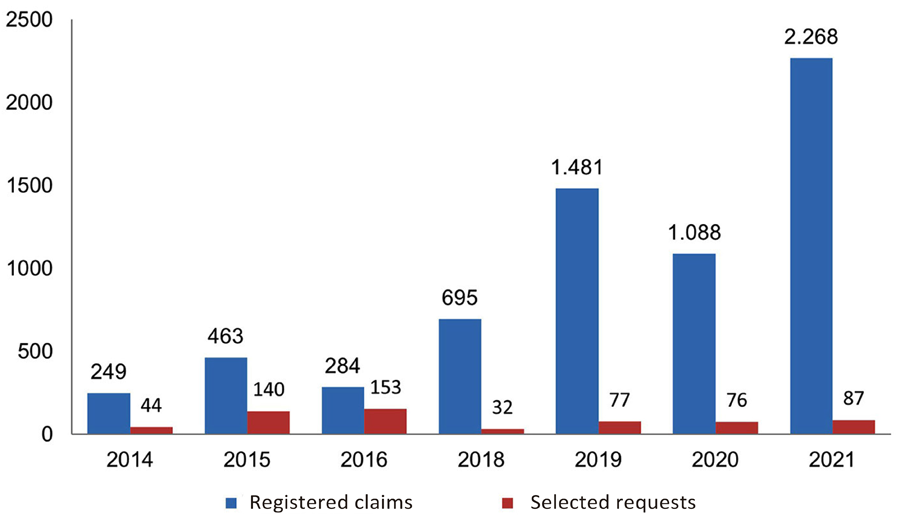
Regarding the approval process for requests registered with the CPP, proposals are analyzed by the Secretariat for Planning, Budget and Management (SEPOG) before they are submitted to the legislature for final assessment. Graphic 1 shows the number of proposals registered and approved between 2014 and 2021.

The variation in the number of proposals approved, particularly between 2014 and 2016, relates to the criteria set out in the methodological design of the cycle. During this period, the number of proposals approved in each regional area depended exclusively on the number of participants present at the time of the vote. Thus, the rule in place was that one proposal was selected for every 15 citizens present. With the introduction of the Fortaleza Participa platform from 2018 onwards, citizens began to vote electronically for up to three proposals, limited to the city’s districts. At the end of the process, the two proposals with the most votes per district were selected.
For the most part, the proposals registered with the CPP relate to issues directly linked to basic needs, such as sanitation, housing and healthcare, particularly amongst the working classes. This particular feature lends these requests for public policies a sense of urgency and, as only a small number of proposals are actually implemented, it leads to a certain degree of scepticism amongst members of civil society regarding both the participatory process and the exercise of power which, in theory, should occur to enable genuine co-management in the formulation of public policies (Pateman, 1992).
This scepticism towards the participatory process was evident in the remarks made by ACCS A5 when he mentioned people’s dissatisfaction at not seeing tangible results achieved through their participation in the CPP: “Many would say: ‘Why should I go? When you get there, it’s just a councillor making the presentation. What’s the point of me going? Just to be used, you know? I’m not interested.’ In the same vein, the account given by an ACCS member during observations carried out at the mobilisation forums expresses the degree of dissatisfaction with the results obtained in terms of public policies actually being implemented: ‘We’re getting tired of participating, participating, participating and getting nothing in return’ (Field Note).
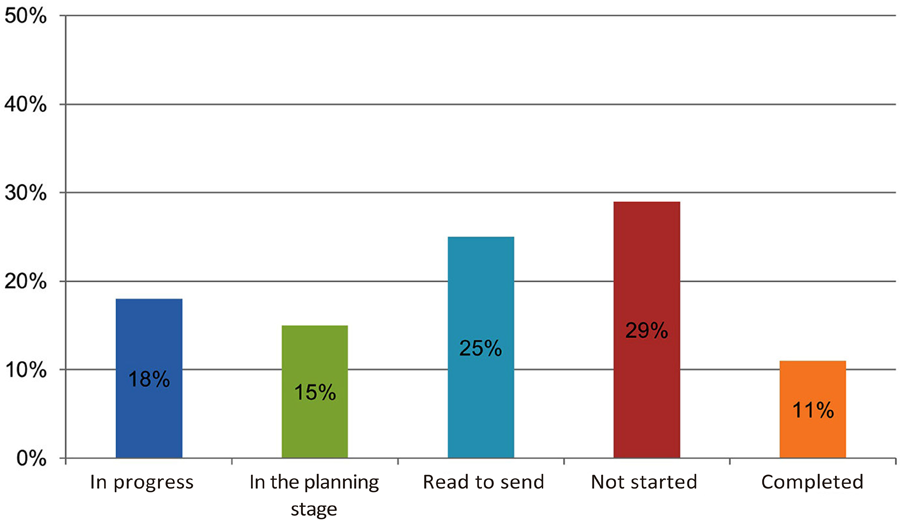
This scenario of low satisfaction with participation in the cycle does, in fact, appear to be linked to the low rates of implementation of the approved demands. On reviewing the feedback provided by the municipal administration in 2022, it was evident that the vast majority of the demands submitted and approved had not, however, been initiated or were deemed unfeasible, as shown in Graphic 2. It should be noted that the feedback for the period covering the years 2014 to 2017 was not published by the City Council.

In situations where there is a low level of implementation of proposals approved through participatory processes, it is common for civil society to experience growing feelings of scepticism and demotivation, as well as to question the municipal administration’s ability to recognise, prioritise and expedite decisions approved by the population (Ferreira, 2012). Thus, according to the author, low effectiveness is directly linked to lower levels of civil society engagement in participatory processes and is further exacerbated when no updates are provided on the progress of these demands.
With regard to civil society engagement and participation in the CPP, Graphic 3 illustrates the changes that took place between 2015 and 2021. The figures for the 2014 and 2022 annual cycles were not published by the PMF.

On examining Graphic 3, the positive increase – of more than 100 per cent – in the number of participants between 2016 and 2018 is particularly striking. This increase can be explained by the innovation introduced by the municipal administration in the methodological design of the CPP, specifically in the stages of proposal registration and voting, through the use of ICTs via the Fortaleza Participa platform. Chart 2 shows that, considering the two participation formats introduced from 2018 onwards, the figures are higher in the virtual participation stage.
The use of technology as a tool to enhance civil society participation in participatory forums (Almeida, Bautista and Addor, 2017; Avelino, Pompeu and Fonseca, 2021; Goldschmidt and Reis, 2019), as well as providing more alternatives and lower costs for participants (Magrani, 2014; Pires, 2017; Subirats, 2002), are some of the arguments put forward in the literature by so-called digital participationists. With regard to the Fortaleza experience, there is no denying the quantitative increase in participants following the introduction of ICTs into the CPP’s participatory process, as shown in Chart 1 and Graphic 3.
However, the issue of the digital divide was mentioned in the ACCS members’ statements as a factor limiting democratic access to the CPP. For ACCS A3, virtual participation “[...] is a hindrance because not everyone has the necessary knowledge and didn’t know how to access the process – the voting, the election of delegates, the proposals – which had all gone digital [...] And it caused a lot of problems; so for us, that was bad, very bad”. ACCS A4, on the other hand, reports that this format of participation favours specific groups and strata of society who are already tech-savvy: “[…] only those who knew how to use the tools, those who had a greater understanding, those who had an intellectual grasp of the process, right? Those who already had a certain ease with it, had more rights”.
According to data from the Map of Inequalities in Brazilian State Capitals, published in 2020 by the Sustainable Cities Institute, Fortaleza is the fifth state capital with the lowest percentage (77.30 per cent) of households with internet access in the country, trailing only Maceió, Rio Branco, Porto Velho and Cuiabá (Brazil, 2020), which highlights the existence of a considerable group of digitally excluded people in the local context. In this regard, it is clear that digital exclusion poses a challenge to the CPP’s ability to function effectively as a space for dialogue, democracy and participation.
This limitation regarding digital exclusion was also highlighted in the studies by Winkler (2015), Kornin, Moura and Nagamine (2020), Luciano (2021), and Lima, Polli and Carvalho (2021), based on their analyses of participatory initiatives organised in the municipalities of São Paulo, Belo Horizonte, Volta Redonda and Curitiba. Furthermore, regarding the challenges of this format of virtual participation, difficulties and suspicions of fraud during the registration process and voting on proposals on the Fortaleza Participa platform were also reported in the testimonies of the ACCS members.
According to ACCS A5: “Now that it was time to vote, I myself was one of those who was almost about to give up [...] when you go to vote online, people always give up, because when you’re about to vote on a proposal, just as you’re finishing, the system crashes. Then it all starts again, and that’s when people give up”. ACCS A9, meanwhile, states: “To tell you the truth, this online voting was nothing but fraud, a complete sham. I’m telling you this, I’m telling you this in all honesty, because people would come here with their CPFs to vote, and by the time they arrived, someone had already voted on their behalf”.
These factors, which ultimately demobilise and alienate citizens from participatory processes, were also reported in the studies by Valverde and Campos (2018), Cunha, Coelho and Pozzebon (2014), Oliveira and Sales (2015), and Lima, Polli and Carvalho (2021), and highlight the need for participatory platforms to provide an inviting, secure and seamless environment. It should be noted that improvements to the “Fortaleza Participa” platform were outlined in the 2022–2025 Annual Action Plan (PPA), with provision for new features for both the voting process and for tracking information on the progress of proposals once they have been approved in the cycle (Fortaleza, 2021).
Furthermore, regarding the limitations of virtual participation, it was possible to observe, in the responses of the ACCS members interviewed, resistance to this model due to prevailing beliefs and the political culture established in the local areas. This was evident in the statement by ACCS A5 – “[...] I vote in favour of in-person meetings, because you have to see it to believe it, don’t you?” – and in the statement by ACCS A8 – “[...] these days, proposals are barely even being voted on, because people don’t believe it, do they? Online? Here, people only buy into it when they see it. [...] When they [citizens] don’t see the work being done, they don’t feel it; they don’t know if it’s true or a lie”.
The responses outlined relate to what Camarão (2014, p. 148) terms the “symbolic capital of the project”, an element present in the social imagination regarding public policies. Thus, that which cannot be seen in concrete terms does not exist. According to the author, this is a principle rooted in traditional political culture, in which citizens look to physical infrastructure as evidence that something is being done. The term “sell’ used by ACCS A8 also illustrates how elements of patrimonialism are present in the current model of public administration, particularly in the relationship between society and the state.
By way of conclusion, Manager G2 offers the following assessment of the current state of local participatory engagement: “Look, I’d say that participation in Fortaleza is much more of a project. I’d call it a utopia, in the best sense of the word; it’s not that it’s unachievable, it’s that it’s desirable”. From this perspective, the considerations set out in this article reflect a range of possibilities, but, above all, challenges and certain shortcomings regarding the institutional structure of the CPP, as revealed within the context of Territory 32 in Fortaleza.
Final considerations
The aim of this article was to analyse the potential and limitations of popular participation within the framework of Fortaleza’s CPP, particularly as it is a participatory body that brings together models of representative, participatory and digital democracy. For this analysis, we sought to understand the perceptions of CPS managers and technical staff, as well as those of the ACCS in Territory 32 of the city, which covers the neighbourhoods of Jangurussu and Conjunto Palmeiras.
The field of participation in Fortaleza is characterised by disputes within civil society, the Executive and the Municipal Legislature, both within each of these bodies and between them. The end of participatory budgeting in 2012 and the establishment of the CPP as a new participatory body from 2013 onwards – following a change in management – signalled a new era for participation policies, with reformulated conceptual foundations, principles and rules compared to those of the former PB methodological framework. The variable ‘political will’ (Souza, 2021), therefore, was a decisive factor in the discontinuation of the PB policy in Fortaleza.
With regard to the CPP, certain points merit highlighting concerning the challenges and possibilities inherent in the relationship between representative democracy, participatory democracy and digital democracy. Firstly, the conflictual relationship between actors in the participatory and representative spheres became evident, characterised, respectively, by the ACCS in Territory 32 and the Municipal Legislature. This is a relationship of ongoing conflict due to the sharing of power and the legitimacy they possess, a phenomenon already observed in the Porto Alegre PB experience (Santos, 2002), and which is also evident in the democratic context of Fortaleza.
Secondly, it was observed that the responses provided by the public authorities to civil society’s demands between 2014 and 2022 did not occur with the expected and necessary timeliness on an annual basis. The documentary research indicated that, during this period, civil society received accountability reports on the status of demands approved in the cycle on only two occasions. In the most recent report submitted by the municipal administration, covering the years 2018 to 2022, a low proportion of demands had been completed (11 per cent), with the highest percentages corresponding to demands that had not been initiated (29 per cent) and those deemed unfeasible (25 per cent). This led to dissatisfaction and a loss of trust among residents of Territory 32 in the participatory process.
Thirdly, the challenges of coordinating models of participatory democracy and digital democracy are worth highlighting. Whilst, on the one hand, the introduction of the “Fortaleza Participa” platform led to a quantitative increase in the number of participants – an effect described by advocates of digital participation as an expansion of the public sphere – on the other hand, it encountered barriers rooted, above all, in the issue of digital exclusion. Thus, the inclusion of ICTs in the CPP’s methodological design revealed inequalities in Territory 32 regarding access to information and digital resources, leading to the emergence of yet another layer of inequality, which is intrinsically linked to social inequality.
Consequently, democratic access to the CPP is compromised insofar as territories such as Zone 32, characterised by low HDI scores, may see their populations silenced, given their lack of access to equipment and/or lack of knowledge regarding how to use these tools for virtual participation. Furthermore, mistrust of the participation process on the Fortaleza Participa platform was evident, with reports of fraud and difficulties in accessing the system. These limitations undermine what Santos (2002) terms the ‘differentiated costs of participation’ brought about by ICTs, owing to the difficulty and the time required for citizens to effectively deliberate on their priorities within the platform.
Finally, it was observed that the inclusion of ICTs in the CPP’s participatory process encountered another barrier rooted in the city’s traditional political culture. The ACCS reports, in mentioning the need for the physical visibility of the works and the stages of participation, refer to what Camarão (2011) termed the ‘symbolic capital of the project’. In view of this, the shift of the participation stages – which had previously taken place entirely in person – to a virtual format gave rise to feelings of apprehension and scepticism, given the resulting detachment from the physicality of the participation spaces and the physical structures of the projects.
References
- ALMEIDA, L. R. M.; BAUTISTA, J. B.; ADDOR, F. (2017). Potencialidades e limites do uso da tecnologia para o aprofundamento da democracia. Revista Tecnologia e Sociedade, v. 13, n. 27, pp. 208-226.
- ANDION, C. (2012). Por uma nova interpretação das mudanças de paradigma na administração pública. Cadernos EBAPE.BR, v. 10, pp. 1-19.
- AVELINO, D. P.; POMPEU, J. C. B.; FONSECA, I. F. (2021). Democracia digital: mapeamento de experiências em dados abertos, governo digital e ouvidorias públicas. Brasília/Rio de Janeiro, Ipea.
- AVRITZER, L. (2003). "O orçamento participativo e a teoria democrática: um balanço crítico". In: AVRITZER, L. A inovação democrática no Brasil São Paulo, Cortez.
- AZEVEDO, D. A.; BRULE, D. M. V. D. (2021). Ciberespaço é a nova panaceia da democracia? Mercator. Fortaleza, v. 20, p. e20009.
- BARDIN, L. (1977). Análise de conteúdo São Paulo, Edições 40.
- BARROS, S. A. R.; SAMPAIO, R. C. (2017). A confiança para a manutenção de uma inovação democrática: o caso do orçamento participativo digital de Belo Horizonte. Cadernos Gestão Pública e Cidadania, v. 22, n. 72.
- BOBBIO, N. (1997). O futuro da democracia: uma defesa das regras do jogo Rio de Janeiro, Paz e Terra.
-
BRASIL (2020). Mapa das desigualdades entre as capitais brasileiras. Programa Cidades Sustentáveis. Disponível em: https://www.cidadessustentaveis.org.br/arquivos/link/mapa-das-desigualdades.pdf Acesso em: 15 out 2022.
» https://www.cidadessustentaveis.org.br/arquivos/link/mapa-das-desigualdades.pdf - CAMARÃO, V. C. (2011). O Orçamento Participativo de Fortaleza: é possível uma pedagogia da participação popular ? Tese de doutorado. Fortaleza, Universidade Federal do Ceará.
- CAPUCELLI, R. C. P. (2017). Aprimoramento da democracia pela participatividade: a experiência do Orçamento Participativo em Ribeirão Preto/SP. Tese de doutorado. São Paulo, Universidade de São Paulo.
- CARVALHO, J. M. (2016). Cidadania no Brasil: o longo caminho. Rio de Janeiro, Civilização Brasileira.
- CHIZZOTTI, A. (2003). Pesquisa em ciências humanas e sociais São Paulo, Cortez.
- CUNHA, M. A. V. C. da; COELHO, T. R.; POZZEBON, M. (2014). Internet e participação: o caso do orçamento participativo digital de Belo Horizonte. Revista de Administração de Empresas, v. 54, pp. 296-308.
- DAGNINO, E. (2004). "Sociedade civil, participação e cidadania: de que estamos falando?". In: MATO, D. (org.). Políticas de ciudadanía y sociedad civil en tiempos de globalización Caracas, Faces/Universidad Central de Venezuela.
- DIAS, T. F.; SANO, H.; MEDEIROS, M. F. M. (2019). Inovação e tecnologia da comunicação e informação na administração pública Brasília, Enap.
- DOWNS, A. (1999). Uma teoria econômica da democracia São Paulo, Edusp.
- FARIA, J. R. V. D.; FARIA, J. H. D. (2017). A concepção de Estado e a administração pública no Brasil no âmbito do Plano Diretor de Reforma do Estado. Administração Pública e Gestão Social, v. 1, n. 3, pp. 140-147.
- FERREIRA, D. E. S. (2012). Participação e qualidade da deliberação pública online: análise comparada do orçamento participativo digital de Belo Horizonte (OPD-BH) e da etapa digital do Orçamento Participativo de Recife (OPR). Revista Latinoamericana de Opinión Pública, v. 2, n. 2, pp. 193-239.
- FILGUEIRAS, F. (2018). Indo além do gerencial: a agenda da governança democrática e a mudança silenciada no Brasil. Revista de Administração Pública, v. 52, pp. 71-88.
- FORTALEZA (2014). Lei Ordinária n. 10.277, de 19 de dezembro. Dispõe sobre a criação do Conselho Municipal de Planejamento Participativo e dá outras providências. Diário Oficial Municipal, Fortaleza, p. 5.
-
FORTALEZA (2018). Lei de Diretrizes Orçamentárias (LDO) 2019. Disponível em: https://transparencia.fortaleza.ce.gov.br/arquivos_pdfs/sepog/LDO/LDO2019_FINAL_WEB_3.pdf Acesso em: 12 mar 2023.
» https://transparencia.fortaleza.ce.gov.br/arquivos_pdfs/sepog/LDO/LDO2019_FINAL_WEB_3.pdf -
FORTALEZA (2021). Prefeitura lança plataforma Fortaleza Participa e divulga calendário dos Fóruns Territoriais. Disponível em: https://www.fortaleza.ce.gov.br/noticias/prefeitura-lanca-plataforma-fortaleza-participa-e-divulga-calendario-dos-foruns-territoriais Acesso em: 15 mar 2023.
» https://www.fortaleza.ce.gov.br/noticias/prefeitura-lanca-plataforma-fortaleza-participa-e-divulga-calendario-dos-foruns-territoriais - GASPARDO, M. (2018). Democracia participativa e experimentalismo democrático em tempos sombrios. Estudos Avançados, v. 32, pp. 65-88.
- GIL, A. C. (2008). Métodos e técnicas de pesquisa social São Paulo, Atlas.
- GOLDSCHMIDT, R.; REIS, B. F. (2019). Democracia digital: O papel da tecnologia no restabelecimento dos vínculos sociedade-Estado. Revista Em Tempo, v. 18, n. 1, pp. 177-200.
- GOMES, W. (2007). Democracia digital: que democracia. In: ENCONTRO DA ASSOCIAÇÃO NACIONAL DE PESQUISADORES EM COMUNICAÇÃO E POLÍTICA, 2. Anais. .. Belo Horizonte.
- KEINERT, T. M. M. (1994). Os paradigmas da administração pública no Brasil (1900-92). RAE - Revista de Administração de Empresas, v. 34, n. 3, pp. 41-48.
- KORNIN, T.; MOURA, R.; NAGAMINE, L. Y. (2020). O uso da web na gestão municipal: amplia ou imobiliza a participação? In: CONGRESSO OBSERVATÓRIO DAS METRÓPOLES. Anais. .. Brasília.
- LAVALLE, A. G. (2011). "Participação: valor, utilidade, efeitos e causa". In: PIRES, R. R. C. (org.). Efetividade das instituições participativas no Brasil: estratégias de avaliação Brasília, Ipea.
- LAVALLE, A. G.; HOUTZAGER, P. P.; CASTELLO, G. (2006). Democracia, pluralização da representação e sociedade civil. Lua Nova: Revista de Cultura e Política, pp. 49-103.
- LIMA, D. R. L.; POLLI, S. A.; CARVALHO, H. A. (2021). Participação Popular e TICS no Plano Diretor Participativo de Curitiba. Baru-Revista Brasileira de Assuntos Regionais e Urbanos, v. 7, n. 1, p. 17.
- LUCIANO, E. C. S. (2021). Uma análise reflexiva do orçamento participativo digital (2017-2020) do município de Volta Redonda e sua efetividade como ferramenta de participação social. Dissertação de mestrado. Seropédica, Universidade Federal Rural do Rio de Janeiro.
- MAGRANI, E. (2014). Democracia conectada: a internet como ferramenta de engajamento político-democrático Curitiba, Juruá.
- MARÇAL, M. C. C.; MELLO, S. C. B. (2014). "Problematizando o discurso tecnológico e os seus desagravos". In: MELLO, S. C. B. Construção social da Tecnologia e Teoria do Discurs o. Recife, Editora UFPE.
- MATIAS, E. F. (2019). Deus criou o mundo e nós construímos o Conjunto Palmeiras: quilombismo urbano de populações afrodescendentes em Fortaleza-Ceará. Dissertação de mestrado. Fortaleza, Universidade Federal do Ceará.
- MINAYO, M. C. S. (2009). Pesquisa social: teoria, método e criatividade Petrópolis, Vozes.
- NEBOT, C. P.; PIRES, V. (2017). "Futuro do orçamento participativo: do questionamento da sua efetividade à dúvida sobre a desejabilidade". In: TORRUELA, J. B.; MARTINS, S.; NEBOT, C. P. (org). Uma nova democracia para o século XXI ?. Viçosa, Martins, pp. 273-285.
- NUÑEZ, T. (2010). Participação e mudança política: a experiência do orçamento participativo em Porto Alegre. Dissertação de mestrado. Porto Alegre, Universidade Federal do Rio Grande do Sul.
- OLIVEIRA, M. M. (2016). Como fazer pesquisa qualitativa Petrópolis, Vozes.
- OLIVEIRA, M. D.; SALES, V. C. (2015). Reflexão a cerca da importância de criação de espaços digitais de participação democrática: a necessidade de fortalecimento da participação no orçamento participativo digital na cidade de Belo Horizonte. In: ENANPUR, 16. Anais ... Belo Horizonte.
- PATEMAN, C. (1992). Participação e teoria democrática Rio de Janeiro, Paz e Terra.
- RODRIGUES, F. (2015). Economia solidária como projeto cultural e político: a experiência do Banco Palmas, de Antonio George Lopes Paulino. Idéias. Campinas, v. 5, n. 2, pp. 257-260.
- RODRIGUES, L. C. (2016). Método experiencial e avaliação em profundidade: novas perspectivas em políticas públicas. Desenvolvimento em Debate, v. 4, n. 1, pp. 103-115.
- SAMPAIO, R. C. (2010). Participação política e os potenciais democráticos da internet. Revista Debates. v. 4, n. 1, pp. 29-53.
- SANTOS, B. S. (2002). Democratizar a democracia: os caminhos da democracia participativa Porto, Afrontamento.
- SANTOS, B. S.; AVRITZER, L. (2002). "Introdução: para ampliar o cânone democrático". In: SANTOS, B. S. Democratizar a democracia: os caminhos da democracia participativa. Porto, Afrontamento.
- SCHUMPETER, J. A. (1961). Capitalismo, socialismo e democracia Rio de Janeiro, Fundo de Cultura
- SORJ, B. (2003). brasil@povo.com: a luta contra a desigualdade na Sociedade da Informação Rio de Janeiro, Jorge Zahar; Brasília, Unesco.
- SUBIRATS, J. (2002). "Los dilemas de una relación inevitable. Innovación democrática y tecnologías de la información y de la comunicación". In: CAIRO CAROU, H. (comp.). Democracia digital: límites y oportunidades. Barcelona, Trotta.
- VALVERDE, B. A.; CAMPOS, M. de S. (2018). Deliberação, crise e institucionalização: transformações no Orçamento Participativo Digital de Belo Horizonte na Versão de 2013. Revista Brasileira de Gestão e Engenharia, v. 9, n. 2, pp. 18-47.
- WINKLER, I. (2015). A construção da participação digital e o papel da tecnologia: o caso da consulta pública Você no Parlamento no município de São Paulo. Tese de doutorado. Salvador, Universidade Federal da Bahia.
-
Data availability statement:
The entire dataset supporting the results of this study has been made available in the UFC Institutional Repository and can be accessed at https://repositorio.ufc.br/handle/riufc/77261.
Edited by
-
Editors:
Lucia BógusLuiz César de Queiroz Ribeiro
The entire dataset supporting the results of this study has been made available in the UFC Institutional Repository and can be accessed at https://repositorio.ufc.br/handle/riufc/77261.

 Source: compiled by the authors, in 2023.
 Source: compiled by the authors, in 2023, based on the Fortaleza City Council’s Feedback Report.
 Source: compiled by the authors, in 2023.