 Influence of depreciation criteria on forest road transport costs: application of the Monte Carlo method for risk modeling
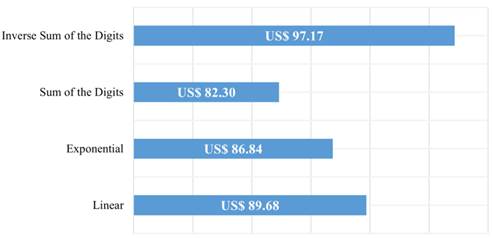
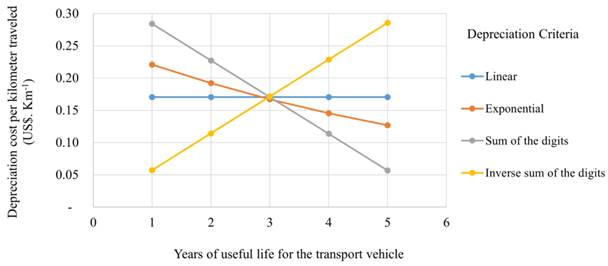
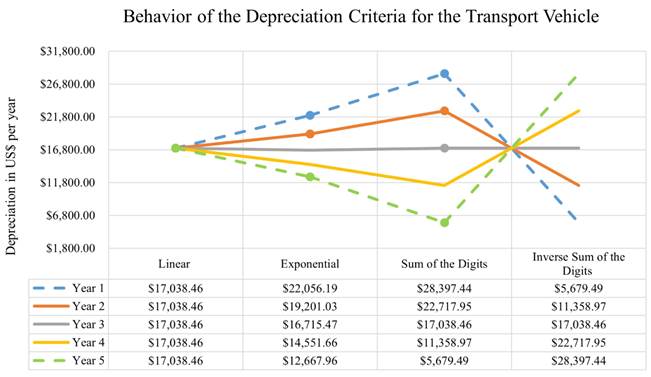
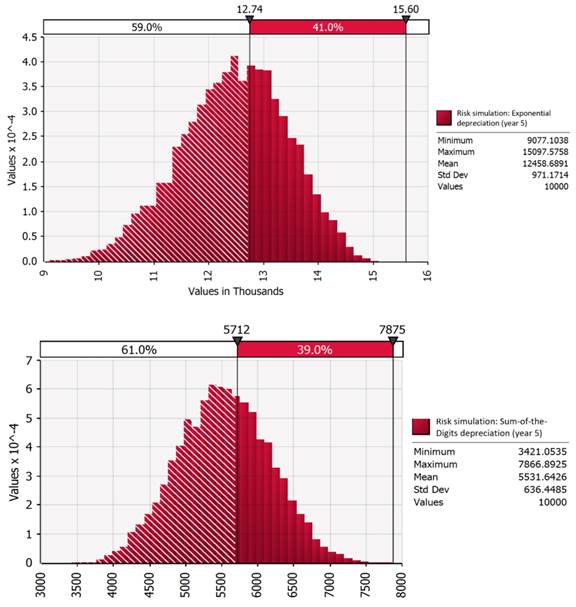
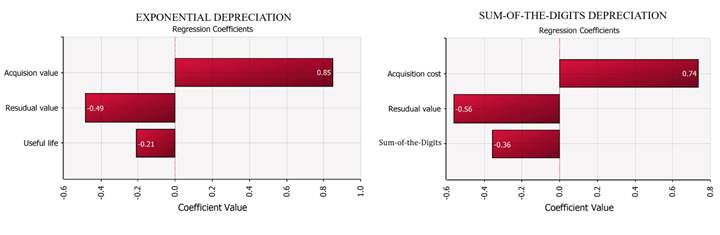
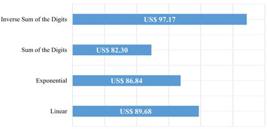
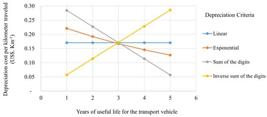
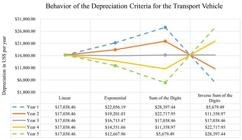
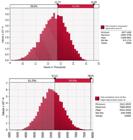
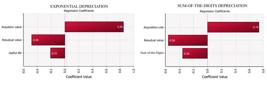
Forestry transportation accounts for nearly 50% of the total cost of timber delivered to mills and is; therefore, considered strategic in forest supply chains. Depreciation is among the most significant components of vehicle operational costs. This study conducted a comparative analysis of the main depreciation methods (Linear, Exponential, Sum of the Digits, and Inverse Sum of the Digits) to evaluate their influence on operational cost and cost per kilometer of a forestry transportation vehicle. It also performed risk modeling for the Exponential and Sum of the Digits methods. Operational cost was estimated using a methodology adapted from FAO North America. Variations in operational cost and cost per kilometer stemmed from the depreciation values produced by each method. The application of different depreciation methods resulted in variations in operating and per-kilometer costs, supporting the analysis of multiple financial scenarios. The Sum of the Digits and Exponential methods were more consistent with the actual depreciation behavior of transportation assets, largely due to the higher devaluation that occurs during early years of use. Risk modeling, projected for year 5, indicated probabilities of 39.00% (Sum of the Digits) and 41.00% (Exponential) of obtaining depreciation values above those estimated deterministically. Regression coefficient analysis showed that vehicle acquisition cost and residual value were the variables that most influenced depreciation cost, positively and negatively, respectively, for both the Exponential and Sum of the Digits methods.
Key words:
timber transportation; linear depreciation; forestry transportation; Monte Carlo method
 Thumbnail
 Thumbnail
 Thumbnail
 Thumbnail
 Thumbnail