 Activity of β-glucosidase and arylsulfatase enzymes in soils of the Sub-middle São Francisco Valley
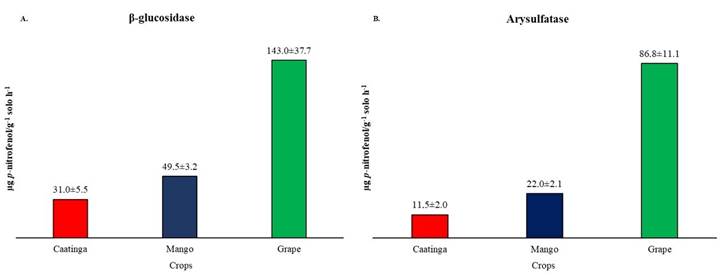
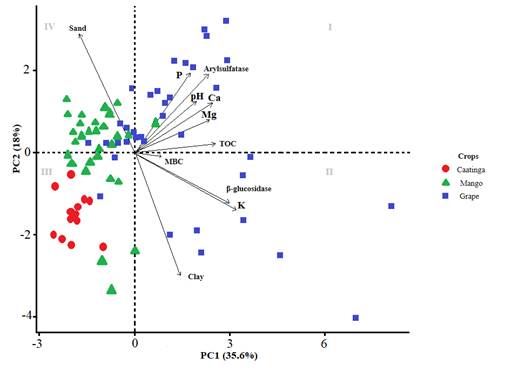
Soil quality is evaluated mainly by means of physical and chemical attributes, as they already have well-defined levels. However, several studies have suggested the use of soil biological attributes due to their high sensitivity, as indicators of soil quality. Given the above, the objective was to evaluate the effect of different agricultural management systems on the activity of β-glucosidase and arylsulfatase enzymes in cultivated and native Caatinga soils. The observational study was carried out in 2022, in the Sub-middle São Francisco Valley, under natural experimental conditions, in the municipalities of Petrolina, Juazeiro and Ibó, in areas with mango (Mangifera indica) and grape (Vitis vinifera) crops and area with native vegetation. In total, 77 composite soil samples were collected at 0-10 cm depth and analyzed for granulometry, pH, P, K+, Ca2+, Mg2+, total organic C, microbial biomass carbon and activity of β-glucosidase and arylsulfatase enzymes. The obtained data was subjected to principal components analysis (PCA), descriptive analysis and Pearson’s linear correlation. The cultivated areas exhibited higher β-glucosidase and arylsulfatase activities. These values should be interpreted within the context of the Caatinga, as they are not comparable to soils from other biomes, such as the Cerrado, due to differences in edaphoclimatic conditions and management practices.
Key words:
enzymatic activity; bioindicators; soil quality
 Thumbnail
 Thumbnail