
 Childhood obesity and food insecurity: scoping review - 2020 to 2023
Abstract
This study conducted a scoping review to examine the relationship between food insecurity and childhood obesity, analyzing 47 articles with empirical data published between 2020 and 2023. The studies were categorized by income level of the countries of origin and included cross-sectional surveys, cohorts, and ecological approaches. Most of the research focused on low- and middle-income countries, where food insecurity is more prevalent, but articles from high-income countries were also analyzed. The principal factors evaluated were the household’s socioeconomic status, the children’s age group and gender, and the COVID-19 pandemic’s impact. The results point to a significant association between food insecurity and childhood obesity, especially in low-income households and in regions with insufficient policies on both issues. The COVID-19 pandemic has deteriorated inequalities, reducing access to healthy foods and increasing childhood obesity rates. Thus, the two problems are interconnected and multifactorial and require interventions tailored to local contexts. An integrated and contextualized approach is essential to promote child health.
Key word:
Food insecurity; Childhood obesity; Public policies; Public health
Resumo
O estudo realizou uma revisão de escopo para examinar a relação entre insegurança alimentar e obesidade infantil, analisando 47 artigos com dados empíricos publicados entre 2020 e 2023. Os estudos foram categorizados por nível de renda dos países de origem e incluíram inquéritos transversais, coortes e abordagens ecológicas. A maior parte das pesquisas foca países de renda média e baixa, onde a insegurança alimentar é mais prevalente, mas também são analisados artigos de países de alta renda. Entre os fatores avaliados, destacam-se a situação socioeconômica das famílias, a faixa etária e o sexo das crianças, além do impacto da pandemia de COVID-19. Os resultados apontam associação significativa entre insegurança alimentar e obesidade infantil, especialmente em famílias de baixa renda e em regiões com políticas insuficientes nas duas questões. A pandemia de COVID-19 contribuiu para agravar as desigualdades, reduzir o acesso a alimentos saudáveis e elevar as taxas de obesidade infantil. Assim, os dois problemas revelam-se interconectados e multifatoriais e exigem intervenções adequadas aos contextos locais. A abordagem integrada e contextualizada é essencial para promover a saúde infantil.
Palavras-chave:
Insegurança alimentar; Obesidade infantil; Políticas públicas; Saúde pública
Resumen
Este estudio llevó a cabo una revisión de alcance para examinar la relación entre la inseguridad alimentaria y la obesidad infantil, analizando 47 artículos con datos empíricos publicados entre 2020 y 2023. Los estudios se clasificaron por nivel de ingresos de los países de origen e incluyeron encuestas transversales, cohortes y enfoques. ecológico. La mayoría de las investigaciones se centran en países de ingresos bajos y medios, donde la inseguridad alimentaria es más frecuente, pero también se analizan artículos de países de ingresos altos. Entre los factores evaluados destacan la situación socioeconómica de las familias, el grupo etario y género de los niños, así como el impacto de la pandemia de COVID-19. Los resultados apuntan a una asociación significativa entre la inseguridad alimentaria y la obesidad infantil, especialmente en familias de bajos ingresos y en regiones con políticas insuficientes en ambos temas. La pandemia de COVID-19 ha contribuido a empeorar las desigualdades, reducir el acceso a alimentos saludables y aumentar las tasas de obesidad infantil. Por lo tanto, los dos problemas parecen estar interconectados y son multifactoriales y requieren intervenciones apropiadas a los contextos locales. Un enfoque integrado y contextualizado es esencial para promover la salud infantil.
Palabras clave:
Inseguridad alimentaria; Obesidad infantil; Políticas públicas; Salud pública
Introduction
Childhood and adolescent obesity is a global public health issue with significant consequences now and throughout life1. It has been exacerbated by socioeconomic, cultural, and environmental factors that directly affect the development of younger populations, especially in low-income and highly socially vulnerable communities2,3. The increased prevalence of obesity among children and adolescents is associated with an increased risk of comorbidities such as type 2 diabetes, hypertension, and metabolic disorders, conditions previously seen as exclusive to adulthood4,5.
Food insecurity is another critical factor that directly influences the health of children and adolescents and is characterized by the lack of regular access to sufficient and adequate quality food to maintain an active and healthy life.6 Studies suggest that food insecurity is associated with malnutrition and increased risk of obesity due to the frequent consumption of more accessible, low-quality, calorie-dense, and nutrient-poor foods, especially among vulnerable populations7,8.
The relationship between food insecurity and obesity may seem paradoxical. However, it is explained by the impact of the nutritional transition in low-income populations, which results in a diet characterized by increased consumption of ultra-processed and sugar-rich foods and fats to the detriment of fresh and healthy foods9,10. Moreover, factors such as chronic stress and anxiety resulting from food insecurity contribute to changes in eating behavior, such as emotional and binge eating episodes, which are associated with weight gain11,12.
The relationship between food insecurity and obesity in children and adolescents involves several interrelated factors, ranging from inadequate access to healthy foods to sleep quality, psychological stress, and physical activity level. Poor sleep quality, for example, is a relevant risk factor since its deprivation can alter metabolism and increase the predisposition to weight gain. In turn, children and adolescents in food-insecure households tend to have an irregular sleep pattern, which can exacerbate weight gain and lead to obesity13,14.
Recent studies point to a deteriorated impact of food insecurity on female adolescents, suggesting a relationship between psychological stress, increased cortisol, and more significant accumulation of body fat15,16. This evidence highlights the complex interactions between food insecurity and obesity, influenced by biological, behavioral, and socioeconomic factors17.
In the Brazilian context, childhood obesity has become a growing challenge, especially among low-income households. Recent data indicate that changes in eating patterns and increased sedentary lifestyles are critical factors in growing obesity rates among children and adolescents18. Food insecurity is a significant problem in several regions of the country and plays an important role in this setting. Economically vulnerable households often have limited access to healthy foods like fruits, vegetables, and lean proteins. They consume high-calorie and nutrient-low processed foods. This nutritional imbalance elevates obesity rates, especially among younger people, who are particularly susceptible to the impacts of poor nutrition19. Furthermore, it contributes to an obesogenic environment, particularly in vulnerable urban areas20,21. However, the relationship between food insecurity and obesity is not clearly linear but instead mediated by several contextual factors, such as culture, social and economic environment, and government support policies22.
This scoping review aims to explore the relationship between food insecurity and obesity in children and adolescents to understand the main associated factors and socioeconomic differences that shape this relationship. Through a comprehensive analysis of the literature, the research attempts to contribute to developing public policies and health strategies that address food insecurity and childhood obesity challenges in an integrated fashion.
Methods
This study’s methodology was developed following the PRISMA model for Scoping Reviews (PRISMA Extension for Scoping Reviews, PRISMA-ScR) to ensure a systematic and transparent review process. It was registered in the Open Science Framework (OSF) (https://osf.io/36d7n/).
The search strategies included terms in Portuguese and English: (“Obesity” OR “Overweight”) AND (“Children” OR “Adolescent” OR “Child Nutrition”) AND (“Food Insecurity” OR “Child and Adolescent Food Security”). The databases adopted were BVS, PubMed, Web of Science, Scopus, SciELO, and Cochrane, covering 2020 to 2023. This section was chosen to capture the most recent studies, especially emphasizing the COVID-19 pandemic’s impact on access to food.
We established inclusion criteria focusing on studies on children and adolescents (0-19) addressing food insecurity and childhood obesity published in indexed journals. Initially, we included empirical studies, reviews, and conceptual studies. We excluded studies that did not address children and adolescents as the main population and studies focusing exclusively on genetic disorders or intervention programs unrelated to food insecurity and obesity. The study selection process was divided into four main phases:
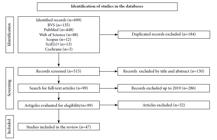
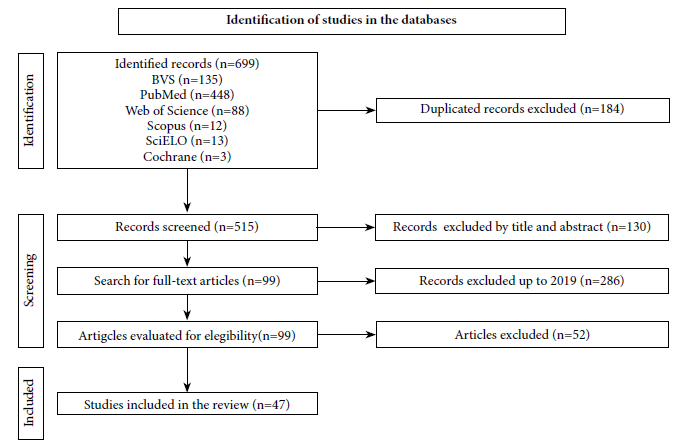
Identification: six hundred ninety-nine studies were found in the mentioned databases. These results were exported to Zotero software, where 184 duplicates were excluded, resulting in 515 unique studies.
Screening: two independent reviewers analyzed the titles, abstracts, and keywords of these 515 studies in Rayyan software. One hundred thirty studies were excluded because they did not meet the inclusion criteria. A third reviewer reviewed any conflicts between the reviewers.
Eligibility: after screening, 99 full-text articles were evaluated. Fifty-two studies were excluded due to methodological inadequacy because they did not directly address the relationship between obesity and food insecurity or because they were review studies.
Inclusion: forty-seven studies were selected for inclusion in the review. These studies were organized in an Excel spreadsheet and analyzed under the following categories: author, publication year, target population (child or adolescent), methods, intervention type, duration, primary results, concept of food insecurity, and definition of obesity.
We employed the Zotero application to organize and delete duplicates during the screening phase, while Rayyan was adopted for screening titles and abstracts, allowing efficient collaboration between reviewers. After screening, the data of the selected studies were exported to Excel, where a detailed analysis of the information was performed.
The data were summarized based on a matrix that included all the columns mentioned, characterizing the studies and the analysis. Subsequently, the studies were grouped thematically, focusing on countries with different economic development levels in 2023, per the criteria established by the World Bank: low income: gross national income per capita of up to US$ 1,145; lower middle income between US$ 1,146 and US$ 4,515; upper middle income between US$ 4,516 and US$ 14,005; and high income more than US$ 14,005 (https://datatopics.worldbank.org/world-development-indicators/the-world-by-income-and-region.html).
Data analysis was divided into two stages: characterization of the collection of studies and thematic grouping. This approach identified patterns in research related to food insecurity and childhood obesity in low/low-middle, upper-middle, and high-income contexts, highlighting the importance of public policies. The methodology adopted, with well-defined phases and a thorough screening and inclusion process, ensured the quality and relevance of the selected studies (Figure 1).
Results
The scoping review included 47 studies investigating the relationship between childhood and adolescent obesity and food insecurity. These studies revealed important data on socioeconomic and cultural characteristics, dietary patterns, nutritional status, and the prevalence of obesity among children and adolescents in food-insecure situations. The impact of food insecurity on growing obesity in young people was investigated in various contexts, covering different countries and populations.
Collection profile
The 47 articles analyzed refer to the 2020-2023 period. They were published entirely in English or Portuguese and addressed countries with varying economic development levels, from nations with high development indices to countries in intermediate and low stages.
The distribution by country was categorized by socioeconomic development level. Studies in high-income countries, including the United States, Canada, South Korea, and Spain, represent 55.3% of the sample. Upper-middle-income countries comprise 29.8%, emphasizing Brazil, Mexico, Ecuador, South Africa, Mongolia, and Iran. The last group of countries includes lower-middle-income countries (Bolivia, Nigeria, Bangladesh, Jordan, and Sri Lanka) and low-income countries (Ethiopia, Malawi), representing 14.9% of the studies.
Publications are primarily found in journals focused on public health (40%), nutrition (30%), pediatrics (20%), and food safety (10%). The predominance of quantitative studies is evident, with cross-sectional studies standing out, followed by cohort studies. The former are more frequently applied due to the easy data retrieval in the short term. Qualitative studies were less frequent in less than 5% of cases.
The analysis included studies involving households and children of different ages, from newborns to adolescents, as detailed in the tables. The instruments used in the articles to measure food insecurity include: Household Food Insecurity Access Scale (HFIAS), widely used to categorize households at different food insecurity levels23,24; Hunger Vital Sign (HVS)25; Brazilian Food Insecurity Scale (EBIA)13,26-30; Household Food Security Survey Module (USDA), with variations of 6, 10 and 18 items31-37; Food Insecurity Experience Scale (FIES), developed by the Food and Agriculture Organization of the United Nations (FAO) to measure food insecurity based on experiences and behaviors6; Coping Strategies Index (CSI) that assesses coping strategies related to food scarcity38; Mexican Food Security Scale with 12 items39; NHANES Food Security Survey Module, with 18 items for households with children40; US Census Bureau Food Security Module, with 10 items41; and the Radimer-Cornell Scale24, used for screening in specific studies.
The most commonly used methods to measure childhood obesity were Body Mass Index (BMI)42, waist circumference, and skinfolds43. Some studies used less conventional methods, such as bioelectrical impedance, to assess children’s body composition44, providing additional data on lean mass and body fat.
Several studies highlight the impact of the COVID-19 pandemic found in 45% of publications on food insecurity and childhood obesity rates. These studies show significant changes in eating behavior and nutritional quality due to the economic and social restrictions imposed by the health crisis.45 The pandemic’s impact was very significant from 2020 to 2022, with growing reports of its severe effects in 2021 when data collection was more significant compared to the early days of the crisis in 2020.
Food insecurity and childhood obesity in high-income countries
The results were categorized based on the countries’ income patterns to assess associations between food insecurity (FI) and childhood obesity (CO) in economic vulnerability contexts. Chart 1 groups the studies conducted in high-income countries, the United States (23 articles), and one each from Canada, South Korea, and Spain. These studies highlight the relationship between FI and CO in children and adolescents of different age groups. In general, the results indicate a significant association between FI and CO, with a higher prevalence of obesity in children living in food insecurity conditions.
Studies conducted after 2020 frequently mentioned factors such as family stress, poor diet quality, and the COVID-19 pandemic’s impact, highlighting the challenges faced by vulnerable households35,46. The pandemic has deteriorated food insecurity conditions, increasing the consumption of ultra-processed foods and reducing access to healthy options.
Additionally, several studies highlight that children from Hispanic, immigrant, and racial minority households in the United States are at higher risk of food insecurity and obesity.47 These inequalities highlight the impact of social and racial disparities and highlight the importance of the home environment and public policies, suggesting the expansion of school feeding programs and subsidies for low-income households to mitigate the impacts of FI on child health.
Studies addressing the relationship between food insecurity and childhood obesity in high-income countries reveal a complex and multifaceted association. Adams et al.33 highlight changes in the household food environment during the COVID-19 pandemic, which have escalated the effect of FI on food consumption and childhood obesity patterns in the US, showing how global events can exacerbate pre-existing inequalities. Studies such as those by Beck et al.48 and Benjamin-Neelon et al.49 show that the pandemic affected parental perceptions about the health behaviors of obese children and the impact of FI on the development of childhood adiposity.
The work of Weaver et al.46 focuses on body mass index (BMI) changes in Latino and North American children throughout childhood, pointing to the role of FI in exacerbating weight issues. This is a relevant aspect when considering intervention policies in high-income countries, where access to food is not the only factor to be considered, but also issues such as the quality and availability of healthy foods.
The results of this group of works reveal that FI is associated with childhood obesity through mechanisms such as stress, inequalities, lower-quality food choices, and vulnerable family and social contexts, even in developed countries, which reinforces the need for public policies aimed at these factors.
Upper-middle-income countries
Chart 2 presents studies conducted in upper-middle-income countries, indicating a mixed correlation between food insecurity (FI) and childhood obesity (CO). In some cases, FI has been associated with undernutrition26,30,50 and overweight in different regional contexts26. The COVID-19 pandemic is an aggravating factor in South Africa50, where economic and social constraints and extreme income inequality have impacted access to food and exacerbated the effects of food poverty.
Food insecurity and childhood obesity in low- and lower-middle-income countries
Chart 3 presents studies conducted in low-income countries, revealing a strong association between food insecurity (FI) and malnutrition. Some evidence also points to the coexistence of childhood obesity in extreme poverty. Children from households with chronic FI face challenges such as a lack of dietary diversity and limited access to health services. Other studies highlight the influence of socioeconomic and cultural factors on FI dynamics and their consequences for child health.
Factors associated with FI and CO include poverty, lack of access to quality food, and changes in eating habits due to poor public policies29. These studies also highlight that poor socioeconomic conditions in rural and urban areas contribute to the coexistence of malnutrition and obesity in children and adolescents, highlighting the need for specific policies to improve access to nutritious food and reduce dietary inequality in these contexts. Abukishk et al.51 discuss the effects of food insecurity on Jordanian refugee children, highlighting the duality of malnutrition and obesity coexisting in vulnerable populations.
Studies such as those by Biadgilign et al.53 show that food insecurity is associated with undernutrition and overweight in regions of sub-Saharan Africa where both coexist. This situation is known as the “double burden of malnutrition” and is a significant public health challenge.
In low-income countries, the effects of food insecurity on childhood obesity are especially pronounced in populations already vulnerable to multiple risk factors. Biadgilign et al.53 report that children in Ethiopia face high food insecurity levels, resulting in undernutrition and obesity. The coexistence of these issues highlights the complexity of food insecurity in these contexts, where lack of access to safe and nutritious food is a daily challenge.
In rural contexts such as Nigeria, Adeomi et al.54 show that dietary diversity and dietary patterns are crucial to preventing undernutrition and excessive weight gain. Jubayer et al.29 also point to socioeconomic factors influencing malnutrition in children under five in Bangladesh, suggesting that food security interventions should consider specific cultural and economic factors.
Thakwalakwa et al.55 explore the “double burden” of malnutrition and obesity in low-income areas, looking at how food insecurity affects food availability and the quality of food choices, contributing to a cycle of poverty and obesity. Bethancourt et al.52 show that increased hair cortisol in adolescents is related to food insecurity and body fat accumulation, highlighting the impact of FI-related stress on children’s physical development.
These studies reveal that food insecurity is strongly associated with poor dietary patterns in low-income countries, resulting in increased obesity. Effective interventions must address the underlying causes of food insecurity, including socioeconomic inequality, access to nutritious foods, and infrastructure to improve public health.
Notes on public policies and interventions
Different studies suggest that policies to overcome food insecurity must be multidimensional, including providing food and nutritional education programs30 to help households make healthier food choices, even in financial constraints. In countries such as Brazil, public policies and community interventions were effective in some regions, as Lucena et al.26 reported.
Studies conducted in high-income countries highlight the need for more robust policies to address the social inequalities that also exacerbate food insecurity in their contexts. McClain et al.35 point out that although food insecurity rates have declined in some regions following the implementation of government programs, childhood obesity remains a significant problem, especially for low-income households.
Differences in the implementation of specific public policies and the level of development of nations reveal the importance of strategies adapted to local realities. In low- and middle-income countries, where food insecurity is often associated with malnutrition, intervention programs should combine food provision with nutrition education to prevent households from turning to low-cost, high-calorie food options, as Jubayer et al.29 discussed.
Studies also highlight the crucial role of public policies in overcoming food insecurity and childhood obesity. In the United States, for example, Adams et al.33 suggest that expanding food assistance programs during the pandemic helped mitigate the most severe effects of food insecurity in low-income households. However, in countries such as Bangladesh and Ethiopia, the lack of public proposals led to alarming rates of coexisting malnutrition and obesity in children28,53.
Discussion
Analysis of the 47 articles’ results reveals a clear pattern of association between food insecurity and obesity, with significant variations depending on the countries’ development levels. In high-income countries, such as the United States, food insecurity was frequently associated with an increase in obesity in children and adolescents in the lowest income brackets, as reported by Adams et al.33 and Beck et al.48. The COVID-19 pandemic has exacerbated this relationship, deteriorating children’s eating habits and physical activity46,49.
In middle-income countries such as Brazil, Lucena et al.26 found a significant association between food insecurity and obesity in children receiving food assistance programs. This relationship, however, was mediated by factors such as socioeconomic status and access to ultra-processed foods. Santos et al.31 highlight low parental education and sedentary lifestyle as aggravating factors for obesity in Brazilian adolescents.
In low-income countries such as Bangladesh and Ethiopia, results indicate a frequent association between food insecurity and malnutrition, as observed by Jubayer et al.29 and Dinku et al.56. However, paradoxically, some populations also evidenced significant childhood obesity rates, suggesting a “double burden” of coexisting malnutrition and obesity in vulnerable populations. This coexistence is common in lower-income countries, where limited access to healthy foods is replaced by easy access to cheap, calorie-rich foods30. Lack of dietary diversity has also been identified as an important factor in the etiology of childhood obesity in these countries, especially when combined with extreme poverty and low parental education, as indicated by Dinku et al.56.
Another relevant factor that emerges from the results is the COVID-19 pandemic’s effect on food insecurity and childhood obesity, which has been confirmed in several studies33,48. At that time, many households lost income or had limited access to healthy foods during social isolation. In the United States, Adams et al.33 observed that the household food environment changed drastically during the pandemic, leading to a growing consumption of processed foods and a lower intake of fresh foods, increasing childhood obesity, especially in low-income households.
Studies also show that in low- and middle-income countries, COVID-19 has exacerbated inequalities, increasing children’s vulnerability to food insecurity and its health impacts. Lucena et al.26 reported that Brazilian food assistance policies played a crucial role in mitigating the effects of the pandemic. However, they were insufficient to prevent the rising childhood obesity rates in the most vulnerable populations.
Implementing nutritional education programs is essential, as Biadgilign et al.53 highlight the importance of guidance on choosing nutritious foods. Some studies emphasize that public health policies must be integrated with social actions. Creating programs to increase the income of low-income households can contribute to reducing food insecurity. Lucena et al.26 argue that socioeconomic conditions play a vital role in child health. Measures that improve households’ economic conditions significantly reduce food insecurity, especially if accompanied by awareness campaigns promoting healthy foods’ value.
Another relevant aspect addressed in the studies was the effect of eating habits associated with the socioeconomic environment. In high-income countries, childhood obesity was often associated with factors such as financial stress in households and high consumption of ultra-processed foods, as reported by Beck et al.48 and McClain et al.35. In lower-income countries, such as those described by Jubayer et al.29 and Dinku et al.56, limited access to quality food, combined with poverty and low parental education, was one of the primary factors associated with food insecurity and its effects on child health.
The results analyzed show that food insecurity significantly affects children’s health regardless of the country’s income level, elevating childhood obesity rates. However, approaches and challenges vary by socioeconomic context. In high-income countries, the focus is on mitigating the effects of relative poverty and improving the quality of the diet of the poorest children, while the main challenge in lower-income countries is ensuring regular access to nutritious food35,53.
The “double burden” of malnutrition, mainly in low-income countries, is one of public health’s most complex challenges. Studies such as those by Jubayer et al.29 and Dinku et al.56 show that children in these regions are vulnerable to both malnutrition and obesity due to structural factors such as poverty and lack of access to adequate food. This situation has also been observed in middle-income countries such as Brazil, where Santos et al.31 affirm that food insecurity affects the quality and amount of food available, especially for children.
Bae and Choi57 point out that in some cultures, consuming ultra-processed foods is seen as a social status, making promoting healthy food choices even more important. A joint effort is needed to change perceptions and eating habits, but interventions must consider the cultural diversity of populations. Therefore, programs that respect and integrate local dietary practices may be more effective. Research by Gamba et al.47 suggests that resistance to dietary changes can be overcome when interventions are adapted to local culture, making the actions more relevant and accepted by the community.
Collaboration between different sectors, such as health, education, and agriculture, is vital to addressing food insecurity comprehensively. Eagleton et al.58 argue that intersectoral policies can strengthen the support network for vulnerable households, enabling more effective coping with food insecurity and its consequences.
Public policies should include ongoing monitoring to assess the effectiveness of implemented interventions. Robust data collection is necessary to adjust strategies, ensuring that food security programs are effective and meet community needs. We should also consider the relationship between food insecurity and mental health, discussed in the study by Cyrenne-Dussault et al.59. The authors pointed out that children experiencing food insecurity are more likely to develop mental health problems, such as anxiety, depression, and obesity. This shows that childhood obesity is multifactorial, involving nutritional aspects and emotional and psychological factors.
This review has some limitations. The heterogeneous methodologies and populations hinder any comparison. The varying scales used to measure food insecurity and obesity certainly affected data interpretation, as pointed out by Khanijahani et al.34. Moreover, most studies focused on urban areas, with limited results for rural populations. Govender et al.50 draw attention to this, noting that the dynamics of food insecurity and obesity vary significantly between urban and rural environments. Since most studies are cross-sectional, it is challenging to conduct a deeper reflection on the causal relationships between food insecurity and obesity. Longitudinal studies are needed to deepen the understanding of the temporal relationships between these factors, as suggested by Murillo-Castillo et al.39. Finally, the scarce qualitative data on the topic prevents a deeper understanding of the underlying human and social factors, such as households’ experiences and the barriers they face in achieving a healthy diet. Future research must consider representative samples from urban and rural areas and the intersection between food insecurity, particularly in developing countries58.
Conclusions
This review highlights the complex and multifactorial relationship between FI and CO. The results show that food insecurity directly affects children’s nutritional development, especially in low-income households and regions with low access to protective policies. Obesity is historically associated with high-income countries and is a growing concern in low- and middle-income countries, as poor nutrition is related to the lack of access to nutritious foods and the consumption of low-quality and ultra-processed foods, which are often more affordable.
The study also reveals that the COVID-19 pandemic has exacerbated social inequalities and increased food insecurity and childhood obesity. Lower access to healthy foods, combined with increased socioeconomic vulnerability, has created an environment conducive to increased overweight and obesity in children and adolescents. The studies included in this review indicate that, besides household income, the education of parents or guardians, urbanization, access to food assistance programs, and the availability of healthy foods are necessary for overcoming childhood obesity. Interventions resulting from public policies should adapt to local realities and have an interdisciplinary focus, prioritizing the school environment with consistent and compelling proposals.
Finally, we conclude that food insecurity and childhood obesity should not be seen as isolated problems but as part of a larger cultural context that is always susceptible to interventions for healthy practices that promote the full development of children and adolescents.
Acknowledgments
We are grateful to the Postgraduate Program in Public Health of the Escola Nacional de Saúde Pública Sergio Arouca (PPGSP/ENSP) for the academic support during the development of this work and to the Coordenação de Aperfeiçoamento de Pessoal de Nível Superior (CAPES), through the Academic Excellence Program (PROEX), for the financial support for translating this article.
References
- 1 Lobstein T, Jackson-Leach R. Child overweight and obesity in the USA: prevalence rates according to IOTF definitions. Int J Pediatr Obes 2007; 2(2):62-64.
- 2 Sahoo K, Sahoo B, Choudhury AK, Sofi NY, Kumar R, Bhadoria AS. Childhood obesity: causes and consequences. J Fam Med Prim Care 2015; 4(2):187-192.
- 3 Kelsey MM, Pyle L, Hilkin A, Severn CD, Utzschneider K, Van Pelt RE. The impact of obesity on insulin sensitivity and secretion during pubertal progression: a longitudinal study. J Clin Endocrinol Metab 2020; 105(6):e2061-e2068.
- 4 Singh AS, Mulder C, Twisk JWR, Van Mechelen W, Chinapaw MJM. Tracking of childhood overweight into adulthood: a systematic review of the literature. Obes Rev 2008; 9(5):474-488.
- 5 Lobstein T, Jackson-Leach R, Moodie ML, Hall KD, Gortmaker SL, Swinburn BA. Child and adolescent obesity: part of a bigger picture. Lancet 2015; 385(9986):2510-2520.
- 6 Food and Agriculture Organization of the United Nations (FAO). The state of food security and nutrition in the world 2019: safeguarding against economic slowdowns and downturns. Rome: FAO; 2019.
- 7 Pérez-Escamilla R, Villalpando S, Shamah-Levy T, Humarán IMG. Household food insecurity, diabetes and hypertension among Mexican adults: results from Ensanut 2012. Salud Publica Mex 2014; 56(Suppl. 1):62-70.
- 8 Leung CW, Tester JM. The association between food insecurity and diet quality varies by race/ethnicity: an analysis of National Health and Nutrition Examination Survey 2011-2014 results. J Acad Nutr Diet 2019; 119(10):1676-1686.
- 9 Popkin BM, Adair LS, Ng SW. Now and then: the global nutrition transition: the pandemic of obesity in developing countries. Nutr Rev 2012; 70(1):3-21.
- 10 Monteiro CA, Cannon G, Levy RB, Moubarac JC, Louzada MLC, Rauber F. Ultra-processed foods: what they are and how to identify them. Public Health Nutr 2019; 22(5):936-941.
- 11 Bruening M, Dinour LM, Chavez JBR. Food insecurity and emotional health in the USA: a systematic narrative review of longitudinal research. Public Health Nutr 2017; 20(17):3200-3208.
- 12 Gundersen C, Ziliak JP. Food insecurity and health outcomes. Health Aff (Millwood) 2015; 34(11):1830-1839.
- 13 Oliveira PM, Alexandre ICU, Florencio SSG, Lima FET. A saúde infantil frente ao fechamento de escolas na pandemia de COVID19. Enferm Foco 2022; 13:e-202231ESP1.
- 14 Smith L, Jacob L, Shin JI, Tully MA, Pizzol D, LópezSánchez GF. Bullying victimization and obesogenic behaviour among adolescents aged 12 to 15 years from 54 low and middleincome countries. Pediatr Obes 2021; 16(2):e12700.
- 15 Tomiyama AJ. Stress and obesity. Annu Rev Psychol 2019; 70:703-718.
- 16 Adam TC, Epel ES. Stress, eating and the reward system. Physiol Behav 2007; 91(4):449-458.
- 17 Cunningham SA, Kramer MR, Narayan KMV. Incidence of childhood obesity in the United States. N Engl J Med 2014; 370(5):403-411.
- 18 Popkin BM, Reardon T. Obesity and the food system transformation in Latin America. Obes Rev 2018; 19(8):1028-1064.
- 19 Louzada MLC, Costa CS, Souza TN, Cruz GL, Levy RB, Monteiro CA. Impacto do consumo de alimentos ultraprocessados na saúde de crianças, adolescentes e adultos: revisão de escopo. Cad Saude Publica 2020; 37(Supl. 1):e00323020.
- 20 Instituto Brasileiro de Geografia e Estatística (IBGE). Pesquisa Nacional de Saúde 2019: percepção do estado de saúde, estilos de vida, doenças crônicas e saúde bucal. Rio de Janeiro: IBGE; 2020.
- 21 Monteiro LZ, Varela AR, Souza PD, Maniçoba ACM, Junior FB. Hábitos alimentares, atividade física e comportamento sedentário entre escolares brasileiros: Pesquisa Nacional de Saúde do Escolar, 2015. Rev Bras Epidemiol 2020; 23:e200010.
- 22 Martins APB, Levy RB, Claro RM, Moubarac JC, Monteiro CA. Increased contribution of ultra-processed food products in the Brazilian diet (1987-2009). Rev Saude Publica 2013; 47(4):656-665.
- 23 Eskandari F, Lake AA, Rose N, Butler R, O'Malley C. A mixed-method systematic review and meta-analysis of the influences of food environments and food insecurity on obesity in high-income countries. Food Sci Nutr 2022; 10(11):3689-3723.
- 24 Coates J, Swindale A, Bilinsky P. Household Food Insecurity Access Scale (HFIAS) for measurement of food access: indicator guide, version 3. Washington (DC): FANTA; 2007.
- 25 Ortiz-Marrón H, Ortiz-Pinto MA, Lanza MU, Pujadas GC, Pino VV, Cortés SB. Household food insecurity and its association with overweight and obesity in children aged 2 to 14 years. BMC Public Health 2012; 12:868.
- 26 Wirth SH, Palakshappa D, Brown CL. Association of household food insecurity and childhood weight status in a low-income population. Clin Obes 2020; 10(6):e12374.
- 27 Lucena PN, Bueno NB, Vieira KA, Cabral MJ, Clemente APG, Florêncio TM. Food insecurity and weight status of socially vulnerable child beneficiaries of a food assistance programme in Maceió, Northeast Brazil. Public Health Nutr 2020; 23(4):721-726.
- 28 Bueno MC, Franco JG, Leal GVS, Kirsten VR. Insegurança alimentar e fatores sociais, econômicos e nutricionais em estudantes de escolas rurais. Cad Saude Colet 2021; 29(2):153-162.
- 29 Jubayer F, Islam MH, Nayan MM. Malnutrition among under-five children in St. Martin's Island, Bangladesh: a cross-sectional study on prevalence and associated factors. SAGE Open Med 2022; 13:10:20503121221116246.
- 30 Santana DD, Barros EG, Salles-Costa R, Veiga GV. Mudanças na prevalência de excesso de peso em adolescentes residentes em área de alta vulnerabilidade à insegurança alimentar. Cien Saude Colet 2021; 26(12):6189-6198.
- 31 Santos NFD, Lira PIC, Tavares FCLP, Leal VS, Oliveira JS, Pessoa JT. Overweight in adolescents: food insecurity and multifactoriality in semiarid regions of Pernambuco. Rev Paul Pediatr 2020; 38:e2018256.
- 32 Masler IV, Palakshappa D, Skinner AC, Skelton JA, Brown CL. Food insecurity is associated with increased weight loss attempts in children and adolescents. Pediatr Obes 2021; 16:e12728.
- 33 Daneshzad E, Dorosty-Motlagh AR, Bellissimo N, Suitor CW, Azadbakht L. Food insecurity, dietary acid load, dietary energy density and anthropometric indices among Iranian children. Eat Weight Disord 2021; 26(3):839-846.
- 34 Adams EL, Caccavale LJ, LaRose JG, Raynor HA, Bean MK. Home food environment changes and dietary intake during an adolescent behavioral weight loss intervention differ by food security status. Nutrients 2022; 14(3):976.
- 35 Khanijahani A, Pawcio S. Household food insecurity and childhood obesity/overweight among children with special healthcare needs: results from a nationally representative sample of 10-17yearold U.S. children. Pediatr Obes 2023; 18(5):e12973.
- 36 McClain AC, Evans GW, Dickin KL. Maternal stress moderates the relationship of food insufficiency with body mass index trajectories from childhood to early adulthood among U.S. rural youth. Child Obes 2021; 17(4):263-271.
- 37 Zhong Q, Gunnar MR, Selly AS, French SA, Sherwood NE, Berge JM. Household food insecurity and obesity risk in preschoolaged children: a threeyear prospective study. Soc Sci Med 2022; 305:114753.
- 38 Guerrero TL, Barber LR, Aflague TF, Paulino YC, Hattori-Uchima M, Acosta AM. Prevalence and predictors of overweight and obesity among young children in the Children's Healthy Living Study on Guam. Nutrients 2020; 12(8):2527.
- 39 Drysdale RE, Bob U, Moshabela M. Coping through a drought: the association between child nutritional status and household food insecurity in the district of iLembe, South Africa. Public Health Nutr 2020; 23(6):1052-1065.
- 40 Murillo-Castillo KD, Frongillo EA, Alba M, Plata TQ. Food insecurity was associated with lower fruit and vegetable consumption but not with overweight and obesity in children from Mexican fishing communities. Ecol Food Nutr 2020; 59(4):420-435.
- 41 Tayie FA, Lambert LA, Aryeetey R, Xu J, Brewer LC. Anthropometric characteristics of children living in foodinsecure households in the USA. Public Health Nutr 2021; 24(15):4803-4811.
- 42 Cole SW, Hawkley LC, Arevalo JM, Sung CY, Rose RM, Cacioppo JT. Social regulation of gene expression in human leukocytes. Genome Biol 2007; 8(9):R189.
- 43 Onis M, Blössner M, Borghi E. Global prevalence and trends of overweight and obesity among preschool children. Am J Clin Nutr 2010; 92(5):1257-1264.
- 44 Kyle UG, Bosaeus I, Lorenzo ADD, Deurenberg P, Elia M, Gómez JM. Bioelectrical impedance analysis-part I: review of principles and methods. Clin Nutr 2004; 23(5):1226-1243.
- 45 Brown AJH, Bradley SJ, Marshall FH, Brown GA. From structure to clinic: design of a muscarinic M1 receptor agonist with potential for treatment of Alzheimer's disease. Cell 2021; 184(23):5886-5901.
- 46 Weaver RG, Hunt ET, Armstrong B, Beets MW. COVID-19 leads to accelerated increases in children's BMI zscore gain: an interrupted timeseries study. Am J Prev Med 2021; 61(2):161-169.
- 47 Gamba RJ, Eskenazi B, Madsen KA, Hubbard A, Harley KG, Laraia BA. Early life exposure to food insecurity is associated with changes in BMI during childhood among Latinos from CHAMACOS. J Immigr Minor Health 2021; 23(4):733-740.
- 48 Beck AL, Huang JC, Lendzion L, Fernandez A, Martinez S. Impact of the coronavirus disease 2019 pandemic on parents' perception of health behaviors in children with overweight and obesity. Acad Pediatr 2021; 21(8):1434-1440.
- 49 Benjamin-Neelon SE, Carter EA, Neelon B. Household food security and infant adiposity. Pediatrics 2020; 146(1):e20193313.
- 50 Govender L, Pillay K, Siwela M, Modi AT, Mabhaudhi T. Assessment of the nutritional status of four selected rural communities in KwaZulu-Natal, South Africa. Nutrients 2021; 13(9):2920.
- 51 AbuKishk NA, Gilbert R, Seita A, Mukherjee J, Rohloff P. Underfive malnutrition among Palestine refugee children living in camps in Jordan: a mixedmethods study. BMJ Glob Health 2021; 6(8):e005227.
- 52 Bethancourt HJ, Ulrich MA, Almeida DM, Rosinger AY. Household food insecurity, hair cortisol, and adiposity among Tsimane' hunterforagerhorticulturalists in Bolivia. Obesity (Silver Spring) 2021; 29(6):1046-1057.
- 53 Biadgilign S, Gebremariam MK, Mgutshini T. The association of household and child food insecurity with overweight and obesity in children and adolescents in an urban setting of Ethiopia. BMC Public Health 2021; 21:1334.
- 54 Adeomi AA, Fatusi AO, KlipsteinGrobusch K. Food security, dietary diversity, dietary patterns and the double burden of malnutrition among schoolaged children and adolescents in two Nigerian states. Nutrients 2022; 14(4):789.
- 55 Thakwalakwa C, Flax VL, Phuka J, Garcia AL, Jaacks LM. Drivers of food consumption among overweight mother-child dyads in Malawi. PLoS One 2020; 15(12):e0243342.
- 56 Dinku AM, Mekonnen TC, Adilu GS. Child dietary diversity and food (in)security as a potential correlate of child anthropometric indices in the context of urban food system in north-central Ethiopia. J Health Popul Nutr 2020; 39:27.
- 57 Bae JH, Choi JH. Gender disparities in childhood obesity and household food insecurity. Nutrition 2021; 84:111063.
- 58 Eagleton SG, Jones SE, Wilson CL. Food insecurity is associated with higher food resource use among rural children: a cross-sectional study. Appetite 2022; 170:105884.
- 59 Cyrenne-Dussault C, Sirois C, St-Pierre S, Drouin-Chartier JP. Food insecurity in households of children receiving care at a paediatric obesity management clinic in Montreal: overall prevalence and changes associated with the COVID-19 pandemic. Paediatr Child Health 2022; 27(6):396-402.
- 60 Thompson AL, Nicholas KM, Watson E, Terán S, Bentley ME. Water, food and the dual burden of disease in Galápagos, Ecuador. Am J Hum Biol 2019; 31(5):e23265.
- 61 Loren DM, Rea KE, Harber KA, Bohnert AM. An ecological model of weight gain among school-age children. Health Psychol 2022; 41(3):193-203.
- 62 Do EK, Bowen GA, Ksinan AJ, Adams EL, Fuemmeler BF. Sleep, food insecurity, and weight status: findings from the Family Life, Activity, Sun, Health, and Eating Study. Child Obes 2021; 17(2):125-135.
- 63 Dovico JM, Palmer RJ, Perrin EM, Brown CL. Food insecurity associated with underestimation of weight status in children with a healthy weight. Acad Pediatr 2020; 20(2):188-192.
- 64 Fleming RJ, Kane WJ, Meneveau MO, Ballantyne CC, Levin DE. Food insecurity and obesity in U.S. adolescents: a population-based analysis. Child Obes 2021; 17(2):110-115.
- 65 Harper C, Goudge J, Chirwa E, Rothberg A, Sambu W, Mall S. Dietary diversity, food insecurity and the double burden of malnutrition among children, adolescents and adults in South Africa: findings from a national survey. Front Public Health 2022; 10:848467.
- 66 Upadhaya P, Sharma S. Complementary feeding practices and its associated factors among mothers having under 2 years children at maternal and child health clinic, Chitwan, Nepal. Jpn J Nurs Sci 2021; 18(2):19-26.
- 67 Jayatissa R, Herath HP, Perera AG, Dayaratne S, Alwis ND, Nanayakkara HPLK. Impact of COVID-19 on child malnutrition, obesity in women and household food insecurity in underserved urban settlements in Sri Lanka: a prospective followup study. Public Health Nutr 2021; 24(11):3233-3241.
- 68 Hooper MW, Telke S, Larson N, Mason SM, Neumark-Sztainer D. Household food insecurity: associations with disordered eating behaviours and overweight in a populationbased sample of adolescents. Public Health Nutr 2020; 23(17):3126-3135.
- 69 Martoccio TL, Senehi N, Brophy-Herb HE, Miller AL, Contreras D, Horodynski MA. Temperament, socioeconomic adversity, and perinatal risk as related to preschoolers' BMI. Health Psychol 2020; 39(2):135-144.
- 70 Neves FJ. Fatores associados ao estado nutricional de crianças quilombolas menores de 5 anos na região Nordeste do Brasil [dissertação] Rio de Janeiro: Fiocruz; 2013.
- 71 Orr CJ, Ravanbakht SN, Flower KB, Yin HS, Rothman RL, Sanders LM. Associations between food insecurity and parental feeding behaviors of toddlers. Acad Pediatr 2020; 20(8):1163-1169.
- 72 StPierre S, Guan W, Merrill J, Sacheck JM. Urban youth perspectives on food insecurity during the COVID-19 pandemic: evidence from the COACHES Study. Nutrients 2022; 14(3):455.
- 73 Steyn NP, Nel JH, Drummond L, Malczyk S, Senekal M. Has Food Security and Nutritional Status Improved in Children 1-<10 Years in Two Provinces of South Africa between 1999 (National Food Consumption Survey) and 2018 (Provincial Dietary Intake Study (PDIS)). Int J Environ Res Public Health 2022; 19(3):1038.
-
74 Treviño-Peña C, Wang Y, Wang Z, Romero R, Alanis J, Huimin Y. Social and health risk factor levels of preschool children living along the Texas-Mexico Border. J Sch Health 2020; DOI: 10.1111/josh.12979.
» https://doi.org/10.1111/josh.12979 - 75 Tricco AC, Lillie E, Zarin W, O'Brien KK. PRISMA extension for scoping reviews (PRISMA-ScR): checklist and explanation. Ann Intern Med 2018; 169(7):467-473.
- 76 Linsenmeyer WR, Katz IM, Reed JL, Giedinghagen AM, Lewis CB, Garwood SK. Disordered eating, food insecurity, and weight status among transgender and gender non-binary youth and young adults: a crosssectional study using a nutrition screening protocol. LGBT Health 2021; 8(5):359-366.
- 77 Zhu Y, Mangini LD, Hayward MD, Forman MR. Food insecurity and the extremes of childhood weight: defining windows of vulnerability. Int J Epidemiol 2020; 49(2):519-527.
- 78 Janmohamed A, Luvsanjamba M, Norov B, Batsaikhan E, Jamiyan B, Blankenship JL. Complementary feeding practices and associated factors among Mongolian children 6-23 months of age. Matern Child Nutr 2020; 16(Suppl. 2):e12838.
The data sources adopted in the research are indicated in the article’s body.

 Source: Authors.