| Adams et al. (2022, USA)33 |
To examine changes in the household food environment during the COVID-19 pandemic |
12-16 years, both genders (N = 82) |
Increased consumption of ultra-processed foods and high food insecurity |
COVID-19 pandemic; domestic environment |
| Bae, Choi (2021, South Korea)57 |
To assess gender disparities in childhood obesity and food insecurity |
2-18 years, both genders (N = 2893) |
Boys are at higher risk of obesity associated with food insecurity |
Cultural and socioeconomic factors |
| Beck et al. (2021, USA)48 |
To assess parental perceptions of children's health behaviors during the pandemic |
5-18 years, both genders (N = 200) |
Changes in children’s eating behavior due to parental perceptions of FI |
Social distancing; household income |
| Benjamin-Neelon et al. (2020, USA)49 |
To study the relationship between household food security and childhood adiposity |
0-5 years, both genders (N = 500) |
FI associated with greater childhood adiposity |
Food assistance; social programs |
| Cyrenne-dussault et al. (2022, Canada)59 |
To assess the prevalence of food insecurity in homes of children receiving treatment at a pediatric obesity management clinic and analyze changes associated with the COVID-19 pandemic |
2-17 years, both genders (N = 253) |
High FI correlated with mental stress in families |
Mental health; child services |
| Do et al. (2021, USA)62 |
To assess the relationship between FI, sleep and weight status |
6-17 years, both genders (N = 1544) |
FI linked to poorer sleep quality and increased risk of obesity |
Sleep quality, physical activity level |
| Dovico (2020, USA)63 |
To explore associations between food insecurity and underestimation of child weight status |
6-12 years, both genders (N = 120) |
FI led to underestimation of infant weight status in 30% of cases |
Low income; school programs |
| Eagleton et al. (2022, USA)58 |
To examine associations between FI and eating behaviors in children aged 3 to 5 years |
3-5 years, both genders (N = 504) |
Parental stress, family functioning, depressive symptoms |
Childhood FI may contribute to obesity risk through differences in eating behaviors |
| Fleming (2021, USA)64 |
To analyze the relationship between food insecurity and obesity in adolescents |
12-18 years, both genders (N = 400) |
Increased risk of obesity in adolescents with prolonged FI |
Prolonged exposure to FI |
| Gamba et al. (2021, USA)47 |
To assess the impact of early food insecurity on BMI trajectories during childhood |
2-12 years, both genders (N = 520) |
Child age and parental feeding practices are also factors that influence BMI and obesity risk |
Early-life food insecurity was associated with changes in BMI across age groups |
| Guerrero et al. (2020, USA)38 |
To study the prevalence and predictors of childhood obesity in preschool children |
2- 8years, both genders (N = 865) |
FI correlated with increased obesity in preschoolers |
Local dietary patterns; socioeconomic status |
| Khanijahani, Pawcio (2023, USA)34 |
To review recent evidence on food insecurity and childhood obesity |
2-4 years, both genders (N = 534) |
FI consistently linked to rising childhood obesity |
Several socioeconomic factors (review) |
| Linsenmeyer et al. (2021, USA)76 |
To examine eating disorders and food insecurity in low-income adolescents |
12-23 years, both genders (N = 164) |
FI correlated with eating disorders in low-income adolescents |
Eating disorders; bullying |
| Loren (2022, USA)61 |
To examine ecological factors that contribute to weight gain among school-aged children, focusing on vulnerable racial/ethnic and socioeconomic groups |
5-8 years, both genders (N = 8225) |
Weight gain associated with low physical activity and high-calorie diets |
Physical activity and school environment |
| Martoccio (2021, USA)69 |
To explore cumulative risks between socioeconomic adversities and child health |
4-7 years, both genders (N = 100) |
FI linked to increased risk of obesity in vulnerable children |
Accumulated socioeconomic stress; household income |
| Masler et al. (2021, USA)32 |
To assess the relationship between food insecurity and weight loss attempts in adolescents |
12-18 years, both genders (N = 150) |
Increased frequency of weight loss attempts associated with FI |
Psychological and cultural factors |
| Mcclain et al. (2021, USA)35 |
To explore how maternal stress influences the relationship between food insecurity and childhood obesity |
9-24 years, both genders (N = 341) |
Maternal stress amplified the negative effects of FI on childhood obesity |
Maternal stress; family support |
| Orr et al. (2020, USA)71 |
To assess the association between FI and parental nutritional status |
0-2 years, both genders (N = 503) |
FI associated with CO in low-income children |
Parents’ schooling level |
| Ortiz-Marrón (2022, Spain)25 |
To study associations between food insecurity and childhood obesity in Spain |
6-12 years, both genders (N = 150) |
FI linked to 20% increase in childhood obesity |
Public policies; family environment |
| St. Pierre et al. (2022, USA)72 |
To investigate the prevalence of food insecurity reported by young people |
10-14 years, both genders (N = 187) |
Low household income, parental educational level, household size, and family composition |
Regional and socioeconomic differences |
| Tayie et al. (2021, USA)41 |
To analyze anthropometric characteristics of children in the USA |
0-7 years, both genders (N = 4121) |
FI correlated with higher prevalence of malnutrition and stunted growth |
Rural conditions; extreme poverty |
| Treviño-Peña et al. (2020, USA)74 |
To analyze social and health factors in children from border areas |
0-5 years, both genders (N = 1277) |
FI correlated with high weight in children from vulnerable areas |
Boundary conditions; limited access to resources |
| Weaver (2021, USA)46 |
To analyze the impact of COVID-19 on rising childhood obesity rates in the USA |
8-7 years, both genders (N = 1770) |
Childhood obesity on the rise due to social distancing and FI |
Social distancing; school changes |
| Wirth et al. (2020, USA)26 |
To investigate associations between food insecurity and weight status in low-income populations |
2-17 years, both genders (N = 3019) |
FI strongly associated with increased BMI in low-income children |
Economic factors; chronic food insecurity |
| Zhong et al. (2022, USA)37 |
To investigate the impact of FI on obesity risk in children in vulnerable communities |
2-4 years, both genders (N = 534) |
FI strongly associated with increased BMI in marginalized communities |
Cultural factors; socioeconomic challenges |
| Zhu (2020, USA)77 |
The main objective is to investigate how FI over time is associated with the risk of overweight/obesity and underweight in children from kindergarten to 8th grade. |
5-14 years, both genders (N = 6368) |
Exposure to food insecurity (FI) in kindergarten, birth weight |
FI is associated with an increased risk of both overweight/obesity and underweight in different windows of vulnerability throughout childhood |

 Childhood obesity and food insecurity: scoping review - 2020 to 2023
 Thumbnail
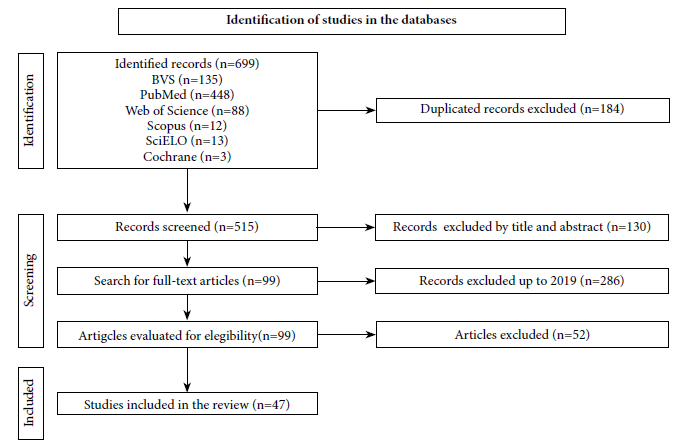 Source: Authors.