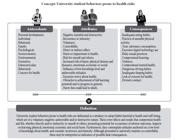
| Personal Development |
|
| Curiosity regarding experimentation; identity development; motivation; difficulty in self-regulation; low self-comprehension levels; greater freedom; greater autonomy; greater independence; damage to the development of cognitive behavioral and emotional skills; and adaptation to the university context. |
38 (28.14) |
| Individual |
|
| Lack of skills to prepare food; low self-efficacy for physical activity; impulsiveness; lack of perspective of the future; tiredness/fatigue/exhaustion; organizational difficulties; negative perceptions of the school/university; tension; self-efficiency; low self-discipline; and negative influence of media and internet. |
18 (13.33) |
| Relational |
|
| Peer influence; peer norms and values; inadequate social support; need to socialize; ethnic identity; and need for peer approval. |
44 (32.59) |
| Family |
|
| Low family support; life distant from parents; decreased parental control; parental psychological control; lack of parental support on school issues; and parents’ expectation. |
31 (22.96) |
| Psychological |
|
| Psychological distress; anxiety; depression; isolation; loneliness; hopelessness; low self-compassion; low life satisfaction; feeling of insecurity; feeling of helplessness; low self-esteem; sadness; introversion; need for self-affirmation; insufficient self-confidence; boredom; low sense of control; traumatic situations; and stress. |
47 (34.81) |
| Socioeconomic |
|
| Low socioeconomic levels; government regulations; decrease in perceived social capital; and religion. |
34 (25.18) |
| Environmental |
|
| Normalization of these behaviors in the academic environment; competitive academic environment; low access to physical exercise practices; low availability of healthy foods (fruits and vegetables); convenient access to unhealthy foods; and staying for a long time. |
23 (17.03) |
| Formative |
|
| Time management; increased academic requirements; increased academic demands; concern for maintaining good academic performance; desire for approval in selection processes; constant pressure to become good professionals; low academic performance; reduction in attendance; evasion; and absenteeism. |
42 (31.11) |
| Extracurricular |
|
| Work responsibilities; participation in other social activities; and greater participation in extracurricular activities. |
7 (5.18) |
| Behavioral |
|
| Drug taking; alcohol consumption; inadequate eating habits; prolonged time watching screens; damage to heritage; violence and injury; tobacco consumption; and inadequate sleep patterns |
17 (12.59) |
| Healthcare |
|
| Erroneous orientation; lack of ability to make healthy decisions; failure to act to prevent health problems; low offer of preventive strategies; inadequate understanding of health information; and coping strategies. |
10 (7.40) |
| Attributes |
| Negative, harmful and destructive attitudes |
5 (3.75) |
| Recurrence or intensity |
6 (4.44) |
| Voluntary |
1 (0.74) |
| Controllable |
1 (0.74) |
| Direct or indirect effect |
5 (3.70) |
| Damage or impairment of health |
12 (8.88) |
| Risk to oneself and others |
1 (0.74) |
| Increased risk of damage: physical (injuries and/or diseases), emotional, economic or social |
9 (6.66) |
| Influence of low knowledge level and unfavorable attitudes |
1 (0.74) |
| Excessive concern about health |
1 (0.74) |
| Obstacle to achieve learning potential and progress in general |
1 (0.74) |
| Damage that can cause death |
2 (1.48) |
| Consequences |
|
| Inadequate eating habits |
|
| Unbalanced diet; obesity; food restriction; skipped meals; does not drink milk; high fast food consumption; consumes soft drinks and/or processed juices; consumption of saturated fat, refined carbohydrates, salt; and inappropriate consumption of fruits. |
70 (51.85) |
| Unstable physical activity |
|
| Inadequate physical activity; and sedentary lifestyle. |
68 (50.37) |
| Toxic substance consumption |
|
| Alcohol consumption; tobacco consumption; illicit drug takings; abuse of medications freely available or restricted by prescription; taking stimulating substances (amphetamines, caffeine and energy products); tranquilizers; intoxication and overdose. |
118 (83.70) |
| Excessive use of digital technologies |
|
| Prolonged time spent watching screens; and intensive use of internet and social media. |
9 (6.66) |
| Risky sexual practices |
|
| Unsafe sexual activity; sex with drug taking; multiple partners; ineffective contraception; unprotected sex and risk of sexually transmitted diseases. |
54 (40) |
| Compromised learning |
|
| Low involvement; low academic performance; memory impairment; persistent cognitive deficits; decreased concentration; reduction of academic well-being; academic problems; and reduction of attentiveness. |
15 (11.11) |
| Violence |
|
| Sexual aggression; material damage to own property and/or of others; general aggressiveness; and committing injuries. |
26 (19.25) |
| Compromised mental health |
|
| Suicide; suicide attempt; suicidal thought; depression; food binging; anxiety; low mental well-being/psychological suffering; mental exhaustion; emotional exhaustion; loneliness; suicidal ideation; mental disorders/mental suffering; non-suicidal self-inflicted injury; lack of future expectation; low degree of happiness; low satisfaction with life; low body satisfaction; and irritability. |
34 (25.18) |
| Dangerous driving conduct |
|
| Driving under the influence of alcohol and/or drugs; and traffic accidents. |
23 (17.03) |
| Inadequate sleeping habits |
|
| Voluntary sleep deprivation, altered sleep pattern, agitated sleep, waking up at night, disturbing dreams, insufficient/short sleep, insomnia, poor quality sleep. |
28 (20.74) |
| Impaired care of health |
|
| Little appreciation of leisure; low self-care; weight control; rare seeking of support services; harmed oral health; non-acceptance of change in health status; insufficient sun protection; and a compromised health state. |
20 (14.81) |
| Deviant conduct |
|
| Involvement with gambling; carrying weapons; and cheating in tests/exams. |
9 (6.66) |
 University student behaviors prone to health risks: a conceptual analysis
 Thumbnail
 Thumbnail
 Thumbnail
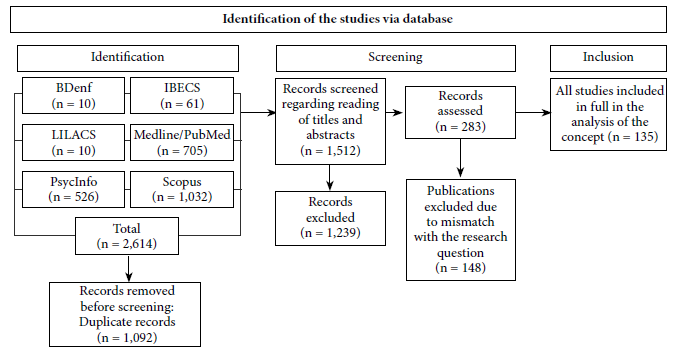 Source: Authors.
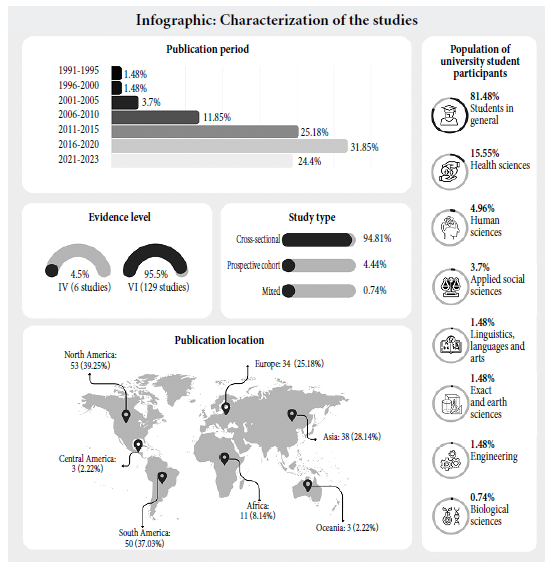 Source: Authors.
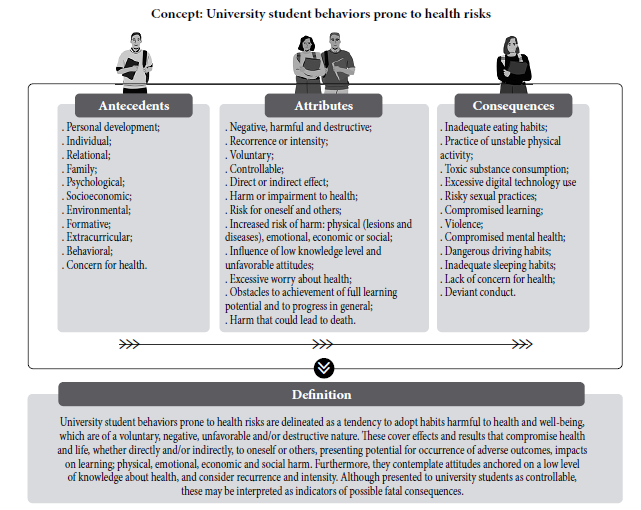 Source: Authors.