
 The use of contraceptives by women attending at riverine basic health unit in rural communities in the Amazon
This study aims to analyze the access to and use of contraceptives by riverine women in the Rio Negro, Amazonas, who are attended by a Riverine Basic Health Unit (RBHU), describing the flow of reproductive planning care. A sequential mixed-methods study was conducted, comprising a cross-sectional survey that investigated access to services and contraceptive use by 196 women in 38 communities attending at RBHU. The effects of independent variables on contraceptive use were assessed by estimating prevalence ratios and 95% confidence intervals. A systematic observation of the routine of care provided by RBHU professionals was conducted. Contraceptive use was reported by 146 (74.5%) women, with injectables (44.5%), tubal ligation (31.5%), and male condoms (21.9%) being the most common methods. Use was associated with age (PR=0.98; 95% CI=0.96-0.99), access to service (PR=0.69; 95% CI=0.49-0.97), and self-perception of health (PR=0.81; 95% CI=0.69-0.95). Regarding the organization of care flow, a creative adaptation by professionals was observed, optimizing time and access to care, thus favoring access to contraceptives and contributing to the prevalence of injectable use. A longer duration of RBHU attendance in each locality may promote sexual and reproductive health.
Key words:
Rural population; Women's health; Health services accessibility
 Thumbnail
 Thumbnail
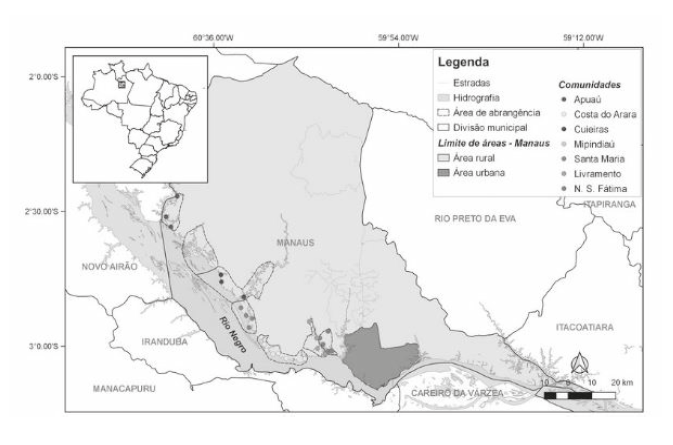 Fonte: Elaborado pelo Núcleo de Apoio à Pesquisa do Instituto Leônidas & Maria Deane - ILMD/FIOCRUZ Amazônia, com base nos dados disponibilizados pela Secretaria Municipal de Saúde de Manaus (SEMSA) e Instituto Brasileiro de Geografia e Estatística (IBGE), 2018.
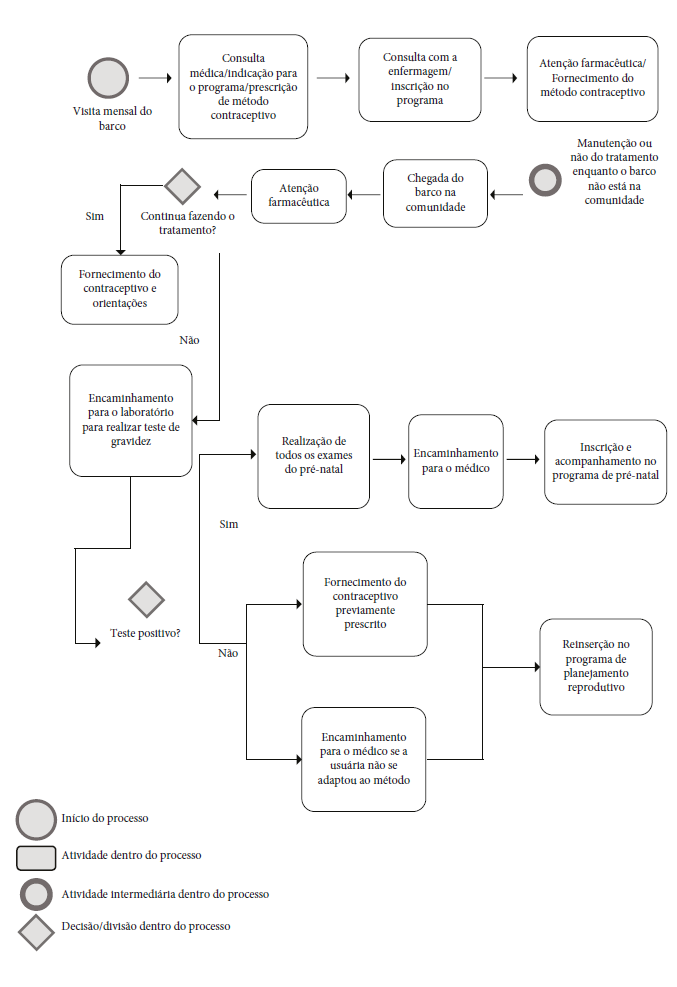 Fonte: Autores.