
 STUDENT ENGAGEMENT: AN ANALYSIS OF INDICATORS, FACILITATORS, AND MEASUREMENT METHODS IN LITERATURE REVIEWS
ABSTRACT:
The concept of engagement is polysemic in literature, often used informally and without precise definitions. Given its widespread use in the educational context, it is essential to clarify the meanings attributed to this term in the research field. This systematic literature review aims to elucidate this polysemy by identifying conceptions, models, indicators, facilitators, and measurement methods of student engagement. Methodologically, we analyzed previously published literature reviews on the topic. The search was conducted in the Scopus and Web of Science databases, and after filtering processes, we selected 52 articles to form the corpus. As a result, we identified four main perspectives on student engagement in the literature: behavioral, psychological, sociocultural, and integrative. Additionally, we found 18 facilitators, which we classified into four categories: supportive teacher-student relationships (the most frequent), teaching practices, environmental elements, and personal factors. We also identified six measurement methods, with observation being the most recommended and questionnaires the most used in research. Besides providing a comprehensive perspective on how the concept of student engagement is explored in educational research, which is highly valuable, especially for researchers newly interested in the area, the categorized results of this literature review also offer guidance for implementing pedagogical practices that foster student engagement, which are crucial for both teachers and teacher training.
Keywords:
student engagement; models; perspectives; facilitators; measurement
RESUMO:
O conceito de engajamento é polissêmico na literatura, frequentemente, empregado de maneira informal e sem definições precisas. Dada a sua ampla utilização no contexto educacional, é fundamental esclarecer os significados atribuídos a esse termo no campo investigativo. Esta revisão sistemática da literatura visa elucidar essa polissemia, identificando as concepções, os modelos, os indicadores, os facilitadores e os métodos de mensuração do engajamento estudantil. Metodologicamente, realizamos uma análise de revisões de literatura já publicadas sobre o tema. A busca foi conduzida nas bases de dados Scopus e Web of Science e, após processos de filtragem, selecionamos 52 artigos para compor o corpus. Como resultado, identificamos quatro perspectivas principais de engajamento estudantil na literatura: comportamental, psicológica, sociocultural e integrativa. Além disso, encontramos 18 facilitadores, que classificamos em quatro categorias: relações de apoio entre professor e aluno (o mais frequente), práticas docentes, elementos ambientais, e pessoais. Também identificamos seis métodos de mensuração, sendo que a observação é o mais recomendado e o questionário, o mais utilizado nas pesquisas. Além de proporcionar uma perspectiva abrangente sobre as formas como o conceito de engajamento estudantil é explorado em pesquisas educacionais, o que é de grande valor especialmente para pesquisadores recém-interessados na área, os resultados categorizados nesta revisão da literatura, igualmente, oferecem orientações para a implementação de práticas pedagógicas que fomentem o engajamento estudantil, que são fundamentais tanto para docentes como para a formação de professores.
Palavras-chave:
engajamento estudantil; modelos; perspectivas; facilitadores; mensuração
RESUMEN:
El concepto de compromiso es polisémico en la literatura, a menudo utilizado de manera informal y sin definiciones precisas. Dada su amplia utilización en el contexto educativo, es fundamental aclarar los significados atribuidos a este término en el campo investigativo. Esta revisión sistemática de la literatura tiene como objetivo aclarar esta polisemia, identificando las concepciones, modelos, indicadores, facilitadores y métodos de medición del compromiso estudiantil. Metodológicamente, realizamos un análisis de revisiones de literatura ya publicadas sobre el tema. La búsqueda se realizó en las bases de datos Scopus y Web of Science y, tras procesos de filtrado, seleccionamos 52 artículos para formar el corpus. Como resultado, identificamos cuatro perspectivas principales de compromiso estudiantil en la literatura: conductual, psicológica, sociocultural e integradora. Además, encontramos 18 facilitadores, que clasificamos en cuatro categorías: relaciones de apoyo entre profesor y alumno (la más frecuente), prácticas docentes, elementos ambientales y factores personales. También identificamos seis métodos de medición, siendo la observación el más recomendado y el cuestionario el más utilizado en las investigaciones. Además de proporcionar una perspectiva amplia sobre cómo se explora el concepto de compromiso estudiantil en la investigación educativa, lo cual es de gran valor, especialmente para los investigadores recién interesados en el área, los resultados categorizados en esta revisión de la literatura también ofrecen orientaciones para la implementación de prácticas pedagógicas que fomenten el compromiso estudiantil, las cuales son fundamentales tanto para los docentes como para la formación de profesores.
Palabras clave:
compromiso estudiantil; modelos; perspectivas; facilitadores; medición
INTRODUCTION
When a student participates and collaborates with peers during class, it is common to give the adjectives “engaged” or “motivated” student. However, when this same student is not interested in studying outside the classroom or deepening their knowledge, can we still characterize him/her as engaged or motivated? Is there a significant distinction between the two terms?
A student may be internally motivated, with a strong desire to learn, but still not engage in academic activities. On the other hand, a student may be engaged in classroom tasks and dynamics without necessarily having a deep motivation or genuine interest in the subject. Therefore, being motivated and engaged are two distinct conditions, and understanding this distinction is important, especially for two reasons. The first is due to the necessary clarity about these terms and the specification of which model/perspective is being adopted for the development of educational research (e.g., Reschly & Christenson, 2022; Wong & Liem, 2022; Martin et al., 2017). The second is because we can act more consciously in educational environments, since a student may be motivated, but not have the necessary conditions (e.g., time, resources) to engage. Therefore, a teacher in the classroom needs to understand these differences to adequately identify students' needs and offer the appropriate support for each situation.
Also, it is important to identify how engaged or not students are and how we can foster their engagement to design interventions in educational contexts. Despite being a polysemic concept, student engagement generally refers to active participation in academic, extracurricular, and institution-related activities, showing commitment to educational goals and learning (Reschly & Christenson, 2022). Engaged students value their learning and invest in their present and future. This concept encompasses different aspects, such as behavioral, cognitive, and emotional, and is a multidimensional construct (Fredricks et al., 2004).
In this review, we aim to identify the students’ engagement, considering its models, indicators, facilitators, and measurement methods in literature reviews. Thus, we emphasize that our review explores all aspects investigated in a broad context of student engagement (e.g., without filtering by educational level and teaching modality), something not found in our corpus. The guiding research questions were: What is student engagement, and what are its main models, dimensions, and indicators? What are the facilitators of student engagement? How to measure student engagement?
To answer these questions, we searched the Scopus and Web of Science databases, applying restriction mechanisms. We used the free machine learning software ASReview LAB 1.2.1 specifically for review selection, and the qualitative data analysis software Nvivo 1.5.1 for full reading and possible exclusions. After these processes, we selected 52 articles to compose the corpus of this literature review.
Below, we present the research methodology used in this work, the results and discussions, and the final considerations.
METHODOLOGY
We analyzed publications in the Scopus and Web of Science databases to achieve the outlined objective, including literature review articles on student engagement. We used some restriction mechanisms in both databases, searching only for articles in English, Portuguese, or Spanish, with the following descriptors in the three languages: Engagement, Student, and Literature review/State of the art. The search was carried out on September 27, 2023, and resulted in 1328 studies in Scopus and 1226 in Web of Science. We also performed a check for duplicate articles and excluded 652 studies, leaving 1802. The free machine learning software for conducting literature reviews ASReview LAB 1.2.1, was used. Based on initial keywords and examples of articles that we wanted to be selected, as well as those that we did not want, we systematically screened and labeled data by ranking the 1802 papers selected in the first stage. For undesirable keywords, we included terms that indicated articles related to other types of engagement other than student engagement or that are not literature reviews (e.g., “work”, “burnout”, “case study”, “moral disengagement”). We included words indicating literature reviews (“review”) for desirable keywords.
The software performed an initial ranking of the data. We were able to analyze the titles and abstracts of each article, considering whether it was part of the corpus of our review or not. Each article was selected or rejected according to the criteria established for the review in the order in which they were ranked by the software. Because it was a review of the literature on student engagement in a “broad” manner, it did not address specific subjects or courses, specific aspects of online education, and other types of engagement (e.g., parental engagement, at work). With each new interaction (selection/rejection), the software updated the ranking, thus presenting the article (title and abstract) with the greatest chance of matching the keywords and the acceptance/rejection of previous articles. The process was concluded when, following the proposed ranking, 50 articles were consecutively rejected (they failed our inclusion criteria).
Therefore, we selected 76 articles and rejected 211 articles. Thus, 287 articles were analyzed in ASReview. As a final analysis, we verified the unavailability of access to three articles and carried out a complete reading of the 73 articles, using the qualitative data analysis software Nvivo 1.5.1. This process resulted in the exclusion of another 26 articles (nine that did not focus on engagement, three that addressed parental engagement, seven that addressed specific courses or subjects, three about specific aspects of online teaching, three that addressed the specific context of a country and one that was not a literature review). We also added five articles according to citations of the reviewed articles (Fredricks et al., 2004; Jimerson et al., 2003) or from searches for national reviews on the topic in Google Scholar (Oliveira et al., 2023; Martins & Ribeiro, 2017; Silva & Ribeiro, 2020). We analyzed and coded 52 articles according to the selection of relevant excerpts from the corpus under analysis to answer each of the research questions, the grouping of these excerpts according to categories emerging from the analysis, and the description of these categories (Creswell, 2012). With the methods established, we analyzed the results and the discussion of the theoretical and practical implications of the findings.
RESULTS AND DISCUSSIONS
In this section, we discuss the results of the 52 selected literature reviews. We begin by presenting the context of the research, including information such as the area and levels of education investigated. We then structure the discussions based on the research questions presented in the introduction.
From the review corpus, there are more reviews from 2022 (n=10). We identified reviews at the following levels: Higher Education (n=20), Secondary Education (n=4), Basic Education (n=3), Elementary Education - initial years (n=2), Postgraduate Education (n=1) and unspecified (n=22); and in the teaching modalities: online (n=10), hybrid (n=2), in-person (n=1), in-person, online or hybrid teaching (n=1) and unspecified (n=38). By cross-referencing the information on year of publication and online teaching, all reviews on student engagement and online teaching published after the start of the COVID-19 pandemic (n=6; Ortega & Irala, 2022; Salas-Pilco et al., 2022; Martin & Borup, 2022; Osama et al., 2022; Johar et al., 2023; Yang et al., 2023) had low engagement compared to face-to-face teaching and its potential to address early dropout and low performance, with four of them specific to higher education (Ortega & Irala, 2022; Salas-Pilco et al., 2022; Osama et al., 2022; Johar et al., 2023).
Regarding the origin of the reviews (Chart 1), there is a greater concentration in the United States, with twelve reviews on student engagement. The remaining publications are from different countries, from all continents.

Among the reviewed articles, the ten most cited references 3 are presented in Chart 2.

We found that Jennifer Fredricks (12,820 citations), James Appleton (2,980 citations) and Sandra Christenson (7,292 citations) are the most cited authors4. Figure 1 shows the connections of the authors of these articles, considering their study production and contributions to research groups.

Graph 5 representing the collaboration between the authors of the most cited studies in our analysis corpus.
We can visualize the greater connection between a group of authors and two others with only connections between themselves. Next, we present the results and discussions regarding each of the research questions.
What is engagement, and what are its main models, dimensions, and indicators represented in literature reviews on student engagement?
Several theories/models used in educational research on student engagement (Wong & Liem, 2022) show a challenging definition. However, student engagement is generally defined as an external manifestation of motivation since the motivation to achieve a goal or succeed in an academic task is intentionally put into action, resulting in a willingness to engage (Reschly & Christenson, 2022).
Since the definition of engagement is often linked to the concept of motivation, it is important to identify the similarities and differences between these two terms. This topic is addressed in eight (Fredricks et al., 2004; Bond et al., 2020; Greene, 2015; Wong & Liem, 2022; Wang & Degol, 2014; Bundick et al., 2014; Stroet et al., 2013; Rivera & Garden, 2021) of the articles analyzed.
One reason for this confusion in the terms engagement and motivation is that they are often used interchangeably, especially when used by policymakers and institutions (Fredricks et al., 2004; Bond et al., 2020). Another reason stems from the lack of a theory that directly addresses the central meaning of engagement, which leads researchers in the field to resort to concepts related to motivation, such as the perceived relevance of school or learning, as indicators of engagement, slowing the progress of the field (Wong & Liem, 2022).
Despite the diversity of definitions in the literature and although definitions of engagement vary across studies, the concept of engagement is distinct from motivation (Wang & Degol, 2014; Bundick et al., 2014; Bond et al., 2020). Motivation has been defined as the psychological processes underlying the “energy”, purpose, and durability of activities. Engagement is defined as the external manifestation of motivation and can assume observable behaviors evidenced through a series of indicators, such as active participation in learning activities and task execution, or through internal emotional states, such as interest and positive feelings towards the task, in addition to cognitive states, such as metacognition and self-regulated learning (Stroet et al., 2013; Bond et al., 2020). Thus, when the motivation to achieve a goal or succeed in an academic task is expressed through deliberate actions, the result is engagement.
In addition to this distinction, there are also divergent approaches to disengagement. It can be described in the engagement literature as a single scale ranging from high (engagement) to low (disengagement) or as two separate scales (Reschly & Christenson, 2022). Furthermore, there are variations in the terms used, such as disengagement (Wang et al., 2020), discontent (Skinner et al., 2008), alienation (Mann, 2001), or burnout (Salmela-Aro et al., 2022).
Also, student engagement is often presented in different models and configurations. Although there is some overlap, we can find four approaches to student engagement in the literature: the behavioral perspective focuses on the effectiveness of teaching practices; the psychological perspective is based on the understanding that engagement is an internal psychosocial process; the sociocultural perspective considers the critical role of the sociocultural context (Kahu, 2013; Kahu & Nelson, 2018); and the integrative perspective understands that engagement is a dynamic and reciprocal development process between context, the self6 and outcomes relevant to learning (Wang et al., 2020).
Seeking to synthesize the many models and dimensions of engagement identified in the review, some of which were even proposed in the reviews themselves (Fredricks et al., 2004; Kahu, 2013; Wong & Liem, 2022; Redmond et al., 2018; Bundick et al., 2014; Czerkawski & Lyman III, 2016; Halverson & Graham, 2019; Malik et al., 2022; Rivera & Garden, 2021; Bond, 2020, Martin & Borup, 2022), we categorized these models initially following the ideas of Kahu (2013) and Kahu and Nelson (2018) in Chart 3.

Comparisons of the most common engagement models, considering the engagement perspectives of Kahu (2013), Kahu and Nelson (2018), their types and indicators.
The example of a behavioral perspective is the NSSE (TTIU, 2021), tested in 1999 and reformulated in 2013, constantly evolving and changing its items and indicators periodically. Annually, the NSSE collects data on hundreds of four-year university courses in the United States. This data covers the participation of first- and last-year students, and the results of these surveys offer an estimated view of how undergraduate students use their time and what benefits they obtain from attending higher education institutions. It is considered a research based on the behavioral approach, as it emphasizes student behavior and teaching practice (Kahu, 2013).
According to those responsible for its development, the NSSE items and scales are created based on theoretical and empirically tested foundations, presenting solid psychometric properties, such as robust face and construct validity, and consistent reliability (Kuh, 2001). However, some other authors highlight certain problems with the validity of the NSSE (Pike, 2006; Porter, 2011). Porter (2011) highlights that even simple elements, such as “had serious conversations with students”, can be interpreted differently. Issues related to memory storage and recall, the frequency of events throughout a year, the context of the question, and social desirability bias can limit the validity of the data. Despite these problems, it is important to recognize that the popularization of the NSSE, created in the North American context, encouraged the consolidation of research on student engagement in research on higher education policies. This use has expanded to other English-speaking countries and, in recent years, has reached several other countries (Ortega & Irala, 2022).
Psychological perspective is a common approach in the literature on student engagement, which conceives it as an internal psychosocial process. In this view, engagement is understood as an evolution over time, varying in intensity and being considered multidimensional. Furthermore, this perspective broadens the understanding of engagement by including the emotional and cognitive dimensions and the behavioral aspect, which is traditionally the focus of the behavioral approach. One aspect to consider in the conceptualizations of student engagement refers to the possible paths of multidimensional approaches. According to Wang and Degol (2014), these paths can consider: i) the relationships between the independent dimensions of engagement, ii) that affective/emotional engagement drives the other types of engagement and iii) that there are reciprocal relationships between the dimensions.
A multidimensional model proposed by Fredricks et al. (2004) was the most cited theoretical model as a theoretical framework. It was cited in 36 of our analyzed reviews, including, in addition to the 2004 review, Fredricks (2011) and Fredricks et al. (2016a). This model presents three dimensions of student engagement: behavioral, emotional, and cognitive engagement. Behavioral engagement incorporates the notion of participation and includes positive conduct, effort, persistence, concentration, attention, and student involvement in curricular and extracurricular activities; emotional engagement refers to students' affective responses in the classroom, to teachers, and schools; and cognitive engagement reflects the psychological investment in learning and is associated with self-regulation and the use of learning strategies. The work of Fredricks et al. (2004) is a broad literature review on engagement and, therefore, is included as part of the corpus of our review.
In a later work, Fredricks et al. (2016b) included social engagement in the model, seeking to reflect the increasingly important role that social interactions play in learning, as has been done by scholars of engagement, which consists of socioaffective (e.g., caring about others’ ideas) and sociocognitive (e.g., building on/building on others’ ideas) indicators. Reeve and Tseng (2011) expanded the three-dimensional model of engagement from Fredricks et al. (2004) by adding a fourth component called agentic engagement, which illustrates students’ constructive and proactive contribution to their learning condition (e.g., asking questions, expressing preferences). Reeve (2013) reported that student agentic engagement encouraged teachers to engage in more autonomy-friendly teaching and also significantly predicted academic achievement.
From this perspective, we have the Four-Factor Taxonomy model used by Appleton, Christenson, Kim, and Reschly (2006). In this and other works, engagement has four subtypes: academic, behavioral, cognitive, and psychological. According to Appleton et al. (2006), the indicators of academic engagement are the time spent on tasks and completing homework. In behavioral engagement, there are suspensions, voluntary participation in the classroom, and extracurricular participation. In cognitive engagement, there are self-regulation, the relevance of schoolwork for future endeavors, the value of learning and personal goals, and autonomy; and of psychological engagement, they are feelings of identification or belonging and relationships with teachers and peers, which was later called affective/emotional engagement (Reschly & Christenson, 2012, 2022; Reschly et al., 2020). The main difference between the model by Appleton et al. (2006) and that by Fredricks et al. (2004) is the separation of behavioral and academic engagement to facilitate the implementation of specific intervention strategies, as the authors of the model identified that some students were improving their attendance or behavior at school, but still did not engage in academic tasks (in class and outside of class) (Reschly, 2020). It is common in this (psychological) perspective to define the subtypes of engagement using only the mention of their respective indicators.
The sociocultural perspective of student engagement highlights the importance of interactions between students’ social and cultural backgrounds in the educational environment. Learning is shaped by identity and power, valuing students’ diverse knowledge. It is essential to overcome cultural barriers in universities and promote interaction between the government, educational institutions, and students to create an inclusive and flexible educational environment, improving student experience and performance.
According to Kahu (2013), Mann’s (2001) Alienation and Engagement model emphasizes the social and cultural aspects that influence students’ behavior and experience. Factors such as culture, social interactions, and social values impact how students relate to school and the learning process. Mann also discusses how assessment practices can exert disciplinary power, affecting students’ perceptions of the educational system. He highlights the influence of academic culture and how institutional norms and practices can cause alienation or engagement. In addition, he criticizes the excessive focus on performativity, which can alienate students from the pursuit of knowledge and understanding, highlighting the importance of the learning process and personal development. A sociocultural approach also considers the social and cultural context in the formation of students’ identity, motivations, and interactions, recognizing the influence of sociocultural aspects on the educational experience.
The integrative perspective seeks to unite the previous approaches/perspectives (Kahu & Nelson, 2018). Kahu (2013) proposes an integrative context that emphasizes engagement as a variable state that is influenced by a wide range of student and institutional factors, as well as the sociopolitical context within which students, teachers, and institutions are situated (Kahu & Nelson, 2018). This structure also recognizes the outcomes of engagement since through engagement in their studies, students learn and not only acquire skills and knowledge, but also experience academic success and personal growth.
In the integrative sociocultural developmental model of learning engagement from Wang et al. (2020), student engagement is a dynamic and reciprocal process influenced by developmental skills and self-assessments, shaped by experiences in school, family, and peer contexts. This engagement operates in a feedback loop, in which ongoing support reinforces self-perceptions and competencies, promoting effective engagement in learning. Sociocultural factors, such as social stratification and cultural identities, create inequalities in educational opportunities. However, specific developmental assets and parenting practices can mitigate these negative effects, helping to maintain the engagement of ethnic-racial minorities. Overall, the integrative perspective seeks to unite the other approaches to understanding engagement.
In summary, student engagement is a complex concept without a universally accepted definition, and is often associated with motivation. It is generally seen as the external manifestation (action) of motivation, reflected in observable behaviors and emotional and cognitive states. It is possible to identify four main approaches to student engagement in the literature: the behavioral focused on teaching practices; the psychological focused on an internal and multidimensional psychosocial process; the sociocultural, which highlights the influence of social and cultural contexts (Kahu, 2013, Kahu & Nelson, 2018); and the integrative, which seeks an integration between the previous ones. Several models, such as that of Fredricks et al. (2004) and the Four-Factor Taxonomy (Appleton et al., 2006), approach engagement from different dimensions and indicators, highlighting the complexity and multidimensionality of the concept. Furthermore, the sociocultural perspective emphasizes the importance of interactions and cultural diversity in the educational environment, proposing a more inclusive and adaptable understanding of student engagement, while the integrative perspective seeks to reconcile the aspects addressed in the other perspectives. Finally, we highlight the fact that engagement models are not supported by a theory, but are composed of several constructs highlighted in the literature, mobilized in empirical research (Wong & Liem, 2022). In this sense, the model of Fredricks et al. (2004) as one of the main ones is a literature review and not a theoretical discussion.
What are the facilitators of engagement addressed in literature reviews on student engagement?
The lack of distinction between indicators and facilitators of engagement is one of the justifications for the ambiguity surrounding the concept of engagement (Martins et al., 2022; Henrie et al., 2015; Halverson & Graham, 2019). The study carried out by Skinner et al. (2008) has been used to support this important distinction (Martins et al., 2022; Henrie et al. 2015; Halverson & Graham, 2019), suggesting that “indicators refer to characteristics that belong to the engagement construct, while facilitators are the causal factors (outside the construct) that supposedly influence engagement” (Skinner et al., 2008, p. 766, our translation).
Zepke and Leach (2010) highlight a conceptual organizer in which four perspectives to enhance student engagement are recognized. The first perspective, motivation and agency, focuses on student motivation and willingness to engage in learning. The second is transactional engagement, investigating interactions between students and between teachers and students. The third is institutional support that examines the effects of institutional support on engagement. Finally, the active citizenship perspective considers engagement influenced by social, political, and demographic factors. This organization does not follow specific models of engagement, such as those we described in the previous section.
Seeking to synthesize and dialogue with these perspectives, we mapped the facilitators of engagement. We considered only those that were cited in at least two of the literature reviews analyzed (Chart 4). We found ten reviews on the topic, specifically on how to promote engagement (Bond, 2020; Zepke & Leach, 2010; Ribeiro et al., 2019; Chakraborty & Nafukho, 2014; Yang et al., 2022; Harbour et al., 2015; Bundick et al., 2014; Taylor & Parsons, 2011; Czerkawski & Lyman III, 2016; Rivera & Garden, 2021).

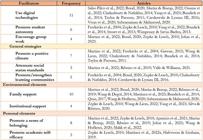
Most of the facilitators identified in our analysis are compatible with the transactional engagement perspective proposed by Zepke and Leach (2010). Among them, supportive interaction between teachers and students and strategies related to teaching practices stand out, as these approaches favor academic and social interactions both among students and between teachers and students.
Teachers’ support and encouragement of students plays a critical role in increasing student engagement (Martins et al., 2022; Fredricks et al., 2004; Bond, 2020; Zepke & Leach, 2010; Ribeiro et al., 2019; Harbour et al., 2015; Redmond et al., 2018; Bundick et al., 2014; Quin, 2017; Stroet et al., 2013; Taylor & Parsons, 2011; Valle & Williams, 2021; Czerkawski & Lyman III, 2016; Wang & Hofkens, 2020; Subramainan & Mahmoud, 2020). When teachers create positive learning environments, set high standards, challenge students academically, and are available to discuss academic progress, students tend to be more engaged in school activities (Zepke & Leach, 2010). Studies indicate that this support can be both academic and interpersonal, positively impacting students' behavioral, emotional, and cognitive engagement (Fredricks et al., 2004). Furthermore, the presence of a teacher in online courses is significant in reducing distance in teaching to facilitate learning engagement, ensuring that students receive the same level of support as in-person students (Martin & Borup, 2022; Yang et al., 2023; Purarjomandlangrudi et al., 2016; Redmond et al., 2018; Taylor & Parsons, 2011; Czerkawski & Lyman III, 2016). Some reviews also indicate that teacher-student proximity, when marked by conflicts or negative behavior by the teacher, can reduce students' academic engagement and their sense of school belonging (Martins et al., 2022; Ribeiro et al., 2019; Stroet et al., 2013; Wimpenny & Savin-Baden, 2013).
To improve the teacher-student relationship, Bundick et al. (2014) suggest that teachers should demonstrate care and interest in students by communicating well and offering fair and attentive help (Quin, 2017; Taylor & Parsons, 2011; Valle & Williams, 2021; Silva & Ribeiro, 2020); maintaining mutual respect, expressing appreciation and not humiliating students, in addition to inviting them to provide feedback on teaching (Taylor & Parsons, 2011; Valle & Williams, 2021; Silva & Ribeiro, 2020); showing interest in students’ lives outside the classroom and integrating this knowledge into instructional practice (Valle & Williams, 2021; Silva & Ribeiro, 2020); and using humor appropriately can also strengthen this relationship (Bundick et al., 2014). However, Quin (2017) warns that before fostering caring and responsive relationships between teachers and students, it is crucial to consider the context of adolescent development, when applicable. Although students do not learn solely through their relationships with teachers, these relationships still show a significant and predictive association with several indicators of student engagement, even when individual, family, and school factors are controlled.
As pedagogical strategies in the classroom, we found that some approaches used by teachers to promote engagement are recurrent such as providing feedback; creating and implementing clear, challenging or interesting tasks; using digital technologies; encouraging group work and promoting student autonomy.
Ten reviews (Martins et al., 2022; Bond, 2020; Zepke & Leach, 2010; Martin & Borup, 2022; Johar et al., 2023; Wang & Degol, 2014; Yilmaz & Banyard, 2020; Bundick et al., 2014; Wimpenny & Savin-Baden, 2013; Halverson & Graham, 2019) cite the positive relationship between feedback and increased engagement. Another four (Wong; Liem, 2022; Harbour et al., 2015; Stroet et al., 2013; Czerkawski & Lyman III, 2016) go further, explaining the most commonly used types of feedback, such as positive and negative informational, positive and negative evaluative, corrective, constructive, task, process, self-regulatory, superficial, and mediated. However, despite indicating the use of feedback and presenting some of its types, only three reviews (Chakraborty & Nafukho, 2014; Harbour et al., 2015; Martins & Ribeiro, 2017) discuss how to approach this strategy. The authors suggest that, in addition to providing consistent and timely feedback to students, it is essential to help them discover the answers for themselves, rather than simply providing them promptly. It is suggested that positive feedback, praise in recognition of good work, and constructive comments can generate extrinsic motivation among learners. A critical component of positive feedback is providing specific information that describes what the student did correctly or adequately, establishing clear connections between students' responses and teachers' expectations.
Thirteen articles mention that certain types of tasks influence student engagement. In a detailed analysis, we verified the need for clear tasks (Martins et al., 2022; Fredricks et al., 2004; Wong & Liem, 2022; Wang & Degol, 2014; Bundick et al., 2014; Stroet et al., 2013; Wang & Hofkens, 2020), challenging (Martins et al., 2022; Fredricks et al., 2004; Zepke & Leach, 2010; Wong & Liem, 2022; Wang & Degol, 2014; Wimpenny & Savin-Baden, 2013; Malik et al., 2022) and authentics (Fredricks et al., 2004; Wong & Liem, 2022; Wang & Degol, 2014). Furthermore, only two reviews explicitly explain what is necessary to design tasks with these characteristics. The review by Martins et al. (2022) indicated that, when planning classroom tasks, teachers should consider potentially engaging elements, such as the use of visual content, including paintings, maps, or images. Furthermore, it is recommended to alternate between individual tasks, which promote student reflection, and moments of collaborative discussion among peers, encouraging them to master the content and participate actively (Martins et al., 2022). Wong and Liem (2022) explain that, to promote behavioral engagement, teachers can better structure learning activities, establishing clear guidelines and expectations, ensuring an adequate level of challenge, and providing positive feedback on students' skills. These strategies increase students' perception of control and competence, encouraging them to be more hard-working and persistent.
Students’ attitudes toward digital technologies can impact their affective engagement, especially in online courses (Martin & Borup, 2022). It is crucial that they receive technical support when facing difficulties (Chakraborty & Nafukho, 2014). Corno and Mandinach (2004) suggest that four types of technologies can be leveraged to promote student engagement: educational computer games; technological tools designed for the classroom, such as interactive whiteboards; computer applications that allow students to record and analyze their study habits, promoting self-regulation; and the use of the Internet in the classroom (and outside it).
To promote the appropriate use of technology, Bundick et al. (2014) suggest practices to reduce cognitive distractions and optimize attention and deep learning, such as the simultaneous use of animation and narration. Czerkawski and Lyman III (2016) highlight that successful media selection requires interaction between students and technology, facilitating interaction with the material, other students, and the teacher. Venn et al. (2020) emphasize the importance of considering hidden personnel costs and the purchase and maintenance of technologies, and indirect costs in faculty development.
However, five reviews point out negative points: the unstructured use of technology can lead to disengagement (Yang et al., 2023; Venn et al., 2020); negative consequences are frequently reported, while positive ones lack empirical research (Taylor & Parsons, 2011); the lack of familiarity with technology, especially when teachers assume previous skills (Venn et al., 2020); and the inapplicability in real situations due to the lack of time, resources, teaching capacity and adequate environment (Subramainan & Mahmoud, 2020).
Studies beyond the scope of this review point to the use of digital technologies as a strategy to promote factors that increase student engagement. For example, in the study by Aziz et al. (2024), when investigating the influence of Google Classroom and Microsoft Teams on student engagement in online environments for higher education students, the results showed that factors related to content (quality and interactivity) and student characteristics (active interaction between peers) were the main contributors to engagement, while technologies and instructors' performance played supporting but not determining roles. Thus, engagement is best promoted by attractive content and strategies that foster collaboration, with technologies serving as supporting tools (Aziz et al., 2024; Li & Lam, 2015).
Regarding the promotion of autonomy, only the review by Yang et al. (2022), which is specific to teacher autonomy support and student engagement, presents some strategies on how to promote this support. They include collaborative definition of rules, establishment of procedures or definition of goals for interaction and expectations; use of propositional, interactive and cumulative dialogic discourse, as well as supportive and guiding dialogic discourse; considering the students' perspective (e.g., teaching in the students' preferred way), inviting language, providing explanatory justifications, accepting negative effects, demonstrating patience, respecting opinions and challenging students to go beyond what they already know; providing choices, offering respect, showing expectations, relevance. In addition, schools should realize that teachers may have different teaching styles (whether supporting autonomy or suppressing autonomy), requiring the implementation of personalized teacher training programs (Yang et al., 2022).
In the context of the strategic movement of teachers to promote group activities, the reviews highlight its relationship with increased student engagement and greater autonomy within groups. In addition, this method gives teachers more time to dedicate to groups as a whole, rather than to individual students.
In addition to specific teaching strategies, we identified other broader practices that we consider important (general strategies), considering the context of the classroom and creating supportive environments beyond it. These general strategies include promoting a positive climate, mitigating social status patterns, and strengthening learning communities.
Mitigating classroom treatment according to students’ social status is briefly mentioned in three reviews. Even though the literature shows that students with high social status have high engagement, this can affect the engagement of other students in the class, since indirect aggression usually comes from students with high social status (Valle & Williams, 2021). Thus, it is recommended that teachers strive to mitigate status extremes (popular/unpopular, liked/disliked, influential/disinfluential) in their classrooms (Ribeiro et al., 2019). Building a positive learning environment (climate) in the classroom was also briefly mentioned by the reviews. Bundick et al. (2014) explain that an environment with a good climate is marked by respect between teacher and students and among students, so that those involved support each other, and it is a team-oriented environment, free from distractions, especially in relation to disciplinary issues.
Learning communities are educational environments in which students, teachers, and other participants interact collaboratively and continuously, promoting engagement through various social and technological interactions (Chakraborty & Nafukho, 2014). These interactions, both among students and between students and teachers, create a sense of belonging and motivation, which are fundamental to students’ emotional well-being (Zepke & Leach, 2010). The benefits of these communities include personal and social development, improved interpersonal and communication skills, and greater academic commitment (Chakraborty & Nafukho, 2014). Collaborative dynamics result in more active and engaged participation, promoting a deeper and more critical understanding of the content studied (Czerkawski & Lyman III, 2016). Constant interaction helps prevent feelings of isolation, especially in online courses, increasing student satisfaction and retention (Chakraborty & Nafukho, 2014).
Another relevant aspect that we find in teaching practice is the use of specific teaching methodologies. Among these methodologies, gamification, the flipped classroom, problem-based learning, and project-based learning stand out.
Gamification is cited as a facilitator of engagement in all reviews that mention it. However, its use in online teaching has not always been positive, as there is no direct contact with the instructor and there is a lack of visual contact (Osama et al., 2022). The review by Rivera and Garden (2021) also deals specifically with the synthesis of the literature on student engagement and gamification, in addition to presenting a new gamification structure for student engagement. According to the authors, this structure allows professionals to systematically design gamified learning experiences, through the purposeful selection of game attributes according to the desired student experience and the consequence of engagement.
The flipped classroom is presented as a facilitator of engagement in four reviews. Two of them focus on flipped learning and student engagement (Bond, 2020; Osama et al., 2022). There is a positive aspect evidenced in the review by Osama et al. (2022). He mentioned that the prior provision of materials was valuable because it favored classroom learning, giving students the opportunity to review and study concepts and content before face-to-face classes. However, the review by Paryani and Ramadan-Jradi (2019) pointed out that the studies that reported greater student engagement evaluated them for approximately five months after the implementation of flipped learning, but those that reported lower student engagement were conducted over an average of 14 months. The authors argue that such a decrease in engagement may be related to the decrease in the novelty effect over time.
Problem-based learning and project-based learning also emerged in our analysis as facilitators of student engagement. The problem-based learning gives students the opportunity to work on open-ended problems or explore complex problems that they have not yet learned the solutions to and that are more effective when they are connected to students’ life experiences (Wong & Liem, 2022; Bundick et al., 2014). The project-based learning is necessary for students to choose their projects and take responsibility for designing and managing their work (Bundick et al., 2014). However, lack of student commitment and delay are barriers to implementing such a teaching methodology (Subramainan & Mahmoud, 2020).
In addition to these teaching methodologies cited by the reviews, some others were also briefly mentioned, such as inquiry-based approaches (Bundick et al., 2014), modeling (Harbour et al., 2015), and OTR - Opportunities to Respond7 (ibid.).
We also found the presence of facilitators with broader aspects, which are often beyond the direct control of the teacher and the classroom, but which are equally essential for educational success. Family support and institutional support stand out among these facilitators.
Even though we removed articles that exclusively explain and delve into the relationship between student engagement and the role of the family in this engagement, ten reviews still wrote concisely about the topic (family support). None of these reviews focus on Higher Education, that is, they are reviews that do not have a specific level or are about Basic Education. This may indicate that, in Higher Education, the role of the family is not important for university student engagement or that there is not enough research on the topic at the education level.
Institutional support was expressed in the literature reviews more comprehensively (Silva & Ribeiro, 2020) and as guidance/mentoring (Zepke & Leach, 2010; Wong & Liem, 2022; Yang et al., 2023), corroborating the institutional support perspective of Zepke and Leach (2010). In the study by Silva and Ribeiro (2020), institutional support may involve a set of programs or projects that aim to meet needs such as academic, financial, psychological support, and university management. In addition, mentoring may be related to guidance from colleagues, professors, or other actors in the institution that help students to establish in academic life, connecting socially with colleagues, mentors, and staff, gaining familiarity with the campus, and clarifying academic study expectations (Zepke & Leach, 2010; Wong & Liem, 2022; Yang et al., 2023). Zepke and Leach (2010, p. 172) emphasize that “even in difficult economic times, it is important to invest in support services to ensure that they are available to those students who need them”.
In the personal elements category, we include strategies for promoting and strengthening psychological constructs. According to various engagement models, these constructs are also their indicators. We emphasize that it is these facilitators that we verify connections with the perspective of motivation and agency outlined by Zepke and Leach (2010), since the constructs discussed here (sense of belonging and belief in self-efficacy) can affect motivation and, consequently, the student's willingness to engage in learning.
Sense of belonging refers to how much a person feels they belong to an institution (e.g., school/university) and are integrated with their peers, in addition to being associated with perceiving the value and importance of their participation (Baumeister & Leary, 1995). Thus, sense of belonging emerges as a facilitator of engagement, as students who nurture strong affective ties with other students, teachers, and their class are more likely to internalize the values of the classroom and the institution and, therefore, to be more academically engaged (Martins et al., 2022; Aparicio et al., 2021; Martin & Borup, 2022; Ribeiro et al., 2019; Wang & Hofkens, 2020; Malik et al., 2022). Zepke and Leach (2010, p. 172, our translation) highlight that “institutions need to be adaptable, developing a welcoming culture for all students”.
Only three reviews briefly explore beyond this indication (that a sense of belonging is a facilitator of engagement). Johar et al. (2023) and Malik et al. (2022) indicate that students who participate in collaborative activities, such as discussion forums, are allowed to actively collaborate and given autonomy to participate in their learning, develop a sense of belonging in the learning process. Wang and Hofkens (2020) explain that, to promote a sense of belonging, one must be attentive to building opportunities for students to initiate and participate in positive social interactions.
In addition to our corpus of analysis, Tinto (2022) explains that, to promote a sense of belonging among students in the university context, it is crucial to go beyond quantitative measures of engagement and focus on students’ perceptions of their experiences. This involves creating diverse opportunities for engagement, such as extracurricular activities, that cater to student diversity, and ensuring that the institutional culture is inclusive and welcoming. Actions such as mentoring programs, learning communities (that integrate academic and social aspects), and spaces dedicated to students who commute and/or work are effective. Support services must work with other sectors of the institution, including faculty, to ensure that students feel valued and belong both socially and academically, especially during the first year. Virtual technology can also reach students who do not regularly attend campus.
Academic self-efficacy is the judgment of one’s ability to complete actions related to academic demands (Bandura, 1977). Thus, promoting academic self-efficacy is also highlighted as a facilitator of engagement, that is, where students believed they had the personal resources to complete a task, their confidence in their ability grew and, consequently, their engagement also increased (Zepke & Leach, 2010; Martínez et al., 2022a; Halverson & Graham, 2019). However, the reviews do not go beyond highlighting that educational institutions should create and take advantage of opportunities to increase students’ academic self-efficacy, but they do not provide ways to promote it (Zepke & Leach, 2010).
Comparing the engagement facilitators that we mapped with the literature review by Zepke and Leach (2010), which was also considered in our corpus, we found that active citizenship was the only perspective highlighted by them and not found by us. This result can be attributed to our corpus of analysis, which covers reviews of student engagement in general. In specific articles on interventions to increase engagement, this perspective had greater intensity.
In summary, our study mapped facilitators cited in at least two literature reviews (Chart 5), including supportive interaction between teachers and students, teaching practices, use of digital technologies, gamification, flipped learning, problem-based and project-based learning, providing feedback, challenging tasks, promoting student autonomy, fostering a positive climate, and family and institutional support. Most facilitators are consistent with Zepke and Leach’s (2010) transactional engagement perspective, highlighting the importance of academic and social interactions between students and teachers. Pedagogical strategies, such as providing feedback and designing clear and challenging tasks, are essential to increase engagement. In addition, institutional and family support and personal elements such as a sense of belonging and self-efficacy also play some role in student engagement.
How to measure engagement according to literature reviews on student engagement?
Measuring engagement is a challenging task, mainly due to the diversity of terminology used by researchers. Terms such as student engagement, school engagement, academic engagement, classroom engagement, and schoolwork engagement are often used interchangeably (Fredricks & McColskey, 2012). Also, the number of engagement subcomponents and their different conceptualizations vary considerably. Even when the conceptualizations are similar, there may be significant variation in the content of the items used in the measurement instruments, making it difficult to compare the results between different studies (Fredricks & McColskey, 2012).
After analyzing methods and measurement instruments for student engagement, Buntins et al. (2021) state that these methods have not yet reached a level of maturity comparable to other fields of educational research. The engagement research community is still developing broad convergence and agreement on the construct and its measurement. The authors suggest the need for a deeper examination of the theoretical construct, including how it can be operationalized and validated.
This issue is reflected in the specific concern of some literature reviews in discussing the measurement of the construct. In our research corpus, eight reviews (Ortega & Irala, 2022; Baragash, 2020; Buntins et al., 2021; Greene, 2015; Sáez-Delgado et al., 2023; Henrie et al., 2015; Martínez et al., 2022b; Jimerson et al., 2003) address this issue directly. The research instruments used and their frequency of citation in the reviews are presented in the following Quadro.

Data collection methods used to measure student engagement according to the literature reviews analyzed.
Observation was one of the most cited methods in the literature reviews analyzed. However, this is not due to its frequent use in engagement research, but rather due to the recommendation of the review authors due to its low use (Martins et al., 2022; Bond et al., 2020; Salmela-Aro et al., 2021; Yang et al., 2023; Henrie et al., 2015; Stroet et al., 2013; Santos et al., 2023). The authors highlight the need and importance of using observations as a complement to other more traditional methods of measuring engagement, such as questionnaires, or even in conjunction with mapping student behavior through data provided by virtual learning environments (Martins et al., 2022; Bond et al., 2020; Greene, 2015; Yang et al., 2022; Yang et al., 2023; Santos et al., 2023).
Some authors point out the advantages and disadvantages of using observation to measure engagement. Some advantages are that observation allows researchers to collect information about students' behaviors and learning strategies during academic instruction and while solving school tasks (Martins et al., 2022; Henrie; et al., 2015); it is an appropriate measure when defining engagement as action to collect information about concrete behavior (Henrie et al., 2015; Stroet et al., 2013); and it mitigates students' subjective biases about their behavior that can influence the results (Salmela-Aro et al., 2021). As disadvantages of using observation, we include the exclusive focus on students' observable behaviors and actions (Martins et al., 2022); the discrepancy between observed and reported data, as some students who appear to be on task during classroom observations report that they were not engaged in the task or thinking about the lesson material (Martins et al., 2022; Fredricks et al., 2004; Yang et al., 2023; Henrie et al., 2015); its use is particularly challenging when learning occurs remotely and with students in different locations (Henrie et al., 2015; Halverson & Graham, 2019); it can be expensive, due to the materials used to record for future analysis (Henrie et al., 2015); and due to problems arising from observation by humans (ibid.).
Surveys are the most widely used data collection tools to measure student engagement (Ortega & Irala, 2022; Bond, 2020; Salmela-Aro et al., 2021; Buntins et al., 2021; Yang et al., 2022; Yang et al., 2023; Paryani & Ramadan-Jradi, 2019; Yilmaz & Banyard, 2020; Henrie et al., 2015; Jimerson et al., 2003). The advantages identified in literature reviews on the use of surveys are that most are psychometrically evaluated, ensuring their reliability and validity (Buntins et al., 2021; Henrie et al., 2015); they are useful for exploring aspects of student engagement that are not easily observable (e.g., cognitive and affective/emotional engagement), allowing for the understanding of students' subjective perceptions (Greene, 2015; Yang et al., 2022; Henrie et al., 2015); they are a viable option for students who are learning remotely, especially when compared to methods such as observation (Henrie et al., 2015); and, surveys are the most practical and easy method for collecting data in learning environments, whether in-person or online, in addition to facilitating the comparison of results (Baragash, 2020; Yang et al., 2022; Henrie et al., 2015).
Some disadvantages of using surveys to measure student engagement include that the reliance on survey-based data alone may be subject to the risk of single-source bias (Osama et al., 2022); many questions appear one-dimensional and simplistic (Paryani & Ramadan-Jradi, 2019); they may be inappropriate for younger children, who may not understand the questions (Kahu, 2013; Henrie et al., 2015); there are memory recall issues, especially regarding the frequency of events over a year, the context of the question, and social desirability bias, which limits the validity of the data (Kahu, 2013); they require a lot of time for students to complete when administered mid- or end-of-course (Henrie et al., 2015); data collected at the end of the course often provides little benefit to current students (ibid.); and do not reflect students' actual behaviors or actions, regularly including general items that may not fit specific tasks and situations (Baragash, 2020). Other limitations of the use of surveys discussed in the literature are the requirement for formal care to ensure respondents' motivation, including economy in question management, objectivity in objectives, and self-instructional layout; being directive, limiting testimonies and in-depth interpretations; gaining in extensiveness but losing in depth; the risk of high non-response rates, compromising representativeness and generalizability; and sampling may disregard contexts and dynamics, favoring certain objectives over others (Batista et al., 2021).
Furthermore, the use of scales to measure engagement is common, making it easier to compare results from applications of the same scale. In our analysis, 21 literature reviews on student engagement mention some scale of engagement (Martins et al., 2022; Ortega & Irala, 2022; Salmela-Aro et al., 2021; Buntins et al., 2021; Greene, 2015; Aparicio et al., 2021; Wong & Liem, 2022; Balwant, 2018; Sáez-Delgado et al., 2023; Yang et al., 2023; Paryani & Ramadan-Jradi, 2019; Kahu, 2013; Redmond et al., 2018; Martins & Ribeiro, 2017; Henrie et al., 2015; Santos et al., 2023; Martínez et al., 2022b; Lyman III, 2016; Halverson & Graham, 2019; Malik et al. 2022; Jimerson et al., 2003). Chart 6 shows the most used engagement scales, among other scales cited only once, and their frequency of citation in the reviews.
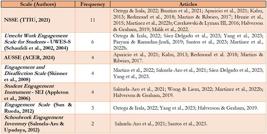
- Most commonly used scales for measuring student engagement according to the literature reviews analyzed.
Although researchers acknowledge several limitations related to surveys as a research instrument on student engagement, they still maintain their place in academic investigations. This is because it is necessary to “recognize that all measures have errors and problems associated with them, and the ongoing process of providing evidence of validity is equally important for non-self-report measures,” despite the need to move beyond the exclusive reliance on such measures (Greene, 2015, p. 27).
Along with surveys, interviews are the most widely used data collection instruments in research on student engagement (Yilmaz & Banyard, 2020). Some advantages of their use include their usefulness in exploratory studies on student engagement (Henrie et al., 2015); the ability to address fewer observable aspects (ibid.); the possibility of collecting data without interrupting learning, since they are often carried out at a later time (ibid.); and effectiveness for investigating learning approaches in educational contexts (Greene, 2015).
Although we did not find any specific disadvantages of using interviews in engagement research, some authors reinforce the need to associate them with other methods, mainly as a complement to the application of surveys (considering topics other than those included in the surveys) and observations (Martins et al., 2022; Fredricks et al., 2004; Greene, 2015; Yang et al., 2022). According to a mapping carried out in the literature, Batista et al. (2021) highlighted some problems related to the use of interviews, such as the requirement of high specialization from the researcher to avoid biases; it is time-consuming, involving recording, transcription, validation by informants, and content analysis (interpretation, coding, categorization); it adopts inductive procedures, being less effective for generalizations; it has weaknesses such as lack of collaboration from interviewees and conditioning of responses by direct interaction; and, despite offering depth, it lacks extensiveness. Although the use of surveys and interviews together (self-report measures) was present in seven literature reviews, we did not find discussions on the advantages and disadvantages of this combination in our corpus. It seems that the combined use of surveys and interviews is useful, since surveys provide a broad picture, while interviews allow for a deeper understanding.
Going beyond the traditional methods used in qualitative and quantitative research, the reviews indicated that there is research on engagement that uses instruments such as mapping behaviors in virtual environments (n=11) and physiological measures or monitoring facial expressions (n=5).
With the advent of digital technologies and virtual learning environments in education, mapping student behavior through data has become possible. Some advantages cited in reviews of our corpus on the use of data from virtual environments include the tracking student engagement as they actively participate and engage in online learning activities (Baragash, 2020; Salmela-Aro et al., 2021; Greene, 2015; Johar et al., 2023; Yilmaz & Banyard, 2020; Henrie et al., 2015; Halverson & Graham, 2019); being a more viable and cost-effective option for studying engagement, eliminating the need for manual counting (Yilmaz & Banyard, 2020; Henrie et al., 2015); avoiding subjective biases in students’ self-reporting, such as memory problems (Baragash, 2020; Yang et al., 2023); provide abundant data through systems (Henrie et al., 2015); and allow combination with other methods, providing timely evidence for practical observation (Bond et al., 2020; Salmela-Aro et al., 2021; Johar et al., 2023). In addition to these advantages, virtual learning environments can strengthen/facilitate student engagement through discussion in forums and constructive feedback (Johar et al., 2023; Halverson & Graham, 2019).
However, some disadvantages include the possible inaccuracy when considering the time that the student remains logged into a learning system, as they may study materials offline or inflate the time by accessing only to see grades or updates (Baragash, 2020; Johar et al., 2023); the inadequacy to measure cognitive and emotional engagement (Henrie et al., 2015); and the insufficiency of data on user actions to generate a complete view of activities, requiring more contextual data to reconstruct the learning process (Baragash, 2020). Henrie et al. (2015) point out that, surprisingly, these data are no longer used, indicating the need for more research to better understand their advantages and disadvantages in the study of student engagement.
The Experience Sampling Method (ESM) is an intensive longitudinal approach in which data are collected in the natural context of the individual’s everyday life (Manwaring et al., 2017; Zirkel et al., 2015). This collection covers the subject’s activities and emotional states, complemented by as much contextual information as possible. These data provide detailed insights into how psychological experiences evolve and contextual factors influence these changes. Participants typically answer questionnaires in response to electronic alarms at varying intervals (Mandernach, 2015).
In the context of student engagement, ESM has identified significant fluctuations in students' state of engagement between different classes. These variations are often associated with situational factors, such as mastery of the subject matter covered and the perception of challenge, relevance, and autonomy provided by classroom activities (Wong & Liem, 2022). Greene (2015) reveals that he is developing an ESM instrument to measure engagement during studies in Higher Education, using mobile devices (smartphones) to collect data. However, he knows that these measures may not achieve the accuracy of tracking methods, but offer greater immediacy compared to traditional self-reports.
The use of short questionnaires (SQS) administered periodically can distract students from learning was one limitation identified in our review, compromising the engagement to be measured (Henrie et al., 2015; Halverson & Graham, 2019). In addition to our corpus of analysis, another concern in the literature is the reactivity of SQS, that is, the risk that repeated data collection alters the participants' experience (Manwaring et al., 2017). However, studies suggest that the novelty effect of filling out forms repetitively usually disappears after two or three days (ibid.).
Regarding physiological measures or monitoring of facial expressions, reviews cited the use of: eye tracking to determine the impact of different types of animation on student engagement and learning (Henrie et al., 2015; Halverson & Graham, 2019); physiological skin conductance, blood pressure, and EEG (electroencephalogram) sensors to measure emotional engagement during interactive lessons (Salmela-Aro et al., 2021; Henrie et al., 2015; Halverson & Graham, 2019); and facial action coding to recognize expressions and emotions (Halverson & Graham, 2019).
Henrie et al. (2015) present some advantages and disadvantages of using physiological sensors to measure engagement. As advantages, they mention that physiological sensors are effective for activity-level engagement studies; they allow the use of existing technologies to obtain data (e.g., webcams and mouse clicks); they are a potential approach to measure cognitive and emotional engagement and are improving, with simpler and more economical options, making this measure more viable. Disadvantages include the complexity of the technology required; the difficulty of implementing the method on a large scale due to cost; the need for care in the placement of the equipment and physical restraint during monitoring; the need for more research to determine the type of engagement information that can be obtained; and the requirement for specialized training to use instruments and interpret data.
In summary, measuring student engagement is challenging due to the diversity of terms and conceptual variations, such as student engagement, academic engagement, and classroom engagement, among others. Some authors claim that engagement measurement methods have not yet been developed, highlighting the need for greater convergence and theoretical validation. In our review, eight articles directly discuss engagement measurement, with observation, surveys, and interviews, which are the most mentioned methods. Observation is recommended as a complement due to its low use and ability to provide behavioral data. Surveys are widely used and have advantages such as psychometric evaluation and the ability to explore subjective perceptions. However, they also suffer from limitations such as single-source bias, as they are frequently used without combination with other methods, and memory problems. The ESM-type questionnaire, on the other hand, offers the possibility of analyzing engagement variation and overcomes the memory problem limitation of a questionnaire applied only once. In addition to traditional methods, digital technologies and physiological measures such as eye tracking and skin conductance sensors offer new ways to measure engagement, although they face challenges of accuracy, cost and the need to contextualize the data.
FINAL CONSIDERATIONS
This literature review presents a comprehensive analysis of discussions on student engagement. In particular, the models, indicators, facilitators, and measurement standards related to student engagement are analyzed through 52 literature reviews on the topic. Although we were intentional in choosing literature reviews to analyze (seeking comprehensiveness), one limitation was precisely the analysis of other literature reviews since our access to information was conditioned by the research questions that the reviews answered. Another limitation was the low number of reviews in the context of the Global South. To mitigate this effect, we included Brazilian reviews found on Google Scholar.
To answer the first research question on engagement models and indicators, we needed to highlight the distinction between the concept of student engagement and motivation and the concepts of disengagement and some of the characteristic models of each perspective on engagement. Motivation is generally defined as a psychological process that generates disposition and purpose, while engagement is its external manifestation, visible in observable behaviors and emotional and cognitive states. We also found that disengagement can be seen as a single scale ranging from high to low, or composed of two distinct scales, in addition to being referred to by terms such as discontent, alienation, or burnout.
We found different models of student engagement with four perspectives/approaches in the literature: behavioral (e.g., NSSE, ASSE), psychological (e.g., Fredricks et al., 2004), sociocultural (e.g., Mann, 2001), and integrative (e.g., Kahu, 2013). The psychological perspective is the one most frequently explored in research. Even though texts based on the psychological perspective discussed the contextual aspect of engagement (e.g., Fredricks et al., 2004), research based on it did not focus on this, using only the discussion concerning quantitative measures (questionnaires) of the dimensions of student engagement. Furthermore, the reviews we analyzed did not concern themselves with investigating the relationships between psychological variables and variables related to the context of individuals, a fruitful path to be explored, especially in the national context.
Regarding the second research question, we found facilitators related to supportive interactions between teachers and students, teaching practice (including teaching methodologies, pedagogical strategies, and general strategies), environmental elements, and personal elements. The facilitators most cited by the literature reviews were supportive interactions between teachers and students and classroom pedagogical strategies, such as providing feedback, designing and implementing clear, challenging, and/or interesting tasks, and using digital technologies. It seems that the relationship between teacher and student, especially in the classroom, is fundamental to fostering student engagement. However, there is still some mention in the literature about the influence of environmental factors as significant in student engagement. The reviews discussed how to put the facilitators into practice, considering their requirements. We noted the lack of mention of adequate institutional infrastructure as a facilitator of engagement, which may be a reflection of the origin and focus of the reviews, which constitutes one of the limitations of this literature review.
The last research question about measuring engagement identified that the data collection methods most cited by the reviews were observation and surveys. However, even though observation is the method most cited by the reviews, this is not because it is the most used method to measure engagement, but rather because it is recommended as a complement due to its low use, due to its ability to provide behavioral data and complement other methods. Surveys are the most used method to investigate student engagement, which even has some widely used scales, and the least used is the use of physiological measures. The use of questionnaires to the detriment of other types, such as observation, may indicate that the studies are more concerned with analyzing the product and not the process of student engagement. Both observation and ESM-type questionnaires and the use of physiological measures can shed light on the processes of development of student engagement over time and can be used in conjunction with traditional questionnaires, reducing single-source bias.
Based on these main findings and considering the Brazilian context, we understand that educational managers can benefit from the definitions and models presented in this review, organized clearly and precisely, to support the understanding of engagement and to qualify educational projects. We emphasize the importance of considering the social, cultural, and economic context when evaluating engagement results, since previous experiences and lived stimuli directly influence this process. For this reason, existing engagement scales, most developed in the Global North, need to be adapted before being applied in other contexts, as we are doing in a study focused on Higher Education and student persistence.
By including detailed discussions on the definitions, models, indicators, facilitators, and methods of measuring student engagement, which differ from the reviews analyzed, the reviews are not only an essential resource for researchers newly interested in the area. They also offer initial guidance for the implementation of pedagogical practices that facilitate engagement. Furthermore, we chose to approach the engagement models according to perspectives to show that there are engagement models that are close to each other, and significant differences between others. With this, we seek to avoid an endless discussion on the engagement models and show a little of each perspective, seeking clarity on the possible ways of approaching student engagement. Finally, we emphasize that our review goes beyond some reviews that are limited to mapping the profile of the productions, such as some present in our corpus, as it presents important aspects of the categories developed for each research question, reducing the need for direct access to the reviews analyzed.
For future studies, it is essential to deepen the understanding of how different teaching strategies and other interventions can promote, or not, different types of engagement. Furthermore, this review reinforces the importance of adopting multidimensional models of student engagement, which consider cognitive, behavioral, and emotional/affective aspects, allowing for a more precise analysis and the development of more effective actions. Finally, it is essential to use models that integrate sociocultural aspects and their interactions with psychological factors for a more comprehensive and contextualized understanding of student engagement.
References
-
Aparicio, G., Iturralde, T., & Maseda, A. (2021). A holistic bibliometric overview of the student engagement research field. Journal of Further and Higher Education , 45(4), 540-557. https://doi.org/1080/0309877X.2020.1795092.(*)
» https://doi.org/1080/0309877X.2020.1795092 -
Appleton, J. J., Christenson, S. L., & Furlong, M. J. (2008). Student engagement with school: critical conceptual and methodological issues of the construct. Psychology in the Schools , 45(5), 369-386. https://doi.org/1002/pits.20303
» https://doi.org/1002/pits.20303 -
Appleton, J. J., Christenson, S. L., Kim, D., & Reschly, A. L. (2006). Measuring cognitive and psychological engagement: validation of the student engagement instrument. Journal of School Psychology, 44(5), 427-445. https://doi.org/1016/j.jsp.2006.04.002
» https://doi.org/1016/j.jsp.2006.04.002 -
Australian Council for Educational Research (ACER). (2024) Australasian Survey of Student Engagement Camberwell, ACER. https://www.acer.org/au/ausse
» https://www.acer.org/au/ausse -
Aziz, N. A., Fook, C. Y., Sidhu, G. K., Narasuman, S., & Fahim Zulkifli, A. F. (2024). Interactivity Factors and Student Engagement in the use of Emerging Technologies in Higher Education. Asian Journal of University Education, 20(3), 703-716. https://doi.org/24191/ajue.v20i3.27850
» https://doi.org/24191/ajue.v20i3.27850 -
Balwant, P. T. (2018). The meaning of student engagement and disengagement in the classroom context: lessons from organisational behaviour. Journal of Further and Higher Education, 42(3), 389-401. https://doi.org/1080/0309877X.2017.1281887. (*)
» https://doi.org/1080/0309877X.2017.1281887 -
Bandura, A. (1977). Self-efficacy: Toward a unifying theory of behavioral change. Psychological Review, 84(2), 191-215. https://doi.org/1037/0033-295X.84.2.191.
» https://doi.org/1037/0033-295X.84.2.191 - Bandura, A., Azzi, R. G., & Polydoro, S. (2008). Teoria Social Cognitiva: conceitos básicos Porto Alegre, ArtMed.
-
Baragash, R. S. (2020). Methods for measuring engagement in the blended learning environment: a review paper. ASM Science Journal, 13(n. especial 3), 32-38. https://www.akademisains.gov.my/asmsj/article/methods-for-measuring-engagement-in-the-blended-learning-environment/(*)
» https://www.akademisains.gov.my/asmsj/article/methods-for-measuring-engagement-in-the-blended-learning-environment/ -
Batista, B. F., Rodrigues, D., Moreira, E., & Silva, F. (2021). Técnicas de recolha de dados em investigação: inquirir por questionário e/ou inquirir por entrevista? In: P. Sá, A. P. Costa & A. Moreira (eds.). Reflexões em torno de Metodologias de Investigação: recolha de dados (Vol. 2). UA Editora, Aveiro. https://doi.org/34624/ka02-fq42
» https://doi.org/34624/ka02-fq42 -
Baumeister, R. F., & Leary, M. R. (1995). The need to belong: desire for interpersonal attachments as a fundamental human motivation. Psychological Bulletin, 117(3), 497-529. https://doi.org/1037/0033-2909.117.3.497.
» https://doi.org/1037/0033-2909.117.3.497. -
Bond, M. (2020). Facilitating student engagement through the flipped learning approach in K-12: a systematic review. Computers & Education, 151, p. 1-36. https://doi.org/1016/j.compedu.2020.103819.(*)
» https://doi.org/1016/j.compedu.2020.103819 -
Bond, M., Buntins, K., Bedenlier, S., Zawacki-Richter, O., & Kerres, M. (2020). Mapping research in student engagement and educational technology in higher education: a systematic evidence map. International Journal of Educational Technology in Higher Education, 17(2), 1-30. https://doi.org/1186/s41239-019-0176-8.(*)
» https://doi.org/1186/s41239-019-0176-8 -
Bundick, M. J., Quaglia, R. J., Corso, M. J., & Haywood, D. E. (2014). Promoting Student Engagement in the Classroom. Teachers College Record, 116(4), 1-34. https://doi.org/1177/016146811411600411.(*)
» https://doi.org/1177/016146811411600411 -
Buntins, K., Kerres, M., & Heinemann, A. (2021). A scoping review of research instruments for measuring student engagement: In need for convergence. International Journal of Educational Research Open, 2, 1-12. https://doi.org/1016/j.ijedro.2021.100099.(*)
» https://doi.org/1016/j.ijedro.2021.100099 -
Chakraborty, M., & Nafukho, F. (2014). Strengthening student engagement: what do students want in online courses? European Journal of Training and Development, 38(9), 782-802. https://doi.org/1108/EJTD-11-2013-0123.(*)
» https://doi.org/1108/EJTD-11-2013-0123 - Creswell, J. W. (2012). Educational research: planning, conducting, and evaluating quantitative and qualitative research(4a. ed.). Pearson: Boston.
- Corno, L., & Mandinach, E. B. (2004). What we have learned about student engagement in the past twenty years. In: D. M. McInerney & S. Van Etten (eds.). Big theories revised (299-328). Greenwich, Information Age.
-
Czerkawski, B. C., & Lyman III, E. W. (2016) An instructional design framework for fostering student engagement in online learning environments. TechTrends, 60, 532-539. https://doi.org/1007/s11528-016-0110-z.(*)
» https://doi.org/1007/s11528-016-0110-z -
Finn, J. D. (1989). Withdrawing From School. Review of Educational Research, 59(2), 117-142. https://doi.org/3102/00346543059002117.
» https://doi.org/3102/00346543059002117 -
Fredricks, J. A., Blumenfeld, P. C., & Paris, A. H. (2004). School Engagement: Potential of the Concept, State of the Evidence. Review of Educational Research, 74(1), 59-109. https://doi.org/3102/00346543074001059.(*)
» https://doi.org/3102/00346543074001059 -
Fredricks, J. A., Filsecker, M., & Lawson, M. A. (2016a). Student engagement, context, and adjustment: addressing definitional, measurement, and methodological issues. Learning and Instruction, 43, 1-4. https://doi.org/1016/j.learninstruc.2016.02.002.
» https://doi.org/1016/j.learninstruc.2016.02.002 -
Fredricks, J. A., Wang, M.-T., Linn, J. S., Hofkens, T. L., Sung, H., Parr, A., & Allerton, J. (2016b). Using qualitative methods to develop a survey measure of math and science engagement. Learning and Instruction, 43, 5-15. https://doi.org/1016/j.learninstruc.2016.01.009.
» https://doi.org/1016/j.learninstruc.2016.01.009 -
Fredricks, J. A. (2011) Engagement in school and out-of-school contexts: a multidimensional view of engagement, Theory Into Practice, 50(4), 327-335. https://doi.org/1080/00405841.2011.607401.
» https://doi.org/1080/00405841.2011.607401 -
Fredricks, J. A., & McColskey, W. (2012). The Measurement of Student Engagement: A Comparative Analysis of Various Methods and Student Self-report Instruments. In: S. L. Christenson, A. L. Reschly & C. Wylie (eds.). Handbook of Research on Student Engagement (763-782). Springer, Boston. https://doi.org/1007/978-1-4614-2018-7_37.
» https://doi.org/1007/978-1-4614-2018-7_37 -
Fredricks, J. A., Blumenfeld, P., Friedel, J., & Paris, A. (2005). School Engagement. In: K. A. Moore & L. H. Lippman (eds). What do children need to flourish? the search institute series on developmentally attentive community and society(v. 3, 305-321). Springer, Boston . https://doi.org/1007/0-387-23823-9_19.
» https://doi.org/1007/0-387-23823-9_19 -
Greene, B. A. (2015). Measuring cognitive engagement with self-report scales: reflections from over 20 years of research. Educational Psychologist, 50(1), 14-30. https://doi.org/1080/00461520.2014.989230.(*)
» https://doi.org/1080/00461520.2014.989230 -
Gurcan, F., Erdogdu, F., Cagiltay, N. E., & Cagiltay, K. (2023). Student engagement research trends of past 10 years: a machine learning-based analysis of 42,000 research articles. Education and Information Technologies, 28, 15067-15091. https://doi.org/1007/s10639-023-11803-8.(*)
» https://doi.org/1007/s10639-023-11803-8 - Halverson, L. R., & Graham, C. R. (2019). Learner engagement in blended learning environments: a conceptual framework. Online Learning, 23(2), 145-178. https://olj.onlinelearningconsortium.org/index.php/olj/article/view/1481.(*)
-
Harbour, K. E., Evanovich, L. L., Sweigart, C. A., & Hughes, L. E. (2015). A brief review of effective teaching practices that maximize student engagement. Preventing School Failure, 59(1), 5-13. https://doi.org/1080/1045988X.2014.919136.(*)
» https://doi.org/1080/1045988X.2014.919136 -
Henrie, C. R., Halverson, L. R., & Graham, C. R. (2015). Measuring student engagement in technology-mediated learning: a review. Computers & Education, 90, 36-53. https://doi.org/1016/j.compedu.2015.09.005.(*)
» https://doi.org/1016/j.compedu.2015.09.005 -
Jimerson, S. R., Campos, E., & Greif, J. L. (2003). Toward an understanding of definitions and measures of school engagement and related terms. The California School Psychologist, 8, 7-27. https://doi.org/1007/BF03340893.(*)
» https://doi.org/1007/BF03340893 -
Johar, N. A., Kew, S. N., Tasir, Z., & Koh, E. (2023). Learning analytics on student engagement to enhance students’ learning performance: a systematic review. Sustainability, 15(10), 7849. https://doi.org/3390/su15107849.(*)
» https://doi.org/3390/su15107849 -
Kahu, E. R., & Nelson, K. (2018). Student engagement in the educational interface: understanding the mechanisms of student success. Higher Education Research & Development, 37(1), 58-71. https://doi.org/1080/07294360.2017.1344197.
» https://doi.org/1080/07294360.2017.1344197 -
Kahu, E. R. (2013). Framing student engagement in higher education. Studies in Higher Education, 38(5), 758-773. https://doi.org/1080/03075079.2011.598505.(*)
» https://doi.org/1080/03075079.2011.598505 -
Kuh, G. D. (2001). The national survey of student engagement: conceptual framework and overview of psychometric properties. Framework & Psychometric Properties, 1-26. https://hdl.handle.net/2022/24268
» https://hdl.handle.net/2022/24268 -
Li, K. C., & Lam, H. K. (2015). Student engagement in a technology-mediated distance learning course. International Journal of Services and Standards, 10(4), https://doi.org/1504/IJSS.2015.072445.
» https://doi.org/1504/IJSS.2015.072445 -
MacSuga-Gage, A. S., & Simonsen, B. (2015). Examining the effects of teacher-directed opportunities to respond on student outcomes: a systematic review of the literature. Education & Treatment of Children, 38(2), 211-240. https://doi.org/1353/etc.2015.0009.
» https://doi.org/1353/etc.2015.0009 -
Malik, S., Hazarika, D. D., & Dhaliwal, A. (2022). Deliverables of student engagement: developing an outcome-oriented model. Journal of International Education in Business, 15(2), 221-249. https://doi.org/1108/JIEB-02-2020-0012.(*)
» https://doi.org/1108/JIEB-02-2020-0012 -
Mandernach, B. J. (2015). Assessment of Student Engagement in Higher Education: A Synthesis of Literature and Assessment Tools. International Journal of Learning, Teaching and Educational Research, 12(2), 1-14. https://www.ijlter.org/index.php/ijlter/article/view/367
» https://www.ijlter.org/index.php/ijlter/article/view/367 -
Mann, S. J. (2001). Alternative Perspectives on the student experience: alienation and engagement. Studies in Higher Education , 26(1), 7-19. https://doi.org/1080/03075070020030689.
» https://doi.org/1080/03075070020030689 -
Manwaring, K. C., Larsen, R., Graham, C. R., Henrie, C. R., & Halverson, L. R. (2017). Investigating student engagement in blended learning settings using experience sampling and structural equation modeling. The Internet and Higher Education, 35, 21-33. https://doi.org/1016/j.iheduc.2017.06.002.
» https://doi.org/1016/j.iheduc.2017.06.002 -
Martin, A. J., Ginns, P., & Papworth, B. (2017). Motivation and engagement: same or different? Does it matter? Learning and Individual Differences, 55, 150-162. https://doi.org/1016/j.lindif.2017.03.013.
» https://doi.org/1016/j.lindif.2017.03.013 -
Martin, F., & Borup, J. (2022). Online learner engagement: conceptual definitions, research themes, and supportive practices. Educational Psychologist, 57(3), 162-177. https://doi.org/1080/00461520.2022.2089147.
» https://doi.org/1080/00461520.2022.2089147 -
Martínez, B. M. T., Pérez-Fuentes, M. C., & Jurado, M. M. M. (2022a). Addressing leadership effectiveness for student academic engagement: a systematic review. School Leadership & Management, 42(4), 366-380. https://doi.org/1080/13632434.2022.2111412.(*)
» https://doi.org/1080/13632434.2022.2111412 -
Martínez, B. M. T., Pérez-Fuentes, M. C., & Jurado, M. M. M. (2022b). Investigación sobre el compromiso o engagement académico de los estudiantes: una revisión sistemática sobre factores influyentes y instrumentos de evaluación. Revista Iberoamericana de Diagnóstico y Evaluación Psicologica, 62(1), 101-111. https://doi.org/21865/RIDEP62.1.08.(*)
» https://doi.org/21865/RIDEP62.1.08 -
Martínez, B. M. T., Pérez Fuentes, M. C., & Jurado, M. M. M. (2023). Variables related to academic engagement and socioemotional skills in adolescents: a systematic review. Revista Fuentes, 25(2), 242-255. https://doi.org/12795/revistafuentes.2023.22047.(*)
» https://doi.org/12795/revistafuentes.2023.22047 -
Martins, L. M., & Ribeiro, J. L. D. (2017). Engajamento do estudante no ensino superior como indicador de avaliação. Avaliação: Revista da Avaliação da Educação Superior, 22(1), 223-247. https://doi.org/1590/S1414-40772017000100012.(*)
» https://doi.org/1590/S1414-40772017000100012 -
Martins, J., Cunha, J., Lopes, S., Moreira, T., & Rosário, P. (2022). School engagement in elementary school: a systematic review of 35 years of research. Educational Psychology Review, 34, 793-849. https://doi.org/1007/s10648-021-09642-5.(*)
» https://doi.org/1007/s10648-021-09642-5 -
Oliveira, E. T., Caldini, C., & Coutinho, C. C. (2023). Definição de engajamento estudantil no ensino superior: um estudo bibliométrico. Avaliação: Revista da Avaliação da Educação Superior, 28, e023009. https://doi.org/1590/S1414-40772023000100009.(*)
» https://doi.org/1590/S1414-40772023000100009 -
Ortega, F. C., & Irala, V. B. (2022). Mensuração do engajamento online de estudantes do ensino superior: uma revisão de escopo na literatura internacional. Texto Livre, 15, e35747. https://doi.org/35699/1983-3652.2022.35747.(*)
» https://doi.org/35699/1983-3652.2022.35747 - Osama, H., Bahgat, A., & Safwat, S. (2022). Synthesis of student engagement on elearning: a systematic review of the literature. Journal of Theoretical and Applied Information Technology, 100(8), 2630-264. https://www.jatit.org/volumes/Vol100No8/28Vol100No8.pdf.(*)
-
Paryani, S., & Ramadan-Jradi, R. (2019). The impact of flipped learning on student performance and engagement: a systematic literature review. International Journal of Learning and Teaching, 5(1), 30-37. https://doi.org/18178/ijlt.5.1.30-37.(*)
» https://doi.org/18178/ijlt.5.1.30-37 -
Pike, G. R. (2006). The Convergent and discriminant validity of NSSE scalelet scores. Journal of College Student Development, 47(5), 550-563. https://doi.org/1353/csd.2006.0061.
» https://doi.org/1353/csd.2006.0061 -
Porter, S. R. (2011). Do college student surveys have any validity? The Review of Higher Education, 35(1), 45-76. https://doi.org/1353/rhe.2011.0034.
» https://doi.org/1353/rhe.2011.0034 -
Purarjomandlangrudi, A., Chen, D., & Nguyen, A. (2016). Investigating the drivers of student interaction and engagement in online courses: a study of state-of-the-art. Informatics in Education, 15(2), 269-286. https://doi.org/15388/infedu.2016.14.(*)
» https://doi.org/15388/infedu.2016.14 -
Quin, D. (2017). Longitudinal and contextual associations between teacher-student relationships and student engagement: a systematic review. Review of Educational Research, 87(2), 345-387. https://doi.org/3102/0034654316669434.(*)
» https://doi.org/3102/0034654316669434 -
Redmond, P., Heffernan, A., Abawi, L., Brown, A., & Henderson, P. (2018). An online engagement framework for higher education. Online Learning, 22(1), 183-204. https://doi.org/24059/olj.v22i1.1175.(*)
» https://doi.org/24059/olj.v22i1.1175 -
Reschly, A. L., & Christenson, S. L. (2012). Jingle, jangle, and conceptual haziness: evolution and future directions of the engagement construct. In: S. L. Christenson, A. L. Reschly& C. Wylie (eds.). Handbook of Research on Student Engagement (3-19). Springer, Boston . https://doi.org/1007/978-1-4614-2018-7_1.
» https://doi.org/1007/978-1-4614-2018-7_1 -
Reschly, A. L., & Christenson, S. L(2022). Jingle-Jangle revisited: history and further evolution of the student engagement construct. In: A. L. Reschly & S. L. Christenson (eds.), Handbook of Research on Student Engagement (2a. ed., 3-24). Springer, Cham. https://doi.org/1007/978-3-031-07853-8_1.
» https://doi.org/1007/978-3-031-07853-8_1 -
Reschly, A. L. (2020). Interventions to enhance academic engagement. In: A. L. Reschly, A. J. Pohl & S. L. Christenson, (eds.). Student engagement: effective academic, behavioral, cognitive, and affective interventions at school (91-108). Springer, Cham. https://doi.org/1007/978-3-030-37285-9_5.
» https://doi.org/1007/978-3-030-37285-9_5 -
Reschly, A. L., Pohl, A. J., & Christenson, S. L. (eds.) (2020). Student engagement: effective academic, behavioral, cognitive, and affective interventions at school Springer, Cham. https://doi.org/1007/978-3-030-37285-9.
» https://doi.org/1007/978-3-030-37285-9 -
Reeve, J. (2013). How students create motivationally supportive learning environments for themselves: the concept of agentic engagement. Journal of Educational Psychology, 105(3), 579-595. https://doi.org/1037/a0032690.
» https://doi.org/1037/a0032690 -
Reeve, J., & Tseng, C.-M. (2011). Agency as a fourth aspect of student engagement during learning activities. Contemporary Educational Psychology, 36(4), 257-267. https://doi.org/1016/j.cedpsych.2011.05.002.
» https://doi.org/1016/j.cedpsych.2011.05.002 -
ResearchRabbit. Reimagine Research https://www.researchrabbit.ai/ Recuperado em:23 jul. 2024.
» https://www.researchrabbit.ai/ -
Ribeiro, A. R., Pereira, A. I., & Pedro, M. (2019). Predictors of school affective engagement during elementary school: a systematic review. Análise Psicológica, 2(XXXVII), 193-207. http://publicacoes.ispa.pt/index.php/ap/article/view/1547(*)
» http://publicacoes.ispa.pt/index.php/ap/article/view/1547 -
Rivera, E. S., & Garden, C. L. P. (2021). Gamification for student engagement: a framework. Journal of Further and Higher Education, 45(7), 999-1012. https://doi.org/1080/0309877X.2021.1875201.(*)
» https://doi.org/1080/0309877X.2021.1875201 -
Sáez-Delgado, F., Parra, V., Pérez-Salaz, C., Ramírez, P., & Zañartu I. (2023). A systematic review of methodological aspects of student engagement research in secondary students. Interdisciplinaria, 40(2), 41-57. https://doi.org/16888/interd.2023.40.2.3.(*)
» https://doi.org/16888/interd.2023.40.2.3 -
Salas-Pilco, S. Z., Yang, Y., & Zhang, Z. (2022). Student engagement in online learning in Latin American higher education during the COVID-19 pandemic: a systematic review. British Journal of Educational Technology, 53(3), 593-619. https://doi.org/1111/bjet.13190.(*)
» https://doi.org/1111/bjet.13190 -
Salmela-Aro, K., Tang, X., & Upadyaya, K. (2022). Study Demands-Resources Model of Student Engagement and Burnout. In: A. L., Reschly & S.L. Christenson (eds.), Handbook of Research on Student Engagement (2a. ed., 77-93). Springer, Cham. https://doi.org/1007/978-3-031-07853-8_4.
» https://doi.org/1007/978-3-031-07853-8_4 -
Salmela-Aro, K., & Upadaya, K. (2012). The schoolwork engagement inventory: energy, dedication, and absorption (EDA). European Journal of Psychological Assessment, 28(1), 60-67. https://doi.org/1027/1015-5759/a000091.
» https://doi.org/1027/1015-5759/a000091 -
Salmela-Aro, K., Tang, X., Symonds, J., & Upadyaya, K (2021). Student engagement in adolescence: a scoping review of longitudinal studies 2010-2020. Journal of Research on Adolescence, 31(2), 256-272. https://doi.org/1111/jora.12619.
» https://doi.org/1111/jora.12619 -
Santos, A. C., Simões, C., Melo, M. H. S., Santos, M. F., Freitas, I., Branquinho, C., Cefai, C., & Arriaga, P. (2023). A systematic review of the association between social and emotional competencies and student engagement in youth. Educational Research Review, 39, 100535. https://doi.org/1016/j.edurev.2023.100535.(*)
» https://doi.org/1016/j.edurev.2023.100535 -
Schaufeli, W. B., Salanova, M., González-Romá, V., & Bakker, A. B. (2002). The measurement of engagement and burnout: a two sample confirmatory factor analytic approach. Journal of Happiness Studies, 3(1), 71-92. https://doi.org/1023/A:1015630930326.
» https://doi.org/1023/A:1015630930326 -
Schaufeli, W., & Bakker, A. (2004). Utrecht Work Engagement Scale: Preliminary manual Utrecht University. https://www.wilmarschaufeli.nl/publications/Schaufeli/Test%20Manuals/Test_manual_UWES_English.pdf
» https://www.wilmarschaufeli.nl/publications/Schaufeli/Test%20Manuals/Test_manual_UWES_English.pdf -
Silva, A. S. S., & Ribeiro, M. L. (2020). Engajamento estudantil na educação superior. Revista Eletrônica Pesquiseduca, 12(26), 50-63. https://periodicos.unisantos.br/pesquiseduca/article/view/904(*)
» https://periodicos.unisantos.br/pesquiseduca/article/view/904 -
Sinatra, G. M., Heddy, B. C., & Lombardi, D. (2015). The Challenges of defining and measuring student engagement in science. Educational Psychologist, 50(1), 1-13. https://doi.org/1080/00461520.2014.1002924.
» https://doi.org/1080/00461520.2014.1002924 -
Skinner, E., Furrer, C., Marchand, G., & Kindermann, T. (2008). Engagement and disaffection in the classroom: part of a larger motivational dynamic? Journal of Educational Psychology, 100(4), 765-781. https://doi.org/1037/a0012840.
» https://doi.org/1037/a0012840 -
Stroet, K., Opdenakker, M.-C., & Minnaert, A. (2013). Effects of need supportive teaching on early adolescents’ motivation and engagement: a review of the literature. Educational Research Review, 9, 65-87. https://doi.org/1016/j.edurev.2012.11.003.(*)
» https://doi.org/1016/j.edurev.2012.11.003 -
Subramainan, L., & Mahmoud, M. A. (2020). A systematic review on students’ engagement in classroom: indicators, challenges and computational techniques. International Journal of Advanced Computer Science and Applications, 11(1), 105-115. http://dx.doi.org/14569/IJACSA.2020.0110113.(*)
» https://doi.org/14569/IJACSA.2020.0110113 -
Sun, J. C., & Rueda, R. (2012). Situational interest, computer self-efficacy and self-regulation: their impact on student engagement in distance education. British Journal of Educational Technology, 43, 191-204. http://dx.doi.org/1111/j.1467-8535.2001157.x.
» https://doi.org/1111/j.1467-8535.2001157.x -
Taylor, L., & Parsons, J. (2011). Improving student engagement. Current Issues in Education, 14(1), 1-33. https://cie.asu.edu/ojs/index.php/cieatasu/article/view/745(*)
» https://cie.asu.edu/ojs/index.php/cieatasu/article/view/745 -
The Trustees of Indiana University (TTIU) (2021). National Survey of Student Engagement. Center for Postsecondary Research Indiana University School of Education. https://nsse.indiana.edu/nsse/index.html
» https://nsse.indiana.edu/nsse/index.html -
Tinto, V. (2022). Increasing Student Persistence: Wanting and Doing. In: H. Huijser, M.Y.C.A. Kek& F.F. Padró(eds). Student Support Services. University Development and Administration (53-70). Springer, Singapore. https://doi.org/1007/978-981-16-5852-5_33.
» https://doi.org/1007/978-981-16-5852-5_33 -
Valle, J. E., & Williams, L. C. A. (2021). Engajamento escolar: revisão de literatura abrangendo relação professor-aluno e bullying. Psicologia: Teoria e Pesquisa, 37, e373https://doi.org/1590/0102.3772e373. (*)
» https://doi.org/1590/0102.3772e373 -
Venn, E., Park, J., Andersen, L. P., & Hejmadi, M. (2020). How do learning technologies impact on undergraduates’ emotional and cognitive engagement with their learning? Teaching in Higher Education, 28(4), 822-839. https://doi.org/1080/13562517.2020.1863349.(*)
» https://doi.org/1080/13562517.2020.1863349 -
Wang, M.-T., & Degol, J. L. (2014). Staying engaged: knowledge and research needs in student engagement. Child Development Perspectives, 8(3), 137-143. https://doi.org/1111/cdep.12073.(*)
» https://doi.org/1111/cdep.12073 -
Wang, M.-T., Henry, D. A., & Degol, J. L. (2020). A development-in-sociocultural-context perspective on the multiple pathways to youth’s engagement in learning. In: A. J. Elliot (ed.), Advances in motivation science(v. 7, 113-160). Elsevier. https://doi.org/1016/bs.adms.2019.11.001.
» https://doi.org/1016/bs.adms.2019.11.001 -
Wang, M.-T., & Hofkens, T. L. (2020). Beyond classroom academics: a school-wide and multi-contextual perspective on student engagement in school. Adolescent Research Review, 5, 419-433, https://doi.org/1007/s40894-019-00115-z.(*)
» https://doi.org/1007/s40894-019-00115-z -
Wimpenny, K., & Savin-Baden, M. (2013). Alienation, agency and authenticity: a synthesis of the literature on student engagement. Teaching in Higher Education, 18(3), 311-326. https://doi.org/1080/13562517.2012.725223.(*)
» https://doi.org/1080/13562517.2012.725223 -
Wong, Z. Y., & Liem, G. A. D. (2022). Student engagement: current state of the construct, conceptual refinement, and future research directions. Educational Psychology Review, 34, 107-138. https://doi.org/1007/s10648-021-09628-3.(*)
» https://doi.org/1007/s10648-021-09628-3 -
Yang D., Chen, P., Wang, H., Wang, K., & Huang, R. (2022). Teachers' autonomy support and student engagement: a systematic literature review of longitudinal studies. Frontiers in Psychology, 13, 925955. https://doi.org/3389/fpsyg.2022.925955.(*)
» https://doi.org/3389/fpsyg.2022.925955 -
Yang, D., Wang, H., Metwally, A. H. S., & Huang, R. (2023). Student engagement during emergency remote teaching: a scoping review. Smart Learning Environments, 10(24), 1-17. https://doi.org/1186/s40561-023-00240-2.(*)
» https://doi.org/1186/s40561-023-00240-2 -
Yilmaz, A. B., & Banyard, P. (2020). Engagement in distance education settings: a trend analysis. Turkish Online Journal of Distance Education, 21(1), 101-120. https://doi.org/17718/tojde.690362.(*)
» https://doi.org/17718/tojde.690362 -
Zepke, N., & Leach, L. (2010). Improving student engagement: ten proposals for action. Active Learning in Higher Education, 11(3),167-177. https://doi.org/1177/1469787410379680.(*)
» https://doi.org/1177/1469787410379680 -
Zirkel, S., Garcia, J. A., & Murphy, M. C. (2015). Experience-Sampling Research Methods and Their Potential for Education Research. Educational Researcher, 44(1), 7-16. https://doi.org/3102/0013189X14566879.
» https://doi.org/3102/0013189X14566879
-
1
Article published with funding from theConselho Nacional de Desenvolvimento Científico e Tecnológico- CNPq/Brazil for editing, layout and XML conversion services.
-
3
We created a Python code with the pandas and fuzzywuzzy libraries to identify the ten most cited articles/book chapters from these literature reviews. We exported the references from Scopus and, due to formatting variations, the code only compared the titles of the studies. In the end, we obtained a list of the most cited studies, with a similarity greater than 80% according to the Levenshtein distance, and the number of reviews that mentioned them.
-
4
Number of citations according to Scopus. Data collected on: Jul 23, 2024.
-
5
A graph is composed of vertices and edges, representing entities and their connections. In this context, the size of the vertices indicates the relevance of the authors (number of publications/citations) and the width of the edges shows the strength of the collaborations between them. The connections were based only on the most cited articles, and do not reflect all of the publications of each author. Therefore, the author Finn (1989) does not appear in the graph, since his article was authored individually.
-
6
The self is composed of “cognitive structures that provide reference mechanisms and a set of subfunctions for perception, evaluation and regulation of behavior” (Bandura et al., 2008, p. 50).
-
7
OTRs can be academic questions or tasks presented by a teacher that elicit an active response from the student, followed by feedback. (MacSuga-Gage & Simonsen, 2015).
FUNDING
Edited by
History
-
Received
09 Aug 2024 -
Preprint posted on
09 Aug 2024
10.1590/SciELOPreprints.9578 -
Accepted
19 Jan 2025

 Source: the authors.

 Source: Created with ResearchRabbit (2024).
 Source: Built considering
  Source: the authors.

 Source: the authors.
 Source: the authors.