
 THE CONNECTION BETWEEN PIAGET'S THEORY AND COGNITIVE NEUROSCIENCE IN PHYSICS TEACHING
ABSTRACT:
The cognitive learning theory proposed by educational psychologist Jean Piaget is widely cited by educators and researchers to legitimize their educational practices and support their scientific studies, but its isolated application can ignore more recent biological advances. This article analyzes the epistemological convergence between Piagetian constructivism and markers of cognitive neuroscience, discussing how this integration can underpin the teaching of physics. Through theoretical-interpretative analysis based on a comparison of classic works and recent studies in the field, tensions, convergences, and possibilities of this interface are identified. The results indicate that, although there are relevant contributions from neuroscience to the understanding of learning processes, caution is necessary in transposing this to the classroom to avoid biological reductionism. Furthermore, there is strong encouragement for its intersection by curricular guidelines related to the initial training of teachers in basic education to understand how students learn. The author's contributions lie in proposing a teacher training program that articulates cognitive psychology and cognitive neuroscience as inseparable axes in understanding learning, applying neuroscientific advances in schools to produce improvements in physics teaching.
Keywords:
Physics teaching; teacher training; cognitive neuroscience; Piaget's Theory
RESUMO:
A teoria da aprendizagem cognitiva proposta pelo psicólogo educacional Jean Piaget é amplamente citada por educadores e pesquisadores para a legitimação de suas práticas educativas e embasamento de seus estudos científicos, mas sua aplicação isolada pode ignorar avanços biológicos mais atuais. Este artigo analisa a convergência epistemológica entre o construtivismo piagetiano e os marcadores da neurociência cognitiva, discutindo como essa integração pode fundamentar o ensino de física. Por meio da análise teórico-interpretativa a partir do cotejamento de produções clássicas e estudos recentes da área, identificam-se tensões, convergências e possibilidades dessa interface. Os resultados indicam que, embora existam contribuições relevantes da neurociência para a compreensão dos processos de aprendizagem, é necessário cautela na transposição para a sala de aula a fim de evitar o reducionismo biológico. Além disso, há grande estímulo de sua interseção por diretrizes curriculares relacionadas à formação inicial de professores da educação básica a fim de compreender como os alunos aprendem. As contribuições autorais residem na proposição de uma formação docente que articule psicologia cognitiva e neurociência cognitiva como eixos indissociáveis na compreensão do aprender, aplicando os avanços neurocientíficos nas escolas de modo a produzir melhorias no ensino de física.
Palavras-chave:
ensino de física; formação de professores; neurociência cognitiva; teoria de Piaget
RESUMEN:
La teoría del aprendizaje cognitivo propuesta por el psicólogo educativo Jean Piaget es ampliamente citada por educadores e investigadores para legitimar sus prácticas pedagógicas y fundamentar sus estudios científicos, pero su aplicación aislada puede ignorar avances biológicos más recientes. Este artículo analiza la convergencia epistemológica entre el constructivismo piagetiano y los indicadores de la neurociencia cognitiva, y discute cómo esta integración puede sustentar la enseñanza de la física. Mediante un análisis teórico-interpretativo basado en la comparación de obras clásicas y estudios recientes en el campo, se identifican tensiones, convergencias y posibilidades de esta interfaz. Los resultados indican que, si bien existen contribuciones relevantes de la neurociencia para la comprensión de los procesos de aprendizaje, es necesario ser cauteloso al transponerlas al aula para evitar el reduccionismo biológico. Además, se recomienda encarecidamente su integración en las directrices curriculares relacionadas con la formación inicial del profesorado de educación básica para comprender cómo aprenden los estudiantes. Las contribuciones del autor radican en proponer un programa de formación docente que articula la psicología cognitiva y la neurociencia cognitiva como ejes inseparables para comprender el aprendizaje, aplicando los avances neurocientíficos en las escuelas para producir mejoras en la enseñanza de la física.
Palabras clave:
enseñanza de la física; formación de profesores; neurociencia cognitiva; la teoría de Piaget
INTRODUCTION
Learning theories, particularly those of Piaget, Vygotsky, and Ausubel, are models that examine the process of constructing systematic knowledge, including fundamental concepts, principles, and worldviews (Moreira, 1999).
From this perspective, concepts are defined as signs that indicate regularities and are meaningfully related to principles and theories governed by value systems or philosophies. They are related to learning theories, which theorists in the field commonly classify as behaviorist, humanist, or cognitivist (Moreira, 1999). This study examines Jean Piaget’s cognitive theory, which emphasizes how learners process knowledge and derive meaning (Pozo, 1998). For cognitivists, the focus lies on intervening variables: higher-order mental processes (Moreira, 1999).
The learning theory developed by educational psychologist, biologist, and epistemologist Jean Piaget is most regarded in the educational field, often cited by researchers and educators to justify their pedagogical practices (Rosat et al., 2010; Obana, 2015; Silva, 2019). The theorist dedicated part of his work to discussing human cognitive development through experimental research, aiming to understand the stages of knowledge acquisition, from the simplest forms of learning to the most complex (Piaget, 1964; Piaget, 1970; Piaget, 1977; Piaget, 1999).
However, its application in physics education often lacks dialogue with the biological foundations that underpin logical-abstract reasoning. Piaget's theory outlines the maturation stages of brain structures related to cognition, a subject of interest to cognitive neuroscience. Cognitive neuroscience emerged in the late 1970s, focusing its research on understanding the neural mechanisms underlying cognition, based on their biological foundations and their implications for human behavior (Gazzaniga, Ivry, & Mangun, 2006).
With advancements in brain imaging physics techniques, neuroscience became a major scientific field in the 1990s. This development was driven by theoretical and experimental insights into brain structure, maturation, and development (Kandel et al., 2014).
Based on this, neuroscience has attracted financial investment to foster research in the field, such as the Brain Research through Advancing Innovative Neurotechnologies (BRAIN-Iniciativa de Pesquisa Cerebral por meio do Avanço da Neurotecnologia Inovadora)2 and the Human Connectome Project (HCP-Projeto Conectoma Humano)3, influencing scientific studies in education regarding teaching and learning processes (Mason, 2009; Brunetti, 2016; Van Essen & Glasser, 2016; Carvalho & Villas Boas, 2018).
Understanding how the brain selects what captures its attention and how the learning process unfolds is essential for advancing educational research and refining teaching strategies (Cosenza & Guerra, 2011).
The primary issue explored in this study is the disparity between Piaget’s pedagogical theory and evidence-based practices derived from neuroscience in the context of physics education. Curricular documents such as the National Common Curricular Base (BNCC) encourage not only the use of teaching strategies that take brain function into account but also the inclusion of the brain itself as a subject of study, focusing on its physiological properties within an integrative, interdisciplinary framework, an approach that has direct implications for the training of natural science teachers (Brazil, 2018).
The Organization for Economic Co-operation and Development (OECD), through a report on understanding the brain (OECD, 2002), reinforces the dialogue between the fields of neuroscience and education, particularly regarding the exchange of information between them.
Emphasis is also placed on the language used, aiming for an efficient didactic transposition through the sharing of evidence-based neuroscientific data related to learning, to counter misconceptions associated with brain science.
Recent studies in the field of neuroeducation indicate that, although neuroscience offers significant contributions to the understanding of learning, its direct application to the educational context must be approached with caution given the complexity of the phenomena involved (Thomas, 2019; Howard-Jones, 2020; Pradeep et al., 2024), as there are criticisms regarding the unification of neuroscience and education (Bruer, 2002; Carvalho & Villas Boas, 2018).
American philosopher John Bruer (2002) highlights that the success of this integration requires a dialogue with cognitive psychology. He notes that, although some teacher training courses include elements of neuroscience in their curricula, the content remains deficient due to the challenges of didactic transposition and a lack of alignment with established knowledge from psychological studies.
Carvalho and Villas Boas (2018) emphasize the importance of changing educational policies and promoting changes in curricula and teacher training due to the need to seek “educational methods that consider the neural mechanisms of learning” (Carvalho & Villas Boas, 2018, p. 236).
The report proposed by the OECD encourages the creation of a “minimal essential global curriculum,” being flexible to the study of other topics that may interest the student (Carvalho; Villas Boas, 2018, p. 236). The BNCC (National Common Curricular Base) emerged to guide the essential skills and knowledge students need for sound civic development.
Therefore, the general objective of this study is to critically examine the integration of neuroscience and education, proposing that physics teacher training must go beyond the mere description of developmental stages. Instead, it should view neurobiology as both a constraint on and an enhancer of learning, factors that influence school curricula and the adoption of learning-promoting strategies.
The study’s specific objectives are to evaluate epistemological tensions between Piaget and cognitive neuroscience; propose guidelines for physics teacher training; and critically examine the limitations of translating neuroscientific findings into pedagogical practices.
PIAGET'S THEORY OF EQUILIBRATION
Jean William Piaget (1896-1980) was a biologist, psychologist, and pioneer of the constructivist approach to human cognitive development, based on the maturation processes of the central nervous system, the influence of the environment and society, and the gradual evolution of states of equilibrium (Piaget, 1977). His theory is grounded in the progression of cognitive structures through processes such as assimilation, accommodation, and equilibration.
For this theorist, the relationship between learning and development is one of interdependence; mere repetition of behaviors is insufficient. “To know an object, to know an event, is not simply to look at it and make a mental copy or image of it. [...] it is to act upon it. [...] it is to modify, to transform the object and to understand the process of this transformation” (Piaget, 1964, p. 177).
From a biological perspective, the process of constructing and acquiring knowledge is influenced by factors from the physical environment (external experience with objects), innate elements, and social transmissions (Piaget, 1977). The first factor refers to knowledge gained through an individual’s interactions with the object of knowledge. The second is linked to hereditary programming and relates to the individual's organic instincts. The last factor relates to the role of education and language development, social factors associated with assimilation (Piaget, 1977). Furthermore, epigenetic studies support Piaget’s theories (Weaver et al., 2004; Meaney & Szyf, 2005; McGowan et al., 2009; Meaney, 2010).
Piaget identified four general stages of cognitive development, linking them to an individual's learning capacity and neurobiological structure; these are described below (Piaget, 1977; Moreira, 2009; Pantoni & Zorzi, 2009):
-
) Sensorimotor stage: Development from birth to age two, during which actions are less coordinated and there is no clear differentiation between the child's body and the surrounding environment. The child responds to environmental stimuli through the senses.
-
) Pre-operational stage: Begins at age two and lasts until approximately age seven. This period is characterized by the development of language and more coordinated actions. The child focuses on objects they find interesting, developing the ability to form symbolic schemas.
-
) Concrete operational stage: A gradual decentration of thought occurs; this stage can begin around age seven and last until approximately age eleven. There is an increase in logical thinking, characterized by reversible operations.
-
) Formal operational stage: From age eleven onwards. Its main characteristic is reasoning based on sets of hypothetical propositions, where the individual is capable of manipulating abstract concepts and engaging in mathematical reasoning.
This cognitive progress is a process of equilibration, and “learning would occur when an imbalance or cognitive conflict appears” (Pozo, 1998, p. 178) through two complementary processes: assimilation and accommodation. His theory plays both a static and a dynamic role due to the tendency toward equilibrium between the processes of assimilation and accommodation.
Assimilation is a non-passive process in which the individual's cognitive structure must be sufficiently developed to enable the absorption of external data (Piaget, 1977); in other words, it is the process “by which the subject interprets information coming from the environment in terms of their available schemas or conceptual structures” (Pozo, 1998, p. 178). Conceptual categorization is an example.
However, assimilation alone is not enough to establish knowledge. This is because each assimilates natural phenomena according to their worldviews and existing conceptual knowledge, which would otherwise lead to constant misconceptions.
For this reason, accommodation complements assimilation. It is defined as “any modification of an assimilatory schema or structure, a modification caused by the elements being assimilated” (Piaget, 1970, p. 19). An example of accommodation is the way adults acquire new concepts by modifying a pre-existing one.
It is important to emphasize that incorporating a new concept can alter all prior knowledge, as accommodation leads to a reinterpretation of earlier knowledge in light of newly constructed schemas. The same applies to new knowledge: it “may consist of isolated information, integrate into existing knowledge structures, modifying them slightly, or completely restructure prior knowledge” (Pozo, 1998, p. 178).
The fundamental link between the two processes is the growing balance between them. Therefore, cognitive change arises from the disequilibrium between assimilation and accommodation. Overcoming this disequilibrium requires a decision-making process that stems from the interaction “between the set of assimilation schemes and the assimilated reality” (Pozo, 1998, p. 182).
This complex interaction involves so-called adaptive responses, which produce accommodation and facilitate the resolution of the conflict between schemes and objects, falling into three categories: alpha, beta, and gamma responses.
An alpha response involves rejecting the response without modifying the knowledge system. A beta response occurs when the disturbing element is integrated into the organized structure, while a gamma response triggers changes in the knowledge system, enabling access to higher levels of equilibrium (Piaget, 1977).
Through restructuring, the learner becomes aware of and understands the problem, modifying and recognizing their knowledge based on errors and correct responses (Piaget, 1977). To achieve true restructuring, “the subject must overcome disequilibria of various natures” (Pozo, 1998, p. 186), whether empirical or conceptual.
However, modern neuroscience expands this view by demonstrating that equilibration has a metabolic and structural correlate: synaptic plasticity. Pozo (1998) states that learning produces cognitive disequilibrium, whereas neuroscience interprets this as the need to reorganize neural networks in response to unexpected stimuli (Lent, 2010).
Pozo (1998) offers well-founded criticisms of Piagetian theory, such as those regarding the theoretical problems of this equilibration model (the possibility of associative learning) and the fact that, according to Piaget, learning replaces development (Pozo, 1998).
He highlights that, during the concrete operational stage, children acquire both language and principles of causality regardless of whether they receive training in these areas; this differs from the acquisition of scientific knowledge, which is not considered necessary and is acquired intentionally through instruction (Pozo, 1998).
According to Pozo (1998), Piagetian theory aims to explain the emergence of “general structures of knowledge possessing a necessary or universal character” (Pozo, 1998, p. 189). The challenge lies in understanding how cognitive structures arise since, for Piaget, each constructs their own knowledge. However, this presents a paradox, given that people objectively construct the same knowledge, even though the underlying cognitive processes may differ.
By rejecting specific cumulative learning, the theory encounters a learning paradox: as Pozo notes, misconceptions prove resistant to the disequilibrium triggered by the restructuring of specific knowledge, yet this very restructuring can rely on association (Pozo, 1998).
A necessary point of criticism regarding Piagetian theory, one rarely explored in introductory texts, concerns the universal nature of the stages. While Piaget focuses on structure, social neuroscience highlights that experience shapes the brain in unique ways (Immordino-Yang, 2011). In the context of physics education, this implies that the “Formal Operational” stage (starting at age 11), essential for mathematical and hypothetical reasoning (Piaget, 1977), is not merely a chronological milestone but the result of prolonged prefrontal cortex maturation; this process can vary drastically depending on environmental stimuli and the student's inhibitory control (Salles et al., 2016).
The importance of social interaction and instruction in concept learning, factors undervalued by Piaget, must be emphasized. He reduces learning to development, minimizing the significance of both associative learning and instructional processes.
ORGANOGENESIS OF THE NERVOUS SYSTEM AND ITS MATURATION: NECESSARY DIALOGUE WITH PIAGET’S THEORY
During the embryonic period, the following processes occur regarding nerve cells: neuronal gene expression, differentiation, migration to specific locations within the embryo, and interconnection with other peripheral or distant cells. This final process begins during the embryonic stage and is influenced by environmental factors, continuing into the post-embryonic phase (Pantoni; Zorzi, 2009).
The idea that intellectual development progresses alongside physical development is consistent with Piaget's learning theory. Piaget conducted empirical studies that emphasized the interaction between individuals and their environments. He focused on the existence of operational structures that develop in stages, highlighting the active engagement of the learner with the subject matter during the acquisition of knowledge. His work also considers factors such as biological maturation, role of experience, social transmission, and equilibration (Piaget, 1977).
Regarding the nervous system, the cerebral cortex consists of two hemispheres, right and left, interconnected by the corpus callosum (Figure 1). These are divided into four lobes: frontal, parietal, temporal, and occipital (Pantoni; Zorzi, 2009).

The frontal lobe is associated with voluntary body movements, emotion, thought processing, language, and cognitive skills, whereas the parietal lobe is related to mathematical logic and the integration of sensory information (Bear; Connors; Paradiso, 2017).
The temporal lobe is linked to the mechanisms of hearing, language comprehension, memory encoding, and learning. The occipital lobe is associated with the process of vision, including factors such as color, shape, and movement (Bear; Connors; Paradiso, 2017). It is important to emphasize that these are integrated regions; that is, they depend on one another to perform their functions.
The processing of more complex information occurs in the cerebral cortex upon the arrival of electrical impulses for subsequent interpretation. For this reason, this structure is linked to the development of higher-order nervous functions (Pantoni; Zorzi, 2009).
Neurons (Figure 2)—specialized nerve cells, communicate via electrical impulses transmitted to excitable cells through their extensions: axons and dendrites (Pantoni; Zorzi, 2009).

Each neuron can form between 3 and 150,000 connections, with the peak occurring around the age of two (Figure 3). This peak is driven by the production of myelin, a substance that envelops the neuron and facilitates faster information transmission, a process that ceases at age 30. The period spanning from the seventh month of gestation to the age of two marks the peak of synaptogenesis (Pantoni; Zorzi, 2009).

Synaptogenesis is the mechanism by which nerve cells form synapses, that is “active zones of contact between a nerve terminal and another nerve cell, a muscle cell, or a glandular cell” (Brandao, 2004, p. 28), through a combination of molecular markers 4.
Synaptic regions contain synaptic vesicles that rupture upon electrical signal stimulation, releasing neurotransmitters into the synaptic cleft, where the electrical stimulus is transformed into a chemical one (Figure 4). Once formed, synaptic junctions can undergo remodeling during adulthood, as they are dynamic structures (Brandao, 2004).
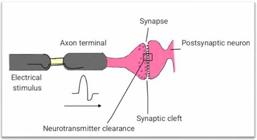
Synapses can be classified into electrical synapses, which transmit information through electrical impulses, and chemical synapses, which occur with the involvement of mediators such as neurotransmitters or neuromodulators (Brandao, 2004).
Most neurotransmitters are amino acids, amines, or peptides. According to Dale's principle, each neuron has a corresponding neurotransmitter. However, some neurons release more than one neurotransmitter; these transmitters that exit through the same nerve terminal are called cotransmitters, such as gamma-aminobutyric acid (GABA) and glycine (Bear; Connors; Paradiso, 2017).
Cognitive neuroscience supports Piaget's theory on the development of nerve cells in individuals, noting that at birth, these cells lack the conditions required for complete neuronal functioning. This emphasizes the necessity for appropriate environmental stimuli and the myelination of nerve fibers (Piaget, 1999; Bear, Connors, Paradiso, 2017).
It is essential that, at each stage, the individual receives stimulation and a type of instruction compatible with their brain potential. Thus, from a certain stage of development onward, the environmental factor becomes increasingly important in the expression of nervous system maturation, a process that is fundamental during puberty and adolescence. Experience and learning come to play a key role in the integration of brain regions and even in promoting structural cellular changes. At this stage, plasticity takes on significance and ensures increasing specialization (Pantoni; Zorzi, 2009, p. 46).
Experience is essential for cognitive development. However, it does not simply reflect a copy of the external world; instead, knowledge arises from the interaction between assimilation and accommodation. This process seeks to achieve a balance between the learner and the objects of knowledge, with the innate playing a prominent role in cognitive development. Nevertheless, when it comes to the “higher, representational levels, and especially operational cognitive structures, these structures are not innate” (Piaget, 1977, p. 7, author’s translation).
At the sensorimotor level, the central role of hereditary transmission (innate factors) is evident; specifically, myelination in the pyramidal tract5 the coordination between grasping and vision, a process that appears to stem from hereditary programming (Piaget, 1977).
As humans are social beings, a lack of exposure to an appropriate environment causes the brain to adapt to the environment's specific conditions, hindering normal development. A study conducted by researchers at Wayne State University School of Medicine demonstrated the impact of prolonged childhood neglect and its link to neurological damage in children (Chugani et al., 2001).
The research involved ten adopted children, with an average age of nine, who had come from state orphanages in Romania. This situation arose due to the government's public and social policies in the 1980s, which led to significant physical and emotional deprivation for these environments. The researchers found short- and long-term changes in brain function, noting that the children showed cognitive, social, and behavioral deficits (Chugani et al., 2001).
Brain science reveals that human behavior is a product of learning, which validates Jean Piaget's theory of balance, in which there is a strong relationship between the environment and cognitive development. This knowledge can contribute to the reflection and adoption of pedagogical practices more appropriate to human development that will enable better citizenship training as critical, active, and autonomous subjects.
THE IMPORTANCE OF THE DEVELOPMENT OF HIGHER-ORDER EXECUTIVE FUNCTIONS FOR COGNITION
This study makes a significant contribution to the field of physics by analyzing the role of executive functions as mediators in the learning of abstract concepts. Executive functions can be defined as “a cognitive control mechanism that directs and coordinates human behavior adaptively, allowing for rapid and flexible changes in response to new environmental demands” (Salles, Haase, & Molloy-Diniz, 2016, p. 26). These functions serve as the biological basis for problem-solving.
Thus, there is a relationship between Piaget’s clinical studies on genetic epistemology and neuroscience, particularly regarding the influence of the environment on cognitive development, the brain's capacity for structural modification during the knowledge acquisition process, and the ontogenesis of cognitive functions.
In the physics laboratory, for example, the transition from an intuitive concept (common sense) to a scientific concept requires what neuroscience calls “cognitive inhibition” (Bear, Connors, & Paradiso, 2017). The student must inhibit a pre-existing neural network, such as the Aristotelian idea that force implies constant motion, to accommodate the law of inertia. Piaget’s theory gains an analytical layer: cognitive conflict is, in fact, a competition between neural circuits, wherein the teacher’s role is to strengthen the new connection through meaningful repetition and emotional engagement.
“It is worth noting that brain structure and architecture undergo changes due to neuroplasticity, with neural synapses serving as the release points for neurotransmitters, which enable communication between neurons” (Damaceno Júnior & Romeu, 2021, p. 3).
Thus, neural plasticity is the brain's capacity to adapt and change in response to experiences, memories, learning, and injuries throughout an individual's development. It is classified as structural (synaptic configuration) when experiences alter the brain's physical structure, and as functional (behavioral modification) when brain functions shift from affected areas to undamaged ones (Sales, 2009).
In newborns, this process occurs to a greater extent due to the lack of specialization between the two brain hemispheres. Such specialization typically occurs between the ages of five and ten (Salles; Haase; Molloy-Diniz, 2016). A peak in neural connections is observed around the age of two, as this is when myelin, a substance that envelops neurons and increases the speed of information transmission, is produced (Salles; Haase; Molloy-Diniz, 2016).
Throughout the 20th century, various authors (Goldstein & Scheerer, 1941; Luria, 1968; Crone, 2009) have demonstrated evidence that prefrontal cortex activity is directly linked to complex cognitive functions, alongside other brain regions such as the thalamus and the cerebellum (Salles; Haase; Molloy-Diniz, 2016).
Executive functions develop in a non-linear fashion, resulting from the prolonged maturation of the prefrontal cortex, which improves “sequentially over the years: between birth and 2 years of age, from 7 to 9, and a leap at the end of adolescence, between 16 and 19 years of age” (Salles; Haase; Molloy-Diniz, 2016).
The proper development of executive functions influences the development of cognitive and socio-affective skills in the individual throughout their life. Salles, Haase, and Molloy-Diniz (2016) report on a study conducted by Moffit et al. (2011) that:
showed that measures of cognitive control reported between the ages of 3 and 11 predicted physical health, substance dependence, socioeconomic status, and the likelihood of criminal conviction in adults at age 32. Thus, identifying executive deficits as early as the preschool years is useful for structuring intervention programs targeting these functions (Salles; Haase; Molloy-Diniz, 2016).
Although Piaget did not use the term “executive functions”6 he was one of the great scholars of cognitive development, associating it with cognitive skills, fundamental for learning. Neuroscience considers language and learning, extremely elaborate functions, as “cognitive processes resulting from primary cognitive processes such as sensation, perception, attention, and memory” (Pantoni; Zorzi, 2009, p. 19).
The understanding of cognitive functions, such as attentional and inhibitory control, working memory, and cognitive flexibility, has been enhanced by the application of physics techniques for brain scanning. This has led to the discovery that different blocks of the brain act together to perform specific cognitive tasks, forming an interconnected neural network (Gazzaniga; Yvri; Mangun, 2006; Lent, 2010; Kandel et al., 2014; Salles; Haase, Molloy-Diniz, 2016).
The signals received by the brain through sensory input have aspects that are focused on, which characterizes attention, which is defined as a
a neural process expressed in individual behavior and observed through the ability to filter information at various stages of the perceptual process. Attention leads to the perception of certain stimuli and the neglect of others during cognitive processing (Pantoni; Zorzi, 2009, p. 27).
The attentional process (Figure 5) can originate either automatically or voluntarily. The automatic process refers to intense stimuli that stand out in their context or significant stimuli that capture attention without cognitive deliberation. Voluntary attention is related to physiological factors, such as hunger, or social motivations, such as internet searches. It is defined as “attention deliberately directed by the brain toward some object or location, functioning as a behavioral goal” (Bear, Connors, & Paradiso, 2017, p. 724).

The execution of the attention function engages various brain regions, such as the prefrontal cortex, the posterior parietal lobe, and the premotor area, resulting in an increase in nerve impulses. Consequently, attention can be assessed using functional magnetic resonance imaging and continuous performance tests, dichotic listening tasks, and other attentional tests (Bear, Connors, & Paradiso, 2017).
Environmental stimuli pass through an attentional filter determined by the activation of the anterior prefrontal cortex. This region determines which stimuli gain access to cortical processing systems, particularly unexpected or incongruent stimuli, becoming the focus of attention. Attention and memory are linked and form part of the learning process (Bear, Connors, & Paradiso, 2017).
To devise teaching strategies and enhance student learning, it is essential for teachers to understand the molecular mechanisms in memory storage and to evaluate the most effective stimuli for capturing attention.
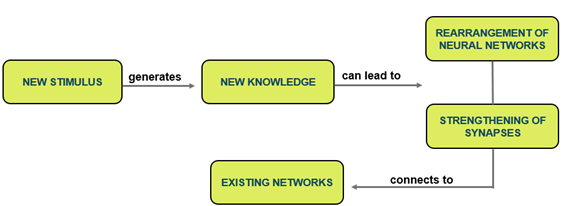
In the context of cognitive learning, the concept relates to the acquisition of information, the construction of new meanings, and the revision of mental models (Oliveira, 1990). Neuroscience reveals that when an individual is exposed to a new experience, the resulting stimulus triggers changes in brain structures (Figure 6), such as the rearrangement of neuronal networks or the strengthening of synapses, linking the new information to pre-existing networks (Pantoni & Zorzi, 2009; Lent, 2010; Kandel et al., 2014).

This process allows for the establishment of a relationship between cognitive neuroscience, Ausubel’s theory of meaningful learning, and Piaget’s theory. Ausubel emphasizes the importance of the material to be studied and the learner's pre-existing cognitive structure (Ausubel, 2000), while Piaget attributes the consolidation of new knowledge to the disequilibrium of existing concepts and their subsequent reorganization, that is, the process of equilibration among mental structures (Piaget, 1999).
In this context, these theories can be supported by aspects of cognitive neuroscience, such as attention, emotion, and memory, since the intensity of stimuli acting on sensory receptors is influenced by associations with prior experiences.
Learning and memory constitute “adaptations of brain circuitry to the environment throughout life” (Bear, Connors, & Paradiso, 2017, p. 824). Understanding the relationship between them is essential to the process of knowledge acquisition, that is, to the occurrence of learning, since that memory corresponds to the “retention of learned information” (Bear, Connors, & Paradiso, 2017, p. 824). Such information can be stored in isolation (random data) or in a relational and integrated manner. The integrated corresponds to learning, as it involves the attribution of meaning.
The consolidation process depends on factors such as nutrition, sleep, prior knowledge, interest, and the ability to sustain attention. Retention depends on repetition, the use of stimuli, and interaction with memories already stored by the individual. The reproduction or retrieval of information characterizes the process of recall (Pantoni & Zorzi, 2009).
Pantoni and Zorzi (2009) define memory as:
Electrophysiological activity that enables the recording, retention, and recall of past events. It is modulated by psychological phenomena such as consciousness, attention and concentration, interest, emotion, sensory perception, repetition, and the association of incoming stimuli (Pantoni & Zorzi, 2009, p. 30).
The classification of memory can be divided into two main types: declarative and non-declarative memories (see Figure 7). Declarative memory is characterized by its relatively straightforward storage and meaningful processing of information pertaining to facts and events, although this information is often forgotten over time, whether in the short term or long term. In contrast, non-declarative memories necessitate repetition and practice over extended periods, making them less prone to being forgotten (Lent, 2010; Kandel, 2014; Bear, Connors, & Paradiso, 2017).
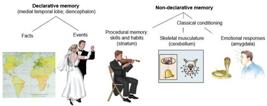
Ausubel (2000) highlights that the reproduction of retained material is influenced by the subject's attitude toward learning situations and by cultural tendencies, for both rote learning and meaningful learning. Thus, exposure to prior interference and the anchoring of new information found in potentially meaningful materials to pre-existing elements within the learner's cognitive structure are essential to prevent forgetting.
Short-term and long-term memories are interdependent, and memory consolidation (Figure 8) and synaptic changes occur through reinforcement. “The hippocampus is the primary structure responsible for organizing and transferring information from working memory to long-term memory” (Pantoni & Zorzi, 2009, p. 20), a process that requires more time for the information to be stored in the cortex (Garrett & Hough, 2018).
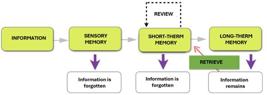
To retrieve a memory, the prefrontal cortex is activated first. When this process is successful, the hippocampus is activated, which temporarily retains the information (Garrett; Hough, 2018).
Sleep plays an important role in consolidating new information with long-term memory. Studies (Fernandes, 2006; Dang-Vu et al., 2010) using the neuroimaging techniques of electroencephalography (EEG) and Positron Emission Tomography (PET) during sleep revealed that, throughout its stages, there is an increase in protein synthesis, the occurrence of synaptic modifications and the consolidation of memories, in addition to verifying that the hippocampus activates the same cortical areas present in daytime learning (Garrett; Hough, 2018).
Empirical data indicate an interplay between the neocortex and the hippocampus in the formation of learning and memory (Kandel et al., 2014; Dutta, 2021). “The prefrontal area is also active during learning and retrieval and directs the search strategy necessary for retrieval” (Garrett & Hough, 2018, location 10,777). When discussing memory, it is highly relevant to associate it with emotions.
Some recent neuroscience studies point to the relationship between memory, emotions, and learning (Labar & Cabeza, 2006; Immordino-Yang & Damasio, 2007; Immordino-Yang, 2011; Pradeep et al., 2024). Affective neuroscience reveals that the mind is influenced by the interdependence of the body and the brain, both of which are linked to learning (Immordino-Yang & Damasio, 2007). The limbic system (Figure 9) is directly associated with emotion and the regulation of the autonomic nervous system (Lent, 2010; Kandel et al., 2014).

Although there is no consensus among scholars regarding the neural structures that constitute this system, the most common model identifies the amygdala as a brain structure responsible for the consolidation and retrieval of emotional memories and their storage in the cerebellum, the sensory neocortex, and the central temporal lobe (Dutta, 2021).
Human beings are social beings. Emotions, thoughts, and social actions are biologically constructed “but culturally shaped; they reflect our neuropsychological propensity to internalize the actions of others, yet they are interpreted based on our social emotions, professional experiences, and cognitive experiences” (Immordino-Yang, 2011, p. 100, author's translation).
In problem-solving, the student is subject to both social and emotional value judgments, whether explicit or implicit. Emotion plays a primary role in the stages involved in problem-solving, allowing for the emotional analysis of cognitive steps, “helping the student to consciously or unconsciously assess which knowledge and skills are likely relevant and which will lead to a correct solution, based on their prior learning” (Immordino-Yang, 2011, p. 100, author's translation).
In this way, emotions work as recruiters of the brain networks necessary to support the development of fundamental problem-solving skills, associating them with pre-existing experiences (Kandel et al., 2014).
Piaget's learning theory is close to social neuroscience, since cognition and affect are inseparable components and influence the formation of thought, as well as human actions, which are related to decision-making and the knowledge constructed by the student with relevance to their social environment.
According to Piaget (1977), cognitive functions have affectivity as the driving force behind human behavior, where affect is an ally for learning to occur, since
Affective life and cognitive life are inseparable, though distinct. And they are inseparable because every exchange with the environment presupposes both structuring and valuation. Thus, one could not reason—even in mathematics—without experiencing certain feelings, and, conversely, some affections exist without a minimum of understanding (Piaget, 1977, p. 16).
Neuroscientific evidence suggests the necessity for a new educational theory that integrates both mind and body. This theory should emphasize the connection between affective and social neuroscience and learning, while also supporting existing educational philosophies. In doing so, it would help make the benefits of neuroeducation more evident and practical.
IMPLICATIONS OF COGNITIVE NEUROSCIENCE FOR PHYSICS TEACHING
In 2019, the National Council of Education (CNE) drafted and approved Resolution CNE/CP number 2/2019, which outlines the new National Curricular Guidelines for the initial higher-education training of basic education teachers, alongside the National Common Core for the Initial Training of Basic Education Teachers (BNC-Formação).
Resolution CNE/CP number 2/2019 is linked to the BNCC, encouraging teachers to apply the skills set out in the curricular core while prioritizing a single training pathway, rather than the flexibility needed to create and implement distinct pedagogical projects (Felipe, 2020).
Regarding the specific competencies within the professional knowledge dimension, items two and three of the resolution stand out: “demonstrating knowledge about students and how they learn” and “recognizing students’ life contexts” (Brazil, 2019, p. 2). These competencies relate to cognition, a subject of interest to both neuroscience and education, supporting the inclusion of neuroscientific knowledge in initial teacher training courses for science teachers.
The guidelines instruct teachers to “understand how the full development of the person and learning unfold at each stage and age group, drawing upon scientific evidence” (Brazil, 2019, p. 15). This aligns with Piaget’s cognitive learning theory regarding the stages of human cognitive development and the encouragement of a student-centered, constructivist approach, concepts also corroborated by cognitive neuroscience.
There is also an emphasis on fostering higher-order cognitive skills through the adoption of differentiated teaching strategies integrated with technology. This aims to promote meaningful learning and facilitate democratic education, supporting learning tailored to each student's individual characteristics and socio-educational needs (Brazil, 2019).
The document (Brazil, 2019) outlines the pedagogical foundations governing teacher training courses—grounded in the BNCC—highlighting the following:
II - a commitment to innovative methodologies and other training dynamics that provide the future teacher with meaningful, contextualized learning experiences, within a didactic-methodological approach aligned with the BNCC, aimed at developing autonomy, problem-solving skills, investigative and creative processes, collaborative and interdisciplinary work, and the analysis of challenges in daily life and society alongside potential practical solutions;
III - the connection between teaching and research, centering on the teaching-learning process, given that teaching requires both possessing knowledge and mobilizing it for action, as well as understanding the process of knowledge construction;
IV - the pedagogical use of digital innovations and languages as a resource for teachers-in-training to develop competencies aligned with those outlined in the BNCC and with the contemporary world (Brazil, 2019, p. 5).
Understanding the neurobiological bases of knowledge acquisition supports these foundations. Therefore, incorporating them into teacher training curricula is highly relevant and helps counter pseudoscientific information regarding brain science.
The BNC-Formação (Brazil, 2019) addresses general teacher competencies involving research, inquiry, and critical analysis regarding the use of technology in pedagogical practices to enhance learning, while employing diverse forms of expression, such as visual, bodily, and digital modes.
Furthermore, it encourages the development of students' socio-emotional skills, highlighting self-criticism, self-care, and self-awareness, as well as fostering both individual and collective autonomy, decision-making, and respect for diverse worldviews and pedagogical approaches (Brazil, 2019).
The report by the International Commission on Education for the Twenty-first Century for UNESCO (1998) presents the four pillars of education: learning to know, learning to do, learning to live together, and learning to be (UNESCO, 1998).
The first pillar emphasizes foundations that underpin learning through the exercise of attention, memory, and thought. The second pillar corresponds to the acquisition of competencies necessary for functioning in society in a collective manner. Learning to live together is the third pillar; in the educational sphere, it encourages cooperation among students in an egalitarian context with the aim of reducing prejudices, tensions, and conflicts between members of different groups, thereby fostering an understanding of human diversity. The final pillar concerns full personal development, that is, every “human being must be prepared [...] to develop independent and critical thought and to formulate their own value judgments, to be able to decide for themselves how to act in the various circumstances of life” (UNESCO, 1998, p. 99).
The same report emphasizes the importance of initial and continuing teacher training focused on research, highlighting the introduction to new information and communication technologies, and questions what and how to teach, aligning with the competency outlined in the BNC-Formação: learning how students learn.
A closer collaboration between neuroscientists and educators to understand brain function during the learning process is imminent. Countries such as Germany, China, and England already employ this approach; also, the Organisation for Economic Co-operation and Development (OECD) promotes its relevance and applicability, encouraging “developed countries to shift the balance of cognitive neuroscience research toward meeting educational demands for the development of teaching and learning in today's world” (Puebla & Talma, 2011, p. 383, author's translation).
Susac et al. (2017) researched the use of graphical representations for interpreting experimental data, aiming to foster a better understanding of measurements and uncertainties, with graduate students from the Department of Physics at the University of Zagreb, Croatia.
The comparative study revealed that the group exposed to graphical representations outperformed the control group. In another phase of the study, eye movements were measured for both groups; the group using graphical representations spent less time observing numerical data, indicating that the use of graphs reduces cognitive load and contributes to an understanding of measurements (Susac et al., 2017).
Another relevant study is that of Januário and Nobre (2023), who investigate the application of an educational product comprising a cordel leaflet and a comic book, integrated into a teaching sequence grounded in principles of educational neuroscience. The proposal engages dimensions such as emotion, attention, memory, and motivation, aiming to bridge the gap between abstract concepts of Special Relativity and cultural and visual languages that are more accessible to students.
However, beyond highlighting the motivational potential of these strategies, the study points to the need to understand how such resources influence the cognitive processes involved in learning, avoiding a simplistic interpretation of the relationship between engagement and knowledge construction. Thus, the integration of educational neuroscience helps broaden the analysis of the teaching-learning process, provided it is not interpreted as a direct validation of pedagogical practices, but rather as a complementary framework requiring theoretical mediation.
In Brazil, investment in this field remains limited. However, notable research groups include GEPEN (Neuroscience Teaching and Research Group-Grupo de Ensino e Pesquisa em Neurociência) at the Federal University of Juiz de Fora, GELC (Study Group on the Neuroscience of Language and Cognition-Grupo de Estudos em Neurociência da Linguagem e Cognição) at the Federal University of ABC, GPNED (Neuroscience and Education Research Group-Grupo de Pesquisas em Neurociências e Educação) at the Federal University of Rio Grande, and Neuroeduc (Applied Neuroscience in Education Research Group-Grupo de pesquisa em Neurociências Aplicadas à Educação) associated with the journal Ciência e Cognição.
A study by Brockington (2021) is an example of research bridging physics education and neuroscience. The author discusses the limitations and possibilities of this intersection, drawing on research focused on physics learning. Initially, the study outlines the divergent views of scholars such as Bruer (2002), Dougherty & Roubey (2018), and Thomas (2019) regarding the application of neuroscience to education, before proceeding to discuss publications that link the brain's processing of mathematics to the development of physical reasoning.
The results reveal the persistence of students' alternative conceptions, without an understanding of the underlying neural mechanisms. Brockington (2021) emphasizes that integrating knowledge from psychology, neuroscience, and education can contribute to the development of pedagogical strategies for physics instruction.
Regarding research on inclusive education, Silva (2020) implemented a teaching resource focused on the concept of wave frequency, incorporating insights from neuroscience, as part of a master's degree project in physics education. The study involved four deaf participants, comprising both current and former students, from the Federal Network of Technological Education in Itapetinga, Bahia.
Through experimental methods involving software manipulation, the research participants gained a better understanding of the physical concept of frequency and the scientific processes involved in the activities. This shows the importance of using forms of communication beyond written Portuguese (Silva, 2020).
Continuing the theme of physics education research involving students with special educational needs, Viveiros and Camargo (2014) integrated the theory of conceptual fields with cognitive neuroscience to develop a brain-computer interface for individuals with visual and physical impairments.
The authors monitored the participants’ brain rhythms during physics lessons using an electroencephalogram. Analysis of the resulting patterns revealed significant brain activity, specifically in the Alpha, Beta, and Theta rhythms, during the haptic (tactile) acquisition phase (Viveiros & Camargo, 2014).
Although alpha rhythm is typically suppressed in other studies involving motor activities, its absence is explained by strong positive emotional stimulation, which fosters a readiness to learn, alongside high levels of beta activity, a rhythm associated with attentional mechanisms (Viveiros & Camargo, 2014).
Presenting innovative and crucial research aimed at bridging neuroscience and physics education, Helayel-Neto et al. (2015) link these fields through concepts of relativity and space-time.
One example is the neural processing time for sensory information derived from environmental stimuli. The propagation of electrical impulses is not simultaneous, even when originating from the same object, because it occurs at a finite speed; the brain compensates for this relativity, as it is “capable of generating synchronized stimuli that become non-simultaneous along the neural pathway” (Helayel-Neto et al., 2015, author's translation).
Thus, cognitive neuroscience, combined with educational psychology and aligned with cognitive learning theories, can significantly contribute to the training of natural science teachers and the success of neuroeducation. This approach aligns with the National Curriculum Guidelines for the Initial Higher Education Training of Basic Education Teachers, specifically regarding the competency of understanding how students learn.
FINAL CONSIDERATIONS
The analysis developed in this study indicates that the relationship between Piagetian theory and cognitive neuroscience is neither linear nor a direct transposition between fields, but rather an articulation between distinct and epistemologically irreducible explanatory levels.
While Piaget’s theory operates within the realms of genetic epistemology and developmental psychology, describing cognitive structures, their transformations, and the conditions for the possibility of knowledge across developmental stages, cognitive neuroscience operates at a biological level of analysis, investigating the neural mechanisms and brain dynamics underlying cognition.
In this context, it can be stated that Piagetian theory provides an interpretive framework regarding “what” develops and “when” specific capacities emerge, whereas neuroscience seeks to elucidate “how: these processes occur in terms of brain function. However, this complementarity implies neither equivalence nor the validity of direct pedagogical inferences; rather, it requires theoretical mediation, particularly within the realm of cognitive psychology, to avoid reductionism and erroneous interpretations.
From this perspective, it becomes clear that the incorporation of neuroscientific knowledge into physics education should not be viewed merely as a direct application of biological evidence, but rather as a component of a broader theoretical integration. Such integration can enhance our understanding of significant educational phenomena, such as the persistence of alternative conceptions, by facilitating a more in-depth analysis of the cognitive processes and neural mechanisms involved in learning, while avoiding a reductionist approach that confines these phenomena solely to their biological aspects. This understanding is crucial, as it could lead to innovative teaching strategies in physics, taking into account the enduring nature of these conceptions.
As its primary contribution, this study critically systematizes the interface between Piaget’s learning theory and cognitive neuroscience, highlighting both their points of convergence and their limitations, while shifting the debate from a predominantly descriptive approach to an analytical perspective. This intersection between fields facilitates the application of neuroscientific knowledge in schools, as insights into brain development and function can inform the implementation of improved teaching strategies that foster learning, all while upholding necessary theoretical rigor, avoiding oversimplifications, and acknowledging the complexity of the educational phenomenon.
Regarding implications for teacher training, it is worth noting that regulatory documents, such as the National Curriculum Guidelines and the BNC-Formação, underscore the need to understand learning processes. However, the study maintains that such understanding must entail not only access to neuroscientific knowledge but also the ability to analyze it critically and integrate it with frameworks from educational psychology and didactics.
Furthermore, higher-order cognitive functions, such as emotion, attention, and memory, which are frequently highlighted in neuroscience, must be understood in all their complexity, avoiding oversimplified or instrumentalized approaches. Integrating this knowledge can potentially foster the adoption of more evidence-based pedagogical practices, including the critical use of digital technologies in education and methodologies that promote student agency.
Translating findings across these fields requires caution to prevent the dissemination of pseudoscientific or misinterpreted information among educators. Therefore, it is advisable to incorporate the study of cognitive neuroscience into teacher training programs and to link existing knowledge from educational psychology with neuroscience and science education.
Despite the increasing interest in cognitive neuroscience over the past three decades, there remains a significant gap in scientific research connecting this discipline to the field of education, particularly in Brazil. This shortfall contributes to the continuation of traditional teaching methods and limits student agency in the learning process. Consequently, there is a pressing need for greater theoretical and empirical research to explore this intersection more thoroughly, ultimately enhancing the field.
There is, therefore, an urgent need7 for greater investment in teacher training focused on cognitive neuroscience to foster flexible instruction that respects students' individual cognitive differences and diverse learning and assessment needs, while also enhancing learning potential through an understanding of the underlying neurobiological processes.
From this perspective, neuroscientific knowledge, combined with Piaget’s learning theory, has the potential to enhance learning, provided that teacher training curricula are revised to incorporate these insights into pedagogical practice. This would equip educators with effective teaching strategies to capture students' attention and foster autonomy, decision-making skills, and independent knowledge construction, ultimately leading to more meaningful learning.
In the context of physics education, such contributions can inform the design of instructional strategies that take into account aspects like cognitive load management through active learning methodologies, emphasize student agency, and facilitate the gradual enhancement of executive functions (Predeep et al., 2024). It is essential to recognize that these guidelines do not stem solely from neuroscience; rather, they emerge from the integration of neuroscience with learning theories and research in science education.
Given this, it is argued that the inclusion of cognitive neuroscience in teacher training curricula must be approached judiciously, integrated with established knowledge from educational psychology, and guided by a critical perspective. Such an approach can foster more reflective pedagogical practices capable of addressing the specificities of students' cognitive processes without falling into biological determinism.
Finally, the potential value of integrating Piagetian theory with cognitive neuroscience lies not in direct application but in the opportunity to deepen our understanding of the learning processes. This comprehension is essential for developing more effective teaching strategies that enhance knowledge acquisition and improve our understanding of the executive functions involved. Consequently, insights into how information is processed and stored in the brain empower educators to reflect on their pedagogical practices, thereby facilitating the creation of productive learning environments and more efficient educational contexts.
References
- AUSUBEL, D. P. Aquisição e Retenção de Conhecimentos: Uma Perspectiva Cognitiva Lisboa: Plátano edições técnicas, 2000.
- BEAR, M. F.; CONNORS, B. W.; PARADISO, M. A. Neurociências: desvendando o sistema nervoso Porto Alegre: Artmed, 2017.
- BRANDÃO, M. L. As bases biológicas do comportamento: introdução à neurociência São Paulo: Editora Pedagógica e Universitária, 2004.
-
BRASIL. Base Nacional Comum Curricular Brasília: MEC, 2018. Disponível em: <Disponível em: http://basenacionalcomum.mec.gov.br/images/BNCC_EI_EF_110518_versaofinal_site.pdf >. Acesso em 04 abr. 2022.
» http://basenacionalcomum.mec.gov.br/images/BNCC_EI_EF_110518_versaofinal_site.pdf -
BRASIL. Ministério da Educação. Conselho Nacional de Educação. Resolução CNE/CP nº 2/2019 Brasília: MEC, 2019. Disponível em: < Disponível em: https://cutt.ly/UTkTf3p >. Acesso em 04 abr. 2022.
» https://cutt.ly/UTkTf3p -
BROCKINGTON, G. Neurociência e Ensino de Física: limites e possibilidades em um campo inexplorado. Revista Brasileira de Ensino de Física v. 43, 2022. Disponível em: <https://doi.org/10.1590/1806-9126-RBEF-2020-0430>. Acesso em 29 abr. 2022.
» https://doi.org/10.1590/1806-9126-RBEF-2020-0430 -
BRUER, J. T. Avoiding the pediatrician's error: How neuroscientists can help educators (and themselves). Nature Neuroscience, v. 5, p. 1031-1033, 2002. Disponível em: <https://doi.org/10.1038/nn93>4. Acesso em 01 maio 2022.
» https://doi.org/10.1038/nn93 -
BRUNETTI, K. BRAIN: a iniciativa de Barack Obama e pesquisadores americanos para o avanço de neurotecnologias inovadoras. Medium, fev. 2016. Disponível em: <Disponível em: https://cutt.ly/oHiVuqV >. Acesso em 05 abr. 2022.
» https://cutt.ly/oHiVuqV -
CARVALHO, D. de; VILLAS BOAS, C. A. Neurociências e formação de professores: reflexos na educação e economia. Ensaio: avaliação e políticas públicas em educação, Rio de Janeiro, v. 26, n. 98, p. 231-247, jan./mar. 2018. Disponível em: <Disponível em: https://cutt.ly/fiVuzlN >. Acesso em 04 abr. 2022.
» https://cutt.ly/fiVuzlN -
CHUGANI et al. Local brain functional activity following early deprivation: a study of postinstitutionalized Romanian orphans.NeuroImage,14(6), 1290-1301, 2001. https://doi.org/10.1006/nimg.2001.0917.
» https://doi.org/10.1006/nimg.2001.0917 - COSENZA, R. M. GUERRA, L. E. Neurociência e Educação: como o cérebro aprende Porto Alegre: Artmed, 2011.
-
CRONE, E. A. Executive functions in adolescence: Inferences from brain and behavior. Developmental Science, v. 12, n. 6, p. 825-830. 2009. DOI:10.1111/j.1467-7687.2009.00918.x
» https://doi.org/10.1111/j.1467-7687.2009.00918.x -
DAMASCENO JÚNIOR, J. A.; ROMEU, M. C. Contribuições da neurociência e da aprendizagem significativa para o ensino de física e de conceitos básicos de astronomia: algumas aproximações preliminares. Revista Prática Docente, v. 6, n. 2, 2021. DOI: 10.23926/RPD.2021.v6.n2.e033.id994. Disponível em: <Disponível em: http://periodicos.cfs.ifmt.edu.br/periodicos/index.php/rpd/article/view/994 >. Acesso em: 20 abr. 2022.
» https://doi.org/10.23926/RPD.2021.v6.n2.e033.id994» http://periodicos.cfs.ifmt.edu.br/periodicos/index.php/rpd/article/view/994 -
DANG-VU, T. T. et al. Functional Neuroimaging Insights into the Physiology of Human Sleep, Sleep, v. 33, n. 12, 2010. DOI: https://doi.org/10.1093/sleep/33.12.1589
» https://doi.org/10.1093/sleep/33.12.1589 -
DOUGHERTY, M. R.; ROBEY, A. Neuroscience and education: A bridge astray? Current Directions in Psychological Science, v. 27, n. 6, p. 401-406, 2018. https://doi.org/10.1177/0963721418794495.
» https://doi.org/10.1177/0963721418794495 -
DUTTA, S. S. The Limbic System and Long-Term Memory. News medical life Sciences 2021. Disponível em: <Disponível em: https://www.news-medical.net/health/The-Limbic-System-and-Long-Term-Memory.aspx >. Acesso em 17 abr. 2022.
» https://www.news-medical.net/health/The-Limbic-System-and-Long-Term-Memory.aspx -
FELIPE, E. da S. Novas Diretrizes para a Formação de Professores: continuidades, atualizações e confrontos de projetos ANPEd. 2020. Disponível em: <Disponível em: https://cutt.ly/tTkEeHt >. Acesso em 09 abr. 2022.
» https://cutt.ly/tTkEeHt -
FERNANDES, R. M. F. O SONO NORMAL. Medicina (Ribeirão Preto), v, 39, n. 2, 2006. Disponível em: <Disponível em: https://www.revistas.usp.br/rmrp/article/view/372 >. Acesso em 10 maio 2022.
» https://www.revistas.usp.br/rmrp/article/view/372 - FERREIRA, M. E.; GRATTAPAGLIA, D. Introdução ao uso de marcadores moleculares em análise genética 3.ed. Brasília: EMBRAPA-CENARGEN, 1998.
-
FISCARELLI, S. H. Tecnologia pode influenciar habilidades cognitivas. Nova Escola, 2019. Disponível em: <Disponível em: https://novaescola.org.br/conteudo/15885/tecnologia-pode-influenciar-habilidades-cognitivas >. Acesso em 19 abr. 2022.
» https://novaescola.org.br/conteudo/15885/tecnologia-pode-influenciar-habilidades-cognitivas -
FREITAS, P. S. C.; SOUSA, C. E. B. Contribuições do conhecimento neurocientífico para o ensino de ciências. Tese (Doutorado em Ciências Naturais) - Universidade Estadual do Norte Fluminense Darcy Ribeiro, Centro de Ciência e Tecnologia, 2024. DOI: 10.13140/RG.2.2.16586.48323
» https://doi.org/10.13140/RG.2.2.16586.48323 - GARRET, B.; HOUGH, G. Brain & Behavior: An Introduction to Behavioral Neuroscience Califórnia: Sage Publication, 2018. Edição Kindle.
- GAZZANIGA, M. S.; IVRY, R. B.; MANGUN, G. R. Neurociência Cognitiva: A Biologia da Mente Porto Alegre: Artmed, 2006.
- GOLDSTEIN, K., & SCHEERER, M. Abstract and concrete behavior an experimental study with special tests. Psychological Monographs, v. 53, n. 2. 1941.
- HOWARD-JONES, Paul. Neuroscience and education: myths and messages. Nature Reviews Neuroscience, v. 21, n. 12, p. 817-824, 2020.
-
HELAYEL-NETO H et al. Neuroscience, space and time. Vértices: Campos dos Goytacazes/RJ, v.17, n.2, p. 237-253, 2015. DOI: 10.19180/1809-2667.v17n215-12.
» https://doi.org/10.19180/1809-2667.v17n215-12 -
IMMORDINO-YANG, M. H. Implications of Affective and Social Neuroscience for Educational Theory. Educational Philosophy and Theory, v. 43, n. 1, 2011. DOI: 10.1111/j.1469-5812.2010.00713.x.
» https://doi.org/10.1111/j.1469-5812.2010.00713.x -
IMMORDINO-YANG, M. H.; DAMÁSIO, A. R. We feel, therefore we learn: The relevance of affect and social neuroscience to education. Mind, Brain, and Education, v. 1, p. 3-10, 2007. Disponível em: <Disponível em: https://cutt.ly/8iVyXIO >. Acesso em 04 abr. 2022.
» https://cutt.ly/8iVyXIO -
JANUÁRIO, M. D. A.; NOBRE, F. A. S. Estudando a relatividade restrita em versos de cordel e história em quadrinhos, com uma sequência de ensino à luz da neurociência educacionaL.Revista Dynamis,29(1), 50-68, 2023. Disponível em: <Disponível em: https://ojsrevista.furb.br/ojs/index.php/dynamis/article/view/10744 >. Acesso em 11 abr. 2026.
» https://ojsrevista.furb.br/ojs/index.php/dynamis/article/view/10744 - KANDEL, E. R. et al. Princípios de Neurociências Porto Alegre: AMGH Editora Ltda., 2014.
-
LABAR, K. S.; CABEZA, R. Cognitive neuroscience of emotional memory. Nature Reviews Neuroscience, v. 7, n. 1, p. 54-64. 2006. DOI: 10.1038/nrn1825.
» https://doi.org/10.1038/nrn1825 - LENT, R. Cem bilhões de neurônios? Conceitos fundamentais de neurociências 2. ed. São Paulo: Atheneu, 2010.
- LURIA, A. R. The mind of a mnemonist: A little book about a vast memory Cambridge: Harvard University Press, 1968.
-
MASON, L. Bridging neuroscience and education: a two-way path is possible. Cortex, v. 45, n. 1, p. 548-549, 2009. Disponível em: <Disponível em: https://www.academia.edu/22652684/Bridging_neuroscience_and_education_A_two-way_path_is_possible >. Acesso em 04 abr. 2022.
» https://www.academia.edu/22652684/Bridging_neuroscience_and_education_A_two-way_path_is_possible -
MCGOWAN, P. et al. Epigenetic regulation of the glucocorticoid receptor in human brain associates with childhood abuse. Nature Neuroscience, v. 12, p. 342-348, 2009. Disponível em: <https://doi.org/10.1038/nn.2270>. Acesso em 18 abr. 2022.
» https://doi.org/10.1038/nn.2270 -
MEANEY, M. J.; SZYF, M. Environmental programming of stress responses through DNA methylation: life at the interface between a dynamic environment and a fixed genome, Dialogues in Clinical Neuroscience, v. 7, n. 2, p. 103-123, DOI: 10.31887/DCNS.2005.7.2/mmeaney2005
» https://doi.org/10.31887/DCNS.2005.7.2/mmeaney -
MEANEY, M. J. Epigenetics and the Biological Definition of Gene X Environment Interactions. Child Development, v, 81, n.1, p. 41-79, 2010. doi:10.1111/j.1467-8624.2009.01381.x
» https://doi.org/10.1111/j.1467-8624.2009.01381.x -
MOFFIT, T. E. et. al. A gradient of childhood self-control predicts health, wealth, and public safety. Proceedings of the National Academy of Sciences of the United States of America, v. 108, n. 7. 2011. Disponível em: <http://dx.doi.org/10.1073/pnas.1010076108>. Acesso em 17 abr. 2022.
» https://doi.org/10.1073/pnas.1010076108 - MOREIRA, M. A. Subsídios teóricos para o professor pesquisador em ensino de ciências: Comportamentalismo, construtivismo e humanismo Porto Alegre-RS, 2009.
- MOREIRA, M. A. Teorias de aprendizagem São Paulo: EPU, 1999.
-
OBANA, J. E. G. A epistemologia e a psicologia de Jean Piaget e as neurociências uma revisão sistemática 2015. 142 f. Dissertação (mestrado) - Universidade Estadual Paulista Júlio de Mesquita Filho, Faculdade de Filosofia e Ciências, 2015. Disponível em: <Disponível em: http://hdl.handle.net/11449/123932 >. Acesso em 23 abr. 2022.
» http://hdl.handle.net/11449/123932 -
OCDE. Entendendo o cérebro: rumo à nova ciência do aprendizado Paris: CERI-OCDE. 2002. Disponível em: <Disponível em: https://cutt.ly/nTlneS9 >. Acesso em 14 abr. 2022.
» https://cutt.ly/nTlneS9 -
OLIVEIRA, Marcos Barbosa de. Cognitivismo e Ciência cognitivista. Trans/Form/Ação, v. 13, p. 85-93, 1990. Disponível em: <Disponível em: http://www.scielo.br/pdf/trans/v13/v13a06.pdf >. Acesso em: 28 abr. 2022.
» http://www.scielo.br/pdf/trans/v13/v13a06.pdf - PANTONI, T.; ZORZI, J. L. Neurociência aplicada à aprendizagem São José dos Campos: Pulso, 2009.
- PIAGET, J. Epistemologia Genética São Paulo: Abril Cultural, 1970.
- PIAGET, J. Development and learning. Journal of Research in Science Teaching, v. 11, n.3, 1964.
- PIAGET, J. Seis estudos de psicologia. Tradução: Maria Alice Magalhães D’ Amorim e Paulo Sergio Lima Silva - 24. ed. Rio de Janeiro: Forense Universitária, 1999.
-
PIAGET, J. Topics in Cognitive Development Springer New York, NY. 1977. DOl: 10.1007/978-1-4613-4175-8.
» https://doi.org/10.1007/978-1-4613-4175-8 - POZO, J. I. Teorias Cognitivas da Aprendizagem Porto Alegre: Artes Médicas, 1998.
-
PRADEEP, K. et al. Neuroeducation: understanding neural dynamics in learning and teaching. Frontiers in Education, v. 9, 2024. Disponível em: Disponível em: https://www.frontiersin.org/articles/10.3389/feduc.2024.1437418 Acesso em: 10 abr. 2026.
» https://www.frontiersin.org/articles/10.3389/feduc.2024.1437418 -
PUEBLA, R.; TALMA, M. P. Educación y neurociencias: La conexión que hace falta. Estudios pedagógicos (Valdivia), v. 37, n. 2, pp. 379-388. 2011. Disponível em: <https://doi.org/10.4067/S0718-07052011000200023>. Acesso em 12 abr. 2022.
» https://doi.org/10.4067/S0718-07052011000200023 -
ROSAT, R. M. et al. EMERGÊNCIA DA NEUROEDUCAÇÃO: a hora e a vez da neurociência para agregar valor à pesquisa educacional. Ciências & Cognição, 15(1), pp. 199-210. 2010. Disponível em: <Disponível em: http://www.cienciasecognicao.org/revista/index.php/cec/article/view/276 >. Acesso em 10 abr. 2022.
» http://www.cienciasecognicao.org/revista/index.php/cec/article/view/276 -
SALES, D. C. S. Reabilitação Neurológica e Neuroplasticidade. Em: Konkiewitz, E. C. Tópicos em Neurociência Clínica Dourados: Editora da UFGD, 2009. Disponível em: <Disponível em: http://cienciasecognicao.org/neuroemdebate/arquivos/1053 >. Acesso em 18 mar. 2022.
» http://cienciasecognicao.org/neuroemdebate/arquivos/1053 - SALLES, J. F. de; HAASE, V. G.; MALLOY-DINIZ, L. F. Neuropsicologia do desenvolvimento: infância e adolescência Porto Alegre: Artmed, 2016.
-
SILVA, R. dos S. da. A neurociência como ferramenta para o ensino de ciências e biologia Monografia (Graduação em Biologia) - Departamento de Biologia, Centro de Ciências Biológicas e da Saúde, Universidade Federal de Sergipe, São Cristóvão, 2019. Disponível em: <Disponível em: https://ri.ufs.br/handle/riufs/11199 >. Acesso em 21 abr. 2022.
» https://ri.ufs.br/handle/riufs/11199 -
SILVA, I. M. de S. S. As contribuições da neurociência cognitiva para o ensino de física em discentes com deficiência auditiva Dissertação (mestrado) - Universidade Estadual do Sudoeste da Bahia, Programa de Pós Graduação do Curso de Mestrado Nacional Profissional em Ensino de Física - MNPEF, Vitória da Conquista, 2020. Disponível em: <Disponível em: https://cutt.ly/yG4uGor >. Acesso em 08 maio 2022.
» https://cutt.ly/yG4uGor -
SUSAC, A. et al. Graphical representations of data improve student understanding of measurement and uncertainty: An eye-tracking study. Physical Review Physics Education Research v. 13, 2017. DOI: https://doi.org/10.1103/PhysRevPhysEducRes.13.020125.
» https://doi.org/10.1103/PhysRevPhysEducRes.13.020125 -
THOMAS, M. S. C. Response to Dougherty and Robey (2018) on Neuroscience and Education: Enough Bridge Metaphors—Interdisciplinary Research Offers the Best Hope for Progress. Current Directions in Psychological Science, v. 28, n. 4, p. 337-340, 2019. DOI: https://doi.org/10.1177/0963721419838252.
» https://doi.org/10.1177/0963721419838252 -
UNESCO. Ministério da Educação. Educação um tesouro a descobrir: Relatório para a UNESCO da Comissão Internacional sobre Educação para o século XXI São Paulo: Editora Cortez. 1998. Disponível em: <Disponível em: http://dhnet.org.br/dados/relatorios/a_pdf/r_unesco_educ_tesouro_descobrir.pdf >. Acesso em 17 abr. 2022.
» http://dhnet.org.br/dados/relatorios/a_pdf/r_unesco_educ_tesouro_descobrir.pdf -
VAN ESSEN, D. C.; GLASSER, M. F. The Human Connectome Project: Progress and Prospects. Cerebrum Sep-Oct; 2016. Disponível em: <Disponível em: https://www.ncbi.nlm.nih.gov/pmc/articles/PMC5198757/ >. Acesso em 04 abr. 2022.
» https://www.ncbi.nlm.nih.gov/pmc/articles/PMC5198757/ -
VIVEIROS, E. R. de; CAMARGO, E. P. de. Teoria dos Campos Conceituais e Neurociência Cognitiva: utilizando uma interface cérebro-computador no Ensino de Física para deficientes visuais e físicos. Interciência & Sociedade, v. 3, n. 2, p. 99-107, 2014. Disponível em: <Disponível em: http://hdl.handle.net/11449/135545 >. Acesso em 08 maio 2022.
» http://hdl.handle.net/11449/135545 -
WEAVER, I. C. G et al. Epigenetic programming by maternal behavior. Nature Neuroscience, v. 7, p. 847-854, 2004. Disponível em: <https://doi.org/10.1038/nn1276>. Acesso em 18 abr. 2022.
» https://doi.org/10.1038/nn1276 - ZEMLIM, W. R. Princípios de anatomia e Fisiologia em Fonoaudiologia 4. ed. Porto Alegre: Artmed, 2002.
-
1
Article published with funding from theCoordenação de Aperfeiçoamento de Pessoal de Nível Superior- CAPES/Brazil) for editing, layout, and XML conversion services,
-
2
A collaborative project that emerged in the United States in 2013 to map the activity of every neuron in the human brain to advance research into neurological diseases such as Alzheimer's, Parkinson's, and cerebral palsy (Brunetti, 2016).
-
3
The project began in 2009 to fully map the brain, understand its functions and connections through neural connection maps, and produce a data system that facilitated progress in research on brain disorders such as autism and Alzheimer's disease (Van Essen; Glasser, 2016).
-
4
A molecular marker is defined as any molecular phenotype derived from an expressed gene or a particular DNA segment (Ferreira; Grattapaglia, 1998).
-
5
A structure composed primarily of motor axons, with fibers extending from the cerebral cortex to the spinal cord, responsible for motor function. (Zemlim, 2002).
-
6
The term was adopted in 1982 by neuropsychologist Muriel Lezak, who gained prominence in the research, assessment, and rehabilitation of brain injuries (Fiscarelli, 2019).
-
7
One chapter of the author's thesis analyzes the syllabi of physics teacher training programs at UENF and IFF, educational institutions in Campos dos Goytacazes, Rio de Janeiro, that offer initial training for physics teachers, and found that, although the programs include courses covering learning theories, there is not yet any correlation with recent studies in cognitive neuroscience (Freitas; Sousa, 2024).
The data underlying the research findings are included in the manuscript.
History
-
Received
11 Mar 2025 -
Preprint posted on
08 Dec 2022
10.1590/SciELOPreprints.4378 -
Accepted
18 May 2026

 Figure 1: Divisions of the human brain (lateral view).
 Source: Adapted from <https://cutt.ly/7GfiLBo> and Kandel et all. (2011, p. 20).
 Source: Eagleman (2017, p. 11).
 Source: Created by the authors, adapted from
  Source: Created by the authors, adapted by
  Source: Created by the authors, adapted by
  Source:
  Source: Created by the authors, adapted from
  Source: Adapted from <https://www.news-medical.net/health/Hippocampus-Functions.aspx>. 2019.