
 Reflections on UNESCO guidelines for providing education in prisons
Based on bibliographical and documental research, having the historical and dialectical materialism as theoretical-methodological support, this text aimed to reveal the limits and possibilities of the United Nations Educational, Scientific and Cultural Organization (UNESCO) guidelines for educational provisions in prisons in Brazil. To this end, initially, the social profile of the Brazilian prison population is presented, taking into account its relationship with access to education; next, the legal documents that support the right to education for people deprived of their liberty and UNESCO guidelines for educational provision in prisons are analyzed. Analysis of the data and documents indicates, on the one hand, its anchoring in a neoliberal perspective through public-private partnerships and technical training for the productive world; and, on the other hand, the defense of education as a right for people deprived of their liberty and as essential for the resocialization process.
Keywords:
Right to Education; Prison Education; UNESCO
 Thumbnail
 Thumbnail
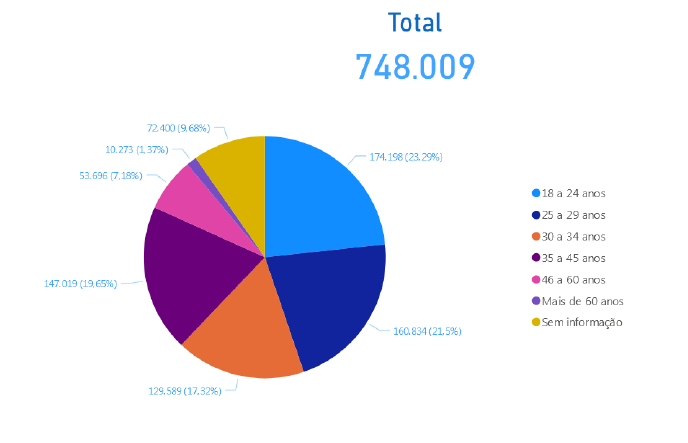 Fonte: Extraída de DEPEN (2019).
 Fonte: Extraída de DEPEN (2019).