 Theory of planned behavior applied to patient safety: a scoping review
Abstract
This study aimed to map the existing evidence on how the behavior of nursing professionals is associated with patient safety in hospital settings, based on the Theory of Planned Behavior. A scoping review was conducted across eight electronic databases, initially identifying 2,531 studies. After applying inclusion and exclusion criteria, 29 articles were selected for data extraction and synthesis. The evidence indicates that the most frequently studied behaviors were general adherence to patient safety protocols, compliance with safe surgery routines, and hand hygiene practices. The determinants of behavior – according to the Theory of Planned Behavior – varied significantly depending on the specific conduct, underscoring the complexity of adhering to safety practices. Identifying the specific behavioral determinants of healthcare workers within care settings is a crucial step in developing effective interventions. Targeted strategies can enhance adherence to safety protocols, promote interprofessional collaboration to improve patient safety in the hospital setting, and help reduce team workload. While training strategies were frequently cited in the reviewed literature as a means to influence behavior, evidence indicates they have not been effective, highlighting the need for alternative interventions.
Keywords
Attitude of health personnel; Health services; Models, psychological; Nursing care; Safety management
Resumo
Este estudo teve como objetivo mapear as evidências existentes sobre como o comportamento dos profissionais de enfermagem pode ser associado à segurança do paciente no contexto hospitalar, considerando a Teoria do Comportamento Planejado. Foi realizada uma revisão de escopo com busca em oito bases de dados eletrônicas. O processo de pesquisa identificou inicialmente 2.531 estudos. Após a aplicação dos critérios de inclusão e exclusão, o corpus final da análise foi composto por 29 artigos que atenderam ao escopo da investigação, sendo selecionados para extração e síntese dos dados. As evidências analisadas indicam que os comportamentos mais estudados foram a adesão geral a protocolos de segurança do paciente, a rotinas de cirurgia segura e a práticas de higienização das mãos. Constatou-se que os determinantes do comportamento, conforme a teoria utilizada, variam significativamente dependendo da conduta específica em questão, demonstrando a complexidade da adesão às práticas seguras. A identificação dos determinantes específicos do comportamento dos trabalhadores no cenário do cuidado representa uma etapa fundamental para o desenvolvimento de intervenções eficazes. Estratégias direcionadas podem promover maior adesão aos protocolos, fomentar a colaboração interprofissional em prol da segurança do paciente no ambiente hospitalar e, consequentemente, contribuir para a diminuição da sobrecarga de trabalho das equipes. Embora estratégias de treinamento tenham sido frequentemente citadas na literatura revisada como um meio de influenciar o comportamento, as evidências indicam que elas não têm sido eficazes, destacando a necessidade de intervenções alternativas.
Palavras-chave
Atitude do pessoal de saúde; Serviços de saúde; Modelos psicológicos; Cuidados de enfermagem; Gestão da segurança
Under the responsibility of nurses, patient safety is a fundamental concern in ensuring the delivery of high-quality healthcare services. Accordingly, research in this field has identified key factors associated with safe care, including the concept of a safety culture (Heidmann et al., 2020).
The safety culture has emerged as a central concept, as it encompasses a range of knowledge, behaviors, and attitudes aimed at promoting patient safety (World Health Organization, 2009). One of the instruments commonly used to assess this construct is the Safety Attitudes Questionnaire (SAQ), developed by Sexton et al. (2006), which measures perceptions of the safety climate. Studies that have utilized the SAQ have generally found that hospital workers perceive the prevailing safety culture as negative (Carvalho et al., 2017; Ribeiro & Cunha, 2018).
These findings suggest that critical components of the safety climate – such as working conditions, management practices, teamwork, stress perception, and job satisfaction – are not conducive to safe patient care (Carvalho et al., 2017; Ribeiro & Cunha, 2018). Therefore, considering this reality, it is necessary to outline intervention strategies aimed at changes in both the work environment and workers’ behaviors.
Although some clinical efforts are directed primarily on training nursing staff to comply with patient safety protocols, such training appears to be insufficient or ineffective in producing behavioral change with meaningful impact on the delivery of care (Porto & Marziale, 2016). In this context, various psychological models have been proposed to explain the mechanisms underlying human behavior.
Among these, the Theory of Planned Behavior (TPB), developed by Ajzen (1985), seeks to explain complex individual behaviors across a variety of settings. According to the TPB, intention is the primary determinant of behavior and the outcome of three components (Ajzen, 1991; 2002).
The first component is attitude (whether favorable or unfavorable toward adopting a particular behavior), followed by subjective norm (social influences related to the behavior), and perceived behavioral control (individuals’ perceptions of their ability to perform the behavior) (Ajzen, 1985).
Still within the TPB framework, perceived behavioral control can serve both as a direct predictor of behavior and as an influence on intention. In other words, individuals with a higher level of perceived control are more likely to engage in a given behavior. Conversely, individuals with low perceived control are less likely to perform the behavior (Godin & Kok, 1996; Mendez et al., 2010).
This scoping review aimed to map the existing evidence on how the behavior of nursing professionals is associated with patient safety in hospital settings, through the lens of the TPB. The reviewed studies provided evidence that the TPB, as a behavioral model, has been applied to explain health-related behaviors from various perspectives.
However, its use to assess the psychosocial factors influencing healthcare professionals’ adherence to patient safety practices remains limited. Therefore, this review was expanded to include relevant sources of evidence on the behavior of nurses and nursing teams, as well as their association with patient safety in hospital settings.
Given that nursing professionals are in continuous daily contact with patients in hospital environments, this topic is of particular relevance to the scientific community. Thus, to formulate the review question and guide the study selection process, the Population, Concept, and Context framework (Table 1) was used.
Regarding behavioral determinants related to patient safety, the review aims to answer the following research question: What is the existing body of knowledge on the behavior of nursing professionals as it relates to patient safety in hospital settings, according to the Theory of Planned Behavior?
Method
The review followed the Joanna Briggs Institute (JBI) methodology, which includes seven steps: Define and align the objective(s) and question(s); Develop and align the inclusion criteria with the objective(s) and question(s); Describe the planned approach for searching for evidence, study selection, data extraction, and presentation of findings; Search and select evidence; Extract data; Analyze data; Present the results.
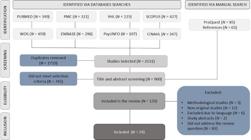
In addition, this review follows the Preferred Reporting Items for Systematic Reviews and Meta-Analyses extension for Scoping Reviews (PRISMA-ScR) guideline, developed in accordance with the protocol proposed by the JBI (Aromataris & Munn, 2020). The PRISMA flow diagram (Figure 1) was used to document the review process, including the following stages: Identification of records through systematic searches; Screening of records by title and abstract; Assessment of eligibility based on full-text review; Inclusion of eligible studies.
No existing systematic or scoping reviews were identified on this topic during a preliminary search in Medline, the International Prospective Register of Systematic Reviews (PROSPERO), the Cochrane Database of Systematic Reviews, or JBI Evidence Synthesis. Additionally, this study is registered with the Open Science Framework (OSF) and can be accessed via the following Digital Object Identifier (DOI): https://doi.org/10.17605/OSF.IO/WC8RT.
Eligibility Criteria
To define the final method and the databases to be included, the authors reviewed several relevant studies and subsequently developed a comprehensive search strategy. A range of original study designs published in English, Portuguese, or Spanish were included.
No publication date restrictions were applied to the selection of studies. This decision was justified by the volume of research published on the topic since the development of the Theory of Planned Behavior. Therefore, setting a time limit might have increased the risk of excluding important studies from the scope of the review. Moreover, to maximize the likelihood of capturing all relevant studies, manual searches were also conducted.
Population, Concept, and Context
This scoping review considered studies involving the behavior of nursing professionals (regardless of sex, race, or age) as it relates to adult patient safety. Behaviors grounded in the TPB were included as the conceptual focus of this review. Ajzen (1985) describes behavior as a function of compatible intentions and perceptions of behavioral control (Ajzen, 1991; 2002).
Accordingly, this scoping review encompassed studies conducted in hospital settings – globally – whether in urban, suburban, or rural areas where nursing professionals were employed. Studies involving adults residing in nursing homes or hospices, or those focused on pediatric or adolescent care, were excluded.
Sources of Evidence
This review considered a variety of study designs, including analytical and descriptive observational studies – such as case-control studies and case series. In addition, experimental and quasi-experimental analytical studies were included, such as randomized controlled trials and quasi-randomized trials.
Search Strategy
The systematic databases used in this review included the Virtual Health Library (VHL), PubMed Central (PMC) and Medline (PubMed), CINAHL (EBSCO), Web of Science (Clarivate), PsycINFO (Ovid), EMBASE, and Scopus (Elsevier). In addition, studies available via ProQuest were consulted as a source of relevant literature. Manual research was also conducted to ensure comprehensive data screening.
The search was carried out between April and June 2023 and followed a three-stage strategy. In the initial stage, titles, abstracts, and index terms were screened to assess article eligibility. Duplicate records were removed, and the Rayyan tool was used to organize and manage the remaining entries.
Subsequently, the reference lists of all reports and articles were examined. Additional studies were identified through this manual reference search. Finally, full-text articles were reviewed, during which the eligibility criteria were applied, resulting in the final set of records for analysis. The final analytical corpus was then established. Microsoft Excel was also used to organize and manage the references for this purpose. The full search strategy is available from the authors upon request.
Data Extraction and Synthesis
A table was developed to support data extraction, containing general information such as authorship, year of publication, country of origin, associated behavior, study design, and behavioral determinants. Two independent reviewers conducted the data extraction process. Any disagreements were resolved through discussion, with the involvement of a third reviewer to reach consensus when necessary. Table 2 presents a summary of the data according to the analysis.
Data Analysis
To provide a comprehensive and critical description – as well as a report on the frequency of patterns across the included studies – this review employed descriptive statistical analysis of the literature. Following this analytical approach, the procedure involved organizing, summarizing, and describing the key aspects identified in the documents. This method enabled the identification and synthesis of patterns and evidence using key terms. These were then named, refined, and elaborated into a scientific analysis of the included studies.
Results
Study Selection
The search across electronic databases initially identified 2,531 studies, from which 1,719 duplicates were removed. The remaining 812 articles were screened by title and abstract, leading to the exclusion of an additional 765 studies. An additional 88 records were identified through ProQuest and manual searches. Following full-text assessment, 105 studies were excluded. As a result of these steps, the final analytical corpus consisted of 29 studies, included according to the PRISMA flow diagram for study selection (Figure 1).
Characteristics of the Included Studies
Of the 29 studies (100.00%) analyzed, 14 (48.28%) were conducted in Asian countries, seven (24.14%) in the Americas, five (17.24%) in Europe, and three (10.34%) in Oceania. No studies were identified from the African continent.
Regarding study design, 22 were cross-sectional, one was quasi-experimental, and one was a randomized controlled trial – all employing a quantitative approach. Cross-sectional designs were predominant. Only three studies employed a qualitative approach, while one used a mixed-methods design and another used a qualitative – quantitative approach. Six studies were conducted in 2015, four in 2018, three in 2017, and one in each of the other years.
Findings on Nursing Professionals’ Behaviors
Among the studies identified concerning healthcare professionals’ behaviors, 10 investigated adherence to general patient safety protocols and routines; another 10 examined hand hygiene adherence; six addressed incident reporting and adverse event notification; two focused on safe medication behaviors; and one explored pressure injury prevention. All participants in the studies were healthcare professionals in the nursing field.
Adherence to Basic Patient Safety Protocols
This group included studies focusing on adherence to basic patient safety protocols or routines, such as oral hygiene, adherence to nurse-led protocols for fatigue reduction using alarm systems, pressure injury prevention, and checklist-based guidelines addressing safety culture (Ab Malik et al., 2017; Appleby, 2018; Bi et al., 2020; Javadi et al., 2013; Kim & Jeong, 2021; Strand & Lindgren, 2010; Tanguay et al., 2019; Wakefield et al., 2010).
These studies predominantly highlighted subjective norm as the main determinant influencing nurses’ intention to implement patient safety behaviors – that is, the extent to which perceived social judgment influences individual behavior (Javadi et al., 2013).
Only one study identified perceived behavioral control as a determinant in pressure injury prevention, citing barriers such as lack of time, staffing shortages, and critically ill patients. Facilitating factors included knowledge of and access to pressure-relieving equipment.
In that same study, attitude also emerged as a key determinant, with favorable attitudes indicating that pressure injury prevention was viewed as an important and prioritized component of daily care (Strand & Lindgren, 2010). In the context of oral hygiene, attitude, subjective norm, and perceived behavioral control were all positively associated with nurses’ intentions to carry out this type of care (Ab Malik et al., 2018).
In some studies within this group, attitude was identified as the most significant predictor of nurses’ intentions to follow safe care practice guidelines and to engage in patient safety management activities (Appleby, 2019; Kim & Jeong, 2021). In addition to other variables, perceived behavioral control was also examined, particularly in relation to job satisfaction (Tanguay et al., 2019, Wakefield et al., 2010).
Safe Adherence to Hand Hygiene
Regarding adherence to safe Hand Hygiene (HH), the most prominent component was subjective norm, especially in relation to the opinions of colleagues and supervisors (Belela-Anacleto et al., 2019; Blomgren et al., 2021; Hassan et al., 2009; Piras et al., 2018; Sin & Rochelle, 2022; White, Jimmieson, et al., 2015; White, Starfelt, et al., 2015). Perceived behavioral control (i.e., control beliefs) was also identified as a factor that can both facilitate and hinder HH behaviors (Jenner et al., 2002; O’Boyle et al., 2001; Piras et al., 2018; Sin & Rochelle, 2022; White, Jimmieson, et al., 2015). Nurses identified several facilitators for HH adherence, including education, training, structured programs (White, Starfelt, et al., 2015), and the availability of sufficient and appropriate HH equipment and products (Sin & Rochelle, 2022).
As barriers, they reported lack of time, the number and location of sinks (Jenner et al., 2002). Risk of infection was considered a key attitudinal factor: nurses viewed patient protection as a strong positive motivator for adherence. Conversely, negative attitudes were associated with time consumption, skin damage, and the lack of feedback from hospital management (Blomgren et al., 2021; White, Starfelt, et al., 2015). Additionally, discipline was identified as a moderating variable influencing HH adherence: nurses with higher self-discipline demonstrated better compliance (Lenggono et al., 2023).
Strategies and Adherence to Safe Medication Protocols
In studies addressing strategies and adherence to safe medication protocols, perceived behavioral control was the primary determinant influencing nurses’ adherence to safe medication administration practices. Furthermore, attitude and subjective norm were also related to specific medication safety strategies – such as the use of filters in parenteral solution systems (Gagnon et al., 2015), medication dispensing booths (Rogers et al., 2017), and a multimedia learning program for medication safety (Omura et al., 2018).
Incident Reporting and Disclosure of Clinical Errors
Publications revealed that attitude, subjective norm, and perceived behavioral control were key determinants of the intention to report safety incidents (Abry et al., 2022; Angelis et al., 2017; Ekayani et al., 2017; Hung et al., 2015; Lee et al., 2015). From the perspective of healthcare professionals, positive attitudes were associated with reducing the frequency of errors and enhancing the quality of care. Negative perceptions related to communicating clinical errors included fear of retaliation, punishment, and being perceived as incompetent (Abry et al., 2022).
Perceived control emerged as a determinant in terms of feeling capable or having sufficient skill/knowledge to report medication-related incidents (Hung et al., 2015). Self-efficacy was also identified as an important element in the intention to report safety incidents (Lee et al., 2015).
Within this category, subjective norms stood out – particularly when reporting behavior was supported by positive peer judgment (Angelis et al., 2017; Hung et al., 2015). Additionally, incident reporting was more commonly practiced by women and pharmacists. Finally, altruism was found to be associated with the intention to report medication-related incidents (Hung et al., 2016).
Discussion
The synthesis of the study’s findings maps existing evidence on how nursing professionals’ behavior is associated with patient safety in hospital settings, considering the Theory of Planned Behavior (TPB) over the past 22 years. It is important to highlight that the application of TPB to patient safety at the international level is not something recent. In Brazil, however, only one study was identified and published recently (Belela-Anacleto et al., 2019; Piras et al., 2018). This underscores a gap in the national literature that should be further explored by Brazilian researchers.
Five central themes were identified, with studies primarily focusing on HH and general patient safety protocols. In regards to HH, the predominant behavioral determinant was subjective norm – that is, the influence of coworkers, supervisors, or more experienced colleagues (Belela-Anacleto et al., 2019). Upon closer examination, subjective norm appears to be more effective in improving HH adherence rates than traditional clinical training, as the reviewed studies suggest that such learning strategies have limited impact on behavioral intention.
On the other hand, it must be noted that the intention to perform a given behavior does not necessarily guarantee its actual implementation. This is because intention can be influenced by additional factors, such as an individual’s capacity or perceived behavioral control over the behavior. As demonstrated by a study included in this review, intention did not significantly affect HH behavior among professionals (Lenggono et al., 2023).
Despite being knowledgeable about safe care practices, healthcare professionals’ intentions and behaviors may be shaped by external variables – ranging from organizational leadership to peer interactions. Such influence can either support or hinder the adoption of ideal and safe behaviors (Mullan et al., 2022).
Another study by McLaws et al. on hand hygiene found that nursing professionals were more likely to adhere to the behavior when influenced by subjective norms, as nurses believed their peers expected them to comply with this practice (McLaws et al., 2012). However, the same study identified a negative impact of attitude, which diminished nurses’ intention to adhere to HH (McLaws et al., 2012). Regarding the behavior of reporting medication-related incidents, the importance of attitude was also emphasized as a determinant of intention (Hung et al., 2015).
Furthermore, a study evaluating nursing workload using the Nursing Activities Score reported a positive correlation between patient care demands and infection rates in intensive care units. In other words, higher nursing workload was associated with increased infection rates (Cyrino et al., 2017). This finding supports the study by Bravin, which indicated that HH behaviors were more likely to occur when healthcare professionals experienced a heightened awareness of hand dirtiness (Bravin, 2021).
These outcomes are strongly influenced by multiple factors, such as excessive workload, inadequate staffing levels, institutional infrastructure deficiencies, and lack of necessary equipment – all of which contribute to an increased risk of cross-infection (Bravin, 2021; Oliveira et al., 2018). This finding underscores the role that perceived barriers play in shaping beliefs about behavioral control in the adoption of safe practices.
In the context of adherence to safe medication protocols, perceived behavioral control emerged as the predominant determinant. That is, individuals felt more confident engaging in a behavior when they believed they had control over its execution. Because perceived control can directly predict behavior, the results demonstrated greater behavioral adherence when healthcare workers believed they were capable of performing the task – especially after training or when they recognized that the behavior would result in positive outcomes (Santos et al., 2019).
A study on safe medication management identified a positive influence of attitude on the intention to engage in safe medication behaviors. It was noted that Australian nurses demonstrated a strong intention to improve medication safety, along with more favorable attitudes and higher perceived control in medication management (Fernandez et al., 2022).
Moreover, elements embedded in organizational structure were shown to influence healthcare professionals’ behavior, particularly due to the unique characteristics of each institution. These characteristics include distinct organizational and professional cultures, encompassing factors such as hierarchy, professional identity, and the pressure to conform to the specific culture of the organization (Machen et al., 2019).
The involvement of supervisors or managers can also signal the value placed on workers, which has implications for greater job satisfaction. This variable found to be a determinant of intention to adhere to safe medication protocols (Wakefield et al., 2010).
Regarding behaviors associated with incident reporting, the literature highlights hierarchy and bureaucratic processes as significant barriers to reporting (Alves et al., 2019). Self-efficacy is another key determinant of intention, along with attitudes (Ekayani et al., 2017; Fleming et al., 2014; Lee et al., 2015). This suggests that an individual’s perceived ability to report incidents is essential for actually doing so.
On the other hand, fear of repercussions for reporting errors, social pressure from colleagues and staff, and lack of skills and knowledge to identify clinical errors are barriers that can hinder the translation of intention into effective reporting behavior (Abry et al., 2022). Therefore, the environment must be conducive to reporting.
When fear of punishment is embedded in the workplace culture, it becomes more difficult to report incidents (Alves et al., 2019; Lee et al., 2015). This helps explain why perceived behavioral control and subjective norms may negatively impact the intention to report incidents and behaviors, particularly among professionals with more experience and training (Lee et al., 2015).
With regard to adherence to safe surgery protocols, perceived control was identified as a decisive factor for non-adherence. This may be explained by a sense of overconfidence among professionals, who may feel competent enough to carry out procedures without strictly following protocols. As a result, adherence is perceived as less critical (Beatty & Beatty, 2004). Additionally, noncompliance with the protocol may influence peers to do the same – possibly due to a desire to align with the opinions of colleagues (Beatty & Beatty, 2004; Godin & Vézina-In, 2019; Mascherek et al., 2015).
In the context of safe communication, control beliefs or perceived behavioral control can be important determinants of whether professionals engage in communication aimed at patient advocacy (Omura et al., 2018; Vandenkerkhof et al., 2009). Some authors argue that patient advocacy requires effective and dialogical communication, which may place nurses – especially – into conflict-laden situations when making decisions, thus becoming a barrier to this behavior (Mayer et al., 2019).
This can also involve difficulties in engaging in safe communication due to normative beliefs tied to hierarchical structures or to more experienced colleagues. In other words, fear of making mistakes or being judged by peers may cause individuals to remain silent (Omura et al., 2018). Another aspect of communication was that learning strategies showed a positive association with attitude (Vandenkerkhof et al., 2009).
Following educational interventions, healthcare professionals demonstrated greater adherence to safe communication practices. This outcome may also be explained by the increase in perceived behavioral control scores – meaning that professionals felt more capable of performing the behavior (Vandenkerkhof et al., 2009). In this context, educational practices can positively influence intention, raising workers’ awareness and fostering adherence to safe communication behaviors.
From this perspective, hierarchy – both within and across professional categories – has a significant impact on communication among healthcare professionals. Some may demonstrate reluctance or resistance to engage in certain care-related behaviors due to perceived remnants of a punitive safety culture within the institution. Such behaviors can increase the risk of errors in patient care (Machen et al., 2019).
In addition, regarding the reporting of medication errors, beliefs such as viewing incident reporting as beneficial to patient safety, understanding it as a strategy to improve care, and altruism contributed to improved reporting behavior (Gavaza et al., 2011; Hung et al., 2015). Therefore, investing in strategies to raise worker awareness about the importance and positive outcomes of medication error reporting may lead to greater adherence to this behavior.
However, an association was found between being a nurse or being female and the intention or behavior of reporting medication incidents (Gavaza et al., 2011; Williams et al., 2015). A study examining the proportion of medication error reporting among nurses found that sex was one of the associated factors (Jember et al., 2018). However, the specific nature of the relationship between sex and reporting behavior was not explored in detail.
Gunawan et al. (2022) highlighted that subjective norms play a crucial role in how nurses respond to social influences when adopting safe care practices to promote patient safety. The authors also observed that nurses exhibited favorable behaviors in response to expectations from others, which significantly influenced their intention to adhere to safe documentation practices – that is, the complete and accurate recording of nursing care in clinical settings (Gunawan et al., 2022).
Public Health Implications
Identifying the behavioral determinants that influence adherence to patient safety practices is essential for more effectively planning interventions with healthcare professionals, particularly when grounded in behavior change theories. This is particularly important considering these professionals work with vulnerable populations who face specific needs and challenges. Given that traditional training approaches for healthcare workers regarding patient safety protocols have shown limited effectiveness, interventions based on behavioral determinants may offer a promising alternative to enhance adherence.
To foster effective collaboration among healthcare professionals, it is necessary for leaders of healthcare institutions to organize regular interdisciplinary meetings to systematically address patient safety issues. Additionally, it is recommended that they monitor nurses’ workloads to ensure they remain at a manageable level, thereby maintaining the quality of care provided to hospitalized patients.
Study Contributions and Limitations
This study was conducted in accordance with the steps proposed by the JBI and the PRISMA-ScR guidelines. It involved rigorous analysis, including independent double screening and a third reviewer for consensus. However, a limitation of the study was the exclusion of six manuscripts due to lack of access to their full texts in eligible languages, as per the inclusion criteria.
Conclusion
The findings indicate that the most frequently studied behaviors were adherence to general patient safety protocols, safe surgery protocols, and hand hygiene routines. These were followed by incident reporting related to medications, strategies for safe medication protocols, safe communication, and reporting of safety incidents.
Overall, perceived behavioral control and subjective norms emerged as key elements in adherence to patient safety behaviors. The review also highlights that the behaviors of nursing professionals related to incident reporting have received limited attention in the literature, with only one relevant study identified – underscoring a significant gap in knowledge.
Thus, identifying the behavioral determinants of healthcare workers in the care setting may represent a crucial step toward interventions that promote greater adherence to patient safety protocols. In addition, such understanding supports collaboration in ensuring patient safety in hospital settings and contributes to the reduction of work overload.
-
How to cite this article:
Andolhe, R., Goulart, G. S., Silva, M., Andrechuk, C. R. S., Gallani, M. C. B. J., & Rodrigues, R. C. M. (2026). Theory of planned behavior applied to patient safety: a scoping review. Estudos de Psicologia (Campinas), 43, e10649. https://doi.org/10.1590/1982-0275202643e10649
-
Support
Coordenação de Aperfeiçoamento de Pessoal de Nível Superior (Process nº 88887.830864/2023-00) and Conselho Nacional de Desenvolvimento Científico e Tecnológico (Process nº 152195/2020-3).
Data availability
The research data are available on request from the corresponding author.
References
-
Ab Malik, N., Mohamad Yatim, S., Lam, O. L. T., Jin, L., & McGrath, C. (2017). Factors influencing the provision of oral hygiene care following stroke: an application of the Theory of Planned Behaviour. Disability and Rehabilitation, 40(8), 889-893. https://doi.org/10.1080/09638288.2016.1277397
» https://doi.org/10.1080/09638288.2016.1277397 -
Abry, S., Mehrabian, F., Omidi, S., Karimy, M., Kasmaei, P., & Haryalchi, K. (2022). Investigation of factors related to the behavior of reporting clinical errors in nurses working in educational and medical centers in Rasht city, Iran. BMC Nursing, 21(1). https://doi.org/10.1186/s12912-022-01134-3
» https://doi.org/10.1186/s12912-022-01134-3 - Ajzen I. (1985). From intentions to action: a theory of planned behavior. In J. Kuhl & J. Beckmann (Eds.), Action control: from cognition to behavior Springer-Verlag.
-
Ajzen, I. (1991). The Theory of Planned Behavior. Organizational Behavior and Human Decision Processes, 50(2), 179-211. https://doi.org/10.1016/0749-5978(91)90020-T
» https://doi.org/10.1016/0749-5978(91)90020-T - Ajzen, I. (2002). Perceived behavioral control, self-efficacy, locus of control, and the Theory of Planned Behavior. Journal of Applied Social Psychology, 32(4), 665-683.
-
Alves, M. F. T., Carvalho, D. S., & Albuquerque, G. S. C. (2019). Barriers to patient safety incident reporting by Brazilian health professionals: an integrative review. Ciência & Saúde Coletiva, 24(8), 2895-2908. https://doi.org/10.1590/1413-81232018248.23912017
» https://doi.org/10.1590/1413-81232018248.23912017 -
Angelis, A. D., Pancani, L., Steca, P., Colaceci, S., Giusti, A., Tibaldi, L., Alvaro, R., Ausili, D., & Vellone, E. (2017). Testing an explanatory model of nurses’ intention to report adverse drug reactions in hospital settings. Journal of Nursing Management, 25(4), 307-317. https://doi.org/10.1111/jonm.12467
» https://doi.org/10.1111/jonm.12467 -
Appleby, B. E. (2018). Implementing guideline-checklists: Evaluating health care providers intentional behaviour using an extended model of the theory of planned behaviour. Journal of Evaluation in Clinical Practice, 25(4), 664-675. https://doi.org/10.1111/jep.13075
» https://doi.org/10.1111/jep.13075 -
Aromataris, E., & Munn, Z. (Eds.). (2020). JBI Manual for Evidence Synthesis JBI.global. https://presencial.moodle.ufsc.br/pluginfile.php/1310067/mod_resource/content/0/JBI%20Manual%20for%20Evidence%20Synthesis%202024.pdf#page=12
» https://presencial.moodle.ufsc.br/pluginfile.php/1310067/mod_resource/content/0/JBI%20Manual%20for%20Evidence%20Synthesis%202024.pdf#page=12 -
Beatty, P. C. W., & Beatty, S. F. (2004). Anesthetists’ intentions to violate safety guidelines. Anaesthesia, 59(6), 528-40. https://doi.org/10.1111/j.1365-2044.2004.03741
» https://doi.org/10.1111/j.1365-2044.2004.03741 -
Belela-Anacleto, A. S. C., Kusahara, D. M., Peterlini, M. A. S., & Pedreira, M. L. G. (2019). HM compliance and behavioural determinants in a paediatric intensive care unit: an observational study. Australian Critical Care, 32(1), 21–27. https://doi.org/10.1016/j.aucc.2018.02.010
» https://doi.org/10.1016/j.aucc.2018.02.010 -
Bi, J., Yin, X., Li, H., Gao, R., Zhang, Q., Zhong, T., Zan, T., Guan, B., & Li, Z. (2020). Effects of monitor alarm management training on nurses’ alarm fatigue: a randomized controlled trial. Journal of Clinical Nursing, 29(21-22), 4203-4216. https://doi.org/10.1111/jocn.15452
» https://doi.org/10.1111/jocn.15452 -
Blomgren, P.-O., Lytsy, B., Hjelm, K., & Swenne, C. L. (2021). Healthcare workers’ perceptions and acceptance of an electronic reminder system for hand hygiene. Journal of Hospital Infection, 108, 197-204. https://doi.org/10.1016/j.jhin.2020.12.005
» https://doi.org/10.1016/j.jhin.2020.12.005 - Bravin, S. H. M. (2021). Higienização das mãos como precaução sinestésica, por ininteligibilidade humana e institucional para o não aparente [Dissertação de mestrado]. Universidade Estadual Paulista.
- Carvalho, R. E. F. L., Arruda, L. P., Nascimento, N. K. P., Sampaio, R. L., Cavalcante, M. L. S. N., & Costa, A. C. P. (2017). Assessment of the culture of safety in public hospitals in Brazil. Revista Latino-Americana de Enfermagem, 25, e2849.
-
Cyrino, C. M. S., Dell’Acqua, M. C. Q., Castro, M. C. N., Oliveira, E. M., Deodato, S., & Almeida, P. M. V. (2017). Nursing Activities score by assistance sites in Intensive Care Units. Escola Anna Nery, 22(1), e20170145. https://doi.org/10.1590/2177-9465-EAN-2017-0145
» https://doi.org/10.1590/2177-9465-EAN-2017-0145 -
Ekayani, N. P., Wardhani, V., & Rachmi, A. T. (2017). Nurses’ intention and behavior in reporting adverse event: application of Theory of Planned Behavior. Kesmas: National Public Health Journal, 11(3), e1091. https://doi.org/10.21109/kesmas.v11i3.1091
» https://doi.org/10.21109/kesmas.v11i3.1091 -
Fernandez, R., tenHam-Baloyi, W., Mathew, E., Secginli, S., Bahar, Z., Jans, C., Nahcivan, N., Torun, G., Lapkin, S., & Green, H. (2022). Predicting behavioural intentions towards medication safety among student and new graduate nurses across four countries. Journal of Clinical Nursing, 32(5-6), 789-798. https://doi.org/10.1111/jocn.16330
» https://doi.org/10.1111/jocn.16330 -
Fleming, M. L., Barner, J. C., Brown, C. M., Shepherd, M. D., Strassels, S., & Novak, S. (2014). Using the theory of planned behavior to examine pharmacists’ intention to utilize a prescription drug monitoring program database. Research in Social and Administrative Pharmacy, 10(2), 285-96. https://doi.org/10.1016/j.sapharm.2013.05.009
» https://doi.org/10.1016/j.sapharm.2013.05.009 -
Gagnon, M.-P., Cassista, J., Payne-Gagnon, J., & Martel, B. (2015). Applying the Theory of Planned Behaviour to understand nurse intention to follow recommendations related to a preventive clinical practice. Journal of Research in Nursing, 20(7), 582-593. https://doi.org/10.1177/1744987115611715
» https://doi.org/10.1177/1744987115611715 -
Gavaza, P., Brown, C. M., Lawson, K. A., Rascati, K. L., Wilson, J. P., & Steinhardt, M. (2011). Examination of pharmacists’ intention to report serious adverse drug events (ADEs) to the FDA using the Theory of Planned Behavior. Research in Social and Administrative Pharmacy, 7(4), 369-82. https://doi.org/10.1016/j.sapharm.2010.09.001
» https://doi.org/10.1016/j.sapharm.2010.09.001 - Godin, G., & Kok, G. (1996). The Theory of Planned Behavior: a review of its applications to health-related behaviors. American Journal of Health Promotion, 11(2), 87-98.
- Godin, G., & Vézina-In, L. A. (2019). Theory of prediction. In G. Godin (Org.), Health behaviors: understanding to better intervene Editora Unicamp.
- Gunawan, Y., Sukartiningsih, M. C. E., Landudjama, L., Kody, M. M., & Agustine, U. (2022). An overview of the theory of planned behavior approach in nursing care for dengue fever patients. Open Access Macedonian Journal of Medical Sciences, 10(G), 52-57.
-
Hassan, Z. M., Wahsheh, M. A., & Hindawi, O. S. (2009). Understanding Hand Hygiene Behavior Among Jordanian Registered Nurses. Infectious Diseases in Clinical Practice, 17(3), 150-156. https://doi.org/10.1097/ipc.0b013e31818cd65f
» https://doi.org/10.1097/ipc.0b013e31818cd65f -
Heidmann, A., Trindade, L. F., Schmidt, C. R., Loro, M. M., Fontana, R. T., & Kolankiewicz, A. C. B. (2020). Contributive factors for the consolidation of patient safety culture in the hospital environment. Escola Anna Nery, 24(1). https://doi.org/10.1590/2177-9465-ean-2019-0153
» https://doi.org/10.1590/2177-9465-ean-2019-0153 -
Hung, C.-C., Chu, T.-P., Lee, B.-O., & Hsiao, C.-C. (2015). Nurses’ attitude and intention of medication administration error reporting. Journal of Clinical Nursing, 25(3-4), 445-453. https://doi.org/10.1111/jocn.13071
» https://doi.org/10.1111/jocn.13071 -
Hung, C.-C., Lee, Bih-O., Liang, H.-F., & Chu, T.-P. (2016). Factors influencing nurses’ attitudes and intentions toward medication administration error reporting. Japan Journal of Nursing Science, 13(3), 345-354. https://doi.org/10.1111/jjns.12113
» https://doi.org/10.1111/jjns.12113 -
Javadi, M., Kadkhodaee, M., Yaghoubi, M., Maroufi, M., & Shams, A. (2013). Applying Theory of Planned Behavior in Predicting of Patient Safety Behaviors of Nurses. Materia Socio Medica, 25(1), 52. https://doi.org/10.5455/msm.2013.25.52-55
» https://doi.org/10.5455/msm.2013.25.52-55 -
Jember, A., Hailu, M., Messele, A., Demeke, T., & Hassen, M. (2018). Proportion of medication error reporting and associated factors among nurses: a cross sectional study. BMC Nursing, 17(1). https://doi.org/10.1186/s12912-018-0280-4
» https://doi.org/10.1186/s12912-018-0280-4 -
Jenner, E. A., Watson, P. W. B., Miller, L., Jones, F., & Scott, G. M. (2002). Explaining hand hygiene practice: An extended application of the Theory of Planned Behaviour. Psychology, Health & Medicine, 7(3), 311-326. https://doi.org/10.1080/13548500220139412
» https://doi.org/10.1080/13548500220139412 -
Kim, N. Y., & Jeong, S. Y. (2021). Perioperative patient safety management activities: A modified theory of planned behavior. Plos One, 16(6), e0252648. https://doi.org/10.1371/journal.pone.0252648
» https://doi.org/10.1371/journal.pone.0252648 -
Lee, Y.-H., Yang, C.-C., & Chen, T.-T. (2015). Barriers to incident-reporting behavior among nursing staff: A study based on the theory of planned behavior. Journal of Management & Organization, 22(1), 1-18. https://doi.org/10.1017/jmo.2015.8
» https://doi.org/10.1017/jmo.2015.8 -
Lenggono, K. A., Qomariyatus, S., Gatot, C., Sri, A., Ahsan, null, Patria, D. K. A., & Adi, S. (2023). Discipline as complete mediation in the implementation of the Theory Planned Behaviour of nurse’s handwashing compliance. The Medical Journal of Malaysia, 78(3), 296-300. https://pubmed.ncbi.nlm.nih.gov/37271838/
» https://pubmed.ncbi.nlm.nih.gov/37271838/ -
Machen, S., Jani, Y., Turner, S., Marshall, M., & Fulop, N. J. (2019). The role of organizational and professional cultures in medication safety: a scoping review of the literature. International Journal for Quality in Health Care, 31(10), G146-G157. https://doi.org/10.1093/intqhc/mzz111
» https://doi.org/10.1093/intqhc/mzz111 -
Mascherek, A. C., Gehring, K., Bezzola, P., & Schwappach, D. L. B. (2015). Using the theory of planned behavior to model antecedent of surgical checklist use: a cross-sectional study. BMC Health Services Research, 15, 462. https://doi.org/10.1186/s12913-015-1122-7
» https://doi.org/10.1186/s12913-015-1122-7 - Mayer, B. L. D., Bernardo, M. S., Nascimento, E. R. P., Bertoncello, K. C. G., & Raulino, A. R. (2019). Nurses and patient advocacy: a theoretical reflection. Revista Mineira de Enfermagem, 23, e-1191.
-
McLaws, M.-L., Maharlouei, N., Yousefi, F., & Askarian, M. (2012). Predicting hand hygiene among Iranian health care workers using the theory of planned behavior. American Journal of Infection Control, 40(4), 336-339. https://doi.org/10.1016/j.ajic.2011.04.004
» https://doi.org/10.1016/j.ajic.2011.04.004 -
Mendez, R. D. R., Rodrigues, R. C. M., Cornélio, M. E., Gallani, M. C. B. J., & Godin, G. (2010). Development of an instrument to measure psychosocial factors determining physical activity behavior in coronary patients. Revista da Escola de Enfermagem da USP, 44(3), 584-596. https://doi.org/10.1590/s0080-62342010000300006
» https://doi.org/10.1590/s0080-62342010000300006 -
Mullan, B., Liddelow, C., Haywood, D., & Breare, H. (2022). Behaviour Change Training for Health Professionals: Evaluation of a Two-hour Workshop. JMIR Formative Research, 6(11), e42010. https://doi.org/10.2196/42010
» https://doi.org/10.2196/42010 - O’Boyle, C. A., Henly, S. J., & Larson, E. (2001). Understanding adherence to hand hygiene recommendations: the theory of planned behavior. American Journal of Infection Control, 29(6), 352-360.
-
Oliveira, J. K. A., Llapa-Rodriguez, E. O., Lobo, I. M. F., Silva, L. S. L., Godoy, S., & Silva, G. G. (2018). Patient safety in nursing care during medication administration. Revista Latino-Americana de Enfermagem, 26, e3017. https://doi.org/10.1590/1518-8345.2350.3017
» https://doi.org/10.1590/1518-8345.2350.3017 -
Omura, M., Levett-Jones, T., Stone, T. E., Maguire, J., & Lapkin, S. (2015). Measuring the impact of an interprofessional multimedia learning resource on Japanese nurses and nursing students using the Theory of Planned Behavior Medication Safety Questionnaire. Nursing & Health Science s, 17(4), 500-506. https://doi.org/10.1111/nhs.12224
» https://doi.org/10.1111/nhs.12224 -
Omura, M., Stone, T. E., Maguire, J., & Levett-Jones, T. (2018). Exploring Japanese nurses’ perceptions of the relevance and use of assertive communication in healthcare: A qualitative study informed by the Theory of Planned Behaviour. Nurse Education Today, 67(67), 100-107. https://doi.org/10.1016/j.nedt.2018.05.004
» https://doi.org/10.1016/j.nedt.2018.05.004 -
Piras, S. E., Minnick, A., Lauderdale, J., Dietrich, M. S., & Vogus, T. J. (2018). The Effects of Social Influence on Nursesʼ Hand Hygiene Behaviors. JONA: The Journal of Nursing Administration, 48(4), 216-221. https://doi.org/10.1097/nna.0000000000000602
» https://doi.org/10.1097/nna.0000000000000602 - Porto, J. S., & Marziale, M. H. P. (2016). Reasons and consequences of low adherence to standard precautions by the nursing team. Revista Gaúcha de Enfermagem, 37(2), e57395.
-
Ribeiro, I. C. A., & Cunha, K. C. S. (2018). Avaliação do clima de segurança do paciente em um hospital cirúrgico oftalmológico. Enfermería Global, 21(52), 350-364. https://doi.org/10.6018/eglobal.17.4.310741
» https://doi.org/10.6018/eglobal.17.4.310741 -
Rogers, J. W., Fleming, M., Tipton, J., Ward, A., Garey, K. W., & Pitman, E. P. (2017). Investigating inpatient medication administration using the theory of planned behavior. American Journal of Health-System Pharmacy, 74(24), 2065-2070. https://doi.org/10.2146/ajhp160502
» https://doi.org/10.2146/ajhp160502 - Santos, P. R. A., Rocha, F. L. R., & Sampaio, C. S. J. C. (2019). Actions for safety in the prescription, use, and administration of medications in emergency care units. Revista Gaúcha de Enfermagem, 40, e20180347.
-
Sexton, J. B., Helmreich, R. L., Neilands, T. B., Rowan, K., Vella, K., Boyden, J., Roberts, P. R., & Thomas, E. J. (2006). The Safety Attitudes Questionnaire: psychometric properties, benchmarking data, and emerging research. BMC Health Services Research, 6, 44. https://doi.org/10.1186/1472-6963-6-44
» https://doi.org/10.1186/1472-6963-6-44 -
Sin, C. S., & Rochelle, T. L. (2022). Using the theory of planned behaviour to explain hand hygiene among nurses in Hong Kong during COVID-19. Journal of Hospital Infection, 123, 119-125. https://doi.org/10.1016/j.jhin.2022.01.018
» https://doi.org/10.1016/j.jhin.2022.01.018 -
Strand, T., & Lindgren, M. (2010). Knowledge, attitudes and barriers towards prevention of pressure ulcers in intensive care units: a descriptive cross-sectional study. Intensive & Crit ical Care Nursing, 26(6), 335-42. https://doi.org/10.1016/j.iccn.2010.08.006
» https://doi.org/10.1016/j.iccn.2010.08.006 -
Tanguay, A., LeMay, S., Reeves, I., Gosselin, É., & St-Cyr-Tribble, D. (2019). Factors influencing oral care in intubated intensive care patients. Nursing in Critical Care, 25(1), 53-60. https://doi.org/10.1111/nicc.12456
» https://doi.org/10.1111/nicc.12456 -
Vandenkerkhof, E. G., Hall, S., Wilson, R., Gay, A., & Duhn, L. (2009). Evaluation of an Innovative Communication Technology in an Acute Care Setting. CIN: Computers, Informatics, Nursing, 27(4), 254-262. https://doi.org/10.1097/ncn.0b013e3181a91bf6
» https://doi.org/10.1097/ncn.0b013e3181a91bf6 -
Wakefield, J. G., McLaws, M.-L., Whitby, M., & Patton, L. (2010). Patient safety culture: factors that influence clinician involvement in patient safety behaviours. BMJ Quality & Safety, 19(6), 585-591. https://doi.org/10.1136/qshc.2008.030700
» https://doi.org/10.1136/qshc.2008.030700 -
White, K. M., Jimmieson, N. L., Obst, P. L., Graves, N., Barnett, A., Cockshaw, W., Gee, P., Haneman, L., Page, K., Campbell, M., Martin, E., & Paterson, D. (2015). Using a theory of planned behaviour framework to explore hand hygiene beliefs at the “5 critical moments” among Australian hospital-based nurses. BMC Health Services Research, 15, 59. https://doi.org/10.1186/s12913-015-0718-2
» https://doi.org/10.1186/s12913-015-0718-2 -
White, K. M., Starfelt, L. C., Jimmieson, N. L., Campbell, M., Graves, N., Barnett, A. G., Cockshaw, W., Gee, P., Page, K., Martin, E., Brain, D., & Paterson, D. (2015). Understanding the determinants of Australian hospital nurses’ hand hygiene decisions following the implementation of a national hand hygiene initiative. Health Education Research, 30(6), 959-970. https://doi.org/10.1093/her/cyv057
» https://doi.org/10.1093/her/cyv057 - Williams, S. D., Phipps, D. L., & Ashcroft, D. (2015). Examining the attitudes of hospital pharmacists to reporting medication safety incidents using the theory of planned behavior. International Journal for Quality in Health Care, 27(4), 297-304.
-
World Health Organization. (2009). The conceptual framework for the international classification for patient safety www.who.int/publications/i/item/WHO-IER-PSP-2010.2
» www.who.int/publications/i/item/WHO-IER-PSP-2010.2
Edited by
-
Editor
Raquel Souza Lobo Guzzo