 Clinical-functional frailty and risk of developing sarcopenia in community-dwelling older adults
ABSTRACT
Older adults should be routinely screened for frailty, which threatens healthy aging. The Clinical-Functional Vulnerability Index (IVCF-20) is a frailty screening tool that has been increasingly used, although little is known about its association with sarcopenia screening tools. This study evaluated clinical-functional frailty in older adults using the IVCF-20, seeking to determine its relationship with the risk of developing sarcopenia. This cross-sectional study included 40 community-dwelling older adults (73.4±7.9 years, 75% female) who underwent the IVCF-20. In addition, they underwent calf circumference (CC) measurement, SARC-CalF, handgrip strength (HGS), five-repetition chair stand test (CS-5), and Timed Up and Go test (TUG). According to the IVCF-20, 30%, 40%, and 30% of participants were classified as robust, pre-vulnerable, and vulnerable, respectively. The IVCF-20 score correlated with CS-5 (rs=0.75, p≤0.0001), TUG (rs=0.67, p≤0.0001), and SARC-CalF (rs=0.52, p=0.0005). IVCF-20 was also associated with White skin-color, physical inactivity, smoking history, orthopedic disease, heart disease, and neurological disease. There was no significant correlation between IVCF-20 and CC or HGS. The IVCF-20 categories were statistically different in terms of the following variables: age, height, SARC-CalF, CS-5, and TUG. In community-dwelling older adults, there is a relationship between clinical-functional frailty assessed by the IVCF-20, sarcopenia, mobility, and body balance. Furthermore, there is a relationship between clinical-functional frailty and the burden of disease. Thus, the IVCF-20 can be considered an indicator of good health and overall functioning in older adults.
Keywords:
Older Adults; Sarcopenia; Frailty; Performance
RESUMO
Idosos devem ser rotineiramente rastreados para fragilidade, que ameaça o envelhecimento saudável. O Índice de Vulnerabilidade Clínico-Funcional (IVCF-20) é uma ferramenta de triagem de fragilidade que tem sido cada vez mais usada, embora pouco se saiba sobre sua associação com ferramentas de triagem de sarcopenia. Este estudo avaliou a fragilidade clínico-funcional em idosos por meio do IVCF-20, buscando determinar sua relação com o risco de desenvolvimento de sarcopenia. Este estudo transversal incluiu 40 idosos da comunidade (73,4 ± 7,9 anos, 75% do sexo feminino) que realizaram o IVCF-20. Além disso, eles foram submetidos à circunferência da panturrilha (CC), ao questionário SARC-CalF, à força de preensão manual (FPM), ao teste de sentar-levantar cinco vezes (TSLCV) e ao teste Timed Up and Go (TUG). De acordo com o IVCF-20, 30%, 40% e 30% dos participantes foram classificados como robustos, pré-vulneráveis e vulneráveis, respectivamente. A pontuação IVCF-20 se correlacionou com CS-5 (rs=0,75, p=<0,0001), TUG (rs=0,67, p=<0,0001) e SARC-CalF (rs=0,52, p=0,0005). O IVCF-20 também foi associado à raça caucasiana, ao sedentarismo, ao histórico de tabagismo, à doença ortopédica, à doença cardíaca e à doença neurológica. Não houve correlação significativa do IVCF-20 com CC ou FPM. As categorias do IVCF-20 diferiram estatisticamente nas seguintes variáveis: idade, estatura, SARC-CalF, CS-5 e TUG. Em idosos comunitários, existe relação entre fragilidade clínico-funcional avaliada por IVCF-20, sarcopenia, mobilidade e balanço corporal. Além disso, existe uma relação entre a fragilidade clínico-funcional e a carga de doença. Assim, o IVCF-20 pode ser considerado um indicador de boa saúde e funcionalidade global em idosos.
Descritores:
Idosos; Sarcopenia; Fragilidade; Desempenho
RESUMEN
Los adultos mayores deben someterse a exámenes de detección de la fragilidad de manera rutinaria, la cual amenaza un envejecimiento saludable. El Índice de Vulnerabilidad Clínico-Funcional (IVCF-20) es una herramienta de detección de la fragilidad que se ha utilizado cada vez más, aunque se sabe poco sobre su asociación con las herramientas de detección de sarcopenia. Este estudio evaluó la fragilidad clínico-funcional en ancianos mediante el IVCF-20, con el fin de determinar su relación con el riesgo de desarrollar sarcopenia. Este estudio transversal incluyó a 40 adultos mayores (73,4 ± 7,9 años, 75% mujeres) residentes en la comunidad, a quienes se les realizó el IVCF-20. Además, se sometieron a la circunferencia de la pantorrilla (CC), SARC-CalF, fuerza de prensión manual (FPM), prueba de sentarse y levantarse cinco repeticiones (PSLCR) y prueba Timed Up and Go (TUG). Según el IVCF-20, el 30%, el 40% y el 30% de los participantes fueron clasificados como robustos, prevulnerables y vulnerables, respectivamente. La puntuación IVCF-20 se correlacionó con PSLCR (rs=0,75, p=<0,0001), TUG (rs=0,67, p=<0,0001) y SARC-CalF (rs=0,52, p=0,0005). IVCF-20 también se asoció con raza caucásica, inactividad física, antecedentes de tabaquismo, enfermedad ortopédica, enfermedad cardíaca y enfermedad neurológica. No hubo una correlación significativa de IVCF-20 con CC o FPM. Las categorías IVCF-20 fueron estadísticamente diferentes en cuanto a las siguientes variables: edad, talla, SARC-CalF, PSLCR y TUG. En los adultos mayores comunitarios existe una relación entre la fragilidad clínico-funcional evaluada por el IVCF-20, la sarcopenia, la movilidad y el equilibrio corporal. Además, existe una relación entre la fragilidad clínico-funcional y la carga de enfermedad. Así, el IVCF-20 puede considerarse como un indicador de buena salud y funcionalidad global en adultos mayores.
Palabras clave:
Adultos Mayores; Sarcopenia; Fragilidad; Desempeño
INTRODUCTION
Aging is closely associated with a weakening process. However, age alone is an inadequate predictor of frailty, as the aging process follows a heterogeneous pattern1. Frailty in older adults involves the presence of predictive conditions to imminent functional decline (sarcopenia, polypathology, polypharmacy, hospitalization, and mild cognitive impairment) or established functional decline (dependence to carry out advanced activities of daily living [ADLs])2. Proper recognition of frailty reduces the risks of harmful interventions, and it is unacceptable to consider individuals frail solely based on their chronological age3-5.
The prevalence of sarcopenia is expected to increase worldwide, given the rapid growth in the number of older adults and individuals suffering from chronic conditions that contribute to its development6. It has significant consequences and imposes a high burden on society, being associated with functional impairment, falls, fractures, hospitalization, frailty, physical disability, the need for long-term care, worse quality of life (QoL), depression, cognitive impairment, increased health-related expenditures, comorbidities, hospitalizations, and death7),(8. Therefore, early detection of sarcopenia is important for health-related outcomes because it is amenable to intervention, especially when diagnosed early. The diagnosis of sarcopenia requires assessments of muscle strength, muscle mass, and/or muscle quality. These assessments require time and trained personnel, as well as the use of equipment that can be expensive. Consequently, sarcopenia assessment has not yet been integrated into most clinical settings, despite its established burden on society. Screening tests are essential to identify individuals most prone to sarcopenia and refer them for more comprehensive examinations in order to establish better management and monitor disease progression. The most commonly recommended screening test is the SARC-F questionnaire8. However, adding calf circumference (CC) to the SARC-F (SARC-CalF) increases sensitivity and therefore appears to be a more satisfactory screening tool7.
Functional mobility is necessary for performing ADLs and is essential for maintaining an active lifestyle9. As a result of aging, there may be a decrease in muscle strength and a loss of balance control, contributing to a decline in mobility and worse QoL10. Thus, assessing physical functioning parameters, including lower limb mobility performance, balance control, lower limb strength function, and cognitive function-predictors of disability in older adults-becomes essential9. In particular, muscle strength is an essential component of mobility and functional independence, as movement is required for ADLs11. The sit-to-stand movement is an activity that requires substantial joint torques, lower extremity muscle strength, sensorimotor coordination, and balance control. In this sense, the five-repetition chair stand test (CS-5) has been shown to be a simple, useful, low-cost, and reliable physical performance test and is also considered a predictor of decreased ADL performance and falls in older adults12-14. In identifying frail older adults, it is essential to use screening instruments that are quick to administer, easy to interpret, and applicable by any health professional, such as the Clinical-Functional Vulnerability Index (IVCF-20)3-5.
The rapid aging of the global population has created a demographic and epidemiological profile with increasing demands on health systems, necessitating the development of tools to organize different points of care for older adults15. Comprehensive care requires identifying the most vulnerable individuals and monitoring their clinical-functional evolution, which may result in fewer consultations and hospital admissions, alongside better cost-effectiveness ratio in the health system15. The IVCF-20 is an interdisciplinary screening instrument that satisfies the conditions necessary to identify older adults with clinical-functional frailty, although little is known about its associations with sarcopenia screening tools used in routine practice3. This study evaluated clinical-functional frailty in older adults using the IVCF-20 to determine its relationship with the risk of developing sarcopenia based on sociodemographic data, clinical parameters, and variables that compose the sarcopenia phenotype.
METHODOLOGY
Participants
From January to May 2022, a cross-sectional study was conducted with 40 community-dwelling older adults (out of 45 eligible individuals) aged ≥60 years, of both sexes, recruited at the Center for Integrated Health Care for Older Adults in São Luís, Maranhão, Brazil. The following exclusion criteria were used: older adult patients with serious neurological or musculoskeletal disorders (e.g., stroke, Parkinson’s disease, diabetic peripheral neuropathy, rheumatoid arthritis) that could impair their performance in the proposed tests; presence of pain and/or joint limitations that could impede the assessment of physical mobility; presence of bilateral pitting edema of the legs; and presence of memory and orientation deficits that hindered comprehension during assessments, indicated by scores ≤22 points on the Leganés Cognitive Test15. All participants signed an informed consent form..
Measurements
The level of physical activity in daily life was assessed using the short version of the International Physical Activity Questionnaire (IPAQ)15. The IPAQ consists of eight open-ended questions that assess the time and frequency of walking, as well as moderate and vigorous activities, over the past week to determine total weekly time engaged in physical activity. ADLs were divided into different intensities (mild, moderate, and vigorous) across the following domains: work-related activities; transport-related activities; household chores; recreational activities, sports, physical exercise, and leisure activities; and time spent in passive activities performed in a sitting position.
The IVCF-20 was developed and validated in Brazil18. It is an instrument that assesses multidimensional aspects of the health condition of individuals aged 60 years and older. The IVCF-20 consists of 20 questions distributed across eight dimensions considered predictors of functional decline and/or death in older adults, as follows: age, self-perception of health, ADLs, cognition, mood, mobility, communication, and multiple comorbidities represented by polypathology, polypharmacy, and/or recent hospitalization. Each section has specific scores that make up a maximum value of 40 points; higher values indicate a greater risk of clinical-functional vulnerability. The following cut-off points were used in the present study: 0-6 points, low risk of clinical-functional vulnerability (robust); 7-14 points, moderate risk of clinical-functional vulnerability (pre-vulnerable); and ≥15 points, high risk of clinical-functional vulnerability (vulnerable)2.
The SARC-F questionnaire is a self-reported, inexpensive, and practical tool developed for rapid screening of sarcopenia in clinical practice. It consists of five questions based on clinical symptoms commonly associated with sarcopenia, including lifting and carrying 10 pounds (4.5 kg), crossing a room, transferring from a bed/chair, climbing a flight of 10 stairs, and experiencing falls in the past year. In the present study, the SARC-CalF was employed, as adding a CC assessment improves its usefulness in screening8. Calf circumference (CC) is one of the most convenient and frequently used anthropometric approaches to assess muscle mass. The estimated CC cut-off points for detecting low muscle mass in most ethnicities are 34 cm for males and 33 cm for females8. The CC item is scored as 0, representing the absence of low muscle mass, and 10 for its presence. Participants were defined as being at risk for sarcopenia if their total SARC-CalF score was ≥11 points (out of a maximum of 20 points)19.
Handgrip strength (HGS) was measured using a handheld digital dynamometer (SH5001, Saehan Corporation, South Korea). HGS was assessed with participants seated in an armless chair, with 90° elbow flexion, forearms in a neutral position, and wrist extension from 0° to 30°. Maximum strength was assessed following a 3-s sustained contraction in the dominant hand; the highest value from three attempts, separated by 1-min intervals, was considered for analysis20. The adopted cut-off points were previously established according to sex (men: ≥27 kgf; women: ≥16 kgf)6.
The CS-5 is a widely implementable test used to assess physical mobility, lower limb muscle strength/endurance, and balance control, particularly among older adults9. The test requires minimal training to administer and uses simple equipment (a standard armless chair 0.47 m high stabilized against a wall and a portable stopwatch)21. With arms crossed in front of the chest, the participant must sit down and stand up from the chair without lateral support as fast as possible five times. The participant must complete the five repetitions in less than 15 seconds to be considered normal22.
In the Timed Up and Go (TUG) test, the older adult sits in an armchair and is instructed to stand up, walk forward to a mark on the floor, turn around, walk back, and sit down in the chair again. The time spent is measured with a stopwatch starting from the command “go.” Times <10 seconds suggest totally free and independent mobility and are considered normal. Patients completing the test in 10 to 19 seconds are independent, as they demonstrate reasonable balance and gait speed (indicating acceptable mobility); most can walk freely for more than 500 meters, climb stairs, and leave the house alone. Those who take 20 to 29 seconds show difficulties in ADL tasks that vary considerably depending on the situations requiring adequate balance, gait speed, and functioning. Times ≥30 seconds indicate increased functional dependence23. Older adults who take >14 seconds to complete the TUG have a high risk of falls23.
Statistical analysis
Statistical analyses were performed using IBM SPSS Statistics 26.0 software (IBM Corp., Armonk, NY, USA). The Shapiro-Wilk test was used to verify sample normality. Results were expressed using measures of central tendency and dispersion appropriate for numerical data, and as frequencies and percentages for categorical data. Comparisons of study variables with the IVCF-20 score were analyzed using the Mann-Whitney U test for two subgroups and the Spearman’s rank correlation coefficient for numerical data. Correlation coefficients<0.30 (or −0.30) represent little to no correlation; those in the range 0.30-0.49 (or −0.30-−0.49) represent a weak correlation; those in the range 0.50-0.69 (or −0.50-−0.69) represent a moderate correlation; those in the range 0.70-0.89 (or −0.70-−0.89) represent a strong correlation; and those ≥0.90 (or −0.90) represent a very strong correlation24. The comparison of sociodemographic, clinical, and score variables across the three IVCF-20 categories was analyzed using the Kruskal-Wallis one-way analysis of variance (ANOVA) (non-parametric). Tukey’s or Dunn’s (non-parametric) multiple comparison tests were applied to identify which classes differed significantly from each other.
RESULTS
Among the older adults who were evaluated for inclusion in the study, five were excluded for the following reasons: four presented with musculoskeletal/neurological alterations that made sitting down/getting up from a chair and walking difficult; and one experienced a hypoglycemic episode before starting the functional tests. Among the 40 participants included in the study, 30 (75%) were female, with a mean age of 73.4±7.9 years. In total, 15 participants (37.5%) were Black, while 25 (62.5%) had only a primary education. Regarding professional status, 31 participants (77.5%) considered themselves inactive. Moreover, 28 participants (70%) were classified as sedentary based on the IPAQ, while 12 (30%) reported a history of smoking. The most frequent comorbidities were orthopedic disease (n=37; 92.5%) and hypertension (n=28; 70%), with 14 (35%) reporting a history of COVID-19. Table 1 shows the characteristics of the studied population.
Regarding clinical-functional frailty, the median IVCF-20 score was 9 (5-18) points, with 12 (30%), 16 (40%), and 12 (30%) participants classified as robust, pre-vulnerable, and vulnerable, respectively. Most participants were at risk of sarcopenia according to SARC-CalF (n=26, 65%), had low CC (n=31, 77.5%), and presented with low HGS (n=22, 55%), as shown in Table 1. The IVCF-20 score was moderately correlated with the SARC-CalF (rs=0.52, p=0.0005), as detailed in Table 2 and Figure 1. There was no significant correlation between the IVCF-20 and either CC or HGS.
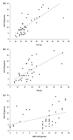
Relationship of the Clinical-Functional Vulnerability Index (IVCF-20) with the five-repetition chair stand test (CS-5) (rs=0.75, p<0.0001) (a), the Timed Up and Go test (TUG) (rs=0.67, p<0.0001) (b), and the SARC-CalF (rs=0.52, p=0.0005) (c)
Regarding dynamic functional tests, most participants had abnormal CS-5 results (n=32; 80%) and TUG results indicating reasonable mobility (n=26, 65%), as shown in Table 1. However, 26 participants (65%) had a TUG >14 seconds, indicating a high risk of falls. Importantly, the IVCF-20 score correlated strongly with the CS-5 (rs=0.75, p≤0.0001) and moderately with the TUG (rs=0.67, p<0.0001), as shown in Table 2 and Figure 1.
Associations between frailty, sociodemographic data, and clinical variables were also evaluated (Table 3). In this analysis, individuals who were White, sedentary, or who had a history of smoking, orthopedic disease, heart disease, and/or neurological disease exhibited higher median values on the IVCF-20.
Finally, patients across the three IVCF-20 categories were evaluated (Table 4), demonstrating median values of 4 (3-5), 9 (8-11), and 20 (18-26) points for robust, pre-vulnerable, and vulnerable participants, respectively. The IVCF-20 categories differed significantly for the following variables: age, height, SARC-CalF, CS-5, and TUG.
DISCUSSION
Aging is considered a sequential, individual, cumulative, irreversible, universal, and non-pathological process of deterioration of a mature organism that affects all organisms4. Aging can lead to greater organic vulnerability to diseases and, in this context, the development of frailty in older adults occurs. A frail older adult is not simply a person of advanced age but rather an older individual experiencing a decline in reserve and resistance to bodily stressors4. When assessing frailty in older adults using the IVCF-20 and its association with widely used clinical screening tools, the primary findings of the present study reavealed that the IVCF-20 was strongly associated with the CS-5 and moderately associated with the TUG and SARC-CalF. In these individuals, advanced age and greater height were associated with increased frailty. Moreover, relationships were identified between the IVCF-20 and White skin-color, physical inactivity, smoking history, orthopedic disease, heart disease, and neurological disease. To our knowledge, this is the first study to thoroughly assess the associations of the IVCF-20 with sociodemographic and clinical data, sarcopenia markers, and dynamic functional tests.
Frailty is a dynamic process characterized by a reduction in physical, psychological, and/or social functions that is associated with aging and is dentrimental to health. This condition represents a potential public health issue due to its multiple clinical and social consequences alongside its dynamic nature3. The IVCF-20 assesses both the physical and the cognitive/psychological dimensions of older adults; that is, it includes multidimensional aspects of their health status4),(5. In the present study, 70% of the older adults were considered robust or pre-vulnerable, aligning with a study by Ribeiro et al.4 evaluating older adults in primary health care; these authors observed that most participants were considered robust or pre-vulnerable (87.3%). The sensitivity of the IVCF-20 is reported to be 91%, with a specificity of 71%. Thus, older adults with up to 6 points are considered at low risk and can undergo routine clinical follow-up, following program recommendations and/or guidelines based on specific chronic conditions1.
The dynamic nature of frailty indicates potential for preventive and restorative interventions so that, when detected early, it is possible to preserve functional and cognitive reserves, maintain the capacity for self-care, and prevent disabilities, falls, functional decline, institutionalization, hospitalization, and death24. In the present study, a close relationship was observed between IVCF-20 and age. A recent study showed that a one-year increase in age increased by 11% the chance of older individuals having higher levels of frailty based on the IVCF-2025. It is worth noting that we observed an association between high IVCF-20 scores and several clinical conditions, including orthopedic injury, heart disease, and neurological disorder. In line with the findings of the present study, Maia et al.5 showed an association between robustness and the absence of polypathology and independence in ADLs.
Screening for sarcopenia is a major topic investigated in recent research, with the emergence of novel screening tests26. Although sarcopenia is linked to frailty syndrome and poor health outcomes in older adults, such as disability and death, new approaches involving the SARC-CalF and newly proposed screening tests still need to be evaluated for their performance. In the present study, a moderate correlation between frailty assessed by the IVCF-20 and risk of sarcopenia assessed by the SARC-CalF was detected, and this association remained when the older adults groups were divided according to the IVCF-20 categories. Lim et al.27 observed statistical significance for the association between SARC-CalF scores and possible sarcopenia (4.5±4.7 points), absence of sarcopenia (3.4±4.2 points), and sarcopenia (8.3±5.2 points) (p<0.01). As an ideal screening tool should have reasonably high sensitivity and specificity and an area under the curve value above 0.7, the SARC-CalF appears to be the best screening tool for sarcopenia in community-dwelling older adults28. Thus, the SARC-CalF can be routinely used in older adults for sarcopenia screening and, in the case of positive results, additional diagnoses of the frailty phenotype should be performed28.
The sit-to-stand movement is an ADL that involves the functional ability to control the center of gravity by moving the base of support from the hips to the feet to achieve an upright posture9. In the present study, the CS-5 was used to assess physical mobility, muscle strength, and balance control, as the CS-5 requires the coordinated functioning of multiple muscle groups of the lower limbs and trunk in order to avoid loss of balance during execution of the task. Interestingly, the highest correlation with IVCF-20 in the present study was observed with the CS-5 (rs=0.75; p<0.0001). Thus, it is possible that the complex nature of the CS-5, incorporating bidirectional control of the center of mass over the base of support to prevent loss of balance, makes it a useful measure for assessing impaired balance control in frail older adults9. This association between IVCF-20 and CS-5 suggests that these two tools may have potential use in the health system to detect problems and to control or follow the evolution of patients during their rehabilitation processes9.
The TUG realistically assesses mobility and balance in older adults by incorporating risk of falls provided by tasks such as lifting, walking, turning the body, and sitting. Similar to what was observed with the CS-5, a good association between IVCF-20 and TUG was also noted. This suggests that the degree of frailty in older adults also significantly impacts body balance and walking speed effectiveness, which are fundamental physical conditions for the assessment and prediction of health status, functioning, QoL, and the ability to live independently. In fact, walking speed may reflect functional deterioration in older adults with advancing age and increased mortality risk, and it is also one of the main predictors of independent living capacity and QoL in later years29. From the perspective of the locomotor system, walking speed is the integrated result of several aspects of physical fitness, namely muscle strength, aerobic endurance, flexibility, and agility, all of which deteriorate with the frailty process in older adults.
In a systematic review and meta-analysis of data from approximately 2 million people, García-Hermoso et al.30 observed that greater muscle mass and overall muscle strength are inversely associated with all-cause morbidity and mortality in older adults. Interestingly, no association was observed between frailty assessed by the IVCF-20 and handgrip strength (HGS). A possible explanation for this finding is that the IVCF-20 incorporates many more questions related to lower limb activities than to upper limbs. It is also worth mentioning the absence of association between IVCF-20 and calf circumference (CC) observed in the sample of this study. Anthropometric measurements are prone to error, and obesity and edema can be important confounders because these conditions increase CC values. This lack of correlation may be explained, at least in part, by the body mass index profile of the study sample, in which most individuals were overweight.
There are several caveats to the results of this study. First, the sample belonged to only one health center and involved a cross-sectional design, which makes it impossible to determine causality. Second, memory bias should be considered a limitation, as some variables were measured based on reports from the older participants or their family members. Third, CC, like many other anthropometric parameters, varies not only by sex but also by age, ethnicity, and environment, which makes it difficult to determine standard values28; thus, the lack of national cut-off values for low CC represents a limitation of the present study. Despite these limitations, this study can serve as a starting point for future studies with larger samples and long-term follow-up to assess the routine use of the IVCF-20.
CONCLUSIONS
In community-dwelling older adults, there is a relationship between clinical-functional frailty assessed by the IVCF-20, sarcopenia, mobility, and body balance. Moreover, clinical-functional frailty is associated with Caucasian ethnicity, physical inactivity, smoking history, orthopedic disease, heart disease, and neurological disease. Thus, the IVCF-20 can be considered an indicator of health status, functioning, disease burden, and overall functioning in older adults.
Data Availability:
The Data Underlying This Study Are Available In The Published Article.
REFERENCES
-
1 Moraes EN, Carmo JA, Moraes FL, Azevedo RS, Machado CJ, et al. Clinical-Functional Vulnerability Index-20 (IVCF-20): rapid recognition of frail older adults. Rev Saude Publica. 2016;50:81. doi: 10.1590/S1518-8787.2016050006963
» https://doi.org/10.1590/S1518-8787.2016050006963 -
2 Moraes EN, Carmo JA, Machado CJ, Moraes FL. Clinical-Functional Vulnerability Index-20: proposal of classification and hierarchy of frail elderly. Rev Fac Ciênc Méd Sorocaba. 2020;22(1):31-5. doi: 10.23925/1984-4840.2020v22i1a7
» https://doi.org/10.23925/1984-4840.2020v22i1a7 -
3 Faller JW, Pereira DDN, Souza S, Nampo FK, Orlandi FS, et al. Instruments for the detection of frailty syndrome in older adults: a systematic review. PLoS One. 2019;14(4):e0216166. doi: 10.1371/journal.pone.0216166
» https://doi.org/10.1371/journal.pone.0216166 -
4 Ribeiro EG, Mendoza IYQ, Moraes EN, Alvarenga MRM, Cintra MTG, et al. Psychometric properties of the Clinical-Functional Vulnerability Index - 20 in primary health care. Rev Min Enferm. 2020;24:e-1332. doi: 10.5935/1415.2762.20200069
» https://doi.org/10.5935/1415.2762.20200069 -
5 Maia LC, Colares TFB, Moraes EN, Costa SM, Caldeira AP. Robust older adults in primary care: factors associated with successful aging. Rev Saude Publica. 2020;54:35. doi: 10.11606/s1518-8787.2020054001735
» https://doi.org/10.11606/s1518-8787.2020054001735 - 6 Cruz-Jentoft AJ, Bahat G, Bauer J, Boirie Y, Bruyère O, et al. Sarcopenia: revised European consensus on definition and diagnosis. Age Ageing. 2019;48(1):16-31. doi: 10.1093/ageing/afy169
-
7 Voelker SN, Michalopoulos N, Maier AB, Reijnierse EM. Reliability and concurrent validity of the SARC-F and its modified versions: a systematic review and meta-analysis. J Am Med Dir Assoc. 2021;22(9):1864-76. doi: 10.1016/j.jamda.2021.05.011
» https://doi.org/10.1016/j.jamda.2021.05.011 -
8 Bahat G, Erdoğan T, İlhan B. SARC-F and other screening tests for sarcopenia. Curr Opin Clin Nutr Metab Care. 2022;25(1):37-42. doi: 10.1097/MCO.0000000000000801
» https://doi.org/10.1097/MCO.0000000000000801 -
9 Muñoz-Bermejo L, Adsuar JC, Mendoza-Muñoz M, Barrios-Fernández S, Garcia-Gordillo MA, et al. Test-retest reliability of five times sit to stand test (FTSST) in adults: a systematic review and meta-analysis. Biology. 2021;10(6):510. doi: 10.3390/biology10060510
» https://doi.org/10.3390/biology10060510 -
10 Yümin ET, Şimşek TT, Sertel M, Öztürk A, Yümin M. The effect of functional mobility and balance on health-related quality of life (HRQoL) among elderly people living at home and those living in nursing home. Arch Gerontol Geriatr. 2011;52(3):e180-4. doi: 10.1016/j.archger.2010.10.027
» https://doi.org/10.1016/j.archger.2010.10.027 -
11 Cadore EL, Rodríguez-Mañas L, Sinclair A, Izquierdo M. Effects of different exercise interventions on risk of falls, gait ability, and balance in physically frail older adults: a systematic review. Rejuvenation Res. 2013;16(2):105-14. doi: 10.1089/rej.2012.1397
» https://doi.org/10.1089/rej.2012.1397 -
12 Nakazono T, Kamide N, Ando M. The reference values for the chair stand test in healthy Japanese older people: determination by meta-analysis. J Phys Ther Sci. 2014;26(11):1729-31. doi: 10.1589/jpts.26.1729
» https://doi.org/10.1589/jpts.26.1729 -
13 Zhang F, Ferrucci L, Culham E, Metter EJ, Guralnik J, et al. Performance on five times sit-tostand task as a predictor of subsequent falls and disability in older persons. J Aging Health. 2013;25(3):478-92. doi: 10.1177/0898264313475813
» https://doi.org/10.1177/0898264313475813 -
14 den Ouden ME, Schuurmans MJ, Arts IE, van der Schouw YT. Association between physical performance characteristics and independence in activities of daily living in middle-aged and elderly men. Geriatr Gerontol Int. 2013;13(2):274-80. doi: 10.1111/j.1447-0594.2012.00890.x
» https://doi.org/10.1111/j.1447-0594.2012.00890.x -
15 Maia LC, Colares TFB, Morais EN, Costa SM, Caldeira AP. Impact of matrix support on older adults in primary care: randomized community trial. Rev Saude Publica. 2021;55:10. doi: 10.11606/s1518-8787.2021055002685
» https://doi.org/10.11606/s1518-8787.2021055002685 -
16 Caldas VVA, Zunzunegui MV, Freire ANF, Guerra RO. Translation, cultural adaptation and psychometric evaluation of the Leganés cognitive test in a low educated elderly Brazilian population. Arq. Neuro-Psiquiatr. 2012;70(1):22-7. doi: 10.1590/S0004-282X2012000100006
» https://doi.org/10.1590/S0004-282X2012000100006 -
17 Craig CL, Marshall AL, Sjöström M, Bauman AE, Booth ML, et al. International physical activity questionnaire: 12-country reliability and validity. Med Sci Sports Exerc. 2003;35(8):1381-95. doi: 10.1249/01.MSS.0000078924.61453.FB
» https://doi.org/10.1249/01.MSS.0000078924.61453.FB -
18 Boult C, Wieland GD. Comprehensive primary care for older patients with multiple chronic conditions: “Nobody rushes you through”. JAMA. 2010;304(17):1936-43. doi: 10.1001/jama.2010.1623
» https://doi.org/10.1001/jama.2010.1623 -
19 Mazocco L, Chagas P, Barbosa-Silva TG, Gonzalez MC, Schwanke CHA. Accuracy of SARC-F and AQ12 SARC-CalF for sarcopenia screening in older women from southern Brazil. Nutrition. 2020;79-80:110955. doi: 10.1016/j.nut.2020.110955
» https://doi.org/10.1016/j.nut.2020.110955 -
20 Neves RS, Lopes AJ, Menezes SLS, Lemos Lima TR, Sá Ferreira A, et al. Hand grip strength in healthy young and older Brazilian adults: development of a linear prediction model using simple anthropometric variables. Kinesiology. 2017;49(2):1-9. Available from: https://hrcak.srce.hr/ojs/index.php/kinesiology/article/view/5700
» https://hrcak.srce.hr/ojs/index.php/kinesiology/article/view/5700 -
21 Gao SY, Xia Y, Wu QY, Chang Q, Zhao YH. Reference values for five-repetition chair stand test among middle-aged and elderly community-dwelling Chinese adults. Front Med. 2021;8:659107. doi: 10.3389/fmed.2021.659107
» https://doi.org/10.3389/fmed.2021.659107 -
22 Lira VA, Araújo C. Teste de sentar-levantar: estudos de fidedignidade. Rev Bras Ciên e Mov. 2000;8(2):11-20. doi: 10.18511/rbcm.v8i2.358
» https://doi.org/10.18511/rbcm.v8i2.358 -
23 Bennell K, Dobson F, Hinman R. Measures of physical performance assessments: Self-Paced Walk Test (SPWT), Stair Climb Test (SCT), Six-Minute Walk Test (6MWT), Chair Stand Test (CST), Timed Up & Go (TUG), Sock Test, Lift and Carry Test (LCT), and Car Task. Arthritis Care Res. 2011;63(Suppl. 11):S350-70. doi: 10.1002/acr.20538
» https://doi.org/10.1002/acr.20538 -
24 Lima TRL, Guimarães FS, Carvalho MN, Sousa TLM, Menezes SLS, et al. Lower limb muscle strength is associated with functional performance and quality of life in patients with systemic sclerosis. Braz J Phys Ther. 2015;19(2):129-36. doi: 10.1590/bjpt-rbf.2014.0084
» https://doi.org/10.1590/bjpt-rbf.2014.0084 -
25 Jesus JDF, Ferreira FR, Andrade ACS, Medeiros AM. Elders in a former Brazilian leprosy colony: clinical and functional vulnerability and vocal and hearing self-perception. CoDAS. 2021;33(5):e20200058. doi: 10.1590/2317-1782/20202020058
» https://doi.org/10.1590/2317-1782/20202020058 -
26 Cristaldo MRA, Guandalini VR, Faria SO, Spexoto ACB. Screening the risk of sarcopenia in adults aged 50 years or older hospitalized. Rev Bras Geriatr Gerontol. 2021;24(2):e210016. doi: 10.1590/1981-22562021024.210016
» https://doi.org/10.1590/1981-22562021024.210016 -
27 Lim JY, Low NA, Merchant RA. Prevalence of sarcopenia in pre-frail community dwelling older adult and utility of SARC-F, SARC-CalF and calf circumference in case finding. J Frailty Sarcopenia Falls. 2020;5(3):53-6. doi: 10.22540/JFSF-05-053
» https://doi.org/10.22540/JFSF-05-053 -
28 Krzymińska-Siemaszko R, Deskur-Śmielecka E, Kaluźniak-Szymanowska A, Lewandowicz M, Wieczorowska-Tobis K. Comparison of diagnostic performance of SARC-F and its two modified versions (SARC-CalF and SARC-F+EBM) in community-dwelling older adults from Poland. Clin Interv Aging. 2020;15:583-94. doi: 10.2147/CIA.S250508
» https://doi.org/10.2147/CIA.S250508 -
29 Zhao Y, Wu T, Wei Y. Effects of starting position, distance and ending point in a walking speed test among older adults. Geriatr Gerontol Int. 2020;20(7):680-4. doi: 10.1111/ggi.13938
» https://doi.org/10.1111/ggi.13938 -
30 García-Hermoso A, Cavero-Redondo I, Ramírez-Vélez R, Ruiz JR, Ortega FB, et al. Muscular strength as a predictor of all-cause mortality in an apparently healthy population: A systematic review and meta-analysis of data from approximately 2 million men and women. Arch Phys Med Rehabil. 2018;99(10):2100-13.e5. doi: 10.1016/j.apmr.2018.01.008
» https://doi.org/10.1016/j.apmr.2018.01.008
-
Financing sources: Conselho Nacional de Desenvolvimento Científico e Tecnológico [CNPq; Grant number #301967/2022-9], Brazil, the Fundação Carlos Chagas Filho de Amparo à Pesquisa do Estado do Rio de Janeiro [FAPERJ; Grant numbers #E-26/010.002124/2019, #E-26/211.187/2021, #E-26/211.104/2021, and #E-26/200.929/2022], Brazil; and the Coordenação de Aperfeiçoamento de Pessoal de Nível Superior [CAPES, Finance Code 001, 88881.708719/2022-01, and 88887.708718/2022-00]
-
Approved by the Research Ethics Committee:
Opinion No. 5.098.166/2021.
Edited by
-
Responsible editor:
Sônia LP Pacheco de Toledo