Mismatch Repair Proteins and CD45RO-Positive Lymphocytes in Malignant and Benign Salivary Gland Tumors: A Favorable Association with Disease Clinical Parameters
Introduction Salivary gland tumors (SGTs) are uncommon lesions that account for 3 to 6% of head and neck cancers.
Objective To investigate mismatch repair (MMR) proteins, tumor-infiltrating lymphocytes (TILs), and CD45RO expression in salivary gland tumors (SGTs).
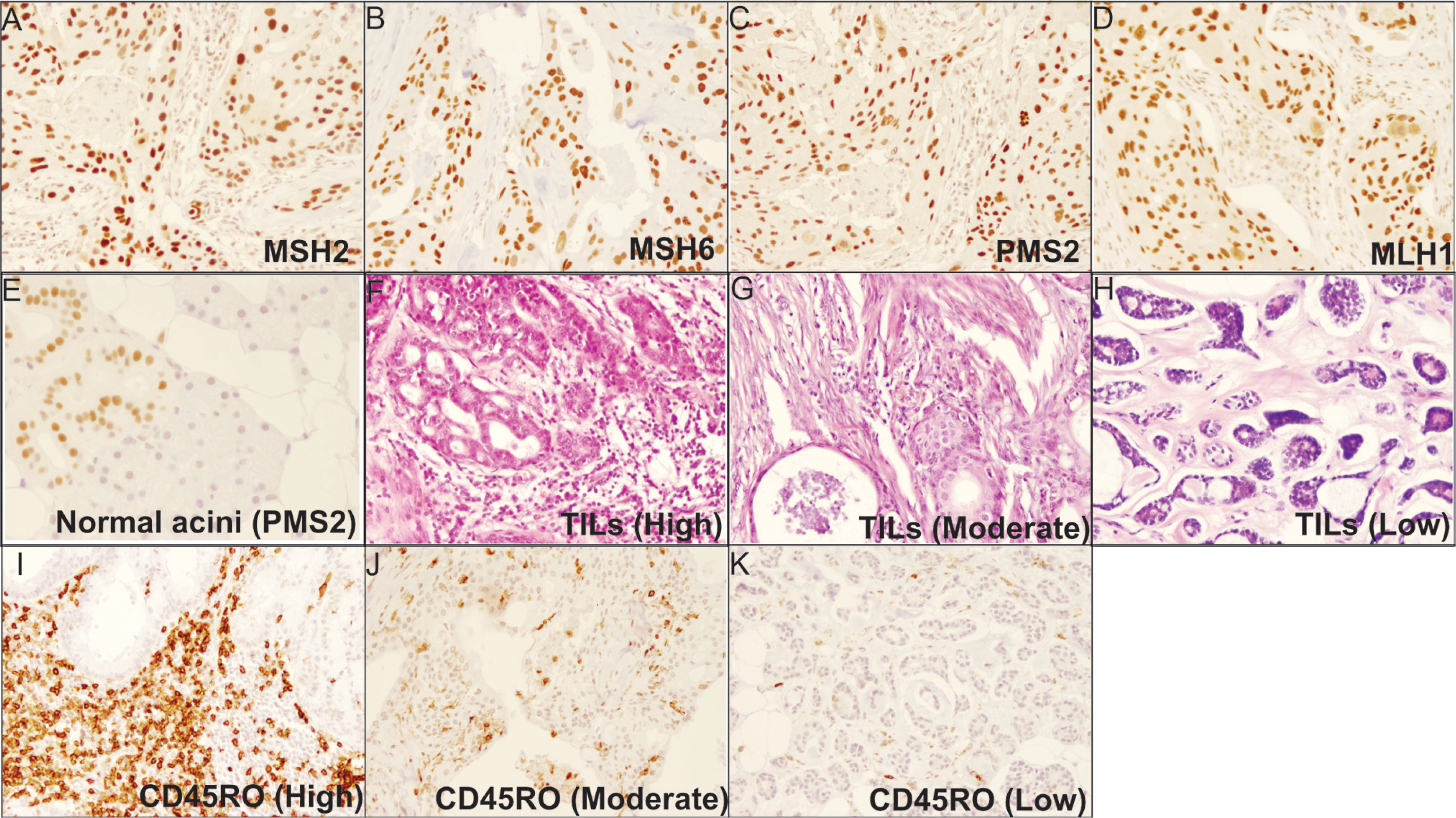
Methods Proteins MLH1, MSH2, MSH6, and PMS2 of the MMR proteins family and CD45RO were evaluated using immunohistochemistry (IHC). Hematoxylin and eosin-stained sections were scored to explore the rate of TILs.
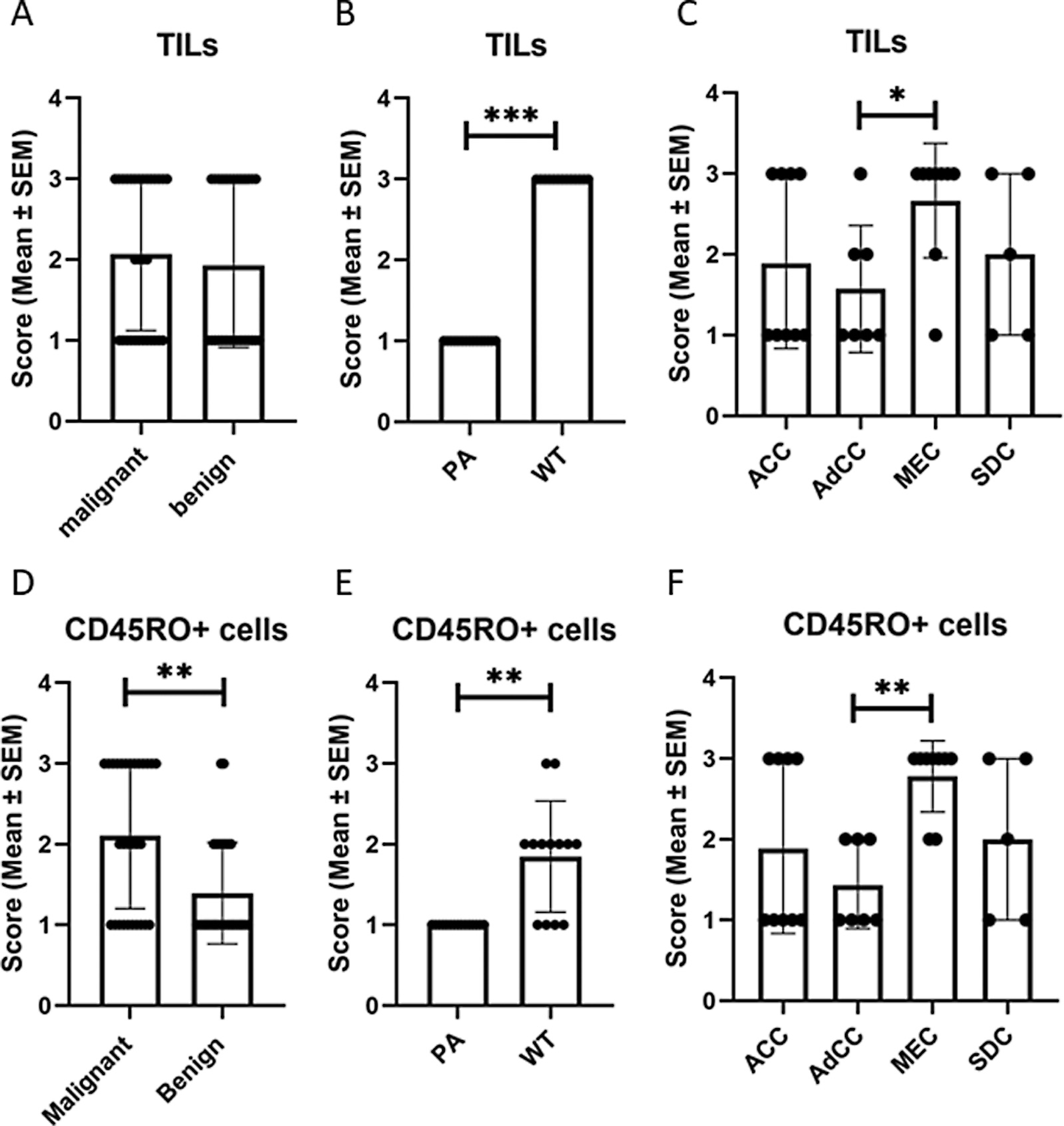
Results None of the malignant and benign SGTs had partial or complete loss of at least one of the MMR proteins. Mucoepidermoid carcinomas, adenoid cystic carcinomas, salivary ductal carcinomas, and acinic cell carcinomas as malignant tumor types, and pleomorphic adenoma and Warthin's tumors as the most common benign tumors showed considerable differences in terms of the infiltration of TILs and CD45RO. Malignant tumors exhibited a notable difference in the infiltration of CD45RO+ cells compared to benign ones. Both the tumor, node, metastasis (TNM) stage and the histological grade were shown to be linked with the infiltration status of CD45RO+ cells.
Conclusion Our results show that MMR deficiency might be insignificant and less relevant in SGTs. However, differences in TIL rate and CD45RO expression indicate that each of the SGT tumor types may have distinguished immune microenvironments. Malignant SGTs have higher infiltration of activated immune cells, and, thereby, these cells can be considered as good indicators of patient's status.
Keywords
salivary gland tumors; mismatch repair proteins; tumor-infiltrating lymphocytes; CD45RO+ memory cells
 Thumbnail
 Thumbnail