 Systemic Inflammation, Fibrinogen, and Lipoprotein(a) as Composite Predictors of Peripheral Arterial Disease
Abstract
Background: Early detection of peripheral atherosclerosis remains a clinical challenge, especially in asymptomatic individuals. This study aimed to evaluate the predictive value of systemic inflammatory indices and lipid-related biomarkers for early atherosclerosis.
Objectives: To investigate the diagnostic value of systemic inflammation indices, fibrinogen, and lipoprotein(a) as individual biomarkers and as a combined predictive model for early peripheral arterial disease.
Methods: A prospective case-control study was conducted in 54 individuals: 20 patients diagnosed with early peripheral atherosclerosis (<55 years) and 34 healthy controls. Laboratory data included complete blood count, lipid profile, fibrinogen, lipoprotein(a), angiopoietin-like protein 3 (ANGPTL3), and Lp-PLA2. Inflammatory indices, including NLR, PLR, SII, SIRI, AISI, and MLR, were calculated. Logistic regression and ROC analysis were performed. A two-sided p-value < 0.05 was considered statistically significant.
Results: SIRI (1.70 vs. 0.93, p = 0.0039) and AISI (431.6 vs. 236.4, p = 0.0128) were significantly higher in the atherosclerosis group. Fibrinogen showed the most robust association (5.46 vs. 3.71 g/L, p < 0.00001). Lp(a) alone was not statistically different between groups but improved the multivariate model (AUC 0.85 vs. 0.82). The final model, including age, inflammatory indices, LDL, Lp (a), and fibrinogen, achieved an AUC of 0.91.
Conclusion: Systemic inflammation and fibrinogen levels are strongly associated with early atherosclerosis. Their combination with lipoprotein(a) enhances diagnostic performance, offering a simple, cost-effective strategy for early vascular risk assessment.
Keywords:
Atherosclerosis; Fibrinogen; Inflammation; Lipoprotein(a); Peripheral Arterial Disease; Biomarkers
Introduction
Peripheral arterial disease (PAD) is a major manifestation of systemic atherosclerosis, characterized by progressive narrowing or occlusion of arteries, predominantly affecting the lower extremities. It affects over 200 million people globally, with a rising incidence due to aging populations and the increasing prevalence of diabetes and smoking.1 PAD is associated with a three- to six-fold increase in cardiovascular morbidity and mortality and is an independent predictor of coronary and cerebrovascular events.2,3
Despite its clinical importance, PAD remains underdiagnosed and undertreated, particularly in early stages when symptoms may be absent or non-specific. Studies show that up to 50% of patients with PAD are asymptomatic, and many cases are discovered only after the onset of irreversible tissue damage or major adverse cardiovascular events.4 Therefore, early identification of subclinical atherosclerosis is a priority in cardiovascular prevention.
Current diagnostic tools, such as the ankle-brachial index (ABI) and duplex ultrasound, while useful, are limited by operator dependence and poor sensitivity in early or diffuse disease.5 As a result, there is growing interest in the use of blood-based biomarkers to improve risk stratification and detection of atherosclerosis in its incipient stages.
Chronic low-grade inflammation plays a key role in atherogenesis, from endothelial dysfunction to plaque progression and destabilization. Biomarkers reflecting systemic inflammation, such as C-reactive protein (CRP), interleukin-6 (IL-6), tumor necrosis factor-alpha (TNF-α), and cell-count–derived indices (e.g., NLR, PLR) have shown associations with cardiovascular risk.6-8 More recently, composite indices such as the Systemic Inflammation Response Index (SIRI) and Aggregate Index of Systemic Inflammation (AISI) have been proposed as more integrative measures of vascular immune activation.9,10
In addition to inflammation, fibrinogen and lipoprotein(a) [lp(a)] have emerged as promising biochemical markers linked to both thrombotic and atherosclerotic processes.11,12 Fibrinogen contributes to increased blood viscosity, platelet aggregation, and leukocyte adhesion, while lp(a) exerts atherogenic effects via its oxidized phospholipid content and structural similarity to plasminogen.13,14
However, the diagnostic utility of these biomarkers in early-stage PAD remains poorly defined, and their combined predictive value has rarely been assessed. Given their low cost and availability, these parameters are attractive candidates for routine screening tools if validated in clinical studies.
The present study aimed to evaluate the diagnostic performance of systemic inflammatory indices and classical atherogenic biomarkers — fibrinogen and Lp (a) — in identifying early peripheral atherosclerosis. We hypothesized that their combined use could enhance diagnostic accuracy and support earlier detection of subclinical vascular disease. In the present study, we defined early PAD as imaging-confirmed stenosis ≥50% diagnosed before the age of 55 years, in line with prior epidemiological definitions of premature atherosclerosis.
Materials and Methods
Study Design and Population
This prospective cross-sectional study included 54 individuals aged between 33 and 58 years, who were evaluated at a Scientific Research Institute - Regional Clinical Hospital No. 1 named after Prof. S.V. Ochapovsky (Krasnodar, Russia) in October 2024. The study cohort comprised two groups:
-
Group 1 (n = 20): Patients diagnosed with early peripheral atherosclerosis (including lower extremity arterial disease) before the age of 55 years.
-
Group 2 (n = 34): Age-matched apparently healthy individuals without clinical or instrumental signs of atherosclerosis, serving as the control group.
The sample size was based on convenience, as all eligible patients during the study period were included; no a priori sample size calculation was performed, which we acknowledge as a limitation of the study.
The diagnosis of atherosclerosis was established based on clinical criteria (intermittent claudication, pulse deficit), confirmed by duplex ultrasound and/or catheter-based angiography. The extent and severity of atherosclerotic lesions were graded according to standard international imaging criteria.
Inclusion and Exclusion Criteria
Inclusion criteria for the atherosclerosis group were based on WHO recommendations:
-
Age < 55 years at the time of diagnosis;
-
Clinical signs of peripheral artery disease;
-
Imaging-confirmed atherosclerotic lesions (≥ 50% stenosis in at least one arterial segment) with indications for surgical correction.
Exclusion criteria:
-
History of acute coronary syndrome or stroke;
-
Systemic autoimmune or inflammatory diseases;
-
Active infection or malignancy;
-
Chronic kidney disease stage ≥ 3 (estimated glomerular filtration rate < 60 ml/min/1.73 m²);
-
Incomplete laboratory data.
Control subjects were selected based on:
-
Absence of known cardiovascular disease;
-
Normal findings on vascular ultrasound (no plaques or stenosis > 20%).
Data Collection and Inflammatory Indices
Demographic data, clinical risk factors, and laboratory findings were extracted from electronic health records. Complete blood count and standard biochemical tests were performed at the time of clinical evaluation.
-
From the raw blood values, the following systemic inflammatory indices were calculated:
-
Neutrophil-to-lymphocyte ratio (NLR) = neutrophils / lymphocytes
-
Platelet-to-lymphocyte ratio (PLR) = platelets / lymphocytes
-
Systemic inflammation index (SII) = (neutrophils × platelets) / lymphocytes
-
Systemic inflammation response index (SIRI) = (neutrophils × monocytes) / lymphocytes
-
Aggregate index of systemic inflammation (AISI) = (neutrophils × monocytes × platelets) / lymphocytes
-
Monocyte-to-lymphocyte ratio (MLR) = monocytes / lymphocytes
Laboratory research of biomarkers of atherosclerosis was carried out by the method of enzyme immunoassay analysis using the corresponding reagents of the companies "AssayPro" and "RayBiotech", intended only for research purposes and in the absence of reference values usual for routine clinical practice in the kits of the company "RayBiotech", in connection with which the interpretation of absolute values of biomarkers is impossible outside the framework of this research protocol: Lp(a) (EL3001-1, AssayPro", USA), ANGPTL3 (ELH-ANGPTL3, RayBiotech, USA), Lp-PLA2 (ELH-LPPLA2, RayBiotech, USA).
Statistical Analysis
Continuous variables were tested for normality using descriptive statistics and visual inspection of histograms. Due to non-Gaussian distribution and modest sample size, data are presented as median (interquartile range, IQR). Categorical variables are expressed as counts and percentages. Group comparisons were performed using the Mann–Whitney U test for continuous data and Fisher's exact test for categorical data. A logistic regression model was constructed to evaluate the combined predictive value of inflammatory indices and biochemical markers (including lipoprotein(a)). Model performance was assessed using the area under the receiver operating characteristic curve (AUC).
All statistical analyses were performed using Python 3.11 (pandas, scipy, scikit-learn). A two-sided p-value < 0.05 was considered statistically significant.
Results
Baseline Characteristics
The study included 54 individuals, of whom 20 were diagnosed with early-onset peripheral atherosclerosis (Group 1), and 34 were age-matched healthy controls (Group 2). Patients with atherosclerosis were generally older, had longer smoking history, and showed a higher prevalence of diabetes mellitus and arterial hypertension compared with healthy controls. These and other baseline characteristics are detailed in Table 1.
Inflammatory Indices
Among calculated systemic inflammation indices, SIRI and AISI showed statistically significant elevations in the atherosclerosis group compared to controls:
-
SIRI: 1.70 vs. 0.93, p = 0.0039
-
AISI: 431.6 vs. 236.4, p = 0.0128
Fibrinogen levels were markedly elevated in the atherosclerosis group (5.46 g/L vs. 3.71 g/L; p < 0.00001), making it the most significantly different laboratory marker.
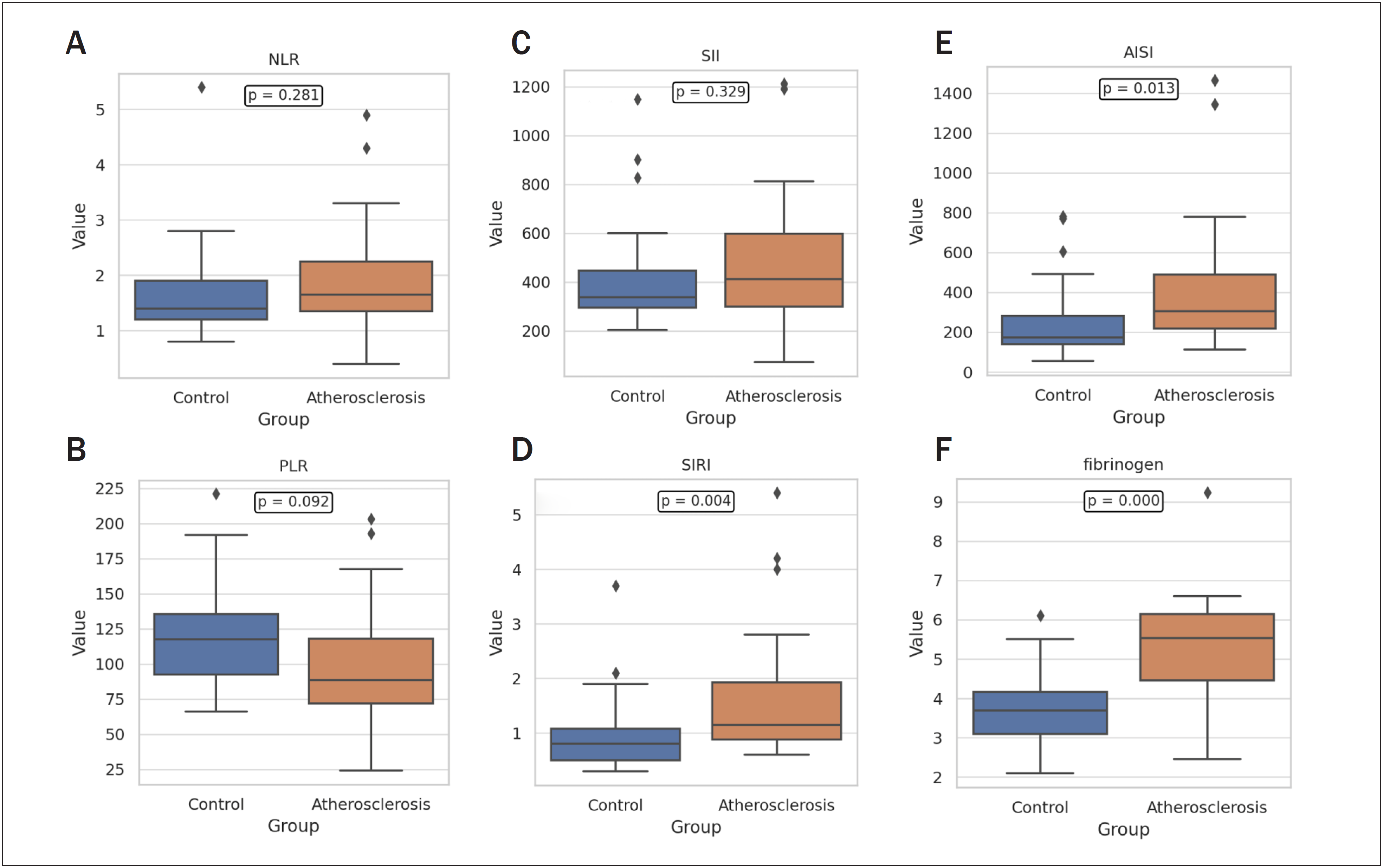
Other markers, such as NLR, PLR, and SII, were also elevated in the patient group but did not reach statistical significance. Boxplots comparing these indices are presented in Figure 1 (A–F).
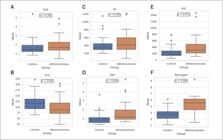
A) Boxplot of neutrophil-to-lymphocyte ratio (NLR) in patients with early atherosclerosis vs. controls. Median NLR was higher in the atherosclerosis group, though not statistically significant (p = 0.2811). B) Platelet-to-lymphocyte ratio (PLR) across study groups. Patients exhibited lower PLR values; the difference did not reach statistical significance (p = 0.0922). C) Systemic inflammation index (SII) values were higher in the atherosclerosis group compared to controls (p = 0.3290), though not significantly. D) Systemic inflammation response index (SIRI) was significantly elevated in patients with atherosclerosis (p = 0.0039), suggesting greater innate immune activation. E) Aggregate index of systemic inflammation (AISI) showed a significant increase in the atherosclerosis group (p = 0.0128), highlighting its potential diagnostic relevance. F) Plasma fibrinogen levels were markedly higher in the atherosclerosis group (mean 5.46 g/L vs. 3.71 g/L; p < 0.00001), reflecting enhanced thrombo-inflammatory activity.
Atherogenic Biomarkers
Lipoprotein(a), ANGPTL3, and Lp-PLA2 were numerically different but not statistically significant between groups. However, lp(a) showed a trend toward higher values in the atherosclerosis group (102.2 vs. 51.4 mg/dL; p = 0.32).
Predictive Modeling
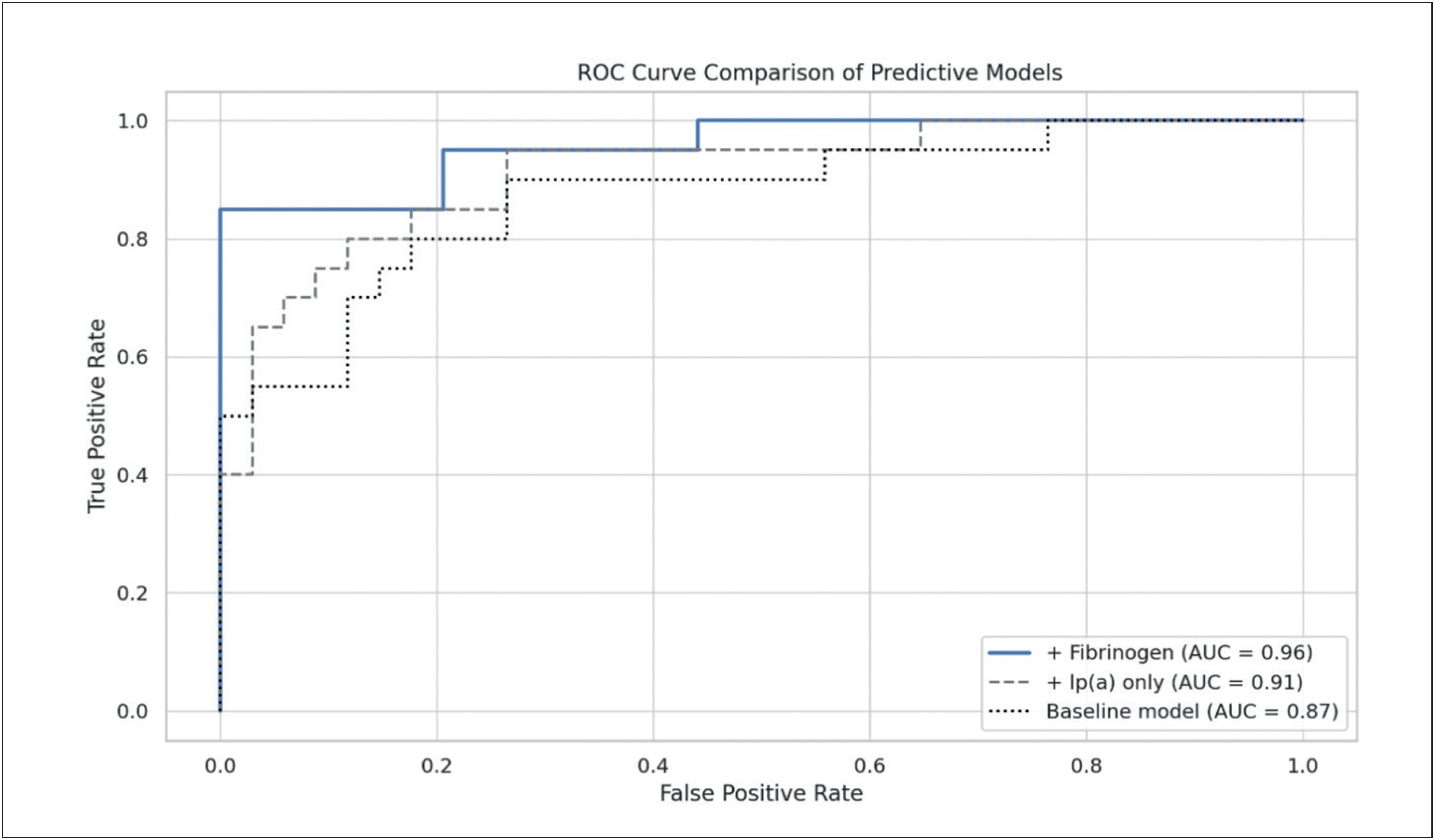
Logistic regression analysis was performed to evaluate the diagnostic utility of these markers. A baseline model including age, NLR, PLR, SII, and low-density lipoprotein (LDL) yielded an AUC of 0.82. The addition of lp(a) improved AUC to 0.85, and further inclusion of fibrinogen significantly increased the model's performance to AUC = 0.91
These results suggest that the combination of systemic inflammatory indices, lp(a), and fibrinogen markedly enhances the ability to distinguish early atherosclerosis from healthy controls.
Figure 2 shows the ROC curves comparing the three models.
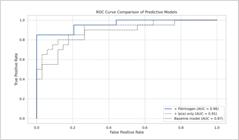
Receiver operating characteristic (ROC) curves for three logistic regression models predicting early atherosclerosis: Baseline model (age, NLR, PLR, SII, LDL): AUC = 0.82; With lp(a): AUC = 0.85; With lp(a) and fibrinogen: AUC = 0.91 Fibrinogen markedly improved model discrimination.
Summary:
-
Fibrinogen was the most significant individual marker (p < 0.00001).
-
SIRI and AISI were the most discriminatory among the inflammatory indices.
-
Lp(a) provided additive value in multivariable modeling.
-
Combined model: AUC 0.91.
Discussion
This study provides novel evidence that systemic inflammatory indices and classical biochemical markers — namely SIRI, AISI, fibrinogen, and Lp(a) — are collectively valuable for identifying early peripheral atherosclerosis. Our multivariable model incorporating these parameters achieved an AUC of 0.91, indicating high discriminative power even in a modestly sized cohort. This suggests that integrating inflammatory, thrombotic, and lipid-related mechanisms across pathways may enhance the detection of early vascular disease more effectively than isolated parameters.
Systemic Inflammation Indices: SIRI and AISI
SIRI and AISI were significantly elevated in patients with early atherosclerosis, exceeding more commonly reported ratios such as NLR and PLR. SIRI, calculated from neutrophils, monocytes, and lymphocytes, reflects activity of both the innate and adaptive immune systems. It has been proposed as a superior marker of vascular inflammation and has demonstrated prognostic relevance in coronary artery disease and stroke.9,10
Similarly, AISI — which multiplies neutrophil, monocyte, and platelet counts, then normalizes by lymphocytes — has recently been suggested as a more integrative marker of vascular immune activation. Its predictive value in cardiovascular settings is still being defined, but our findings suggest its relevance in early disease, possibly through better reflection of cellular interplay in atherogenesis.10 The fact that NLR, PLR, and SII did not reach statistical significance likely reflects the small sample size and the risk of type II error, rather than a lack of pathophysiological relevance. Indeed, prior studies have shown associations of these indices with coronary artery disease, stroke, and mortality.9,10 Our findings therefore support SIRI and AISI as more sensitive and integrative measures in early PAD, consistent with the emerging literature.
These indices are readily obtainable from routine blood tests, making them attractive tools for risk stratification in primary care or outpatient vascular clinics.
Fibrinogen: a Dual Marker of Inflammation and Thrombosis
Among all individual parameters analyzed, fibrinogen showed the strongest discriminatory power, with a mean value of 5.46 g/L in the atherosclerosis group versus 3.71 g/L in controls (p < 0.00001). Fibrinogen is a well-established acute-phase reactant and a key player in thrombogenesis. Elevated plasma fibrinogen has been repeatedly linked with increased risk of peripheral artery disease (PAD), ischemic stroke, and coronary heart disease.11,12
The role of fibrinogen in atherogenesis is multifaceted: it promotes platelet aggregation, increases blood viscosity, and supports leukocyte adhesion to the endothelium. Its elevation in our early atherosclerosis cohort suggests that pro-thrombotic and inflammatory pathways may be activated even before overt cardiovascular events occur, supporting its utility as both a biomarker and potential therapeutic target.
Lipoprotein(a): Conditional Risk Amplifier
While Lp(a) did not reach statistical significance in univariate comparisons, its inclusion in the multivariate model improved AUC from 0.85 to 0.91. This aligns with recent evidence that Lp(a) may act as a conditional risk amplifier, exerting its deleterious effects more prominently in the presence of systemic inflammation or endothelial dysfunction.13,14
Lp(a) is a genetically determined lipoprotein consisting of an LDL-like core and apolipoprotein(a), which imparts pro-atherogenic and pro-thrombotic properties. Its independent role in atherosclerotic cardiovascular disease (ASCVD) is well established, and recent trials have focused on specific inhibitors (e.g., antisense oligonucleotides) as potential therapeutic strategies. The observed synergy between Lp(a) and inflammatory indices in our cohort supports the idea that multi-pathway interaction may be essential in early atherogenesis, particularly in non-coronary territories such as lower limbs.
Current ESC Dyslipidemia Guidelines (2025) emphasize the importance of measuring Lp(a) at least once in adulthood, with thresholds of >50 mg/dL (>125 nmol/L) considered clinically relevant for elevated cardiovascular risk. In our cohort, the PAD group median exceeded this cut-off, supporting its pathophysiological role despite a lack of univariate significance. This suggests that in smaller cohorts, Lp(a) may not act as an independent discriminator, but in synergy with other pro-atherogenic factors, it strengthens predictive models.
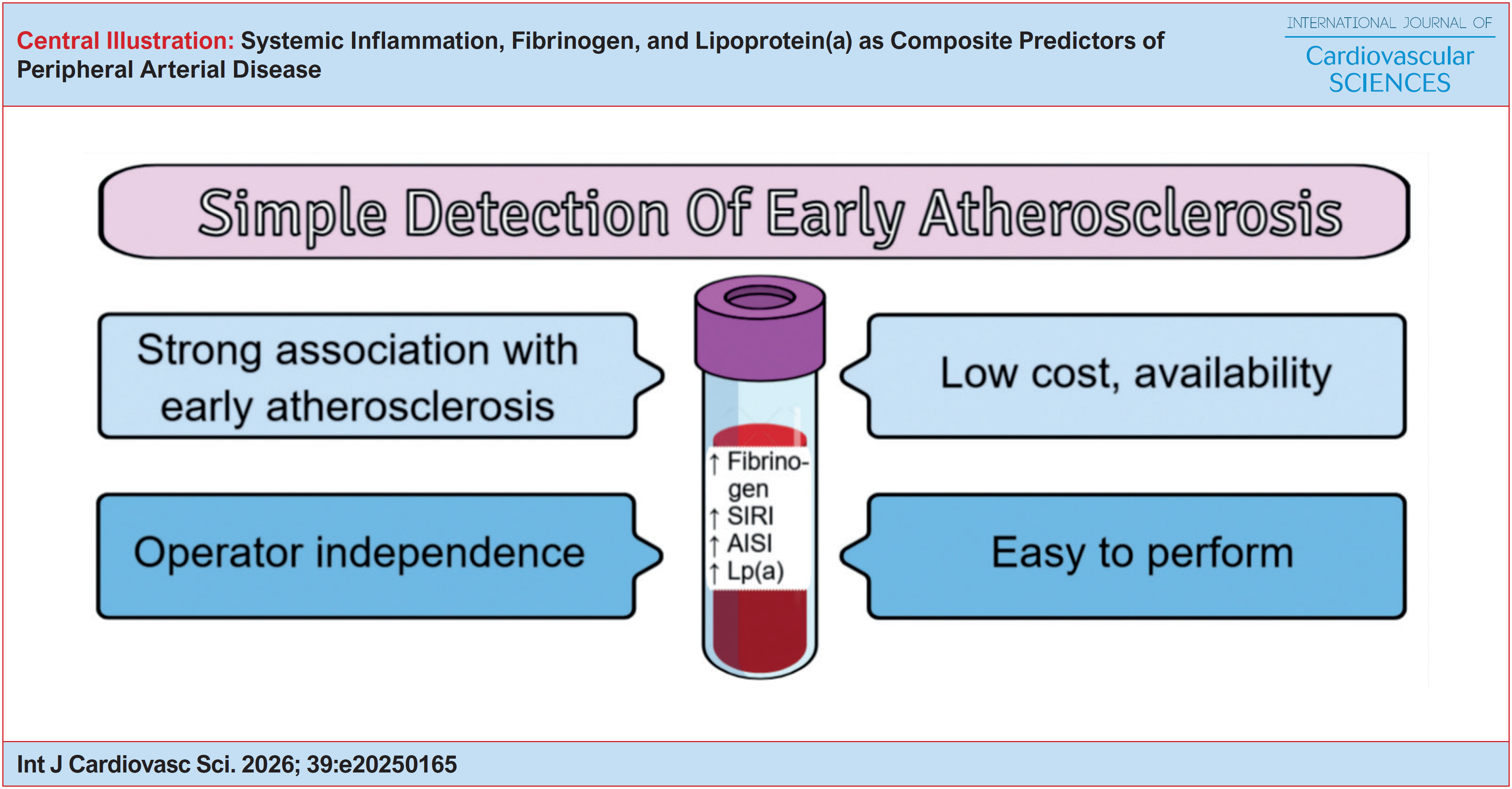
A visual summary of the proposed combined biomarker model is presented in the Central Illustration.
Integration of Biomarkers into Predictive Models
The stepwise improvement of the logistic regression model illustrates the incremental value of combining markers. Age and classical inflammatory indices yielded a baseline AUC of 0.82, which is already clinically relevant. Addition of Lp(a) modestly improved the model (AUC 0.85), while fibrinogen provided a substantial incremental gain (AUC 0.91). Regression coefficients and confidence intervals (Supplementary Table 2) further demonstrate the relative weight of these variables. Such findings emphasize that multi-marker panels may provide a cost-effective and practical tool for early vascular risk assessment, especially in resource-limited settings where advanced imaging is not widely available.
Clinical and Research Implications
Our findings offer a practical and biologically plausible model for early detection of subclinical atherosclerosis using simple, widely available blood-based parameters. This approach could be particularly valuable in younger patients or those with non-specific vascular symptoms, where standard risk scores may underestimate disease burden.
From a research perspective, future studies should validate these results in larger, ethnically diverse populations, include longitudinal follow-up for clinical outcomes, and integrate additional biomarkers such as hsCRP, IL-6, or oxidized LDL. The potential role of novel therapeutic strategies—such as antisense oligonucleotides targeting Lp(a)—also warrants exploration in PAD cohorts, given that most ongoing trials are focused on coronary artery disease.15
We propose that fibrinogen and SIRI/AISI be considered in future risk models, possibly complementing or refining existing tools such as the ABI or SCORE2.
Limitations
Several limitations must be acknowledged:
-
First, the study was based on a small convenience sample (20 PAD cases and 34 controls), without a priori sample size calculation. This limits statistical power and increases the risk of type II error as well as potential overestimation of the AUC.
-
Second, the study was conducted at a single center in Russia, with a relatively homogeneous population (middle-aged, predominantly male), which restricts generalizability to other geographic and ethnic settings.
-
Third, some biomarkers were measured using research-only ELISA kits without established clinical reference values, which may limit reproducibility across studies.
-
Fourth, although we applied non-parametric methods to account for non-Gaussian distribution, we did not adjust for multiple comparisons, and this should be considered when interpreting borderline results.
-
Finally, regression coefficients were provided for the final multivariate model, but external validation in independent cohorts is needed to confirm robustness.
Conclusion
This study highlights the complementary roles of systemic inflammation, coagulation activity, and lipid-related risk in early atherogenesis. The integration of SIRI, fibrinogen, and lp(a) into a single model achieved high diagnostic performance, reinforcing the idea that multi-dimensional biomarker panels may offer better risk stratification than isolated metrics. Future studies should aim to validate these findings and explore their utility in predicting clinical outcomes or guiding preventive therapy.
-
Sources of Funding
There were no external funding sources for this study.
-
Study Association
This study is not associated with any thesis or dissertation work.
-
Ethics Approval and Consent to Participate
This study was approved by the Ethics Committee of the SRI (Regional Clinical Hospital W1) under the protocol number 150. All the procedures in this study were in accordance with the 1975 Helsinki Declaration, updated in 2013. Informed consent was obtained from all participants included in the study.
-
Use of Artificial Intelligence
During the preparation of this work, the author(s) used ChatGPT for language editing, statistical table formatting and assistance in namescript structuring. After using this tool/service, the author(s) reviewed and edited the content as needed and take full responsibility for the content of the published article.
Availability of Research Data
All datasets supporting the results of this study are available upon request from the corresponding author.
Acknowledgments
The authors acknowledge the use of OpenAI's ChatGPT for language editing, statistical table formatting, and assistance in manuscript structuring. Final interpretations and decisions were made by the author A.N.
References
-
1 Fowkes FG, Rudan D, Rudan I, Aboyans V, Denenberg JO, McDermott MM, et al. Comparison of Global Estimates of Prevalence and Risk Factors for Peripheral Artery Disease in 2000 and 2010: A Systematic Review and Analysis. Lancet. 2013;382(9901):1329-40. doi: 10.1016/S0140-6736(13)61249-0.
» https://doi.org/10.1016/S0140-6736(13)61249-0 -
2 Criqui MH, Aboyans V. Epidemiology of Peripheral Artery Disease. Circ Res. 2015;116(9):1509-26. doi: 10.1161/CIRCRESAHA.116.303849.
» https://doi.org/10.1161/CIRCRESAHA.116.303849 -
3 Bhatt DL, Steg PG, Ohman EM, Hirsch AT, Ikeda Y, Mas JL, et al. International Prevalence, Recognition, and Treatment of Cardiovascular Risk Factors in Outpatients with Atherothrombosis. JAMA. 2006;295(2):180-9. doi: 10.1001/jama.295.2.180.
» https://doi.org/10.1001/jama.295.2.180 -
4 Hirsch AT, Haskal ZJ, Hertzer NR, Bakal CW, Creager MA, Halperin JL, et al. ACC/AHA 2005 Practice Guidelines for the Management of Patients with Peripheral Arterial Disease (Lower Extremity, Renal, Mesenteric, and Abdominal Aortic): A Collaborative Report from the American Association for Vascular Surgery/Society for Vascular Surgery, Society for Cardiovascular Angiography and Interventions, Society for Vascular Medicine and Biology, Society of Interventional Radiology, and the ACC/AHA Task Force on Practice Guidelines (Writing Committee to Develop Guidelines for the Management of Patients with Peripheral Arterial Disease): Endorsed by the American Association of Cardiovascular and Pulmonary Rehabilitation; National Heart, Lung, and Blood Institute; Society for Vascular Nursing; TransAtlantic Inter-Society Consensus; and Vascular Disease Foundation. Circulation. 2006;113(11):e463-54. doi: 10.1161/CIRCULATIONAHA.106.174526.
» https://doi.org/10.1161/CIRCULATIONAHA.106.174526 -
5 Aboyans V, Ricco JB. The ‘Ten Commandments’ of 2017 ESC Guidelines on the Diagnosis and Treatment of Peripheral Arterial Diseases. Eur Heart J. 2018;39(9):722. doi: 10.1093/eurheartj/ehy045.
» https://doi.org/10.1093/eurheartj/ehy045 -
6 Ridker PM, Hennekens CH, Buring JE, Rifai N. C-Reactive Protein and Other Markers of Inflammation in the Prediction of Cardiovascular Disease in Women. N Engl J Med. 2000;342(12):836-43. doi: 10.1056/NEJM200003233421202.
» https://doi.org/10.1056/NEJM200003233421202 -
7 Libby P. Inflammation in Atherosclerosis. Nature. 2002;420(6917):868-74. doi: 10.1038/nature01323.
» https://doi.org/10.1038/nature01323 -
8 Angkananard T, Anothaisintawee T, McEvoy M, Attia J, Thakkinstian A. Neutrophil Lymphocyte Ratio and Cardiovascular Disease Risk: A Systematic Review and Meta-Analysis. Biomed Res Int. 2018:1-11. doi: 10.1155/2018/2703518.
» https://doi.org/10.1155/2018/2703518 -
9 Han K, Shi D, Yang L, Wang Z, Li Y, Gao F, et al. Prognostic Value of Systemic Inflammatory Response Index in Patients with Acute Coronary Syndrome Undergoing Percutaneous Coronary Intervention. Ann Med. 2022;54(1):1667-77. doi: 10.1080/07853890.2022.2083671.
» https://doi.org/10.1080/07853890.2022.2083671 -
10 Xiu J, Lin X, Chen Q, Yu P, Lu J, Yang Y, et al. The Aggregate Index of Systemic Inflammation (AISI): A Novel Predictor for Hypertension. Front Cardiovasc Med. 2023;10:1-9. doi: 10.3389/fcvm.2023.1163900.
» https://doi.org/10.3389/fcvm.2023.1163900 -
11 Ernst E, Koenig W. Fibrinogen and Cardiovascular Risk. Vasc Med. 1997;2(2):115-25. doi: 10.1177/1358863X9700200207.
» https://doi.org/10.1177/1358863X9700200207 -
12 Danesh J, Lewington S, Thompson SG, Do Lowe G, Collins R. Plasma Fibrinogen Level and the Risk of Major Cardiovascular Diseases and Nonvascular Mortality: An Individual Participant Meta-Analysis. JAMA. 2005;294(14):1799-809. doi: 10.1001/jama.294.14.1799.
» https://doi.org/10.1001/jama.294.14.1799 -
13 Kamstrup PR. Lipoprotein(a) and Cardiovascular Disease. Clin Chem. 2021;67(1):154-66. doi: 10.1093/clinchem/hvaa247.
» https://doi.org/10.1093/clinchem/hvaa247 -
14 Tsimikas S. A Test in Context: Lipoprotein(a): Diagnosis, Prognosis, Controversies, and Emerging Therapies. JACC. 2017;69(6):692-711. doi: 10.1016/j.jacc.2016.11.042.
» https://doi.org/10.1016/j.jacc.2016.11.042 -
15 Viney NJ, van Capelleveen JC, Geary RS, Xia S, Tami JA, Yu RZ, et al. Antisense Oligonucleotides Targeting Apolipoprotein(a) in People with Raised Lipoprotein(a): Two Randomised, Double-Blind, Placebo-Controlled, Dose-Ranging Trials Lancet. 2016;388(10057):2239-53. doi: 10.1016/S0140-6736(16)31009-1.
» https://doi.org/10.1016/S0140-6736(16)31009-1
Edited by
-
Editor responsible for the review:
Glaucia Maria Moraes de Oliveira