 A Practical Guide for X-H Insertion Reactions with Sulfoxonium Ylides
Abstract
Sulfoxonium ylides have emerged as safer alternatives to diazo compounds for generating metal carbenes in X-H insertion reactions. However, most studies still focus on aryl ester ylides and on a relatively narrow selection of noble metal catalysts. In this work, it was investigated aryl, alkyl, and unsubstituted sulfoxonium ylides (ester, keto and amide) in X-H insertion reactions mediated by metal carbenes. A broad range of catalysts was evaluated under standardized conditions, including noble metals such as Au, Ag, Pt, Pd, Rh, Ir, and Ru, and non-noble metals such as Fe, Cu, Zn, Ni, V, Mn, Co, Zr, and Sc. For the aryl ester ylide, several catalysts promoted N-H insertions in good yields, with notable performance from Ir, Rh, Fe, Ag, Sc, and V complexes. For unsubstituted ylides, only Rh, Ir, and Ru complexes delivered satisfactory results. Based on these data, alkyl ylides were evaluated only with Ir, Rh, and Ru, showing high efficiency for Ir and Rh. The aryl keto ylide displayed distinct behavior, forming mainly the imine and 1,2-dicarbonyl products. O-H and S-H insertions were also carried out for the aryl ester ylide using different catalysts, giving yields between 10-94%.
Keywords:
sulfoxonium ylides; insertion reactions; metal-carbene; catalyst; carbon-heteroatom bond
Introduction
Metal carbenes are highly valuable intermediates in organic synthesis, capable of promoting the formation of cyclopropanes, C-X bond (where X represents a heteroatom) and C-C bond formation efficiently, selectively, and often with high stereochemical control.1-3 The ability of these intermediates to perform X-H insertions, such as N-H, O-H, S-H, among others, enables the construction of amines, ethers, thioethers, and functionalized heterocycles, making this strategy particularly useful for the synthesis of complex, high-value-added molecules.4-8
Traditionally, diazo compounds have been among the main precursors employed for the generation of metal carbenes over the past decades.9-15 Although they are highly efficient in X-H insertion reactions, these reagents present inherent risks, as some diazo compounds are unstable and potentially explosive, requiring strict caution during their preparation, handling, and storage.16 Given these limitations, especially for large scales, it becomes clear that there is a need for safer alternatives with greater operational simplicity.
In this context, sulfoxonium ylides have emerged as particularly attractive alternatives to diazo compounds. Besides being stable, non-explosive solids, they are easy to handle and operate efficiently under a wide range of reaction conditions, directly addressing the need for safer and more practical carbene-based processes.17 These advantages make sulfoxonium ylides attractive carbene precursors for large-scale reactions and industrial applications.
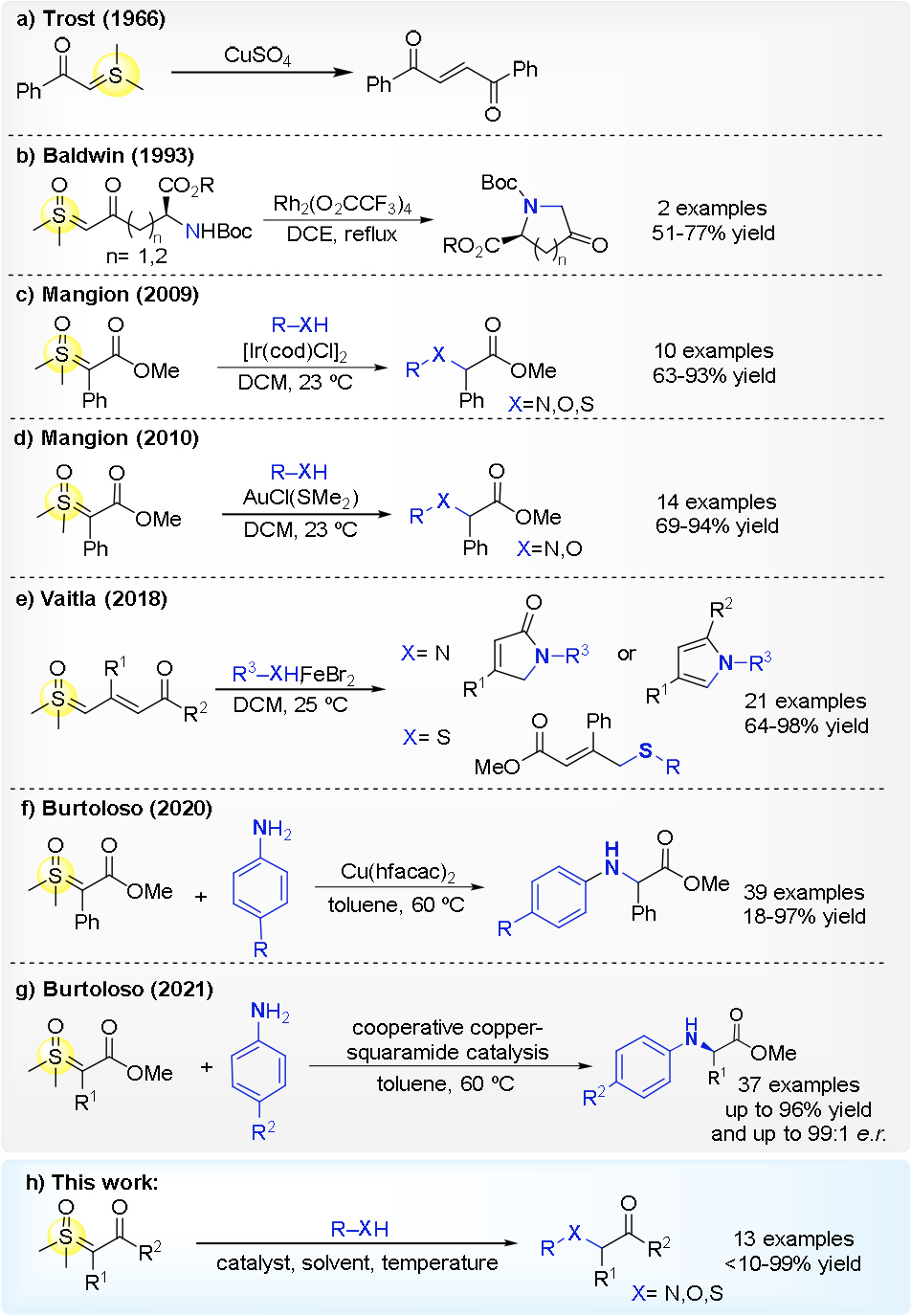
The relevance of these precursors became evident in 1966, when Trost18 first described the generation of metal carbenes from sulfonium ylide, employing CuSO4 to promote C-C bond formation (Figure 1a). In 1993, Baldwin et al.19 demonstrated, for the first time, efficient intramolecular N-H insertion reactions using metal carbenes derived from sulfoxonium ylides in the presence of rhodium catalysts (Figure 1b).
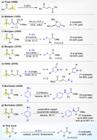
In 2009, Mangion et al.20 at Merck investigated transition-metal-catalyzed X-H insertion reactions (X: N, O and S) using exclusively an aryl-ester sulfoxonium ylide as a model substrate. In this study, several catalysts were examined, with particular emphasis on iridium complexes, in addition to rhodium and ruthenium. The iridium catalysts proved to be the most efficient for the X-H insertions, providing yields of up to 93% (Figure 1c). The authors also demonstrated that the optimized conditions using the iridium catalyst were effective for intramolecular N-H insertions in simpler sulfoxonium ylides, enabling the synthesis of various nitrogen-containing heterocycles. In the following year, Mangion and Weisel21 expanded these studies by exploring iridium, silver, platinum, and gold catalysts for X-H insertion reactions. The authors observed that gold complexes provided the best results, achieving yields of up to 94% in the X-H (X: N and O) insertions of the aryl-ester ylide (Figure 1d).
More recently, efforts have focused on the search for more accessible catalysts for X-H insertion reactions. In this context, Vaitla et al.22 demonstrated that iron(II) catalysts also show great potential for X-H (X: N and S) reactions via metal carbenes generated from vinyl sulfoxonium ylides (Figure 1e). Two years later, Burtoloso23 described the use of copper(II) complexes as catalysts for N-H insertions in aryl-ester sulfoxonium ylides (Figure 1f).
In 2021, the Burtoloso24 group also described the first examples of asymmetric N-H insertion reactions via metal carbenes derived from aryl-ester ylides. The authors employed a cooperative copper-bifunctional squaramide catalysis, through which yields ranging from 49-96% were obtained and enantiomeric ratios reaching up to 99:1 (Figure 1g). These advances demonstrated that less noble transition metals can also promote X-H insertions via metal carbenes derived from sulfoxonium ylides, significantly expanding the practical and economic viability of these transformations.
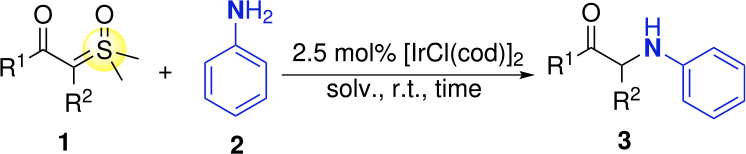
Despite this progress, most studies still focus on the donor-acceptor aryl-ester sulfoxonium ylides when evaluating different catalysts for X-H insertions. Thus, in this work we investigated a variety of noble and non-noble metal catalysts for X-H (X: N, O, and S) insertions mediated by metal carbenes, employing both classical non-substituted keto-, ester-, and amide-type sulfoxonium ylides and alkylated/arylated sulfoxonium ylides. Overall, our goal was to establish a comprehensive overview, that is, a guide, for these transformations.
Experimental
Reaction setup
Unless stated otherwise, all reactions were performed in ovenor flame-dried glassware, equipped with magnetic stir, tightly fitted rubber septa and under a positive pressure of dry argon. Reagents and solvents were handled by using standard syringe techniques. Reaction progress was monitored by thin-layer chromatography (TLC) on silica gel (aluminum plates), visualized under ultraviolet (UV) light at 254 or 366 nm, followed by revelation with ceric ammonium molybdate (Hanessian’s Stain), ethanolic anisaldehyde, vaniline solution and potassium permanganate. It is noteworthy that after the reaction, the vial and the magnetic stir were treated with solution of HNO3:HCl (1:3), washed with water and ethanol before next use.
Chemicals
Unless otherwise noted, all solvents, reagents and catalysts were obtained from commercial suppliers and used without further purification. Aniline was purified by vacuum distillation.
Solvents
Tetrahydrofuran (THF) and toluene (Tol) were distilled with metallic sodium, stirred under reflux, and stored over 4Å molecular sieves (MS) under argon (Ar) atmosphere. Dichloromethane (CH2Cl2) was distilled over calcium hydride under Ar atmosphere. Acetonitrile (MeCN) was dried over 4Å MS under Ar atmosphere.
Purification
Product purification was carried out by flash chromatography on silica gel 60 (partcicle size 0.063 0.210 mm) or with a Biotage® Isolera™ prime system (Snap Ultra 10 g).
NMR spectroscopy
Hydrogen nuclear magnetic resonance (1H NMR) spectra were recorded using 400 (Agilent Technologies, 400/54 premium shielded) and 500 MHz (Agilent Technologies, 500/54 premium shielded) instruments. Carbon nuclear magnetic resonance (13C NMR) spectra were recorded using the instruments above at 100 and 125 MHz, respectively. For 1H and 13C{1H} NMR, the chemical shifts were referenced from tetramethylsilane (TMS) (d = 0.00 ppm). Couplings constants (J) were recorded in Hz. NMR multiplicities were recorded as follows: singlet (s), doublet (d), triplet (t), quartet (q), multiplet (m).
General procedure for syntesis of sulfoxonium ylides
The procedure was followed from literature25 with some modifications. To a 125 mL round bottom flask, equipped with magnetic stirrer, coupled with a condenser, and dried under reduced pressure with the support of hot-air pistol, the following reagents were added: trimethylsulfoxonium iodide (1.65 g, 7.48 mmol, 1.1 equiv.) and potassium tert-butoxide (1.60 g, 14.28 mmol, 2.1 equiv.). Under Ar atmosphere, dry THF (30.6 mL) was added and the reaction mixture stirred under reflux for 30 min. Next, after naturally reaching rt, the reaction mixture was cooled to 0 °C and a solution of benzoyl chloride, methyl chloroformate or phenyl isocyanate (6.80 mmol, 1 equiv.) in THF (6.8 mL, 1 M) was added dropwise. After that, the ice bath was removed and the resulting solution was stirred at rt for further 30 min. After the elapsed time, the solvent was removed under reduced pressure, distilled water was added, and the aqueous phase extracted with a mixture of CH2Cl2:iPrOH (3:1; 3x, 10 mL). The organic phase was combined, dried over Na2SO4, filtered, and the solvent removed under reduced pressure. The product was purified by recrystallization (EtOAc and hexanes).
General procedure for syntesis of methylated sulfoxonium ylides
The same procedure for the syntesis of unsubstituited sulfoxonium ylides was performed, using triethylsulfoxonium chloride instead of trimethylsulfoxonium iodide.
General procedure for syntesis of arylated sulfoxonium ylides
The procedure was followed from literature26 with some modifications. To a 10 mL round bottom flask, Pd2(dba)3 (45.8 mg, 0.05 mmol, 0.05 equiv.), XPhos (52.4 mg, 0.11 mmol, 0.11 equiv.), Cs2CO3 (358.4 mg, 1.1 mmol, 1.1 equiv.) and a magnetic stir were added sequentially. Under Ar, MeCN (3 mL) was added and the mixture stirred for 10 min at rt. To another 5 mL round bottom flask, sulfoxonium ylide 1 (1 mmol, 1 equiv.), PhBr (0.16 mL, 1.5 mmol, 1.5 equiv.) and MeCN (3 mL) were added under Ar atmosphere. This solution was then transferred to the first 10 mL flask via syringe. The resultant solution was stirred at 75 °C under Ar for 16 h. After the completion of the reaction, the crude was filtered over a plug of silica gel using a mixture of CH2Cl2/MeOH (85/15). The solvent was removed under reduced pressure and the product obtained via purification by column chromatography.
General procedure for N-H insertion reactions
To a 4.0 mL vial, ylide 1 (0.1 mmol, 1 equiv.) and metal catalyst (1-5 mol%) were added sequentially. After exchanging the atmosphere to Ar, solvent (PhMe or CH2Cl2, 0.1 M) was added, followed by distilled aniline 2 (0.15 mmol, 1.5 equiv.) via syringe, and the reaction mixture was stirred at determined temperature (rt or 80 °C). After the total consumption of the corresponding ylide or the stipulated reaction time (16 or 40 h), the reaction mixture was filtered through a short plug of silica gel, concentrated and purified via silica gel chromatography.
General procedure for X-H insertion reactions
To a 4.0 mL vial, 1a (22.6 mg, 0.1 mmol, 1 equiv.), metal catalyst (2.5 mol%) were added, followed by addition of X-H (0.15 mmol, 1.5 equiv. or 1 mmol, 10 equiv.) and solvent (PhMe or CH2Cl2, 1 mL, 0.1 M) under Ar. The reaction mixture was stirred at 80 °C until the consumption of the starting material, or after 40 h. After elapsed time, the crude was filtered on silica gel, the solvent was removed under reduced pressure and purification by column chromatography led to the product.
Results and discussion
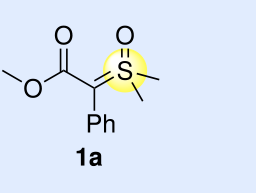
For preliminary studies, arylated methyl ester sulfoxonium ylide 1a was selected as substrate, given its consistent formation of the desired product, under different reaction conditions, as reported in studies of Mangion et al.,20,21 Furniel and Burtoloso,23 and Sivasankar et al.27 Thus, with the substrate in hands, the initial tests were carried out.
Drawing on our laboratory experience with this type of transformation and its respective mechanism,28 the standard reaction conditions were established in Tol, 80 °C, aniline (1.5 equiv.) and the respective catalyst load, and their progress was monitored either until complete consumption of the limiting starting ylide or for a maximum duration of 40 h. In cases where the desired product was not formed within the first 16 h, the reaction was not further extended. The results are summarized in Table 1.
In presence of copper catalysts, a wide range of yields were obtained. Cu(hfacac)2 afforded the desired product in high yield and with short reaction time (entry 1), in agreement with previous studies of Furniel and Burtoloso.23 Cu(acac)2 also delivered the product, however in lower yield compared with the first test (entry 2). When CuBr and Cu(OTf)2 was employed, product formation was observed at moderate yields (entries 3 and 4). These catalysts have also been previously evaluated, whereas CuBr provided yields comparable to those observed here and Cu(OTf)2 afforded significantly higher yields.23 Cu(OAc)2.H2O furnished a low yield for the N-H insertion reaction (entry 5), that also is consistent with the work of Furniel and Burtoloso,23 although under different conditions.
Upon evaluating the rhodium catalysts, the same behavior observed for copper was also identified. Rh2(OAc)4 furnished the desired product with excellent yield (entry 6). This catalyst was previously evaluated for Mangion et al.,20 however, under their reported conditions, the product could be obtained only in low yields. [Rh(cp*)Cl2]2, Rh2(esp)2 and [Rh(cod)Cl]2 afforded moderate to elevated yields for the N-H insertion reaction (entries 7,8 and 9). Although rhodium(II) catalysts are known for efficiently generating metal carbenes, the present results demonstrate that different oxidation states and ligands can also be tolerated under these reaction conditions, leading to the desired product. Rh2(TFA)4 exhibits a lower yield (entry 10).
The iridium catalysts exhibited higher average yields. [Ir(cp*)Cl2]2 furnished an almost quantitative yield for the evaluated reaction (entry 11). IrCl3.xH2O and [Ir(cod)Cl]2 have also been tested, delivering the desired product in high yields (entries 12 and 13). Mangion et al.21 evaluated the same catalysts in previous studies and obtained comparable yields for [Ir(cp*)Cl2]2 and [Ir(cod)Cl]2, under their reported conditions. IrCl3 was also evaluated in the cited work but did not promote any formation of the N-H insertion product.
Analyzing iron catalysts, Fe(OTf)2 afforded the desired product in high yields (entry 14), while FeBr2 furnished an elevated yield (entry 15). Vaitla et al.22 also evaluated FeBr2 for an N-H insertion reaction, and this catalyst could deliver the product, although in a different system. Authors also tested Fe(OTf)3, but with no success.
With nickel catalysts, only trace amounts of the desired product were detected (entries 16 and 17), consistent with the observations of Sivasankar et al.,27 in their experimental conditions. Palladium catalysts also furnished the N-H insertion product, in agreement with the same previous report, and with Pd2(dba)3 and PdCl2(PPh3)2 giving similar yields (entries 18 and 19). Platinum also furnished the N-H insertion product, in moderate yield (entry 20); however, previous studies21 reports higher yields for the same catalyst.
Bismuth and cobalt catalysts promoted the product formation, however in low yields (entries 21 and 22). Li et al.,29 demonstrated that cobaloxime complexes can promote the N-H insertion reactions in good yields, employing the arylated methyl diazoester, however, for the corresponding sulfoxonium ylide, the same result was not observed.
AuCl(SMe)2 successfully delivered the desired product (entry 23), consistent with previously reported data,21 although the yield was lower in the conditions used in this work. Manganese was also tested, and the product was obtained with moderate yield (entry 24).
With diazo compounds, silver salts are known to promote X-H insertion reactions, as described by Davies et al.30 In our system, AgOTf afforded a high yield of the desired product (entry 25), demonstrating that analogue N-H insertion reaction can also be achieved using the sulfoxonium ylides.
Ruthenium catalyst delivered the product in an elevated yield, comparable to those observed in previous reports in literature20 (entry 26). Scandium also afforded a high yield in the N-H insertion reaction (entry 27), consistent with the findings of Ramakrishna et al.,27 who identified this catalyst as the most effective for their system.
Analyzing VO(acac)2, an excellent yield was obtained for the N-H insertion reaction (entry 28). Otherwise, when zinc and zirconium were employed, only moderate yields are observed (entry 29 and 30).
Finally, the reaction with ylide 1a was evaluated in the absence of a catalyst to determine whether product formation would occur and to measure any background reaction. Surprisingly, the reaction afforded the desired product with 45% of yield (entry 31), although requiring 40 h to reach this outcome. Considering that, for some examples depicted in Table 1, it is not clear if the metal is really participating or if the yield is basically a result of the background reaction (or a combination of both). Background reaction was not observed for the other ylides employed in this work (see further discussion).
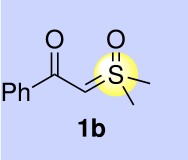
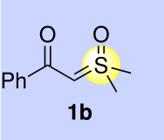
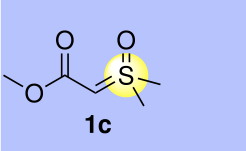
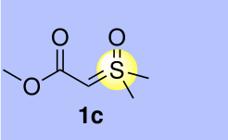
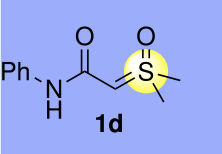
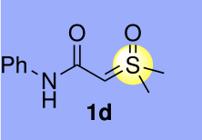
With the first results in hand, we turned our focus to the unsubstituted sulfoxonium ylides. These substrates were submitted to the same reaction conditions to monitor the formation of the N-H insertion products. Moreover, to evaluate the influence of different carbonyl systems on these reactions, keto-, esterand amidederived sulfoxonium ylides were employed (Table 2).
With copper catalysts, only the amide sulfoxonium ylide gave the product by employing CuBr, Cu(OTf)2 or Cu(OAc)2.H2O, albeit in low yields (entries 3, 4 and 5). Although copper is known for its capacity to promote N-H insertion reactions with non-substituted diazoketones and diazoesters,13, 31 the same efficiency was not observed employing the sulfoxonium ylides analogues.
Using rhodium catalysts, better results were obtained when compared to the copper ones. Although only low yields were obtained for most of tested catalysts (entries 6, 8, 9 and 10), [Rh(cod)Cl]2 could promote the N-H insertion products in moderated yields for all tested sulfoxonium ylides (entry 7). Iridium catalysts also afforded good results, with [Ir(cod)Cl]2 giving all the products of interest in moderate to elevated yields (entry 13). Iridium catalyzed N-H insertion reactions with diazo compounds are also described, however, with a limited scope of substrates being evaluated.15,31,32
For iron, palladium, gold and silver catalysts, the desired products were not effectively obtained, although previous studies reported that unsubstituted diazo compounds can be employed for N-H insertion reactions catalyzed by these metals.30,33-36 Nickel, platinum, manganese, bismuth and cobalt also had no success to deliver the desired products in good yields. The ruthenium catalyst [Ru(p-cymene)Cl2]2, generated all N-H insertion products from unsubstituted sulfoxonium ylides in moderate yields (entry 26). So far, ruthenium catalysts have been under-evaluated for X-H insertion reactions with both diazo compounds and sulfoxonium ylides (although carbene species is known to be formed with this metal).37
Finally, scandium, vanadium, zinc and zirconium catalysts did not afford good results for this transformation. The catalyst-free condition was also applied with the unsubstituted sulfoxonium ylides; however, no background reaction was observed (entry 31).
Based on the success of rhodium, iridium and ruthenium in providing the desired products with all tested substrates, the next step was decreasing the temperature of the reaction medium. Thus, the most effective catalysts depicted in Table 2 were employed in the same system, but at room temperature (Table 3). Dichloromethane (DCM) and Tol were employed on these tests, to evaluate whether the nature of the solvent or the solubility of the reaction system can influence the yields and product distribution (it is well known that the reaction outcome in metal carbene reactions can change drastically depending on the solvent used).38
When [Ir(cod)Cl]2 was employed as the catalyst, the desired products were formed with all sulfoxonium ylides substrates. For substrate 1a, the desired product was formed in 90% yield at 25 °C, however only with DCM as the solvent. For 1b and 1c, N-H insertion products were also obtained at this same temperature, both in DCM and Tol. For substrate 1d, the N-H insertion product was obtained in higher yield employing only toluene, taking 20 h to the complete consumption of the starting material. Finally, with [Rh(cod)Cl]2 and [Ru(p-cymene)Cl2]2 the formation of N-H insertion products were observed in good yields only with substrate 1a. For this substrate, no background reaction was observed. Substrate 1b and 1c were basically inert to these catalysts, but 1d gave 40% yield of the insertion product, when [Ru(p-cymene)Cl2]2 was employed in DCM at room temperature.
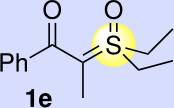
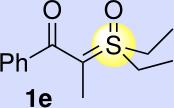
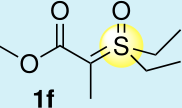
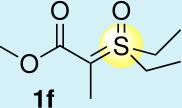
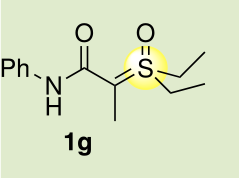
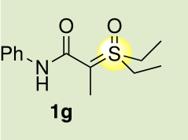
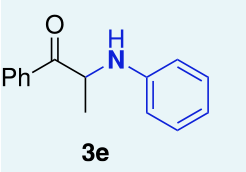
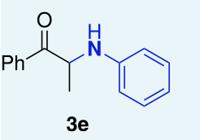
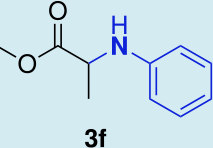
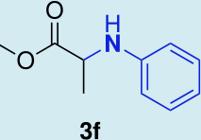
At this point, it had been decided to evaluate other substituted sulfoxonium ylides, to determine what is the influence on the reaction behavior. Thus, the methylated keto-, esterand amide derived sulfoxonium ylides 1e, 1f and 1g were submitted to the initial reaction conditions (from Tables 1 and 2) and the results are summarized on Table 4. [Ir(cod)cl]2 delivered the two desired N-H insertion products in moderate to elevated yields. Rhodium-catalyzed reactions also afforded the corresponding products, with the ketone being formed in a moderate yield, the amide derived in an elevated yield and the ester in excellent 92% yield. Ruthenium catalyst showed a similar behavior with all tested substrates, giving products in low yields.
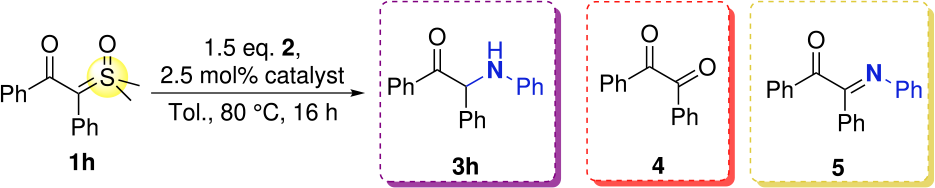
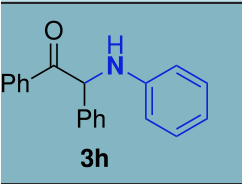
Similar to 1a, the arylated keto-derived sulfoxonium ylide 1h was also submitted to the initial reaction conditions of Table 1. The results are presented in Table 5.
Surprisingly, while the N-H insertion products were observed, the corresponding imine 5 was also isolated in comparable yields, as well as the diketone 4. Varying the metal, similar results were obtained, with [Rh(cod)Cl]2 affording the higher yields for both compounds 3h and 5. The imine was isolated in an inseparable mixture with the corresponding diketone 4, and their respective yields were determined by quantitative NMR.
A possible mechanism for the formation of dicarbonyl compound involves the attack of the oxygen atom of dimethyl sulfoxide (formed during the metal-carbene generation) on the carbene specie, followed by release of dimethyl sulfide (more details are shown on supporting information). Similar to the study that was depicted in Table 3, ylides 1e, 1f, 1g and 1h were also evaluated at room temperature and the results are summarized in Table 6.
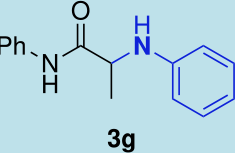
Based on the results shown in Table 3, where only the iridium catalyst could form the desired insertion products in appreciable yields with all tested substrates, the corresponding reactions were performed using only this metal. Methylated ylide 1f furnished insertion product 3f in excellent yield (97%) in DCM; however, the use of Tol caused a drastic decrease in the yield (22%). The keto-derived methylated ylide 1e have shown the same behavior. With the alkylated amide sulfoxonium ylide substrate, the best result was obtained using toluene, where the product 3g could be obtained with 50% of yield. With the phenyl-substituted keto-sulfoxonium ylide 1h, only traces of the product were obtained.
Comparing the reaction yields at room temperature and 80 °C, it was observed that the lower temperature tends to favor the formation of the desired products in DCM, except for amide-derived substrate (sulfoxonium ylides, generally, are not completely soluble in toluene at room temperature, requiring longer times for substrate consumption). At higher temperatures, toluene was employed efficiently as the solvent and a greater variety of metals could be used to obtain the desired products, making the reaction more attractive and versatile. With the results so far and comparing substituted (methyl and phenyl) and non-substituted sulfoxonium ylides, some points were observed: aryl-substituted ester-sulfoxonium ylide 1a is very reactive and can easily form the desired product, using different conditions and catalysts (even in the absence of a catalyst when the reaction is conducted at 80 °C, giving 45% of background reaction). Unsubstituted substrates had more difficulty to deliver the corresponding products, with yields up to 78%. α-Alkylated sulfoxonium ylides furnished better yields when compared to the unsubstituted ones, with yields up to 97% yield. These results indicate that the stability of the metal-carbene, generated under the reaction conditions, have a considerably influence on the reaction behavior. The α-aryl group probably promotes a very good stabilization of the carbene species, affording better results. Alkylated substrates can also stabilize the intermediate formed, but without the same efficiency, leading to a decrease in the yields. For the unsubstituted sulfoxonium ylides, practically no stabilization of the metal-carbene is provided, and this can explain why the lower yields were observed for these substrates.
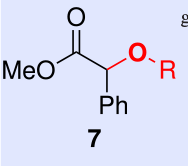
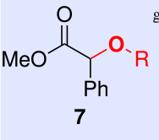
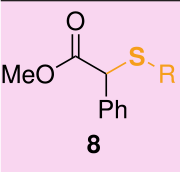
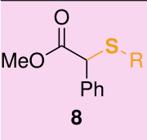
Encouraged by the success in obtaining the desired N-H insertion products, other nucleophiles were then evaluated for the same reaction. Given that the arylated methyl ester sulfoxonium ylide furnished the best results for this transformation and based on previously reported X-H insertion reactions with this substrate,20 it was selected for the following tests. Then, oxygen, sulfur and other nitrogen nucleophiles were submitted to the reaction conditions, in Tol at 80 °C and in DCM at room temperature. For more volatile nucleophiles, 10 equiv. were used. The results are depicted in Table 7.
Employing oxygen nucleophiles, ethanol and benzyl alcohol, an inseparable mixture of the O-H insertion product and the 1,2-dicarbonyl compound was observed under all tested reaction conditions. For ethanol, rhodium catalyst furnished the best result, both at room temperature and 80 °C.
For benzylic alcohol, ruthenium delivered a higher yield. With heating, iridium afforded the best result, but also with considerably high formation of the dicarbonyl compound. 4-Methyl phenol was also tested but the desired product was not effectively formed.
Alkyl thiols furnished good results for the S-H insertion reaction. At rt, iridium catalyst could afford the desired product with ethanethiol in a high yield.
For benzylthiol, rhodium catalyst furnished the best result. At 80 °C, rhodium catalyst presented the higher yields for both thiols employed. Thiophenols were not tested given that the corresponding insertion reaction is reported with no need of any catalyst.39
For benzylamine, at rt, only trace amounts of the product were obtained; however, with heating, better yields were observed (with rhodium providing the higher one; 89% yield). n-Buthylamine was also tested, but its corresponding product is hardly formed.
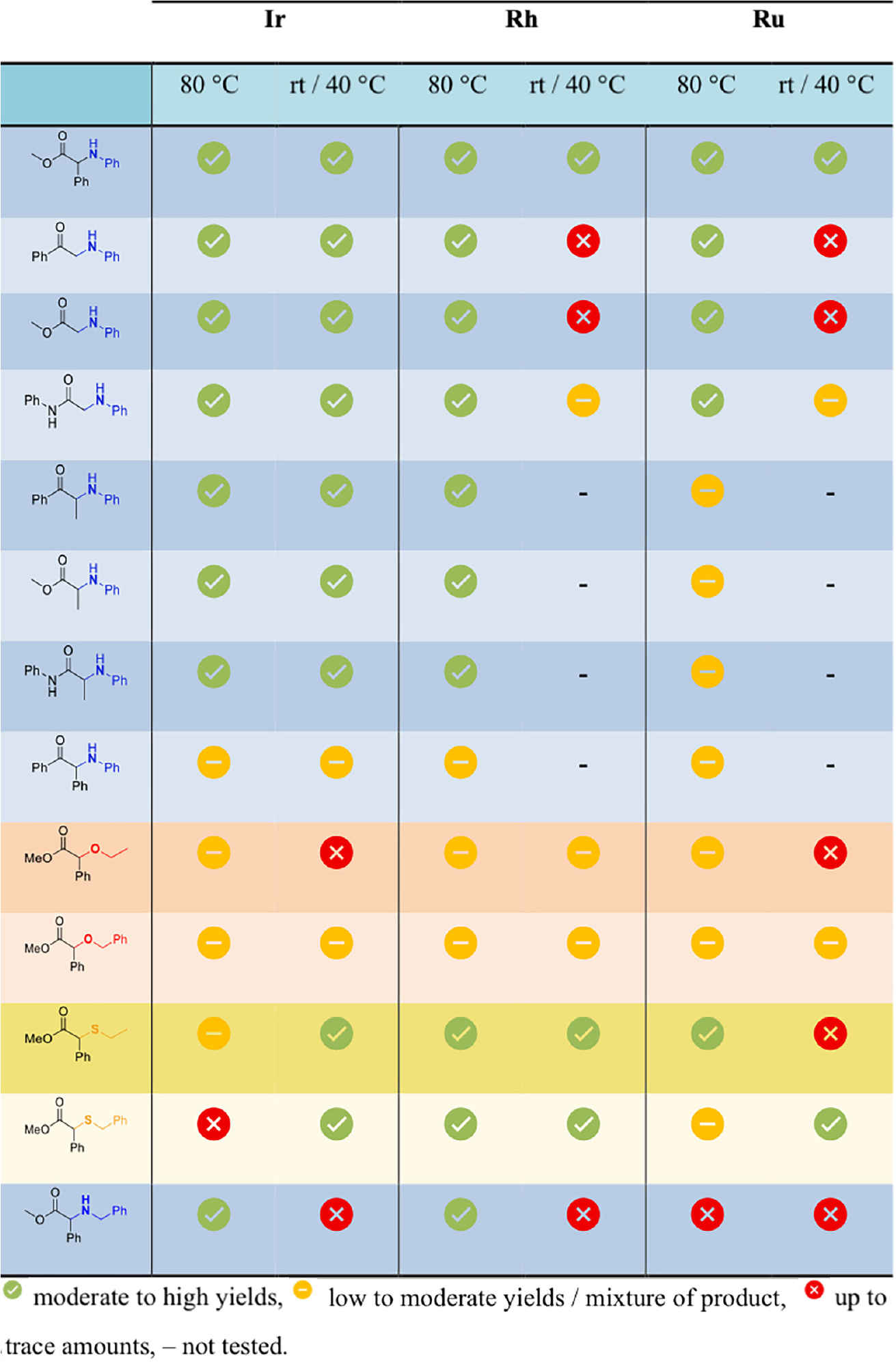
After analyzing all the results from Tables 1-7, a guide is provided where all the results are summarized on Figure 2.

Unsubstituted substrates can afford the corresponding desired products in moderate to elevate yields at higher temperatures, with all best performing tested catalysts. However, at lower temperatures only iridium can effectively deliver the compounds of interest. In these cases, DCM is preferred for esterand ketoderivates and toluene for amide-derivatives. Alkylated substrates also could lead to the N-H insertion products with all evaluated catalysts at 80 °C, with ruthenium giving the lower yields. At room temperature, iridium in DCM could provide the desired 3e and 3f products in excellent yields, while Tol furnished the best result for 3g product. For ester-derived ylide 1a, the most reactive, both 80 °C and rt can efficiently deliver the product with yields up to 98%. The keto-derived substrate 1h always affords low yields for the N-H insertion reaction. For other X-H insertion reactions, alcohol nucleophiles were not efficient, with the formation of the 1,2-dicarbonyl compound in all tested conditions and low yields of the O-H insertion product. S-H insertion reactions with alkyl thiols furnished the products with up to 94% of yield, with rhodium and iridium providing the better results. N-H insertion reactions with benzylamine afforded high yields, however, heating is required for this result.
Conclusion
This work presented a broad and comparative analysis of X-H insertion reactions, mediated by metal carbenes from different classes of sulfoxonium ylides. By systematically investigating α-arylated, α-alkylated, and unsubstituted (keto-, ester-, and amide-) ylides, it was possible to observe how the structure of the precursor and the choice of metal directly influence reaction performance. The results indicate that α-arylated ester-sulfoxonium ylides are indeed the most efficient; 1a reaching yields of up to 98% with iridium and above 90% with metals such as rhodium, iron, scandium, vanadium, and silver. These findings reinforce that the aryl group provides strong carbene stabilization, enabling broad catalytic compatibility. In contrast, unsubstituted ylides delivered products only in the presence of iridium, rhodium, and ruthenium (moderate yields of up to 78%). The α-alkylated substrates performed well, particularly with iridium and rhodium, achieving yields of up to 97%. The evaluation of different solvents and temperatures revealed that mild conditions, such as dichloromethane at room temperature, especially favor iridium catalysts, whereas higher temperatures expand the catalytic scope and allow the use of less polar solvents such as Tol. For keto sulfoxonium ylides, no product arising from the Wolff rearrangement was detected. Finally, although O-H and aliphatic N-H insertions generally showed lower yields (typically below 30% and, in some cases, limited to trace amounts), S-H insertions exhibited significantly superior behavior, reaching the highest yields among the aliphatic nucleophiles (up to approximately 94% under the evaluated conditions).
Supplementary Information
Supplementary data (experimental procedures, substances details, 1H and 13C NMR spectra) are available free of charge at http://jbcs.sbq.org.br as PDF file.
Supplementary PDF
Acknowledgments
The authors acknowledge the Brazilian agencies: CAPES (88887.006417/2024-0, 88887.668991/2022-00), CNPq (141064/2025-0, 307237/2021-4) and FAPESP (2025/06191-0, 2025/06187-2, 2023/02675-7).
Data Availability Statement
The data underlying this study are available in the published article and its Supplementary Information.
References
-
1 Chanthamath, S.; Iwasa, S.; Acc. Chem. Res. 2016, 49, 2080. [Crossref]
» Crossref -
2 Li, M.-L.; Yu, J.-H.; Li, Y.-H.; Zhu, S.-F.; Zhou, Q.-L.; Science 2019, 366, 990. [Crossref]
» Crossref -
3 Huang, M.-Y.; Zhu, S.-F.; Chem Catal. 2022, 2, 3112. [Crossref]
» Crossref -
4 Ruck, R. T.; Pan, J.; Vaswani, R. G.; Kosjek, B.; Strotman, N. A.; Cai, C.; Humphrey, G. R.; Org. Process Res. Dev. 2022, 26, 648. [Crossref]
» Crossref -
5 Mangion, I. K.; Ruck, R. T.; Rivera, N.; Huffman, M. A.; Shevlin, M.; Org. Lett. 2011, 13, 5480. [Crossref]
» Crossref -
6 Phelps, A. M.; Chan, V. S.; Napolitano, J. G.; Krabbe, S. W.; Schomaker, J. M.; Shekhar, S.; J. Org. Chem. 2016, 81, 4158. [Crossref]
» Crossref -
7 Molinaro, C.; Bulger, P. G.; Lee, E. E.; Kosjek, B.; Lau, S.; Gauvreau, D.; Howard, M. E.; Wallace, D. J.; O’Shea, P. D.; J. Org. Chem. 2012, 77, 2299. [Crossref]
» Crossref -
8 Zhang, X.; Ma, M.; Wang, J.; Arkivoc 2003, 2003, 84. [Crossref]
» Crossref -
9 Salzmann, T. N.; Ratcliffe, R. W.; Christensen, B. G.; Bouffard, F. A.; J. Am. Chem. Soc. 1980, 102, 6161. [Crossref]
» Crossref -
10 Bachmann, S.; Fielenbach, D.; Jørgensen, K. A.; Org. Biomol. Chem. 2004, 2, 3044. [Crossref]
» Crossref -
11 Lian, Y.; Davies, H. M. L.; J. Am. Chem. Soc. 2010, 132, 440. [Crossref]
» Crossref -
12 Gillingham, D.; Fei, N.; Chem. Soc. Rev. 2013, 42, 4918. [Crossref]
» Crossref -
13 Burtoloso, A.; Santiago, J.; Bernardim, B.; Talero, A.; Curr. Org. Synth. 2015, 12, 650. [Crossref]
» Crossref -
14 Bergstrom, B. D.; Nickerson, L. A.; Shaw, J. T.; Souza, L. W.; Angew. Chem. 2021, 133, 6940. [Crossref]
» Crossref -
15 Zhong, Z.; Besnard, C.; Lacour, J.; Org. Lett. 2024, 26, 983. [Crossref]
» Crossref -
16 Green, S. P.; Wheelhouse, K. M.; Payne, A. D.; Hallett, J. P.; Miller, P. W.; Bull, J. A.; Org. Process Res. Dev. 2020, 24, 67. [Crossref]
» Crossref -
17 Burtoloso, A. C. B.; Dias, R. M. P.; Leonarczyk, I. A.; Eur. J. Org. Chem. 2013, 2013, 5005. [Crossref]
» Crossref -
18 Trost, B. M.; J. Am. Chem. Soc. 1966, 88, 1587. [Crossref]
» Crossref -
19 Baldwin, J. E.; Adlington, R. M.; Godfrey, C. R. A.; Gollins, D. W.; Vaughan, J. G.; J. Chem. Soc., Chem. Commun. 1993, 18, 1434. [Crossref]
» Crossref -
20 Mangion, I. K.; Nwamba, I. K.; Shevlin, M.; Huffman, M. A.; Org. Lett. 2009, 11, 3566. [Crossref]
» Crossref -
21 Mangion, I. K.; Weisel, M.; Tetrahedron Lett. 2010, 51, 5490. [Crossref]
» Crossref -
22 Vaitla, J.; Bayer, A.; Hopmann, K. H.; Angew. Chem., Int. Ed. 2018, 57, 16180. [Crossref]
» Crossref -
23 Furniel, L. G.; Burtoloso, A. C. B.; Tetrahedron 2020, 76, 131313. [Crossref]
» Crossref -
24 Furniel, L. G.; Echemendía, R.; Burtoloso, A. C. B.; Chem. Sci. 2021, 12, 7453. [Crossref]
» Crossref -
25 Souza, J. H.; Vargas, J. A. M.; Burtoloso, A. C. B.; Synthesis 2024, 56, 758. [Crossref]
» Crossref -
26 Caiuby, C. A. D.; Vidal, L.; Burtoloso, A. C. B.; Aïssa, C.; ChemCatChem 2023, 15, e202201643. [Crossref]
» Crossref -
27 Ramakrishna, K.; Jayarani, A.; Koothradan, F. F.; Sivasankar, C.; Appl. Organomet. Chem. 2020, 34, e5748. [Crossref]
» Crossref -
28 Burtoloso, A. C. B.; Vargas, J. A. M.; de Jesus, M. P.; Echemendía, R. In Heterocycles from Carbenes and Nitrenes; Doyle, M. P.; Xu, X., eds.; Springer International Publishing: Cham, Switzerland, 2023, pp. 63-105. [Crossref]
» Crossref -
29 Wu, K.; McWhorter, K. L.; Ford, A.; Tan, L.; Waidmann, L. M.; Vazquez Hernandez, J. O.; Garcia, M. M.; Davis, K. M.; Li, G.; Org. Chem. Front. 2025, 12, 6989. [Crossref]
» Crossref -
30 Hansen, J. H.; Davies, H. M. L.; Chem. Sci. 2011, 2, 457. [Crossref]
» Crossref -
31 Zhao, X.; Zhang, Y.; Wang, J.; Chem. Commun. 2012, 48, 10162. [Crossref]
» Crossref -
32 Guo, P.; Chen, Y.; Tao, L.; Ji, S.; Zhang, R.; Zhang, Z.; Liang, X.; Wang, D.; Li, Y.; Zhao, J.; ACS Catal. 2024, 14, 4690. [Crossref]
» Crossref -
33 Zhu, S.-F.; Zhou, Q.-L.; Natl. Sci. Rev. 2014, 1, 580. [Crossref]
» Crossref -
35 Zhang, D.; Qiu, H.; Jiang, L.; Lv, F.; Ma, C.; Hu, W.; Angew. Chem. 2013, 125, 13598. [Crossref]
» Crossref -
35 Wei, F.; Song, C.; Ma, Y.; Zhou, L.; Tung, C.-H.; Xu, Z.; Sci. Bull. 2015, 60, 1479. [Crossref]
» Crossref -
36 Zhang, X.; Liu, Z.; Sivaguru, P.; Bi, X.; Chem Catal. 2021, 1, 599. [Crossref]
» [Crossref -
37 Dey, S.; De Sarkar, S.; Adv. Synth. Catal. 2017, 359, 2709. [Crossref]
» Crossref -
38 Burtoloso, A. C. B.; Correia, C. R. D.; J. Organomet. Chem. 2005, 690, 5636. [Crossref]
» Crossref -
39 Dias, R. M. P.; Burtoloso, A. C. B.; Org. Lett. 2016, 18, 3034. [Crossref]
» Crossref
Edited by
-
Editor handled this article:
Emilio Carlos de Lucca Júnior (Guest)