 Comparison of the Stability of Fatty Acid Composition in Freeze-Dried, Pasteurized, and Raw Human Milk During Long-Term Storage
Abstract
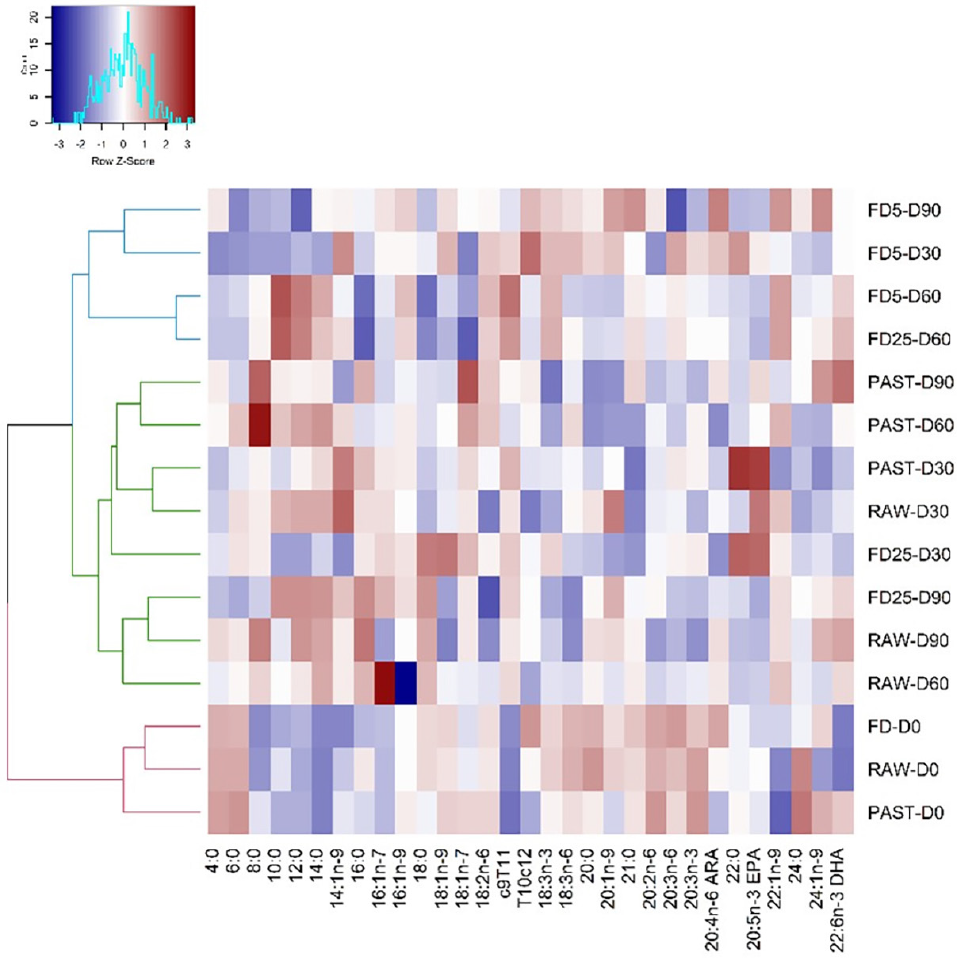
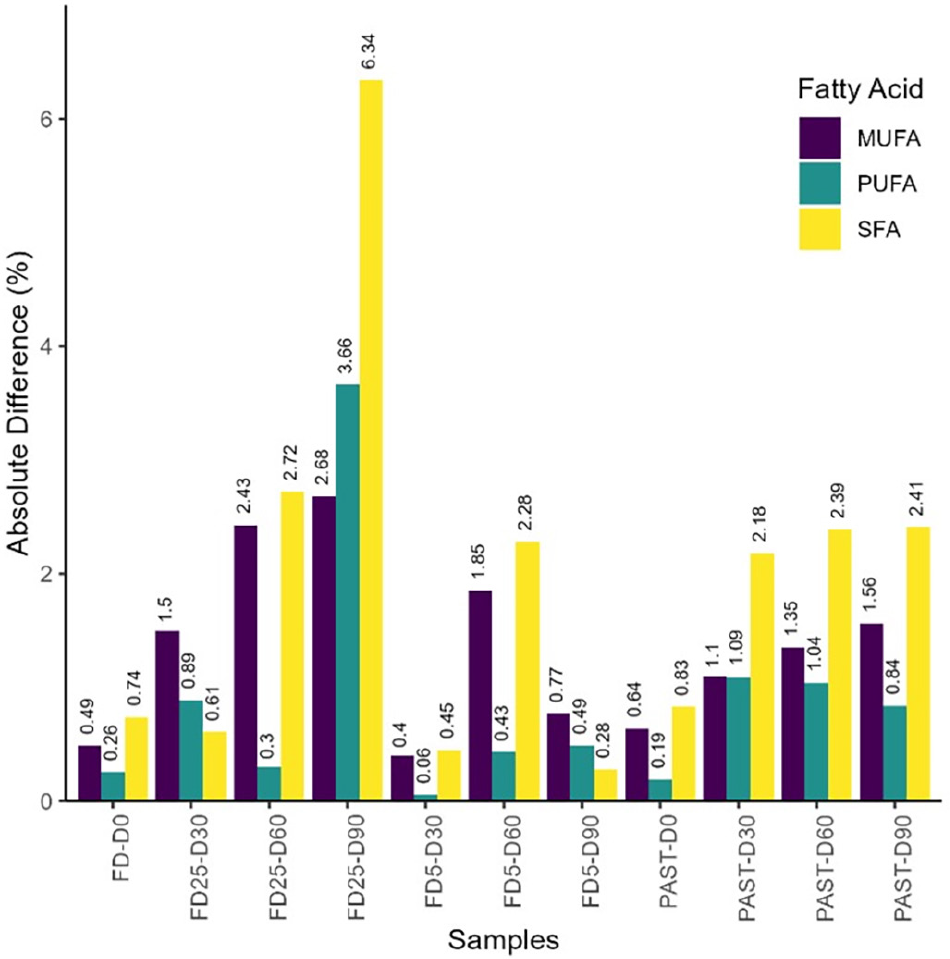
Human milk is the gold standard for newborn nutrition. When direct breastfeeding is not possible, donated human milk is recommended for premature or low-birth-weight infants. However, human milk banks face structural and logistical limitations, as they employ pasteurization as the standard treatment, which involves the use of temperature, and subsequently depend on a cold chain for storage and distribution. Freeze-drying appears to be a promising alternative, although still little used. It involves sublimation and water removal, extending shelf life and facilitating distribution. This study aimed to evaluate the fatty acid composition and quality of freeze-dried human milk during 90 days of storage at different temperatures (25 and 5 ºC), comparing it with raw and pasteurized human milk. The results, based on hierarchical cluster analysis of fatty acid composition, indicated that freeze-drying did not immediately alter the fatty acid profile and remained stable for up to 60 days, associated with prolonged refrigeration. Furthermore, freeze-dried human milk showed greater similarity to raw human milk. Variations in nutritional quality over time reinforce the predictions of freeze-drying, and further studies on other bioactive compounds are recommended to consolidate the technique in human milk banks.
Keywords:
GC-FID; fatty acid composition; lipid quality indices; storage; human milk bank
 Thumbnail
 Thumbnail