 Microwave-Assisted vs. Conventional Knoevenagel-Doebner Condensation for the Synthesis of 3-Arylacrylic Acids: a Pyridine-Rationalized Approach
Abstract
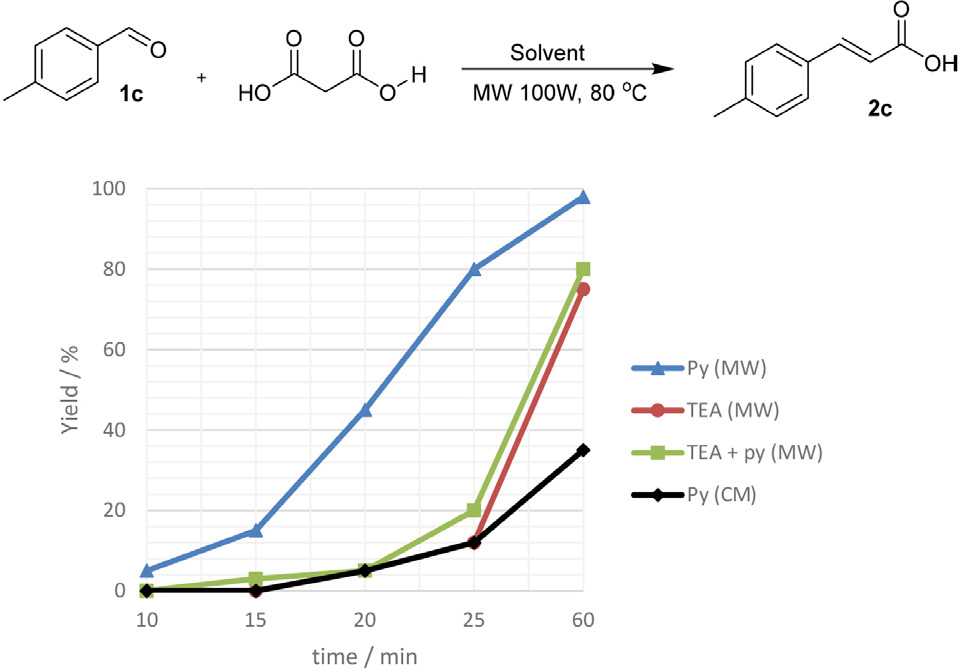
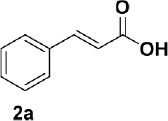
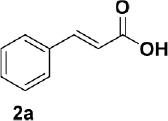
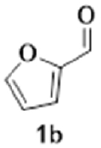
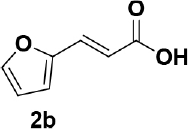
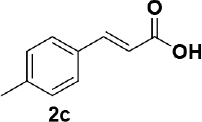
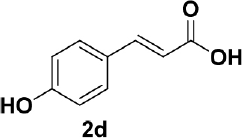
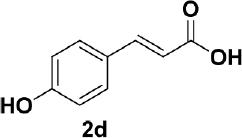
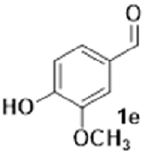
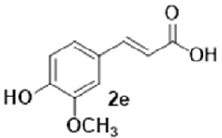
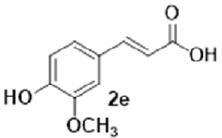
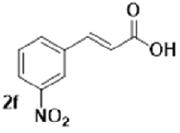
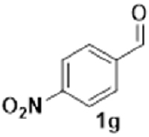
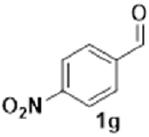
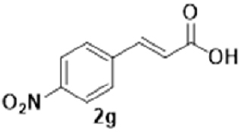
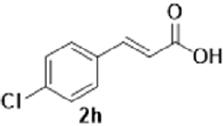
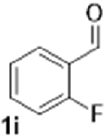
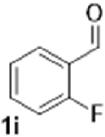
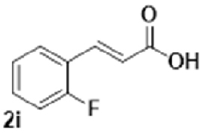
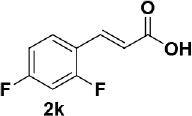
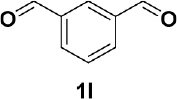
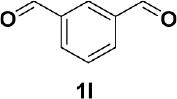
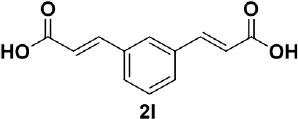
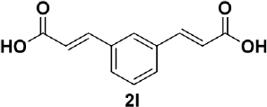
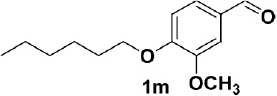
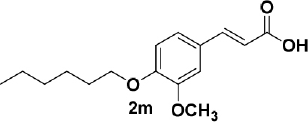
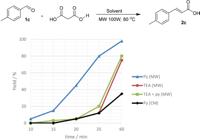
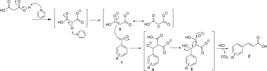
Microwave-assisted Knoevenagel-Doebner condensation mediated by pyridine has proven to be a highly efficient method for the synthesis of 3-aryl acrylic acids, which are important intermediates in the preparation of industrially and pharmacologically relevant compounds. The efficiency of the present approach is demonstrated by high reactant conversion, along with a significant reduction in reaction time compared to conventional heating methods. A comparative study revealed that the use of pyridine as both base and solvent under either conventional reflux or microwave-assisted conditions clearly favors the latter, with reactions proceeding at least eight times faster under microwave irradiation. Furthermore, the method was successfully scaled up for selected target molecules, enabling the synthesis on a 50 mmol scale of cinnamic acid (2a), (E)-3-(furan-2-yl) acrylic acid (2b), and ferulic acid (2e).
Keywords:
acrylic acids; microwave-assisted synthesis; Kenoevenagel-Doebner; large scale
 Thumbnail
 Thumbnail