 Development of Task-Specific Benzothiadiazole-Based AIEE Luminogens for Latent Fingerprint Recognition
Abstract
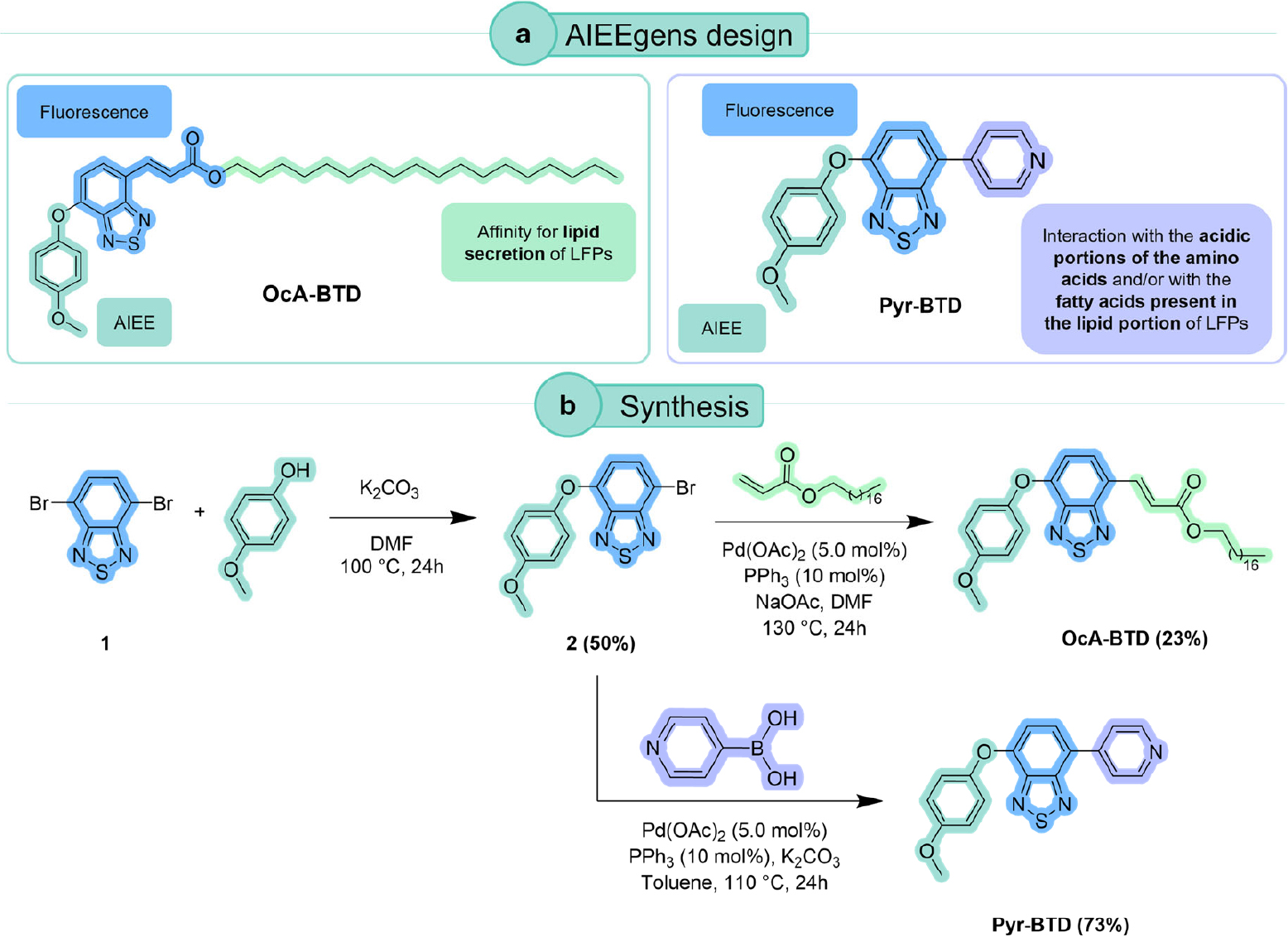
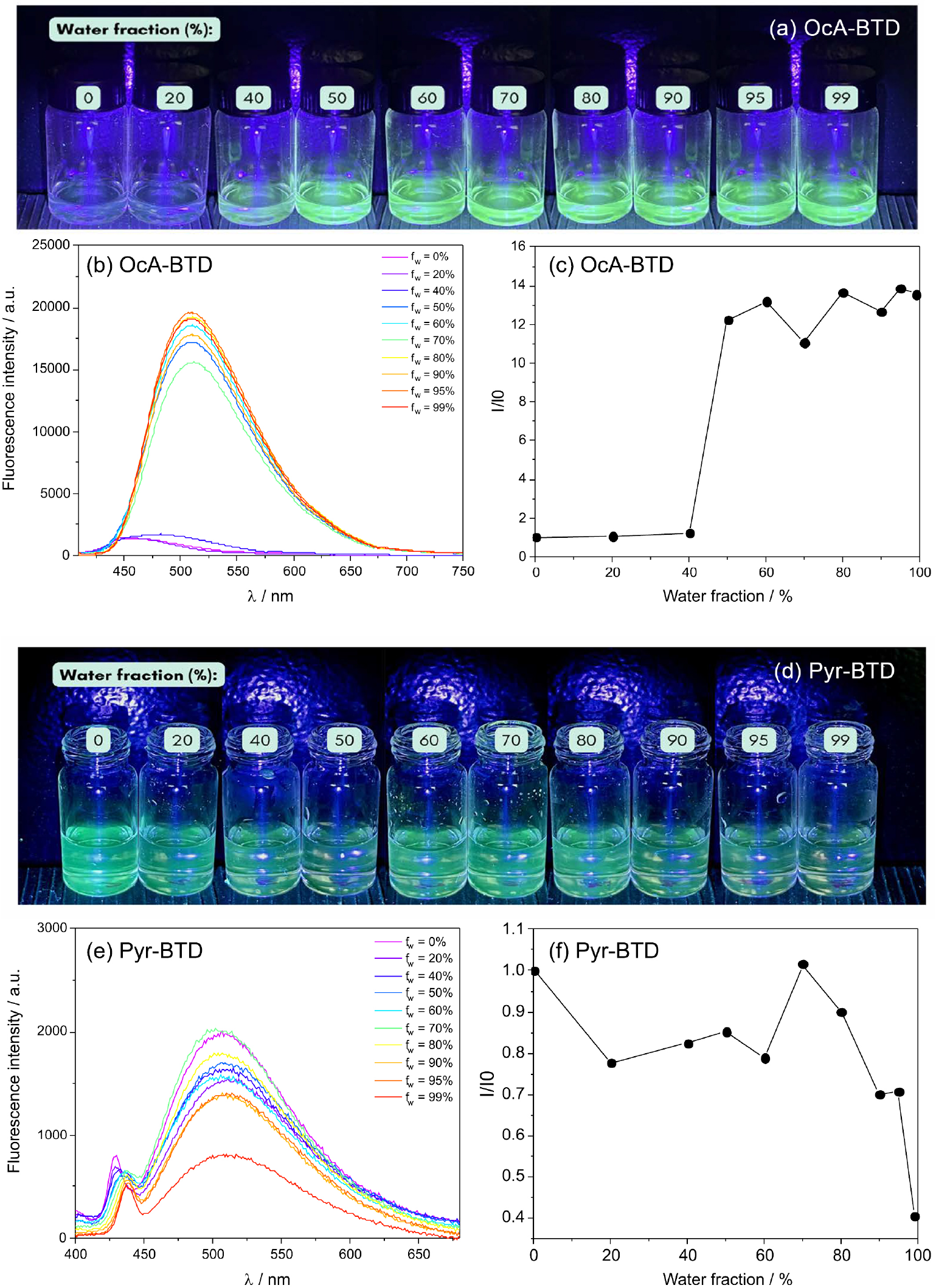
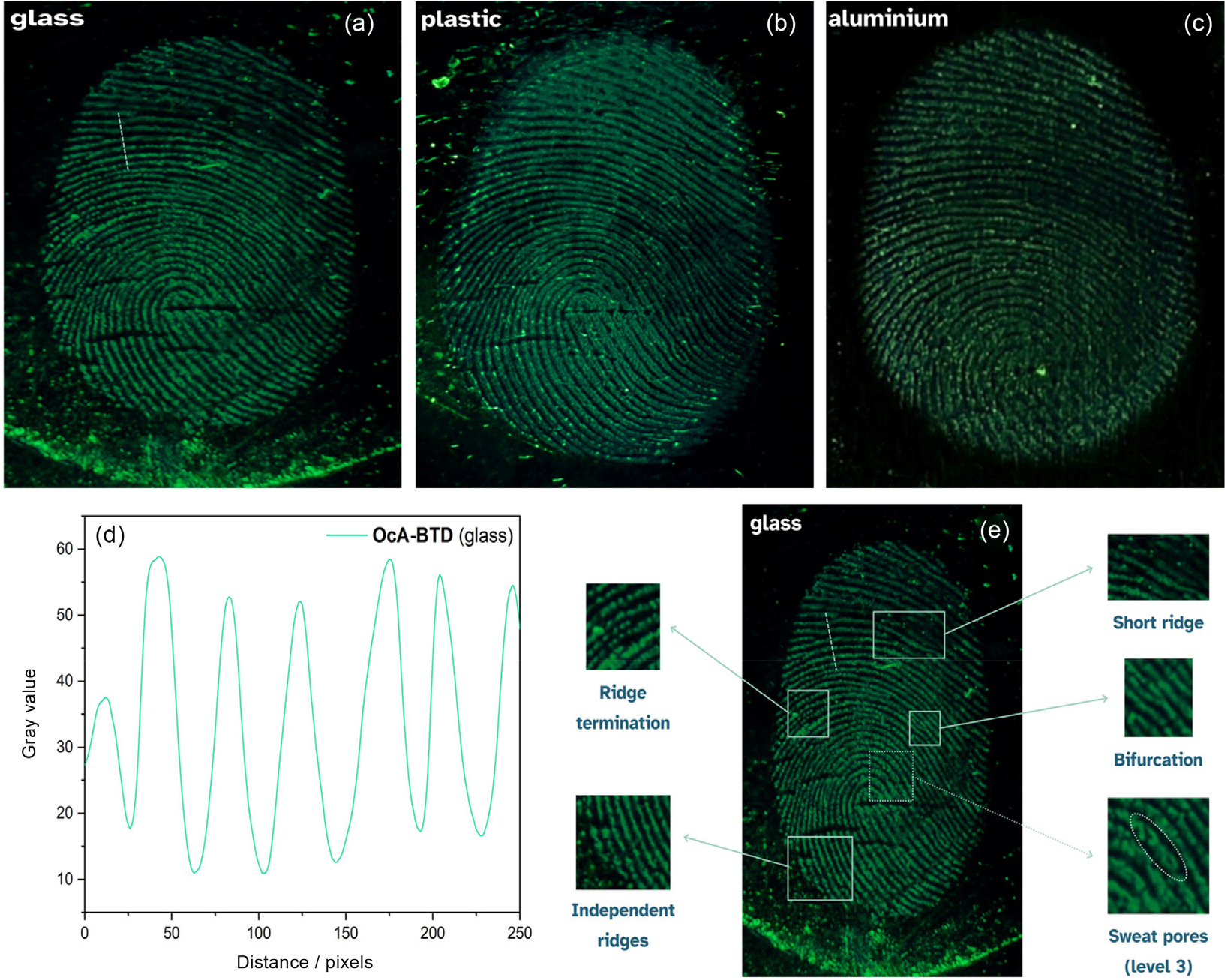
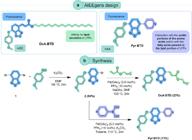
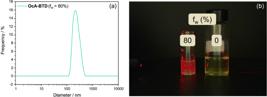
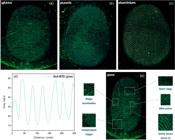
Latent fingerprints (LFPs) are a key tool in forensic identification due to their uniqueness and long-term stability. However, their visualization at crime scenes remains challenging, highlighting the need for more efficient development methods. Recent studies have focused on organic compounds exhibiting aggregation-induced enhanced emission (AIEE), with weak luminescence in solution but strong emission in aggregated states. When incorporated into the sebaceous residues of fingerprints, these compounds can significantly enhance luminescence, enabling high-contrast and well-defined LFP images. In this work, new aryloxy-benzothiadiazole (BTD) derivatives were developed for LFP detection. Two compounds, OcA-BTD and Pyr-BTD, were synthesized, each designed according to a distinct fingerprint recognition strategy. For Pyr-BTD, a pyridine moiety was incorporated to promote interactions between the basic nitrogen and amino acids and fatty acids present in LFP residues. In contrast, OcA-BTD was designed with a highly lipophilic octadecyl chain to enhance affinity toward the lipid-rich components of LFPs. As a result, only the octadecyl-substituted compound exhibited pronounced AIEE, showing green emission in the aggregated state. This AIEEgen enabled the clear visualization of levels 1, 2, and 3 on fingerprint details on different substrates, providing excellent contrast between LFPs ridges and furrows.
Keywords:
latent fingerprint; aggregation-induced emission; fluorescence; benzothiadiazole; intramolecular charge-transfer
 Thumbnail
 Thumbnail
 Thumbnail
 Thumbnail
 Thumbnail