
 WOMEN IN PHYSICAL CULTURE CIRCLES: BODIES, NARRATIVES, AND DECOLONIAL PRACTICES
ABSTRACT
This study presents the physical culture circle developed with women in a local context, aiming to understand how their experiences are shaped by race/ethnicity, gender, and social class, as well as the difficulties they encounter in accessing physical culture. The research problem guiding this study consists in understanding how the physical culture circle can promote decolonial practices that contribute to the empowerment of these women. The project was carried out between March and October 2024 at a sports center in Maringá, Paraná, and involved the active participation of 14 women. Four stages guided the theoretical-methodological process: a) empirical and contextual reading; b) thematization/sensitization; c) experimentation/problematization; d) creative dialogical action. Data were recorded through field notes, photographs, and videos, and analyzed based on four axes: a) Who are these women?; b) Women and spirituality; c) What brings women closer to or distances them from physical culture?; d) What do they expect from public authorities? The project highlighted the diversity of ‘being a woman’ and the structural constraints that hinder access to physical culture, while also revealing the participants’ engagement in self-care and advocacy for qualified public policies. The physical culture circle proved to be powerful in fostering autonomy, critical awareness, and empowerment, while also offering resources for its situated replication in other contexts with a view to confronting coloniality.
Keywords:
Physical Culture Circle; Bodies; Women; Decoloniality.
RESUMO
Este estudo apresenta o círculo de cultura física desenvolvido com mulheres em uma realidade local, buscando compreender como suas experiências são atravessadas por raça/etnia, gênero e classe social, bem como as dificuldades que encontram no acesso à cultura física. O problema que orienta a pesquisa consiste em entender de que modo o círculo de cultura física pode promover práticas decoloniais que contribuam para o empoderamento dessas mulheres. O projeto foi realizado entre março e outubro de 2024, em um centro esportivo de Maringá-PR e contou com a participação ativa de 14 mulheres. Quatro etapas orientaram o processo teórico-metodológico: a) leitura empírica e contextual; b) tematização/sensibilização; c) experimentação/problematização; d) ação dialógica criadora. Os dados foram registrados em diário de campo, fotografias e vídeos, e analisados a partir de quatro eixos: a) Quem são essas mulheres?; b) Mulheres e espiritualidade; c) O que aproxima e afasta mulheres da cultura física?; d) O que elas esperam do poder público? O projeto evidenciou a diversidade no ‘ser mulher’ e os condicionantes estruturais que dificultam o acesso à cultura física, revelando também o engajamento das participantes no cuidado de si e na reivindicação por políticas públicas qualificadas. O círculo de cultura física mostrou-se potente para fomentar autonomia, consciência crítica e empoderamento, além de oferecer subsídios para sua replicação situada em outros contextos com vistas ao enfrentamento da colonialidade.
Palavras-chave:
Círculo de cultura física; Corpos; Mulheres; Decolonialidade.
Introduction
Studies related to women, bodies, and forms of resistance in contemporary society gain scope by prompting profound reflections on the paths they have taken in confronting situations of oppression or invisibility, motivated by the patriarchal and colonial structure that hinders/prevents their access to spaces and rights. By understanding women's bodies in their plural ethical-aesthetic sense, as a territory of struggle and expression, possibilities open up to activate collective educational practices that enhance their freedom, emancipation, and critical perception to face the challenges of a society that objectifies them, discrediting their capacity for agency. In this direction, we understand the organization of collective spaces as fundamental so that women can share stories, awaken their reflective thinking, experience their bodies in movement, and create opportunities for access to rights.
The development of research projects motivated by practical experiences with historically marginalized groups enables the construction of potential environments for emancipation and problematization regarding ‘being a woman’ and the intersections that make up its identity construction in confronting power relations. In this research, the problem that arises is: how can the physical culture circle promote decolonial practices that empower women? Starting from this understanding, this study creates a tension between theory and practice through the immersion of researchers in a local reality to understand how social markers of difference, notably race/ethnicity, gender, and social class, affect women, and how they have dealt with the difficulties in accessing physical culture. The participation of local agents and researchers in promoting ‘sensitive listening’ to groups subject to inequity and lack of opportunities contributes to giving materiality to what we call here the ‘physical culture circle’, which translates as a project and a theoretical-methodological path.
The physical culture circle is built at the interface with the culture circle1-4, with decolonial studies5-8 and with physical cultural studies9-13. The expression ‘physical culture circle’ associates the concept of ‘culture circle’ with that of ‘physical culture’ in order to awaken a critical bodily practice and political/civic awareness. In this process, the body (always plural) is understood as a product/producer of culture, traversed by power relations and made visible in its differences (race, ethnicity, gender, sexuality, social class, disability, among others). The dialogues aim to deconstruct hegemonic structures and promote emancipatory practices, engaging in struggles to valorize popular knowledge and to overcome inequalities and social injustices.
When conceived in the 1960s within the context of a country with numerous illiterate workers, the culture circle was fundamental because it was built in informal spaces focused on the literacy process and the development of the population's political consciousness. Decolonial studies - which also engage with Freire - as well as physical cultural studies - which draw on him in the debate on critical pedagogy and public pedagogy - emerged in the context of the 1990s, mobilized by other social demands and problems. Regarding decolonial studies, we observe a focus on valuing Latin American knowledge and cultures and confronting white and Eurocentric hegemony, driven by debates that highlight forms of exclusion intersected by race/ethnicity, gender, and social class. In relation to physical cultural studies - although lacking a Latin American approach, especially due to their origin in British and North American contexts - their contribution becomes central by thematizing the body in physical culture, recognized in its social markers of difference and in the power relations that permeate it.
In the current context, we seek to dimension the physical culture circle from a decolonial perspective, notably Latin American, without forgetting the various dialogues with literatures that tension colonial/decolonial and modern/postmodern perspectives. Its praxis is considered here through an embodied, democratic and just pedagogy14-16 with women from a local reality, whose vulnerability was courageously and widely shared with us. The organization of the participants in a circle, the exchange/listening of narratives, the debate about being a woman in society, the challenges that these bodies face and the problems concerning inequalities in access to physical culture are some examples of the methodological constitution of the physical culture circle. Studies that engage with Paulo Freire's circle of culture in physical education17-20 and beyond have contributed to thinking about pedagogical experiences aimed at critical education and emancipation.
The physical culture circle, developed at the Miosótis Sports Center between March and October 2024, began with approximately 30 women, although only 14 of them managed to remain until the end of the meetings. The project was organized based on four stages: empirical and contextual reading, thematization/sensitization, experimentation/problematization, and creative dialogical action. These stages are not linear or hierarchical but understood as a process. This means that, even if the group is in the third stage, the first can be resumed with a new focus or simply to review certain knowledge worked on. The meetings were organized weekly, and the data were recorded through a field diary, photographs, and videos. The analyses were carried out based on the identification of axes and form part of the structure of this investigation.
This text aims to present the physical culture circle developed with women in a local context, with the purpose of fostering a broader understanding of their constitution as women, understanding how they are affected by race/ethnicity, gender, and social class, and identifying the difficulties they encounter in accessing physical culture. In the first part of the study, we present the ‘empirical and contextual reading’ stage, during which we began frequenting the investigative site to establish the conditions for carrying out the project. In the second part, we present the work developed through the stages of thematization/sensitization, experimentation/problematization, and creative dialogical action, interspersed with analyses that unfold from the experiences with the women.
Starting the circle ... readings and contexts
The physical culture circle is characterized as a theoretical-methodological approach committed to social issues and interventions, notably in informal spaces, guided by counter-hegemonic modes of learning. This approach is developed within the framework of a network research project that brings together researchers from Brazil and abroad, titled ‘Decolonial challenges in physical culture: ethnic-racial, gender and social class crossings’ (CNPq/MCTI Call No. 10/2023, process No. 407669/2023-0). The project was approved by the Permanent Committee on Ethics in Research with Human Beings of the State University of Maringá, and the participants signed the Free and Informed Consent Form, authorizing the use of their voices and images. All records produced throughout the process were shared with them through a WhatsApp group and are part of the research database.
Three theoretical-methodological foundations are articulated and complement each other in structuring the physical culture circle: a) culture circle; b) physical cultural studies; c) decolonial studies. The culture circle, proposed by Paulo Freire1-2, constitutes a pedagogical space to produce collective knowledge, for dialogue and critical reflection on lived reality, and for political and civic education. Despite its vast contribution, it focuses its analyses strongly on inequalities generated by social class, without necessarily addressing other social markers of difference, such as gender and race/ethnicity. Decolonial studies5-8 contribute to filling this gap by introducing Latin American issues related to race/ethnicity, gender, and social class in an intersectional way, questioning colonial forms of knowledge, power, and being. In turn, physical cultural studies, despite presenting gaps regarding issues peculiar to the Latin American context, raise concerns about the body and fair and democratic access to physical culture9-11, something not addressed in the other approaches. Physical culture is understood as being formed by manifestations that include sport but are not restricted to it, also encompassing leisure, physical exercises, dance, games, among others. Based on its eight dimensions - contextual, empirical, transdisciplinary, theoretical, political, qualitative, self-reflective and pedagogical9 - physical cultural studies contribute decisively to the analysis and intervention of the physical culture circle approach.
Developed weekly, on Thursdays, at the Miosótis Sports Center, between March and October 2024, lasting 1 hour and 15 minutes, the physical culture circle had the effective participation of 14 women. The organization of the project was based on the observance of four stages: a) empirical and contextual reading; b) thematization/sensitization; c) experimentation/problematization; d) creative dialogical action. These steps were defined beforehand based on the author's experiences and those of other researchers involved in the research, as well as through knowledge shared in meetings. They were conceived in their dynamic form, valuing the body in conscious movement and recognizing the importance of engaging marginalized groups, encouraging them to sensitize their bodies, explore different gestures, and exercise autonomy within creative processes.
The stages of the physical culture circle fulfil both analytical and pedagogical functions. While they are oriented toward the formative, humanistic, and decolonial processes of vulnerable groups, they have materialized through dialogue that seeks to recognize forms of oppression and to construct pathways for overcoming them. In addition, the stages are not linear or hierarchical, but rather procedural. This means that even if the group is at the third stage, the first can be revisited with a new focus or simply to review certain knowledge previously addressed. Records were made through a field diary (collectively developed), voice recordings, and more than 390 photographs and videos. All the material produced was understood as empirical data and activated according to the authors' subjectivity in response to the proposed objectives.
The activities provided formative experiences and, at the same time, constituted how data were collected. The planning of the meetings was organized through weekly meetings, during which collective reflections were carried out on what had been developed previously. These reflections problematized aspects that proved to be powerful, as well as those that required adjustments, there by opening possibilities for intervention throughout the process. The choice of activities was based on the researchers’ accumulated experiences in the field of Physical Education - encompassing work with the body through games, dances, bodily expression and popular culture - combined with the three approaches that guide this research. The analyses were carried out based on the selection of four thematic axes, three of which were previously defined to address central issues in this research (who are these women?; what brings them closer to and distances them from physical culture?; what do they expect from public authorities?) and one of them (women and spirituality) emerged during the analytical process.
When we began the research project ‘Decolonial challenges in physical culture: ethnic-racial, gender and social class crossings’ (CNPq), we sought to identify possible locations for the development of the physical culture circle in Maringá. The selection of the Professor Bento Fernandes Dias Sports Center, popularly known as the Miosótis Sports Center, located in the peripheral urban area of the city of Maringá, in Paraná, was intentional and collaborative, given that one of the research participants was a teacher at this location and mediated with the center’s coordination so that we could start the first meetings and the processing of operational issues.
In the first stage of the physical culture circle, titled empirical and contextual reading, visits were made to the sports center so that the women could recognize the group that would conduct the work, as well as its proposal. The Miosótis Sports Center is located six to eight kilometers from the city center, within a housing complex characterized by predominantly residential streets, with schools, markets, and health centers nearby. It has an excellent structure, with a large gym equipped with Pilates balls, mats, mirror, equipment and sound system. There is a covered and illuminated court, an outdoor swimming pool, a soccer field, a bocce court, a storage room and a changing room. The structure also contains space for the secretary’s office, teachers' room, kitchen and bathrooms. Modalities such as functional training (with an average of 52 students), localized gymnastics (about 60 students), stretching (around 90 students), as well as jump classes, water aerobics, rhythms, swimming, volleyball, and other practices are offered.
This first stage took place between March and July of 2024. Initially, the proposing group met with the management team of the space to present the project and address the bureaucratic issues of its implementation. We frequented the sports center to observe the physical structure, follow some of the activities developed there, get to know the women who would potentially be part of the project, and begin a process of familiarization with them. We focused our follow-up on the stretching group, as it was the largest and composed mostly of women. Moreover, following this class there was an available time slot, which favored women remaining on site and participate in the activities, since swimming was suspended due to problems with the pool.
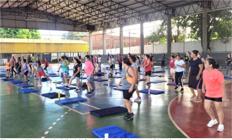
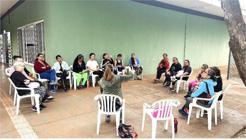
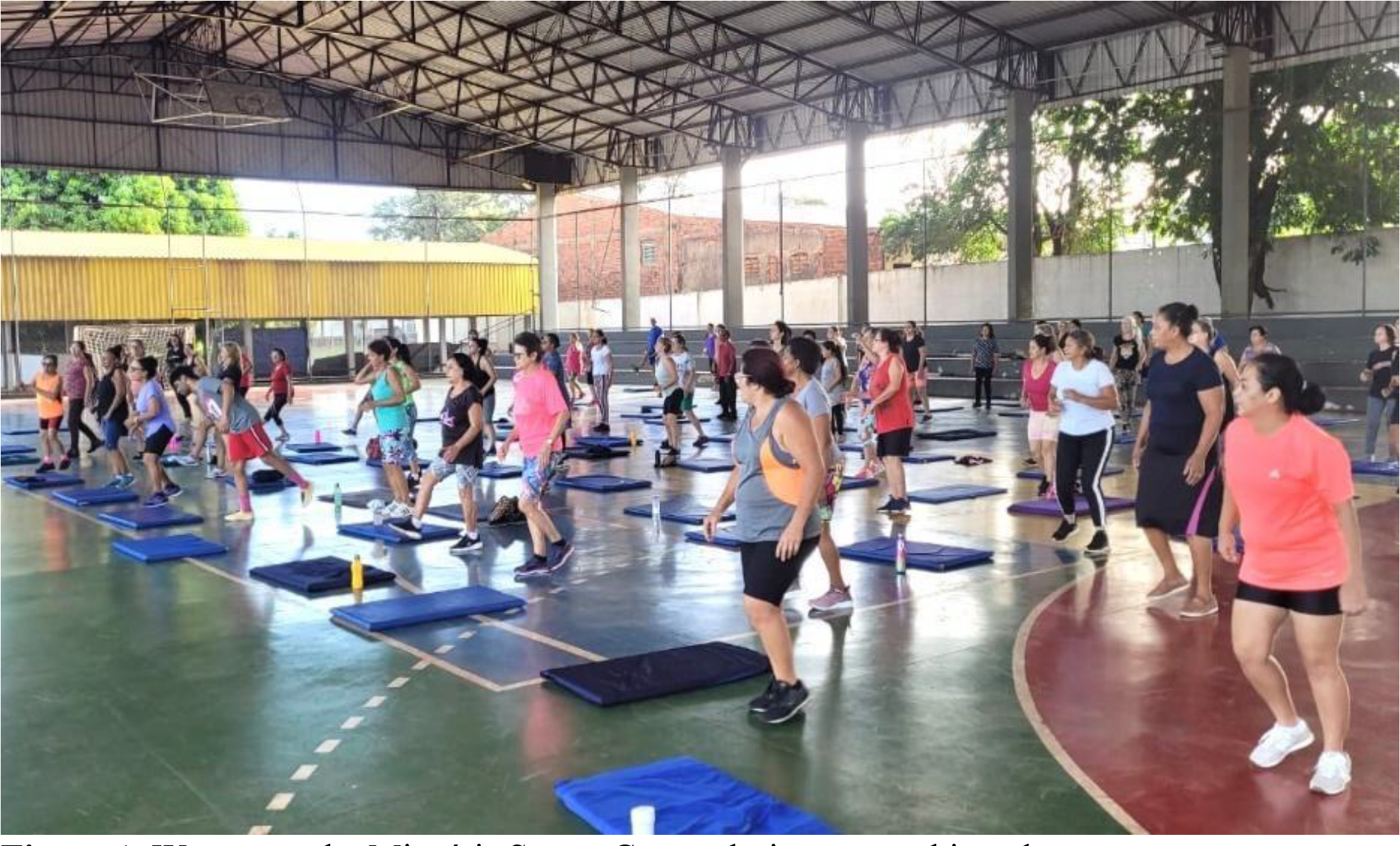
The observation of activities at the sports center was crucial for our approach to the women. As Barker-Ruchti and Schubring21 point out, both participants and researchers, in situated contexts, are affected by their own life experiences, singularities, origins, and subjectivities that impact participation and the conduct of a study. Therefore, this prior contact with the women allowed for the observation of the group's diversity in terms of generational factors, race/ethnicity, ability, and enthusiasm for the classes. Figure 1 records this stage of observation of the stretching classes.
After several months of observing the activities at the sports center, we invited these women to a meeting to present the project. During the in-person registration process, we noticed that some women had difficulty filling out the forms. Some commented: “I didn’t bring my glasses; could you fill them out for me?”; “what is elementary school?”; “what is high school?”; “is higher education every course we take?”. We then realized that we had failed to use language accessible to these women (both educated and uneducated, literate and illiterate). Even though we had considered the instrument's design didactically, it was still not enough to capture the diversity of women who were using it, something that lies at the heart of Paulo Freire's3 culture circle. We found it necessary to adjust course so that the inclusion of these women could be truly realized. The following steps present pedagogical elements regarding the implementation of the physical culture circle.
Women and physical culture circles: processes of mediation, education, and empowerment
The beginning of the second stage - awareness/experimentation - took place in August 2024 and allowed us to put the initial plan into practice. This stage aimed to stimulate dialogue about dominant social structures and emancipatory bodily practices that value ancestral and popular knowledge, with the intention of overcoming forms of domination that affect the bodies of these women. In this stage, we worked with images aimed at the process of encoding and decoding real situations experienced by the group. As Freire1 explains, encoding refers to the symbolic representation of what is experienced in the group's reality (through images, words, drawings, narratives, among others); decoding is the next stage, in which collective critical analyses of the represented situations are carried out. To this end, we used images, themes, and generative words focused on women´s everyday life and physical culture, in order to problematize the intersections of gender, race/ethnicity, and social class.
The first mediated activity was related to a dynamic using toilet paper, called ‘Roll of Stories’, in which each participant had to take a piece from the roll without any information about the size taken. Each section of the paper indicated the number of stories/facts that each one could share with the group; in other words, the more paper taken, the more stories to be told. This activity provided the first contact of recognition among the participants and with us, creating a welcoming atmosphere. After all, a safe and affectionate environment - where women feel recognized, valued, and motivated to participate - fosters the building of bonds and transforms the teaching space into a one of meaningful learning22.
In another activity, we provided 10 images of women with different body types and races/ethnic backgrounds engaged in domestic work, leisure activities, and family care (cooking, caring for children and the elderly, housework, reading, etc.). On the reverse side, there were images of women engaged in various physical activities (volleyball, tennis, water aerobics, weight training, dance, yoga, running, jumping rope, and cycling). In this activity, we asked questions such as: “what are the women in these images like, and what are they doing?”; “do you see yourselves in these images?”; “who helps you with household chores?”; “what activities would you like to do?”. The reflections took place while they experimented with the images through poses and movements, to the sound of different music.
When faced with images of women performing household activities, some participants commented that they received help with domestic tasks and stated that men should also contribute to daily obligations. Among the comments (although it was an exception), we recall that of a participant who mentioned that her husband was responsible for preparing meals at home, demonstrating diversity in the representations of gender roles. Others expressed dissatisfaction with the way tasks were distributed at home and seemed aware that there should be changes towards egalitarian practices. The space was conducive to dialogue about the configurations of domestic work and the social roles historically assigned to women and men, as well as the need to revisit these arrangements. As Federici points out23;48, visibility is the “[...] most indispensable condition to begin fighting against this situation, both in its immediate aspect as domestic work and in its more treacherous character as inherent to femininity”.
In the following meeting, we carried out an activity in which each participant had to bring an object that had special meaning to them and present it to the group. Among the objects they brought were photos, handicrafts, scissors (referring to their profession), which generated moments of emotion, listening, empathy, and affective exchanges. Afterwards, they were encouraged to give movement to their objects through bodily gestures. The idea was to transform feelings and memories into movement as they walked among themselves, danced, and ‘intertwined’ their narratives. At the end, as in all the meetings, in a circle, we discussed what we had experienced; we revisited the representations of the objects in the participants’ lives and reflected on the stories that each one shared.
Still in this second stage, we developed breathing techniques, relaxation, self-massage, massage with tennis balls, Ciranda (a traditional Brazilian folk dance, usually performed in a circle), improvisation techniques, always with stimuli such as: “how do you feel your own body? are there any pains? what are they?”; “how do you perceive your breathing? are you able to relax?”; “what difficulties do you encounter?”; “do you usually do massages at home?”. These questions relate to self-care, given that, in the society of fatigue (as discussed by Han24), a new type of psychic suffering is observed that emerges not from external repression, but from self-exploitation. People are encouraged to be entrepreneurs of themselves, to maximize their performance, their productivity and efficiency. As a result, human exhaustion emerges, usually marked by illness, depression, and anxiety. In the context of this society, taking care of oneself becomes an act of resistance against these forms of violence. It means slowing down, reclaiming the value of leisure and contemplation, and cultivating self-awareness, elements that the performance-driven society seeks to erase.
At the end of the meeting, we played two songs for them to listen to: one widely disseminated in the media - Deixa a vida me levar (Let life take me where it will), by Zeca Pagodinho, a samba singer and composer - and the other less known in the media - Quem leva a vida sou eu (I'm the one who leads life), by the Pernambuco singer Lenine, with accompanied by a poster. We asked participants to go to the poster that resonated most with their lives. At that moment, all the women chose Lenine's song, despite not knowing either the lyrics or the singer. Some stated they oversaw their own lives; others remained silent and simply followed those who spoke. This unfolding led us to ask: to what extent do they all see themselves as agents of their own lives?; are some guided only by impulse and the movement of the participants who quickly defined their choice?; could it be that many of them are not influenced by the ‘let life take me where it will’ mentality?
We noticed that some women assumed a leading role in the activity and ended up influencing the choices of the others. This became evident during the discussion, when some revealed that it is necessary not to worry about what cannot be changed. When some women chose the song ‘Quem leva a vida sou eu’ (I am the one who leads my life), they were asserting ownership of their lives, positioning themselves against a society in which men often make choices on their behalf. The gesture of following their colleagues, carried out by some of the women based on their leadership, can be interpreted not as a mere reproduction of coloniality or patriarchy, but as a collective practice that, according to Walsh6, reveals other ways of being and acting in the world, based on trust and community strength. In this sense, the choice made by most of the group to follow two of the women who gestured and narrated the protagonism of their lives shows how they negotiate their experiences amid the tensions of colonial patriarchy. Thus, as Lugones25 observes, discussing modern/colonial patriarchy means recognizing that it has instituted a place of obedience and dependence that restricts women to a subjectivity forged in submission. Providing experiences that address this problem is to build paths to emancipation.
In the third stage, experimentation/problematization, we conducted activities focused on the practice of physical culture and its intersections with power relations and social markers of difference. The first activity developed in this stage was with haiku - a poem of Japanese origin, structured in three verses and specific meter, which evokes the simplicity and sensitivity of themes related to nature and daily life. The use of haiku as a teaching resource was due to the appreciation of local knowledge, given that Maringá is strongly influenced by Japanese culture, and for its reflective and social potential. As Standniky and Pinto26;211 report, “according to its proponents, Haiku acts as occupational therapy, reducing the incidence of premature senility and loneliness that affect the elderly.”
In the proposed activity, each participant randomly received a haiku and was asked to create bodily representations through an artistic composition. Initially, some women showed shyness in presenting their haiku, but as the activity progressed, they grew more confident and displayed their creations with creativity and uniqueness. After the presentations, during the discussion circle, the women stated that they had managed to do something they thought they were incapable of. They had to face fear, shame, and insecurity. Some sought help from friends and grandchildren to compose their work.
We also developed an activity aimed at leading women to perceive the social markers of difference that affected them and to identify whether this process of identity formation placed them more in situations of privilege or oppression. Such markers are understood as “ways of recognizing subjects in their identity construction and are related to elements that trigger individual and collective particularities”27;220. The activity was inspired by the research of Roberts et al.28 on active leisure among adolescents in a peripheral region of Washington D.C. The authors present a figure with intersecting axes that highlight, at the top, the markers that position individuals in privileged situations in society (being young, having English as a first language, being fertile, being heterosexual, being attractive, not being Jewish, among others), and, at the bottom, the markers that place them in situations of oppression (being elderly, not having English as a first language, being infertile, belonging to the LGBTQIA+ community, not being attractive, being Jewish, among others).
In our activity, we adapted the instrument developed by Roberts et al.28 and redesigned it to better understand who those women were, while addressing complex issues in a playful way, that is, by printing the colours they chose onto the drawing received, according to how they perceived themselves. Figure 3 presents the drawings and paintings of the women who participated in this activity, together with a legend detailing the questions asked. Each circle is intersected by a horizontal line that organizes the responses into two positions: the upper part represents privilege and the lower part representing oppression.
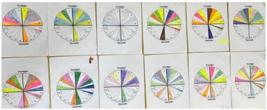
Through the paintings, it is noticeable that these women, despite having experienced numerous situations of oppression simply for being women, still perceive themselves as occupying a position of privilege rather than oppression. The paintings were strongly demarcated in the upper part of the figure and less prominent in the lower part, which allowed for in-depth discussions within the group. Nevertheless, no painting in the field of oppression (however small its expression) should be ignored, as it already represents oppression and therefore needs to be debated, recognized, and confronted. Thus, in a quick visualization, the women were already able to perceive how the group recognized itself and how the social markers of difference permeated their lives.
In addition to this activity, we also dedicated ourselves to the development of Carimbó - a typical folk dance from the Northern region of the country - notably because one of the researchers on the team was from that region. In this activity, the women in the group were strongly engaged, and the theme was addressed through contextual, historical, ancestral, and representative elements of the state of Pará, using both visual and musical resources. We asked questions about the Pará´s culture to assess the participants' prior knowledge, while contextualizing its main artistic, cultural, and gastronomic expressions, as well as bodily experiences with music from this region. The central part of the meeting focused on characteristic movements of Carimbó, defined by quick spins, alternating fast and slow footwork, leg and hip movements, arm gestures, and the swaying of skirts. The clothing was adapted by the group through the making of nonwoven skirts crafted by the participants.
This experience concluded with a group circle conversation aimed at eliciting further reflections from the participants about themselves and the social relationships they establish with others: “how do you recognize yourself in your social markers of difference?”; “how do these markers impact your lives?”; “what types of bodies learn Carimbó?”; “what cultures are present in this popular manifestation?”; “what are the main challenges of this experience?”.
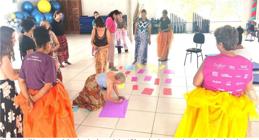
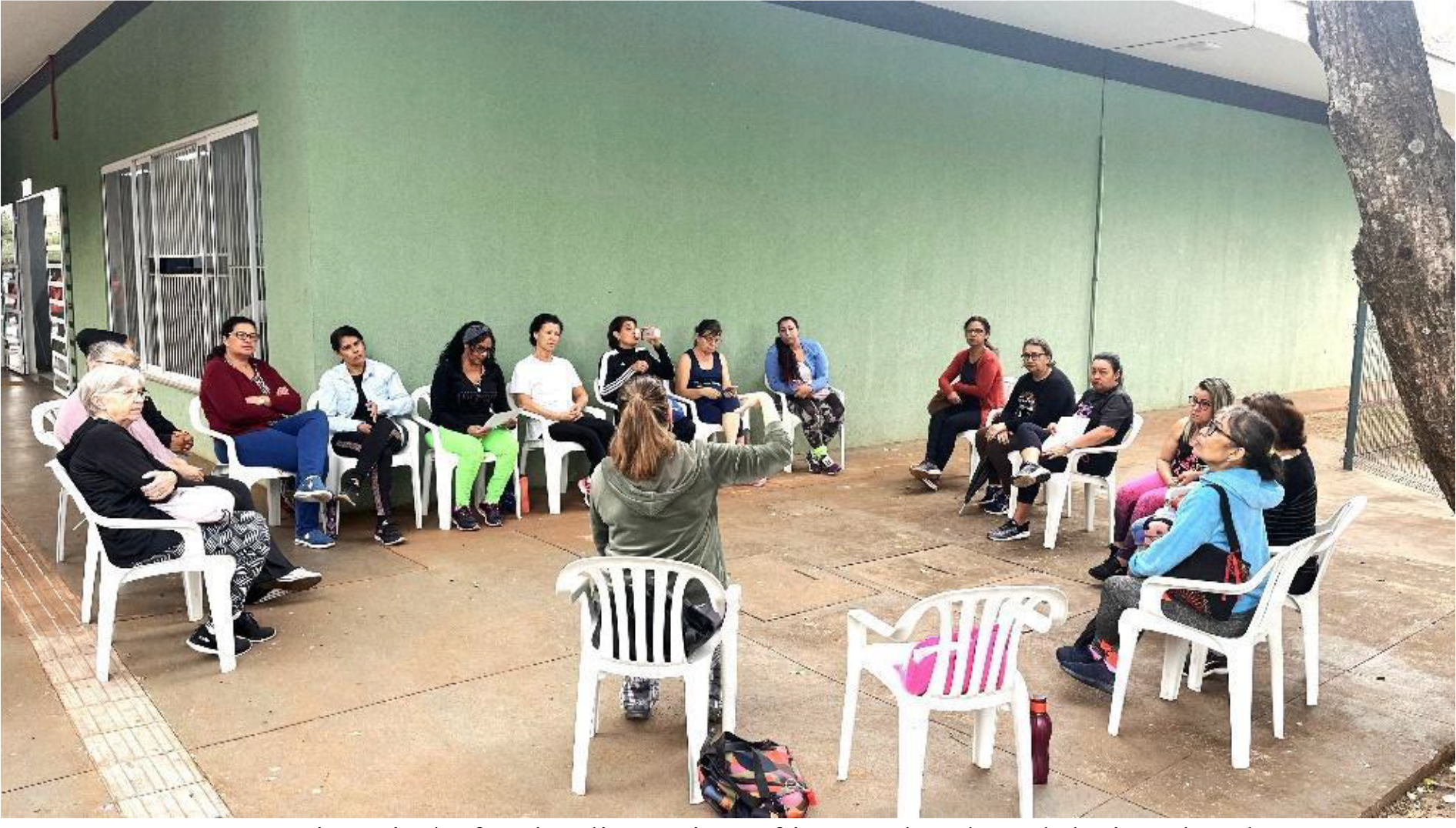
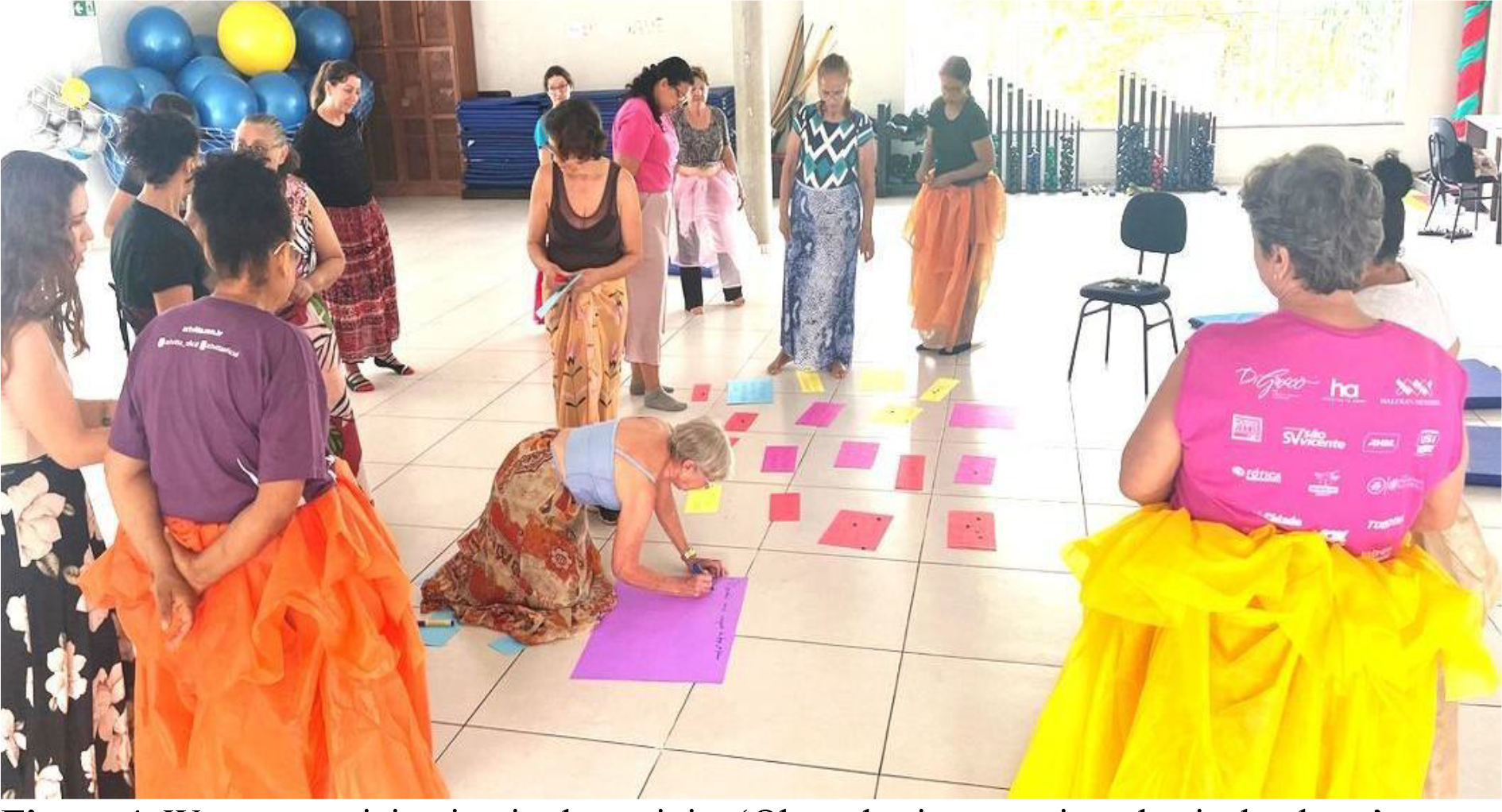
Finally, the fourth stage, creative dialogical action, focused on problematizing the social markers of difference and how they can limit these women's access to physical culture. This stage also allowed for collective reflections on the contribution of public authorities to improving women's access to physical culture. The initial activity involved posters displaying obstacles faced by women in accessing physical culture, such as caring for children, looking after someone who is ill, organizing the household, attending medical appointments, among others. In this activity, each participant could mark (using stones from the Chinese game Go) as many reasons as they wished. However, there were few markings overall (18 in total), with no more than two for each item, except for medical consultations, exams, or physiotherapy, which received four markings. We also provided a ‘blank’ poster so that they could write other reasons not previously listed. One of them wrote: “nothing prevents me from doing physical activity”, a statement that was corroborated by five other participants. Figure 4 records this activity.
In recent meetings, we worked on capoeira and encouraged reflections on its history, its forms of resistance and oppression, and bodily development through the roda (circle) and gestures specific to the art form. We also encouraged participants to create movements by representing everyday situations, such as animals, games/play, and sports. Participants created various scenes, such as jumping rope, playing volleyball, swimming, being a snake, a bird, among other situations. Afterwards, we moved on to the activity called ‘public policies’'. For this, we wrote on four posters some questions that inquired about how they perceived the physical activity practices offered by the public authorities (municipal, state, and federal), what could be improved, what attracted them to the sports center they frequented, and what were the reasons for joining/dropping out of accessing physical culture. All the women were actively engaged, with some standing out for their ease in expressing ideas.
In another activity, we conducted a project called ‘Who am I?’ in which the women described themselves based on hobbies, spirituality, projects, motherhood, marital status, among other things. Afterward, each woman's letter had to be interpreted by a colleague, and the group had to guess who that narrative belonged to. In the last meeting, we revisited some of the topics covered and conducted an evaluation of the women's experience in the physical culture circle. This meeting was marked by a lot of affection (given the very positive relationship we established with them). We held a ‘Secret Santa’ exchange and received letters they had written about their participation in the project (as previously suggested in one of the meetings). All the women acknowledged the importance of the project for their lives and for understanding what it means to be a woman. Some highlighted that the project helped to ‘remove blinders and’ ‘open perspectives,’ enabling them to perceive their own reality in a different way.
Throughout our meetings, especially in the final stage, we raised questions such as: “what obstacles/challenges do you face in accessing physical culture?”; “what demands would you make to the public authorities to facilitate/improve/support the practice of physical activity?”; “who are you and how do you define yourselves?”; “what was it like to participate in the physical culture circle?” The following topic focuses on the analyses resulting from the experience with the physical culture circle.
Analyses that shift perspectives: women, bodies, lives, and their interfaces
Throughout the process, we remained deeply immersed in the research, aware that our own experiences and social markers continuously permeated the production of activities and the interpretation of data. We were constantly affected by the experiences shared with the women in the project, which demanded constant attention to the effects of our presence, listening, and ethical-political positions. These influences directly impacted methodological decisions, influencing the planning, conduct, and reformulation of the meetings. This movement was undertaken consciously and self-reflectively, in coherence with embodied9-16 and decolonial5-8 methodologies that recognize knowledge as situated, relational, and produced from specific bodies, histories, and contexts. As researchers, we sought to practice self-reflexivity in all our actions.
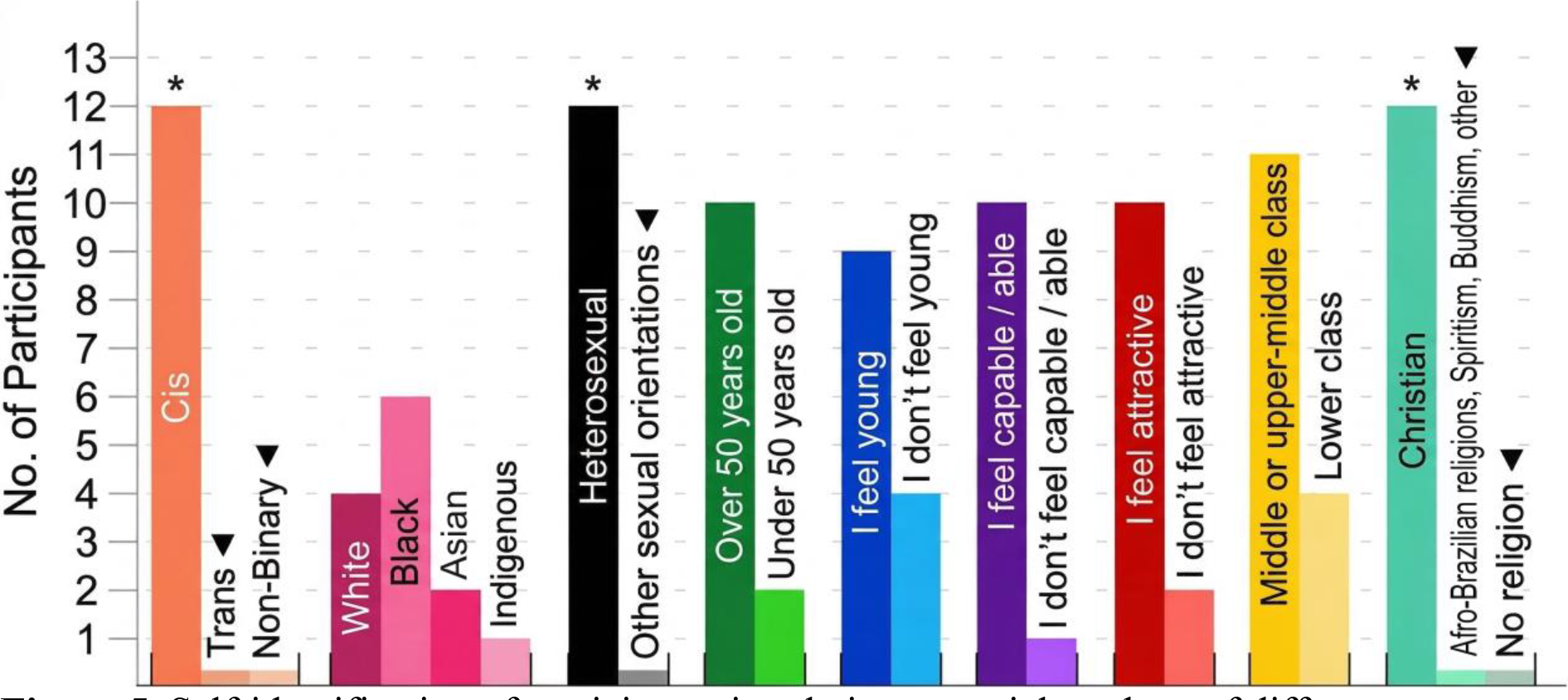
The physical culture circle was marked by diverse experiences that not only affected the participating women but also challenged and displaced us. The development of the analyses was guided by four thematic axes, which help in identifying aspects that were highlighted throughout the meetings. These are: a) ‘Who are these women?’; b) ‘Women and spirituality’; c) ‘What brings them closer to and distances them from physical culture?’; and d) ‘What do they expect from public authorities?’. Figure 5 represents the self-identification of the 13 women who participated in this activity.
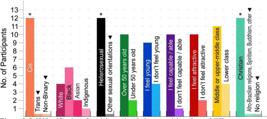
The first axis of analysis, Who are these women?, focuses on the need to recognize how the participants self-identify. Although they are diverse, they are generally guided by dominant social patterns. They identify as cisgender, heterosexual, and Christian (Catholic and Protestant). All declared themselves biological mothers, with nine being married; there is also a divorced and a widow in the group. Four of them declared themselves ‘homemakers’ (dedicated to household chores); two reported being retired. There are also those who perform domestic work for others. Five declared themselves to be employed (sales consultant, seamstress, and other self-employed services). Regarding race/ethnicity, 45.8% identified as Black, 33.3% as White, 16.7% as Asian, and 4.2% as Indigenous. Some had difficulty self-identifying, given that they interpreted their skin as Asian and understood that this could be their race/ethnicity. We discussed these issues of self-identification and the population distribution/classification carried out by IBGE29,30, which was taken as a reference here. Regarding age, most said they were over 50 and felt attractive. Of these women, 75% consider themselves young and feel capable/able to do things and face challenges. Most identified as belonging to the middle or upper-middle class (91.7%) and only 8.3% identified as belonging to the lower class. However, we found that none of them were from the upper-middle class. Generally, sports centers are spaces that welcome people from the lower or middle class, especially because they tend to be concentrated in peripheral areas of the city. Some narratives help to visualize how women describe themselves: “I am white. I like to crochet. I am married. Sometimes I get sad. I like to do stretching. I really like to cook” (Ana). “I am of German and Indigenous descent. My dream was to be a stylist, but I never managed to. I hate washing dishes, but I still do it today; it’s what I do most” (Joana). “I have a darker complexion [morena] with brown eyes. I’m 1.58 meters tall. I like going out with family and friends. I take care of my grandchildren. On Sundays, I go to mass” (Elisa). Through these statements, it is possible to identify ethnic-racial issues, affection, activities they enjoy doing or do out of obligation, as well as feelings; they also reveal how diverse these women are.
As Collins31 reports, certain intersections between social markers of difference - race, gender, class, sexuality, nationality, religion, other - generate zones that express forms of violence that can be lethal. The author understands that this violence is not restricted to explicit episodes, but is rooted in cultural norms, public policies, and institutional practices that are often invisible, yet capable of causing profound harm. Although the participants perceive themselves as being in a position of privilege rather than oppression, these norms reveal the existence of symbolic and structural violence that permeates their bodies and subjectivities, framing them in generational, aesthetic, racial, and bodily terms31-34. Intersectionality, Akotirene35 affirms, should be treated as an epistemological and political tool for understanding the structures of oppression that are established in racialized and gendered bodies.
The axis of Women and Spirituality emerges in this context primarily because it permeates the daily lives of these women and directly impacts their narratives through statements such as: “God helped me”; “God willing”; “it was a miracle from God.” For hooks36, spirituality constitutes an intrinsic dimension of human experience, anchored in ethical and affective principles, such as love and respect, which are indispensable for the integral formation of the individual. In this sense, it is through the practice of tolerance and compassion in interpersonal relationships that a connection with the divine is built, understood not as an individualized experience, but as a collective construction created from the encounter of the self with the other.
Specifically, some statements illustrate this axis: “There are times when we have to let it [religion] lead us, but we have to make it happen; God gives us the opportunity, and we have to go after it and not wait for things to fall from the sky” (Vitória). “My grandson was born prematurely and escaped lung surgery. A young doctor managed to save my grandson. I prayed a lot and God put this doctor, this angel, in our path” (Maria). “I am a Christian. I try to follow the commandments of the religion” (Isabel). A significant part of the shared stories had faith present in overcoming adversity and as a necessary force to face daily challenges. In this direction, Chauí37 points to two characteristics that should be considered regarding religiosity: the intrinsic relationship between good and grace; and the simultaneous acceptance of a plurality of beliefs. In the first, the search for good is linked to obtaining divine grace, such as the cure of an illness, a job, and overcoming addictions, that is, extreme circumstances that lead to an appeal for supernatural forces, especially in the face of the absence or negligence of public power. The second aspect emphasizes religious syncretism, in which different religions are mobilized in search of a miracle. Thus, it is common for the same person to simultaneously turn to Catholic saints, orishas from Afro-Brazilian religions, or a Spiritist medium, demonstrating doctrinal flexibility in the pursuit of a blessing.
In the axis What brings them closer to and distances them from physical culture? we highlight issues related to women's participation in accessing physical culture. Each woman's presence in the project was surrounded by an invisible network of factors related to family, personal and social problems, health, work, the structure of the place, and emotional factors. On the one hand, the pursuit of self-care and health benefits acts as a central motivator, associated with welcoming spaces, qualified teachers, good infrastructure, and groups built on shared responsibility and affection. On the other hand, family responsibilities, emotional/health problems, and lack of family encouragement, in addition to medical appointments and physiotherapy sessions, act as barriers that hinder these women's participation in physical culture. Some narratives contribute to thinking about this axis: “Nothing prevents me from doing physical activities” (Rosilene). “I need to take care of my grandchildren” (Camila). “I have appointments at the health center, I do physiotherapy, and sometimes I have exams” (Roberta). In this way, women remain overburdened with tasks that limit their time and energy to dedicate to themselves. Even after fulfilling their responsibilities as mothers, these women need to manage their time with grandchildren and sick family members, with their own health care, and with access to physical culture.
Finally, the last axis of analysis - What do they expect from the public authorities? - addresses women’s perceptions of the role played by municipal, state, and federal authorities in ensuring access to physical culture. Overall, they acknowledge the benefits provided by municipal public authorities, since Maringá offers several spaces for physical activity; they also acknowledge the excellent work carried out by teachers at the sports center and the quality of the facilities for physical activity. However, they would like to see other activities offered, such as dance, ballet, sewing and tailoring courses, painting, crafts, an indoor heated pool, among others. They emphasized the need for a closer look at the elderly population in general, given that many people stay at home unable to engage in physical activity, making it necessary to provide transportation to those who live far away, as well as expanding the number of sports centers. Some statements exemplify this axis: “[...] having more sports centers in other neighborhoods. [...] the city has grown a lot and needs other centers [...]”. “[...] classes in other modalities, different dances” (Fernanda); “[...] sending more funds, more investment”, “[...] there are many people looking for it, many elderly people looking for it”, “[...] we have to encourage the elderly; there are many elderly people at home without going out [...]”, “[...] there could be a van, then it would just be a matter of setting a place in the neighborhoods, picking them up and taking them” (Cássia); “[...] all that's missing is for them to deliver the swimming pool” (Adriele).
According to Ribeiro38, when a woman empowers herself, she also gains ability to empower others. It was precisely within this movement that the women of the physical culture circle voiced their demands. Some raised their voices with vitality, while others listened more than they spoke; yet all interacted in their own way. Talking about the sports center was important for them, as many have attended the space for decades, witnessed changes in the place, and understand that it allows for many affective exchanges, conversations, relaxation, conviviality, and friendships. For many of them, being there is a moment to take care of themselves, as expressed by one of the participants: “I work from home. My way out is to take the children to school. So, I found a place of friendship, of de-stressing” (Georgia). This narrative, added to so many others, aligned with embodied practices, enabled us to develop the physical culture circle as a space for listening and “[...] openness to the speech of the other, to the gesture of the other, to the differences of the other”39;61. It was a welcoming experience for the participating women, who emphasized the importance of the project both for their lives and for their understanding of what it means to ‘be a woman’.
The data gathered from the physical culture circle provided insights into how these women construct their identities in a society marked by constant change, and how social markers of difference shape their experiences, given that many had not previously engaged in reflection on matters of race/ethnicity, gender/sexuality, and social class. This lack of reflection is also an effect of structural inequalities and the naturalization of social hierarchies, as if intersectional experiences did not broaden the frameworks of privilege or oppression. As Bonalume et al.40 clarify in extensive research on leisure in Brazil, the responsibilities assigned to women continue to be concentrated on domestic work, care activities, and, additionally, paid work, while contrasting with that of men, whose centrality remains in formal work. Domestic and caregiving tasks are revealed as indispensable activities, although naturalized to the point of not being recognized as ‘work’. These dynamics do not affect all women in the same way, given that, as the authors report, inequalities of class, race, and education intensify the overload, causing non-white women with lower income and low education to face longer working hours, fewer rights, and greater precariousness. Thus, the division of labor is linked to other social markers, producing additional layers of inequality that limit the time available for leisure, self-care, and participation in physical and cultural activities.
The participants’ statements reveal that the relationship with the body and the aging process is a central element in how they perceive themselves and position themselves socially. They seek to deal quite positively with the bodily changes caused by aging and/or illness, looking for ways to remain active. Although most of the women participating in the physical culture circle are over 50 years old, many describe themselves as ’young’, ‘active’, and ‘attractive’, which points to attempts to distance themselves from the stigmas associated with old age. Moreover, terms such as ‘elderly’ and ‘old age’ are not well received, as the women do not identify with classifications that position them as disposable within a society driven by production, consumption, and activity. Thus, by affirming themselves as ‘young’, these women not only describe a physical state, but also claim a social position historically denied to them, as a discursive strategy of resistance. If, on the one hand, old age carries within its maturity and accumulated experience, it also brings challenges related to invisibility and the loss of social value and desire. A similar perception was found in a study developed by Mallmann et al.41 regarding female aging and its implications for the body, with 336 women participating through a questionnaire. Although a consistent pattern of responses was not identified, the woman challenges the “[...] idea that aging is associated with a decline in human efficiency, with negative implications for the body, its functionality or sexuality”41;27. These ambiguities underscore that aging is not merely a biological process, but a social construct permeated by diverse expectations that unevenly shape bodily experiences.
The narratives of the women participating in the physical culture circle reveal tensions between the desire for self-care and the aesthetic and religious norms that regulate these women's bodies. Participation in physical culture appears, for some, as a possibility of freedom, autonomy, and pleasure; for others, not every bodily experience is fully acceptable (for example, the gestures of the Carimbó dance, interrupted by one of the participants), highlighting how women's bodies are traversed by moral and religious codes that delimit gestures, expressions, and movements considered appropriate (or not). As Silva, Rigoni, and Silva42;97 observe, religion (in its relations with the body, leisure, and bodily practices) has been present in several studies, and although they regard the data as still preliminary, they point to “[...] the way in which the various manifestations of religiosity influence people's choices and cultures in various aspects of daily life”. According to the authors, this occurs because certain religious currents propagate conservative customs and practices that restrict bodily practices associated with pleasure and desire, which must be repressed because they are worldly behaviors that distance themselves from the divine.
The experience of the physical culture circle also shows how women's agency is negotiated, and not simply annulled, in the face of the challenges imposed on the body. These women, therefore, experience the tensions between age, desire, self-care, and social control. Collective coexistence and the sharing of stories and memories among women contribute to the construction of their self-perception, while simultaneously constituting a space of acceptance and a discursive means of confronting fears, shame, patriarchy, and social impositions. Some of these women find themselves occupying certain roles that have traditionally been assigned to them, refusing to exercise them or questioning their configurations. As Bonalume et al.40;2 warn, “changes in social relations have broadened the notion of independence, as a result of the varied possibilities and situations experienced by women in the context of sociability, which relate to the feminist struggle for equality.” In this, various ways of being a woman stand out, distanced from previously determined models. “Each social and cultural context produces women with specificities, imperatives, desires, histories, achievements, concerns and struggles”40;2.
The demands articulated by these women concerning the questions raised about the role of public power in broadening their access to physical culture stem from a process of collective empowerment (also unequal), in which awareness of rights and needs is strengthened through coexistence and exchange of experiences among women. In the physical culture circle, they encountered a space for dialogue and listening that empowered their voices, allowing them to transform individual experiences into collective demands. Even those who spoke less participated in the movement of building a common discourse, which articulates self-care, belonging and citizenship. They perceive the sports center as a place of welcome, sociability, and healthy practices, as well as the project as a site of learning, awareness, and affective exchanges. This perception broadens their understanding of how they integrate into physical culture, how they develop their self-esteem, and how they construct meanings about themselves within social contexts marked by multiple layers of privilege and oppression.
Conclusion
The physical culture circle was established as a dialogical and contextual space that prioritized sensitive and welcoming listening, guided by openness to otherness, gesture, voice, and to the unique differences of each woman. It can be conceived as a possibility of confronting coloniality through its situated replication in other contexts, with the specific peculiarities of each place and of the participating group, given that it does not have a predictive character. It is grounded in a theoretical field that informs the possibility of developing the project in other contexts, being activated in a particular space and time, by the participating agents.
Developed in a local reality, the physical culture circle proposed diverse practices, debates, and reflections on the social and identity condition of women in a patriarchal society. The participants’ accounts positioned this experience as meaningful in their lives - conceived as a project they will miss, and one that may also contribute to other women in their process of emancipation.
The research findings on womanhood reveal the body as a territory of memory, resistance, and affection, capable of mobilizing and transforming lives. In narrating their experiences of pain, care, faith, shame, pleasure, and struggle, the women involved in the project disclose complex and multifaceted experiences. They identify as cisgender women yet often rely on references shaped by normalizing common sense regarding race and ethnicity. Their self-identification is primarily based on skin color, without incorporating phenotypic aspects such as facial features or hair. Similarly, in relation to social class, subjective assessments based on lifestyle predominate rather than indicators such as per capita family income. This points to the need to find other facilitating approaches to the topic, so that they feel comfortable discussing it and recognizing themselves within it.
The project proved to be a fruitful experience for welcoming and raising awareness, especially by promoting practices that engage with lived reality. Despite its potential, some limitations are acknowledged here. Although around 30 women started the project, only 14 of them remained until its conclusion, and the reasons for their withdrawal could not be investigated. This gap hinders a deeper analysis of the obstacles that lead women to interrupt the practice of physical activity. In addition, the condition of a situated temporality of the research (time of implementation) brings challenges to this project, because it does not guarantee its continuity; nor does the project integrate a municipal public policy, although it is our intention to collect data to support the structuring of public policies aimed at women. Despite these limitations, we recognize that we have built stories with them through unique and empowering experiences. We also seek to offer feedback, sharing the audiovisual material produced and our interpretations, listening to them about how they perceive and evaluate what we narrate about them.
As practical implications and developments for future research, we intend to produce documents to be directed to public authorities and the civil community in order to guide the development of public policies focused on physical culture with an intersectional and critical perspective, as well as to stimulate the development of other physical culture circles in diverse realities. The women who remained in the project encountered few barriers to access and continuity, but it is important to remember that they represent only part of the reality. The diversity of ways of being a woman - expressed in how they think, speak, move, dress, commit, and construct their stories - points to the urgency of actions that consider bodies as spaces of memory and subjectivity. The physical culture circle was more than just organizing meetings with women it was a unique experience - theoretical, practical, and embodied - that reaffirms the body as a locus of knowledge, care, and transformation.
Acknowledgements:
This work was supported by the National Council for Scientific and Technological Development - CNPq, through the project ‘Decolonial challenges in physical culture: ethnic-racial, gender and social class crossings’ (Process No. 407669/2023-0), as well as by the Coordination for the Improvement of Higher Education Personnel - Brazil (CAPES) - Finance Code 001. We gratefully acknowledge the support of the Miosótis Sports Center team in the development of this project, with special thanks to Prof. Carlos Gomes de Oliveira, as well as to all the women who contributed to it.
Data Availability Statement:
The data supporting the results of this study are available in the article itself.
References
- 1 Freire P. Educação como prática da liberdade. Rio de Janeiro: Paz e Terra; 1967.
- 2 Freire P. Pedagogia do oprimido. Rio de Janeiro: Paz e Terra; 1970.
- 3 Fernandes C, Terra A. 40 horas de esperança: o método Paulo Freire - política e pedagogia na experiência de Angicos. São Paulo: Ática; 1994.
- 4 Dantas VL, Linhares AMB. Círculos de cultura: problematização da realidade e protagonismo popular. In: Brasil. Ministério da Saúde. Secretaria de Gestão Estratégica e Participativa. II Caderno de Educação Popular em Saúde. Brasília (DF): Ministério da Saúde; 2014. p. 73-80.
-
5 Quijano A. Colonialidad y modernidad-racionalidad. Perú Indígena. 1992[cited 2026 Mar 10];13(29):11-20. Available from: https://www.lavaca.org/wp-content/uploads/2016/04/quijano.pdf
» https://www.lavaca.org/wp-content/uploads/2016/04/quijano.pdf - 6 Walsh C. Pedagogías decoloniales: prácticas insurgentes de resistir, (re)existir y (re)vivir. Tomo I. Quito: Ediciones Abya-Yala; 2013.
- 7 Mignolo WD. Local histories/global designs: coloniality, subaltern knowledges, and border thinking. Princeton (NJ): Princeton University Press; 2012.
-
8 Grosfoguel R. Descolonizar as esquerdas ocidentalizadas: para além das esquerdas eurocêntricas rumo a uma esquerda transmoderna descolonial. Contemporânea. 2012[cited 2026 Mar 10];2(2):337-362. Available from: https://www.contemporanea.ufscar.br/index.php/contemporanea/article/view/86/51
» https://www.contemporanea.ufscar.br/index.php/contemporanea/article/view/86/51 - 9 Silk M, Andrews DL, Thorpe H, editors. Routledge handbook of physical cultural studies. London; New York: Routledge; 2017.
-
10 Silk M, Andrews DL. Toward a physical cultural studies. Sociol Sport J. 2011;28(1):4-35. DOI: https://doi.org/10.1123/ssj.28.1.4
» https://doi.org/10.1123/ssj.28.1.4 -
11 Marani VH, Sá ABS, Lara LM. Introdução à obra Routledge handbook of physical cultural studies, organizada por Michael L. Silk, David L Andrews e Holly Thorpe. Acta Sci Educ. 2021;43. DOI: https://doi.org/10.4025/actascieduc.v43i1.56969
» https://doi.org/10.4025/actascieduc.v43i1.56969 -
12 Lara LM, Sá ABS, Marani VH. Physical cultural studies e os desafios para a construção de seus tons brasileiros/latino-americanos. Rev Bras Ciênc Esporte. 2023;45:e20230062. DOI: https://doi.org/10.1590/rbce.45.e20230062
» https://doi.org/10.1590/rbce.45.e20230062 -
13 Lara LM. Physical cultural studies and possibilities for dialogue with the sociocultural and pedagogical subareas of Brazilian physical education in a local reality. Sport Educ Soc. 2024;29(1):1-13. DOI:https://doi.org/10.1080/13573322.2022.2096587
» https://doi.org/10.1080/13573322.2022.2096587 -
14 Fullagar S. A physical cultural studies perspective on physical (in)activity and health inequalities: the biopolitics of body practices and embodied movement. Rev Tempos Espac Educ. 2019;12(28):63-76. DOI: https://doi.org/10.20952/revtee.v12i28.10161
» https://doi.org/10.20952/revtee.v12i28.10161 -
15 Francombe-Webb J, Rich E, De Pian L. I move like you… but different: biopolitics and embodied methodologies. Cult Stud Crit Methodol. 2014;14(5):471-482. DOI: https://doi.org/10.1177/1532708614548120
» https://doi.org/10.1177/1532708614548120 -
16 Sá ABS, Marques JP, Lara LM. Cultura física e embodiment no campo dos estudos culturais físicos. Fênix Rev Hist Estud Cult. 2023[cited 2026 Mar 10];20(1):170-189. Available from: https://www.revistafenix.pro.br/revistafenix/article/view/1338
» https://www.revistafenix.pro.br/revistafenix/article/view/1338 -
17 Sampaio JMF, Surdi AC. A transitividade formativa do “eu para o nós”: o círculo de cultura de Paulo Freire como estratégia de formação para o ensino dos esportes na licenciatura em educação física. Dialogia. 2022;(42):e23016. DOI:https://doi.org/10.5585/42.2022.23016
» https://doi.org/10.5585/42.2022.23016 -
18 Sousa CA, Maldonado DT, Neira MG. Círculo de cultura e educação física: a tematização do funk na escola. Kinesis. 2018;36:116-129. DOI: https://doi.org/10.5902/2316546427299
» https://doi.org/10.5902/2316546427299 -
19 Nepomuceno LB, Cavalcante JAM, Venâncio L, Sanches Neto L. Círculo de cultura como componente qualitativo da pesquisa em educação física: reflexões teórico-metodológicas. Pensar Prát. 2019;22. DOI: https://doi.org/10.5216/rpp.v22.55524
» https://doi.org/10.5216/rpp.v22.55524 - 20 França FF. “O que os pais vão falar?”: representações sociais de gênero e sexualidade na escola - círculos dialógicos com educadoras. Maringá: Eduem; 2022.
- 21 Barker-Ruchti N, Schubring A. People in contexts. In: Silk M, Andrews DL, Thorpe H, editors. Routledge handbook of physical cultural studies. London; New York: Routledge; 2017. p. 49-58.
- 22 Hooks B. Ensinando a transgredir: a educação como prática da liberdade. Cipolla MB, translator. São Paulo: WMF Martins Fontes; 2013.
- 23 Federici S. O ponto zero da revolução: trabalho doméstico, reprodução e luta feminista. Coletivo Sycorax, tradutor. São Paulo: Elefante; 2018.
- 24 Han BC. Sociedade do cansaço. Giachini EP, translator. Petrópolis (RJ): Vozes; 2017.
-
25 Lugones M. Colonialidad y género. Tabula Rasa. 2008[cited 2026 Mar 11]; (9):73-102. Available from: https://www.revistatabularasa.org/numero-9/05lugones.pdf
» https://www.revistatabularasa.org/numero-9/05lugones.pdf - 26 Stadniky HP, Pinto MEB. Contribuição ao estudo da presença nipo-brasileira no Norte Novo de Maringá. In: Dias RB, Gonçalves JHR, organizadores. Maringá e o Norte do Paraná: estudos de história regional. Maringá: Eduem; 1999. p. 201-214.
- 27 Lara LM. Marcadores sociais de diferença, relações de poder e desafios à educação decolonial. In: Sgró M, Cenci A, Goergen P, editors. Educación, estado y democracia: más allá del neoliberalismo. Passo Fundo; Tandil: EdUPF; EdUnicentro; 2023. p. 219-239.
-
28 Roberts JD, Mandic S, Fryer CS, Brachman ML, Ray R. Between privilege and oppression: an intersectional analysis of active transportation experiences among Washington DC area youth. Int J Environ Res Public Health. 2019;16(8):1341. DOI: DOI: https://doi.org/10.3390/ijerph16081341
» https://doi.org/10.3390/ijerph16081341 -
29 Instituto Brasileiro de Geografia e Estatística (IBGE). Censo Demográfico 2022: distribuição da população por cor ou raça [Internet]. Rio de Janeiro: IBGE; 2022[cited 2025 Sep 24]. Available from: https://www.ibge.gov.br/painel-cor-ou-raca/
» https://www.ibge.gov.br/painel-cor-ou-raca/ -
30 Instituto Brasileiro de Geografia e Estatística (IBGE). Desigualdades sociais por cor ou raça no Brasil: 2ª edição [Internet]. Rio de Janeiro: IBGE; 2022[cited 2025 Sep 24]. Available from: https://biblioteca.ibge.gov.br/visualizacao/livros/liv101972_informativo.pdf
» https://biblioteca.ibge.gov.br/visualizacao/livros/liv101972_informativo.pdf - 31 Collins PH. Intersecções letais: raça, gênero e violência. Candiani HR, tradutora. São Paulo: Boitempo; 2024.
- 32 Collins PH, Bilge S. Interseccionalidade. Souza R, translator. São Paulo: Boitempo; 2020.
- 33 Davis A. Mulheres, raça e classe. Candiani HR, translator. São Paulo: Boitempo; 2016.
- 34 Gonzales L. Racismo e sexismo na cultura brasileira. In: Silva LAM, Almeida MHT, Rodrigues LM, organizadores. Movimentos sociais urbanos, minorias e outros estudos. Brasília: ANPOCS; 1984. p. 223-244.
- 35 Akotirene C. Interseccionalidade. São Paulo: Pólen; 2019.
- 36 hooks b. Ensinando comunidade: uma pedagogia da esperança. São Paulo: Elefante; 2021.
- 37 Chauí M. Conformismo e resistência: aspectos da cultura popular no Brasil. São Paulo: Brasiliense; 1986.
- 38 Ribeiro D. Quem tem medo do feminismo negro? São Paulo: Companhia das Letras; 2018.
- 39 Freire P. Pedagogia da autonomia: saberes necessários à prática educativa. São Paulo: Paz e Terra; 1996.
-
40 Bonalume CR, Sampaio TMV, Isayama HF, Gomes MC, Marcellino NC. Mulheres, trabalho e lazer no Brasil: entre tempos, gostos, desejos e a fruição de um direito. Rev Estud Fem. 2023;31(2):e86645. DOI: https://doi.org/10.1590/1806-9584-2023v31n286645
» https://doi.org/10.1590/1806-9584-2023v31n286645 -
41 Mallmann PB, Jaeger LK, Grave MQ, Mattos CNB, Sinigaglia G, Fleig TC. Envelhe(ser): reflexões sobre o processo de envelhecimento feminino e suas implicações sobre o corpo. Rev Foco. 2024[cited 2026 Mar 10];17(11):e6906. Available from: https://ojs.focopublicacoes.com.br/foco/article/view/6906
» https://ojs.focopublicacoes.com.br/foco/article/view/6906 -
42 Silva CL, Rigoni ACC, Silva LF. O lazer como fenômeno cultural e suas relações com alguns marcadores sociais. Corpoconsciência. 2021[cited 2026 Mar 10];25(1):90-104. Available from: https://periodicoscientificos.ufmt.br/ojs/index.php/corpoconsciencia/article/view/11995
» https://periodicoscientificos.ufmt.br/ojs/index.php/corpoconsciencia/article/view/11995
Edited by
-
Editora:
Ábia Lima de França.

 Source: the authors.
 Source: the authors.
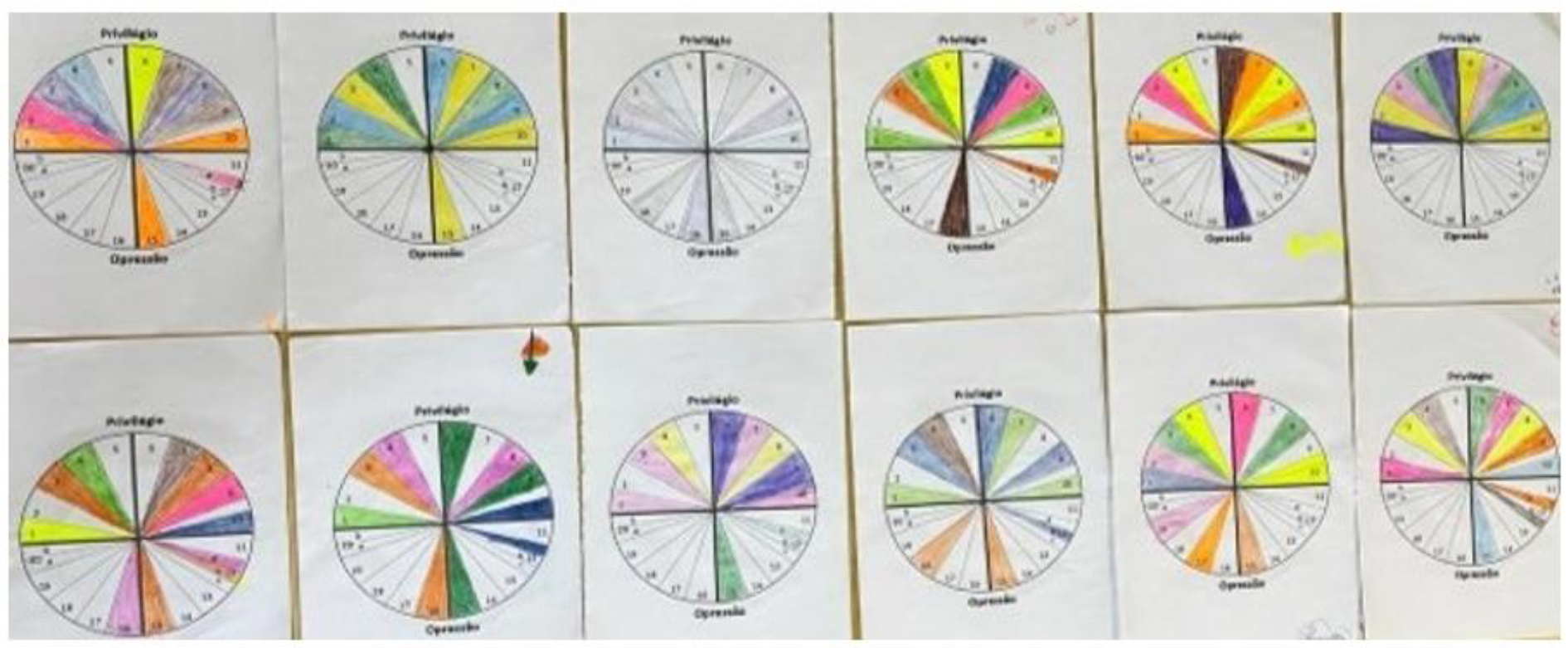 Legend: 1 I identify as a woman; 2 I identify as white; 3 I feel romantic, sexual, and affective attraction to men; 4 I identify with the sex assigned at birth; 5 I am under 50 years old; 6 I feel young; 7 I feel capable/able to do things; 8 I feel attractive; 9 I am middle or upper-middle class; 10 I identify with/am aligned with the Christian religion (e.g., Catholic; Protestant; Adventist; Pentecostal). The questions associated with situations of oppression were: 11 I do not identify as a woman; 12 (a) I identify as black (black or brown); 12 (b) I identify as Asian; 12 (c) I identify as Indigenous; 13 I feel romantic and affective attraction to people other than men; 14 I do not identify with the sex assigned at birth; 15 I am over 50 years old; 16 I do not feel young; 17 I do not feel capable/able to do things; 18 I do not feel attractive; 19 I am from a poor/working class background; 20 (a) I identify with/am drawn to Afro-Brazilian religions (e.g., Candomblé, Umbanda), Spiritism, Buddhism, or another; 20 (b) I have no religion.Source: the authors.
 Source: the authors.
 Source: the authors.