
 Analysis of original research articles on handball published between 1949 and 2024: a bibliometric review
Abstract
To provide an up-to-date analysis of the evolution and current state of scientific evidence on handball based on original articles published between 1949 and 2024. A bibliometric review was conducted in Scopus with a title-restricted search (“handball”). A total of 2,062 original articles across 454 sources were included. Scientific output (1949–2024) showed a 7.22% annual growth, peaking in 2022 (n=213); 2020–2024 accounted for 47.3% (n=975). Spain led authorship (n=281; 13.6%), followed by Germany (n=175) and Brazil (n=167). The most prolific institutions were the University of Southern Denmark and the University of Granada. Among journals, the Journal of Physical Education and Sport and the Journal of Strength and Conditioning Research stood out. The thematic map revealed a central axis on performance/training and a highly developed injury cluster (ACL and shoulder). Scientific production on handball has grown steadily, with strong recent momentum, European leadership, and core interests in performance and injury prevention.
Keywords
Athletic injuries; Athletic performance; Handball; Sports medicine; Motor activity
Resumo
Fornecer uma análise atualizada da evolução e do estado atual da evidência científica sobre o handebol com base em artigos originais publicados entre 1949 e 2024. Foi realizada uma revisão bibliométrica na Scopus com uma busca restrita ao título (“handball”). Um total de 2.062 artigos originais em 454 fontes. A produção (1949–2024) apresentou crescimento anual de 7,22%, com pico em 2022 (n=213); 2020–2024 representou 47,3% (n=975). A Espanha liderou a autoria (n=281; 13,6%), seguida pela Alemanha (n=175) e pelo Brasil (n=167). As instituições mais prolíficas foram a University of Southern Denmark e a University of Granada. Entre os periódicos, destacaram-se o Journal of Physical Education and Sport e o Journal of Strength and Conditioning Research. O mapa temático revelou um eixo central em desempenho/treinamento e um cluster altamente desenvolvido de lesões (LCA e ombro). A produção científica sobre handebol tem crescido de forma constante, com forte impulso recente, liderança europeia e interesses centrais em desempenho e prevenção de lesões.
Palavras-chave
Traumatismos em atletas; Desempenho atlético; Handebol; Medicina esportiva; Atividade motora
Resumen
Proporcionar un análisis actualizado de la evolución y el estado actual de la evidencia científica sobre balonmano basado en artículos originales publicados entre 1949 y 2024. Se realizó una revisión bibliométrica en Scopus con una búsqueda restringida al título (“handball”). Un total de 2.062 artículos originales en 454 fuentes. La producción (1949–2024) mostró un crecimiento anual del 7,22%, con un pico en 2022 (n=213); 2020–2024 representó el 47,3% (n=975). España lideró la autoría (n=281; 13,6%), seguida de Alemania (n=175) y Brasil (n=167). Las instituciones más prolíficas fueron la University of Southern Denmark y la University of Granada. Entre las revistas, destacaron Journal of Physical Education and Sport y Journal of Strength and Conditioning Research. El mapa temático reveló un eje central en rendimiento/entrenamiento y un clúster muy desarrollado de lesiones (LCA y hombro). La producción científica sobre balonmano ha crecido de manera constante, con un fuerte impulso reciente, liderazgo europeo e intereses centrales en rendimiento y prevención de lesiones.
Palabras clave
Traumatismos en atletas; Rendimiento atlético; Balonmano; Medicina deportiva; Actividad motora
1 INTRODUCTION
Handball has experienced steady and significant growth in terms of federative licenses over the past two decades. In Spain, according to the Spanish National Sports Council (Consejo Superior de Deportes) (2024), the sport accounted for 67,552 licenses in 2000, a figure that rose to 102,933 in 2024—an increase of nearly 52% over this period. This upward trajectory reflects not only the sustained expansion of participation but also the consolidation of its organizational structure and the strong social interest it generates, positioning handball as one of the most traditional and widely practiced team sports within the Spanish sporting landscape.
This growing prominence of handball as a team sport in recent years has also stimulated increasing academic interest, as evidenced by the rising number of publications in specialized journals. The scholarly output on handball has expanded progressively, with more articles, a greater number of contributing authors, and sustained attention to topics related particularly to training and player development (Pardo Ibáñez; Madera Gíl; Chenoll, 2020; Prieto; Gomez; Sampaio, 2015). From a broader perspective, Millet, Brocherie and Burtscher (2021) highlighted that, although handball remains one of the less extensively researched Olympic sports compared with others, it nonetheless belongs to the group of team sports that have been widely examined. Indeed, football, basketball, volleyball, handball, and ice hockey are among the twelve most cited disciplines out of fifty evaluated.
Bibliometric analysis has emerged as a fundamental tool for evaluating scientific production, as it allows for the identification of influential authors, journals, institutions, and countries, as well as prevailing research trends and thematic areas (Sahni; Kaurav, 2023; Sofik; Rahman; Nausheen, 2021). Such analyses provide valuable insights into the scope of existing studies, foster the development of new research directions, and help anticipate future trends in the scientific domain (Müller et al., 2016; Park; Jeon, 2023).
Against this backdrop, it is timely to conduct an updated bibliometric analysis focused on the most recent years, as this period offers the opportunity to identify emerging lines of inquiry and to update our understanding of the research landscape in handball. Accordingly, the present study aims to provide an in-depth analysis of the evolution and current state of the scientific evidence on this sport, drawing on original articles published between 1949 and 2024.
2 METHODS
2.1 DATA COLLECTION AND SEARCH STRATEGIES
A systematic search was conducted in the Scopus database, covering all records from inception to August 16, 2025. Because data collection occurred while the year 2025 was still in progress, items with a 2025 publication year were excluded a priori to ensure dataset completeness and reduce bias due to partial indexing or incomplete bibliographic information.
In alignment with prior bibliometric reviews in the field (Gutierrez Aguilar, 2014; Pardo Ibáñez; Madera Gíl; Chenoll, 2020; Prieto; Gomez; Sampaio, 2015), a title-restricted search was employed: the term “handball” was required to appear in the article title. Title restriction was intended to increase specificity and minimize retrieval of irrelevant records. To ensure scholarly rigor, Scopus filters were applied to retain only documents categorized as journal articles. Books, book chapters, conference proceedings, editorials, letters, notes, and errata were excluded. No language restrictions were applied.
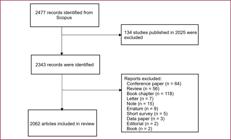
The final dataset therefore comprised peer-reviewed journal articles, irrespective of methodological design, that met the inclusion criteria and were published up to and including 2024 (see Figure 1).
2.2 BIBLIOMETRIC ANALYSIS
The bibliometric analysis was structured around two complementary methodological approaches: (1) performance analysis and (2) scientific mapping.
Performance analysis entails a quantitative assessment of the scientific output within the field, incorporating indicators such as the annual evolution of publication volume, the most highly cited documents, leading journals and authors, patterns of co-authorship, and the institutional and geographical distribution of scholarly contributions.
In contrast, scientific mapping aims to elucidate the intellectual structure and temporal evolution of the field through techniques such as co-word analysis and keyword co-occurrence networks. This approach enables the segmentation of the study period into distinct phases, typically an initial stage characterized by the emergence and consolidation of foundational research fronts, and a subsequent phase reflecting the rise or decline of specific thematic trends. Such chronological stratification facilitates the identification of knowledge development patterns and supports projections regarding the future trajectory of the field (Donthu et al., 2021).
2.3 DATA ANALYSES
Data extraction and analysis were conducted using the Bibliometrix R package (v. 4.3.0) within the R environment (v. 4.4.2) (Aria; Cuccurullo, 2017). Bibliographic records were retrieved from Scopus. The data were exported in BibTeX format and subsequently analyzed using Biblioshiny, the web-based interface of Bibliometrix. This workflow enabled the application of Bradford’s Law to identify core journals and facilitated the exploration of prevailing thematic clusters and emerging research trends within the domain.
3 RESULTS
The initial search identified a total of 2477 records related to the topic of interest. After an initial screening, 134 publications from 2025 were excluded, as the current analysis only considers studies published up to December 31, 2024. Additionally, 281 records were discarded for failing to meet the predefined inclusion criteria. Following this selection process, the final dataset comprised 2062 journal articles (see Figure 1), which were published across 454 sources.
3.1 PERFORMANCE ANALYSIS
3.1.1 Annual Evolution
The scientific production in this field spans from 1949 to 2024, with an annual growth rate of 7.22%. Before the year 2000, only 93 publications had been identified. The peak years in terms of publication volume were 2022 (n = 213), 2020 (n = 206), 2021 (n = 186), 2024 (n = 186), and 2023 (n = 184). The literature produced between 2020 and 2024 represents 47.3% (n = 975) of the total scientific output on this topic. The average age of the documents is 8.44 years, and the mean number of co-authors per article is 4.35.
3.1.2 Most Prolific Authors, Institutions, and Countries
The distribution of author productivity revealed that most contributors (72.5%) published only a single article, with progressively fewer producing higher numbers of publications. Fewer than 1% of researchers authored ten or more papers, and among the 5,052 identified authors, only seven published at least 30 studies on handball during the period under review.
Regarding the most active institutions, the University of Southern Denmark (Denmark) ranked first with 78 publications, followed by the University of Granada (Spain) with 75. The University of Manouba (Tunisia) occupied third place with 66 publications, while the University of Murcia (Spain) and the University of Split (Croatia) followed with 62 and 60, respectively. Completing the leading group were the University of São Paulo (Brazil) with 58 publications and Martin Luther University of Halle-Wittenberg (Germany) with 56.
Spain was the leading contributor, with 281 publications (13.6% of the 2,062 documents identified). Germany followed with 175 publications (8.5%), while Brazil ranked third with 167 publications (8.1%). Norway contributed 100 publications (4.9%), and France completed the top five with 94 publications (4.6%). Altogether, these five countries accounted for 39.7% of the total scientific production.

3.1.3 Most Relevant Journals
As shown in Table 1, the Journal of Physical Education and Sport was the leading outlet for handball-related publications, with 82 articles. The Journal of Strength and Conditioning Research ranked second, contributing 79 publications, followed by the Journal of Human Kinetics with 64 articles.
With respect to journal impact and indexing, eight of the ten most prolific sources are included in Clarivate’s 2024 Journal Citation Reports (JCR). Among these, three titles are ranked in Quartile 1 (Q1). Others appear in Quartile 2 (Journal of Sports Sciences and Applied Sciences), Quartile 3 (Journal of Sports Medicine and Physical Fitness), or Quartile 4 (Journal of Human Sport and Exercise and E-Balonmano.com). Two additional journals, the Journal of Physical Education and Sport and International Journal of Environmental Research and Public Health, are indexed exclusively in the SCImago Journal Rank (SJR) database.
3.1.4 Most cited articles
The three most highly cited studies were those by Olsen et al. (2004), Koga et al. (2010), and Myklebust et al. (2003), which had accumulated 1053, 727, and 710 citations, respectively, as of August 16, 2025, when citation counts were retrieved from the Scopus database (Table 2).
3.2 SCIENTIFIC MAPPING
3.2.1 Co-occurrence Network (All Keywords)
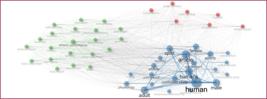
Three main clusters of All Keywords were identified through co-word network analysis (Figure 3). Cluster 1 (7 nodes; red) groups terms related to injury/biomechanics, including sport injury, athletic injuries, shoulder, biomechanics, range of motion, questionnaire, and team handball. Within this cluster, sport injury and athletic injuries showed the greatest centrality (highest PageRank), indicating their bridging role across topics.
Cluster 2 (22 nodes; blue) aggregates general demographic and study-design descriptors closely tied to the field label, with dominant nodes such as human, article, humans, male, female, adult, sport/sports, and domain tags like handball. Methodological terms (controlled study, cross-sectional study, randomized controlled trial, clinical article) and performance-adjacent concepts (athlete, athletes, muscle strength, physiology, resistance training) are also concentrated here. Centrality metrics highlight human, article, and humans as the most influential hubs within the network.
Cluster 3 (21 nodes; green) reflects a performance/fitness orientation, anchored by athletic performance, exercise, training, team sport(s), and somatic/physiological markers such as anthropometry, body mass, body composition, body height, body weight, heart rate, fitness, physical fitness, physical performance, jumping, running, velocity, and exercise test. Athletic performance and human experiment exhibited the highest centrality within this cluster, underscoring the role of fitness assessment and training-related terms.
3.2.2 Trending Topics
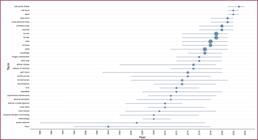
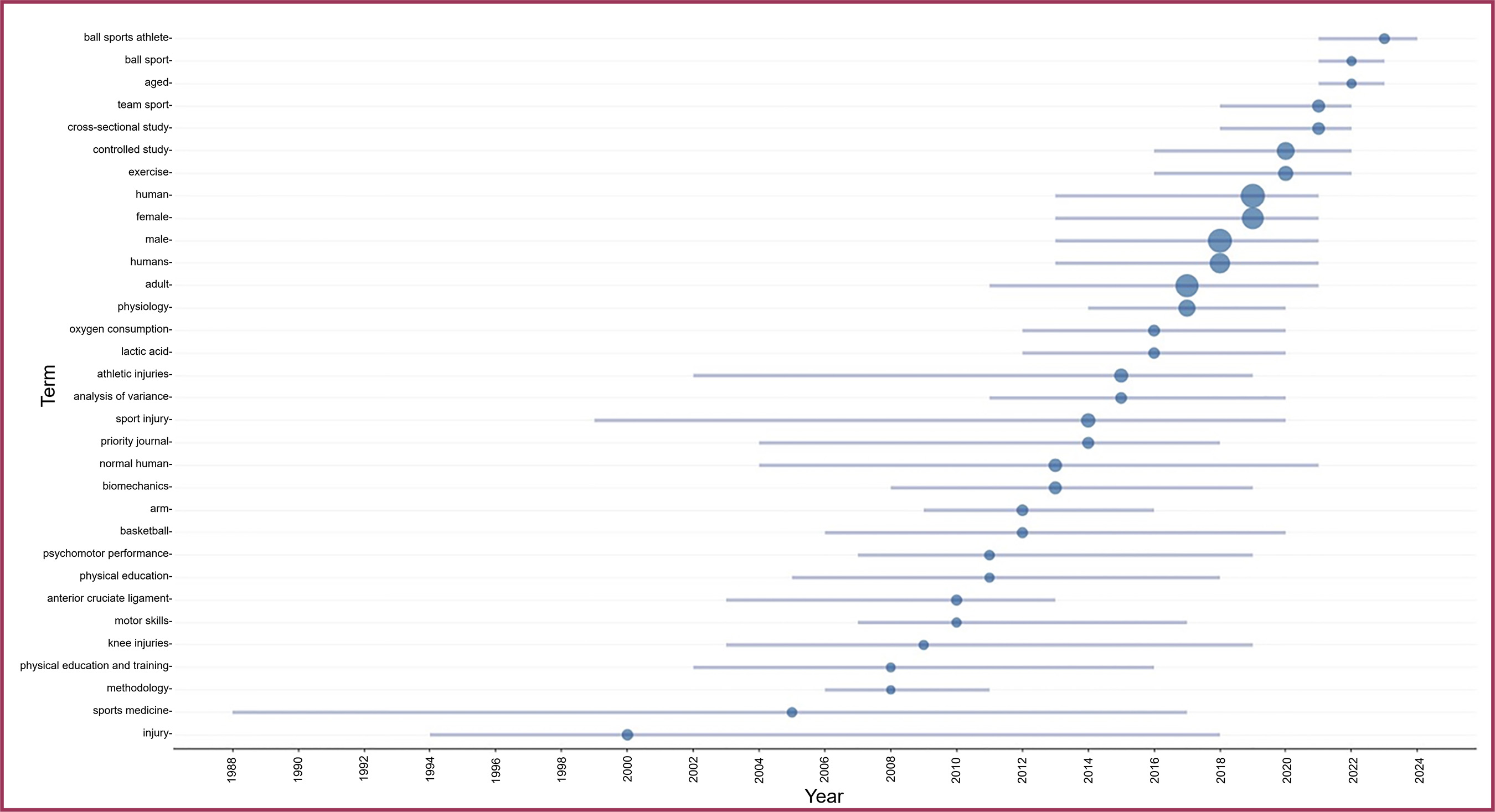
Figure 4 shows the trending topics analyzed through Keywords Plus, using the following parameters: (1) Minimum word frequency = 25, and (2) Number of words per year = 2. The size of each bubble reflects the relative prominence of the term, while the horizontal span indicates the temporal range of its use.
3.2.3 Thematic Map
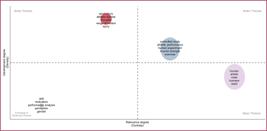
The thematic map (Figure 5) positions themes according to Callon’s centrality (relevance within the field) and Callon’s density (degree of internal development). In the motor-themes quadrant (high centrality and density), a consolidated cluster is observed, anchored by controlled study, athletic performance, human experiment, muscle strength, and exercise, which structures the literature by linking performance assessment with experimental/controlled designs.
In the basic-themes quadrant (high centrality and low density), human, article, male, humans, and adult are grouped—cross-cutting descriptors that function as common axes but with lower thematic cohesion. The niche-themes quadrant (low–moderate centrality and high density) concentrates injury and biomechanics terms—sport injury, athletic injuries, shoulder, range of motion, injury—which are highly developed but peripheral relative to other lines of research. Finally, in the emerging/declining quadrant (low centrality and density), a small set—skill, motivation, performance analysis, perception, gender—shows limited integration, consistent with fronts that are either consolidating or in relative decline.
4 DISCUSSION
The aim of this study is to provide a comprehensive analysis of the evolution and current state of scientific evidence on handball based on original articles published between 1949 and 2024. The findings reveal sustained growth, particularly in the last five years, with wide geographical distribution and a core focus on performance and exercise, along with specific lines addressing injuries and emerging psychosocial aspects. This study offers valuable information for researchers, coaches, strength and conditioning specialists, and other handball professionals by identifying key trends in practice.
Handball has experienced remarkable growth in its popularity, the number of international competitions, and the sporting qualifications of its participants (Solovey et al., 2020). This boom coincides with the increase observed over the past five years (2020–2024), a period in which the largest volume of publications is concentrated and which also accounts for approximately half (47.3%) of all available evidence in this field. Bibliometric reviews on scientific production in handball had already highlighted the progress of research in recent years (Gutierrez Aguilar, 2014; Pardo Ibáñez; Madera Gíl; Chenoll, 2020; Prieto; Gomez; Sampaio, 2015). However, the most recent review was published in 2020, coinciding with the second most prolific year in terms of output. This trend may be attributed to the growing professionalization of the sport and to evidence showing that specific training enhances performance and physical fitness in elite players (Wagner; Radic; Hinz, 2025; Wei et al., 2024), as well as the benefits of recreational training in untrained individuals, for whom improvements in physical fitness, health, and well-being have been demonstrated (Hornstrup et al., 2018).
Scientific productivity in handball shows high dispersion, as most authors contribute only a single article. However, there is a very small core of highly productive researchers and institutions, mainly located in Europe, with Spain and Germany at the forefront, followed by Brazil, Norway, and France; together, these countries account for a significant volume of publications. This concentration was already evident in 2014, although with some variation in country ranking, when Spain, Norway, France, and Germany led production (Gutierrez Aguilar, 2014). Such concentration reflects the fact that the countries with the highest academic output coincide with those that have strong federative structures and a large number of licenses, in addition to hosting the most consolidated and relevant leagues, factors that enhance their research influence (Ayúcar-Sánchez; Lera-López; Iraizoz, 2024).
The exponential growth and increasing interest in handball are also reflected in the rise in the number of articles published in leading specialized journals. A notable example is the Journal of Physical Education and Sport, which in 2014 and 2015 did not rank among the most active journals but currently stands as the one publishing the highest number of articles on this discipline. Similarly, the Journal of Strength and Conditioning Research has increased its publications by 59 since 2015, while the Scandinavian Journal of Medicine & Science in Sports has done so by 12 (Gutierrez Aguilar, 2014; Prieto; Gomez; Sampaio, 2015). Equally significant is the emergence of the journal E-Balonmano.com, co-edited by the University of Extremadura and the Handball Federation of Extremadura.
Regarding the most cited articles, research on injuries predominates, with particular emphasis on their incidence, mechanisms of occurrence, and prevention strategies. Within this context, anterior cruciate ligament (ACL) injury holds a prominent place, especially among female athletes. This focus is explained by the clinical relevance of the problem and the large volume of published studies, as shoulder and knee injuries are the most frequent in handball (Milić et al., 2025). Specifically, the incidence of ACL injuries is high in both male and female categories (Mørtvedt; Krosshaug; Petushek, 2025; Resch et al., 2025). However, female players present a greater risk of knee injuries, particularly ACL tears, due to anatomical factors and the influence of hormonal aspects (Gant et al., 2024).
The co-occurrence network of keywords and the thematic map further highlight the interest in research on sports injuries in handball. These findings are consistent with those reported by Pardo Ibáñez, Madera Gíl and Chenoll (2020) in the most recent bibliometric review published to date, where terms such as “ACL,” “biomechanics,” “injury prevention,” and “knee” ranked among the ten most frequently used keywords. However, that review also emphasized the use and evolution, during the previous decade, of terms related to performance and handball as a team sport (Pardo Ibáñez; Madera Gíl; Chenoll, 2020), which in the present review have led to the formation of keyword clusters and constitute the main thematic axis.
Although the findings of this study are relevant, certain limitations should be considered when interpreting them. First, the analysis relied exclusively on the Scopus database, which may have introduced bias by prioritizing publications indexed in this source while excluding studies available in others. Second, the search was restricted to article titles, which likely resulted in the omission of relevant works where key terms appeared only in abstracts or keywords. Furthermore, the study focused on a quantitative approach, which is suitable for identifying general trends but does not allow for an in-depth examination of the specific content of the research. Future reviews that expand the search to multiple databases and incorporate a qualitative analysis would enable a more detailed exploration of the theoretical and methodological approaches employed, thus providing a more comprehensive understanding of the evolution and impact of handball research.
5 CONCLUSION
This bibliometric analysis provides an updated overview of handball research between 1949 and 2024. The results show sustained growth in scientific production, with a marked increase in the last five years, a period that accounts for nearly half of all publications. The main lines of research focus on performance and exercise, while injuries, particularly shoulder and ACL injuries, emerge as a growing area of interest. Europe stands out as the most productive research hub, with Spain and Germany leading the way, reflecting the influence of strong federative structures and consolidated leagues.
These findings highlight the increasing relevance of handball as a field of study and provide valuable insights to guide future research, optimize sports practice, prevent injuries, and support the comprehensive development of players.
-
FUNDING
This study was not supported by funding sources.
-
HOW TO CITE
GONZÁLEZ-DEVESA, Daniel; CARBALLO-AFONSO, Rocío; BLANCO-MARTÍNEZ, Nerea. Analysis of original research articles on handball published between 1949 and 2024: a bibliometric review. Movimento, v. 32, p. e32039, Jan./Dec. 2026. DOI: https://doi.org/10.22456/1982-8918.150353.
RESEARCH DATA AVAILABILITY
Research data are available only upon request.
REFERENCES
-
ARIA, Massimo; CUCCURULLO, Corrado. Bibliometrix: an R-tool for comprehensive science mapping analysis. Journal of Informetrics, v. 11, n. 4, p. 959–975, 2017. DOI: https://doi.org/10.1016/j.joi.2017.08.007
» https://doi.org/10.1016/j.joi.2017.08.007 -
AYÚCAR-SÁNCHEZ, Amaia; LERA-LÓPEZ, Fernando; IRAIZOZ, Belén. Comparing competitive balance for men’s and women’s leagues in European handball. Managing Sport and Leisure, p. 1-18, 2024. DOI: https://doi.org/10.1080/23750472.2024.2387104
» https://doi.org/10.1080/23750472.2024.2387104 -
CLARSEN, Benjamin et al Reduced glenohumeral rotation, external rotation weakness and scapular dyskinesis are risk factors for shoulder injuries among elite male handball players: a prospective cohort study. British Journal of Sports Medicine, v. 48, n. 17, p. 1327–1333, 2014. DOI: https://doi.org/10.1136/bjsports-2014-093702
» https://doi.org/10.1136/bjsports-2014-093702 -
CONSEJO SUPERIOR DE DEPORTES. Federaciones deportivas españolas Madrid: Ministerio de Educación, Cultura y Deporte, Gobierno de España, 2024. Available at: https://www.csd.gob.es/es/federaciones-y-asociaciones/federaciones-deportivas-espanolas/licencias Accessed on: Sept. 22, 2025.
» https://www.csd.gob.es/es/federaciones-y-asociaciones/federaciones-deportivas-espanolas/licencias -
DONTHU, Naveen et al How to conduct a bibliometric analysis: an overview and guidelines. Journal of Business Research, v. 133, p. 285–296, 2021. DOI: https://doi.org/10.1016/j.jbusres.2021.04.070
» https://doi.org/10.1016/j.jbusres.2021.04.070 -
GANT, Hannah et al. Impact of the quadriceps angle on health and injury risk in female athletes. International Journal of Environmental Research and Public Health, v. 21, n. 12, p. 1547, 2024. DOI: https://doi.org/10.3390/ijerph21121547
» https://doi.org/10.3390/ijerph21121547 -
GOROSTIAGA, Esteban M. et al Differences in physical fitness and throwing velocity among elite and amateur male handball players. International Journal of Sports Medicine, v. 26, n. 3, p. 225–232, 2005. DOI: https://doi.org/10.1055/s-2004-820974
» https://doi.org/10.1055/s-2004-820974 -
GUTIÉRREZ AGUILAR, Óscar. Análisis de la producción científica en balonmano en las revistas de la Web of Science. E-Balonmano.com: Revista de Ciencias del Deporte, v. 10, n. 2, p. 77–88, 2014. Available at: http://ojs.e-balonmano.com/index.php/revista/article/view/157 Accessed on: June 2, 2026
» http://ojs.e-balonmano.com/index.php/revista/article/view/157 -
HORNSTRUP, Therese et al Fitness and health benefits of team handball training for young untrained women - A cross-disciplinary RCT on physiological adaptations and motivational aspects. Journal of Sport and Health Science, v. 7, n. 2, p. 139–148, abr. 2018. DOI: https://doi.org/10.1016/j.jshs.2017.09.007
» https://doi.org/10.1016/j.jshs.2017.09.007 -
KOGA, Hideyuki et al Mechanisms for noncontact anterior cruciate ligament injuries: knee joint kinematics in 10 injury situations from female team handball and basketball. The American Journal of Sports Medicine, v. 38, n. 11, p. 2218–2225, 2010. DOI: https://doi.org/10.1177/0363546510373570
» https://doi.org/10.1177/0363546510373570 -
KROSSHAUG, Tron et al The vertical drop jump is a poor screening test for ACL injuries in female elite soccer and handball players: a prospective cohort study of 710 athletes. The American Journal of Sports Medicine, v. 44, n. 4, p. 874–883, 2016. DOI: https://doi.org/10.1177/0363546515625048
» https://doi.org/10.1177/0363546515625048 -
MILIĆ, Vladan et al Sports injuries in basketball, handball, and volleyball players: systematic review. Life, v. 15, n. 4, p. 529, 2025. DOI: https://doi.org/10.3390/life15040529
» https://doi.org/10.3390/life15040529 -
MILLET, Grégoire P.; BROCHERIE, Franck; BURTSCHER, Johannes. Olympic sports science - Bibliometric analysis of all Summer and Winter Olympic sports research. Frontiers in Sports and Active Living, v. 3, art. 772140, 2021. DOI: https://doi.org/10.3389/fspor.2021.772140
» https://doi.org/10.3389/fspor.2021.772140 -
MØRTVEDT, Anne Inger; KROSSHAUG, Tron; PETUSHEK, Erich J. Perspectives on usability and adoption of a new ACL injury prevention programme for female handball players: a mixed methods approach. BMJ Open Sport & Exercise Medicine, v. 11, n. 1, p. 1–10, 2025. DOI: https://doi.org/10.1136/bmjsem-2024-001965
» https://doi.org/10.1136/bmjsem-2024-001965 -
MÜLLER, Andre Matthias et al Physical activity and aging research: a bibliometric analysis. Journal of Aging and Physical Activity, v. 24, n. 3, p. 476–483, 2016. DOI: https://doi.org/10.1123/japa.2015-0188
» https://doi.org/10.1123/japa.2015-0188 -
MYKLEBUST, Grethe et al A prospective cohort study of anterior cruciate ligament injuries in elite Norwegian team handball. Scandinavian Journal of Medicine & Science in Sports, v. 8, n. 3, p. 149–153, 1998. DOI: https://doi.org/10.1111/j.1600-0838.1998.tb00185.x
» https://doi.org/10.1111/j.1600-0838.1998.tb00185.x -
MYKLEBUST, Grethe et al Prevention of anterior cruciate ligament injuries in female team handball players: A prospective intervention study over three seasons. Clinical Journal of Sport Medicine, v. 13, n. 2, p. 71–78, mar. 2003. DOI: https://doi.org/10.1097/00042752-200303000-00002
» https://doi.org/10.1097/00042752-200303000-00002 -
OLSEN, Odd-Egil et al Injury mechanisms for anterior cruciate ligament injuries in team handball: a systematic video analysis. The American Journal of Sports Medicine, v. 32, n. 4, p. 1002–1012, 2004. DOI: https://doi.org/10.1177/0363546503261724
» https://doi.org/10.1177/0363546503261724 -
PARDO IBÁÑEZ, Alberto; MADERA GIL, Joaquín; CHENOLL, Maite Pellicer. Bibliometric study of scientific production on handball. Movimento, v. 26, p. e26073, 2020. DOI: https://doi.org/10.22456/1982-8918.101908
» https://doi.org/10.22456/1982-8918.101908 -
PARK, Inchon; JEON, Jonghwan. Psychological skills training for athletes in sports: Web of Science bibliometric analysis. Healthcare, v. 11, n. 2, art. 259, 2023. DOI: https://doi.org/10.3390/healthcare11020259
» https://doi.org/10.3390/healthcare11020259 -
PIEPER, Hans-Gerd. Humeral torsion in the throwing arm of handball players. The American Journal of Sports Medicine, v. 26, n. 2, p. 247–253, 1998. DOI: https://doi.org/10.1177/03635465980260021501
» https://doi.org/10.1177/03635465980260021501 -
PÓVOAS, Susana Cristina Araújo et al Physical and physiological demands of elite team handball. Journal of Strength and Conditioning Research, v. 26, n. 12, p. 3365–3375, 2012. DOI: https://doi.org/10.1519/JSC.0b013e318248aeee
» https://doi.org/10.1519/JSC.0b013e318248aeee -
PRIETO, Jaime; GÓMEZ, Miguel Ángel; SAMPAIO, Jaime. Revisión bibliométrica de la producción científica en balonmano. Cuadernos de Psicología del Deporte, v. 15, n. 3, p. 145–154, 2015. DOI: https://doi.org/10.4321/S1578-84232015000300014
» https://doi.org/10.4321/S1578-84232015000300014 -
RESCH, Tobias et al High incidence of anterior cruciate ligament injuries in professional men’s handball: analysis of the ‘ACL registry in German Sports’ over seven consecutive seasons. Journal of Experimental Orthopaedics, v. 12, n. 1, p. e70132, 2025. DOI: https://doi.org/10.1002/jeo2.70132
» https://doi.org/10.1002/jeo2.70132 -
SAHNI, Shalini; KAURAV, Rahul Pratap Singh. What? Why? When? How? Where? of technology-based bibliometric review. In: RANA, Sudhir; SINGH, Jagroop; KATHURIA, Sakshi (ed.). Advancing methodologies of conducting literature review in management domain. Bingley: Emerald, 2023. p. 79–101. DOI: https://doi.org/10.1108/S2754-586520230000002005
» https://doi.org/10.1108/S2754-586520230000002005 -
SOFIK, Sk; RAHMAN, Ziaur; NAUSHEEN, Sabahat. Productivity trends and pattern of scientific collaboration of bibliometric research: an exploratory analysis. Library Philosophy and Practice, p. 1–24, 2021. Available at: https://digitalcommons.unl.edu/libphilprac/5930 Accessed on: June 2, 2026
» https://digitalcommons.unl.edu/libphilprac/5930 -
SOLOVEY, Oleksandr et al Analysis and generalization of competitive activity results of handball clubs in the game development aspect. Pedagogy of Physical Culture and Sports, v. 24, n. 1, p. 36–43, 2020. DOI: https://doi.org/10.15561/18189172.2020.0106
» https://doi.org/10.15561/18189172.2020.0106 -
WAGNER, Herbert; RADIC, Vanja; HINZ, Matthias. Effectiveness of specific professional training in male elite adolescent team handball players. Sports, v. 13, n. 6, art. 193, 2025. DOI: https://doi.org/10.3390/sports13060193
» https://doi.org/10.3390/sports13060193 -
WEDDERKOPP, Niels et al Prevention of injuries in young female players in European team handball. A prospective intervention study. Scandinavian Journal of Medicine & Science in Sports, v. 9, n. 1, p. 41–47, 1999. DOI: https://doi.org/10.1111/j.1600-0838.1999.tb00205.x
» https://doi.org/10.1111/j.1600-0838.1999.tb00205.x -
WEI, Xiaobin et al Relationship between team ranking and physical fitness in elite male handball players in different playing positions. Scientific Reports, v. 14, art. 3206, 2024. DOI: https://doi.org/10.1038/s41598-024-53435-z
» https://doi.org/10.1038/s41598-024-53435-z
Edited by
-
EDITORIAL RESPONSIBILITY
Alex Branco Fraga* https://orcid.org/0000-0002-6881-1446, Elisandro Schultz Wittizorecki* https://orcid.org/0000-0001-7825-0358, Guy Ginciene* https://orcid.org/0000-0001-9709-4223, Mauro Myskiw* https://orcid.org/0000-0003-4689-3804, Raquel da Silveira* https://orcid.org/0000-0001-8632-0731* Universidade Federal do Rio Grande do Sul, Escola de Educação Física, Fisioterapia e Dança, Porto Alegre, RS, Brazil.

 Source: The authors.
 Source: The authors.
 Source: The authors.
 Source: The authors.
 Source: The authors.