
 Physical, Chemical and Mineralogical Characterization of Emerald Mining Tailings in Nova Era, Minas Gerais
Abstract
This study characterized emerald mining tailings from the city of Nova Era, Minas Gerais, Brazil. Analyses included granulometry, density, and moisture content, along with leaching tests, XRF analysis, and chemical composition assessment using an EDS detector coupled with SEM. Additionally, stereomicroscope and SEM imaging were performed, as well as XRD analyses. The granulometric analysis revealed that 46.49% of the particles were smaller than 0.85 mm. XRF analysis identified Mg, K, and Ca in the sample. Leaching tests indicated levels below 1 ppm for potentially toxic metals As, Cd, and Pb. XRD analyses identified the following mineral phases: phlogopite, quartz, actinolite, kaolinite, and vermiculite. These findings indicate that the tailings could serve as a potential soil remineralizer; however, further agronomic testing is required to confirm their suitability for agricultural use.
Keywords:
mineral characterization; tailings; reuse; soil remineralizer
1. Introduction
In the late 1980s, in Capoeirana, local miners and those from various Brazilian states began extracting gemstones from the beryl mineral family (Be3Al2(SiO3)6). These included transparent crystals, blue aquamarine, and, most notably, emeralds, which are highly valued for their quality and crystal size1. Epstein2 documented the onset of mining activities in Capoeirana. The site is located in the municipality of Nova Era, 8.5 km northeast of the city, in the state of Minas Gerais.
Emerald mining, like other extractive activities, produces significant solid waste and tailings, which can be repurposed for various applications. These tailings, though no longer economically valuable after emerald extraction, contain mineral and chemical components suitable for reuse in various sectors. For instance, the mica found in the tailings, rich in potassium, can be used in agriculture to partially replace traditional fertilizers while improving soil properties3.
The reuse of tailings in the mining industry not only contributes to more sustainable solid waste management but also aligns with ESG (Environmental, Social, and Governance) principles. This approach enhances environmental responsibility, social equity, and corporate governance, that are some factors increasingly prioritized by investors, customers, and society at large4. By adopting an ESG-focused strategy, mining companies can mitigate their negative impacts while maximizing benefits for the environment, governance structures, and the well-being of surrounding populations. Achieving sustainability in this sector, however, requires the collective involvement of governments, businesses, civil society organizations, and local communities.
Thus, this study focuses on the characterization of emerald tailings, aiming to analyze their physical, chemical, and mineralogical properties. These tailings, generated during the extraction and processing of emeralds, hold significant potential for resource recovery. The characterization process is essential for understanding the composition of the tailings, identifying valuable components that can be repurposed, and developing effective strategies for environmentally sustainable treatment and disposal.
The physical characterization of the emerald tailings included analyses of density, moisture content, and granulometry. Chemical characterization tests included leaching assays, X-ray fluorescence (XRF), and chemical analysis using scanning electron microscopy (SEM) with an EDS detector. The mineralogical characterization aimed to identify the minerals present and understand their distribution, conducted through X-ray diffraction (XRD) analysis and imaging using a stereomicroscope and backscattered electron imaging in SEM. The primary mineralogy associated with emerald tailings in the region typically includes quartz, feldspar, muscovite, biotite, and other secondary minerals5.
This information is essential for evaluating environmental safety and determining optimal tailings management strategies, including the development of recycling techniques, the proposal of secondary applications, and the implementation of appropriate disposal methods.
2. Materials and Methods
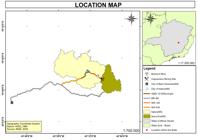
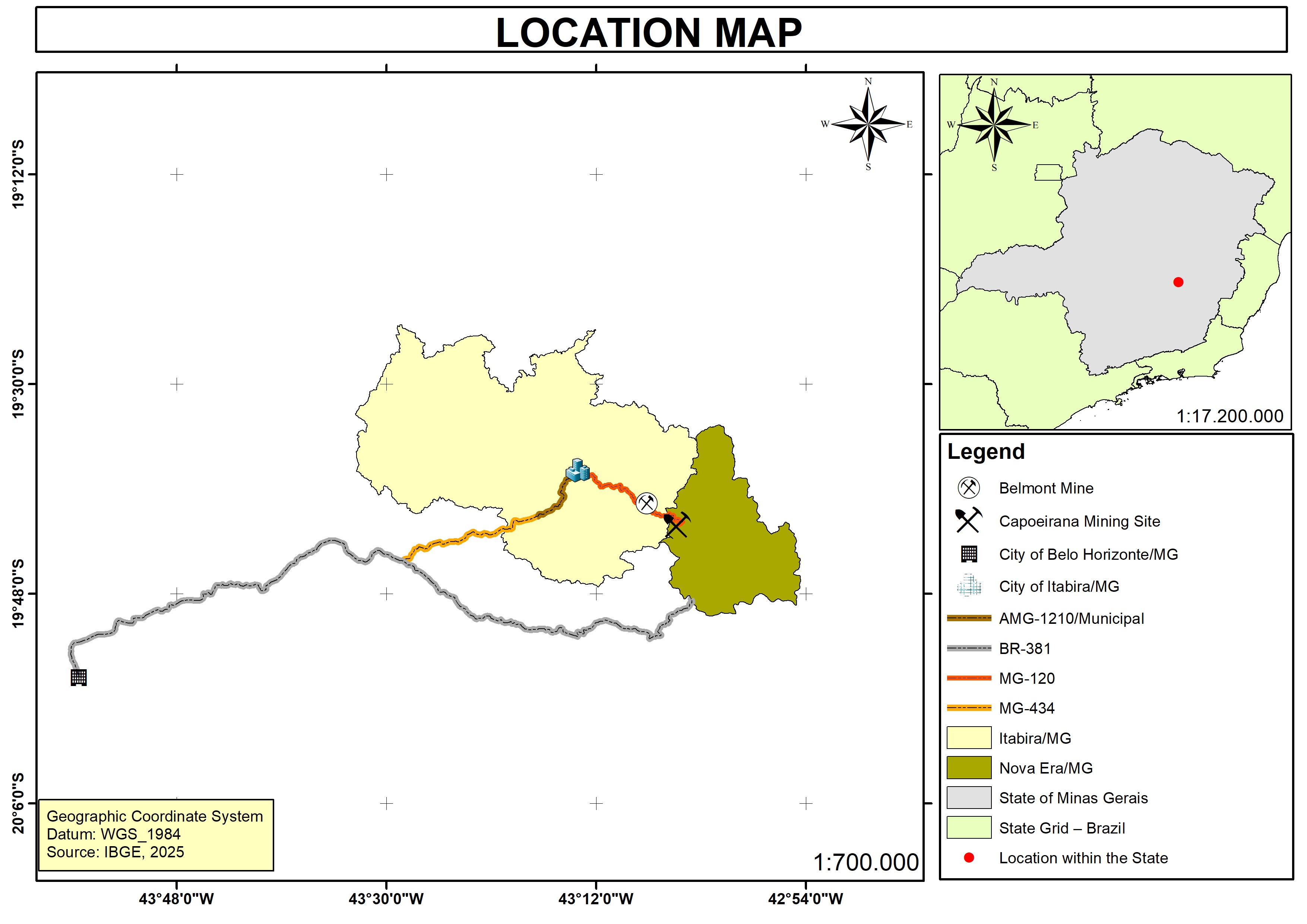
The study material was randomly collected from various tailings stockpiles located at the Capoeirana Mine in Nova Era, Minas Gerais. The area lies between parallels 19° 40’ and 19° 43’ South and meridians 43° 04’ and 43° 08’ West, as shown in Figure 1.
The tailings originate from the mining and processing operations of beryl (emerald variety) in the region. The sample was then sent to the Technological Center of UEMG-João Monlevade (CTec) for further analysis.
The collected material was weighed, totaling 5 kg, and then evenly spread on trays for drying in an oven at 110 °C for 24 hours. After this period, the sample was weighed again, totaling 4.91 kg. Using Equation 1, the moisture content of the emerald tailings was calculated.
Where:
h is the moisture percentage.
Ph is the weight of wet material.
Ps is the weight of oven-dried material.
The homogenization process involved placing the sample at the center of a tarp and mixing it for five minutes by lifting the tarp's diagonal edges until a uniform sample was obtained. Following this procedure, sample splitting was performed using the coning and quartering method with the aid of a cross, dividing the sample into four equal portions. The two diagonally opposite portions were then combined, forming two samples. Subsequently, a riffle/Jones splitter was employed as a secondary method, further reducing the sample into aliquots of approximately 600 g.
The sample density was calculated using the pycnometer method, following the procedure described by Sampaio and Silva6. This method required a 25 ml pycnometer and a 5 decimal analytical balance to ensure accuracy.
The procedure consisted of the following steps:
-
The empty pycnometer was cleaned, oven-dried at 110°C, and weighed.
-
The pycnometer was filled with water until overflow, dried externally, and reweighed.
-
The pycnometer was again cleaned and oven-dried at 110°C.
-
Approximately 15 g of emerald tailings sample was added to the clean, dry pycnometer and weighed.
-
The pycnometer containing the sample was then filled with water until overflow, dried externally, and reweighed.
The density of the material was calculated using Equation 2.
Where:
ds density of solids;
-
A1 mass of the empty pycnometer;
-
A2 mass of pycnometer+sample;
-
A3 mass of pycnometer+sample+water;
-
A4 mass of pycnometer+water.
For the particle size analysis, dry sieving was performed using a vibrating sieve. Eight sieves from the Tyler series were used for particle classification, with openings of 4.00 mm (5#); 0.85 mm (20#); 0.425 mm (35#); 0.25 mm (60#); 0.15 mm (100#); 0.104 mm (140#); 0.074 mm (200#); and 0.037 mm (400#), following the procedures of Luz et al7.
The leaching test was conducted at the Soloquímica Laboratory (Brasília-DF), using the procedures described in the Normative Instruction No. 24, of 2007, from the Ministry of Agriculture, Livestock and Supply (MAPA)8. The X-ray fluorescence analysis was conducted at ASIC Services Laboratory (Santos-SP) after preparing the sample to produce a pressed pellet for reading by the equipment.
Point chemical analyses were performed at the Scanning Electron Microscopy Laboratory of CTec UEMG-João Monlevade, using the Oxford Instruments X-MaxN EDS detector coupled with the VEGA 3-TESCAN scanning electron microscope, with a 20 kV tension and beam intensity of 14. A small portion of the sample was mounted on a stub using double-sided carbon tape. The sample was then coated with gold and palladium, and a few points were selected for analysis. The semiquantitative analyses with SEM-EDS provide complementary information to the data obtained from leaching and X-ray fluorescence analyses, since they only yield point composition results in selected areas of the sample. The other methods, in turn, provide a more representative composition of the sample as a whole.
For mineralogical analysis and detailed observation of the sample's morphology, the SEM was used in the Backscattered Electrons (BSE) mode, with magnification from 50 to 300x. The binocular microscope was primarily used for visual observation of the mineral compounds in the samples from the fractions retained on the sieves, after sieving, at enlarged details. The X-ray diffraction analyses were conducted at the NANOBUSINESS Laboratory (Rio de Janeiro-RJ), using a Bruker D2 PHASER X-ray diffractometer with a resolution of <0.02, SSD 160-2 detector, and copper tube (1.5406 Å).
3. Results and Discussion
The moisture content of the tailings is relatively low, as 5 kg of sample was weighed for drying in the oven, and after the procedure, the sample weighed 4.91 kg. Using Equation 1, the calculated moisture value was 1.8%, resulting from the washing process for the manual sorting of the mined material.
The expected density was between 2 and 3 g/cm3, based on the main mineralogy found in the tailings (minerals with specific gravity between 2 and 3 g/cm3). As calculated using Equation 2, the sample has an average density of 2.559 g/cm3, as shown in Table 1.
Values obtained to calculate the sample density. A1 = mass of the empty pycnometer; A2 = mass of the pycnometer+samp le; A3 = mass of the pycnometer+sample+water; A4 = mass of the pycnometer+water.
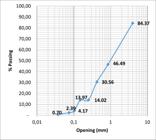
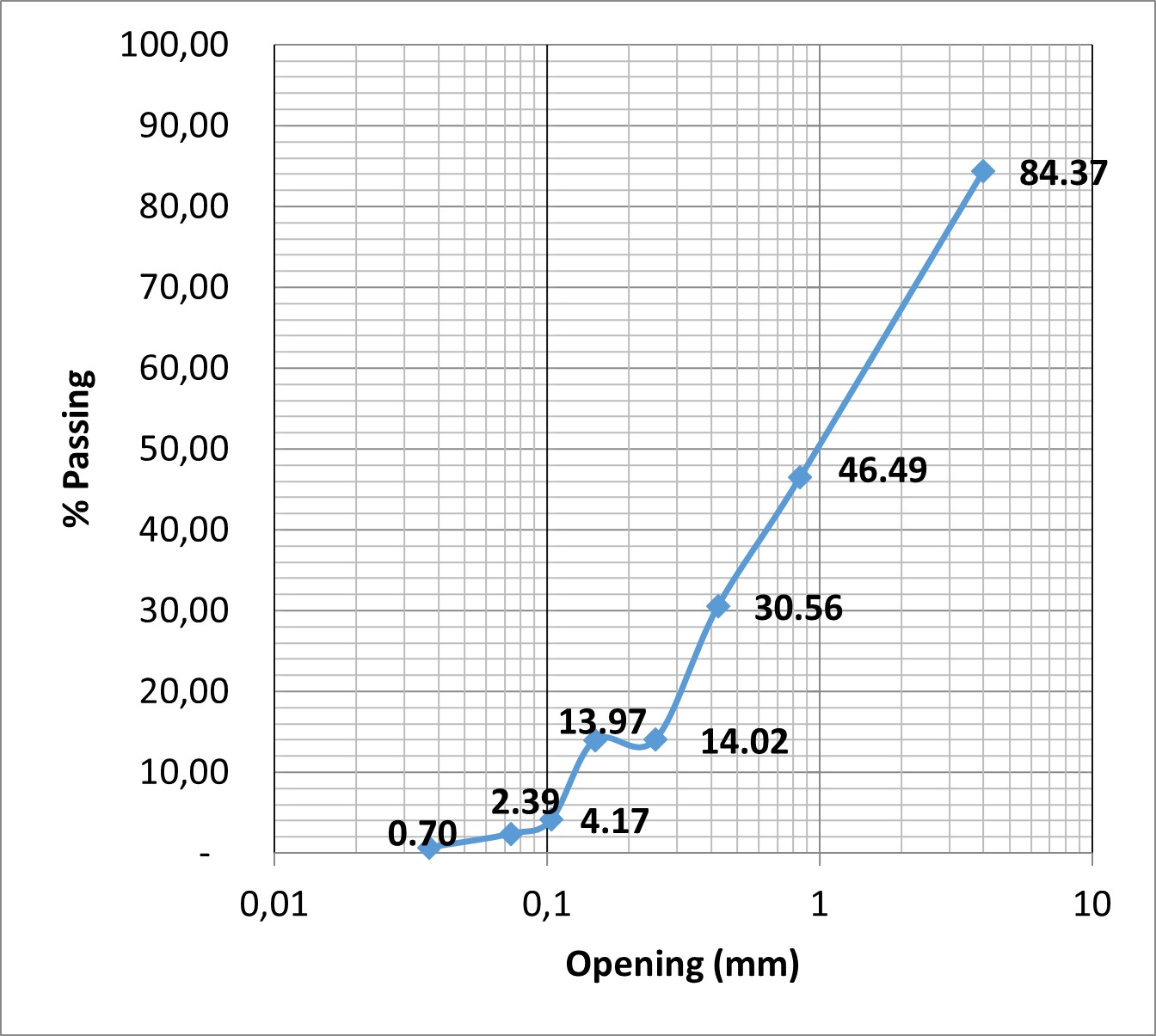
The sieving process provided information about the particle size distribution of the emerald tailings discussed in this study, through the predominant size ranges, as shown in the results obtained in Table 2.
Based on the results obtained, the particle size curve was plotted to represent the passing percentage as a function of the opening of each sieve. According to Table 2 and Figure 2, it can be verified that 46.49% of the particles are smaller than 0.85 mm, considered fine and ultrafine particles.
The results of the leaching test are presented in Table 3. According to Normative Instruction No. 5, of March 10, 2016, from MAPA9, the maximum allowable concentrations of potentially toxic metals As, Cd, and Pb for the use of rock powder as a soil remineralizer are 15, 10, and 200 ppm, respectively. The leaching test revealed low levels of these metals, all below 1 ppm, as 1 ppm is equivalent to 1 mg/kg. For comparison, Bloise et al.10,11 have assessed potentially toxic elements content in asbestos minerals, finding much more high levels.
The results of the X-ray fluorescence analysis (Table 4) revealed the presence of important chemical elements for plant development, especially Mg, K, and Ca, indicating potential for using the tailings as soil remineralizers. The analyzed sample was mainly composed of SiO2 (46.182%), MgO (20.664%), Al2O3 (11.966%), Fe2O3 (10.449%), K2O (6.241%), and CaO (2.88%). The other oxides analyzed had a concentration below 0.5%. The Normative Instruction No. 5 of MAPA9 establishes the specifications and minimum guarantees for remineralizers. The sum of bases, for example, must be greater than 9%, defined as the sum of the contents of CaO+MgO+K2O, or the sum of CaO+K2O, or the sum of MgO+K2O. The potassium oxide (K2O) content must be equal to or greater than 1% w/w. The analyzed sample shows both values above the minimum established, 29.785% and 6.241%, respectively.
Although expressed in the form of oxides, these elements are found in the structure of silicate minerals and are not readily available for plant uptake. However, some minerals as K-silicates, for example biotite/phlogopite, may have a high agronomic potential as slow-release K fertilizers and should be tested12. Other studies have addressed the possibility of applying emerald tailings in agriculture, presenting the composition of the studied rocks3,13-16. Despite the benefits of using rock powder in agriculture, the low solubility of the nutrients that make up the rocks is currently one of the main obstacles to its effective use in the field17.
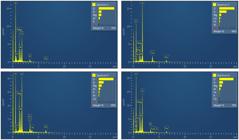
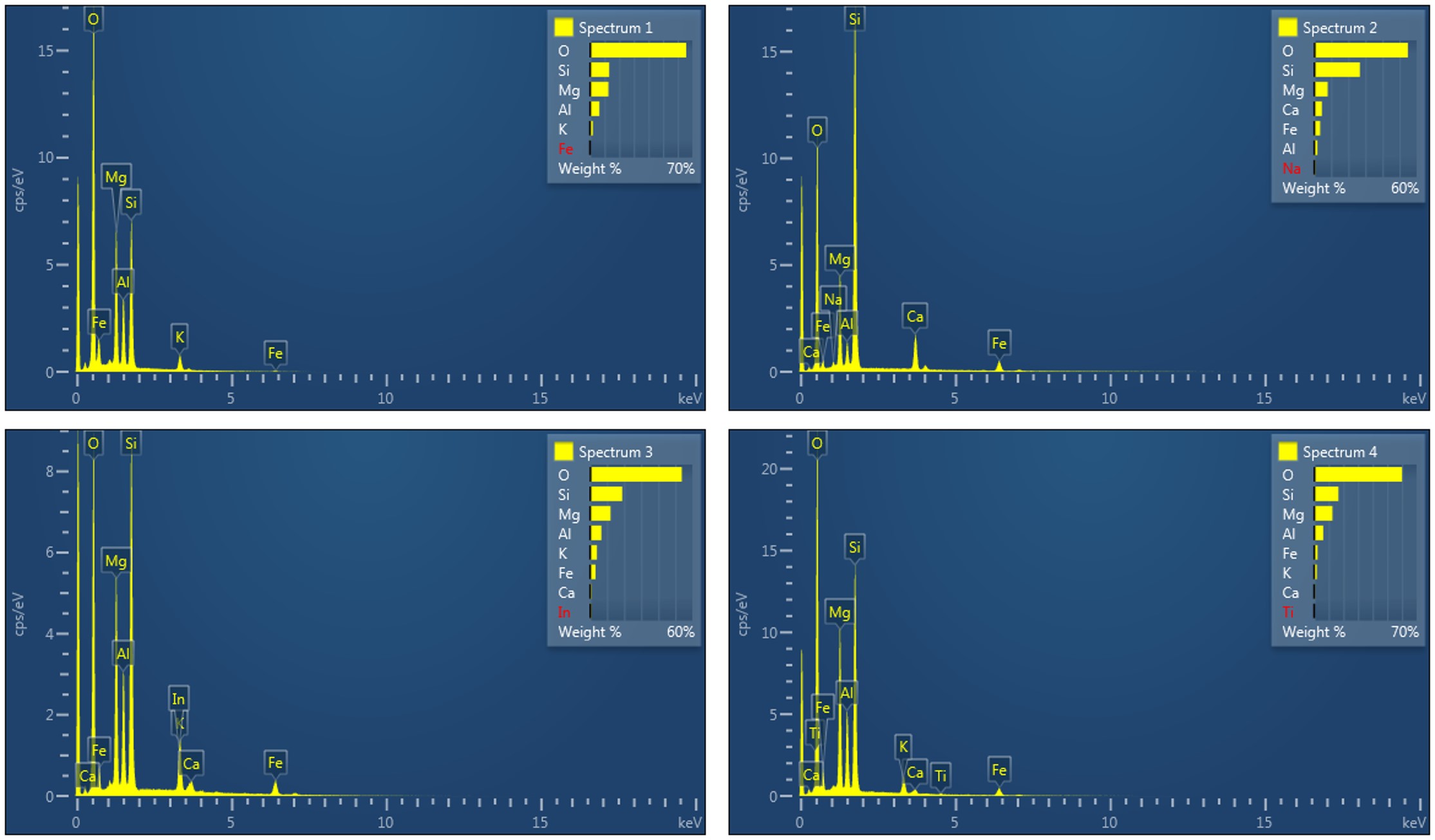
SEM-EDS point analyses in four different spots of the sample also detected the presence of Mg, K and Ca (Figure 3). According to Duarte et al.18, EDS detects the energy of X-rays emitted by the interaction of electrons with the chemical elements present in the sample, thus enabling the identification and quantification of the elements, as illustrated in Figure 3.
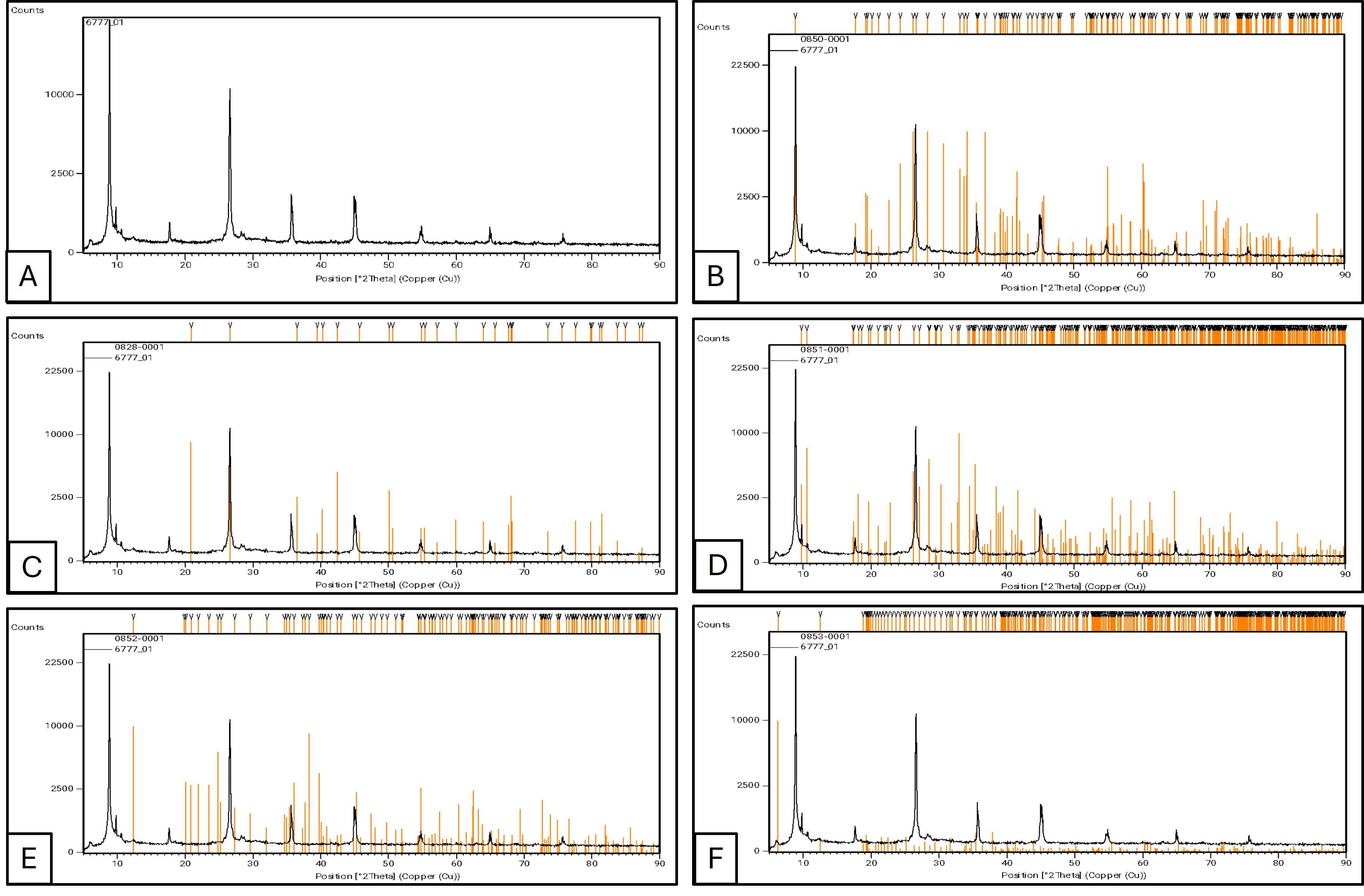
The X-ray diffraction analysis identified the following mineral phases: phlogopite, quartz, actinolite, kaolinite and vermiculite. Figure 4 shows the experimental diffractogram for the analyzed sample. The data on position [°2Th.], d-spacing [Å], and relative intensity [%] are presented in Table 5. References of assigned phases are:
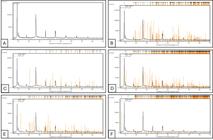
A. Experimental X-ray diffractogram of the sample. B. Comparison between the experimental diffractogram of the sample and the diffraction pattern of the phlogopite mineral phase (ICDD: 0850-0001); the orange lines represent the diffraction pattern of the phlogopite mineral phase. C. Comparison between the experimental diffractogram of the sample and the diffraction pattern of the quartz mineral phase (ICDD: 0828-0001); the orange lines represent the diffraction pattern of the quartz mineral phase. D. Comparison between the experimental diffractogram of the sample and the diffraction pattern of the actinolite mineral phase (ICDD: 0851-0001); the orange lines represent the diffraction pattern of the actinolite mineral phase. E. Comparison between the experimental diffractogram of the sample and the diffraction pattern of the kaolinite mineral phase (ICDD: 0852-0001); the orange lines represent the diffraction pattern of the kaolinite mineral phase. F. Comparison between the experimental diffractogram of the sample and the diffraction pattern of the vermiculite mineral phase (ICDD: 0853-0001); the orange lines represent the diffraction pattern of the vermiculite mineral phase.
Position [°2Th.], d-spacing [Å], and Relative intensity [%] for the diffraction pattern of the analyzed sample.
-
Phlogopite (reference code: 0850-0001)19;
-
Quartz (reference code: 0828-0001)20;
-
Actinolite (reference code: 0851-0001)21;
-
Kaolinite (reference code: 0852-0001)22;
-
Vermiculite (reference code: 0853-0001)23;
These results are consistent with the data presented by Lima et al.15, who identified through X-ray diffraction analysis the minerals phlogopite – KMg3AlSi3O10(OH)2, quartz – SiO2, actinolite – Ca2(Mg,Fe)5Si8O22(OH)2 and talc – Mg3Si4O10(OH)2 as the most abundant in the material from the processing of an emerald mine located in Itabira-MG, close to the Capoeirana mine in Nova Era. In the study carried out by Aguiar3, the main minerals observed were micas, amphiboles and pyroxenes, analyzing similar material to evaluate the use of emerald mining residue as an alternative input for agricultural soil.
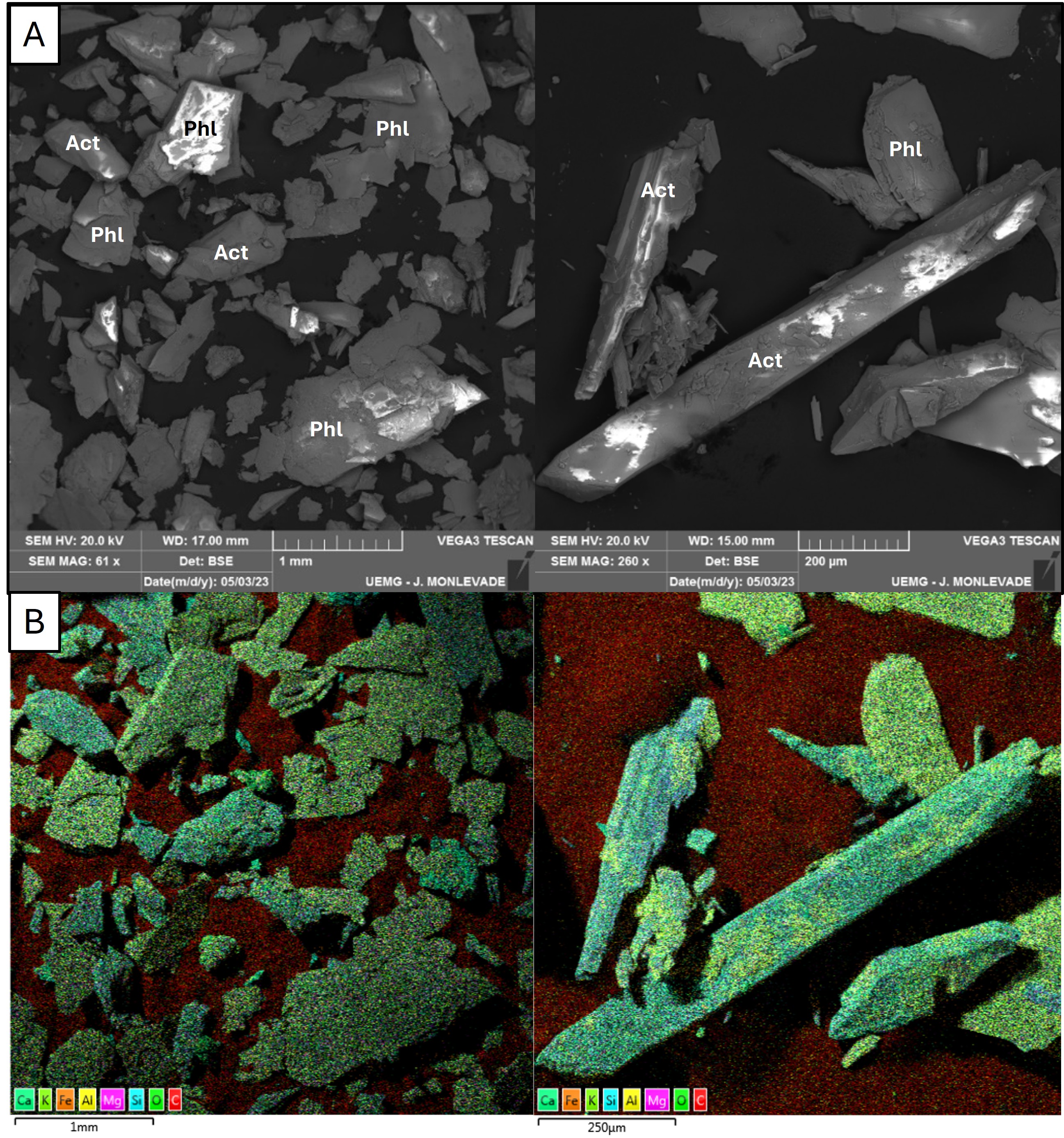
The images obtained by SEM in BSE mode (Figure 5A) provide information about the texture, morphology and distribution of the different components of the sample; on the left, lamellar minerals predominate, while in the image on the right, more elongated minerals with prismatic habit appear. According to Klein and Dutrow24, phlogopite is generally found in plates, while actinolite crystals are generally prismatic, which is in agreement with maps of elements shown in Figure 5B, where calcium predominates in prismatic minerals (actinolite), whereas potassium is more present in platy minerals (phlogopite).
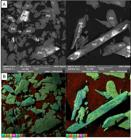
A. Images of the tailings sample in SEM, BSE mode. Act: actinolite; Phl: phlogopite. B. Map of elements by SEM-EDS.
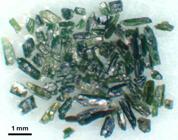
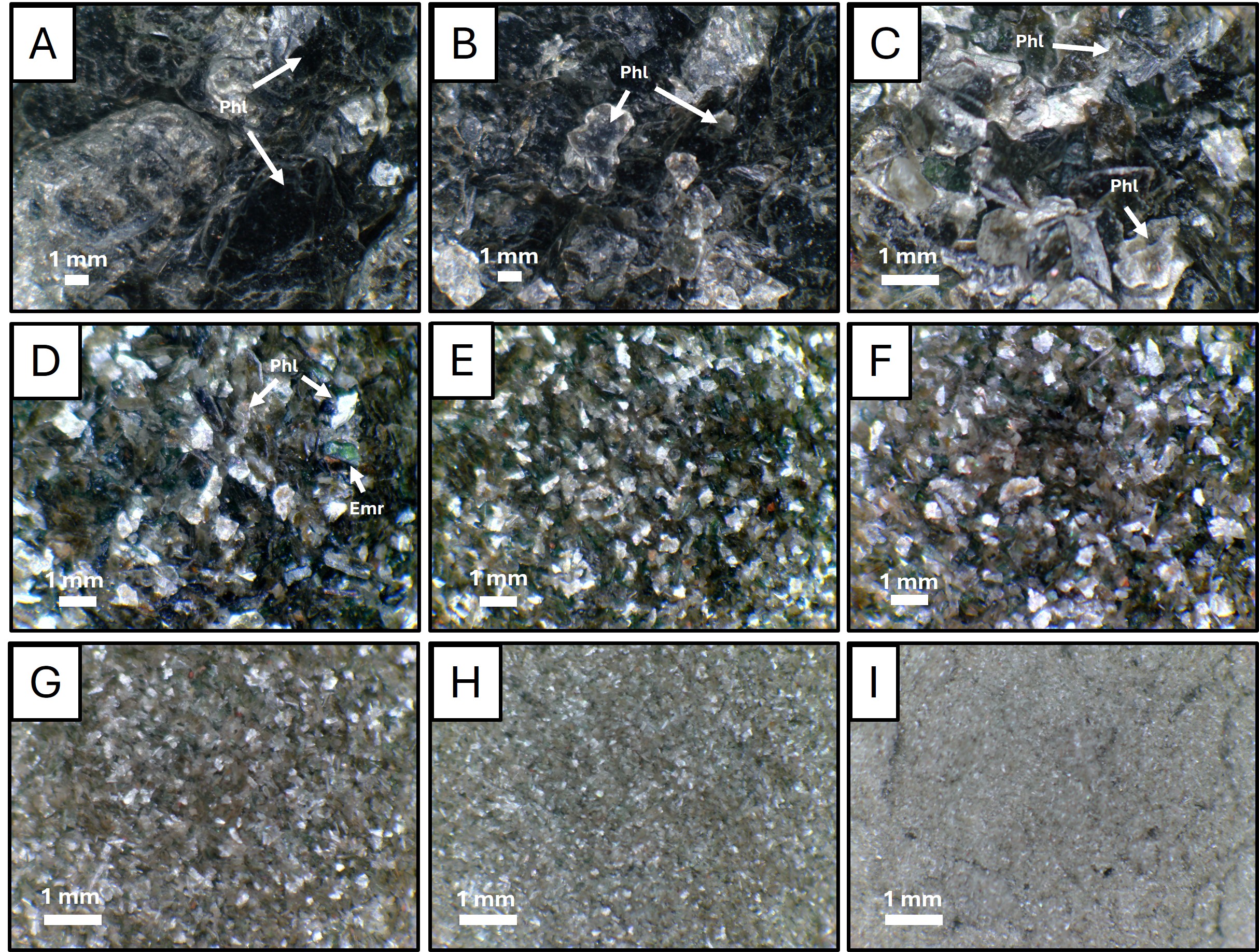
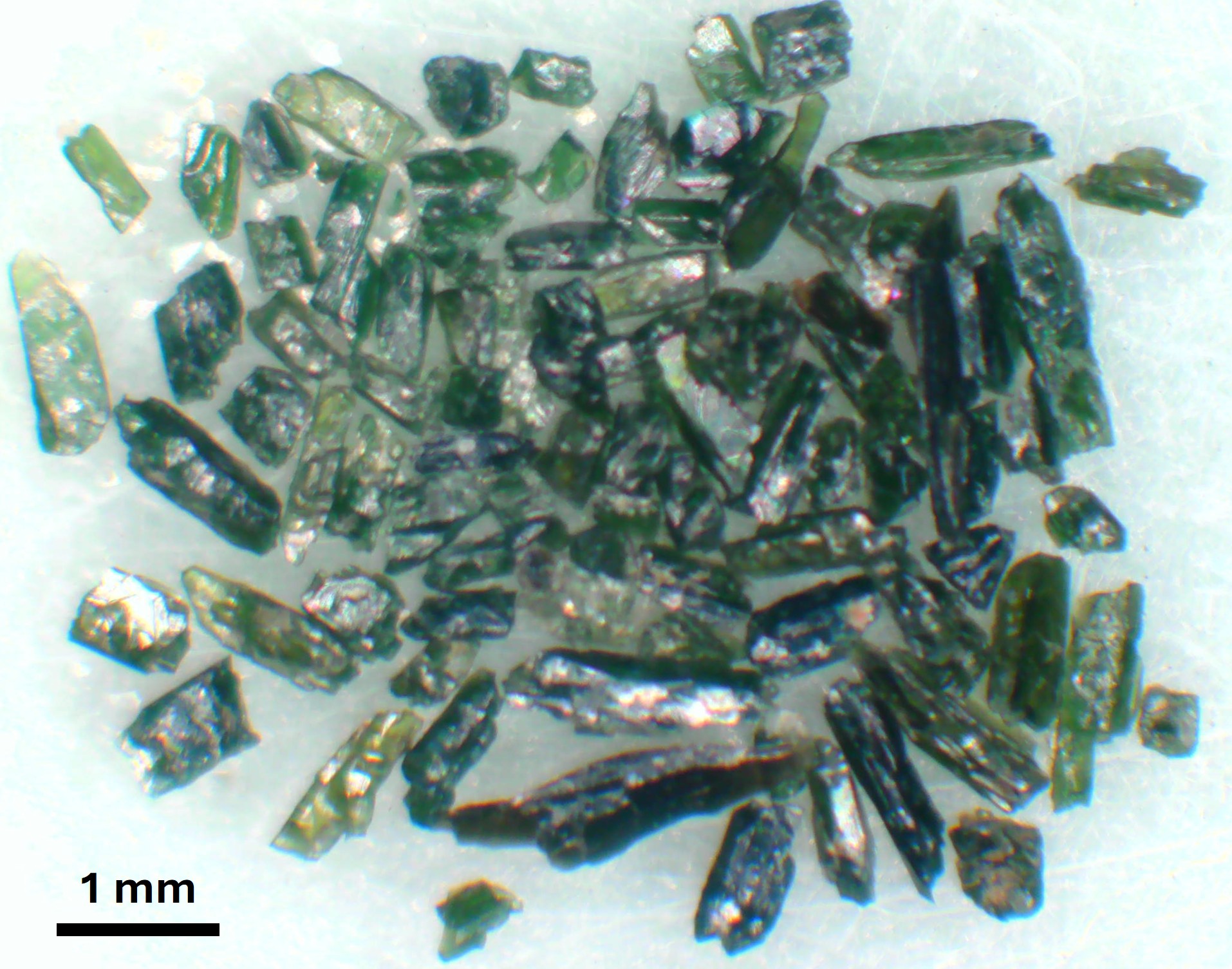
Images with a binocular magnifying glass were obtained for each of the granulometric fractions separated during sieving (Figure 6), and it was possible to observe the predominance of phlogopite in most of them. In the material retained between the 0.85 mm and 0.104 mm sieves, the presence of emerald fragments was observed, indicating a possibility of reprocessing the material. Some of these fragments were selected and are shown in Figure 7.
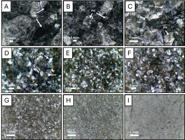
Images of the tailings obtained with a binocular magnifying glass in the different granulometric fractions obtained by sieving of the sample. Phl: phlogopite; Emr: emerald. A. 4 mm; B. 0.85 mm; C. 0.425 mm; D. 0.25 mm; E. 0.15 mm; F. 0.104 mm; G. 0.074 mm; H. 0.037 mm; I. below 0.037 mm.
4. Conclusion
The analyses conducted in this study aiming the physical, chemical and mineralogical characterization of the mining tailings from the extraction and processing of emerald in the Capoeirana Mine, Nova Era-MG, allowed to acquire essential information on the material. The analyses by SEM-EDS and FRX showed the presence of elements such as Mg, K and Ca, indicating a potential for use of the material in the agricultural sector.
Leaching tests revealed low levels, below 1 ppm, of potentially toxic metals As, Cd and Pb. XRD analyses identified the following mineral phases: phlogopite, quartz, actinolite, kaolinite and vermiculite. Therefore, the results obtained indicate great potential for using the mining tailings as a soil remineralizer, based on specifications defined by MAPA. However, further agronomic testing is required to evaluate the applicability of the material in the agricultural sector.
Furthermore, in the images obtained through a binocular magnifying glass, the presence of emerald crystals was verified in some of the fractions resulting from the sieving test, indicating the possibility of reprocessing the material to obtain these crystals, which could be used in mineral crafts, since their dimensions are not viable for cutting.
The assessment of the feasibility of reusing the studied tailings in various applications is essential and aligns with the concepts of circular economy. It investigates new possibilities for the use of the material, which is often inadequately disposed of, without control or planning, potentially posing social and environmental risks. The reuse of tailings in agriculture, for example, would help reduce the volume of material to be stored while also generating benefits for farmers as an alternative to chemical fertilizers, lowering costs and decreasing external dependence.
5. Acknowledgments
To FAPEMIG for the financial support through Call 09/2022, and to UEMG João Monlevade for providing the infrastructure and materials for the development of the project. The first author also thanks the Research Productivity Grant Program (PQ/UEMG) for granting a research productivity grant.
-
Data Availability
The entire dataset supporting the results of this study was published in the article itself.
6. References
- 1 Cornejo C, Bartorelli A. Minerais e pedras preciosas do Brasil. São Paulo: Solaris Edições Culturais; 2014.
- 2 Epstein DS. The Capoeirana emerald deposit near Nova Era, Minas Gerais, Brazil. Gems Gemol. 1989;25(3):150-8.
- 3 Aguiar AP. Uso do resíduo da mineralização de esmeraldas da Província Esmeraldífera de Nova Era em solo agrícola [dissertation]. Belo Horizonte: Universidade Federal de Minas Gerais, Instituto de Geociências; 2013.
- 4 Carroll AB. Corporate social responsibility: evolution of a definitional constructo. Bus Soc. 1999;38(3):268-95.
- 5 Delgado CER. Geologia e petrogênese na região da Província Esmeraldífera de Itabira, MG [dissertation]. Ouro Preto: Universidade Federal de Ouro Preto; 2007.
- 6 Sampaio JA, Silva FANG. Determinação das densidades de sólidos e de polpa. In: Sampaio JA, França SCA, Braga PFA, editors. Tratamento de minérios: práticas laboratoriais. Rio de Janeiro: CETEM/MCTI; 2007. p. 37-51.
- 7 Luz AB, Sampaio JA, França SCA. Tratamento de minérios. 5. ed. Rio de Janeiro: CETEM/MCT; 2010.
- 8 Brasil. Ministério da Agricultura, Pecuária e Abastecimento. Secretaria de Defesa Agropecuária. Instrução Normativa SDA Nº 24, de 20 de Junho de 2007. Diário Oficial da União; Brasília; 21 jun. 2007.
- 9 Brasil. Ministério da Agricultura, Pecuária e Abastecimento. Secretaria de Defesa Agropecuária. Instrução Normativa Nº 5, de 10 de março de 2016. Diário Oficial da União; Brasília; 14 mar. 2016.
- 10 Bloise A, Ricchiuti C, Punturo R, Pereira D. Potentially toxic elements (PTEs) associated with asbestos chrysotile, tremolite and actinolite in the Calabria region (Italy). Chem Geol. 2020;558:119896.
- 11 Bloise A, Fuoco I, Vespasiano G, Parisi F, La Russa MF, Piersante C, et al. Assessing potentially toxic elements (PTEs) content in asbestos and related groundwater: A review of the levels detected. Sci Total Environ. 2024;955:177116.
- 12 van Straaten P. Agrogeology: the use of rocks for crops. Guelph: Department of Land Resource Science, University of Guelph; 2007.
- 13 Aguiar A, Horn HA, Costa ASV, Baggio H, Bilal E. Use of mining waste in agriculture: an example using emerald mining waste from Minas Gerais, Brazil. Romanian Journal of Mineral Deposits. 2016;89(1-2):45-8.
- 14 Bergmann M, Blaskowski AE, Silveira CAP, Camargo MA, Simas MW, Cavalcante O. Caracterização de flogopititos e outras rochas encaixantes das mineralizações de esmeralda de Campo Formoso e Pindobaçu (BA) como fontes de potássio e multinutrientes para remineralização de solos. In: Bamberg AL, Silveira CAP, Martins ÉS, Bergmann M, Martinazzo R, Theodoro SH, editors. III Congresso Brasileiro de Rochagem; 2016 Nov 8-11; Pelotas. Anais. Pelotas: Embrapa Clima Temperado; 2016.
- 15 Lima ICF, Paulino GM, Neves ABV, Diniz FF. Caracterização de rejeito do beneficiamento de esmeraldas visando seu aproveitamento no setor agrícola. REIS. 2019;1(4):1-12.
- 16 Brod ER, Blaskowski AE. Fontes alternativas de potássio, magnésio e cálcio associadas às mineralizacões de esmeralda de Monte Santo (TO). In: Theodoro SH, Monte MBM, Martins ÉS, orgs. IV Congresso Brasileiro de Rochagem; 2021; Rio de Janeiro. Anais. Rio de Janeiro: Autografia; 2021.
- 17 Camara GR, Faitanin BX, Silveira LLL, Chiodi Filho C, Santos ES. Utilização de rochas ornamentais ricas em minerais potássicos como fonte alternativa de insumo agrícola via rochagem: parte I. Rio de Janeiro: CETEM/MCTI; 2021.
- 18 Duarte LDC, Juchem PL, Pulz GM, De Brum TMM, Chodur N, Liccardo A, et al. Aplicações de Microscopia Eletrônica de Varredura (MEV) e Sistema de Energia Dispersiva (EDS) no Estudo de Gemas: exemplos brasileiros. Pesqui Geocienc. 2003;30(2):3-15.
- 19 Hendricks SB, Jefferson ME. Polymorphism of the micas with optical measurements. The American Mineralogist : Journal of Earth and Planetary Materials. 1939;24(12):729-71.
- 20 Will G, Bellotto M, Parrish W, Hart M. Crystal structures of quartz and magnesium germanate by profile analysis of synchrotron-radiation high-resolution powder data. J Appl Cryst. 1988;21(2):182-91.
- 21 Evans BW, Yang H. Fe-Mg order-disorder in tremolite–actinolite–ferro-actinolite at ambient and high temperature. Am Mineral. 1998;83(5-6):458-75.
- 22 Gruner JW. The crystal structure of kaolinite. Z Kristallogr Cryst Mater. 1932;83(1-6):75-88.
- 23 Gruner JW. The structures of vermiculites and their collapse by dehydration. American Mineralogist. Journal of Earth and Planetary Materials. 1934;19(12):557-75.
- 24 Klein C, Dutrow B. Manual de Ciência dos Minerais. 23 ed. Porto Alegre: Bookman; 2012.
Edited by
-
Associate Editor: Eliana Muccillo.Editor-in-Chief: Luiz Antonio Pessan.
The entire dataset supporting the results of this study was published in the article itself.

 Source: Authors' personal archive, 2024.
 Source: Authors' personal archive, 2024.
 Source: Authors' personal archive, 2024.
 Source: Authors' personal archive, 2024.
 Source: Authors' personal archive, 2025.
 Source: Authors' personal archive, 2025.