Viability of Chemical Modification of Thermoplastic Starch with Citric Acid Through Reactive Extrusion
Abstract
This study evaluates the feasibility of modifying thermoplastic starch using citric acid through extrusion processing. The samples were characterized by FTIR, TGA, XRD, and tensile testing. In the FTIR analysis, carbonyl group formation was observed, indicating esterification between the starch hydroxyl groups and the carboxyl groups of the acid. TGA provided data on the thermal events in the materials. In the tensile test, Young's modulus increased while elongation at break decreased, making the modified starches more rigid and less ductile. XRD analysis revealed structural changes due to the increased acid concentration and the presence of plasticizer. Esterification was effective at citric acid concentrations of 1.0 to 2.5–3.0 wt%, but difficulties in processing and controlling process parameters were noted, as highlighted in previous studies. These results demonstrate the viability of starch modification, although challenges remain in controlling production and achieving the desired characteristics.
Keywords:
Thermoplastic starch; reactive extrusion; citric acid; biodegradable material
1. Introduction
Polymeric materials are abundant daily and serve a wide range of applications1. The advancement of technology, food production, material transportation, and many other sectors are directly or indirectly linked to the production and development of polymers. However, with the increasing use of synthetic polymeric materials, the amount of waste generated has also risen. The world faces significant challenges in combating this waste, which is an escalating problem, particularly in countries like Brazil. Excessive use of plastics, especially in packaging and disposable products, represents the primary source of this issue. Stricter regulations and shifts in consumer behavior are essential to reducing the production of disposable materials and overall waste generation. Additionally, adopting sustainable policies and fostering innovation are viable strategies to minimize plastic use2. Brazil is the fourth-largest producer of plastic waste globally, behind only the United States, China, and India. Unfortunately, it also has one of the lowest recycling-to-production ratios, highlighting the urgent need for improved waste management and recycling initiatives3.
Given the significant problems caused by the improper disposal of fossil-based polymers, it is crucial to explore alternatives to minimize the environmental impact of these materials, such as the development of biodegradable plastics compatible with synthetic polymers. The complete or partial replacement of synthetic polymers with biodegradable alternatives aims to reduce their degradation time in the environment and, consequently, their environmental footprint4-7. Due to improper waste management, it is estimated that one-third of all plastic waste has been incorrectly discarded in nature, leading to pollution of soil, freshwater, and oceans. The rapid consumption of non-biodegradable polymeric materials, without proper disposal or significant recycling efforts, has negatively impacted air quality, water systems, and soil conditions8.
Some biopolymers have significant potential to replace non-renewable source polymers in specific applications. However, most of them exhibit mechanical properties, such as tensile strength, that are insufficient for the biopolymer to fully replace synthetic polymers9,10. Additionally, the production costs of these polymers make them less competitive compared to commodity polymers (polymers produced on a large scale with low added value and used for general purposes)4. On the other hand, starch has garnered significant interest in the development of biodegradable polymers due to its abundance in nature and low cost, making it a viable option for industrial-scale use. In Brazil, cassava starch is of particular interest due to its availability and widespread cultivation. It is evident, however, that further research is needed to enhance starch's thermal and mechanical properties and improve its hydrophobicity for applications in materials exposed to high humidity environments. Current research focuses on the investigation of plasticizers, chemical and structural modifications, and the development of blends and composites. Despite advances, plasticized and/or modified starch is not yet commercially used to replace commodity polymers. This is because, although improvements in its properties have been achieved, they remain insufficient for this purpose due to challenges in processing and modification11,12.
Numerous studies in the literature addressing starch modifications. Souza and Andrade investigated corn starch processed with glycerol using single-screw and twin-screw extruders with varying temperature zones for film production to evaluate potential differences. It was observed that single-screw extrusion produced a homogeneous film. However, optical microscopy revealed the formation of starch agglomerates, suggesting that the equipment's conditions were not optimal for processing. Conversely, twin-screw extrusion provided higher shear, resulting in films that appeared more homogeneous. These films, when observed under optical microscopy, showed no agglomerates13. Xueju and Liu developed and characterized resistant citrate starches through esterification with citric acid at high temperatures, using various types of corn starch. They applied a modified Klaushofer method, exposing a solution containing starch, citric acid, and sodium hydroxide (for pH adjustment) on a steel tray at room temperature for 16 hours. The film formed was then dried for 12 hours to control moisture content and ground. To finalize the process and ensure proper characterization, the starch was washed with water to remove unreacted citric acid14. Ning and collaborators described the of use citric acid to compatibilizer thermoplastic starch with linear low-density polyethylene. They employed a single-stage extrusion process, which significantly improved the properties of the resulting materials compared to those produced without citric acid15. Olivato studied the use of citric acid and maleic anhydride as compatibilizers in blends of starch and poly(butylene adipate-co-terephthalate) through single-step reactive extrusion. The authors observed improved mechanical properties in these blends, with citric acid showing greater effectiveness as a compatibilizer16. Gamarano used extrusion to modify starch in the presence of glycerol and urea as a plasticizing system. FTIR spectra revealed no secondary amide bands, indicating the absence of bonds between starch and urea. Differential scanning calorimetry (DSC) analysis showed that starch gelatinizes more easily in the presence of urea. X-ray diffraction patterns indicated changes in all compositions after extrusion, suggesting that urea induces amylose crystallization, making glycerol more accessible for complexation. This study highlights the potential for further research on using this material as an alternative for controlled fertilizer release11.
All the cited studies addressed the challenges in starch processing, emphasizing the critical importance of controlling moisture content and processing temperature. Determining the gelatinization temperature is essential, as it represents the point at which the starch granule swells to its maximum in the presence of water, and its structure is disrupted due to increased temperature, thereby facilitating processing. This study evaluates the feasibility of modifying thermoplastic starch using citric acid through extrusion processing. The modified starch is characterized in terms of its structural properties using Fourier-transform infrared spectroscopy (FTIR), thermal stability through thermogravimetric analysis (TGA), and mechanical properties via tensile testing.
2. Experimental
2.1. Materials
Commercial cassava starch from the Pachá brand was purchased locally, stored in a sealed container under refrigeration. The starch used in this study is the same as that characterized by Matusinho et al.17, with an amylose-to-amylopectin (Am:Ap) ratio of 26:74, which is typical of cassava starch. For the modification procedure of cassava starch with citric acid, anhydrous citric acid (analytical grade) from the Neon brand and glycerol (analytical grade, ≥ 99.7% purity) from the Anidrol brand were used.
2.2. Methods
The chemical modification process for thermoplastic starch (TPS) was carried out in three steps: i) Drying:The starch was dried for 30 minutes at 100°C in a SOLAB oven, model SL-100, ii) Mixing:A mixture of 25 wt% glycerol and citric acid in concentrations ranging from 0.5 wt% to 5 wt% was combined with the dried starch until a homogeneous, lump-free powder was obtained; iii) Extrusion:The mixtures were processed in a Thermo Scientific single-screw extruder, model Haake PolyLab QC, equipped with four heating zones. The parameters used were a screw rotation speed of 30 rpm and heating zone temperatures set to 95 °C, 125 °C, and 125 °C for zones 1, 2, and 3, respectively, with the exit zone set to 100 °C. The nomenclature for the materials (TPSC) is detailed in Table 1.
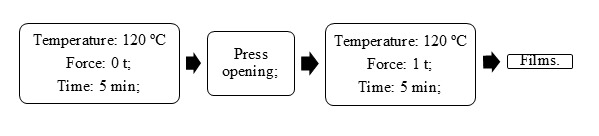
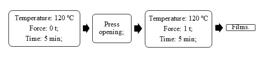
The filaments obtained during the extrusion process were pelletized using a Toshiba – Tosvert VF-Nc3 pelletizer. Approximately 10 grams of each sample were pressed using a heated hydraulic press, Solab – SL11, following the methodology outlined in Figure 1.
2.3. Materials characterization
The powdered starch samples and thermoplastic starch filaments were analyzed using vibrational spectroscopy in the infrared region (FTIR) with a Shimadzu IR-Prestige-21 spectrophotometer equipped with ATR accessories. The analyses were conducted with 53 scans in the range of 4000 to 400 cm−1. The obtained spectra were segmented into bands of interest: 1500 – 1800 cm−1, associated with carbonyl groups (C=O); 880 – 1200 cm−1, associated with ether groups (C-O-C); and 820 – 890 cm−1, associated with C-H bonds. The areas of these bands were determined using Gaussian deconvolution. Subsequently, the areas were calculated based on Equations 1 and 218. Finally, the ratio between these areas was determined for each processed sample.
In the carbonyl band region, there is an overlap with hydroxyl (-OH) bands, requiring the subtraction of the total area (carbonyl + hydroxyl) by the hydroxyl area to isolate the area corresponding exclusively to the carbonyl group. All spectra were normalized using the band associated with carbon-hydrogen (C-H) deformation, as these groups are less susceptible to crosslinking reactions with carboxylic acids, allowing for a reliable comparison of the areas.
For the X-ray diffraction analyses, 1-mm-thick films were prepared and cut into discs with an approximate diameter of 2.5 cm. The analyses were performed using a Shimadzu XRD-7000 diffractometer. The crystallinity of the samples was assessed under the following operational conditions: Bragg angle range (2θ) from 5° to 45° with a step size of 0.02°, using a copper tube. The study evaluated the influence of varying citric acid concentrations on the crosslinking process of thermoplastic starch and the crystallinity of the samples.
Tensile tests were conducted using a universal testing machine AG-X from Instron, model EMIC 23-20, following the ASTM D638 standard. The setup included a 0.5 kN load cell, GR001 metallic grips with a maximum capacity of 5 kN, and filaments measuring 80 mm in length, approximately 3 mm in diameter, with a test gauge length of 50 mm. The test parameters were set to a crosshead speed of 10 mm/min, with displacement and force reset to zero at the start of each test. A total of 8 specimens were tested for each sample. Young's modulus, maximum tensile strength, and elongation were analyzed individually. The specimen that best represented the set of 8 was selected based on the lowest standard deviation among the analyzed results.
To analyze the thermal stability of the obtained polymers, thermogravimetric curves were generated under a conventional atmosphere (air), with a temperature range from ambient to 600 ºC and a heating rate of 10 ºC.min−1, using an average sample mass of 10.34 mg on a Shimadzu DTG-60H device.
3. Results and Discussion
3.1. Structural properties
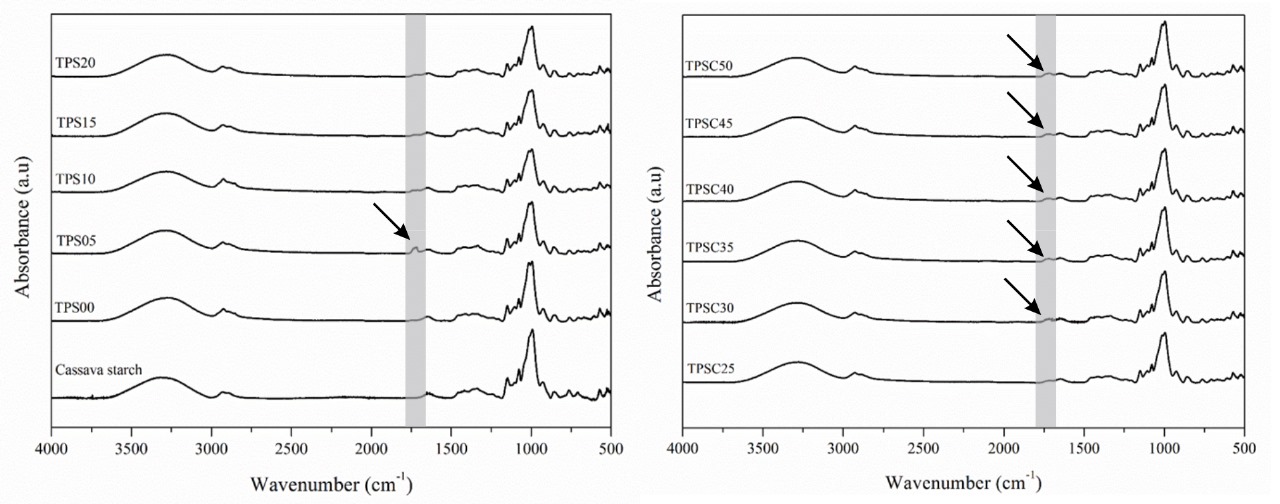
Figure 2 displays the FTIR spectra of cassava starch before and after processing in the presence of citric acid and glycerol (TPSCX, where X denotes the concentration of citric acid in the sample). The FTIR spectrum of TPSC00 closely resembles that of the native starch used as the raw material19, indicating similar chemical groups. Structural and molecular differences in the starch architecture were not significant enough to affect the relative intensities or shift the bands observed in the FTIR spectra. However, after processing with citric acid, a distinct band emerged in the FTIR spectra, particularly prominent in the TPSC05, TPSC30, and TPSC50 samples. This band, highlighted in Figure 2, corresponds to the stretching vibrations of ester carboxyl groups. The presence of ester carbonyl groups in the FTIR spectra, particularly in the region near 1700 cm−1, is commonly associated with the esterification reaction between the hydroxyl groups of starch and the carboxyl groups of citric acid, suggesting the occurrence of crosslinking. However, the literature also reports that citric acid may react with glycerol, forming ester bonds that likewise result in carbonyl group formation. Therefore, in our view, the FTIR data support the occurrence of esterification reactions but do not definitively distinguish between crosslinking reactions involving starch–starch, starch–glycerol, or glycerol–glycerol interactions20.
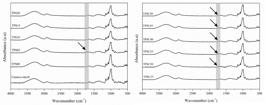
FTIR spectra with emphasis on the region 1722 cm-1 a) Starch Power; TPCS00; TPSC05; TPSC10; TPCS15; TPSC20 and b) TPSC25; TPSC30; TPSC35; TPSC40; TPSC45 and TPSC50.
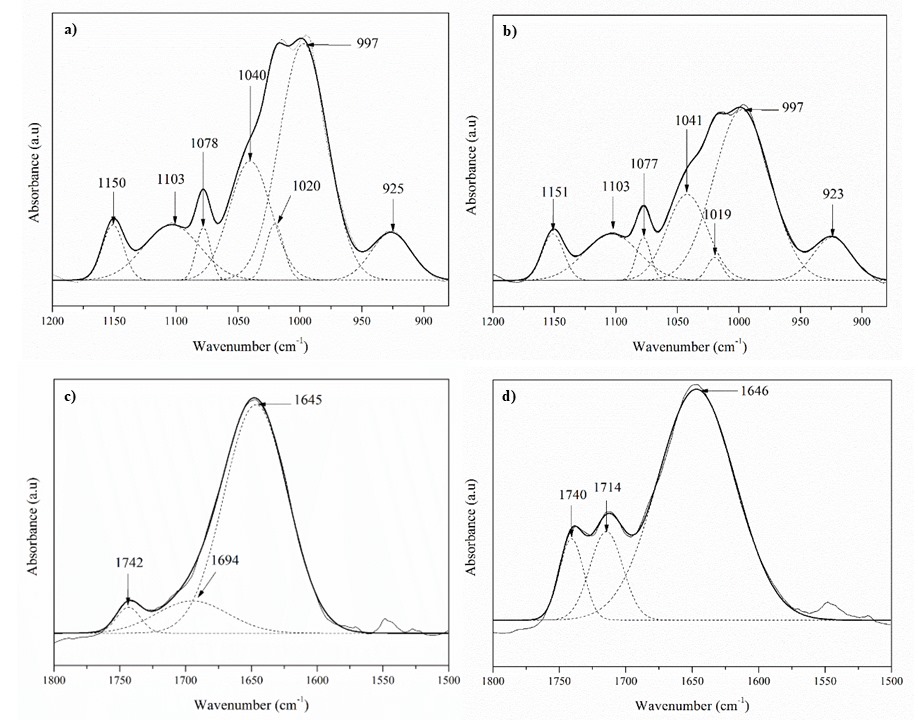
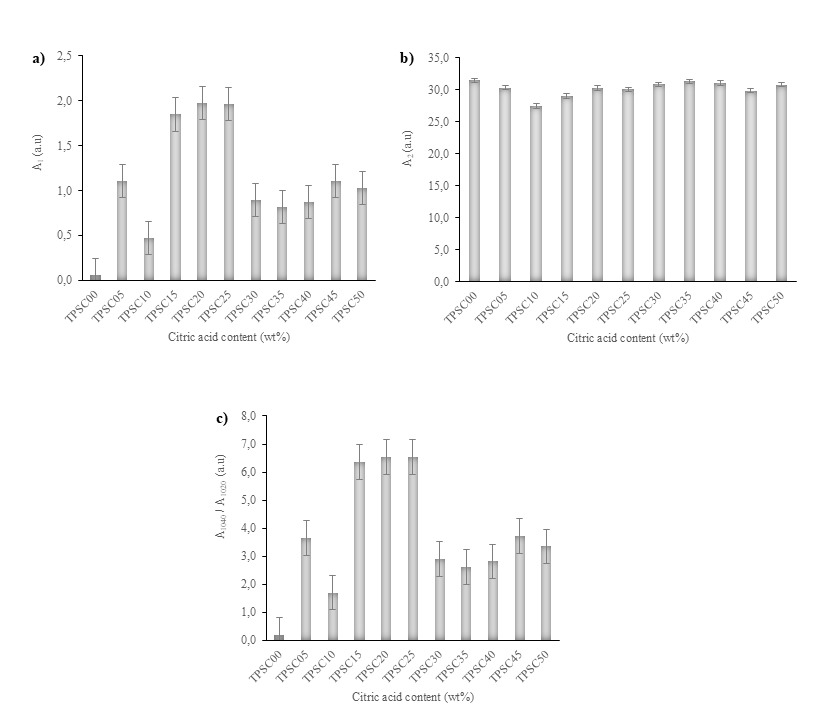
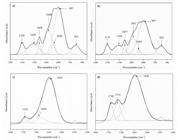
Figures 3a and 3b present the deconvolutions of bands in the regions of 1200 – 900 cm−1 and 1800 – 1500 cm−1, respectively. The analysis focuses on thermoplastic starch samples, both unmodified and modified with 1.0 wt% citric acid, as examples. The respective band for each sample in the region of 890 – 820 cm−1 was used to normalize the entire spectrum. In Figure 3c, an overlap of bands is observed in the 1200 – 900 cm−1 region, which was further deconvoluted into multiple bands attributed to the vibrational modes of C-O groups with varying neighboring environments. The band at 1150 cm−1 corresponds to the stretching vibrations of C-OH bonds, while the bands at 1020 and 1040 cm−1 are associated with the C-O-C ether groups21. The profile of these bands is consistent across all samples analyzed. In Figure 3d, an overlap of bands is observed in the region of 1800 – 1500 cm−1, associated with hydroxyl groups (bending) and carbonyl groups (stretching). To isolate the area corresponding to the carbonyl group, the total area was determined, and the area of the band at 1600 cm−1 was subtracted. Figures 4a and 4b show the ratios between the band areas corresponding to carbonyl (C=O) or ether (C-O-C) vibrations relative to C-H vibrations.
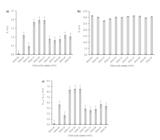
Ratios of the band areas associated with: (a) carbonyl groups (A1); and (b) ether groups (A2); (c) Plot showing the variation of the A1040/A1020 ratio as a function of citric acid content.
No clear trend was observed in the variation of the A1 area ratios with increasing acid concentration for the group of samples containing citric acid. However, two distinct clusters of values were identified: one for samples modified with less than 2.5 wt% citric acid and another for concentrations above 3.0 wt%. This suggests that ester carbonyl formation reactions are favored at higher acid levels. The A2 band ratios showed a slight decrease in samples containing citric acid, indicating the possible cleavage of -C-O bonds during the extrusion process, likely due to starch glycosylation reactions. While new -C-O bonds may have formed during esterification, pre-existing -C-O bonds could have been broken under the shear forces and high temperatures (around 120 ºC) involved in the extrusion process.
The FTIR bands at 1020 and 1040 cm−1 are associated with the stretching vibrations of C-O-C bonds in the amorphous and crystalline phases, respectively. Since no significant changes in the band profiles or shifts were observed, it is suggested that some carbonyl groups were converted into carboxyl groups or decomposed into other structures. Ester C-O bonds absorb energy at higher frequencies. Several authors have studied the intensity ratios of these bands. For instance, Sevenou analyzed starches from different sources and demonstrated that it was possible to distinguish starch varieties based on the external organization of the granules using FTIR/ATR, regardless of their crystallinity (Type A or Type B). Furthermore, the study showed that potato and high-amylose maize starches exhibited a more organized external structure compared to those of wheat, regular maize, and waxy maize starches22.
Dankar and collaborators investigated the effect of mixing additives in potato starch using FTIR and observed that the amylose-amylopectin backbone present in raw potato starch was absent in potato powder but could be fully restored with the addition of water. Moreover, FTIR peaks related to water were identified in the potato powder, suggesting that water molecules play a critical role in restoring the original molecular structure. None of the samples exhibited crystalline structures or high internal organization. A comparison of FTIR and XRD results demonstrated that the additives had effects on different structures, particularly influencing the long-range order of the starch structure through interactions and modifications of -OH groups and hydrogen bonds23.
Figure 4dshows a reduction in the ratio of band areas in all samples containing acid compared to the TPS00 sample. This result suggests a loss of order in the starch structure, possibly due to the plasticizing effect of glycerol and citric acid. Interactions between the additive molecules and the starch chains may induce conformational changes, disrupting the short-range order of the chains23. Chemical reactions involving starch groups can hinder the organization of its chains, leading to reduced crystallinity. The balance between citric acid and glycerol concentrations may influence the reaction mechanism, promoting glycosidation, esterification, and starch crosslinking. This likely impacts the ratios between the areas of specific bands. Mei and collaborators also reported a decrease in the ratio between the intensities of the 1047 and 1020 cm−1 bands with increasing citric acid concentration, attributing this to starch healing reactions. Their study employed high acid concentrations, ranging from 10 to 40 wt%18.
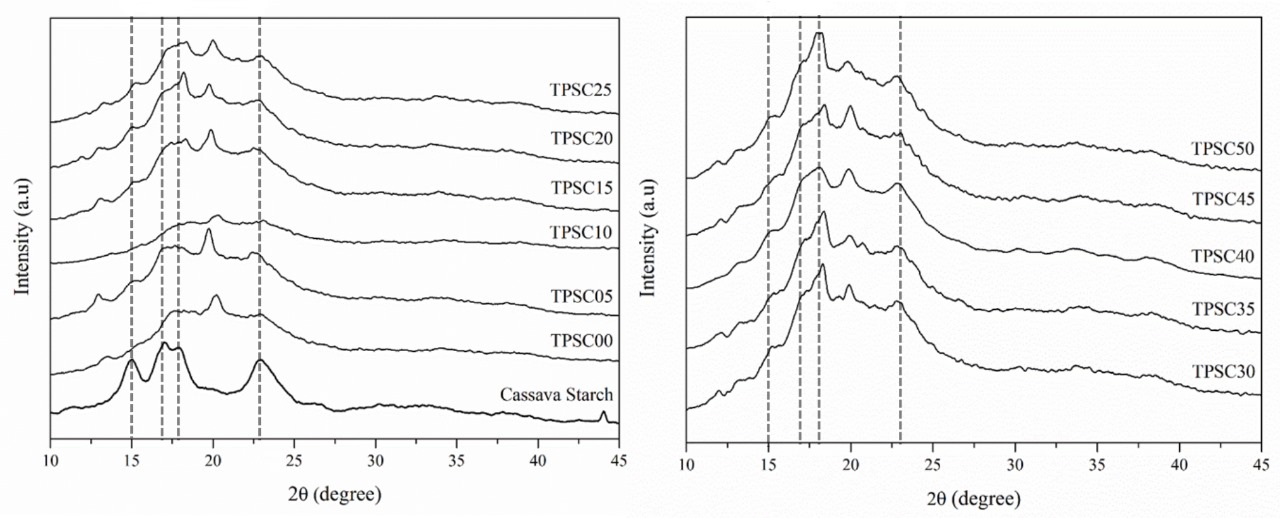
As shown in Figure 5, the crystalline structures of starch and other samples were analyzed by X-ray diffraction (XRD). The diffraction patterns of cassava starch exhibited main peaks at Bragg angles (2θ) around 15°, a double peak between 17 – 18°, and another peak at 23°. The crystalline structures of starch, characterized by parallel double helices, have been previously described, with the exact positions of the diffraction peaks well established. These structures include type A and type B, organized into monoclinic unit cells for type A crystallites and hexagonal unit cells for type B crystallites. The type C structure is characterized as a combination of type A and type B crystallites19,24.
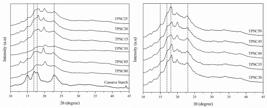
X-ray diffractograms: a) Powdered starch, TPSC00, TPSC05, TPSC10, TPSC15, TPSC20, TPSC25 and b) TPSC30, TPSC35, TPSC40, TPSC45 and TPSC50.
Examining the diffractograms in Figure 5, it can be observed that the intensity of the crystalline peaks, previously identified in the powdered starch diffractogram, is reduced in all samples. The results obtained through infrared spectroscopy (FTIR) regarding the crystallinity of the samples are consistent with those obtained using X-ray diffraction (XRD). The reduction in crystallinity observed in all processed samples is primarily associated with the gelatinization of starch during reactive extrusion. However, it is important to highlight that the starch used in this study was pre-dried before processing, resulting in a system with limited moisture content. Under such conditions, conventional gelatinization induced by water is unlikely to occur. In this context, glycerol played a fundamental role in facilitating the structural disorganization of starch granules. Beyond acting as a plasticizer by enhancing chain mobility, glycerol may have promoted starch gelatinization in the absence of free water and potentially participated in chemical reactions with citric acid or starch. These combined effects explain the significant reduction in the intensity of the crystalline peaks observed in the XRD patterns of the modified samples.
Additionally, the diffractograms of TPS00 and other materials containing citric acid reveal the presence of a more intense peak at 2θ = 20°, indicating a change in the crystalline structure of the starch. This peak, along with a minor peak at 2θ = 13°, also observed in the diffractograms, corresponds to the diffraction profile of type V crystalline structures. These structures are associated with the organization of amylose chains25. In thermoplastic starch, amylose crystallizes rapidly despite its amorphous nature, due to its higher crystallization kinetics compared to amylopectin, attributed to its single-helix structural conformation26. X-ray diffractograms exhibit characteristic peaks of type A and type V crystalline profiles in all samples, with type V being predominant up to 1.5 wt% citric acid. At higher concentrations, type A peaks become more prominent, suggesting less efficient plasticization.
3.2. Thermal properties
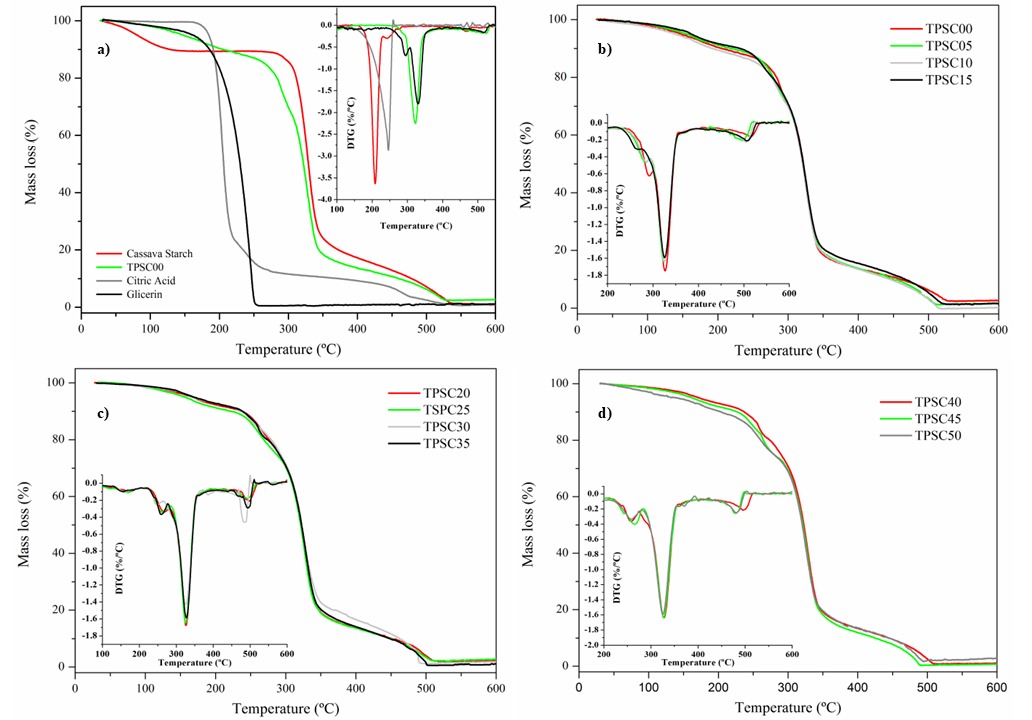
Thermogravimetric analysis (TGA) provides insights into the mass loss of materials, including initial moisture content and stages of thermal decomposition. For powdered cassava starch, as shown in Figure 6, the first thermal event, occurring between 55 – 113 °C, corresponds to the elimination of retained moisture in the sample. Based on this initial event, the moisture content of cassava starch was determined to be 12.7%. According to Solliman and collaborators temperatures up to 150 °C are associated with the loss of easily volatile compounds and water27. Aggarwal and Dollimore reported that, initially, structural modifications in the polymer produce soluble compounds known as pyrodextrins. The second thermal event, occurring between 307 – 335 °C with a mass loss of 69.3%, represents the first stage of starch decomposition. According to Aggarwal and Dollimore, this event involves the elimination of polyhydroxyl groups, decomposition, and depolymerization of starch chains. At higher temperatures, above 300 °C, depolymerization of macromolecules leads to the formation of levoglucosan, furfural, and various volatile low-molecular-weight fragmentation products28.
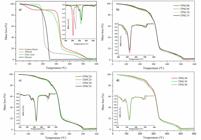
TGA curves (TGA) for: a) the components of modified thermoplastic starch and thermoplastic starch, b) TPSC00, TPSC05, TPSC10, TPSC15, c) TPSC20, TPSC25, TPSC30, TPSC35, and d) TPSC40, TPSC45, and TPSC50;
The thermogravimetric curves and their respective derivatives (TGA) for each of the studied materials are presented in Figures 6a, 6b and 6c. The corresponding temperatures and percentages of mass loss are detailed in Table 2. For the thermoplastic starch sample (TPS00), as shown in Figure 6a, four thermal events were observed. The first event occurs within the temperature range of 105 – 113 °C, with a mass loss of 8.6%, ending alongside the beginning of the second event. This event is mainly associated with moisture release, similar to the behavior of powdered starch. During the preparation of thermoplastic starch, powdered starch, and glycerol were subjected to drying and a processing cycle at 120 °C, leading to moisture loss, although some moisture may have been regained post-processing. While the mass loss percentages during the second stage are similar for powdered starch and TPS00, the interval is broader in the case of thermoplastic starch, likely due to glycerol decomposition. As seen in the TGA curve for glycerol in Figure 6, its thermal decomposition begins at lower temperatures than that of TPS00, overlapping with the second mass loss event coupled with the first.
For the thermoplastic starch sample (TPS00), as shown in Figure 6, four thermal events were identified. The first event occurred in the temperature range of 105 – 113 °C, with a mass loss of 8.6%, ending concurrently with the beginning of the second event. This event is primarily associated with moisture release, like the behavior observed in powdered starch. During the preparation of thermoplastic starch, powdered starch, and glycerol were subjected to drying and a processing cycle at 120 °C, leading to moisture loss, although some of it may have been reabsorbed post-processing. While the mass loss percentages during the second stage are similar for powdered starch and TPS00, the interval is broader for thermoplastic starch, likely due to the mass loss associated with glycerol decomposition. As shown in Figure 6, the TGA curve for glycerol indicates that its thermal decomposition begins at lower temperatures than that of TPS00, overlapping with the second mass loss event coupled with the first. In the third and fourth thermal events, occurring between 305 – 341 °C and 493 – 522 °C, mass losses of 74.3% and 10.7% were observed, respectively, primarily attributed to the thermal decomposition of starch, as previously mentioned. For both powdered starch and TPS00, the total mass loss during these stages is similar, around 85%. However, in the case of thermoplastic starch, part of the glycerol is likely eliminated during the third stage, as the starch content in TPS00 is 75 wt%. The interactions between starch and glycerol delay the degradation of glycerol.
For the group of samples containing citric acid, four thermal events were observed. The first event is primarily associated with moisture release and glycerol degradation, as discussed for TPS00. A second thermal event was identified in the TGA curves of this sample group, with temperature ranges slightly varying for each sample within the limits of 238 – 293 °C. The percentages of mass loss in this range differ among the samples and do not exhibit a clear trend with citric acid content. One possibility is that this stage is related to the decomposition of low-molecular-weight chains resulting from esterification and glycosidation reactions of starch in the presence of the organic acid and glycerol, as suggested by the FTIR analysis results.
The newly formed bonds may act as weak points in the starch chains when subjected to heating. At this stage, residual glycerol could also be eliminated, as suggested for the degradation of the TPS00 sample. The third and fourth degradation stages occur within temperature ranges similar to those observed in the thermogravimetric curve of thermoplastic starch. However, the mass loss percentage in the third stage is lower compared to TPS00, while the fourth stage shows a slightly higher mass loss. The degradation of starch chains is redistributed across the mass-loss events and influenced by the reactions between starch, citric acid, and glycerol. Although the TGA curve for citric acid indicates a mass loss of 7.8% between 493 – 522 °C, the contribution of citric acid degradation to the fourth stage of modified starch sample degradation cannot be considered significant. Given the citric acid concentration in the mixtures, with a maximum of 5 wt%, the relative mass loss attributed solely to the acid at this stage would be negligible.
3.3. Mechanical properties
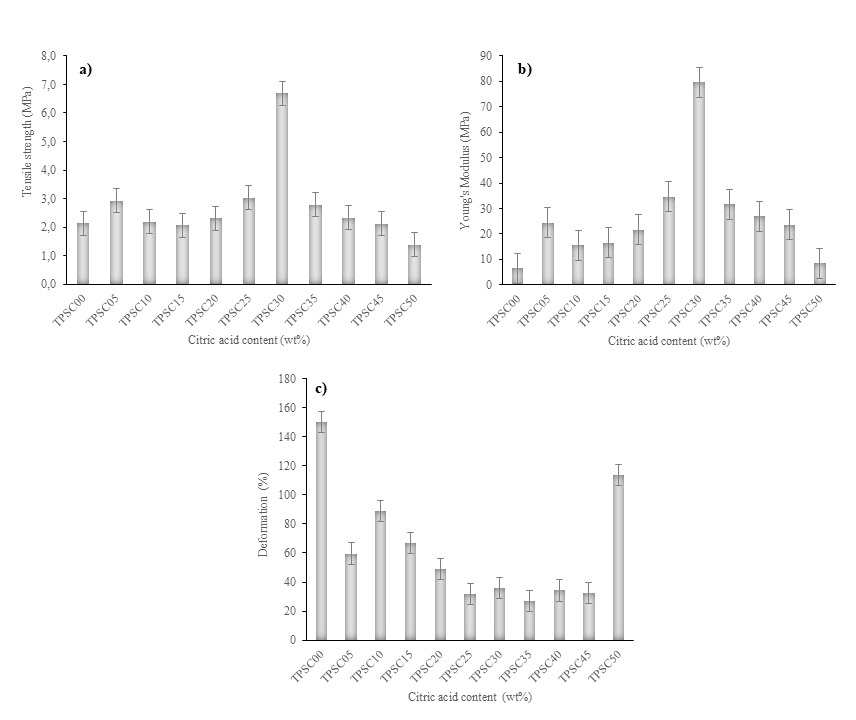
Thermoplastic starch exhibits semicrystalline characteristics when subjected to tensile testing. Figure 7 presents the tensile test data for TPSC00 filaments and samples containing citric acid. Tensile strength, Young's modulus, and deformation values are shown in Figures 7a, 7b and 7c, respectively. The TPS00 sample exhibited ductile behavior, achieving plastic deformation up to 130% of its initial length. A similar phenomenon was observed in the sample with the highest citric acid content (TPSC50), which exhibited comparable deformation. Most samples containing citric acid exhibited higher tensile strength than TPS00 but lower elongation at break, fracturing between 20% and 75%, except for the TPSC50 sample. The increase in tensile strength and decrease in deformation may be attributed to crosslinking between starch chains, which enhances the polymer's ability to withstand higher loads while limiting its deformation.
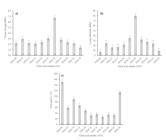
Experimental data for (a) tensile strength, (b) Young's modulus, and (c) tensile deformation.
Mechanical results indicate that samples with higher citric acid content (≥ 1.5 wt%) generally exhibit lower elongation at break, except for TPSC50. This exception may be attributed to the reduced availability of glycerol as a plasticizer, possibly due to its involvement in reactions with citric acid or starch chains. Such interactions likely lead to reduced crystallinity caused by structural disorganization. According to FTIR spectroscopy, starches containing citric acid are less crystalline. While reduced crystallinity typically decreases tensile strength and stiffness while increasing elongation at break, the mechanical properties in this study indicated that crosslinking via esterification has a greater impact than the crystalline phase content in the modified starches.
Analysis of Figures 7a and 7b shows that the TPSC30 sample exhibited the highest tensile strength and Young's modulus among all the samples analyzed. This composition represents a limit in the modification of properties compared to the other samples. Conversely, the TPSC50 sample displayed the lowest tensile strength (1.4 MPa) but demonstrated greater ductility compared to the other samples containing citric acid. Findings by Reddy and Yang reported a tensile strength of approximately 2.5 MPa for crosslinked starch with 30% glycerol and 5% citric acid, prepared and analyzed under different conditions but still comparable to the values obtained in this study19.
The TPSC10 and TPSC20 samples exhibited similar tensile strengths but differed in elongation, with TPSC10 being more ductile. The ratio of glycerol to citric acid significantly influences the reactions and properties of the starch, including its mechanical behavior. Young's modulus increased in the citric acid-containing samples compared to TPS00, indicating greater stiffness due to crosslinking, which reduces chain mobility. However, the TPSC50 sample showed the lowest modulus among the citric acid-modified samples, suggesting that intense esterification with citric acid promotes greater starch chain degradation. In addition to esterification, citric acid may also contribute to increased elongation through a plasticizing effect.
4. Conclusion
This study investigated the production and properties of thermoplastic starch modified by reactive extrusion using commercial cassava starch. The material was produced with citric acid concentrations ranging from 0.5 to 5 wt%. Infrared spectroscopy (FTIR) analysis revealed the formation of carbonyl groups, indicated by the appearance of bands near 1700 cm−1, suggesting chemical esterification reactions between the hydroxyl groups of starch and the carboxyl groups of the acid. X-ray diffraction analysis showed structural changes influenced by the increasing acid concentration and the presence of the plasticizer, affecting the material's structural conformation. Tensile tests demonstrated changes in the mechanical properties compared to unmodified thermoplastic starch (TPSC00). The Young’s modulus increased, while elongation at break decreased, indicating that the modified starches became stiffer and less ductile. The results suggest that a citric acid concentration of 3 wt% may be considered the optimal limit. Higher acid concentrations lead to chain degradation, resulting in a loss of mechanical properties and increased hydrophilicity.
5. Acknowledgments
The authors thank the Foundation for Research Support of Minas Gerais (FAPEMIG), the National Council for Scientific and Technological Development (CNPq), INCT-Midas/CNPq, Funding Authority for Studies and Projects (FINEP) through the BLINDAR project (grant number 1636/22).
6. References
- 1 Namazi H. Polymers in our daily life. Tabriz: Tabriz University of Medical Sciences; 2017. p. 73-4. (BioImpacts; 7).
-
2 Faroni-Perez L. Overcoming plastic pollution: challenges faced by brazilian policies and perspectives for stakeholder engagement and global governance opportunities. J Sci Pol Gov. 2023;22(2):1-14. http://doi.org/10.38126/JSPG220204
» http://doi.org/10.38126/JSPG220204 -
3 Lima LR, Gutierrez RF, Cruz SA. A perspective of the COVID-19 Pandemic in the plastic waste management and cooperatives of waste pickers in Brazil. Circ Econ Sust. 2022;2(3):903-13. http://doi.org/10.1007/s43615-021-00130-0
» http://doi.org/10.1007/s43615-021-00130-0 -
4 Jha S, Akula B, Enyioma H, Novak M, Amin V, Liang H. Biodegradable biobased polymers: a review of the state of the art, challenges, and future directions. Polymers. 2024;16(16):2262. http://doi.org/10.3390/polym16162262
» http://doi.org/10.3390/polym16162262 -
5 Muthuraj R, Misra M, Mohanty AK. Biodegradable compatibilized polymer blends for packaging applications: a literature review. J Appl Polym Sci. 2018;135(24):45726. http://doi.org/10.1002/app.45726
» http://doi.org/10.1002/app.45726 -
6 Ferreira FV, Cividanes LS, Gouveia RF, Lona LMF. An overview on properties and applications of poly(butylene adipate-co-terephthalate)–PBAT based composites. Polym Eng Sci. 2019;59(s2):E7-15. http://doi.org/10.1002/pen.24770
» http://doi.org/10.1002/pen.24770 -
7 Kahar AWM, Ismail H, Othman N. Morphology and tensile properties of high-density polyethylene/natural rubber/thermoplastic tapioca starch blends: the effect of citric acid-modified tapioca starch. J Appl Polym Sci. 2012;125(1):768-75. http://doi.org/10.1002/app.35057
» http://doi.org/10.1002/app.35057 -
8 Kibria MG, Masuk NI, Safayet R, Nguyen HQ, Mourshed M. Plastic waste: challenges and opportunities to mitigate pollution and effective management. Int J Environ Res. 2023;17(1):20. http://doi.org/10.1007/s41742-023-00507-z
» http://doi.org/10.1007/s41742-023-00507-z -
9 Wang Z, Zhou X, Sheng L, Zhang D, Zheng X, Pan Y, et al. Effect of ultrasonic degradation on the structural feature, physicochemical property and bioactivity of plant and microbial polysaccharides: a review. Int J Biol Macromol. 2023;236:123924. http://doi.org/10.1016/j.ijbiomac.2023.123924
» http://doi.org/10.1016/j.ijbiomac.2023.123924 -
10 Wang Z, Zhou X, Shu Z, Zheng Y, Hu X, Zhang P, et al. Regulation strategy, bioactivity, and physical property of plant and microbial polysaccharides based on molecular weight. Int J Biol Macromol. 2023;244:125360. http://doi.org/10.1016/j.ijbiomac.2023.125360
» http://doi.org/10.1016/j.ijbiomac.2023.125360 -
11 Gamarano DS, Pereira IM, Silva MC, Mottin AC, Ayres E. Crystal structure transformations in extruded starch plasticized with glycerol and urea. Polym Bull. 2020;77(9):4971-92. http://doi.org/10.1007/s00289-019-02999-2
» http://doi.org/10.1007/s00289-019-02999-2 -
12 Zhu F, Wang S. Physicochemical properties, molecular structure, and uses of sweetpotato starch. Trends Food Sci Technol. 2014;36(2):68-78. http://doi.org/10.1016/j.tifs.2014.01.008
» http://doi.org/10.1016/j.tifs.2014.01.008 -
13 Huang X, Liu H, Ma Y, Mai S, Li C. Effects of extrusion on starch molecular degradation, order-disorder structural transition and digestibility: a review. Foods. 2022;11(16):2538. http://doi.org/10.3390/foods11162538
» http://doi.org/10.3390/foods11162538 -
14 Xie X, Liu Q. Development and physicochemical characterization of new resistant citrate starch from different corn starches. Stärke. 2004;56(8):364-70. http://doi.org/10.1002/star.200300261
» http://doi.org/10.1002/star.200300261 -
15 Ning W, Jiugao Y, Xiaofei M, Ying W. The influence of citric acid on the properties of thermoplastic starch/linear low-density polyethylene blends. Carbohydr Polym. 2007;67(3):446-53. http://doi.org/10.1016/j.carbpol.2006.06.014
» http://doi.org/10.1016/j.carbpol.2006.06.014 -
16 Olivato JB, Grossmann MVE, Bilck AP, Yamashita F. Effect of organic acids as additives on the performance of thermoplastic starch/polyester blown films. Carbohydr Polym. 2012;90(1):159-64. http://doi.org/10.1016/j.carbpol.2012.05.009
» http://doi.org/10.1016/j.carbpol.2012.05.009 -
17 Matusinho IAS, Ramos TF, Oliveira JB, Pedroso EF, Souza PP, Patricio PSO. Influence of starch source on properties of blends based on thermoplastic starch and poly (butylene-adipate-co-terephthalate). Carbohydr Polym Technol Appl. 2024;7:100433. http://doi.org/10.1016/j.carpta.2024.100433
» http://doi.org/10.1016/j.carpta.2024.100433 -
18 Mei JQ, Zhou DN, Jin ZY, Xu XM, Chen HQ. Effects of citric acid esterification on digestibility, structural and physicochemical properties of cassava starch. Food Chem. 2015;187:378-84. http://doi.org/10.1016/j.foodchem.2015.04.076
» http://doi.org/10.1016/j.foodchem.2015.04.076 -
19 Reddy N, Yang Y. Citric acid cross-linking of starch films. Food Chem. 2010;118(3):702-11. http://doi.org/10.1016/j.foodchem.2009.05.050
» http://doi.org/10.1016/j.foodchem.2009.05.050 -
20 Santos LM, Matusinho IAS, Roa JPB, Souza PP, Patricio PSO. Evaluation of the effects of organic acids on the properties of thermoplastic starch. Polym Bull. 2025;82(8):3063-83. http://doi.org/10.1007/s00289-025-05653-2
» http://doi.org/10.1007/s00289-025-05653-2 -
21 Tudorachi N, Lipsa R, Mustata FR. Thermal degradation of carboxymethyl starch-g-poly(lactic acid) copolymer by TG-FTIR-MS analysis. Ind Eng Chem Res. 2012;51(48):15537-45. http://doi.org/10.1021/ie300625c
» http://doi.org/10.1021/ie300625c -
22 Sevenou O, Hill SE, Farhat IA, Mitchell JR. Organisation of the external region of the starch granule as determined by infrared spectroscopy. Int J Biol Macromol. 2002;31(1-3):79-85. http://doi.org/10.1016/S0141-8130(02)00067-3
» http://doi.org/10.1016/S0141-8130(02)00067-3 -
23 Dankar I, Haddarah A, Omar FEL, Pujolà M, Sepulcre F. Characterization of food additive-potato starch complexes by FTIR and X-ray diffraction. Food Chem. 2018;260:7-12. http://doi.org/10.1016/j.foodchem.2018.03.138
» http://doi.org/10.1016/j.foodchem.2018.03.138 -
24 Compart J, Singh A, Fettke J, Apriyanto A. Customizing starch properties: a review of starch modifications and their applications. Polymers. 2023;15(16):3491. http://doi.org/10.3390/polym15163491
» http://doi.org/10.3390/polym15163491 -
25 Kawabata A, Sawayama S, Nagashima N, del Rosario RR, Nakamura M. Some physico-chemical properties of starches from cassava, arrowroot and sago studies on tropical starches. Part 1. J Jpn Soc Starch Sci. 1984;31(4):224-32. http://doi.org/10.5458/jag1972.31.224
» http://doi.org/10.5458/jag1972.31.224 -
26 Parker R, Ring SG. Aspects of the physical chemistry of starch. J Cereal Sci. 2001;34(1):1-17. http://doi.org/10.1006/jcrs.2000.0402
» http://doi.org/10.1006/jcrs.2000.0402 -
27 Soliman AAA, El-Shinnawy NA, Mobarak F. Thermal behaviour of starch and oxidized starch. Thermochim Acta. 1997;296(1-2):149-53. http://doi.org/10.1016/S0040-6031(97)00040-3
» http://doi.org/10.1016/S0040-6031(97)00040-3 -
28 Aggarwal P, Dollimore D. A thermal analysis investigation of partially hydrolyzed starch. Thermochim Acta. 1998;319(1-2):17-25. http://doi.org/10.1016/S0040-6031(98)00355-4
» http://doi.org/10.1016/S0040-6031(98)00355-4