Hexafluorozirconic Acid-Based Nanoceramic Conversion Coatings on AA3105 Aluminum Alloy: Influence of the Presence of Copper in the Deposition Bath
Abstract
Zirconium-based conversion coatings provide an environmentally friendly, chromate-free alternative to traditional phosphating and chromating processes for enhancing the corrosion protection of metal substrates. This study investigates the formation and characterization of zirconium-based conversion coatings (Zr-CC) on AA3105-H16. The coatings were produced by immersion in an hexafuorozirconic acid (H2ZrF6) solution and characterized using SEM-FEG, SEM/EDS, and Raman spectroscopy. Considering that the incorporation of organic and/or inorganic additives can enhance the anticorrosive performance of Zr-CCs, electrochemical techniques were employed to assess the influence of Cu2+ ions on corrosion resistance in a sodium chloride medium. The results indicate that, under the tested conditions, Cu2+ ions act as precursors for film formation, increasing the open-circuit potential and decreasing the coating formation time. However, coatings formed in the presence of Cu2+ ions exhibited lower corrosion resistance, revealing a detrimental effect on anticorrosive performance.
Keywords:
Zr-based conversion coatings; AA3105 H16 aluminum alloy; copper ions; corrosion.
1. Introduction
Corrosion is a constant concern in the civil, automotive, aerospace, marine and consumer goods industries, leading to huge economic losses, safety risks and environmental impacts. Implementing appropriate corrosion prevention measures helps to extend the useful life of metallic materials, reduce maintenance costs and improve overall productivity, while maintaining safety and environmental protection standards. In light of this, nanoceramic coatings offer a promising and innovative approach to corrosion protection, combining the unique properties of nanotechnology and ceramics to create robust, long-lasting and environmentally friendly solutions. Nanoceramic coatings are thin layers of nanometric ceramic materials that are applied to various metal substrates to improve their properties, such as hardness, wear resistance, corrosion resistance and thermal stability. This kind of coatings have been widely used to protect metallic compounds in automotive, aerospace, food, and biomedical metallic implants1,2.
Aluminum and its alloys are widely used in, among others, the construction, aviation and automotive industries. The properties that make aluminum one of the most important construction materials include low density, high resistance to atmospheric corrosion and other chemical media, and good thermal and electrical conductivity, which are strongly dependent on its composition and microstructure. The aluminum-manganese system, known as the 3xxx series alloys, is the most widely used among wrought alloys due to its excellent formability and good corrosion resistance. However, these alloys are also susceptible to localized corrosion (pitting corrosion and intergranular corrosion) when exposed to aggressive media, especially in the presence of Cl- ions. Commercial aluminum-manganese alloys typically contain iron and silicon, and during their solidification, part of the manganese forms orthorhombic Al6(Mn,Fe) and a cubic phase called α-Al12(Fe,Mn)Si through eutectic reactions, which may arise in the form of dispersoids. The electrochemical nature of the intermetallic phases plays a vital role in the susceptibility of an aluminum alloy to localized corrosion 3.
Among the various surface treatment techniques for aluminum alloys, conversion coatings have been widely used due to their simple processing, low cost, and environmental compatibility. However, traditional chromate conversion coatings are increasingly restricted because of the toxicity and environmental hazards associated with hexavalent chromium, underscoring the urgent need for environmentally friendly alternatives. Zirconium-based conversion coatings (Zr-CCs) have emerged as promising substitutes, offering both eco-friendliness and excellent protective performance4.
The literature reports that Zr-CCs can enhance the adhesion of organic coatings, reduce cathodic delamination, and improve corrosion resistance on various substrates, including iron or carbon steel5-10, zinc or galvanized steel11-15, and light metals such as magnesium16-18 and aluminum alloys4,12,13,19-34. Research on aluminum alloys has focused primarily on the 1xxx, 2xxx, 6xxx, and 7xxx series, whereas only a limited number of studies have examined the 3xxx series.
Zr-CC are typically produced via pH-induced precipitation from baths containing hexafluorozirconic acid (H2ZrF6). These coatings form rapidly at room temperature and are characterized by the development of a ZrO2 layer15. The film is formed when the metal is immersed in the processing bath, with the driving force for the formation of coating consisting of the local potential difference between the anode and cathode35. Effective parameters such as pretreatment, immersion time, pH, bath agitation, acid concentration and treatment temperature directly influence on the microstructure and corrosion performance of the coating21. In baths containing H2ZrF6, the reaction is initiated by the dissolution of the substrate through an anodic reaction. This reaction leads to hydrogen evolution and oxygen reduction reactions which alkalize the surface of the substrate36. Thus, the formation of Zr-CC occurs by pH-induced precipitation, usually expressed by the reaction:
Zr-based conversion treatments present low environmental impact and operating costs. In addition to H2ZrF6, current commercial baths contain salts of film-forming agents, activators, accelerators, pH adjusters, and other performance-enhancing additives37. The formation of ultrathin conversion layers, which typically range from 5 to 150 nm, largely depends on the composition and microstructure of the metal substrate, which determine the electrochemical behavior of metal surfaces. In aluminum alloys, it has been shown that the ZrO2 layer deposition process initiates on and around inter-metallic particles (IMPs) due to specific cathodic reactions, such as hydrogen evolution and oxygen reduction, causing local alkalization that sets the conditions for zirconium oxide/hydroxide precipitation. After the coating covers the IMPs, it begins to grow laterally, covering the entire surface38.
Various organic/inorganic additives have shown a significant influence on the conversion coating growth and its properties. The addition of inorganic additives containing certain elements such as Cu2+, Mn2+, Fe3+, , , and others have been associated with improved properties of the final conversion layer12,20,22-29.
Adhikari et al.20 demonstrated that the addition of copper to the H2ZrF6 solution accelerates the deposition of Zr-CC on pure aluminum, iron, and zinc. Cerezo et al.23,24 also considered the use of copper-modified H2ZrF6 solution to produce nanoceramic coatings on AA6014. Considering the presence of copper in the nanoceramic bath, Sarfraz et al.39 found that the obtained Zr-CC contained Cu in both metallic and CuO forms, in addition to oxyhydroxides or oxyfluorides. Mohanty et al.10 demonstrated that increasing the Cu2+ additive concentration to approximately 40 ppm enhances the surface characteristics of Zr-based coatings on Fe substrates, resulting in improved surface stability and anticorrosion performance in NaCl environments. Overall, the literature reports that small additions of Cu2+ accelerate the conversion process and yield thicker coatings.
For aluminum substrates treated with H2ZrF6 solutions, Cu was found to deposit as metallic Cu islands on the metal surface, which is believed to produce microcathodes, altering the hydrogen evolution and oxygen reduction reaction at these sites, resulting in greater ZrO2 deposition. In a general consensus Cu particles act as extra cathodic sites and promote the alkalization of the surface which favors the coating deposition. However, some researchers20,24,38 found that the presence of Cu2+ in the solution resulted in a non-uniform film formation with deleterious effect in the anti-corrosion behavior of the system.
In the present study, Zr-CCs formed on AA3105 H16 were investigated by field emission scanning electron microscopy (FE-SEM), energy-dispersive X-ray spectroscopy (EDS) and Raman spectroscopy. The effect of copper addition on the nanoceramic coating formation and corrosion performance was evaluated by monitoring the open circuit potential (OCP) during coating formation, potentiodynamic polarization technique, and electrochemical impedance spectroscopy (EIS) in aqueous sodium chloride medium.
2. Methodology
2.1. Materials and specimen preparation
The test specimens were made from 3105 H16 aluminum alloy sheets, manufactured by CBA (Companhia Brasileira do Alumínio) and supplied by Marcopolo S.A., whose chemical composition (wt%), according to the technical datasheet, is as follows: 98.14% Al, 0.2% Si, 0.5% Fe, 0.04% Cu, 0.43% Mn, 0.63% Mg, 0.04% Cr, 0.01% Zn, 0.01% Ti, and 0.01% other elements. The following chemical reagents were used in the treatments: hexafluorozirconic acid (45% v/v solution) supplied by Klintex Insumos Industriais Ltda., copper sulfate pentahydrate P.A. (Neon), sodium hydroxide P.A. (Modern Chemistry), nitric acid P.A. (Anidrol), and sodium chloride P.A. (Anidrol).
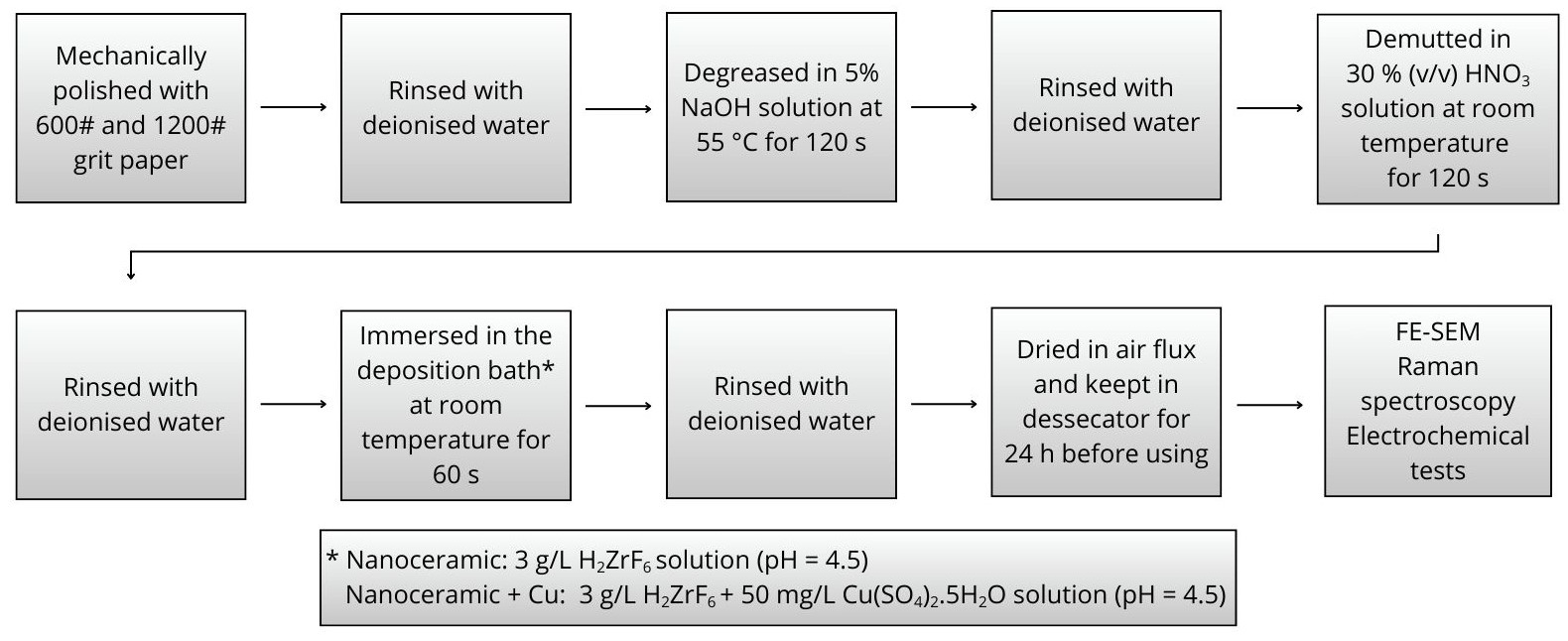
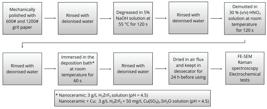
The samples were prepared following a sequence of procedures (Fig. 1) consisting of sanding (SiC #600 and #1200), alkaline degreasing in a 5% (v/v) NaOH solution at 55 °C for 120 s, and acid desmutting in a 30% (v/v) HNO3 solution at room temperature for 120 s, with rinsing in deionized water between these steps. After preparation, the samples were individually subjected to nanoceramic treatments by immersion in the conversion bath at room temperature for 60 s, followed by rinsing in deionized water and drying with an air stream. The nanoceramic treatments (Zr-CC) were performed in a 3 g/L H2ZrF6 solution (pH 4.5) and in a 3 g/L H2ZrF6 + 50 mg/L CuSO4.5H2O solution (pH 4.5). All samples were kept in a desiccator for 24 h before use.
2.2. Surface characterization
Surface analyses before and after Zr-CC treatment were performed using scanning electron microscopy (SEM) and field-emission scanning electron microscopy (FE-SEM), with a Zeiss Evo MA10 and Auriga, respectively. SEM images were acquired using a secondary electron detector at an accelerating voltage of 15 kV, whereas FE-SEM images were obtained at 10 kV. The chemical composition was evaluated by EDS using a Hitachi TM3000 microscope operated with a 5 kV electron beam, and Raman analyses were performed with a Renishaw InVia Raman spectrometer, using a 532 nm high-resolution excitation laser and a spectral range of 150–2000 cm-1.
2.3. Electrochemical measurements
The electrochemical behavior during film formation was evaluated by open-circuit potential (OCP) measurements performed in the nanoceramic conversion bath using a Minipa ET-1005 digital multimeter and an Ag/AgCl reference electrode.
Corrosion behavior was evaluated by electrochemical impedance spectroscopy (EIS) and potentiodynamic polarization in a 0.1 mol/L sodium chloride solution. Because chloride-containing aqueous solutions are highly aggressive toward aluminum alloys, the selected concentration provides a reliable basis for comparing the applied treatments. The experiments were conducted using an Autolab PGSTAT 302 potentiostat/galvanostat controlled by Nova 1.1 software in a three-electrode cell configuration, with the sample as the working electrode (exposed area of 0.95 cm2), a platinum wire as the counter electrode, and an Ag/AgCl electrode as the reference (0.197 V vs. SHE). EIS measurements were performed after 300 s of immersion in the solution to allow the system to reach steady state, using a perturbation amplitude of ±5 mV with respect to the open-circuit potential (OCP) over a frequency range from 0.1 Hz to 10 MHz. Potentiodynamic polarization curves were obtained by scanning the potential from −0.20 V relative to the OCP in the anodic direction at a scan rate of 10 mV/s. All experiments were performed at least in triplicate to ensure reproducibility.
3. Results and Discussion
3.1. Surface characterization
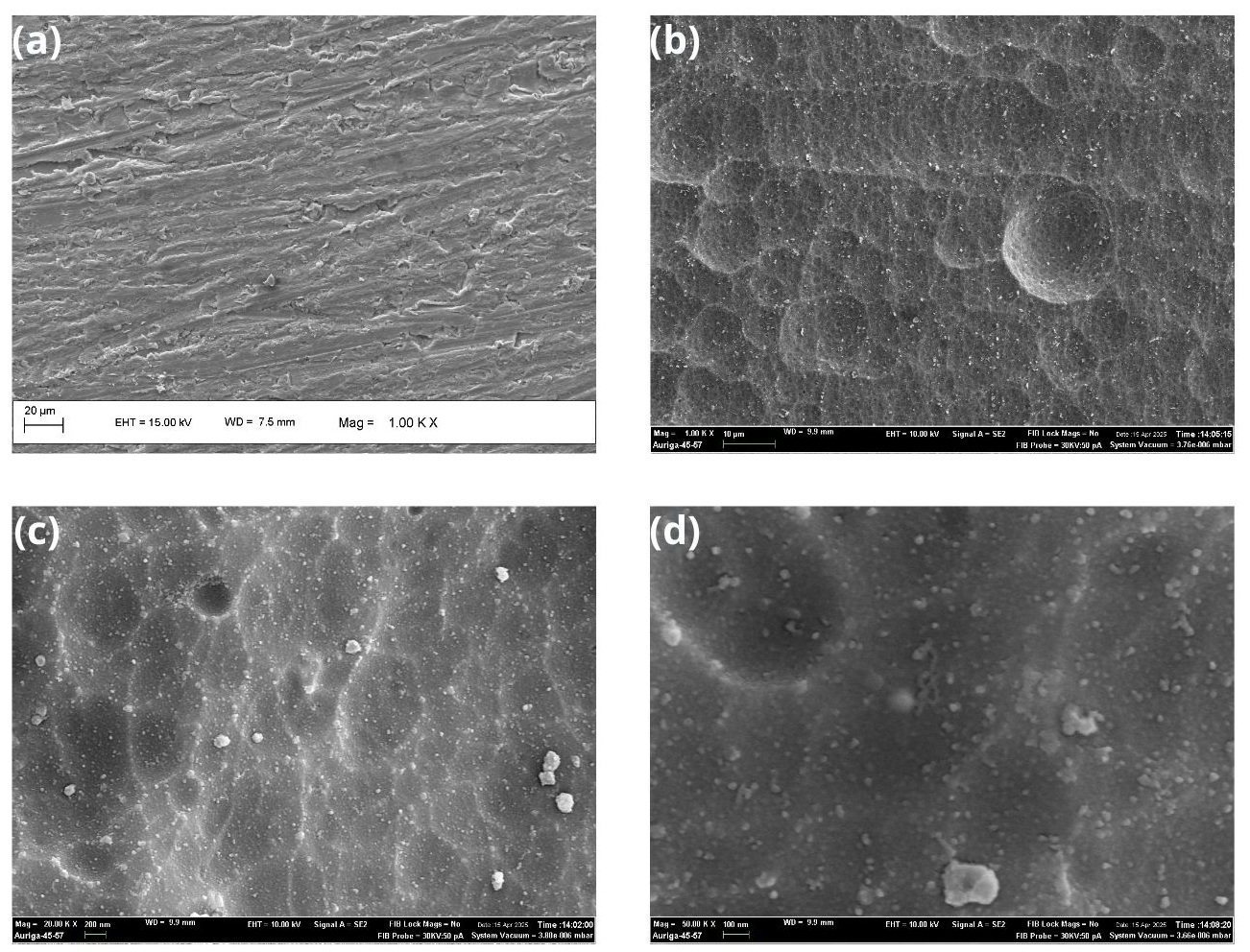
To analyze the morphology and chemical composition of Zr-CC formed on AA3105 H16 in a hexafluorozirconic acid-based nanoceramic bath for 60 s, the coated samples were analyzed by FE-SEM, SEM-EDS, and Raman spectroscopy and compared with the uncoated (as-polished) sample. The FE-SEM micrographs of the samples are shown in Fig. 2. A scratched surface after sanding was observed on the uncoated sample (Fig. 2(a)). This morphology is completely changed after treatment with nanoceramics (Fig. 2(b)). Although the film is transparent to naked eye, the micrograph reveals that the entire metal surface is covered by a coating, indicating that Zr-CC tends to uniformly cover the microstructure generated throughout the entire process.
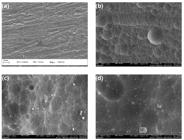
Top surface images of AA3105: (a) as-polished (1 kX) and (b) - (d) after Nanoceramic treatment in different magnitudes (1 kX, 20 kX, 50 kX, respectively).
The aspect shown in Fig. 2(b) suggests a nodular morphology, similar to those reported in the literature for Zr-CC in aluminum alloys22,28,29. However, at higher magnitudes, Fig. 2(c) and (d), this morphology did not reveal nodules, but spherical cavities with a large number of randomly distributed particles and agglomerates of these particles (clusters), with different sizes and shapes. This morphology is consistent with those observed by Zhang et al.29 on AA6016 and by Andreatta et al.40 on AA2024. They also found that when the immersion time exceeded 150 s, the coating thickness still increased, but this resulted in the formation of stress cracks. Thus, because the immersion time in the nanoceramic bath used in our study was short (60 s), cracks and other defects were not observed in the formed films.
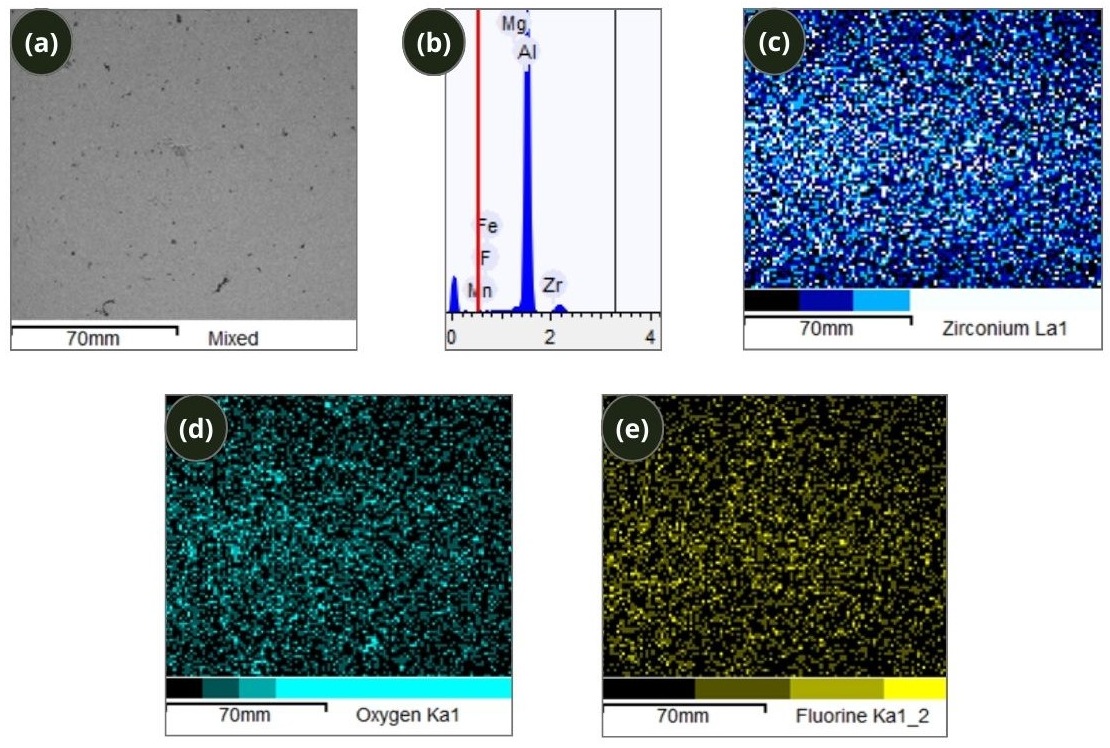
The SEM-EDS spectrum of the nanoceramic coated surface is presented in Fig. 3(a). Elements such as Al, O, F, Zr, C, Fe, Mn, and Mg were detected in both the Al matrix and particles. The intensities of these elements were similar in both areas. Semiquantitative analysis revealed values close to 0.08 wt% for Zr, 0.21 wt% for F, 52 wt% for Al, and 47 wt% for O. EDS mapping for these elements (Fig. 3(c)-(f)) showed that they are present throughout the surface. This very low amount of Zr may indicate that a very thin Zr-CC was formed. The presence of the main elements Al and O suggests that the complete dissolution of aluminum oxide/hydroxide due to its interaction with the free F- ion does not occur23.
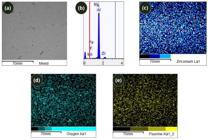
MEV-EDS spectrum of the surface after Nanoceramic treatment: (a) MEV micrograph, (b) EDS spectra and (c)-(e) EDS elemental map for Zr, O and F, respectively.
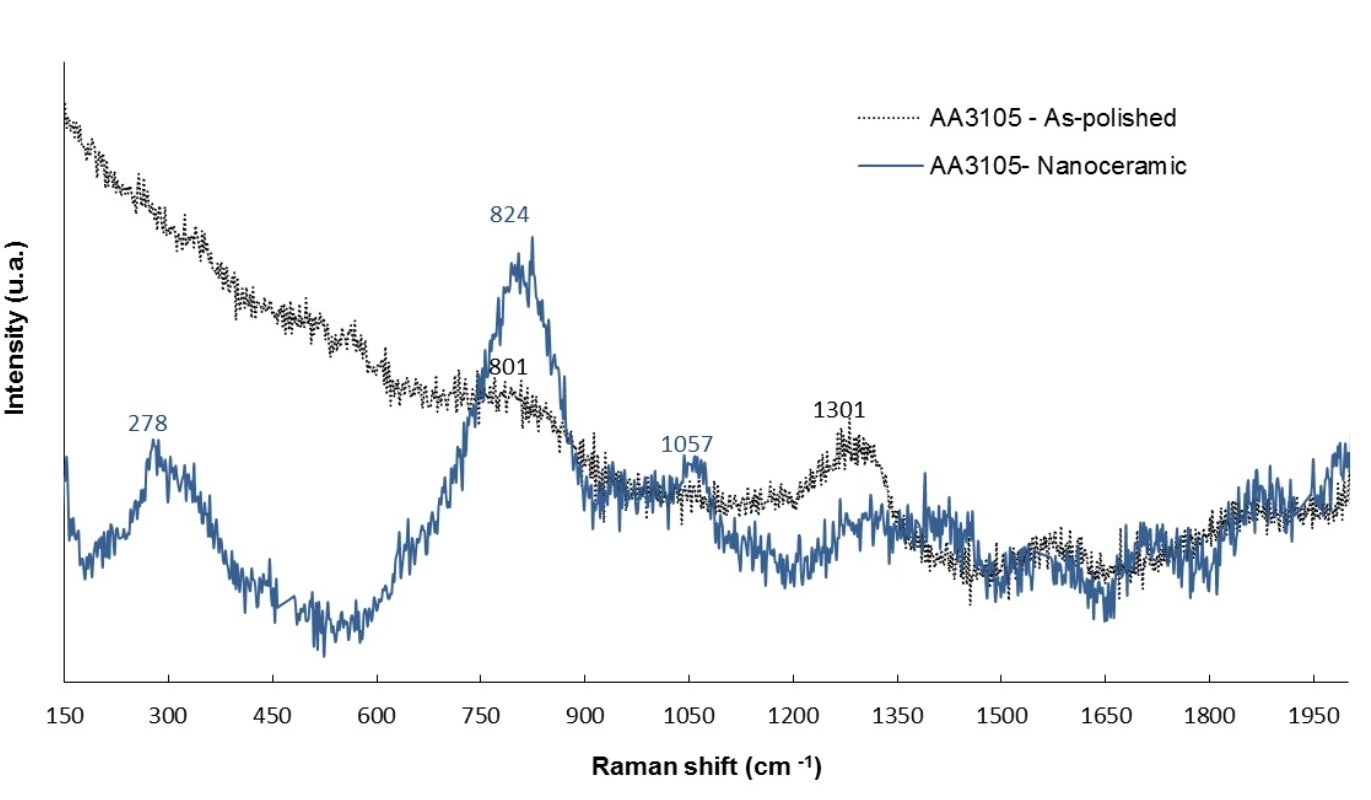
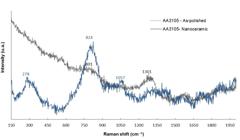
Fig. 4 shows the results obtained by Raman spectroscopy. For comparative purposes, this analysis was also carried out only on the sanded samples. According to the literature39,41, the peaks near 804 cm-1, 945 cm-1 and in the region around 1050 cm−1 are related to a mixture of aluminum oxide and hydroxide35 (observed in our work with some displacement), while the presence of zirconium oxide produces some weak peaks at 233 cm-1 and 470 cm-1. In our study, only the band observed near 278 cm-1 may be attributed to zirconium oxide.
3.2. Electrochemical measurements - effect of Cu2+ in the nanoceramic bath
3.2.1. Open circuit potential during conversion coating
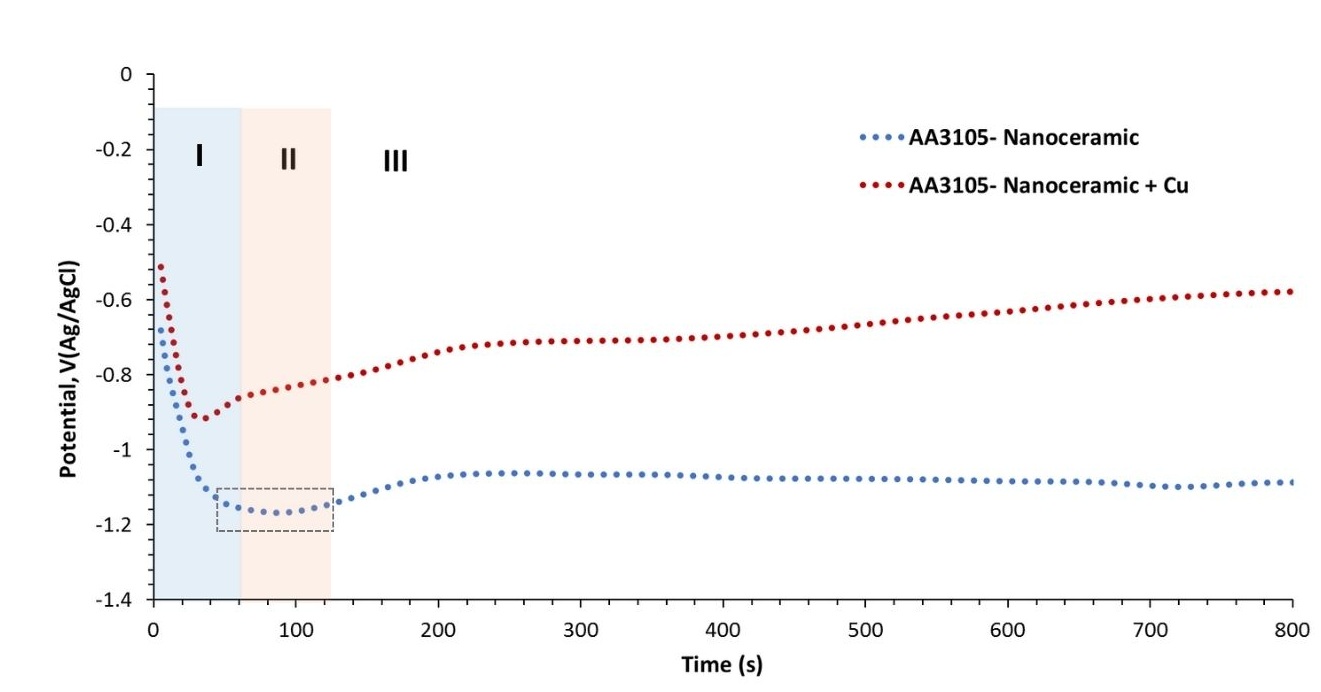
To investigate the coating formation process, the open circuit potential (OCP) of the AA3105 in the deposition baths was monitored with time and shown in Fig. 5. The conversion coating process can be divided into three stages. In stage I (< 40 s), the potential dropped sharply because the natural alumina coating was thinned (activation of the surface) caused by the initial attack of aggressive ZrF62- ions. During this process, the metal oxide is thinned enough to enable electron tunneling and metal ion migration. The activation process can be defined by reaction (2). Due to local alkalinity created by oxygen reduction reaction (3), both the reduction of O2 and the evolution of H2 (4) took place in the cathodic areas of the substrate. The nanoceramic conversion layer is formed (5) in stage II, between 60 s and 120 s in the nanoceramic bath without copper, and the potential slowly increased with time and reached a peak. In stage III, in the presence of copper the OCP presented a continuous increase while in its absence there is a trend to reach a steady state after 200 s. In this last case the existence of a plateau for the OCP suggests that the alloy surface is already completely covered by the nanoceramic conversion coating and that further deposition leads to an increase in thickness with no effect on the OCP42. According to Šekularac and Milosev25, and Zhang et al.29 in stage III the conversion coating still continues to grow but due to thickness increase the cracking of the coating occurs and it loses its protective ability.
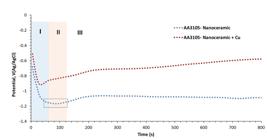
Open circuit potential measurement during the formation of zirconium conversion coating on AA3105 in Nanoceramic and Nanoceramic + Cu deposition baths.
Many researchers22,23,25,40,42,43 have attributed the initial abrupt decrease in potential to the natural removal/dissolution stage of aluminum oxide as the surface activation that precedes the deposition of the conversion coating. They also mentioned that sufficient surface coverage is obtained by reaching a plateau over a prolonged immersion time. Working with AA1050, Golru et al.22 reported that in the time interval around the minimum potential, in which the OCP remains almost constant, the nanoceramic coating develops on the aluminum surface. This behavior was very similar to that observed in this study and is highlighted in Fig. 5. The reason for the observation of low and almost constant OCP values in stage II may be due to the complete coverage of the metal surface with the nanoceramic film. The OCP increased to more positive values at longer immersion times in region III. Although there is no clear reason for this increase, the researchers hypothesized that at longer immersion times, degradation of the conversion coating occurs due to the presence of aggressive ions in the bath.
In the presence of Cu, the OCP values become higher and the time for the corrosion potential to reach a minimum value is shorter than in the bath without Cu, which means that there is an increase in the activation rate and in the nanocoating formation. This behavior was also observed by Adhikari et al.20 when working with commercial baths (without Cu addition and with components containing Cu) to obtain Zr-based nanoceramic coatings on aluminum. According to Cerezo et al.23, when the hexafluorozirconic acid solution contains Cu2+ ions, the deposition process of the Zr based layer is accelerated after its local precipitation as metallic Cu, increasing the reduction kinetics of hydrogen ions and oxygen. As an anodic reaction opposite to the formation of elemental Cu on the surface, the dissolution of the substrate material takes place in a short period of time (< 40 s).
The deposition of zirconium conversion coatings depends on several parameters in addition to the immersion time, such as the composition of the bath, the temperature, the pH, the composition of the metal and others. Although the immersion time used by many researchers has changed from a short time, such as 30 s29 or 60 s42, to a fairly long time, such as 10 min25,33, for industrial fluorotitanate/zirconate nanoceramic treatments, this time interval is generally 60 s to 120 s. In our work, the time interval of stage II was 60 s to 120 s and, considering some preliminary tests, 60 s was set as the immersion time for all analyses.
3.2.2. Electrochemical behavior in sodium chloride solution
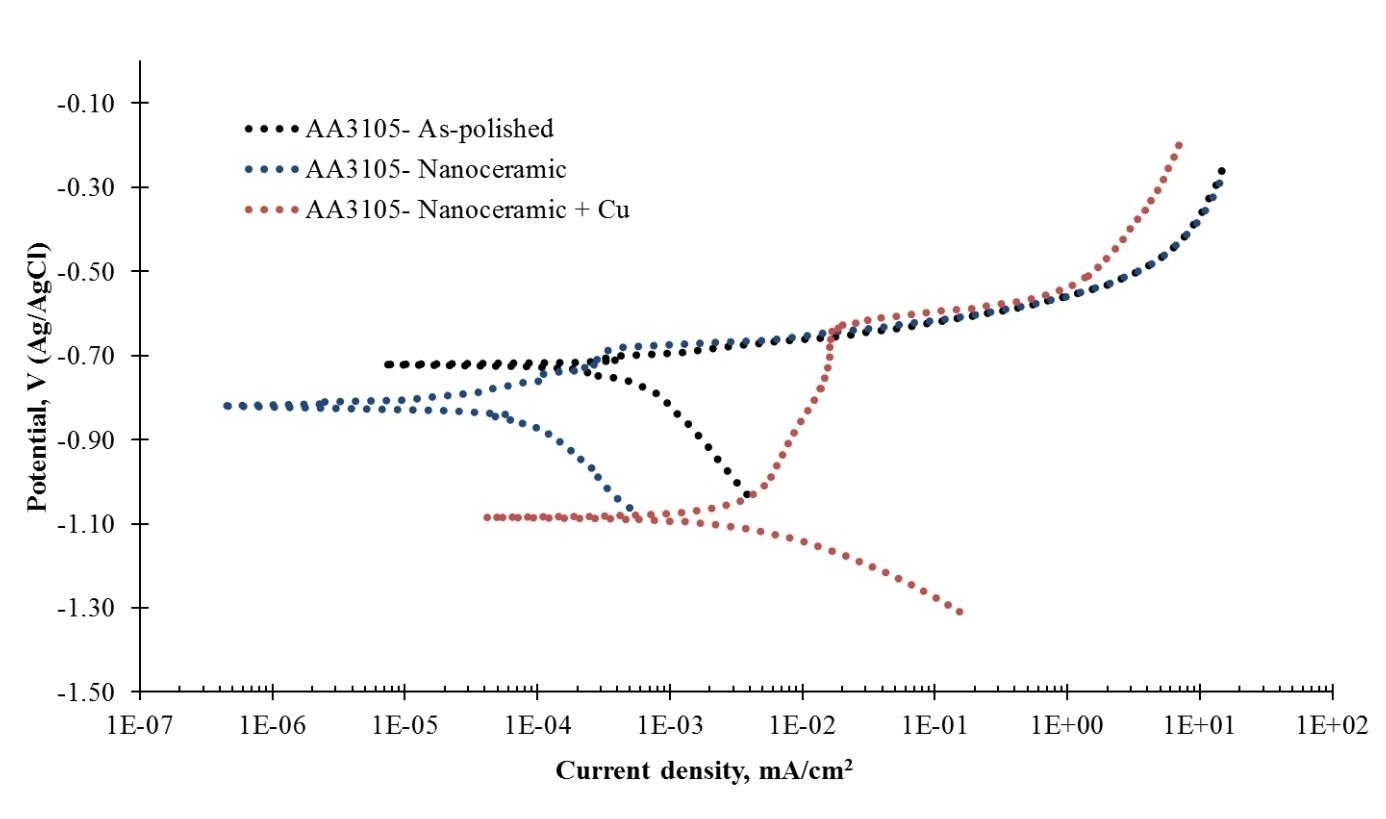
The polarization curves of the AA3105 samples were obtained in a 0.1 mol/L NaCl solution (Fig. 6) and the data obtained from the polarization curves using the Tafel extrapolation method are shown in Table 1. The corrosion parameters include corrosion current density (icorr), corrosion potential (Ecorr), pitting potential (Ep) and resistance to pitting generation (Rpit = Ep - Ecorr). The polarization curves for the AA3105-As-polished samples showed to be typical for aluminum alloys in chloride solution with a cathodic process related to the reduction of oxygen and an anodic process related to the dissolution of aluminum oxide. From the results shown in Table 1 it can be seen that Ecorr shifted to the negative direction in Zr-coated samples compared to AA3105-As-polished samples. It can also be seen that Ep did not change significantly after the formation of the nanocoating on the metal surface. This behavior was similar to that found by Golru et al.22 for a Zr-based nanoceramic coating formed on AA1050. However, unlike what was observed in the AA3105-Nanoceramic sample, the AA3105-Nanoceramic + Cu samples showed a wide pseudo-passivated region between -0.990 V (Ag/AgCl) and -0.632 V (Ag/AgCl) in the anodic branch until a critical pitting potential was reached, at which point the protective barrier offered by the treatment is broken and, from then on, the sample starts to behave as the AA3105-Nanoceramic samples. According to the results shown in Table 1, the icorr value for the AA3105-Nanoceramic decreased by an order of magnitude compared to the AA3105-As-polished, indicating that this Zr based nanoceramic coating can significantly reduce the dissolution rate of aluminum. However, when copper was added to the nanoceramic bath, higher current densities were observed. It is important to note that the presence of copper increased the pitting resistance of the nanoceramic coating, suggesting a relatively good stability of this coating in a neutral sodium chloride medium.
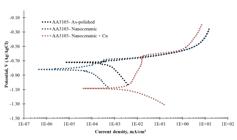
Potentiodynamic polarization curves of AA3105 aluminum alloy samples immersed in 0.1 mol/L NaCl solution.
Measured values of corrosion current density (icorr) and corrosion potential (Ecorr) of AA3105 samples, during polarization tests in 0.1 mol/L NaCl solution.
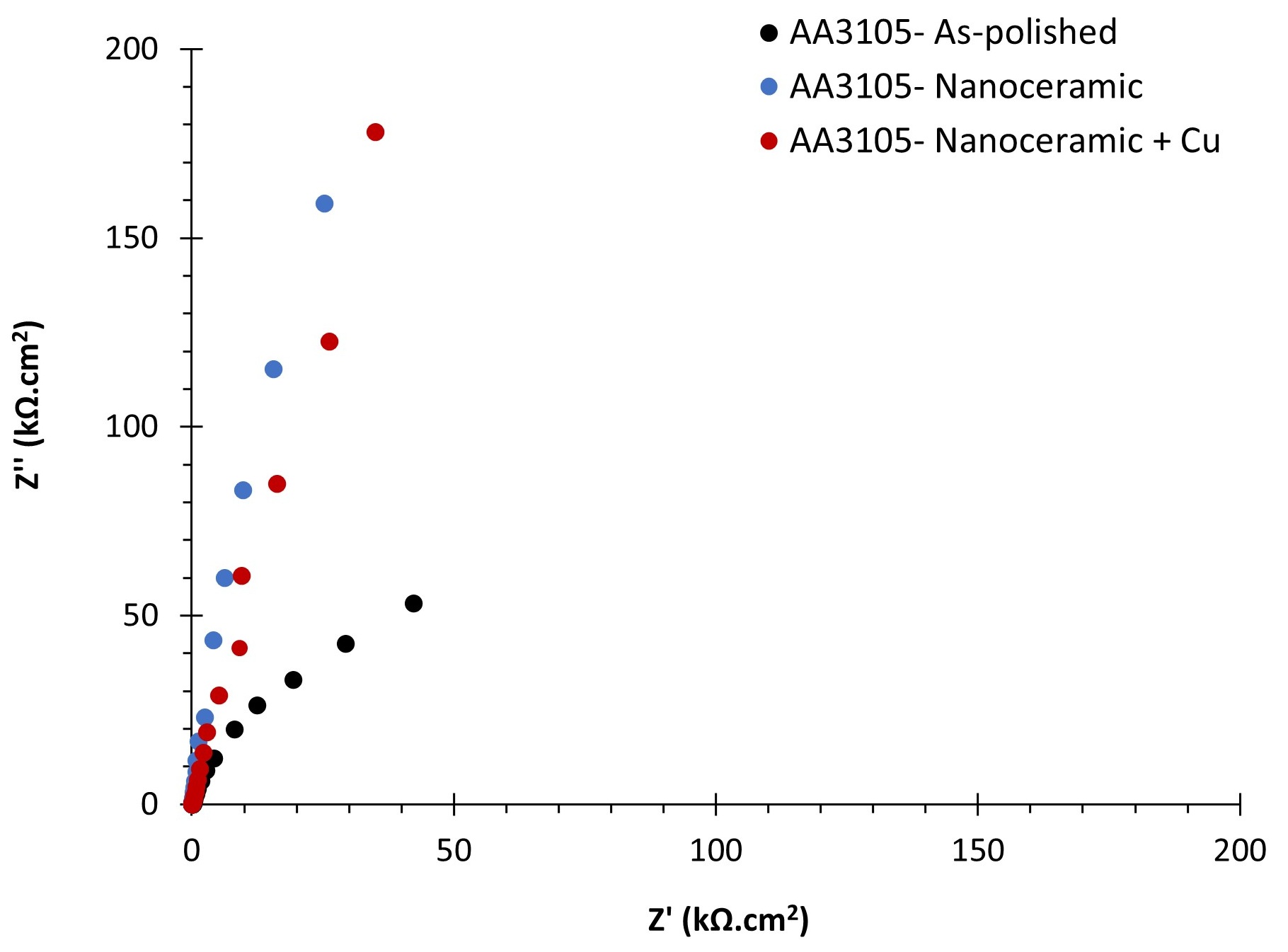
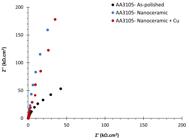
EIS analyses were carried out after 300 s of immersion in a 0.1 mol/L NaCl solution at room temperature. The Nyquist plot (Real impedance (Z') x Imaginary impedance (Z")) of the impedance of AA3105 without and with nanoceramic treatment is shown in Fig. 7. The Nyquist plots show a high-frequency capacitance arc with different diameters. The diameter of the arc can be considered as the polarization resistance (Rp) of the coating. The larger semicircles for the Zr-coated samples show that these coatings are capable of providing surface protection in a dilute sodium chloride solution. A very small semicircle at high frequencies was observed for the AA3105- As-polished sample, which means that the corrosive electrolyte diffused through the native oxide film, reaching the oxide/metal interface very quickly.
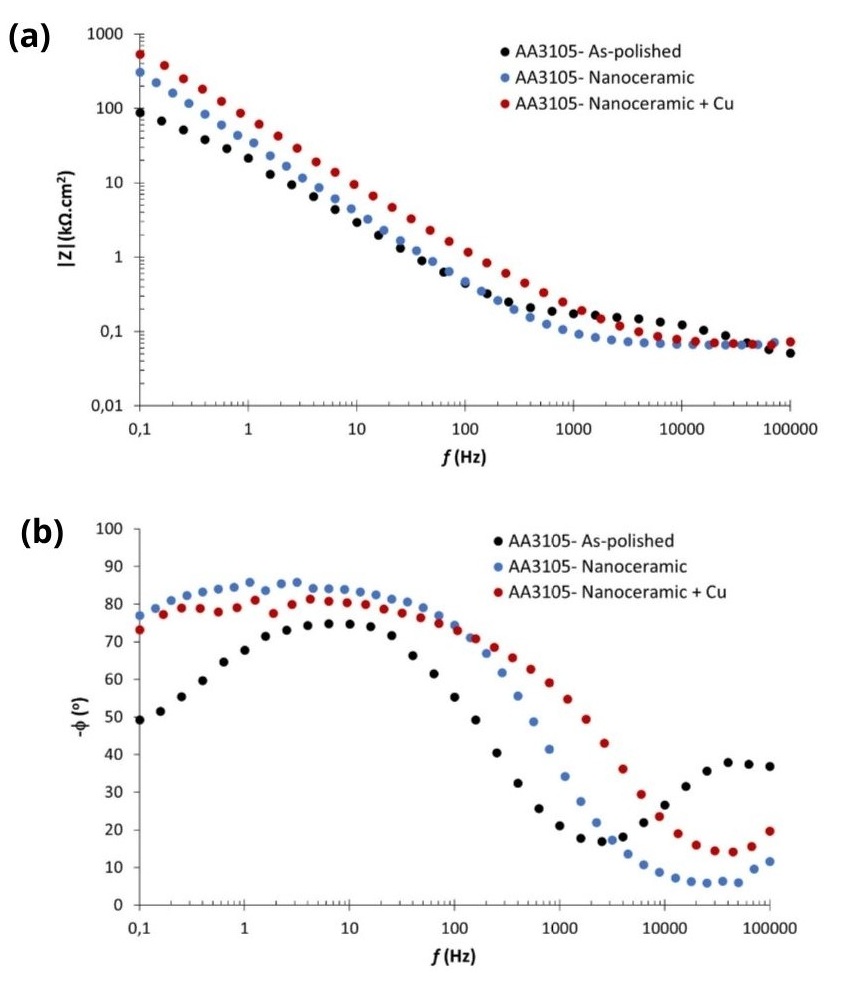
Bode impedance plots, Fig. 8, more clearly describe the dependence of the modulus (|Z|) or phase angle (ϕ) on the corresponding frequency (f). As shown in Figure 8(a), the modulus of the impedance at the lowest frequency showed the highest values for Zr-coated aluminum. In the Bode phase plots of the coated samples shown in Fig. 8(b), a broad time constant is observed, suggesting the overlap of two time constants associated with the aluminum oxide film and the nanoceramic conversion layer. In contrast, the as-polished sample exhibits two distinct time constants, which can be attributed to the electron charge-transfer process across the double layer at the interface and to the native oxide film.
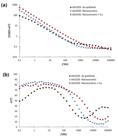
Bode diagrams of the AA3105 aluminum alloy samples immersed in 0.1 mol/L NaCl solution: (a) Impedance module (|Z|) x Frequency (f) and (b)- Phase angle (ɸ) x Frequency (f).
The addition of copper to the conversion bath did not improve the corrosion resistance of the Zr-CC. This outcome may be linked to the formation of a thicker coating layer, which can introduce defects such as micro-cracks and pores, as a consequence of the accelerated film growth induced by the copper precursor.
In this work Zr-CC coatings on AA3105 substrates were successfully obtained through a chemical process based on fluorozirconic acid, exhibiting satisfactory short-term corrosion resistance in sodium chloride medium. Nevertheless, a deeper understanding of the coating formation mechanisms and its long-term corrosion performance remains necessary. Key factors such as aging, chemical degradation, wear resistance, and paint adhesion should be carefully evaluated. Additionally, the role of alloying elements in aluminum alloys represents a crucial variable that must be taken into consideration. To advance the characterization of these nanoceramic coatings, more sensitive analytical techniques, such as X-ray photoelectron spectroscopy (XPS), are recommended to elucidate the chemical states of the elements within the conversion layer. Moreover, topographical analysis using atomic force microscopy (AFM) and cross-sectional imaging via transmission electron microscopy (TEM) would provide valuable insights into the microstructure and integrity of the coating.
4. Conclusion
Zr-based nanoceramic conversion coatings were successfully formed on AA3105 using hexafluorozirconic acid baths. This study demonstrated the influence of Cu2+ ions on the formation of Zr-CCs and on the corrosion resistance of this alloy. Within a very short processing time (60 s), the metal surface was covered with a Zr-CC exhibiting a morphology characterized by large cavities, as well as small nodules and clusters of various shapes and sizes. The presence of Cu2+ ions in the nanoceramic bath accelerated the aluminum dissolution step, promoting subsequent Zr-CC deposition. However, electrochemical tests conducted in a dilute sodium chloride solution revealed that the Zr-CC produced without copper provided superior corrosion resistance. Considering the metal substrate and the conditions investigated, these findings show that although Cu2+ ions enhance coating growth kinetics, their presence adversely affects the corrosion resistance of the resulting conversion layer, indicating that their use must be carefully controlled.
5. Acknowledgments
The authors would like to thank the Brazilian National Council for Scientific and Technological Development (CNPq), the Coordination for the Improvement of Higher Education Personnel (CAPES-PROEX), and the Rio Grande do Sul Foundation for Research Support (FAPERGS) for the financial support and fellowships for this research, as well as Marcopolo S.A. and Klintex Insumos Industriais Ltda. for their collaboration.
-
Data Availability
All data supporting the findings of this study are included in the published article.
6. References
-
1 Es-Soufi H, Berdimurodov E, Sayyed MI, Bih L. Nanoceramic-based coatings for corrosion protection: a review on synthesis, mechanisms, and applications. Environ Sci Pollut Res Int. 2025;32(28):16978-7004. https://doi.org/10.1007/s11356-023-31658-3 PMid:38183543.
» https://doi.org/10.1007/s11356-023-31658-3 -
2 Arun KL, Udhayakumar M, Radhika N. A comprehensive review on various ceramic nanomaterial coatings over metallic substrates: applications, challenges and future trends. J Bio Tribocorros. 2023;9:11. https://doi.org/10.1007/s40735-022-00717-6
» https://doi.org/10.1007/s40735-022-00717-6 -
3 Davis JR. Aluminum and aluminum alloys. In: Davis JR, editor. Alloying: understanding the basics. Ohio Materials Park: ASM International; 2001. p. 351-416. https://doi.org/10.31399/asm.tb.aub.t61170351
» https://doi.org/10.31399/asm.tb.aub.t61170351 -
4 Fan J, Luo S, Zheng L, Song Z, Pen X. Fabrication of vanadium–zirconium conversion coatings on 6061 aluminum alloy and performance modulation by additives. Coatings. 2025;15(12):1382. https://doi.org/10.3390/coatings15121382
» https://doi.org/10.3390/coatings15121382 -
5 Hosseini RM, Sarabi AA, Mohammadloo HE, Sarayloo M. The performance improvement of Zr conversion coating through Mn incorporation: with and without organic coating. Surf Coat Tech. 2014;258:437-46. https://doi.org/10.1016/j.surfcoat.2014.08.056
» https://doi.org/10.1016/j.surfcoat.2014.08.056 -
6 Anjos-Moraes J, Giacobbo A, Sánchez-Tovar R, García RL, García-Antón J, Ferreira JZ. Electrochemical behavior during the zirconium conversion coating formation on AISI 1006 steel. Mater Res. 2019;22(5):e20180322. https://doi.org/10.1590/1980-5373-mr-2018-0322
» https://doi.org/10.1590/1980-5373-mr-2018-0322 -
7 Possani GK, Schneider EL, Scienza LC. Zirconium oxide and tannic acid-based nanoceramic coatings for corrosion protection of cold-rolled steel. Materia (Rio J). 2024;29(4):1-10. https://doi.org/10.1590/1517-7076-rmat-2024-0563
» https://doi.org/10.1590/1517-7076-rmat-2024-0563 -
8 He W, Yan R, Gao X, Wang Y, Sun X, Ma H. Effect of Al3+on the surface microstructure and film formation mechanism of Zr-based conversion coatings with improved corrosion resistance performance on cold rolled steel. Electrochim Acta. 2024;487:144196. https://doi.org/10.1016/j.electacta.2024.144196
» https://doi.org/10.1016/j.electacta.2024.144196 -
9 Wei D, Yang Z, Zhao K, Buhagiar J, Dong Q, Fu H, et al. Investigating the formation mechanism of hybrid Zr-based conversion coatings incorporating copper and aminosilane additives. Available at SSRN 5359878.. https://doi.org/10.1016/j.apsusc.2025.164746
» https://doi.org/10.1016/j.apsusc.2025.164746 - 10 Mohanty A, Liu X, Chung C-C, Vonk D, Kisslinger K, Tong X, et al. The effect of copper additives on hybrid Zr based chemical conversion coating morphology and chemical compositions Applied Surface. Sci Adv. 2025;27:100726.
-
11 Cardoso HRP, Rapacki C, Ferreira JZ. Monitoring of a Zr-based conversion coating on galvanised steel and its performance against corrosion. Corros Eng Sci Technol. 2019;54(8):726-30. https://doi.org/10.1080/1478422X.2019.1657703
» https://doi.org/10.1080/1478422X.2019.1657703 -
12 Han J, Thierry D, Ogle K. Zr-based conversion coating on Zn and Zn-Al-Mg alloy coating: understanding the accelerating effect of Cu(II) and NO3- Surf Coat Tech. 2020;402:126236. https://doi.org/10.1016/j.surfcoat.2020.126236
» https://doi.org/10.1016/j.surfcoat.2020.126236 -
13 Zhan W, Li X, Qian X, Li Y, Ding Y, Zu Y, et al. Preparation and characterization of synchronous chemical conversion coating on 6061 aluminum alloy/7075 aluminum alloy/galvanized steel substrates. Metals (Basel). 2022;12(12):2011. https://doi.org/10.3390/met12122011
» https://doi.org/10.3390/met12122011 -
14 Cristaudo V, Baert K, Laha P, Lim ML, Brown-Tseng E, Terryn H, et al. A combined XPS/ToF-SIMS approach for the 3D compositional characterization of Zr-based conversion of galvanized steel. Appl Surf Sci. 2025;562:150166. https://doi.org/10.1016/j.apsusc.2021.150166
» https://doi.org/10.1016/j.apsusc.2021.150166 -
15 Kraš A, Kramar D, Milošev I. Characterisation of the deposition and protection performance of Zr conversion coatings on steel and zinc substrates using the response surface methodology. Corros Sci. 2025;242:112551. https://doi.org/10.1016/j.corsci.2024.112551
» https://doi.org/10.1016/j.corsci.2024.112551 -
16 Zhu W, Chen F, Yi A, Liao Z, Li W, Li K, et al. Titanium, zirconium and vanadium conversion coatings (TZVCCs) on AZ91D magnesium alloy sheets. Mater Res Express. 2020;7(8):086402. https://doi.org/10.1088/2053-1591/ababbe
» https://doi.org/10.1088/2053-1591/ababbe -
17 Yong J, Li H, Li Z, Chen Y, Wang Y, Geng J. Effect of (NH4)2ZrF6, voltage and treating time on corrosion resistance of micro-arc oxidation coatings applied on ZK61M magnesium alloys. Materials (Basel). 2021;14(23):7410. https://doi.org/10.3390/ma14237410 PMid:34885565.
» https://doi.org/10.3390/ma14237410 -
18 Fu H, Wei D, Zhu C, Liu S, Lin Q. Formation and characterization of zirconium based conversion film on AZ31 magnesium alloy. Mater Res Express. 2024;11(9):096521. https://doi.org/10.1088/2053-1591/ad7811
» https://doi.org/10.1088/2053-1591/ad7811 -
19 Ahmadi P, Sarabi AA, Eivaz Mohammadloo HE, Behgam R. Effect of practical parameters on the structure and corrosion behavior of vanadium/zirconium conversion coating on AA 2024 aluminum alloy. J Coat Technol Res. 2019;16(5):1503-13. https://doi.org/10.1007/s11998-019-00215-4
» https://doi.org/10.1007/s11998-019-00215-4 -
20 Adhikari S, Unocic KA, Zhai Y, Frankel GS, Zimmerman J, Fristad W. Hexafluorozirconic acid based surface pretreatments: characterization and performance assessment. Electrochim Acta. 2011;56(4):1912-24. https://doi.org/10.1016/j.electacta.2010.07.037
» https://doi.org/10.1016/j.electacta.2010.07.037 -
21 Mohammadloo HE, Sarabi AA, Hosseini RM, Sarayloo M, Sameie H, Salimi R. A comprehensive study of the green hexafluorozirconic acid-based conversion coating. Prog Org Coat. 2014;77(2):322-30. https://doi.org/10.1016/j.porgcoat.2013.10.006
» https://doi.org/10.1016/j.porgcoat.2013.10.006 -
22 Golru SS, Attar MM, Ramezanzadeh B. Morphological analysis and corrosion performance of zirconium based conversion coating on the aluminum alloy 1050. J Ind Eng Chem. 2015;24:233-44. https://doi.org/10.1016/j.jiec.2014.09.036
» https://doi.org/10.1016/j.jiec.2014.09.036 -
23 Cerezo J, Vandendael I, Posner R, Lill K, de Wit JHW, Mol JMC, et al. Initiation and growth of modified Zr-based conversion coatings on multi-metal surfaces. Surf Coat Tech. 2013;236:284-9. https://doi.org/10.1016/j.surfcoat.2013.09.059
» https://doi.org/10.1016/j.surfcoat.2013.09.059 -
24 Cerezo J, Vandendael I, Posner R, de Wit JHW, Mol JMC, Terryn H. The effect of surface pre-conditioning treatments on the local composition of Zr-based conversion coatings formed on aluminium alloys. Appl Surf Sci. 2016;366:339-47. https://doi.org/10.1016/j.apsusc.2016.01.106
» https://doi.org/10.1016/j.apsusc.2016.01.106 -
25 Šekularac G, Milošev I. Electrochemical behavior and self-sealing ability of zirconium conversion coating applied on aluminum Alloy 3005 in 0.5 M NaCl solution. J Electrochem Soc. 2020;167(2):021509. https://doi.org/10.1149/1945-7111/ab6b0d
» https://doi.org/10.1149/1945-7111/ab6b0d -
26 Moreira VB, Meneguzzi A, Jiménez-Piqué E, Alemán C, Armelin E. Aluminum protection by using green zirconium oxide layer and organic coating: an efficient and adherent dual system. Sustainability (Basel). 2021;13(17):9688. https://doi.org/10.3390/su13179688
» https://doi.org/10.3390/su13179688 -
27 Proença CS, Pereira AM, Pigliaru L, Rohr T, Correia J, Cabral AM. Alternative chemical conversion pre-treatment for aeronautical aluminium alloy: characterisation and anticorrosion performance. CEAS Space J. 2023;15(1):265-80. https://doi.org/10.1007/s12567-022-00459-8
» https://doi.org/10.1007/s12567-022-00459-8 - 28 Sharikabad SMJY, Hessam R, Aghili H, Javadpour S. Improvement of pitting corrosion resistance and anti-corrosion performance of Aluminum 1200 by ecofriendly Zr-based conversion coatings: effect of deposition parameters. J Bio Tribocorros. 2023;9(44)
-
29 Zhang T, Wang H, Li Y, Qian X, Li B, Yu W, et al. Investigation of the microstructure, growth mechanism, and corrosion behavior of a new Zr–Ti conversion coating on 6016 aluminum alloy. J Mater Res Technol. 2024;30:7585-96. https://doi.org/10.1016/j.jmrt.2024.05.138
» https://doi.org/10.1016/j.jmrt.2024.05.138 -
30 Šekularac G, Kovač J, Milošev I. Infuence of surface pretreatments on composition, structure and corrosion performance of zirconium conversion coating applied to AA7075-T6. J Electrochem Soc. 2025;172(11):111501. https://doi.org/10.1149/1945-7111/ae18fd
» https://doi.org/10.1149/1945-7111/ae18fd - 31 Lacava PK, Kuhn LL, Schneider EL, Zoppas-Ferreira J. A zirconium-based nanocoating for corrosion protection of the AA1230 as clad material for the AA2024-T3 alloy assisted by PEG400. MCMS. 2025;7(3):000662.
- 32 Rodič P, Kapun B. Milošev I. Complementary corrosion protection of cast AlSi7Mg0.3 alloy using Zr-Cr conversion and polyacrylic/siloxane-silica multilayer coatings. npj Mater Degrad. 2024;8:58.
-
33 Kim MM, Barbara Kapun B, Milošev I. Zr and Zr-Cr commercial conversion coatings deposited on 3003 aluminium alloy foil. J Electrochem Soc. 2025;172(6):061501. https://doi.org/10.1149/1945-7111/adde1d
» https://doi.org/10.1149/1945-7111/adde1d -
34 Eslami M, Pachchigar V, Sankaran M, Krogstad DV. Critical infuence of chemical pretreatments on the deposition and effectiveness of Zr-based conversion coating on AA2024-T3 aluminum alloy. Appl Surf Sci. 2025;697:163018. https://doi.org/10.1016/j.apsusc.2025.163018
» https://doi.org/10.1016/j.apsusc.2025.163018 -
35 Mysliu E, Lunder O, Erbe A. Role of aluminium hydrides in localised corrosion of aluminium revealed by operando Raman spectroscopy. Phys Chem Chem Phys. 2023;25(16):11845-57. https://doi.org/10.1039/D3CP00522D PMid:36928717.
» https://doi.org/10.1039/D3CP00522D -
36 Nabizadeh M, Marcoen K, Cherigui EAM, Kolberg T, Schatz D, Terryn T, et al. Unraveling the formation mechanism of hybrid Zr conversion coating on advanced high strength stainless steels. Surf Coat Tech. 2022;441(15):128567. https://doi.org/10.1016/j.surfcoat.2022.128567
» https://doi.org/10.1016/j.surfcoat.2022.128567 -
37 Kraš A, Milošev I. The aqueous chemistry of zirconium as a basis for better understanding the formation of zirconium conversion coatings: updated thermodynamic data. J Electrochem Soc. 2023;170(2):021508. https://doi.org/10.1149/1945-7111/acb9c2
» https://doi.org/10.1149/1945-7111/acb9c2 -
38 Lostak T, Timma C, Krebs S, Flock J, Schulz S. Organosilane modified Zr-based conversion layer on Zn–Al alloy coated steel sheets. Surf Coat Tech. 2016;305:223-30. https://doi.org/10.1016/j.surfcoat.2016.08.030
» https://doi.org/10.1016/j.surfcoat.2016.08.030 -
39 Sarfraz A, Posner R, Lange MM, Lill K, Erbe A. Role of intermetallics and copper in the deposition of ZrO2 conversion coatings on AA6014. J Electrochem Soc. 2014;161(12):C509-16. https://doi.org/10.1149/2.0121412jes
» https://doi.org/10.1149/2.0121412jes -
40 Andreatta F, Paussa L, Lanzutti A, Navarro NCR, Aparicio M, Castro Y, et al. Development and industrial scale-up of ZrO2 coatings and hybrid organic–inorganic coatings used as pre-treatments before painting aluminium alloys. Prog Org Coat. 2011;72(1-2):3-14. https://doi.org/10.1016/j.porgcoat.2011.01.011
» https://doi.org/10.1016/j.porgcoat.2011.01.011 -
41 Qi J-T, Hashimoto T, Walton JR, Zhou X, Skeldon P, Thompson GE. Trivalent chromium conversion coating formation on aluminium. Surf Coat Tech. 2015;280:317-29. https://doi.org/10.1016/j.surfcoat.2015.09.024
» https://doi.org/10.1016/j.surfcoat.2015.09.024 -
42 Andreatta F, Turco A, de Graeve I, Terryn H, de Wit JHW, Fedrizzi L. SKPFM and SEM study of the deposition mechanism of Zr/Ti based pre-treatment on AA6016 aluminum alloy. Surf Coat Tech. 2007;201(18):7668-85. https://doi.org/10.1016/j.surfcoat.2007.02.039
» https://doi.org/10.1016/j.surfcoat.2007.02.039 -
43 Gralak E, Szczepanska J, Winiarska K, Tylus W, Winiarski J. The effect of hexafluorozirconic acid concentration on the formation and corrosion resistance of trivalent chromium conversion coatings on AlSi12Cu1(Fe) cast alloy. Mater Today Commun. 2024;38:108409. https://doi.org/10.1016/j.mtcomm.2024.108409
» https://doi.org/10.1016/j.mtcomm.2024.108409
Edited by
-
Associate Editor:
Luiz Antonio Pessan.
-
Editor-in-Chief:
Luiz Antonio Pessan.
All data supporting the findings of this study are included in the published article.